Category: corporate volunteering

  • The Volunteer Periphery

    The Volunteer Periphery
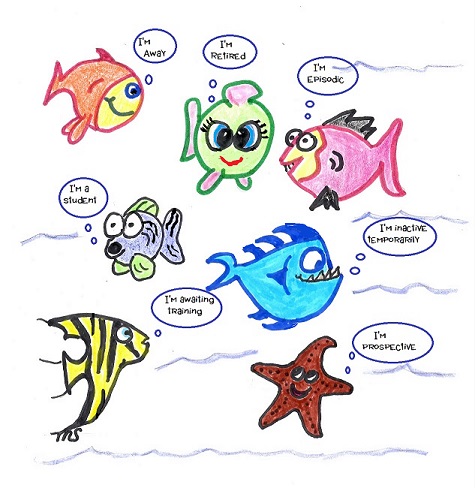
    Sea of peripheral volunteers

    I have a friend who never seems to see the people around him. He lets the door swing shut just as an elderly man is about to walk through and he never sees the mom carrying a baby needing to get by as he blocks the aisle in the store. It’s as though he has no peripheral vision. It got me to thinking about managers of volunteers and how we develop our peripheral vision to the point of hyper awareness.

    You know what I mean. You’re the kind of person who:

    counts the number of people behind you in the buffet line at a friend’s party and then you mentally divide up the pasta portions in the pan to make sure that you don’t take more than your share.

    looks around at a concert, sizing up the height of the crowd and then squeezes into a spot that ensures you don’t block the petite woman to your left.

    Does this sound like you? I thought so.

    We all have peripheral volunteers. These are the volunteers who are episodic, temporarily inactive, retired, yet to be trained, prospective, or absent. And unlike the world of paid staff where rosters consist of those receiving paychecks, our peripheral volunteers remain on our stats and radar.

    We don’t have the luxury of ignoring them because they are potentially contributing volunteers. Or they may have given years of service and we owe them our attention. They float around in the periphery, bobbing in and out of view because we have a fluid connection with them. And how about the guilt that comes with not paying proper attention to them. (Yep, just think of how you felt when you forgot that volunteer’s 80th birthday, the one who gave twenty years of service to your organization)

    What can we do with these outlying volunteers? How can we keep them in view as we scurry about in our busy day? Where do they fit into statistics?

    This is one area in which:

    1. technology serves us well
    2. volunteers can assume pivotal roles
    3. stats reflect the monumental balancing we do
    4. volunteer message sharing can actually help

    When lists that capture prospective, episodic, absent, retired, ill and every other category meaning non current pile up, it’s time to create some systems that help.

    Create categorized email lists-prospective volunteers, group and corporate volunteers, temporarily inactive volunteers etc. Decide which groups get which messages, e.g., upcoming training sessions, newsletters, notices about volunteer events or vacancies, etc.

    Recruit volunteers to oversee the periphery-lists are only helpful if they are accurate. It’s humbling when you take a call telling you that volunteer Dave died a year ago and his family keeps getting mail addressed to him. A volunteer or volunteers in charge of overseeing other volunteers on the periphery can focus on keeping lists up to date. They can also make phone calls, interview, do impromptu surveys, offer new opportunities, gather information and compile statistics. The scope of the potential work can fill a full-time position or several part-time positions.

    Report your time spent managing peripheral volunteers-this is an invisible area that requires a lot of time so report it as part of your recruitment, retention, and cultivation. Refer to your efforts to engage “prospects”, retain episodic volunteers, build community awareness, increase visibility, maintain good relationships, cultivate donors, supporters etc. This nuanced area of our work is critical and should be accounted for.

    Share messaging with other organizations, but be careful. Bombarding potential volunteers with multiple messages can be off-putting, so don’t overload emails with “spam.” Instead, co-op with other volunteer organizations and include “other good work opportunities” at the end of every other month newsletters (or other scheduling) with contact information. As your volunteer opportunities are added to the internals at other organizations, you’ve just exponentially increased your recruitment efforts.

    Volunteer management casts a wide net. Presiding over the sea of active, potential and former volunteers is daunting. Systems in place to oversee peripheral volunteers will help to ease the overwhelming burden and free us up to concentrate on innovation and solutions.

    Out nets are huge and always jumping with activity. If our eyes and hands are always on every inch of those nets, then we can’t steer the boat.

    -Meridian


  • Hey Corporate Volunteers, Where Are You From Again?

    EPSON MFP image

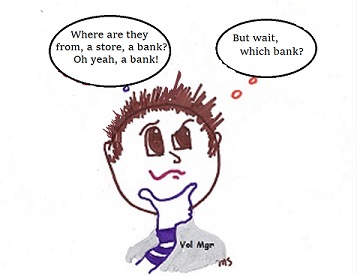
    “Uh Meridian, you really blew it! You missed a whole point about corporate volunteers,” a friend of mine said on the phone a couple of days ago. “You talked about thanking groups and connecting them to the work, which is great, but you completely forgot a big one and guess what? It just happened to me.”

    Ouch. What did I forget? Tell me what happened.

    “Well, it was our corporate retreat and twenty of us just completed a one day team building volunteer event at a local organization.”

    That’s great. How did it go and what did I miss?

    “Well, it was ok for the most part, but honestly we’ve done other projects and had better experiences.”

    What went wrong?

    “Well, nothing went really wrong, but let me explain. We all drove to an organization that gives cribs to families in need. Our firm had purchased about forty unassembled cribs and we drove to this warehouse to put together the cribs we bought.”

    And how did that go?

    “Well, we were met by the woman in charge. She kind of acted like we were interrupting her day. She gave us some quick directions and left. She would come and go. But there was something that bothered me a lot. She kept getting the name of our firm wrong. And she kept referring to us as bankers. None of us are bankers. Our company is an accounting firm. Granted, we work in the financial industry, but we are not bankers. It just felt like she didn’t even take the time to learn who we are or what we do. I mean, we reached out to her organization, why didn’t she ask a few questions? I felt, I don’t know… used. Am I being too sensitive and picky?”

    No, my friend you are not being too picky. Because if a group walks away from a project feeling like they were just ancillary labor, then the next time they look for a project, they will most likely look elsewhere. Pure and simple. We can argue all we want that a group is too needy, or picky, or they just don’t understand. The feeling they walk away with will determine whether or not they come back.

    It all boils down to: Do we want them to come back? Do we want them to spread a good word? Do we want them to become partners or champions or supporters? If not, then we should not waste their time or ours. That’s why limiting episodic volunteer groups to a manageable number versus taking everyone is the better way to go.

    And since I did miss that big one when listing things we can do to connect our group volunteers to our projects and missions, let’s list it now.

    • Learn something about the group. At least we can call them by their correct name. We can know a little about their work. (an application process asking pointed questions should help)
    • Be genuinely curious about the people who are helping. Ask questions throughout the duration of the project. Let them tell you who they are, what they value etc. This also helps you to tailor your stories and feedback to fit within their culture.
    • Send a follow up survey and gather feedback on the project. Ask questions to help you hone future group projects.
    • Thank them for their input. So much research has been done on the increased by-in of groups who participate in planning and improving work conditions. Why not apply this to episodic volunteers and encourage them to help you plan new projects by asking for feedback?

    Connecting episodic volunteers to our missions ensures they walk away as new supporters.

    But, after all, we can take our own advice when engaging episodic volunteers. They’re people, not tools.

    -Meridian

  • Hey Corporate Volunteers: How Great is Weeding?

    EPSON MFP image

    A recent article from Business News Daily cites a study finding that “89 percent of employees think organizations that sponsor volunteer activities offer a better overall working environment. In addition, 70 percent believe volunteer activities are more likely to boost staff morale than company-sponsored happy hours, with more than three-quarters saying volunteering is essential to employee well-being.”

    But here’s the kicker from the article: “Three-quarters of the millennials surveyed said they would volunteer more if they had a better understanding of the impact they were making, compared to 61 percent of those of all ages.”

    Huh. So, it isn’t obvious that volunteering for a homeless shelter actually helps homeless people is it? Or wait. Maybe it isn’t obvious that weeding the garden at the homeless shelter actually helps the homeless.

    Oh, yeah, now I get it. Maybe for corporate volunteers, the cleanup or painting or weeding the garden doesn’t scream “OMG, this made all the difference in the world to our clients! You have changed lives like no one else ever has in the history of volunteering! Ka-bam!”

    We, volunteer managers, can be caught in a nether world of finding projects while assuring these episodic volunteers that we really need them. And once you manufacture a project just to accommodate a group, is that truly meaningful work?

    So what can we do since corporate and episodic group volunteering will most certainly grow in the future?

    Well, we need to do some serious planning, be methodical about our episodic volunteers and complete the legwork before we take on groups. We can:

    • Create a plan before accepting groups. Decide how many group members can be accommodated at a time, the age range you are comfortable working with, the time frame that works for you, what supplies the group needs to bring, the number of groups per month or year you can accept, etc.
    • Create an application process for group volunteering: Gather information on the group, ask pointed questions on the application that will help you understand their motivation, interests, skills etc. Then decide if and when they will fit into the projects you have or can create.
    • Create an impression that you value quality over quantity and busy work: We don’t have to take everyone. As each group you engage comes away with a positive experience, word will spread that your organization is the one to contact for quality volunteering.
    • Develop a narrative to go along with each project. Prepare impact stories to accompany each project. Highlight the contribution and results of the project.
    • Utilize client testimonials to recruit and thank corporate volunteers. Tie these into the activity. It may take some creative interviewing to elicit these testimonials, but it will be worth it.
    • Follow up with a letter outlining the impact of the completed work. Reiterate the improvements for clients, staff and other volunteers.
    • Send a thank you letter from your CEO to the corporate CEO or group leader. It can be a general thank you created ahead of time and tweaked for each group. But, have the CEO sign it each time and encourage them to write a personal note.
    • Take pictures-make memes, add text boxes, thought clouds etc. Send them to the group, post them on all social media outlets.

    No matter what, the connection between the project and the impact on clients is critical. Take weeding the garden at the homeless shelter. We can say to our corporate volunteer group, “Imagine the first night you are homeless. Imagine what that feels like, having nowhere to go, no stability, no safety and you arrive at our shelter and all you see are the weeds in an unkempt garden. It says to you that we don’t care. It reminds you of the tangles that threaten your existence. How would you feel? Remember, every little thing can be the one big thing that makes someone feel safe.” Then read testimonials from clients who felt safe.

    A lot has been said over the years about making corporate volunteering fun. While fun is important, it is secondary to meaningful work. Corporate and episodic volunteers deserve to know that even by pulling weeds in the garden, they have created a beautiful safe space for those facing a difficult time in their lives.

    We know the impact of each job, no matter how inconsequential it may seem at first. If we are thoughtful about episodic volunteering and prepare well for group volunteers, we can create a win-win for everyone.

    -Meridian


  • Captains of Our Destiny: Strategic Key Volunteer Account Management

    Captains of Our Destiny Strategic Key Volunteer Account Management

    So, here’s the question: If we identify key volunteer accounts, how will this help us in the management of all volunteers and correct the misconception that we herd cats?

    By reclassifying our work in terms of strategically managing volunteer accounts and key volunteer accounts, we will:

    • explain in recognized professional terms the vast work involved in cultivating and engaging volunteers
    • begin to prioritize our time in order to do the “key duties” such as recruiting, creating volunteer programs, relationship marketing, retention implementation, in-depth training and staff education
    • illustrate that focusing on key duties produces sustainable volunteer participation
    • more successfully require that all staff learn to manage volunteers, especially one time and episodic volunteers, therefore freeing us up to do the key duties
    • show potential volunteers that becoming key volunteers carries tremendous perks
    • free up the time necessary to educate ourselves, create programs and contribute in a more productive way
    • be able to demonstrate that not all volunteers produce the same results and that key volunteer account management creates key volunteers who will not only do the bulk of the work, but will also contribute in multiple other ways such as increased donations, resource allocating, community awareness, marketing, planning, trend setting, awards won, social media championing, recruiting, and program development
    • show that key volunteers will lighten staff workloads and free staff to work smarter
    • strategize the future instead of “handling” the present


    As we move from herding cats to a more modern and professional structure, what are some differences between outdated volunteer management and the new strategic volunteer account and key volunteer account management?


    Outdated Volunteer Management Strategic Volunteer Account Management Strategic Key Volunteer Account Management
    Vols fill jobs defined by org Steps to assure vol role is successful Partner with key vols to assure mutual org growth
    Retention by yearly luncheon, hours reported Vol contributions highlighted with real stats Key vols contribute to implementing programs of worth
    Vols view volunteering as “I get more than I give” and that’s enough Vols are integrated as essential members of team Key vols are integrated as shaping future of org
    All vols are just here to do org bidding Vol roles are created to meet changing needs of volunteers Key vols help shape the roles they wish to play
    Vols should be grateful to be volunteering Orgs should show gratitude to vols for volunteering Orgs value key vol input, skills and ideas in a win-win situation
    Fear that vols may “take over” or do something to harm org


    Allow vols to accompany staff on important assignments Trusting key vols to utilize their proven skills and desire to further org mission

    In order to be classified as a “key volunteer,” we most likely will be choosing those volunteers who are already known and trusted by fellow staff. This trust in a proven volunteer is the example you already possess to showcase the benefit for key volunteer designation.

    In many ways, there is an iron grip of thought relating to volunteers and volunteer management. Words and terms mean something and by referring to our work in professional, respected terms, we will begin to show the in-depth work and skill necessary to create a sustainable volunteer program. We will also begin to illustrate that freeing us from herding cats to concentrate on key duties will produce a stronger, better volunteer program. (everyone in the organization is responsible for engaging and managing volunteers-the volunteer manager does not have time to run around putting out fires)

    Let’s not be left behind in modernizing our profession. We are the Captains of our destinies.

    -Meridian


  • Captains of Our Destiny: The Key Volunteer Account Manager

    Captains of Our Destiny The Key Volunteer Account Manager

    As Captains of our destinies, we looked at some of the terms that define our work as Volunteer Account Managers. Now, let’s look at the responsibilities of the account manager and redefine them to fit our profession:

    Volunteer account manager responsibilities:

    • Serve as the point of contact for all volunteer account management matters.
    • Build and maintain strong, long-lasting volunteer relationships.
    • Develop opportunities and programs for volunteer engagement.
    • Mediate volunteer challenges.
    • Communicate the mission and policies of the organization to all volunteers and prospective volunteers.
    • Recruit new volunteers, volunteer groups and develop relationships with all volunteers through education, feedback, and progressive opportunities.
    • Forecast and track account metrics through volunteer feedback, community involvement, bench marking, research and continual participation in conferences and symposiums relevant to subject.
    • Prepare reports on volunteer contributions and trends.
    • Advocate for system changes when necessary.

    Interpersonal skill set of the Volunteer Account Manager: (partial list)

    • Solution oriented
    • Communicates clearly
    • Innovative
    • Professionalism
    • Mediation skills
    • Detail oriented
    • Relationship marketer
    • Ability to research, monitor and predict trends

    We can still go one step further and look at how organizations and businesses divide up the management of accounts. Does one person manage all accounts? Are some accounts afforded more attention than others?

    In account management, the key account has emerged and with it, the key account manager. So if we are volunteer account managers,  what would be a key volunteer account?

    Redefining a key account in terms of a volunteer key account yields: A key volunteer account is the volunteer or volunteer group who volunteers substantially in a sustainable manner and/or contributes greatly to organizational success. 

    This begs the question: Do we have key volunteer accounts?

    Do we spread ourselves too thin when we spend our time in a non-strategic soup? Do we run around, putting out fires, jumping from one scenario to the next trying to make sure each and every second of volunteer time is perfect? Are we really just herding cats?

    Can we maximize our time by identifying and explaining the steps necessary to cultivate key volunteer accounts?

    What are a few categories that might catapult a volunteer or volunteer group into key volunteer status?

    • dedicated on-going scheduled work that is vital to operations.
    • years of service and hours given.
    • the successful recruiting of additional volunteers and/or a community engagement champion.
    • leadership skills and/or the assumption of a leadership role.
    • dependability and the willingness to step up when needed.
    • highly trained or skilled in the mission and the ability to handle challenges.

    We all have these volunteers. They are what we wish every volunteer could be. If we apply the Pareto principle (80% of the output comes from 20% of the input), then approximately 20% of our volunteers are producing 80% of the vital work. Is this true? And what about new volunteer potential? Should we not spend our time in the soup, cultivating everyone in case we might lose that potentially great volunteer? Should we just herd cats in hopes that a few of those cats turn out to be key volunteer cats or should we begin to think in terms of key accounts and key strategies?

    Next time: How can strategic key volunteer account management help us manage all volunteers?

    -Meridian


  • Captains of Our Destiny: Captain Obvious Part 2

    Captains of Our Destiny

    Ha, ha, working with volunteers is like herding cats. …non-profit staff member.

    It is time we become captains of our own destiny. It is true that our work is not glaringly evident to all, so we can’t be Captain Obvious.

    So, now what? We can captain our future and redefine our work in terms that befit its importance while illuminating our professional skill set. It’s on us to redefine volunteer services, to flip it from one of cutesy, fluffy extra touches to a dynamic and professional service.

    How? Well, first off, we have to change the loose descriptions of volunteer engagement and instead use the professional terms they deserve. To do this, let’s look at two highly regarded and compensated jobs and re-imagine our profession in those terms and descriptions.

    Instead of volunteer managers, what if we were called Volunteer Account Managers? In reality, volunteers open accounts with us, in the same way as donors or clients. (an account is something of value or worth-in this case a volunteer’s time, expertise, resources, knowledge, sweat equity, donations, word of mouth marketing, etc)

    As such, we would use these terms:

    Volunteer Account Management: the management of volunteer accounts, including the relationship with volunteers and the pursuit of volunteer satisfaction.

    Volunteer expectations: the value a volunteer seeks from our organizations, such as training opportunities, positive feedback, admittance to the team, creative outlets etc.

    Volunteer centric: the emphasis an organization places on volunteer involvement, including timely appreciation, seats at planning meetings, designated volunteer managers who are supported, educational opportunities, partnership opportunities.

    Volunteer journey: the steps a volunteer goes through to become a viable and satisfied member of the organization.

    Volunteer journey mapping: the process by which a volunteer manager maps the journey a volunteer takes from first contact to integration through onboarding-and more importantly, the ability to reconfigure the steps when necessary.

    Volunteer profile: the ongoing process by which a volunteer manager educates staff about volunteers, including their needs, their changing dynamics, their skill levels, their rate of participation and their future involvement.

    Volunteer satisfaction levels: measuring and reporting the satisfaction levels of volunteers through one on one interviews, surveys, questionnaires, etc. And more importantly, the ability to change areas in which volunteers lack satisfaction.

    Volunteer benchmarking: the continual process of improving the relationship with volunteers. There are many methods of benchmarking, such as:

    • do volunteers choose our organization over others and why or why not?
    • do volunteers make time for us over other activities and why or why not?
    • do volunteers recommend our organization to their circle of influence and why or why not?
    • do volunteers increase visibility, donations and resources and how? (we all know instinctively that this is true, but benchmarking will prove it)

    Volunteer benchmarking will then be a tool to change the processes that need change, in the same way fundraising evolves.

    In order to Captain our own destiny, we must begin to flip volunteer services from the outdated idea that volunteers are summoned to fill a job and volunteer coordinators “herd those funny cats around, lol, isn’t that cute.”

    Instead:  Volunteers hold an account with us and we are responsible for cultivating that account by continually improving our relationship with the volunteers. And this is where the highly skilled volunteer account manager comes in.

    Next week: KAVM-the key account volunteer manager-what does this mean for us?

    -Meridian

  • New Words Added to the Volunteer Management Dictionary

    Added to the Volunteer Management Dictionary

    It’s that time of year when the Committee to Define Volunteer Management gets together at a back table in Pete’s Bar, Grill and Bait Shop. Together, these brave members scratch their heads over several pints and attempt to come up with a succinct explanation of volunteer management. This year, they gave up once again after rejecting the phrase “herding cats,” but they decided to add the following words to the dictionary of volunteer management.

    Volvorce: When a volunteer divorces the organization as in “No, I just can’t go get new volunteer Dinesh, because since no one called him back about getting started after I introduced him to finance, he volvorced us.”

    Meetcolepsy: When too many meetings cause you to simply fall into a stupor at the thought of another talk-fest as in “No, I couldn’t make that fourteenth meeting about using the volunteers to stand by the back door in case someone gets confused because I contracted meetcolepsy. Want to see my doctor’s slip?”

    Latespectation: A last-minute request for volunteers that is expected to be filled as if you were given weeks to prepare, as in “Oh, so you need 5 volunteers tomorrow morning for an assignment that you said was extremely important? Your latespectation is showing.”

    Creditjacking: When another staff member takes credit for a successful endeavor that you or your volunteers accomplished as in “Yes, I’m glad you praised that project during the senior managers’ meeting, but let’s not creditjack the volunteers’ work, ok?”

    Duhtistics: Stats that are so incredibly obvious, like volunteers are super nice as in “I won’t bore the board with duhtistics that you’ve heard before. No, instead I want to point out some new and exciting projects we are undertaking.”

    AVOL: A volunteer who inexplicably does not return calls, emails or letters as in “I’m glad you noticed volunteer Myrna has been missing lately. I’m trying everything in my power to get in touch with her. Right now she’s AVOL.”

    Volunteer Lite: A request for a volunteer to do a menial, mindless task as in, “You’re asking me for one of our highly trained volunteers to clean out the storage closet so you can use it for your supplies? You don’t want a full-bodied volunteer, you want a volunteer lite.”

    Miracalls: Calls made to volunteers for an especially challenging or late request as in, “Woah, that’s a really challenging request (or time frame). I’ll be holed up in my office for the rest of the day, making miracalls.”

    Informashunned: (pronounced in-for-may-shunned) Not given the essential information needed to properly place a volunteer as in “I have recruited four of our best volunteers for that assignment, but my pleas for crucial information have been ignored. Right now, our volunteers are informashunned.”

    Nopinion: Volunteers wanted, but not their opinions as in, “I’m glad you were able to use volunteer Mark’s expertise, but he felt rebuffed when he offered additional knowledge. I guess you really want an expert but nopinion volunteer.” 

    Vombie: That volunteer everyone is afraid of and no one wants to council or fire, as in, “I know Janey is a handful and she’s been here for what, twenty years now. I guess she’s been allowed to attain Vombie status and now that I’m here, I will deal with it in a professional manner.”

    Callwaiter: The notion that volunteers sit by the phone just waiting to hear from us as in, “It is Friday afternoon and most of our volunteers have already made plans for tomorrow. I’ll make some miracalls, but our vibrant and diverse volunteers aren’t callwaiters.”

    Marathonitor: The running around, checking, double-checking and rechecking to ensure that volunteers have all the information and tools they need to succeed as in “Our fifteen volunteers are ready for Saturday’s important annual event, but in order for them to excel, I will be marathonitoring their involvement, so I won’t be attending any meetings tomorrow or making miracalls to fill latespectation requests.”

    Well, there you have it. As one of the senior members of the Committee to Define Volunteer Management said after several glasses of Pinot Grigio, “Dang, defining volunteer management is really impifficult.”

    -Meridian

  • Induction vs. Orientation: The one year volunteer committment

    Induction vs. Orientation

    Two volunteer managers, Jessup and Chloe were both excited when the brought in new volunteers.

    Jessup, who manages volunteers for a start-up, said, “I was asked to find volunteers to help with our kick off campaign. I brought in a trio of talented volunteers and one of our marketers patiently showed them what needed to be done. The volunteers did exceptionally well, but they didn’t stay with us very long. I had to recruit again and again.”

    Chloe, meanwhile, who manages volunteers at a different start-up said, “I recruited a few volunteers to help with our kick-off. I was a bit worried because the volunteers were from varied backgrounds and had really different talents. But, you know, although it took them a bit to get going, all the staff here helped out. Those volunteers are still with us today.”

    Volunteer retention is a nuanced and complicated concept. Some parts of it can be controlled and some cannot. But one thing we can control is induction and orientation. Why does a seemingly perfect volunteer become disinterested? Why does another volunteer fit in like a glove? How do volunteers gel with the mission?

    Let’s look at induction and orientation: Can we get away with offering one and not the other?

    Induction is the formal process in which to introduce a volunteer to their job. (the mechanics)

    Orientation is the integration of the volunteer into the organization. (the gel)

    Jessup’s organization lost volunteers because they did not orient them. Chloe’s on the other hand, used both induction and orientation.

    As volunteer managers, we need to use both induction and orientation to retain great volunteers. And, our entire organizations must be involved. Here is an example:

    Induction:

    1. Volunteer manager shows volunteer where break room is, supplies are kept, what the policies are, etc.
    2. Staff member who best knows the job shows volunteer how to do the work, where bathroom nearest station is located, etc.

    Orientation:

    1. Volunteer manager welcomes, presents organizational goals, history etc.
    2. CEO welcomes volunteers to organization, emphasizes contributions from volunteers.
    3. A seasoned volunteer is paired with newbie to mentor and encourage.
    4. Staff introduces themselves to volunteer, thanks, offers assistance, assures volunteer they are appreciated and part of team.

    Both induction and orientation are vital to engaging volunteers. If we make them feel a part of the team, but do not give them the knowledge and equipment to do their jobs, they will leave. If we give them all the training in the world, but do not integrate them into our mission, they will also leave.

    And here’s the thing. Most of us toy with the idea of having a volunteer sign a one year commitment. But maybe that’s just backwards. What we might do instead is ask our entire organization to sign a commitment for each and every volunteer. This commitment would look something like this:

    I, the undersigned, ___________________________ commits to do my part in  orienting, inducting and engaging each and every new volunteer for as long as that volunteer is ethically representing our organization and mission.

    Ask the CEO to require each staff member to sign this commitment. And maybe if you are feeling a bit ambitious, you can point out that volunteer engagement should be part of each employee’s yearly evaluation.

    Woah, be still my heart.

    -Meridian


  • The Inner Volunteer

    The Inner Volunteer

    Do the words, skilled volunteers make you shudder?

    One day Marcel reported his recruitment efforts to the executive action committee. “I had just reported on the addition of several new corporate groups when the executive director stopped me and asked why I couldn’t just get public school teachers to come in on Saturdays and read to the children at our shelters.”

    The CEO asked, “wouldn’t it be a lot easier because teachers already have the skill set?”

    Marcel continued, “In my head I wanted to ask her if, after a hectic week directing a charity organization, why didn’t she go on her day off and volunteer to run a startup charity organization. I mean, yes, I’m recruiting teachers because of their skill sets, but so many other types of volunteers passionately want to read to our clients’ children. To me, passion is what makes for a great volunteer.”

    Skilled volunteers are often equated with perfect volunteers. Often, the term skilled volunteer becomes synonymous with the notion that volunteers are easy to recruit. Why not just get a lawyer, or a carpenter or an IT technician? But we know it isn’t so simple. Does a person with a certain desirable credential want to use that credential in volunteering? Sometimes, but of course, not always.

    We’ve all had volunteers who wanted to forgo their professional skill set. We’ve seen them unlock their inner volunteer and utilize a side that would never appear on paper, but one that excites them and ultimately serves us so well. For example:

    The FBI agent that becomes a hand holder for older male clients, This agent’s inner skill set came from having to listen carefully when interviewing suspects. Now he uses that skill in a new and gentle way.

    The IT professional that creates an art therapy program. While her left digital brain is writing code, her right analog brain thirsts for the inner creativity she passionately exercises while volunteering. Ironically this volunteering outlet makes her better at her IT job.

    The Stay at Home Mom who takes charge of a new program and excels at giving direction and getting results. At home, her inner manager directs her family’s activities, finances, and schedules with a precision borne out of love and necessity. She brings these honed skills to the program and treats her fellow volunteers as beloved family. They flourish under her direction.

    And on the flip side, what about the skilled volunteer who taps into their inner director or educator and looks for more ways to help? What if they offer their expert advice and opinion on the workings of our organizations? Are our organizations prepared to accept this advice? For instance:

    • The teacher who wants to replace the reading program at the shelter because it is outdated and insensitive.
    • The carpenter who advises that the repairs on a project are unsafe and non-compliant with code.
    • The attorney who suggests that policies and procedures are antiquated, potentially a risk management nightmare and need a complete overhaul.
    • The marketing expert who points out that the latest campaign is fraught with errors and tired themes.

    This begs these questions:

    • How does an organization define a skilled volunteer?
    • Are organizations willing to accept the advice that comes with experienced and accomplished people?  
    • Do organizations view skilled volunteers as peers, useful tools or something else?

    This is why clarification is so important. When an organization asks for skilled volunteers, we need to ask these questions:

    • Do we value skill over passion and commitment?
    • Who is responsible for a skilled volunteers’ mistakes? Are these volunteers’ licenses or credentials at risk?
    • What are the legal ramifications of utilizing volunteers in a professional capacity?
    • Who is going to field expert questions from skilled volunteers? The CEO?

    As organizations ask volunteer managers to recruit skilled volunteers for expert help, clarification is essential. Clarification goes far beyond a simple job description. It goes to the very core of the inner volunteer. Passion vs. skill. Sideline expertise vs. full skill set participation. Legal consideration vs. a laissez-faire attitude. Hands on vs. hands off risk management.

    With skill there is ramification. Are we prepared legally to engage volunteers with licenses and certifications?

    With skill comes expert advice. How much skilled advice are we willing to accept?

    Or, are we just throwing out a poorly defined concept?

    -Meridian

    For a great article on skilled volunteering, please see Rob Jackson’s post on this subject.


  • A Corporate Volunteering Interview Part 2


    corporate-volunteering-interview

    Part 2 of the interview with Sadie on corporate volunteering-the day of the event.


    VPT: So, on the day of the event, you and several other employees met up at the location. How did it go?

    S: Well, we had an issue with parking. There were street parking spots, but a sign said ‘two hour parking only.’ We parked anyway. It was a four-hour shift so we figured we would have to come out and move the cars. Later, when we asked, they told us that the city had waived that rule and we could stay in our spots.

    VPT: After you parked, you went in and what happened?

    S: The building was a warehouse type of building and we had no idea how to get in.

    VPT: What did you do?

    S: We went around back, found a back door and went in through there.

    VPT: And then what?

    S: We found the makeshift kitchen where there was coffee and donuts and we announced ourselves to the people in there. They asked if this was our first year and we said yes, so they got another person to come and train us.

    VPT: Were they volunteers or staff? How did you know they were part of the event?

    S: I honestly don’t know if they were paid or not. But they wore stick on name badges.

    VPT: Did they greet you?

    S: They seemed stressed. It felt like they didn’t know what to do with us. They consulted the printed out sign up sheet and saw that we were listed so they said they would try to find a spot for us.

    VPT: What did the training consist of?

    S: About two minutes worth of what we were supposed to do.

    VPT: And that was….

    S: We were to walk around with the clients. They would have a shopping cart and we would go from station to station where they would pick out toys according to how many children they had and their ages. Then we would escort them to the stations where they would get boxes of donated food. I will say, the person who showed us what to do was very nice.

    VPT: How were the stations?

    S: The stations were very well set up, and organized. You could tell they had done this many times before.

    VPT: Were you given any information on how to act around the clients, anything about sensitivity or confidentiality?

    S: (laughs). At one point we were told to try to get stories of hardship from the clients so that we could direct them to a station that had extra toys. They had more toys than they needed, so I guess that’s a good thing.

    VPT: Did someone check in with you during your shift to see if everything was ok.

    S: Not with me, I don’t know about the others.

    VPT: And you were there for four hours.

    S: Longer. One of our group, Justin, who was helping at a food station, was told he could not leave until his replacement showed up. After thirty minutes of waiting, we just left. Some of us rode together and had to go.

    VPT: Did anyone acknowledge you when you left?

    S: No. Justin told his station manager and we left.

    VPT: How was it working with the clients?

    S: That was great. The people were very grateful and appreciated our being there to help.

    VPT: Were you comfortable with the clients, given you had minimal training?

    S: Surprisingly, yes. It felt very natural.

    VPT: Did your firm get any acknowledgement, thank you, write-up, mention on website, anything?

    S: No, nothing that I am aware of. In hindsight, we should have worn company t-shirts or brought something for them to use. They didn’t ask, though.

    VPT: Did you have some sort of follow-up meeting with your fellow employees after the event?

    S: No, we probably should have done that. But I did check in with them individually.

    VPT: What feedback did you get from the other employees?

    S: They thought it was worthwhile. They felt like they made a connection with the people being helped.

    VPT: Will you be back next year?

    S: Yes.

    VPT: What will bring you back?

    S: As much as I didn’t appreciate how it was run, it is about the people I was helping and it makes me feel good to help them. I wasn’t able to volunteer until I was a point in my life where I felt I was able to help others. Now that I can do that I feel like I’m also able to take on obstacles such as the people running the show. Maybe they started off like me, caring about the people more, and they never transitioned over to caring for the volunteers that help the people in need. I’m not sure, but I do feel like it comes with the territory.

    VPT: Anything else?

    S: Second reason I’ll go back is because it might not be the best environment to make me feel appreciated, but I’m comfortable now. I do have a busy life and I chose this organization for a reason. To find another one like it is time-consuming and what if it was just the same or worse? I feel comfortable at this organization now and next year I will be able to walk in, do what I came to accomplish and leave.

    VPT: Thank you Sadie for sharing your experience with us.

    Huh. Well, that was definitely eye-opening. So, I guess the takeaway is we should be relieved when volunteers put up with us because it’s just too darned time-consuming to find another place to spend their time and talents. And luckily for us, that new place might be worse.

    And hey, here’s a thought. Maybe we should thank the people we serve for being needy. Maybe we could just give them a reward for keeping our volunteers coming back. We could call it the “Sob Story of Retention” award.

    Or maybe we could just do better.

    -Meridian