Volunteer Plain Talk

for today’s leaders of volunteers

  • The Shift Towards Communit-eers

    Although I like new descriptive words, I don’t think a word like ‘communit-eer’ should replace volunteer. It makes me think of other “teers” like the swashbuckling three musketeers, a puppeteer, or more recently, the mouse-ears wearing folks over at Disney. However, the definition of a communiteer, someone involved in their community, works because new paths to volunteering are emerging. Social media, new generational thinking, the embracing of global issues, disaster response, and a pandemic have all contributed to seismic shifts in volunteering’s structure. Communities mobilizing when a critical need strikes has become an efficient and effective answer to our current model of relying solely on traditionally recruited, vetted, trained and deployed volunteers. Does this mean the end of formal volunteering? Or can we embrace community partners, learn how to harness their enthusiasm and make it work for everyone?

    The signs are everywhere

    This article, “Volunteers flock to help search efforts after Texas floods even as officials warn them away,” says it all. The systems we have in place require formalized volunteering, including background checks, adherence to policies and procedures, the ability to record volunteer hours, and let’s not kid ourselves, the ability to solicit said volunteers for donations. Systems don’t want the ‘show up and wing it, then retreat to something else’ kind of volunteer. Systems want loyal, fill your slot every week, donate to the cause, keep within your lane volunteers. Systems hoard. Systems perpetuate systems. But what do today’s community-minded citizens want, and what happens in a disaster when time is critical to success?

    I am not, nor ever was, opposed to rules and background checks and gathering vital data and statistics that support all the impact our volunteers have on our missions. But I see how volunteering is changing, and how a stranglehold on the systems we have in place can alienate communities, kill creativity, drive innovation away and dry up our pool of volunteers.

    Is self-mobilization the new volunteering?

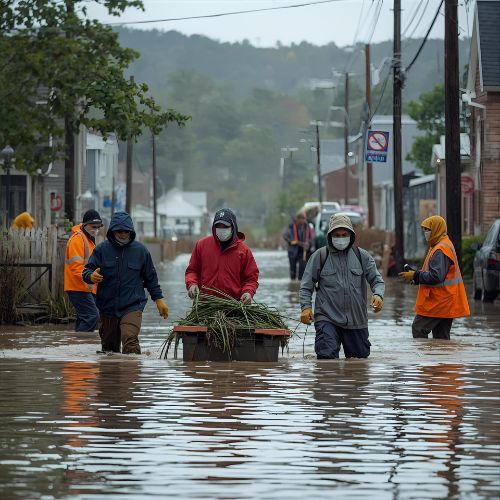
    In the aftermath of the devastating flood in Texas, citizens found ways to help. This article, “The Texas floods washed away their possessions. Volunteers are helping reunite them,” chronicles a Facebook group that posted pictures of items recovered, many of which the finder lovingly cleaned and returned to the owners. These community-rich citizens did not contact an organization for instruction; they did not wait for interviews nor background checks. They saw a need and created a solution.

    Or, consider this recent article, “No one claimed his body when he died. These strangers came together to help bury him.” Citizens showed up, answered the call, and formed a “chosen family” for this gentleman.

    What are modern socially minded people looking for?

    What if we harnessed the social goodwill of the people who responded after the Texas flood or became surrogate pallbearers? What drove them to act? Was it the immediate need? The camaraderie that comes from a united front? The instant impact they experienced? Can we provide the same urgency and results-based satisfaction? Can we give them a semblance of the freedom to find solutions rather than just telling them what to do?

    How can we embrace the community partner?

    What if, in a perfect world, we imagine a community of partners ready to help when the need arises? Let’s take it to the extreme first, (and by extreme, I mean mostly unattainable at this point) then pare it down and chop it into pieces that we might manage.

    • In the extreme, everyone in our communities receives an invitation to basic volunteer training, and those who complete training have willingly completed background checks.
    • Volunteer training and opportunities are front and center in schools.
    • Communities, whether municipalities or villages, each track volunteer hours and projects and, with gamification in mind, vie for the title, “Most Community Spirited.”
    • Nonprofits share, not hoard, community help.
    • Nonprofits collaborate with one another to share resources, ideas and solutions. Instead of operating in silos, we recognize challenges are complex, and working together benefits the community. Instead of competing for donations, grants, government help, and volunteers, we band together in more efficient ways.
    • Community truly means community as nonprofits operate under an organic concept versus an emphasis on the prevailing system.
    • When help is time-sensitive, such as in a disaster, mobile notifications, akin to the ones emergency warning systems use, would kick in. Messages inform individuals how they can help, while also warning them about dangerous conditions. (For example, stay away from downed wires on main street-emergency personnel are on scene).
    • Community partners have an opportunity to sample a wide variety of roles, giving them a broader connection to their neighbors through multiple and varied interactions, thus leading to a more cohesive community.

    Many studies have shown that people have not stopped wanting to help; they are simply looking for better ways to do it. They’re finding solutions that are immediate, impactful and unburdened. Informal volunteering is alive and well.

    So, how can we pivot and harness the shifts we are seeing in volunteerism so that they work for our missions and work for volunteers? How can we keep up with mobilization and a rapidly changing culture of helping?

    Training-a tiered approach

    In this perfect world, training comes in tiers. In 2018, I wrote an article for the Engage Journal, “Effective Volunteer Training is a Three-Tier Investment,” in which I talked about volunteer training as tiers. With a tiered training program, volunteers can quickly get started. Then, as they seek deeper involvement, we provide the in-depth and specific training for more complex roles.

    Can we generalize basic volunteer training? I believe so because organizations share similar concepts, such as “do no harm.” All participating organizations would agree on the basics covered in a general volunteer training video, thus giving organizations a pool of volunteers for events, simple assignments and even fill-in positions. Instead of waiting for an assignment from one organization, volunteers could choose from a variety of roles, times and places to volunteer. And our benefits would come from:

    • Drawing from a larger partner pool.
    • Directly tapping into the urge to serve when needed-think disaster relief and even events or special projects.
    • Using the sense of urgency that begets action.
    • Keeping the people who are not being engaged from giving up. Instead of waiting for a notification from one organization, every volunteer would experience a vibrant world of volunteering that offers them choices in roles, locations, times and durations, giving them a greater sense of how our communities are interwoven and complex, which confirms how much their involvement matters to their neighbors and fellow citizens.
    • Exposing more people to our work. After sampling a role, people might like what they find and want to become more involved. We may actually see an uptick in the number of people who want a recurring role (thank goodness). As community partners sample various volunteer opportunities, not only would they feel their interests are being taken seriously, they might find a fit.
    • Putting our communities first as opposed to competing for volunteers, resources, donations, media play and grants.
    • Fostering a sense of humble inclusion, and of wanting to fully engage the citizens who live in our communities.
    • Positioning our organizations as community partners versus the perception that “we’re the experts here, so come and do what we tell you to.”
    • Making diversity the norm, not a goal for the future.
    • Embracing innovative ideas.
    • Exposing volunteers to more missions, multiple needs, and a more diverse representation of fellow citizens, all of which would lead to a more cohesive community.
    • Capitalizing on the “helper’s high” volunteers experience when they see what their work has accomplished. As each volunteer experiences a role that impacts a mission, we could offer them something “next,” something more, by giving them a variety of options, instead of letting those feelings cool.

    If organizations banded together and created a solid, basic orientation that touched on missions, responsibilities as community partners, rights of the participants, and treatment of people within our programs, we’d have a solid base for our community partners to get started.

    What about notifications?

    Fortunately, we have technology and the ability to communicate immediately. In the case of the Texas flood or the need for a pallbearer, a communications center could mobilize already vetted citizens, while informing them how, why, and where dangers to themselves and others exist.

    While we don’t yet have a central communication system for partnering non-profits, we can still collaborate. How?

    • Inform volunteers of opportunities other organizations offer.
    • Conduct some volunteer meetings together. Let volunteers meet each other and share tips and stories.
    • Pool resources and pay for a speaker to inspire all community volunteers.
    • Celebrate Volunteer Week as a group.
    • Band together and share trends and challenges.
    • Review policies and procedures with other volunteer managers.
    • Forge a united front to advocate for the resources everyone needs.
    • Make impact, not number of volunteers, as your organization’s goal in your reports and when speaking about your volunteers. Change the narrative from retention to engagement and point to the untapped potential your community offers.

    Of course, there are drawbacks

    Change is never easy nor perfect, and change is difficult even if it is inevitable. But the possibilities are worth it. We’d foster a community of helpers. Cooperative training can streamline the onboarding process. After basic volunteer training, each organization would then offer ongoing and specialized training. Time-strapped volunteer managers could share in providing refresher courses, celebrations, and meetings.

    Silos aren’t helping us. What if, instead of making retention one of our primary goals, we band together and orient our citizens to be communiteers, or community partners? What if we put the community and our volunteers first?

    I know I’m throwing out broad concepts that are easy to voice from my laptop lofty goals, but I think we can move towards a space where volunteering is not only better for the volunteer and for our community, it is more organic, and more in keeping with the trends we are seeing instead of remaining constrained behind aging systems that still value these outdated measurements of success above more important concepts;

    • Number of volunteers
    • Number of volunteer hours
    • Volunteer retention
    • Volunteers who fill regular slots

    Change doesn’t happen overnight, so if I’m throwing concepts out there like tossing bread at pigeons, how do I expect to get there?

    • First: We can start by sharing or continue sharing and recommending volunteers with/to other volunteer organizations in our areas.
    • Second: Finding, joining or creating local volunteer engagement professional clubs or associations in our communities in which to share, discuss and find solutions to volunteer issues and needs. There’s more leverage in becoming a one-voice force that can speak to volunteering’s challenges by using collective knowledge and experience.
    • Third: Flexibility. Let’s create more flexible roles and increase programs that can accommodate students and groups of volunteers. Corporate social responsibility is on the rise. Students are more socially conscious. One way might be to partner with other volunteer organizations to create rotating schedules for students during summer break so they can experience a variety of opportunities. (Full disclosure-I tried to do this many years ago and it flopped, but that was then and I didn’t do a good job of structuring it.)
    • Fourth: Communication is the key to mobilizing volunteers, and tech is the answer. Would a system such as a local municipality warning system work to communicate with volunteers? Would it be treason to collaborate with other volunteer organizations to send out combined messages? Volunteers could opt-in to be contacted by multiple organizations through text messaging, giving them a range of opportunities.
    • Fifth: Costs. Will local governments help, or will a consortium of non-profits decide to share the background checks and training costs?

    This “perfect world” concept is daunting, but we leaders of volunteers know how critical it is to engage volunteers, not by dictating to them, but by offering them experiences that will light up their desire to help. So, what’s better? A volunteer joins an organization, doesn’t find the experience they are looking for and quits volunteering altogether. Or, that same volunteer joins a pool of community helpers, tries out an organization, doesn’t find a fit, but finds one at another organization. In both instances, the first organization loses a volunteer. But in the second scenario, another organization gains a volunteer, thus growing our pool. Is this concept so far out of our reach?

    But wait, it’s already being done

    In Maia Portugal, the seeds are in place. From this article, “Volunteering as the Invisible Engine of Social Cohesion in Europe,” the following paragraph sums it up:

    “Maia’s recognition as both the Portuguese Capital of Volunteering and the forthcoming European Volunteering Capital 2026 is far more than a symbolic  honour; it reflects a long-standing commitment to civic engagement,  innovation, and community solidarity. These titles represent not only what Maia has achieved, but also what it aspires to become: a municipality where volunteering is central to public life and social transformation.”

    So, that “perfect world” is attainable. Volunteering is a social activity, one in which everyone benefits. We’ve all witnessed how barriers, fears and hesitations fade as people offer and receive the best of themselves and each other during deep human connections. We, all of us in the volunteer engagement profession, have always championed volunteering as something bigger than hours given.

    Why can’t we begin moving volunteering towards a community partnership, one more inclusive, and geared towards engaging volunteers versus using volunteers? I think the world just might embrace it.

    -Meridian

  • Volunteer or Partner, and What is the Difference?

    It always went something like this. When someone showed an interest in volunteering, I would:

    • Interview the prospective volunteer.
    • Tell them all about the amazing roles we had available.
    • Invite them to an open house.
    • Sign them up for training.
    • Conduct a post-training interview and discuss placement.
    • Contact their chosen department and introduce them to their new supervisor and role. (Unless I kept them in the volunteer department-which I highly recommend doing sometimes, because you need great people too).

    Along the way, we would discuss rules, regulations, and expectations; not only what we expected of them, but what they could expect of us.

    I’d give new volunteers a policies and procedures manual and also a volunteer bill of rights. It covered all bases, didn’t it? But what was the message? “Here’s what we expect from you. And here is what you can expect from us.” While thorough, these two documents subtly read “separation.”

    It made me think about all the ways we keep volunteers in a separate (and unequal) box. It also reminds me of a time when a fellow staff member, whose position was on an equal rung of the organizational ladder as me, introduced me to a group of people and said, “I’m so glad she and her people are here to assist me.”

    Now, I’m being picky and petty, but that statement smacked of separation and condescension. I probably would have ignored it, but for the prickly feeling under my skin that always flared when volunteering was treated as an “other” or a “nuisance” or “just fluff.” The point is not my fragile little feelings, but the perception that all things related to volunteering are less than, lower than, outside of, and therefore, not equal, which is sadly pervasive in the things we say and present to volunteers.

    Why a partnership? Aren’t we supposed to fill jobs?

    I’ve heard of some organizations creating a contract with volunteers, but is a contract the right idea? What about an understanding? A covenant? Or a pact? How about a partnership?

    If everything boils down to the mission statement, then isn’t everyone who makes the mission succeed working towards the same goal? Currently, we model volunteer engagement partly on how companies hire someone to do a specific job that creates a product or service and offers payment in return. A volunteer fills a slot, (job) such as packing boxes of food (product or service). In return for their good work (payment), we recognize the volunteer.

    But the differences in volunteering vs. working render our current engagement models difficult to sustain, mainly because volunteers have shifted their view of formal volunteering; what they want for it and from it. Enter the rise of informal volunteering, which is immediate, more flexible and offers the ability to create a role that fits the volunteer’s skill-set and creativity. Add to this the growing distrust of institutions and how they not only manage time and money, but how they cling to the power they possess.

    Volunteers no longer blindly accept our volunteering model. Their “payment” is no longer as simple as feeling good about doing good (They can get that feeling every time they help a neighbor, let someone with only one item cut in line, return a dropped pacifier to a harried parent, or click a “like” in social media). Volunteers don’t see themselves as second citizens, filling the roles their superiors deem necessary. The status quo disheartens them. They view themselves as capable, willing to share skills and enthusiasm, happy to help on their terms and eager to share their good ideas. So, why don’t we embrace this modern volunteer?

    Are there deeply embedded considerations in a status quo that have shaped non-profit work over the many years? Are non-profits tightly managed systems that operate more on processes than outcomes? And are these processes clutched so tightly that we suffer from the inability to let in new ideas, new ways of doing things, and new people? What fears can stop us from innovation? Maybe…

    • pride (Only I can do this well, I know how, have been at it so long, etc.)
    • change aversion (we’ve done it this way, and it’s worked for the most part. Why go through all that upheaval?)
    • donor input (what will our donors say or think if we make even subtle changes, we can’t risk upsetting them)
    • fear of being out-performed (I am de-valued if someone else does the job better than me)
    • mission possessiveness (Someone else can’t care as much as me. Look at how hard I work, all I’ve accomplished)
    • overworked condescension (I’m here 50 hours a week, how can someone here 2 hours do anything better?)
    • fear of replacement or being devalued (if all these outside people come in, eventually they won’t need any of us anymore)
    • run amok fear (if we just tear everything apart, let all these new people in, everything we’ve accomplished will be for nothing and our organization will descend into chaos)

    Volunteers Can and Should Lead

    What about the long-standing ideas we can’t trust volunteers to do the job as well as staff, or can’t handle sensitive information, or don’t understand what is at stake? Sure, but every staff member starts at square one. Until they prove themselves, we don’t know if they can do the job, or if we can trust them, or if they understand what’s at stake. The same is true of volunteers. I would never assign a new, untested volunteer to the most sensitive, complex assignment. Throwing new volunteers into a sensitive assignment was not only unfair to the mission; it was unfair to the volunteer.

    Nonprofit work is emotionally and mentally taxing, and it’s callous to drop someone new into an emotionally heavy situation. Proper training, diligent observation and monitoring, feedback from supervising staff, as well as a great mentor program, will ensure the new volunteer is ready for complex roles. I remember one volunteer, a gentleman who took over a year before he felt ready to even attempt interacting with patients. But that year paid off. He became a marvelous volunteer. The notion that volunteer managers throw any old body at a role is ridiculous and insulting. We know what is at stake and we vet and mentor volunteers thoroughly and carefully.

    Don’t Hide Your Dilligence

    We have to be better at making sure everyone in the organization knows our processes in vetting, onboarding and training volunteers. They won’t know unless we show them the lengthy steps and stop-gap measures we have in place. They will have doubts about allowing volunteers to do more unless we assure them we continually monitor volunteers, especially those who work with vulnerable populations. Our professionalism and dedication to quality over quantity and expediency will satisfy their doubts.

    During one of my most successful volunteering projects, I quickly realized that I needed to step back and give the volunteers space to make the project succeed. Did I want to be in control? Heck yeah. Did I want all the glory? (Especially when it was a complete success). Did it bother me when the acknowledgements passed me right by and went to those who deserved it? Surprisingly, not really. Watching something thrive because the right people made it happen was much more satisfying than a fleeting praise thrill. Although not the same, I kind of equated it to watching a child succeed. That feeling of pure joy is unmatched.

    But why partnership? I’ve referred to and heard others call volunteers all kinds of things. Helpers, advocates, customers, aides, extras, the heart of, add-ons, etc. But none of those terms implies an equal footing. And isn’t it time to acknowledge that someone who gives their time to ensure our organizations succeed is equally valuable, whether paid or unpaid, or are we more invested in processes than results?

    People freely lob skepticism at volunteers-criticising them for lacking investment, needing hours for a service project, or simply wanting to get out of the house, but don’t some non-profit employees just need a job or clock out at 4:55 no matter what, or cause havoc in untold ways? (Heck, there were days I didn’t want to be at my job so I didn’t give 100%, so why was that ok?) The point is, can we stop assuming that pay automatically equates to passion and dedication, that pay guarantees there will be no missteps?

    Should we move towards creating more partnerships with volunteers? Honestly, I think we have to. We are recruiting, training and attempting to keep volunteers based on a system that worked thirty years ago. One of the most frustrating things in my long career has been onboarding a volunteer who had so much potential, so many skills to offer, only to see them shelved. All that wasted potential just evaporated, along with the many ways our mission might have been better served.

    The subtlety of partnerships

    So, how do we ease into a partnership? First things first: Let’s stop using old phrases, such as, “help us cure X disease or eradicate homelessness.” Instead, let’s say, “Together, we will combat social isolation.” Or, “Partner with us in our quest to provide food security.”

    Should we do a pinky swear? Maybe symbolically? One keyword in defining a partnership is “participation.” Volunteers certainly fit that term. They take part in accomplishing mission goals. But we can make no mistake. Participation no longer means “tell me what to do and I will do that.” Participation encompasses a say in how and what the volunteer will do.

    So, as we, leaders of volunteers strive to create more flexibility, more options, more roles that fit a volunteer’s vision of how they will become involved, isn’t that a partnership rather than a top-down relationship? For years, we’ve had to push back against volunteers who want to have a hand in defining their involvement. We had set roles and if a volunteer, no matter how brilliant and creative or how much influence or resources they brought, wanted something other than what we advertised, we rejected them, or worse, cajoled them into shredding papers (Hello, WWII generation).

    How do policies and procedures work in a partnership? If we understand volunteers are generally governed by the same rules and regulations, as well as have the same rights as paid staff, then we should embrace that fact. Instead of a separate but mostly equal divide, we can craft policies and procedures from the existing policies staff must abide by. With few exceptions, they will apply to volunteers. We can word them as: No one at Organization X will violate anyone’s right to privacy. No one at Organization X will steal funds from our donations. We all will respect the rights of the people we serve, including the right to religious beliefs and the right to cultural traditions. It’s a simple shift, but it sends an inclusive message.

    Are volunteers the fluffy extra?

    I recently read an article, comparing volunteers to worker bees: Why Are We Ignoring One-Sixth of the Nonprofit Workforce? (if there are worker bees, that means there’s a queen and we all serve her-sorry but founder’s syndrome aside, I’ll ask again, are we about processes or outcomes?). I think comparing anyone to worker bees is highly insulting. As a volunteer myself, I’m highly insulted. Today’s volunteers do not see themselves as worker bees or fluffy extras. They see themselves as contributing partners, people of value, and worthy of being treated as partners, not cookie cutter “helpers” who serve the perpetuated system.

    So, the question then becomes, “how do we present the subtle idea of partnerships to staff and senior management?” Won’t they balk at giving volunteers a perceived elevated status? Possibly. Would this give a few volunteers the wrong idea that they can critique everyone and everything in the organization? Sure, but you know what? In my experience, that occasionally happened anyway. And here’s the thing. Does paying staff magically prevent them from overstepping boundaries? Of course not. I’ve seen finance staff criticize clinical staff and vice versa. Human beings will act like human beings, no matter their title.

    Everyone is Subject to Rules and Policies

    We explain that everyone, whether paid or a volunteer, can use established channels or procedures to raise concerns or offer suggestions on any matter, regardless of whether it relates to their specific areas of work. Rules and common decency apply to everyone. This reminds me of several volunteers who did such an outstanding job, my organization hired them. These volunteers were already under the same policies and procedures as staff and could transition more easily.

    If we think about the rules for staff and the rules for volunteers, they mirror each other. A partnership means rules and policies are for all, including volunteers. A partnership is about leveling the field, being inclusive, not patronizing, not treating volunteers like children or worker bees, not excessively stroking their egos so they don’t quit, but welcoming them as responsible partners. And treating them with the respect that rules and regulations imply. Rules say, “you are one of us and we are holding you to the same high standards we expect of everyone in our organization.” There’s power and pride in expecting excellence. None of us enjoys disciplining or rejecting a volunteer. But if we do not set an excellence standard, why should a volunteer provide excellence?

    Partnership Benefits

    Let’s look at what we can offer organizations when forging volunteer partnerships.

    • Successful partnerships rely on the strengths of each partner in order to create something better. Our organization gains the skills, knowledge and expertise a volunteer brings while the volunteer gains experience, a sense of belonging and accomplishment when given the opportunity.
    • Partnerships accomplish mission goals more quickly. With partnership help, goals, whether lofty and broad, or specific and time sensitive, can be reached more quickly with skilled partners who share the vision. Volunteer impact not only accomplishes goals, it becomes a marketing tool that showcases how our organizations are community-minded, open and inclusive, and care more about mission outcomes than organizational processes.
    • The community is better served. When community partners are engaged, the community is engaged. Existing in silos is no longer an organizational winning strategy. Communities talk. They know which organizations operate from a “we know best” approach versus those who invest in being a true community partner that respects and encourages direction from the people they serve.
    • The community becomes more involved. We know volunteers talk. They talk to family, friends, clubs, other organizations, neighbors, associations, acquaintances, church groups, and anyone they encounter. What will they say? When we embrace them as partners versus worker bees, their assessment of their experience will bring in more resources, donations and more volunteers.

    Change doesn’t have to be a hammer

    Any change needs systems in place to prevent headaches or going off the rails. Encouraging volunteers to be partners means fielding more input from volunteers. I always found a volunteer advisory council was a great way to manage all the innovative ideas and feedback from volunteers. It is a way to channel enthusiasm and suggestions through a filter: the expertise of other, experienced volunteers, understand organizational hierarchy, and can make sound recommendations. If a volunteer has a great idea, the council can recommend a pilot project to test that idea. I have to admit, pilot projects were my happy place. Some didn’t work, but many did. And pilot projects that are temporary, experimental, and quickly discarded if not viable, are much easier to implement and sell to upper management than a permanent project. These successful projects, run by volunteers, were partnerships. My organization did not create the roles or the objectives, both short and long-term. The volunteers created them out of seeing a need, or having experience in creating solutions, or from hearing about another way of accomplishing a goal. The volunteers determined how to run the projects, including measuring success or failure, and the most efficient way of delivering results. That is a partnership. (and the old adage is true: Success can breed more success)

    Partnerships do not exclude accountability

    But make no mistake. Any volunteer within these partnership projects went through training, completed a background check, and was subject to rules and policies. Having a partnership project did not mean becoming lax, or not paying attention to risk. I’d always laughingly say, “I’m a risk management specialist who dabbles in volunteerism.” Mildly amusing but there’s an important truth here in the message, “if you are one of us, a partner passionate in fulfilling our mission, you will integrate by taking our training, signing our forms, abiding by our rules, just as every one of us must do.”

    Formal volunteering (aka volunteering with an organization and abiding by its constraints vs. taking matters into your own hands when becoming involved) is losing its appeal. Please take a moment and read this article; “Volunteering is thriving – Just not where you’ve been looking.” It succinctly explains where volunteering is headed. For years, many experts in the volunteer engagement field have been sounding a warning that volunteer expectations have been shifting, and the older models of volunteering are losing their appeal. We cannot keep doing the same thing over and over and expect the same results.

    Do we truly want to see our missions succeed?

    We can make changes to better position ourselves to attract good, competent partners, whether individual volunteers or groups or other organizations who believe in our missions and will bring their passion, creativity and innovation. We just have to decide what is more important: Outcomes, goals and mission or systems and status quo.

    -Meridian

  • VPT Podcast: Episode 22: Part 2: An Interview with Wes Richardson, Manager of Volunteer Services

    In the conclusion to part 1, Wes, who began his new job as manager of volunteer services in December 2019 and as the new head of volunteer services, had to almost immediately send volunteers, ones he didn’t get to know well, home. In part 2 of this interview, Wes chats about his experiences, including:

    • Difficult conversations
    • The hardest thing he’s had to do as a volunteer manager. (and it’s not what you might expect)
    • Rounding on volunteers, building that relationship
    • Diversity and Inclusion
    • Example of intergenerational success
    • That “third place” where volunteers are free to bond with one another
    • After the past two years, where is volunteerism headed?
    • Technology-what can it do for us?
    • Clear desk, clear mind
    • What Wes would love to see “in a perfect world”
    • What volunteer managers really want
    • Why we need each other
    • Are our problems so different from one another’s?

    Wes’ bio:
    I was born and grew up in the panhandle of Florida, just north of some of the most beautiful beaches in world. My first job at local radio station found me while in high school. (Believe me, as a shy kid, radio was the last thing I expected to work in!). After 13 years, I transitioned into my first volunteer leadership position at a small hospital on Florida’s gulf coast. It was there my love for this field truly took off. I moved into nonprofit multi-state event volunteerism for a short while before finding my current position with a large health system covering Northeast Tennessee and Southwest Virginia. Here, I manage the volunteer programs for four hospitals, including the system’s flagship medical center and only children’s hospital. The job didn’t start out the way I planned, with the COVID-19 pandemic beginning shortly after. Nevertheless, it has been an experience full of possibilities and new and exciting challenges to overcome. I like to consider myself a “helper to the helpers,” serving those who give so selflessly of their time and energy to move our mission forward. I can’t wait to see what lies ahead for volunteerism, not just in my small corner of the world, but for all of us who are fortunate enough to call this field home. If you have any questions or would just like to connect, my email is rwesrichardson@gmail.com.

    Listen on Buzzsprout here

    Listen on Spotify

    Listen on iHeart Radio

    Listen on Apple Podcasts

    Listen on Stitcher

    Listen on Google Podcasts

    A big thanks to Wes, I had a great time, appreciate your passion for volunteers and volunteerism and your willingness to find solutions when things get tough. Your ability to see potential and not defeat, to find solutions and not excuses, and to look forward, not back is an inspiration.

    -Meridian

  • VPT Podcast: A New Job and Covid hits: An Interview with Wes Richardson, Manager of Volunteer Services Part 1

    Hi and hope you enjoy this podcast as much as I did!

    Wes began his new job as manager of volunteer services in December 2019 and as the new head of volunteer services, had to almost immediately send volunteers, ones he didn’t get to know well, home. In part 1 of this interview, Wes chats about his experiences, including:

    • That initial shock.
    • The suspension and not knowing what would ultimately happen.
    • How do you introduce yourself and say, “Hi, BTW, stay home.”
    • Nurturing the personalities you’ve not gotten to know yet.
    • Am I the bad guy?
    • Make volunteers feel like they’re still here.
    • Involve the volunteers in everything you can, like training.
    • How a former career may have helped-what skills transferred over.
    • A forced rebuild.
    • New protocols.
    • Eliminate roles or find adjacent roles.
    • Change management.
    • Volunteers “aging out.”
    • The challenging conversations-sandwich anyone?

    Wes’ bio:
    I was born and grew up in the panhandle of Florida, just north of some of the most beautiful beaches in world. My first job at local radio station found me while in high school. (Believe me, as a shy kid, radio was the last thing I expected to work in!). After 13 years, I transitioned into my first volunteer leadership position at a small hospital on Florida’s gulf coast. It was there my love for this field truly took off. I moved into nonprofit multi-state event volunteerism for a short while before finding my current position with a large health system covering Northeast Tennessee and Southwest Virginia. Here, I manage the volunteer programs for four hospitals, including the system’s flagship medical center and only children’s hospital. The job didn’t start out the way I planned, with the COVID-19 pandemic beginning shortly after. Nevertheless, it has been an experience full of possibilities and new and exciting challenges to overcome. I like to consider myself a “helper to the helpers,” serving those who give so selflessly of their time and energy to move our mission forward. I can’t wait to see what lies ahead for volunteerism, not just in my small corner of the world, but for all of us who are fortunate enough to call this field home. If you have any questions or would just like to connect, my email is rwesrichardson@gmail.com.

    Find the VPT podcast wherever you listen:

    Listen on Buzzsprout here

    Listen on Spotify

    Listen on iHeart Radio

    Listen on Apple Podcasts

    Listen on Stitcher

    Listen on Google Podcasts

    A big thanks to Wes, and we are so glad you have chosen volunteer management as your profession! Your passion and enthusiasm for nurturing volunteers and showcasing their impact and potential is what we need.

    -Meridian

  • Sustainable Volunteering is Here, but Who is Sustaining The Leader of Volunteers?

    Economist William Forster Lloyd, in his 1833 “Tragedy of the Commons” speculated that when pastureland (the commons) is hoarded, over-grazing occurs, dooming the commons to depletion.

    Volunteer sustainability is radically different from volunteer retention. Sustainability, unlike retention is the ability to maintain a healthy balance while avoiding depletion. Sustainability, as it is being applied to agriculture, economics and ecosystems implementation implies that there is a larger network to be considered. For volunteer management, it implies that resources are hoarded (retention) and depleted by burning out, or alienating volunteers in our quest to hang on to them. For more on sustainability as it applies to volunteers, see my 2017 posts Sustainability and Volunteerism and Innovation and Sustainable Volunteering.

    .

    What about the Leader of Volunteers?

    But wait, what about the volunteer manager? Who sustains us? Who nurtures and supports us? How do we keep from becoming burned-out or depleted?

    The dilemma nonprofits created years ago when setting up the volunteer system extends to volunteer managers. If volunteers are finite resources, we compete with one another to get and keep volunteers. We measure success by numbers of volunteers retained, numbers of hours donated, and money saved, even though we know these are depleting measurements and that volunteer engagement and impact are true indicators of success. Under antiquated notions, we tend to feel like a cog in a wheel, and not the creative drivers of solution-oriented volunteer initiatives.

    Sustainability not only applies to volunteers, it applies to the person leading the volunteers. If the volunteer engagement expert feels like they are choking, begging for sustenance, depleted of energy, starved for nutrients, they will wither and quit. The organization will bring in a new volunteer manager, only to deplete that one, and on and on it will go until real change is enacted.

    Where is our tribe?

    Where do we find nurturing in our profession if it is not readily available at our workstations? Where is our tribe, the people who support and hear us, who accept us and commiserate, who share similar experiences and offer workable solutions? Think of the conferences you’ve attended in-person or online. Did you find sustenance in connecting with other volunteer engagement professionals? Did you feel that nurturing? Did you come away refreshed and not so alone?

    Would the world end if we, Leaders of volunteers detached from viewing ourselves as cogs in an organizational wheel, with duties to serve the needs of the organization, no matter what, even if we offer better and more sustainable solutions? Would we be awful people if we shifted some of our alliance away from our immediate ecosystem and towards the larger network (volunteerism)? Would everything collapse if we stopped being loyal to a fault and started relying more on a tribe that supports us?

    What happens if we shift our perception and think of ourselves as part of a larger network (volunteerism) serving our communities and the world? Would that actually help us in the long run?

    Leader of Volunteers: A desk job or a profession?

    Think of professions that have a unique identity, a brotherhood, a camaraderie, a perception, like firefighters, nurses, teachers, military personnel, actors, accountants and so many more. We lump them together instead of thinking of them as just workers in a setting. We think of them as having unique roles to play, skills to possess and challenges to overcome. We perceive them supporting one another, sharing valuable information and banding together to elevate their profession. These professions are a tribe.

    Our sustainability lies in creating a united front. It lies in tightening our profession by uniting voices with common goals, practices and contributions to our work. How can we band together?

    To change the perception that we are just desk job workers, employed to fulfill the edicts from organizational hierarchy, we must create the larger network, and a purpose higher than slotting volunteers into pre-determined roles. How can we strengthen our tribe?

    Everything is local.

    Local is the starting point.

    • Join every local volunteer manager peer group and start one if you don’t have one.
    • Band together and share volunteers.
    • Share expenses to bring in speakers.
    • Share successes and adopt effective programs, policies and systems.
    • Band together on service days to do a project.
    • Share/refer corporate partners.
    • Make volunteer recruitment a community process, not an “us vs. the rest of the organizations” process and tout how nurtured volunteers do more.

    I know you are already doing these things. So, step 2: We now have to make sure everyone knows we are doing these things, especially every organization’s hierarchy. How?

    • Loudly visit other volunteer managers’ home bases.
    • Ask a volunteer manager from another organization to speak at your team meeting and talk about common challenges and solutions.
    • Refer to successes at other organizations and how you have reached out for help in adopting best practices.
    • Quote other volunteer managers.
    • Show how commonality is beneficial for every mission.
    • Gather examples of successes outside of your walls to illustrate the changes you wish to make.
    • Speak about volunteerism as a community concept instead of just as a means to an organizational end.

    Everything is global

    Just as in local, sustainability is global.

    • Get as many certs as you can such as the CVA.
    • Join national associations like ALIVE, NCVO etc.
    • Adopt information from global authorities, read journals like Engage and share articles with staff and senior leadership.
    • Create a fact sheet with global statistics on volunteering that show your challenges and solutions are not unique, but part of a larger picture.
    • Band together with other local volunteer managers and invite recognized speakers, or pool money and loudly attend webinars together.
    • Use the knowledge out there. Organizations tend to believe an outside source over the expert in the midst, so use it to your advantage. “Hey, look, this expert is saying what I’ve been saying, or “here are some national statistics to back up my ideas.”

    The Leader of Volunteers Tribe

    We, Leaders of Volunteers are a tribe. We support, nourish and share with one another. Beyond personal gratification, our banding together to present volunteering as a sustainable community solution will not only sustain volunteers, but will lead to a better understanding and respect for our role in leading volunteers. We’re not desk workers floundering to get and keep volunteers, we’re a profession with bucket loads of tried and true solutions, policies and procedures already tested by others, visions for the future based on real research, and applicable knowledge forged in years of experience. That’s a heck of a tribe.

    We, leaders of volunteers are a tribe of good people with much to offer the world. Lean on one another, but not in secret. Lean in the light.

    -Meridian

  • VPT Podcast: Catching Up with Laura Rundell, CVA a Year Later Part 2

    In part 2 of our catching up podcast Laura discusses:

    • Inspirational volunteers who support people knowing they cannot change circumstances.
    • Volunteer appreciation-do we need a luncheon or even a week? Where should our focus be?
    • Evolving volunteer recognition.
    • Team nomination vs. volunteer of the year. (update, it worked!)
    • No one, including staff gets there on their own.
    • Person of the year? What’s the point?
    • Volunteer voice of descent-why we should listen.
    • Grumpy volunteers-just grumpy, or do they have something to teach us?
    • When introducing change, get those grumpy volunteers on board first.
    • Standing up for volunteers.
    • Recognizing we are a profession.
    • The nonprofit smoke alarm.
    • Respect for volunteer program means respect for ourselves.
    • Turnover due to poor culture.
    • Dare we talk salary?
    • Work/Life balance-yes, we must have one.

    Listen on Buzzsprout here

    Listen on Spotify

    Listen on iHeart Radio

    Listen on Apple Podcasts

    Listen on Stitcher

    Listen on Google Podcasts

    Laura Rundell has been in the field of Volunteer Engagement for over 20 years, working at organizations of varied sizes and missions. She has worked at Phipps Conservatory in Pittsburgh, PA; LifeBridge Community Services in Bridgeport, CT, and currently works for the Friends Program in Concord, NH. She received her CVA in 2013, has led workshops on performance reviews for volunteers, and written guest blogs for 20 Hats and Volunteerplaintalk.

    She received her BA in political science from Earlham College and her MA in History from Northeastern University. You can find Laura at Linkedin: https://www.linkedin.com/in/laura-rundell-960a13b6/

    Congratulations on the Volunteer Team Award, Laura! See, you are a pioneer! And, as always, I had a blast, so thank you for sharing your wisdom, tips for managing change and experiences with us!

    -Meridian

  • VPT Podcast: Catching Up with Laura Rundell a Year Later Part 1

    In Part 1 of a 2 part episode, I catch up with Laura a year after our first podcast. What has changed? What is the same?

    Laura discusses:

    • Are volunteers returning?
    • Change means an uptick in needs
    • Paid staff are scarce
    • Pre-pandemic models vs. post pandemic models
    • Where does the program go moving forward?
    • Navigating a shifting landscape
    • Getting volunteer buy-in upfront
    • Making volunteer roles definable
    • What is sustainable-can we do everything?
    • Changing roles to fit today’s reality
    • Championing a new normal
    • Risk management and ethics
    • Communication to prevent the volunteer churn

    Listen on Buzzsprout here

    Listen on Spotify

    Listen on iHeart Radio

    Listen on Apple Podcasts

    Listen on Stitcher

    Listen on Google Podcasts

    Laura Rundell has been in the field of Volunteer Engagement for over 20 years, working at organizations of varied sizes and missions. She has worked at Phipps Conservatory in Pittsburgh, PA; LifeBridge Community Services in Bridgeport, CT, and currently works for the Friends Program in Concord, NH. She received her CVA in 2013, has led workshops on performance reviews for volunteers, and written guest blogs for 20 Hats and Volunteerplaintalk.

    She received her BA in political science from Earlham College and her MA in History from Northeastern University. You can find Laura at Linkedin: https://www.linkedin.com/in/laura-rundell-960a13b6/

    Thank you Laura for sharing your wisdom, tips for managing change and experiences with us!

    -Meridian

  • What Are Volunteer Incentives, Anyway?

    What incentivizes a volunteer to stay or do more? Does it matter if volunteer incentives differ from employee incentives? Do we want them to be the same?

    We want volunteers treated as an integral part of the nonprofit workforce (oftentimes the biggest portion), but the reality is they are treated as separate in most ways, including incentives. And the more volunteers are separated from staff, the less they are respected for their value. Can we do something about that?

    Plenty of Incentives for Staff

    How many of these employee incentives, listed by Indeed, are applicable to volunteers?

    • Monetary
    • Recognition
    • Rewards
    • Experiences
    • Professional development

    Um, let’s see:

    • Monetary-NOPE
    • Recognition-maybe, but it is a separate (and not equal) recognition as in organizational newsletters which clearly differentiates between staff and volunteers, or separate award ceremonies
    • Rewards-sort of, if you count luncheons and gift cards and other stuff, but not when it comes to meaty stuff like promotions or vacation time
    • Experiences-YES and often volunteers have better experiences than staff, so we’re smart enough to capitalize on great experiences as incentives and recruitment strategies
    • Professional development-NOPE, at least not as a standard practice

    Volunteer Incentives Are The FREE Stuff

    When you search for volunteer incentives, the word “Free” likes to tag along. Awards, thank you cards, pats on the back, blah blah blahhhhhhh. So, while staff get days off, raises, promotions, and vacations, volunteers stack up the thank you cards in a shoebox in the back of their closet; you know, the closet where they used to keep their volunteer luncheon outfit.

    When Expectations Kill Incentives

    Can expectations strangle incentives? Why do we expect volunteers to show up every day of the year? Where are their vacations? Sure, we assure volunteers (actually we gush) they are not obligated to show up by saying, “Look, you’re not staff. Just tell me when you need to be off and your job will be waiting when you get back. This is a no judgement zone.” Now, all this is lovely because we don’t want to judge volunteers for taking time off. They are with us because they want to be, right?

    But wait, what about all that grousing in the background that volunteers are unreliable? What about the jealous look a volunteer gets when they’ve returned from vacation and they want to talk about the cruise to Italy? What about that subtle, “well, volunteers just come and go as they please,” perception floating about? That mentality is not lost on volunteers.

    Here’s the dichotomy: We tell volunteers how valuable they are. So, how can we be so “understanding” when they need time off? The two don’t jibe, therefore one is false. Which one? (If I’m as valuable as you tell me, then my absence should cause you distress, right?) or (If you are so understanding about my absences, then I’m not as valuable as you say I am). Which one is true, because they cannot both be true?

    Sure, when a volunteer tells us, “hey, I’m going out of town because my mother had an accident,” we are all sympathetic and concerned and bend over backwards to make sure the volunteer knows we get it, but if they believe they are a valuable member of the team, then it follows they will feel like they are letting us down regardless of how much we say it’s ok.

    If We Don’t Formally Give Them Something, They Have to Take It

    Semantics, I know. But if you had no formal days off, how would you feel about taking days off? Guilty? Resentful? Stressed? For the love of all that is holy, let’s give them days off. Formally. As in, when they are onboarded, we say, “You have formal days off. We expect you and encourage you to take them.” Encourage them to take leave days. “Hey, you haven’t taken any leave days. Just wanted to make sure you’re taking care of yourself.” We talk about volunteer well-being, burnout, and mental health. But do we give them mental health days? Days to take care of their pets? Are days off given in a formal way, or does the volunteer have to take them?

    And we don’t have to use the word, “expect,” as in “We expect you to be here. We expect you to commit to a weekly schedule” or “we expect you to give us six months.” Instead, the message is clear when we say, “Your contributions are valuable. Your position is needed. Your impact is important.”

    Do Volunteers Have Formal Vacation Days?

    Here’s what used to get under my skin. When holidays loomed, staff understandably wanted off, so naturally they looked to shore up with volunteers. No one but me said, “you know, the volunteers have families, and need a day off too.” Make holidays days off for volunteers. And for those volunteers who come in on holidays, there had better be a gift card or something for their efforts. (because they are not expected to be there on a holiday,)

    Let’s make volunteer appreciation weeks a holiday by proxy and give volunteers those days off. Ask them to attend the party or whatever event you may schedule, but tell them to take some time off because the organization appreciates them and cares about their well-being.

    In reality, volunteers get unlimited sick days. But, unless we formally acknowledge they have a right to sick days, we put the burden on the volunteer. I’m sick, I’m letting my organization down. Refer to sick days as just that: a sick day. I used to say something like, “oh volunteer Ethel is sick right now,” or “yeah, volunteer Azra is under going surgery, would you like to sign this card?” I should have said, “volunteer Azra is on sick leave.” Subtle but formal, meaning Azra has a right to sick leave, just like any staff member here and no, he’s not being unreliable or not taking his position seriously.

    Incentives or Punitive?

    Days off comes down to numbers, right? How many sick or leave days? And, do we go punitive when a volunteer uses up their time-off? Well, yes we kinda already do. In your experience, when a volunteer has a long term absence you have to replace them if that position is valuable, right? That’s not punitive, it’s reality. If a volunteer ghosts you, you remove them after multiple attempts to contact them, yes? Those stipulations can be part of the onboarding conversation/contract.

    “We expect you to be absent from your volunteering for personal reasons. You have a right to be absent and we support you. You are valuable. If you need to be off for an extended period of time, we will have to replace you because your position impacts our work. When you return, we will welcome you back and brainstorm your return.” It’s formal, and the formality implies the importance, and the value.

    See, subtle differences add up. Volunteers are not exactly like staff, so they’re treated and viewed differently. But if we want to see real change in respect for volunteer value, we must do away with the subtle differences that make volunteers “fluffy” or “ancillary.”

    Volunteer Professional Development?

    There is a shift in volunteers wanting professional development. What can we give them? Can we promote volunteers in a formal way? Maybe, maybe not. We can certainly put them in charge of a project if they are willing, or on a volunteer think tank, or task force. We can add badges to their name tags indicating levels of training achieved, or years of service if you think that’s appropriate. We can invite them to educational events, or to board meetings. And we can track these promotions and professional developments with formal certificates, and titles they can add to their personal bios,

    Incentives can be the indirect things that show volunteers their work matters, such as:

    • Make sure equipment, and supplies are on par with staff
    • Give them workspaces on par with staff
    • Invite them to use the staff breakroom
    • A sit down with senior management
    • Pick a day to come in late
    • T-shirts
    • Designated parking spot for volunteer of the month
    • Initiate a moving trophy that travels from volunteer to volunteer
    • Recognize volunteers’ pet charities or clubs
    • Speakers on wellness, financial management, travel, etc.

    Incentives are Never the Same for Everyone

    How do we know what incentives volunteers are looking for? We don’t until we get to know that volunteer, so asking is one way. In the onboarding or interview process, you can directly ask, “what motivates you?” “Which of your skills will be valuable to your volunteering?” The answers can give some insight into what incentives are appreciated. If a volunteer points to their extensive IT skills, then an incentive might be telling that volunteer how their work on the organizational website created a more seamless experience for people looking to avail themselves of services. For example, “Hey, Torrence, after you made those improvements to our website, we saw a 30% increase in people applying for our services.” Put it on a certificate so Torrence can add it to his resume. It’s a formal way to professionalize incentives.

    Ask on a survey, “what is meaningful recognition” with choices. Not everyone wants public recognition so to be safe, balance public and private recognition. A rule of thumb can be: Publicly recognize a team or a project, and privately recognize the individual.

    The more we can give tangible, formalized volunteer incentives, the more volunteers will feel an integral part of the team and the more they will be seen that way.

    In this chaotic era, even subtle shifts can influence the changes we wish to see. Let’s not make volunteers feel undervalued by a glib understanding that “you don’t have to be here.”

    If volunteers are not just fluff, but impact the mission, then we should treat them that way.

    -Meridian

  • Gig Volunteering and Intellectual Property: Do We Own Volunteer Work?

    How much do we “own” volunteer work? Is it all about the legal (and don’t we know, when it comes to anything bad happening on a volunteer’s watch, legal becomes oh-so important). But what of the talents and abilities a volunteer brings? This viral story on TikTok about a woman who watermarked her work (because her boss kept stealing it) has a different lesson, hidden under the obvious one: keeping your work safe. But how does this apply to volunteers?

    Shifting Trends To Watch

    Before the pandemic, the gig economy and freelance work had already been growing (Freelance work accounts for 35% of the global workforce. Source: financeonline.com), and company loyalty has been shrinking. Today, recognition and personal satisfaction may come from social media followers instead of within the hierarchy of your boss saying you’re a swell employee or volunteer (company or organization). In the above, the woman who watermarked her work was replaced (fired?) and had to find another job, but her video was viewed over 3.7 million times with many “followers” offering support.

    The support from 3.7 million peers overwhelmingly helped the sting of retaliation from a few petty bosses Volunteering is not static. It is rapidly changing (despite Covid and sped up by the pandemic) and reflects the societal shifts we are seeing. So will volunteers become freelancers? Gig volunteers? Can they watermark their work? Do they have 2,000 followers from whom they derive support and satisfaction and so, our lovely pats on the back can’t hold a candle to all that positive feedback? Are we foolish to ignore the idea that volunteers have their own intellectual property? (Intellectual property is a broad categorical description for the set of intangible assets owned and legally protected by a company or individual from outside use or implementation without consent) Source: Investopedia.

    What Do We Own Exactly?

    Our volunteer organizations own our training, our processes, our mentorship, our educational information, our mission goals, our policies, and the work performed under our umbrella, but what about the unique skills, talents and abilities our volunteers bring, such as spot-on empathy, crazy good listening skills, mad technical skills, drool-worthy organizational abilities, soothing voices, or Shakespearean writing chops? I’m pretty sure we don’t teach volunteers those innate abilities, but, we recognize and put those abilities to good use.

    While I am not even remotely suggesting that volunteers will rise up and fight to own the volunteer work they do under an organization, I think we can extrapolate some insights from gig work, and the TikTok story, because as society shifts, so will volunteering.

    We Have Already Shifted Away From Old Models:

    In the ancient past (like 1998), orgs pretty much used these volunteering edicts:

    • we need this, so you will fill this role
    • we determine what works, so take it or leave it
    • we are the experts on our mission focus, so don’t bring untried ideas
    • it’s the tasks we value, not what you bring to our table
    • you are a tool, so act like one

    Gig workers create resumes highlighting their skills, experience and talents. Why can’t a volunteer do the same thing? We know that student volunteers are increasingly looking for volunteer opportunities that teach them new skills, allow them to test leadership abilities and give them something in which to enhance their resumes and better themselves. Why don’t we help volunteers create their own Intellectual/Empathetic/Skill Property resumes?

    Leaders of Volunteers already recognize volunteers’ unique talents and skills. When interviewing, we look for those talents and note skills when placing volunteers. We worm our way into volunteers’ hearts and minds, not because we’re nosey (tell that to my husband), but because we need to know the volunteer inside and out. What makes them tick? What are they so freaking good at? And ultimately, what makes them an outstanding and effective volunteer?

    We are lavish with our praise, especially for a volunteer’s unique contributions. So, who cares? Well, what if volunteers had resumes that highlighted their unique talents, complete with endorsements and examples? What if you were searching for a volunteer who could not only speak Arabic, but had this unique talent of bringing out the buried stories in someone’s life? Wouldn’t finding that volunteer be magic?

    I had lists and lists of volunteers and their skills, such as speaking another language, artistic talents, engineering background, etc. But only in my head did I know who was sensitive enough to bond with an aching heart, or was astute enough to keep quiet while someone grieved in their own way. See, intangible stuff is like a beautiful sunrise. We appreciate it, but we don’t always know how to include it in concrete ways. Maybe we should.

    No Longer Harnessed

    Volunteers have moved away from the “I’m a tool of the organization” mindset. They freelance now, and reject the notion that organizations know best how to use their unique skills. Just look at any unfolding disaster and see the informal volunteers pour out.

    Here’s the thing: As volunteer engagement professionals, we scratch our heads and ask ourselves, “how do we harness the enthusiasm we find when disasters strike and how do we keep the volunteer mojo going?” Right there is the problem: Volunteers don’t want to be harnessed. They want to be engaged. And maybe for just a short time or for the adrenaline rush. Maybe for the autonomy or for the comradery found within a social network. Could be for the praise from followers or the immediate satisfaction. Can we supply that going forward? Must we?

    There will always be volunteers who fit so well, they stay at an organization. Thankfully, like in a magical fantasy, these volunteers have found the synergy that makes them want to keep at it. But for the rest of the volunteers out there, being harnessed isn’t what they have in mind. For them, it may be about using their unique talents or having some autonomy, or receiving support from social media rather than organizational structure. Does that make them selfish? Not really. And if we are truly interested in diversity and equity, we will open ourselves to a changing society and accept new thoughts. And most times, it means getting out of the way.

    What Their Property Means for Us

    From Indeed.com: “A gig worker is a professional who, instead of receiving a regular income, receives wages based on the one-time projects, or “gigs,” that they complete. This makes for a flexible work environment, where employers can offer payment for only the work that’s available for a gig worker to perform. The gig economy is the work and career environment in which these professionals work.”

    So what does this mean for us? For one thing, we can structure volunteer wanted ads to reflect our commitment to understanding volunteers are unique and we offer reciprocating benefits to volunteering. Instead of advertising “jobs” let’s advertise opportunities. For instance:

    • Engage your empathetic property in this manner (Subtle? Yes.)
    • Bring your unique talents
    • Put your skills to work
    • Enhance your abilities
    • Develop your leadership
    • Grow with us
    • See where this takes you
    • Our clients are unique and so are you

    In the future, volunteers will opt for their own volunteering resumes which they may use on social media or for job hunting. No longer will hours or tasks count. I can see a volunteer in the future, recording their experiences on their resumes this way:

    • With my ability to organize and motivate, I enlisted five volunteers to man the food bank during a power outage which resulted in no interruption of service to clients. The volunteer administrator said about me, “Without Jordan’s expertise, 30 families would have gone hungry that day.”
    • Because of my extensive software knowledge and ability to work under pressure, I fixed a bug in the keynote speaker’s presentation at the annual funder’s benefit, thus saving the keynote address. As the keynote speaker quipped, “I’m indebted to Anvi for her skill and especially for her calm during the chaos.”
    • My ability to structure partnerships was called upon when I sat on a task force to brainstorm encouraging STEM in schools. It was my partnering model that created a successful program. According to the principle at Main Street High, “our partnership with Computer Alliance Corp has led to a 30% increase in students choosing STEM universities.”

    No Swell Heads

    There is a risk in that too much praise can lead to swelled heads, but you know what? That risk already exists, because we praise volunteers a lot (at least in my experience). Somehow, many of us, myself included, feel like praise is a way to keep volunteers coming back. That’s not exactly accurate, so why not be less fluffy and broad and overly effusive about praise and be more specific in pointing out exactly why this volunteer is effective? Praise then becomes tangible and we can more easily attach meaning to something tangible and concrete than to broad phrases like “you’re so good with people.”

    To which a volunteer would ask, “how am I so good with people?” Um, well, yeah. Sometimes intangibles are just obvious, which makes them hard to define. It’s the feeling you get when you interview an exceptional volunteer; that “there’s something about this person” tingle that crawls up your arm. So, define it, especially when you see it in action. “Drake has this unique ability to put people immediately at ease.” How is Drake’s empathetic property valuable? Holy moly, how many times did I look for that quality in a volunteer when working with clients who were scared, abused, or closed up? And when I had a Drake in my midst, you bet Drake was on speed dial. (is that a thing anymore?)

    The Change Train Keeps Rolling

    We realize we must adapt to an ever-changing world. One way we can sustain (as opposed to retain or harness) volunteers is to help them chronicle their unique contributions to our work. By doing so, we give them the tangible evidence they need to find meaning in their volunteering. The two hours are not what it’s about. It’s about the volunteer’s unique ability to listen without judgement or the volunteer’s skill in teaching a child how to draw or the volunteer’s sense of humor that broke through to a client who didn’t get along with other staff or volunteers.

    I realize this is not a ground-breaking change. But, as we navigate the changing world, it will be the subtle shifts we make that position us to keep engaging volunteers. Ears to tracks on the ground, we can hear the train coming before it runs over us.

    With volunteer appreciation weeks coming up all over the globe, we are determined to appreciate volunteers for numerous reasons. Instead of trying to retain and harness volunteers, let’s engage them by giving them what they seek and appreciate them for the unique intellectual/empathetic/skilled properties they bring.

    Those unique properties are what we engage anyway.

    -Meridian

  • What is Volunteer Value, Anyway?

    How do we show volunteer value? In the old days, (way before Covid) we, volunteer engagement professionals, used three basic value indicators:

    • touting number of volunteer hours given
    • listing number of active volunteers
    • calculating money “saved” by incorporating volunteer help

    Since these methods were basically a bunch of numbers without any causality, they never showed:

    • how those volunteer hours supported mission goals
    • how those active volunteers completed mission objectives
    • how the volunteers brought in resources instead of how they saved money (which is a misnomer anyway, because volunteers do not replace paid staff. There are laws about that, BTW)

    The old methods don’t work. Volunteer impact is the way to show the causality between volunteer support and mission goals and objectives. Download the volunteer impact worksheet here.

    Connections are the circulatory system

    But that’s not the complete picture, is it? It’s time we added connections as a companion piece to volunteer impact. Connections are the crucial, desirable, sought after components to successful missions. Why? Because connections bring our organizations the things we need, such as donations, resources, advocacy, awareness, more connections, key advice, skilled help, encouragement, and avenues to grow.

    If impact is the heart of a mission, then connections are the circulatory system’s arteries. Arteries carry the mission goal out and return with the resources the mission needs to grow, thrive and meet objectives.

    But like arteries hidden beneath flesh and bone, connections are difficult to see as they are forming. We may see the results, but we often do not see the veins and arteries at work. We don’t see the volunteer talking us up at their clubs, soliciting donations for us. We don’t see the volunteer at a store who hands the cashier the organizational brochure he carries, telling her that the organization he volunteers for will help her child. We don’t see the volunteer who insists the next neighborhood newsletter feature an article about the good work we do.

    Connections are built, not made

    And here’s the misnomer about “making a connection.” Strategic connections are built, not made. Sending the marketing rep out for a quick “talk” to an interested group may make a short connection, but it does not contain the building blocks to a sustainable, vibrant partnership. Relationship building takes more than flyers dropped off or a quick tour of the facility, or heaven forbid, an invitation to a task force where the participants are subjected to lots of blowhard, uninformed blah, blah, blah. (yep, been embarrassed by those task forces many a time)

    While networking is fine as a starting point, relationship building is strategic partnering. Just as saying “we have 600 volunteers who gave 40,000 hours last year” is way less meaningful than “last year our 50 volunteers kept our doors open,” saying “we gave presentations to 35 clubs and corporate groups last year” cannot hold weight against, “we made 7 strategic connections that proved to be sustainable and brought us…(fill in the blank with the tangible benefits).”

    Our volunteers have a circle of influence (the folks around them) that are NOT acquaintances, but rather people who have some knowledge of the volunteer and therefore will listen with more trust than they will to some unknown speaker who shows up for 30 minutes and prattles on. Trust and familiarity are huge when making connections and our volunteers have trust and familiarity with their neighbors, friends, places of worship, professionals they employ (doctors, real estate agents, accountants etc.), and clubs, etc. to make sustainable connections. Their circle of influence becomes our circle of influence when our volunteers are empowered to advocate for us.

    But, as volunteer managers know, our volunteers don’t wait for the pat on the head, or the “ok, go out, but be careful” talk. They do it anyway, because they are good, smart people. But think about how much more effective they can be when encouraged and supported and supplied with resources.

    Reporting connections

    It may be imperfect, but we can show the connections made and the resources gained by our volunteers. Which takes us to this equation: Volunteer impact + volunteer connections = mission goals achieved, connections made and resources gained. But let’s not stop there. How do volunteer impact and connections happen? Because the volunteer is just a nice person? So, the equation becomes: Meaningful volunteer engagement + training and resources the volunteers need =volunteer impact + volunteer connections = mission goals achieved, connections made and resources gained.

    Using the above example, let’s take this further. 15 neighbors + 250 worship members + 30 club members =295 new connections. Wait, what about the 20 professions and 5 newsletters? Well, because our volunteer spoke to their doctor, their financial advisor, their lawyer, their children’s teacher, their real estate agent about the services we provide and the great work we do, we can safely assume those people will pass it on, so it becomes immeasurable.

    You can create a “connections” report, like the one above, or in whatever manner you think will show the work being done by volunteers. All you need is one volunteer to tell you the extra advocacy they do while away from your site. It’s pretty impressive.

    Present the report and ask for the resources your volunteers need, so that they can more easily make these connections. Give them marketing training, phone numbers to pass out, business cards to carry. When treated like valuable members of the outreach team, they will forge connections we now only dream about.

    Why wouldn’t any organization welcome additional help via our volunteers? Why do they prefer volunteers to “stay in their lanes?” Why aren’t volunteers typically mentioned in vision statements and future goals as contributing team members who add value by not only impacting the mission, but by forging connections that sustain us?

    Just what the heck are organizations afraid of?

    -Meridian