I answered the phone one day to hear, “Yes, this is Juan, the son of Adelia and I just received an invitation in the mail for my mom to this year’s volunteer luncheon. She died. Last year. I thought I’d let you know.”
“Ohhhhhh, crap.”
I also vividly remember sitting at a sign-in table for an invitation only event attended by donors, volunteers and dignitaries. And I looked up to see the volunteer we dismissed two months before presenting the invite we sent him.
Countless volunteer managers have said that the first thing they had to do when they came on-board at their organizations, was purge hundreds of volunteer names off the list.
We have a difficult challenge because we don’t manage employees. Employees are either in or out. They’re working or they’re not. They don’t get paid once they quit, move, get fired or die. They are removed from rosters and lists and don’t get official invitations or phone calls. They don’t get calls asking them to “please, just come in for a few hours because we need extra help this week.” Nope, doesn’t happen. We can’t do that. Our volunteers don’t get paid. They exist in a grey area. And we work hard to keep our volunteers engaged enough in this grey area so they return again and again.
We worry that if we remove a volunteer due to temporary inactivity, we will forget to contact them and therefore, lose them permanently. I remember the thought of forgetting good volunteers was more horrifying to me than leaving my stove on.
But when can we remove volunteers from an active list? After six months, two years, death? The problem with keeping volunteers who are not active on an active list, is we can’t give an accurate volunteer count. If we say we have 125 volunteers, then staff assumes we have 125 volunteers to choose from when they make a request. That’s far different from choosing from 60 currently active volunteers.
So, how can we keep volunteers, yet not confuse temporarily inactive volunteers with active ones?
Enlist the help of a key volunteer. Ask your volunteer to help maintain a current list by making check-in phone calls. Not only will you be able to distinguish who is active at the moment, you can ask the key volunteer to conduct an informal survey on satisfaction, training, communication or any other topic. And this periodic “checking in” will flesh out problems before they get out of hand.
Send the volunteer newsletter to all volunteers. Keep everyone in the loop. Newsletters are great for showcasing new projects, calls to action and for encouraging inactive volunteers to get involved again.
Remove the “quitting” stigma. Assure volunteers that you don’t view stepping back as quitting. Show them you have other volunteers on a temporarily inactive list and explain there are many reasons for volunteers to step back. Encourage them to take time they need and let them know you will be checking in with them periodically because they are valued.
Keep several lists or use templates that allow you to sort. I’m a big proponent of categorizing volunteers by locale, assignment, training completed, and current availability. It gives a much clearer picture than putting all names on one list. We wouldn’t expect all staff to be listed as substitutes for social workers or accountants. (“Hey, call accounts payable and see if one of their staff can come and do wound care for a day.”) It’s no different with volunteers. If your volunteers need specialized training for an assignment, then just like staff, only those volunteers who have had the training should be in that category.
In the U.S., the day after Thanksgiving, Black Friday signals retail’s frenzied push to profit and the beginning of the holiday season. For me it was always more of a Frazzled Friday because I was never quite prepared for the outpouring of love for mankind by hopeful one time volunteers after the stupor of eating too much turkey and mayo on leftover oven biscuits wore off.
Ahhhh, that giving spirit warms the heart or maybe it’s indigestion from cranberry sauce with whole berries, (cause they ran out of the regular) I’m not sure. You know what I’m talking about. People are in the mood to do a good deed.
It could be the steaming cup of hot cocoa or the search for the perfect gift for Grandma Maria or the filled seats in a place of worship that stirs the soul into thinking of others. It could be instinct and we humans, like birds migrating, have an internal clock that collectively ticks towards helping.
No matter the reason, you brace yourself for the stampede of human kindness.
Alicia calls to say her three kids need to come in and find out just how good they have it by seeing people less fortunate than they are. Can you pick out a few good down on their luck folks to show them?
Mrs. Bancroft stops by, wanting to donate the leftovers from her holiday book club party. She needs help getting the half eaten cake with “Hap Hol” written on top and large tub of spoiling fruit salad out of her car. When she closes her trunk she winks, “Give it to the hungry people. They’ll love it.”
Celia shows up with her trumpet and says she wants to “cheer up” all the poor folks with her rendition of Three Dog Night’s “Joy to the World.”
Andre, a photography student drops in unannounced because he had this dream last night and he wants to photograph sad faces and share his work with the world.
Yep, love for fellow man is filling up hearts like giant blow up Santas on motorcycles. You remember the last health department inspection and schlep all the food to the trash after Mrs. Bancroft has gone. You politely lie to Alicia and say you’re sorry but you’re standing knee deep in water because there’s been a water main break and no one is allowed in the building for the foreseeable future. You tell Celia that all the “poor folks” are allergic to music and tell Andre that the sad people are down the street at city hall.
The holidays bring out more one-time volunteers with requests than we can handle. It’s easy to dismiss their naivete and motives when you and volunteers are busy balancing the light and dark that holidays bring to your clients. Holiday one timers don’t get that we have processes; that they can’t use our clients for a feel good moment.
We can wonder where that desire to do something nice for our fellow citizens hibernates all year. We can wave our hands in front of puzzled faces and say, “you’ve got this all wrong! If you would come in and take volunteer orientation, I can show you volunteering’s real meaning.” We can mutter under our breath, “seriously, you want to hand out pictures of your son, who has a bit part in a movie about a homeless man to our families as inspiration?”
Can we just bottle this enthusiasm, pour it into our volunteer engagement brew, stir it up and come out with a perfect volunteer? Maybe we need to serve turkey or figgy pudding or hot cocoa all year round.
Or maybe we can find some solace in the absurdity and know that there’s good in most everyone, even if it doesn’t show in an appropriate volunteering way. As hopeful beings, we can continue to hand out our volunteering pamphlets and invite everyone who breathlessly calls us with a need to do something good to come and participate in a real way.
And, we can remind ourselves nothing is perfect, we can’t make every person understand how volunteering works and we have real work to do for our clients who are both hurt and hopeful during the holidays. We can be kind but still tune out our inner voice that whispers, “you’ve got to try. Make this person see how magical volunteering can be.”
The holidays are wonderful, stressful and overwhelming without the addition of added pressures. While you are humming “Jeremiah was a bullfrog,” formulate your strategy for making this season work for you, for your volunteers and for your mission.
And for all the Alicias, Mrs. Bancrofts, Celias and Andres out there, you’ve got it kinda backwards, but thanks for caring.
Recently I had the pleasure in chatting with Laura Rundell, CVA, the Volunteer Coordinator at LifeBridge Community Services in Bridgeport, Connecticut.
VPT: Laura, tell us a little bit about your background in the volunteer management sector.
L: I’ve been involved in the volunteer sector since 1999. During grad school where I received my Master’s in History, I worked part-time for the Park service. I have also worked for several other organizations, including the Spellman Museum of Stamps and Postal History in Weston, Massachusetts, the Phipps Conservatory in Pittsburgh. Pennsylvania and I am currently the Volunteer Coordinator at Life Bridge Community Services in Bridgeport, Connecticut.
VPT: And how long have you been at Life Bridge?
L: I’ve been here since 2014.
VPT: What brought you to volunteer services?
L: It was at the Phipps Conservatory that I began to fall in love with volunteer management. I had come from a smaller organization to Phipps and found out they had over 500 names on their volunteer list, so the scope changed dramatically.
VPT: And how did you come to be at Life Bridge?
L: I moved to Connecticut and landed at Life Bridge in 2014.
VPT: You’ve had a number of experiences thus far. What have they taught you?
L: Not all my experiences were perfect. An already challenging job is much harder when the goals for the program and the roles for volunteers are less defined.
I appreciate where I am as a volunteer manager now and loved my time at Phipps because they support the volunteer program and there are clear expectations and specific roles for volunteers.
VPT: Can you give us an example?
L: Yes. When I was invited for an interview at Life Bridge, I noted that the person who would be my supervisor had the CVA credential. It was clear they had put thought into their volunteer program and knew what it would take to make it successful. In my third interview, I was sitting at a table with all of the staff who would utilize volunteers in their programs. I was really impressed that they put so much thought and effort into recruiting for this position and knew then it was an organization I really wanted to work for. I was delighted to be offered the position.
VPT: That is impressive.
L: And, just recently, our Executive Director asked for a volunteer to be involved in researching best practices for a project. That shows commitment to engaging volunteer help at all levels of our organization.
VPT: I’ve noticed you are weighing in on articles and blog posts more and more and that is great; we need more voices. What do you feel is the future of volunteer management?
L: I see so many non-profits stretched thin and need more volunteers to take on a greater role.
VPT: That’s a good thing for increased volunteer participation, right?
L: Yes it sure is, but I think the number one challenge for most volunteer coordinators is recruitment. It will be an even bigger challenge moving forward to keep filling those roles with qualified and committed volunteers. It means we all have to “step up our game”.
VPT: Are you seeing changes in the volunteers who are stepping forward?
L: There are more episodic volunteers, more students who are seeking career experience, and more individuals in the midst of a career change seeking resume enhancers and references. There are also more opportunities to recruit corporate and college groups.
VPT: Are there inherent challenges with episodic volunteers?
L: We have had some really great short-term volunteers. Not every role is appropriate for someone who may only be with us a short time though. Some roles require clearances that can take 4 weeks to get back, so we really hope the person in that role can stay with us for at least a year. We’ve also gotten some really great college and corporate groups. However, walking that balance between offering the flexibility large groups may require and making it a meaningful opportunity that adds value to the organization is a challenge.
VPT: What have you discovered about recruiting volunteers that you can share with us?
L: You have to respond promptly when an applicant contacts you. When I relocated to Pittsburgh from Massachusetts, I contacted several organizations to volunteer and never got a return call. That was really frustrating. After that first contact though, the applicant has to be invested — it has to be their choice to move forward. I have learned you can waste a lot of time spinning your wheels if an applicant doesn’t respond to a request to meet with you, doesn’t show up for an appointment or doesn’t follow up afterwards.
VPT: Changing direction, do you feel as though volunteer managers are starting to build a community with one another?
L: By the time I became a CVA, I was linked to a community of volunteer managers. But, often, a volunteer manager is a department of one and is isolated. When I was in Pittsburgh, I reached out to similar volunteer organizations and we volunteer managers would get together a couple of times a year to have lunch and share best practices. Here in Connecticut, we have Volunteer Square and they have done a wonderful job in creating a Professional Development Series for volunteer managers. I’m honored to serve on their advisory board.
VPT: So, there are some steps being taken.
L: You know there is an Association of Fundraising Professionals (www.afpnet.org/) for those who are in the fundraising end but we have no association for volunteer managers. I wish we had one nationwide organization. Not everyone can attend a national conference, but if we had a national association, we could have branches in our areas that we could connect with and could set national standards for our profession.
VPT: What do you see as future challenges for our profession?
L: As non-profit funding continues to decline, there will be more and more dependence on volunteer programs to pick up the slack and organizations will be utilizing volunteer services more. As everyone scrambles for a piece of the ever-shrinking pie, we need to have a unified voice instead of competing against one another for limited resources. For instance, if we all required that courts who refer mandated community service applicants to our agencies provide the funding necessary to fully vet, train and supervise these applicants, we might make some real changes in how court mandated service is assigned nationally.
VPT: What advice do you have for new volunteer managers?
L: After I moved to Connecticut, I remember talking to a volunteer I worked with in Pittsburgh and the volunteer said, “We want to work with staff who have drunk the Kool Aid.” If staff is unhappy, or does not believe in the work, then volunteers pick up on that. If an agency has a lot of turnover and has difficulty retaining paid staff, than recruiting and retaining volunteers may be an uphill battle.
L: I would also say, make sure you connect with other volunteer managers in your area. I have learned so much from my colleagues. Just an hour spent talking with another volunteer coordinator over lunch or coffee can be invaluable. You can learn “It’s not just me…others have this problem too” Also, obtaining the CVA (certified volunteer administrator) is very helpful. I feel like the CVA credential has given me more of a standing in my organization. The CVA gives me ethical standards to adhere to and by virtue of my having it, my volunteer program is elevated.
L: Also, you need to have rules and policies in place and stick to them. If someone wants you to waive the requirements for a new volunteer, remember this: There are bad actors who seek out vulnerable populations. This is why we don’t bend the rules. Make sure you have a volunteer manual, written policies, and an agreement letter for the volunteer to sign.
VPT: What makes a difference for you?
L: I feel blessed to do what I do. Yes, there are challenges, yes there are frustrations, but a well-run volunteer program can leverage the passion and talent of volunteers.
L: I’ll leave you with my favorite story about a volunteer. Before I was at Phipps, I was in charge of an exhibition opening of student art work in Pittsburgh. The students, their parents and the artist they worked with were all on their way, along with a volunteer to help at the reception. Right before the event, we had a severe storm warning and most of our staff left the building. Meanwhile, our volunteer drove through the storm to be there. The kids and their parents all had a great time at the exhibition opening because the volunteer made a commitment and the storm wasn’t going to stop her from coming! That is just one of the stories that keeps me motivated and gets me up in the morning.
VPT: Thank you Laura for your insights and for sharing with us today. We look forward to hearing more of your voice in the volunteer management arena.
In 1959, novelist and scientist, C. P. Snow gave a lecture entitled The Two Cultures. Essentially Snow argued that the humanities and science were split into opposing cultures, each one not understanding the other.
Most of us would probably categorize volunteer management as a humanity. In the post The Volunteer Investor I likened volunteers to humanity investors. But while humanity is at the heart of volunteering, isn’t the management of volunteers a science? And, by treating it as a science, does that automatically remove the humanity?
Well, what if we look at other science based professions that serve humanity?
Does the researcher seeking a cure for cancer not dream about the potential millions of people saved?
Does the engineer developing a new prosthetic not imagine the first time an amputee puts on that device and walks?
Does a safety engineer never think about the children she may keep safe?
Re-framing volunteer management as a science will not remove the humanity. Instead, it will elevate the skills volunteer managers possess.
So, then how can we re-frame volunteer management to reflect the science of it? Do we stop talking about the heartfelt work volunteers do? Do we become invested in cold stats? Or, can we do both? Can we still convey the humanity while highlighting the precise steps taken to achieve outcomes?
When we, leaders of volunteers separate the volunteers’ incredible outcomes from the systematic steps needed to achieve those outcomes, then we can begin to identify and speak to the science of volunteer management.
How? Well, we can, as volunteer management professionals begin to:
Temper human stories with solution stories and the steps necessary to achieve results
Speak in management language when discussing volunteer engagement and challenges
Remove emotion when dealing with difficult situations and instead, utilize scientific methods such as observation, gathering of data, testing and logical thinking to solve problems
Re-evaluate programs based on priorities, time involved and solutions achieved
Re-think in terms of humanely leading volunteers, but managing projects
Tout the science of volunteer engagement in terms of strategies, social metrics and road-maps
Categorize the skills used to engage volunteers, such as motivating, knowledgeable delegating (not just delegation because anybody can delegate), problem solving, results orienting, relationship building, strategical planning, innovating and big picture thinking
Chronicle the methodical steps necessary to engage volunteers
Create data that leads to goals, such as maps, diagrams etc
Experiment and innovate
The perception that we coordinate volunteers who require nothing more than a phone call negates the methods required to fully engage these investors in our missions.
Do we do ourselves a disservice when we blur the lines between the hearts of our volunteers and the hard work we do? Do we sometimes become so emotionally invested in our volunteers’ humanity that we lose our management voices?
The results of volunteer involvement is humanity’s crowning achievement but the skills, knowledge and sheer hard work is the science of getting to those results.
If we project our profession as a science with a humanity outcome, we can then elevate the precise, nuanced methodology required to achieve our humanitarian goals.
Laurie sat at her desk, her finger running down the list of volunteers. Her watch read 7:30pm and she wasn’t any closer to filling that last-minute volunteer assignment than she had been six hours earlier when the office was humming. She sighed, thinking about the night before. She’d gone to the midnight showing of Halloween with her friends and giggling, they ate popcorn and jumped when Michael Myers’ got back up again and again.
Yawning, she laid her head on the desk for just a moment. Suddenly, the lights went out. Her computer screen flickered off. It was pitch black. The stillness was unnerving. Laurie looked around, trying to adjust to the dark. As she blinked, the hair on the back of her neck rose. In the corner she could see a shape forming, its wispy outline undulating. Terrified, she watched it drift towards her, a watery face forming in the mist.
Heart thudding, she pushed back away from the ghostly specter, her chair scraping the floor. Its dead eyes fixated on her. “Why Laurie,” it whispered and the icy voice brushed her hair. “Why did all these volunteers leave?”
One by one, transparent faces materialized, hovering in the dark, surrounding her. She recognized Juan, who never had the time to come to orientation. She saw Millie who couldn’t find a job that suited her. In the corner was Yuki, who quit volunteering to care for her sick mother. The faces bobbed and the specter hissed, “What could you have done to keep them? Now they’re gone.” Slowly, the faces dissolved.
The lights popped back on and the computer rebooted with a whir. Rubbing her eyes, she couldn’t tell if she had been dreaming. She shivered, a cold tingling running down her back. Was there still a mist hovering near the door?
The phone rang and Laurie jumped. It was a volunteer returning her call, telling her that he could do tomorrow’s assignment.
Laurie stuffed the volunteer list back into the top drawer and grabbed her purse. “I’m not afraid anymore!” She said aloud as she got up and headed home.
What is our volunteer manager equivalent of the things that go bump in the night?
The Vampire Volunteer who sucks the life out of us?
The Frankenstein Assignment where none of the pieces fit?
The Freddy Krueger Department who keeps shredding volunteers?
The Wolfman Staff who turn on us when volunteers won’t clean closets?
The Mummy Marketer who keeps all information under wraps?
The Episodic Gremlins, who run all over doing more damage than work?
The Corporate Dementor Group who must have contact with clients so they can suck their souls for a feel good experience?
The Ghosting Volunteers who just disappear?
Some volunteer management areas can be scary. But when that cold spector breathes its icy voice of doubt into our ears, just remember: The reluctant hero in the monster movie always prevails.
Are volunteer managers world travelers? Do we venture into exotic lands where the inhabitants speak a foreign language and do not understand the words we speak?
If you’ve ever stood up in a staff meeting to give a presentation on volunteering and the attendees glazed over while checking their devices, you know what I mean. They don’t understand the odd, volunteer language coming out of our mouths.
For example, what are common volunteer management phrases and typical staff responses:
“Our selfless volunteers who are caring and compassionate.” HUH? So what? I’m caring and compassionate too, but that doesn’t get the mountains of work done.
“Our volunteers gave 6,000 hours last month making our clients lives better.”WHAT? Who gave $6,000 and why wasn’t I informed? I’m in charge of donations here! The nerve!
“Volunteers give from their heart.”Yeah, that’s nice but I give from my heart too and I give my blood, sweat and tears besides. Who has time for this fluff?
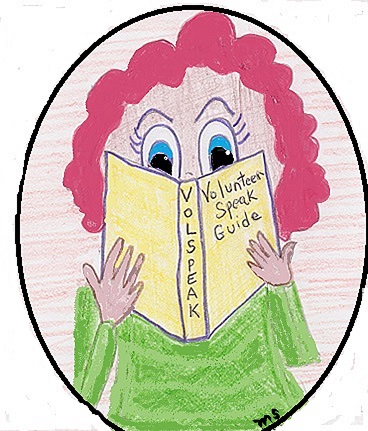
Broad statements and dry statistics are the twins of tune-out. So, do stats and heart-warming stories have any place at all? Yes, of course they do, but what is the impact of these stats and stories, other than the feel-goodery of volunteerspeak?
As you step onto the stage for your moment to talk about volunteer services, think about your elevator pitch. Does my audience speak volunteer? How do I get their attention? And, most importantly, can I speak to them in their own language so that they understand?
Let’s break this down:
In volunteerspeak, we focus on our volunteer’s selflessness as in, “One of our volunteers, Dave, gave up tickets to a sold out play to spend two extra hours with an upset client. Now that’s above and beyond. ” Nice, but well, this has no bearing on me.
Instead, if we retell this story in a language our target audience speaks, and we focus on impact it becomes, “volunteer Dave stayed two extra hours, allowing our social worker, Alexis, to fully focus on her caregiver assessment while he engaged the upset client. This cut Alexis’ time in that home by half which gave her two more hours to get her work done.” What? Extra time? I’m listening.
Forcing our audiences to understand ‘volunteerspeak‘ is a burden on them. Instead, if we want our voices heard, we need to learn to speak their language.
What questions can help us find the common tongue?
What, at this moment is the most pressing challenge facing our organization? Time? Marketing? Money? Lack of market share? Competition? Complaints? Auditing? How can we craft our stories and stats into the ways volunteers help in addressing these specific challenges? For example, instead of talking in general terms of how volunteers support the mission, gather concrete examples of volunteers who donate money, in-kind goods and influence their neighbors to give.
What departments are stretched, overworked and leaned on? In what measurable concrete terms do volunteers alleviate the load on these departments? For example, instead of pointing to volunteer hours given, flip it and speak to the amount of hours saved by staff.
What are some of the current organizational goals? Expansion? Partnerships? Social Media presence? National recognition? How are new volunteer programs leading the way in achieving these goals? For example, instead of pointing to a new program that will bring in more volunteers, show how the innovative program will more quickly lead to a specific goal.
What methods speak to my organization? Gathering stats? Big picture thinking? Connecting dots? Awards? How can I rework my presentations using these methods to show volunteer impact? For example, instead of equating volunteer hours to dollars saved, speak to examples of volunteers as extensions of departments and the work produced. Impact stats vs. hour stats.
We can continue to praise volunteer goodness until we are hoarse. But if we don’t speak in the terms and language understood by our organizations, CEO’s, department heads and staff, it will fall on deaf ears.
We can’t expect others to translate volunteerspeak. We must adapt the common tongue in order to show true, measurable volunteer impact.
You know, because of volunteer involvement, we frequently travel to all corners of our organizations. It really helps to speak the language.
The recent spate of natural disasters has cast a light on incredible volunteers across the globe helping people in need.
Although not always news worthy, volunteers daily walk towards a crisis instead of running away. In organizations everywhere, volunteers are doing the hard work, the emotional work. Because they feel so deeply, they are affected by the tragedies they witness such as in this story: Volunteer shares harrowing account of how Hurricane Irma ripped toddler from woman’s arms
In our training programs, we encourage our volunteers to have empathy (the ability to understand and share the feelings of another) so they can better serve our clients. But can empathy take a toll?
I remember a new volunteer, Jenna and the first time she was present with a patient who died. Jenna had hours of volunteer training. She and I had talked at length about her strengths and capabilities. She was prepared… on paper.
Minutes after she left the room, allowing family members to gather, she sought me out. I was in the middle of some urgent matter that I have long forgotten. I looked up and saw Jenna’s face and I knew. You can’t mistake a face that has been profoundly affected by what was just witnessed. It’s there in the tiny muscles that make up the eyes and mouth. It’s there, deep in the irises that reflect a life altering experience. It’s there in the reverent voice asking for “a moment of your time.”
We found a private spot and sat for several long and quiet minutes while Jenna gathered her thoughts. It was difficult for her to put into words how she felt. She only knew that she felt changed, different, profoundly transformed somehow.
And if you think about it, how does each volunteer cope with the things they witness? Does training and on-boarding take care of the emotional investment our volunteers make when accepting roles placing them in life’s most profound situations?
Volunteers have an amazing resilience and ability to cope when faced with deeply personal scenarios. But what if a situation becomes more personal? In what situations can this happen to a volunteer, even if they have received excellent training?
a volunteer works with a person who reminds them of a family member (child, partner, parent, sibling)
a volunteer witnesses tragedy over and over and it accumulates
a volunteer is dealing with a crisis in their own lives
a volunteer is in a situation in which they perceive their help makes little difference (in outward appearance)
a volunteer gets caught up in the narrative of the situation
a volunteer feels the frustration of the client
We can’t prepare our volunteers for every situation, story and person they will encounter. So, how can we provide extra support for volunteers in order to prevent burnout? A few of the things we can do are:
ask clinical staff to be on the lookout for signs a volunteer needs support
ask clinical staff to be available to speak with volunteers who may be overwhelmed
enlist experienced volunteers to routinely call the volunteers who are working with clients. Experienced volunteers are the perfect candidates to do these check-ins because volunteers are comfortable speaking to other volunteers. (This is a great assignment for volunteers who physically can no longer do the job-instead of “retiring” them, elevate them to mentoring status)
create a monthly coffee klatch or tea time and encourage volunteers to share tips, stories and feelings
use newsletters to offer tips on self care
incorporate stories of volunteers who experienced emotional challenges into training and emphasize that this is not a sign of failure
designate a portion of each volunteer meeting to discuss “what’s going on with you”
intervene when noticing a volunteer experiencing emotional challenges (this can be personal, professional etc.)
If we make it clear that we are serious about supporting our volunteers, we will help them remain emotionally healthy and keep them from burning out.
This is the irony of non-profit work: We want our volunteers to share in our clients’ pain (Empathy) in order to better support the clients. But that empathy can lead to our volunteers experiencing their own emotional pain. Let’s make sure we support them so it doesn’t get out of hand.
I have a friend who never seems to see the people around him. He lets the door swing shut just as an elderly man is about to walk through and he never sees the mom carrying a baby needing to get by as he blocks the aisle in the store. It’s as though he has no peripheral vision. It got me to thinking about managers of volunteers and how we develop our peripheral vision to the point of hyper awareness.
You know what I mean. You’re the kind of person who:
counts the number of people behind you in the buffet line at a friend’s party and then you mentally divide up the pasta portions in the pan to make sure that you don’t take more than your share.
looks around at a concert, sizing up the height of the crowd and then squeezes into a spot that ensures you don’t block the petite woman to your left.
Does this sound like you? I thought so.
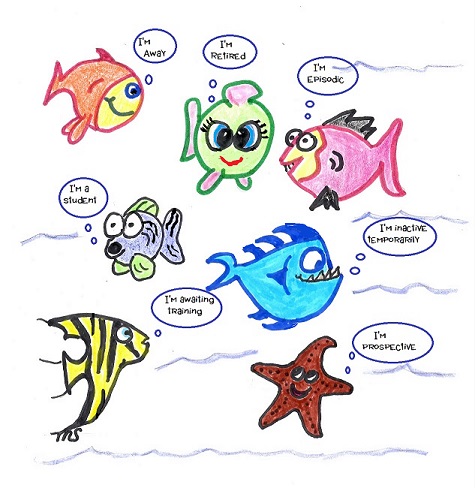
We all have peripheral volunteers. These are the volunteers who are episodic, temporarily inactive, retired, yet to be trained, prospective, or absent. And unlike the world of paid staff where rosters consist of those receiving paychecks, our peripheral volunteers remain on our stats and radar.
We don’t have the luxury of ignoring them because they are potentially contributing volunteers. Or they may have given years of service and we owe them our attention. They float around in the periphery, bobbing in and out of view because we have a fluid connection with them. And how about the guilt that comes with not paying proper attention to them. (Yep, just think of how you felt when you forgot that volunteer’s 80th birthday, the one who gave twenty years of service to your organization)
What can we do with these outlying volunteers? How can we keep them in view as we scurry about in our busy day? Where do they fit into statistics?
This is one area in which:
technology serves us well
volunteers can assume pivotal roles
stats reflect the monumental balancing we do
volunteer message sharing can actually help
When lists that capture prospective, episodic, absent, retired, ill and every other category meaning non current pile up, it’s time to create some systems that help.
Create categorized email lists-prospective volunteers, group and corporate volunteers, temporarily inactive volunteers etc. Decide which groups get which messages, e.g., upcoming training sessions, newsletters, notices about volunteer events or vacancies, etc.
Recruit volunteers to oversee the periphery-lists are only helpful if they are accurate. It’s humbling when you take a call telling you that volunteer Dave died a year ago and his family keeps getting mail addressed to him. A volunteer or volunteers in charge of overseeing other volunteers on the periphery can focus on keeping lists up to date. They can also make phone calls, interview, do impromptu surveys, offer new opportunities, gather information and compile statistics. The scope of the potential work can fill a full-time position or several part-time positions.
Report your time spent managing peripheral volunteers-this is an invisible area that requires a lot of time so report it as part of your recruitment, retention, and cultivation. Refer to your efforts to engage “prospects”, retain episodic volunteers, build community awareness, increase visibility, maintain good relationships, cultivate donors, supporters etc. This nuanced area of our work is critical and should be accounted for.
Share messaging with other organizations, but be careful. Bombarding potential volunteers with multiple messages can be off-putting, so don’t overload emails with “spam.” Instead, co-op with other volunteer organizations and include “other good work opportunities” at the end of every other month newsletters (or other scheduling) with contact information. As your volunteer opportunities are added to the internals at other organizations, you’ve just exponentially increased your recruitment efforts.
Volunteer management casts a wide net. Presiding over the sea of active, potential and former volunteers is daunting. Systems in place to oversee peripheral volunteers will help to ease the overwhelming burden and free us up to concentrate on innovation and solutions.
Out nets are huge and always jumping with activity. If our eyes and hands are always on every inch of those nets, then we can’t steer the boat.
Retention: the continued possession, use, or control of something.
Does that sound like the volunteerism you know? Not to me either. Maybe it’s time to rethink using the phrase “volunteer retention,” because it conjures up images of a stagnant retention pond. It also rhymes with detention which is closely related to imprisonment. (shudder)
So, if we stop using that phrase, then do we have to rethink the old principles behind it such as:
make the volunteers feel welcomed
say thank you a lot
be mindful of their time
What???? But wait. Just because these principles are fluffy and nice, it doesn’t mean they are still the best for the changing landscape of volunteerism. Maybe it’s time to retire volunteer retention and instead, embrace volunteer sustainability. Ok, so swapping phrases does not make for innovation. I get that.
What is the difference then, between retention and sustainability? Well, we’ve all been moving away from the strategies that worked with the WWII generation for some time now. Why not update our verbiage to match the creative ideas being implemented out there by so many forward thinking visionaries. And while we are embracing these changes, let’s go even further.
*This is where sustainability is radically different from volunteer retention. Sustainability, unlike retention is the ability to maintain a healthy balance while avoiding depletion. Sustainability, as it is being applied to agriculture, economics and ecosystems implementation implies that there is a larger network to be considered. It implies that resources are not hoarded (retention) and depleted.
What larger network is there to consider when engaging volunteers? The larger network is all volunteer organizations and individual volunteer satisfaction. With that in mind, let’s ask these questions:
Why do we keep volunteers on waiting lists if we cannot use them in a timely manner or cannot find roles for their passions?
Why do more volunteers equal better volunteer engagement even if some volunteers are in name only?
Why do we stuff volunteers with specialized skill sets and interests into non-matching roles? Or try to tweak a role just to keep the volunteer?
Why do we cling to volunteers as though they are 23 year old offspring and we just can’t bear to see them fly?
Why do we blame ourselves when volunteers leave?
It is time we, volunteer managers, think of other volunteer managers, our volunteers, all volunteer opportunities, all clients in our area, and all missions as a network serving the greater good.
It is time we viewed volunteerism as a regenerating community garden that needs tending by all of us so that the bounty of volunteers is nurtured, regrown and sustained.
It is time we added collective volunteer engagement, sharing and referral to our innovative methods in order to cultivate volunteer sustainability.
How many times does a volunteer get frustrated and drop out when they have to wait too long to share their time and skill? Or how many volunteers quit because their passion is not being fully utilized? How are we serving our communities when we deplete our volunteer base by clinging to the archaic notion of volunteer retention?
“Uh Meridian, you really blew it! You missed a whole point about corporate volunteers,” a friend of mine said on the phone a couple of days ago. “You talked about thanking groups and connecting them to the work, which is great, but you completely forgot a big one and guess what? It just happened to me.”
Ouch. What did I forget? Tell me what happened.
“Well, it was our corporate retreat and twenty of us just completed a one day team building volunteer event at a local organization.”
That’s great. How did it go and what did I miss?
“Well, it was ok for the most part, but honestly we’ve done other projects and had better experiences.”
What went wrong?
“Well, nothing went really wrong, but let me explain. We all drove to an organization that gives cribs to families in need. Our firm had purchased about forty unassembled cribs and we drove to this warehouse to put together the cribs we bought.”
And how did that go?
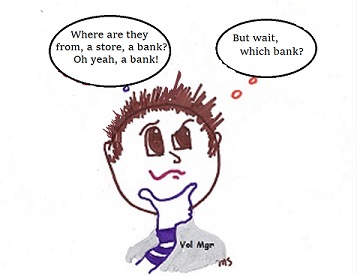
“Well, we were met by the woman in charge. She kind of acted like we were interrupting her day. She gave us some quick directions and left. She would come and go. But there was something that bothered me a lot. She kept getting the name of our firm wrong. And she kept referring to us as bankers. None of us are bankers. Our company is an accounting firm. Granted, we work in the financial industry, but we are not bankers. It just felt like she didn’t even take the time to learn who we are or what we do. I mean, we reached out to her organization, why didn’t she ask a few questions? I felt, I don’t know… used. Am I being too sensitive and picky?”
No, my friend you are not being too picky. Because if a group walks away from a project feeling like they were just ancillary labor, then the next time they look for a project, they will most likely look elsewhere. Pure and simple. We can argue all we want that a group is too needy, or picky, or they just don’t understand. The feeling they walk away with will determine whether or not they come back.
It all boils down to: Do we want them to come back? Do we want them to spread a good word? Do we want them to become partners or champions or supporters? If not, then we should not waste their time or ours. That’s why limiting episodic volunteer groups to a manageable number versus taking everyone is the better way to go.
And since I did miss that big one when listing things we can do to connect our group volunteers to our projects and missions, let’s list it now.
Learn something about the group. At least we can call them by their correct name. We can know a little about their work. (an application process asking pointed questions should help)
Be genuinely curious about the people who are helping. Ask questions throughout the duration of the project. Let them tell you who they are, what they value etc. This also helps you to tailor your stories and feedback to fit within their culture.
Send a follow up survey and gather feedback on the project. Ask questions to help you hone future group projects.
Thank them for their input. So much research has been done on the increased by-in of groups who participate in planning and improving work conditions. Why not apply this to episodic volunteers and encourage them to help you plan new projects by asking for feedback?
Connecting episodic volunteers to our missions ensures they walk away as new supporters.
But, after all, we can take our own advice when engaging episodic volunteers. They’re people, not tools.









 volunteerplaintalk