Category: group volunteering

  • “We want to work with staff who have drunk the Kool-Aid,” an interview with Laura Rundell, CVA


    An Interview with Laura Rundell, CVA
    Laura Rundell, CVA with a mug of Kool-Aid


    Recently I had the pleasure in chatting with Laura Rundell, CVA, the Volunteer Coordinator at LifeBridge Community Services in Bridgeport, Connecticut.

    VPT: Laura, tell us a little bit about your background in the volunteer management sector.

    L: I’ve been involved in the volunteer sector since 1999.  During grad school where I received my Master’s in History, I worked part-time for the Park service. I have also worked for several other organizations, including the Spellman Museum of Stamps and Postal History in Weston, Massachusetts, the Phipps Conservatory in Pittsburgh. Pennsylvania and I am currently the Volunteer Coordinator at Life Bridge Community Services in Bridgeport, Connecticut.

    VPT: And how long have you been at Life Bridge?

    L: I’ve been here since 2014.

    VPT: What brought you to volunteer services?

    L: It was at the Phipps Conservatory that I began to fall in love with volunteer management. I had come from a smaller organization to Phipps and found out they had over 500 names on their volunteer list, so the scope changed dramatically.

    VPT: And how did you come to be at Life Bridge?

    L: I moved to Connecticut and landed at Life Bridge in 2014.

    VPT: You’ve had a number of experiences thus far. What have they taught you?

    L: Not all my experiences were perfect. An already challenging job is much harder when the goals for the program and the roles for volunteers are less defined.

    I appreciate where I am as a volunteer manager now and loved my time at Phipps because they support the volunteer program and there are clear expectations and specific roles for volunteers.

    VPT: Can you give us an example?

    L: Yes. When I was invited for an interview at Life Bridge, I noted that the person who would be my supervisor had the CVA credential. It was clear they had put thought into their volunteer program and knew what it would take to make it successful. In my third interview, I was sitting at a table with all of the staff who would utilize volunteers in their programs. I was really impressed that they put so much thought and effort into recruiting for this position and knew then it was an organization I really wanted to work for. I was delighted to be offered the position.

    VPT: That is impressive.

    L: And, just recently, our Executive Director asked for a volunteer to be involved in researching best practices for a project. That shows commitment to engaging volunteer help at all levels of our organization.

    VPT: I’ve noticed you are weighing in on articles and blog posts more and more and that is great; we need more voices. What do you feel is the future of volunteer management?

    L: I see so many non-profits stretched thin and need more volunteers to take on a greater role.

    VPT: That’s a good thing for increased volunteer participation, right?

    L:  Yes it sure is, but I think the number one challenge for most volunteer coordinators is recruitment. It will be an even bigger challenge moving forward to keep filling those roles with qualified and committed volunteers. It means we all have to “step up our game”.

    VPT: Are you seeing changes in the volunteers who are stepping forward?

    L: There are more episodic volunteers, more students who are seeking career experience, and more individuals in the midst of a career change seeking resume enhancers and references. There are also more opportunities to recruit corporate and college groups.

    VPT: Are there inherent challenges with episodic volunteers?

    L:  We have had some really great short-term volunteers. Not every role is appropriate for someone who may only be with us a short time though. Some roles require clearances that can take 4 weeks to get back, so we really hope the person in that role can stay with us for at least a year. We’ve also gotten some really great college and corporate groups. However, walking that balance between offering the flexibility large groups may require and making it a meaningful opportunity that adds value to the organization is a challenge.

    VPT: What have you discovered about recruiting volunteers that you can share with us?

    L: You have to respond promptly when an applicant contacts you. When I relocated to Pittsburgh from Massachusetts, I contacted several organizations to volunteer and never got a return call. That was really frustrating.  After that first contact though, the applicant has to be invested — it has to be their choice to move forward. I have learned you can waste a lot of time spinning your wheels if an applicant doesn’t respond to a request to meet with you, doesn’t show up for an appointment or doesn’t follow up afterwards.

    VPT: Changing direction, do you feel as though volunteer managers are starting to build a community with one another?

    L: By the time I became a CVA, I was linked to a community of volunteer managers. But, often, a volunteer manager is a department of one and is isolated. When I was in Pittsburgh, I reached out to similar volunteer organizations and we volunteer managers would get together a couple of times a year to have lunch and share best practices. Here in Connecticut, we have Volunteer Square and they have done a wonderful job in creating a Professional Development Series for volunteer managers. I’m honored to serve on their advisory board.

    VPT: So, there are some steps being taken.

    L:  You know there is an Association of Fundraising Professionals (www.afpnet.org/) for those who are in the fundraising end but we have no association for volunteer managers.  I wish we had one nationwide organization. Not everyone can attend a national conference, but if we had a national association, we could have branches in our areas that we could connect with and could set national standards for our profession.

    VPT: What do you see as future challenges for our profession?

    L: As non-profit funding continues to decline, there will be more and more dependence on volunteer programs to pick up the slack and organizations will be utilizing volunteer services more. As everyone scrambles for a piece of the ever-shrinking pie, we need to have a unified voice instead of competing against one another for limited resources. For instance, if we all required that courts who refer mandated community service applicants to our agencies provide the funding necessary to fully vet, train and supervise these applicants, we might make some real changes in how court mandated service is assigned nationally.

    VPT: What advice do you have for new volunteer managers?

    L: After I moved to Connecticut, I remember talking to a volunteer I worked with in Pittsburgh and the volunteer said, “We want to work with staff who have drunk the Kool Aid.” If staff is unhappy, or does not believe in the work, then volunteers pick up on that. If an agency has a lot of turnover and has difficulty retaining paid staff, than recruiting and retaining volunteers may be an uphill battle.

    L: I would also say, make sure you connect with other volunteer managers in your area. I have learned so much from my colleagues. Just an hour spent talking with another volunteer coordinator over lunch or coffee can be invaluable. You can learn “It’s not just me…others have this problem too” Also, obtaining the CVA (certified volunteer administrator) is very helpful. I feel like the CVA credential has given me more of a standing in my organization. The CVA gives me ethical standards to adhere to and by virtue of my having it, my volunteer program is elevated.

    L: Also, you need to have rules and policies in place and stick to them. If someone wants you to waive the requirements for a new volunteer, remember this: There are bad actors who seek out vulnerable populations. This is why we don’t bend the rules. Make sure you have a volunteer manual, written policies, and an agreement letter for the volunteer to sign.

    VPT: What makes a difference for you?

    L:  I feel blessed to do what I do. Yes, there are challenges, yes there are frustrations, but a well-run volunteer program can leverage the passion and talent of volunteers.

    L:  I’ll leave you with my favorite story about a volunteer. Before I was at Phipps, I was in charge of an exhibition opening of student art work in Pittsburgh. The students, their parents and the artist they worked with were all on their way, along with a volunteer to help at the reception. Right before the event, we had a severe storm warning and most of our staff left the building. Meanwhile, our volunteer drove through the storm to be there. The kids and their parents all had a great time at the exhibition opening because the volunteer made a commitment and the storm wasn’t going to stop her from coming! That is just one of the stories that keeps me motivated and gets me up in the morning.

    VPT: Thank you Laura for your insights and for sharing with us today. We look forward to hearing more of your voice in the volunteer management arena.




  • Is Volunteer Management a Science?

    Is Volunteer Management a Science

    In 1959, novelist and scientist, C. P. Snow gave a lecture entitled  The Two Cultures. Essentially Snow argued that the humanities and science were split into opposing cultures, each one not understanding the other.

    Most of us would probably categorize volunteer management as a humanity.  In the post  The Volunteer Investor I likened volunteers to humanity investors.  But while humanity is at the heart of volunteering, isn’t the management of volunteers a science? And, by treating it as a science, does that automatically remove the humanity?

    Well, what if we look at other science based professions that serve humanity?

    • Does the researcher seeking a cure for cancer not dream about the potential millions of people saved?
    • Does the engineer developing a new prosthetic not imagine the first time an amputee puts on that device and walks?
    • Does a safety engineer never think about the children she may keep safe?

    Re-framing volunteer management as a science will not remove the humanity. Instead, it will elevate the skills volunteer managers possess. 

    So, then how can we re-frame volunteer management to reflect the science of it? Do we stop talking about the heartfelt work volunteers do? Do we become invested in cold stats? Or, can we do both? Can we still convey the humanity while highlighting the precise steps taken to achieve outcomes?

    When we, leaders of volunteers separate the volunteers’ incredible outcomes from the systematic steps needed to achieve those outcomes, then we can begin to identify and speak to the science of volunteer management.

    How? Well, we can, as volunteer management professionals begin to:

    • Temper human stories with solution stories and the steps necessary to achieve results
    • Speak in management language when discussing volunteer engagement and challenges
    • Remove emotion when dealing with difficult situations and instead, utilize scientific methods such as observation, gathering of data, testing and logical thinking to solve problems
    • Re-evaluate programs based on priorities, time involved and solutions achieved
    • Re-think in terms of humanely leading volunteers, but managing projects
    • Tout the science of volunteer engagement in terms of strategies, social metrics and road-maps
    • Categorize the skills used to engage volunteers, such as motivating, knowledgeable delegating (not just delegation because anybody can delegate), problem solving, results orienting, relationship building, strategical planning, innovating and big picture thinking
    • Chronicle the methodical steps necessary to engage volunteers
    • Create data that leads to goals, such as maps, diagrams etc
    • Experiment and innovate

    The perception that we coordinate volunteers who require nothing more than a phone call negates the methods required to fully engage these investors in our missions.

    Do we do ourselves a disservice when we blur the lines between the hearts of our volunteers and the hard work we do? Do we sometimes become so emotionally invested in our volunteers’ humanity that we lose our management voices?

    The results of volunteer involvement is humanity’s crowning achievement but the skills, knowledge and sheer hard work is the science of getting to those results.

    If we project our profession as a science with a humanity outcome, we can then elevate the precise, nuanced methodology required to achieve our humanitarian goals.

    Lab coat anyone?

    -Meridian


  • Taking Extra Care to Support Volunteers


    Taking Extra Care to Support Volunteers

    The recent spate of natural disasters has cast a light on incredible volunteers across the globe helping people in need.

    Although not always news worthy, volunteers daily walk towards a crisis instead of running away. In organizations everywhere, volunteers are doing the hard work, the emotional work. Because they feel so deeply, they are affected by the tragedies they witness such as in this story:  Volunteer shares harrowing account of how Hurricane Irma ripped toddler from woman’s arms

    In our training programs, we encourage our volunteers to have empathy (the ability to understand and share the feelings of another) so they can better serve our clients. But can empathy take a toll?

    I remember a new volunteer, Jenna and the first time she was present with a patient who died. Jenna had hours of volunteer training. She and I had talked at length about her strengths and capabilities. She was prepared… on paper.

    Minutes after she left the room, allowing family members to gather, she sought me out. I was in the middle of some urgent matter that I have long forgotten. I looked up and saw Jenna’s face and I knew. You can’t mistake a face that has been profoundly affected by what was just witnessed. It’s there in the tiny muscles that make up the eyes and mouth. It’s there, deep in the irises that reflect a life altering experience. It’s there in the reverent voice asking for “a moment of your time.”

    We found a private spot and sat for several long and quiet minutes while Jenna gathered her thoughts. It was difficult for her to put into words how she felt. She only knew that she felt changed, different, profoundly transformed somehow.

    And if you think about it, how does each volunteer cope with the things they witness? Does training and on-boarding take care of the emotional investment our volunteers make when accepting roles placing them in life’s most profound situations?

    Volunteers have an amazing resilience and ability to cope when faced with deeply personal scenarios. But what if a situation becomes more personal? In what situations can this happen to a volunteer, even if they have received excellent training?

    • a volunteer works with a person who reminds them of a family member (child, partner, parent, sibling)
    • a volunteer witnesses tragedy over and over and it accumulates
    • a volunteer is dealing with a crisis in their own lives
    • a volunteer is in a situation in which they perceive their help makes little difference (in outward appearance)
    • a volunteer gets caught up in the narrative of the situation
    • a volunteer feels the frustration of the client

    We can’t prepare our volunteers for every situation, story and person they will encounter. So, how can we provide extra support for volunteers in order to prevent burnout? A few of the things we can do are:

    • ask clinical staff to be on the lookout for signs a volunteer needs support
    • ask clinical staff to be available to speak with volunteers who may be overwhelmed
    • enlist experienced volunteers to routinely call the volunteers who are working with clients. Experienced volunteers are the perfect candidates to do these check-ins because volunteers are comfortable speaking to other volunteers. (This is a great assignment for volunteers who physically can no longer do the job-instead of “retiring” them, elevate them to mentoring status)
    • create a monthly coffee klatch or tea time and encourage volunteers to share tips, stories and feelings
    • use newsletters to offer tips on self care
    • incorporate stories of volunteers who experienced emotional challenges into training and emphasize that this is not a sign of failure
    • designate a portion of each volunteer meeting to discuss “what’s going on with you”
    • intervene when noticing a volunteer experiencing emotional challenges (this can be personal, professional etc.)

    If we make it clear that we are serious about supporting our volunteers, we will help them remain emotionally healthy and keep them from burning out.

    This is the irony of non-profit work: We want our volunteers to share in our clients’ pain (Empathy) in order to better support the clients. But that empathy can lead to our volunteers experiencing their own emotional pain. Let’s make sure we support them so it doesn’t get out of hand.

    -Meridian


  • The Volunteer Periphery

    The Volunteer Periphery
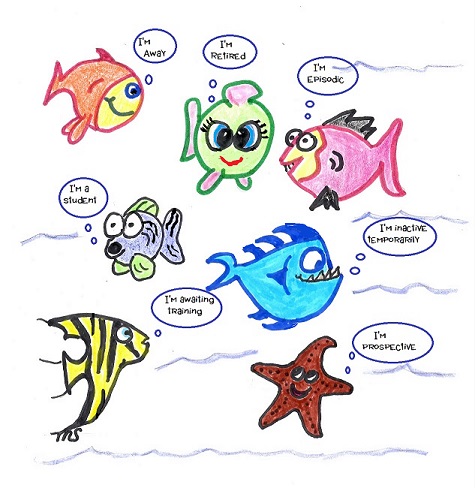
    Sea of peripheral volunteers

    I have a friend who never seems to see the people around him. He lets the door swing shut just as an elderly man is about to walk through and he never sees the mom carrying a baby needing to get by as he blocks the aisle in the store. It’s as though he has no peripheral vision. It got me to thinking about managers of volunteers and how we develop our peripheral vision to the point of hyper awareness.

    You know what I mean. You’re the kind of person who:

    counts the number of people behind you in the buffet line at a friend’s party and then you mentally divide up the pasta portions in the pan to make sure that you don’t take more than your share.

    looks around at a concert, sizing up the height of the crowd and then squeezes into a spot that ensures you don’t block the petite woman to your left.

    Does this sound like you? I thought so.

    We all have peripheral volunteers. These are the volunteers who are episodic, temporarily inactive, retired, yet to be trained, prospective, or absent. And unlike the world of paid staff where rosters consist of those receiving paychecks, our peripheral volunteers remain on our stats and radar.

    We don’t have the luxury of ignoring them because they are potentially contributing volunteers. Or they may have given years of service and we owe them our attention. They float around in the periphery, bobbing in and out of view because we have a fluid connection with them. And how about the guilt that comes with not paying proper attention to them. (Yep, just think of how you felt when you forgot that volunteer’s 80th birthday, the one who gave twenty years of service to your organization)

    What can we do with these outlying volunteers? How can we keep them in view as we scurry about in our busy day? Where do they fit into statistics?

    This is one area in which:

    1. technology serves us well
    2. volunteers can assume pivotal roles
    3. stats reflect the monumental balancing we do
    4. volunteer message sharing can actually help

    When lists that capture prospective, episodic, absent, retired, ill and every other category meaning non current pile up, it’s time to create some systems that help.

    Create categorized email lists-prospective volunteers, group and corporate volunteers, temporarily inactive volunteers etc. Decide which groups get which messages, e.g., upcoming training sessions, newsletters, notices about volunteer events or vacancies, etc.

    Recruit volunteers to oversee the periphery-lists are only helpful if they are accurate. It’s humbling when you take a call telling you that volunteer Dave died a year ago and his family keeps getting mail addressed to him. A volunteer or volunteers in charge of overseeing other volunteers on the periphery can focus on keeping lists up to date. They can also make phone calls, interview, do impromptu surveys, offer new opportunities, gather information and compile statistics. The scope of the potential work can fill a full-time position or several part-time positions.

    Report your time spent managing peripheral volunteers-this is an invisible area that requires a lot of time so report it as part of your recruitment, retention, and cultivation. Refer to your efforts to engage “prospects”, retain episodic volunteers, build community awareness, increase visibility, maintain good relationships, cultivate donors, supporters etc. This nuanced area of our work is critical and should be accounted for.

    Share messaging with other organizations, but be careful. Bombarding potential volunteers with multiple messages can be off-putting, so don’t overload emails with “spam.” Instead, co-op with other volunteer organizations and include “other good work opportunities” at the end of every other month newsletters (or other scheduling) with contact information. As your volunteer opportunities are added to the internals at other organizations, you’ve just exponentially increased your recruitment efforts.

    Volunteer management casts a wide net. Presiding over the sea of active, potential and former volunteers is daunting. Systems in place to oversee peripheral volunteers will help to ease the overwhelming burden and free us up to concentrate on innovation and solutions.

    Out nets are huge and always jumping with activity. If our eyes and hands are always on every inch of those nets, then we can’t steer the boat.

    -Meridian


  • Sustainability and Volunteerism

    Sustainability and Volunteerism

    Retention: the continued possession, use, or control of something.

    Does that sound like the volunteerism you know? Not to me either. Maybe it’s time to rethink using the phrase “volunteer retention,” because it conjures up images of a stagnant retention pond. It also rhymes with detention which is closely related to imprisonment. (shudder)

    So, if we stop using that phrase, then do we have to rethink the old principles behind it such as:

    • make the volunteers feel welcomed
    • say thank you a lot
    • be mindful of their time

    What???? But wait. Just because these principles are fluffy and nice, it  doesn’t mean they are still the best for the changing landscape of volunteerism. Maybe it’s time to retire volunteer retention and instead, embrace volunteer sustainability. Ok, so swapping phrases does not make for innovation. I get that.

    What is the difference then, between retention and sustainability? Well, we’ve all been moving away from the strategies that worked with the WWII generation for some time now.  Why not update our verbiage to match the creative ideas being implemented out there by so many forward thinking visionaries. And while we are embracing these changes, let’s go even further.

    Volunteer Sustainability vs Volunteer Retention

    *This is where sustainability is radically different from volunteer retention. Sustainability, unlike retention is the ability to maintain a healthy balance while avoiding depletion.  Sustainability, as it is being applied to agriculture, economics and ecosystems implementation implies that there is a larger network to be considered. It implies that resources are not hoarded (retention) and depleted.

    What larger network is there to consider when engaging volunteers? The larger network is all volunteer organizations and individual volunteer satisfaction. With that in mind, let’s ask these questions:

    • Why do we keep volunteers on waiting lists if we cannot use them in a timely manner or cannot find roles for their passions?
    • Why do more volunteers equal better volunteer engagement even if some volunteers are in name only?
    • Why do we stuff volunteers with specialized skill sets and interests into non-matching roles? Or try to tweak a role just to keep the volunteer?
    • Why do we cling to volunteers as though they are 23 year old offspring and we just can’t bear to see them fly?
    • Why do we blame ourselves when volunteers leave?

    It is time we, volunteer managers, think of other volunteer managers, our volunteers, all volunteer opportunities, all clients in our area, and all missions as a network serving the greater good.

    It is time we viewed volunteerism as a regenerating community garden that needs tending by all of us so that the bounty of volunteers is nurtured, regrown and sustained.

    It is time we added collective volunteer engagement, sharing and referral to our innovative methods in order to cultivate volunteer sustainability.

    How many times does a volunteer get frustrated and drop out when they have to wait too long to share their time and skill? Or how many volunteers quit because their passion is not being fully utilized? How are we serving our communities when we deplete our volunteer base by clinging to the archaic notion of volunteer retention?

    Next time: We can be the leaders of a sustainable movement. (Innovation and Sustainable Volunteering)

    -Meridian

  • Hey Corporate Volunteers, Where Are You From Again?

    EPSON MFP image

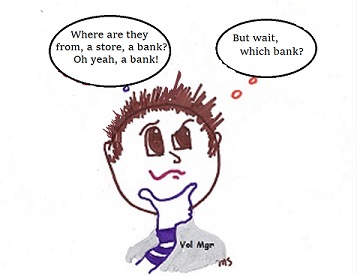
    “Uh Meridian, you really blew it! You missed a whole point about corporate volunteers,” a friend of mine said on the phone a couple of days ago. “You talked about thanking groups and connecting them to the work, which is great, but you completely forgot a big one and guess what? It just happened to me.”

    Ouch. What did I forget? Tell me what happened.

    “Well, it was our corporate retreat and twenty of us just completed a one day team building volunteer event at a local organization.”

    That’s great. How did it go and what did I miss?

    “Well, it was ok for the most part, but honestly we’ve done other projects and had better experiences.”

    What went wrong?

    “Well, nothing went really wrong, but let me explain. We all drove to an organization that gives cribs to families in need. Our firm had purchased about forty unassembled cribs and we drove to this warehouse to put together the cribs we bought.”

    And how did that go?

    “Well, we were met by the woman in charge. She kind of acted like we were interrupting her day. She gave us some quick directions and left. She would come and go. But there was something that bothered me a lot. She kept getting the name of our firm wrong. And she kept referring to us as bankers. None of us are bankers. Our company is an accounting firm. Granted, we work in the financial industry, but we are not bankers. It just felt like she didn’t even take the time to learn who we are or what we do. I mean, we reached out to her organization, why didn’t she ask a few questions? I felt, I don’t know… used. Am I being too sensitive and picky?”

    No, my friend you are not being too picky. Because if a group walks away from a project feeling like they were just ancillary labor, then the next time they look for a project, they will most likely look elsewhere. Pure and simple. We can argue all we want that a group is too needy, or picky, or they just don’t understand. The feeling they walk away with will determine whether or not they come back.

    It all boils down to: Do we want them to come back? Do we want them to spread a good word? Do we want them to become partners or champions or supporters? If not, then we should not waste their time or ours. That’s why limiting episodic volunteer groups to a manageable number versus taking everyone is the better way to go.

    And since I did miss that big one when listing things we can do to connect our group volunteers to our projects and missions, let’s list it now.

    • Learn something about the group. At least we can call them by their correct name. We can know a little about their work. (an application process asking pointed questions should help)
    • Be genuinely curious about the people who are helping. Ask questions throughout the duration of the project. Let them tell you who they are, what they value etc. This also helps you to tailor your stories and feedback to fit within their culture.
    • Send a follow up survey and gather feedback on the project. Ask questions to help you hone future group projects.
    • Thank them for their input. So much research has been done on the increased by-in of groups who participate in planning and improving work conditions. Why not apply this to episodic volunteers and encourage them to help you plan new projects by asking for feedback?

    Connecting episodic volunteers to our missions ensures they walk away as new supporters.

    But, after all, we can take our own advice when engaging episodic volunteers. They’re people, not tools.

    -Meridian

  • Hey Corporate Volunteers: How Great is Weeding?

    EPSON MFP image

    A recent article from Business News Daily cites a study finding that “89 percent of employees think organizations that sponsor volunteer activities offer a better overall working environment. In addition, 70 percent believe volunteer activities are more likely to boost staff morale than company-sponsored happy hours, with more than three-quarters saying volunteering is essential to employee well-being.”

    But here’s the kicker from the article: “Three-quarters of the millennials surveyed said they would volunteer more if they had a better understanding of the impact they were making, compared to 61 percent of those of all ages.”

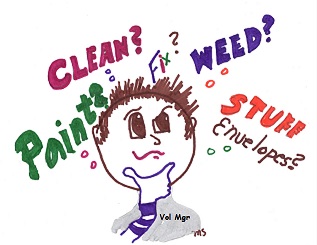
    Huh. So, it isn’t obvious that volunteering for a homeless shelter actually helps homeless people is it? Or wait. Maybe it isn’t obvious that weeding the garden at the homeless shelter actually helps the homeless.

    Oh, yeah, now I get it. Maybe for corporate volunteers, the cleanup or painting or weeding the garden doesn’t scream “OMG, this made all the difference in the world to our clients! You have changed lives like no one else ever has in the history of volunteering! Ka-bam!”

    We, volunteer managers, can be caught in a nether world of finding projects while assuring these episodic volunteers that we really need them. And once you manufacture a project just to accommodate a group, is that truly meaningful work?

    So what can we do since corporate and episodic group volunteering will most certainly grow in the future?

    Well, we need to do some serious planning, be methodical about our episodic volunteers and complete the legwork before we take on groups. We can:

    • Create a plan before accepting groups. Decide how many group members can be accommodated at a time, the age range you are comfortable working with, the time frame that works for you, what supplies the group needs to bring, the number of groups per month or year you can accept, etc.
    • Create an application process for group volunteering: Gather information on the group, ask pointed questions on the application that will help you understand their motivation, interests, skills etc. Then decide if and when they will fit into the projects you have or can create.
    • Create an impression that you value quality over quantity and busy work: We don’t have to take everyone. As each group you engage comes away with a positive experience, word will spread that your organization is the one to contact for quality volunteering.
    • Develop a narrative to go along with each project. Prepare impact stories to accompany each project. Highlight the contribution and results of the project.
    • Utilize client testimonials to recruit and thank corporate volunteers. Tie these into the activity. It may take some creative interviewing to elicit these testimonials, but it will be worth it.
    • Follow up with a letter outlining the impact of the completed work. Reiterate the improvements for clients, staff and other volunteers.
    • Send a thank you letter from your CEO to the corporate CEO or group leader. It can be a general thank you created ahead of time and tweaked for each group. But, have the CEO sign it each time and encourage them to write a personal note.
    • Take pictures-make memes, add text boxes, thought clouds etc. Send them to the group, post them on all social media outlets.

    No matter what, the connection between the project and the impact on clients is critical. Take weeding the garden at the homeless shelter. We can say to our corporate volunteer group, “Imagine the first night you are homeless. Imagine what that feels like, having nowhere to go, no stability, no safety and you arrive at our shelter and all you see are the weeds in an unkempt garden. It says to you that we don’t care. It reminds you of the tangles that threaten your existence. How would you feel? Remember, every little thing can be the one big thing that makes someone feel safe.” Then read testimonials from clients who felt safe.

    A lot has been said over the years about making corporate volunteering fun. While fun is important, it is secondary to meaningful work. Corporate and episodic volunteers deserve to know that even by pulling weeds in the garden, they have created a beautiful safe space for those facing a difficult time in their lives.

    We know the impact of each job, no matter how inconsequential it may seem at first. If we are thoughtful about episodic volunteering and prepare well for group volunteers, we can create a win-win for everyone.

    -Meridian


  • Captains of Our Destiny: The Key Volunteer Account Manager

    Captains of Our Destiny The Key Volunteer Account Manager

    As Captains of our destinies, we looked at some of the terms that define our work as Volunteer Account Managers. Now, let’s look at the responsibilities of the account manager and redefine them to fit our profession:

    Volunteer account manager responsibilities:

    • Serve as the point of contact for all volunteer account management matters.
    • Build and maintain strong, long-lasting volunteer relationships.
    • Develop opportunities and programs for volunteer engagement.
    • Mediate volunteer challenges.
    • Communicate the mission and policies of the organization to all volunteers and prospective volunteers.
    • Recruit new volunteers, volunteer groups and develop relationships with all volunteers through education, feedback, and progressive opportunities.
    • Forecast and track account metrics through volunteer feedback, community involvement, bench marking, research and continual participation in conferences and symposiums relevant to subject.
    • Prepare reports on volunteer contributions and trends.
    • Advocate for system changes when necessary.

    Interpersonal skill set of the Volunteer Account Manager: (partial list)

    • Solution oriented
    • Communicates clearly
    • Innovative
    • Professionalism
    • Mediation skills
    • Detail oriented
    • Relationship marketer
    • Ability to research, monitor and predict trends

    We can still go one step further and look at how organizations and businesses divide up the management of accounts. Does one person manage all accounts? Are some accounts afforded more attention than others?

    In account management, the key account has emerged and with it, the key account manager. So if we are volunteer account managers,  what would be a key volunteer account?

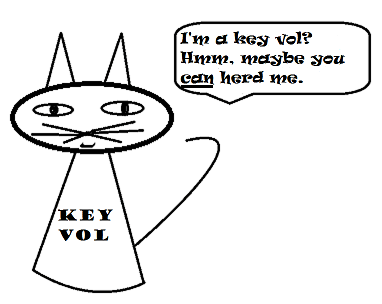
    Redefining a key account in terms of a volunteer key account yields: A key volunteer account is the volunteer or volunteer group who volunteers substantially in a sustainable manner and/or contributes greatly to organizational success. 

    This begs the question: Do we have key volunteer accounts?

    Do we spread ourselves too thin when we spend our time in a non-strategic soup? Do we run around, putting out fires, jumping from one scenario to the next trying to make sure each and every second of volunteer time is perfect? Are we really just herding cats?

    Can we maximize our time by identifying and explaining the steps necessary to cultivate key volunteer accounts?

    What are a few categories that might catapult a volunteer or volunteer group into key volunteer status?

    • dedicated on-going scheduled work that is vital to operations.
    • years of service and hours given.
    • the successful recruiting of additional volunteers and/or a community engagement champion.
    • leadership skills and/or the assumption of a leadership role.
    • dependability and the willingness to step up when needed.
    • highly trained or skilled in the mission and the ability to handle challenges.

    We all have these volunteers. They are what we wish every volunteer could be. If we apply the Pareto principle (80% of the output comes from 20% of the input), then approximately 20% of our volunteers are producing 80% of the vital work. Is this true? And what about new volunteer potential? Should we not spend our time in the soup, cultivating everyone in case we might lose that potentially great volunteer? Should we just herd cats in hopes that a few of those cats turn out to be key volunteer cats or should we begin to think in terms of key accounts and key strategies?

    Next time: How can strategic key volunteer account management help us manage all volunteers?

    -Meridian


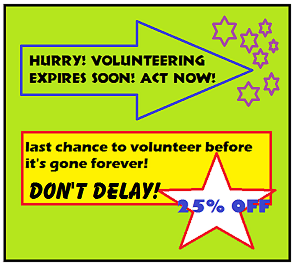
  • Volunteer or You’ll Lose Everything!

    Volunteer or You'll Lose Everything

    In decision theory,  a loss aversion  means that the pain of losing something is much greater than the pleasure of making an equivalent gain. Marketers everywhere utilize this theory to hawk their goods.

    “Get it before it’s gone!”

    “Act fast. Limited supplies available!”

    In volunteer management, we prefer the gain theory when marketing to potential volunteers. We use phrases such as “the life you change may be your own,” or “do something meaningful” to entice others to join our cause. But what if these researchers are correct and we are hard wired to respond more to fear of loss?

    How would this advertising trick work with volunteer recruitment ads?. To find out, I stopped in to see my good friend, Svin Dler who runs an ad agency in town. He’s the genius behind such memorable ad campaigns as “Proud to Be Under Federal Investigation” and “Without Our Product, You’re a Worthless Pile of #$%@.”

    I walked into his inexplicably empty office and asked Svin to take some of our volunteer ads and apply the loss aversion theory to them. Here’s what he came up with. (after I passed a ten spot under the table to him-no, really he made me pass it under the table)

    Don’t miss out on this exciting opportunity to file papers! All the beautiful people are doing it. File those papers before they’re gone and then you won’t be beautiful!

    Volunteer now, or our charity will go out of business. Then, when your family needs help, no agency will help you because all agencies share a list of slackers. Don’t get turned away you slacker.

    Volunteer now or keep being your worthless selfish self. BTW, everyone hates you.

    Save the world by volunteering. If you don’t, the world will end and it will be YOUR FAULT.

    Hmmmm, I don’t know if those will work. Well, maybe the third one will….. no, no, they won’t. But can we write worthwhile ads and throw in a bit of the loss aversion theory?

    How about:

    There’s only a limited number of volunteering slots. Call 555-5555 to get started before the good ones are gone.

    Don’t miss our next life changing volunteer orientation. Refer to this coupon code:

    Act now! Don’t lose your chance to be a better person. Call this number:

    Well, that’s soul-less, isn’t it? Maybe loss aversion can’t be applied to volunteer recruitment. But wait. Perhaps if we lightly sprinkled in some loss aversion techniques, we could:

    Create an ad using the wish list and implied loss:

    “Do you wish to be more (circle all that apply): accomplished, social, engaged, in-tune, appreciated, worldly, satisfied, prepared, rejuvenated, self-aware, respected, content, experienced, understood?  Join us next Saturday. We have just three Volunteer Training slots still open. Come, let’s explore your wish list.”

    Create an email reminder for those who have expressed an interest:

    “Our volunteer training is this Saturday at 1pm. Seats are filling up and we would love to see you there. Click here to join our amazing volunteers.” (or diverse, or award winning or whatever adjective fits)

    Use urgency:

    “Our last volunteer training of the year is being held next Saturday at 1pm. As one of our volunteers, Jamal says, Don’t miss out on this life changing experience!”

    So, can we actually use marketing techniques for volunteer recruitment? Is that ok?

    Well, here’s a question: When designing volunteer recruitment ads, do we inadvertently give these impressions:

    There is no limit to the amount of volunteers we take

    Time is never of the essence-we’ll always be there kinda like death and taxes

    The choice volunteer positions never get filled

    Is there a boring and stale element to our ads that imply volunteering is a never-ending constant so heck, why not put it off?

    We are not gimmicky marketers looking to sell something and move on. We deal in cultivating real human beings who offer meaningful involvement, so tricks and slick words are not us. However, we are also not complacent.

    Here’s a recent ad I came across:

    “Join us for a Volunteer Orientation (date) to learn more about our organization and the many different ways you can help us. You will get an overview of our work and learn how you can help improve the lives in need by volunteering. To learn more about our volunteer program, check out our website.”(here)

    Now, let’s re-imagine this ad with a sprinkling of loss aversion theory:

    “A limited number of slots are still available for volunteer orientation on (date). Don’t miss out on exploring the many flexible ways you can help.” Visit our website (here) for a quick sign up. See you on (date)!”

    So, as long as we are truthful about our ads, why can’t we use some marketing techniques to recruit volunteers?

    Try it before it’s too late. (ooops, sorry)

    -Meridian


  • New Words Added to the Volunteer Management Dictionary

    Added to the Volunteer Management Dictionary

    It’s that time of year when the Committee to Define Volunteer Management gets together at a back table in Pete’s Bar, Grill and Bait Shop. Together, these brave members scratch their heads over several pints and attempt to come up with a succinct explanation of volunteer management. This year, they gave up once again after rejecting the phrase “herding cats,” but they decided to add the following words to the dictionary of volunteer management.

    Volvorce: When a volunteer divorces the organization as in “No, I just can’t go get new volunteer Dinesh, because since no one called him back about getting started after I introduced him to finance, he volvorced us.”

    Meetcolepsy: When too many meetings cause you to simply fall into a stupor at the thought of another talk-fest as in “No, I couldn’t make that fourteenth meeting about using the volunteers to stand by the back door in case someone gets confused because I contracted meetcolepsy. Want to see my doctor’s slip?”

    Latespectation: A last-minute request for volunteers that is expected to be filled as if you were given weeks to prepare, as in “Oh, so you need 5 volunteers tomorrow morning for an assignment that you said was extremely important? Your latespectation is showing.”

    Creditjacking: When another staff member takes credit for a successful endeavor that you or your volunteers accomplished as in “Yes, I’m glad you praised that project during the senior managers’ meeting, but let’s not creditjack the volunteers’ work, ok?”

    Duhtistics: Stats that are so incredibly obvious, like volunteers are super nice as in “I won’t bore the board with duhtistics that you’ve heard before. No, instead I want to point out some new and exciting projects we are undertaking.”

    AVOL: A volunteer who inexplicably does not return calls, emails or letters as in “I’m glad you noticed volunteer Myrna has been missing lately. I’m trying everything in my power to get in touch with her. Right now she’s AVOL.”

    Volunteer Lite: A request for a volunteer to do a menial, mindless task as in, “You’re asking me for one of our highly trained volunteers to clean out the storage closet so you can use it for your supplies? You don’t want a full-bodied volunteer, you want a volunteer lite.”

    Miracalls: Calls made to volunteers for an especially challenging or late request as in, “Woah, that’s a really challenging request (or time frame). I’ll be holed up in my office for the rest of the day, making miracalls.”

    Informashunned: (pronounced in-for-may-shunned) Not given the essential information needed to properly place a volunteer as in “I have recruited four of our best volunteers for that assignment, but my pleas for crucial information have been ignored. Right now, our volunteers are informashunned.”

    Nopinion: Volunteers wanted, but not their opinions as in, “I’m glad you were able to use volunteer Mark’s expertise, but he felt rebuffed when he offered additional knowledge. I guess you really want an expert but nopinion volunteer.” 

    Vombie: That volunteer everyone is afraid of and no one wants to council or fire, as in, “I know Janey is a handful and she’s been here for what, twenty years now. I guess she’s been allowed to attain Vombie status and now that I’m here, I will deal with it in a professional manner.”

    Callwaiter: The notion that volunteers sit by the phone just waiting to hear from us as in, “It is Friday afternoon and most of our volunteers have already made plans for tomorrow. I’ll make some miracalls, but our vibrant and diverse volunteers aren’t callwaiters.”

    Marathonitor: The running around, checking, double-checking and rechecking to ensure that volunteers have all the information and tools they need to succeed as in “Our fifteen volunteers are ready for Saturday’s important annual event, but in order for them to excel, I will be marathonitoring their involvement, so I won’t be attending any meetings tomorrow or making miracalls to fill latespectation requests.”

    Well, there you have it. As one of the senior members of the Committee to Define Volunteer Management said after several glasses of Pinot Grigio, “Dang, defining volunteer management is really impifficult.”

    -Meridian