
 A prospective volunteer, Judy came to one of my orientations last month. She eagerly embraced the topics, participated in class and repeatedly told me how much she “owed” us for caring for her husband. She is passionate, ready to work and a strong woman. She and her husband owned a business that she now shares with her children. She has artistic abilities, is educated, well spoken and incredibly smart. She is that volunteer we dream about when we’re not having a nightmare that all the unfinished work has fused together into a giant smiling clown with a pillow and is suffocating us in our sleep. (You do have that dream, too, don’t you?)
I spent a good two hours with her one on one in a private interview a week after classes ended. We talked about her abilities and talents, her ideas and plans to help and all the folks in her business circle she knows that she can enlist to help too. So, what could possibly be wrong with this perfect volunteer?
Did you guess she’s moving? Nope. Did you guess she’s really crazy? Nope again.
Although we spent time talking about all those wonderful things, we spent 90% of the time talking about her husband’s illness and death. He died four years ago and to our credit, we took wonderful care of him. Judy passionately talked about losing a husband so early in life, the shock, the quickness of the rare disease, the legal issues surrounding a business and a lone position in life with friends encouraging “getting back in the dating game.” She had already started a support group on Facebook, has reached out to the community for research funds and would love to be able to help other young widows. Her ideas are lofty, her desire to help of the highest noble thoughts. Her energy is infectious and I wanted to reach into my drawer and pull out my checkbook.
Our conversation reminded me of John Walsh, the host of the TV show, “America’s Most Wanted.” Mr. Walsh began his crusade after his son, Adam was brutally murdered. It’s what experts call instrumental grieving, the throwing of oneself into a cause. It’s truly amazing to watch someone do that, to see their resolve, to feel their calling. These people are remarkable. They turn despair and tragedy into benefits for the rest of us. I know if my husband were to fall ill to that disease that took Judy’s husband, I would want her coaching me.
But, I cannot, in good conscience, put Judy with patients, family members or the bereaved. It matters not that she really, really, really wants to help. It matters not that she is full of passion and energy. But it does matter that in the three times we’ve talked, everything always comes back to her experience.
I’ve witnessed raw, unrelenting grief before. I’ve seen potential volunteers so fired up that they speak in a machine gun volley that shoots down every thought that does not apply to their situation. I’ve watched eager people grasp onto volunteering like a life-preserver in a sea of molten pain. I feel for them, because, just like every other volunteer, I get to know them and to know these volunteers is to know heartache. I so want to help them work through their grief, but my first loyalty is to the clients at hand. And they need volunteers who are sound, mostly healed, or at least healed enough to put aside their own lives.
And so, as the conversation wound down, Judy looked at me and breathlessly asked, “do you think I can do this?”
“Not yet,” I answered truthfully. See, I’ve learned over the course of so many years that it’s much kinder to be honest. Then I added, “I’m thinking that you will be wonderful with our patients and families one day and we are incredibly fortunate to have you. Right now, I hear some hurt and we don’t want this work to add to your hurt. You’ve been through so much.”
“I know. It still hurts and I trust your judgement.” Tears welled in her eyes. “I just need to help.” I could see the dam about to break but she quickly stuck another emotional patch on the crack that threatened to burst.
What a burden to trust me, I thought selfishly. I’m fallible, running on instinct and gut. I want to be wrong about you, to just let you come in and get whole again.
Here’s where volunteer management is on a whole other level from standard HR. Just like HR, we have jobs to fill and we head hunt for the best people for the job. But we don’t reject people. We don’t pick and choose. We try to find a place for everyone, and it takes hard work to find places for everyone. I will find a place for Judy. We will start small and away from the clients. I want to see her succeed as a volunteer and to mend her deep wounds. It will take time, observation, mentoring and caution. That’s what I signed up to do.
But first, I will do no harm, not to Judy and not to our clients.
-Meridian
Category: growth
-
First, Do No Harm
-
Looking Forward, Thinking Back
 I have spent the last two days of 2013 calling volunteers who are no longer volunteering due to illness, taking care of a relative, moving, surgery, etc. etc. While it’s tempting to play with the shiny new toys, these volunteers are the scuffed skates, the soccer ball you have to pump up regularly and the doll whose hair can never look as good as it did in the box. They are time worn and valuable and connecting with them always makes me feel nostalgic for old times and honestly, sometimes old me.
The new year is a time to look forward, and oh my goodness, those of us in volunteer management need to look forward just to keep up with all the trends. But if that is all we do, then we lose our roots. We lose what grounds us, what teaches us and what makes us good at what we do. I’ve met many folks who pooh pooh the notion that history is important. They want to just keep moving forward without looking back. I beg to differ. Our history enriches our perspective and lays the path so that we can move forward with knowledge and experience.And while I’m making grandiose plans to recruit hundreds of new, perfect volunteers, I sincerely hope that I have the foresight to value those volunteers who have been the pioneers, the ones who have taught me so much. Trends come and go, but the good old fashioned principles of volunteer management never go out of style. Here’s to you, the volunteers who give selflessly and continually. Thank you for a good year. I look forward to your wisdom in the future. Cheers!
-Meridian -
It’s a Wonderful Volunteer Manager Life ( Part 2)
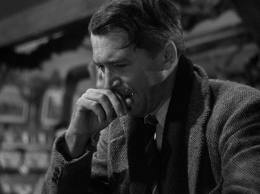 Georgia stared at the monitor. “Why is she, I mean why am I crying?” she asked Clarise.
“My dear,” Clarise clucked, “we’ll come back to that in a moment. Let’s look at what happened because you never had the opportunity to work here.” She pointed at the screen and it changed. An elderly lady had a handkerchief to her eyes, her hair matted to her cheek by tears.
“That’s Helen Greene! She’s our volunteer Debra’s favorite lady. Debra told me all sorts of stories about Helen Greene.”
Clarise shook her head. “Miss Helen never got the chance to have Debra as a volunteer. She never had a volunteer at all. She spent most of her time alone and lonely.”
“What difference did it make that I wasn’t here?” Georgia pleaded. “Debra would have loved Mrs. Greene no matter what!”
“That’s true my dear, but when Debra came to volunteer, you weren’t here to greet her. You weren’t here to spend that important time with her in the beginning, when she was so unsure of herself. Do you remember that?”
Georgia thought back to the intense time she spent encouraging Debra. “I do,” she whispered.
“Debra never did volunteer. All the people she would have helped never had her care. They went without.”
Clarise pointed at the screen and a face came into focus.
“That’s Jerry!” Georgia said excitedly. “He’s one of our best volunteers.” Georgia squinted at the images. Jerry was laying in a hospital bed. “What’s wrong with him?”
“He’s had a heart attack dear. Remember the day you were talking with Jerry and he was having chest pains and you insisted he go to the Emergency room? You accompanied him until his wife could be with him. You weren’t there to help him and he had a major heart attack.”
Georgia watched as Jerry’s wife came into the room and sat by his bed. She tenderly put a hand on his and laid her head on his arm.
“Is he going to die?” Georgia asked.
“I don’t know, my dear.” Clarise patted Georgia’s hand. Georgia’s eyes welled up with tears. “Jerry,” she murmured as the image dissolved into that of a woman staring blankly into space. “That’s Grace Tyne. The lady that suffered so much abuse that Doris is seeing.”
“Doris is not seeing her,” Clarise said.
“But Doris broke through to her,” Georgia interjected, “she was the only one who did.”
“No one broke through to her, Georgia.”
“But Grace was so hurt, so withdrawn.”
“She is still. No one has been able to break through to her. You weren’t here to realize that Doris was the one volunteer who had the capability to do so. Doris doesn’t know Grace exists.”
Georgia covered her face with her hands. Then she looked to see a man sitting in his small room. “Chad?” Georgia barely recognized him. He was disheveled and as he stared at the small television, his hands shook. “What’s happened to Chad?”

“You were not here to see the possibilities in Chad, my dear Georgia. He was laid off and someone advised him to volunteer while he was looking for a job. The temporary person here took one look at his tattoos and dismissed him. He never got that chance to be valued.”
Clarise stroked Georgia’s hair. She waved her hand over the screen and Georgia peeked to see all the volunteers she had recruited and trained and all the programs she had created from music to crafts to students and everything in between. Slowly the images of clients receiving services reversed and ran backwards and volunteers faded away, leaving clients without the benefit of volunteer help.
“Isn’t there another volunteer manager that took my place?” Georgia asked.
“There were many. No one took this position very seriously and they all quit, one after the other. The last person was Dale. He was an elderly man, sick and frail. No one had your passion nor your commitment dear. No one saw what you could see. This program did very little to actually help anyone.”
The images fluttered and stalled. Then Georgia saw the first image of herself at the cubicle desk. She was crying as she spoke into her cell phone. “I want to try to work it out,” she was saying. “I don’t know if it will work. I know you have given up, but maybe,” her voice caught, “maybe we can try again.”
 Clarise looked into Georgia’s alarmed eyes. “You see, my dear, this may be the biggest tragedy of all. You chose to pursue a career that involved money and climbing ahead. Your heart told you to help people but you did not listen. You chose a life without the joy of helping others. You became obsessed with moving ahead. You became unhappy, driven, and you grew apart from your husband. You are successful, but not in the way that fills your soul. You see, dear, you’re in the same spot now, overworked, under appreciated and tired. But all you have to cling to is that next step ahead, that elusive better job. You have numbers and statistics and reports, but really, you’re not a numbers and reports person, are you?”
“I don’t know what I am,” Georgia sighed. She was unable to look away. She watched as the her image sobbed, alone in an impersonal cubicle. She felt the crushing consequence of living a life that had little meaning. The sadness and desperation of being untrue to herself flooded her being and in that moment, she knew real failure.
“No!” Georgia cried and buried her head in her hands. “I don’t want that life, I want mine!” She looked up, tears streaming. Clarisse was gone. Her office was just as she had left it the day before, the day she decided to quit. Her old computer, her notes and papers tacked all over the office were there again. She touched the worn spot on her desk and started to laugh. As she hugged her stapler, there was a knock at the door. It opened to reveal one of her volunteers, Julia peering in. At the sight of Georgia simultaneously laughing and crying, Julia asked with concern, “Is everything all right?”
 Georgia ripped up the resignation letter and dropped the pieces in her wastebasket. “It is now, Julia. It is definitely all right. Now, let’s concentrate on you. What can I do for you?”
During this season of peace and joy. take care of yourselves and reflect on the ripples you create, the lives you touch and the volunteers who need your guidance.
-Meridian -
Walt: In Memorium, My Favorite Dance Partner
 Walt died Saturday, after a very long battle with cancer. He was 87. Funny thing is, he volunteered up until about a week ago when he became too weak to get himself out of bed. But before that, he would come in, his clothes hanging off his body like busted balloons. He ended up using a cane and sat down often for longer and longer periods of time. None of that mattered, because he was “working.”
I remember when he first came in seventeen years ago. His wife, Grace, who was a volunteer at the time thought it would be good for him. And so he came to orientation. I noticed in class how his silver hair curled just so over his perfect collar. He listened politely, asked methodical questions while taking copious notes.
Grace informed me that Walt had been a very successful trial lawyer. It showed in his dissecting approach to volunteering. “Give me the facts. Tell me what to do and it’s done.” Trouble was, Walt wanted to work with patients. That’s what his wife did and he wanted to do the “top job.” But patients aren’t cases and working with them is about nuances, not facts, although Walt at first thought that by studying a few facts, he then knew them. Oh, how he struggled and how I struggled with him.
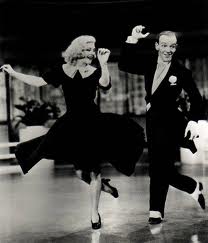
We spent that first year together, doing a sort of schizoid tango, Walt telling me that he wasn’t comfortable, me assuring him that he would eventually get it. Often I thought he would quit and numerous times I ran out of ways to tell him not to. I felt frustrated that I couldn’t find the words to make him comfortable. Other volunteers helped in guiding him, but ultimately he had to find his own comfort. As the first year passed, he began to let go of his authoritarian role and started to sit down next to patients as he talked to them. He began to find pleasure in bringing a cup of coffee and enjoyed the less direct ramblings of life stories.
Our frenzied dance slowed to a waltz and he mixed into the routine like a French vanilla creamer in a perfect cup.
Several years ago, his beloved wife, Grace died. Burdened by grief, he insisted on continuing to volunteer, never sharing his heartache with patients, preferring supportive roles. Year after year his reason to be slowly returned as he immersed himself in helping others. He spent more and more time volunteering, but this time he greedily sat at bedsides. It was right for him, and soon the staff began to know and appreciate his humble spirit. And so Walt became a great volunteer.
At his service, his son said that Walt changed for the better by volunteering and that he got to see a side of his father that was truly inspiring. He voiced his gratitude to the organization for helping his Dad become a better man. There wasn’t a dry eye. See, we all knew things about Walt, things he had chosen in his new humility to share, things like struggles with alcoholism and infidelity. We could only imagine the Walt of old. We knew the deep Walt, the one we watched become a humble servant to others. He was as much a part of us as we were a part of him.
As we left the service, I realized how much I would miss our dance, But then, I pictured Walt dancing with Grace and hoped she would be proud of the man he had become. I know we are.
Cheers Walt. Thank you for showing me that by patient practice, we can all do a mean two-step.
-Meridian




 volunteerplaintalk