Category: messaging

  • Management 601

    Belushi“Hey, not everyone is cut out to be a manager,” said my friend, Rennie, who works in the finance department of a large charity organization. She occasionally uses a volunteer to help with end of year reports, and adds, “the volunteers are always so wonderful to work with and our volunteer manager, Chase is awesome. But volunteers are not my problem. My problem is we have a new senior manager in our department, Bridget, who was hired to make our financial processes flow more smoothly. And since she’s gotten here, our department is miserable and everyone talks about quitting. It’s demoralizing.”
    “What is it about her management that is so bad?” I asked.

    “Well, when she first got here, she gathered our department together and told us what a great bunch we were and how excited she was to be working with us. She said she’d heard great things about us and that she wanted to learn from us.”
    “That doesn’t sound so bad.”
    “Yeah, but that was then. Now when our department meets, she tells us what a great bunch we are and then proceeds to rip into each one of us for something we did not do correctly or on time or according to her schedule. It’s apparent that the praise is just generic lip service while the criticisms are specific and targeted. We used to be a happy, productive department. Now, we are just defeated.”

    I feel for Rennie. Her senior manager seems to have been sleeping during management 101, which got me to thinking about volunteer managers. Where are we in the management curriculum, if 101 is your basic course? I’m thinking that the vast majority of volunteer managers passed the first five years and are completing management 601 on the way to a master’s degree.

    Why do I think that? Well, I’ve compiled a list of the skills we have honed by working with volunteers. Here’s just a few of those skills: See if you agree.

    Volunteer managers have mad leadership skills. We inspire, encourage, cultivate and mentor people. We believe that our volunteers will do amazing things and we develop their strengths instead of focusing on their weaknesses.

    Volunteer managers immerse themselves in outcomes. We keep statistics and prepare reports, but our bottom line is always about the human results. Because our eyes are on the work of the mission, we instill the joy and meaning of helping in our volunteers which creates excellence. When our volunteers do pure work, the stats and reports just naturally follow.

    Volunteer managers think “in the long run” terms. We build teams for long-term help, and not just for today’s assignment. Our hard up front work is meant to retain satisfied volunteers. Because we can’t just hire a replacement for a volunteer who quits, we make sure that our existing volunteers have what they need to succeed. We don’t “use” volunteers, but rather, we support them so that they remain committed to our cause.

    Volunteer managers stimulate growth. We are open to new ideas, new ways to help our clients and routinely look to recruit people with diverse backgrounds and fresh ways of doing things.

    Volunteer managers are expert mediators. We are the middle men in almost every assignment. We negotiate between clients and volunteers, and volunteers and staff. We quickly learn the art of persuasion, and the ability to deliver a negative message without hurting feelings. We are skilled at compromise to get jobs done.

    Volunteer managers operate with clarity. We know we will not keep volunteers if messages and instructions are not clear, so we frame every instruction so that it is clear. We know that muddied messages can ruin a volunteer experience and cause the volunteer to quit.

    Volunteer managers are critical thinkers. We have to meet challenges in a timely manner and so we have highly developed problem solving skills in order to succeed. We keep file cabinets full of pertinent information in our minds and databases so that we can cross think to find the best solution to any volunteer involvement. We can offer the best volunteer for a job, because we know that volunteer’s skills and abilities and can match those to a situation.

    Volunteer managers are chameleons. We can adapt and change quickly. We know what tone to take and can switch from light-hearted to serious in a moment as the situation warrants. It’s silly, but we are kinda like the Christmas tree lights with so many different settings and we’re constantly on the “all” setting so that we can fit into any mood.

    This list is just a portion of the skill set possessed by volunteer managers. There are so many more and unlike our compatriots in human resources, we must develop and use many more people skills to recruit, lead and keep our volunteers.
    People ask what is our volunteers’ substitute for a paycheck? We say that it is the meaningful work that keeps our volunteers coming back. But also, please remember, that in part, it is the vast skill set of the volunteer manager that fills the void of not receiving a paycheck.
    Instead of monetary compensation, our volunteers receive a meaningful volunteer experience thanks to the leadership of volunteer managers who are constantly growing in skills to help make that meaningful experience happen.
    -Meridian

  • Just Put That in My Bag

    junk drawer“Freebies,” volunteer coordinator Sara lamented. “Our staff thinks of volunteers as freebies. They think I have a bag full of volunteers and when one is needed, I just reach in and pull off the wrapper.” Sara continued, ” I mean, don’t get me wrong, I love freebies, like the BOGOs (buy one get one) or get a free cruise if you listen to our sales pitch or a free flashlight to the first 100 customers. Freebies are great, but they’re just, well freebies. I didn’t pay for them, and maybe I didn’t want them in the first place. I certainly don’t value them that much.”
    That conversation got me to thinking about how we view volunteers in our organizations. Sara is right. There is very little investment on our part in freebies. Someone hands you something in the mall or at a conference. All you had to do was show up, therefore, you place little value on that item, because, after all, it’s free.
    So how do organizations view volunteers in this context? Do organizations view volunteers as the junk in the bottom of the plastic bag after attending a conference? You know, the free trinkets handed out like the assortment of band-aid holders, wet wipes, and lip balm which is all just more stuff to deal with in a busy life, stuff that has no real meaning except to advertize a logo?
    Are volunteers the rubber jar opener that we throw in the junk drawer until we might need it one day? And, if so, how do we make volunteers the substance of an organization and not the free stuff? Let’s take conferences and symposiums for example. There are conferences and symposiums which are geared specifically towards the volunteer sector. That’s really nice, but who is attending these symposiums? I doubt very many administrators of non-profits are attending. We, the volunteer managers are attending.
    Our own volunteer themed symposiums are pretty much like the lip balms and band-aid holders holding their own symposiums year after year. “Yeah, how do we make a better lip balm, maybe one with more sunscreen?” “Maybe we should make the band-aid holders green instead of yellow this year.” And yet, the lip balm and band-aid holders end up in the bottom of the bag once again. Do symposiums not geared solely towards volunteerism have substantive volunteer components? Would a conference on health actually feature volunteers presenting a workshop? Horrors, volunteers aren’t experts, are they now?
    When will volunteers and volunteerism be truly integrated into the missions and not just a freebie afterthought? When will the “free stuff”(volunteers) be more than fluff?
    Well, I was chatting with a retired business executive, Charles, who is married to a friend of mine. He politely listened to me lament about the “silo” of volunteering, taking in my ramblings as he slowly raised an eyebrow at my frustration. ” You know, we were in the business of selling our products and all things worked towards that end,” he said. “You want to sell your product, AKA, volunteers, to the rest of your team and to the community around you. Some of the ideas we used to sell products might work for you too.” He went on, “businesses give out free samples to high influence customers, newspapers, bloggers and reviewers in hopes of getting a positive review or testimonial. Those positive reviews are proven to work, to create buzz, to make people want your product. People trust reviews by others who have actually taken the time to do a review. Maybe you can do the same with volunteer services and staff.”
    “I have no idea how to do that,” I admitted.
    “Look,” he said, “you want everyone in your organization to appreciate all the things volunteers do for your clients. But, does staff actually see or hear about all these great things? Do they engage with all the volunteers? Are they aware of how much volunteers help, aside from some meaningless statistics?”
    “No,” I said, “they don’t.” And, I thought, they don’t want to sit through some lecture about all the great things volunteers are doing. So, how to engage them, show them? Well, there are volunteer managers out there doing some pretty creative things.
    A volunteer coordinator I know says he has pictures of his volunteers in a book for staff and visitors to look at and get to know each volunteer as a person. He calls the book, “Volunteer Team Members.”
    Another volunteer coordinator polls her clients for testimonials to showcase how much volunteer involvement means to the people receiving it. She shares these testimonials at every staff meeting.
    Another coordinator publishes a monthly menu of volunteer services so that staff can pick from the different offerings and subsequently get to know all the great things volunteers are doing.
    A tech savvy coordinator has a twitter hashtag specifically for his volunteers to share their amazing work. He encourages all staff to check in on the hashtag.
    And yet another volunteer manager takes videos of volunteers telling stories about their favorite volunteer memory. These are available to staff on a private channel.
    Some coordinators publish newsletters, make scrapbooks and invite volunteers into meetings to share their stories.
    Others ask staff to help with training, so that staff has a “stake” in volunteers from the beginning.
    All these great examples are helping to make some headway into integrating volunteers as productive members of their teams. Truth be told, we have an uphill battle here. How can the lip balm and band-aid holder become more than “junk drawer bottom dwellers?” When non-profit staff think of volunteers as equal members of the team.
    When will I know that’s happened?
    When I walk into a mainstream conference and see a session given by volunteers.
    -Meridian

  • The Mass That Lurks Beneath the Surface

    iceberg I’m not telling you anything new when I say we all want our volunteers to be acknowledged and appreciated. We all want our volunteers to be treated with respect and looked at as integrals members of our teams. We all want volunteers to be thought about as contributors, not extra little worker bees. So, when that happens, are we, volunteer managers, not completely satisfied? Are we done? (Finally, the volunteers are treated as equals, I can stop clenching my teeth!)
    Hmmm, if the answer is a hesitant no, what more do we want? (Besides world peace of course)
    So let’s take a little trip if you will and look in at a volunteer manager, Josh sitting at his desk, answering phones, solving problems, listening to stories, making placements, (fine, for brevity’s sake, I won’t list all of the tasks going on) and a staff member wanders into his office. (for giggles, let’s say, a member of senior management) “Wow,” the senior manager says, ” I have to tell you, Ellen is such a great volunteer, she really did an excellent job last week. What a gem she is, you’re really lucky to have her!”  Josh immediately smiles, looks up and agrees, “Yes, she is wonderful, thank you so much for acknowledging her contribution, I will certainly pass that along to her.”
    The senior manager walks away, mentally patting herself on the back for praising a volunteer. There, now everyone’s happy, right?
    Well, yes, but Josh has this nagging little feeling that not everyone and everything has been properly acknowledged. For him, there is a back story to that praise. Now, don’t get me wrong, we are all thrilled to hear our volunteers receive praise. So, then, what is that invisible behemoth of a back story lurking beneath the surface?
    In the case of volunteer Ellen, what that senior manager did not know is that Ellen at first spent three months questioning whether volunteering was right for her. Josh allowed Ellen to observe other volunteers in action, invited her to educational in-services and arranged for Ellen to have her own volunteer mentor. Josh spent hours on the phone encouraging and motivating Ellen in order to give her exactly what she needed to feel comfortable. Although swamped with requests, Josh focused in the moment and saw in Ellen the potential to be a great volunteer. So when praise for Ellen also includes the phrase, “you’re lucky to have her,” Josh invariably remembers all his efforts beneath the surface.
    Some volunteers are naturally great, some quickly develop into great volunteers and others need more mentoring. It is as much an art to recognize the volunteer who needs little mentoring as it is to find the right way to mentor a volunteer who is unsure. The yin and yang of volunteer management is a nuanced role that takes the eye of an artisan who dabbles in human potential.
    When major events go off with no major problems, it’s the volunteer manager who has spent the time calling and recalling volunteers so that they know all the little things like where to park, whether they’ll need to bring water or sunglasses, the proper dress, directions to the event, who to check in with, where the bathrooms are located, and what they will be expected to do. All that work is never seen, only the fact that volunteers are on time and prepared.
    Beneath the surface there’s all the time spent hearing volunteer concerns and the follow through in correcting a wrong or getting an answer. Beneath the surface, there’s all the work behind the scenes everyday that volunteer managers do, like dropping everything when a potential volunteer walks in off the street, skipping lunch to visit a volunteer in the hospital, staying late because a student needs papers signed to prove they’ve volunteered, looking up airline tickets for a volunteer who’s computer is broken, making a fuss over grandchildren who have come to visit, going with a volunteer to a doctor’s visit because her daughter lives in another town, looking at pictures of a trip when a report is due, saving that book for a volunteer who loves the same author, framing pictures of volunteers as gifts for their families, and bringing in garden flowers to share.
    Beneath the surface of any excellent volunteer program is a volunteer manager who cares enough to work tirelessly with a mixture of raw gut instinct, mother hen tendencies and a passion for human potential. That tip of the iceberg did not poke through the water on its own for it is supported by a massive base of cultivation, patience, persistence and old fashioned sweat.
    So, once we get the respect and acknowledgement for our volunteers down and once we are comfortable knowing that our organizations will always treat our volunteers with respect, then maybe we can start working on some recognition for our contributions and our everyday efforts.
    It’s a lot to hope for, but I can dream big, as big as that iceberg base, can’t I?
    -Meridian

  • One Does Not a Plurality Make

    sheepDo you ever catch a staff member lumping all volunteers into a herd, like sheep?
    Richard graduated college with a degree in psychology. He took a job as a volunteer manager for a mid-sized organization that places volunteers in area agencies. Richard has plans to continue his education and will apply to the college of social work in two years. “It’s not that I don’t appreciate being a volunteer trainer and manager. I really do, it’s that I’ve had this long-term plan for quite a while. I hope, as a social worker, that I’ll be able to work closely with volunteers.”
    Richard recounted a team meeting that he attended a few weeks back. “It was one of our mandatory meetings for all staff. The CEO, all the senior managers and all of us workers were there. They had presentations, financial reports, and upcoming events. You know the type, there’s some rah-rah stuff where they tell us we’re the best at what we do, and then there’s problem solving talk about things we can do better.” Richard paused. “I was half paying attention, I gotta admit, then one of the marketers got up and started talking about the need for everyone to be more professional. People were raising their hands, giving advice and testimonials. One of the senior managers stood up and said that the volunteers we train ‘were not acting in a professional manner’. My ears started burning. What? I couldn’t believe what I was hearing. The volunteers I train were not professional?” Richard’s voice went up an octave. “I mean, she was basically saying I didn’t do my job. I take a great exception to that. And here’s the real kicker; no one disputed her!”
    Richard went on to say, “I mean, here’s a senior manager tearing down the volunteers in front of everyone. She painted a picture that all volunteers are unprofessional which is so far from the truth. It was demoralizing and completely bogus. Just because volunteers are an easy target is no excuse for her to foster that impression.”
    Ahhh, Richard, I’ve been down this road so many times. When people generalize about our volunteers, they do enormous harm. Most staff have very narrow views of volunteering; they know the volunteers in their area and sometimes they only come in contact with one or two volunteers. To broad brush an entire force based on here say or one isolated incident is devastating, insulting and frankly demoralizing. I’m embarrassed to say that I’ve had staff say to me, “the volunteers don’t know what they’re doing”, or “the volunteers aren’t very reliable”. In every case, the staff member heard these claims from another staff member who either exaggerated or recalled an isolated incident.
    So, I have learned to nicely confront the person who has painted the picture that our volunteers are sheep in a herd of incompetence. The outcome has been more awareness of broad statements. The last polite confrontation went something like this:
    Me: Sheila, I just wanted to ask you a question about something Dave told me he heard you say in your meeting yesterday. Dave told me that you said ‘our volunteers don’t even know who our CEO is’. Is that accurate or did he misunderstand?
    Sheila: Oh, well, I, I don’t remember exactly, but I might have said something about a volunteer receptionist not remembering the name of our executive director. It really wasn’t that big a deal.
    Me: No, but I would really like to follow-up with that volunteer so that I can make sure she will have the correct information. We wouldn’t want anyone to be embarrassed. Do you remember who that volunteer was?
    Sheila: Well, no, I mean I was told this by one of my staff, Corella who observed your volunteer forgetting in front of a client.
    Me: That certainly is distressing. May I ask Corella who the volunteer is so that I can give her the correct information?
    Sheila: Well, sure, I guess, but really it’s no big deal.
    Me: Thank you, I will follow-up with Corella. Our volunteers are an asset and we want them to act in a professional manner, and believe me, volunteers want to do a good job.
    Sheila: Ok, fine.
    Me: Can you tell me about all the other instances of volunteers not knowing the CEO’s name?
    Sheila: I, I don’t know of anymore.
    Me: Well, that’s certainly good to hear. Fortunately one incident does not mean the majority of volunteers don’t know the CEO’s name. But if I may, in the future, we would really appreciate your coming to us if you have a concern about one of the volunteers so that we can address it. It’s not helpful to air these concerns in a general meeting because it gives others the impression that we are not doing our jobs and that the volunteers are incompetent which I know you know they are anything but.
    Sheila: All right, I will keep that in mind.
    Me: Thanks again, you’ve always been so supportive of our volunteers and we appreciate your help in making everyone aware of the great work the volunteers do.
    Now if you think I don’t actually use that formal business speak, I most definitely do. In order to make my point, I remove all emotion, and speak in a very formal, direct, businesslike manner. My extreme businesslike attitude subtly points out their unprofessional treatment of our volunteers.
    I’ve done this ever since I became very tired of doing nothing about these blanket statements. Embarrassing a senior manager in a meeting by “correcting” his or her broad statements in front of everyone is often a career killer. But, one on one, we can point out the error and ask for help in recognizing the impact our volunteers make.
    Volunteers are not sheep, or children or just little old ladies with no skills, they’re a microcosm of the best our communities have to offer. Volunteers have earned respect, so let’s help our respective fellow staff members remember that.
    -Meridian

  • The Book and Its Misleading Cover

    judge book by cover“Three strikes and you’re out!” That’s my rule and I tell myself all the time, “don’t be a patsy; hold people accountable.” It’s not like I’m a pushover because I’m in the helping business anyway, is it? For cryin out loud, just because someone wants to volunteer, doesn’t mean I have to bend over backwards for them, right?
    Well, ok, there I said it. Sounds good on paper. At least it did until I had a call about two weeks ago from a college student named Justus. He left a garbled message for me about his fraternity doing volunteer work, and so I called him back and left him a super happy sounding reply. “Hi there, this is Meridian and I am so excited and can’t wait for you to volunteer with us!” Ok, no, my return messages don’t really sound like a used car salesman, but sometimes I wonder if there is too much desperation in my voice.
    On my desk I’ve always kept a yellow legal pad that chronicles the phone calls I receive and make. It is full of graffiti from color highlighters, shorthand and initials, like LM for left message, WCB for will call back, MA for made appointment. I can flip back and see anything that has languished a bit by the highlighted portions. When done, I line through them. It’s not a perfect system, but it’s better than all the post it notes I used to have stuck to everything (including my skirt as I walk away).
    For days I went on about my business and then when flipping back over my legal pad, I found Justus’ number with the LM indication. Hmm, he did not call me back so I called him again. This time he picked up and I introduced myself and reminded him that I had left a message. “Oh, right,” he said and hesitated so I added, “You called about volunteering with your fraternity.”
    “Yes, yes,” he said,”I got your information off the internet and would like to talk to you about our group doing some volunteering.”
    “Ok,” I said, “why don’t we meet? I can come up to your school when it is convenient for you.” There, see, I made it easy for him to get involved. I mentally patted myself on the back and recorded our appointment on my calendar. Done, good.
    Our meeting day arrived and I drove up to college and walked to the library where I plunked myself in the first set of easy chairs. I felt ancient, what with all the skinny jeans walking by, but I was “official” so I belonged there, kinda like the mom who polices the slumber party. I looked around at all the students and wafted back to my college days. Library, study, no difference except for all the devices. 9am became 9:15 then 9:30. Hmmm. I pulled out my phone and the slip of paper with Justus’ number on it and texted him. “Am in library, are you here?” At 9:45, I gritted my teeth and left, driving all the way back to the office, thinking of the work that had just piled up because I went on a wild goose chase for some college kid. Drat those irresponsible college types that don’t yet know how unforgiving the real world is!
    The next day I had a message from Justus. “I’m so sorry, something came up, can you call me?” “Grrr,” I sputtered as I dialed his number. He picked up and cavalierly apologized and asked to meet. “Well,” I said, “can you come here?” He agreed that he could make the drive and we set a time, 2:00pm, for that Thursday.
    Thursday at 2:00? You guessed it, no Justus. At 2:30 I got to serious work and forgot that I was stood up again. But he called at about 3 and said that something came up and could he meet me at 4:30 on Friday. 4:30 on a Friday? Oh, this will be a disaster, I told myself. Normally, I leave at 5:00 if I’m lucky and besides, every Friday at 3:00 I just literally lose all capability for rational thought. But, sighing, I agreed, while internally chastising myself for putting up with such youthful irresponsibility.
    Friday was tough, busy, full of problems and issues and at 3:00 exactly, the brain stopped functioning properly. I checked my calendar and groaned. Instead of winding down, I had to gear up for Justus, that is if he actually showed. At 4:20, I walked to the front lobby to see if he was dutifully waiting there, but it was empty. I returned to my desk and finished up. At 4:50, I got a call from the front desk volunteer, Jan. Justus was there to see me. “Thanks, Jan,” I sighed. “Send him back, please,” Since it’s hard to literally kick oneself, I punched myself in the arm for agreeing to the time.
    He came back and I waved to the small conference table near my office. “Nice to meet you ” I said, offered my hand and added, “you’ve got ten minutes.” He looked at me, saw my obvious annoyance and sat down.
    Justus folded his hands and without prompting, began to tell me about his childhood in Africa and his family’s emigration to America when he was twelve. He talked about the expectations his parents placed upon him and their unwavering commitment to serving whatever community they lived in. He explained how, when he was in high school, he started his own food drive to feed local families in need. He said that he was studying sociology and foreign affairs and hoped to be an ambassador some day. He had earned a full ride scholarship to college and was elected the first Junior year president of his fraternity. His tenure, he told me, would be about serving the community. He had three semesters to make it happen. “I want my fraternity brothers to work hard, to sacrifice. to appreciate all they have when others have so little or nothing. I want them to learn what my parents taught me.”
    I looked at the clock. 5:25. I wasn’t interested in going anywhere anymore. I was mesmerized by this young man. (and not in a creepy cougar way, so don’t even go there) At one point, I looked at him and said, “Who are you?” (no, really, I did say that and I got a smile) Clearly, I need to hear more. Mentally I made note that a whole lotta work was coming my way, but hey, how could I pass up this intriguing individual and the fraternity he is guiding?
    We shook hands and agreed that I would come out and talk to his group in two weeks. I’ll show up on time and forget about our shaky start. I’m past that silly book cover and having read chapter one, can’t wait to read more.
    -Meridian

  • Mother, May I?

    catapultWhen Eve was approached by a college looking to extend a grant to a volunteer group, she was ecstatic. Working for an organization that conducts health screenings in impoverished places, she already knew that her medical volunteers needed updated equipment. Excitedly, she described the grant during her next departmental volunteer manager meeting. Everyone read the guidelines and offered verbiage for procuring the funds. Eve submitted the grant and the college announced her organization as their grant recipient.
    Buoyed, she came into work the next Monday to find an invitation for a mandatory meeting with her boss and the fund-raising arm of the organization. Puzzled, she grabbed a notepad and hurried to the meeting. There, she was harshly reprimanded for “going out on her own” and “not going through the proper channels” to procure the grant. She was told in no uncertain terms that finding funds was not part of her job description and the next time she did anything like that, she would be written up. She doesn’t remember anything said about creativity, initiative or thinking outside the box.
    Eve was devastated. She thought that by telling her boss, she had by proxy, informed everyone she needed to. Her boss thought that Eve had already informed the proper folks in the fund-raising department.
    Eve felt betrayed. She couldn’t fathom how something so wonderful could be viewed as something negative, so she sought out her good friend and mentor, Rosalyn, who used to work in her department but retired a year ago. Rosalyn listened and nodded. “I’m really sorry that happened to you,” she said, “but I’m not surprised. It happened to me a long time ago and I learned a valuable lesson from it. When you’re dealing with non-profit types, you not only have to follow all the rules, you have to understand that these are people who deal in feelings everyday. And so it is natural that their own feelings come into play.”
    Eve was skeptical. “You’re saying that I hurt their feelings?”
    “In a sense. You hurt their feelings, usurped their power, stepped into their area, you name it, that’s how they perceived it.”
    “But I did something to help. They weren’t going to write for that grant.”
    “Doesn’t matter. You’ve got to realize, they are under a lot of pressure. Your organization can’t function without donations.”
    “But,” Eve interjected, “we can’t run without volunteers.”
    “True, but if fund-raisers started recruiting volunteers, how would you feel? Would you feel like they are helping you?”
    “No,” Eve admitted. “I’d be worried about my job.”
    “So, can you see how they felt?”
    “I guess so,” Eve said. “But then, that means if I find something outside of my job description that would actually help my organization, I just have to pass it up?”
    “No, not necessarily. You just have to adopt the Mother, May I principle.”
    “I think I know where this is going.”
    “Yes, you do, and that’s how I survived my tenure with all the other departments. Let me tell you a typical path I took to get a project going.”
    “Please, because you started so many projects there.”
    “Well, let’s say I was approached by a student group wanting to volunteer to do some media publicity for us. This would be my plan of action. First, I would meet with the students and thoroughly get all their intentions on paper. I would make sure that the verbiage I used with them always included maybe, perhaps, we’ll see, if it can be done, I make no promises, etc. Then I would go to my boss and explain the idea and ask permission to go higher up. I would follow that conversation with an email outlining what we discussed. I then would make an appointment with the proper decision maker, invite my boss to the meeting and present an outline of the project. I would include all the benefits to all the departments as well. Now here’s the tricky part. In that meeting, I would use the verbiage, if you think, we could use your buy in, we need your help to succeed, and I would offer to let them consider it and get back with me. I would tell them that they would be informed every step of the way and could pull the plug at any time.”
    “Mother, May I.”
    “Yes, it worked most of the time. It’s really just common courtesy blended with concrete and clear information. That’s the key.”
    “But it’s so time-consuming, so, so, demeaning. I mean, don’t they trust me?”
    “That has nothing to do with it. They need to know what is going on at all times. Secretly, I think they were glad that I was doing all the legwork for these projects. The more I kept them informed, the more autonomy I had. It was a win-win for everyone.”
    “But didn’t you hate babying all those people?”
    “Aha! No, because you have to look at it as approaching them in the way that works for them. You still get what you set out to get. Don’t you already do that with volunteers?”
    “Yeah, I guess so.”
    “I know it’s time-consuming and it takes an attitude of humility. If you run up to them and shout, ‘hey, I’ve got the best idea ever and you should thank me for bringing it up,’ you’re not going to gather many supporters. And going it alone, even when you have something wonderful to offer can create friction. I once created an event on my own time that benefited the organization. No one was thrilled, in fact they were peeved. I was viewed as trying to bring down their event castle so to speak, so no help or acknowledgement came my way. Be humble and mindful of their areas of power. It’s like you are knocking on the door of their castle instead of getting out the catapult to bust in. That way, they open the door and invite you in. There’s no benefit to making enemies of the people you work with, right?”
    “Uh huh. Mother, May I. Knock, and ask.”
    “Oh, and one other thing. Bring flowers.”
    -Meridian

  • The End of the Year Report

    bonding Last week I had the opportunity to shadow one of our volunteers. Leeta, a volunteer who visits nursing homes invited me to follow her around for a morning. I jumped at the chance because Leeta is one of those volunteers who is so quiet and reserved, that when she attended orientation, I sort of dismissed her in my head as not being a “sticker”. You know, those folks who will stick with it. I was wrong, thankfully and she’s been a sticker for eight years now.
    I arrived at the nursing home early and she was already there. Although I had been there many times, I wanted to see the facility through her eyes so she gave me a tour. I have to admit, I had never before noticed the impressive painting of the founder nor the cozy little blue living room off the first corridor. Our first stop was the room of a tiny woman who talked about her years making pasta at her husband’s restaurant. Her deft hands mimicked the motion as she spoke. Leeta smiled knowingly. She had heard the story many times before. We then spent time with a gentleman who set type for the New York Times newspaper. He is 103. He slyly told me he got the news before the world did. Now, that’s impressive.
    Then we came to a lady, Gwen, who was curled up in the hallway in her wheelchair. Under a collection of afghans, the world bustled around her as she sat among hurried staff and visitors on a mission. Though Gwen was deeply asleep, Leeta gently touched her shoulder. There was no response. Leeta whispered “Gwen” but nothing happened. Leeta paused for a second, watching intently then stood upright and I figured we were done. Nothing to see here. But instead, she walked into Gwen’s room and returned with a letter. “This was written by her granddaughter,” Leeta said as she unfolded the well used pages.
    Leeta bent close, her lips nearly caressing Gwen’s wispy hair. “Dear Grandma,” she began, “I love you very much. I was in school yesterday and my teacher told us about..” she continued. My eyes were fixated on Gwen’s face. At first she continued to sleep, but I saw a flicker, then a stir as she took the words in. Her eyes fluttered and then slowly opened at the words, “Mommy says hello too.” She turned, so slowly that time seemed to stand still and she saw Leeta’s face, just inches from her. She blinked and recognized and the most peaceful look came over her that for just an instant, I felt that all was well in the world.
    She drank in Leeta’s voice and kind eyes and the two spirits melded like batter for a decadent chocolate cake. Leeta stroked her hair and cheek and I felt tears spill onto my own.
    No one will ever get to know that powerful moment. No one, but I. And there, in that chaotic hallway, I felt the power of volunteering, the reason volunteers do what they do.
    Intimacy is borne from the establishment of bonds and our volunteers open their souls to that connection. They do it quietly, without thought of praise or recognition. But how we, volunteer managers, would love people to know about those intimate moments. How we’d love our fellow staff members to witness a volunteer’s humble gifts. How we yearn for senior management to be in that moment, to really grasp the nature of volunteering. How we wish prospective volunteers could feel that connection and understand how it would enrich their lives. How we want the public to see these tender moments so that they would stop caring about mindless celebrity sightings and start to embrace volunteerism.
    But therein lies the irony of intimacy. A hundred pair of curious, expectant eyes would shred that blanket of intimacy woven by our volunteers. And so it becomes our duty to recreate, to celebrate in song and tale the forging of spirit to spirit. We use words, images, videos, gestures and heartfelt testimony because we, as observers of volunteers, know their value. The intimacy of volunteering is a story that needs to be told and we continually struggle to find just the right words.
    Our jobs include showing the value of volunteers. Statistics, money saved, papers filed, number of calls made all show value. But what spreadsheet can show those intimate moments that mean everything to the recipient?
    I’ll continue to struggle to showcase the true value of volunteers to my organization because these are the things in this world that are so priceless. I just hope that all organizations, while combing through end of year reports, never lose sight of that which really matters.
    -Meridian

  • A Tale of Two Speeches

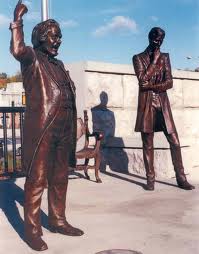
    Lincoln Douglas debatesLast week I attended one day of a community forum hosted by a state organization that is a clearinghouse for non-profits. Featured were non-profit gurus with varying credentials and backgrounds, covering topics ranging from increasing donations to taking care of donors so that you will increase donations. (just kidding, there was a topic on staff burnout-presumably from trying to increase donations, I guess). I was able to attend two presentations; the first one by the vice president of marketing for a consulting firm. The topic was “Reaching Out Through Messaging”. The other presentation was by a volunteer, who had just won a state award for exceptional volunteerism. His topic was “Doing and Believing.”

    As I stepped over the crowd to find a seat in the first presentation, I knocked several handouts to the floor. The room was packed. Our speaker, dressed impeccably in pinstripes, told us of the power of messaging, especially when knocking on the doors of potential donors. On screen, he showed examples of pictures that tell compelling stories about the good work our organizations are doing. Slide after slide showed grinning people with perfect teeth helping people who looked just enough down on their luck. Not dirty or disgusting, the pictured recipients had appropriate gratitude angled just right for the camera. All in all, I got the messages from the pictures. Donating money=nice scenes like this going on. Evidently, these pictures work, because he gave some pretty impressive statistics. Within a moment, the subconscious mind of the donor is invaded with good feelings. Nicely done, I thought. He did say that messaging would apply to recruiting volunteers as well. Paint the picture, tell the story. He showed one picture of volunteers. They were gathered together, arms around one another, smiling for the camera. They looked pretty happy. They weren’t sweating, so I’m guessing this was a before and not an after picture. I did notice they all had perfect teeth. Hmmm, maybe they all went to the same dentist.

    I pretty much could sit anywhere I wanted to in the next presentation. I guess most of the attendees elected to go to the concurrent session, “Bridging the Donor Gap”. I looked around at my fellow seat mates and nodded. You can pick out the volunteer managers at symposium. We all pretty much get out our steno pads and wait expectantly.
    The award-winning volunteer, Gabe, walked up to the front of the room and turned to look at us. He was tall, with raven hair and craggy features. His smile was impish, as if he had just sneaked into his father’s cocktail party. He thanked us for coming and then proceeded to tell us his story. A youth minister, Gabe began his ministry ten years ago. He had watched with concern the growing number of homeless folks in his area and so he began to collect basic essentials to give out, first on a monthly basis, then every week. This ministry, with the help of the youth of his church, added a soup kitchen, and a counseling service. He, and several youth members volunteered at a local thrift store in exchange for the unsellable items such as socks and kitchen utensils. He then grew quiet as he told us about one of his most memorable clients, “Ruth,” a homeless woman who had lost her job and with a ten-year old son, Jason, in tow, arrived at the church doorstep. Ruth had dropped out of high school when she was sixteen and pregnant and now, at 27, she found herself without a safety net after her mother died. Gabe walked quietly back and forth in front of us, running his fingers through his hair as he told us that shy little Justin loved Batman. His Batman sneakers were well-worn and the only sneakers the youth group had to replace them were plain. Gabe paused and told us what happened next. The youth group started texting all their friends, asking for a pair of boys Batman sneakers in size 7. By the time Gabe arrived at his church the next morning, not only were there three pairs of Batman sneakers arriving at church, but friends of friends brought Batman shirts and toys along with packs of new socks, food, underwear, dresses, diapers, jeans, and more. On those donations alone, his group was able to feed and clothe 5 homeless families. Gabe looked us in the eyes. “Believe,” he said. “Believe that you can do good work and you will.”
    When Gabe finished, we all stood up and applauded. He smiled reluctantly. I didn’t check to see if he had perfect teeth. I was too busy being mesmerized by his message.
    -Meridian