Category: part time volunteer manager

  • Let’s Just Have Tea, Shall We?

    teaMarlene has been a volunteer coordinator for ten years. She’s adventurous, loves rock climbing, extreme sports and her idea of a pleasant evening is a demolition derby. It’s only natural that she would bring her sense of adventure to volunteer management.

    “I like to try new things all the time,” she says with the tiny grin of a child caught in the act. “I like to see the things others are doing and try to incorporate that into my volunteer program. Here at my hospital, it’s easy to get into a complacent stage where you think all people who come to volunteer in a hospital setting are pretty much the same type of person. I’m constantly being told to find retired nurses and health care workers, because they would naturally want to continue their line of work after retiring, wouldn’t they?” She laughs easily. “I mean it’s this kind of thinking that breeds a stale environment. Now don’t get me wrong, I understand that a retired nurse would be easy to train because she knows the system so well and can follow the rules. But,” she adds with a mischievous gleam in her eye, “what about the retired nurse who was so fed up with obeying the rules, and she wants to volunteer to break the constraints wide open? Huh, what about that?”

    Marlene has a great point. Organizational administrations who tend to lump potential volunteers together will most likely also make the mistake of lumping actual volunteers together in a “them” mentality. Ignoring the subtle complexities of volunteer management will foster this stale and outdated thinking.

    “When it comes to interviewing potential volunteers,” Marlene continued, “I’ve tried everything from quizzes to group interviews to structured questions. Sometimes these techniques work, and sometimes they don’t. We’re in an age when background checks are not enough, not if you really want to get to know the motivations of the volunteers working within your system. Do background checks uncover mental illness? Does a quick call to a reference on an application reveal the tendency to get over-involved with children? Will an interview question about the reason a person comes to volunteer actually produce the real answer?” Her grin widens. “And what is the real answer, now that is the question?”

    Marlene has had some experiences she wanted to share with us. “Look, I tried a list of good, solid questions, but what I often found was that I immediately put the volunteer on the defensive. For instance, I asked a man why he wanted to volunteer with us and he shrank back like I hit him with a bat. I could see in his eyes that he was searching for to the correct thing to say, so I knew right then that I wouldn’t be getting an honest answer. Now, mind you, this man became a great volunteer, but that interview question did not help me in any way. Actually, it hindered the rest of the interview and it took some time to get to know him.”

    Marlene looked for the right words. “But, I knew that I wanted answers to certain questions so I started experimenting with peppering the questions into a casual conversation. The whole process took a bit longer, but I found that in the majority of cases, it was well worth it. My mother was born in England and so I began to create in my mind what I termed the ‘spot of tea’ scenario. I would invite potential volunteers in for a twenty-minute chat and a cup of tea or coffee.

    At first I started by asking them simple questions and I found that even that put them a bit on the defensive so I experimented with trying to put them at ease. And now I begin by first explaining our program to them. It works so much better and puts them at ease. I start by introducing myself and talk about how the program works, our volunteer jobs, and some of the benefits of volunteering. I make sure that I tell them how rewarding our existing volunteers find their work to be. Then, and only then, do I start to ask some questions in a conversational manner. I’ll reword the questions every time so that it doesn’t sound so rehearsed.” Marlene laughs. “If you don’t think most potential volunteers can spot a canned question, then you don’t know volunteers!”

    She continued, “when people are comfortable, they will naturally open up, much more than when they are put on the spot by invasive questions like why are you here?” Marlene then recalled an incident during the beginnings of her ‘spot of tea’ interview. “I remember one young man who came in. We were talking, really getting to know one another and he told me that he had been fired from his last job. Because a red flag went up in my head, I carefully asked him what had happened and he told me. I was shocked that he confided in me, but it turned out to be a reason that prevented us from taking him as a volunteer. A background check would not have revealed that information to me. He did.”

    Assessing potential volunteers is something all volunteer managers want to do well. There really is no perfect question, technique or method involved in getting to know volunteers. Whether you have a set of specific questions or not, Marlene advocates first putting prospective volunteers at ease. “Make them comfortable with you so that they can be honest. That way, you’ll not only get some honest answers, but you’ll also have a leg up on figuring out a fit for them. And besides, it’s gratifying learning the volunteers’ stories. It helps you and it makes them feel a part of the organization right from the start.”

    This is why volunteer managers are so incredibly good at their jobs. Even the simplest of tasks such as interviewing a prospective volunteer is viewed as crucial to organizational success. Volunteer managers like Marlene may not try to be perfect, but in striving to do the best possible job in every situation is surely as professional as it gets.
    -Meridian
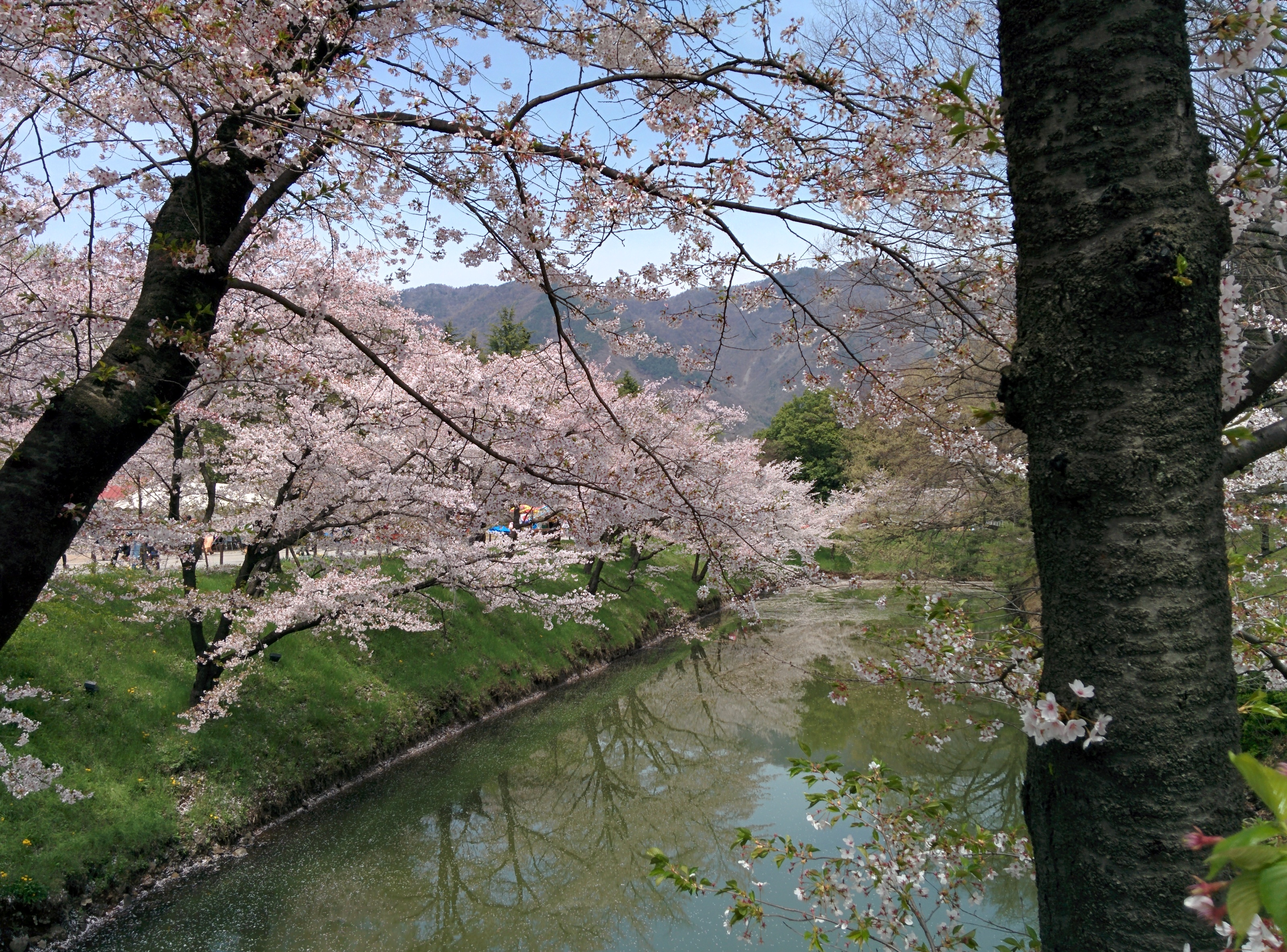
  • When Our Own Heart is Breaking

    cherry blossoms
    As I am writing this, my son and his family are moving more than a thousand miles away for new jobs and my heart feels like a vessel of dust.
    You see, volunteer managers take good care of clients and volunteers but occasionally we, too, endure heartbreak. Loved ones dying, divorce, pets put to sleep, infidelities, family members in trouble, fires and floods all befall us as well. So how do we continue to do our jobs when our souls feel like they’ll break if we even try to get out of bed?

    I remember when my father died many years ago, I was managing an all volunteer run resale shop. I really had no backup emergency staff and so I returned to work after one day off. My family told me that I was crazy for going back so quickly, but I did it more out of rote than anything else. Through the haze of shock and grief, my feet pulled the rest of me to work. See, my Father lived with me the last years of his life at a time when my husband and I had three teens in the house, their friends occasionally crashing with us, several animals, and demanding jobs. But I had made a promise to myself years ago and come hell or generational clashing, I was going to keep that promise.
    My Dad grew up an orphan, back when orphans were disposable goods. He went from farm to farm where he worked in exchange for a roof (usually in the attic where the only heat rose off the main floor) and food and the promise to send him to school. (He made it through grade six). And because my Father was a wonderful father, I promised myself he would not spend the last years of his life the way he spent the first.
    So, when the time came, we moved him into our home. He had dementia, a thing so potent that I first recognized its insidious burrowing when I got a call from him that he had lost his car in a parking lot. The dementia grew bigger, my kids and their friends got used to “Grandpa” and we managed, although my daughter, new to the teenage role, was thoroughly embarrassed at outings.
    Yeah, I got kicked out of a mall because my Dad refused to put out a cigarette and almost came to blows with the security guard. I had to go back and return the items he “lifted” from stores when I wasn’t looking, had to keep the kid lock on the windows because he would throw his half drunk milkshake out for fun and had to stand between him and the teenaged friends of my sons that came over because he was after all, back in the days when he scrapped with the neighborhood kids in Chicago.

    But I digress. I think I returned to work because I needed the arms around me of those volunteers I had come to love. After all, they understood. They took one look at me and knew and they wrapped my pain soaked body in their soft dry towel.
    There is the Carl Jung term, “wounded healer.” Simplistically, it refers to people who choose to help others because they, themselves are wounded by life’s events.
    I don’t think that term necessarily applies to volunteer managers. I think volunteer managers are like the cherry blossoms of spring. Let me explain if I can. I think we come into our jobs, maybe thinking that we will get to direct some really nice people and then we start to see the complexities of our jobs and that forces us to open ourselves up, more and more and more to the arching vast sweep of humanity. We open like a blossom to the human experience and we become unafraid to feel what we must feel, because we’ve been through it so many times with our volunteers. We feel with them and we feel for them and when our time comes to feel, we walk into that burning fire resolute, but prepared. And when a steady hand reaches out to calm our shaking, we grasp it firmly, and feel the gratitude.
    Does this knowledge make my heart hurt less? No, but I choose to remain open, because if I close, I close myself in with my pain and I’d rather open to loving arms that see me through.

    Walking along the edge of a sword,
    Running along an ice ridge,
    No steps, no ladders,
    Jumping from the cliff with open hands.’
    ~Zen verse

    Take good care of yourselves. A part of our lives is the knowledge that things will happen to us too. You’re part of humanity, vulnerable to suffering, but remember, there are people out there who care about you.
    -Meridian

  • Bursting the Idealistic Bubble

    bubbleburstWhile eating breakfast at our favorite hole in the wall diner, my husband pushed aside his plate of pancakes. “They’re a bit doughy this time,” he said and covered the plate with his paper napkin just as the server walked by. “Finished already?” Her question was a polite accusation, yet she removed the plate at my husband’s nod. That got me thinking aloud. “Does the cook feel badly when food comes back uneaten?”
    “No,” my husband quickly offered, “it’s a job.” But then he thought about it. “Well, maybe so.”

    It reminded me of volunteer manager Brett, who oversees the volunteers that cook meals for patients at a hospice care center. “One of the biggest challenges I have is to handle the volunteers’ disappointment when patients don’t eat the meals prepared for them. The volunteers put their heart into making the meals look and smell appealing from making sure the plate is cleaned of any spillage to the garnish that enhances the look.” Brett continued, “I mean, when a new volunteer starts, I have to really remind them that patients may be too sick to eat. They may order food with every intention of eating it, but their appetites often are just not there anymore and they don’t even try a bite. That is very disappointing to the volunteers who send out food thinking that the patient will enjoy the meal they just prepared with care.”
    “What do you do to quell that disappointment?” I asked.
    “Number one, I’m available. I’m there to gauge the volunteers’ reactions to things, like if they get quiet because they think they were reprimanded by a patient’s family or staff member, or if they seem down because no one is eating or if they act discouraged because no one seems to show any appreciation.”

    Brett is a savvy volunteer manager. He knows the impact and benefits his volunteers bring, but he also realizes that the volunteers don’t necessarily receive continuous positive feedback. And if they do not, then disappointments may just color the way they view their volunteering.
    I remember a volunteer, Jess, who was upset because the client she was working with said to her, “I don’t like you.” She had put her heart and soul into trying to “reach” this gentleman and when he refused to be “reached,” she was devastated. “What did I do?” she asked. “What could I have done differently?” And her very telling question was, “why doesn’t he like me?” At that point, placating her with flippant statements like “well, it’s just him, not you,” would serve no useful purpose. This is where some real volunteer management is necessary. We have to ask, “what are Jess’ expectations of volunteering? What are her methods of working with clients? Did we give her the wrong client, not only for her, but for him as well?”

    When working with volunteers, I was always adamant about telling them that a rebuff or client anger was rarely directed at them personally. The fact that someone didn’t eat a volunteer prepared dinner had almost nothing to do with the meal, but everything to do with the patient’s ability to eat.
    Brett says, “I tell the volunteers that the patient’s family is hyper aware of the meals that are made, that the family is touched by the extra care put into those meals. I tell stories about how a family member will get so excited because their dying loved one tried some creamy mashed potatoes. Because I’m here all the time, I can see the good that is being done. I try to impart that to my volunteers.” Brett connects his volunteers to the overall experience of volunteering, not just their own unique and personal experiences. “I tell them that not only does the family and any visitor notice the great meals, but our staff notices too. And my volunteers absolutely revere the staff, so that means a lot to them.”

    Do the cumulative good experiences outweigh the immediate bad experience? Hopefully so, because if a person comes to volunteer with the thought that they will make a positive impact in another person’s life, then a rebuff or a moment of disappointment can puncture that warm bubble.
    As Morrie Schwartz, the subject of Mitch Albom’s acclaimed book, Tuesdays With Morrie once said while telling the story of a wave who feared crashing onto shore, “you’re not a wave. you’re part of the ocean.”

    Our volunteers are part of an ocean of good work. Helping them see that is one way to soften any disappointment they may encounter. But our work doesn’t stop there in a warm fuzzy ending. Excellent and continued training about clients, situations and how to view volunteering is also in order. I remember a hospice resale shop manager who was having some challenges with her resale volunteers and their brusque nature towards the folks coming to the back door with goods to donate. “They’re not looking at them as people, so much as nuisances,” she lamented. I asked one of the bereavement counselors to do a workshop with the volunteers and she not only agreed, she made a real difference in their attitudes. She offered stories of how bereaved people view the items they are giving away. It sensitized the volunteers to look at donors in a different light. As one volunteer said, “it’s not just unwanted junk people are bringing in, it’s their lives in a box. We need to be mindful of that.”

    Because we can’t offer continuous training every day and every shift, we reinforce the connections in a continuing dialogue with each volunteer. An example would be saying to an assembly line volunteer feeding the homeless, “your work is amazing. Because you were here to prep those potatoes, we actually fed 200 people this time. And one gentleman said to me that this meal reminded him of a Sunday afternoon at his grandmother’s farm.”

    Volunteer work can be wonderful, messy, unpredictable, illuminating, satisfying and sometimes, disappointing.
    It’s the diligent volunteer manager that keeps each volunteer tethered to the mission and to the overall good work which keeps that bubble aloft.
    -Meridian

  • Walking the Unfamiliar Way

    187My very first adult job required me to walk to the bus stop, take a bus to the train station, ride the train downtown and then walk from the train station to work. I followed the same path day after day. I knew the routine of the stores opening, the passing of the street sweepers and the smell of wet concrete. But one day, as I exited the station, the sidewalk was blocked with wooden barriers and I had to walk an unfamiliar way. As the sun peeked over the tops of skyscrapers, the deep shadows between buildings scared me. This morning, this sidewalk felt deserted, hostile and I thought someone would jump out at me from a back alley. But as I pulled my collar up tight against the shadow cold, and felt in my pocket for keys that might serve as a weapon, I caught sight of a tiny shop tucked between two mammoth buildings. “Rare books,” it proclaimed. I stopped and squinted into the store, relaxing my grip on the keys. Although not open yet, I could feel the comfort of the leather-bound pull through the window. Suddenly this street helped the sun reach over the steel and open up its gifts. I now had an alternate way to work.

    Years ago, when Peter came to volunteer, I sadly have to admit, I pulled my collar up against the cold of the unknown. His multiple piercings and extreme quiet seemed as daunting as the dark buildings of an unfamiliar street. I was used to students who looked and acted familiar. You know the ones, the bright, talented and focused kids who give you the sense that all will be better in the years not yet decided.
    Why was he here I thought. What trouble has he been in? A part of our jobs is to determine how much court ordered community service we can handle effectively. We ask, “what was the charge?” We root out the potential volunteer’s attitude towards community service and weigh whether or not he or she will be a benefit to our clients or a hindrance.

    I asked Peter if he was required to volunteer and he said no. I relaxed my grip on preconceived notions and let my curiosity take over. It seems that Peter had finished high school in another area and moved with his disabled mother to our town. In between looking for jobs and caring for his mom, he wanted to give back. I asked him to come to the next volunteer orientation which was starting in a few days. He not only completed orientation, but also covered his tattoos and removed some piercings so as not to frighten the generations he would be volunteering with. His thoughtful, intense ability to hear the inner meaning of others made him a natural volunteer.

    See, when a paid position is posted, HR departments comb through prospective employees to find the one that best fits that particular job opening. If an intriguing prospect has a different skill-set than the job posted, the HR professional can keep their application in a file for the future and hope that a job utilizing that skill-set comes open. It must be difficult to turn away quality people who just don’t quite match the open job requirements.

    We, however, don’t have to turn away volunteers because we just have one slot to fill. We can utilize multiple people for one position and on the creative end, design new ways to use volunteers. It is immensely satisfying, creative and full of leadership potential.
    When Anne came to volunteer I think I spent several thirty minute sessions just getting to know her. There was something about her intensity, abilities and talents that just did not fit the binder of possible volunteer jobs I had available. During our first meeting I found out she was a corporate sales trainer. (Volunteer Job=volunteer training? Hmm, maybe) In our second get together, we talked about her love of discipline and building lasting relationships in sales. (Volunteer job=administration? Maybe not so much). Our third meeting revealed that her mother died in a nursing home and she had a passion for those residents. (Volunteer job=nursing home volunteer? Yes, but she had mega skills) By the time we met again, I think I had a feeling for Anne’s tremendous potential. She ended up helping me increase our nursing home volunteer base by threefold. She spoke to new volunteers about the importance of volunteering in a nursing home. She personally mentored new volunteers in key nursing home settings and she co-facilitated nursing home meetings. She brought a passion coupled with mad skills to a newly created position.
    If Anne had applied for a paid job, we would not have hired her and would have missed this incredibly committed and talented human being. Thank goodness she came to volunteer.

    HR requirements put a great deal of restrictions on hiring people and those restrictions are seeping into volunteer services with stricter background checks and liability policies. But, there is one area that we can still control. We can thoroughly get to know our prospective volunteers and find meaningful places for them as long as we have the means and ability to cultivate and manage them.

    We don’t have to walk the same path everyday. When faced with an alternate route, we can opt to venture through unfamiliar territory and increase our chances of finding those gems that are tucked along our journey. And that’s where courage and leadership begin.
    -Meridian

  • Two Strikes and You’re Out

    imagesI’ve been attending a weekly six part volunteer orientation at a local organization with a friend. Last Monday we arrived at the appropriate office a little before the 6:30pm start time. We were attending part five of the six parts and feeling pretty good about being on the home stretch. “See,” my friend said, “you actually have made it this far and after tonight, we only have one more session to go. Yay!”
    Yes, I’ll admit it, I conjured up every excuse I’m sure volunteers have devised when faced with coming to my training sessions. “I’m tired, the season finale of the Big Bang Theory or Finding Bigfoot is on, the weather is bad, no one will miss me, why did I sign up anyway, or I don’t feel good and it’s too far to go.” Excuses aside, I went.
    But, when we arrived, we noticed the other new volunteers milling around the parking lot. We’ve gotten to know them, so we approached, expecting enthused conversation. Instead we walked into some pretty negative grumbling.
    “The door’s locked,” one said. “The place is deserted.”
    “Don’t know where the instructor is,” another one chimed in. “Usually they are here by now.”
    “Did you get an email telling you class was cancelled?” Someone asked.
    “Man, I could have been home studying,” the student volunteer lamented.
    “I didn’t get an email cancelling and I’ve been home all day,” the first volunteer said. “Did anyone else?”
    I immediately pulled out my phone and pulled up my email. Nope, no email message. And I did give my correct email address on each of the sign in sheets so I know someone has it.
    “I drove 25 miles to be here. Jeesh.” The second volunteer added.
    “Does anyone have Betsy, the coordinator’s cell phone number?” The first volunteer asked.
    “No,” someone said, “but I have the number for Claire, the office manager.”
    “Good, would you call her?”
    The volunteer next to me said, “You know, there’s the 20 minute rule.”
    “What’s that?” I asked.
    “You give the moderator or leader 20 minutes to show up and then you just leave.” Hmmm, I didn’t know that. So, mental note to me.

    While a call was being placed to Claire, the rest of the increasingly annoyed group began to muse about some other shortcomings of the organization, from the lack of continuity to one really unlikeable staff member.
    “Don’t ever work with her, she has no people skills at all.” One volunteer said.
    “I know, she basically ignored me when I walked in the door the first time,” another added.
    “I’ll bet she was responsible for notifying us of the cancellation,” a third chimed in. As the group nodded I pictured pitchforks and torches and the burning of Dr. Frankenstein’s castle.

    Claire was unavailable and so at the 30 minute mark, we all left, a bit more bonded to each other, but much less to the organization.
    “That was a waste of time,” my friend said to me on the drive back. She sort of chewed on her lip and offered, “maybe it couldn’t be helped.”

    Now here’s where I politely disagree. Someone, anyone should have called each one of us to let us know the instructor was not coming. I know because I have scars from this happening to me. I learned the hard way a long time ago when I could not make a training session and did not have the list of volunteers on me at the time. The thing is, those volunteers, although put out, were able to see past the inconvenience. But here’s the kicker. Two of those same new volunteers were stood up by a staff member on their first assignment.

    So as you can imagine, those two volunteers did not wait for the third strike. They each made a different gracious excuse to quit, and no amount of convincing changed their mind.

    So, where did that leave me? Forget the statistics, forget the amount of time spent recruiting and orienting these two volunteers. I felt personally responsible for failing them. So, from that day on, I made it my two strike rule to not let volunteers be inconvenienced more than once. Did it always work? No, of course not, but the self-imposed hard fast rule forced me to carry lists of volunteers’ contact numbers, drive to work on a Sunday night to make phone calls, and have multiple back up plans. And when an inconvenience did happen, I made sure to offer a personal phone call apology the next day to the volunteers who were impacted by events oftentimes out of my control.

    Did this add to my workload? Yes, by an unbelievable amount. I even learned to do double checks with staff to make sure volunteers did not arrive at an assignment without proper instructions. I’ve found that slogging through all the upfront work is ultimately preferable to trying to make amends for the sloppy treatment of volunteers. And I take volunteers’ experiences personally. Can’t help it, it’s how volunteer managers are wired, I think.

    Oh, update. It WAS the responsibility of the staff member the volunteers were trashing to call everyone and cancel. We never got a call and have yet to get an apology from her, although we did get an apology from a different staff member at this week’s orientation.
    Cue the pitchforks?
    -Meridian

  • The Curly Slide Perk

    play place“What do you get from your job?” A friend asked me recently as we sat swapping family hijinks over coffee. I thought maybe she was asking if I got vacation pay or bonuses or perks like a giant curly slide in the hallway. (yeah, like that would make us all more compassionate). No, I admitted, there are no rumpus rooms, no gourmet foods or fancy water stations and video games for us who work in charities.

    Perks for us are not measured by sporting event tickets or flexible hours. (for us it’s more like flexible hours mean our families have to be flexible). So, what to tell my friend? Well, how can I explain the personal heroes that I get to know and work with? Not to downplay wonderful staff, but the volunteers we get to work with can be heroes not only to our organizations and clients we serve, but to us as well. They are our flesh and blood perks.

    I think of volunteers like Gretchen, who has always treated my children like a surrogate Grandmother. See, both of my children’s Grandmothers died when they were young, as well as one Grandfather, so Gretchen was sometimes the only Grand parenting they enjoyed. Gretchen would remember conversations with each one and would inquire about the smallest of details while giving sage advice and encouragement. I also think of my friend Tammy who has a volunteer Quinn who has helped her move several times in the past few years. Quinn comes out no matter if it’s raining or late or if she needs an extra truck or if there’s a sleeper sofa to be moved. (Did you ever lift a sleeper sofa? It’s the worst-I managed a resale store for a bit and sleeper sofas scared me like the approach of a zombie horde)

    But then I also think of volunteers who are personal heroes because I’ve been privileged to witness their character.

    Kris suffers from deep debilitating depression, but pushes herself to help others, because as she says, “I won’t let this illness keep me from making someone else’s burden lighter.”

    Marvin wears a cad pump which dispenses pain medication. He was almost killed in a devastating car accident but survived and endured excruciating surgeries. He tends to shrug off his misfortune by focusing on others. “I have to live life,” he says, “and I have to mean something to someone.”

    Years ago, Bella’s eight year old daughter went missing. She was found three days later, the victim of an accidental drowning in a retention pond near her home. Bella quietly told me that the three days not knowing where her daughter might be was ultimately worse than her death. I can’t even begin to imagine either horror. Bella works with victims of trauma, and has turned her experience learning to survive in the cruelest of realities into helping others with similar pain. “I’m not going to just hurt all the time. I’m going to make a difference,” she says fiercely.

    Rod was born with two deformed hands. His childhood was spent alternately trying to fit in with the neighborhood kids or trying to recover from the ugly jeers. He has forged a great life and always feels more fortunate when helping someone else. “You can’t concentrate on the things you don’t have,” he says simply, “you have to concentrate on the things you do have, and you’ll see. You have much to be grateful for.”

    I’ve met so many volunteers who are inspirational, in the way they view life, in the way they overcome, and in the way they strive to quietly serve and make the world around them better.

    Jan, whose body is now failing her due to age, just shrugs off the aches, pains and limitations thrown at her daily. “That’s why they made canes and walkers!” she declares with a laugh. “I’m not done yet!”

    Manuel, whose wife died so young carries her picture in his pocket. “I’m doing this for her,” he says. “For how much I loved her.”

    Ramon, who was a CEO and on surface could have been aloof. “I never instituted a rule I would not follow myself.” He said. “I need to focus on others, their pain, their journey and be for them what they need me to be or else, who am I?”

    While cool places to work have ping-pong tables and on site gyms (does our running around all day count?), we have a different perk. We get to make daily trips to our own local Bodh Gaya where we are enlightened by the wisdom of profoundly experienced people. Even though I sometimes fantasize about having a juice bar or maybe just not having to pack my lunch again, I wouldn’t trade for that in a million years. I can get my own flavored water. I can visit a park with my grandchild and lumber down the slide. I can buy my own sports tickets and join a gym.

    Wisdom and purpose don’t come in free lattes for everyone. They come from years of seeking and humbly being a student of others’ life lessons. So I will tell my friend, “My perks come in sitting at the feet of knowledge and inspiration.”

    Hopefully, some of that knowledge will find it’s way into my soul.

    -Meridian

  • What Could Go Wrong?

    I happened to catch a grandma chatting via video with her granddaughter at college.
    Have a peek at her volunteering experience:
    -Meridian

  • And Now for Something Completely Different

    MontyPythonsFlyingCircusREB73MI am a huge Monty Python fan. My husband and I, when first married would stay home, out of clubs and restaurants to watch Monty Python’s Flying Circus. It was brilliant. (ok, I’m giving up my age, but don’t care).  The lexicon from those shows and subsequent movies became part of his and my vocabulary. We talk about spam (in shrill voices), used to tell our children that “it’s just a flesh wound” (only during minor injuries of course) and diffuse an argument by saying, “I didn’t expect the Spanish inquisition!”

    So what on earth does this have to do with volunteer management you ask. It’s a fair question. I came across an article on a Python reunion and had to grab a cup of coffee, close the door and get into a comfortable chair to read it. It was like being contacted by an old friend. I just wanted to reminisce (and maybe find out how the dead parrot was doing). See, to me, humor and silliness have a place in everything, especially irreverent humor. Think of the doctors who save lives, but bandy jokes back and forth about death. Finding the absurd can alleviate stress and the Flying Circus cut through so much seriousness and let us laugh.

    http://abcnews.go.com/Entertainment/wireStory/silly-monty-python-reunites-weekend-tribute-30566428

    But the part that struck me most about this article was Eric Idle’s theorem of comedy: Idle: “Comedy is a theorem. You write it, and think, ‘In theory if I say this like that, and I wear that, and I stand in that place, the result will be laughter.’ So it’s a theorem. And then you actually prove it. And that’s the nice thing about comedy: They laugh or they don’t. So I think of it as algebra.”

    Algebra. Hmmm, really smart people can do algebra.

    Many years ago, I did an unscientific poll on what people thought of volunteer coordinators. I was just curious and at the time, the words that were used to describe us were words like caring, compassionate, nice, considerate and helpful. While these are wonderful attributes, not one person said volunteer coordinators are “smart”. So, Eric Idle (who is brilliant, not just smart) got me to thinking. Is volunteer management a theorem like comedy? Well, maybe the Ministry of similarities can show us how we are very similar to the brilliance of comedy.

    In theory, we take a need and we postulate that volunteer Y, coupled with circumstance X will equal the desired result Z. On the proactive flip side, we postulate that volunteer A, coupled with circumstance B can create program C to meet future needs. And, as Eric Idle pointed out, the theorem works or doesn’t. If the need is not met, we go back to the blackboard. equationsprofesseurtableauchalkboardlessonslearnedblackboard-8516aadf23e9e2986c04a766fdd620a2_h

    If volunteer managers simply called every name on their list for every need, there would be no theorem involved. (Now sometimes we get desperate and actually call every name, but not routinely). A robot could accomplish that task. Instead, we begin to postulate the most workable theorem in our heads.

    The algebraic equation, when we start to analyze who and how best to meet a need looks something like this:

    The Need: A volunteer to drive an elderly lady client to doctor’s appointments.

    Begin with a Volunteer (Y) from the list:

    Volunteer Joanne does not want to work with clients.

    Volunteer Claire loves to work with clients.

    Volunteer Betty will occasionally work with clients if you are in a bind.

    Volunteer Sadie will only work with clients who live in her mobile home park.

    You’ve already eliminated all the male volunteers because you do not place male volunteers with female clients.

    Add Circumstance (X): The client lives on the same block as Joanne, far from Claire, a short distance from Betty and near Sadie but outside of her park.

    Joanne + circumstance = she will say no.

    Claire + circumstance = a burden on Claire.

    Betty + circumstance = a real possibility.

    Sadie + circumstance = a possibility if you can point out that taking this client is almost like taking someone in her mobile home park.

    The Z (meets the need or sum of Y+X) is most likely calling Betty first, then Sadie, then Claire, then perhaps Joanne. Or, you, being a problem solver might ask two volunteers to split the assignment or you might pair Joanne with Claire so that she can be mentored for later assignments (thus solving a future equation at the same time). There are many combinations, but the point is, the volunteer manager is constantly formulating. Now that’s smart.

    I know what you’re thinking. The above example is so kindergardenly simplistic, it’s laughable. You, an experienced volunteer manager, are working at college level math. Within these volunteer equations are variables such as personality traits, availability, current volunteer load, the need for a break, social obligations, family emergencies, other activities, level of training and experience and so many more. Add to that the variables such as clients’ personalities and specific needs and voila, your mind’s blackboard looks like the scribblings of a madman.

    Is volunteer management nothing more than a call down list, or is volunteer management a well thought out algebraic equation created to serve clients, volunteers and society in the best possible scenario? I think we know the answer but we need the non-profit world to realize that we are more akin to mathematicians than robo-callers.

    So, ok, in this career, I’m glad we are being referred to as nice, considerate and helpful. But I’d also like for us to be recognized as smart.

    -Meridian

  • “My Job is Social”

    fort wayne childrens zoo

    I was so impressed by an article I read a couple of weeks ago about the volunteer program at the Fort Wayne Children’s Zoo in Indiana that I just had to call and speak to the volunteer manager, Kathy Terlizzi because something about the article’s description of the program conveyed a specialness about volunteering. Kathy graciously agreed to let me write about our conversation.

    Kathy with Dingo pup
    Kathy with Dingo pup

    http://www.journalgazette.net/news/local/Volunteering-at-zoo-better-than-working-5364666
    I felt so comfortable speaking to her from her first bubbly hello that I imagined all the volunteers, both existing and perspective who are captivated by her passion and dedication. Her program truly is inspirational.

    Kathy has been the zoo’s volunteer manager since August 2009 and was a volunteer at the zoo before joining the staff. “I made changes based on my experiences as a volunteer,” she told me. When she took over, the initial training program for new volunteers occurred either at the end of the season or at the beginning which meant some volunteers had to wait before utilizing their new skills and enthusiasm. Also, the training was a comprehensive training which meant that volunteers, regardless of their comfort level were expected to “get out and do what they were trained for”. Many volunteers, Kathy found, were overwhelmed with the comprehensive training and since there was no practical application (mentoring) along with training, the volunteers were not prepared to roll up their sleeves and jump in to some of the more complicated tasks.

    So, Kathy, seeing volunteers repeatedly become overwhelmed, initiated a stair step training broken into three parts.
    Part one is the basic training for all adult volunteers. This is the ground floor training and volunteers are asked to commit to 18 shift hours before moving up to the next level. Volunteers at the zoo can sign up for shifts online. (the zoo utilizes Volgistics for volunteer management).
    Part two is the Ambassador training which helps volunteers prepare to interact and speak to the general public.
    Part three is the docent training which helps volunteers become comfortable in crowd situations and with handling zoo education animals during animal demonstrations and off site programs for zoo guests.

    This stair step method allows volunteers to take their volunteer training in stages and encourages them to find their comfort level of participation. The more advanced classes may be smaller than the initial basic training, but it ensures that volunteers find their own path and don’t feel pushed into something they are not ready to do. Some volunteers don’t wish to advance while others find that they want to move up. “I believe that volunteers should bloom where they’re planted,” Kathy said.

    I heard real pride and enthusiasm when Kathy spoke about her teen leadership program which is set to kick off in June and July. Daily, 30-40 adult volunteers work in the zoo, but during the summer program an additional 40 teens who volunteer during two-week sessions are incorporated. They too, sign up for shifts online after going through a special teen orientation.
    Teens 13-17 apply for the two-week sessions and the 172 slots are coveted by 250 applicants. Returning teens account for about 99 slots, so the rest are new teens who go through the new application process which includes filling out an online application, answering an essay question and providing a letter of recommendation.
    After the applications are processed and the teens selected comes the logistical nightmare of slotting teens into the program. Kathy spends the entire month of March working on the two-week sessions. Emails and phone calls from interested teens takes over her days as she slots returning teens first and then the new teens are inserted based on gender, age and availability to provide balance. It is an ever evolving schedule as teens find conflicts with their other activities and family obligations.
    But, instead of this monumental task seeming a burden for Kathy, she is stoked about the teen program, and told me that at first, she was intimidated working with teens because of all the negative stereotypes she’d heard about young people. But she found that the teens she works with are wonderful, responsible volunteers. She prides herself as an up front person and speaks to them frankly about dress codes, expectations and sensitive subjects like drugs and weapons. The teens are expected to be professional in their participation, especially in regard to zoo guests. In return, the teens take their responsibilities very seriously and frankly, Kathy says, they “have a lot to say.” Kathy believes in speaking to the teens directly, (although the program is transparent and openly invites parental and guardian involvement) and finds that the teens really step up when given the chance to embrace responsibility.
    One day she discovered some older photographs of teen volunteers doing the same animal handling as the adults, something the zoo had gotten away from over the years, so she advocated a return to letting teens have equal volunteer responsibility. The parents were open to it, she says, mainly because they knew their children were safe within the zoo framework.
    So two years ago, she implemented a two-hour pilot training and 66 teens signed up. At first the teens began with level one animals, bunnies and guinea pigs, but now the teens are handling snakes and tortoises. When the pilot program began, Kathy let the teens know that they were in part responsible for the success of the program and the teens immediately stepped up and showed the professionalism necessary for the program to thrive.

    puzzle feeder
    Puzzle Feeder

    Another success Kathy talked about was increasing the trust level between staff and volunteers. It was a goal she had when she first started and so she spent the first year building a rapport with staff. “I told them (staff) that volunteers will do anything as long as it benefits the zoo. They won’t, however wash your car.” At first the zoo keepers were reluctant, so Kathy took a proactive approach.
    She saw that the giraffe keepers had to prepare food daily for the giraffe puzzle feeders (a hanging feeder with holes that let the food stick out-these feeders simulate the natural foraging of giraffes) and offered to ask volunteers to do the preparation, thus giving the keepers more time to focus on other more pressing tasks. At first the keepers wondered why any volunteer would be willing to do that job, but within five hours after posting the job online, the shifts were all filled. Now volunteers sign up for 2 hour shifts to prepare the giraffe puzzle feeder food.
    Another proactive instance came when the aquarium manager mused about organizing ph data he had been collecting so Kathy offered him a volunteer who was computer savvy in spreadsheets.
    At first he reluctantly turned over a month’s worth of data but when he received his data back in a neatly organized spreadsheet, he quickly turned over much more information to the volunteers.
    That’s how trust is built. Kathy also found a way to incorporate seamstresses into the zoo’s programs. These volunteers make costumes for zoo presentations and also cold weather quilts for the education animal carriers. She also utilizes Spanish-speaking volunteers to help translate signage.

    Kathy has found a great way to work with groups. She says that the community wants to be involved in zoo volunteering so she offers the community the opportunity to participate in Annual Enrichment Workshops (run by a volunteer and his family) where they can do meaningful crafts like make fishcicles or paper mache animals in bulk. These items are requested by keepers and ultimately given to exhibit animals as enrichment. She also utilizes corporate volunteer groups for some of the zoo’s larger events throughout the year.

    But when I asked for Kathy’s advice to new volunteer managers, she grew wistful, “I would tell them to get ready for the ride for it’s all encompassing. It’s fun and rewarding but also sometimes sad because you have this personal rapport with the volunteers and you get involved with their lives.” She also would like a new manager to know that volunteer management is not a 9-5 job, as there are weeknight trainings and weekends spent recruiting or trouble shooting. She says, “there’s one of me and 450 volunteers. And they all want and deserve some of my time. That’s why my job is social.”
    She told me that she had been a manager for many years before working at the zoo and it opened her eyes when she took a personality quiz and found out how high she scored on interacting with people. Volunteer management has fit that bill. Kathy spoke glowingly of being able to put a volunteer in a place where they can grow. Whether it’s a shy, sensitive teen or a senior who is feeling unfulfilled, she derives tremendous satisfaction in seeing volunteers bloom.
    As you can imagine, Kathy is comfortable talking with anyone. She says, “I kid that I need one of those take a number systems outside my door. My office is right across from the volunteer room. Everyone talks to me, volunteers, staff, guests, even family and friends. If I wear my zoo t-shirt to the store, the clerk wants to talk to me about the zoo. So I take the opportunity to ask, how about volunteering for us?”

    For me, it was easy to see why this volunteer program succeeds. Kathy Terlizzi, the volunteer manager, is both passionate and practical. I heard in her voice that she wants every volunteer to succeed, to have a meaningful experience, and to be part of something in which they can take great pride. It’s no wonder the Fort Wayne Children’s zoo is the number one attraction in all of Indiana. This zoo and volunteer program is a success story we can all learn from. I know I’ve taken away these principles from my conversation with Kathy:
    1. Be proactive with staff-analyze their needs and offer volunteer help whenever possible-build that trust that volunteers can help and free up staff to do other pressing matters.
    2. Invest time and thought into your training program-use levels to encourage volunteers to find their niche and don’t overwhelm them with all training at once, instead encourage them to take training in steps. Make sure that the volunteer opportunities are meaningful work.
    3. Model professionalism and responsibility, especially to teens and they will step up to the challenge.
    4. Be prepared to give your time and attention to every volunteer.
    5. Create new opportunities whenever possible to expand your volunteer reach.
    6. Take pride in your work. It’s infectious.

    Thank you so much to Kathy Terlizzi for allowing me a glimpse into this very special volunteer program. It is volunteer managers like Kathy who take volunteering to the next level through dedication and a willingness to believe in volunteers.
    -Meridian

  • I Turned Her Loose

    3d_buildings_and_floor_plans_8_165343I was turning the pages of an actual newspaper when I came across a picture of a former volunteer, Simone. I touched the grainy picture with my forefinger as though able to connect through ink and wood pulp. Simone had that look on her face, one of fierce determination and intent concentration. “I will make a difference, I will.”
    She was actually referred to me by another organization who honestly did not know what to do with her. “Can you take her?” they asked. “We can’t provide her what she needs for the things she wants to do.” I love a challenge so I welcomed Simone. At first, her gravely voice kept me from focusing on her arresting blue eyes and I struggled to hear the things she said. Slender, in her mid eighties, Simone was as easily dismissible as a leaf that alights on a hurried walk down a garden path. But then those eyes, those two blue sponges that soaked up everything in view, made me stop and listen.
    Simone was an architect, a poet, an artist, a tech guru and had created a website featuring photos of urban architecture. With no shouting, she commanded attention if you stopped thinking of her as a brittle autumn leaf.
    She was full of some of the most creative ideas I’ve ever heard from one person. Ideas that spanned reaching the “left brained” or analytical side of patients, working with caregivers, grieving people and traumatic situations. In truth I could have carved out a 40 hour work week just by implementing Simone’s ideas.

    Instead, I tried to focus on one thing at a time and together we started to build a framework by prioritizing our projects. I love projects. They start with a mind sketch and then there are real building plans and then you see the inner skeleton go up and pretty soon you have a frame that becomes a building.
    Right now, every day, I drive past a gas station being built. While a gas station is not glamorous or pretty, I marvel at the thickness of the foundation followed by the steel beams that will hold up the structure and then there’s the walls that give it form. Finally, one afternoon the lights go on and it is open. We stop for gas, never thinking of the hours of labor, the grind of the heavy machinery, and the attention to support.

    That was Simone and I. We donned our hard hats and got our nails dirty as we labored to make something out of her talents as an architect and artist. The foundation took awhile and so did the steel skeleton, but the walls felt good as we put them up. She was creating an art building with elderly patients. It was not a gas station, but a building full of love and patience. I helped her on many occasion and sometimes would stand back and marvel at her ability to soothe and touch as she guided hands to create. It was always those blue eyes, seeing nothing but the person in front of her, and his dabs of color on a paper or a wobbly block structure that would eventually mean something to both of them.

    I found out that Simone had a close friend who was terminally ill and that partially explained her passion. But I think it was more the way she saw life, as a poet who could grasp the tenuous strands of existence and build some meaning with them.

    One afternoon, Simone and I were together and she told me that she was going to write a book of poetry about the people she worked with. A facility that welcomed her was contacting family members to get permission for her to do so. Somehow, like the crumbling of ancient castles and the first flight of birds from a nest, I knew this day would come. I told Simone that there might be some difficulty surrounding her writing a book for publication. I told her that she would experience some push-back from our legal department since she was in fact, representing us at the facility. The question became, were her ideas her own and even if they were, did she not accept all the restraints that volunteering for an organization placed on her?

    We sat and chatted. I wasn’t sure if I appeared to be protecting her or chastising her. Anyway I framed it, she felt the nay-saying voice of impediment. I represented barriers and roadblocks, not encouragement. Being a free spirit, she needed carte blanche to do what pioneers do: Develop new territory. I knew there would be a legal hassle as sure as I knew she would write the poetry anyway. So I did the only thing that I felt was right. I turned Simone loose. I asked her if the facility would support her and if she had legal representation. She assured me she did. I advised her to volunteer for them (leaving out any residents that were patients of our organization) and continue to build her program. See, I couldn’t bear the thought of tying her up with endless red tape and seeing those blue eyes plead with me to help her break free.

    We hugged. I took Simone’s badge and gave her the freedom to create. I’ve always wondered if I could have done something to make it all ok, to run interference but an organization with layers and layers of legality and confidentiality cannot allow personal and financial gain from interactions with clients. I understand this. Clients are protected as they should be.

    So, when I saw a picture of Simone in the paper accompanying an article about architecture and working with the elderly, I smiled. As expected, her eyes were focused on a frail woman hunched over a rudimentary building. Somehow, looking at Simone, if I softened my eyes, I could see her wings.
    -Meridian