Category: prospective volunteer

  • And The Gold Medal Goes To…

    And the gold medal goes to

    By any chance, did you watch the Volunteer Manager Olympics last night? Oh my gosh, it was exhilarating. Volunteer managers from all over the globe participated in events showcasing the best practices in engaging volunteers. In case you didn’t get a chance to see it, these are a few of the event highlights:

    Negative News Delivery to a Volunteer Curling: Wow, this is a tough event that takes skill, straight forward delivery, an eye for “spot on” results and messages that stick. Volunteers had to slide their “message stone” onto the button and curl around the “objection stones” in their way.

    Volunteer Manager Juan deftly took gold by sliding his message stone onto the button (bullseye) when he took an errant volunteer aside and showed her a copy of the policies and procedures manual outlining the reasons she couldn’t accept jewelry from the client. He curled around her “objection stone,” her objection being that “the client insists and I don’t want to seem rude.” His stone was spot on because, when he explained the importance of clear boundaries, the volunteer not only understood the policy without getting angry, she vowed to help educate other volunteers on boundaries. Go Juan!

    Volunteer Manager Darise took silver when she curled around a teen volunteer’s snide objection stone (“Don’t forget, my mom’s a senior manager!”) and stood her ground, saying, “no, you are not allowed to bring all your friends to hang out here, this is an organization doing meaningful work and we expect everyone to comply.” Darise said that she often practices in the mirror before having difficult conversations. Sure seems like that practice paid off!

    Avoiding Disruptions and Setting Priorities Giant Slalom: This is an event that rings true for all volunteer managers. Barreling downhill towards a finish line, these Olympians had to get by the gates of distraction.

    Volunteer Manager Gwen took her first gold medal in this event. She deftly navigated around the distraction gates by posting a sign on her closed-door that read, “Volunteer Planning Session 1:00-2:00 in progress. I will be available at 3:00.” This year she added a new skill and only checked her email twice in a day, which meant that she actually got some work done on a project. When Gwen accepted her medal she said, “I’m accepting this for all those volunteer managers out there who are struggling with constant disruptions and want them to know that they too, can set priorities.”

    Volunteer Recruitment Snowboarding Halfpipe: This crowd pleasing event shows off volunteer managers’ creativity and flexibility. On the halfpipe of volunteer recruitment, volunteer managers perform their best tricks.

    The gold went to Volunteer Manager Amir after the judges scored a record 95.7 for his recruitment run. Putting down tricks such as ‘creating a volunteer recruitment task force’ and ‘revamping the organization’s website to include easier access for prospective volunteers’ gave him a solid start. But the biggest cheer was when Amir threw in his signature trick, the “Amir Woo a Volunteer” where he equips staff and volunteers with business cards that read, “We Want You to Volunteer, call this number.” Amir told reporters, “trying new ideas paved the way for my gold medal run. Not everything works, but I’ll try it and see what does.” Thanks Amir, you make me want to try something new!

    Volunteer Sustainability Ice Dancing: In this visually stunning event, pairs of volunteer managers from unrelated organizations perform a volunteer retention ice dance together to inspire volunteer sustainability. It is the epitome of cooperation and working in unison for volunteer engagement.

    Two newcomers and this year’s gold medalists, Volunteer Manager Jason and Volunteer Manager Yumiko took the arena by storm when they ice danced to “We Are Family” by Sister Sledge. Jason, who manages volunteers at a museum and Yumiko, who leads volunteers at a woman’s shelter performed a magical twizzle. They cooperatively shared volunteers by assessing their volunteers’ talents and referring idle volunteers to each other. They also alternated providing training and continuing education to both groups of volunteers which built a camaraderie and inspired volunteers to help both organizations. Jason and Yumiko received a standing ovation.  At the podium, a joyful Yumiko said, “It’s so great to see our volunteers working to help both of our organizations. It makes Jason and I proud when our volunteers get together and share ideas.” Jason agreed as he hugged Yumiko. “We feel it’s about thinking of the volunteers’ needs and not about being selfish.” Congrats Jason and Yumiko, you two are the future of our sport.

    Wow, I’m hoarse from cheering. What a great representation of our sport, er profession. The future of volunteer engagement is looking bright.

    -Meridian


  • It’s 38 Degrees Outside, But It Sure Feels Like 19

    Its 38 degrees outside but it sure feels like 19

    Brrr, when its bitter cold outside, we dress for the “feels like” temperature index, right? This apparent temperature takes into consideration the way wind speed, relative humidity and actual temperature feel like on the human body. If humidity is low and the wind is strong, 38 degrees feels like 19 degrees.

    Maybe we, volunteer managers need our own “feels like” index based on the “feels like” temperature index utilized in weather forecasts. Let’s call it the “Intent Index.”

    Our “feels like” intent index is based on the addition of tone, (TO) and preconceived notions (PN).

    So, in other words, what someone says to us can feel quite different from their words alone convey, based on their tone and preconceived notions. We, volunteer managers are really used to hearing these underlying intents.

    Some examples are:

    Volunteer Todd: So, that was an interesting assignment. I suppose you had a good reason for putting Humphrey in charge of us.  (did you just feel the temperature drop?)

    click to hear what Todd is really saying:

    Marketing staff member Zoe: Thank you for getting those five volunteers last-minute. We managed to muddle through. (get your coat, it’s getting colder in here)

    click to hear what Zoe is really saying:

    Corporate volunteering partner Dana: I’ve already been told by other volunteer coordinators that volunteer organizations can’t accommodate fifty people on short notice. I guess we can send twenty. I’m sure our CEO will understand. (oh my, the temperature just plummeted!)

    click to hear what Dana is really saying:

    When you feel the tone and preconceived notions at play, the question then becomes, should we ignore the intent index and just let these things go? Or, just as we dress for the “feels like” temperature outside, shouldn’t we be prepared to address conversations that have underlying messages?

    What to do? Well, when we feel someone utilizing tone and preconceived notions as a not so subtle message, it’s ok to ask about it, to get these intents out in the open so as to find their origin, dispel the myths and clear the air.

    We can counter with statements and questions such as:

    • “Thank you for that feedback, but I’m hearing something else too. Can you tell me what you felt went wrong?”
    • “That’s very helpful. But I’m wondering about your other statement which seems to imply something else. Did you experience something or hear someone’s negative experience that makes you think that?”
    • “I’m glad you brought that up. I’m perceiving some dissatisfaction and it’s my goal to provide excellent volunteer experiences. I’d love for you to share with me the reasons you are dissatisfied.”

    Now, none of these responses mean that we have to fix or agree with everything we hear. These are simply meant to open a dialogue so as to understand these underlying intents. From openness, we can begin to show, educate, resolve and repair.

    When it feels like 19 degrees outside, we get out the gloves and mittens. There’s no reason we can’t also prepare ourselves for the drop in meaning when confronted with the “intent index,” and take charge to address the intent.

    Feels like something a leader of volunteers would do.

    -Meridian


  • The Volunteer Ripple Effect


    I’m convinced. We, Leaders of Volunteers (#LOVols) hold in our hands more power to affect positive change than we can even imagine.

    We have the opportunity to impact the world beyond filling tasks and adding to our volunteer base. The intuitive feelings within each of us are spot on: There’s so much more going on than our excel spreadsheets show.

    I remember long ago struggling to find volunteers who could be with clients while loved ones attended church or synagogue or temple or mosque. I would look for volunteers of that same faith and hoped that they would be willing to give up their own attendance to help someone in need. It was the way it had always been done and it was frankly, exhausting.

    Then one day, a volunteer stepped forward. Hannah offered to sit with Christian clients on a Sunday morning. (I’d love to take credit for thinking this solution up, but, no, it came from this wonderful, selfless volunteer.) Bam! The light went on.

    I feared that mixing faiths (or cultures, or beliefs) would be a challenge in itself, but you know what? (Of course you know what comes next) It ended up uniting people in mutual respect and a desire to understand one another. The mere act of reaching across a cultural or spiritual divide created its own sense of wonder.

    And here’s the thing. For the volunteers, it was never about, “oh, I’m so enlightened that I want to transcend these differences.” No, it was, “you know what? I’m free on a Sunday morning and you need someone, so what could be a better fit?”

    The deep meaningful by-products of volunteering are seldom the initial goals. They just naturally evolve because the volunteer ripple brings out the best in everyone: Clients, families, volunteers, volunteer managers, staff, neighbors, community, everyone.

    Think about that. Volunteer programs impact society in rippling positive ways beyond the delivering of meals, or escorting a tour group or passing out information. Our programs share love. Our programs open the doors for unity, connection and understanding to naturally take hold, and not just during holidays.

    We often witness a profound change in people. We glimpse moments of powerful interconnection through the simplest of assignments. We stand, watching that small pebble create ripples of inspiring stories.

    As you are running around this holiday season, scrambling to fill tasks, stop for a moment and think about the societal change you are helping to bring about. Because you value the innate worth of each human being and believe in their ability to transcend, you are spreading that change like a ripple in a vast sea.

    Volunteerism is a rippling movement.

    And leaders of volunteers are tossing the pebble into the water.

    -Meridian

  • Press “2” For That Volunteer Question

    Press 2 For That Volunteer Question

    “Yeah, so, this is Ginny from donor relations,” the voice on the phone sighs. “My next door neighbor’s fourteen year old daughter, April has a volunteer assignment for school. Why they are coming to me, I don’t know but just because I work at a non-profit, they think I’m free to help with all their little projects. When is the next volunteer training, or better yet, you call them. I don’t have time for this nonsense.”

    “Hey, I’ve been calling you for an hour. Where are you? Anyway, this is Jazz from administration.”  The voice message plays, Jazz sounding out of breath.  “I need volunteer stats ASAP for a grant for our project that, oh, never mind, I just need some stats and fast to complete this application.  How many hours did volunteers give last quarter? This is the last component on the grant and it’s due today so I need this right away. Call me immediately.”

    “Yo, this is Dean in records. The new volunteer, Charles, the one you sent us last month hasn’t been logging any hours, at least I don’t think so. I thought these volunteers knew what they were doing. Anyway, where does he fill out his paperwork again? And should he just make up hours for the time he worked?”

    Do you get tired of answering the same questions over and over? While we are conditioned to give that personal touch, our time is pretty precious and continually answering simple questions can eat into our efforts spent cultivating volunteers, forging new recruitment avenues and solving challenges.

    Taking a proactive approach can help. Think about all the standard questions repeatedly asked by staff and volunteers. Can these be put into a cheat sheet? Where can these cheat sheets be stored for maximum viewing?

    We have to remember that folks don’t necessarily remember something told to them one time. Volunteers will forget specifics taught to them in orientation. Staff is too busy with their own pressing duties to remember the date of the next volunteer training. So, storing these cheat sheets in multiple areas will cut down dramatically on repetitive phone calls.

    For volunteers, some visible places to store cheat sheets:

    • on a designated area of your website
    • as reminders in your newsletter
    • posted in your office
    • included in your welcome packet
    • given to volunteer mentors to share with newbies

    For staff:

    • on an internal website
    • sent out as a quarterly email blast
    • given to department heads to post
    • at departmental meetings (ask to attend other department’s meetings to answer volunteer related questions, explain policies, intercept issues etc. )
    • on surveys sent to staff
    • posted in your office in case you are not at your desk
    • training dates posted prominently in your office (whiteboard, poster etc)
    • training dates printed on flyers, cards etc and given to staff (great recruitment tool also)

    Besides cutting down on repetitive questions, posting core volunteer information creates an informed team of staff and volunteers who will disseminate correct information to potential volunteers. And, if volunteers have to constantly try to pin you down for simple questions, or if they always receive incorrect information from uniformed staff, they will quit out of frustration.

    Elevating our vocation includes creating a comprehensive base of information visible to staff and volunteers. The more we polish the fundamentals of our volunteer programs, the more we can build upwards.

    So, go ahead and press “2” for that volunteer question. But press “1” to leave the name and contact information of a prospective volunteer.”

    Let’s make our systems work for us.

    -Meridian


  • Thank You To The Volunteer Who Lied

    Thank You To The Volunteer Who Lied

    Does this sound like you? Thank you to of all the wonderful volunteers who have enriched my soul and believed in my abilities. Ahhh, being thankful, it’s what we volunteer managers do so well.

    But maybe we can also thank the volunteers who taught us lessons and built our characters. You know the ones. Their memories are seared into your psyche because you dropped your phone when you learned a trusted volunteer called a client “dumbo.”  You slunk back to your office when the CEO told you a volunteer tried to sell something to a client’s son. You stayed silent in meetings after a volunteer wrote that wildly incorrect letter to the editor.

    They say that the hard lessons are the ones that stick. Yup, they are the lessons that keep you up at night, and make your hair go grey. (not the pretty kind either)

    But, think about all the clients saved from unscrupulous volunteers because you learned a hard lesson. Think about all the necessary precautions you take because you were put through the wringer. Think about the watchful eye you developed because you were caught unaware.

    In spite of intention, these volunteers give us the gift of experience.

    I remember many years ago, Jacob, who lied to my face. I believed him, not because he was so charming and convincing, but because I wanted to believe him. I believed in the romantic notion that all people could see the light of volunteering and could set aside their personal agendas for the greater good. I dreamed of that world in which unicorns and faeries flitted about, sprinkling the magic dust of goodness upon all.

    Jacob showed me that I had to be realistic if I truly wanted to do right by our clients. He showed me that healthy watchfulness did not diminish my job, but rather elevated it to a higher level of purposefulness.

    You’ve been through this. We struggle to showcase all the carefully measured thought and actions required to match volunteers to clients and programs.  Unicorns and faeries are lovely, but we live in the real world. In the real world, placing volunteers with vulnerable clients takes discerning judgement, careful pairing and keen watchfulness. 

    Luckily I was watchful enough to remove Jacob before any harm was done. So, I thank him and others for giving me a discerning nature, for strengthening my resolve to do right and for teaching me that compassion takes the courage to be a sentry.

    Jacob most likely never intended to teach me anything.

    But he never intended to embrace the mission either.

    -Meridian

    Volunteer Manager Job Update:  Should I Laugh or Cry?

    A couple of months ago, I posted some volunteer manager wanted ads  and most of us pretty much agreed that they were lacking in inspiration. Well, thank you to Laura from Maine for sharing this volunteer coordinator ad with us.  I have not changed one word, but only added (my comments).

    Wanted: Kitchen/Volunteer Coordinator:

    The Kitchen Coordinator/Volunteer Coordinator is a very hands-on position that requires strong leadership skills, responsibility, and enthusiasm.

    Job responsibilities include:

    • Designing healthy menus (uh, registered dietitians actually do this so shouldn’t the job read Kitchen/Dietitian/Volunteer Coordinator?) 
    • Training and supervising a large volunteer crew of cooks and custodians (wait, now the job is Kitchen/Dietitian/Custodian/Volunteer Coordinator)
    • Working with stores and volunteers to manage daily delivery of food donations (whoa, now it’s Kitchen/Dietitian/Custodian/Delivery Manager/Volunteer Coordinator)
    • Recording menus, inventory, and volunteer timesheets (meh)
    • Helping clients find housing and apply for jobs (So, ta da, we have a Kitchen/Dietitian/Custodian/Delivery Manager/Housing Expert/Job Placement/Volunteer Coordinator)

    (I’m going to cry now over a piece of pumpkin pie).

    Happy Thanksgiving, I hope it is wonderful.


  • Is Volunteer Management a Science?

    Is Volunteer Management a Science

    In 1959, novelist and scientist, C. P. Snow gave a lecture entitled  The Two Cultures. Essentially Snow argued that the humanities and science were split into opposing cultures, each one not understanding the other.

    Most of us would probably categorize volunteer management as a humanity.  In the post  The Volunteer Investor I likened volunteers to humanity investors.  But while humanity is at the heart of volunteering, isn’t the management of volunteers a science? And, by treating it as a science, does that automatically remove the humanity?

    Well, what if we look at other science based professions that serve humanity?

    • Does the researcher seeking a cure for cancer not dream about the potential millions of people saved?
    • Does the engineer developing a new prosthetic not imagine the first time an amputee puts on that device and walks?
    • Does a safety engineer never think about the children she may keep safe?

    Re-framing volunteer management as a science will not remove the humanity. Instead, it will elevate the skills volunteer managers possess. 

    So, then how can we re-frame volunteer management to reflect the science of it? Do we stop talking about the heartfelt work volunteers do? Do we become invested in cold stats? Or, can we do both? Can we still convey the humanity while highlighting the precise steps taken to achieve outcomes?

    When we, leaders of volunteers separate the volunteers’ incredible outcomes from the systematic steps needed to achieve those outcomes, then we can begin to identify and speak to the science of volunteer management.

    How? Well, we can, as volunteer management professionals begin to:

    • Temper human stories with solution stories and the steps necessary to achieve results
    • Speak in management language when discussing volunteer engagement and challenges
    • Remove emotion when dealing with difficult situations and instead, utilize scientific methods such as observation, gathering of data, testing and logical thinking to solve problems
    • Re-evaluate programs based on priorities, time involved and solutions achieved
    • Re-think in terms of humanely leading volunteers, but managing projects
    • Tout the science of volunteer engagement in terms of strategies, social metrics and road-maps
    • Categorize the skills used to engage volunteers, such as motivating, knowledgeable delegating (not just delegation because anybody can delegate), problem solving, results orienting, relationship building, strategical planning, innovating and big picture thinking
    • Chronicle the methodical steps necessary to engage volunteers
    • Create data that leads to goals, such as maps, diagrams etc
    • Experiment and innovate

    The perception that we coordinate volunteers who require nothing more than a phone call negates the methods required to fully engage these investors in our missions.

    Do we do ourselves a disservice when we blur the lines between the hearts of our volunteers and the hard work we do? Do we sometimes become so emotionally invested in our volunteers’ humanity that we lose our management voices?

    The results of volunteer involvement is humanity’s crowning achievement but the skills, knowledge and sheer hard work is the science of getting to those results.

    If we project our profession as a science with a humanity outcome, we can then elevate the precise, nuanced methodology required to achieve our humanitarian goals.

    Lab coat anyone?

    -Meridian


  • Taking Extra Care to Support Volunteers


    Taking Extra Care to Support Volunteers

    The recent spate of natural disasters has cast a light on incredible volunteers across the globe helping people in need.

    Although not always news worthy, volunteers daily walk towards a crisis instead of running away. In organizations everywhere, volunteers are doing the hard work, the emotional work. Because they feel so deeply, they are affected by the tragedies they witness such as in this story:  Volunteer shares harrowing account of how Hurricane Irma ripped toddler from woman’s arms

    In our training programs, we encourage our volunteers to have empathy (the ability to understand and share the feelings of another) so they can better serve our clients. But can empathy take a toll?

    I remember a new volunteer, Jenna and the first time she was present with a patient who died. Jenna had hours of volunteer training. She and I had talked at length about her strengths and capabilities. She was prepared… on paper.

    Minutes after she left the room, allowing family members to gather, she sought me out. I was in the middle of some urgent matter that I have long forgotten. I looked up and saw Jenna’s face and I knew. You can’t mistake a face that has been profoundly affected by what was just witnessed. It’s there in the tiny muscles that make up the eyes and mouth. It’s there, deep in the irises that reflect a life altering experience. It’s there in the reverent voice asking for “a moment of your time.”

    We found a private spot and sat for several long and quiet minutes while Jenna gathered her thoughts. It was difficult for her to put into words how she felt. She only knew that she felt changed, different, profoundly transformed somehow.

    And if you think about it, how does each volunteer cope with the things they witness? Does training and on-boarding take care of the emotional investment our volunteers make when accepting roles placing them in life’s most profound situations?

    Volunteers have an amazing resilience and ability to cope when faced with deeply personal scenarios. But what if a situation becomes more personal? In what situations can this happen to a volunteer, even if they have received excellent training?

    • a volunteer works with a person who reminds them of a family member (child, partner, parent, sibling)
    • a volunteer witnesses tragedy over and over and it accumulates
    • a volunteer is dealing with a crisis in their own lives
    • a volunteer is in a situation in which they perceive their help makes little difference (in outward appearance)
    • a volunteer gets caught up in the narrative of the situation
    • a volunteer feels the frustration of the client

    We can’t prepare our volunteers for every situation, story and person they will encounter. So, how can we provide extra support for volunteers in order to prevent burnout? A few of the things we can do are:

    • ask clinical staff to be on the lookout for signs a volunteer needs support
    • ask clinical staff to be available to speak with volunteers who may be overwhelmed
    • enlist experienced volunteers to routinely call the volunteers who are working with clients. Experienced volunteers are the perfect candidates to do these check-ins because volunteers are comfortable speaking to other volunteers. (This is a great assignment for volunteers who physically can no longer do the job-instead of “retiring” them, elevate them to mentoring status)
    • create a monthly coffee klatch or tea time and encourage volunteers to share tips, stories and feelings
    • use newsletters to offer tips on self care
    • incorporate stories of volunteers who experienced emotional challenges into training and emphasize that this is not a sign of failure
    • designate a portion of each volunteer meeting to discuss “what’s going on with you”
    • intervene when noticing a volunteer experiencing emotional challenges (this can be personal, professional etc.)

    If we make it clear that we are serious about supporting our volunteers, we will help them remain emotionally healthy and keep them from burning out.

    This is the irony of non-profit work: We want our volunteers to share in our clients’ pain (Empathy) in order to better support the clients. But that empathy can lead to our volunteers experiencing their own emotional pain. Let’s make sure we support them so it doesn’t get out of hand.

    -Meridian


  • The Volunteer Periphery

    The Volunteer Periphery
    Sea of peripheral volunteers

    I have a friend who never seems to see the people around him. He lets the door swing shut just as an elderly man is about to walk through and he never sees the mom carrying a baby needing to get by as he blocks the aisle in the store. It’s as though he has no peripheral vision. It got me to thinking about managers of volunteers and how we develop our peripheral vision to the point of hyper awareness.

    You know what I mean. You’re the kind of person who:

    counts the number of people behind you in the buffet line at a friend’s party and then you mentally divide up the pasta portions in the pan to make sure that you don’t take more than your share.

    looks around at a concert, sizing up the height of the crowd and then squeezes into a spot that ensures you don’t block the petite woman to your left.

    Does this sound like you? I thought so.

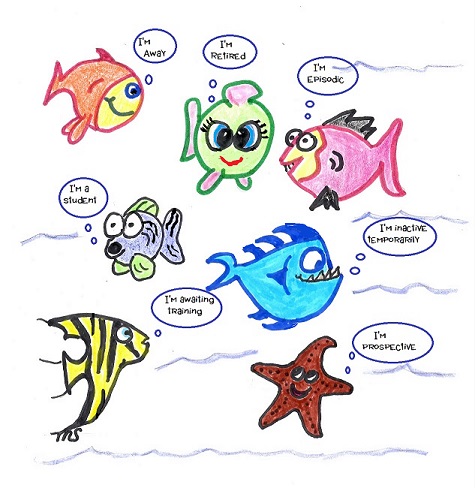
    We all have peripheral volunteers. These are the volunteers who are episodic, temporarily inactive, retired, yet to be trained, prospective, or absent. And unlike the world of paid staff where rosters consist of those receiving paychecks, our peripheral volunteers remain on our stats and radar.

    We don’t have the luxury of ignoring them because they are potentially contributing volunteers. Or they may have given years of service and we owe them our attention. They float around in the periphery, bobbing in and out of view because we have a fluid connection with them. And how about the guilt that comes with not paying proper attention to them. (Yep, just think of how you felt when you forgot that volunteer’s 80th birthday, the one who gave twenty years of service to your organization)

    What can we do with these outlying volunteers? How can we keep them in view as we scurry about in our busy day? Where do they fit into statistics?

    This is one area in which:

    1. technology serves us well
    2. volunteers can assume pivotal roles
    3. stats reflect the monumental balancing we do
    4. volunteer message sharing can actually help

    When lists that capture prospective, episodic, absent, retired, ill and every other category meaning non current pile up, it’s time to create some systems that help.

    Create categorized email lists-prospective volunteers, group and corporate volunteers, temporarily inactive volunteers etc. Decide which groups get which messages, e.g., upcoming training sessions, newsletters, notices about volunteer events or vacancies, etc.

    Recruit volunteers to oversee the periphery-lists are only helpful if they are accurate. It’s humbling when you take a call telling you that volunteer Dave died a year ago and his family keeps getting mail addressed to him. A volunteer or volunteers in charge of overseeing other volunteers on the periphery can focus on keeping lists up to date. They can also make phone calls, interview, do impromptu surveys, offer new opportunities, gather information and compile statistics. The scope of the potential work can fill a full-time position or several part-time positions.

    Report your time spent managing peripheral volunteers-this is an invisible area that requires a lot of time so report it as part of your recruitment, retention, and cultivation. Refer to your efforts to engage “prospects”, retain episodic volunteers, build community awareness, increase visibility, maintain good relationships, cultivate donors, supporters etc. This nuanced area of our work is critical and should be accounted for.

    Share messaging with other organizations, but be careful. Bombarding potential volunteers with multiple messages can be off-putting, so don’t overload emails with “spam.” Instead, co-op with other volunteer organizations and include “other good work opportunities” at the end of every other month newsletters (or other scheduling) with contact information. As your volunteer opportunities are added to the internals at other organizations, you’ve just exponentially increased your recruitment efforts.

    Volunteer management casts a wide net. Presiding over the sea of active, potential and former volunteers is daunting. Systems in place to oversee peripheral volunteers will help to ease the overwhelming burden and free us up to concentrate on innovation and solutions.

    Out nets are huge and always jumping with activity. If our eyes and hands are always on every inch of those nets, then we can’t steer the boat.

    -Meridian


  • Innovation and Sustainable Volunteering

    Innovation and Sustainable Volunteering

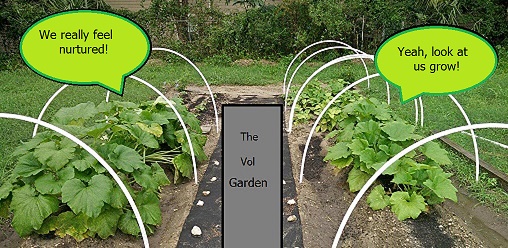
    What would sustainable volunteering look like? Besides many of the innovations already being implemented, what would nurturing a volunteer garden shared within our communities involve? Is this a 180 degree leap or is it more of a naturally occurring shift that we have been moving towards all along? Are we, volunteer managers coming together in an organic movement to help one another and therefore all volunteers and all good work?

    What can we try? Will this take extra work, headache and heartache to achieve? Just as in gardening, there are necessary steps to achieve a bountiful crop.

    I’m going to list some ideas in a season of planting using the gardening metaphor.

    TILLING THE SOIL (preparing to garden):

    • Make a list of agencies and organizations in your area that utilize volunteers and reach out to introduce yourself to each leader of volunteers
    • Join any clearinghouse agencies such as United Way, and Volunteer Centres in your area
    • Join a DOVIA (Directors Of Volunteers In Agencies) or a similar group in your area or if none exists, reach out to another volunteer manager and start a peer group
    • Create a list serve or simple newsletter to share with your fellow volunteer managers in your locale

    PLANTING (seeding the way):

    • Share your volunteer opportunities with other volunteer managers (at your peer group and by list serve) and ask for theirs-regularly check in to gauge the fluidity of roles, etc.
    • Discuss volunteers’ skills and interests at peer group meetings. Offer other volunteer managers the opportunity to contact one of your volunteers if their mission or opportunity more closely aligns with your volunteer’s passion
    • Share background checks if you are able in order to cut costs
    • Pair up with other organizations to conduct a visible volunteer project and involve local media to cover the event
    • Create volunteer educational conferences with other volunteer managers to benefit all volunteers in area-share space, costs of snacks or printed materials creating more bang for the buck
    • Share cost of a national speaker with other volunteer programs and invite all volunteers in area-have plenty of information on volunteering opportunities available

    FEEDING (nurturing the collective):

    • Bring your volunteers to another organization on Make a Difference Day or another day of service and help that organization-build that camaraderie, use positive press to show cooperation:   Days of service include:
    • Good Deeds Day – April 15, 2018 (USA)
    • National Volunteer Week – April 15-22, 2018 (USA)
    • 911 Day of Service – September 11 (USA)
    • Make a Difference Day – October 28, 2017 (USA)
    • Family Volunteer Day – November 18, 2017 (USA)
    • MLK Day of Service – January 15, 2018 (USA)
    • Volunteers’ Week -June 1-7 (UK)
    • National Volunteer Week -21-27 May 2018 (Australia)
    • National Volunteer Week -April 15-21 2018 (Canada)
    • International Volunteer Day -5 December 2017 (UN)
    • National Volunteer Week -18-24 June 2017(2018 not published yet) (New Zealand)
    • Create a summer circle of volunteering for out of school students so they can sample the various opportunities in your area and participate in a well-rounded service learning experience
    • Conduct partner training sessions with other organizations
    • Partner with another organization to create a group of volunteers to cross-volunteer (a really rudimentary example – library volunteers + homeless shelter volunteers = a reading program for school aged children in the shelter. Library volunteers finding appropriate books, shelter volunteers utilizing them and perhaps some library volunteers venturing out to read to the children while shelter volunteers conduct a fundraiser for the library-and no this isn’t simple or easy but it can be a start)
    • Mentor new volunteer coordinators in your area
    • Offer your highly seasoned and trained volunteers to train/mentor volunteers at another organization
    • Partner with other volunteer managers to create a presentation that educates organizational staff on the nuances of volunteer engagement-allow all volunteer managers in your area to utilize
    • Create partnership recruitment efforts by sharing speaking engagements

    Future Bounty (what might come of this?)

    • Increased satisfaction and sustainability of volunteers
    • More flexible options for prospective volunteers
    • Sharing of best practices between leaders of volunteers
    • The showcasing of cooperation between non-profit agencies
    • Increased volunteer involvement in organizational planning and innovations
    • More good work accomplished within communities
    • Cooperative think tanks springing up
    • Less stress on volunteer managers

    We, volunteer managers are unique, innovative and forward thinking. Why wouldn’t we bond with one another and forge a new, co-operative garden in order to create sustainable volunteerism?

    Besides, we are generous and big picture oriented by nature. Let’s co-op.

    -Meridian


  • Sustainability and Volunteerism

    Sustainability and Volunteerism

    Retention: the continued possession, use, or control of something.

    Does that sound like the volunteerism you know? Not to me either. Maybe it’s time to rethink using the phrase “volunteer retention,” because it conjures up images of a stagnant retention pond. It also rhymes with detention which is closely related to imprisonment. (shudder)

    So, if we stop using that phrase, then do we have to rethink the old principles behind it such as:

    • make the volunteers feel welcomed
    • say thank you a lot
    • be mindful of their time

    What???? But wait. Just because these principles are fluffy and nice, it  doesn’t mean they are still the best for the changing landscape of volunteerism. Maybe it’s time to retire volunteer retention and instead, embrace volunteer sustainability. Ok, so swapping phrases does not make for innovation. I get that.

    What is the difference then, between retention and sustainability? Well, we’ve all been moving away from the strategies that worked with the WWII generation for some time now.  Why not update our verbiage to match the creative ideas being implemented out there by so many forward thinking visionaries. And while we are embracing these changes, let’s go even further.

    Volunteer Sustainability vs Volunteer Retention

    *This is where sustainability is radically different from volunteer retention. Sustainability, unlike retention is the ability to maintain a healthy balance while avoiding depletion.  Sustainability, as it is being applied to agriculture, economics and ecosystems implementation implies that there is a larger network to be considered. It implies that resources are not hoarded (retention) and depleted.

    What larger network is there to consider when engaging volunteers? The larger network is all volunteer organizations and individual volunteer satisfaction. With that in mind, let’s ask these questions:

    • Why do we keep volunteers on waiting lists if we cannot use them in a timely manner or cannot find roles for their passions?
    • Why do more volunteers equal better volunteer engagement even if some volunteers are in name only?
    • Why do we stuff volunteers with specialized skill sets and interests into non-matching roles? Or try to tweak a role just to keep the volunteer?
    • Why do we cling to volunteers as though they are 23 year old offspring and we just can’t bear to see them fly?
    • Why do we blame ourselves when volunteers leave?

    It is time we, volunteer managers, think of other volunteer managers, our volunteers, all volunteer opportunities, all clients in our area, and all missions as a network serving the greater good.

    It is time we viewed volunteerism as a regenerating community garden that needs tending by all of us so that the bounty of volunteers is nurtured, regrown and sustained.

    It is time we added collective volunteer engagement, sharing and referral to our innovative methods in order to cultivate volunteer sustainability.

    How many times does a volunteer get frustrated and drop out when they have to wait too long to share their time and skill? Or how many volunteers quit because their passion is not being fully utilized? How are we serving our communities when we deplete our volunteer base by clinging to the archaic notion of volunteer retention?

    Next time: We can be the leaders of a sustainable movement. (Innovation and Sustainable Volunteering)

    -Meridian