

While attending a recent staff meeting, Beth, the volunteer coordinator for a mid-sized hospital, took note of the meeting tone. “It was really interesting to watch,” she said, “because there was this staff member who was singled out for going above and beyond. He’s a social worker who bought food for a patient’s family and delivered it to their home. The CEO spoke glowingly of the social worker’s commitment to helping our patients. And while I applaud him for his creative way to do his job, I mentally compared his actions to our code of conduct. According to the code, he broke the rules. It made me wonder what or who the rules are for and for those of us who follow the rules, are we just mediocre employees? And how do I set rules for our volunteers when we applaud behavior that oversteps boundaries?”
Hmm, that is a paradox and begs the question: How do we encourage volunteers to be creative, innovative, flexible, imaginative, out of the box thinkers without simultaneously giving them the go ahead to break all rules?
“I had that experience,” said Craig, a volunteer manager at a museum. “We had this volunteer, Bethany, who put in a lot of hours behind the scenes. She was a dynamo with lots of ideas who was encouraged to create new programs by the staff that worked with her. So one day, we all were shocked to learn that she had her own social media account that she presented as an official arm of our museum. Bethany was dispensing all types of misinformation and asking for donations on her own. It was a horrible mess and I was blamed for not over seeing her more closely. She was dismissed and I became kind of “gun-shy” with the rest of our volunteers.” Craig paused. “While I still want to see our volunteers take initiative, I don’t want another Bethany. I don’t want them to think that the sky’s the limit. I mean, none of us has that kind of carte blanche.”
There’s a teeny tiny thin line between volunteers taking initiative and being called up before the executive director because a volunteer started their own slush fund. Ultimately, we are often blamed for any volunteer who goes off our rails. So what are the ways that volunteers might bend the rules? I’m betting you’ve experienced these scenarios:
A volunteer argues with you because he finds a rule inhibiting and wants you to look the other way. He argues that the rule is stupid and gives you examples as to how it was never meant to be followed.
A volunteer creates programs or initiatives on her own, utilizing your organization’s name. She is convinced that your organization is just being stubborn by refusing to incorporate her “Walk Across America” fundraiser.
A long term volunteer seldom checks in, and is very cagey about his duties. Staff doesn’t really know what he is doing in client’s homes either. He waves off any inquiries by asking, “Don’t you trust me?”
On the other hand though, you’ve probably experienced these scenarios as well:
A volunteer brings in a fabulous idea and would like to implement it. This volunteer is one of your best, on time, committed, transparent and reasonable.
A new volunteer has an unusual skill that triggers creative thoughts in your head.
A volunteer has experience in an area that you know would enhance your mission and you’ve read about other similar organizations successfully utilizing these types of volunteers.
This conundrum has been referred to in the Human Resources world as the “Initiative Paradox”. We too, often are faced with the paradox of encouraging inventiveness while trying to remain rule bound. So, how can we reasonably advance creativity? It all boils down to communication and due diligence on our part. In other words, a big heap of extra work for us.
Volunteers who are not willing to properly report on their creative endeavors should send up a huge red flag. Any volunteer who dismisses your need to know or tries to make you feel like a busy body is not a volunteer who plays by the rules. You are after all, the volunteer’s supervisor and you must keep abreast of their actions, provide direction and feedback while doing all your other tasks.
Communication goes two ways. When we honestly communicate with our volunteers and tell them why they can’t move a client into their home, we are not only considerate of their feelings, we reinforce their importance as a team member. We can then guide them to remaining a meaningful help to their client while keeping boundaries and everyone’s sanity intact.
Our volunteers bring a wealth of talent, skills and ingenuity to our organizations. With two-way communication, due diligence, and a heap load of old fashioned extra work, our volunteers’ creative initiatives will flourish.
-Meridian
Francesca Gino, coauthor with Dan Ariely of Duke University, describes part of the study in Psychology Today: Inducing a “casual” mindset, with cues that encouraged flexibitlity—with words like original, novel, and imaginative—increased the odds of cheating at a game.

“Integrity is doing the right thing, even when no one is watching.” …C.S.Lewis
When John approached Emma about nominating her for a volunteer award, she adamantly shook her head. “No way, no. I don’t want the recognition. I don’t do this for any praise, I do it because it’s the right thing to do.”
“I know, Emma,” John replied. “But you are perfect for the award. I know you can win.”
Nominating a volunteer for a local, regional or national award is a big deal. We all know volunteers who deserve recognition and ironically, the ones who embody the spirit of the awards are the ones who don’t want the “fuss.”
So, how do we convince deserving volunteers to let us nominate them and should we bother with it anyway? Is winning an award something we should boycott on principal or does it have a place?
You know the volunteer who immediately comes to mind when thinking about nominations. You happen to peek in on them and they are quietly doing the most amazing work. As you watch them, you envision the entire room as a bridge, constructed by an unassuming volunteer who is changing the life of the person they are helping, one plank, one suspension wire at a time. You wish you could capture that perfect scene in a bottle or at least on film, so that you could show it worldwide. “Here!” you would shout, holding up the moment. “Here is the perfect piece of volunteering. This is what it is all about!”
Perhaps awards are not exactly what we are aiming for, but if they are an avenue to tell a volunteer’s story, to shed light on our volunteers’ accomplishments, and to galvanize others, then awards can serve a purpose. And explaining that to a reluctant volunteer just might convince them to allow you to tell their story.
“Emma,” John continued, “I know that you are not an attention seeker. Your work speaks for itself. “But if telling your story can inspire others to step forward and volunteer, wouldn’t that be a worthwhile thing?”
“I just don’t want to do this for the wrong reason,” Emma returned skeptically.
“I agree wholeheartedly,” John agreed. “We’re not going to make a big fuss. We just want to show others that volunteering impacts our clients in the most profound way. I know that telling your story will do just that.”
And so, with the assurance that a nomination was for reasons that would never include self-promotion, Emma agreed to allow her exceptional story to be told. She not only won, she caused others to get involved.
A very wise person once told me that the secret to nominating volunteers for awards is to find the “angle.” What sets the volunteer apart? What obstacles has the volunteer overcome by volunteering? What has the volunteer done to initiate change, improve a program, or solve a problem? What about this volunteer’s story must be shared with others?
But nominations can also be written to influence people. By hearing amazing volunteer stories, potential volunteers can seek an opportunity to be part of that incredible bridge building. And many folks just might want to join a group of “award-winning volunteers.”
Nominating volunteers can:
Although most volunteers shy away from the spotlight, their compelling work can often motivate others to step forward.
And if awards can work for us, then let the nominations begin!
-Meridian
–

Icebreakers: I could never really get the hang of using them at the first meeting when training hospice volunteers. I usually got eye rolls and polite “oh here we go” smiles so I opted for a more conversational start to training new volunteers who had real expectations for a serious mission.
I did however, develop a few exercises of my own that I introduced into the middle of volunteer training. Admittedly, these were often self entertaining and helped keep me engaged and I tried to deliver them with a twinkle so that the volunteers understood that the subject at hand was not just about doom and gloom. Hopefully they saw a lighter, quirkier side that prepared them to view patients and families with appreciation for the diverse and sometimes absurd situations that might arise.

One exercise for a small group was “two forks.” I asked the volunteers to arrange two identical forks in any setting they wanted. I told them to just arrange them on the table however they envisioned them at the moment. After the volunteers arranged the two forks, I would “interpret” their arrangement with phrases such as, “you are very open minded” or “you are extremely creative.” Teens especially liked this exercise. They would smile wryly and mentally call me out on my “game” but they would play anyway and seemed to enjoy the spoof of psychological testing. (I always did “fess up” and tell the volunteers that it was all made up) But then we would seriously discuss volunteering with various personalities and how to best connect with folks.

Another exercise that I used in group training was the personality test. I downloaded a simple quick personality test with broad results and tweaked the questions to represent volunteering scenarios. I asked the volunteers to record their answers on their paper and then tally up their score. I then read the “results” according to the score ranges. For instance, those with a score within 10-20 were introspective while 90-100 were very outgoing.
But I added my own twist to the test results. I made up silly outcomes for each personality type based on volunteering with a patient or family member such as, “it is said that this personality type because of their bubbly personality ends up talking so much about their recent family cruise that the family member actually experiences seasickness.”
About halfway through the result reading, the shocked looks turned to laughter and relief. “Oh you got us,” the volunteers would say. But it wasn’t just for comedy relief. We then went on to discuss the different ways a well meaning volunteer could over step their boundaries and reiterated how to keep active listening in mind. Those were productive conversations.
One thing I did learn in years of training was that timing is everything. Acting wacky or introducing quirky subjects too soon destroys the trainer’s credibility. Once trust and sincerity is established, then comedy relief and diverse teaching methods will be much more readily accepted. The same goes for introducing deep subjects. Volunteers have to be ready in order to really digest profound information.
My barometer of a class’ comfort level was always predicated on the day the class got up and freely helped themselves to coffee and snacks while chatting warmly with one another. It usually took two sessions to establish that level of comfort and trust. (I always taught six 3 1/2 hour sessions for initial orientation).
But once that comfort level was achieved, then I could introduce really fun activities, and on the flip side, speakers with really deep and profound experiences to share. Classes laughed and cried, but only after we all felt really safe with each other. Honestly, those intimate moments with new volunteers are memories so precious to me, I can’t even begin to describe them. How fortunate I am to have them.
Yes, timing is everything. Volunteers look to us to illuminate the way and we should be honored to own that responsibility. Providing volunteers with deep meaning enhanced with light and laughter takes some sense of timing. But when you get it just about right, it fills your soul with the most amazing moments.

Training volunteers creates a bond with them from the very beginning. We neither have to be just ultra serious nor just silly and entertaining. We only need to make them comfortable and care that they learn and feel a part of our team. This sincerity paves the way for the information you want to present.
So, don’t be afraid to have some fun.(When the timing is right of course) Arrange your own two forks, create a personality test, make up an icebreaker and watch the magic happen!
-Meridian

Volunteer manager Lilly looked up to see the CEO standing in her doorway. “I’m trying to remember our volunteer, Gladys Williams, can you tell me about her?”
“Oh,” Lilly said, “Gladys was a wonderful volunteer who did office work in finance. She volunteered there for about 12 years, even before I got here. I attended her funeral last month.”
“I think I remember her. Small lady, white hair?”
“Ahhh, yes,” Lilly said thinking that description fit any number of office volunteers and added, “she always wore a purple ribbon in memory of her husband.”
“I think so. Well, we were just told that she left us $25,000 in her estate. I thought you should know.” The CEO paused for a moment. ” Now I’ll have to let finance know too.”
I read an article recently about the generous surprise gift bequeathed to a Detroit museum from the estate of a 19 year volunteer. While the incredibly benevolent support of her organization speaks volumes, the tone of the article made me wonder how this volunteer would have been remembered (beyond the staff that obviously cared about her) had she not given such a sizable donation. And exactly how much does a volunteer have to give before the fundraising arm of our charities becomes giddy?
We all know our volunteers regularly donate money and goods, which seems to now be a trendy topic among the fund-raising gurus who gleefully point to these stories as if they’ve discovered a whole new vein of gold. But again, how much do volunteers have to give in order to be smiled at and afforded that extra bit of silky attention normally reserved for the donor crowd? Is it $1,000, $10,000, $24,999 or more? Will $50,000 pressure upper management into inviting a volunteer to an exclusive luncheon? Will $27,856 make the organization really, sincerely interested in the wonderful work that volunteer is doing?
So, I’ve hatched a plan in the basement laboratory of my brain. I think all volunteer managers should include an estate planned giving form with our volunteer applications. We should coerce our volunteers into committing to an amount they will bequeath after they die. Then, that amount should be printed in bold type on their badge. On a really valuable volunteer, it will look something like this:
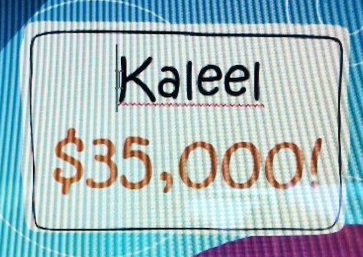
That way, at a glance, everyone in the organization can see the worth of that volunteer. Now granted, those, like volunteer Mary above, who are not giving very much may be relegated to the nameless rabble heap, but hey, at least some of our volunteers will achieve recognition.
And so, when volunteer Imani holds the hand of that distraught client and gently dries flowing tears while staying that extra two hours until family members arrive, her pledged gift of $14,000 might just get some notice.
After all, it’s all about the money, er work, isn’t it?
-Meridian

“What a massive responsibility, being a moral creature”
― Isaac Marion, Warm Bodies
Does this line of questioning sound oh so familiar? “Why don’t we have enough volunteers to be an Emergency Buddy? How hard can it be to find people willing to be called in the middle of the night to come by our headquarters to get the emergency plan for the district, drive out to the emergency shelter and then get a shelter spot ready for arrival? I mean c’mon, do you not know how important this volunteer job is? Have you actually tried targeted recruiting? There must be scads of retired emergency personnel who would love to use their talents to help us.”
Well, huh. Why didn’t I think of that the last twelve times I tried targeted recruiting, or maybe I was wrong to try and think out of the box by recruiting those great college students. Perhaps I should lie to potential volunteers so that they don’t know what the job entails? I’m sure that once they realize we lied to them, they’ll forgive us and won’t do a lousy job just because we trained them improperly .
There’s a study that indicates companies spend more resources weeding out lousy employees than they do cultivating superior talent. This lopsided approach often applies to organizational views on volunteer recruitment.
toxic workers are more expensive than superstar hires
The more important the volunteer role, the more up front work is required in order to place excellent and ready volunteers. Proper vetting, orientation and training takes time and effort by hard working volunteer managers.
Sure, warm bodies can fill roles, but cold, hard facts say that
Warm bodies ultimately:
Leave abruptly, usually within the first three months
Do not sync with the organization and remain on the outside
Can do irreparable harm to clients
Volunteer managers understand how much effort it takes to cultivate a qualified volunteer. Because we abhor the “warm body” theory, we will continue to be accused of not providing “enough” volunteers for critical roles.
When pressured by senior management to magically produce more bodies, point to the lack of harmful behavior by your competent volunteers. Remind them that properly vetted and trained volunteers do not damage the very people we serve and oh, yeah, properly vetted and trained volunteers take time and skill to implement.
And maybe ask the person this question: “Would you want a hastily recruited and insufficiently trained volunteer working with your mother, father or child?”
Neither would we.
-Meridian

“” when men and women are able to respect and accept their differences then love has a chance to blossom ”
― John Gray, Men Are from Mars, Women Are from Venus.
Jay, the volunteer manager for a disaster relief organization walked into the monthly staff meeting and took the last seat near the back of the crowded meeting room. The two managers in front of him were snarking about the “annoying always perky operations manager” who stepped forward to give a report on the number of clients served during a recent flood. Jay began to grumble to himself. “Where are the volunteers in this meeting,” he said under his breath. “They are a huge part of these statistics and would love to feel a real bonafide part of this organization. They do everything for us, so why can’t they ever be included in staff meetings?”
I don’t know about you, but I’ve felt like Jay. Why aren’t volunteers included in staff meetings, celebrations and outings. (and no, having them decorate the Christmas Tree in the staff lounge doesn’t count) Why are we the only ones who think of involving volunteers as equals? Then, when my head was about to blow from my fantasies about never providing another volunteer for you ingrates again, I had a quiet staff member tell me that she felt her job was threatened by a dynamic volunteer. What?????
Do staff have needs different from volunteer needs and how can we, volunteer managers be the grounded terra firma middle men who are able to intuitively understand both sides? And will thinking about the vastly different needs give us better insight into helping staff and volunteers to integrate? Let’s look at some of these separate needs:
1. Volunteers need to feel included and valued. Staff need to feel that volunteers will not take their jobs.
2. Volunteers want to do meaningful work. Staff want help so they too, can do meaningful work instead of laboring over boring paperwork and attending endless meetings.
3. Volunteers need flexibility. Staff needs a paycheck.
4. Volunteers want to utilize their skills. Staff wants to feel that their skill-set is not upstaged.
5. Volunteers want to help. Staff is afraid to let go.
6. Volunteers want to engage with staff. Staff has deadlines and wants time to work.
7. Volunteers need teamwork. Staff needs alone time.
8. Volunteers may be in awe of staff. Staff may be jealous of volunteers.
We spend a great deal of time trying to educate staff on the treatment of volunteers. Perhaps we can look at staff’s needs as well and take those needs into consideration when introducing volunteers into the mix. Can we reassure staff that we get that they too, have wants and needs when working with volunteers so that they in turn, welcome volunteers?
I think yes, if we look at it through their eyes. Staff can be intimidated by a highly educated or talented volunteer. Overworked staff just slogging through the day may feel inadequate next to an enthusiastic volunteer who is fresh and able to leave whenever they choose. Staff may have a deadline and not be able to chat with volunteer after volunteer. Staff may have worked hard on a project and may be reluctant to just turn it over to someone who only comes in once a week. So, taking this into consideration, we might:
Talk to staff before introducing a new volunteer. The old Venus me would have sold a new volunteer by saying, “I’m bringing in Sally, a former CEO and a published expert on human resource management. She brings a wealth of knowledge and experience and will be awesome at working with our clients. She’s a very busy young retiree with lots of energy and talents. I know you will love her!”
But what Mars staff heard me say was, “Move over, idiot. I’m bringing in Sally, a way better worker than you. She’s smarter and will probably point out every thing you are doing wrong and that’s a lot from what I hear through the grapevine. You’ll have to spend all your time answering questions and listening to her glory day stories and you’ll fall behind in your work. As a matter of fact, they’ll probably hire her which is ironically kinda funny, don’t you think?”
Eeeck! Maybe I, as Earth should say, “I have this wonderful new volunteer Sally. She is a retired professional who wants to get to know our organization from a starting point and I thought of you and all your skills and knowledge. I am hoping that she will be a good fit for your tasks but I will be checking in with you frequently, especially during her first few times volunteering to make sure that you are getting the kind of help you need. I want you to alert me to any issue you might have with this new volunteer because I know your time is valuable and I want to make sure this is a help, not a hindrance. I know from experience that you will treat her with the respect that will make her a long term volunteer. Thank you for giving her this opportunity.”
Let’s face it, we volunteer managers are good ol’ Earth, in the middle of staff and volunteers. And since we want to ensure that volunteers are integrated into organizational culture, we may have to mediate that integration in a balanced way by taking into consideration the needs of not just our Venus volunteers but also our Martian staff.
It can be a tough, mud-filled, seemingly bleak task for us-being the planet in the middle. But, take a moment and look at Earth from space. It is a bright blue haven of all things possible, creative and vibrant. I’ll take being Earth any day.
Have a wonderful Thanksgiving!
-Meridian

http://www.handsontokyo.org/en/home
I was incredibly fortunate to have spent the month of September in Japan visiting my daughter who teaches English as a second language. While visiting this amazing and beautiful country, I was honored to be able to spend some time at Hands On Tokyo, the volunteer center affiliated with the Hands On Network and the only Points of Light affiliate in Japan.
The Japanese people are incredibly kind, generous and considerate, from the man who left his train car to steer my husband and I to our destination to the couple who shared their dinner with us at the Hanshin Tigers’ baseball game. I imagined that the directors of Hands On Tokyo would be welcoming, and they were not only welcoming, but enthusiastic and infectious.
My gracious hosts, Mimi Yoshii, Co-Director and Aya Higa, Co-Director warmly welcomed me to their office in the Minato area of Tokyo. The office was bright, full of schedules and deadlines and event planning. But these two dynamic ladies took time from their busy schedules to tell me about Hands On Tokyo’s many activities.
Hands on Tokyo was founded in 2006 by a group of volunteers including a woman who had been active at Hands On Atlanta. The really neat thing about Hands on Tokyo is their model of partnering the needs of the community with their 5,000+ corporate and individual volunteers. Mimi Yoshii said with understandable pride, “we are unique in that we are the go between for corporate projects and those who need help.” Hands On Tokyo is also distinguished by Japanese and foreign nationals volunteering side by side and as Aya Higa related, “about 60% of volunteers are foreigners living in Japan.”
Interest in Hands On Tokyo really took off after the devastating Tohoku earthquake and tsunami in 2011. Many foreigners stepped forward to offer help, which, under the dire circumstance, was quickly accepted. I asked if the foreigners were viewed in a positive light and Aya Higa stated that the Japanese recipients of help truly appreciated all the faces from other lands. I could only imagine the monumental tasks this organization faced at that time.
I asked about the challenges they face today and as you would expect, they have the same challenges we all face. Background checks are becoming a necessity as is the need for new and meaningful projects. They too experience lopsided periods of time in which there are more volunteers than projects.
Mimi Yoshii emphasized their desire to create an ease of volunteering to encourage the Japanese people to become more involved. One of the barriers to volunteering is the desire by the Japanese people to not shame their friends and neighbors by highlighting the fact that they are in need, a practice referred to as the “culture of shaming.” It reminded me to be more careful when working with clients, so as not to let our desire to help overshadow clients’ need to be treated with dignity and respect.
Mimi and Aya lit up when talking about the interns they work with primarily during summer. These young volunteers, even though they may initially join to work in the office, bring fresh new ideas, something Hands On Tokyo loves to cultivate. One intern, they recalled, a dancer, began a program that brought dance into a nursing home. The residents not only loved it, they asked “when can we do it again?” It quickly became a staple at that nursing home.
Hands On Tokyo cultivates their volunteers by encouraging them to become volunteer leaders. Every project has a volunteer leader on hand. These volunteers demonstrate leadership abilities and possess the skills and experience needed to lead a team. Every month team leaders meet to discuss issues, challenges and methods of motivating and keeping the volunteers on track. A few of the many projects include Special Olympics bowling and basketball, senior home activities, English lessons for the blind, assistance to farmers, rice ball making for single mothers and excursions for Down syndrome children.

Hands On Tokyo volunteers can conveniently sign up for an activity through the website portal. Besides the ongoing projects, there are volunteering events such as “A Taste for Volunteering,” and the “Spring charity concert for Tohoku.”
Recruitment for Hands On Tokyo is through their website and by corporate partners providing interested employees. Aya Higa said that in Japan, if a crowd of people is asked to volunteer, no one will raise their hand, and so their strategy is for volunteers to ask people they know directly, face to face, a practice that yields much better results.
All in all, it was encouraging to find volunteer management in Japan mirroring the same challenges and solutions that we face in the US. I was deeply impressed by the dedication, excitement and pure joy of Hands On Tokyo’s co-directors, Aya Higa and Mimi Yoshii. Their hospitality was so appreciated.
Thank you ladies for sharing your passion for volunteerism with me and for showing me that the rewards and challenges of volunteer management are universal. Visiting Hands On Tokyo is a treasured moment from a wonderful trip to an amazing country.
Arigatou gozaimasu!
-Meridian

Happy IVMA Day tomorrow! November 5th is in some pretty impressive company along with Gunpowder Day (Guy Fawkes) and Men Make Dinner Day. So, after gorging on cake, opening all my presents and explaining for the 75th time that this is not a day to thank volunteers, I’m going to reflect on what this day represents. And I will be thinking about some volunteer managers who really deserve to be appreciated. These volunteer managers did not throw in the towel when faced with the challenges unique to volunteer management. Here they are in no particular order:
Volunteer coordinator Mandy who was pressured by the CEO’s executive assistant to join a secretarial association in order to secure a discount for the rest of the administrative assistant staff. Mandy was enticed by “c’mon, you sit at a desk and you use a computer and work with email. Besides, we serve cupcakes at our meetings.”
Volunteer manager Marcus who found the CEO at his door one day asking about a volunteer who had recently died. “Who was she, where did she work,” the CEO inquired. Marcus was thrilled to see the CEO care about a long-term volunteer until the CEO said, “gosh, I really can’t picture her,” then proceeded to talk about the sizable chunk of money the volunteer left to the organization.
Volunteer manager Chelsea who was promised additional help if she doubled the volunteer base. When she asked about the additional help after increasing volunteers by 120% she was told, “but we all have to tighten our belts. Besides, it’s not like these are employees. Volunteers are easy.”
Volunteer coordinator Bennie who arrived at work one day to find his desk moved. “We hired a consultant on employee morale,” he was told, “and had to find space for her to sit.”
Part time volunteer leader Casey who went shopping and was caught by a chatty former volunteer who talked so long that she ended up wetting herself and the store’s floor.
Volunteer manager Tyreese who was instructed to create a good experience for a senior manager’s teenager daughter that needed community service hours. Tyreese spent hours working on an educational and meaningful project only to repeatedly find the teenager sitting outside on a bench texting. The next day, the senior manager presented Tyreese with a form to sign that stated the hours were complete, saying, “She’s such a bright girl, don’t you think? She wants to be a mental health therapist one day.”
Volunteer coordinator Toby who spent most of her weekend sitting by the hospital bed of a new volunteer only to find out that the volunteer wasn’t really sick in a traditional way, but actually addicted to pain killers.
Volunteer manager Miriam who spent her rainy birthday driving 54 miles with all her training gear to a rural community center where the Ladies of the “Communication Service Guild” wanted to be trained as volunteers. Not only was the center padlocked, the president’s cell number was disconnected. A soaked Miriam tripped over some slippery rocks strewn in front of the gate and fell in the mud. The next day after much trial and error, Miriam was able to reach the guild’s treasurer who said, “Oh, no, we put that off until next year. We’re just too busy working on our rock garden right now.”
Volunteer specialist Jarrel who generously invited the head fundraiser along to present at a community speaking engagement only to be talked over throughout the entire presentation. The head fundraiser breathlessly told the crowd, “what we really need is your volunteer efforts to raise more capital for us. As a matter of fact, why don’t we set up a fund-raiser right now! I’ve got a sign up sheet right here!”
Well there you have it-kudos to all the volunteer managers out there who endure the oddball insanity of volunteer management.
So, again, happy International Volunteer Manager Appreciation day! Have some cake, open all your presents and tell everyone to…. well, just enjoy!
-Meridian

It is so dark that your breath hangs, a web in the blackness. Your heart races, threatening to burst to keep from confronting the terror within. You feel something near, just over your shoulder and you freeze because it is moving towards you, intent, and deadly. You close your eyes, as if to hide, but it will find you.
It is the volunteer management zombie, and it wants to eat your volunteer manager brains.
Robert, the office manager of a non profit tourist welcome center, walked into the middle of a conversation between staff member Gloria and a volunteer, Ralph. Ralph was telling Gloria, “you should have made more of those brochures. The visitors are complaining that they don’t have any information.” Gloria sighed and looked at a stressed and irritated Robert who suddenly felt the VM zombie nibbling on his brains. “Ralph, can you stop complaining for once? The brochures are on back order for the tenth time already.”
Ralph shifted his weight. “But I’m the one who hears the complaints from the visitors.” Robert cracked his neck as more grey matter was consumed. “Well, it seems all you ever do here is complain. I’m frankly tired of it. Why are you here anyway if you hate the way we do things?”
Ralph grew defensive. “What do you mean, I always complain? I’m here three days a week, I’m always on time, I take on extra work when you need it. I’m beginning to think you don’t want me here.” He looked to Gloria for help and she just timidly shook her head as she was afraid the zombie would see her too.
In another part of town, Elise stopped in to check on the volunteers preparing dinner at the local homeless coalition. The operations manager, Elise wore many hats such as builder of community partnerships and manager of the volunteer services department. She had just come from a brutal meeting in which the CEO nitpicked her work. Elise noticed one of the newer volunteers, Yvette who was opening cans of corn. Suddenly a battered Elise felt a chewing in her cranium and asked Yvette to step outside.
“Yvette,” Elise sighed, “according to volunteer Pat, you were 10 minutes late last week. Three weeks ago, staff member Rod said you left 15 minutes early. You know we depend on volunteers to complete their shifts, right?
Yvette was taken aback. “I’m so sorry, I was caught in traffic last week, I told the volunteer lead. And I left early because we were finished and I was told to go home.”
Elise, feeling her frontal lobe being consumed, opened her notebook. “Be that as it may, according to our volunteer Craig, you also did not specifically follow the portion rule last week. You gave a quarter cup extra serving of broccoli. We almost ran out of vegetables. Look, you have to follow the rules. We run a tight ship here.”
Yvette held her tears for later. “I’m sorry, I’m doing the best I can.”
Elise blinked. The gnawing in her head continued. “Besides, a homeless man said you wore an apron from home. He said he liked it. But, we give you aprons to wear so that you can be identified as a coalition volunteer. Yours said something inappropriate.”
“It did? It said ‘love’. And I gave my apron to another volunteer who forgot hers. I happened to have my own apron in my car. I told the lead volunteer and he said that was ok.”
“You’re not taking this seriously. We need better from you,” Elise said as her phone went off. She looked at it quizzically as the cranium nosh escalated. “Anyway, we’ll revisit this later, I have to take this call.” She walked away, leaving Yvette to wonder why she decided to volunteer.
In another locale, volunteer manager Sharon looked up and saw volunteer Astrid coming through the front door. For a second, Sharon steeled herself, knowing that she had to sit down with Astrid and discuss some troubling behavior but then, Sharon thought of her impending deadlines and her shoulders slumped. “Not today,” she murmured as the VM zombie cracked her skull open and began to feed. Sharon quickly got up and hurried off to the supply room where breathlessly, she shut the door behind her. “This is crazy, I’m hiding from a volunteer,” was her last rational thought as her brain was devoured.
Stress, overwork, feeling unappreciated and exhaustion can open up our heads to the VM zombie who dines on our logical brains when facing challenging situations. Robert was emotional and spouted vague accusations. A nitpicked Elise turned around and nitpicked her volunteers while Sharon kicked her volunteer can down the road.
Dealing with challenges takes every brain cell in our already overfilled noggins. Like Robert, we can blow one day or like Elise, we can gather evidence of any tiny mistake each volunteer makes. And then there’s Sharon, who just avoids it all. In between all this is the professional. logical and ultimately best way to resolve volunteer issues. It is the ultimate weapon against the VM zombie’s gluttonous hunger.
So next time I’m tired and cranky and under-appreciated, I’ll be listening for the shuffle behind me. Then I’ll reach for my zombie busting bat of common VM sense to protect my belfry and save the volunteers from an empty-headed mistake.
Hoping you have a safe and Happy Halloween!
-Meridian
 volunteerplaintalk