Category: staff and volunteer relationships

  • Dialogue? You Call This Dialogue?

    GPS-IIRM wikipediaOne day several wise men were challenging each others thinking over tea. “If you were given the opportunity to sacrifice yourself for world peace,” the first man asked the group, “would you do it?”
    “Yes, of course,” the second man said. The third man agreed. “If I were guaranteed world peace, I would do it, surely as it would be the right thing to do.” The fourth man rubbed his chin. “What do you mean by world peace?”
    “Just that, world peace,” the first man said.
    “Well, if world peace meant only for one day, then no, I wouldn’t do it,” the fourth man said.

    Do we know what staff members, CEO’s, volunteers, and the community mean when they use certain phrases and concepts? And do those concepts mirror what we, volunteer managers define them as?
    One day when I was feeling particularly feisty (or truth be told, downright crabby from hearing that a volunteer was sent home from an assignment at a health fair because a marketer brought her children to man the booth), I heard a staff member say, “we couldn’t do what we do without our volunteers.” Now, I know this is a lovely platitude, but being cranky, I asked, “really, that’s so nice, what do you think would actually happen if we didn’t have volunteers?”
    She looked at me like I was a pompous jerk (and maybe I was). “Well, we probably couldn’t accomplish as much as we do.”
    “Do you think we’d close?”
    “Don’t be silly,” she said and walked away, I’m sure thinking that I was nuts and a pompous jerk.
    But what is meant by common concepts that are continually used? What do some of the phrases we hear actually mean?
    “We love our volunteers.” What does that mean? We love them individually and will bring them soup when they are ill or we love the idea that we have them? Or we love them as long as they don’t create any problems for us or take up our time or ask questions when we are busy?
    “We’re volunteer friendly.” Really? How? Explain that to me. Do we hang out with our volunteers on a Saturday afternoon along with our good friends? Do we let them call us at home? Do we confide in them? Do we smile at them when we walk in but don’t notice that they have a broken arm because we are late for a meeting?
    “Volunteers are the heart of our organization.” Hmm, are we talking about a crucial organ or a warm fuzzy feeling? Do we mean they truly inspire us to be more compassionate or is the term “volunteer” an abstract idea that we cherish, not real, breathing human beings that come in every day?

    See, if you say volunteer engagement to a volunteer coordinator, there is a complex burst of ideas that go off in their heads, including the idea that engagement is a two way street. Ask any random staff member “what is volunteer engagement” and you may get a totally different view that does not include volunteers in leadership roles or the challenges in managing volunteers. And here is where an awful lot of volunteer manager angst lives.

    So, the challenge is, how do we beat the concept of volunteer engagement into everyone’s heads?
    Wait, did I really say, that, whoah, I must have let that rabid little voice take over for a minute. Whew.
    But seriously, we have bent ourselves into pretzel shapes for years trying to “educate” organizations on the true nature of volunteer engagement. Sometimes we’re kinda like the folks who show up at your door unannounced, either selling something, or trying to get you to accept their pamphlets on their religious and political beliefs. I know I have been like that.
    Me: Knock, knock.
    Staff: Who is it?
    Me: Volunteer Services here to educate you on volunteers!
    Staff: Um, I’m really busy, what with just coming from three meetings and my work is piled up. I just attended a seminar last week on fund raising so I’m a bit overwhelmed.
    Me: Well, if you’ll just open the door, it won’t take more than 20 minutes.
    Staff: Can you come back later?
    Me: But this is important. Don’t you want to know about volunteers?
    Staff: I already do, they’re great, gotta go, my phone is ringing.

    Hmmm, if the knock knock method doesn’t work, now what? Well, maybe we should try a dialogue. I know, dialogue is one of those buzz words, but
    we could seriously try asking organizational stakeholders the meaning (in their own words) of concepts that we think are important to bettering communication between volunteer services and staff. And if we do this with sincere intentions to learn where we differ from staff in how we view volunteer services, we might be able to begin work on closing the gap.
    Hearing a senior manager’s explanation of volunteer engagement may make you angry and think, “how can he be so ignorant? How can she think that’s all there is to it?” But, if we put aside that anger and look at the disparity in thought, then perhaps we can begin to free ourselves to analyze how to make volunteer engagement better understood within our respective organizations.
    With the keen desire to understand, we can try asking, “how do you view the volunteers’ role? What does the term volunteer engagement mean to you? What about volunteer involvement?”
    Be prepared to hear some surface answers and some surprise answers and be prepared to question (in a non-judgmental way) those answers. “What makes you think that?”
    We can ask, “what do you think the most important job a volunteer manger does and what are the challenges volunteer managers face?” Hearing the answers may initially make you defensive but in stepping back, may just make you see where the misconceptions lie between what the volunteer department actually does and the perceptions of the rest of the staff.
    Again, this is dialogue, not mandates to change the way we view or do our work. How can we work together with staff to help them learn more about the challenges and organizational responsibilities of volunteer engagement?
    If we want to get to a place where staff view volunteer engagement the way we do in all its complexities, perhaps we need a street map to get there. Discovering the diversity of ideas within our own organizations on common volunteer concepts and terms may just be the first step to the GPS we need to arrive together at that place where volunteer engagement is understood by everyone the exact same way in which we understand it.
    -Meridian

  • Can I Bottle Your Success, Please?

    dinner and a movieGrace is sparkling champagne in a petite frame, and as she walks through her non-profit halls, bubbles of mirth float with her. She is a volunteer coordinator who has some of the most desirable natural abilities: the ability to make someone feel like they are the most important person in the world (at least at that moment) and the ability to include everyone in the fun and the purpose of the work.

    When I view Grace, if I squint my eyes just a bit, I start to see a humming hub from which emanates all these connectors that run through people, places and things. It’s almost like the wizard behind the curtains in the Wizard of Oz, but not in a creepy way with a booming voice that fools people. No, she is the genuine article. Her desk looks like any other desk, but it almost seems alive with all the activity that buzzes around it. If scientists can ever extract sound from inanimate objects like they predict they will, I want them to start with Grace’s desk-the amount of voices stored in that wood over the years will be deafening.

    I caught up with her recently and just like anyone who wants to bottle success or greatness, I wanted to ask her about her talents in working with volunteers. See, her volunteers are a tight-knit family. They tend to communicate with one another well, tend to be more inclined to say yes to extra work, tend to want to be involved in more ways than they originally signed up for, and tend to want to be around Grace instead of avoiding her. I know what you might be thinking, that this is an example of a personality cult. I don’t think so. I’ve seen personality cults (maybe I’ll write about one I knew of that ended up badly) but Grace is not that. Not that she couldn’t easily herd her volunteers into the “Grace is Our Queen and We are Her Minions” sect, but while she may scrape that precarious line once in a while, she is too smart to cross it and has no problem putting up an arm. elbow locked into place, to stop volunteers from becoming loyal to her instead of the mission.

    Grace is first and foremost a master of communication. She calls, emails, asks volunteers to call, sends newsletters, has an open office policy, makes hourly trips to check on volunteers working, sends cards, visits, has meetings and does every other mode of communication possible in order to keep her volunteers informed and engaged. (Picture the hub humming away).

    But Grace is fun on a stick, a happy birthday balloon in life. It’s a trait that I’ve seen in many long-term volunteer coordinators-Grace has been doing this for ten years. Maybe it’s because we have to create our own fun to diffuse the stress or maybe it’s because we need to see the joy in life to encourage people to work with the pain.

    I asked her about some of her more successful volunteer bonding events and she said, “I’ve tried many things like a game night or having a speaker talk on a worthwhile topic, but one thing I’ve found that works is dinner and a movie. Who doesn’t like dinner and a movie? I saw it as a way to get a crowd in so that they could connect with each other.”
    Grace shows movies in a conference room set up with tables and chairs, and puts out a spread of food on folding tables. It’s nothing fancy, but it is effective. “I wanted volunteers to know how much I appreciate them beyond the organization’s appreciation of them. And even shy volunteers can participate in coming to dinner and watching a movie, because I know that those volunteers that are alone appreciate a place to go and socialize on a Friday night.”

    Grace has a really good point here. If a secondary reason to volunteer (after the first reason-helping someone) is to socialize, then establishing a social gathering for volunteers truly meets that secondary reason to volunteer in a safe environment. Not only did a crowd show up to the first dinner and a movie, Grace added, “I talked it up with everyone. Most of them came, even if they saw the movie. Later, they discussed the movie with each other and that gave them a chance to get to know people they did not volunteer with regularly. And the next time I had a dinner and a movie, the volunteers encouraged each other to come.”

    Grace has this fearless component to her as well. She gets all of the food she serves and the prizes she gives out (sometimes there are winning tickets taped beneath chairs, other times there might be a contest or raffle to win) donated by local businesses. I asked her if she was nervous asking for donated food and goods. After all, asking for someone to donate their time (aka volunteer manager) is not the same as asking for donated money or goods. “Not at all,” she said, “I don’t go with the attitude that I’m begging. I go asking if the business or individual would like to be part of something worthwhile and most of them do. Volunteers are well thought of in the community, and people truly want to support them, so no, I’m not nervous, I’m extending the invitation to join us, to be part of our good work.”
    She’s gotten so good at networking in donated goods that staff seek her out. “If they need something, like a special desk or a staff coffee maker, they come to me first to see if I can get one donated. Usually, I can.”
    I asked Grace what made her volunteers feel so special and included, beyond the social gatherings. Actually I was holding out my bottle, ready to gather up that magic ingredient to take with me. “I was always honest with them,” she said. “I respect them and their contributions to the organization and I genuinely care about each one of them because each one is important and I think they feel that from me. I sort of liken it to water skiing, the feeling that you get when you’re out there…”
    “Exhilaration?” I interjected.
    “Yes, but it’s more like that natural high when you water ski. The volunteers come back for that feeling,” Grace corrected me. “Helper’s high. I believe each volunteer has something good to offer and I want them to see that. I help them find that.”

    After leaving the humming of Grace’s hub behind, I thought about our chat. I can understand a little better why Grace is so special although I’m not ruling out the bit of magic in her along with her skills. I still want to bottle her gifts, but maybe I’d better concentrate on developing my own first.
    Dinner and a movie, anyone?
    -Meridian

  • “Is It Too Much to Ask?”

    lock“Is it too much to ask?” Calista queries while wiping grape jelly off the hands of her five-year old. She smiles and pats him on the head as he runs off to join his three older sisters in the yard. She drops the rag on the counter and sits down on the bar stool. “I’m not a high maintenance person, not at all. But, I mean, I do need some consistency and direction.”

    Calista started volunteering for her PTA after some pretty heavy pressure by the PTA officers. “Maybe it’s because I have four kids in that school,” she laughs, “but I became a target for their recruitment. Maybe it’s because I’m a loan officer at the bank which makes everyone assume I’m the goddess of paperwork. And I know every volunteer group has their share of paperwork!”

    Feeling the need for parents to step up, Calista agreed to volunteer and she set aside time for the next meeting. “I’m fortunate because my husband, Josh is great and encouraged me to get involved so I did. After dinner one night, I headed out for my first meeting. I was introduced to the President, a nice lady named Jenna and I met all the other officers as well. They seemed very pleased to have me join the group.” Calista leaned back. “They had quite a number of projects going, including holiday events, fund-raisers and volunteering in the classroom. After the meeting was over, I realized they had gotten me to sign up for a call tree and also as a member of the awards committee.” Calista giggled. “Oh, they were good. I kind of liked the two areas I signed up for. The call tree I could easily do from home and the awards committee sounded fun. At the end of the year there would be awards for students, teachers, parents and even office staff. I have to admit, I was hooked.”

    Calista thought for a moment. “Every month I would faithfully attend the meeting. Jenna, the president took me aside and asked if I would research prices on awards for the award ceremony, present my findings at the next meeting and I agreed. I wasn’t being utilized on the call tree and I just figured that no calls needed to be made, but at the next meeting I was armed with the awards information. I had spent a good amount of free time gathering prices, guarantees, choices, etc. But when I got to the meeting, I found that the president had already contracted with a company to create the awards. When I asked the president about my research, she said that it may come in handy next year, but that she had to act fast on a promotion that someone sent her. I gotta tell you, I was annoyed. She could have emailed me so that I didn’t waste my time.”

    Calista was a victim of Lack of Communication (LOC).

    I’m ashamed to admit it, but I have been guilty of the LOC malady. And I had no good excuse for my lack of communication. Now here’s the thing about committing a LOC on volunteers. A real volunteer’s time and effort is disrespected by misdirection, no call back or no follow through. Running into a volunteer that is awaiting your call is like rounding the cat food aisle to see someone you owe 20 bucks to and forgot to pay. When we see this volunteer do we say, “Yeah, I could have called you to tell you that the project you were so excited to be part of has been scrapped but I chose the cowardly way by ignoring it and you.”

    Being mindful of volunteers’ time and effort is crucial to volunteer retention. We can’t give a volunteer an assignment or tell them we will call them without following through on that promise, because it is a promise, a promise to treat them as a valued member of our team. And, as if we didn’t have enough work, we cannot let other staff members commit a LOC either. We have to be on top of their treatment of volunteers too.

    But what about those conversations in a hallway, or on your day off in the store when you promise something to a volunteer but don’t write it down or store it in your phone? If I had a dollar for every time that happened to me I’d have a nice little nest egg right now. When I’d finally given up on the idea that I could remember everything (yep, you’re right, control issues), I began to be more honest. “Well, Donna, I’m so glad we ran into each other here in the feminine hygiene aisle and we got to talk about your wanting to get involved in that new project. I can’t tell you how excited I am to have you work with us, thank you so much. Can I ask you a favor? I’m afraid that because it’s a Sunday evening and I don’t have a notepad with me, I might let this conversation slip and I would be mortified if I didn’t call you tomorrow with that information. Would you mind calling me tomorrow to remind me? You would? Thank you, you’re the best!”

    Now, when Donna calls the next day, I can chuckle and say, “Thank you for calling me. I was so excited that I was just about to call you, but sometimes I forget. You are unforgettable of course, but now let’s talk about your involvement.”

    If a volunteer calls and says, “I haven’t heard from you…” that is red flag territory. For whatever reason, that volunteer was handed a LOC. Open it with honesty.

    Honesty goes a long way. Sincerity gallops right along with honesty. I’ve had to say, “I didn’t call you because I’m an idiot,” and “I didn’t get that information because I let time get away from me and I sincerely apologize.” Ouch, It’s sobering to realize that I’m not super volunteer coordinator. But, I am human and I do care about volunteers’ time and energies.

    Calista sighed deeply. “You know, it would have been ok had I gotten some sort of acknowledgement that my effort was for naught. An apology, a reason I wasn’t informed, something. That would have gone a long way to make me feel valued.”

    Volunteers do not expect us to be perfect. However, they do expect their time and efforts to be valued. Communicating is about valuing them. And too many sloppy LOCs will produce a volunteer LOC out!
    -Meridian

  • Two Strikes and You’re Out

    imagesI’ve been attending a weekly six part volunteer orientation at a local organization with a friend. Last Monday we arrived at the appropriate office a little before the 6:30pm start time. We were attending part five of the six parts and feeling pretty good about being on the home stretch. “See,” my friend said, “you actually have made it this far and after tonight, we only have one more session to go. Yay!”
    Yes, I’ll admit it, I conjured up every excuse I’m sure volunteers have devised when faced with coming to my training sessions. “I’m tired, the season finale of the Big Bang Theory or Finding Bigfoot is on, the weather is bad, no one will miss me, why did I sign up anyway, or I don’t feel good and it’s too far to go.” Excuses aside, I went.
    But, when we arrived, we noticed the other new volunteers milling around the parking lot. We’ve gotten to know them, so we approached, expecting enthused conversation. Instead we walked into some pretty negative grumbling.
    “The door’s locked,” one said. “The place is deserted.”
    “Don’t know where the instructor is,” another one chimed in. “Usually they are here by now.”
    “Did you get an email telling you class was cancelled?” Someone asked.
    “Man, I could have been home studying,” the student volunteer lamented.
    “I didn’t get an email cancelling and I’ve been home all day,” the first volunteer said. “Did anyone else?”
    I immediately pulled out my phone and pulled up my email. Nope, no email message. And I did give my correct email address on each of the sign in sheets so I know someone has it.
    “I drove 25 miles to be here. Jeesh.” The second volunteer added.
    “Does anyone have Betsy, the coordinator’s cell phone number?” The first volunteer asked.
    “No,” someone said, “but I have the number for Claire, the office manager.”
    “Good, would you call her?”
    The volunteer next to me said, “You know, there’s the 20 minute rule.”
    “What’s that?” I asked.
    “You give the moderator or leader 20 minutes to show up and then you just leave.” Hmmm, I didn’t know that. So, mental note to me.

    While a call was being placed to Claire, the rest of the increasingly annoyed group began to muse about some other shortcomings of the organization, from the lack of continuity to one really unlikeable staff member.
    “Don’t ever work with her, she has no people skills at all.” One volunteer said.
    “I know, she basically ignored me when I walked in the door the first time,” another added.
    “I’ll bet she was responsible for notifying us of the cancellation,” a third chimed in. As the group nodded I pictured pitchforks and torches and the burning of Dr. Frankenstein’s castle.

    Claire was unavailable and so at the 30 minute mark, we all left, a bit more bonded to each other, but much less to the organization.
    “That was a waste of time,” my friend said to me on the drive back. She sort of chewed on her lip and offered, “maybe it couldn’t be helped.”

    Now here’s where I politely disagree. Someone, anyone should have called each one of us to let us know the instructor was not coming. I know because I have scars from this happening to me. I learned the hard way a long time ago when I could not make a training session and did not have the list of volunteers on me at the time. The thing is, those volunteers, although put out, were able to see past the inconvenience. But here’s the kicker. Two of those same new volunteers were stood up by a staff member on their first assignment.

    So as you can imagine, those two volunteers did not wait for the third strike. They each made a different gracious excuse to quit, and no amount of convincing changed their mind.

    So, where did that leave me? Forget the statistics, forget the amount of time spent recruiting and orienting these two volunteers. I felt personally responsible for failing them. So, from that day on, I made it my two strike rule to not let volunteers be inconvenienced more than once. Did it always work? No, of course not, but the self-imposed hard fast rule forced me to carry lists of volunteers’ contact numbers, drive to work on a Sunday night to make phone calls, and have multiple back up plans. And when an inconvenience did happen, I made sure to offer a personal phone call apology the next day to the volunteers who were impacted by events oftentimes out of my control.

    Did this add to my workload? Yes, by an unbelievable amount. I even learned to do double checks with staff to make sure volunteers did not arrive at an assignment without proper instructions. I’ve found that slogging through all the upfront work is ultimately preferable to trying to make amends for the sloppy treatment of volunteers. And I take volunteers’ experiences personally. Can’t help it, it’s how volunteer managers are wired, I think.

    Oh, update. It WAS the responsibility of the staff member the volunteers were trashing to call everyone and cancel. We never got a call and have yet to get an apology from her, although we did get an apology from a different staff member at this week’s orientation.
    Cue the pitchforks?
    -Meridian

  • “My Job is Social”

    fort wayne childrens zoo

    I was so impressed by an article I read a couple of weeks ago about the volunteer program at the Fort Wayne Children’s Zoo in Indiana that I just had to call and speak to the volunteer manager, Kathy Terlizzi because something about the article’s description of the program conveyed a specialness about volunteering. Kathy graciously agreed to let me write about our conversation.

    Kathy with Dingo pup
    Kathy with Dingo pup

    http://www.journalgazette.net/news/local/Volunteering-at-zoo-better-than-working-5364666
    I felt so comfortable speaking to her from her first bubbly hello that I imagined all the volunteers, both existing and perspective who are captivated by her passion and dedication. Her program truly is inspirational.

    Kathy has been the zoo’s volunteer manager since August 2009 and was a volunteer at the zoo before joining the staff. “I made changes based on my experiences as a volunteer,” she told me. When she took over, the initial training program for new volunteers occurred either at the end of the season or at the beginning which meant some volunteers had to wait before utilizing their new skills and enthusiasm. Also, the training was a comprehensive training which meant that volunteers, regardless of their comfort level were expected to “get out and do what they were trained for”. Many volunteers, Kathy found, were overwhelmed with the comprehensive training and since there was no practical application (mentoring) along with training, the volunteers were not prepared to roll up their sleeves and jump in to some of the more complicated tasks.

    So, Kathy, seeing volunteers repeatedly become overwhelmed, initiated a stair step training broken into three parts.
    Part one is the basic training for all adult volunteers. This is the ground floor training and volunteers are asked to commit to 18 shift hours before moving up to the next level. Volunteers at the zoo can sign up for shifts online. (the zoo utilizes Volgistics for volunteer management).
    Part two is the Ambassador training which helps volunteers prepare to interact and speak to the general public.
    Part three is the docent training which helps volunteers become comfortable in crowd situations and with handling zoo education animals during animal demonstrations and off site programs for zoo guests.

    This stair step method allows volunteers to take their volunteer training in stages and encourages them to find their comfort level of participation. The more advanced classes may be smaller than the initial basic training, but it ensures that volunteers find their own path and don’t feel pushed into something they are not ready to do. Some volunteers don’t wish to advance while others find that they want to move up. “I believe that volunteers should bloom where they’re planted,” Kathy said.

    I heard real pride and enthusiasm when Kathy spoke about her teen leadership program which is set to kick off in June and July. Daily, 30-40 adult volunteers work in the zoo, but during the summer program an additional 40 teens who volunteer during two-week sessions are incorporated. They too, sign up for shifts online after going through a special teen orientation.
    Teens 13-17 apply for the two-week sessions and the 172 slots are coveted by 250 applicants. Returning teens account for about 99 slots, so the rest are new teens who go through the new application process which includes filling out an online application, answering an essay question and providing a letter of recommendation.
    After the applications are processed and the teens selected comes the logistical nightmare of slotting teens into the program. Kathy spends the entire month of March working on the two-week sessions. Emails and phone calls from interested teens takes over her days as she slots returning teens first and then the new teens are inserted based on gender, age and availability to provide balance. It is an ever evolving schedule as teens find conflicts with their other activities and family obligations.
    But, instead of this monumental task seeming a burden for Kathy, she is stoked about the teen program, and told me that at first, she was intimidated working with teens because of all the negative stereotypes she’d heard about young people. But she found that the teens she works with are wonderful, responsible volunteers. She prides herself as an up front person and speaks to them frankly about dress codes, expectations and sensitive subjects like drugs and weapons. The teens are expected to be professional in their participation, especially in regard to zoo guests. In return, the teens take their responsibilities very seriously and frankly, Kathy says, they “have a lot to say.” Kathy believes in speaking to the teens directly, (although the program is transparent and openly invites parental and guardian involvement) and finds that the teens really step up when given the chance to embrace responsibility.
    One day she discovered some older photographs of teen volunteers doing the same animal handling as the adults, something the zoo had gotten away from over the years, so she advocated a return to letting teens have equal volunteer responsibility. The parents were open to it, she says, mainly because they knew their children were safe within the zoo framework.
    So two years ago, she implemented a two-hour pilot training and 66 teens signed up. At first the teens began with level one animals, bunnies and guinea pigs, but now the teens are handling snakes and tortoises. When the pilot program began, Kathy let the teens know that they were in part responsible for the success of the program and the teens immediately stepped up and showed the professionalism necessary for the program to thrive.

    puzzle feeder
    Puzzle Feeder

    Another success Kathy talked about was increasing the trust level between staff and volunteers. It was a goal she had when she first started and so she spent the first year building a rapport with staff. “I told them (staff) that volunteers will do anything as long as it benefits the zoo. They won’t, however wash your car.” At first the zoo keepers were reluctant, so Kathy took a proactive approach.
    She saw that the giraffe keepers had to prepare food daily for the giraffe puzzle feeders (a hanging feeder with holes that let the food stick out-these feeders simulate the natural foraging of giraffes) and offered to ask volunteers to do the preparation, thus giving the keepers more time to focus on other more pressing tasks. At first the keepers wondered why any volunteer would be willing to do that job, but within five hours after posting the job online, the shifts were all filled. Now volunteers sign up for 2 hour shifts to prepare the giraffe puzzle feeder food.
    Another proactive instance came when the aquarium manager mused about organizing ph data he had been collecting so Kathy offered him a volunteer who was computer savvy in spreadsheets.
    At first he reluctantly turned over a month’s worth of data but when he received his data back in a neatly organized spreadsheet, he quickly turned over much more information to the volunteers.
    That’s how trust is built. Kathy also found a way to incorporate seamstresses into the zoo’s programs. These volunteers make costumes for zoo presentations and also cold weather quilts for the education animal carriers. She also utilizes Spanish-speaking volunteers to help translate signage.

    Kathy has found a great way to work with groups. She says that the community wants to be involved in zoo volunteering so she offers the community the opportunity to participate in Annual Enrichment Workshops (run by a volunteer and his family) where they can do meaningful crafts like make fishcicles or paper mache animals in bulk. These items are requested by keepers and ultimately given to exhibit animals as enrichment. She also utilizes corporate volunteer groups for some of the zoo’s larger events throughout the year.

    But when I asked for Kathy’s advice to new volunteer managers, she grew wistful, “I would tell them to get ready for the ride for it’s all encompassing. It’s fun and rewarding but also sometimes sad because you have this personal rapport with the volunteers and you get involved with their lives.” She also would like a new manager to know that volunteer management is not a 9-5 job, as there are weeknight trainings and weekends spent recruiting or trouble shooting. She says, “there’s one of me and 450 volunteers. And they all want and deserve some of my time. That’s why my job is social.”
    She told me that she had been a manager for many years before working at the zoo and it opened her eyes when she took a personality quiz and found out how high she scored on interacting with people. Volunteer management has fit that bill. Kathy spoke glowingly of being able to put a volunteer in a place where they can grow. Whether it’s a shy, sensitive teen or a senior who is feeling unfulfilled, she derives tremendous satisfaction in seeing volunteers bloom.
    As you can imagine, Kathy is comfortable talking with anyone. She says, “I kid that I need one of those take a number systems outside my door. My office is right across from the volunteer room. Everyone talks to me, volunteers, staff, guests, even family and friends. If I wear my zoo t-shirt to the store, the clerk wants to talk to me about the zoo. So I take the opportunity to ask, how about volunteering for us?”

    For me, it was easy to see why this volunteer program succeeds. Kathy Terlizzi, the volunteer manager, is both passionate and practical. I heard in her voice that she wants every volunteer to succeed, to have a meaningful experience, and to be part of something in which they can take great pride. It’s no wonder the Fort Wayne Children’s zoo is the number one attraction in all of Indiana. This zoo and volunteer program is a success story we can all learn from. I know I’ve taken away these principles from my conversation with Kathy:
    1. Be proactive with staff-analyze their needs and offer volunteer help whenever possible-build that trust that volunteers can help and free up staff to do other pressing matters.
    2. Invest time and thought into your training program-use levels to encourage volunteers to find their niche and don’t overwhelm them with all training at once, instead encourage them to take training in steps. Make sure that the volunteer opportunities are meaningful work.
    3. Model professionalism and responsibility, especially to teens and they will step up to the challenge.
    4. Be prepared to give your time and attention to every volunteer.
    5. Create new opportunities whenever possible to expand your volunteer reach.
    6. Take pride in your work. It’s infectious.

    Thank you so much to Kathy Terlizzi for allowing me a glimpse into this very special volunteer program. It is volunteer managers like Kathy who take volunteering to the next level through dedication and a willingness to believe in volunteers.
    -Meridian

  • I Turned Her Loose

    3d_buildings_and_floor_plans_8_165343I was turning the pages of an actual newspaper when I came across a picture of a former volunteer, Simone. I touched the grainy picture with my forefinger as though able to connect through ink and wood pulp. Simone had that look on her face, one of fierce determination and intent concentration. “I will make a difference, I will.”
    She was actually referred to me by another organization who honestly did not know what to do with her. “Can you take her?” they asked. “We can’t provide her what she needs for the things she wants to do.” I love a challenge so I welcomed Simone. At first, her gravely voice kept me from focusing on her arresting blue eyes and I struggled to hear the things she said. Slender, in her mid eighties, Simone was as easily dismissible as a leaf that alights on a hurried walk down a garden path. But then those eyes, those two blue sponges that soaked up everything in view, made me stop and listen.
    Simone was an architect, a poet, an artist, a tech guru and had created a website featuring photos of urban architecture. With no shouting, she commanded attention if you stopped thinking of her as a brittle autumn leaf.
    She was full of some of the most creative ideas I’ve ever heard from one person. Ideas that spanned reaching the “left brained” or analytical side of patients, working with caregivers, grieving people and traumatic situations. In truth I could have carved out a 40 hour work week just by implementing Simone’s ideas.

    Instead, I tried to focus on one thing at a time and together we started to build a framework by prioritizing our projects. I love projects. They start with a mind sketch and then there are real building plans and then you see the inner skeleton go up and pretty soon you have a frame that becomes a building.
    Right now, every day, I drive past a gas station being built. While a gas station is not glamorous or pretty, I marvel at the thickness of the foundation followed by the steel beams that will hold up the structure and then there’s the walls that give it form. Finally, one afternoon the lights go on and it is open. We stop for gas, never thinking of the hours of labor, the grind of the heavy machinery, and the attention to support.

    That was Simone and I. We donned our hard hats and got our nails dirty as we labored to make something out of her talents as an architect and artist. The foundation took awhile and so did the steel skeleton, but the walls felt good as we put them up. She was creating an art building with elderly patients. It was not a gas station, but a building full of love and patience. I helped her on many occasion and sometimes would stand back and marvel at her ability to soothe and touch as she guided hands to create. It was always those blue eyes, seeing nothing but the person in front of her, and his dabs of color on a paper or a wobbly block structure that would eventually mean something to both of them.

    I found out that Simone had a close friend who was terminally ill and that partially explained her passion. But I think it was more the way she saw life, as a poet who could grasp the tenuous strands of existence and build some meaning with them.

    One afternoon, Simone and I were together and she told me that she was going to write a book of poetry about the people she worked with. A facility that welcomed her was contacting family members to get permission for her to do so. Somehow, like the crumbling of ancient castles and the first flight of birds from a nest, I knew this day would come. I told Simone that there might be some difficulty surrounding her writing a book for publication. I told her that she would experience some push-back from our legal department since she was in fact, representing us at the facility. The question became, were her ideas her own and even if they were, did she not accept all the restraints that volunteering for an organization placed on her?

    We sat and chatted. I wasn’t sure if I appeared to be protecting her or chastising her. Anyway I framed it, she felt the nay-saying voice of impediment. I represented barriers and roadblocks, not encouragement. Being a free spirit, she needed carte blanche to do what pioneers do: Develop new territory. I knew there would be a legal hassle as sure as I knew she would write the poetry anyway. So I did the only thing that I felt was right. I turned Simone loose. I asked her if the facility would support her and if she had legal representation. She assured me she did. I advised her to volunteer for them (leaving out any residents that were patients of our organization) and continue to build her program. See, I couldn’t bear the thought of tying her up with endless red tape and seeing those blue eyes plead with me to help her break free.

    We hugged. I took Simone’s badge and gave her the freedom to create. I’ve always wondered if I could have done something to make it all ok, to run interference but an organization with layers and layers of legality and confidentiality cannot allow personal and financial gain from interactions with clients. I understand this. Clients are protected as they should be.

    So, when I saw a picture of Simone in the paper accompanying an article about architecture and working with the elderly, I smiled. As expected, her eyes were focused on a frail woman hunched over a rudimentary building. Somehow, looking at Simone, if I softened my eyes, I could see her wings.
    -Meridian

  • Perfectly Un-Perfect

    o-CAKE-FAILS-BAKING-MISTAKES-facebookWhen my children were young, I barricaded them from anything and everything embarrassing about myself because I knew they would spread it faster than spilled cooking oil over a brand new dress. Little ones really have no filter and when they learn something juicy, they will a) tell their teacher, b) tell their best friend’s mom or c) tell the guy in the elevator who turns out to be the one processing your car loan.

    We learn pretty quickly how to keep damaging information away from those who view the world as a big piece of warm toast just waiting to be smeared with buttery gossip. There are the neighbors who pry ever so nicely, the co-workers who ambush you on a Monday morning before you’ve gotten your game face on. “So, how was your weekend? Really, I didn’t know you hung out in those types of establishments.”
    So, how does this relate to volunteers? Well, we can get really comfortable around them and let down our guard and the next thing you know, you have your boss in your office wondering why the heck you said those terrible things about the operations manager because “it’s all they’re talking about in administration.” Of course anything said innocently like “you know I do like the new giving director. He seems nice, but it’s sometimes hard to understand him, he mumbles like he has something in his mouth,” becomes by the time it makes the rounds of eager ears, “Meridian says the new fund director doesn’t know what he’s talking about.” Trying to explain only makes it so much worse.

    I’ve never had a volunteer spread anything I’ve said out of meanness or ill intent. It’s always an innocent aside or a slip of the tongue. At the time, it’s never funny, and when it happens, you just try to lay low in your warm dirt filled trench until the whole thing blows over and then you’re extra nice to anyone and everyone in case they’ve been told something that will come back to haunt you soon.

    I remember one day saying to a volunteer who was a retired charge nurse that our female executive director looked positively glowing. That afternoon the volunteer ran into the director as she was headed for lunch and asked ever so intrusively, “when is the baby due?” Yeah, she did and then told the director that she heard it from me.

    I remember another time a volunteer, John thought he was actually going to help me and went to my boss and proceeded to complain that I was overworked. (This is a lovely theme that volunteers who really care about us volunteer managers come up with, and sometimes want to do something about much to our chagrin). When he told me what he did, I didn’t know whether I wanted to hug him or ask him to help me pack my things. See John owned and ran his own boat manufacturing company for thirty years so he pretty much said whatever the heck he wanted. Although my boss realized I did not put John up to it, (at least that’s what she told me) I could tell that she wondered how much “oh poor little me” stuff I was spouting. I had a hard time defending myself and John on that one.

    One of my favorite volunteers, Jessie once accompanied me to a community event advocating for the homeless that just happened to be covered by local press. While I was crawling around on the ground trying to tie down the tent in the tornado-like winds, Jessie was interviewed by the press and was happy to help by giving some personal opinions on the subject which of course appeared in the paper the next day as the official position of my organization. The next morning I sneaked into my office, but they found me! I really think I would have gotten into less trouble if I had set fire to the donor’s wall.

    My favorite one though, was the day I came close to a meltdown. A staff member I trusted implicitly didn’t follow through and caused all kinds of emergency extra work. I was pacing, muttering, and trying to figure out how to make the last-minute disaster come together when one of the volunteers, Ruthie walked in on me having a heated conversation with myself. I didn’t notice her for a moment and when I did, she was watching me pretty much in the same way she would watch a stranger wearing a goalie mask coming down a dark alley. I stopped when I saw her and told her that I was just figuring some things out and she nodded, said ok, goodbye for the day and left. So the next day, Ruthie came in unexpectedly, found me in a casual conversation with a senior manager and offered me some medication from her medicine chest. It was Xanax.

    What do I think I’ve learned about being honest in front of volunteers? Should we be very careful about what we say? I do think that we should spare them any political nonsense, personality conflicts and dysfunction in our organizations. They don’t need those headaches. But am I careful about every little thing I say? Nah, not at all. I look back at those incidents and others and laugh. I lived through them, and each volunteer thought they were doing the right thing. And you know what? WE CAN’T CONTROL EVERYTHING! (Horrors, I still shudder at that realization).

    I think as long as we keep in mind that our volunteers want to be a part of the goodness of our organizations’ missions, then we’ll share with them the best part of ourselves. We can be funny, crazy, serious, mindful, playful, driven or any combination of personality traits that make us unique.
    As long as we are sincere, we can share ourselves without fear of the few times we are taken out of context, misunderstood or “helped” by well-meaning volunteers.
    One trait I’ve noticed about volunteer managers is that we are comfortable with life’s complexities. We don’t see people and the world as the perfect red velvet cake, but as this ever-changing creative cake mix that is interesting, sometimes frustrating, but ultimately perfect in a non-perfect sort of way.

    Granted, we’ll sometimes get a bubble of dry flour when we bite into these not so perfect cakes, but then again, we get to eat a lot of frosting too.
    -Meridian

  • The Emotional Buck Stops Here

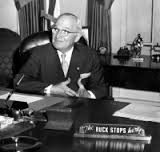
    buck stops here photo:wikipedia.org/wiki/Buck_passing

    Crista is a volunteer coordinator for a local branch of a major charity. She covers several counties which means a great deal of travel during the week and the need to tightly organize her day. Now we all know how hard tightly organizaing is for a volunteer manager. “I’m exhausted,” she said recently, “literally exhausted. I’m not talking about being the kind of tired that makes you fall asleep at night, I’m talking about dead to the world sleep followed by a difficult waking and the desire to crawl under the covers by noon. Am I depressed? I mean I don’t do that much physical stuff, I carry boxes of manuals or help arrange tables at a fair, but nothing that would wear me out. I have time in the car to sit down, but at the end of the day, I just want to go home and vegetate. What’s wrong with me?”
    I asked her what her day was like and she said, “you know, I arrive at work and the phone starts ringing. I’m checking emails and volunteers are coming into my office to ask for guidance. Sometimes their team leads aren’t there and sometimes they have a complaint about misdirections. I have to field all kinds of calls, personal visits, plan my day, check in with clients and set up recruiting and training. It’s pretty hectic I suppose.”

    No doubt, Crista is volunteer manager busy. But I sensed more to her weariness. “How do you handle interruptions?”
    She continued, “well, I really try to give everyone my full and undivided attention. I mean, there’s the client who is hurting or the volunteer that has a family emergency. I’m not able to get much done, at least not in my mind. It’s constant stopping and focusing on the person in front of me and their needs.”
    She hesitated. “They deserve my full attention at the time they need it, not later during some appointment when the moment is lost. It can be difficult.”

    Mmmm Hmmmm. Our conversation made me think of the times I was privileged to work with singers and actors on charity shows. It was amazing to see how they emotionally transformed themselves into their roles and to afterwards see, when the glow wore off, how exhausted they were. Getting into their character and experiencing the perceived emotions drained the life right out of them.

    Being busy is one thing, but there is something called “emotional labor,” conceptualized by UC Berkley professor, Arlie Russell Hochschild. Emotional labor is often associated with service workers, such as the waitress who listens to a customer complain about the the too rare steak which she had no control over. She must hide her own stressful feelings and literally do some acting in order to understand and please the customer.

    There is also something called compassion fatigue which is the burnout factor that results from so much emotional availability. Volunteer managers listen to clients and empathize. We listen to volunteers and genuinely care about them. We listen to administrators and search for ways to really make a difference. Then, we go home and look for solace, but, because we are so good at emotional connections, can we turn that off in our private lives? Probably not. There’s the call from Aunt Rheda who fell and broke her hip. The neighbor, Jack just lost his job and his wife, Karin has no idea how they are going to survive. The elderly woman in the aisle of the grocery store looks lost. Would we walk away? Not unless our hair was on fire.

    It’s no wonder volunteer managers are exhausted. Emotionally we are “on” from the moment we wake up until we drop into bed. We’re on for our volunteers, for society and for our families and friends. It’s what we’ve come to expect of ourselves. Working with volunteers has taught us how to be focused and empathetic. It’s how we connect volunteers to the mission and to the clients. It is a great skill set, but it does take a huge amount of energy.

    Do we experience compassion fatigue? Most likely. But do we also practice emotional labor? Are we acting? I’d say, most of the time, no, but there are instances in which circumstances out of our control go awry and we are the ones to smooth it over for our volunteers. That’s when we have to put aside the stress we feel from the giving of incomplete directions, or the event time change not being communicated. Although we might like to say, “yeah, it figures. That airhead Velma never told me that they changed the venue time! You know this is the third time she’s done something like this. Last month she asked for two volunteers to sit at a fair and she didn’t tell me that they had to bring their own chairs to sit on and that it would be outside! It was cold that day, the poor volunteers shivered and stood through the whole thing! You know, I’m just sick and tired of cleaning up after inconsiderate staff who waste your guys’ time! I don’t want you to quit, but heck, I wouldn’t blame you if you did, not that anyone here would realize why you quit, they’d probably blame me!” (did I just go on a wee bit too much there? Woo, I feel so much better!)

    Instead, unlike my inappropriate rant, we assure the volunteer that their time is valuable, that they are valuable while taking in any problematic comments and finding ways to make situations better. We become the obsessive person who checks, double checks and triple checks details to keep these things from happening. But in spite of our efforts, when things do happen, we repress our own frustrations and absorb the volunteers’ feedback. We pass on the information in a professional manner, because the emotional buck stops with us.

    So, like Crista, if you find yourself bone weary, exhausted, or death-gripping your covers in the morning, it could be signaling burn-out. Recognizing the emotional investment you make in your job, by your compassion, empathy and emotional labor is the first step to taking care of yourself. It is crucial that volunteer managers find ways to de-stress, wind down and practice self care. While we can’t control everything about our jobs, we can control our well being.
    Be well out there.
    -Meridian

  • Do Volunteers Have Privacy? Naaah!

    gossipingDo volunteers have a right to privacy? While we’re on the subject, how much privacy do we, employees have? What can employers divulge about us and what should we divulge about our volunteers?

    I guess we can all run to our legal departments and get an official statement but what is our real policy? For an example, a couple of months ago, I was approached by a senior manager and the following conversation took place.

    SM: Hi, I just needed to ask you a question. Do you have a volunteer by the name of Abigail Drake?
    Me: Yes, Abigail is one of our volunteers.
    SM: Oh, ok, I need to talk to you about her.
    Me: Please, sit down and let’s talk.
    SM: Well, yesterday, they sent me a call from a woman who said she was Abigail’s neighbor.
    Me: Oh? Is Abigail all right?
    SM: That’s not it. The neighbor said, I don’t know how to put this, but the neighbor wanted us to know something about Abigail.
    Me: (eyebrows raised) And what might that be?
    SM: She said that Abigail has been on medication for severe depression for years and the neighbor feels like Abigail might come off the medication in the near future, which would make her a risky volunteer.

    (Are you sensing something very wrong right now?)

    Me: I see.
    SM: You’re not going to let her volunteer are you?
    Me: Well actually, yes, I am.
    SM: But the neighbor assured me that Abigail is a risk. We probably need to talk to her.
    Me: Abigail has been through every one of our requirements to become a volunteer. She has passed all of her background screenings.
    SM: But what about her severe depression?

    (Ok, I have to admit, at this point I was flabbergasted that a Senior Manager would be so naive)

    Me: All I can do is treat Abigail just like I treat every other volunteer. If for some reason she shows signs of risky behavior, we will address it promptly, I can assure you. But I have to say, I never discuss our volunteers with anyone.
    SM: Hmmm. I did tell the neighbor that we would take her comments under advisement and that I would speak to you. She said she knows you.

    Me: (eyebrows raised even further because here’s the part that gets bizarre and I swear it’s true) Oh, really?
    SM: Yes, she said her name was Laura Cramer or Kranmore…
    Me: Laura Cramer?
    SM: Yes, you know her?
    Me: She was a volunteer with us a long time ago and we had to dismiss her.
    SM: Oh?
    Me: Yes, it did not go well and I believe she has harbored a grudge ever since.

    Just the name Laura Cramer stops me like a hockey forecheck. Her dismissal was ugly and it is never pleasant to remember.

    The senior manager left and I’m guessing forgot about the whole thing fairly quickly. It bothered me though, that an intelligent representative of the organization would chat about the private life of one of our volunteers with an unknown voice on the phone. I started wondering: If a neighbor of mine decided to call in and say I beat my dog or had a drinking problem, would someone discuss that with a total stranger?
    I’ve been called by folks looking for a volunteer’s phone number or address, mainly because they want to thank them. But I protect the volunteers like a mother black bear hearing the snap of a twig. “If you give me permission,” I say to them, “I will pass your number along to the volunteer in question. Or you can send a card here and I will personally deliver it to our volunteer.” And fortunately, people are always understanding and grateful that our volunteers’ private lives are protected.

    Frankly, I don’t care about the legality of volunteers’ privacy. When I volunteer somewhere, I want to know that my personal information is kept locked up tight and that I matter. And when it comes to volunteers, we, volunteer managers, should lead the way in all HR management by doing better than what is required by law and regulations.
    We might even want to teach all staff in our organizations to protect our volunteers as well.
    -Meridian

  • Volunteers Leading the Way

    treasure hunt“No,” I almost shouted, “you cannot volunteer in that area without proper orientation and training!” I stood, hands on hips picturing this person in front of me as no more than a child. “Why, you ask? Because it’s a requirement, that’s why.” I said in my best Mom authority voice. My hands trembled slightly. I did not care that this person said they had spent 30 years in management. I did not care that they had jumped through all of our other hoops, because what good is a volunteer who won’t listen? I plugged my ears to their simple questions. “I’m sorry, but you either come to the next training, or we can’t use you anymore.” The echo of my footsteps down the tiled floor bounced off the serene artwork on the walls. “I don’t have time for this,” I muttered. “Volunteers need to just get with the program.”

    No, this scene did not happen. Oh boy, I hope you didn’t think it did. But could it? Do we not box up our volunteers like overly taped goods on the way to China? We’ve added background checks, fingerprinting, drug testing and personality quizzes to ensure that crazies don’t wiggle in. We require training and signatures and photo IDs to prevent any “Lone rangers.” We vet and inspect and watch like hawks each one of our new volunteers. And the seasoned ones? Oh, I might have heard one mention something about religion or politics. RED FLAG! RED FLAG! Book the counseling room!

    Since we’ve got it all in control, we can’t let in anyone who might pose a risk, not only legally but also to the assembly line of our volunteer base. Keep ’em in check or all sorts of mayhem might ensue. Yes, we require and require some more and require even more. But what we often do not require is innovative thinking, problem solving, fresh ideas, and good old gut instinct. No, those things are best left to the all-knowing people in power and they will cling to that power even as the ship goes down or is rendered out of commission. While start-ups thrive on new ideas, established non-profits may hold on tight to the ways things have always been done. And that usually involves a line between volunteers and innovation. When is the last time you saw a volunteer sit in on an executive planning meeting?

    The other day I was talking to a group of our volunteers who work in one of the thrift stores. They had forged this great camaraderie with each other over the course of two years and they support one another through life’s challenges. One of them asked me to find the phone number of a new volunteer who just happened to train with them one afternoon. Although, this new volunteer, Hannah trained with them, she will be volunteering on another day with a newly put together team. “We want to call Hannah and invite her to one of our get-togethers,” they said. “We’d like to follow-up with her.”
    “That’s so nice of you,” I said, “I’m sure she’d appreciate that.”
    “Well,” they countered, “have you heard the story of how Hannah came to us?”
    “No,” I admitted, “I didn’t.”
    So they told me. It seems that Hannah was volunteering at another thrift shop for another organization. “Hannah was the right-hand girl for the shop manager. She volunteered three days a week,” they said. “But then, Hannah’s husband got sick and she had to stop for a time so that she could care for him. She said that during that time she never once heard anything from the shop or the organization. Nothing. No card, no call.” The team looked at each other and shook their heads. “When Hannah walked back into the store after her husband recovered, the shop manager said oh, you’re back, good. That’s when Hannah left.”
    I have to admit, I was taken aback. I did not know that about Hannah. But the team went one step further. “We feel like she was treated poorly and we want to make sure that she feels welcomed and needed here. So, we’re going to make sure that happens.” One of the team looked me right in the eye and said, “it’s the right thing to do for volunteers, you know that.”

    Not too long ago I was sitting and talking with a volunteer, Jim who I hadn’t seen for a while. He told me a story about visiting a nursing home patient. He said, “The director of the nursing home pleaded with me to come in on Saturday so that the patient would not be alone with a Saturday worker who made the patient uncomfortable. This worker reminded the patient of a man who had beaten and robbed him several years before. He would get really agitated when he saw this worker.” Jim shifted slightly. “For just a moment, I realized I should call in to see if that was ok, but then I knew: It was the right thing to do. I hope you don’t mind that I took that on myself.”

    Mind? While organizations may see their journey as a straight line, volunteers tend to be able to swarm over wide swaths of terrain, finding and seeking the right thing to do. If we can just relax our holds on them, just a little, imagine all the territory we can cover.
    -Meridian