
I happened to catch a grandma chatting via video with her granddaughter at college.
Have a peek at her volunteering experience:
-Meridian
I happened to catch a grandma chatting via video with her granddaughter at college.
Have a peek at her volunteering experience:
-Meridian
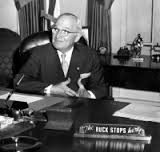 photo:wikipedia.org/wiki/Buck_passing
Crista is a volunteer coordinator for a local branch of a major charity. She covers several counties which means a great deal of travel during the week and the need to tightly organize her day. Now we all know how hard tightly organizaing is for a volunteer manager. “I’m exhausted,” she said recently, “literally exhausted. I’m not talking about being the kind of tired that makes you fall asleep at night, I’m talking about dead to the world sleep followed by a difficult waking and the desire to crawl under the covers by noon. Am I depressed? I mean I don’t do that much physical stuff, I carry boxes of manuals or help arrange tables at a fair, but nothing that would wear me out. I have time in the car to sit down, but at the end of the day, I just want to go home and vegetate. What’s wrong with me?”
I asked her what her day was like and she said, “you know, I arrive at work and the phone starts ringing. I’m checking emails and volunteers are coming into my office to ask for guidance. Sometimes their team leads aren’t there and sometimes they have a complaint about misdirections. I have to field all kinds of calls, personal visits, plan my day, check in with clients and set up recruiting and training. It’s pretty hectic I suppose.”
No doubt, Crista is volunteer manager busy. But I sensed more to her weariness. “How do you handle interruptions?”
She continued, “well, I really try to give everyone my full and undivided attention. I mean, there’s the client who is hurting or the volunteer that has a family emergency. I’m not able to get much done, at least not in my mind. It’s constant stopping and focusing on the person in front of me and their needs.”
She hesitated. “They deserve my full attention at the time they need it, not later during some appointment when the moment is lost. It can be difficult.”
Mmmm Hmmmm. Our conversation made me think of the times I was privileged to work with singers and actors on charity shows. It was amazing to see how they emotionally transformed themselves into their roles and to afterwards see, when the glow wore off, how exhausted they were. Getting into their character and experiencing the perceived emotions drained the life right out of them.
Being busy is one thing, but there is something called “emotional labor,” conceptualized by UC Berkley professor, Arlie Russell Hochschild. Emotional labor is often associated with service workers, such as the waitress who listens to a customer complain about the the too rare steak which she had no control over. She must hide her own stressful feelings and literally do some acting in order to understand and please the customer.
There is also something called compassion fatigue which is the burnout factor that results from so much emotional availability. Volunteer managers listen to clients and empathize. We listen to volunteers and genuinely care about them. We listen to administrators and search for ways to really make a difference. Then, we go home and look for solace, but, because we are so good at emotional connections, can we turn that off in our private lives? Probably not. There’s the call from Aunt Rheda who fell and broke her hip. The neighbor, Jack just lost his job and his wife, Karin has no idea how they are going to survive. The elderly woman in the aisle of the grocery store looks lost. Would we walk away? Not unless our hair was on fire.
It’s no wonder volunteer managers are exhausted. Emotionally we are “on” from the moment we wake up until we drop into bed. We’re on for our volunteers, for society and for our families and friends. It’s what we’ve come to expect of ourselves. Working with volunteers has taught us how to be focused and empathetic. It’s how we connect volunteers to the mission and to the clients. It is a great skill set, but it does take a huge amount of energy.
Do we experience compassion fatigue? Most likely. But do we also practice emotional labor? Are we acting? I’d say, most of the time, no, but there are instances in which circumstances out of our control go awry and we are the ones to smooth it over for our volunteers. That’s when we have to put aside the stress we feel from the giving of incomplete directions, or the event time change not being communicated. Although we might like to say, “yeah, it figures. That airhead Velma never told me that they changed the venue time! You know this is the third time she’s done something like this. Last month she asked for two volunteers to sit at a fair and she didn’t tell me that they had to bring their own chairs to sit on and that it would be outside! It was cold that day, the poor volunteers shivered and stood through the whole thing! You know, I’m just sick and tired of cleaning up after inconsiderate staff who waste your guys’ time! I don’t want you to quit, but heck, I wouldn’t blame you if you did, not that anyone here would realize why you quit, they’d probably blame me!” (did I just go on a wee bit too much there? Woo, I feel so much better!)
Instead, unlike my inappropriate rant, we assure the volunteer that their time is valuable, that they are valuable while taking in any problematic comments and finding ways to make situations better. We become the obsessive person who checks, double checks and triple checks details to keep these things from happening. But in spite of our efforts, when things do happen, we repress our own frustrations and absorb the volunteers’ feedback. We pass on the information in a professional manner, because the emotional buck stops with us.
So, like Crista, if you find yourself bone weary, exhausted, or death-gripping your covers in the morning, it could be signaling burn-out. Recognizing the emotional investment you make in your job, by your compassion, empathy and emotional labor is the first step to taking care of yourself. It is crucial that volunteer managers find ways to de-stress, wind down and practice self care. While we can’t control everything about our jobs, we can control our well being.
Be well out there.
-Meridian
 “No,” I almost shouted, “you cannot volunteer in that area without proper orientation and training!” I stood, hands on hips picturing this person in front of me as no more than a child. “Why, you ask? Because it’s a requirement, that’s why.” I said in my best Mom authority voice. My hands trembled slightly. I did not care that this person said they had spent 30 years in management. I did not care that they had jumped through all of our other hoops, because what good is a volunteer who won’t listen? I plugged my ears to their simple questions. “I’m sorry, but you either come to the next training, or we can’t use you anymore.” The echo of my footsteps down the tiled floor bounced off the serene artwork on the walls. “I don’t have time for this,” I muttered. “Volunteers need to just get with the program.”
No, this scene did not happen. Oh boy, I hope you didn’t think it did. But could it? Do we not box up our volunteers like overly taped goods on the way to China? We’ve added background checks, fingerprinting, drug testing and personality quizzes to ensure that crazies don’t wiggle in. We require training and signatures and photo IDs to prevent any “Lone rangers.” We vet and inspect and watch like hawks each one of our new volunteers. And the seasoned ones? Oh, I might have heard one mention something about religion or politics. RED FLAG! RED FLAG! Book the counseling room!
Since we’ve got it all in control, we can’t let in anyone who might pose a risk, not only legally but also to the assembly line of our volunteer base. Keep ’em in check or all sorts of mayhem might ensue. Yes, we require and require some more and require even more. But what we often do not require is innovative thinking, problem solving, fresh ideas, and good old gut instinct. No, those things are best left to the all-knowing people in power and they will cling to that power even as the ship goes down or is rendered out of commission. While start-ups thrive on new ideas, established non-profits may hold on tight to the ways things have always been done. And that usually involves a line between volunteers and innovation. When is the last time you saw a volunteer sit in on an executive planning meeting?
The other day I was talking to a group of our volunteers who work in one of the thrift stores. They had forged this great camaraderie with each other over the course of two years and they support one another through life’s challenges. One of them asked me to find the phone number of a new volunteer who just happened to train with them one afternoon. Although, this new volunteer, Hannah trained with them, she will be volunteering on another day with a newly put together team. “We want to call Hannah and invite her to one of our get-togethers,” they said. “We’d like to follow-up with her.”
“That’s so nice of you,” I said, “I’m sure she’d appreciate that.”
“Well,” they countered, “have you heard the story of how Hannah came to us?”
“No,” I admitted, “I didn’t.”
So they told me. It seems that Hannah was volunteering at another thrift shop for another organization. “Hannah was the right-hand girl for the shop manager. She volunteered three days a week,” they said. “But then, Hannah’s husband got sick and she had to stop for a time so that she could care for him. She said that during that time she never once heard anything from the shop or the organization. Nothing. No card, no call.” The team looked at each other and shook their heads. “When Hannah walked back into the store after her husband recovered, the shop manager said oh, you’re back, good. That’s when Hannah left.”
I have to admit, I was taken aback. I did not know that about Hannah. But the team went one step further. “We feel like she was treated poorly and we want to make sure that she feels welcomed and needed here. So, we’re going to make sure that happens.” One of the team looked me right in the eye and said, “it’s the right thing to do for volunteers, you know that.”
Not too long ago I was sitting and talking with a volunteer, Jim who I hadn’t seen for a while. He told me a story about visiting a nursing home patient. He said, “The director of the nursing home pleaded with me to come in on Saturday so that the patient would not be alone with a Saturday worker who made the patient uncomfortable. This worker reminded the patient of a man who had beaten and robbed him several years before. He would get really agitated when he saw this worker.” Jim shifted slightly. “For just a moment, I realized I should call in to see if that was ok, but then I knew: It was the right thing to do. I hope you don’t mind that I took that on myself.”
Mind? While organizations may see their journey as a straight line, volunteers tend to be able to swarm over wide swaths of terrain, finding and seeking the right thing to do. If we can just relax our holds on them, just a little, imagine all the territory we can cover.
-Meridian

For a very long time, volunteer manager Dina enjoyed this incredible on top of the world feeling. She ran a thriving charity shop which not only brought in money for her organization, but also became a symbol of successful volunteer involvement in her town. Other volunteer managers would visit Dina to watch in awe as the shop volunteers worked together to transform donated goods into revenue.
Each shift had a hand-picked volunteer team lead who oversaw the volunteers’ duties. This gave Dina the precious time to train new volunteers, advertize the shop and interact with customers and donors. On Tuesdays, the team lead, Herbert, a retired shoe store manager inspired his team to create beautiful displays and quickly get valuable items to the floor. On Thursdays, Helga, a social worker by trade encouraged her team to interact with the customers and make them feel welcome. Each day, a different team would bring a different flavor to their volunteering so savvy customers could choose favorite days and favorite volunteers.
One day, Herbert approached Dina and said that he could no longer work on Tuesdays. Because he loved volunteering in the shop, he asked to be moved to Thursdays as that was the only day he could come. Although Dina was disappointed, she figured it would be ok because one of the Tuesday volunteers, Cathy agreed to step up and take over the lead role.
The following week Herbert came in on Thursday. He had already assured Dina that he would fit in with his new team and respect Helga and her leadership. At first things went well. Helga continued to instruct her team to interact with customers and Herbert kept somewhat to himself while churning out the items to sell. Dina was pleased. Then, things began to change. Dina isn’t quite sure how or why it started, but she found herself in the middle of a clash.
“I honestly don’t know when things got to this point and frankly what does it matter who or what started it? All I know is the bickering and nitpicking between Herbert and Helga began after a few times together and got worse and worse each week. Each one of them would seek me out and corner me to complain about the other. Herbert would tell me that Helga’s team did not move enough merchandize and were always standing around talking and having fun instead of working. Helga would complain that Herbert would ignore customers and was rude to the members of her team.”
Dina said she patiently listened to each one and tried to convince them to work it out, but the complaining increased. “It became about the most mundane things, like Herbert parked too close to the shop and Helga would not acknowledge Herbert when he came to volunteer. It was so childish, so unnecessary and I was aghast that such talented and professional people could be so petty.”
Dina decided to have a sit down meeting with her two volunteers. “I thought we could clear the air. I knew that they both respected me and I planned to let each one speak and then I’d point out how we all wanted the same thing which is for the shop to succeed and then we’d shake and be done with it. But holy smokes, was I wrong! Once they started talking, they pointed out everything they felt was wrong with the other one. Helga complained that Herbert would frown when he saw her and complained that one day Herbert told a customer to put down a breakable vase. Herbert said that Helga spent too much time in the lunch room and brought in fattening cookies that he couldn’t eat. Helga said that there was no way she could work with Herbert any longer and she told me she would quit if he continued to come on Thursday. Herbert said that Helga was manipulating me and wanted to run the shop herself and demanded I fire her. Frankly, I looked at them both in a new light. What I thought were two wonderful, productive volunteers were now my biggest headache.”
Dina found herself in between two riled up combatants and she tried to deflect the hurled broad swords and war hammers. These two Titan volunteers, when faced with sharing the attention, control and inner circle chose to make each other an enemy instead of working together. Unfortunately, Dina’s hopeful spirit was injured by the flurry of thrown weapons. “I can’t respect either of them anymore.”
Dina said that Herbert quit in a huff and Helga smugly celebrated. “I’m not sure I want her here either after what I witnessed, but honestly, I’ve had enough change to last me for a long time.”
Dina left Helga to her Thursdays, but the warm feeling cooled a bit. “I made a mistake thinking that I could just expect good volunteers to be able to work well with one another. Obviously I should have thought this through more carefully. In looking back, I believe that having successful teams caused me to let my guard down. I won’t ever do that again.”
As volunteer managers we know that creating successful teams of volunteers is hard, hard work. But we also know that nurturing and maintaining those teams is even harder.
-Meridian
 So, 2015 is upon us and it is time to make some volunteer management New Year’s Resolutions. I can imagine what you’re thinking, because you too, have read how we all set ourselves up to fail each time we do this annual reinventing of ourselves in rituals much like throwing salt over your shoulder or knocking on wood.
Anyway, I’m thinking back to all the New Year’s resolutions I’ve made both personally and professionally and there isn’t one darn one that I’ve kept so maybe I should just laugh it off and resolve not to bother. However, there has to be some merit in all this, right? The new year always comes with a feeling of closure tinged with optimism and unless we live in a perfect world, we want life to improve for us and for our families, friends and the world in general.
I’m thinking back to the kind of resolutions I have made or witnessed friends make that pertain to volunteer management. There are the usual ones and then there might be some you’ve made that are unique to you.
1. Recruit more volunteers: In order to fulfill a resolution, we often go to ridiculous lengths to make it happen. By going into recruitment overdrive, you may end up with volunteers who quit after two weeks or you may get too many volunteers to manage well. Sitting at your neighbor’s son’s lemonade stand with brochures or handing out business cards at a funeral might be a tad too ambitious and end up netting more ill will than prospective volunteers.
2. Thank volunteers more: This one is a no-brainer until you take it to the extreme and thank volunteers constantly, which in turn renders any genuine gratitude meaningless. You might get clever with this one and try to do something outside the box like get a celebrity endorsement but that has only a short-term effect. When I first started working with volunteers, I asked various municipalities to proclaim volunteer day, which was lovely and meant a lot of time spent going to city council meetings and accepting the proclamations, but it really had no lasting effect. How do I know this? The twelfth time I pointed to the proclamations on the wall, volunteer Jorge said, “yes, I’ve seen it, it’s nice, can we move on?” And that was in February.
3. Engage staff in recognizing volunteers: Normally, you find begging to be unseemly but hey, you’ve made this resolution so you first try reasoning. You have this awesome speech and plan that you just know will sway every staff member to see volunteers in the most positive light. You can envision the wonderful teamwork that follows because you are the one to shatter the “us and them” mentality that permeates your organization. So, at every meeting you attend, you whip out parts of your speech and on the seventh heartfelt opine you see some yawns at the table and poof, your resolve begins to dissolve. Then you wonder if begging is perhaps a misunderstood concept.
4. Get more organized: Hahahahahahahahahahahahahaha ha. Ok, this just makes me laugh.
5. Make better use of the available tools: You have to love tracking software, it sounds so exotic, like a survivalist following a macaque to water until one day you have to track volunteer Paul, who left training midway through the session, is on vacation for several weeks and turned off his phone. Add to that mix volunteer Giselle who promises to bring in her initial paperwork, then after a couple of weeks, drops it off, but it is incomplete, meanwhile she has her background check finished and is in the process of moving, but signs in while you are out at a recruitment fair (see resolution #1) and leaves you a voicemail stating that you forgot to be there for her initial assignment. Then add in volunteer Peter, a senior manager’s son who needs community service hours and is volunteering in his mother’s office while not following any volunteer protocol ever set down in the history of volunteering.
6. Not let volunteer Mira push my buttons: This one’s mine from ten years ago and for some reason, Mira just rankled the heck out of me. The first Monday of January of 2005, Mira came in for her scheduled shift. I smiled brightly while repeating a mantra in my head, “she deserves the same treatment as other volunteers, she deserves the same treatment as other volunteers.” Mira looked at me and I swear said, “well, I see you haven’t gotten the cleaning people to put better toilet paper in the bathrooms.” BOOM! BUTTON PUSHED!!!!! RESOLUTION VAPORIZED!!!!
7. Dress for success: Yeah, I know, dress for the job you want, not the job you have. Ok, so wearing a big cowboy hat to work might not really get me on a horse in Montana, but hey, I tried wearing suits all the time, but the sweat from outdoor fairs in summer and from pitching in on the physical work volunteers do stopped that pretty quickly. Besides, I saw senior managers wearing all kinds of inappropriate and casual attire to work. One day, no lie, a senior manager came to work on casual Friday dressed in a t-shirt, grey rumpled baggy knit shorts and white knee socks-the kind with the green stripe at the top. Two weeks later casual Fridays were declared “unfit for this organization.”
So, my big fat New Year’s resolution is to put on warm socks: Bear with me on this, ok? One day, while getting dressed for work, and the temperature was below freezing, and I had a cold, I just wanted my feet to stay warm, so I put on my warmest, although bright red, socks, under my black dress pants. Immediately I felt good, enveloped in a warmth that spread throughout my core. At work, folks commented on my socks and I was kept warm all day, even though my cold tried to make me shiver.
The good work that our volunteers do daily is like a pair of warm red socks. The enrichment they provide is the bright red color that attracts attention and begs taking notice so that is when we can effectively comment on the worth of our volunteers. “Look at them, see how they stand out, how valuable they are, how wonderful they make us feel, how much they enhance the lives of our clients.” We can make sure we wear our bright red socks to every meeting and make sure that the red color catches staff’s attention by flashing our ankles and heck, sometimes putting our feet up on the table.
And sometimes even more importantly, the cuddliness of our volunteers’ good works can keep us volunteer managers warmed to the core while fending off the cold of feeling alone and misunderstood.
You know, it’s fairly cold out again today. I think I’m going to put on my red socks.
Happy New Year to all and keep warm!
-Meridian.

Sadly last week, Martha, a volunteer with a project management background not only just quit her volunteer assignment, she quit the organization she’s been volunteering with for the past five years. It wasn’t a decision she came to lightly. It wasn’t something she decided one night because things did not go her way. She quit because, well, let me tell you a story first.
When I was in college, my roommates and I would finish up our classes and head for the local hangouts. In order to get from our off campus housing to the bus stop, we had to walk down a gangway by our apartment, then across a road where we had to navigate around the back of several small mom and pop businesses until we hit a cross street where we could walk to the front of the small businesses and catch the bus. You would think that having to walk around a few pesky buildings didn’t matter, but for some reason it did to us so one of my more daring friends decided to walk through the back door of a mom and pop restaurant and out the front, thereby shaving off a good 5 or six minutes. We all stood in the back of the building, stunned, but when we didn’t hear any shouting, we followed her lead. That day became known as the day our shortcut to the bus stop was born.
The kitchen help never said anything to us, although I’ll bet money that they hated us walking through their kitchen. Today, of course, it would never be tolerated, but back then, things were, should I say much more loose. As other friends heard, they started using the restaurant as their walkway. We would nod to the staff as we breezed through their kitchen (swell of us, huh?) and wiggled around the meatloaf. Now here’s the point. Did we ever eat there, I mean, at least as a thank you for not calling the authorities on us? No, we did not. Why? Because we saw what went on in the kitchen, in the back of the restaurant.
But back to Martha. She began as any volunteer, enthused, and eager to find meaningful work. She started off small by volunteering one afternoon a week and when she retired from her career, she devoted two, then three days to her volunteering. As she increased not only her hours, she increased her involvement with programs and eventually took the lead on a project. She became as the organizational staff joked, “the unpaid employee.” Martha was fine with the joking as she loved being a part of the inner circle and after a short time, the staff began to let their guard down and speak in front of her as though she were a paid employee. Slowly, Martha started to take trips into the back of the restaurant.
One day, Martha was sitting at the reception desk when a donor came in to inquire about a rather large donation he had made several months before. He had not gotten any acknowledgement of the plaque he was promised on the donor wall and so he had come in to find out when that plaque might be hung. Martha called the financial department secretary who basically said that orders were running behind and to tell the man that he would be notified when it was up on the wall. “I thought that the secretary could have spoken to him personally. I mean, I felt good at first that she thought I could take care of it, but in thinking about it later, I saw how discouraged that man was. This was customer service gone wrong. We should have been much more personal with him.”
Although Martha knew intellectually that her organization was run by people who could have bad days, exhausted moments, lapses of judgement, Martha started to see a pattern forming. It was like the commercial kitchen that goes lax and greedy. Oh. just use that food one more day, it won’t matter. Just leave that grill dirty, we don’t have time to clean it right now. Just skimp on those meals, we need to turn a profit. Martha saw corners cut on clients, and promises left unfulfilled. She gently asked questions on matters that seemed right to her and received little satisfaction. She would talk to staff members and some shrugged and said that it was the “new order” while others bristled at her questions. Martha wondered, “who’s inspecting this place and why did I not see all of this before?”
Volunteers are unique because not only do they serve, they are also actually clients of our organizations that are allowed to go into the back of the restaurant. If our organizations are sound, we can advertize that long-term volunteers mean our non profits have passed the transparency scrutiny. But when there’s high volunteer turnover, it may mean that the volunteers are noticing the dirty food prep area, the food left out of the refrigerator, and the glove-less hands.
And we, volunteer managers can try our best to keep volunteers out in the pristine dining area, but eventually, they get a peek in the back.
So let us volunteer managers continue to remind our respective administrations that official inspectors aren’t the only ones paying attention.
-Meridian
 Jeremy has been managing volunteers for several years at an organization that helps disabled veterans. A social worker, Jeremy spends about 10 hours a week working with volunteers who help veterans find housing and medical care. They also do fundraising activities and office work. “I laughingly call the volunteer management aspect of my work, my part-time job. I can’t give the volunteers as much time as I’d like, but for the most part, they are fortunately pretty self-starting and able to monitor themselves.”
Jeremy continued, “We were in the process of ramping up our volunteer program to take on some new initiatives and I was asked to try to find someone to help recruit more volunteers. Luckily, one of our volunteers, June had a friend, Trisha, who, before retiring was a marketing rep at a large textile firm. June said that her friend might be interested in helping us, so I called Trisha and she agreed to come in and talk.
Trisha came in and met with me and my supervisor, Eileen. Eileen is the one who originally requested more volunteers for our new initiative. Both Eileen and I were incredibly impressed with Trisha’s qualifications. She had gone through extensive marketing seminars at her textile firm and she was extremely knowledgeable on targeted recruitment. She said that she believed in our mission, and that she would be happy to spearhead a campaign to recruit more volunteers. My supervisor, Eileen was thrilled and excitedly gave Trisha pretty much the go ahead to use her vast knowledge and experience. Eileen gave her a “carte blanche” mandate to get this done so we went over Trisha’s plans and agreed to meet in two weeks.”
Jeremy then said, “a week later, Trisha sent me an email saying that she thought long and hard about the opportunity and decided to decline helping us with recruitment. I was shocked, just shocked, given the positive meeting we had the week before. I couldn’t imagine why she had changed her mind, I mean I didn’t even speak to her but I know that she had emailed Eileen several times. I saw that Eileen was also notified and I tried to reach her, but the entire management team was at a retreat so I couldn’t find out what might have happened.”
Jeremy continued, “I was just so thrown by this change of heart and so the next day when I saw June, I asked her if Trisha had spoken to June and sure enough she had spoken with her friend several times. I asked June to tell me the reason Trisha decided to quit after our first very positive meeting. I said, ‘June, we really hit it off and if I did something or wasn’t clear, I need to know that so I can explain or apologize if I need to.’
At first June was hesitant to say anything and then finally, she opened up.”
Jeremy took a breath, “June told me that Trisha was at first very excited about connecting with our organization and was making some real plans. But then, as she emailed Eileen for some specifics like demographics, targeted populations etc, the tone of Eileen’s emails changed. Eileen told Trisha that all her recruitment plans needed to go through a committee for approval. She also wanted Trisha to meet with the marketing department so that they could tell her which clubs and organizations to steer clear of because marketing wanted to target them first. Evidently the marketing department wanted to provide her with all the proper wording for her recruitment and they wanted final approval on her messaging. Marketing also said that they were very busy and could fit Trisha in for a short meeting in a couple of weeks.”
Jeremy sighed. “June said that Trisha, while at first excited about the assignment, soon became leery of all the layers of bureaucracy being heaped on her. She told June that it felt like being back at work, and just having retired, she did not wish to return to a job, especially one that didn’t pay. Now, I honestly don’t know whether to approach her on a softer project or to just let her go.”
Asking volunteers who are professionals to head up or direct projects can be a real elevation of volunteers within our organizations. But if our organizations wish to utilize a volunteer’s professional skills, then that volunteer will have expectations that their professional skills be respected.
Eileen’s colossal mistake was giving the signal for Trisha to “head up” a project and then killing the momentum by subjecting Trisha’s plans to layers of rules and regulations. It is the old bait and switch. Come to our organization and utilize your talents and skills but now that you’re here, we want you in this box.
Had Eileen asked for Trisha to become a “volunteer consultant” on a recruitment plan, the whole interaction may have gone better. Not only did they lose a valuable resource in Trisha, they created a negative advertiser as well, and Trisha, being a professional probably has a circle of professional friends who will hear from her that volunteering for Jeremy’s organization is well, disappointing.
We, volunteer managers are always looking to elevate our volunteers. Every day we encounter amazing individuals who can better our organizations with their skills, wisdom and experience. We have to keep advocating for volunteers like Trisha to be treated with clear messaging and courtesy.
If our organizations really want professional volunteers, then we’d better elevate the role of the volunteer manager, who has the skills to recruit and retain those very desirable folks.
-Meridian
 Christian was hired as the volunteer manager for a small hospital. After spending ten years as a human resources generalist, he wanted to utilize his skills while working with folks who wanted to give back.
“I replaced the former volunteer coordinator, Janice, who was moving out of the area. She had been in charge of the volunteers for five years and we spent about two weeks together before she left. The volunteers on the whole were very sorry that she was leaving. They were really attached to her.”
Every volunteer manager has their own unique style of managing volunteers. Some are gentle and kind and encourage volunteers with praise and genuine caring. Some are a combination of inspiration and a perceived expectation of excellence. Some are masterful negotiators and visionaries. Some are light-hearted and fun, others are serious and meaningful. Most are combinations of all of the above. Few of us can be authoritarians or dictators, at least not for long.
“What I discovered a few weeks after Janice left was just how much the volunteers were attached to her. I can’t tell you how many times I heard a volunteer say, ‘Janice didn’t do it that way’ or ‘Janice would never have asked that.’ At first I kind of expected it, but as the weeks wore on, it became more of an us against him situation.”
What Christian was experiencing is the unraveling of the management style instituted by his predecessor. He stepped into a role that was not his style and so the volunteers, used to Janice’s management, were chafing at her absence. It wasn’t so much a rebuff of the new leadership as it was missing the old leadership.
“The more I spent time with the volunteers, the more I realized how intertwined they were with Janice. She knew so much about each one. She socialized with many of them, went to their family functions, had lunch with them, and stayed with them in the hospital. They had her personal cell number. One lady, Bea told me that Janice helped her buy a car. Another volunteer, Simone said that Janice found bargains for her online. It was all so overwhelming, I mean, I was hired to do a job, but I never expected that my job was a 24/7 immersion into the volunteers’ personal affairs. When I was in human resources, I never walked the dog for an employee or planned a birthday party for a grandchild. I simply did my job.”
Christian’s experience went beyond taking over a job from a popular coordinator. He was unknowingly walking into more than a job, he was walking into a cult of personality.
“I started asking the other staff about Janice and the volunteers. I learned that Janice was extremely social and gregarious and that she had a positive attitude and sense of humor. I already knew that from spending time with her before she left. But what I heard from many of the staff is that Janice often seemed frazzled and complained about stress. I also heard that she was somewhat flirtatious, which, on the surface doesn’t seem too harmful, but I now feel a real sense of indifference from the men who volunteer. It’s as if I’m personally responsible for Janice’s leaving.”
Managing volunteers is challenging enough without having to replace someone who has created a cult of personality and Christian, no matter what he did to win the volunteers over, was just not Janice.
“The volunteers would do anything for Janice, and she was very successful in filling all the jobs. But I got to tell you, the first few days, I just thought that the volunteers were really wonderful people who truly wanted to help others. Now I’m finding that yes, the volunteers are wonderful people, but I’m not so sure if they want to help others or if they just wanted to please Janice. I ask them in the nicest way to take on a an assignment and I try to ask them questions about their families, but they are somewhat cold towards me. I haven’t lost any of them yet, but I expect that to occur any day, because although they have direction from me, they seem lost without her.”
Stepping into anyone’s role is hard but stepping into a status quo that you cannot duplicate is incredibly challenging. As volunteer managers, we walk a fine line between being professional and being involved. We sometimes utilize whatever skill works to fill volunteer requests. We often become very comfortable with our volunteers and develop strong relationships with them.
But, every now and then, we have to do a mental check on our own style of volunteer management to ensure that we have created a professional atmosphere and that our volunteers are loyal to the clients we serve and not us. The mental check goes something like this:
If I leave tomorrow, will my replacement find all the systems in place they need to succeed?
If I leave tomorrow, will my replacement be able to continue the calendar that I have set up for volunteer meetings, events, training’s, educational in services etc?
If I leave tomorrow, will my replacement find the volunteers welcoming or will he find hostility because the volunteers are loyal to me instead of the mission?
If I leave tomorrow, will my replacement find that boundaries have been consistently crossed with volunteers, hence making her work life impossible?
If I leave tomorrow, will my replacement have a list of currently active, currently inactive and also former volunteers?
If I leave tomorrow, will my replacement walk into utter chaos or find a smoothly run department?
Ahhhh, if we can occasionally look critically at our work with the eye of our potential replacement, we might just discover some things that need our attention. We might just see the forest instead of those pesky daily, demanding trees that get in the way.
And if a professionally run environment is better for our potential replacement in case we happen to leave, then isn’t a professionally run environment better for our own health and well-being?
-Meridian
 Sometimes our view of the volunteer world can be shaken. We read that a volunteer harmed a vulnerable person. We find that a volunteer was hiding a checkered past or we observe a volunteer behaving in an unseemly manner.
We send a volunteer out to do a good job and when we hear nothing to the contrary, we assume that everything is rolling along smoothly, because everyone realizes the worth of a volunteer and will welcome that volunteer, right? At least we hope it happens that way until we hear a confession sometime later…
Kaya, a hospice volunteer coordinator was speaking to a former volunteer, Jayne. Jayne has been battling a chronic illness that prevents her from volunteering but, when healthy, was one of the most called upon and successful patient volunteers.
In between all the catching up, Kaya and Jayne chatted about a few of Jayne’s favorite assignments and most interesting patients and families. She provided respite care to families in homes and brought companionship to nursing home residents.
Kaya said, “Jayne played by the rules, turned in paperwork on time and always was cognizant of her representation of the mission. But at one point Jayne asked me if I remembered assigning her to see patients in the Golden Oaks nursing home.”
Kaya hesitated. “Yes, I said, I remember that, but I also remember that you couldn’t go back because of the cleaning fluid they used. It gave you respiratory problems. But then Jayne told me that wasn’t true at all, that she lied to me and asked me if I wanted to hear the real story. I, of course said yes and she told me this story.”
Kaya shook her head, but she continued, “Jayne said that she went to visit a patient at Golden Oaks, a 90 some year old lady who had end stage Parkinson’s disease. She said she was in the room with the patient when a staff member came in with a lunch tray and told Jayne to feed the patient. Jayne said she told the staff member that she was not allowed to feed patients and the staff member got mad and demanded to know why she was there in the first place if she couldn’t really be any help. Jayne said she kept her cool but another staff member, who appeared to be a supervisor came into the room and basically said the same thing.” Kaya stopped for a second. “I can’t tell you how shocked I was to hear that. First of all, how dare someone treat a volunteer that way and second of all, I thought of all the good these volunteers do for patients and how Jayne could have just as easily up and quit after that. I wanted to ask why Jayne didn’t tell me when it happened, but I reconsidered. I didn’t want to make her feel like she had let us down, not after all the good work she has done. But it makes me wonder what other situations occur that volunteers are unwilling to tell me.”
 Volunteer managers construct intricate helping structures. While we may be the hub or first connector for our volunteer helping structure, we must rely on other connectors (other people) to extend out further. The further you build out, the more fragile the structure becomes. Any volunteer that reports directly to the volunteer coordinator is being engaged by someone who knows how to cultivate volunteers. The further out on the structure the volunteer goes, the more the volunteer manager must rely on the soundness of new connectors (other people) interacting with the volunteer. Do these new connectors understand the volunteer’s role? Does a new connector know how to engage a volunteer? Is the new connector aggravated at having to monitor a volunteer on top of other duties or perceive a volunteer as a nuisance?
While we understand that we cannot control every situation and every person a volunteer interacts with, we understandably can worry about our volunteers when they are being engaged by other people unknown to us. And, after spending a great deal of up front time mentoring a volunteer, it is disheartening to think that a callous comment or flippant attitude can quickly ruin that.
When I started accompanying volunteers on their first assignment and introduced them to the key stakeholders, I found that some of these problems were minimized. One of our roles as volunteer managers is to educate other people on how to work with volunteers. The skills needed to retain volunteers are second nature to us, but aren’t all that obvious to everyone else who may have stressful jobs and responsibilities that prevent them from seeing the volunteer picture.
This approach takes more work on our parts, but it’s necessary, both for the mission and for the volunteer. As we extend our helping structure out, we need to personally check on the connectors being used, to ensure soundness and strength.
After all, the delicate structure we create is a thing of beauty and support for our clients. We don’t want it to fall.
-Meridian
 “Ok, lying is bad, we need to be upfront, honest, transparent, blah. blah, blah,” said Jeff as he exhaled. “But sometimes, you just have to bend the truth to protect the volunteer. I found myself having to tell a little white lie not too long ago to a volunteer who did nothing wrong. You see, this volunteer, Hal, is a real stand up type guy. He’s honest, hardworking, well, you know the type, a guy you’d want for a next door neighbor.”
Jeff is a manager of volunteers who deliver meals to home bound seniors in a small rural enclave. “So, this particular client of ours, a lady who is getting other services besides meals delivered, called her social worker and accused Hal of stealing a statue from her hall table. Before I had the chance to question Hal, the social worker went to her house and found the statue, which had somehow found its way to another table. It was case closed. But she didn’t want Hal to come back and honestly, I wasn’t going to let him go back there anyway. So basically, I told Hal that the lady was moving and we had to take her off the route.”
Jeff paused. “I don’t like lying in any form, but why would I tell Hal the truth? For what, it was a mistake, so what could be gained by telling him? Would he not then be leery of all his clients? Would he wonder what accusation could come next? Would his whole experience be tainted?”
The other night, I watched a 1960s comedy in which the main character overheard his doctor on the phone speaking about another patient who was just diagnosed with a terminal illness and of course the main character thought it was him. Part of the misunderstanding came when he overheard his doctor say, “tell him? No, he doesn’t need to know, it will just upset him.” This reminded me of Dr. Eric Cassell, the author of “The Nature of Suffering” who candidly spoke about the days when he was a young doctor and did not tell patients they had cancer. “We didn’t do it because we were liars,” he said. Instead he asserts that they told little white lies to protect the patient from the truth, because the patient would ask what can be done and doctors had nothing to offer.
Noble little white lies: I have told them to volunteers too. Occasionally a family will not want a volunteer to come back. “She talks too much,” or “we just don’t get along,” or “he isn’t the type to enjoy my Dad’s jokes,” are just a few of the really benign reasons a family may not want the volunteer to come back. Did I pass that along to the volunteer? Nope, I like Jeff, shielded the volunteer from the non pleasantries of being dismissed due to a perceived character flaw. One volunteer innocently shared a personal story with a family and they were insulted. Their social worker told me that this family was highly sensitive and assured me that the volunteer did nothing wrong. I told the volunteer that the family found help elsewhere and that we would reassign him to a new family that needed his considerable talents more.
Kind, noble little white lies: In the old days, I, like Dr. Cassell, decided to use a white lie to protect volunteers from anything less than my idea of volunteering, which was unicorns and puppies. There were volunteers who, in my humble opinion, were not right for assignments, like speaking to a group, or representing us at a ceremony. I told myself that by noble lying I was sparring them from the knowledge that I didn’t think they were good enough for the job. But, as these falsehoods started to feel like an oil slick on my tongue, it began to dawn on me. What, really was I doing by telling these kind, noble white lies?
Self-serving, kind, noble white lies: One day, I had to counsel a volunteer on her behavior. This was a volunteer who worked on Sunday in a hospice house. As we all know, weekends are harder to fill than weekdays, so really, weekend volunteers pretty much have to set fire to the joint to get fired. This was not the first time I had heard a complaint about this volunteer’s behavior. I had spoken with her before, using my kind, noble white lie to shield the volunteer from the unpleasant accusations. After all, this volunteer didn’t deserve that, or did she? Ahh, the little annoying voice in my head wanted to know if I was being noble or (horrors) being selfish. Who, me, kind, noble volunteer manager, selfish? Was it really about protecting the volunteer’s feelings or was it more about having to replace this volunteer, a task that would take a lot of hard work? Was my lie so noble, so kind, so pure? (I hate you, little annoying voice.)
Having to do the right thing is never easy. I reached back and straightened my spine and spoke frankly to the volunteer and to my surprise she did not quit. She took the criticisms seriously and promised to curb her brusque nature. But, did she actually change? Yes, not completely and not right away, but the complaints stopped. As I checked in with weekend staff on her progress, I found that she was honestly trying. I added a call to commend her for her efforts and after a time, she and the staff forged their own relationship. It took extra work, but it was the right thing to do, not only for our patients, but for staff and the volunteer as well.
Gray Lies: Do we tell lies to protect the volunteer or to protect us? I think in most cases, it is both. We may have a noble reason to shield volunteers from negativity, but aren’t we also shielding ourselves from the presumptive fallout? Honestly, we are. Are we bad people for doing that? No, we are just human. So why even bother to explore our reasons for these gray lies? Because if we value honesty, then we first and foremost have to be honest with ourselves. Why am I using noble lies? Am I relying on them to minimize conflict so that everything runs smoothly? Is that really my end game or am I just afraid to deal with confrontation and too weary to help fix it?
No Lies: Hmmmm. Will we ever get to this point? We can, if we have the best interests of our clients at heart, and if we truly view our volunteers as adults who can handle the truth. If we want our volunteers to succeed, we have to help them find success by working with them, not around, in back or detached from them. So, the next time I want to shield a volunteer from the truth, I’m going to have to examine if I’m really shielding myself.
-Meridian
 volunteerplaintalk