Category: Volunteer

  • It’s a Wonderful Volunteer Manager Life ( Part 2)

    george in barGeorgia stared at the monitor. “Why is she, I mean why am I crying?” she asked Clarise.
    “My dear,” Clarise clucked, “we’ll come back to that in a moment. Let’s look at what happened because you never had the opportunity to work here.” She pointed at the screen and it changed. An elderly lady had a handkerchief to her eyes, her hair matted to her cheek by tears.
    “That’s Helen Greene! She’s our volunteer Debra’s favorite lady. Debra told me all sorts of stories about Helen Greene.”
    Clarise shook her head. “Miss Helen never got the chance to have Debra as a volunteer. She never had a volunteer at all. She spent most of her time alone and lonely.”
    “What difference did it make that I wasn’t here?” Georgia pleaded. “Debra would have loved Mrs. Greene no matter what!”
    “That’s true my dear, but when Debra came to volunteer, you weren’t here to greet her. You weren’t here to spend that important time with her in the beginning, when she was so unsure of herself. Do you remember that?”
    Georgia thought back to the intense time she spent encouraging Debra. “I do,” she whispered.
    “Debra never did volunteer. All the people she would have helped never had her care. They went without.”
    Clarise pointed at the screen and a face came into focus.
    “That’s Jerry!” Georgia said excitedly. “He’s one of our best volunteers.” Georgia squinted at the images. Jerry was laying in a hospital bed. “What’s wrong with him?”
    “He’s had a heart attack dear. Remember the day you were talking with Jerry and he was having chest pains and you insisted he go to the Emergency room? You accompanied him until his wife could be with him. You weren’t there to help him and he had a major heart attack.”
    Georgia watched as Jerry’s wife came into the room and sat by his bed. She tenderly put a hand on his and laid her head on his arm.
    “Is he going to die?” Georgia asked.
    “I don’t know, my dear.” Clarise patted Georgia’s hand. Georgia’s eyes welled up with tears. “Jerry,” she murmured as the image dissolved into that of a woman staring blankly into space. “That’s Grace Tyne. The lady that suffered so much abuse that Doris is seeing.”
    “Doris is not seeing her,” Clarise said.
    “But Doris broke through to her,” Georgia interjected, “she was the only one who did.”
    “No one broke through to her, Georgia.”
    “But Grace was so hurt, so withdrawn.”
    “She is still. No one has been able to break through to her. You weren’t here to realize that Doris was the one volunteer who had the capability to do so. Doris doesn’t know Grace exists.”
    Georgia covered her face with her hands. Then she looked to see a man sitting in his small room. “Chad?” Georgia barely recognized him. He was disheveled and as he stared at the small television, his hands shook. “What’s happened to Chad?”
    george and mr gower
    “You were not here to see the possibilities in Chad, my dear Georgia. He was laid off and someone advised him to volunteer while he was looking for a job. The temporary person here took one look at his tattoos and dismissed him. He never got that chance to be valued.”
    Clarise stroked Georgia’s hair. She waved her hand over the screen and Georgia peeked to see all the volunteers she had recruited and trained and all the programs she had created from music to crafts to students and everything in between. Slowly the images of clients receiving services reversed and ran backwards and volunteers faded away, leaving clients without the benefit of volunteer help.
    “Isn’t there another volunteer manager that took my place?” Georgia asked.
    “There were many. No one took this position very seriously and they all quit, one after the other. The last person was Dale. He was an elderly man, sick and frail. No one had your passion nor your commitment dear. No one saw what you could see. This program did very little to actually help anyone.”
    The images fluttered and stalled. Then Georgia saw the first image of herself at the cubicle desk. She was crying as she spoke into her cell phone. “I want to try to work it out,” she was saying. “I don’t know if it will work. I know you have given up, but maybe,” her voice caught, “maybe we can try again.”

    george maryClarise looked into Georgia’s alarmed eyes. “You see, my dear, this may be the biggest tragedy of all. You chose to pursue a career that involved money and climbing ahead. Your heart told you to help people but you did not listen. You chose a life without the joy of helping others. You became obsessed with moving ahead. You became unhappy, driven, and you grew apart from your husband. You are successful, but not in the way that fills your soul. You see, dear, you’re in the same spot now, overworked, under appreciated and tired. But all you have to cling to is that next step ahead, that elusive better job. You have numbers and statistics and reports, but really, you’re not a numbers and reports person, are you?”
    “I don’t know what I am,” Georgia sighed. She was unable to look away. She watched as the her image sobbed, alone in an impersonal cubicle. She felt the crushing consequence of living a life that had little meaning. The sadness and desperation of being untrue to herself flooded her being and in that moment, she knew real failure.
    “No!” Georgia cried and buried her head in her hands. “I don’t want that life, I want mine!” She looked up, tears streaming. Clarisse was gone. Her office was just as she had left it the day before, the day she decided to quit. Her old computer, her notes and papers tacked all over the office were there again. She touched the worn spot on her desk and started to laugh. As she hugged her stapler, there was a knock at the door. It opened to reveal one of her volunteers, Julia peering in. At the sight of Georgia simultaneously laughing and crying, Julia asked with concern, “Is everything all right?”

    george gives clarence wingsGeorgia ripped up the resignation letter and dropped the pieces in her wastebasket. “It is now, Julia. It is definitely all right. Now, let’s concentrate on you. What can I do for you?”

    During this season of peace and joy. take care of yourselves and reflect on the ripples you create, the lives you touch and the volunteers who need your guidance.
    -Meridian

  • Thankful

    thankfulAs we approach Thanksgiving and I still don’t know if I will have the whole day off, thereby enlisting some family members to step up and stuff the turkey, I’m finding myself mentally slowing things down and actually thinking about what it is I’m thankful for.
    When it comes to my job, I’ve mentally deleted all the overwork and minutia and all that is imperfect and really thought about that which I am truly thankful for. Here’s is my list in no particular order.
    I’m thankful that I took a chance twenty years ago and “tried” this job. I’m still trying it on.
    I’m thankful that I’ve gotten to know thousands of people who want to give back. It’s like working in a bubble in some ways but I’ve gotten to see some remarkable people who fill me up with hope.
    I’m thankful that I’ve had a chance be creative, and that since there wasn’t much of handbook on volunteering at my organization when I started, I got the chance to help develop one.
    I’m thankful that volunteers are so open, willing to embrace the mission and that they put their volunteering lives into my hands. That’s a lot of trust. I hope I never lose their faith.
    I’m thankful that thousands of hurting people have been helped by our volunteers. I hope that in some small way, I’ve had a part in that.
    I’m thankful for co-workers who work hard to understand volunteers’ motivations and who ask for volunteer help, not demand it.
    I’m thankful for Shirley, a co-worker who, in the seventeen years I’ve known her, has never said an unkind word about anyone. Her charitable spirit is my goal. I fail miserably every day when I mumble about the injustice of it all, but I want to be more like her.
    I’m thankful for Jerry, my co-worker who I’ve known for nineteen years. He has my back and I have his. We don’t always agree, but we have a deep respect and liking for each other.
    I’m thankful for Pete, our volunteer who was in class ten years ago. When I need some free therapy, I call him up. We spend twenty minutes doing Bob Dylan impressions, imagining a world in which squirrels are smarter than humans, and talking about what life will be like when boomers get into nursing homes. That time talking to him is like a week at a spa.
    I’m thankful for Eva, who started as a volunteer five months after I started. She’s watched my family grow, I’ve watched hers. We are good, good friends. Not the boundary crossing kind, the lifelong kind.
    I’m thankful for all the giggling, lively groups of students. Since my kids are grown, they tend to teach me what youth looks like now. I think the future is in pretty good hands.
    I’m thankful for this evolving media. Before the widespread use of the internet, there was very little information on volunteer management. We all operated in silos so we had to “wing it” most of the time. Now there’s help and support out there if we look.
    I’m thankful that the vast majority of volunteer managers take their profession seriously and that every night they can go home, look themselves in the mirror and be proud of what they’ve done. Sleep well each night because you’ve made more of a difference than you know.
    I’m thankful for Dave, the captain. Even though he can’t volunteer anymore, he always calls me at just the right time to say hi and find out how I am doing. Coincidentally, he called me yesterday.
    I’m thankful for all that I have learned. I never would have had this education in another profession.
    I’m thankful for the nuances of life. If I have taken anything away from this job, it’s that life and people are many faceted, complex and fluid. Surprises always have a lesson tucked in there like fortune cookies.
    I’m thankful for my failures and successes. Both keep me moving.
    I’m thankful that my family understands how being involved in a mission is more than a nine to five job.
    Lastly, I’m thankful for the chance to share.
    Happy Thanksgiving to you and yours.
    -Meridian

  • The End of the Year Report

    bonding Last week I had the opportunity to shadow one of our volunteers. Leeta, a volunteer who visits nursing homes invited me to follow her around for a morning. I jumped at the chance because Leeta is one of those volunteers who is so quiet and reserved, that when she attended orientation, I sort of dismissed her in my head as not being a “sticker”. You know, those folks who will stick with it. I was wrong, thankfully and she’s been a sticker for eight years now.
    I arrived at the nursing home early and she was already there. Although I had been there many times, I wanted to see the facility through her eyes so she gave me a tour. I have to admit, I had never before noticed the impressive painting of the founder nor the cozy little blue living room off the first corridor. Our first stop was the room of a tiny woman who talked about her years making pasta at her husband’s restaurant. Her deft hands mimicked the motion as she spoke. Leeta smiled knowingly. She had heard the story many times before. We then spent time with a gentleman who set type for the New York Times newspaper. He is 103. He slyly told me he got the news before the world did. Now, that’s impressive.
    Then we came to a lady, Gwen, who was curled up in the hallway in her wheelchair. Under a collection of afghans, the world bustled around her as she sat among hurried staff and visitors on a mission. Though Gwen was deeply asleep, Leeta gently touched her shoulder. There was no response. Leeta whispered “Gwen” but nothing happened. Leeta paused for a second, watching intently then stood upright and I figured we were done. Nothing to see here. But instead, she walked into Gwen’s room and returned with a letter. “This was written by her granddaughter,” Leeta said as she unfolded the well used pages.
    Leeta bent close, her lips nearly caressing Gwen’s wispy hair. “Dear Grandma,” she began, “I love you very much. I was in school yesterday and my teacher told us about..” she continued. My eyes were fixated on Gwen’s face. At first she continued to sleep, but I saw a flicker, then a stir as she took the words in. Her eyes fluttered and then slowly opened at the words, “Mommy says hello too.” She turned, so slowly that time seemed to stand still and she saw Leeta’s face, just inches from her. She blinked and recognized and the most peaceful look came over her that for just an instant, I felt that all was well in the world.
    She drank in Leeta’s voice and kind eyes and the two spirits melded like batter for a decadent chocolate cake. Leeta stroked her hair and cheek and I felt tears spill onto my own.
    No one will ever get to know that powerful moment. No one, but I. And there, in that chaotic hallway, I felt the power of volunteering, the reason volunteers do what they do.
    Intimacy is borne from the establishment of bonds and our volunteers open their souls to that connection. They do it quietly, without thought of praise or recognition. But how we, volunteer managers, would love people to know about those intimate moments. How we’d love our fellow staff members to witness a volunteer’s humble gifts. How we yearn for senior management to be in that moment, to really grasp the nature of volunteering. How we wish prospective volunteers could feel that connection and understand how it would enrich their lives. How we want the public to see these tender moments so that they would stop caring about mindless celebrity sightings and start to embrace volunteerism.
    But therein lies the irony of intimacy. A hundred pair of curious, expectant eyes would shred that blanket of intimacy woven by our volunteers. And so it becomes our duty to recreate, to celebrate in song and tale the forging of spirit to spirit. We use words, images, videos, gestures and heartfelt testimony because we, as observers of volunteers, know their value. The intimacy of volunteering is a story that needs to be told and we continually struggle to find just the right words.
    Our jobs include showing the value of volunteers. Statistics, money saved, papers filed, number of calls made all show value. But what spreadsheet can show those intimate moments that mean everything to the recipient?
    I’ll continue to struggle to showcase the true value of volunteers to my organization because these are the things in this world that are so priceless. I just hope that all organizations, while combing through end of year reports, never lose sight of that which really matters.
    -Meridian

  • Of Course I Remember You, Mr. Uh…

    overloaded truckYes, I can blame getting older or I can blame having too much in my head or I can blame Earth’s shifting magnetic poles. But it doesn’t matter because I have to face the reality. I can’t remember every name, every conversation and frankly, every thing I was supposed to check up on. Gobs of information filter in and then just fall out. Sometimes I feel like an old junk wagon rolling down the road, stuff flying off the top and into the street because it was never properly tied down.
    That’s the nature of volunteer management to me. We are like trucks and we have so much piled in the beds that no matter how we rearrange and organize, we can’t ever quite get it all sorted out unless we stay in our garages. I know when I leave my desk, I have people stop me everywhere to ask a question, tell me an important tidbit, invite me to a meeting, request a favor, pass on a message and so on. When you forget why you left your desk two minutes after leaving it, that’s volunteer management.
    But stubborn pride tells me on many occasion not to let on that I did not remember the fact that you asked me to check on your name badge yesterday or that you introduced me to your grandchild last year when she was visiting. “My, how she’s grown!” And changed a whole bunch, I might add.
    So, here’s a conversation I had recently with a volunteer I haven’t seen for two years.
    “Hi Rita, er, Freda! So nice to see you again! We missed you. Welcome back, its been what, four, no two, yes, right, two years already. My it seems longer! How’s your son, George, oh…, right, Craig and his family? Really, that’s great! And your granddaughter… no grandson, is he good? Doing well in school… no right he’s only three, wow, sure, and your husband Sidney? Oh, Rod, right, how’s Rod? Excellent. Are you feeling better… no wait, no you were not sick, right, you moved, yes, I remember now, was it cold in Canada …no, right, Bermuda. Not cold there, huh, ha ha! Well, we have your job visiting nursing home patients… what’s that, no you never did that right! But you wanted to… no, you wanted to do office work. Well we have many jobs here for you and would love for you to come back. Are you still living on the river…or, yes, the golf course, right, it’s River Crest, no, right Spruce View, nice place, I’ve always loved their clubhouse, they have the restaurant where you cook your own steaks, no, no it’s a breakfast place, right, love it. Well, miss you, you’ve always been a great volunteer and would love you back!”
    Yes, I can’t admit I don’t remember. I do, however remember running into a volunteer one time in the hall when I ventured from my desk and she asked me, “So, did you find anything out regarding our conversation last week?”
    I remember staring at her as if she had landed from Neptune. My brain froze. I thought, did we have a conversation about something? Was I in it? I know that I know you because your face is very familiar, but if my life hung in the balance, I have NO idea what we talked about. So pride of course stepped in and I hedged. “Well, now, I’m glad you brought that up, I was just thinking about it. As a matter of fact, I thought about it a lot and was wondering if you thought more about it too. Uh huh, yes, well, since we’ve both been thinking about it, tell me your thoughts on it now.”
    Ok, I got really lucky and her response jogged my memory, or should I say reached into the bed of the truck and pulled out the item underneath the pile. Of course I hadn’t done anything about what we had talked about in the hallway last week. I had forgotten 30 minutes later.
    I can carry a notepad or a smart phone and most of the time I write on my hand. I have post its on my desk, two calendars, and multiple pads and binders of projects in varying stages of design.
    I think of the adage, if we could put a man on the moon…, but that’s not it. If we could design a truck with a huge, huge bed and all these little gnomes inside who would organize things as we drove down the road, then yes, I could get a handle on remembering things.
    Until then, I’ll sneak a peek at your name tag or ask a co-worker to discreetly go up and ask who you are and report back, or cough as I say your name, or hide behind the laxatives at the drugstore to avoid the embarrassment of not knowing you.
    Or maybe I’ll just have to admit I can’t remember. Nah.
    -Meridian

  • If It is Too Good to Be True…

    digging for goldCoretta is a striking 85-year-old artist. As she enters a room, images of her as a young, startlingly beautiful woman trail her like ethereal mists. Her blue eyes take one in from a perfect face and I feel like a mouse scrutinized by an eagle. Her husband Glenn, is a commercial artist and they have shown me pictures of his artistic product designs for major companies, most of them from the 1960’s. They shared these pictures to show me they are legitimate. Luckily, they seemed to like me.
    Coretta offered to design a journal for our use. The journals would be given to patients or family members who would like to record their thoughts. The journal would have poetic prompters to help them visualize things to say. Coretta has written short haiku poems to be incorporated into the sides of the pages, giving the journal a professional quality. She and I corroborated often about how to distribute the journal, types of patients and methods of discovering how the journals were utilized.
    As we worked together, Coretta told me in her breathy voice that she had gone to another agency and was initially welcomed with enthusiasm. She was going to paint a flowering vine for their lobby that would be filled with pictures of the clients served. She mused that it would be not only a lovely welcoming addition, but also a therapeutic exercise for the participants. Trouble is, as with many short-staffed, overworked organizations, no one at that agency could take the time to help her get started.
    Frankly, if I let myself say it, I’m also too busy for the fluffy projects. But, there was something about those blue eyes that compelled me to scratch out the time from somewhere. And besides, I have gotten a bit self-serving. I need breaks from all the minutiae that weigh me down. Coretta let me float for just a bit.
    My plan was to ask some very crafty volunteers to put these journals together and to begin by distributing them to select patients. Over the years, I’ve found that asking for permission to do a project takes forever, so by experimenting and proving that a project works, it makes it easier to sell. Anyway, we finalized her designs, complete with a Coretta sketch of a rose adorning the cover.
    She stopped in the other day to talk to me. As we were chatting, she said, “I have been thinking about this whole project. I’m certain that other organizations would like to have it for their clients too, so I think that I would eventually like to market it. That is, after we’ve seen how it is received here and after some modifications.”
    Boom, the eagle swooped in and ate me as I was nibbling some cheese. “Oh, how interesting,” I managed. Now, at that point, my brain started shrieking at me, “What!!!! Are you kidding???” And as I let those initial thoughts burst and flutter like confetti in my mind, I looked back into those blues and said, “Coretta, that is your prerogative. This is your work, your ideas, your poetry and art. You own that.”
    She nodded with an artist’s smile and I continued, “if you want to do that, then we absolutely can’t use it here and stamp our logo on it. It is yours and you are entitled to keep it and protect it. But I cannot in good faith continue with this project.”
    She studied me for a bit and said, “yes, well, I appreciate your honesty.” I could feel her talons caressing me, the me that spent precious time helping her. “I appreciate all your hard work and have thoroughly enjoyed learning about your organization.”
    I didn’t say anything to anyone, especially anyone (well, everyone if you must know) who has been making fun of me for wasting my time with this pompous (their words) lady. Honestly, they wanted nothing to do with her.
    See, here’s where I sometimes get myself into big trouble and then sometimes I uncover a golden volunteer nugget. I have to do more than just get to know people who want to volunteer. I have this weird side that feels like I’m digging for the next great volunteer. I’ll bet you have a side like that too.
    While I’m not sure what will happen, because Coretta may rethink and decide to give her works to us, but really, I doubt that will happen. Did I waste my time with her and did she just want to use me to develop a product to sell? Maybe, but I’m choosing to think not. I’m choosing to think that she had good intentions, at least at the start. And we all know that there are plenty of volunteers with good intentions that don’t continue for some reason. We can only move on.
    So, the question becomes, do we continue to dig, oftentimes alone for those volunteer nuggets even though we occasionally come up empty-handed? Until the day volunteer nuggets rain from the sky, I guess we’ll have to.
    -Meridian

  • The Door Shuts

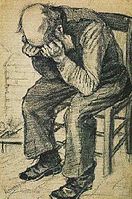
    132px-Vincent_van_Gogh_-_Worn_Out_(F997)This is a tough story to tell, partly because it’s hard to find those keeper nuggets of truth that help the rest of us navigate our jobs. Sometimes, I think things just are and maybe really these experiences are like everyday life. You can’t predict them and the only way to prevent them is to stop living.
    Cara is a wonderful volunteer coordinator with a big heart as almost all volunteer coordinators are. She’s been doing this for years, has mentored and seen at least a thousand volunteers come and go. She has wisdom and has honed her instincts like a blacksmith with a prized sword.
    Several years ago, Cara met a young woman, Gwen, who showed an interest in volunteering. Gwen was hesitant, but hopeful and Cara encouraged her, letting Gwen take small steps to find her niche. Gwen rapidly blossomed into what Cara describes as “one of the most gifted volunteers I have ever encountered.” Gwen was magic with clients and had a presence that allowed even the most downtrodden individual a voice. Words such as “angel,” “like my own grandchild,” and “my confidante” came floating back on waves of gratitude.
    Cara quietly mentored Gwen, preferring to stand back and let Gwen’s innate ability flourish. As they spent more time together, Cara learned that Gwen had a difficult childhood. She was estranged from her mother and Cara, ever the professional, did not step in to fill those missing shoes. Instead, she listened and encouraged, much the same as she did with all of her volunteers. But this one, this one was like the Derby winning horse in the stable. Gwen was worth the extra effort because the clients deserved the best volunteer help.
    As the years went on, Cara heard more and more about Gwen’s chaotic life outside the organization. She had a family and a job and troubles seemed to swirl around her in a cacophony of drama. But Gwen still had that touch with clients, and although Cara’s radar now went up, she carefully kept watch on Gwen’s volunteering.
    Occasionally, Gwen would drop in and cry for twenty minutes. Illness, fights with her husband, disagreements with her boss, run-ins with parents of her children’s classmates would knock her world out of orbit. Concerned, Cara suggested counseling and one day Gwen came into the office sobbing about her counselor. Cara immediately removed Gwen from any and all volunteering. She told Gwen to please concentrate on herself for a change. What Cara did not say was that she now thought Gwen an inappropriate volunteer.
    Their relationship morphed into Cara’s trying to help Gwen but with none of the volunteering. I asked Cara why she continued with Gwen and she said, “you know, it’s not that easy, just giving up on someone who hasn’t done anything wrong. Clearly she needed help and I had forged a relationship with her. I couldn’t just turn my back on her. And besides, when you see flashes of brilliance in someone, you can’t help but think that they are salvageable.”
    At some point, Gwen became angry with Cara, and stayed away for a bit, but then came back and Cara tried to help again. At this point, it had been two years since Gwen had done any volunteering. The second time Gwen got mad, Cara shut the door and now has no plans to re-open it. “I’m done,” she says. Does she miss the opportunity to help Gwen reclaim greatness? Not as much as you might think. She says, “it was like I could feel the flutter of a page turning. I feel finished, and I’ve done all I can. Besides, I have other volunteers to mentor.”
    I asked Cara if she thought once Gwen got her life under control, would she be able to return? “Honestly, no. I think that was a time in her life when volunteering fit and made sense. It will be impossible to recapture.”
    I’ve always thought that volunteers have a shelf life. Whether illness, moving away, disinterest or inability to function in the best interests of the client are the reasons, it won’t matter. When it’s time for a volunteer to stop, either by our request or theirs, then it’s time.
    Can we compare volunteering to art? I think so. Some genius is tempered with madness. I don’t think it’s a stretch to apply that to our brightest volunteers. I’ve seen them. Brilliant volunteers who paint masterpieces like van Gogh but are burdened with issues that often become too much. It’s sad and we walk a fine line between encouragement and interference. We want not only what’s best for those we serve, but also what’s best for the volunteers. Sometimes, even we can’t make that happen. We can only do the best we can with what we have to work with. And who knows how well service fits within a volunteer’s view of the themselves and the world. We have to be able to let that door shut when volunteering no longer works for the clients and for the volunteers.
    If we can’t, then we’ll go mad.
    -Meridian

  • I Wish She Had a Volunteer

    layawayA story that is circulating about a terminally ill woman, known as the Layaway Angel, really made me start to think about all the clients we serve.
    Layaway Angel

    An excerpt from the story reads:
    “Everybody wants to go back to school with new clothes,” said Store Manager Joyce Beane. “Now 16 more families can do that.”

    The families had all fallen behind on their payments.

    Enter the Back to School Angel.

    “She was here about 15 minutes. She paid off 16 the layaways in cash, about $3,000. Then she said I’m not feeling well I need to leave,” recalled Beane.

    My first thought, (as a manager of volunteers) was, wow, I hope she is on hospice and I hope she has a volunteer. It sounded like she entered the store alone and I immediately pictured in my head a smiling volunteer accompanying her, helping her walk up to the counter. I thought about this lady’s last days, maybe sans family and friends and how a caring volunteer could sit with her, reminiscing about her life and doing, well, what a volunteer does best.
    I thought about that until I stopped thinking like I had my office phone in one hand and the computer keyboard in another.
    It’s ingrained (and I mean cemented!) into our cranium that we “see” the potential for a volunteer. Scrape a knee? A volunteer can bandage that right up. Need some Twinkies? I think a volunteer can run through that Quickie Mart just fine. See, that’s how we view the world. How do our volunteers fit in to help?
    But then I don’t know this woman. I don’t know her condition, her life history, her wants, needs, pet peeves or personality. Maybe she wouldn’t want a volunteer. Maybe she’s super independent and wants to be alone. Maybe she’s a person who doesn’t need help. (Whoa, that’s not possible, is it?).
    Then I started thinking about all the volunteers who tell me how much they learn from the people they serve. Maybe a patient is using a volunteer, Jose to just sit with him while his wife goes to the store. Jose, who is trying to perfect his English, ends up learning that the patient emigrated from Italy and struggled to learn English, but managed to raise six kids who all became successful. Or Claudia, who while visiting a patient learns that the patient lost a child many years before. And Claudia, who had also lost a child, finds a deep connection with this patient, finding solace in her visits. Or the volunteer, Karen, who was just laid off, volunteers with clients who survived the great depression.
    Honestly, who benefits more from the relationships that are formed between volunteer and client? Volunteers always say they get more than they give and they are probably right. Those who volunteer doing the one on one work get hooked and want to do it again and again. It’s an addiction to soul candy. And ironically, the ones who get the most from their volunteering are not the needy ones nor the selfish ones. No, the ones who get the most are the ones who approach it with humility, by putting the focus on the client. The more they do that, the more they reap the rewards. Those who go looking for soul candy are usually so distracted by their own needs they miss the trail of candy bits that leads them to the dish. So, when I look at that story, and think like a volunteer manager, I wish she had a volunteer because I try to imagine the help a volunteer can lend to her journey. I have to admit though, I don’t know what that might be.
    But can that Layaway Angel teach a person lucky enough to volunteer for her something profound about life? Hmmm, it sure seems so.
    Therefore, I stand by my original wish. I wish she had a volunteer: But maybe someone to teach. I kinda wish it were me.
    -Meridian

  • The $100 Tip

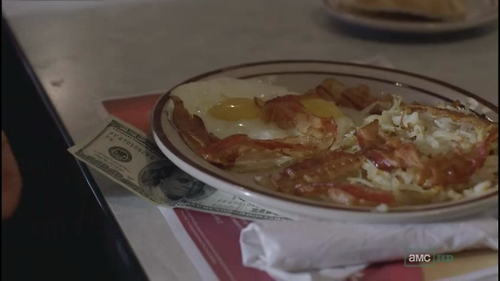
    $100 tipA friend of mine who is going to school and waitressing on the side messaged me a picture of an $89 food tab with a $100 tip written in. I asked her what she did differently to garner such a lavish reward and she said, “Nothing really, I just did my job.” As we talked, laughingly speculating whether it was a mistake, a “bucket list” checked off, a stalker and other hosts of wildly imaginative scenarios, we finally left it at “one of those special out of nowhere moments that cannot be explained, not fully. It’s the sun peeking out of the clouds, glorious and full, the five dollars you find in your pocket when you’re talking yourself out of that latte, and man who chases you down after you’ve dropped your new phone.
    It got me to thinking. Volunteer managers work tirelessly, mainly without praise. We can empathize with the mom who drags herself out of bed at 5 each morning to drive her son to hockey practice, then puts in a full day of work. The Stanley Cup will go to him as she stands, far back in the crowd, her tears borne from sleepless dreams.
    But then, there’s the $100 tip. It comes when you least expect it, but need it most. A volunteer wins an award and someone thanks you for mentoring that volunteer. A project that took you years to finally iron out takes off and someone claps you on the back. You’re at a general assembly and something you initiated years ago is highlighted and the speaker finds you in the crowd and says, “you started that way back, didn’t you?”
    Or, a volunteer phones you to tell you that he broke through to a client that everyone wanted to help but couldn’t seem to find the right phrase or the perfect moment.
    Why does that moment show up when we’ve just told ourselves that we could make more money with less work selling jewelry? Why does it seem to know exactly what we need when we need it? And how often do we need it?
    I’m always struck by how volunteer managers are not driven by praise or someone else’s definition of accomplishment. It seems our measure of success lies internally from the instinctive knowledge that accompanies each and every volunteer assignment. Although “big” accomplishments are nice, we revel in the day to day small accomplishments of each and every volunteer. It’s like standing on a bluff and looking at the beauty of the forest below. It takes each tree to create the breathtaking scene.
    This doesn’t mean that I don’t like getting an unexpected tip now and again. Nope, I love it, and frankly need it as much as the next person. But I also have to realize that I’m not working for $100 tips. I’m working because I know that the forest of things volunteers accomplish mean a lot to the people they are helping. It’s not flashy nor opulent. But then, neither are my expectations.
    -Meridian

  • The Mulligan Volunteer

    mulliganIf a Mulligan is a “freebie”, then Phil is my Mulligan volunteer. All right, I actually have more than one, so don’t tell anyone. I keep Phil on the active volunteer list even though he hasn’t done any volunteering for ten years. Yeah, he’s active only in my mind. Why do I hold on to him?
    Well, let me tell you about Phil. I have known Phil now for oh, about 17 years. He came to volunteer when I was just an idealistic blob of volunteer coordinator tissue to be molded by good old-fashioned experience and opinionated volunteers. I was hopeful, scared and curious all at the same time. But I digress.
    When I first met Phil, he was an old pro at volunteering. A retired executive, Phil had smarts, energy and that electric smile. I leaned on Phil a bunch. He took difficult cases. He made me laugh and learn. He once drove 30 miles to bail me out on an assignment. I never, once, heard a negative breath come out of that man. Inspirational? I’ll put him up against Gandhi in the Inspiration Olympics. Caring? Let him get in the Care ring with Mother Teresa, cause she better look out for his right hook. Willing? Well, you get the idea.
    Phil has been getting older. He’s had to pare down his volunteering activities to about seven. No kidding, that’s how much he does. And, as he weighs what he can do, it all boils down to convenience. At his age, that’s a huge consideration. So, the fact that he can’t really help us out anymore is no reflection on our mission or treatment of him. This, I understand.
    But let me tell you the real reason I keep him on the active list. Phil takes in homeless people. Yep, takes him into his home to live. Homeless vets, homeless families, he quietly takes them in to let them get back on their feet. His friends (and even some of our volunteers) have warned him that he could be inviting trouble, but Phil just shrugs. “Someone has to help.”
    How do you measure a man like that? I’m always astounded at how Phil lives his life. He’s not going to be featured on any news show. He wouldn’t want it anyway. He’s not going to be elected Mayor of his town. He’d hate that. He lives his life by serving. I was just lucky to have him cross my path for a while. He’ll always be “active” to me.
    I think we all need our Mulligan volunteers. In my organization, we have emeritus volunteers. These are volunteers who can’t help anymore, but they are invited to every function we have. They’ve earned it. Phil earned it the first week he volunteered. I think of so many of them, who give their all and when they can’t anymore, have to bow out. For the sake of my own soul, I cannot let them fade away. They love to teach others, speak to orientations, mentor newbies, write policy and mainly just chat. Although the chatting part takes a lot of precious time, after a conversation with one of them, I always end up feeling like I’m home. And because I’ve been doing this so long, I fear that no one else will remember. I sense these valuable volunteers slipping away like forgotten stories never written down.
    I think of all the phone calls I need to make and it’s overwhelming. But I have to find the time and energy. If Phil can open his home to homeless strangers, I can certainly open my heart to emeritus volunteers. They are a as much a part of volunteering as the fresh face. I can’t let them feel anything but honored and never forgotten.
    And though I won’t get any productivity out of the time spent reconnecting with emeritus volunteers, I know it is the right thing to do. And how much of our jobs is about doing the right thing?
    I think I’ll start with Phil.
    -Meridian

  • Volunteering: Well-being Gained or Brought?

    doctor with tabletJess is a petite brunette who brings a tranquil aura to her volunteering. She is positive, sensitive and gracious. That is, until a few weeks ago. I noticed something slightly askew when she complained about not having enough forms to fill out. She seemed irritated and preoccupied. I caught her a week later staring vacantly into space, and when spoken to, uninterested in the conversation. I had to ask her what was wrong and she reluctantly confided that her son just entered drug rehab. Ahhh, of course. Personal problems push aside tranquility like a schoolyard bully with the new kid.
    Jess just wasn’t here, not 100%, and I suspect not even 50%. So, how does volunteering fit in with Jess’ definition of well-being?
    As I pondered Jess’ circumstance and wondered if her volunteering gave her some sort of welcome distraction or if it just crowded her thoughts, I started thinking about how we “sell” volunteering by talking about how good it is for the participants. This caused me to reflect on the thousands of conversations with volunteers about their personal circumstances. It occurred to me that the vast majority of volunteers came with well-being already intact. We didn’t create well-being for them. We may have enhanced it, we may have filled a void, added a dimension, helped with grief, paved a way, helped fill time, boosted self-esteem, and maybe even helped mend a heart.

    But in all those cases, we added, not created. This was a sobering thought for me. I’ve had volunteers who were forced to come, whether by a parent, spouse, school, court or a friend. The door for them is often shut. I think I’m kidding myself if I believe that I can make them a volunteer in spite of their resistance. They have to give just a little.
    I remember Jana, a crushed human being. She came out of real desperation. She took over a year to start actually volunteering. Her beginning was spent healing. She made it with real determination. But the point is, she made it because she always wanted to make it and was willing to open up and find how she could. This becomes a tightrope walk for volunteer managers. How do you encourage someone to volunteer without letting them “experiment” on clients? It takes a great deal of patience and time and effort. It can be exhausting, especially since you have so many other volunteers to mentor. I think volunteer managers take personal pride in helping someone through volunteering. But I think, too, we don’t kid ourselves into thinking that volunteering will “fix” anyone.
    I think of Antoinette, whose grown son had died 12 years before. She had hoped that by volunteering, she would find a way to fill the hole in her heart. She volunteered for 3 years, and it never happened. She spent the vast majority of her volunteer time talking to me about how her son’s wife was a negligent mother. She hurt, and no amount of volunteering helped. As a matter of fact, very early on in her volunteering, I once found a family member comforting Antoinette. After that, I kept her away from clients. Antoinette’s volunteering was exhausting. Other volunteers asked me why I put up with it. Honestly, I don’t know, but I suspect that somehow, I thought volunteering had this magical quality to it. I’m not so sure anymore.
    I’ve had people tell me that volunteering has changed their life. What I think now, is that volunteering opened the door for a part of them that was always there. And if that’s the best we can do, then I’m pretty proud of that. Because it also means that we don’t have to continue to blame ourselves if volunteering doesn’t work for everyone. It’s not a salve or an elixir or a magic pill. It is an act of putting oneself aside to help someone else in their time of need. It takes a certain amount, even if it is miniscule, of well-being to volunteer. We, volunteer managers, can usually find that well-being fiber that allows someone to give selflessly. We love to cultivate it and make it grow.
    But we don’t have drawers full of magic pills to hand out. Our drawers are full of the stuff that helps us do our job, like listening skills, discernment, patience and good, sound judgement.
    And so, I now think that I’ve always been looking for volunteers to come and be well, not come and get well. Our clients certainly deserve that.
    -Meridian