Category: Volunteer

  • Go Ahead, Be Brutal

    bridge and riverNo, I’m not masochistic. Not even close. My little world is filled with kittens and marshmallows shaped like flowers and moonbeams streaming through the forest. (after all, why else would I be in this job?) But, I also don’t want volunteers to lead me on. You know, tell me that I’m wonderful, that you want to spend time with me, buy me flowers… (oh wait, that’s a different conversation, oops).
    But in volunteer management, I court the volunteer, right? I woo them with tales of how wonderful it will be, I walk beside them, listen, adjust, mentor, guide, run interference, and heck, put a bunch of time in, making sure volunteering will work for individual rewards. After all, it’s what volunteers want, right?
    So, here, I think is my biggest frustration. I’m thinking of Yancey who had/has such potential. She is young and vibrant and full of compassion. She paid strict attention in training, and bright eyed, couldn’t wait to start. She was mentored by seasoned volunteers, and is truly magical with patients. She writes comprehensive reports. She passed every background test. She is perfect. Well, was. That is, until she just stopped.

    At first, I assigned Yancey to a volunteer friendly nursing home. Both of the two current volunteers were leaving, but for different reasons. They had built a great relationship with the nursing home staff and together, they introduced Yancey to the patients and the employees. It seemed like a good fit. Yancey was excited. I called her frequently, answered any questions and assumed things were working out.
    Two months later, she stopped sending in reports. She did not return my calls, nor did she answer emails. Then an email I sent bounced back at me. Still no word. I checked with the facility and they had not seen her in weeks. I finally, reluctantly removed her name from our list and started searching for another volunteer to take her place.
    Was I mad at her for not wanting to volunteer anymore? No. This is, after all, volunteering. Would I judge her for her reason to stop? Absolutely not. If volunteering isn’t adding to someone’s life, they shouldn’t be doing it. Did her stopping ruin my life? C’mon.
    But, do I wonder what happened? Would I rather hear the reason even if it means finding out I failed her somehow? Absolutely. How else can I correct a situation or behavior if I don’t know about it? I suspect that Yancey couldn’t fit volunteering into her busy lifestyle, or more accurately, volunteering with those patients wasn’t rewarding enough to fit into her busy lifestyle.

    I could have told her that this is not my first experience. I’m used to volunteers leaving for so many different reasons. At least for some, I know why. That helps. For others, they float away like an unfinished manuscript dropped in a river. If only….
    I may pen her a letter but I truly wish I could have spoken to her and offered her something else or a more flexible schedule. It may have worked. But if not, at least I could have assured her that she was welcome back at any time in the future. I could have told her that she was a good volunteer and that she needn’t be embarrassed about quitting. I suspect that may be the case.
    But I don’t know. I wish I did.
    -Meridian

  • The Robot Volunteer

    Cleaning-robotIf you’re a sci-fi fan or even just a fan of good old science, you know the advances being made in robotics. From the robot vacuum to the automated assembly line, we are seeing robots take over repetitive jobs. They’re everywhere; their little stiff knees are walking them into all aspects of our lives.
    So, I know you’ve imagined it. I know you’ve thought about it: The day when they create a robot that takes the place of volunteers. Here’s how it goes. You just program in exactly what task you want the Roboteer to perform and voila! The task is completed with no calling in sick, no lengthy vacations, no listening to it talk about it’s Roboteer life, no questions, and no job that you have to re-do.
    You need a Roboteer to mentor a child? Just program it to have a digitally compassionate voice. You need it to help set up an event? Just program it to go all day and never sit down for a glass of water. What about meals on wheels? Well, just program it to not only deliver the meals, but to spend 15 minutes giving the shut-in some socialization. And when the 15 minutes are up? It shuts down on that needy shut-in so that it is never off schedule. What a perfect solution it is. Why not? You wouldn’t have to pay volunteer managers and besides, volunteers are ancillary anyway, right? And they do repetitive jobs, don’t they?
    I’m picturing it right now. Somebody (not me, I’ve been laid off) gets a request for a volunteer to visit a patient in a nursing home. That somebody opens the closet, turns the key on a spiffy metal pal with a name like Compassion Nate 3000, and programs the coordinates in. The eyes open and it hums, “I am ready to serve”. Then it’s off to the nursing home, where it zips into the patient’s room. Our patient, Miss Aida, who has been dozing, wakes to see a metallic face peering down. Miss Aida starts screaming as Compassion Nate grabs her wrist and in a soothing electronic voice says “calm down, I am here to serve you” over and over. The patient continues to scream until one of the nursing home robots, Facility Friend 800 comes in and tries to remove Roboteer Compassion Nate. Nate, being the newer model, pulverizes Facility Friend, turning her into scrap. Miss Aida, now traumatized, is subdued by real humans.
    Well, if it comes to that, I’d like to offer a suggestion. I’d rather they make cyborg volunteers, you know, those creatures that are a combination of robot and human. And for the human parts, I’d like them to clone some of the volunteers I know. So if they can make the Cybunteer, here’s what I want them to do:
    Take a piece of Dottie, who will mentor any new volunteer. She just mentored two yesterday, at different times in different locations. “It’s important.” she says matter of factly.
    Add a piece of Bryan, who will drop everything and make sure a dying veteran gets a visit.
    Throw in a hunk of Jules, who calmly says “don’t worry, I can handle it.”
    Then put in a pinch of Anna, who always asks for detailed instructions, because “I want to do the right thing.”
    Maybe take some of Jerry, who although only 16, says, “I need to give back. I really believe we all should.”
    Oh, and steal some of Glynn who always arrives on time and asks if she can do anything extra.
    But don’t forget Jose, who always fills out his paperwork because “I know this is crucial to your reporting.”
    Top it off with a bit of Cara, who simply glows when she is with patients and families.
    If they can do that, we may have a suitable substitute for our human volunteers. Gone will be the mistakes, the anxiety of learning a volunteer role, the need for reassurance. Gone will be our jobs making sure that it all runs smoothly. Our great grandchildren will ask, “what’s a volunteer coordinator?”
    Ahh, the future. Or maybe, just maybe, volunteering will go the way of kneading pie dough, painting a waterfall on canvas or sewing a quilt. Machines can do those things, but we choose to do them, because they invoke feelings of connection and accomplishment. Which then makes me wonder. Can we separate the task portion of volunteering from the reward portion? Or is volunteering more about breathing in unison with a dying patient to establish that perfect moment of imperfect human connection? I’d like to see Robopanion 200 do that!
    -Meridian

  • Bumping Into Carmen

    grocery hidingThe other day I literally bumped into Carmen who has not been volunteering for over a year. I came around the corner at the grocery store and boom, there she was, picking out paper towels. Occasionally I run into former volunteers; those who left because they became ill, those who stopped because life changed, or those who just don’t volunteer anymore. Then there are the ones who left for another reason; mainly we asked them to leave because they did something egregious, like breaking rules, stepping over hard fast boundaries, meddling in financial affairs, yelling at a patient’s family or lying to us about a former run-in with the law. Sadly, there are some folks who just aren’t meant to be a volunteer, at least, not until they figure some things out.
    You know how this goes. You’re out in public minding your own business and you suddenly catch a volunteer you don’t want to see (mainly because you don’t want to explain again how sorry you are things didn’t work out) walking amongst the artichokes and you panic and sprint the other way, pretending you see a friend in the distance? That’s how work catches up with you on a Saturday.
    Well, Carmen is none of these volunteers. You see, my organization did Carmen wrong and it still pains me to this day. When I bumped into her, I grabbed her with a big smile and we hugged and I told her how much I miss her and how sorry (again) I was. She grinned at me, still a bit wounded and patted my cheek. “It’s ok,” she said, although to me it is not.
    Let me tell you a bit about Carmen.
    She came over from Cuba during the revolution and made her home in America with her husband, Jose. They are the type of couple who share their “love story” with anyone who cares to hear. He rescued her and brought her family over. She presided over a brood of six children, all now successful adults. Carmen makes mad coconut flan. Jose plays the guitar. They are infectious in a good way. But more than that, Carmen has a rare gift. She looks into your soul when she speaks to you. She tells you she loves you and she means it. You can feel her heart if you get within 20 feet of her. She is a petite woman with a giant presence. Patients loved her.
    So, what happened, you ask. Carmen, an artist, wanted to give our organization a painting to put over a bare wall in the lobby. One of our managers told her to “paint whatever you want, I’m sure it will be beautiful.”
    So, Carmen painted a lovely abstract depicting a family gathered around a bedside. It had bright colors, and gentle tones. It was a modern take on old fashioned love. It was Carmen.
    She brought it in one day when I was not there, not that I could have prevented the hurt that followed, but I like to think I might have made it better somehow. It’s a control thing, I know. Another manager saw Carmen’s painting and deemed it “inappropriate” and told Carmen that we could not possibly hang it in our lobby. I do not think the manager was cold or dismissive, but Carmen was hurt. She took it well, I’m told but went home, talked it over with Jose and called to quit.
    Now here’s the problem as I see it. We gave her permission to paint whatever she wanted. In good faith, she accepted the free hand she was given. We set her up, not maliciously, but irresponsibly and for a sensitive soul like Carmen, the rebuff was hurtful.
    She tells me that she will be back one day and I believe her. After all, how can you stay away from something you are so incredibly good at? When she does return, everyone will be glad to see her and it will be business as usual.
    But, right now, with Carmen gone, I think about all the patients who are not being helped by her. All over a flippant directive and a thoughtless reaction.
    I wish I could paint. I’d paint Carmen back into our picture.
    -Meridian

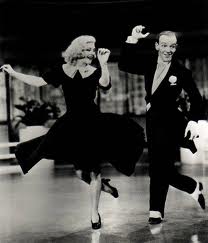
  • Walt: In Memorium, My Favorite Dance Partner

    fred and gingerWalt died Saturday, after a very long battle with cancer. He was 87. Funny thing is, he volunteered up until about a week ago when he became too weak to get himself out of bed. But before that, he would come in, his clothes hanging off his body like busted balloons. He ended up using a cane and sat down often for longer and longer periods of time. None of that mattered, because he was “working.”
    I remember when he first came in seventeen years ago. His wife, Grace, who was a volunteer at the time thought it would be good for him. And so he came to orientation. I noticed in class how his silver hair curled just so over his perfect collar. He listened politely, asked methodical questions while taking copious notes.
    Grace informed me that Walt had been a very successful trial lawyer. It showed in his dissecting approach to volunteering. “Give me the facts. Tell me what to do and it’s done.” Trouble was, Walt wanted to work with patients. That’s what his wife did and he wanted to do the “top job.” But patients aren’t cases and working with them is about nuances, not facts, although Walt at first thought that by studying a few facts, he then knew them. Oh, how he struggled and how I struggled with him.
    We spent that first year together, doing a sort of schizoid tango, Walt telling me that he wasn’t comfortable, me assuring him that he would eventually get it. Often I thought he would quit and numerous times I ran out of ways to tell him not to. I felt frustrated that I couldn’t find the words to make him comfortable. Other volunteers helped in guiding him, but ultimately he had to find his own comfort. As the first year passed, he began to let go of his authoritarian role and started to sit down next to patients as he talked to them. He began to find pleasure in bringing a cup of coffee and enjoyed the less direct ramblings of life stories.
    Our frenzied dance slowed to a waltz and he mixed into the routine like a French vanilla creamer in a perfect cup.
    Several years ago, his beloved wife, Grace died. Burdened by grief, he insisted on continuing to volunteer, never sharing his heartache with patients, preferring supportive roles. Year after year his reason to be slowly returned as he immersed himself in helping others. He spent more and more time volunteering, but this time he greedily sat at bedsides. It was right for him, and soon the staff began to know and appreciate his humble spirit. And so Walt became a great volunteer.
    At his service, his son said that Walt changed for the better by volunteering and that he got to see a side of his father that was truly inspiring. He voiced his gratitude to the organization for helping his Dad become a better man. There wasn’t a dry eye. See, we all knew things about Walt, things he had chosen in his new humility to share, things like struggles with alcoholism and infidelity. We could only imagine the Walt of old. We knew the deep Walt, the one we watched become a humble servant to others. He was as much a part of us as we were a part of him.
    As we left the service, I realized how much I would miss our dance, But then, I pictured Walt dancing with Grace and hoped she would be proud of the man he had become. I know we are.
    Cheers Walt. Thank you for showing me that by patient practice, we can all do a mean two-step.
    -Meridian

  • If You Can’t Thank Me, Don’t Insult Me Too

    dying plantYvette manages volunteers for a specialty hospital in a city with two other competing hospitals. Therefore, her marketing department utilizes volunteers as props, marketing tools and for as many events as Yvette can round them up for. Marketing looks to Yvette’s volunteers for continuous help in drumming up community interest and business.
    Recently, one annual major event was under the direction of a new fresh face in the marketing department. She had many novel ideas and requested twice the number of volunteers from years past. Yvette obliged, working longer hours to get the extra volunteers in to help on the day of this signature festival.
    Everything went relatively smoothly. Yvette was there that day, making sure the volunteers had someone to do all the “grunt work” so that they could excel.

    The next day, Yvette called every one of the volunteers who came out, thanking them personally for their participation and asking for any feedback that might help for the next time. Volunteers were happy to give input and Yvette was proud of their team spirit and constructive ideas, which she turned over to that new fresh face.

    Several weeks passed. A hospital executive stopped by one morning and pointedly asked Yvette if the young marketing staff member had had a wrap up meeting for the volunteers. Yvette said no and tried to point out that she had already contacted everyone, but the aggravated executive reminded her that in years past, there was always a follow up meeting for volunteers. Angrily, the executive let his guard down and complained about the multiple shortcomings of this new marketing person. Yvette listened politely, feeling uncomfortable the entire time.

    Yvette did not think much about that conversation until another two weeks had passed and she picked up the phone. Her volunteer, Joy called to inquire about an organiztional thank you note with a five dollar Walmart card attached. “Who’s idea was that?” Joy complained. “What are they thinking? What am I going to do with five dollars?” Before Yvette could digest what was being said, Joy continued. “Its an insult. I didn’t volunteer for five dollars. Is that what my time is worth? Id rather they did nothing than do this.”
    Yvette received multiple calls voicing the same sentiment. “What does management think our time is worth?” was the most voiced complaint. Yvette deftly fielded the calls, soothed nerves and assured everyone that the gift card was not meant to be an insult.
    Yvette spent many an hour doing damage control. She told her supervisor about the situation and her supervisor shrugged and said, “yes, they do stupid things,” so Yvette was pretty much on her own. She knew her supervisor would not “make waves” with a favored department. Once again, the care and feeding of the volunteers was left solely to her.

    What exactly, is a volunteer’s time worth? Five dollars, ten dollars, a luncheon, a gift card to Walmart, an occasional nomination? What do volunteers really want as appreciation? A pat on the head, a hastily scribbled speech, a once a year dinner?

    Do volunteers notice they are not part of strategic planning for the very organization they work tirelessly for? Does each hollow afterthought combine to make this perception worse? Do they truly “know their place?”

    In the fantasy world, when the cultivating of volunteers becomes everyone’s job, then a five dollar gift certificate would not be salt on an already gaping wound. Do you want to know the one sentence that Yvette heard from all the volunteers she spoke to?
    “I know YOU appreciate me, dear.”
    -Meridian

  • The Open Door Policy for the Organic Farmer in Us

    friends over coffeeYes, we have an open door policy. Being accessible for the volunteers is crucial. Some staff will shake their heads and say, “why don’t you make the volunteers stick to appointments?” No, because that would make me, well, inaccessible. Yesterday, however, was one of those days that just made open door more like the fourth of July parade on steroids. All day long a steady stream of volunteers kept replacing each other in the office and each time, I would have to put down the one item I was working on and listen. Each time they left, I tried to gather my thoughts and continue but as the day wore on, I realized that on paper, I was going to accomplish nothing. I did manage to sneak a couple of phone calls in. At one point, a staff member stuck his head in, saw that I had a volunteer sitting there, motioned to me that he would see me later and left. Within three minutes he called me on my cell phone.
    I told the volunteer I had to take the call and answered. (dumb mistake I admit). I actually answered and said, “hello, Jay, I am still with my wonderful volunteer that you saw me talking to a minute ago.” To which he replied, “I know, but I really had to ask you this question.” Ahhh, I apologized to the volunteer who was telling me about the sale in the mall and she said, “Boy, those social workers really monopolize your time!”
    It went pretty much like that all day. I heard about a sick mother and everything that was being done to place her in a nursing home. I listened to the in depth recounting of an Alaskan cruise. I saw pictures from a grandson’s wedding. I heard about a granddaughter’s graduation, the home oven that wasn’t working and was just purchased, the progress on a bathroom remodel that was taking longer because parts were on back order, the reason a haircut was bad-the hairdresser had had carpal tunnel surgery recently. I tried a new bar cookie and heard about the recipe that came from a friend who loves to copy famous recipes, looked at a large bruise from a recent fall, petted the family dog that was out for a ride in a new car, admired the blouse that was gotten at a thrift store for two bucks, discussed the upcoming football season with a sports fan, went out to meet a visiting niece who was home from college, walked around with a former volunteer who missed us horribly, and learned that you can’t ever leave sweetened condensed milk boiling in cans on a stove unattended. Wow, who knew!
    I felt like I was in some coffee shop, having an eight hour latte. But you know, it really wasn’t non-productive, if you look at it in perspective. For those who have never worked with volunteers, you must have a really hard time understanding what we do. You cannot possibly know the relationships we forge and how we nurture those relationships. A brand new volunteer started opening up and I listened to him talk about his retirement and how he enjoyed staying busy and helping people. I watched him as he spoke and with no words in my head, felt him becoming a part of us.
    I kept returning to that project in between visits and by the time I mentally engaged, another volunteer would peek in. Hmm, so what? For every ten minutes I spent talking with a volunteer, I can multiply that by fifty in the amount of service hours they will provide. So, my time was never in jeopardy of being wasted. Each volunteer will perform the critical work that needs to be done.
    I think, for me at least, I get frustrated with days like that because I am conditioned to think work has to be something plainly visible, like charts and stats and well, something to show for my day. Cultivating volunteers looks to an outsider like fun and games. Staff poke their head in and see me (Horror alert) looking like I’m having a good time. That can’t be work, can it? But then, I go home bone tired. And I’ll bet you do too.
    Making each volunteer feel as though their time and lives are the most important thing at any given moment is work that’s as hard as grinding out facts and figures. We tend to our volunteers like an organic farmer caressing tender shoots. “Grow, my friend, grow into a great volunteer.” And like that nurturing farmer, we look to the day when we can stand back and admire the strong, capable volunteer in front of us.
    Do we really have the time for an open door policy? Not according to time managers; their heads would explode if they saw what we did. But according to volunteer management 101, we must make the time.
    The neglected work? It’ll be there tomorrow.
    -Meridian

  • Am I Nuts, Cause I’ll Put Up With Anything

    clingingMelissa is a volunteer coordinator at a large hospital where she manages a great number of volunteers. She is responsible for filling many positions, including the receptionist volunteers who greet family members in a trauma waiting area. It is an important volunteer assignment and she is required to keep the shifts filled. She has this volunteer, Irma, who has been coming in for one shift the past 5 years. Irma is prompt, reliable, a stalwart. The day after Irma’s shift however, Irma calls Melissa to complain about the lack of brochures, the semi-clean bathrooms, the lazy security guard, the tired reception room furniture, the poor advertizing, the rude staff, the incompetent management and the uncomfortable chair. Irma chews Melissa’s ear for twenty minutes with a list of things that need to be fixed and finishes off by threatening to quit.
    Melissa listens patiently and then does her best to not only fix every little thing, but she also fawns over Irma. Is Melissa nuts?

    Joan has a hospice volunteer, Sig, who, she calls upon occasionally. Sig gives Joan a hard time when she calls him. She steels herself for the excuses, the sighs, the checking schedules four and five times, the twenty questions and the coaxing. Sometimes Sig refuses and sometimes he accepts. Joan thanks him profusely, and calls him the day after his assignment and listens again while he comes up with the reasons he shouldn’t have gone. Joan empathizes, comforts and promises him that the next time will be better. Is Joan insane?

    Mark is a volunteer coordinator for an organization that serves at risk youth. His volunteers make home visits to assess the program’s progress. He has this one volunteer, Henrietta, who is a drama sponge. She sits in Mark’s office for an hour, watching him scramble to get jobs done, peppering her latest life crisis between his phone calls and paperwork. Mark listens patiently, assuring Henrietta that she’s “not bothering” him. He listens intently, concentrating on her needs while she’s there, empathizing with her chaotic life. Later, he may have to stay an extra half hour to catch up. Is Mark crazy?

    We all have these kinds of volunteers. Are Melissa, Joan and Mark super-dedicated or are they just plain dumb? Why would they encourage these behaviors? Well, here are the reasons.
    Irma works on Sunday.
    Sig will go out in the evening.
    Henrietta goes into a neighborhood that no one else will go into.

    It’s ironic how our behavior changes, and needs to change with each and every volunteer and each and every assignment. We all have experienced the volunteer request that is nearly impossible to fill and when we do fill it, we’ll cling to that volunteer like a falling animal to a branch. Suddenly, behavior that we might not tolerate in others becomes, well, not so bad. And when that volunteer becomes ill or has to take some time off, we feel, (if we are completely honest) much more devastated for ourselves because we know how hard it will be to replace them.
    Volunteer managers are by nature very mutable. It is our job to keep positions filled, to keep volunteers happy and retained, to put the right person in the right job. Sometimes, there is only one person for a job and when that occurs, our survival instincts kick in.
    So, the next time you have this nagging little voice asking you why you put up with certain behaviors from certain volunteers, just think of your fingers starting to ache as you cling to that branch hundreds of feet above the canyon of NO VOLUNTEER REPLACEMENT. Then, ignore that voice and Hang On!
    -Meridian

  • Confessions

    pick up stixI don’t know if was a full moon, or maybe Venus somehow sneaked around and eclipsed Mars, but there was a definite vibe in my volunteer training the other evening. You know the old game Pick Up Stix where you drop sticks down and then have to pick them up one by one? New groups of volunteers remind me of the random pattern you get from that game. Each group’s dynamics is so varied, yet intertwined and the personalities clash or sync which really creates the tempo.

    One of our volunteers, Dave, has always offered to come and speak to class. I took him up on his offer. I love volunteer speakers; they are honest, inspiring, witty and extremely encouraging. You never know, though what they are going to say, but for the most part, honesty works.

    Dave sauntered in and greeted me gruffly, said hi to the newbies and got to work recounting his experiences with patients and families. He told them about patients who were funny, families who were loving, circumstances that were inspiring. He stretched his images out like canvas over a frame, painting a colorful and rich world of volunteering.

    Then, suddenly Dave shifted gears. It came after he spoke about a patient who had battled alcoholism for most of his life. Dave grew serious as he described the patient’s struggle and then launched into his own battle with alcohol abuse. He spoke about the program he enrolled in and the dedicated counselor he had.

    Oh, oh, I thought as I scanned the class. Too much information. But how do I stop Dave without giving the impression that he was speaking out of turn? But as I surveyed the faces, I could see they were mesmerized. Dave finished by emotionally thanking everyone for their attention, and as he left, his confession hovered over those pick up sticks like a hand about to drop. And before I could apologize or commend, one new volunteer, Janice started talking about her up and down battle with depression and how it had ruled her life since she was a teenager. Her classmates nodded sympathetically. Then Troy added that he had been institutionalized while in college and pretty soon each one confessed challenges they had faced in life.
    I had not only lost control, I lost my space in this jumble of sticks that were starting to move into a line. As I sat back and let them talk to one another, I realized that the next big subject we were going to tackle was active listening. I watched them listen to one another, and from habit I looked from one face to another. Every one of them was intently focused on the others. It was awesome, actually.
    They finished and looked at me like kids who were caught. “we’re sorry,” they said.
    “You know,” I mused as they allowed me back in, “this is the first time in 20 years I’ve ever done this, but I’m going to skip the first part of our active listening exercise. What you’ve done here with each other is real, authentic active listening.”
    They beamed.
    It got me to thinking. What lurks in the volunteers’ past? What stories and secrets do they keep locked away until someone gives them permission to turn the key? Does it matter if we know? What doesn’t show up on a background check? That I hate my mother, I’m obsessive compulsive, I am afraid of people with red hair? Will a background check reveal that I have an agenda? Or that I am not a team player?

    Will I watch these volunteers more closely? Honestly, no. I think they represent all volunteers. They just happened to feel comfortable enough with each other to be honest. We all have something that on paper makes us undesirable, but in person makes us honest, vulnerable, human. We want the human volunteers and that’s what we get every day. So, when new volunteers connect with one another, I don’t have to pick up sticks and worry about moving the ones below. They moved each other into a sync that will serve them well when working with our patients and families.
    Their confessions? Safe with me.
    -Meridian

  • Well, This is How it is…

    mathSo I was trying to explain my job recently to a female executive at a chamber dinner. She was sincerely curious as to what volunteer managers really do. As you know, our jobs can’t be explained in a couple of sentences; not really well, anyway. I started off badly, talking about numbers and demographics and motivations. My new friend looked at me blankly. Because I was losing ground fast, I tried talking about motivations and demographics and return on investment. After all, she lived in that world, right? She did want to understand and I am normally not tongue-tied, but here I was, stumbling over theory, slicing my job with a clinician’s knife. It sounded so meaningless and I pictured a trained monkey pointing at a chalkboard. “Oooo oooo aaahh aaahh, volunteer number one, volunteer number two.”
    As she shifted position, I felt myself start to let go of the stats and graphs and the desire to impress and I said, “you know, let me tell you a story.” She leaned forward as I thought of a current volunteer I have the pleasure of working with right now.
    “There’s this volunteer, Sharon,” I relaxed. “She was in a group that I spoke to a couple of years ago. At the time, her husband was critically ill, so she could not volunteer, but she kept one of our brochures in her desk drawer. About a year and a half after her husband died, she was just starting to think about what she could do that held some meaning for her and she happened to look for an old photo album in her desk when she came upon our brochure. Sharon turned that pamphlet over in her hand and felt that was a sign so, brochure in hand, she decided to come and see me. She was hesitant, closed up really. Her words were so heavy that they bent her over as she told me about losing her husband. I wondered if she was ready to do the work, but she was already one thought ahead and she wondered aloud if she could work with terminally ill people, but she had to at least try. As I gently explained that my first priority was to the patients, she looked down and said that she would not put her grief on them. Her painful sincerity made me want to give her a chance.
    Sharon came to training. She sat in the back, said little, but did participate in group exercises. She seemed embarrassed at times, a bit reserved or maybe just wounded. After training I put her with a no-nonsense volunteer who promised to keep an eye on the ‘newbie.’ Sharon started to visit patients in a care center setting, never alone, always with another volunteer.
    She spent many an hour in my worn chair by my desk, talking about what she observed, what she felt and what she couldn’t bring herself to do. It was always apologetic with a nervous tilt of the head. I wondered if this could work. But as the weeks went on, she started to look me in the eye. Sharon began to gingerly speak to family members, ever so humble, ever so timid. They started to tell her things, deeply personal things and she swallowed them up like prescribed medicine. The patients thanked her for listening and she found herself not needing her mentors.
    A few weeks ago she came into my office and sat in the chair. Sharon shared a journal that she had been keeping. She wanted to read her latest entry to me. She wrote, ‘I never thought I would feel worth again, but I feel it now. I feel it the minute I walk in the door. I know I am needed. I had my heart-broken and I feel it beginning to mend. I am really truly helping people and it fills me up with such joy, a joy that I thought could not be mine. I love these people, their stories, their courage, their life experiences, good and bad. I am so glad I decided to take this step. It saved my life.’”
    My new friend, this powerful female executive was listening intently. She nodded, absorbing all the nuances of our job. From recruitment, to screening to placement to cultivation, to motivation, to managing, to the retention, to the personal satisfaction when we see volunteers blossom.
    Sharon is a microcosm of our jobs. Take Sharon and multiply her by all the volunteers you have mentored. Then add in the educational in services, the recognition events, and the speaking in front of staff about volunteer accomplishments. Sprinkle in the remembering of names of children, grandchildren, pets, places they love to vacation, their birthdays and their pet peeves. Throw in a dose of advocating, cleaning up misunderstandings and checking in and re checking in. Mix in those hours spent at home pondering where to put a talented new volunteer and how to gently extract an aging one from a tough job. And don’t forget the tension lifting laughs and antics when a volunteer is down.
    I believe this executive went away with a better sense of volunteer management. I hope she has a new appreciation for all of you.
    I hope she knows that “this is how it is”… and yet, there’s so much more.
    -Meridian

  • Curiosity Does Not Always Kill the Cat

    curiosity-killed-the-cat_o_420039 I’m a curious person. Ok, my family says I’m downright nosey, but I think we volunteer managers have a real natural curious streak in us.

    One of the senior managers who went to a symposium (you know, where the information is so cutting edge), came back with a brilliant idea. (or so the person selling their product said). The idea is to have standard questions when interviewing volunteers. These questions have been thoroughly researched and are guaranteed to give us insight into the volunteers’ unwitting brains.

    Hmmm, I thought. Could this magic solution be the answer? Would it weed out the agenda driven, lawsuit creating nutcase while highlighting the cautious, yet perfect, stay with us forever while working 60 hours per week volunteer?  I thought, “why not”, so I took the questions and tried them out. Here’s how an interview went with a prospective volunteer, Ed:

    Me, smiling:  Why do you feel you would be a good fit for this organization?

    Ed: I want to help.

    Me, reading from the slick page of questions: How would you describe yourself as a volunteer?

    Ed: I’m someone who wants to help.

    Me, straightening my shirt, still reading: Where do you envision yourself as a volunteer in the next, say year?

    Ed: Actually helping people.

    Me, squirming a bit: Have you ever been asked to leave an organization you volunteered for?

    Ed: No.

    Me, squinting at the page: In other volunteer jobs, what would you describe as your biggest accomplishment?

    Ed: I helped a lot of people.

    Me, skipping questions now: What would you do if we did not accept you as a volunteer?

    Ed: I’d be disappointed, because I want to volunteer here, but I’d go somewhere else to help people.

    Me, scanning the page: What interests you about volunteering for our organization?

    Ed: The chance to help someone.

    Me, a bead of sweat forming above my eyebrow: What do you think could possibly make you stop volunteering here?

    Ed: I suppose if I didn’t think I was helping anyone.

    Me, putting the paper and formality aside: Ed, tell me a little about yourself.

    Ed told me about his career path, his years playing college football, his long marriage to his college sweetheart and her untimely death. He told me about his children, his neighborhood, his love of writing and his military service. He told me that his parents raised him to think of others and how they would make him and his brother do volunteer work as teens. Ed talked about his work as a plant supervisor, and how the men and women he managed were his heroes.  He spoke about one man who worked for him, who took in and adopted three disabled children. He wistfully said that he never encountered a happier family. He told me that his father, an immigrant from Poland, grew up dirt poor, but managed to work enough to put both sons through college. He chuckled when talking about how his mother would make pierogis and red cabbage for the retired school teacher down the street so that she would tutor Ed’s brother in math. He said that, now that he was retired, he’d really like to put his time to good use and help people.

    We talked about how he envisioned his volunteer work and funny, it meshed completely with my vision of him as a volunteer. We talked about finding the right spot for him, and I told him that he was exactly the type of person we were looking for. I felt the kind of comfort with Ed that you feel when you open the pages of a favorite novel. Now that the “interview” portion was over,  we talked about his writings and I found out that Ed enjoyed helping people tell their stories. I asked him if he could see himself doing that with our patients and families and he said that he could. Maybe, then, I suggested to him, we have a way to incorporate your interests with your volunteering. He said he would be glad to try. He just really wanted to help.

    I think we both felt a connection, not through measured questions, but through exploration and old-fashioned nosiness. I felt like we were chatting across a garden fence, coffee cups in hand. I think he will be a great volunteer.

    And, oh, I forgot one question from the crafted list: If you had to pick one positive aspect about yourself, what would that be?

    I’ll bet money that Ed would not have answered, “I have many positive aspects and facets and I am a person with rich interests, skills and talents and I genuinely want to help someone else.” So, being the curious type, I answered for him.

    -Meridian