Category: volunteer retention

  • Ma! Ma! Ma! Ma! Ma!

    mustangThe open door policy, oh boy. If you oversee two or more volunteers, you know what I mean. Volunteer managers pretty much are required to have an open door policy, which is great for keeping informed but is also a killer of productivity. So says Celeste, a volunteer manager who manages more than one hundred diverse volunteers working in a thrift store. Her store is large and is open six days a week. Donations flow through the store all day long, and in between customer service, cashiering, straightening, receiving goods, sorting and pricing, her volunteers are bustling from the moment they arrive to the time they leave.
    “No one can ever question the dedication or work ethic of our volunteers,” Celeste says. “They come in when they have relatives visit them, when they have a slight cold, when they get done with doctors’ appointments. They’re amazing. See, we foster a real sense of team here, and part of that is my open door policy. Believe me, the volunteers are so dedicated, they stop in to check and see if we’ve sold a big-ticket item, or if we’ve got the manpower to sort through that large donation quickly to make sure the good stuff gets to the floor. They even keep lists of customers to call when certain types of items come in, like a particular brand or type of cookware.”
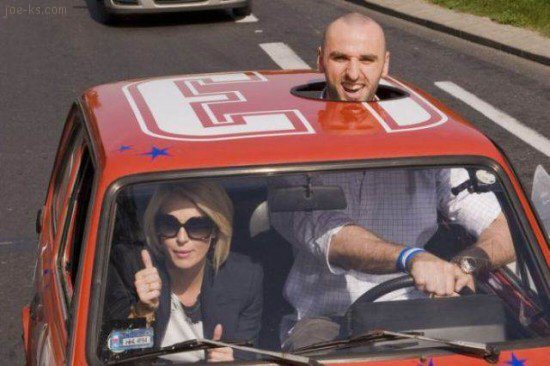
    While it sounds like Celeste has it made, behind the scenes it took a great deal of work to create such a well oiled team of volunteers. And with that team comes the challenges she faces maintaining that team. It’s not like Celeste can go into her tiny back of the store office and watch “Days of Our Lives” while eating power bars and drinking green tea. She, and her volunteers have created a system that works like a fine automobile with Celeste’s availability, encouragement and direction much like the wheels that carry the car.

    With her open door policy though, comes a tiny percentage of volunteers who need more time and space than the others. “I’ve got these two volunteers, Irma and Jean,” Celeste says with a laugh. “They really take the open door policy to a whole new level. It doesn’t matter that I might have someone else in my office, or that I am on the phone, or that I’m really, really busy with bookkeeping, they come in and interrupt me ten times a shift. I think they just have no idea that I don’t have the time for questions like, ‘what happened to that green blouse with the stripes,’ or ‘did you know there’s two identical blue McCoy pottery pieces, how odd is that?’ I suppose it’s a compliment that they feel comfortable with me, but sometimes I feel like the mom who answers her phone and the kids immediately all need attention and start yelling Ma! Ma! Ma!”
    Celeste went on to say, “I’ve heard all the advice from so many people. Close your door, ignore Irma and Jean, leave the office when they are working, interrupt them and politely say that you have work to do, and ask them to please stay out of the office, but it’s easier said than done. Besides, Irma and Jean are great with the customers, and are always willing to work an extra shift when someone calls out. They’re indispensible really, so why shouldn’t I put up with a bit of inconvenience? Heck, I’ve got Joe, who is hard of hearing and makes the customers shout, and Marge, who puts women’s clothes in the men’s section, and Philomena who over prices knick knacks. Oh, and there’s George, who can never seem to remember to turn off the lights and Babe, who can’t see the rips and stains on clothes and puts them out. Am I supposed to nitpick all the volunteers? I can’t do that. We make it through each day with humor and positive thinking, and I appreciate each one of them. And to all those who think that I can make these volunteers eliminate their quirky habits, I say, you have never worked with volunteers. ”
    Ahh ha, how smart Celeste is. If we were to judge our volunteers on their shortcomings we’d have no volunteers. And all that well-meaning advice by those who don’t work with volunteers just does not make sense to us, because we know that perfection does not come without piecing together imperfection. Our volunteer teams are made up of real human beings with gifts and shortcomings. The well oiled machine we produce is vintage. It doesn’t have all the fancy new techie stuff and it may creak here and there and it may take a few minutes to warm up and the windows may hand-roll slowly, but it works. It moves down the street with the air of the artisans who created it. No, our machine was not mass-produced by robots, it was put together with the sweat of the volunteer manager who polished every piece. And in those moments when the throaty sound of that engine revs up, we know that our machine is unique and perfect.

    Let’s face it. A great deal of what we do is a trade-off, and a part of our volunteer’s “pay” is our overlooking of inconvenient things, like the volunteer who interrupts us, the volunteer who needs more of our time, and the volunteer who needs reminding over and over. Should those inconveniences that may look to an outsider like we don’t know how to “control” our volunteers, cause us to lose productive volunteers? I, for one, would rather not lose great volunteers just because they require a little extra of my time.
    Our volunteer teams are created by vision, artisan spirit and a heck of a lot of our time and effort. That well oiled machine is made up of restored parts, and we may have to work harder on some of those parts than others to keep them running properly, but they’re necessary parts.
    I’m off to work now, to drive in my lovingly restored well oiled and polished machine. I may have to do some maintenance and occasionally change out parts or stop for gas, but driving down the street, it is a thing of beauty.
    -Meridian

  • Management 601

    Belushi“Hey, not everyone is cut out to be a manager,” said my friend, Rennie, who works in the finance department of a large charity organization. She occasionally uses a volunteer to help with end of year reports, and adds, “the volunteers are always so wonderful to work with and our volunteer manager, Chase is awesome. But volunteers are not my problem. My problem is we have a new senior manager in our department, Bridget, who was hired to make our financial processes flow more smoothly. And since she’s gotten here, our department is miserable and everyone talks about quitting. It’s demoralizing.”
    “What is it about her management that is so bad?” I asked.

    “Well, when she first got here, she gathered our department together and told us what a great bunch we were and how excited she was to be working with us. She said she’d heard great things about us and that she wanted to learn from us.”
    “That doesn’t sound so bad.”
    “Yeah, but that was then. Now when our department meets, she tells us what a great bunch we are and then proceeds to rip into each one of us for something we did not do correctly or on time or according to her schedule. It’s apparent that the praise is just generic lip service while the criticisms are specific and targeted. We used to be a happy, productive department. Now, we are just defeated.”

    I feel for Rennie. Her senior manager seems to have been sleeping during management 101, which got me to thinking about volunteer managers. Where are we in the management curriculum, if 101 is your basic course? I’m thinking that the vast majority of volunteer managers passed the first five years and are completing management 601 on the way to a master’s degree.

    Why do I think that? Well, I’ve compiled a list of the skills we have honed by working with volunteers. Here’s just a few of those skills: See if you agree.

    Volunteer managers have mad leadership skills. We inspire, encourage, cultivate and mentor people. We believe that our volunteers will do amazing things and we develop their strengths instead of focusing on their weaknesses.

    Volunteer managers immerse themselves in outcomes. We keep statistics and prepare reports, but our bottom line is always about the human results. Because our eyes are on the work of the mission, we instill the joy and meaning of helping in our volunteers which creates excellence. When our volunteers do pure work, the stats and reports just naturally follow.

    Volunteer managers think “in the long run” terms. We build teams for long-term help, and not just for today’s assignment. Our hard up front work is meant to retain satisfied volunteers. Because we can’t just hire a replacement for a volunteer who quits, we make sure that our existing volunteers have what they need to succeed. We don’t “use” volunteers, but rather, we support them so that they remain committed to our cause.

    Volunteer managers stimulate growth. We are open to new ideas, new ways to help our clients and routinely look to recruit people with diverse backgrounds and fresh ways of doing things.

    Volunteer managers are expert mediators. We are the middle men in almost every assignment. We negotiate between clients and volunteers, and volunteers and staff. We quickly learn the art of persuasion, and the ability to deliver a negative message without hurting feelings. We are skilled at compromise to get jobs done.

    Volunteer managers operate with clarity. We know we will not keep volunteers if messages and instructions are not clear, so we frame every instruction so that it is clear. We know that muddied messages can ruin a volunteer experience and cause the volunteer to quit.

    Volunteer managers are critical thinkers. We have to meet challenges in a timely manner and so we have highly developed problem solving skills in order to succeed. We keep file cabinets full of pertinent information in our minds and databases so that we can cross think to find the best solution to any volunteer involvement. We can offer the best volunteer for a job, because we know that volunteer’s skills and abilities and can match those to a situation.

    Volunteer managers are chameleons. We can adapt and change quickly. We know what tone to take and can switch from light-hearted to serious in a moment as the situation warrants. It’s silly, but we are kinda like the Christmas tree lights with so many different settings and we’re constantly on the “all” setting so that we can fit into any mood.

    This list is just a portion of the skill set possessed by volunteer managers. There are so many more and unlike our compatriots in human resources, we must develop and use many more people skills to recruit, lead and keep our volunteers.
    People ask what is our volunteers’ substitute for a paycheck? We say that it is the meaningful work that keeps our volunteers coming back. But also, please remember, that in part, it is the vast skill set of the volunteer manager that fills the void of not receiving a paycheck.
    Instead of monetary compensation, our volunteers receive a meaningful volunteer experience thanks to the leadership of volunteer managers who are constantly growing in skills to help make that meaningful experience happen.
    -Meridian

  • There Are No Shortcuts

    two pathsThere’s one thing every volunteer manager knows. There are no shortcuts to volunteer management. Nope, no easy path, no automatic pilot, no kick back and let it go. No, we actually put some effort into matching volunteers with assignments. Yep, we actually go so far as to try to get as much information on the assignment so that we can not only find the best volunteer, but also to make sure the 80-year-old volunteer who just had knee surgery doesn’t end up standing hours in the hot sun at a health fair.
    We trust our instincts, and our instincts tell us not to take shortcuts, to check, recheck, and then follow-up. It’s called retention, or self-preservation, because if you put some good up front work into volunteers, you hate to lose them because they were given bad directions and instead of arriving at a client’s house, they end up at the wrong house where a “deal” is being made and then they are never seen or heard from again, but their car is fished from the lake three days later.
    The shortcut path of just simply handing volunteer Dave an assignment is fraught with pitfalls. One or two “what am I supposed to be doing, exactly” and “who’s in charge here” and poof! Dave falls off the rope bridge into the piranha infested river of “I quit” below.
    Jolene is a volunteer coordinator for a small hospice. “Recently, we started a pet therapy program,” she said. “I recruited my first volunteer, Beth and her dog, Chick. Beth works for a local veterinarian and has a lot of contacts with the therapy dog groups in our area so I was really pleased to recruit her. When we talked, Beth told me about a few horror stories she’s had trying to take Chick, her black lab, into hospitals.”
    Jolene continued, “I could see that Beth was hesitant about bringing Chick into our program, because she was afraid that we would give her poor directions or ignore her when she needed us, the two things that happened to her on her own. So, I assured her that this would not happen with us and I set up a time to meet her at a nursing home where we see patients. At the time, we were taking care of three patients in this nursing home, I’ll call ‘Shady Rest.’ So I called Shady Rest and asked to speak to the activities director, Deena. Deena took my call and I explained that I would be meeting a pet therapy volunteer at her nursing home and that I would love it if Deena could join us. She agreed. So, a week later, I pulled up at Shady Rest a bit early so that I could talk to Deena about any pitfalls like residents that might be afraid of a dog and so forth. I walked into the nursing home and there was no one at the reception desk. I stood for a moment, and nodded to the few residents sitting in the lobby and then walked around a corner to find someone to ask where Deena’s office was. I found a woman in an office on the phone, who pointed and said, ‘down the hall’, so I headed down the hallway, looking for a sign. I found the activities room, but it was locked up and the lights were off, so I returned to the lobby. There was still no receptionist, so I returned to the lady in the office who had directed me and she agreed to page Deena. I went out to the lobby again, checked my watch and sat down and waited. A few minutes later, the lady from the office came out and said that Deena was really busy right now, but to go ahead and visit the patients.
    As I was listening, I kept thinking about Beth and how she would have perceived all this if she had come alone for the first time. This was probably the kind of experience she had already. I was so glad I was there to walk with her down this path. By the time Beth arrived with Chick, I had scoped out all the patients’ rooms, had found a place where other residents were gathered and talked to a few of the staff. I walked with Beth through the facility and we had a decent time. Deena managed to come out for a few minutes to introduce herself so that was good. Beth felt comfortable enough to decide that she could come once a week and so it was a success. But had I not been there, I can’t imagine that Beth would have stayed long enough to figure things out. Good thing I was there.”
    While volunteers are capable people, they still require specific directions and when they do not receive them, the volunteers will eventually quit. Knowing how much effort goes into recruiting volunteers, we have no time for poor directions or faulty treatment. We’ve all had to apologize to a volunteer who has had a bad experience because their assignment was not properly planned out. We’ve had the morning visits from volunteers who were inconvenienced the day before. Sometimes you just know you need to pick up every phone call and greet with, “Hello, let me begin by apologizing to you right up front.”
    When I try to explain how important clear directions are and why I spend so much time on the check and recheck, I often have staff members ask, “yes, but if the volunteers can’t adapt to a little inconvenience, then they really aren’t meant to volunteer, right?”
    To which I say, “that’s not it at all. Volunteers come to be of help, to know their volunteering has meaning, not only for our clients but to help the burden of overworked staff. Being sent on wild goose chases says to the volunteer, ‘THIS JOB IS NOT THAT IMPORTANT’.”
    Our volunteers are not prima donnas. They don’t look for special treatment. But they are looking for clarity and meaning. It’s the very least we can give them.
    -Meridian

  • I’m Crying So Hard, I’m Laughing

    ice crackingWhen volunteer Dorrie enters a room, the walls just seem to pulsate with her energy. Her appearance is a no makeup, no hairstyle, and no-nonsense. A former kindergarten teacher, Dorrie has a way of simplifying everything, without insulting you. She loves her patients, especially the men. Dementia doesn’t bother her; Alzheimers is just an inconvenience. She carries colored socks to sort, has had wine parties with grape Koolaid, and has brought beach towels to simulate a day at the seashore. If she visits a nursing home, she has kitten parties, where she brings shelter waifs to share with touch starved elders. She is fearless in the face of age and confusion and dwindling mental capacity, which normally scares the bejeepers out of even the most stalwart volunteers.
    At one point, Dorrie had 17 cats and dogs living with her. All fosters, she takes in the unadoptable, the dregs, the unlovable and strives to find them homes. She equates her misfit animals to the failing humans she visits. “I love them all. They can’t help who they are and how they got there.” There is a comfort level with Dorrie that makes me wonder if she had been a misfit as a teen, but I don’t ask.
    When Dorrie called me last week I was just finishing up some emails. “What’s up kiddo,” I said.” We’ve known each other for over ten years now, and I’ve spent many an hour soaking up her stories. She’s always there to train a new volunteer and to speak to new classes. I love to turn the floor over to her and retreat to the back, silent, watching the effect of her message that dying isn’t the worst thing in the world but dying alone with no one to care is the worst thing. Each time she speaks, she has to warn the class that most of what she does could be construed as against the rules, so maybe they should cover their ears. I play along and sternly wag my head as the class looks at me so I smile and scold Dorrie. But her confidence is infectious, her matter of fact attitude is comforting and her breakthroughs inspiring.
    “Hey,” she said, “I’ve got some news for you.”
    “What’s that”
    “I’ve got to take a break for a while, but I’ll be back.”
    “What’s going on Dorrie?” I feel close enough to her to ask.
    “Oh, just some medical issues I need to take care of.”
    Huh. No, this was not her normal demeanor.
    “Do you feel like telling me about it? I don’t mean to pry.”
    “No, that’s ok,” she returned. “I’ve got some tests coming up.’
    Ok, now I’m concerned. “What tests, Dorrie?”
    “There’s a spot on my lung. I’ve had lung cancer before, but been in remission for years and it’s back now. I went to Europe last year, and came back with a cough. It didn’t go away. I had a test, but they didn’t find anything and well, now they did. It’s inoperable.”
    I felt like her words had fists and each one took a turn seeing how much damage they could do to my heart.
    “Oh my goodness, Dorrie.” What else can I say? Dorrie is only 63.
    “Yeah, it sucks,” she returns. I can hear her dogs in the background. “Shish, Bezus, we’ll go out in a minute.”
    Dorrie is always busy, on the move, like a wind-up toy. I wonder now if she had a premonition all these years.
    So we talk. She tells me that I can use her stories in class. She says she’s loved every minute of her volunteering. We reminisce about her patient with Alzheimer’s who loved to go topless. Dorrie would tell her that her boyfriend was on his way which always worked. We recalled the time Dorrie had to call us because she encountered a huge hairy spider on the wall of a patient’s home. Turned out it was fake and there to scare anyone who dared to enter. She told me again about Bad Brad, the patient who was so confused he would put items in the microwave and his socks in the toilet. “Bad Brad!” Dorrie would tell him in jest and he would just smile. The stories were always funnier in the retelling because of Dorrie’s take on everything. There’s a shrug in her voice that dismisses anything crazy as perfectly normal.
    I fantasized that Dorrie was making it all up. I’ve been down this road before with volunteers I care deeply about and staring at the dark, treacherous way, I don’t know if I have the courage to do it again. Dorrie though, represents stability, strength. I thought she’d always be there, not just for the patients and families and future volunteers, but for me, too. My world trembled, as cracks in the ice beneath my feet.
    That’s the thing about this job. Volunteers aren’t props or tools or faceless voices at the other end of the phone. They’re Dorrie, and I’m going to miss her more than I can entertain right now.
    Oh, she will keep it light, keep us laughing to keep from crying.
    For her, I hope I have the strength.
    -Meridian

  • Of Swords and Cranes

    swords and cranesThat morning was filled with the chaos of emails and phone messages and the flitting of staff whose requests and questions settled onto my desk. As I scrolled through the emails and deleted the spammy junk, I then moved onto the “cute” emails from volunteers. I love that they feel close enough to send me their chain emails, even though the sheer volume is cumbersome. I came across a video from a volunteer about the random giving of 1000 origami cranes to strangers. Lovely music accompanied the surprised looks on the faces of strangers as a young woman shared her kindness with humanity. I’ve gotten plenty of videos before, random acts of kindness shared by the network of people in our volunteers’ lives.
    As I closed the email, I looked up to see Stuart standing in front of me. Stuart is a volunteer who seldom requires any attention or help. As a matter of fact, I actually feel rather inadequate in his presence. A former Army officer and professor, Stuart has ridden the wings of power in circles I can only imagine. A tragedy brought Stuart to volunteer. His own personal grief, shared only in carefully guarded pieces has made him one powerful volunteer. Sometimes there is an incredible fusion in volunteers, almost like a big bang theory of worlds colliding that can produce an amazing giver. Stuart is one of those people.
    “Hi Stuart,” I said, “what brings you here today?”
    His face was intense, purposeful. “They called me in to sit with a patient.”
    “Oh, of course.” In a millisecond, I switched gears. See, volunteer managers can change personas at will. It’s a skill that serves us well as we morph into the role we need to assume.
    “Let’s go find out where they want you to be,” I said, getting up and heading for the nurses’ station. Stuart is an 11th hour, or vigil or whatever you want to term it volunteer. These are volunteers who sit with the dying who are alone at the end of the journey. These folks are incredible, and they take their jobs to heart with the fierceness of a soldier battling the forces that are trying to keep the dying alone.
    Stuart was led to a room where a man was actively dying. He was alone, because his family was in route and Stuart would be the human presence until they arrived. The man was young, dying of melanoma and he had taken a turn for the worse during the night. His parents were on their way.
    So, Stuart entered the room, inhaling the scene. He pulled a chair up close and sat down, his eyes riveted to the human spirit struggling to escape the failing body. Stuart took in the whispered instructions from the nurse then looked up a me and nodded once. “Go, I’ve got this, I’m on duty.”
    As I walked back towards my office, I had to stop, so I paused at the water fountain. Such intense moments cannot be shrugged off so easily. I needed to feel the weight of a life ebbing away, to process the intensity of a volunteer giving of himself completely.
    I returned to tasks, somewhat distracted, still feeling the energy of what was happening a short way from my workspace. I thought back to the class Stuart had taken on the imminently dying, and how, looking over the faces of the volunteers in attendance, I was struck by the sheer power of their will. Each one had their own story, their own reason to give so intimately and the humility of it all had been overwhelming.
    These feelings lingered and I kept glancing at the door to see if Stuart would check in before he left. If he didn’t, well, I understood the why of that decision only too well.
    A short time later, when thankfully, no one was waiting to chat, Stuart did come in. “Please don’t let there be any interruptions,” I said under my breath. He looked drained.
    “They arrived,” he said, speaking of the parents. “They are with him now and he’s close.” Stuart’s face was lined with the responsibility of holding a soul in his hand.
    “And you?” I whispered.
    He smiled. “I’m good. I’m glad I could be here.” The myriad of inner emotions stayed inside where he prefered them to remain.
    “Thank you Stuart.” I said, knowing that any other statements or questions would be lame, flat.
    “Call me anytime.” He stood up, and shook my hand. “Anytime.” With that he turned and walked out.
    There will be no You Tube video of Stuart. He has no message to share with the voyeurism masses. His is an intensely private journey.
    Later, I checked with the nurse, and the patient’s parents were with him when he died. In their mix of hard emotions, the parents might not even realize that Stuart was there, not yet anyway. Would it matter to Stuart if they never did know that he spent that time between life and death with someone he did not know, yet cared about so deeply? Or would his reward just be the knowledge that he had spent the most intimate of moments with another?
    I started the morning looking at a woman giving cranes to strangers, and ended the morning witnessing a soldier wield his proverbial sword to keep a stranger from dying alone.
    Volunteering is of swords and cranes and sometimes, they mean the same thing.
    -Meridian

  • If You Don’t Understand Fluidity, You Don’t Work With Volunteers

    fluid“How many volunteers do you have?’ Jori was asked this question by her CEO while walking through the hallway. “We have about 125 at last count.” she replied.
    “Are they all active?”
    “Er, yes, they are active volunteers.”
    “How do you know? Do you monitor their hours, do you know they are actually doing something or are they just names on a list that at one time volunteered?”
    “I carefully look at hours every month and then contact those who don’t have recorded hours for the month.” Jori said.
    “But let’s say someone only volunteers 2 hours a month. Are they still active?”
    “Well, yes, they have to be in order for me to record their hours on our system. It’s the way our system is set up.”
    “Hmm, I see.” With that the CEO walked away.
    “That was the strangest thing I’ve encountered from my CEO.” Jori mused. “I mean, what was he implying? That I fudge my numbers, or that I don’t know who is volunteering and who isn’t? I mean, do we have to have a minimum for volunteers each month? And what about my senior volunteers? Sometimes they have a surgical procedure and it takes a month for them to recover. Should I consider them inactive, not call and see how they are doing? Should I just say hey, let me know when you’re usable again, until then, don’t bother me because you’re not active in our system?”
    Jori scoffed. “He just doesn’t understand that at any given day, there are volunteers in and out of the system. They’re not employees, far from it. I don’t know how to make him see that.”

    Gayle, one of the volunteer coordinators who works for a larger organization says its pretty difficult to keep track of 1500 volunteers. There are always volunteers who are on a vacation, out for health reasons, taking care of family members and other reasons they are temporarily missing. Then there are the volunteers who just sort of disappear. They don’t answer phone calls or emails. “We try to contact them and can’t and we don’t want to sound desperate or mean, but we keep trying. Eventually we send them a letter saying that we are going to inactivate them, but they can come back later. But how long should we wait? I’ve got folks who spend 3 months in Florida each year. I temporarily inactivate them but sometimes I’m not clear on when they leave or return unless they are really good about telling me.”
    Gayle continued, “I do have real communicative volunteers, and these are the ones who I either see and spend time with, or they are just really conscientious, but then there are quite a few more who maybe prefer to do one time assignments. They may not have as many hours but they are really important when I need someone at the last-minute. I can’t activate and inactivate them several times a month, so they remain active but they have few hours. I guess they’re like our employees who work out of a pool.”

    If you manage more than 50 volunteers, the numbers start to get really fluid as volunteers come and go. Certainly we would love all volunteers to be regular, dependable and easier to track, but the reality is that we manage substantial groups of people who we cannot force to be at our beck and call at every moment of the week. Managers of employees can tell you exactly how many employees they have at any given moment, but it is harder for us. Employees have to be accounted for in order to be paid. They clock in and out. Maybe we should have volunteers clock in and out too. I think that would make my job so much easier, because statistics is a huge part of what I do.

    A traffic jam is seen during the rush hour in BeijingOur volunteer base is like the fluidity of traffic. How many cars will stop at a specific traffic light today? Why don’t you know that number?
    When someone asks how many volunteers you have, how do you envision the number? Active volunteers at this very moment? Active including temporarily out? Active including retired volunteers who have given so much they are still considered active but they cannot really contribute anymore? Active with more than 10 hours? Active, but only once in awhile? If we only allow volunteers who we can fit into a statistic more easily, are we keeping potentially great volunteers from serving and making our jobs much more difficult in the long run?

    Gayle then added, “And what about those few volunteers who never record their hours. Yes, I know, they need to, so I try to record for them. Am I supposed to just fire them and tell them not to volunteer anymore? I guess one day I may have to.”

    Fluidity is a state of changing, evolving motion. There are so many factors that render a fluid movement in our volunteer base. And with the growing trend of episodic and group volunteering, it will only get more complicated and more fluid.
    So the next time someone asks you, “how many volunteers do you have,” you can give as accurate a number as you can or you can ask them “how many cars will stop at the traffic light on third street,” or you might just say, “We can always use one more.”
    -Meridian

  • A Moved Problem is Still A Problem

    volgredients“I won’t work with her.” Camille’s matter of fact tone belied her conviction. Camille was adamant. “No one will work with her, she’s impossible.”
    Here’s a not so shocking news flash. Volunteers talk amongst themselves. We discover this when they tell us things we know we did not tell them. They discuss us, the work, the organization, the staff, the clients and each other. Volunteers have standards. They will put up with our forgetfulness, our shoddy instructions, our missing their birthdays, our failure to call them back right away and our stressful demeanor. They are patient and understanding with clients and overworked staff. But they draw the line when it comes to having to routinely work with someone they cannot get along with.

    It’s not just volunteers either. I have a very good friend, Judy who works in a not for profit finance department. Last month she called me one day, upset because a new person was entering her department. “It’s Syl from PR. She’s unhappy in her job and so they are moving her over to my department. What a nightmare this is going to be.”
    Judy went on to lament that the entire organization knows that Syl is a “gossip, backstabber and self-proclaimed know it all.”
    “Instead of getting rid of her, or forcing her to actually do her job, they shuffle her around and now it’s our turn. I cringe when thinking about listening to her non stop chatter every day.”
    I feel for Judy. I’ve endured shuffled employees and wondered why they were moved from spot to spot instead of weeded out. They enter a department, wreak havoc and move on, leaving the bruised and bleeding stalwart staff behind. They complain that “the other guy” is at fault and that they really just want to help. They rip apart the seams holding the fabric of a working team and cause stress. They are truly poison.

    I’ve also tried moving volunteers who can’t get along with other volunteers. There are the chatty ones (actually they are beyond chatty, they really never quit talking), the grumpy, picky ones, the know it all ones and the complainers. I’ve tried talking to them and tried appealing to the kind nature of the new group they are joining. But eventually things start to fall apart a few days or weeks after the volunteer in question tries to modify their behavior for a bit. Their new group of volunteers may really, really put on their compassion overalls and welcome the new person but then the egregious behavior just creeps back in like a criminal returning to the scene. Pretty soon the new group is unraveling too. That’s when you start to wonder how many groups of volunteers you can have lying in tatters before you stop moving one person around.

    This is one area in which we agonize as leaders of volunteers. We can’t alter personalities. We try to bring out the best in everyone and we spend hours of effort cultivating our volunteers, getting to know their strengths and how they work with each other. We mix them together like a chef creating his signature dish. Each volunteer is a distinct ingredient, a volgredient if you think about it. A pinch of Joyce with a base of Marguerite and for a dash of spice, there’s Mike. Yum, what a wonderful concoction they are. But sometimes we have a volgredient that just clashes with all the others. Think about a chef creating a dish out of a fermented duck egg. There’s got to be something to make it palatable we think. Maybe that volunteer can work alone (if they agree of course) or maybe they can work with us (if we have the energy) or maybe they just have to time themselves out and realize that there may not be a place for them. Sometimes we just can’t find a dish to mix in the volgredient and so we have to shelve them until they either ripen or change.
    As leaders of volunteers, we feel personally responsible for their failures and chide ourselves for not finding that spot where they can shine. We see everyone as having the potential to do great things. Do you realize what an amazing statement that is? We see everyone as having the potential to do great things.
    Every great dish came about because a visionary chef created it. He/She dared to pair unlikely ingredients together. So, cook on my friends. Your view of volgredients makes you creative, compassionate and adventurous. Not every dish will be award winning and sometimes you must take out a volgredient, but as you taste each creation, your finely honed palate will serve you well.
    Bon appetit!
    -Meridian

  • If You Want It Done Right…

    OneSizeFitsAllMari is a volunteer coordinator who, by her own admission is great at following protocol. “Look,” she says, “I’m just not comfortable going over people’s heads or taking jobs away from them. I think if we all do our jobs correctly, then things run much more smoothly and we all win. I absolutely hate it when staff in my organization take it upon themselves to manage the volunteers. That’s my job. So, I understand the frustration when someone feels like another person is meddling in their area. I just don’t do it.”
    Now I know that many times I’ve experienced a staff member trying to “fix” the volunteer department with ideas that seemingly are no-brainers. It’s not that we don’t appreciate fresh, great ideas. We do, and welcome them all the time. It’s the condescending advice based on no real knowledge of volunteer services that is frustrating. When staff look at volunteer services and think that what we do is simple, that’s when they think a “one size fits all” approach works. Would I tell the finance department that they should calculate donations differently? I’d be an idiot to do so, because I know nothing about their processes.
    Mari, though, had an interesting experience. She found that the marketing people in her organization would make requests that she couldn’t fill. “They wanted volunteers to hand out flyers and put them on cars in parking lots. Our volunteers have no interest in doing that. They came to volunteer to make a difference in our clients’ lives. I ask, but they politely refuse. And then, marketing wants volunteers to wear our t-shirts and go into libraries to talk to parents about our services for children. The volunteers are not interested in doing that at all.”
    Mari paused. “I asked to attend a marketing meeting to talk about our volunteers and what they will do and not do. Marketing accepted and I went. I gave them a printout of the types of volunteering we could offer and I spoke to them about volunteer motivation and meaningful volunteer work. The marketers nodded and asked a few questions and I thought I made my points, but two weeks later, I got another request for handing out flyers at a local library.”
    Mari sighed. “Did they choose not to hear me? I don’t know. Maybe they are just operating out of habit. Maybe they don’t want to think differently, but I wonder if they even realize how much volunteers can help if we are involved in the process. I’m stumped.”
    Mari went on. “Here’s the interesting part. A few days later, I was invited to a volunteer directors’ luncheon. I took my seat and introduced myself to everyone at my table. We had volunteer coordinators from a real diverse group of organizations. It was awesome. The woman who sat a few chairs down was a librarian who managed the library volunteers. I started talking to her and laughingly told her about my marketing request for our volunteers to hang out in her library. She laughed but then we really started to talk about her library and she told me that she did not have enough volunteers to do story time with the kids. I asked her if one of our volunteers could come in and help. I just really wanted to be more community spirited and I knew that one volunteer in particular, Olivia, would be interested. She is a retired schoolteacher and had told me she loves reading to our clients and missed her story time with a class room full of children. To my surprise, not only did the librarian think that was a wonderful idea, she suggested Olivia wear our t-shirt. I was thinking, wow and then the librarian added that Olivia should bring flyers too. She said that the library would make sure the patrons knew that our organization is lending our volunteers to the library. Bingo, right there, the marketing request was met, but in a way that worked.”
    Mari continued, “I went back and set up the first story time with Olivia. Because I still believe in protocol, I emailed the head of marketing and my manager to inform them of the partnership with the library.”
    At this point, Mari reflected on her experience. “I ask, no plead with every department to include me in their planning. I know what volunteers we have and what they can do. If I need to recruit 20 volunteers for an event, then I need to know that months ahead of time, not two weeks before. And, what about all the things that volunteers can help with that no one asks for because they don’t include me in their discussions? My experience with the library tells me that I need to be more proactive. Now, will I be more inclined to follow protocol or will I branch out on my own and do what I know will work?”
    Mari had to go and before she hung up, she said, “We’ll just see!”
    -Meridian

  • The Song of the Weathered Explorer

    newell-convers-wyeth-the-rakish-brigantine-sea-captain-in-stormVolunteer Appreciation week has always been a chance to reconnect with volunteers. There are those you see every day, those you talk to on the phone weekly, and those you only see at meetings. Each volunteer takes the right amount of interaction, praise and mental follow-up. Don’t think for a moment that an event is easy, so if after an event your head is swimming, that’s normal. Events take finesse and each volunteer that comes up to you takes a minute or two of intense volunteer retention. It’s worth every moment but it is exhausting.

    There are a few volunteers who do not attend meetings, and they prefer to bob out there on the volunteering sea, wind in face, their hands skillfully steering them through storm and calm. They take little to no management interference for they have impeccable motivation, mad skills and they’ve circumnavigated the globe of helping far longer than they’ve been managed. Open their brains and a tide of experience comes gushing out. They are the historians, the pioneers, the explorers who have led the way in your organization.
    I encountered Jenna at an event during volunteer appreciation week. I hadn’t seen her in quite some time so I was thrilled that she came. Jenna and I go way, way back. She was one of the first volunteers I recruited to work at a hospice house about 20 years ago. Jenna, a British transplant, married an American man and spent time tutoring local high school students in the fine art of composition. I even got to attend her swearing-in ceremony when she became a citizen. Back in the day, we roamed the halls of the house, imagining volunteer programs while caring for patients as we went. It was new territory to discover and Jenna was fired up to be in the middle of something unique and innovative.
    Several years later, Jenna moved and she ended up visiting nursing homes in her new area. Another volunteer coordinator was now involved with Jenna and occasionally I talked to her new manager, Shelby, about how Jenna was doing.
    “Fine, just fine,” Shelby would always say. “She pretty much keeps to herself though. I don’t have a lot of dealings with her. Sometimes I’m just happy if she comes to a meeting. But she does turn in her paperwork and the patients love her.”
    Hmmmm. These conversations never felt like we were speaking about Jenna, at least not the Jenna I knew. But I always requested my hello be passed on to her.
    So, during volunteer appreciation week, Jenna surprised me. She snuck up behind me as I was checking people in and popped me on the back. “Jenna!” I yelled and gave her a big hug. “Wow, I didn’t know you were coming!”
    “I was in town,” she said, and smiled. “I figured you’d be here and I wanted to say hi.”
    “I’m so glad you did,” I returned, genuinely pleased to see her.
    Since the event took up time and effort, Jenna sat with some long-term volunteers that she knew. But after the event was over, she hung around and helped clean up.
    “So, how’s it going?” I asked. “I heard you were visiting nursing homes. That must be pretty awesome for you.” I said as I crumbled up paper tablecloths.
    “Yeah, it’s ok,” she offered, a bit half heartedly. “I love the patients, don’t get me wrong.” She stared at a candy dish.
    “Then what is it?” I asked putting aside my cleaning.
    “It isn’t, it just isn’t the same.” she said. “Don’t you miss those days when we first started? How the atmosphere was so exciting and we were the first ones to create so many things? All of us, staff and volunteers, we were in it together, we had this incredible chemistry and we did amazing work.” She traced the top of the dish. “I miss it. It just isn’t the same. I feel so, so ordinary.”
    I put my hand on her back. “You, my friend, are an amazing, wonderful volunteer. We never could have done half the things we did without your vision and enthusiasm. Sure, I miss it. I miss you, too.”
    She looked at me and I wondered where explorers go after they’ve discovered whatever it was they were looking for.
    “Jenna,” I offered, “things have changed. Goodness knows, they’ve changed a lot and we couldn’t do today what we did back then. But you have so much to offer. Look at all you’ve done. That Jenna is still there. Still waiting to reconnect and imagine.”
    “I think I might want to try some different volunteering.” She said it almost as a question, as though she might be disloyal.
    She looked like a little girl who has been down in the claustrophobic cabin of the boat, itching to get her hands on the wheel and steer somewhere exciting.
    “You should. Go for it, you don’t have to cling to this. Go out and find a fledgling volunteer group and do amazing things.”
    She gave me a hug. “Thank you. And thank you for understanding.” As she popped a chocolate in her mouth she asked, “you do feel it, don’t you? It’s not the same, right? I’m not crazy.”
    “No, you are most certainly not crazy. I feel it. But things never remain the same. And neither do we. So, grow, my friend and don’t look back.”
    With that she walked out. I’m certain she will find another spot to volunteer. Whether she can recapture the excitement of newness and innovation remains to be seen.
    So, until I hear from her, I will just picture her, spray in face, hands on the wheel, steering for the horizon and whatever new territory lies out there.
    -Meridian

  • Retinal Scan Anyone?

    Frankenstein (1931)Background checks. They have become a permanent part of our volunteer manager lives. Now, don’t get me wrong, I see the reasons for doing them, but they are not done by our waving the magic wand. Sometimes they don’t even get done for reasons out of our control after we’ve spent a whole bunch of time trying to set them up. Then the volunteer process drags on. And on and on until we forget we have a prospective volunteer or they give up. That’s frustrating for everyone.
    See, I come from the early days, before background checks. (“Want to volunteer, fine, step up. I can’t imagine you have anything to hide.”) It makes me think back to one of the first volunteers I had the pleasure of working with, Joe McDermit. Joe was the kind of guy who did whatever he thought necessary, and he had already been volunteering for years when I came on the scene. Joe taught me (or should I say scared me) about the individuality of volunteers. A couple of weeks after I arrived, one of the staff members pulled me aside and said that she had seen Joe driving our patient down the road. “That wasn’t the problem,” she added, “but Joe’s passenger door was missing.” Well, I thought, isn’t this going to be an interesting job?
    To be fair, I also remember the day I was talking to a family member and she asked, “are your volunteers back ground checked?” At that point, we had begun conducting the checks, so I could honestly say yes. That felt pretty good and I realized that we were going in the direction our clients needed us to go in. I’ve been privy to criminal records for a long time and they are interesting to read. There’s history, emotion and back story in every one of those reports. I really hate having to tell someone we can’t take them, but risk management is all about, well, risk. However we feel about it, we have to think in terms of liability. (Did you know that your volunteer was jailed for resisting arrest with violence when she hit that client? Hmmmm, explain that one. But she seemed very nice and sincere doesn’t cut it in a lawsuit.)
    Fingerprints are another matter. Someone has to actually capture the volunteers’ fingerprints. Did you know that our fingerprints are hard to record when we get older because our skin is drier? Of course you know that. You’ve had those complaints. What if the person conducting the fingerprinting is not nice to the volunteers? What if the fingerprinting person goes on vacation or is back logged? Then volunteers have to wait and they may lose interest. What if they are afraid of what might show and they bring you “proof” that charges from 1988 were bogus? (Sadly, these things don’t go away willingly, the information sticks around to make a life miserable).
    I’m thinking that in the future, we will have to do drug screening too. Will this make it difficult for volunteer managers to recruit folks? Probably. I know a volunteer coordinator whose volunteer mentioned that she smokes marijuana occasionally at home and she does not live in Colorado. What to do with no mandatory drug test? What about background psychological information? How about those folks who have spent time in a rehab, or mental facility or are recovering addicts? Will we be testing or searching for that as well?
    So, on that note, I’ve decided that when I retire, I’m going to go into the business. I imagine there’s a ton of money to be made in checking out the backgrounds of volunteers. I’m going to call it VolunCleanse, the all-inclusive volunteer background check. I’m going to buy an old tanning bed and refit it with all the equipment I need to guarantee that pesky potentially lawsuit inducing volunteer is clean. Here’s how I envision working with a potential volunteer:
    “Hello, Jake, so you want to volunteer at the library, do you? Well, let’s just see whether or not you can pass this highly sensitive cleansing test. Think you can fool the cleanse o meters? Get into this state of the art deception detecting unit and just try to keep information from me. Muahhaaaahaha!”

    So, Jake lays down in the tanning bed and the large lid creaks shut. I throw the switch and tell Jake to place his hands on the crackling lid above, thus capturing his fingerprints.
    Needles come from the side and his DNA is extracted while his hair is sucked into a hole in the bed and a few strands are pulled out with follicles intact. Oops! Maybe it was more like a clump, but the bleeding is mopped up with a sponge that serves as a specimen. A retinal scan flashes across his face while truth serum is administered into his mouth as he yells “ow”. As the truth serum takes effect, a monitor shows him Rorschach blots and he is instructed to quickly identify each image. A silky voice intermittently asks, “are you sure you don’t see something sinister from your past?” After the serum has settled, Jake is subjected to a series of questions probing his background. A biometric scanner notes how many sweat beads pop up on Jake’s brow. Then Jake is left to recover while some soothing music is played and he drifts off the sleep for a few minutes. At some point in the future, there will be a memory erasing device to wipe away all the unpleasant thoughts from this assault on human dignity. I’ll be charging big money for this service. After all, good volunteers are clean volunteers.
    For now, though, we’ll still try to assess volunteers by our old methods, like interviews, observing, and careful cultivation. But at least we won’t have to worry about their past lives, because risk management is here to help. Always minimize the risk.
    I’m forced to think of a conversation I had with a thirty something woman who had a mess on her background check. “How’s a person who has changed her life around supposed to catch a break?” she asked me and I had no answer for her. Inside my head, I pictured Joe McDermit cruising down the road with a client hanging out his door. But, you know, those clients absolutely loved Joe and so did I.
    I looked at this young woman and knew that if I took her, I would be violating every liability no-no there was. I also knew that I was a part of the society that wasn’t giving her a second chance. I offered her some volunteer work that didn’t involve patients.
    Now, I have no say over background results. They go through a large clearing house where trolls in overcoats throw darts at a board for all I know.
    Step into the VolunCleanse machine. It knows all, but doesn’t care.
    -Meridian