
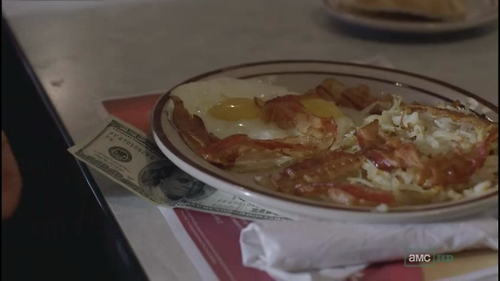
 A friend of mine who is going to school and waitressing on the side messaged me a picture of an $89 food tab with a $100 tip written in. I asked her what she did differently to garner such a lavish reward and she said, “Nothing really, I just did my job.” As we talked, laughingly speculating whether it was a mistake, a “bucket list” checked off, a stalker and other hosts of wildly imaginative scenarios, we finally left it at “one of those special out of nowhere moments that cannot be explained, not fully. It’s the sun peeking out of the clouds, glorious and full, the five dollars you find in your pocket when you’re talking yourself out of that latte, and man who chases you down after you’ve dropped your new phone.
It got me to thinking. Volunteer managers work tirelessly, mainly without praise. We can empathize with the mom who drags herself out of bed at 5 each morning to drive her son to hockey practice, then puts in a full day of work. The Stanley Cup will go to him as she stands, far back in the crowd, her tears borne from sleepless dreams.
But then, there’s the $100 tip. It comes when you least expect it, but need it most. A volunteer wins an award and someone thanks you for mentoring that volunteer. A project that took you years to finally iron out takes off and someone claps you on the back. You’re at a general assembly and something you initiated years ago is highlighted and the speaker finds you in the crowd and says, “you started that way back, didn’t you?”
Or, a volunteer phones you to tell you that he broke through to a client that everyone wanted to help but couldn’t seem to find the right phrase or the perfect moment.
Why does that moment show up when we’ve just told ourselves that we could make more money with less work selling jewelry? Why does it seem to know exactly what we need when we need it? And how often do we need it?
I’m always struck by how volunteer managers are not driven by praise or someone else’s definition of accomplishment. It seems our measure of success lies internally from the instinctive knowledge that accompanies each and every volunteer assignment. Although “big” accomplishments are nice, we revel in the day to day small accomplishments of each and every volunteer. It’s like standing on a bluff and looking at the beauty of the forest below. It takes each tree to create the breathtaking scene.
This doesn’t mean that I don’t like getting an unexpected tip now and again. Nope, I love it, and frankly need it as much as the next person. But I also have to realize that I’m not working for $100 tips. I’m working because I know that the forest of things volunteers accomplish mean a lot to the people they are helping. It’s not flashy nor opulent. But then, neither are my expectations.
-Meridian
Volunteer Plain Talk
for today’s leaders of volunteers
-
The $100 Tip
-
The Mulligan Volunteer
 If a Mulligan is a “freebie”, then Phil is my Mulligan volunteer. All right, I actually have more than one, so don’t tell anyone. I keep Phil on the active volunteer list even though he hasn’t done any volunteering for ten years. Yeah, he’s active only in my mind. Why do I hold on to him?
Well, let me tell you about Phil. I have known Phil now for oh, about 17 years. He came to volunteer when I was just an idealistic blob of volunteer coordinator tissue to be molded by good old-fashioned experience and opinionated volunteers. I was hopeful, scared and curious all at the same time. But I digress.
When I first met Phil, he was an old pro at volunteering. A retired executive, Phil had smarts, energy and that electric smile. I leaned on Phil a bunch. He took difficult cases. He made me laugh and learn. He once drove 30 miles to bail me out on an assignment. I never, once, heard a negative breath come out of that man. Inspirational? I’ll put him up against Gandhi in the Inspiration Olympics. Caring? Let him get in the Care ring with Mother Teresa, cause she better look out for his right hook. Willing? Well, you get the idea.
Phil has been getting older. He’s had to pare down his volunteering activities to about seven. No kidding, that’s how much he does. And, as he weighs what he can do, it all boils down to convenience. At his age, that’s a huge consideration. So, the fact that he can’t really help us out anymore is no reflection on our mission or treatment of him. This, I understand.
But let me tell you the real reason I keep him on the active list. Phil takes in homeless people. Yep, takes him into his home to live. Homeless vets, homeless families, he quietly takes them in to let them get back on their feet. His friends (and even some of our volunteers) have warned him that he could be inviting trouble, but Phil just shrugs. “Someone has to help.”
How do you measure a man like that? I’m always astounded at how Phil lives his life. He’s not going to be featured on any news show. He wouldn’t want it anyway. He’s not going to be elected Mayor of his town. He’d hate that. He lives his life by serving. I was just lucky to have him cross my path for a while. He’ll always be “active” to me.
I think we all need our Mulligan volunteers. In my organization, we have emeritus volunteers. These are volunteers who can’t help anymore, but they are invited to every function we have. They’ve earned it. Phil earned it the first week he volunteered. I think of so many of them, who give their all and when they can’t anymore, have to bow out. For the sake of my own soul, I cannot let them fade away. They love to teach others, speak to orientations, mentor newbies, write policy and mainly just chat. Although the chatting part takes a lot of precious time, after a conversation with one of them, I always end up feeling like I’m home. And because I’ve been doing this so long, I fear that no one else will remember. I sense these valuable volunteers slipping away like forgotten stories never written down.
I think of all the phone calls I need to make and it’s overwhelming. But I have to find the time and energy. If Phil can open his home to homeless strangers, I can certainly open my heart to emeritus volunteers. They are a as much a part of volunteering as the fresh face. I can’t let them feel anything but honored and never forgotten.
And though I won’t get any productivity out of the time spent reconnecting with emeritus volunteers, I know it is the right thing to do. And how much of our jobs is about doing the right thing?
I think I’ll start with Phil.
-Meridian -
Volunteering: Well-being Gained or Brought?
 Jess is a petite brunette who brings a tranquil aura to her volunteering. She is positive, sensitive and gracious. That is, until a few weeks ago. I noticed something slightly askew when she complained about not having enough forms to fill out. She seemed irritated and preoccupied. I caught her a week later staring vacantly into space, and when spoken to, uninterested in the conversation. I had to ask her what was wrong and she reluctantly confided that her son just entered drug rehab. Ahhh, of course. Personal problems push aside tranquility like a schoolyard bully with the new kid.
Jess just wasn’t here, not 100%, and I suspect not even 50%. So, how does volunteering fit in with Jess’ definition of well-being?
As I pondered Jess’ circumstance and wondered if her volunteering gave her some sort of welcome distraction or if it just crowded her thoughts, I started thinking about how we “sell” volunteering by talking about how good it is for the participants. This caused me to reflect on the thousands of conversations with volunteers about their personal circumstances. It occurred to me that the vast majority of volunteers came with well-being already intact. We didn’t create well-being for them. We may have enhanced it, we may have filled a void, added a dimension, helped with grief, paved a way, helped fill time, boosted self-esteem, and maybe even helped mend a heart.But in all those cases, we added, not created. This was a sobering thought for me. I’ve had volunteers who were forced to come, whether by a parent, spouse, school, court or a friend. The door for them is often shut. I think I’m kidding myself if I believe that I can make them a volunteer in spite of their resistance. They have to give just a little.
I remember Jana, a crushed human being. She came out of real desperation. She took over a year to start actually volunteering. Her beginning was spent healing. She made it with real determination. But the point is, she made it because she always wanted to make it and was willing to open up and find how she could. This becomes a tightrope walk for volunteer managers. How do you encourage someone to volunteer without letting them “experiment” on clients? It takes a great deal of patience and time and effort. It can be exhausting, especially since you have so many other volunteers to mentor. I think volunteer managers take personal pride in helping someone through volunteering. But I think, too, we don’t kid ourselves into thinking that volunteering will “fix” anyone.
I think of Antoinette, whose grown son had died 12 years before. She had hoped that by volunteering, she would find a way to fill the hole in her heart. She volunteered for 3 years, and it never happened. She spent the vast majority of her volunteer time talking to me about how her son’s wife was a negligent mother. She hurt, and no amount of volunteering helped. As a matter of fact, very early on in her volunteering, I once found a family member comforting Antoinette. After that, I kept her away from clients. Antoinette’s volunteering was exhausting. Other volunteers asked me why I put up with it. Honestly, I don’t know, but I suspect that somehow, I thought volunteering had this magical quality to it. I’m not so sure anymore.
I’ve had people tell me that volunteering has changed their life. What I think now, is that volunteering opened the door for a part of them that was always there. And if that’s the best we can do, then I’m pretty proud of that. Because it also means that we don’t have to continue to blame ourselves if volunteering doesn’t work for everyone. It’s not a salve or an elixir or a magic pill. It is an act of putting oneself aside to help someone else in their time of need. It takes a certain amount, even if it is miniscule, of well-being to volunteer. We, volunteer managers, can usually find that well-being fiber that allows someone to give selflessly. We love to cultivate it and make it grow.
But we don’t have drawers full of magic pills to hand out. Our drawers are full of the stuff that helps us do our job, like listening skills, discernment, patience and good, sound judgement.
And so, I now think that I’ve always been looking for volunteers to come and be well, not come and get well. Our clients certainly deserve that.
-Meridian -
Go Ahead, Be Brutal
 No, I’m not masochistic. Not even close. My little world is filled with kittens and marshmallows shaped like flowers and moonbeams streaming through the forest. (after all, why else would I be in this job?) But, I also don’t want volunteers to lead me on. You know, tell me that I’m wonderful, that you want to spend time with me, buy me flowers… (oh wait, that’s a different conversation, oops).
But in volunteer management, I court the volunteer, right? I woo them with tales of how wonderful it will be, I walk beside them, listen, adjust, mentor, guide, run interference, and heck, put a bunch of time in, making sure volunteering will work for individual rewards. After all, it’s what volunteers want, right?
So, here, I think is my biggest frustration. I’m thinking of Yancey who had/has such potential. She is young and vibrant and full of compassion. She paid strict attention in training, and bright eyed, couldn’t wait to start. She was mentored by seasoned volunteers, and is truly magical with patients. She writes comprehensive reports. She passed every background test. She is perfect. Well, was. That is, until she just stopped.At first, I assigned Yancey to a volunteer friendly nursing home. Both of the two current volunteers were leaving, but for different reasons. They had built a great relationship with the nursing home staff and together, they introduced Yancey to the patients and the employees. It seemed like a good fit. Yancey was excited. I called her frequently, answered any questions and assumed things were working out.
Two months later, she stopped sending in reports. She did not return my calls, nor did she answer emails. Then an email I sent bounced back at me. Still no word. I checked with the facility and they had not seen her in weeks. I finally, reluctantly removed her name from our list and started searching for another volunteer to take her place.
Was I mad at her for not wanting to volunteer anymore? No. This is, after all, volunteering. Would I judge her for her reason to stop? Absolutely not. If volunteering isn’t adding to someone’s life, they shouldn’t be doing it. Did her stopping ruin my life? C’mon.
But, do I wonder what happened? Would I rather hear the reason even if it means finding out I failed her somehow? Absolutely. How else can I correct a situation or behavior if I don’t know about it? I suspect that Yancey couldn’t fit volunteering into her busy lifestyle, or more accurately, volunteering with those patients wasn’t rewarding enough to fit into her busy lifestyle.I could have told her that this is not my first experience. I’m used to volunteers leaving for so many different reasons. At least for some, I know why. That helps. For others, they float away like an unfinished manuscript dropped in a river. If only….
I may pen her a letter but I truly wish I could have spoken to her and offered her something else or a more flexible schedule. It may have worked. But if not, at least I could have assured her that she was welcome back at any time in the future. I could have told her that she was a good volunteer and that she needn’t be embarrassed about quitting. I suspect that may be the case.
But I don’t know. I wish I did.
-Meridian -
The Robot Volunteer
 If you’re a sci-fi fan or even just a fan of good old science, you know the advances being made in robotics. From the robot vacuum to the automated assembly line, we are seeing robots take over repetitive jobs. They’re everywhere; their little stiff knees are walking them into all aspects of our lives.
So, I know you’ve imagined it. I know you’ve thought about it: The day when they create a robot that takes the place of volunteers. Here’s how it goes. You just program in exactly what task you want the Roboteer to perform and voila! The task is completed with no calling in sick, no lengthy vacations, no listening to it talk about it’s Roboteer life, no questions, and no job that you have to re-do.
You need a Roboteer to mentor a child? Just program it to have a digitally compassionate voice. You need it to help set up an event? Just program it to go all day and never sit down for a glass of water. What about meals on wheels? Well, just program it to not only deliver the meals, but to spend 15 minutes giving the shut-in some socialization. And when the 15 minutes are up? It shuts down on that needy shut-in so that it is never off schedule. What a perfect solution it is. Why not? You wouldn’t have to pay volunteer managers and besides, volunteers are ancillary anyway, right? And they do repetitive jobs, don’t they?
I’m picturing it right now. Somebody (not me, I’ve been laid off) gets a request for a volunteer to visit a patient in a nursing home. That somebody opens the closet, turns the key on a spiffy metal pal with a name like Compassion Nate 3000, and programs the coordinates in. The eyes open and it hums, “I am ready to serve”. Then it’s off to the nursing home, where it zips into the patient’s room. Our patient, Miss Aida, who has been dozing, wakes to see a metallic face peering down. Miss Aida starts screaming as Compassion Nate grabs her wrist and in a soothing electronic voice says “calm down, I am here to serve you” over and over. The patient continues to scream until one of the nursing home robots, Facility Friend 800 comes in and tries to remove Roboteer Compassion Nate. Nate, being the newer model, pulverizes Facility Friend, turning her into scrap. Miss Aida, now traumatized, is subdued by real humans.
Well, if it comes to that, I’d like to offer a suggestion. I’d rather they make cyborg volunteers, you know, those creatures that are a combination of robot and human. And for the human parts, I’d like them to clone some of the volunteers I know. So if they can make the Cybunteer, here’s what I want them to do:
Take a piece of Dottie, who will mentor any new volunteer. She just mentored two yesterday, at different times in different locations. “It’s important.” she says matter of factly.
Add a piece of Bryan, who will drop everything and make sure a dying veteran gets a visit.
Throw in a hunk of Jules, who calmly says “don’t worry, I can handle it.”
Then put in a pinch of Anna, who always asks for detailed instructions, because “I want to do the right thing.”
Maybe take some of Jerry, who although only 16, says, “I need to give back. I really believe we all should.”
Oh, and steal some of Glynn who always arrives on time and asks if she can do anything extra.
But don’t forget Jose, who always fills out his paperwork because “I know this is crucial to your reporting.”
Top it off with a bit of Cara, who simply glows when she is with patients and families.
If they can do that, we may have a suitable substitute for our human volunteers. Gone will be the mistakes, the anxiety of learning a volunteer role, the need for reassurance. Gone will be our jobs making sure that it all runs smoothly. Our great grandchildren will ask, “what’s a volunteer coordinator?”
Ahh, the future. Or maybe, just maybe, volunteering will go the way of kneading pie dough, painting a waterfall on canvas or sewing a quilt. Machines can do those things, but we choose to do them, because they invoke feelings of connection and accomplishment. Which then makes me wonder. Can we separate the task portion of volunteering from the reward portion? Or is volunteering more about breathing in unison with a dying patient to establish that perfect moment of imperfect human connection? I’d like to see Robopanion 200 do that!
-Meridian -
What Do Our Desks Say About Us?
 One of the steady stream of little articles that I just got via my work email (you know all the “stuff” you get, especially from volunteers-old age funnies, dog pictures, IQ tests, heartwarming stories, riddles, cartoons, even the occasional inappropriate joke) was an article on desks. What does your desk say about you? Hmmmmmm. Messy? Maybe you’re too disorganized. Inspirational quotes? Maybe you’re a bit neurotic. Personal odd objects? Maybe you’re a kook. Occasional protein bar wrappers? Maybe you’re a slob. Old mismatched furniture? Maybe you don’t care.
Now here’s the best part. Any of the above can keep you from being taken seriously and being promoted.
Well.
If you were to look at my desk, right now, here’s what you would see:
Two nice chairs for volunteers to sit down on. My chair is ripped. Clutters of papers everywhere. I’m working on all of them and will get to them sometime today, I hope. A few inspirational sayings in frames. For the volunteers of course. Several open calendars. Each one is color coded for different areas and projects. Post it notes in purple. The purple ones were on sale. A really old phone. I’m used to it and it has several lines, picking capabilities and sometimes the speaker phone works. My desktop. Not bad, really. My business cards on a funky doggie card holder given to me by a volunteer. They are at the corner because I knock them over constantly.
Under my desk is: My laptop (Trying to get a newer version). My camera (it actually is now stuck on playback, mainly because it has been dropped multiple times, so I pretty much use my I phone for pictures). A manual for volunteer orientation (I’m constantly scribbling in it as I want to “update” orientation so that it is fresh). A tote bag with pens, papers, brochures, business cards (for that last-minute invite). A pile of papers that don’t fit on the desk (seriously, desks are not big enough). An old, old Rolodex (do you even know what that is?-ok, it’s sentimental, left over from no data base days).
Now, as you scan all this, you may notice on or about the desk and walls:
a small worry doll from Nicaragua, a gift from a volunteer who thinks I worry too much
a dusty dolphin screen saver, a gift from a volunteer who loves anything sea related
a tiny carved coconut monkey, a gift from a patient who carved-he was one of my favorites
a Gemini key chain, a gift from a volunteer whose wife shared my birthday
a watercolor of a… well, I’m not sure what it is but it was a gift from a volunteer’s daughter who loves to paint
a trio of small glass elephants from a volunteer who thinks I forget too many things
a hand painted rock paper weight from a volunteer-flowers adorn one side, on the flip side is a finger flipping me off-our joke
a mug that says, “I survived volunteering”-inside joke from a volunteer
a beautiful inlaid box from India-gift from a volunteer from India who was incredibly inspirational
a picture of a Cocker Spaniel-a volunteer’s beloved dog that died
a “soul saver” pack-a joke gift from my stand-up comedian volunteer-it’s guaranteed to save my soul she says
a Murano glass paperweight from Italy, a gift from a world traveling volunteer-I live vicariously through him a lot
an engraved shell casing from a, well I’m not sure which rifle -a gift from a veterans group who is now volunteering
a USB aromatherapy plug-in, guaranteed to make you calm-gift from an office volunteer-is she trying to say something?If you look into my top desk drawer you will find all the items from volunteers who have died or left, some office supplies, my favorite stapler (the kind that looks like pruning shears). Maybe I’m an office hoarder, I don’t know. And maybe that volunteer sent me that article because he was trying to tell me something. And maybe, yes, I’m a bit neurotic (hey, I’ve got lots on my mind), a tad kooky (Ok, so I sometimes just burst into maniacal laughter), and a great deal disorganized (hey, I can find that form for changing a volunteer’s address-just give me a minute).
Well, maybe I’ll not get that promotion or be looked at as someone going places. Maybe my work space looks like I’m not trying. Or maybe, just maybe, it looks like the daily workload of a volunteer manager.
-Meridian -
Bumping Into Carmen
 The other day I literally bumped into Carmen who has not been volunteering for over a year. I came around the corner at the grocery store and boom, there she was, picking out paper towels. Occasionally I run into former volunteers; those who left because they became ill, those who stopped because life changed, or those who just don’t volunteer anymore. Then there are the ones who left for another reason; mainly we asked them to leave because they did something egregious, like breaking rules, stepping over hard fast boundaries, meddling in financial affairs, yelling at a patient’s family or lying to us about a former run-in with the law. Sadly, there are some folks who just aren’t meant to be a volunteer, at least, not until they figure some things out.
You know how this goes. You’re out in public minding your own business and you suddenly catch a volunteer you don’t want to see (mainly because you don’t want to explain again how sorry you are things didn’t work out) walking amongst the artichokes and you panic and sprint the other way, pretending you see a friend in the distance? That’s how work catches up with you on a Saturday.
Well, Carmen is none of these volunteers. You see, my organization did Carmen wrong and it still pains me to this day. When I bumped into her, I grabbed her with a big smile and we hugged and I told her how much I miss her and how sorry (again) I was. She grinned at me, still a bit wounded and patted my cheek. “It’s ok,” she said, although to me it is not.
Let me tell you a bit about Carmen.
She came over from Cuba during the revolution and made her home in America with her husband, Jose. They are the type of couple who share their “love story” with anyone who cares to hear. He rescued her and brought her family over. She presided over a brood of six children, all now successful adults. Carmen makes mad coconut flan. Jose plays the guitar. They are infectious in a good way. But more than that, Carmen has a rare gift. She looks into your soul when she speaks to you. She tells you she loves you and she means it. You can feel her heart if you get within 20 feet of her. She is a petite woman with a giant presence. Patients loved her.
So, what happened, you ask. Carmen, an artist, wanted to give our organization a painting to put over a bare wall in the lobby. One of our managers told her to “paint whatever you want, I’m sure it will be beautiful.”
So, Carmen painted a lovely abstract depicting a family gathered around a bedside. It had bright colors, and gentle tones. It was a modern take on old fashioned love. It was Carmen.
She brought it in one day when I was not there, not that I could have prevented the hurt that followed, but I like to think I might have made it better somehow. It’s a control thing, I know. Another manager saw Carmen’s painting and deemed it “inappropriate” and told Carmen that we could not possibly hang it in our lobby. I do not think the manager was cold or dismissive, but Carmen was hurt. She took it well, I’m told but went home, talked it over with Jose and called to quit.
Now here’s the problem as I see it. We gave her permission to paint whatever she wanted. In good faith, she accepted the free hand she was given. We set her up, not maliciously, but irresponsibly and for a sensitive soul like Carmen, the rebuff was hurtful.
She tells me that she will be back one day and I believe her. After all, how can you stay away from something you are so incredibly good at? When she does return, everyone will be glad to see her and it will be business as usual.
But, right now, with Carmen gone, I think about all the patients who are not being helped by her. All over a flippant directive and a thoughtless reaction.
I wish I could paint. I’d paint Carmen back into our picture.
-Meridian -
Walt: In Memorium, My Favorite Dance Partner
 Walt died Saturday, after a very long battle with cancer. He was 87. Funny thing is, he volunteered up until about a week ago when he became too weak to get himself out of bed. But before that, he would come in, his clothes hanging off his body like busted balloons. He ended up using a cane and sat down often for longer and longer periods of time. None of that mattered, because he was “working.”
I remember when he first came in seventeen years ago. His wife, Grace, who was a volunteer at the time thought it would be good for him. And so he came to orientation. I noticed in class how his silver hair curled just so over his perfect collar. He listened politely, asked methodical questions while taking copious notes.
Grace informed me that Walt had been a very successful trial lawyer. It showed in his dissecting approach to volunteering. “Give me the facts. Tell me what to do and it’s done.” Trouble was, Walt wanted to work with patients. That’s what his wife did and he wanted to do the “top job.” But patients aren’t cases and working with them is about nuances, not facts, although Walt at first thought that by studying a few facts, he then knew them. Oh, how he struggled and how I struggled with him.
We spent that first year together, doing a sort of schizoid tango, Walt telling me that he wasn’t comfortable, me assuring him that he would eventually get it. Often I thought he would quit and numerous times I ran out of ways to tell him not to. I felt frustrated that I couldn’t find the words to make him comfortable. Other volunteers helped in guiding him, but ultimately he had to find his own comfort. As the first year passed, he began to let go of his authoritarian role and started to sit down next to patients as he talked to them. He began to find pleasure in bringing a cup of coffee and enjoyed the less direct ramblings of life stories.
Our frenzied dance slowed to a waltz and he mixed into the routine like a French vanilla creamer in a perfect cup.
Several years ago, his beloved wife, Grace died. Burdened by grief, he insisted on continuing to volunteer, never sharing his heartache with patients, preferring supportive roles. Year after year his reason to be slowly returned as he immersed himself in helping others. He spent more and more time volunteering, but this time he greedily sat at bedsides. It was right for him, and soon the staff began to know and appreciate his humble spirit. And so Walt became a great volunteer.
At his service, his son said that Walt changed for the better by volunteering and that he got to see a side of his father that was truly inspiring. He voiced his gratitude to the organization for helping his Dad become a better man. There wasn’t a dry eye. See, we all knew things about Walt, things he had chosen in his new humility to share, things like struggles with alcoholism and infidelity. We could only imagine the Walt of old. We knew the deep Walt, the one we watched become a humble servant to others. He was as much a part of us as we were a part of him.
As we left the service, I realized how much I would miss our dance, But then, I pictured Walt dancing with Grace and hoped she would be proud of the man he had become. I know we are.
Cheers Walt. Thank you for showing me that by patient practice, we can all do a mean two-step.
-Meridian -
If You Can’t Thank Me, Don’t Insult Me Too
 Yvette manages volunteers for a specialty hospital in a city with two other competing hospitals. Therefore, her marketing department utilizes volunteers as props, marketing tools and for as many events as Yvette can round them up for. Marketing looks to Yvette’s volunteers for continuous help in drumming up community interest and business.
Recently, one annual major event was under the direction of a new fresh face in the marketing department. She had many novel ideas and requested twice the number of volunteers from years past. Yvette obliged, working longer hours to get the extra volunteers in to help on the day of this signature festival.
Everything went relatively smoothly. Yvette was there that day, making sure the volunteers had someone to do all the “grunt work” so that they could excel.The next day, Yvette called every one of the volunteers who came out, thanking them personally for their participation and asking for any feedback that might help for the next time. Volunteers were happy to give input and Yvette was proud of their team spirit and constructive ideas, which she turned over to that new fresh face.
Several weeks passed. A hospital executive stopped by one morning and pointedly asked Yvette if the young marketing staff member had had a wrap up meeting for the volunteers. Yvette said no and tried to point out that she had already contacted everyone, but the aggravated executive reminded her that in years past, there was always a follow up meeting for volunteers. Angrily, the executive let his guard down and complained about the multiple shortcomings of this new marketing person. Yvette listened politely, feeling uncomfortable the entire time.
Yvette did not think much about that conversation until another two weeks had passed and she picked up the phone. Her volunteer, Joy called to inquire about an organiztional thank you note with a five dollar Walmart card attached. “Who’s idea was that?” Joy complained. “What are they thinking? What am I going to do with five dollars?” Before Yvette could digest what was being said, Joy continued. “Its an insult. I didn’t volunteer for five dollars. Is that what my time is worth? Id rather they did nothing than do this.”
Yvette received multiple calls voicing the same sentiment. “What does management think our time is worth?” was the most voiced complaint. Yvette deftly fielded the calls, soothed nerves and assured everyone that the gift card was not meant to be an insult.
Yvette spent many an hour doing damage control. She told her supervisor about the situation and her supervisor shrugged and said, “yes, they do stupid things,” so Yvette was pretty much on her own. She knew her supervisor would not “make waves” with a favored department. Once again, the care and feeding of the volunteers was left solely to her.What exactly, is a volunteer’s time worth? Five dollars, ten dollars, a luncheon, a gift card to Walmart, an occasional nomination? What do volunteers really want as appreciation? A pat on the head, a hastily scribbled speech, a once a year dinner?
Do volunteers notice they are not part of strategic planning for the very organization they work tirelessly for? Does each hollow afterthought combine to make this perception worse? Do they truly “know their place?”
In the fantasy world, when the cultivating of volunteers becomes everyone’s job, then a five dollar gift certificate would not be salt on an already gaping wound. Do you want to know the one sentence that Yvette heard from all the volunteers she spoke to?
“I know YOU appreciate me, dear.”
-Meridian -
Excalibur, the Makin It Look Easy Sword
 Those words, “make it look easy.” Are they a compliment, or a curse? In the dictionary of English phrases, is there a picture of a volunteer manager next to the phrase, ” but you make it look easy”? How do you respond to that-a smile, a shrug, a muttered, “gee that’s what I’ve always wanted to hear?” Is making it look easy a lethal double-edged sword? How do you wield such a mighty weapon?
Rhonda is a volunteer coordinator whose organization went through some major revamping and as they looked for ways to cut costs, they called in a professional consultant. This consultant combed through the status quo, looking at each aspect of the organization’s ability to do more with less. When the consultant, Eric, spent a four hour stint with Rhonda, he shook his head. “I can’t believe you do all this in these conditions,” he said. “you really make it look easy from the notes I’ve been given.”
His notes consisted of statistics about the volunteer department. Rhonda supervizes 118 volunteers, who pretty much run a thrift store six days a week. The volunteers also sit at fairs, stuff envelopes, fill in for a lunching receptionist, file reports and make calls. Rhonda’s phone rings non-stop. Volunteers filter in and out of her office and she pretty much oversees them all. Rhonda sometimes fills in for volunteers when they call out sick. She is swamped. After four hours, Eric told her that she was one of the busiest staff members in her organization. “But,” he mused, “no one knows how hard you work.”
Rhonda did not know how to respond. Frankly, she was too overwhelmed to spend much time thinking about how to use her double edged sword.Although Rhonda would like more help, she struggles with how to present her challenges. “Do I talk about the difficulties? Will I harm the image of the volunteers if I honestly speak about those that are a challenge? If I complain, will they just do away with volunteers all together? Do I just burn myself out and let the next volunteer coordinator figure it out?”
As volunteer managers work hard behind the scenes and let the praise go to the volunteers, do we not cut ourselves on the back swing with our mighty sword? By making it look so easy, what are we doing to our profession? Are we contributing to the perception that managing volunteers is no more than hosting tea parties and chatting with willing participants?
Rhonda is too tired to do much about her situation. I suspect she is not alone. Hard, hard work can lead to exhaustion and eventually burn-out. Our jobs are rewarding, complex and difficult. We should not be afraid to admit this.
Otherwise, our arms will be too tired to lift that hulking double edged sword.
-Meridian







 volunteerplaintalk