Tag: changing organization

  • “We want to work with staff who have drunk the Kool-Aid,” an interview with Laura Rundell, CVA


    An Interview with Laura Rundell, CVA
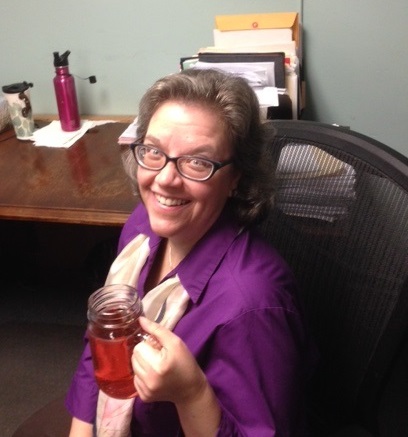
    Laura Rundell, CVA with a mug of Kool-Aid


    Recently I had the pleasure in chatting with Laura Rundell, CVA, the Volunteer Coordinator at LifeBridge Community Services in Bridgeport, Connecticut.

    VPT: Laura, tell us a little bit about your background in the volunteer management sector.

    L: I’ve been involved in the volunteer sector since 1999.  During grad school where I received my Master’s in History, I worked part-time for the Park service. I have also worked for several other organizations, including the Spellman Museum of Stamps and Postal History in Weston, Massachusetts, the Phipps Conservatory in Pittsburgh. Pennsylvania and I am currently the Volunteer Coordinator at Life Bridge Community Services in Bridgeport, Connecticut.

    VPT: And how long have you been at Life Bridge?

    L: I’ve been here since 2014.

    VPT: What brought you to volunteer services?

    L: It was at the Phipps Conservatory that I began to fall in love with volunteer management. I had come from a smaller organization to Phipps and found out they had over 500 names on their volunteer list, so the scope changed dramatically.

    VPT: And how did you come to be at Life Bridge?

    L: I moved to Connecticut and landed at Life Bridge in 2014.

    VPT: You’ve had a number of experiences thus far. What have they taught you?

    L: Not all my experiences were perfect. An already challenging job is much harder when the goals for the program and the roles for volunteers are less defined.

    I appreciate where I am as a volunteer manager now and loved my time at Phipps because they support the volunteer program and there are clear expectations and specific roles for volunteers.

    VPT: Can you give us an example?

    L: Yes. When I was invited for an interview at Life Bridge, I noted that the person who would be my supervisor had the CVA credential. It was clear they had put thought into their volunteer program and knew what it would take to make it successful. In my third interview, I was sitting at a table with all of the staff who would utilize volunteers in their programs. I was really impressed that they put so much thought and effort into recruiting for this position and knew then it was an organization I really wanted to work for. I was delighted to be offered the position.

    VPT: That is impressive.

    L: And, just recently, our Executive Director asked for a volunteer to be involved in researching best practices for a project. That shows commitment to engaging volunteer help at all levels of our organization.

    VPT: I’ve noticed you are weighing in on articles and blog posts more and more and that is great; we need more voices. What do you feel is the future of volunteer management?

    L: I see so many non-profits stretched thin and need more volunteers to take on a greater role.

    VPT: That’s a good thing for increased volunteer participation, right?

    L:  Yes it sure is, but I think the number one challenge for most volunteer coordinators is recruitment. It will be an even bigger challenge moving forward to keep filling those roles with qualified and committed volunteers. It means we all have to “step up our game”.

    VPT: Are you seeing changes in the volunteers who are stepping forward?

    L: There are more episodic volunteers, more students who are seeking career experience, and more individuals in the midst of a career change seeking resume enhancers and references. There are also more opportunities to recruit corporate and college groups.

    VPT: Are there inherent challenges with episodic volunteers?

    L:  We have had some really great short-term volunteers. Not every role is appropriate for someone who may only be with us a short time though. Some roles require clearances that can take 4 weeks to get back, so we really hope the person in that role can stay with us for at least a year. We’ve also gotten some really great college and corporate groups. However, walking that balance between offering the flexibility large groups may require and making it a meaningful opportunity that adds value to the organization is a challenge.

    VPT: What have you discovered about recruiting volunteers that you can share with us?

    L: You have to respond promptly when an applicant contacts you. When I relocated to Pittsburgh from Massachusetts, I contacted several organizations to volunteer and never got a return call. That was really frustrating.  After that first contact though, the applicant has to be invested — it has to be their choice to move forward. I have learned you can waste a lot of time spinning your wheels if an applicant doesn’t respond to a request to meet with you, doesn’t show up for an appointment or doesn’t follow up afterwards.

    VPT: Changing direction, do you feel as though volunteer managers are starting to build a community with one another?

    L: By the time I became a CVA, I was linked to a community of volunteer managers. But, often, a volunteer manager is a department of one and is isolated. When I was in Pittsburgh, I reached out to similar volunteer organizations and we volunteer managers would get together a couple of times a year to have lunch and share best practices. Here in Connecticut, we have Volunteer Square and they have done a wonderful job in creating a Professional Development Series for volunteer managers. I’m honored to serve on their advisory board.

    VPT: So, there are some steps being taken.

    L:  You know there is an Association of Fundraising Professionals (www.afpnet.org/) for those who are in the fundraising end but we have no association for volunteer managers.  I wish we had one nationwide organization. Not everyone can attend a national conference, but if we had a national association, we could have branches in our areas that we could connect with and could set national standards for our profession.

    VPT: What do you see as future challenges for our profession?

    L: As non-profit funding continues to decline, there will be more and more dependence on volunteer programs to pick up the slack and organizations will be utilizing volunteer services more. As everyone scrambles for a piece of the ever-shrinking pie, we need to have a unified voice instead of competing against one another for limited resources. For instance, if we all required that courts who refer mandated community service applicants to our agencies provide the funding necessary to fully vet, train and supervise these applicants, we might make some real changes in how court mandated service is assigned nationally.

    VPT: What advice do you have for new volunteer managers?

    L: After I moved to Connecticut, I remember talking to a volunteer I worked with in Pittsburgh and the volunteer said, “We want to work with staff who have drunk the Kool Aid.” If staff is unhappy, or does not believe in the work, then volunteers pick up on that. If an agency has a lot of turnover and has difficulty retaining paid staff, than recruiting and retaining volunteers may be an uphill battle.

    L: I would also say, make sure you connect with other volunteer managers in your area. I have learned so much from my colleagues. Just an hour spent talking with another volunteer coordinator over lunch or coffee can be invaluable. You can learn “It’s not just me…others have this problem too” Also, obtaining the CVA (certified volunteer administrator) is very helpful. I feel like the CVA credential has given me more of a standing in my organization. The CVA gives me ethical standards to adhere to and by virtue of my having it, my volunteer program is elevated.

    L: Also, you need to have rules and policies in place and stick to them. If someone wants you to waive the requirements for a new volunteer, remember this: There are bad actors who seek out vulnerable populations. This is why we don’t bend the rules. Make sure you have a volunteer manual, written policies, and an agreement letter for the volunteer to sign.

    VPT: What makes a difference for you?

    L:  I feel blessed to do what I do. Yes, there are challenges, yes there are frustrations, but a well-run volunteer program can leverage the passion and talent of volunteers.

    L:  I’ll leave you with my favorite story about a volunteer. Before I was at Phipps, I was in charge of an exhibition opening of student art work in Pittsburgh. The students, their parents and the artist they worked with were all on their way, along with a volunteer to help at the reception. Right before the event, we had a severe storm warning and most of our staff left the building. Meanwhile, our volunteer drove through the storm to be there. The kids and their parents all had a great time at the exhibition opening because the volunteer made a commitment and the storm wasn’t going to stop her from coming! That is just one of the stories that keeps me motivated and gets me up in the morning.

    VPT: Thank you Laura for your insights and for sharing with us today. We look forward to hearing more of your voice in the volunteer management arena.



  • Is Volunteer Management a Science?

    Is Volunteer Management a Science

    In 1959, novelist and scientist, C. P. Snow gave a lecture entitled  The Two Cultures. Essentially Snow argued that the humanities and science were split into opposing cultures, each one not understanding the other.

    Most of us would probably categorize volunteer management as a humanity.  In the post  The Volunteer Investor I likened volunteers to humanity investors.  But while humanity is at the heart of volunteering, isn’t the management of volunteers a science? And, by treating it as a science, does that automatically remove the humanity?

    Well, what if we look at other science based professions that serve humanity?

    • Does the researcher seeking a cure for cancer not dream about the potential millions of people saved?
    • Does the engineer developing a new prosthetic not imagine the first time an amputee puts on that device and walks?
    • Does a safety engineer never think about the children she may keep safe?

    Re-framing volunteer management as a science will not remove the humanity. Instead, it will elevate the skills volunteer managers possess. 

    So, then how can we re-frame volunteer management to reflect the science of it? Do we stop talking about the heartfelt work volunteers do? Do we become invested in cold stats? Or, can we do both? Can we still convey the humanity while highlighting the precise steps taken to achieve outcomes?

    When we, leaders of volunteers separate the volunteers’ incredible outcomes from the systematic steps needed to achieve those outcomes, then we can begin to identify and speak to the science of volunteer management.

    How? Well, we can, as volunteer management professionals begin to:

    • Temper human stories with solution stories and the steps necessary to achieve results
    • Speak in management language when discussing volunteer engagement and challenges
    • Remove emotion when dealing with difficult situations and instead, utilize scientific methods such as observation, gathering of data, testing and logical thinking to solve problems
    • Re-evaluate programs based on priorities, time involved and solutions achieved
    • Re-think in terms of humanely leading volunteers, but managing projects
    • Tout the science of volunteer engagement in terms of strategies, social metrics and road-maps
    • Categorize the skills used to engage volunteers, such as motivating, knowledgeable delegating (not just delegation because anybody can delegate), problem solving, results orienting, relationship building, strategical planning, innovating and big picture thinking
    • Chronicle the methodical steps necessary to engage volunteers
    • Create data that leads to goals, such as maps, diagrams etc
    • Experiment and innovate

    The perception that we coordinate volunteers who require nothing more than a phone call negates the methods required to fully engage these investors in our missions.

    Do we do ourselves a disservice when we blur the lines between the hearts of our volunteers and the hard work we do? Do we sometimes become so emotionally invested in our volunteers’ humanity that we lose our management voices?

    The results of volunteer involvement is humanity’s crowning achievement but the skills, knowledge and sheer hard work is the science of getting to those results.

    If we project our profession as a science with a humanity outcome, we can then elevate the precise, nuanced methodology required to achieve our humanitarian goals.

    Lab coat anyone?

    -Meridian


  • Innovation and Sustainable Volunteering

    Innovation and Sustainable Volunteering

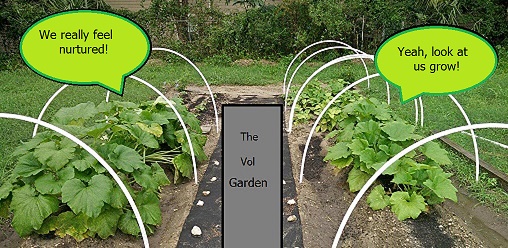
    What would sustainable volunteering look like? Besides many of the innovations already being implemented, what would nurturing a volunteer garden shared within our communities involve? Is this a 180 degree leap or is it more of a naturally occurring shift that we have been moving towards all along? Are we, volunteer managers coming together in an organic movement to help one another and therefore all volunteers and all good work?

    What can we try? Will this take extra work, headache and heartache to achieve? Just as in gardening, there are necessary steps to achieve a bountiful crop.

    I’m going to list some ideas in a season of planting using the gardening metaphor.

    TILLING THE SOIL (preparing to garden):

    • Make a list of agencies and organizations in your area that utilize volunteers and reach out to introduce yourself to each leader of volunteers
    • Join any clearinghouse agencies such as United Way, and Volunteer Centres in your area
    • Join a DOVIA (Directors Of Volunteers In Agencies) or a similar group in your area or if none exists, reach out to another volunteer manager and start a peer group
    • Create a list serve or simple newsletter to share with your fellow volunteer managers in your locale

    PLANTING (seeding the way):

    • Share your volunteer opportunities with other volunteer managers (at your peer group and by list serve) and ask for theirs-regularly check in to gauge the fluidity of roles, etc.
    • Discuss volunteers’ skills and interests at peer group meetings. Offer other volunteer managers the opportunity to contact one of your volunteers if their mission or opportunity more closely aligns with your volunteer’s passion
    • Share background checks if you are able in order to cut costs
    • Pair up with other organizations to conduct a visible volunteer project and involve local media to cover the event
    • Create volunteer educational conferences with other volunteer managers to benefit all volunteers in area-share space, costs of snacks or printed materials creating more bang for the buck
    • Share cost of a national speaker with other volunteer programs and invite all volunteers in area-have plenty of information on volunteering opportunities available

    FEEDING (nurturing the collective):

    • Bring your volunteers to another organization on Make a Difference Day or another day of service and help that organization-build that camaraderie, use positive press to show cooperation:   Days of service include:
    • Good Deeds Day – April 15, 2018 (USA)
    • National Volunteer Week – April 15-22, 2018 (USA)
    • 911 Day of Service – September 11 (USA)
    • Make a Difference Day – October 28, 2017 (USA)
    • Family Volunteer Day – November 18, 2017 (USA)
    • MLK Day of Service – January 15, 2018 (USA)
    • Volunteers’ Week -June 1-7 (UK)
    • National Volunteer Week -21-27 May 2018 (Australia)
    • National Volunteer Week -April 15-21 2018 (Canada)
    • International Volunteer Day -5 December 2017 (UN)
    • National Volunteer Week -18-24 June 2017(2018 not published yet) (New Zealand)
    • Create a summer circle of volunteering for out of school students so they can sample the various opportunities in your area and participate in a well-rounded service learning experience
    • Conduct partner training sessions with other organizations
    • Partner with another organization to create a group of volunteers to cross-volunteer (a really rudimentary example – library volunteers + homeless shelter volunteers = a reading program for school aged children in the shelter. Library volunteers finding appropriate books, shelter volunteers utilizing them and perhaps some library volunteers venturing out to read to the children while shelter volunteers conduct a fundraiser for the library-and no this isn’t simple or easy but it can be a start)
    • Mentor new volunteer coordinators in your area
    • Offer your highly seasoned and trained volunteers to train/mentor volunteers at another organization
    • Partner with other volunteer managers to create a presentation that educates organizational staff on the nuances of volunteer engagement-allow all volunteer managers in your area to utilize
    • Create partnership recruitment efforts by sharing speaking engagements

    Future Bounty (what might come of this?)

    • Increased satisfaction and sustainability of volunteers
    • More flexible options for prospective volunteers
    • Sharing of best practices between leaders of volunteers
    • The showcasing of cooperation between non-profit agencies
    • Increased volunteer involvement in organizational planning and innovations
    • More good work accomplished within communities
    • Cooperative think tanks springing up
    • Less stress on volunteer managers

    We, volunteer managers are unique, innovative and forward thinking. Why wouldn’t we bond with one another and forge a new, co-operative garden in order to create sustainable volunteerism?

    Besides, we are generous and big picture oriented by nature. Let’s co-op.

    -Meridian


  • Just Put That in My Bag

    junk drawer“Freebies,” volunteer coordinator Sara lamented. “Our staff thinks of volunteers as freebies. They think I have a bag full of volunteers and when one is needed, I just reach in and pull off the wrapper.” Sara continued, ” I mean, don’t get me wrong, I love freebies, like the BOGOs (buy one get one) or get a free cruise if you listen to our sales pitch or a free flashlight to the first 100 customers. Freebies are great, but they’re just, well freebies. I didn’t pay for them, and maybe I didn’t want them in the first place. I certainly don’t value them that much.”
    That conversation got me to thinking about how we view volunteers in our organizations. Sara is right. There is very little investment on our part in freebies. Someone hands you something in the mall or at a conference. All you had to do was show up, therefore, you place little value on that item, because, after all, it’s free.
    So how do organizations view volunteers in this context? Do organizations view volunteers as the junk in the bottom of the plastic bag after attending a conference? You know, the free trinkets handed out like the assortment of band-aid holders, wet wipes, and lip balm which is all just more stuff to deal with in a busy life, stuff that has no real meaning except to advertize a logo?
    Are volunteers the rubber jar opener that we throw in the junk drawer until we might need it one day? And, if so, how do we make volunteers the substance of an organization and not the free stuff? Let’s take conferences and symposiums for example. There are conferences and symposiums which are geared specifically towards the volunteer sector. That’s really nice, but who is attending these symposiums? I doubt very many administrators of non-profits are attending. We, the volunteer managers are attending.
    Our own volunteer themed symposiums are pretty much like the lip balms and band-aid holders holding their own symposiums year after year. “Yeah, how do we make a better lip balm, maybe one with more sunscreen?” “Maybe we should make the band-aid holders green instead of yellow this year.” And yet, the lip balm and band-aid holders end up in the bottom of the bag once again. Do symposiums not geared solely towards volunteerism have substantive volunteer components? Would a conference on health actually feature volunteers presenting a workshop? Horrors, volunteers aren’t experts, are they now?
    When will volunteers and volunteerism be truly integrated into the missions and not just a freebie afterthought? When will the “free stuff”(volunteers) be more than fluff?
    Well, I was chatting with a retired business executive, Charles, who is married to a friend of mine. He politely listened to me lament about the “silo” of volunteering, taking in my ramblings as he slowly raised an eyebrow at my frustration. ” You know, we were in the business of selling our products and all things worked towards that end,” he said. “You want to sell your product, AKA, volunteers, to the rest of your team and to the community around you. Some of the ideas we used to sell products might work for you too.” He went on, “businesses give out free samples to high influence customers, newspapers, bloggers and reviewers in hopes of getting a positive review or testimonial. Those positive reviews are proven to work, to create buzz, to make people want your product. People trust reviews by others who have actually taken the time to do a review. Maybe you can do the same with volunteer services and staff.”
    “I have no idea how to do that,” I admitted.
    “Look,” he said, “you want everyone in your organization to appreciate all the things volunteers do for your clients. But, does staff actually see or hear about all these great things? Do they engage with all the volunteers? Are they aware of how much volunteers help, aside from some meaningless statistics?”
    “No,” I said, “they don’t.” And, I thought, they don’t want to sit through some lecture about all the great things volunteers are doing. So, how to engage them, show them? Well, there are volunteer managers out there doing some pretty creative things.
    A volunteer coordinator I know says he has pictures of his volunteers in a book for staff and visitors to look at and get to know each volunteer as a person. He calls the book, “Volunteer Team Members.”
    Another volunteer coordinator polls her clients for testimonials to showcase how much volunteer involvement means to the people receiving it. She shares these testimonials at every staff meeting.
    Another coordinator publishes a monthly menu of volunteer services so that staff can pick from the different offerings and subsequently get to know all the great things volunteers are doing.
    A tech savvy coordinator has a twitter hashtag specifically for his volunteers to share their amazing work. He encourages all staff to check in on the hashtag.
    And yet another volunteer manager takes videos of volunteers telling stories about their favorite volunteer memory. These are available to staff on a private channel.
    Some coordinators publish newsletters, make scrapbooks and invite volunteers into meetings to share their stories.
    Others ask staff to help with training, so that staff has a “stake” in volunteers from the beginning.
    All these great examples are helping to make some headway into integrating volunteers as productive members of their teams. Truth be told, we have an uphill battle here. How can the lip balm and band-aid holder become more than “junk drawer bottom dwellers?” When non-profit staff think of volunteers as equal members of the team.
    When will I know that’s happened?
    When I walk into a mainstream conference and see a session given by volunteers.
    -Meridian

  • The Song of the Weathered Explorer

    newell-convers-wyeth-the-rakish-brigantine-sea-captain-in-stormVolunteer Appreciation week has always been a chance to reconnect with volunteers. There are those you see every day, those you talk to on the phone weekly, and those you only see at meetings. Each volunteer takes the right amount of interaction, praise and mental follow-up. Don’t think for a moment that an event is easy, so if after an event your head is swimming, that’s normal. Events take finesse and each volunteer that comes up to you takes a minute or two of intense volunteer retention. It’s worth every moment but it is exhausting.

    There are a few volunteers who do not attend meetings, and they prefer to bob out there on the volunteering sea, wind in face, their hands skillfully steering them through storm and calm. They take little to no management interference for they have impeccable motivation, mad skills and they’ve circumnavigated the globe of helping far longer than they’ve been managed. Open their brains and a tide of experience comes gushing out. They are the historians, the pioneers, the explorers who have led the way in your organization.
    I encountered Jenna at an event during volunteer appreciation week. I hadn’t seen her in quite some time so I was thrilled that she came. Jenna and I go way, way back. She was one of the first volunteers I recruited to work at a hospice house about 20 years ago. Jenna, a British transplant, married an American man and spent time tutoring local high school students in the fine art of composition. I even got to attend her swearing-in ceremony when she became a citizen. Back in the day, we roamed the halls of the house, imagining volunteer programs while caring for patients as we went. It was new territory to discover and Jenna was fired up to be in the middle of something unique and innovative.
    Several years later, Jenna moved and she ended up visiting nursing homes in her new area. Another volunteer coordinator was now involved with Jenna and occasionally I talked to her new manager, Shelby, about how Jenna was doing.
    “Fine, just fine,” Shelby would always say. “She pretty much keeps to herself though. I don’t have a lot of dealings with her. Sometimes I’m just happy if she comes to a meeting. But she does turn in her paperwork and the patients love her.”
    Hmmmm. These conversations never felt like we were speaking about Jenna, at least not the Jenna I knew. But I always requested my hello be passed on to her.
    So, during volunteer appreciation week, Jenna surprised me. She snuck up behind me as I was checking people in and popped me on the back. “Jenna!” I yelled and gave her a big hug. “Wow, I didn’t know you were coming!”
    “I was in town,” she said, and smiled. “I figured you’d be here and I wanted to say hi.”
    “I’m so glad you did,” I returned, genuinely pleased to see her.
    Since the event took up time and effort, Jenna sat with some long-term volunteers that she knew. But after the event was over, she hung around and helped clean up.
    “So, how’s it going?” I asked. “I heard you were visiting nursing homes. That must be pretty awesome for you.” I said as I crumbled up paper tablecloths.
    “Yeah, it’s ok,” she offered, a bit half heartedly. “I love the patients, don’t get me wrong.” She stared at a candy dish.
    “Then what is it?” I asked putting aside my cleaning.
    “It isn’t, it just isn’t the same.” she said. “Don’t you miss those days when we first started? How the atmosphere was so exciting and we were the first ones to create so many things? All of us, staff and volunteers, we were in it together, we had this incredible chemistry and we did amazing work.” She traced the top of the dish. “I miss it. It just isn’t the same. I feel so, so ordinary.”
    I put my hand on her back. “You, my friend, are an amazing, wonderful volunteer. We never could have done half the things we did without your vision and enthusiasm. Sure, I miss it. I miss you, too.”
    She looked at me and I wondered where explorers go after they’ve discovered whatever it was they were looking for.
    “Jenna,” I offered, “things have changed. Goodness knows, they’ve changed a lot and we couldn’t do today what we did back then. But you have so much to offer. Look at all you’ve done. That Jenna is still there. Still waiting to reconnect and imagine.”
    “I think I might want to try some different volunteering.” She said it almost as a question, as though she might be disloyal.
    She looked like a little girl who has been down in the claustrophobic cabin of the boat, itching to get her hands on the wheel and steer somewhere exciting.
    “You should. Go for it, you don’t have to cling to this. Go out and find a fledgling volunteer group and do amazing things.”
    She gave me a hug. “Thank you. And thank you for understanding.” As she popped a chocolate in her mouth she asked, “you do feel it, don’t you? It’s not the same, right? I’m not crazy.”
    “No, you are most certainly not crazy. I feel it. But things never remain the same. And neither do we. So, grow, my friend and don’t look back.”
    With that she walked out. I’m certain she will find another spot to volunteer. Whether she can recapture the excitement of newness and innovation remains to be seen.
    So, until I hear from her, I will just picture her, spray in face, hands on the wheel, steering for the horizon and whatever new territory lies out there.
    -Meridian

  • Mother, May I?

    catapultWhen Eve was approached by a college looking to extend a grant to a volunteer group, she was ecstatic. Working for an organization that conducts health screenings in impoverished places, she already knew that her medical volunteers needed updated equipment. Excitedly, she described the grant during her next departmental volunteer manager meeting. Everyone read the guidelines and offered verbiage for procuring the funds. Eve submitted the grant and the college announced her organization as their grant recipient.
    Buoyed, she came into work the next Monday to find an invitation for a mandatory meeting with her boss and the fund-raising arm of the organization. Puzzled, she grabbed a notepad and hurried to the meeting. There, she was harshly reprimanded for “going out on her own” and “not going through the proper channels” to procure the grant. She was told in no uncertain terms that finding funds was not part of her job description and the next time she did anything like that, she would be written up. She doesn’t remember anything said about creativity, initiative or thinking outside the box.
    Eve was devastated. She thought that by telling her boss, she had by proxy, informed everyone she needed to. Her boss thought that Eve had already informed the proper folks in the fund-raising department.
    Eve felt betrayed. She couldn’t fathom how something so wonderful could be viewed as something negative, so she sought out her good friend and mentor, Rosalyn, who used to work in her department but retired a year ago. Rosalyn listened and nodded. “I’m really sorry that happened to you,” she said, “but I’m not surprised. It happened to me a long time ago and I learned a valuable lesson from it. When you’re dealing with non-profit types, you not only have to follow all the rules, you have to understand that these are people who deal in feelings everyday. And so it is natural that their own feelings come into play.”
    Eve was skeptical. “You’re saying that I hurt their feelings?”
    “In a sense. You hurt their feelings, usurped their power, stepped into their area, you name it, that’s how they perceived it.”
    “But I did something to help. They weren’t going to write for that grant.”
    “Doesn’t matter. You’ve got to realize, they are under a lot of pressure. Your organization can’t function without donations.”
    “But,” Eve interjected, “we can’t run without volunteers.”
    “True, but if fund-raisers started recruiting volunteers, how would you feel? Would you feel like they are helping you?”
    “No,” Eve admitted. “I’d be worried about my job.”
    “So, can you see how they felt?”
    “I guess so,” Eve said. “But then, that means if I find something outside of my job description that would actually help my organization, I just have to pass it up?”
    “No, not necessarily. You just have to adopt the Mother, May I principle.”
    “I think I know where this is going.”
    “Yes, you do, and that’s how I survived my tenure with all the other departments. Let me tell you a typical path I took to get a project going.”
    “Please, because you started so many projects there.”
    “Well, let’s say I was approached by a student group wanting to volunteer to do some media publicity for us. This would be my plan of action. First, I would meet with the students and thoroughly get all their intentions on paper. I would make sure that the verbiage I used with them always included maybe, perhaps, we’ll see, if it can be done, I make no promises, etc. Then I would go to my boss and explain the idea and ask permission to go higher up. I would follow that conversation with an email outlining what we discussed. I then would make an appointment with the proper decision maker, invite my boss to the meeting and present an outline of the project. I would include all the benefits to all the departments as well. Now here’s the tricky part. In that meeting, I would use the verbiage, if you think, we could use your buy in, we need your help to succeed, and I would offer to let them consider it and get back with me. I would tell them that they would be informed every step of the way and could pull the plug at any time.”
    “Mother, May I.”
    “Yes, it worked most of the time. It’s really just common courtesy blended with concrete and clear information. That’s the key.”
    “But it’s so time-consuming, so, so, demeaning. I mean, don’t they trust me?”
    “That has nothing to do with it. They need to know what is going on at all times. Secretly, I think they were glad that I was doing all the legwork for these projects. The more I kept them informed, the more autonomy I had. It was a win-win for everyone.”
    “But didn’t you hate babying all those people?”
    “Aha! No, because you have to look at it as approaching them in the way that works for them. You still get what you set out to get. Don’t you already do that with volunteers?”
    “Yeah, I guess so.”
    “I know it’s time-consuming and it takes an attitude of humility. If you run up to them and shout, ‘hey, I’ve got the best idea ever and you should thank me for bringing it up,’ you’re not going to gather many supporters. And going it alone, even when you have something wonderful to offer can create friction. I once created an event on my own time that benefited the organization. No one was thrilled, in fact they were peeved. I was viewed as trying to bring down their event castle so to speak, so no help or acknowledgement came my way. Be humble and mindful of their areas of power. It’s like you are knocking on the door of their castle instead of getting out the catapult to bust in. That way, they open the door and invite you in. There’s no benefit to making enemies of the people you work with, right?”
    “Uh huh. Mother, May I. Knock, and ask.”
    “Oh, and one other thing. Bring flowers.”
    -Meridian

  • The Organization of Dorian Gray

    dorian grayIt is painful to hear the words. “I don’t recognize my organization anymore.” Dillon is not a volunteer manager, but he works for a major hospice in a huge metropolitan area. As a social worker, he has direct contact with volunteers and is a champion of volunteer involvement. As he said over the phone, “I love communicating with the volunteers and each patient I see, I’m always trying to figure out how volunteers can be of benefit to them.” Dillon has worked in the industry for 25 years, most of it in hospice. He settled into this current job about 10 years ago. “I loved that the manager that hired me asked me how I felt about working with volunteers. I realized that this was an organization that truly cared about their patients and their volunteers. I was all in!”
    But Dillon’s organization underwent some major changes four years ago. A new CEO, new marketing team, restructuring of disciplines and new logos and slogans all shook up the norm. “The perspective changed,” he mused, “and as competition heated up, I saw my organization shift dramatically, away from patient care to marketing and capturing demographics. It’s a business now and frankly I didn’t sign up to be a businessman.”
    Dillon sighed. “And now, trying to get a volunteer is much harder. The volunteers are being asked to do things like find speaking engagements, set up health fair after health fair. And any volunteer that can sing or play an instrument? Forget it, they are being asked to perform. It’s all about the public seeing what the volunteers do rather than the volunteers actually doing it! It’s like we are advertising who we used to be, not who we are now, because who we are now is something I don’t recognize anymore.”
    I could hear the chattering of staff in the background as Dillon continued. “I’m not saying that we don’t need marketing or we don’t need to compete. I’m saying that this shift is doing damage to the volunteer department. I already hear the rumblings of the volunteer staff as they stretch their volunteers more and more. On one hand, I need a volunteer to play the harp for my patients. On the other hand, they need that same volunteer to play the harp at a nursing home function. There’s only so much a volunteer will do. And I see the anxiety of the volunteer coordinators. They know which job is the right one for the volunteer, but when they continually say no to marketing, they are perceived as negative or uncooperative. They are in a no win situation here. The only thing they can do is recruit more advertising volunteers, but seriously, how many volunteers are out there wanting to do that?”
    Dillon paused. “This puts me in a terrible position. I don’t want to ask for a volunteer because I know what stress the department is under. So, my patient suffers. At least though, the patient doesn’t know what he is missing. But I do. I talk to the coordinators frequently and some are new but the ones who have been here with me this long, they are sick about how their jobs are changing. Every time they try to explain why volunteers might not want to call bingo for a nursing home with no hospice patients in it, they get labeled as negative and uncooperative. Instead of listening to their coordinators, management listens to marketers, who have no idea how to work with volunteers. I’m seriously thinking about retiring and the sad part is, I think management would be happy to see me go.”
    I asked him why he would think that and Dillon added wistfully, “one of the nurses who has been here longer than I have told me the other day that she thinks they want to get rid of everyone who has been here for a while. Not because of money or age, but because we know how it was in the old days and we are constant reminders that we are not that organization anymore.”
    After we hung up, I felt an incredible sadness. I know that organizations need to morph to survive. But one has to wonder; once all the heart and soul has morphed out, then what exactly is left?
    -Meridian