Tag: Mission centric volunteer engagement

  • Experts Among Us: An Interview with Katherine Arnup, Author, Volunteer

    516LHOA+4LL._AC_US327_FMwebp_QL65_

    Part One of Two:

    Recently, I was fortunate to catch up with Katherine Arnup, author of the new book, “I don’t have time for this,” a practical, yet emotionally supportive book that guides caregivers through the difficult process of caring for aging parents.   Katherine’s amazing book is available here: “I don’t have time for this,” by Katherine Arnup.

    Katherine is an example of the highly talented volunteers who contribute to their organizations far beyond the hours recorded. These volunteers ambitiously advocate for their chosen organizations and work behind the scenes to create awareness.

    For years, Katherine has been a strong voice advocating for terminally ill people and their caregivers.

    In this two-part post, we have the opportunity to learn from Katherine’s story, one which formed her dedication to spreading awareness of the hospice mission. Like Katherine, mission experienced volunteers give our organizations the opportunity to gather important feedback about how programs are working and determine future direction.

    VPT (volunteerplaintalk): Thank you for speaking with us, Katherine. Your book is inspired; full of practical wisdom, but tempered with the emotions that come along with care-giving. What prompted you to write this book?

    K (Katherine): I have always been a writer. My sister had been sick with cancer for many years. When it progressed to the final stage and was obviously fast-moving, I was on sabbatical from work at the time. It was then that I committed to making the 4 hour trip to Toronto every week to care for her.

    The experience was transformative for me. I had always been frightened by death ever since I was little and now that I was confronted by the impending death of my sister, I couldn’t be frightened any longer, so I pushed through. I literally sat with my fears. At one point my sister said to me, “you’re going to be an expert at this by the time you’re done with me!”

    And I said to her, “Maybe, but I don’t want to learn it from you.”

    It was inevitable that I write this book. I had learned so much. I’d written small pieces during her illness. Four years after her death, in 2001, I started volunteering at my local hospice in an 8 bed care facility. That same year, I began to write about my experiences. I suppose you could say it was cathartic. I had all these stories in me.

    Then, in 2003, my father, who was 92 at the time, became ill. My father, a retired judge had never met an obstacle he couldn’t overcome in his life, until that year. Getting sick was the one thing he couldn’t overcome. He tried though and did well, but eventually he did die. Once again, I would travel the 4 hours to Toronto to see him.

    VPT: How was that experience?

    K: I learned different things from him while he was dying. I learned he needed company even if it was only to watch golf or curling on TV with him. I learned how to just sit and be with him. My father was a slow speaker so that gave me the opportunity to write while I sat with him. In contrast to my sister whose disease moved rapidly, his came in increments which gave me more time to be with him, and to process and write.

    Shortly after my father died, my mother got sick and I’m a little embarrassed to admit it, but I thought, “oh my God, not again.” Once again, her death was a different journey. My mother had an aneurysm many years before and had been disabled for years before she got cancer. I wrote about my mother in a piece I titled, “Not My Mother,” because the aneurysm had honestly already stolen my mother from me.

    I continued to write and I created a blog, “Hospice Volunteering”  in 2011. And I’ve been writing there ever since. I cover the gamut of topics from what we do as hospice volunteers to how to be with the dying. I’ve included book reviews, reports on visits I’ve made to hospices throughout my province and conversations with other volunteers.

    VPT: Did you tell your hospice about your blog, which by the way, I highly recommend reading?

    K: I did. I encouraged them to share it with the other volunteers. Other hospices heard about it and did share with their volunteers, especially when I wrote about issues important to volunteering. I knew my experiences would help new volunteers in their work with hospice patients. For example, conversations with patients will change on a week to week basis. I wanted new volunteers to know that you have to let go of expectations and be fully present with the patient as they are in any given moment.

    VPT: How do you think your book furthers the hospice mission?

    K: (pauses). The hospice mission supports people to live as fully as they can even as they are dying. It’s about staff and volunteers supporting people and their families. It’s about not just caring for a person and their illness, it’s about caring for a person’s whole world. We call it a “circle of caring.”

    I would say to other volunteers and even administrators, slow down and remember the moments of joy. We are all so busy checking off the items on our “to do” lists that we miss the opportunity to feel joy. We need to find ways to support one another.

    VPT: Next time, part 2 of our interview. Katherine and I talk about the ways organizations can support volunteers who bring expertise and we discuss how embracing talented volunteers lift up everyone.

    -Meridian

    Katherine’s bio:

    Katherine Arnup is a writer, life coach, speaker, hospice volunteer, ukulele player, and retired university professor. She writes about matters of life and death on her blog at https://hospicevolunteering.wordpress.com/.  Her book about caring for her sister and her parents as they were dying – “I don’t have time for this!” A Compassionate Guide to Caring for Your Parents and Yourself – is available online at Amazon and Chapters and at independent bookstores in Ottawa. http://katherinearnup.com/

  • Expecting Different Volunteering Results is Organizational Insanity


    Expecting Different Volunteering Results is Organizational Insanity

    Albert Einstein is widely credited with this quote:

    Insanity is doing the same thing over and over again and expecting different results.

    Vern sat down and dropped his notepad on the desk. The meeting had not gone as planned, but then, Vern knew it wouldn’t. He’d gathered his volunteers, served them coffee and donuts and explained the new task to them. He mustered up the enthusiasm to pitch the task and at times, came close to begging. He used phrases like, “we really need,” and “if you could just,” but the words were vinegar on his tongue.

    Asking his volunteers to give more of their time to a task he knew they had no interest in, felt like he was betraying them. A few of the volunteers felt sorry for Vern and even though they were already giving a good chunk of time to client related volunteering, they promised to give the task a try. They told Vern that the only reason they agreed to try was because they wanted to support him. They appreciated how Vern had always treated them with respect, how he shared impact with them and how he matched them to assignments that utilized their skill-sets.  The volunteers knew that if they did not say yes, Vern would get into trouble.

    Vern put his head in his hands. It wasn’t fair to treat the volunteers like pawns in a chess game. It wasn’t fair to ask them to do something they weren’t invested in. It wasn’t fair to the clients, because now, those volunteers were devoting their time to a meaningless task which kept them from their mission centric volunteering.

    This scenario, the one that Vern endured, plays out day after day in organizations everywhere. It is the scenario in which organizational upper management, without the input of the volunteer manager, decides to enlist volunteer help in a task that either a) staff involvement has decreased or b) a new initiative has been created and the “grunt work” needs to be completed or c) a staff member or department has complained that they are overworked and they want to offload the minutia on volunteers.

    So, what is so wrong with that? After all, that’s what volunteers are here for, to do our bidding, right?

    Well, let’s just count the ways this is the perfect example of organizational insanity:

    1. It sends a message to volunteers. Volunteers are not easily duped. Every action an organization takes sends volunteers a message. How many messages that say, “you are nothing more than tools to be used at our discretion” are sent before volunteers leave? Oh, and tell their friends?
    2. It puts the volunteer manager in a terrible position. It reduces the VM to selling a task to volunteers instead of engaging them in ways that excite their passion for the work. It undermines the VM and all the effort in laying a foundation of volunteer trust. Poof! Out the window goes everything the VM has told the volunteers about how the organization is committed to integrating volunteers into mission critical work.
    3. It robs clients of the help we promise them on our slick brochures. Let’s do the math on this. 50 mission centric volunteers – 20 volunteers diverted to meaningless tasks = not 50 mission centric volunteers, that’s for sure. Oh, and let’s do complicated math while we’re at it. 50 mission centric volunteers – 20 volunteers diverted to meaningless tasks x number of volunteers who don’t like the bait and switch thing happening = not many mission centric volunteers at all.
    4. It moves us away from the mission. What are we in existence for? To perpetuate and grow? To pad our coffers? To increase our influence? Growing, padding the coffers and increasing influence are not wrong, in and of themselves, but when they become goals instead of secondary goals for supporting the mission, then we’ve become something unrecognizable to our volunteers. And don’t forget, volunteers are not easily duped.
    5. It establishes a self-defeating pattern. When volunteers say yes out of a sense that the volunteer manager will suffer consequences instead of because they want to do the task, a self-defeating pattern is set. If a few volunteers reluctantly say yes, then more meaningless requests will follow, because it appears that volunteers are happily agreeing to do anything. It becomes much more difficult to explain volunteer objections if volunteers agree to assignments they feel pressured to accept.
    6. It keeps us frozen in outmoded models. When we engage volunteers in the same tired manner from years ago, we will see our volunteer numbers drop.
    7. It wastes everyone’s’ time. Volunteer managers have limited time. Volunteers give limited time. Why are we wasting it with tasks that drive volunteers away?
    8. It sends a message to the volunteer manager. The message from upper management says, “you are nothing more than a mouthpiece, a carnival barker, a conduit for our demands. The skills and time you invest in our volunteers mean little to us.”

    What can a volunteer manager do? Besides quit?

    • Don’t beg volunteers. Offer any task or request as an option. Check your emotions at the door. After all, it is up to the volunteers and we’ve all been surprised by volunteers who are willing to do something we never imagined them wanting to do. But, on the flip side, don’t buy into the “get them to do it” nonsense and don’t share your frustrations with the volunteers. They will say yes because they like you and don’t want to see you get in trouble. And then, the self-defeating pattern is set.
    • Capture volunteers’ objections. Write them down to give to those requesting the task. “that’s not something I’m interested in,” or “it doesn’t fit my needs, or time-frame or skills,” are phrases that show the reason a volunteer is declining the task.
    • Ask the person(s) requesting the task to present it to the volunteers. Take yourself out of the middle.
    • Remind senior management that you are there to engage volunteers, not use them. Share engagement successes and failures in order to support your theories and illustrate the difference between mission centric volunteering and tasks.

    Organizations thrive with engaged volunteers and while it may seem harmless to organizational senior management to ask volunteers to do whatever we want them to do, it actually sends a message. And not a very good one.

    We must take two additional and crucial things into consideration when creating volunteer tasks. How does it impact the mission and how does it impact the volunteer? Without mission centric volunteering, tasks are meaningless chores that sap the volunteer soul. And wear them out. And drive them away.

    What’s the definition of organizational insanity?

    Not listening to nor respecting the insight of the volunteer manager.

    -Meridian


  • Let’s Design Mission Centric Volunteer Engagement

    Let's Design Mission Centric Volunteer Engagement

    Strategizing priorities when receiving volunteer requests ensures that volunteers are engaged in meaningful, mission critical work. (see Attention: The Volunteer Department Now Has Ground Rules )  By creating a weighted system around organizational priorities, volunteer services becomes focused on mission centric volunteer engagement. But there is one huge caveat that needs to accompany the priorities for volunteer requests. One very big one.

    After strategizing mission centric volunteer engagement priorities, the areas that rise to the top are most likely:

    • working directly with clients
    • supporting the smooth day-to-day running of the organization
    • supporting work with key stakeholders

    These three areas are where organizations spend the vast majority of their time, resources and efforts and the areas where volunteers’ contributions create the biggest impact.

    So, why a caveat in these three areas? What is missing?

    It is the inclusion of the volunteer manager in the planning, creation and continued input into the volunteer positions within these areas. Edicts, directives and mandates that exclude the input of leaders of volunteers are doomed to be ineffective or worse, fail.

    Creating volunteer positions without the volunteer manager’s input is like a team showing up to a baseball game without bats, balls or gloves.  The players just stand there, unable to hit home runs and unable to catch a ball. The gear is integral to playing the game with success. We, volunteer managers possess the gear.

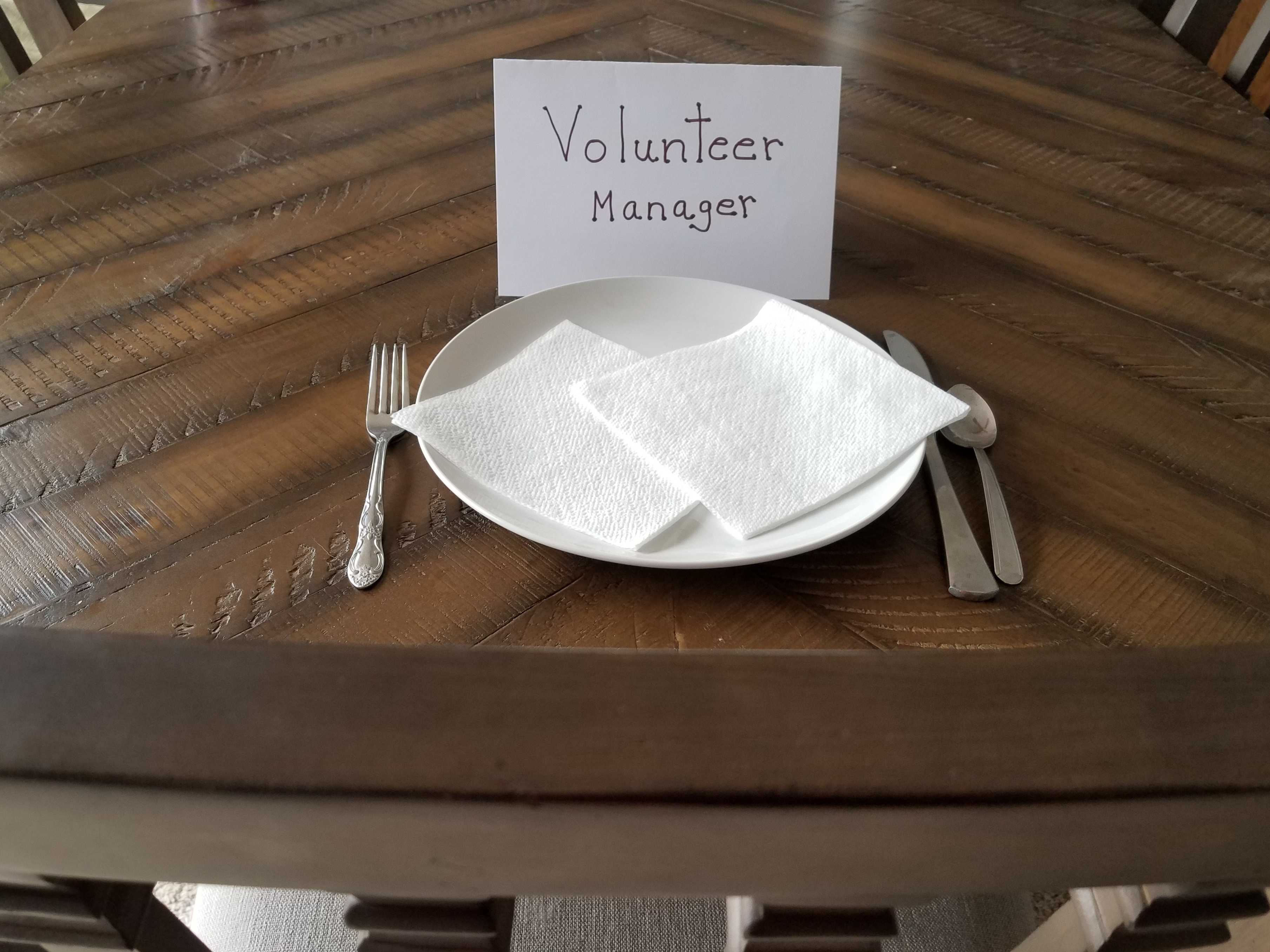
    We, the equipment holders have to take a stand. Our volunteers need us to champion their involvement. Our organizations need our knowledge. Our clients need the excellence only we can provide. When advocating for a seat at this planning table, continually refer to the benefit of having you there.

    My knowledge of our volunteers’ skills and motivations is necessary to strategize the most effective volunteer involvement. I bring our volunteers’ passion and will elevate the ways we can move forward while saving time, money and effort. I will shape these positions so that our volunteers are invested and will not only stay, but want to do more. I have the experience necessary to design each position in order to boost volunteer interest.

    The most important volunteer positions must be defined by the person who leads volunteers, not only to maximize program results, but in order to ensure volunteer satisfaction and sustainability. Volunteer managers have the equipment needed to unlock volunteer potential while increasing results and retaining volunteers.

    What happens when organizations fail to include the volunteer manager in planning volunteer engagement?

    • skilled volunteers quit due to lack of meaningful roles
    • potential game changing programs never get created
    • a vicious cycle of recruiting volunteers as “warm bodies” is perpetuated
    • the organization is viewed as archaic and out of touch
    • highly motivated volunteer managers quit
    • clients are denied excellent support
    • a toxic negativity borne from frustration prevails
    • organizations become stuck in outmoded ways

    We, volunteer managers have to be willing to lobby for our seat at the planning table, not only for ourselves, but for our volunteers, clients and communities. Our organizations promise to deliver quality service and it is up to us to ensure that the volunteer piece provides excellence.

    Mission Centric Volunteer Engagement means strategizing the priorities that further the mission, deliver the most bang for the buck, and ensure volunteer sustainability. None of this can happen without volunteer manager input at the planning table.

    I’ll take my seat now, thank you.

    -Meridian