Tag: organizations

  • The 5 Stages of Volunteer Management

    The 5 Stages of Volunteer Management

    numbers wall decor
    Photo by Magda Ehlers on Pexels.com

    For those of you new to volunteer management, you must be wondering, what does the future hold? Will I change the world? Will my office be overrun with mewing kittens wearing panda costumes?

    There are actually 5 well researched volunteer management stages as referenced by the “We Squeeze Everything into 5 Stages” Institute. The Institute is famous for ground breaking studies such as “the 5 stages of falling down” and “the 5 stages of a stage.”

    In this particular study, the institute interviewed two former volunteer managers and came up with their findings. One of the interviewees, Kevin, now works in real estate and the other, Imelda, now lives in a tent on Redondo Beach.  From the quick phone interview, the institute found that each volunteer management stage has its own set of questions or comments as recorded from the former volunteer managers. The 5 stages are:

    1. Denial:

    Kevin:”I can’t believe they gave me a stapler that won’t work on packets of more than 4 pages.”

    Imelda: ” Who wrote this volunteer recruitment ad for caring hearts, strong stomachs?”

    2. Anger:

    Kevin: “If you won’t call the new volunteer that I just spent a week training, then stop asking for volunteers if you don’t really have time for them.”

    Imelda: “BTW, why is the budget for volunteer recruitment only $59 a year while the senior manager “take special care of yourself because you matter” retreat cost hundreds?”

    3. Bargaining:

    Kevin: “Look, I’ll take your nephew, who has to do 125 supervised community service hours if you will just come and speak at our next volunteer meeting. Ok, even if you only answer questions. Ok, just 3 questions.”

    Imelda: “Hey universe, if I let volunteer Big Dan write a country song for our luncheon this year, can we at least not serve chicken again?”

    4. Depression:

    Kevin: “Yeah, I know, you’ve already told me many times that if I would just go out and recruit the Dowager’s Tea Sippers Guild, I would get all the help we need.”

    Imelda: “Here comes volunteer Andi with that look in her eye and she’s going to tell me all about the complications from her gall bladder surgery again.”

    5. Acceptance:

    Kevin: “My volunteer coordinator peer group meeting is next week…I can survive until then. I wonder if any of them have the contact person for the Dowager’s Tea Sippers Guild?”

    Imelda: “I had no idea that there was so much flatulence after gall bladder surgery. Boy, you learn something new everyday.”

    Well, there you have it. I wish this was more scientific, but you can’t argue with an Institute.

    What volunteer management stage are you in?

    -Meridian


  • When a Volunteer is “Ok,” But Not Ok

    person showing fingers
    Photo by Victor Freitas on Pexels.com

    I have this friend who prides herself on “being ok” with adjusting to whatever the situation presents. However, at the same time, she makes side comments about having to adapt or being uncomfortable. So, I’m confused. Is she ok or is she not?

    It makes me think of certain volunteers I’ve known who do the same thing. “Oh, that’s fine,” they’ll say or “no problem,” when in fact, it isn’t fine and it is a problem. And here’s the thing with these confusing messages. The people who tell you they’re ok when they’re really not believe that they are making it easier on you, when in fact, they are making it way harder, because here you are, spending mental and emotional energy trying to figure out what they need through the cryptic verbal and body language clues they give.

    When you ask them to be honest, they brush it off, saying, “it’s no big deal.” But you know better. So, what can we do with these volunteers? Banish them from our programs? Continue to play a part in their game of emotional hide and seek?

    For what it’s worth, I’ve developed a few methods over the years when dealing with the “I’m ok, but really I’m not” messaging. They are:

    Be direct by addressing the verbal or body language clues: Say to your volunteer, “I appreciate you telling me that you are fine with the change in assignment, but I’m sensing from your comments (or body language or tone) that you’re not fine and that’s ok. I want to make sure we address your concerns because you are vitally important to us and you play a huge part in how we achieve our goal.”

    Lay out your ability to spot clues up front: Tell volunteers in training or meetings that it is your job to observe them. Make it funny if you like, but get the point across that you (maybe you say it’s a curse) can spot bulls#$@ a mile away from years of working with people.  You can make it fun by calling it your fib o’meter or something similar. Tell them you will call them out and then jokingly yell, “The fib o’meter says you are not ok!” Everyone will laugh, but the point is made.

    Then add the serious element. Let volunteers know that it is your job to make sure they are giving their time free of annoyances, because their experiences should enhance their lives, not complicate them. And, volunteering by grudging acquiescence doesn’t help anyone, themselves included.

    Check up on them: Ask questions. Ask clients, other volunteers and staff. Checking in to see how volunteers are faring is part of our job. If you hear that “volunteer Jules is complaining all the time,” then by all means, address it. Job satisfaction is a key component to not only volunteer sustainability, but also key to bringing a volunteer’s best work which is what we want our clients to have.

    Enlist staff: Enlighten them on the effects of changing volunteer assignments or time-frames or requirements. Let them know that changing or canceling an assignment at the last moment creates volunteer acquiescence which leads to volunteer fatigue which leads to volunteer burnout.

    Make it clear that this behavior is unproductive: If you’ve had multiple conversations and the behavior is affecting job performance, then you have to weigh whether this volunteer is irreplaceable and whether you have to accept any and all behaviors. But also look at the ripple effect. How does this behavior affect other volunteers? What message does the acceptance of negative behavior send to your team?

    I vividly remember this one volunteer when I managed a thrift store. Our team was pretty happy most of the time and this new volunteer came in and complained continuously to the other volunteers but told me that “everything was fine.” The team’s mood shifted.

    One day, I just couldn’t take any more “I’m fine” talk. It wasn’t so much that this volunteer annoyed me, it was the fact that she was destroying the volunteer team’s productive balance. So, I took her aside and pointedly asked, “are you happy here?”

    To my surprise, she hesitated and then said, “not really,” and told me she thought the store was poorly run and the other volunteers were incompetent. I said, “then I don’t think you should be in a place that makes you this unhappy.” I didn’t fire her; I gave her my opinion that she should take the steps to quit and she did. On the spot.

    From simply being accomodating to acquiescence to out-and-out hiding displeasure, there are many levels of volunteer flexibility. It falls upon us to determine when flexibility turns into grudging compliance and burnout. The more (with kindness) direct we are with volunteers, the closer we get to their motivations and true satisfaction.

    And ultimately by investigating the emotions behind the words, we acheive that intersection between volunteer sustainability and mission transformative work. It’s the place where volunteers give of their time and talents freely, a place where volunteers get back the intangible rewards that fill them with joy and a place where the volunteers’ contributions have a profound effect.

    It’s a magical place where everyone wins.

    -Meridian


  • Volunteer Management Chess


    black and white chess pieces on chess board
    Photo by Charlie Solorzano on Pexels.com

    Do you ever dream you’re playing a game of chess and your volunteers are (wait, you were going to say the pawns, weren’t you-I see where you’re going with this) the pieces? You murmur, “still think our volunteers are sweet,” as you dream you’re capturing the king with your mighty diverse volunteers.

    Maybe some volunteers are the knights and others are the bishops and the office volunteers are the rooks. Do you ever lie awake at night and plot your next move? I’m guessing probably not, but let’s ask this question. Should strategy play a part in managing a volunteer initiative?

    Well, only if you have a vision for your volunteers. And I’ll bet you do.

    We all say things like, “I wish people understood how important volunteers are,” or “I want staff to recognize volunteers on a par with donors,” or “I wish volunteers were treated with more respect and given more meaningful roles.” Aha, you know what? There’s a vision lurking in each of those statements.

    Strategy is comprised of the calculated moves that bring you closer to your vision.  When we, volunteer managers have unfulfilled visions, we can end up running around in chaos wondering why things are the way they are. Visions are what we strive to accomplish. Strategies focus on how we get there.

    Imagine your vision coming true. The first step in seeing your vision materialize is to formulate a strategy. Picture yourself as this genius chess player who skillfully moves each piece with an end game in mind. Each move brings you closer to capturing that elusive goal.

    Let’s say your vision is for your organization to utilize volunteer skills in better ways. A tech firm has contacted you and offered pro-bono services. Your organization is hesitant to let these folks into the inner sanctum (they are outsiders) (see Resting on Nonprofit Laurels) so your immediate supervisor says, “Let them do some data entry in finance.”

    “No,” your thoughts race in your mind. “Here’s an opportunity to engage some volunteers who bring expert help. Have you actually looked at our website lately?”

    Now you could simply offer the tech firm the data entry, knowing that they are capable of doing so much more or you can see them as important pieces in your strategy. What concrete and measurable tactics can I employ with this tech firm to show my organization that engaging volunteer skills is beneficial?

    So, you move your pawn and ask them to do minimal data entry to get them in. But then, you move the knight by devising a way to show the benefits this tech firm brings. You ask the firm to do a social media analysis for you. They work up a sample social media campaign that would benefit your organization.

    You move your bishop by testing the social media campaign on your volunteers and their friends who overwhelmingly give it positive feedback. You move your rook by reporting to senior management that data entry is going well and the firm is helping reduce the amount of late data by 30%.

    And then it’s time to move the queen. You tell senior management that the tech firm is honored to be working with your organization and would love to help further. That’s when you present the compelling statistics on the sample campaign and explain the small to large steps the tech firm is willing to do.

    Pawns are the simpler things we sacrifice (like agreeing to ask corporate volunteers to do data entry in the above example) in order to move your vision forward. Your real power lies in strategizing your other, more powerful pieces such as impact reports, feedback, influences and outcomes.

    When you create a vision and focus on a strategy, your tactics will fall into place. How do I get to where I want to be? It’s important that we have visions for our volunteer initiatives because it makes us work hard towards elevating our volunteers instead of just working hard.

    Strategy has an important place in our profession. The next time you wish something would change, envision it changing. Then focus on creating a strategy to capture it with carefully calculated moves.

    Checkmate.

    -Meridian


  • Why Have Volunteer Department Goals, Objectives and Actions?

    business charts commerce computer
    Photo by Pixabay on Pexels.com

    Last week, we touched on how setting specific volunteer department goals can help us gain more control of our volunteer programs. The key here is to control the path to achieving the goals.  This path consists of two subsets: Objectives and Volunteer Actions.

    No one knows how to effectively engage volunteers more than the volunteer manager (VM). Every VM knows what motivates their volunteers and understands their volunteers’ capabilities. Volunteer Managers also mentally catalog their volunteers’ diverse skill sets and look for ways to unleash volunteers’ potential. This extensive volunteer knowledge is why a VM is so much more innovative in creating the actions (tasks) that fulfill the objectives that meet program goals (an area we will explore next time under strategy).

    So, let’s imagine a very simplistic scenario. You are the VM at a crisis shelter. One of your volunteer department goals (and unique goals can be set for each area your volunteers are involved in) is to alleviate weekend staff’s workload.

    The first step is to interview weekend staff and ask questions such as:

    • What do you spend most of your time on?
    • What do you wish you could spend less time doing?
    • What do you wish you had more time to do?
    • What duties are you comfortable with turning over to someone else?
    • What qualities would be most helpful for any volunteer who comes in to assist you?
    • What do you believe volunteers are capable of doing well?

    By canvassing the staff that will be working with your volunteers, you not only will discover exactly what it is they need to reduce their workload, you will ensure their buy-in from the start. Because their input is the basis for creating your volunteer objectives, staff will be more receptive to the volunteer actions you initiate.

    So let’s imagine that by canvassing staff, you learn:

    • Staff is continuously interrupted by phone calls and can’t spend quality time addressing shelter residents’ needs.
    • Staff is not comfortable with volunteers who have not had extensive training working with shelter residents, especially the residents who are new to the shelter.
    • Staff is very attached to the residents and, as a result, are reluctant to let outsiders (volunteers) in.

    Now it’s time to set your objective and create actions. And what is the difference between goals, objectives and actions?

    A goal is the destination whereas the objective is the path to get there. Actions are the steps along the path. While goals are broad, objectives are measurable. Actions are the concrete steps to get to the objective.

    So, you have a goal: Decrease weekend staff workload. Now you need a measurable objective.

    Because you have surveyed staff upfront, you take their comments into consideration when determining the objective. Instead of recruiting volunteers in a generic way (to help however staff directs them) you specifically recruit volunteers to man the phones so that staff can spend their time tending to resident needs.

    So, let’s say, your measurable objective becomes: Decrease staff’s time spent answering phones by 20% so they can spend more time with shelter residents.

    So now we have a goal and an objective:

    Goal: Alleviate weekend staff workload.

    Objective: Decrease staff time spent on phones by 20% (which BTW, also increases time spent with residents by 20%).

    Once your objective is set, you create the volunteer actions.

    Actions: Answer phones so staff can spend time tending to shelter resident needs. You now recruit both new and existing volunteers to answer phones at the shelter 20% of weekend time.

    When we enlist volunteers “to help” departments, it is difficult to measure the volunteer impact under broad terms. What does help mean? File? Run errands? Answer phones? Data entry? Cleaning the desk?

    When we break goals down into objectives (outcome by a measurable unit such as percentage) and create specific actions (file, answer phones, sit with clients) then we can quantify impact. A simple example of impact is:

    This month, volunteers spent 20 hours on data entry which allowed staff 20 more hours in analyzing reports. Volunteers increased staff’s ability to analyze reports by 12.5%.

    Quantifying impact is just a mathematical way to show results or outcomes or success. Measurable outcomes create easily understood and digestible visuals. The more we can show impact, the more we can steer our programs.

    This doesn’t mean that every objective and series of volunteer actions don’t take into consideration what volunteers need and want. Instead, it means you are being very strategic in setting an atmosphere to get what you want. And strategy is essential to volunteer program success.

    Next time: Everything is strategic.

    -Meridian


  • Do Volunteer Managers Implement or Manage Volunteer Programs?

    Do Volunteer Managers Manage or Implement Volunteer Programs

    “I am a volunteer program manager,” I’ve said countless times to confused faces at networking events.

    “Oh, that’s nice,” The person who just asked me what I do for a living would mutter and then turn to find someone who has a job that is understandable and doesn’t take a lot of martini sipping time to comprehend.

    What does the job title “volunteer manager” mean, anyway? What do I manage? Is it people as in, you know, get people to do things? Or is it work, like filling the tasks that need to be done? What exactly am I in charge of?

    There is a huge difference between managing a program and implementing a program. This is just semantics, I know, but in semantics we find perception, so please, just stick with me a moment, ok?

    Most volunteer managers implement their volunteer programs. The word implement means “carry out” which implies the volunteer manager fulfills the directives from non-profit boards and senior administration who determine how volunteers can be helpful.

    This creates a contradiction: Although most volunteer managers are encouraged to think in strategic ways, they are primarily expected to fulfill requests from key staff or departments which leaves little time for vision or innovative engagement. And strategic innovation is the basis for leading a program to full potential.

    Let’s examine how volunteer management normally fits under organizational missions. Words such as “enhance,” “expand programs,” “enrich experiences,” and “enable increased staff output” define the volunteers’ participation. But vague idealism is like telling your child to “just go out and be good.” Should they wear clean underwear or be polite to the next door neighbor or stop trading their lunch for six candy bars? What is being good?

    Non-specific phrases are so broad they become meaningless. And meaningless phrases lead to implementing a volunteer program versus managing it.

    Being governed by broad phrases creates this gigantic task soup. Anything and everything can be thrown in, including the kitchen sink (think “hey, we have less staff now, let’s get the volunteers to run errands.”). But does this soup actually taste good? Is it a defined recipe for success or is it a chaotic mess?

    This is why we, volunteer managers need to step in and take some control. We can’t (and hopefully don’t want to) alter the mission, so how can we get away from broad concepts and control implementing managing the volunteer portion? The answer is actually found by breaking the mission down into its subordinate parts: Goals and Objectives. The break down looks something like this:

    Mission statements are lofty and broad. For example, “To eliminate human suffering due to unsanitary conditions.”

    Goals are what we are aiming to achieve. For example, “To reduce the number of people who have no clean water.”

    Objectives are the steps to realizing goals. For example, “To raise funds to purchase 100 installed water filters by end of year.”

    As we break our missions down into tangible goals, we can then begin to craft concrete objectives that we have control over. Setting goals with organizational administration will give you the flexibility to create the objective steps that will fulfill those goals.

    Invite senior administration and/or your board to meet with you in a planning session. Ask for specific volunteer department goals for the year. For example, if, under your mission statement your volunteers “enrich clients’ lives,” ask for a defined goal to achieve that lofty ideal by defining what that will look like.

    Let’s say that by end of planning session, the goal becomes, “by end of year, 20 clients will experience less stress through volunteer involvement.” Bingo! That’s a measurable outcome that you can own and control through your creative objectives.

    And, by owning the objectives, we control the volunteer actions that accomplish the objectives that meet the goals that support the mission.

    Next time: Goals, Objectives, Actions in a yummy whole-grain wrap called Strategies.

    -Meridian


  • Experts Among Us: An Interview with Katherine Arnup, Author, Volunteer Part 2

    516LHOA+4LL._AC_US327_FMwebp_QL65_

    Experts with skills and talents to share are everywhere, including the many experts within our volunteer programs. Last week, in our first part of this interview, Katherine Arnup, author of the new book, “I don’t have time for this,” shared her story in both caring for loved ones and volunteering at her local hospice.

    In part 2, Katherine gives us insight into how we can encourage the experts among us.

    VPT: How can organizations recognize volunteer contributions?

    K: I think volunteer contributions are not easily measured. Organizations can miss out on all the things volunteers contribute by not recognizing the whole person and what they bring. I used to speak to other hospice volunteer appreciation meetings. I would have volunteers come up to me afterwards and say, “thank you so much for understanding what we do and thank you for validating us and our work.” The volunteers were so grateful to be fully heard and understood beyond receiving lip service or a pin for hours volunteered.

    VPT: How can volunteers help other volunteers?

    K: I taught new volunteers in the training course. They learned from my experiences and I wasn’t afraid to share mistakes with them. I made fun of myself and was known as the volunteer who couldn’t make poached eggs. (laughing) This comes from a story I would tell about my failed attempts at poaching eggs for patients. I would actually try and convince the patients to order scrambled eggs, but the story made an impression in training because volunteers would say to me, “oh you’re the one who can’t poach an egg.”

    I would talk about how at first I would get mad at myself for making mistakes, but then I learned that we are not perfect and I wanted volunteers to know that, so I shared my mistakes with them.

    VPT: How can organizations support volunteers who have talents to share?

    K: I think it’s important that organizations not be afraid to celebrate what volunteers are doing. For example, the hospice where I volunteer recently started including volunteer stories in their newsletter. But I think there’s this common perception that by recognizing particular volunteers, others may feel left out.  I don’t think that’s the case.

    A long time ago, I spoke at a staff meeting where I told them the story of why I volunteered. Afterwards, one of the staff came up to me and said, “I had no idea why you were here until you told us.” Volunteers should be encouraged to share their stories at both staff and board meetings.

    Every volunteer has a story to share. We should be posting these stories and celebrating the whole person. What organizations need to realize is volunteers are out there talking up the mission. Instead of merely issuing statements like, “we couldn’t do what we do without volunteers,” staff need to realize that volunteers are spreading the word about the organization and that reflects positively on staff.

    When I taught the first year seminar, “Contemporary Controversies in Canadian Society,” I was working full time as a professor and volunteering four hours a week at the hospice. I included a segment in the seminar on disability, aging, death and dying, something the first year students were initially uncomfortable with. They didn’t know how to talk about death and dying, although most all of them had suffered some sort of a loss. Although they did not want to talk about it, they shared their experiences and afterwards they told me it wasn’t so bad.

    When I tell people that I volunteer at a hospice center, they usually say to me, “this must be a very good place, because here you are, working full time with a family and yet you make time to volunteer.”

    VPT: That’s a very powerful message.

    K: Volunteers are ambassadors for their organizations, at work, at school, wherever they are. Organizations should realize that fact and celebrate their volunteers.

    VPT: Thank you Katherine, for your wonderful book, your expertise and for sharing your insights with us.

    Every organization with a volunteer component has experts, passionate people, dedicated advocates and potential game changers in their midst. As Katherine said, recognizing volunteers does not diminish the enormous contributions staff make. On the contrary as she points out, volunteers who talk up the mission, spread the word and contribute to achieving goals reflects on staff and the organization as a whole in positive ways.

    We have to move our organizations into embracing volunteers and volunteer contributions as reflections on the importance of the mission and the work being done to achieve goals, no matter who is doing the contributing. As Katherine pointed out, we must get to know volunteers as whole people, a practice that just might lead to amazing outcomes.

    For every volunteer who contributes in profound ways such as Katherine has, how many volunteers with potential languish because they are “just volunteers?”

    Or maybe the better question is, “how much more quickly and efficiently can organizations solve societal challenges if they embrace everyone (volunteers included) who passionately wants to see them succeed and are willing to work hard to further mission goals?

    -Meridian

    Katherine’s bio:

    Katherine Arnup is a writer, life coach, speaker, hospice volunteer, ukulele player, and retired university professor. She writes about matters of life and death on her blog at https://hospicevolunteering.wordpress.com/.  Her book about caring for her sister and her parents as they were dying – “I don’t have time for this!” A Compassionate Guide to Caring for Your Parents and Yourself – is available online at Amazon and Chapters and at independent bookstores in Ottawa. http://katherinearnup.com/


     

  • Experts Among Us: An Interview with Katherine Arnup, Author, Volunteer

    516LHOA+4LL._AC_US327_FMwebp_QL65_

    Part One of Two:

    Recently, I was fortunate to catch up with Katherine Arnup, author of the new book, “I don’t have time for this,” a practical, yet emotionally supportive book that guides caregivers through the difficult process of caring for aging parents.   Katherine’s amazing book is available here: “I don’t have time for this,” by Katherine Arnup.

    Katherine is an example of the highly talented volunteers who contribute to their organizations far beyond the hours recorded. These volunteers ambitiously advocate for their chosen organizations and work behind the scenes to create awareness.

    For years, Katherine has been a strong voice advocating for terminally ill people and their caregivers.

    In this two-part post, we have the opportunity to learn from Katherine’s story, one which formed her dedication to spreading awareness of the hospice mission. Like Katherine, mission experienced volunteers give our organizations the opportunity to gather important feedback about how programs are working and determine future direction.

    VPT (volunteerplaintalk): Thank you for speaking with us, Katherine. Your book is inspired; full of practical wisdom, but tempered with the emotions that come along with care-giving. What prompted you to write this book?

    K (Katherine): I have always been a writer. My sister had been sick with cancer for many years. When it progressed to the final stage and was obviously fast-moving, I was on sabbatical from work at the time. It was then that I committed to making the 4 hour trip to Toronto every week to care for her.

    The experience was transformative for me. I had always been frightened by death ever since I was little and now that I was confronted by the impending death of my sister, I couldn’t be frightened any longer, so I pushed through. I literally sat with my fears. At one point my sister said to me, “you’re going to be an expert at this by the time you’re done with me!”

    And I said to her, “Maybe, but I don’t want to learn it from you.”

    It was inevitable that I write this book. I had learned so much. I’d written small pieces during her illness. Four years after her death, in 2001, I started volunteering at my local hospice in an 8 bed care facility. That same year, I began to write about my experiences. I suppose you could say it was cathartic. I had all these stories in me.

    Then, in 2003, my father, who was 92 at the time, became ill. My father, a retired judge had never met an obstacle he couldn’t overcome in his life, until that year. Getting sick was the one thing he couldn’t overcome. He tried though and did well, but eventually he did die. Once again, I would travel the 4 hours to Toronto to see him.

    VPT: How was that experience?

    K: I learned different things from him while he was dying. I learned he needed company even if it was only to watch golf or curling on TV with him. I learned how to just sit and be with him. My father was a slow speaker so that gave me the opportunity to write while I sat with him. In contrast to my sister whose disease moved rapidly, his came in increments which gave me more time to be with him, and to process and write.

    Shortly after my father died, my mother got sick and I’m a little embarrassed to admit it, but I thought, “oh my God, not again.” Once again, her death was a different journey. My mother had an aneurysm many years before and had been disabled for years before she got cancer. I wrote about my mother in a piece I titled, “Not My Mother,” because the aneurysm had honestly already stolen my mother from me.

    I continued to write and I created a blog, “Hospice Volunteering”  in 2011. And I’ve been writing there ever since. I cover the gamut of topics from what we do as hospice volunteers to how to be with the dying. I’ve included book reviews, reports on visits I’ve made to hospices throughout my province and conversations with other volunteers.

    VPT: Did you tell your hospice about your blog, which by the way, I highly recommend reading?

    K: I did. I encouraged them to share it with the other volunteers. Other hospices heard about it and did share with their volunteers, especially when I wrote about issues important to volunteering. I knew my experiences would help new volunteers in their work with hospice patients. For example, conversations with patients will change on a week to week basis. I wanted new volunteers to know that you have to let go of expectations and be fully present with the patient as they are in any given moment.

    VPT: How do you think your book furthers the hospice mission?

    K: (pauses). The hospice mission supports people to live as fully as they can even as they are dying. It’s about staff and volunteers supporting people and their families. It’s about not just caring for a person and their illness, it’s about caring for a person’s whole world. We call it a “circle of caring.”

    I would say to other volunteers and even administrators, slow down and remember the moments of joy. We are all so busy checking off the items on our “to do” lists that we miss the opportunity to feel joy. We need to find ways to support one another.

    VPT: Next time, part 2 of our interview. Katherine and I talk about the ways organizations can support volunteers who bring expertise and we discuss how embracing talented volunteers lift up everyone.

    -Meridian

    Katherine’s bio:

    Katherine Arnup is a writer, life coach, speaker, hospice volunteer, ukulele player, and retired university professor. She writes about matters of life and death on her blog at https://hospicevolunteering.wordpress.com/.  Her book about caring for her sister and her parents as they were dying – “I don’t have time for this!” A Compassionate Guide to Caring for Your Parents and Yourself – is available online at Amazon and Chapters and at independent bookstores in Ottawa. http://katherinearnup.com/

  • The Universe is Listening

    the universe is listening

    Confession time: I’m not proud of the fact that I used to inwardly giggle at all the staff who embraced aromatherapy, Reiki, mysticism, healing touch, energy transference and psychic connections.  I’d mutter under my breath about “woo woo” stuff while flippantly asking, “hey is that lavender I smell, what should I be feeling, ha ha,” because frankly, I was ignorant and a jerk.

    But then, the coincidences started piling up. I especially began to notice “out of nowhere” help with seemingly impossible volunteer requests. I’d get this urgent, off the wall request for something like, “send a volunteer that can teach a patient to knit, but they have to speak Romanian.”  I’d sigh and after mumbling about pulling volunteers out of my #$@, I’d be sitting at my desk, wracking my brain with this impossible volunteer task when the phone would ring.

    I would pick it up and as I said “hello,” the answer would somehow manifest. The caller would be a volunteer who had been on extended leave. She would tell me that she was cleaning her bedroom closet a few moments ago and her old volunteer orientation manual fell off a shelf and bonked her in the head, so she took that as a sign and she decided to come back and volunteer. And yes, she knitted and spoke Romanian. Or the caller might be a new volunteer who wanted to chat and out of the blue, tell me his passion was creating numerical filing systems which of course was something we needed like yesterday. This happened over and over again, so much so that I began to take notice.

    I remember hatching an idea for a gigantic, very ambitious project and I enlisted the help of several trusted volunteers, although none of us had the specific expertise we needed. (talk about working backwards). After the thrill of setting up a core group of committed volunteers faded, I sat back and wondered how the heck we were going to pull this off. (Yeah, ok, smarty pants, now what?)

    Two weeks later I was teaching new volunteer orientation and just happened to mention the new project. After class was over, one of the new volunteers came up to me and told me she not only had all the exact expertise and experience we needed, she said she’d be thrilled to join the group. Bingo, we were on our way.

    Now here’s the thing. The more we, volunteer managers share our needs with everyone, (even the annoying person behind us in line at our coffee shop or the coach of our son’s soccer team) the more chance we have finding the right volunteer. The more “feelers” we put out, the further those feelers will reach. It’s like casting a net-you may scoop up a bunch of bait fish, but there also could be a lobster in there.

    Talk up your needs often, in meetings, on the phone, to staff and to new and prospective volunteers. You never know who just might surprise you and want to help in unexpected ways. Or who may hear about your need and call you while your forehead is down on the desk.

    Use your voicemail or answering system to leave updated messages outlining the current needs and encourage volunteers to call in when they feel they have some extra time or just want to explore other opportunities. Call it a volunteer jobs hotline or a better, catchier name. (Mission Possible?)

    Send email updates or texts or use a messaging service to blast out current available tasks or projects. Broadcasting the crazier, more niche requests actually serves a purpose. They show volunteers that unique skills and talents and interests are welcomed and important to mission goals. That potential volunteer just might think, “hey, maybe they could use a volunteer who can yodel!”

    And every off the wall volunteer request filled that showcases volunteer talents encourages staff to look for more talents (as opposed to viewing all volunteers as tools to do meaningless work like sweeping the floor after a party for donors). Because there’s a huge difference between crazy, meaningful, mission-aligned requests and crazy meaningless tasks that do nothing to further the mission and suck the lifeblood from volunteers.

    Put your best volunteer recruiters together in a room, ply them with sweets and tea (or vegan wraps and energy drinks or wait, maybe sweets and energy drinks), give them the list of impossible jobs to fill and ask them to use their considerable powers of persuasion to find suitable volunteers.

    Advertise open available roles on your website. This is also a visual for prospective volunteers and shows them what the needs are, how they change and how many ways there are to be involved.

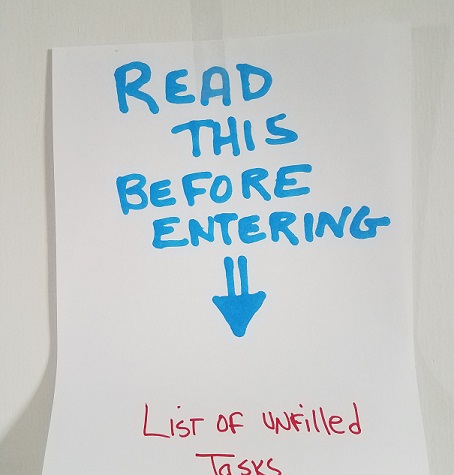
    Post your needs on your door so every volunteer who comes to chat sees them (Maybe post a sign that says, “READ THIS BEFORE ENTERING”).

    I’ve always been rooted in finding practical solutions. Yet at the same time, I’ve come to think that a sincere attempt to provide goodness in the world gets a little help from somewhere (call it divine, the universe, karma, or whatever you subscribe to). So, I don’t refer to all the new age stuff as “woo woo” anymore.

    Because I’ve come to believe the universe is listening. Woo!

    -Meridian


  • Volunteers and Kintsugi

    volunteers and kintsugi

    I met Jake one cold winter day when he came to our volunteer orientation. He continuously looked at his hands and shifted in his seat. He didn’t speak up when the other new volunteers answered questions. Instead he watched quietly from his space.

    When orientation was over, I looked forward to interviewing the new volunteers one on one. It helped to know them away from the group setting. I didn’t know what to expect with Jake.

    He came into my office and sat down. The air was charged with his story and I pretended that his hesitation was common among new volunteers. Then he began to talk.

    There’s a great deal of research and evidence that volunteering increases well-being. It staves off loneliness, offers a life of purpose, aids in skill building, wards off dementia and boosts self-confidence. But there is another aspect to volunteering beyond well-being. It’s a form of Kintsugi, the Japanese art of golden joinery. It recognizes the beauty in broken things. Kintsugi is the art of rejoining broken pieces and dusting them with gold powder. The broken when fixed, becomes more beautiful.

    Jake was broken. And through his volunteering, he pieced himself together with dazzling golden powder. He was a phenomenal volunteer who found a way to believe in himself by believing in others.

    He worked his way into taking tougher assignments. He built himself up again, one volunteer day after another until he had a supportive group of volunteer friends and had clients who depended upon him because he was dependable again. His broken pieces became a different, but new whole.

    kintugi
    Haragayato [CC BY-SA 4.0 (https://creativecommons.org/licenses/by-sa/4.0)%5D, from Wikimedia Commons

    We are privileged to witness a human Kintsugi in a few of of our volunteers. Their broken parts take on a luster from the golden dust we offer them. And the interesting thing about Kintsugi is the golden repair’s meaning stays with those who gaze upon the new work. Jake’s journey to repair resides within me, a golden nugget that I can roll between my fingers when I need it.

    I know you’ve had broken volunteers and I know you’ve seen them heal. Their fractures are a part of their makeup and history and what makes them beautifully empathetic and able to connect.

    So, the next time you gaze wistfully at one of your once broken volunteers, see the shimmer of gold that fills the spaces in between and know you’ve had a hand in the repair.

    -Meridian


  • Take Some Volunteer Management Time For Yourself

    children riding bicycle
    Photo by Pixabay on Pexels.com

    It’s that time of year: Hectic. Chaotic. Long hours. It’s not a time for us to step back, it’s a time when our efforts step up.

    It’s also the best time to take back some moments for yourself. As volunteer managers, we pour every ounce of energy into making holidays special for the people we serve. We ensure our holiday volunteers soak up the warm moments as we stand in the shadows, sopping up the feels from afar. But this means missing out on the fuel we need to keep going.

    I’m involved in a toy drive and the other day a man quietly rolled a girl’s 20″ bicycle up to the door. “Do you think she’ll like it?” He asked. His eyes radiated the joy of giving a girl he never met the gift of childhood.

    I stopped what I was doing. He showed me the teal and pink helmet and explained how he realized she needed one or she wouldn’t be able to ride the bike when she got it because of well, you know, laws and safety and all. He recounted how he searched for one that matched the bike’s mad swirl of colors. He told me how he carefully selected this bike and how he envisioned her riding it through her neighborhood.

    He ran his fingers over the handlebar and told me he had purchased a three-wheeled bike for another organization so that an elderly person would have something to ride. And oh, he chuckled at his own sentimentality, he made sure the helmet matched.

    I needed that. I needed to stop and hear his story. I needed to fill up with one tale that encapsulated all the good in this world. It was like sitting down and opening a sparkling box that contained a map to the why.

    Take time to connect, to fill your own hearts with joy. You work so hard all year and even more so at this time. You deserve at least one humble person to tell you their story and for a few chaotic -stilled moments, let you know it’s all right with your world.

    -Meridian