Tag: organizations

  • My Big Fat New Year’s Resolution

    godzillaSo, 2015 is upon us and it is time to make some volunteer management New Year’s Resolutions. I can imagine what you’re thinking, because you too, have read how we all set ourselves up to fail each time we do this annual reinventing of ourselves in rituals much like throwing salt over your shoulder or knocking on wood.
    Anyway, I’m thinking back to all the New Year’s resolutions I’ve made both personally and professionally and there isn’t one darn one that I’ve kept so maybe I should just laugh it off and resolve not to bother. However, there has to be some merit in all this, right? The new year always comes with a feeling of closure tinged with optimism and unless we live in a perfect world, we want life to improve for us and for our families, friends and the world in general.
    I’m thinking back to the kind of resolutions I have made or witnessed friends make that pertain to volunteer management. There are the usual ones and then there might be some you’ve made that are unique to you.

    1. Recruit more volunteers: In order to fulfill a resolution, we often go to ridiculous lengths to make it happen. By going into recruitment overdrive, you may end up with volunteers who quit after two weeks or you may get too many volunteers to manage well. Sitting at your neighbor’s son’s lemonade stand with brochures or handing out business cards at a funeral might be a tad too ambitious and end up netting more ill will than prospective volunteers.

    2. Thank volunteers more: This one is a no-brainer until you take it to the extreme and thank volunteers constantly, which in turn renders any genuine gratitude meaningless. You might get clever with this one and try to do something outside the box like get a celebrity endorsement but that has only a short-term effect. When I first started working with volunteers, I asked various municipalities to proclaim volunteer day, which was lovely and meant a lot of time spent going to city council meetings and accepting the proclamations, but it really had no lasting effect. How do I know this? The twelfth time I pointed to the proclamations on the wall, volunteer Jorge said, “yes, I’ve seen it, it’s nice, can we move on?” And that was in February.

    3. Engage staff in recognizing volunteers: Normally, you find begging to be unseemly but hey, you’ve made this resolution so you first try reasoning. You have this awesome speech and plan that you just know will sway every staff member to see volunteers in the most positive light. You can envision the wonderful teamwork that follows because you are the one to shatter the “us and them” mentality that permeates your organization. So, at every meeting you attend, you whip out parts of your speech and on the seventh heartfelt opine you see some yawns at the table and poof, your resolve begins to dissolve. Then you wonder if begging is perhaps a misunderstood concept.

    4. Get more organized: Hahahahahahahahahahahahahaha ha. Ok, this just makes me laugh.

    5. Make better use of the available tools: You have to love tracking software, it sounds so exotic, like a survivalist following a macaque to water until one day you have to track volunteer Paul, who left training midway through the session, is on vacation for several weeks and turned off his phone. Add to that mix volunteer Giselle who promises to bring in her initial paperwork, then after a couple of weeks, drops it off, but it is incomplete, meanwhile she has her background check finished and is in the process of moving, but signs in while you are out at a recruitment fair (see resolution #1) and leaves you a voicemail stating that you forgot to be there for her initial assignment. Then add in volunteer Peter, a senior manager’s son who needs community service hours and is volunteering in his mother’s office while not following any volunteer protocol ever set down in the history of volunteering.

    6. Not let volunteer Mira push my buttons: This one’s mine from ten years ago and for some reason, Mira just rankled the heck out of me. The first Monday of January of 2005, Mira came in for her scheduled shift. I smiled brightly while repeating a mantra in my head, “she deserves the same treatment as other volunteers, she deserves the same treatment as other volunteers.” Mira looked at me and I swear said, “well, I see you haven’t gotten the cleaning people to put better toilet paper in the bathrooms.” BOOM! BUTTON PUSHED!!!!! RESOLUTION VAPORIZED!!!!

    7. Dress for success: Yeah, I know, dress for the job you want, not the job you have. Ok, so wearing a big cowboy hat to work might not really get me on a horse in Montana, but hey, I tried wearing suits all the time, but the sweat from outdoor fairs in summer and from pitching in on the physical work volunteers do stopped that pretty quickly. Besides, I saw senior managers wearing all kinds of inappropriate and casual attire to work. One day, no lie, a senior manager came to work on casual Friday dressed in a t-shirt, grey rumpled baggy knit shorts and white knee socks-the kind with the green stripe at the top. Two weeks later casual Fridays were declared “unfit for this organization.”

    So, my big fat New Year’s resolution is to put on warm socks: Bear with me on this, ok? One day, while getting dressed for work, and the temperature was below freezing, and I had a cold, I just wanted my feet to stay warm, so I put on my warmest, although bright red, socks, under my black dress pants. Immediately I felt good, enveloped in a warmth that spread throughout my core. At work, folks commented on my socks and I was kept warm all day, even though my cold tried to make me shiver.

    The good work that our volunteers do daily is like a pair of warm red socks. The enrichment they provide is the bright red color that attracts attention and begs taking notice so that is when we can effectively comment on the worth of our volunteers. “Look at them, see how they stand out, how valuable they are, how wonderful they make us feel, how much they enhance the lives of our clients.” We can make sure we wear our bright red socks to every meeting and make sure that the red color catches staff’s attention by flashing our ankles and heck, sometimes putting our feet up on the table.
    And sometimes even more importantly, the cuddliness of our volunteers’ good works can keep us volunteer managers warmed to the core while fending off the cold of feeling alone and misunderstood.

    You know, it’s fairly cold out again today. I think I’m going to put on my red socks.
    Happy New Year to all and keep warm!
    -Meridian.
  • Yes, Virginia I Need to Know There is a Santa Claus

    yes VirginiaSo many years ago, the famous New York Sun editorial of 1897 answered this letter from eight year old Virginia O’Hanlon:
    I am 8 years old. Some of my little friends say there is no Santa Claus. Papa says, “If you see it in The Sun, it’s so.” Please tell me the truth, is there a Santa Claus?

    Virginia O’Hanlon

    This past Monday, I arrived at work, feeling pretty good. I had gotten more shopping done, and I was gearing up for some holiday events with volunteers. All in all it was a pretty satisfying start to the week, that is until a friend of mine brought me the newspaper. “Did you see this yet?” he asked and as I shook my head no, he gently placed the article in my hand as he walked away. I looked down, not prepared for the shock. One of our college student volunteers, Jay had been killed in an accident over the weekend. “No,” my mind screamed silently in my head, “not Jay.”
    You all know Jay, you’ve had him (or someone so very like him they could be clones) in your midst too. A mere 21 years old, I immediately liked Jay when he came to see if I could help him complete a project for his marketing class. Within minutes of sitting down, I felt like I was in a planetarium watching a light show and his comet-like charisma made me want to help him. He smiled constantly, said hello to everyone that interrupted our conversations and proceeded to tell me about his major, film production. He excitedly commandeered my PC and pulled up the short films he was working on. He patiently explained lighting and blocking and the nuances that made each film look professional. Every time he would come in, he schooled me further on his studies and one day he emailed me to tell me he had landed a part-time job with an independent film company.
    I can honestly say that every time he came in to see me, I lit up like one of the stars in the night sky.

    But back to Monday. I put down the paper and cried. I thought of my silly shopping, my nice events with my volunteers and then I thought of Jay’s parents and what Christmas would now mean to them as they prepared to bury the body of their full of life son. I cursed the universe that I, nor anyone could bring him back. I wept for the meaningless loss of a life so full of promise. Jay had come specifically to see me two weeks ago and promised to come back and volunteer when the semester ended. I tried to comprehend that he wasn’t coming back. I didn’t know how much I could care about one of our young volunteers until I acutely felt his stinging absence.

    We, volunteer managers work in areas of need and often our daily companions are sorrow and tragedy because sadly, tragedy happens every day. Our jobs are predicated on assisting others who can use our volunteers’ help and so, we are used to sadness and trauma. But are we comfortable with it, especially when it hits us like a black hole bent on destroying our very core?

    The editor of the Sun answered eight year old Virginia in part by saying:

    Virginia, your little friends are wrong. They have been affected by the skepticism of a skeptical age. They do not believe except they see. They think that nothing can be which is not comprehensible by their little minds. All minds, Virginia, whether they be men’s or children’s, are little. In this great universe of ours, man is a mere insect, an ant, in his intellect as compared with the boundless world about him, as measured by the intelligence capable of grasping the whole of truth and knowledge.

    Yes, Virginia, there is a Santa Claus. He exists as certainly as love and generosity and devotion exist, and you know that they abound and give to your life its highest beauty and joy. Alas! how dreary would be the world if there were no Santa Claus! It would be as dreary as if there were no Virginias. There would be no childlike faith then, no poetry, no romance to make tolerable this existence.

    Monday, I wanted to not believe in the idea of Santa Claus, or in beauty and love and fairness and right, and I wanted to quit trying but that would mean no belief in hope, no belief in kindness, no belief that I can make a difference in this world, albeit a small one.

    Does Santa have aches and pains, does he have days when it seems so hopeless? It’s easy to romanticize every act of kindness and to not see all the behind the scenes moments of doubt, uncertainty, and the desire to give up and give in when incomprehensible events knock us off our trajectory.
    But we can’t. We must go on, we cannot stop our part in building a world of peace and kindness. We must ensure that our jobs are eventually obsolete because the world is filled with light.

    So I’m going to get up again and even though it hurts so much, I’m going to get my hammer and go back to building this world of luminous hope even as tears spill over my worn shirt.
    Why? Why bother at all since there is so much to stay our hands?
    Because the alternative is unacceptable.

    So, in the spirit of this season, here’s to all of you who get up at dawn’s breaking beacon to deliver the toys even though your heart might be aching, to all of you who stoke the campfires of warmth and comfort even though you’re sore and tired, and to all of you who smile through pain so that someone else might find joy.

    And here’s to your memory, Jay, be at peace. Somehow, the rest of us have to go on now.

    And to you Virginia? Here’s to the humanity, generosity and determination in us all.
    -Meridian

  • The Wheelwright vs. The Pioneer

    wheelwright On the door of Chief Executive Officer Cynthia Obsole’s office is a sign that says, “kind words can be short and easy to speak but their echoes are truly endless”. Her life is taken up by insular meetings; meetings with senior managers, meetings with donors and meetings with consultants. Her trusty right hand executive assistant, Miranda fetches the lattes, reminds her of her husband’s birthdays and stands in front of the door like an offensive left tackle on a Sunday afternoon. Ms. Obsole has years of non-profit leadership and is very pleased with the team that surrounds her. She is a pillar of the community, and the majority of senior managers vie to be the leader whose team does the most to further Ms. Obsole’s agendas.
    For years she has run her non-profit with a central vision, one she had 30 years prior when she took over the mantel. She is an artisan, a person who, at home polishes her grandmother’s silver set.
    Ms. Obsole is a non-profit wheelwright, a maker and repairman of wooden wagon wheels. Her non-profit is run like a craftsman’s shop from the turn of the last century. The product is just as beautiful as it was 30 years ago, but recently she hired a pioneer in the volunteer services department, Jess, a millennial, and recent college graduate who came to the organization trailing ideas she learned in classrooms full of youth. This volunteer coordinator, Jess wants to introduce some new concepts and fresh ideas.
    Jess has successfully recruited her peers and a new brand type of volunteer, one that a pioneer recognizes as the future of volunteering.
    Some of Jess’ recent recruits include:

    Volunteer Doug who asks “why don’t we start an Instagram account? We can keep in touch with all the other volunteers and gain new recruits that way.”
    Volunteer Keesha who wants her honor society to be involved but they are unable to volunteer except on weekends. “I’m sure you have some needs on weekends,” Keesha says, “that can be a time when your clients can be served or we can do upkeep on the building.”
    Volunteer Maria who wants to volunteer with her twin six-year-old daughters. “I want them to learn about service at an early age,” she says, “while actually helping someone.”
    Volunteer Travis who has a quirky fun idea for a fundraiser and can’t wait to try it out.
    Volunteer Alshon who cannot do the brick and mortar volunteering but has a great desire to volunteer virtually.
    Volunteer Kiera who is a speech major and would like to speak to campus groups. She wants to gain some experience in speech because she is studying political science and she believes in the mission.
    Volunteer Zahn who has organized grass-roots movements and would like to stage a positive protest outside headquarters.
    Jess has brought the ideas from these new volunteers to her superiors. She has argued that these innovations would not only enhance the work they are already doing, but would catapult their organization into a whole new realm.
    Ms. Obesole, ever the craftsman, listens politely and says, “this is not how we do things, Jess, we are looking at all kinds of liability and risk here, not to mention how our managers are going to be able to rein in these volunteers. I’m not so sure this is a good idea.”
    So Jess retreats and works on the wagon wheel along with all the other artisans and one day as she sitting at a recruitment table, a breath of wind stirs as the pioneer spirit breezes through her. She meets Jade, a 40 something marketing professional who is looking at the volunteer brochures. Jade captivates Jess with her explanation of brochures and how to arrange items so that people actually read the material. In Jade’s polished voice, Jess can see the landscape of uncharted territory opening before her. Excited, she obtains Jade’s information and makes an appointment to see Ms. Obesole.
    Jess arrives, eager to share this prospective volunteer’s tantalizing offer to help the organization revamp outdated materials. Ms. Obesole listens politely and then pats Jess on the head, telling her that the volunteer’s offer is very sweet but “we have a team of marketers who know the mission so well. Let’s leave it up to them, shall we?” With that, Ms. Obesole returns to the wagon wheel and Jess goes back to her office, dejected, seeing her pioneering trip evaporate.
    So Jess begins to look for another job and one day receives an offer with a start-up non-profit. Fortunately, Jess has kept the contacts she’s made while working for Ms. Obesole’s organization. She knows they will have a place with her in her new role.
    And so, Jess dons her kerchief and hat and heads west.
    Ms. Obesole? She continues to be a wheelwright until one day she looks around and says, “Where are all the wagons?”
    -Meridian

  • The Back of the Restaurant

    kitchen inspection
    Sadly last week, Martha, a volunteer with a project management background not only just quit her volunteer assignment, she quit the organization she’s been volunteering with for the past five years. It wasn’t a decision she came to lightly. It wasn’t something she decided one night because things did not go her way. She quit because, well, let me tell you a story first.

    When I was in college, my roommates and I would finish up our classes and head for the local hangouts. In order to get from our off campus housing to the bus stop, we had to walk down a gangway by our apartment, then across a road where we had to navigate around the back of several small mom and pop businesses until we hit a cross street where we could walk to the front of the small businesses and catch the bus. You would think that having to walk around a few pesky buildings didn’t matter, but for some reason it did to us so one of my more daring friends decided to walk through the back door of a mom and pop restaurant and out the front, thereby shaving off a good 5 or six minutes. We all stood in the back of the building, stunned, but when we didn’t hear any shouting, we followed her lead. That day became known as the day our shortcut to the bus stop was born.
    The kitchen help never said anything to us, although I’ll bet money that they hated us walking through their kitchen. Today, of course, it would never be tolerated, but back then, things were, should I say much more loose. As other friends heard, they started using the restaurant as their walkway. We would nod to the staff as we breezed through their kitchen (swell of us, huh?) and wiggled around the meatloaf. Now here’s the point. Did we ever eat there, I mean, at least as a thank you for not calling the authorities on us? No, we did not. Why? Because we saw what went on in the kitchen, in the back of the restaurant.

    But back to Martha. She began as any volunteer, enthused, and eager to find meaningful work. She started off small by volunteering one afternoon a week and when she retired from her career, she devoted two, then three days to her volunteering. As she increased not only her hours, she increased her involvement with programs and eventually took the lead on a project. She became as the organizational staff joked, “the unpaid employee.” Martha was fine with the joking as she loved being a part of the inner circle and after a short time, the staff began to let their guard down and speak in front of her as though she were a paid employee. Slowly, Martha started to take trips into the back of the restaurant.
    One day, Martha was sitting at the reception desk when a donor came in to inquire about a rather large donation he had made several months before. He had not gotten any acknowledgement of the plaque he was promised on the donor wall and so he had come in to find out when that plaque might be hung. Martha called the financial department secretary who basically said that orders were running behind and to tell the man that he would be notified when it was up on the wall. “I thought that the secretary could have spoken to him personally. I mean, I felt good at first that she thought I could take care of it, but in thinking about it later, I saw how discouraged that man was. This was customer service gone wrong. We should have been much more personal with him.”

    Although Martha knew intellectually that her organization was run by people who could have bad days, exhausted moments, lapses of judgement, Martha started to see a pattern forming. It was like the commercial kitchen that goes lax and greedy. Oh. just use that food one more day, it won’t matter. Just leave that grill dirty, we don’t have time to clean it right now. Just skimp on those meals, we need to turn a profit. Martha saw corners cut on clients, and promises left unfulfilled. She gently asked questions on matters that seemed right to her and received little satisfaction. She would talk to staff members and some shrugged and said that it was the “new order” while others bristled at her questions. Martha wondered, “who’s inspecting this place and why did I not see all of this before?”

    Volunteers are unique because not only do they serve, they are also actually clients of our organizations that are allowed to go into the back of the restaurant. If our organizations are sound, we can advertize that long-term volunteers mean our non profits have passed the transparency scrutiny. But when there’s high volunteer turnover, it may mean that the volunteers are noticing the dirty food prep area, the food left out of the refrigerator, and the glove-less hands.
    And we, volunteer managers can try our best to keep volunteers out in the pristine dining area, but eventually, they get a peek in the back.
    So let us volunteer managers continue to remind our respective administrations that official inspectors aren’t the only ones paying attention.
    -Meridian

  • How Did I Get Here?

    Sitting-On-The-CliffThe car door shut. I playfully admonished the volunteer sitting next to me in the front seat. “Make sure you buckle up, “I said, smiling. I was taking my volunteer, Rod to his doctor’s appointment, something I had done before. As I started the engine, Rod handed me an envelope. “What’s this? I asked, puzzled.
    “It’s for you, take it,” Rod said as he put it in my lap.
    I opened the envelope. Inside was a $50 gift certificate for a local restaurant. I stared at it in disbelief. What was he thinking? And as I looked at him, formulating my response, I thought, what was I thinking? Then I thought, how did I get here?
    A long time ago I had some pretty loose notions about volunteer management. Granted, I had no idea that so many great volunteer resources existed to help us so most of my information came from my then supervisor, another volunteer manager and the monthly meetings of the local volunteer manager group. That was it. The internet was just becoming the go to place for knowledge, so I felt very much an island fed by the small school of experienced fish that lingered near shore. I had no idea that out past the reef was a plethora of all sorts of smart, accomplished marine life. And so, the lessons I learned about volunteer management were pretty much the kind you learn from either making mistakes or doing something right or both.
    I remember wanting to make every volunteer happy. I thought that happy volunteers meant staying volunteers so I did everything to meet their needs. I’d be lying if I didn’t admit that it felt good to see volunteers fulfilled even if that meant longer hours and personal requests like taking a volunteer to the doctor or attending every birthday party that came my way. Heck, it still feels good although my personal space is something I guard now like the secret recipe for grandma’s stuffing. But back then, boundaries were for the uninvolved volunteer managers. Me? I was involved, to my own detriment.
    Let me tell you about Rod, whose wife was dying on our program. He became what I jokingly referred to as our only unofficial official volunteer. Rod, a 90ish former pharmacist, would hang around my desk, chatting. He and his wife Mary, had no children and I thought perhaps I represented the child he didn’t have, but frankly, I really don’t know if that was even it.
    When Mary died, Rod continued to come. He would tell me in his gruff voice that he went to a bereavement session and “it does no good, they just want me to talk about my feelings and I don’t want to talk about them.” Then, of course you know he would talk about his feelings with me. I felt good about helping Rod, about being a sounding board for him and giving him a place to be. I started asking him to help out, unofficially, of course and he agreed. We became an unlikely pair, Rod, not really a volunteer, me, not really a bereavement counselor.
    And so one day, I found myself refusing a gift from this volunteer. I told him that we could give it to a needy family. He was disappointed and I, to was disappointed because I was forced to look critically at my actions. I was far too involved with this volunteer and the reasons were not admirable. Instead of offering this man a great volunteer experience, I offered him dependence on myself which is what led to his feeling that he needed to gift me.
    A while ago, I knew a volunteer coordinator who was dismissed because she became too intertwined with her volunteers and accepted gifts from them. One of those volunteers had a daughter who rightfully felt extremely uncomfortable with the relationship. And so all the good that coordinator had done became out weighed by a loose idea of volunteer management. What that coordinator did not realize, was that the volunteers were not her friends, or even peers, they were her professional responsibility.

    From that day in the car on, Rod and I had a much different relationship. We were less close, but more professional. I watched him make friends with other volunteers and reconnect with distant family. I watched him become a real volunteer. I had to do some good soul scrubbing to see what the heck I was thinking and why I felt compelled to become over involved.
    Do volunteers call me a friend? All the time. Do I think of them as friends? Yes, but in the sense that any manager would feel towards those he/she managed and cared about.

    When we have those moments thinking, “how did I get here”, it’s a chance to become better at what we do. We know we owe that to our volunteers, but really we owe it to ourselves to be the best version we can be.
    I want to be a better version and have much to work on, so every day, I learn something new about how I can improve.
    -Meridian

  • F.U.N. Foolish, Unproductive Nonsense

    Second_stage_of_a_Delta_IV_Medium_rocketWhen Carrie accepted a position as a volunteer manager, she wasn’t sure if her degree in human resources management would translate well into her new job. “I was so excited to be managing volunteers,” she said. “I’ve always thought that volunteering was, well, noble and that anyone who would spend their time helping others for no gain was someone to be admired. I felt a real sense of purpose and immediately started doing research on working with volunteers so that I could do a good job.”
    Carrie settled into her new role by combining her academic knowledge with talking to her volunteers and other volunteer managers in her area.
    “I started to see that managing volunteers was both very similar to managing employees and at the same time very different. When you remove a paycheck from the equation, you take away the punitive aspect of management and even more challenging is you remove the set in stone job requirements. But you add more inspiration, more leadership, more connection to mission and personal motivations. It opens up all kinds of doors to getting to know and engage people.”
    The one thing that Carrie found disconcerting was the lack of understanding of her role. “There’s a lot of misconceptions about volunteer management and its hard to make people see the challenges we face. What I’ve experienced is that volunteer retention takes many forms, and sometimes what looks like fun is really working at having fun.”
    Carrie recalls the day she was playfully teasing a couple of regular volunteers. “I was kidding our volunteer, Ada, about an upcoming trip she was going to be taking. Ada loves to joke and have a good time but her work ethic is second to none. As we were laughing, the Vice President came into the room and the look on her face just said so much. She looked at me and said, ‘well, it’s nice to know someone’s having a fun time’. Before I could say anything, she was gone. I felt horrible and Ada asked me if she had gotten me into trouble. I hate it that Ada heard that remark and frankly, we didn’t deserve that. She may have thought that I was just having fun and not working, but what she didn’t realize was that I was just doing my job.”

    Volunteer retention is often more complex than the second stage engine of a Delta IV rocket. Each volunteer’s needs are nuanced and individual. No two volunteers are exactly alike in the things that motivate them and keep them coming back. While there are universal givens like recognition, meaningful work and clear direction, we can’t ever rely solely on the obvious. Those obvious volunteer retention building blocks are the basis for the more complex work we do by learning what really drives our volunteers. Does Jane like to work alone? Does Sam like to socialize with like-minded volunteers? Does Avery look for continuous feedback and does Cristobal need to use his artistic skills?

    I remember a volunteer Maureen, who came to give back said, “whatever you have for me to do is fine. I’m really good at office work and I just want to help.” Now, I’ve learned that those words are a volunteer coordinator’s dream, but they’re not necessarily the whole truth. Even the volunteer who utters them may not realize that underneath the offer is the desire to find what truly keeps them coming back, so it becomes our job to find that secondary reason. Maureen began volunteering by making phone calls because that’s what was needed. But then I noticed she was missing her shift and so we talked. I found out Maureen did not enjoy making the phone calls so I asked her to try data entry. Maureen didn’t like that either and as I observed her, I noticed that she found ways to go back and interact with a group of volunteers who worked in the kitchen of the care center. I asked her to help these volunteers one day and saw an immediate change in her satisfaction. As we talked about this new job, she gushed about the group of volunteers and how much she enjoyed working with them. I asked her to “temporarily” help the kitchen volunteers and she agreed. Months later, she has found her spot. She is happy because not only did she want to help, she wanted to be social as well.

    But where does fun fit into all of this talk of retention? I spent years struggling with trying to walk a fine line between having productive fun with volunteers and becoming silly and irrelevant. Does fun diminish the serious work we do? Do volunteers who want to enjoy themselves miss the point? If a volunteer were to say, “I had fun today,” would that be a failure on my part?
    Something occurred to me one day while trying to explain volunteer management to an acquaintance. I said that volunteer retention consisted of creating a positive experience for the volunteer. It dawned on me that fun was a component of that positive experience. Not fun in the sense that there’s no serious work to be done, but fun that bubbles up from the true joy in helping. In thinking of all the words I identified with a positive volunteer experience, like meaning, satisfaction, enjoyment, inspiration, fulfillment, I used to dismiss fun as too frivolous. But now, when I see volunteers having fun, I view it as just another indication that the volunteers are satisfied.

    So, the next time you feel guilty for having a laugh with a volunteer, do not look over your shoulder to see if someone is questioning your work ethic. Bask in the moment for it is a heart full of joy that gives the most.
    -Meridian

  • A Professional Rejection is Still a Rejection

    charlie brownJeremy has been managing volunteers for several years at an organization that helps disabled veterans. A social worker, Jeremy spends about 10 hours a week working with volunteers who help veterans find housing and medical care. They also do fundraising activities and office work. “I laughingly call the volunteer management aspect of my work, my part-time job. I can’t give the volunteers as much time as I’d like, but for the most part, they are fortunately pretty self-starting and able to monitor themselves.”
    Jeremy continued, “We were in the process of ramping up our volunteer program to take on some new initiatives and I was asked to try to find someone to help recruit more volunteers. Luckily, one of our volunteers, June had a friend, Trisha, who, before retiring was a marketing rep at a large textile firm. June said that her friend might be interested in helping us, so I called Trisha and she agreed to come in and talk.
    Trisha came in and met with me and my supervisor, Eileen. Eileen is the one who originally requested more volunteers for our new initiative. Both Eileen and I were incredibly impressed with Trisha’s qualifications. She had gone through extensive marketing seminars at her textile firm and she was extremely knowledgeable on targeted recruitment. She said that she believed in our mission, and that she would be happy to spearhead a campaign to recruit more volunteers. My supervisor, Eileen was thrilled and excitedly gave Trisha pretty much the go ahead to use her vast knowledge and experience. Eileen gave her a “carte blanche” mandate to get this done so we went over Trisha’s plans and agreed to meet in two weeks.”
    Jeremy then said, “a week later, Trisha sent me an email saying that she thought long and hard about the opportunity and decided to decline helping us with recruitment. I was shocked, just shocked, given the positive meeting we had the week before. I couldn’t imagine why she had changed her mind, I mean I didn’t even speak to her but I know that she had emailed Eileen several times. I saw that Eileen was also notified and I tried to reach her, but the entire management team was at a retreat so I couldn’t find out what might have happened.”
    Jeremy continued, “I was just so thrown by this change of heart and so the next day when I saw June, I asked her if Trisha had spoken to June and sure enough she had spoken with her friend several times. I asked June to tell me the reason Trisha decided to quit after our first very positive meeting. I said, ‘June, we really hit it off and if I did something or wasn’t clear, I need to know that so I can explain or apologize if I need to.’
    At first June was hesitant to say anything and then finally, she opened up.”
    Jeremy took a breath, “June told me that Trisha was at first very excited about connecting with our organization and was making some real plans. But then, as she emailed Eileen for some specifics like demographics, targeted populations etc, the tone of Eileen’s emails changed. Eileen told Trisha that all her recruitment plans needed to go through a committee for approval. She also wanted Trisha to meet with the marketing department so that they could tell her which clubs and organizations to steer clear of because marketing wanted to target them first. Evidently the marketing department wanted to provide her with all the proper wording for her recruitment and they wanted final approval on her messaging. Marketing also said that they were very busy and could fit Trisha in for a short meeting in a couple of weeks.”
    Jeremy sighed. “June said that Trisha, while at first excited about the assignment, soon became leery of all the layers of bureaucracy being heaped on her. She told June that it felt like being back at work, and just having retired, she did not wish to return to a job, especially one that didn’t pay. Now, I honestly don’t know whether to approach her on a softer project or to just let her go.”

    Asking volunteers who are professionals to head up or direct projects can be a real elevation of volunteers within our organizations. But if our organizations wish to utilize a volunteer’s professional skills, then that volunteer will have expectations that their professional skills be respected.
    Eileen’s colossal mistake was giving the signal for Trisha to “head up” a project and then killing the momentum by subjecting Trisha’s plans to layers of rules and regulations. It is the old bait and switch. Come to our organization and utilize your talents and skills but now that you’re here, we want you in this box.

    Had Eileen asked for Trisha to become a “volunteer consultant” on a recruitment plan, the whole interaction may have gone better. Not only did they lose a valuable resource in Trisha, they created a negative advertiser as well, and Trisha, being a professional probably has a circle of professional friends who will hear from her that volunteering for Jeremy’s organization is well, disappointing.

    We, volunteer managers are always looking to elevate our volunteers. Every day we encounter amazing individuals who can better our organizations with their skills, wisdom and experience. We have to keep advocating for volunteers like Trisha to be treated with clear messaging and courtesy.

    If our organizations really want professional volunteers, then we’d better elevate the role of the volunteer manager, who has the skills to recruit and retain those very desirable folks.
    -Meridian

  • Soulplasty

    up periscopeI didn’t make an appointment to repair my soul, because I really never stop to think that I need it. Every morning, I can see in the mirror how a face lift would go a long way to erase crinkling lines, but my soul, well it’s hard to see, at least in the daytime.
    So, when, Hannah, a volunteer who roams the floor of a hospice care center came and got me, I wasn’t thinking about going under life’s knife, but then you have to know Hannah.
    So quiet, she sometimes melts into the carpet, Hannah, at just over 5 feet tall, is like a submarine in shallow water. Her radar is spot on and in between her torpedo jokes, she gets to the heart of a patient and family. When Hannah summons you to “see this” you’d better believe it’s beyond cute or nice or lovely. It’s soulplasty. She summoned me on Monday to hear about a terminally ill man in one of the rooms. “I’ve been invited to be in on the ceremony,” she said as if I knew what the heck she was talking about.
    “What ceremony?” I asked.
    “The wedding.”
    “Wedding? Who’s getting married?”
    “He is, the patient, George.”
    “Oh, wow, who is he marrying?”
    “His live in girlfriend. I’m waiting for the chaplain.”
    It didn’t surprise me that Hannah would be included in something so personal, so intimate, so life altering. She has this way of entering a room. She arrives, testing the emotional temperature with her eyes and ears, and becomes a part of the scene. She doesn’t throw out pleasantries, she’s all business and that business is the family in front of her. Her demeanor says, “I’m here and I’m all in no matter what’s going on.”
    Our chaplain arrived. I really wanted to ask to join the group, but of course that would be about me and not about the patient so I picked at a piece of peeling wallpaper down the hall waiting to hear.
    Hannah came out a short time later and nodded to me. It was done. I got some coffee and waited for Hannah to join me at a table in the lounge. She sat down and unwrapped her very long very chic scarf as if removing a part of a uniform.
    “How did it go?” I asked.
    She sat for a moment, processing and then spoke. “It was really good, he’s barely able to speak now, but he got the words out. He told her what he needed to say.” She choked up a bit and stopped. I could only just sit there and try to grab the emotions filling the room.
    “What about his wife?”
    Hannah smiled. “She positively glowed.” She twirled her scarf in her hand. “This was the one thing he insisted on, the one thing he had to do before he died.”
    “Was it for a religious reason?” I gently asked.
    “No.” She paused and sipped her coffee thoughtfully. “He didn’t do it out of guilt, or responsibility, or some social expectation, he did it because for him, it was his own personal responsibility laid bare. It was out of pure love.”
    We both grew quiet. Then Hannah said, “Do you ever get a moment when everything seems to make sense?”

    Yes, I actually do.
    Yesterday I spent the day helping honor veterans for veterans day. As I stood in the cold room of a Navy Pilot, he softly said, “I can’t tell you how much this means to me.” Tears filled his eyes, and he shakily reached for my hand. I got close and felt his weakening life through his grip. He looked up at me and for a moment everything melted away, the room, the facility, the world. I could feel the battles, now distant, the coming home, the hard work, the family and friends, the joys and the heartaches. His voice, just a whisper now held the power of eternity.

    It is this reparation of soul, whether we feel it firsthand or through the stories of our volunteers that give us sustenance. It is the interconnectedness of human to human to human and on that makes us do what we do.
    I’m taking my newly repaired soul back to work and know that it will get battered with stress and challenges. But, at least I also know that another moment of soulplasty will come my way just when I don’t know I need it.
    -Meridian

  • Happy International Volunteer Manager (Leader) Day!

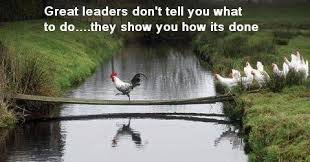
    great leadershttp://changingminds.org/disciplines/leadership/articles/manager_leader.htm

    While doing some research, I came across this comparison between a manager and a leader and that got me thinking about our jobs. Are we managers or leaders or both? I’ve included the main points of the article below, but you can read it in its entirety if you follow the link above at changingminds.org.

    What is the difference between management and leadership? The biggest difference between managers and leaders is the way they motivate the people who work or follow them, and this sets the tone for most other aspects of what they do.

    Many people, by the way, are both. They have management jobs, but they realize that you cannot buy hearts, especially to follow them down a difficult path, and so act as leaders too.

    By definition, managers have subordinates – unless their title is honorary and given as a mark of seniority, in which case the title is a misnomer and their power over others is other than formal authority.

    Management style is transactional, in that the manager tells the subordinate what to do, and the subordinate does this not because they are a blind robot, but because they have been promised a reward (at minimum their salary) for doing so.

    Managers are paid to get things done (they are subordinates too), often within tight constraints of time and money. They thus naturally pass on this work focus to their subordinates.

    An interesting research finding about managers is that they tend to come from stable home backgrounds and led relatively normal and comfortable lives. This leads them to be relatively risk-averse and they will seek to avoid conflict where possible. In terms of people, they generally like to run a ‘happy ship’.

    Leaders do not have subordinates – at least not when they are leading. Many organizational leaders do have subordinates, but only because they are also managers. But when they want to lead, they have to give up formal authoritarian control, because to lead is to have followers, and following is always a voluntary activity.

    Telling people what to do does not inspire them to follow you. You have to appeal to them, showing how following them will lead to their hearts’ desire.

    Leaders with a stronger charisma find it easier to attract people to their cause. As a part of their persuasion they typically promise transformational benefits, such that their followers will not just receive extrinsic rewards but will somehow become better people.

    Although many leaders have a charismatic style to some extent, this does not require a loud personality. They are always good with people, and quiet styles that give credit to others (and takes blame on themselves) are very effective at creating the loyalty that great leaders engender.

    Although leaders are good with people, this does not mean they are friendly with them. In order to keep the mystique of leadership, they often retain a degree of separation and aloofness.

    This does not mean that leaders do not pay attention to tasks – in fact they are often very achievement-focused. What they do realize, however, is the importance of enthusing others to work towards their vision.

    Perhaps we should call ourselves volunteer leaders who manage projects, for truly that is what we do. We lead people, but manage tasks or projects. It is always the people portion of our jobs that reveals our true impact on our programs, although this may not be measurable in traditional ways. How do you measure a volunteer who, because his volunteer leader believes in him, becomes a great volunteer? What stat is served when a volunteer manager spends extra time finding the right volunteer for a sensitive assignment? How can figures show the satisfaction volunteers derive from being shown how much they are helping clients?

    On this day, I hope everyone can take just a moment to reflect on the impact volunteer leaders have on not only the people we serve, but the volunteers we engage to serve. This balancing act of leading while managing takes diplomacy, skill, patience, diligence, fortitude, courage and stamina. As one volunteer said to her volunteer leader, “I can see how difficult your job is, what with all the different personality types you deal with, not to mention all the other people, like other staff and families you work with too. But I do know that if it weren’t for you, I wouldn’t still be volunteering. You saw something in me that I didn’t know I had, the ability to relate to people on a deeper level. I will always be thankful for you in my life and I’ll wager there are so many others who feel the same way.”

    So, for a moment, forget the tasks, forget the stats, forget the pile of unfinished business and think about all the people who have been touched by your vision. Know, in a quiet soul filling way, that the late nights, the exhausting planning of parties, the hours of hearing stories, the endless follow ups, the measured convincing, the tireless advocating, the off hour hospital visits, the struggles to remember birthdays, the constant plans for innovation, the never being away even on trips, and the continuing search for dynamic in services all reflect on the sphere of influence you have created in the world. Know that you make a difference, and although it may not be clear at every moment and to every administrator, it is clear in the universe. Stay the course, continue to lead, for the world needs you.
    Cheers to you all, leaders of volunteers!
    -Meridian

  • Where the Heck is My Paper Shredding Volunteer?

    Paradigm-ShiftArrrrrrggggggggghhhhhh.

    So, we all know there is a paradigm shift happening in volunteer management. As the WWII generation sadly leaves us, we are looking to the baby boomer generation and on to fill their prodigious shoes. When I first started working with volunteers, the greatest generation was busily humming along, doing every and anything necessary to fill needs. Nothing was beneath them and honestly, I didn’t manage any of them, I basically stood back in awe and occasionally ran for some refreshments. They taught me humility for it was in their essence to be humble, hardworking, non-complaining, authority respecting and generous.

    As I watch their faces grow more lined, their limbs more trembling, their gait unsteady, I can only stand by helplessly, offering a hand to their elbow as they decline. Their eyes, though, clear as an autumn sky, still hold the hardships they endured as they endure one more.
    As these volunteers age and retire, we, volunteer managers know that the next generation of volunteers will be different, will be their own people with a new skill set needed to recruit, engage and cultivate them. So, as I read the research and advice on how to find and keep great baby boomer volunteers, I make note of not only the advice that’s out there, but the experiences I’m having as well. I’m seeing that boomers are different; they are not as inclined to want repetitious jobs or confining schedules. They want more perceived meaning in their lives and they balk at boring assignments and rigid requirements. A lot of them look at volunteering through a spiritual or universal prism and speak freely about their journey to find meaning. There are those who were very active in the 60’s revolutions and after working corporate jobs for years, want to return to their activism roots.
    But back to the WWII generation. I remember Dora, a volunteer who came in to shred papers. Her husband was a big band trumpet player and she accompanied him on USO tours during the war. She would sit for hours in front of the shredder, pulling staples and paper clips, shredding no more than three pages at a time. Dora was possessive of the shredder and when another greatest generation gentleman, Bob came to shred papers, she sniped about how he didn’t do it right. Bob, a man who was orphaned during the Great Depression, was a bombardier who flew missions over Germany. Those two volunteers knew that we needed the sensitive material shredded and they dutifully spent their time helping us see that job done right. For them, there was no answering of phones, no fund-raising, no strategic planning, nothing except paper shredding with no complaints.
    Both Dora and Bob died some time ago. I tried to replace them and could do it piecemeal for a while by asking office volunteers if they would “just do it for an hour” while they were at work. An easy job became harder and harder to fill as Bob’s and Dora’s generation started to slip away.
    As we grew used to the dwindling of the generation that included widows who never worked and needed more training and help with office duties and war heroes who never spoke about their experiences, we embraced the boomers who work hard, have boundless skills and opinions and challenge us to dig deep for a more involved volunteerism.

    So, what’s the challenge? It lies in being able to integrate the paradigm shift into the fabric of our organizations. Newer organizations or those run by young people already have a deep understanding of millennial and generation X and boomers. It’s the organizations that are older, run by long-term administration who looks at volunteer services as “it’s always been thus.” Convincing them that no one wants to shred paper anymore after it’s been shredded for years by willing volunteers is tricky.
    I loaned a volunteer out to another department who needed one time help putting together last-minute binders for a presentation. Jill, a fabulous boomer who normally works on statistics and research agreed to lend a hand for a day. She came back and pleaded, “don’t ever ask me to do that again because I will quit first. They had me copy a 100 page binder thirty times. Do you know how many people came up to me and complained that they couldn’t get copies made while I was there? And the machine ran out of toner, then it jammed, I think it probably overheated too. I had to just stand there and watch as the copier ran. It was excruciating!”
    Thankfully, Jill happily returned to her more meaningful tasks and we laugh about her foray into “copier purgatory.”

    As we have adjusted our thinking regarding volunteers and their changing involvement, our organizations need to rethink their view of volunteers as well.
    Old thinking: Volunteers will do any job regardless of how tedious.
    New thinking: Volunteers need meaningful experiences.
    Old thinking: Jobs that have always been done by volunteers will happily continue to be done by volunteers.
    New thinking: Maybe we should invest in a paper shredding service and use volunteers for more important jobs.
    Old thinking: Volunteers are all the same, they come to be helpful, we tell them how to be helpful, they do the job and go home happy.
    New thinking: Volunteers have so much wisdom, experience and passion to offer, let’s find ways to tap into that.

    Bringing research and evidence that volunteering is changing and that we must adapt is no small mission. Telling management that old thinking is well, old thinking and that it is nearly impossible to find volunteers to do menial tasks without sounding negative takes finesse. Being proactive and showing what the new volunteer paradigm can do goes a long way to ease the pain of losing shredding volunteers.
    Let’s see, volunteers who shred papers vs. volunteers who design websites or consult or have management experience? Hopefully, organizations choose a new wave of professional skill sets over mundane tasks.

    Old thinking: All a volunteer coordinator has to do is ask and a volunteer will magically appear to shred.
    New thinking: It takes multiple complex skills on the part of our volunteer coordinator to engage the new volunteer. Let’s listen to him or her about volunteerism and accept that he or she has done the research and has knowledge on the subject.
    Added bonus or really new thinking: Let’s give him/her some much-needed recognition next Wednesday during International Volunteer Managers Day.
    -Meridian