Tag: recruiting volunteers

  • Management 601

    Belushi“Hey, not everyone is cut out to be a manager,” said my friend, Rennie, who works in the finance department of a large charity organization. She occasionally uses a volunteer to help with end of year reports, and adds, “the volunteers are always so wonderful to work with and our volunteer manager, Chase is awesome. But volunteers are not my problem. My problem is we have a new senior manager in our department, Bridget, who was hired to make our financial processes flow more smoothly. And since she’s gotten here, our department is miserable and everyone talks about quitting. It’s demoralizing.”
    “What is it about her management that is so bad?” I asked.

    “Well, when she first got here, she gathered our department together and told us what a great bunch we were and how excited she was to be working with us. She said she’d heard great things about us and that she wanted to learn from us.”
    “That doesn’t sound so bad.”
    “Yeah, but that was then. Now when our department meets, she tells us what a great bunch we are and then proceeds to rip into each one of us for something we did not do correctly or on time or according to her schedule. It’s apparent that the praise is just generic lip service while the criticisms are specific and targeted. We used to be a happy, productive department. Now, we are just defeated.”

    I feel for Rennie. Her senior manager seems to have been sleeping during management 101, which got me to thinking about volunteer managers. Where are we in the management curriculum, if 101 is your basic course? I’m thinking that the vast majority of volunteer managers passed the first five years and are completing management 601 on the way to a master’s degree.

    Why do I think that? Well, I’ve compiled a list of the skills we have honed by working with volunteers. Here’s just a few of those skills: See if you agree.

    Volunteer managers have mad leadership skills. We inspire, encourage, cultivate and mentor people. We believe that our volunteers will do amazing things and we develop their strengths instead of focusing on their weaknesses.

    Volunteer managers immerse themselves in outcomes. We keep statistics and prepare reports, but our bottom line is always about the human results. Because our eyes are on the work of the mission, we instill the joy and meaning of helping in our volunteers which creates excellence. When our volunteers do pure work, the stats and reports just naturally follow.

    Volunteer managers think “in the long run” terms. We build teams for long-term help, and not just for today’s assignment. Our hard up front work is meant to retain satisfied volunteers. Because we can’t just hire a replacement for a volunteer who quits, we make sure that our existing volunteers have what they need to succeed. We don’t “use” volunteers, but rather, we support them so that they remain committed to our cause.

    Volunteer managers stimulate growth. We are open to new ideas, new ways to help our clients and routinely look to recruit people with diverse backgrounds and fresh ways of doing things.

    Volunteer managers are expert mediators. We are the middle men in almost every assignment. We negotiate between clients and volunteers, and volunteers and staff. We quickly learn the art of persuasion, and the ability to deliver a negative message without hurting feelings. We are skilled at compromise to get jobs done.

    Volunteer managers operate with clarity. We know we will not keep volunteers if messages and instructions are not clear, so we frame every instruction so that it is clear. We know that muddied messages can ruin a volunteer experience and cause the volunteer to quit.

    Volunteer managers are critical thinkers. We have to meet challenges in a timely manner and so we have highly developed problem solving skills in order to succeed. We keep file cabinets full of pertinent information in our minds and databases so that we can cross think to find the best solution to any volunteer involvement. We can offer the best volunteer for a job, because we know that volunteer’s skills and abilities and can match those to a situation.

    Volunteer managers are chameleons. We can adapt and change quickly. We know what tone to take and can switch from light-hearted to serious in a moment as the situation warrants. It’s silly, but we are kinda like the Christmas tree lights with so many different settings and we’re constantly on the “all” setting so that we can fit into any mood.

    This list is just a portion of the skill set possessed by volunteer managers. There are so many more and unlike our compatriots in human resources, we must develop and use many more people skills to recruit, lead and keep our volunteers.
    People ask what is our volunteers’ substitute for a paycheck? We say that it is the meaningful work that keeps our volunteers coming back. But also, please remember, that in part, it is the vast skill set of the volunteer manager that fills the void of not receiving a paycheck.
    Instead of monetary compensation, our volunteers receive a meaningful volunteer experience thanks to the leadership of volunteer managers who are constantly growing in skills to help make that meaningful experience happen.
    -Meridian

  • There Are No Shortcuts

    two pathsThere’s one thing every volunteer manager knows. There are no shortcuts to volunteer management. Nope, no easy path, no automatic pilot, no kick back and let it go. No, we actually put some effort into matching volunteers with assignments. Yep, we actually go so far as to try to get as much information on the assignment so that we can not only find the best volunteer, but also to make sure the 80-year-old volunteer who just had knee surgery doesn’t end up standing hours in the hot sun at a health fair.
    We trust our instincts, and our instincts tell us not to take shortcuts, to check, recheck, and then follow-up. It’s called retention, or self-preservation, because if you put some good up front work into volunteers, you hate to lose them because they were given bad directions and instead of arriving at a client’s house, they end up at the wrong house where a “deal” is being made and then they are never seen or heard from again, but their car is fished from the lake three days later.
    The shortcut path of just simply handing volunteer Dave an assignment is fraught with pitfalls. One or two “what am I supposed to be doing, exactly” and “who’s in charge here” and poof! Dave falls off the rope bridge into the piranha infested river of “I quit” below.
    Jolene is a volunteer coordinator for a small hospice. “Recently, we started a pet therapy program,” she said. “I recruited my first volunteer, Beth and her dog, Chick. Beth works for a local veterinarian and has a lot of contacts with the therapy dog groups in our area so I was really pleased to recruit her. When we talked, Beth told me about a few horror stories she’s had trying to take Chick, her black lab, into hospitals.”
    Jolene continued, “I could see that Beth was hesitant about bringing Chick into our program, because she was afraid that we would give her poor directions or ignore her when she needed us, the two things that happened to her on her own. So, I assured her that this would not happen with us and I set up a time to meet her at a nursing home where we see patients. At the time, we were taking care of three patients in this nursing home, I’ll call ‘Shady Rest.’ So I called Shady Rest and asked to speak to the activities director, Deena. Deena took my call and I explained that I would be meeting a pet therapy volunteer at her nursing home and that I would love it if Deena could join us. She agreed. So, a week later, I pulled up at Shady Rest a bit early so that I could talk to Deena about any pitfalls like residents that might be afraid of a dog and so forth. I walked into the nursing home and there was no one at the reception desk. I stood for a moment, and nodded to the few residents sitting in the lobby and then walked around a corner to find someone to ask where Deena’s office was. I found a woman in an office on the phone, who pointed and said, ‘down the hall’, so I headed down the hallway, looking for a sign. I found the activities room, but it was locked up and the lights were off, so I returned to the lobby. There was still no receptionist, so I returned to the lady in the office who had directed me and she agreed to page Deena. I went out to the lobby again, checked my watch and sat down and waited. A few minutes later, the lady from the office came out and said that Deena was really busy right now, but to go ahead and visit the patients.
    As I was listening, I kept thinking about Beth and how she would have perceived all this if she had come alone for the first time. This was probably the kind of experience she had already. I was so glad I was there to walk with her down this path. By the time Beth arrived with Chick, I had scoped out all the patients’ rooms, had found a place where other residents were gathered and talked to a few of the staff. I walked with Beth through the facility and we had a decent time. Deena managed to come out for a few minutes to introduce herself so that was good. Beth felt comfortable enough to decide that she could come once a week and so it was a success. But had I not been there, I can’t imagine that Beth would have stayed long enough to figure things out. Good thing I was there.”
    While volunteers are capable people, they still require specific directions and when they do not receive them, the volunteers will eventually quit. Knowing how much effort goes into recruiting volunteers, we have no time for poor directions or faulty treatment. We’ve all had to apologize to a volunteer who has had a bad experience because their assignment was not properly planned out. We’ve had the morning visits from volunteers who were inconvenienced the day before. Sometimes you just know you need to pick up every phone call and greet with, “Hello, let me begin by apologizing to you right up front.”
    When I try to explain how important clear directions are and why I spend so much time on the check and recheck, I often have staff members ask, “yes, but if the volunteers can’t adapt to a little inconvenience, then they really aren’t meant to volunteer, right?”
    To which I say, “that’s not it at all. Volunteers come to be of help, to know their volunteering has meaning, not only for our clients but to help the burden of overworked staff. Being sent on wild goose chases says to the volunteer, ‘THIS JOB IS NOT THAT IMPORTANT’.”
    Our volunteers are not prima donnas. They don’t look for special treatment. But they are looking for clarity and meaning. It’s the very least we can give them.
    -Meridian

  • The Shaping of Volunteers

    child with flowerWith Mothers Day still fragrant from all the vases of flowers and all the leftovers from dinners out, I started thinking about the stories volunteers have told me about their mothers. I have a friend who laughingly tells me that people volunteer because they were wild in their youth and are now making up for it, and for a few volunteers I know that’s true because they have said it. But most stories the volunteers tell are great yarns, the kind of stories that feel like they are coming from a huge book, read while you sit on the floor, hands propping up your chin.

    Annabel told me that her mom was so old-fashioned that when she met her husband to be, Ben, her mother gave her firm, ‘not to be ignored’ instructions. See Annabel, an only child was 14 and Ben, a mature 17 fell in love at a country picnic. He began to court her by showing up at her house, hat in hand, a polite “yes ma’am” on his lips. Her mother and father looked Ben over, decided to give him the chance to prove his worth and they let the two young people get to know each other. “And my mother,” Annabel said, “Oh my mother gave me lots of advice. She told me what to wear, how to act and what to say to be a nice girl, a good catch for this gangly almost grown man who I was head over heels in love with. But she also had stern rules for me too. I could only kiss Ben five times on a date. When I told him that rule, he laughed, but he obeyed out of respect for my mother. We were married when I was 16 and we’ve been married 65 years now and we often talk about my mother and how much she loved both of us. Mother was a strong woman, fair and loving. Ben and I could not have children so we adopted four. My mother was a wonderful grandmother to them. It was because of her that I adopted children and now want to help others.”

    Corine came to volunteer two years after her mother died. Corine, a divorced woman with no children, lived with her mother until her mother’s death two years before. She often speaks of her mother who was her best friend, citing the sacrifices her mother made for the family. “My mother was raised in an orphanage and did not ever know her real family. She put herself through business school and raised myself and my sister. We never wanted for anything and although I know my mother struggled, we never ever knew that. My mother helped anyone and everyone, from our neighbors, to down on their luck strangers who she gave probably her only spending money to. I lived with her for 20 years until her death. She was my best friend, my confidant and although I miss her every day, she was the one that told me I must go on living. Because she was such a good person, I want to be that good person too.”

    Grace speaks of her mother wistfully. “My mom was dealt a blow no mom should ever suffer. My brother Jay was killed in Vietnam at the age of 19. I was only 14 at the time and I still remember the funeral. How my mother and father cried. My mother grieved her whole life but she never let it affect the rest of us kids. She never let his memory hold us in the past. Rather, we kept his memory with us, as we moved forward and my mother lived for us and for him. On his birthday and on holidays my mother would slip away for a bit and sit in Jay’s room and cry. She cried her tears of pain and then powdered her face and joined the family. My mother was strong and loving and she taught me that heartache could not diminish love nor spirit. After my husband died, I was devastated, but I picked myself back up and decided to live. I volunteer in honor of her.”

    Greg told me that he and his brothers and sisters grew up in the hills of Tennessee. “Early in their marriage, my father had an accident at work and was disabled so that meant my mother had to be the sole provider for our family. I can remember the hard times, when we would take a walk up to the store and buy a pound of flour and a pound of sugar so that we could make flapjacks and homemade syrup for dinner. Mom worked, sewed our clothes, made our food, helped us with our homework and cared for Dad. She never complained. She died at the age of 54 and I think she lived two lifetimes of work and responsibility in her 54 years. I remember though, laying in bed and Mom singing us to sleep. Her voice calmed my fears and told me that, although times were hard, I was loved and safe. I want others to feel that way.”

    In our profession, we have this wonderful opportunity to engage with our volunteers. The vast majority of them are amazing human beings and getting to know them is a glimpse into the stories that shape them. Listening to them speak of their mothers is like hearing the singing of a tale or the recitation of an epic poem. These stories are enlightening and inspiring. I wish I could meet those mothers.
    If I could meet them I would tell them thank you for shaping our volunteers minds and hearts. I would say to them, “I wish you could see the wonderful person your child has become. I know you would be proud.”
    -Meridian

  • The Song of the Weathered Explorer

    newell-convers-wyeth-the-rakish-brigantine-sea-captain-in-stormVolunteer Appreciation week has always been a chance to reconnect with volunteers. There are those you see every day, those you talk to on the phone weekly, and those you only see at meetings. Each volunteer takes the right amount of interaction, praise and mental follow-up. Don’t think for a moment that an event is easy, so if after an event your head is swimming, that’s normal. Events take finesse and each volunteer that comes up to you takes a minute or two of intense volunteer retention. It’s worth every moment but it is exhausting.

    There are a few volunteers who do not attend meetings, and they prefer to bob out there on the volunteering sea, wind in face, their hands skillfully steering them through storm and calm. They take little to no management interference for they have impeccable motivation, mad skills and they’ve circumnavigated the globe of helping far longer than they’ve been managed. Open their brains and a tide of experience comes gushing out. They are the historians, the pioneers, the explorers who have led the way in your organization.
    I encountered Jenna at an event during volunteer appreciation week. I hadn’t seen her in quite some time so I was thrilled that she came. Jenna and I go way, way back. She was one of the first volunteers I recruited to work at a hospice house about 20 years ago. Jenna, a British transplant, married an American man and spent time tutoring local high school students in the fine art of composition. I even got to attend her swearing-in ceremony when she became a citizen. Back in the day, we roamed the halls of the house, imagining volunteer programs while caring for patients as we went. It was new territory to discover and Jenna was fired up to be in the middle of something unique and innovative.
    Several years later, Jenna moved and she ended up visiting nursing homes in her new area. Another volunteer coordinator was now involved with Jenna and occasionally I talked to her new manager, Shelby, about how Jenna was doing.
    “Fine, just fine,” Shelby would always say. “She pretty much keeps to herself though. I don’t have a lot of dealings with her. Sometimes I’m just happy if she comes to a meeting. But she does turn in her paperwork and the patients love her.”
    Hmmmm. These conversations never felt like we were speaking about Jenna, at least not the Jenna I knew. But I always requested my hello be passed on to her.
    So, during volunteer appreciation week, Jenna surprised me. She snuck up behind me as I was checking people in and popped me on the back. “Jenna!” I yelled and gave her a big hug. “Wow, I didn’t know you were coming!”
    “I was in town,” she said, and smiled. “I figured you’d be here and I wanted to say hi.”
    “I’m so glad you did,” I returned, genuinely pleased to see her.
    Since the event took up time and effort, Jenna sat with some long-term volunteers that she knew. But after the event was over, she hung around and helped clean up.
    “So, how’s it going?” I asked. “I heard you were visiting nursing homes. That must be pretty awesome for you.” I said as I crumbled up paper tablecloths.
    “Yeah, it’s ok,” she offered, a bit half heartedly. “I love the patients, don’t get me wrong.” She stared at a candy dish.
    “Then what is it?” I asked putting aside my cleaning.
    “It isn’t, it just isn’t the same.” she said. “Don’t you miss those days when we first started? How the atmosphere was so exciting and we were the first ones to create so many things? All of us, staff and volunteers, we were in it together, we had this incredible chemistry and we did amazing work.” She traced the top of the dish. “I miss it. It just isn’t the same. I feel so, so ordinary.”
    I put my hand on her back. “You, my friend, are an amazing, wonderful volunteer. We never could have done half the things we did without your vision and enthusiasm. Sure, I miss it. I miss you, too.”
    She looked at me and I wondered where explorers go after they’ve discovered whatever it was they were looking for.
    “Jenna,” I offered, “things have changed. Goodness knows, they’ve changed a lot and we couldn’t do today what we did back then. But you have so much to offer. Look at all you’ve done. That Jenna is still there. Still waiting to reconnect and imagine.”
    “I think I might want to try some different volunteering.” She said it almost as a question, as though she might be disloyal.
    She looked like a little girl who has been down in the claustrophobic cabin of the boat, itching to get her hands on the wheel and steer somewhere exciting.
    “You should. Go for it, you don’t have to cling to this. Go out and find a fledgling volunteer group and do amazing things.”
    She gave me a hug. “Thank you. And thank you for understanding.” As she popped a chocolate in her mouth she asked, “you do feel it, don’t you? It’s not the same, right? I’m not crazy.”
    “No, you are most certainly not crazy. I feel it. But things never remain the same. And neither do we. So, grow, my friend and don’t look back.”
    With that she walked out. I’m certain she will find another spot to volunteer. Whether she can recapture the excitement of newness and innovation remains to be seen.
    So, until I hear from her, I will just picture her, spray in face, hands on the wheel, steering for the horizon and whatever new territory lies out there.
    -Meridian

  • An Open Letter to Prospective Volunteers During Volunteer Appreciation Week

    extended handDear Potential Volunteer:
    Happy volunteer appreciation week. Although, you may not yet be a volunteer, by considering becoming one, you are one step closer to being one of over 100 million volunteers worldwide. We, volunteer managers, are cordially inviting you. And so, I am writing this letter to you personally. If you are interested, I’m going to ask you a few questions to help you acquaint yourself with the volunteer manager who will be your guide throughout this process. Let’s get started.
    Because we appreciate your unique qualities, how do we support you while together we find your ideal volunteer niche? Are we to be your mentor, your cheerleader, your coach, or your teacher? Can you help us fill the role you need us to fill so that you can succeed?
    What should we do to help bring out your best? Do we hover, give constant praise or would you rather we stay back and be available only when you signal you need our help? Can you give us signals that indicate you are doing well or tap us on the shoulder when you need us?
    How often do you want us to call you? Every time we have an assignment? Are you ok with saying no to us or do you feel like you have to say yes? How will we know its the right time in your day or week or life? Can you tell us when things change so that we do not have to guess? (We usually are incorrect, just so you know).
    Ok, if you’re still with me, let’s move on.
    How much do you want us to know about you personally? Do you want us to know every deep detail or do you feel that lots of personal questions are, well, too personal? Can you help us get to know you as a person?
    Will you understand why we ask you to respect our guidelines? Our rules are there for reasons. Sometimes, to be honest, the rules frustrate us too. If we ask you for a background check, can you be ok with us having to do that? We want you to know that we don’t think you are a criminal, we are just following requirements. It’s not that we don’t want you to volunteer and appreciate your enthusiasm, it’s that we must maintain processes in order to serve you and our clients. Can you think of it like this: If my mother (or father, son, partner, whomever) needed the help of a volunteer, would I want that volunteer to be thoroughly vetted by the organization?
    What about awards and recognition? Would you feel left out if another volunteer was spotlighted or given an award? Are you the kind of person who says the limelight doesn’t matter, but secretly you feel slighted if we take you at your word and don’t formally honor you? This may seem trivial, but we really want to give you the type of feedback that fits your style. Meaningless praise is not what we are about. Can you help us to give you the recognition you’ve earned?
    And what about motivations? Will you feel that we are psychoanalyzing if we try to get at the heart of your desire to volunteer? Will it bother you if we want to probe deeper than your desire to “just help?” Can you see how it helps us when we know the secondary reasons like you enjoy socializing or you need challenging experiences? Can we convince you that we are really doing our job if we gently probe about your recent losses or your former life challenges? Will you understand if we take more time acclimatizing you because we want to make sure that you will do well? If we ask you to wait six months or a year, can you see that we want you to come back after you have spent some time healing yourself? We know that volunteering is cathartic and healing and we have seen so many people successfully volunteer while mending their souls. Since this is a very delicate balance, will you understand we have a responsibility to the vulnerable population we serve and that being healthy and whole is a sound basis for volunteering? Will you let us work with you?
    When you have a great idea, can you understand that we do not make policy and that we cannot always make things happen, at least not right away? Because organizations have hierarchies, will you allow us to go through the channels to get things done and understand that we can’t force processes to go faster? We get very frustrated too, with the sometimes slow go of committees and permissions. But having said that, volunteers all over the world have made tremendous improvements in their respective organizations. We most certainly do value your ideas and suggestions, so will you keep them coming? Your suggestions make us look good too. Just kidding.
    We want you to know that we want you to succeed. Our jobs are to find you, (although oftentimes you find us) to orient you properly, to give you the attention and mentoring you need, to place you in a meaningful position that enhances your life while respecting your availability, and to do everything in our power to keep you coming back as a satisfied, productive volunteer.
    You are the reason we have jobs, jobs we cherish, jobs we believe in. You inspire us, challenge us, educate us, lead us and keep us coming back. We look at each one of you as an individual, with unique perspectives, needs, goals and timetables. We want to support you while cultivating your skills and we are willing to invest time in you if you are willing to work with us. Our clients benefit beyond any of our imaginations.
    Here’s to you, our future volunteers. Will you come, be part of our world? Will you seek us out and change our clients’ and your lives for the better? We want you to experience that almost inexplicable feeling of helping another human being. As one existing volunteer mused, “how can I describe what it is like, my volunteering with critically ill people? How can I describe the feeling I get? Its sorta like trying to tell someone who’s never been in love what it’s like to be in love.”
    Come, our new friends, fall in love.
    -Meridian

  • A Tale of Two Speeches

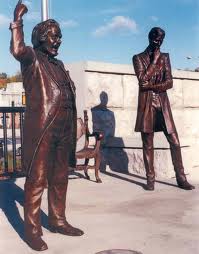
    Lincoln Douglas debatesLast week I attended one day of a community forum hosted by a state organization that is a clearinghouse for non-profits. Featured were non-profit gurus with varying credentials and backgrounds, covering topics ranging from increasing donations to taking care of donors so that you will increase donations. (just kidding, there was a topic on staff burnout-presumably from trying to increase donations, I guess). I was able to attend two presentations; the first one by the vice president of marketing for a consulting firm. The topic was “Reaching Out Through Messaging”. The other presentation was by a volunteer, who had just won a state award for exceptional volunteerism. His topic was “Doing and Believing.”

    As I stepped over the crowd to find a seat in the first presentation, I knocked several handouts to the floor. The room was packed. Our speaker, dressed impeccably in pinstripes, told us of the power of messaging, especially when knocking on the doors of potential donors. On screen, he showed examples of pictures that tell compelling stories about the good work our organizations are doing. Slide after slide showed grinning people with perfect teeth helping people who looked just enough down on their luck. Not dirty or disgusting, the pictured recipients had appropriate gratitude angled just right for the camera. All in all, I got the messages from the pictures. Donating money=nice scenes like this going on. Evidently, these pictures work, because he gave some pretty impressive statistics. Within a moment, the subconscious mind of the donor is invaded with good feelings. Nicely done, I thought. He did say that messaging would apply to recruiting volunteers as well. Paint the picture, tell the story. He showed one picture of volunteers. They were gathered together, arms around one another, smiling for the camera. They looked pretty happy. They weren’t sweating, so I’m guessing this was a before and not an after picture. I did notice they all had perfect teeth. Hmmm, maybe they all went to the same dentist.

    I pretty much could sit anywhere I wanted to in the next presentation. I guess most of the attendees elected to go to the concurrent session, “Bridging the Donor Gap”. I looked around at my fellow seat mates and nodded. You can pick out the volunteer managers at symposium. We all pretty much get out our steno pads and wait expectantly.
    The award-winning volunteer, Gabe, walked up to the front of the room and turned to look at us. He was tall, with raven hair and craggy features. His smile was impish, as if he had just sneaked into his father’s cocktail party. He thanked us for coming and then proceeded to tell us his story. A youth minister, Gabe began his ministry ten years ago. He had watched with concern the growing number of homeless folks in his area and so he began to collect basic essentials to give out, first on a monthly basis, then every week. This ministry, with the help of the youth of his church, added a soup kitchen, and a counseling service. He, and several youth members volunteered at a local thrift store in exchange for the unsellable items such as socks and kitchen utensils. He then grew quiet as he told us about one of his most memorable clients, “Ruth,” a homeless woman who had lost her job and with a ten-year old son, Jason, in tow, arrived at the church doorstep. Ruth had dropped out of high school when she was sixteen and pregnant and now, at 27, she found herself without a safety net after her mother died. Gabe walked quietly back and forth in front of us, running his fingers through his hair as he told us that shy little Justin loved Batman. His Batman sneakers were well-worn and the only sneakers the youth group had to replace them were plain. Gabe paused and told us what happened next. The youth group started texting all their friends, asking for a pair of boys Batman sneakers in size 7. By the time Gabe arrived at his church the next morning, not only were there three pairs of Batman sneakers arriving at church, but friends of friends brought Batman shirts and toys along with packs of new socks, food, underwear, dresses, diapers, jeans, and more. On those donations alone, his group was able to feed and clothe 5 homeless families. Gabe looked us in the eyes. “Believe,” he said. “Believe that you can do good work and you will.”
    When Gabe finished, we all stood up and applauded. He smiled reluctantly. I didn’t check to see if he had perfect teeth. I was too busy being mesmerized by his message.
    -Meridian