Tag: volunteer

  • The Shift Towards Communit-eers

    Although I like new descriptive words, I don’t think a word like ‘communit-eer’ should replace volunteer. It makes me think of other “teers” like the swashbuckling three musketeers, a puppeteer, or more recently, the mouse-ears wearing folks over at Disney. However, the definition of a communiteer, someone involved in their community, works because new paths to volunteering are emerging. Social media, new generational thinking, the embracing of global issues, disaster response, and a pandemic have all contributed to seismic shifts in volunteering’s structure. Communities mobilizing when a critical need strikes has become an efficient and effective answer to our current model of relying solely on traditionally recruited, vetted, trained and deployed volunteers. Does this mean the end of formal volunteering? Or can we embrace community partners, learn how to harness their enthusiasm and make it work for everyone?

    The signs are everywhere

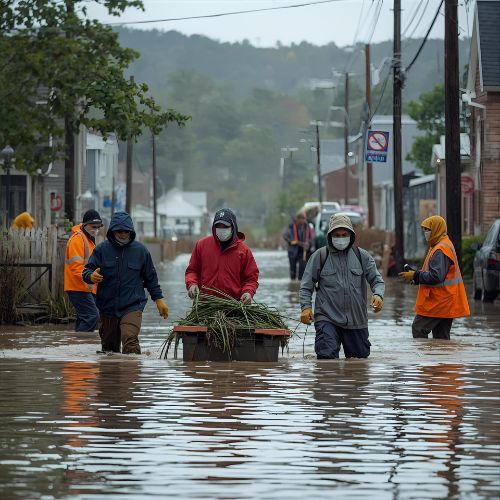
    This article, “Volunteers flock to help search efforts after Texas floods even as officials warn them away,” says it all. The systems we have in place require formalized volunteering, including background checks, adherence to policies and procedures, the ability to record volunteer hours, and let’s not kid ourselves, the ability to solicit said volunteers for donations. Systems don’t want the ‘show up and wing it, then retreat to something else’ kind of volunteer. Systems want loyal, fill your slot every week, donate to the cause, keep within your lane volunteers. Systems hoard. Systems perpetuate systems. But what do today’s community-minded citizens want, and what happens in a disaster when time is critical to success?

    I am not, nor ever was, opposed to rules and background checks and gathering vital data and statistics that support all the impact our volunteers have on our missions. But I see how volunteering is changing, and how a stranglehold on the systems we have in place can alienate communities, kill creativity, drive innovation away and dry up our pool of volunteers.

    Is self-mobilization the new volunteering?

    In the aftermath of the devastating flood in Texas, citizens found ways to help. This article, “The Texas floods washed away their possessions. Volunteers are helping reunite them,” chronicles a Facebook group that posted pictures of items recovered, many of which the finder lovingly cleaned and returned to the owners. These community-rich citizens did not contact an organization for instruction; they did not wait for interviews nor background checks. They saw a need and created a solution.

    Or, consider this recent article, “No one claimed his body when he died. These strangers came together to help bury him.” Citizens showed up, answered the call, and formed a “chosen family” for this gentleman.

    What are modern socially minded people looking for?

    What if we harnessed the social goodwill of the people who responded after the Texas flood or became surrogate pallbearers? What drove them to act? Was it the immediate need? The camaraderie that comes from a united front? The instant impact they experienced? Can we provide the same urgency and results-based satisfaction? Can we give them a semblance of the freedom to find solutions rather than just telling them what to do?

    How can we embrace the community partner?

    What if, in a perfect world, we imagine a community of partners ready to help when the need arises? Let’s take it to the extreme first, (and by extreme, I mean mostly unattainable at this point) then pare it down and chop it into pieces that we might manage.

    • In the extreme, everyone in our communities receives an invitation to basic volunteer training, and those who complete training have willingly completed background checks.
    • Volunteer training and opportunities are front and center in schools.
    • Communities, whether municipalities or villages, each track volunteer hours and projects and, with gamification in mind, vie for the title, “Most Community Spirited.”
    • Nonprofits share, not hoard, community help.
    • Nonprofits collaborate with one another to share resources, ideas and solutions. Instead of operating in silos, we recognize challenges are complex, and working together benefits the community. Instead of competing for donations, grants, government help, and volunteers, we band together in more efficient ways.
    • Community truly means community as nonprofits operate under an organic concept versus an emphasis on the prevailing system.
    • When help is time-sensitive, such as in a disaster, mobile notifications, akin to the ones emergency warning systems use, would kick in. Messages inform individuals how they can help, while also warning them about dangerous conditions. (For example, stay away from downed wires on main street-emergency personnel are on scene).
    • Community partners have an opportunity to sample a wide variety of roles, giving them a broader connection to their neighbors through multiple and varied interactions, thus leading to a more cohesive community.

    Many studies have shown that people have not stopped wanting to help; they are simply looking for better ways to do it. They’re finding solutions that are immediate, impactful and unburdened. Informal volunteering is alive and well.

    So, how can we pivot and harness the shifts we are seeing in volunteerism so that they work for our missions and work for volunteers? How can we keep up with mobilization and a rapidly changing culture of helping?

    Training-a tiered approach

    In this perfect world, training comes in tiers. In 2018, I wrote an article for the Engage Journal, “Effective Volunteer Training is a Three-Tier Investment,” in which I talked about volunteer training as tiers. With a tiered training program, volunteers can quickly get started. Then, as they seek deeper involvement, we provide the in-depth and specific training for more complex roles.

    Can we generalize basic volunteer training? I believe so because organizations share similar concepts, such as “do no harm.” All participating organizations would agree on the basics covered in a general volunteer training video, thus giving organizations a pool of volunteers for events, simple assignments and even fill-in positions. Instead of waiting for an assignment from one organization, volunteers could choose from a variety of roles, times and places to volunteer. And our benefits would come from:

    • Drawing from a larger partner pool.
    • Directly tapping into the urge to serve when needed-think disaster relief and even events or special projects.
    • Using the sense of urgency that begets action.
    • Keeping the people who are not being engaged from giving up. Instead of waiting for a notification from one organization, every volunteer would experience a vibrant world of volunteering that offers them choices in roles, locations, times and durations, giving them a greater sense of how our communities are interwoven and complex, which confirms how much their involvement matters to their neighbors and fellow citizens.
    • Exposing more people to our work. After sampling a role, people might like what they find and want to become more involved. We may actually see an uptick in the number of people who want a recurring role (thank goodness). As community partners sample various volunteer opportunities, not only would they feel their interests are being taken seriously, they might find a fit.
    • Putting our communities first as opposed to competing for volunteers, resources, donations, media play and grants.
    • Fostering a sense of humble inclusion, and of wanting to fully engage the citizens who live in our communities.
    • Positioning our organizations as community partners versus the perception that “we’re the experts here, so come and do what we tell you to.”
    • Making diversity the norm, not a goal for the future.
    • Embracing innovative ideas.
    • Exposing volunteers to more missions, multiple needs, and a more diverse representation of fellow citizens, all of which would lead to a more cohesive community.
    • Capitalizing on the “helper’s high” volunteers experience when they see what their work has accomplished. As each volunteer experiences a role that impacts a mission, we could offer them something “next,” something more, by giving them a variety of options, instead of letting those feelings cool.

    If organizations banded together and created a solid, basic orientation that touched on missions, responsibilities as community partners, rights of the participants, and treatment of people within our programs, we’d have a solid base for our community partners to get started.

    What about notifications?

    Fortunately, we have technology and the ability to communicate immediately. In the case of the Texas flood or the need for a pallbearer, a communications center could mobilize already vetted citizens, while informing them how, why, and where dangers to themselves and others exist.

    While we don’t yet have a central communication system for partnering non-profits, we can still collaborate. How?

    • Inform volunteers of opportunities other organizations offer.
    • Conduct some volunteer meetings together. Let volunteers meet each other and share tips and stories.
    • Pool resources and pay for a speaker to inspire all community volunteers.
    • Celebrate Volunteer Week as a group.
    • Band together and share trends and challenges.
    • Review policies and procedures with other volunteer managers.
    • Forge a united front to advocate for the resources everyone needs.
    • Make impact, not number of volunteers, as your organization’s goal in your reports and when speaking about your volunteers. Change the narrative from retention to engagement and point to the untapped potential your community offers.

    Of course, there are drawbacks

    Change is never easy nor perfect, and change is difficult even if it is inevitable. But the possibilities are worth it. We’d foster a community of helpers. Cooperative training can streamline the onboarding process. After basic volunteer training, each organization would then offer ongoing and specialized training. Time-strapped volunteer managers could share in providing refresher courses, celebrations, and meetings.

    Silos aren’t helping us. What if, instead of making retention one of our primary goals, we band together and orient our citizens to be communiteers, or community partners? What if we put the community and our volunteers first?

    I know I’m throwing out broad concepts that are easy to voice from my laptop lofty goals, but I think we can move towards a space where volunteering is not only better for the volunteer and for our community, it is more organic, and more in keeping with the trends we are seeing instead of remaining constrained behind aging systems that still value these outdated measurements of success above more important concepts;

    • Number of volunteers
    • Number of volunteer hours
    • Volunteer retention
    • Volunteers who fill regular slots

    Change doesn’t happen overnight, so if I’m throwing concepts out there like tossing bread at pigeons, how do I expect to get there?

    • First: We can start by sharing or continue sharing and recommending volunteers with/to other volunteer organizations in our areas.
    • Second: Finding, joining or creating local volunteer engagement professional clubs or associations in our communities in which to share, discuss and find solutions to volunteer issues and needs. There’s more leverage in becoming a one-voice force that can speak to volunteering’s challenges by using collective knowledge and experience.
    • Third: Flexibility. Let’s create more flexible roles and increase programs that can accommodate students and groups of volunteers. Corporate social responsibility is on the rise. Students are more socially conscious. One way might be to partner with other volunteer organizations to create rotating schedules for students during summer break so they can experience a variety of opportunities. (Full disclosure-I tried to do this many years ago and it flopped, but that was then and I didn’t do a good job of structuring it.)
    • Fourth: Communication is the key to mobilizing volunteers, and tech is the answer. Would a system such as a local municipality warning system work to communicate with volunteers? Would it be treason to collaborate with other volunteer organizations to send out combined messages? Volunteers could opt-in to be contacted by multiple organizations through text messaging, giving them a range of opportunities.
    • Fifth: Costs. Will local governments help, or will a consortium of non-profits decide to share the background checks and training costs?

    This “perfect world” concept is daunting, but we leaders of volunteers know how critical it is to engage volunteers, not by dictating to them, but by offering them experiences that will light up their desire to help. So, what’s better? A volunteer joins an organization, doesn’t find the experience they are looking for and quits volunteering altogether. Or, that same volunteer joins a pool of community helpers, tries out an organization, doesn’t find a fit, but finds one at another organization. In both instances, the first organization loses a volunteer. But in the second scenario, another organization gains a volunteer, thus growing our pool. Is this concept so far out of our reach?

    But wait, it’s already being done

    In Maia Portugal, the seeds are in place. From this article, “Volunteering as the Invisible Engine of Social Cohesion in Europe,” the following paragraph sums it up:

    “Maia’s recognition as both the Portuguese Capital of Volunteering and the forthcoming European Volunteering Capital 2026 is far more than a symbolic  honour; it reflects a long-standing commitment to civic engagement,  innovation, and community solidarity. These titles represent not only what Maia has achieved, but also what it aspires to become: a municipality where volunteering is central to public life and social transformation.”

    So, that “perfect world” is attainable. Volunteering is a social activity, one in which everyone benefits. We’ve all witnessed how barriers, fears and hesitations fade as people offer and receive the best of themselves and each other during deep human connections. We, all of us in the volunteer engagement profession, have always championed volunteering as something bigger than hours given.

    Why can’t we begin moving volunteering towards a community partnership, one more inclusive, and geared towards engaging volunteers versus using volunteers? I think the world just might embrace it.

    -Meridian

  • Volunteer Time Donor or Time Investor?

    Just revisiting this post about volunteer investors from 2017. Semantics aside, we need to change the deep conceptions/misperceptions surrounding volunteers.

    Why Time “donors”

    Time=Money. We all say it and that’s why we call volunteers “time donors.” They donate their time, skills, expertise, talents etc. But is that what they really are? Donors? Maybe there’s a more descriptive word for our volunteers. And what is the difference between the terms donate and invest anyway?

    donate: to present as a gift, grant, or contribution

    invest: to use, give, or devote (money, time) as for a purpose or to achieve something:

    Hmmmm, there’s a subtle, but profound difference in the two definitions.

    Volunteers don’t just show up, give a few hours and walk away. But outdated thinking categorizes them in this way. Doesn’t it feel like investing is closer to what volunteers do? Maybe we should start to rethink this whole time donor idea.

    Why Investors?

    Let’s take this further and examine investors. Investors invest money, right? But why? Why do they invest money in startups. non-profits, real estate, stock markets and other ventures. To make more money? Or is it more than that?

    Money is a currency. So what do investors really invest? Many things. They invest their future, hoping to be financially secure. They invest their dreams, hoping to achieve a goal. They invest their essence, hoping to give back. They invest their good name, hoping to attach to a cause that is worthy of their currency. They invest employee engagement, hoping to attract great employees. They invest their clout, hoping to further a cause that supports their vision.

    Investors invest so many intangibles, and their currency is money. They don’t give startups or organizations money, they devote their money in order to achieve a goal.

    How would this apply to volunteers?

    If money=currency, then time=currency.

    So if volunteers’ currency is time, then what exactly do they invest?

    They invest all of the above and their humanity(the quality or condition of being human)

    Volunteer managers everywhere instinctively know this. We feel this every day when hearing and observing our volunteers’ intangibles. How do we feel this?

    • by the rewards volunteers tell us they personally feel
    • by their belief in us and our missions
    • by the passion exhibited by volunteers
    • by the camaraderie volunteers forge when bonding with like minded citizens
    • by the commitment volunteers show
    • by the enrichment volunteers gain by volunteering with us
    • by the sense of pride volunteers feel in their work
    • by the support and love they extend to us and other staff
    • by the initiative they take when doing word of mouth marketing in their communities
    • by the care they wrap around strangers in need
    • by the desire they exhibit in wanting us to grow and succeed
    • by the pure joy they infuse into our lives
    • by the amount of time they spend away from us helping us off the clock by recruiting, marketing. finding resources, donating, improving themselves, etc.

    What do we get from these Investors?

    • Additional time spent off the clock
    • Additional resources
    • Free marketing-the best kind, word of mouth
    • Support, both organizationally, and personally for any staff member lucky enough to work with volunteers
    • Information from the outside world-pretty darned important when you exist in a non-profit bubble
    • Expertise-think all the accomplished volunteers who willingly give their expertise to help us
    • Fresh ideas
    • Recruitment of like-minded individuals
    • Learning from all walks of life/education
    • Diversity and the ability to make real diverse change
    • Transparency and the ability to proclaim that transparency
    • A chorus of voices and a wide circle of influence

    Investors, according to experts, want the following things from the areas in which they invest:

    • they want to build a relationship
    • they want to partner
    • they want to invest in a “team”
    • they want to see a better future
    • they want to grow
    • they want to understand concepts

    Sounds an awful lot like the wants of our volunteers, doesn’t it? Calling volunteers “time donors” implies that they give time and walk away and are mostly disconnected from us. Nothing could be further from the truth.

    So, do volunteers donate their time or devote their time if devote implies giving for a purpose? I think devote wins hands down.

    For years and years, we have been trying to equate time donation with money donation. Time and money are simply two different types of currencies. And besides, we all know that volunteers do so much more than give their time to a task. They also raise money, find resources, advocate, broadcast, recruit, and market for us. They have chosen to invest a huge chunk of themselves in our missions. They have chosen to connect to us.

    Let’s stop constantly trying to shove volunteers into the round money hole by equating time spent with dollars saved, which isn’t a true measuring stick at all. Let’s erase the idea that volunteers have no more connection with us than a few hours here and there.

    time donors=minimal involvement

    volunteer investors=fully engaged

    Instead, let’s elevate the volunteers’ role as investors. Investors who devote their time, money, skills, talents, resources, passion, commitment, expertise, experience, knowledge, drive, zeal, perspective, and so much more to helping us further our causes.

    Investors.

    What could be more important than that?

    -Meridian

    originally appeared September 2017 here

  • Is Empathy Draining Us or Does Empathy Benefit Us Too?

    Photo by Polina Zimmerman on Pexels.com

    I remember each moment one of my children called to tell me something wonderful happened. I remember my best friend jumping into her car and driving to my house to show me her acceptance letter into college. I also remember the morning my childhood friend plowed through snowdrifts to fall into my arms when her Dad walked out on their family.

    I vividly remember volunteers who couldn’t wait to show me a picture of their new grandchild or share a family moment. I remember volunteers seeking me out to talk about a challenge they faced or sitting with volunteers, tears streaming as they shared their lives or volunteering experiences with me.

    Do you often hear these phrases:

    • “gosh, I could go on and on”
    • “I’m sorry, I’m taking up your time”
    • “I feel so much better”
    • “thank you for hearing me”
    • “where did the time go”
    • “I was so excited, I just had to tell you”
    • “I couldn’t wait to share this with you”

    You hear these phrases, because you are an empathetic listener. You use your emotional energy to listen well and you seek to understand the underlying emotions. It’s one of those things we do for others, right?

    But did you know that being empathetic is beneficial for us too?

    According to this article in Psychology Today, empathy helps us lower our stress levels and prevents burn-out.

    Emotion Regulation

    Empathetic listening helps us practice emotion regulation. By hearing others’ intense emotions, we are strengthening our skills to regulate the emotions that can cause us stress, such as anger and anxiety. As we listen to others, we are monitoring our own emotional response so we can focus on the speaker.

    Preventing Burn-out

    Empathetic listening helps us better understand how to handle stress, and how to communicate better. It shows us how to effectively communicate and work well with others. Our emotional intelligence gives us an advantage when advocating for volunteers’ and our needs.

    Collaboration and Managing Conflict

    Empathy increases our emotional intelligence, which guides us when managing difficult situations with volunteers or staff. As we flex our emotion regulation muscle, we can diffuse situations, handle tough conversations and forge collaboration.

    Every time we connect on a deep level with one of our volunteers, we forge a bond between us and ultimately between the volunteer and our mission. We become the emotional rubber band that stretches with the volunteer and gently pulls them into service.

    I used to assume any emotional intelligence I possessed was due to getting older and wiser. But I don’t think so anymore. I’m now convinced that emotional growth has come from being a #LoVols and using empathy daily. My profession changed me in ways I am forever grateful for.

    So the next time you close your email, silence your phone, shut the door, take a deep breath and settle in to be present with a volunteer, remember this: You are being present with your volunteer, but you are also developing mad skills that will serve you well. You are building your EQ (emotional intelligence) and emotion regulation ability.

    Or, in simpler terms, you’re becoming a more kick-ass leader.

    -Meridian

  • The Volunteer Periphery is Expanding

    Photo by Pixabay on Pexels.com

    The Covid pandemic has forced many active volunteers into furloughs. It has put vital in-person training on hold. It has stalled volunteer-rich projects. It has created a giant periphery of volunteers who revolve around organizations like Pluto orbits the sun, not knowing if it’s a planet or a dwarf planet.

    Unlike HR folks, who contend with active staff, volunteer managers are tethered to every volunteer, whether they are actively volunteering or they’re rotating in the periphery. This includes:

    • potential volunteers
    • retired volunteers
    • volunteers on leave
    • sick or injured volunteers
    • episodic volunteers
    • volunteers awaiting training
    • volunteers awaiting placement
    • student volunteers
    • community service volunteers
    • corporate volunteers

    Often, our volunteer periphery exceeds active volunteers. How do we juggle this giant system? And for those naysayers who tell you, “just purge the roster,” that’s not acceptable. Every volunteer has value. Soooooo, what do we do?

    Organize those pesky lists

    Create categorized email lists: Categorize prospective volunteers, group and corporate volunteers, temporarily inactive volunteers etc. Send targeted messages to each group, such as upcoming training sessions, newsletters, notices about volunteer events or vacancies, etc.

    If a volunteer fits onto more than one list, make sure not to count them twice. Slot them into their primary category and color code or asterisk them on other lists. Send general information to all categories, because recurring communication keeps them engaged.

    Get help

    Recruit volunteers to oversee the periphery: Lists are only helpful if they are accurate. It’s humbling when you take a call telling you that volunteer Dave died a year ago and his family keeps getting mail addressed to him.

    A volunteer or volunteers in charge of overseeing other volunteers on the periphery can keep lists up to date. Volunteers can also make phone calls, conduct interviews, do impromptu surveys, offer new opportunities, gather information and compile statistics. The scope of the potential work can fill a full-time volunteer position or several part-time positions. Besides, a personal check-in from a fellow volunteer creates the team feeling.

    For the love of all that is sane, show your work

    Report your time spent managing peripheral volunteers: Don’t let this be one of the duties we shrug about and mutter, “yeah, it comes with the territory.” Managing the periphery requires your expert time, so report it as part of your volunteer recruitment, retention, and cultivation.

    Capture stats from your efforts to engage “prospective volunteers, retain episodic volunteers, build community awareness, increase visibility, maintain relationships, create partnerships, cultivate donors, supporters, etc. This nuanced area of our work is critical, time consuming, and we must account for it.

    Peripheral volunteers have value

    Volunteers who are not actively working still:

    • share experiences with friends, family, neighbors, clubs, co-workers etc.
    • continue to advocate for our work
    • provide us with community resources
    • share the pulse of the community with us

    A volunteer team is fluid. Savvy volunteer managers know that volunteers on the periphery are valuable assets.

    It’s time our organizations realized peripheral volunteers’ worth. It’s time organizations thought about how to engage peripheral volunteers. Oh, wait, there’s someone in the organization already doing just that:

    The leader of volunteers.

    -Meridian

    this first appeared as:

    The Volunteer Periphery

  • Becoming Volunteer to Organization (V2O)

    Let’s pretend volunteers are a type of consumer. They search for a volunteer experience that fits for them, kinda like looking for that certain shirt for the next Zoom meeting. Organizations advertise volunteer jobs in an O2V (organization to volunteer) model. Orgs basically say, “Here’s what we have to offer, take it or leave it. Go ahead, shop around, there’s nothing better out there.”

    But, social media has changed everything. Customers now can buy direct from one another in a C2C (customer to customer) model. We are seeing this shift in our sector as volunteers bypass formal volunteering and mobilize directly through social media. They’ve cut out the cumbersome organizational middle man in an new, V2V (volunteer to volunteer) model.

    But now, businesses are seeing an additional shift to a C2B (customer to business) model. In this model, customers’ value increases. Customers offer businesses talent for hire through numerous websites such as Upwork. Customers with a social media following advertise products. Customers review products online and participate in surveys and by doing so, add value by helping design the next product.

    But how would a V2O (volunteer to organization) model look? Can we adopt this growing trend or are nonprofits stuck in an archaic model that sells their volunteering experiences in a take it or leave it fashion while the world moves on?

    The point of V2O: Recognizing and embracing volunteer value.

    Demonstrating volunteer impact is one way of showing volunteer value. Embracing the additional ways volunteers add value takes us into a V2O model.

    For more on volunteer value also see:

    Older posts such as the volunteer investor or the value of a volunteer is $#.@S

    So, how do we adopt a V2O model without breaking the system?

    Soliciting Feedback:

    Encourage volunteers to review their experience. But wait, what about negative comments? Here’s the interesting thing about negative reviews. Businesses have found that negative comments do not deter customers, it’s the way businesses respond to negative comments that turn people off.

    So, that volunteer comment that states, “I didn’t like my assigned job,” becomes an opportunity for the organization to respond, “thank you for your comment and we are committed to improving volunteer roles. Let us show you other roles that may be a better fit for you.” The negative comment becomes a vehicle for the organization to advertise their dedication to working with volunteers. It’s a powerful opportunity.

    Focus Groups, Surveys and the like

    Volunteers offer diverse opinions. Many volunteered because they also benefited from mission resources and are a wealth of information on the mission experience. (see more in The Disruptive Volunteer Manager) Volunteers have a wide circle of influence and bring in breaths of fresh air from the communities we serve.

    Volunteer In-demand Talent

    Freelancing is here to stay and volunteers are moving from committed volunteering to freelancing. It’s time we sought out volunteer candidates on sites such as Linkedin. Remember the old, but true survey result that the number 1 reason people didn’t volunteer was because no one asked? Well, it’s time we paid attention by searching out the people we feel would add value and ask them to volunteer.

    Volunteer-generated content

    Volunteers are an untapped, rich source of content. In a study by TurnTo, USG (user generated content) bests traditional marketing by influencing 90% of consumer purchasing decisions. Whuh-what?

    Organizations shy away from “letting” volunteers speak on behalf of the organization. “But, we can’t control what they will say.” This iron fist clinging to the message is short-sighted. As with negative comments, organizations can quickly correct any misinformation given by a volunteer (or staff BTW-let’s not pretend staff give out correct information all the time, am I right?) on sites. By holding tight to messaging, organizations are missing the marketing content volunteers provide.

    And think about this for a minute. If a volunteer says their organization is doing good work, it’s more convincing, considering the volunteer is unpaid and not afraid of losing a job (whereas a staff member is perceived as having to be biased).

    V2O is simply embracing volunteer value in ways that sustain volunteering. As leaders of volunteers, we can move towards V2O by:

    • recording and analyzing volunteer impact
    • seeking out volunteer candidates who add value
    • soliciting volunteer opinions, testimonials, quotes, etc.
    • advocating for volunteer voices
    • streamlining volunteer onboarding
    • using volunteer focus groups to create new volunteering opportunities
    • reaching out to volunteer grassroots groups
    • partnering with fellow volunteer leaders in our communities to form coalitions that speak with one, strong voice and share volunteers, volunteer resources etc. (more in the Disruptive Volunteer Manager)

    Leaders of volunteers are tuned in to the ever-changing volunteer mindset and are adapting practices based on what today’s volunteers want. As volunteers leave the organization to volunteer (O2V) model, we can create a volunteer to organization (V2O) environment that engages modern volunteers.

    Or, we can just continue to be a V-Mart. (“go ahead, shop around, we may not have the volunteer experience you’re looking for, but nobody else does either.”)

    -Meridian

  • Benefits of Volunteering: Does Research Miss the Mark?

    “Go volunteer, it’s good for you,” is sorta like looking at a spectacular sunrise and saying, “yep, that’s pretty.” But what exactly does volunteering do for us?

    Many highly respected sources have looked into why volunteering is good for our well-being and their research centers mainly around a given premise.

    Research into volunteering’s benefits on well-being

    One recent article states: “when we help others, we tend to experience what researchers call a warm glow. Second, volunteering is likely to help boost our sense of social connection.”

    https://greatergood.berkeley.edu/article/item/how_volunteering_can_help_your_mental_health

    The premise surrounding volunteering’s benefits typically focuses on our need to belong and the “helper’s high.” Research also concludes there are benefits from sharpening skills that translate into job searching, especially for younger volunteers. And then, researchers conclude that “more research needs to be done.”

    Researchers, here’s my gift to you. Over the years, I’ve witnessed volunteering benefits I haven’t heard anyone talk about. (except other volunteer managers)

    I’m no psychologist and don’t pretend to be one, (unless I can’t get caught) although one time, when I was introduced to a therapist who was seeing a friend of mine, he fixed me in his gaze and said, “stop practicing without a license.” Ok, you got me. But what I’ve seen through the years in volunteering is:

    Volunteering removes a multitude of inner pressures the volunteer feels in everyday life. For instance:

    • Was I paid fairly for my work? Do I make enough money? (when there’s no money involved, guess what? Everyone is paid fairly.)
    • Am I less than any other volunteer? (no, because when I’m connecting with someone who’s hurting, it makes no difference what my title is, how much money I have, how beautiful I am etc.)
    • Is every little thing being criticized/analyzed? (in most cases no-I’m pretty much given encouragement; my volunteer manager is like a coach and has sincere faith in my abilities.)
    • Am I appreciated for what I do or am I just a cog in the wheel? (I feel welcomed when I’m told how needed I am, how much I’m appreciated for showing up. Imagine that happening at my job? Ok, maybe at first, but every time I show up? Ha!)

    But wait, there’s more:

    Volunteering’s additional benefits:

    • There’s a sense of newness/wonder.(I’m excited to come once or twice a week/month etc. and reinvigorate my volunteering.)
    • I can relax and be accepted for who I am. (After my initial nervousness, I realized the organization is pretty chill and a whole heap of pressure came off. I found I’m a lot more talented than I thought.)
    • I’m doing this because I want to. (no one’s making me show up. I’m here because I want to be here. I’m here because I feel good being here. I call it, “my time to be me.” I feel free from the pressures to be a partner, a worker, a parent, a neighbor, and someone’s child. I feel those expectations lift and you know what? I’m a better at all of the above because I’m proving to myself that I’m a good person.)
    • I am doing something meaningful, something altruistic, something free of bringing me money or fame or influence. This has a more pure feel to it. (and thanks to my wonderful volunteer manager, I understand my contributions are really helping. I know my time is valued.)
    • I’ve got a chance to be good on a level playing field. (I feel like my life is kind of a mess right now, but here, I’m told my volunteering is amazing. You know what? I believe my volunteer manager. I can see for myself. My volunteering is amazing and I’m kinda amazing after all.)
    • This is a safe-haven in my storm of life. (wow, how wonderful to have a place to go where I’m encouraged, cared about and can focus on something other than what’s happening in my life. It’s my place of refuge.)
    • My inner skills come out. (I didn’t realize how good I was at relating to people or solving problems or getting things done until I was given the freedom to explore my talents. )
    • I’m connecting with people I’d never get to meet. (New connections open my world, and reinforce my hope that humanity is basically good)
    • I’m learning and growing.

    Research is wonderful, but it needs to look deeper. It needs to ask, “what stifling pressures are lifted when people volunteer? What potentials do people discover when stepping outside their boxes?” And finally, “what well-being benefits are hiding just beneath the surface?”

    In my mind, volunteering is the freedom to be human. It’s complicated, but so basic. Volunteering can peel away the everyday pressures we feel and free us to be our most genuine human selves, the selves we yearn to be.

    who has the answers?

    Maybe researchers could save some time by asking volunteer managers what volunteering benefits they’ve witnessed. You know, expand the research a bit?

    Or wait. Maybe, just maybe, researchers could look into the role a welcoming and vibrant volunteer initiative plays in creating an atmosphere in which a volunteer’s well-being increases. And, oh, yeah, maybe ask what role a competent and knowledgeable volunteer manager who coaches, encourages, mentors, and builds up the volunteer plays in furthering a volunteer’s well-being.

    Hey! Maybe there’s a direct correlation.

    -Meridian

    oh, for more reading (cause ya can’t get enough, right?), here’s an older post on gathering some of these statistics and showcasing them. Maybe researchers would start to take notice.

    Is it Time to Start Selling Volunteer Perfume?

  • Is Compassion a Velvet Chain?

    This is updated from a post back in 2015:

    The Shackles of Compassion

    compassion has its own frame of reference

    Patients at hospice taught me many things, especially that I come equipped with a frame of reference and I need to put my frame aside and keep learning.

    Our patient George, was long divorced and rarely saw his twelve year old daughter. I was drawn to George. He was an iron worker, loved sports, hated our food and I wanted to “help him.” We would have these talks, and eventually he shared thoughts on his approaching death and the realization that he wouldn’t see his daughter grow up. I would leave his room and cry for his wasting body and diminishing chances at a life.

    When his daughter’s birthday approached, I, along with volunteers, went to our local Target and bought presents for George to give her. The volunteers giggled over wrapping the presents in pink and purple with gobs of glitter. It felt so good.

    I remember the day George’s ex-wife brought his daughter to visit him at our care center. I peeked in to see if George needed anything else on this joyous occasion. I stopped, for instead of seeing happy anticipation, I saw him hunched over in bed, quietly crying, one of the presents at his side. I didn’t want to disturb him, so I tiptoed away.

    In that intimate moment, the veil fell away and I saw the velvet chain that bound him to us. Our “help” tethered him to our compassion and the heavy links became visible through his pain.

    “I have always depended on the kindness of strangers”…Blanche DuBois in A Streetcar Named Desire

    Did he cry because we helped him or did he cry because he had lost control of everything precious and was now dependent upon the kindness of strangers? Did he weep at the ridiculous presents that were as handy as a hot dog stand at a funeral? Did he feel trapped, allowed to walk only as far as our chains would allow and only in the perimeter of our idea of what he needed?

    strapped to feel-good moments

    Do the people we serve feel shackled to us? Is it kind of like the stranglehold the skydiving instructor has on the newbie skydiver who is strapped in tight and really is just along on the way down? Does our tandem journey through folks’ lives sometimes bind them to our feel-good moments?

    I went back to my office and closed the door and sat down. I wondered, in all my desire to help, did I rob George of his last shred of dignity? Do we, sometimes in our exuberance to do good, forget that a real person with complex feelings is on the other end of our help? Do we see them through our feel-good lens and wonder why they are not exuberant with us?

    After that day, I started to see George as more complex, and my desire to help as more self-serving. I continued to visit with him until he died. I still struggle mightily with “trying to help,” “knowing what people need,” “having answers.”

    is “helping people” so great?

    Here’s the thing. I think we must stop telling volunteers that “helping people” will make them feel good. I think that top-down idea inadvertently gives us the power to decide what that help looks like and demeans the person who receives the help. It puts that person at the mercy of our kindness.

    What instead?

    We must stop media from using headlines describing volunteer involvement such as, “volunteers put smiles on the faces of” (fill in the blank here with any group of depressed people who magically forget all their challenges because a fun volunteer showed up) or “volunteers cheer up”… (fill in the blank here with all the sad people who are just waiting for some stranger to come along and make them happy). Oh, and let’s just assume that what people really, really, really want is to become happy when faced with challenging times. Yep, a volunteer with a smile is just what they need.

    When I heard a few volunteers or staff complain that a recipient of help wasn’t grateful, I began to take note. I saw how uncomfortable it was for people to be demeaned by eager “helpers.” I saw that the volunteers (thankfully the vast majority of them extensively oriented to the mission) who were successful, were the ones who wanted to bond, to converse, to be humble. They didn’t want to hold any power over the people they connected with.

    if helping doesn’t make us feel good, what does volunteering make us feel?

    Volunteering does wonders for our well-being. But not because we are “helping” someone in a top-down approach and somehow we feel good because, “gosh, gee, I’m reminded that I have it so much better.” It’s because we are getting out of our bubble, we are connecting with people, we are learning and growing. I truly believe that volunteering makes us more human by connecting us on a one-to-one level.

    so, what do we tell volunteers?

    Instead of advertising that helping people makes us feel good, we can tell our volunteers that volunteering is about connecting, learning, and understanding. We can tell them that it will nurture their soul and teach them to be better people. We can stop encouraging them (even subtly) to “help” people who are “less fortunate.”

    In my experience, the most successful volunteers were the ones who didn’t go home and patted themselves on the back because they “helped” someone. No, the true volunteer spirit goes home and quietly processes everything they’ve experienced. They hope they are not an added burden. They hope they haven’t done any harm. They hope to be better the next day. This is the true volunteer spirit.

    We, leaders of volunteers can be the fearless leaders in the non-profit realm and re-mold the “helper’s high” image into something truer, more ….better. We can orient a volunteer team that understands they have no power over anyone else.

    Because even a velvet chain is still a chain.

    -Meridian

    .

  • Finding One Another is Our Future

    We, leaders of volunteers (#LoVols) have shared experiences, shared hopes, shared challenges and a shared future. We are a family, a team, a brother/sisterhood. We are a LoVols kindred. When one of us succeeds, all of us succeed and all volunteerism succeeds.

    Forging alliances, finding one another, speaking with shared voices (we don’t have to agree on everything) strengthens us and our volunteers. Recently, Marina Paraskevaidi, Volunteer Manager at the Old Royal Naval College in Greenwich wrote to me and wanted to share her thoughts with all of you in a LoVols kindred moment. Marina hails from Greece, has lived in Italy where she served as a volunteer coordinator with the NGO Service Civil International and since moving to the UK, she works as the Volunteer Manager at the Old Royal Naval College in Greenwich, overseeing the overall strategic direction of the Volunteering Programme.

    Each one of us can share our challenges, successes, questions, frustrations, and hopes with one another because we get each other and guess what? We support each other, want to see each other succeed, and we all are working towards the same thing: Elevating volunteerism. Here is Marina’s message:

    When joining the Old Royal Naval College a little less than a year ago, I could never have imagined our site being closed same time this year due to an unpredictable pandemic that would keep us all at home (like a sci-fi post-apocalyptic movie). But amidst the uncertainty, our communities stay strong.

    The past two weeks have been a rollercoaster of reactions and emotions for all staff and volunteers. First, the uncertainty kicked in when the news spread about COVID-19 cases rising across Europe, while we were still on a let’s-pretend-it’s-all-normal mode on site, planning volunteer-led private tours, organising group reciprocal visits to other museums, conducting volunteer recruitment interviews and preparing upcoming induction training sessions.  Then, following the announced set of restrictions, the situation escalated so quickly, and we had to make swift changes to our everyday lives. A regular day in the beginning of March now feels a distant past. We had to take the decision to close our site to the public, while still processing the prospect of many of us having to isolate for weeks, even months, thinking especially of our volunteers who are in the most vulnerable groups.

    Ten days later, our new home-based routine is the norm and it looks like we are adapting to new virtual ways to keep in touch and support each other in the best way we know: sharing the love. 

    From volunteers asking about their peers’ wellbeing and sending personal warm wishes, to our staff mobilising team efforts to produce resources that can be accessible remotely; from our CEO’s reassuring message, to people going beyond and above to show solidarity and help each other while working remotely with limited resources. 

    It’s the same warm welcoming feeling that sparkles around in the Visitors Centre when volunteers put on their best smile to greet our visitors, it’s this shared love for what we do and who we are that drives solidarity among our communities.

    A lot of things remain uncertain and yet to be figured out: how do we keep in touch with those not online? How do we ensure we look after our staff and volunteer’s mental health? How can we be creative using virtual technology to communicate, offer online learning opportunities and organise local initiatives? How can we continue sharing our history and engage the public while closed? Can we think outside the box and create remote volunteering opportunities?

    The most difficult times might be yet to come, but I have always been a strong believer in the power of communities (and that’s also why I have chosen to work with volunteers): through the challenges we will learn, pave new paths and come out stronger on the other side. 

    Spread the love, Marina

    Thank you Marina for reaching out to all of us. We appreciate your courage, your conviction and your connection. I appreciate your LoVols kindred spirit.

    Spread love, knowledge, support, a shoulder to cry on, a tip on recruitment, a success story, a cautionary tale, an innovative project with each other. Find one another and use this time to build momentum. Volunteers are counting on us.

    It’s not easy, building a movement, but we are in this together.

    -Meridian

  • What We Do Know

    Uncertainty sucks big time, but guess what? We, volunteer managers deal in uncertainty all the time. Think about it. Everyday we wonder…

    • Will anyone who attends my speech at the local Classic Car Collector’s Guild on Saturday actually sign up to volunteer? Will one or two attendees fall asleep in the back and snore so loudly I have to shout over the noise?
    • Can I trust that Magda in event planning will communicate the revised meet-up spot to the volunteers and not forget again? Will I get a frantic call from a volunteer asking where he should be while I’m at my son’s violin recital and then I get shame-shushed by snarky Heather who always sits behind me?
    • Will volunteer Trevor stop bringing his herbal supplements to clients’ homes or do I have to have another conversation with him? Will he ever stop trying to sell his energy pills to everyone? (huh, maybe that’s why I’m so jittery...)
    • Will I come in to work this morning and find a volunteer has once again written a letter to the editor of the local paper, calling out the lack of volunteer department budget? (after I’ve patiently explained that going to the press ensures WE WILL NEVER GET THE MONEY NOW!)
    • Will the A/V equipment break in the middle of my presentation to the chamber of commerce and then I’m stuck drawing a graph on volunteer impact from memory on a chalkboard? (and I hastily draw a graph that resembles male body parts
    • Will I have to carpool volunteers to the luncheon because finance did not pay for the bus and driver I reserved? (and we arrive late because volunteers have to stop to use the restroom along the way)
    • Will the printing company get this year’s appreciation theme correct and not print 400 balloons saying, “Volunteers have no heart.”

    We, volunteer managers routinely operate in an uncertain world so we’re already positioned to navigate these times.  But wait. Not everything is uncertain so let’s look at what we do know.

    • People want to help: If anything tell us that volunteerism is alive and well, this pandemic proves it. From neighbors helping neighbors to social media groups that mobilize participants to 750,000 people signing up in the UK for the NHS, people are still volunteering. The spirit of volunteering is alive. 
    • We know there will be an end: There’s always an end. Sure, there will be a new normal with new challenges so this is the time to start strategically planning for the new normal in a way that benefits you, your volunteers, and your volunteer initiative. How do you envision yourself coming out of this? Better equipped to speak up and mold your volunteer program for this new normal? 
    • Change is an opportunity. No one is more adaptable than a volunteer manager. We can come out of this with the adaptations that fit the modern volunteer. Change can be an opportunity, so let’s make it work for us.

    • Priorities rise to the top: What does that look like for you? Communicating with volunteers, serving clients or revamping archaic systems? Challenging circumstances have a way of exposing flaws and outdated methods while highlighting the greatness of the things working well. Now is the time to sort through and document what is working, what is not working and why, so that moving forward, you have supporting information that will back-up your plans moving forward. 

    • We are in this together. Yep, we are, because we, volunteer managers have a common purpose. Let’s take this time to find each other, band together and further our goals. Volunteer organizations are forced to stream their volunteer award events. These are the events we can all support by virtually attending or commenting on in a show of solidarity. 

    We are no strangers to uncertainty and the same strength, courage and resolve we employ everyday will see us through these times. We will come out of this stronger, more resilient and more determined to see volunteerism and our volunteers elevated. 

    We will come out of this more connected to one another, more supportive of one another, and more able to speak as unified voices. One thing we can do to create a swell of united support is to stream more. Let’s use this time to record, stream, and create videos showing volunteer impact so we can build an audience that sees the work firsthand. Let’s not relegate volunteer awards to a nice lunch at a moderately priced hotel, seen only by attendees. Let’s share volunteer value and impact with the world. Let’s go big and take our message to everyone. 

    Because our message is crucial.

    Of this, we are certain.

    -Meridian 

  • We are Human, too

    Pandemic. It’s a worrisome time and we, leaders of volunteers worry. A lot. Like mother hens, we cluck about, gathering masses under our protective wings. “I got you,” we murmur, pulling everyone close.

    We worry about the frail volunteers who are determined to keep volunteering but may become infected with the virus. We worry about the volunteers who stay home and are missing that one, bright, social spot in their lives as they hunker down, alone. We worry about the clients we serve and how they are deprived of that perfect moment, when our skilled volunteer makes a connection, soul on soul.

    We worry we aren’t doing enough, or we’re overlooking a volunteer who needs us. We worry that things will never be the same again, and our volunteers will leave over new regulations. We worry that volunteers may experience a new normal and be reluctant to work directly with clients. We worry that no one will come to the next training class. (although I always worried about that, anyway)

    I’m not going to say, “stop worrying.” Worrying is human. It’s the tough part of being a caring, sentient being. It’s part of a volunteer manager’s drive to be effective.

    But I will offer this: Your worry means you care. Your worry means you are determined to make this world a better place, one volunteer, one client, one program, one training, one speech on volunteer value, one long night of blowing up balloons, one showing up at a volunteer’s swearing in as a new citizen at a time.

    You believe in possibilities. You believe in light. You believe in neighbors stepping up to help neighbors. You believe in people wanting to help. You might even believe that some good will come out of this and volunteering will increase. You are optimistic.

    You’re the very essence of what being human is about. So be human and care about the world. We, volunteer managers are resilient. We adapt, we adjust, we pivot, we overcome. We are always moving, and altering our direction to keep going forward. Our worries are often a map to finding the way. We’ll be all right.

    Believe in your abilities and take care of yourself. We need you.

    -Meridian