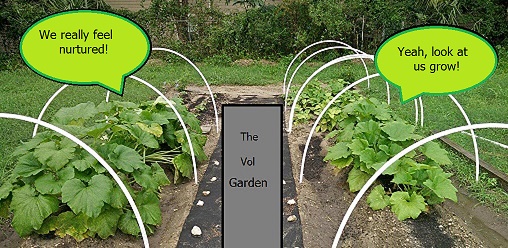
What would sustainable volunteering look like? Besides many of the innovations already being implemented, what would nurturing a volunteer garden shared within our communities involve? Is this a 180 degree leap or is it more of a naturally occurring shift that we have been moving towards all along? Are we, volunteer managers coming together in an organic movement to help one another and therefore all volunteers and all good work?
What can we try? Will this take extra work, headache and heartache to achieve? Just as in gardening, there are necessary steps to achieve a bountiful crop.
I’m going to list some ideas in a season of planting using the gardening metaphor.
TILLING THE SOIL (preparing to garden):
Make a list of agencies and organizations in your area that utilize volunteers and reach out to introduce yourself to each leader of volunteers
Join any clearinghouse agencies such as United Way, and Volunteer Centres in your area
Join a DOVIA (Directors Of Volunteers In Agencies) or a similar group in your area or if none exists, reach out to another volunteer manager and start a peer group
Create a list serve or simple newsletter to share with your fellow volunteer managers in your locale
PLANTING (seeding the way):
Share your volunteer opportunities with other volunteer managers (at your peer group and by list serve) and ask for theirs-regularly check in to gauge the fluidity of roles, etc.
Discuss volunteers’ skills and interests at peer group meetings. Offer other volunteer managers the opportunity to contact one of your volunteers if their mission or opportunity more closely aligns with your volunteer’s passion
Share background checks if you are able in order to cut costs
Pair up with other organizations to conduct a visible volunteer project and involve local media to cover the event
Create volunteer educational conferences with other volunteer managers to benefit all volunteers in area-share space, costs of snacks or printed materials creating more bang for the buck
Share cost of a national speaker with other volunteer programs and invite all volunteers in area-have plenty of information on volunteering opportunities available
FEEDING (nurturing the collective):
Bring your volunteers to another organization on Make a Difference Day or another day of service and help that organization-build that camaraderie, use positive press to show cooperation: Days of service include:
Create a summer circle of volunteering for out of school students so they can sample the various opportunities in your area and participate in a well-rounded service learning experience
Conduct partner training sessions with other organizations
Partner with another organization to create a group of volunteers to cross-volunteer (a really rudimentary example – library volunteers + homeless shelter volunteers = a reading program for school aged children in the shelter. Library volunteers finding appropriate books, shelter volunteers utilizing them and perhaps some library volunteers venturing out to read to the children while shelter volunteers conduct a fundraiser for the library-and no this isn’t simple or easy but it can be a start)
Mentor new volunteer coordinators in your area
Offer your highly seasoned and trained volunteers to train/mentor volunteers at another organization
Partner with other volunteer managers to create a presentation that educates organizational staff on the nuances of volunteer engagement-allow all volunteer managers in your area to utilize
Create partnership recruitment efforts by sharing speaking engagements
Future Bounty (what might come of this?)
Increased satisfaction and sustainability of volunteers
More flexible options for prospective volunteers
Sharing of best practices between leaders of volunteers
The showcasing of cooperation between non-profit agencies
Increased volunteer involvement in organizational planning and innovations
More good work accomplished within communities
Cooperative think tanks springing up
Less stress on volunteer managers
We, volunteer managers are unique, innovative and forward thinking. Why wouldn’t we bond with one another and forge a new, co-operative garden in order to create sustainable volunteerism?
Besides, we are generous and big picture oriented by nature. Let’s co-op.
“I took over from a really nice older lady,” volunteer manager Meghan says, “but one thing I couldn’t understand is why she kept all these reports and sign-in sheets from meetings that were two and three years old. I shredded those in an attempt to keep a cleaner office. Then one day we needed to find a volunteer log from a couple of years ago. I had to admit that I got rid of it.” Meghan’s eyes got bigger, “I mean, what were the chances that we would need it?”
Oh, the stacks and stacks of paper we create. Information on prospective volunteers, sign-in sheets from meetings, policies reviewed, applications, surveys, new volunteer interviews and volunteer logs are just some of the records kept in volunteer management. But are they necessary?
For years I was teased about my “pack rat” behavior and folks laughed at my bookcase full of binders that held all the signatures and information I gathered. The binders were in addition to the personal files on past, present and future volunteers that were kept under double lock and key in several file cabinets. These files included background check results, addresses and phone numbers.
Did I need it all? Most of the time, no, but once in a while, it proved pretty handy,
So here are just a few of the occasions when my “pack rat” binders helped out.
Lawyers for a family needed access to care center front desk sign-in sheets to see if a prohibited family came to visit a client.
A volunteer was reprimanded for breaking new policy. She claimed she and other volunteers were never informed until the policy she signed at a volunteer meeting was produced.
The executive director wanted to know if his neighbor actually came to a volunteer informational session.
A new volunteer insisted that she came to an advanced training but remembered that it was a meeting when shown the sign-in sheets for that training.
Auditors arrived unexpectedly and requested proof of volunteer trainings. (the actual signatures of volunteers)
Odd stats concerning volunteers were needed to apply for a grant application.
A representative from a group of workers that volunteered wanted to know who actually signed in so that they could recognize those employees at the annual company picnic.
Newer volunteer reporting systems have replaced many of the old binder systems. But the point is, the proof that signatures provide may just come in handy one day. Keeping records of meetings and asking volunteers to sign new policies help keep track of those who are and those who are not yet informed of important regulations. And if a volunteer does not attend an important informational meeting, then a copy of the meeting minutes and policies can be mailed or emailed to the absent volunteer with a request of acknowledgement. (and a friendly encouragement to ask questions or give feedback so that you can explain those regulations).
While reports and sign-ins may not be flashy volunteer management, they do serve a useful purpose. Signatures are legal proof that you have done your due diligence when it comes to the proper training, conducting educational meetings for and providing necessary information to your volunteers.
It’s no easy day when you have to prove something and you cannot. Binders and folders on hard drives do not take up that much room.
Besides, when the CEO wants to know if her second cousin once removed was informed of the new dress code, those boring but carefully maintained wall of signatures will give you the answer in a pretty impressive short amount of time.
“There was something about Jules,” Jake recalled, “something just off. She didn’t seem to connect with the program nor with other staff and volunteers. She never looked me in the eye. She made off the wall comments to other volunteers.She even started to call me after hours with odd requests about volunteering; for example, she called me one Sunday night to see if it would be okay to bake doggie cookies to bring to any staff that owned dogs . Frankly, I had an uncomfortable feeling about her but had no idea what to do about it because she passed our background check.”
Oh boy. We deal with all types of people who are potential volunteers. And unless we are conducting clinical psychological testing sessions with each one, we have to pretty much trust our instincts and judgement when working with volunteers who set off that gnawing gut feeling that something is just “off.”
But. on the flip side, we also walk alongside some pretty amazing people who might be going through common personal issues that render them sensitive such as:
Loneliness/Socially ostracized
Grief/Loss of job/Loss of home/Loss of identity
Illness/Caregiving
So, if the overwhelming majority of volunteers are wonderful, then isn’t it overkill to treat every volunteer as potentially snapping? On the other hand, do we blissfully think we can fix everyone’s challenges by our cheery encouragement? Or is there a professional medium?
I recall a brand new volunteer, Kristof, who had a very strong, almost in your face personality. He passed all background checks. He said the right things in training. But a long-term volunteer, Jim, who was a fellow member of a club Kristof belonged to, told me in confidence that Kristof had threatened to hit a fellow club member.
Now what do we do with second-hand knowledge? Could I hold that against Kristof? Was he a violent man? I hadn’t witnessed violent behavior, but proactively, I assigned Kristof to a seasoned, mentoring volunteer. Also, in the agreement that Kristof and all other new volunteers signed, it stated that he was under a six month probationary period during which he would be evaluated and could be terminated at any time for rule violation, including threatening or inappropriate behavior.
Sure enough, after about three weeks, one of the mentoring volunteers came to me and said that Kristof had made a threatening gesture towards him. It seems that Kristof did not appreciate being told that he could not go and do whatever he wanted.
So, I called the head of security, Charles and asked him to accompany me and a senior manager in a meeting with Kristof. Thank goodness for Charles. He stood like a statue in the closed doorway, saying nothing, but speaking volumes about our seriousness. I talked with Kristof about the presumed threat. He got angry and said to me, “I see what this is about. I know what you are doing.” I reiterated our policy and he looked at Charles. “I don’t want to be here anyway,” he said. “I quit.”
We walk a fine line here. Being proactive with volunteers prevents surprises and even tragedy down the line. Here are a few things to keep in mind when those little red flags start to flutter before your eyes:
Be aware and monitor-enlist trusted volunteer mentors to help monitor all new volunteers
Have expectations and rules written out and signed by each volunteer
Put probationary periods in place for all new volunteers
Never counsel volunteers alone
Involve security if necessary
Document all “red flag” behavior
Create a step by step procedure to address situations before one arises
Script a conversation that is neutral, professional yet firm
Involve appropriate staff members within the organization
Know risk management assessments, volunteer rights and legal pitfalls
While volunteer managers excel at coaching, inspiring, mentoring and cultivating volunteers, we cannot stick our heads in the sand. Nice people and nice organizations can sadly sometimes be a place that feels right for folks with less than honorable intentions.
Was Jake wise to be concerned about Jules? Yes, because he trusted his instinctive ability to lead. With his heightened awareness, he could then proceed to monitor and/or cultivate Jules’ volunteering. Having a plan in place to act quickly and professionally does not mean that you are suspicious of everyone and everything. It just means that you are prepared to handle difficult situations should they arise. And you are prepared to be a leader.
All things evolve, says science and who am I to disagree although I frankly wish scientists would figure out how the brain can answer emails during REM sleep. (Don’t bother me now with your question, I’m flying! Hey! Is that a pig?) Anyway, it’s interesting to note how much volunteerism has evolved over the years and keeping up with trends is now a large part of a volunteer manager’s job. I often think back to how I viewed things twenty years ago and compare that to how I view things today. For better or worse, you can’t help but marvel at how your thoughts evolve with the times. In particular, I’m referring to the concept of good old risk management.
Risk management is one of those things that we must pay attention to, like it or not. It’s kinda like the caloric information on a caramel smoothie or your mother’s voice in your head when you’re about to follow that stray dog down a dark alley. (“But ma, he might need a home!”)
I’ve learned to view everything through the lens of risk management, no matter how corporate and sell-out it seems. I was never too happy being hauled up into the CEO’s office because a volunteer stole a client’s credit cards and went to Vegas. Nope, would rather not have to explain that one.
So, I looked back at my years as a volunteer manager and here’s how risk management evolved in my thought processes.
20 years ago: “Wow, you want to volunteer, that is so amazing, thank you, thank you, thank you! I can’t tell you how thrilled I am you chose us. My gosh, look at you, you are so wonderful! What? You want to bring your gun with you when you volunteer? Ummm, I don’t see the harm in that, the point is, you want to volunteer, I am so happy!! And have I said thank you?!”
15 years ago: “Hello and thank you for volunteering, we certainly can use a person with your skills. You are going to do so well here, I am convinced of it. What’s that? You wanted to tell me about your recent incarceration for grand theft? That is so honest of you, thank you for sharing that with me. Well, yes, we do a teensie background check, but we really want you to volunteer, so I will make sure that we get you started.”
10 years ago: “Welcome to our volunteering orientation. According to our volunteers, it is a privilege and honor to work with our clients and I trust you will feel the same. Now let’s learn a little about you. Uh huh, uh huh, what was that? Oh, you have made some mistakes in the past, I see, well, let’s move forward and I must tell you that we do background checks, but we will see what happens and deal with it when we have to. But now, let’s talk about how excited we are to have you volunteer.”
5 years ago: “Hello and welcome, I am so glad you are taking this first step towards volunteering with our great organization. Why don’t we take this opportunity to go over our rules and regulations. Because our volunteers are crucial members of the team, we do require them to pass background checks, fingerprinting and abide by the guidelines that allow all of us, myself included, to work with our clients in a professional manner. We are so glad you are here and want you to be at your best because that’s what our clients deserve and what will make your experience memorable.”
1 year ago: “Hello and let me preface this by saying that we only take squeaky clean volunteers here. You will be put through a rigorous screening, including drug testing, psychological profiling and searches every time you come on property. You will obey the rules at all times. Any infraction will require immediate termination. Do you understand? Now give me some hair strands for the drug test. You heard me, pull ’em out!”
All right, that last one was a bit exaggerated. And even though I still cringe when my first thoughts are, “what is the risk involved here,” I have learned to live with my corporate shill side. I still am thankful for each and every volunteer, and still feel warm and fuzzy towards the magic of volunteering.
I’ve just learned that when you expect excellence from volunteers, they step up and provide it. And any risk in striving for excellence is well worth it.
Hmmm, evolution doesn’t have to hurt so much.
-Meridian
Marlene has been a volunteer coordinator for ten years. She’s adventurous, loves rock climbing, extreme sports and her idea of a pleasant evening is a demolition derby. It’s only natural that she would bring her sense of adventure to volunteer management.
“I like to try new things all the time,” she says with the tiny grin of a child caught in the act. “I like to see the things others are doing and try to incorporate that into my volunteer program. Here at my hospital, it’s easy to get into a complacent stage where you think all people who come to volunteer in a hospital setting are pretty much the same type of person. I’m constantly being told to find retired nurses and health care workers, because they would naturally want to continue their line of work after retiring, wouldn’t they?” She laughs easily. “I mean it’s this kind of thinking that breeds a stale environment. Now don’t get me wrong, I understand that a retired nurse would be easy to train because she knows the system so well and can follow the rules. But,” she adds with a mischievous gleam in her eye, “what about the retired nurse who was so fed up with obeying the rules, and she wants to volunteer to break the constraints wide open? Huh, what about that?”
Marlene has a great point. Organizational administrations who tend to lump potential volunteers together will most likely also make the mistake of lumping actual volunteers together in a “them” mentality. Ignoring the subtle complexities of volunteer management will foster this stale and outdated thinking.
“When it comes to interviewing potential volunteers,” Marlene continued, “I’ve tried everything from quizzes to group interviews to structured questions. Sometimes these techniques work, and sometimes they don’t. We’re in an age when background checks are not enough, not if you really want to get to know the motivations of the volunteers working within your system. Do background checks uncover mental illness? Does a quick call to a reference on an application reveal the tendency to get over-involved with children? Will an interview question about the reason a person comes to volunteer actually produce the real answer?” Her grin widens. “And what is the real answer, now that is the question?”
Marlene has had some experiences she wanted to share with us. “Look, I tried a list of good, solid questions, but what I often found was that I immediately put the volunteer on the defensive. For instance, I asked a man why he wanted to volunteer with us and he shrank back like I hit him with a bat. I could see in his eyes that he was searching for to the correct thing to say, so I knew right then that I wouldn’t be getting an honest answer. Now, mind you, this man became a great volunteer, but that interview question did not help me in any way. Actually, it hindered the rest of the interview and it took some time to get to know him.”
Marlene looked for the right words. “But, I knew that I wanted answers to certain questions so I started experimenting with peppering the questions into a casual conversation. The whole process took a bit longer, but I found that in the majority of cases, it was well worth it. My mother was born in England and so I began to create in my mind what I termed the ‘spot of tea’ scenario. I would invite potential volunteers in for a twenty-minute chat and a cup of tea or coffee.
At first I started by asking them simple questions and I found that even that put them a bit on the defensive so I experimented with trying to put them at ease. And now I begin by first explaining our program to them. It works so much better and puts them at ease. I start by introducing myself and talk about how the program works, our volunteer jobs, and some of the benefits of volunteering. I make sure that I tell them how rewarding our existing volunteers find their work to be. Then, and only then, do I start to ask some questions in a conversational manner. I’ll reword the questions every time so that it doesn’t sound so rehearsed.” Marlene laughs. “If you don’t think most potential volunteers can spot a canned question, then you don’t know volunteers!”
She continued, “when people are comfortable, they will naturally open up, much more than when they are put on the spot by invasive questions like why are you here?” Marlene then recalled an incident during the beginnings of her ‘spot of tea’ interview. “I remember one young man who came in. We were talking, really getting to know one another and he told me that he had been fired from his last job. Because a red flag went up in my head, I carefully asked him what had happened and he told me. I was shocked that he confided in me, but it turned out to be a reason that prevented us from taking him as a volunteer. A background check would not have revealed that information to me. He did.”
Assessing potential volunteers is something all volunteer managers want to do well. There really is no perfect question, technique or method involved in getting to know volunteers. Whether you have a set of specific questions or not, Marlene advocates first putting prospective volunteers at ease. “Make them comfortable with you so that they can be honest. That way, you’ll not only get some honest answers, but you’ll also have a leg up on figuring out a fit for them. And besides, it’s gratifying learning the volunteers’ stories. It helps you and it makes them feel a part of the organization right from the start.”
This is why volunteer managers are so incredibly good at their jobs. Even the simplest of tasks such as interviewing a prospective volunteer is viewed as crucial to organizational success. Volunteer managers like Marlene may not try to be perfect, but in striving to do the best possible job in every situation is surely as professional as it gets.
-Meridian
I was so impressed by an article I read a couple of weeks ago about the volunteer program at the Fort Wayne Children’s Zoo in Indiana that I just had to call and speak to the volunteer manager, Kathy Terlizzi because something about the article’s description of the program conveyed a specialness about volunteering. Kathy graciously agreed to let me write about our conversation.
Kathy has been the zoo’s volunteer manager since August 2009 and was a volunteer at the zoo before joining the staff. “I made changes based on my experiences as a volunteer,” she told me. When she took over, the initial training program for new volunteers occurred either at the end of the season or at the beginning which meant some volunteers had to wait before utilizing their new skills and enthusiasm. Also, the training was a comprehensive training which meant that volunteers, regardless of their comfort level were expected to “get out and do what they were trained for”. Many volunteers, Kathy found, were overwhelmed with the comprehensive training and since there was no practical application (mentoring) along with training, the volunteers were not prepared to roll up their sleeves and jump in to some of the more complicated tasks.
So, Kathy, seeing volunteers repeatedly become overwhelmed, initiated a stair step training broken into three parts.
Part one is the basic training for all adult volunteers. This is the ground floor training and volunteers are asked to commit to 18 shift hours before moving up to the next level. Volunteers at the zoo can sign up for shifts online. (the zoo utilizes Volgistics for volunteer management).
Part two is the Ambassador training which helps volunteers prepare to interact and speak to the general public.
Part three is the docent training which helps volunteers become comfortable in crowd situations and with handling zoo education animals during animal demonstrations and off site programs for zoo guests.
This stair step method allows volunteers to take their volunteer training in stages and encourages them to find their comfort level of participation. The more advanced classes may be smaller than the initial basic training, but it ensures that volunteers find their own path and don’t feel pushed into something they are not ready to do. Some volunteers don’t wish to advance while others find that they want to move up. “I believe that volunteers should bloom where they’re planted,” Kathy said.
I heard real pride and enthusiasm when Kathy spoke about her teen leadership program which is set to kick off in June and July. Daily, 30-40 adult volunteers work in the zoo, but during the summer program an additional 40 teens who volunteer during two-week sessions are incorporated. They too, sign up for shifts online after going through a special teen orientation.
Teens 13-17 apply for the two-week sessions and the 172 slots are coveted by 250 applicants. Returning teens account for about 99 slots, so the rest are new teens who go through the new application process which includes filling out an online application, answering an essay question and providing a letter of recommendation.
After the applications are processed and the teens selected comes the logistical nightmare of slotting teens into the program. Kathy spends the entire month of March working on the two-week sessions. Emails and phone calls from interested teens takes over her days as she slots returning teens first and then the new teens are inserted based on gender, age and availability to provide balance. It is an ever evolving schedule as teens find conflicts with their other activities and family obligations.
But, instead of this monumental task seeming a burden for Kathy, she is stoked about the teen program, and told me that at first, she was intimidated working with teens because of all the negative stereotypes she’d heard about young people. But she found that the teens she works with are wonderful, responsible volunteers. She prides herself as an up front person and speaks to them frankly about dress codes, expectations and sensitive subjects like drugs and weapons. The teens are expected to be professional in their participation, especially in regard to zoo guests. In return, the teens take their responsibilities very seriously and frankly, Kathy says, they “have a lot to say.” Kathy believes in speaking to the teens directly, (although the program is transparent and openly invites parental and guardian involvement) and finds that the teens really step up when given the chance to embrace responsibility.
One day she discovered some older photographs of teen volunteers doing the same animal handling as the adults, something the zoo had gotten away from over the years, so she advocated a return to letting teens have equal volunteer responsibility. The parents were open to it, she says, mainly because they knew their children were safe within the zoo framework.
So two years ago, she implemented a two-hour pilot training and 66 teens signed up. At first the teens began with level one animals, bunnies and guinea pigs, but now the teens are handling snakes and tortoises. When the pilot program began, Kathy let the teens know that they were in part responsible for the success of the program and the teens immediately stepped up and showed the professionalism necessary for the program to thrive.
Puzzle Feeder
Another success Kathy talked about was increasing the trust level between staff and volunteers. It was a goal she had when she first started and so she spent the first year building a rapport with staff. “I told them (staff) that volunteers will do anything as long as it benefits the zoo. They won’t, however wash your car.” At first the zoo keepers were reluctant, so Kathy took a proactive approach.
She saw that the giraffe keepers had to prepare food daily for the giraffe puzzle feeders (a hanging feeder with holes that let the food stick out-these feeders simulate the natural foraging of giraffes) and offered to ask volunteers to do the preparation, thus giving the keepers more time to focus on other more pressing tasks. At first the keepers wondered why any volunteer would be willing to do that job, but within five hours after posting the job online, the shifts were all filled. Now volunteers sign up for 2 hour shifts to prepare the giraffe puzzle feeder food.
Another proactive instance came when the aquarium manager mused about organizing ph data he had been collecting so Kathy offered him a volunteer who was computer savvy in spreadsheets.
At first he reluctantly turned over a month’s worth of data but when he received his data back in a neatly organized spreadsheet, he quickly turned over much more information to the volunteers.
That’s how trust is built. Kathy also found a way to incorporate seamstresses into the zoo’s programs. These volunteers make costumes for zoo presentations and also cold weather quilts for the education animal carriers. She also utilizes Spanish-speaking volunteers to help translate signage.
Kathy has found a great way to work with groups. She says that the community wants to be involved in zoo volunteering so she offers the community the opportunity to participate in Annual Enrichment Workshops (run by a volunteer and his family) where they can do meaningful crafts like make fishcicles or paper mache animals in bulk. These items are requested by keepers and ultimately given to exhibit animals as enrichment. She also utilizes corporate volunteer groups for some of the zoo’s larger events throughout the year.
But when I asked for Kathy’s advice to new volunteer managers, she grew wistful, “I would tell them to get ready for the ride for it’s all encompassing. It’s fun and rewarding but also sometimes sad because you have this personal rapport with the volunteers and you get involved with their lives.” She also would like a new manager to know that volunteer management is not a 9-5 job, as there are weeknight trainings and weekends spent recruiting or trouble shooting. She says, “there’s one of me and 450 volunteers. And they all want and deserve some of my time. That’s why my job is social.”
She told me that she had been a manager for many years before working at the zoo and it opened her eyes when she took a personality quiz and found out how high she scored on interacting with people. Volunteer management has fit that bill. Kathy spoke glowingly of being able to put a volunteer in a place where they can grow. Whether it’s a shy, sensitive teen or a senior who is feeling unfulfilled, she derives tremendous satisfaction in seeing volunteers bloom.
As you can imagine, Kathy is comfortable talking with anyone. She says, “I kid that I need one of those take a number systems outside my door. My office is right across from the volunteer room. Everyone talks to me, volunteers, staff, guests, even family and friends. If I wear my zoo t-shirt to the store, the clerk wants to talk to me about the zoo. So I take the opportunity to ask, how about volunteering for us?”
For me, it was easy to see why this volunteer program succeeds. Kathy Terlizzi, the volunteer manager, is both passionate and practical. I heard in her voice that she wants every volunteer to succeed, to have a meaningful experience, and to be part of something in which they can take great pride. It’s no wonder the Fort Wayne Children’s zoo is the number one attraction in all of Indiana. This zoo and volunteer program is a success story we can all learn from. I know I’ve taken away these principles from my conversation with Kathy:
1. Be proactive with staff-analyze their needs and offer volunteer help whenever possible-build that trust that volunteers can help and free up staff to do other pressing matters.
2. Invest time and thought into your training program-use levels to encourage volunteers to find their niche and don’t overwhelm them with all training at once, instead encourage them to take training in steps. Make sure that the volunteer opportunities are meaningful work.
3. Model professionalism and responsibility, especially to teens and they will step up to the challenge.
4. Be prepared to give your time and attention to every volunteer.
5. Create new opportunities whenever possible to expand your volunteer reach.
6. Take pride in your work. It’s infectious.
Thank you so much to Kathy Terlizzi for allowing me a glimpse into this very special volunteer program. It is volunteer managers like Kathy who take volunteering to the next level through dedication and a willingness to believe in volunteers.
-Meridian
Background checks. They have become a permanent part of our volunteer manager lives. Now, don’t get me wrong, I see the reasons for doing them, but they are not done by our waving the magic wand. Sometimes they don’t even get done for reasons out of our control after we’ve spent a whole bunch of time trying to set them up. Then the volunteer process drags on. And on and on until we forget we have a prospective volunteer or they give up. That’s frustrating for everyone.
See, I come from the early days, before background checks. (“Want to volunteer, fine, step up. I can’t imagine you have anything to hide.”) It makes me think back to one of the first volunteers I had the pleasure of working with, Joe McDermit. Joe was the kind of guy who did whatever he thought necessary, and he had already been volunteering for years when I came on the scene. Joe taught me (or should I say scared me) about the individuality of volunteers. A couple of weeks after I arrived, one of the staff members pulled me aside and said that she had seen Joe driving our patient down the road. “That wasn’t the problem,” she added, “but Joe’s passenger door was missing.” Well, I thought, isn’t this going to be an interesting job?
To be fair, I also remember the day I was talking to a family member and she asked, “are your volunteers back ground checked?” At that point, we had begun conducting the checks, so I could honestly say yes. That felt pretty good and I realized that we were going in the direction our clients needed us to go in. I’ve been privy to criminal records for a long time and they are interesting to read. There’s history, emotion and back story in every one of those reports. I really hate having to tell someone we can’t take them, but risk management is all about, well, risk. However we feel about it, we have to think in terms of liability. (Did you know that your volunteer was jailed for resisting arrest with violence when she hit that client? Hmmmm, explain that one. But she seemed very nice and sincere doesn’t cut it in a lawsuit.)
Fingerprints are another matter. Someone has to actually capture the volunteers’ fingerprints. Did you know that our fingerprints are hard to record when we get older because our skin is drier? Of course you know that. You’ve had those complaints. What if the person conducting the fingerprinting is not nice to the volunteers? What if the fingerprinting person goes on vacation or is back logged? Then volunteers have to wait and they may lose interest. What if they are afraid of what might show and they bring you “proof” that charges from 1988 were bogus? (Sadly, these things don’t go away willingly, the information sticks around to make a life miserable).
I’m thinking that in the future, we will have to do drug screening too. Will this make it difficult for volunteer managers to recruit folks? Probably. I know a volunteer coordinator whose volunteer mentioned that she smokes marijuana occasionally at home and she does not live in Colorado. What to do with no mandatory drug test? What about background psychological information? How about those folks who have spent time in a rehab, or mental facility or are recovering addicts? Will we be testing or searching for that as well?
So, on that note, I’ve decided that when I retire, I’m going to go into the business. I imagine there’s a ton of money to be made in checking out the backgrounds of volunteers. I’m going to call it VolunCleanse, the all-inclusive volunteer background check. I’m going to buy an old tanning bed and refit it with all the equipment I need to guarantee that pesky potentially lawsuit inducing volunteer is clean. Here’s how I envision working with a potential volunteer:
“Hello, Jake, so you want to volunteer at the library, do you? Well, let’s just see whether or not you can pass this highly sensitive cleansing test. Think you can fool the cleanse o meters? Get into this state of the art deception detecting unit and just try to keep information from me. Muahhaaaahaha!”
So, Jake lays down in the tanning bed and the large lid creaks shut. I throw the switch and tell Jake to place his hands on the crackling lid above, thus capturing his fingerprints.
Needles come from the side and his DNA is extracted while his hair is sucked into a hole in the bed and a few strands are pulled out with follicles intact. Oops! Maybe it was more like a clump, but the bleeding is mopped up with a sponge that serves as a specimen. A retinal scan flashes across his face while truth serum is administered into his mouth as he yells “ow”. As the truth serum takes effect, a monitor shows him Rorschach blots and he is instructed to quickly identify each image. A silky voice intermittently asks, “are you sure you don’t see something sinister from your past?” After the serum has settled, Jake is subjected to a series of questions probing his background. A biometric scanner notes how many sweat beads pop up on Jake’s brow. Then Jake is left to recover while some soothing music is played and he drifts off the sleep for a few minutes. At some point in the future, there will be a memory erasing device to wipe away all the unpleasant thoughts from this assault on human dignity. I’ll be charging big money for this service. After all, good volunteers are clean volunteers.
For now, though, we’ll still try to assess volunteers by our old methods, like interviews, observing, and careful cultivation. But at least we won’t have to worry about their past lives, because risk management is here to help. Always minimize the risk.
I’m forced to think of a conversation I had with a thirty something woman who had a mess on her background check. “How’s a person who has changed her life around supposed to catch a break?” she asked me and I had no answer for her. Inside my head, I pictured Joe McDermit cruising down the road with a client hanging out his door. But, you know, those clients absolutely loved Joe and so did I.
I looked at this young woman and knew that if I took her, I would be violating every liability no-no there was. I also knew that I was a part of the society that wasn’t giving her a second chance. I offered her some volunteer work that didn’t involve patients.
Now, I have no say over background results. They go through a large clearing house where trolls in overcoats throw darts at a board for all I know.
Step into the VolunCleanse machine. It knows all, but doesn’t care.
-Meridian





 volunteerplaintalk