
 A friend of mine who is going to school and waitressing on the side messaged me a picture of an $89 food tab with a $100 tip written in. I asked her what she did differently to garner such a lavish reward and she said, “Nothing really, I just did my job.” As we talked, laughingly speculating whether it was a mistake, a “bucket list” checked off, a stalker and other hosts of wildly imaginative scenarios, we finally left it at “one of those special out of nowhere moments that cannot be explained, not fully. It’s the sun peeking out of the clouds, glorious and full, the five dollars you find in your pocket when you’re talking yourself out of that latte, and man who chases you down after you’ve dropped your new phone.
It got me to thinking. Volunteer managers work tirelessly, mainly without praise. We can empathize with the mom who drags herself out of bed at 5 each morning to drive her son to hockey practice, then puts in a full day of work. The Stanley Cup will go to him as she stands, far back in the crowd, her tears borne from sleepless dreams.
But then, there’s the $100 tip. It comes when you least expect it, but need it most. A volunteer wins an award and someone thanks you for mentoring that volunteer. A project that took you years to finally iron out takes off and someone claps you on the back. You’re at a general assembly and something you initiated years ago is highlighted and the speaker finds you in the crowd and says, “you started that way back, didn’t you?”
Or, a volunteer phones you to tell you that he broke through to a client that everyone wanted to help but couldn’t seem to find the right phrase or the perfect moment.
Why does that moment show up when we’ve just told ourselves that we could make more money with less work selling jewelry? Why does it seem to know exactly what we need when we need it? And how often do we need it?
I’m always struck by how volunteer managers are not driven by praise or someone else’s definition of accomplishment. It seems our measure of success lies internally from the instinctive knowledge that accompanies each and every volunteer assignment. Although “big” accomplishments are nice, we revel in the day to day small accomplishments of each and every volunteer. It’s like standing on a bluff and looking at the beauty of the forest below. It takes each tree to create the breathtaking scene.
This doesn’t mean that I don’t like getting an unexpected tip now and again. Nope, I love it, and frankly need it as much as the next person. But I also have to realize that I’m not working for $100 tips. I’m working because I know that the forest of things volunteers accomplish mean a lot to the people they are helping. It’s not flashy nor opulent. But then, neither are my expectations.
-Meridian
Tag: volunteer coordinator
-
The $100 Tip
-
The Mulligan Volunteer
 If a Mulligan is a “freebie”, then Phil is my Mulligan volunteer. All right, I actually have more than one, so don’t tell anyone. I keep Phil on the active volunteer list even though he hasn’t done any volunteering for ten years. Yeah, he’s active only in my mind. Why do I hold on to him?
Well, let me tell you about Phil. I have known Phil now for oh, about 17 years. He came to volunteer when I was just an idealistic blob of volunteer coordinator tissue to be molded by good old-fashioned experience and opinionated volunteers. I was hopeful, scared and curious all at the same time. But I digress.
When I first met Phil, he was an old pro at volunteering. A retired executive, Phil had smarts, energy and that electric smile. I leaned on Phil a bunch. He took difficult cases. He made me laugh and learn. He once drove 30 miles to bail me out on an assignment. I never, once, heard a negative breath come out of that man. Inspirational? I’ll put him up against Gandhi in the Inspiration Olympics. Caring? Let him get in the Care ring with Mother Teresa, cause she better look out for his right hook. Willing? Well, you get the idea.
Phil has been getting older. He’s had to pare down his volunteering activities to about seven. No kidding, that’s how much he does. And, as he weighs what he can do, it all boils down to convenience. At his age, that’s a huge consideration. So, the fact that he can’t really help us out anymore is no reflection on our mission or treatment of him. This, I understand.
But let me tell you the real reason I keep him on the active list. Phil takes in homeless people. Yep, takes him into his home to live. Homeless vets, homeless families, he quietly takes them in to let them get back on their feet. His friends (and even some of our volunteers) have warned him that he could be inviting trouble, but Phil just shrugs. “Someone has to help.”
How do you measure a man like that? I’m always astounded at how Phil lives his life. He’s not going to be featured on any news show. He wouldn’t want it anyway. He’s not going to be elected Mayor of his town. He’d hate that. He lives his life by serving. I was just lucky to have him cross my path for a while. He’ll always be “active” to me.
I think we all need our Mulligan volunteers. In my organization, we have emeritus volunteers. These are volunteers who can’t help anymore, but they are invited to every function we have. They’ve earned it. Phil earned it the first week he volunteered. I think of so many of them, who give their all and when they can’t anymore, have to bow out. For the sake of my own soul, I cannot let them fade away. They love to teach others, speak to orientations, mentor newbies, write policy and mainly just chat. Although the chatting part takes a lot of precious time, after a conversation with one of them, I always end up feeling like I’m home. And because I’ve been doing this so long, I fear that no one else will remember. I sense these valuable volunteers slipping away like forgotten stories never written down.
I think of all the phone calls I need to make and it’s overwhelming. But I have to find the time and energy. If Phil can open his home to homeless strangers, I can certainly open my heart to emeritus volunteers. They are a as much a part of volunteering as the fresh face. I can’t let them feel anything but honored and never forgotten.
And though I won’t get any productivity out of the time spent reconnecting with emeritus volunteers, I know it is the right thing to do. And how much of our jobs is about doing the right thing?
I think I’ll start with Phil.
-Meridian -
Walt: In Memorium, My Favorite Dance Partner
 Walt died Saturday, after a very long battle with cancer. He was 87. Funny thing is, he volunteered up until about a week ago when he became too weak to get himself out of bed. But before that, he would come in, his clothes hanging off his body like busted balloons. He ended up using a cane and sat down often for longer and longer periods of time. None of that mattered, because he was “working.”
I remember when he first came in seventeen years ago. His wife, Grace, who was a volunteer at the time thought it would be good for him. And so he came to orientation. I noticed in class how his silver hair curled just so over his perfect collar. He listened politely, asked methodical questions while taking copious notes.
Grace informed me that Walt had been a very successful trial lawyer. It showed in his dissecting approach to volunteering. “Give me the facts. Tell me what to do and it’s done.” Trouble was, Walt wanted to work with patients. That’s what his wife did and he wanted to do the “top job.” But patients aren’t cases and working with them is about nuances, not facts, although Walt at first thought that by studying a few facts, he then knew them. Oh, how he struggled and how I struggled with him.
We spent that first year together, doing a sort of schizoid tango, Walt telling me that he wasn’t comfortable, me assuring him that he would eventually get it. Often I thought he would quit and numerous times I ran out of ways to tell him not to. I felt frustrated that I couldn’t find the words to make him comfortable. Other volunteers helped in guiding him, but ultimately he had to find his own comfort. As the first year passed, he began to let go of his authoritarian role and started to sit down next to patients as he talked to them. He began to find pleasure in bringing a cup of coffee and enjoyed the less direct ramblings of life stories.
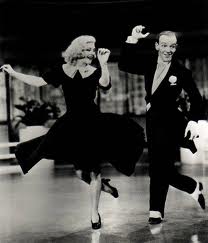
Our frenzied dance slowed to a waltz and he mixed into the routine like a French vanilla creamer in a perfect cup.
Several years ago, his beloved wife, Grace died. Burdened by grief, he insisted on continuing to volunteer, never sharing his heartache with patients, preferring supportive roles. Year after year his reason to be slowly returned as he immersed himself in helping others. He spent more and more time volunteering, but this time he greedily sat at bedsides. It was right for him, and soon the staff began to know and appreciate his humble spirit. And so Walt became a great volunteer.
At his service, his son said that Walt changed for the better by volunteering and that he got to see a side of his father that was truly inspiring. He voiced his gratitude to the organization for helping his Dad become a better man. There wasn’t a dry eye. See, we all knew things about Walt, things he had chosen in his new humility to share, things like struggles with alcoholism and infidelity. We could only imagine the Walt of old. We knew the deep Walt, the one we watched become a humble servant to others. He was as much a part of us as we were a part of him.
As we left the service, I realized how much I would miss our dance, But then, I pictured Walt dancing with Grace and hoped she would be proud of the man he had become. I know we are.
Cheers Walt. Thank you for showing me that by patient practice, we can all do a mean two-step.
-Meridian -
Excalibur, the Makin It Look Easy Sword
 Those words, “make it look easy.” Are they a compliment, or a curse? In the dictionary of English phrases, is there a picture of a volunteer manager next to the phrase, ” but you make it look easy”? How do you respond to that-a smile, a shrug, a muttered, “gee that’s what I’ve always wanted to hear?” Is making it look easy a lethal double-edged sword? How do you wield such a mighty weapon?
Rhonda is a volunteer coordinator whose organization went through some major revamping and as they looked for ways to cut costs, they called in a professional consultant. This consultant combed through the status quo, looking at each aspect of the organization’s ability to do more with less. When the consultant, Eric, spent a four hour stint with Rhonda, he shook his head. “I can’t believe you do all this in these conditions,” he said. “you really make it look easy from the notes I’ve been given.”
His notes consisted of statistics about the volunteer department. Rhonda supervizes 118 volunteers, who pretty much run a thrift store six days a week. The volunteers also sit at fairs, stuff envelopes, fill in for a lunching receptionist, file reports and make calls. Rhonda’s phone rings non-stop. Volunteers filter in and out of her office and she pretty much oversees them all. Rhonda sometimes fills in for volunteers when they call out sick. She is swamped. After four hours, Eric told her that she was one of the busiest staff members in her organization. “But,” he mused, “no one knows how hard you work.”
Rhonda did not know how to respond. Frankly, she was too overwhelmed to spend much time thinking about how to use her double edged sword.Although Rhonda would like more help, she struggles with how to present her challenges. “Do I talk about the difficulties? Will I harm the image of the volunteers if I honestly speak about those that are a challenge? If I complain, will they just do away with volunteers all together? Do I just burn myself out and let the next volunteer coordinator figure it out?”
As volunteer managers work hard behind the scenes and let the praise go to the volunteers, do we not cut ourselves on the back swing with our mighty sword? By making it look so easy, what are we doing to our profession? Are we contributing to the perception that managing volunteers is no more than hosting tea parties and chatting with willing participants?
Rhonda is too tired to do much about her situation. I suspect she is not alone. Hard, hard work can lead to exhaustion and eventually burn-out. Our jobs are rewarding, complex and difficult. We should not be afraid to admit this.
Otherwise, our arms will be too tired to lift that hulking double edged sword.
-Meridian -
The Frustrated Stepping Stone
 Jules is one of seven volunteer coordinators at a hospice that boasts over 1200 volunteers. She loves her job, loves the pairing of volunteers with patients and duties, and loves developing volunteer talent.
She’s excited to go to work each day and is sparked by researched ideas on recruiting volunteers. Like the best paper towel out there, she soaks up helpful information from her many sites on the internet.
So, what could possibly bother this exemplary coordinator? For the past few years, there has been turnover in the volunteer services department where she works. Coordinators have taken the job while seeking a better degree or while studying for certification in another field or while garnering experience to “move ahead.” As another volunteer coordinator, Nicole’s going away party wound down, Jules found herself chatting with a senior manager, who glibly stated, “Isn’t it great about Nicole completing her BSN? It’s so nice to see people advance.” Jules smiled but inside she felt a twinge of discontent. She thought back to how Nicole would study at times, would forget volunteers’ names and when it became apparent that she would be graduating, Nicole pretty much stopped assigning volunteers. That left Jules to answer volunteer’s questions, attend meetings and continue programs. At first she didn’t mind, because she liked Nicole, but Nicole was the fourth volunteer coordinator to step over everyone in the department to advance.Jules sighed. “I wish I had said to the senior manager, ‘when all these people go to school to advance, that’s really great for them but that leaves me picking up their slack. Even when they are here physically, their minds are preoccupied with upcoming exams, or scary job interviews. Just because I chose to give my all to this job, does that make me any less a professional or capable of advancement? Is my area just a temporary one and because I love what I do, does that make me a dupe? Should I just get with the program and plan on using my time here to get somewhere else? Is volunteer management just a stepping stone?”
Jules started to rethink her choices. She felt she had found her calling, and she had some great ideas and plans for the future. But, she wondered, does everyone think of volunteer services as just an entry level job?
So, Jules had a heart to heart talk with the volunteer director, a woman she admired and hopes to one day replace. She voiced her concern that volunteer coordinators using the position to personally advance were not only hurting the department, but were also placing too much extra work on her as well. To her surprise and relief, the volunteer director had already noticed the trend. She promised to hold each coordinator accountable for their work load and promised to watch out for Jules’ enabling tendency. She wisely pointed out that Jules was the real leader of the team, the trainer, the inspirational guru and told Jules that upon retirement, she would insist Jules be made director.
The talk helped Jules to feel better. After all, the thrill of seeing a volunteer succeed under her guidance trumps title any day. But still, the image of a leaving coordinator getting feted for advancing haunts her just a little bit.
“I love this job.” She says firmly. “I just wish the worth of what I do would be recognized.”
-Meridian -
A Tale of Two Coordinators
 Jan and Anna are two volunteer coordinators I know who work for the same organization. They each have one half of all duties and volunteer assignments. Their volunteers are evenly divided and their territory is fairly equal. They both have unique volunteers with unique needs, but in all, they regularly face the same challenges.
Jan is serious, spiritual, creative and a perfectionist. Anna is funny, sometimes irreverent, personable and spirited. Each one brings a different style to managing volunteers. Jan’s volunteers find deep meaning in their volunteering, while Anna’s are able to laugh off mistakes. Jan’s volunteers are given clear directions, while Anna’s are given permission to “wing it” whenever they need to.
On the surface, each style has its own merits and own shortcomings. But let’s look at how each style curves off course.
Five years later, Jan is incredibly unhappy. She has become rigid and full of resentment. She complains that some of her volunteers don’t get that their attendance is important and that staff members are not appreciative of volunteers. In her words, “rules are not being followed”. Her creativity has shut down and she has immersed herself in scheduling and obsesses over the “correct” way.
Anna is relatively happy. She has more volunteers who have gotten into trouble, but she makes do. She often has holes in her schedule, and sometimes brings volunteers on board before they are screened or trained. Serious volunteers have been turned off by her flippancy. She has volunteers who have emerged as leaders, but they often don’t give correct directions. She has much more chaos to contend with.
We each have a management style. Sometimes, when we are unhappy and resentful, we must look at our own style to see if there is something we need to change. If we are not fluid in our styles, we run the risk of becoming rigid or immersed in chaos. Volunteer managers instinctively know that each volunteer requires a different style.
I once had the following conversation with a really strongly opinionated gentleman:
He: You manage volunteers, wow, how hard can that be?
Me: It’s challenging, don’t forget, these volunteers are not paid employees, yet they do some incredible work.
He: So what, you just tell them what to do.
Me: Perhaps, but would that work with you?
He: Sure, why not?”
Me: Would your wife do what I tell her to do, just by my asking?
He: Her? No way!
Me: How would I then convince her to do what I ask?
He: Ha! That would take some major work!
Me: Ahhh, therein lies the challenge, would you not agree? Each volunteer requires something different from me.
Whether lighthearted, serious, creative, leave-alone, encouraging, mentoring, praising, educating, empowering, we take a different tack with each volunteer. We are as mutable as 24K gold. If not, we run the risk of becoming resentful like Jan or mired in chaos like Anna. The sad part of this tale is that Jan is a wonderful, creative manager who allowed her perfectionist side to take over her style. Anna kept her job in perspective, but she is losing some incredibly intuitive volunteers by being too jokey. Anna is in a much better frame of mind, but Jan had some really great programs, at least in the beginning.
So, how do we survive? We laugh at that which is laughable and get serious about that which is serious. We look over our volunteers and see them each as unique, needing unique direction from us. Jan will quit; you can see it coming. Anna won’t, because, unlike Jan, she personally is not letting things get to her. However, her more serious volunteers have to find their own way.
Too bad Jan and Anna could not have cloned a part of each other and become two Jannas. What great, enduring volunteer managers they would have made!
-Meridian
-
Extra Mayo! The Tour Buses are Here!
 Groups of students, what can I say? I love them! I love their energy, their brand newness, their looks when they think I’m a bit daft. They’re energizing, but exhausting!
I have this equivalent mental image of a sandwich cafe just outside of Niagara Falls. The owner has sporadic business and keeps putting up ads and specials to attract more customers. But then, every first Monday of the month, the buses of tourists pull up all at once! The tourists tumble out and their tour directors run into the shop, spitting orders, while looking at their itineraries and talking over one another. The shop owner frantically tries to fill all the orders, no mustard, extra onions, mayo on the side, hurry up, hurry up, hurry up or the buses will go elsewhere!
The shop owner wants the business, so who is he to complain? But furiously throwing out sandwiches is not like making sure each one is made to order. The buses groan as they pull away, tourists munching while looking forward to their next stop. The cafe owner will never hear their complaints or kudos, he’ll never see those tourists again. But he’s counting on that tour director to bring another busload back, much as the frenzy is crushing when it happens.
That’s what having groups of students is like. Much like tour buses, they visit, get their sandwich and go. They’re not long term and they travel together. You have to manage them in bulk which is vastly different than one one one. Fraternities, service clubs, and teams all are great opportunities for us to have a lot of volunteers at one time. But typically the groups want to work together, have very specific schedules and a shortened time they will be with us. All of that’s perfectly fine, and truly, it is fun showing them the world of service.
But at night, when the lights are out and the equipment is turned off, the cafe owner falls into bed, spent. “yes,” he whispers, “there’s new money in the till, yes,” he mumbles as he pulls off his clothes, “I can keep my cafe open another week and yes,” he sighs as he draws the covers up around him, “I’m so grateful for the tourist buses,” and as the spittle dribbles down over his chin, he mumbles, “I ache in places I didn’t know…”
What do you do with your groups? Twenty students want to do a project together, but you have no parking lot to clean, no building that needs freshening up. The groups can only work on a Saturday at 5pm, so do you ask a seasoned volunteer to oversee them and hope for the best, or do you leave your family every time and go in, because, like that cafe owner, some one has to make sure it gets done? Student groups can’t do a lot of orientation so do you give them a quick 15 minutes, knowing that it’s inadequate and knowing that you have to be with them every step of the way, so as to explain the mission to them and keep them from innocently saying or doing something inappropriate? Do you imagine that other staff could view the students as being in the way and you then hover over them so as to protect them? Do you spend endless hours coordinating their schedule with availability of clients, staff and other volunteers?
For senior management, student groups are viewed as “THE BIG ONE!” What they don’t realize is the logistics of managing “THE BIG ONE”. Yes, it’s rewarding, yes we love them, yes, it’s great PR. But we volunteer managers are the ones, spittle dripping onto our pillows, crawling into our beds at night. “Did I forget one of the student names?” we murmur, “can I stick 10 students into a clients home if I just have them all be quiet?” Our dreams are dense with “what ifs” and the dreaded, “if they don’t have a good experience, they will go elsewhere next time.” Shudder, we can’t have that now, can we?
I’m stocking up for the next rush of students during spring break. I’m taking my vitamins, asking all around now for any big special projects that can be done by groups and clearing my calendar for late evenings and weekends. Hopefully, this cafe will be ready for the rush because each tour director (student group leader) has to have a satisfactory experience so that they will be back. And I’m experimenting with new sandwiches all the time; gotta keep the menu fresh and interesting.
But I’m also investing in a new pillow and maybe a new spa cd. See, I think when the buses leave, I’ll be spending some real time sprawled across the bed, mouth open, with inhuman sounds coming out of me. Maybe as I fall into a crushing sleep, somewhere a student will remark, “that was a really good sandwich!”
-Meridian
-
No Tools, But a Nice Brunch
I have this friend, Jenny who is a volunteer manager for a large non-profit and she is hopping mad. Now hopping mad is an old phrase, but her anger stems from old wounds. It seems that her marketing team decided at the last-minute to put on a very large community fair. They were given an opportunity to utilize a prime space and they jumped at the chance.
Naturally, they needed beaucoups amounts of volunteers to stuff packets, act as hosts, man tables, set up, break down, etc. Jenny put all of her other duties aside to recruit about 30 excellent volunteers. Not just any warm body, no, Jenny, like all of us made sure she lined up the very best.
The event was a success. Marketing patted themselves on the back. Jenny, however, put in almost 60 hours trying to do damage control. There weren’t enough items to stuff the packets and no one was there to explain the procedure to the volunteers. When the set up volunteers arrived, it was chaos and some of them had no jobs so they went home a bit miffed. On the day of the event, there were no assigned duties. Jenny had to run back and forth between the volunteers and the marketing staff, asking endless questions, running for supplies and trying to keep the volunteers out of earshot of the staff’s irritated comments. All of this while maintaining a cheerful disposition to shelter the volunteers from the madness.
It took her days to recover from the exhaustion and for the volunteers to stop complaining about the extreme lack of preparation. They were not mad at Jenny, they were, as always, wise enough to see she had no control. They vowed to not work with “those people” again, not only because of the rightly perceived shoddy management, but the obvious treatment of Jenny. Small consolation to Jenny, who, as a professional did not pass along their feedback concerning her.
So, why did she call me hopping mad three weeks after the event? She got a copy of an email, inviting the participating volunteers to a “thank you” brunch. Now, here’s the kicker. Two days after the email went out, another one cancelling the brunch appeared. But this one did say thank you for making the event so successful.
Marketing will dust themselves off and move on, having scattered their used wrappers of volunteers all over. Jenny will be left with the long cleanup. Will some volunteers stop volunteering? Not if I know Jenny. She will work to keep them.
I have this mental picture of Jenny, her hair disheveled as she stands atop the litter pile of cast off volunteers. She has a broom in one hand and air freshener in the other. Everyone in her organization just walks by without noticing her.
It’s her job, after all, isn’t it?
-Meridian
-
Encourage or Manipulate, That is the Question
Well, I’ve been having this internal conversation for a long while. Getting the best out of the volunteers is my job, right? And I truly want them to do their best. There is nothing more satisfying than seeing a volunteer glowing from a really great experience. And what about the feedback from those we serve? It’s like Christmas when giving that praise to a volunteer.
So, why am I having this conversation? Oh, about six or seven years ago, a friend of mine overheard me speaking to a volunteer on the phone. When I finished, my friend looked at me and said, “that was masterful manipulation, you know that?” Ouch. “You think I’m manipulative?” She rolled her eyes. “C’mon, that’s what you do.”
Fine, I should just let that go, but ever since then, I have had an internal ear that keeps hearing just a bit of manipulation. There’s the volunteer who needs constant support. Do I really, really believe what I’m saying when I tell him once again, “we are so appreciative of all your time. You are a constant support to our families.” Honestly, sometimes, I’m tired of spending an hour hearing how inadequate he is and wonder if he’ll ever be able to stand on his own.
Then there’s the volunteer who talks incessantly and nitpicks, but does a job that truly no one else wants to do. Not having the time to listen but listening anyway because it’s easier than trying to find a new volunteer is ok, right? Frankly, I’m the one being manipulated, but oh well, the job gets done. Am I encouraging her? Maybe placating is more like it.
But the internal conversation really heats up when I work with a particular group of talented professional volunteers who, I’ve noted need a great deal of attention and dare I say it, encouragement. They expect more hand holding, more fetching of coffee, more concierge behavior, more running interferrence. Someone asked me, “how can you stand working with these people? They’re so needy and demanding, and ugh, their egos are huge.” My quick answer was, “yes, but the end result is so worth it.” Hmmmmmm. So, morphing into the volunteer coordinator they want and need produces a desired end result. I guess each and every volunteer produces an end result and how they get there is in large part determined by how we manipu… er, encourage them.
While manipulation is self serving and encouragement is holding the welfare of everyone at heart, the two are cousins, one noble, the other a devious craftsman.
“Oh, we couldn’t do it without you.” says manipulation while encouragement tsks from the corner. How many times have volunteers said to you, “I’ll bet you praise everyone.” That makes me wonder, does some praise sound hollow and do some volunteers honestly believe that we just spew mindless gratitude? It is difficult to individualize all feedback but fortunately most volunteers sense sincerity. Staying grateful and aware keeps praise truthful. For the most part it all works, until that annoying voice, dripping with sarcasm asks, “did you really mean that or are you just being manipulative?”
I will continue to monitor my praise o meter. When it starts to sound generic, I’ll go back and remember that each volunteer is an individual with unique needs, triggers and an ability to smell insincerity a mile away. If I don’t, I’ll just have to get used to hearing, “Oh, I’ll bet you say that to all the volunteers.” And sadly, they’d be right.
-Meridian



 volunteerplaintalk