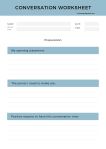
Difficult conversations with volunteers is one of our volunteer management things. We are all faced with having to “talk to” a volunteer at some point and we all hate the thought of “reprimanding” that volunteer. So, based on last year’s post, Difficult Conversations With Staff or Volunteers, I’ve condensed the points into a booklet you can download and keep for reference or perhaps you just want a reminder that you are not alone. If we, leaders of volunteers meet challenges head-on, we can turn them into opportunities. Oh, there is also a companion conversation worksheet to help you prepare. I’ve always found that the act of writing down your thoughts and affirmations helps to cement your preparation.
Volunteer managers: We are a sick bunch, aren’t we? We cry during the movie “Ghostbusters” because we feel bad for the ghosts. We stop and get out of our car to shooo a squirrel across the street even though he looks at us like, “hey, I’m walking here, crazy human.” We smile through pain and wonder how we can be better. Sigh. But no, I’m not suggesting using toilet paper to hastily scribble a “things to do list” with that pen tucked behind your ear while you’re..well you get the idea.
Jeez Louise, what extra work can help then, if I don’t mean staying late and spot checking those packets the new volunteer, Kira put together, because, frankly you don’t trust that she did them perfectly and mainly because you’re so tired of hearing that little huff sound from the events planner when she speaks of volunteers?
Burnout can occur when we feel like we’re not in control. Requests are pouring in from all departments. Volunteers need additional training. Recruitment has been spotty lately. There’s that volunteer that “needs a good talking to,” according to the director of operations. It’s overwhelming.
Some things we can ignore or put on the back burner, but they don’t go away, not completely. No, they are still there. That stuff rattles around in our heads along with things like forgetting to give back the dollar a staff member hastily gave you the day when the snack machine ate your money and you started pounding the life out of it.
So why take on more? The key here is to infuse yourself with an emotion other than the one that is crushing your spirit. The key is to be in control of something, something that lifts you up, that sparks your creativity, that gives you satisfaction. Something you own.
I’m convinced that one of the main reasons I stayed in this profession so long was the freedom to create something (and honestly, nobody gave me that freedom, I just took it). For me, volunteer management sometimes felt like trudging down a long, dark alleyway that eventually opened up onto a fertile plot of ground. I could see the fruits of possibilities taking root there: The trees, the flowers, and heck, sometimes the giant fountain of playful dolphins spurting water in all colors (if I had a really ambitious project in mind).
Creating a project that reflects your creativity, your passion, your idea of wonder injects hope into your veins. Just go to Disney World with a small child and look into their face. Magic does exist. We just need to find it in something we can call our own. We need to find it when we’re frustrated we can’t place highly skilled volunteers because there’s no pre-designed role for them. We need to find it when we see the possibilities our volunteers can offer our clients to make their lives better. We need to find it when our volunteers want to do more. We need to find it when the daily grind wears us down.
I recall the rush of emotions at the implementation of new projects. I felt terror, anxiety and doubt. But more than anything, I was exhilarated. And that exhilaration allowed me to view all my other duties in a different light. The mundane or challenging duties lost their power to crush me. And in my new mindset, I was able to find creative solutions to challenges that previously wore me down.
Successful projects you’ve created give you a new perspective, one in which you are a capable leader. Instead of waiting for some miracle day when everyone recognizes all your hard work, take it upon yourself to show how capable you are. How innovative you are. How committed and talented you are. Don’t wait for overwhelmed staff to give you this boost. Give it to yourself.
Because feeling like we’re not in control leads to burnout. All those mundane duties rattling around in our heads drag us down. But you know what else drags us down? Knowing, and I mean really knowing that a project, or a new way of engaging volunteers would work wondrously and then not doing anything about it. That’s the most soul crushing of all.
Sometimes, (not always-I’ve had a few projects fall flatbut I learned from them and started another, better one) a new project, one you own with your passionate heart and creative soul can help put that wonderment back into your life.
It’s ironic. More work = less burnout? Our best hope for encouragement = us?
Yeah, we may be a sick bunch. Wired a little differently. We lift up everyone else. Let’s lift up ourselves. Let’s take control.
“So, you’re a volunteer manager; what do you do, exactly?” We’ve all been asked the question and then that moment follows when we pause and mutter, “ummmmm,” because we really can’t explain volunteer engagement and impact in a few short sentences. Could we explain it in a paragraph or two? A book? An encyclopedia? Probably not, at least not in-depth. So, where does that leave us? Always shrugging our shoulders and feeling misunderstood because no one gets volunteer engagement the way we do?
Maybe we’re approaching this explaining challenge with too many expectations. Maybe we should look at it differently. Instead of an all or nothing approach, i.e. “you get it or you don”t,” why don’t we aim for something more attainable like an appreciation of volunteer engagement and impact. Maybe before we introduce folks to a college course on volunteer management, we should help them appreciate it first.
Think of all the things we appreciate but maybe don’t fully comprehend or understand, such as,
Our vehicles: Sure, we basically get how cars and trucks and SUV’s work, but do we truly understand electric motors versus combustion engines (and what is the four stroke process again)?
A good bottle of wine: Ok, we can pretend all we want, but do we really know what a hint of oakey or buttery (or waxy for all I know-yes I buy wine in the box) means?
Our animal friends: Do we really know why our dog won’t play with the green Frisbee but loves the yellow one or why our cat loudly meows down the hallway at night (jeesh, that can be unsettling) at unseen forces?
No, we pretty much appreciate things without having to know all and everything about them. We can do the same with volunteer management because what do the three examples above have in common? We appreciate transportation and fine wine and animals because they enhance our lives. Vehicles transport us around, open the world to us. Wine gives us pleasure. Animal friends provide us with companionship, entertainment, love etc.
In short, we appreciate the things we deem beneficial. So, the five words to untangle volunteer management from not being understandable to at least being appreciated are: “What’s in it for me?”
The more we show people how they benefit from volunteer involvement, the more appreciation they will have for volunteering, volunteers and the people who make it all happen (that’s us in case you weren’t sure). That’s why I believe we must add volunteer impact into our volunteer engagement conversations because impact holds the key to showing benefits. Instead of continually trying to “educate” others on the complexities of engaging volunteers, let’s show them the “what’s in it for me” volunteer impact first.
Volunteer impact is the concrete result of a volunteer’s time, talents and efforts. And since we, volunteer managers see all the positive results, we can translate these results into impact.
For example, traditional volunteer reporting says to the manager of fundraising, “our volunteer Jenny spent 26 hours last month helping make phone calls and putting together donation packets.” Then we normally add, “we need to keep Jenny engaged so that she continues to do this job.”
But by emphasizing volunteer impact, we point to the benefit of having Jenny volunteer by saying, “because our volunteer Jenny came in regularly last month to make phone calls and put together packets, the fundraising staff was able to spend 26 more hours on cultivating key donors. Last month they brought in 2 new large donations by donors who are now pledging to give regularly.”
Volunteer impact shows a direct correlation between a volunteer’s efforts and beneficial results. A volunteer impact equation looks something like this:
The key here is the addition of outcomes that dive deep into meeting mission goals and objectives.
Instead of skimming the surface by equating hours with money saved or time spent, volunteer impact directly connects a volunteer’s time to the goals of organizational missions. For example:
volunteers create valuable time for staff to accomplish critical work (because volunteer Sheri spent 6 hours this week training event volunteers, our event staff was able to spend 6 more hours preparing for the annual fundraiser, thus assuring a smooth event. The positive comments from attendees include, “such a wonderful event, the volunteer ushers provided us with so much information on the organization. We are impressed.”)
volunteers spend unhampered time working with clients, thus aiding staff in creating an atmosphere in which clinical staff can better do their jobs (because volunteer Juan spent 8 hours last month sitting with our client, Emanuel, clinical staff was able to spend 8 uninterrupted hours with Emanuel’s children, thus equipping the family with the coping tools they need to navigate their situation)
volunteers are “eyes and ears” for busy staff and can alert staff to potential problems, thus reducing valuable staff time spent in fixing problems and free them up to meet objectives (our volunteer Nan, during her docent shift was alerted to a hazard outside an exhibit and due to her quick reporting, saved us from a potential accident with legal implications. This gave staff the ability to quickly rectify the situation in keeping with our objective of providing a safe environment for learning and return to their crucial duties)
Using a volunteer impact equation means going beyond volunteer hours. The equation deep dives and reveals the impact of time donated and is the key to appreciating volunteers. It’s a fundamental shift. Instead of appreciating volunteers for the giving of their time, we are appreciating volunteers for the beneficial impact their volunteer hours have on our missions.
It is up to us to restructure our reporting and connect our volunteers’ time with mission impact. In the examples above, what is the impact?
Jenny’s time resulted in the cultivation of 2 new donors (mission goal: increased donations to continue the work)
Sheri’s time resulted in (documented by comments) a well run event and increased awareness (department objective: well-run event to increase awareness)
Juan’s time resulted in a family’s increased ability to cope (mission goal: equip families with the tools needed to cope)
Nan’s time resulted in a potential accident and lawsuit thwarted (organizational objective: provide a safe environment for learning)
Reporting impact requires a strong connection with staff and departments utilizing volunteer services so that we are privy to goals, objectives and direction. This is actually a good thing, for the more we connect with staff within our organizations, the more we receive helpful feedback, input and suggestions for volunteer involvement. From these connections, we can structure volunteer roles for maximum support. And, when it comes time to report on volunteer hours, we can then show the direct correlation between a volunteer’s time and the attaining of mission goals.
Existing in silos no longer serves us or our volunteers. As leaders, we can demonstrate the way for our organizations to grow is through partnerships between departments. Based on showing how our volunteers meet and exceed objectives and goals, we can then advocate for more volunteer involvement and for better organization wide engagement of our volunteers.
If we work towards an appreciation of volunteerism by answering five simple words, “What’s in it for me,” then, we just might begin to hear 5 other words, “We need to engage volunteers.”
Sometimes I wonder if we should automate the volunteer inquiry process. Could we cut corners by creating an answering machine interview system for prospective volunteers? By eliminating the personal touch spent cultivating each new volunteer, I estimate we would save, like 16.9 years of our lives.
And heck, I’ve used every personality questionnaire out there, even the ones guaranteed to weed out “the potentially destructive personality.” I’ve asked “what kind of tree are you,” and “what would you do if you were in charge of the world,” and “who would you save if you had to throw someone off an overcrowded lifeboat.” (Hint: Watch out for the guy that says, “everyone else, including you.”)
So, if someone did create an automated answering machine system, would it sound something like this?
“Hello, you have reached the volunteer hotline. Please listen carefully with the listening skills you would hopefully use with our clients and select the number that best describes your desire to volunteer. Someone will get back with you shortly. As demand for our super duper meaningful volunteer positions is at an all time high, your expected wait time is 3 minutes.” (this is a blatant lie, but c’mon, it’s just the old marketing scheme that makes people think the volunteer positions are so popular that they’d better get one now before they run out). After some peppy music, “thank you for your interest in volunteering for our organization. Please select from the following options.”
“Press 1 if you have a sincere desire to help. You have no underlying reasons to volunteer other than you want to give back. You listen to directions, offer constructive criticisms and are punctual. You communicate well, take your volunteer position seriously and love being part of a team. Your expected call back time is 5 minutes or less. Actually, don’t hang up! A volunteer manager will pick up right now ’cause we can’t lose you! Hang on!”
“Press 2 if friends always tell you you’re a good person. Sometimes they tell you you’re too good for your own good. Maybe you are a bit hesitant, unsure of what you are getting into, but want to give us a try. You would love to socialize in a helping atmosphere. Your expected call back time is 20 minutes or less so stay put and start brewing a celebratory latte because you sound perfect!”
“Press 3 if you are saying you want to help because you think our volunteers are all nicey-nice and that’s what we want to hear. If you’re brutally honest, you need to be needed. Pressing the “like” button on socially relevant issues makes you happy, but only when you get a “like” for your “like.” Phrases such as “we couldn’t have done it without your help” make you tingly all over. Taking selfies with people in need ups your cred. Your expected call back time is 5 days or more. You might get bored in those 5 days and move on to something else, but, we’ll take that chance.
“Press 4 if you are the leader of a group such as a club, team or corporation. Now go back and press 1 if you sincerely want to partner with us and help because we would love to partner with you. You can do team building and everything. We’re down with that. If you kinda just want to use use us for PR and you expect us to accommodate all of your expectations because hey, it’s free help and we should be grateful, right, then stay on the line and listen to our canned music for awhile. Your expected call back time is 2 weeks or maybe a bit more.
“Press 5 if you have court ordered community service and you’re angry about it and will make sure to take it out on us or if you are under 18 and your mom is making you do this cause you were suspended from school and she is fooling herself into thinking this will actually help you get into college to learn something useful. You really hate the idea of being forced to endure all this feel good hokum and you laugh at us non-profit types because we are full of sh… sugary sweet stuff that gags you and robs you of your edginess. Your expected call back time is 10 weeks or more. A lot more.
“Press 6 if you can’t wait to get in here and straighten us out. You have the need to control and criticize and really want to run the show. You are unwilling to apply for a job in this organization, but would rather back door yourself in as a volunteer, cleverly thinking that we would never fire a volunteer, no matter how destructive they might turn out to be. You sling passive-aggressive phrases like a boomerang of hurt, saying “helpful” things such as, “no wonder it’s chaos in here,” and “who set up this god-awful training, I didn’t learn a thing!” You burrowed into your last volunteer position and waited, spider style until an unsuspecting staff member or other volunteer got tangled in your verbal stings. Your expected call back time is, well, let’s just say your information will just magically get lost in a trash web of our own. But thanks for calling!””
I suppose we could cut corners and just automate the upfront work we put into developing volunteers, but it wouldn’t work. No robotic system can come close to how good we are at fleshing out volunteer motivations and personalities. Maybe someday AI can learn to match volunteers with the role that will create a synergy between meaningful work that keeps the volunteer coming back while making a profound difference in the lives of those we serve. Maybe someday, but not today.
Maybe we are a lot more valuable than we think.
-Meridian
this is an update from an old post. Like almost 5 years ago…woah.
Do we, leaders of volunteers suffer from a tortured volunteer manager syndrome? Or, are all our frustrations something we made up?
The tortured artist syndrome loosely refers to an artistic person who becomes frustrated at the lack of understanding and appreciation for what they deem important-i.e., their art. And I’m convinced that what we, leaders of volunteers do is an art.
Does this syndrome sound like us? Are we frustrated because others don’t understand or appreciate volunteerism and all its beauty and complexities the way we do?
Here’s the crazy thing. All the volunteer managers I’ve worked with or spoken to are super creative people. We have to be. No, seriously, we have to be incredibly, artistically creative in order to succeed at our jobs. Sure, we need to be organized. Sure, we need to multi-task. Sure, we need to keep good records. But the bulk of our jobs takes an artist’s touch.
As volunteer engagement artists, our frustrations come from the perception of our jobs. Our jobs are generally viewed as desk jobs, as coordination jobs, as simply making a phone call to a willing volunteer who agrees to do organizational bidding. It’s like saying a teacher just grades papers.
And you know what? We most likely went into our jobs expecting them to be coordination jobs, because that’s what we were told. That’s what the job description said. That’s what everyone assumed. We were told that our jobs consisted of scheduling and keeping track of volunteers. In my first volunteer coordinator interview, I was asked if I could “get along with senior citizens.”
I was never asked if I could create complex programs, or if I understood deep motivations. I was never asked if I could inspire a person who was lonely or discouraged because they’d lost a loved one or a job or a place to be. I was never asked if I could listen intently to hear what was behind the desire to help someone else. I was never asked if I had the skills to match a person to a sensitive position. I was never asked if I could diffuse a potentially ugly situation between a volunteer and our organization. I was never asked if I could diplomatically introduce change to a seasoned volunteer team. I was never asked if I could explain the deep impact each volunteer role had on the mission. I was never asked if I could convince a volunteer that they were truly appreciated when it wasn’t overtly obvious. I was never asked if I could diplomatically answer probing questions or if I could balance organizational policies with volunteer needs. Nope, it was more like, “can you relay information and keep a schedule?”
“Sure,” I thought, “I can do that.” But then, once I got into my job, I was struck by how much creativity and engagement skills the job required. I found that to do the job, I had to dig deep into every people skill I possessed while mastering new skills. I discovered that my job description (like keeping stats, schedulingand getting along with seniors) took up less than 10% of my day and the other 90% was the art of volunteer engagement. I discovered that my job was nothing like the job description.
Most of us volunteer managers were on our own to figure it out. Our jobs literally forced us into this tortured syndrome as we began to see the skills and talents our volunteers brought to our organizations, how complex engaging volunteers could be and how vast were the possibilities for volunteer contributions. We came to understand that engaging volunteers was about as much a desk job as composing a symphony is a transcribing job. We figured out that volunteer engagement is its own art form.
We discovered, through hard work and the desire to produce something great, that volunteers and volunteering is a complex ecosystem. It is naturally miraculous. But it needs the right combination of elements so that it can thrive. It needs a skilled and creative hand (that’s us) to put all those factors into place and when all elements sync, wondrous things happen. Just like art.
And in the process of discovering this artistic ecosystem, we naturally get excited and want to share it with others. When others don’t quite see the complex beauty of it all, we get frustrated. We want everyone to appreciate this wondrous art we’ve discovered.
How could they not see it? Well, I look back and realize that even with 40-60 hours a week, it took me a while to fully get volunteering. So, how could I expect someone who spends the majority of their time away from volunteers to automatically get it? I wondered, “how could they look at this art form and just see a bunch of random colors?” Because volunteer engagement and impact is complex, understanding it is complex. It takes time and a willingness to really see it.
That’s where we come in. Being tortured and frustrated isn’t going to change anything (except burn us out). We have to adapt new strategies or else the 2030 volunteer conferences will be the “Time for Change” conferences again.
We need to take a step back and assess where we can grow stronger. Is it in our communication and the way we frame volunteering? Is it forging a united front? Is it in creating a strong alliance of volunteer managers locally so there are unified voices advocating for volunteerism? Is it in showcasing our successes and then using the capital gained from those successes to advocate for change? Is it in altering our approach and stopping the attempts to “educate” others and instead, trying to forge symbiotic relationships within organizations?
I believe each of us can create change within our own organizations by shedding the “tortured volunteer manager syndrome” and adopting the leader of volunteers mantel. Rooted, permanent change doesn’t happen overnight. But, it can happen with consistent messaging and by showcasing results. It can happen when we successfully show how the art of volunteer engagement is necessary to vibrant organizations and to communities in general. It can happen when we demonstrate how everybody wins through the impact our volunteers have on mission goals.
Then we can look forward to real systemic change when we are not frustrated any longer because everywhere we look, the art of volunteer engagement and the impact of volunteer contributions are celebrated.
Yes, it’s time for change. It’s time we made volunteer engagement and impact understood.
Well, I’ve been laid off. My organization just ordered 2 new robot volunteers. it’s a budget thing. See, the ‘roboteers’ don’t need lengthy policy orientation, or need someone to listen to their robot vacation stories, or need to call me for directions because staff mixed up Hunter Street with Gunter Lane.
Introducing, Compassion Nate 3000, and Evie Efficient XP. They have been carefully programmed by senior management to mimic what they believe real human volunteers say and do. Let’s look at their volunteering debut.
On his first day, Compassion Nate 3000’s eyes open and he hums, “I am the ultimate extra hands of helping.” Several pairs of robot claws unfold. He’s dropped off at a nursing home to visit Miss Aida where he scurries about, tidying up her room, throwing away the pictures her grandchildren drew because he mistook them for trash. Miss Aida wakes to see a metallic face peering down at her and she screams. Compassion Nate grabs her wrists and arms with several robot hands and holds her down, repeating in his electronic voice, “calm down human, I am your extra layer of caring.” Miss Aida continues to scream until one of the nursing home robots, Facility Friend 800 appears and puts Compassion Nate in a robot choke hold. Nate releases Miss Aida and turns, saying, “I am here to hold a hand.” He gives Facility Friend a crushing bear hug of loving support, turning her into scrap. A traumatized Miss Aida is subdued by real humans.
On Evie Efficient’s first day, she replaces all the volunteers who were scheduled to help at the walk/run. Assigned to the water station, she waits in the middle of the road. Her heart-shaped red light pulsating with robot love, she hands out water to the runners. As the startled runners make a wide arc to avoid her, she chases them, repeating in her robot voice, “I’m the cherry on top of our compassion sundae.” Frightened runners leave the course and run away in all directions, Evie zipping behind, throwing bottles of water at them. Her heart light morphs into a frustrated emoji face as she increases speed. “There’s no I in team but there’s a U in Roboteer, so let me care for you,” she emotes as she grabs the leg of a slow runner, tripping him. She uncaps a bottle of water and pours it over his horrified face, saying “I don’t get paid, because I’m priceless!” Law enforcement is called to quell the riot and an officer tasers Evie, who powers down, muttering, “Two hands….. one………. big…………………………. heart………………………………………… Daisy………………………….daisy…give me your answer true.”
Ahhhh, robot volunteers, such a great idea. But I think I’m going to sit by my phone tomorrow. I just might get a call.
I have this friend who prides herself on “being ok” with adjusting to whatever the situation presents. However, at the same time, she makes side comments about having to adapt or being uncomfortable. So, I’m confused. Is she ok or is she not?
It makes me think of certain volunteers I’ve known who do the same thing. “Oh, that’s fine,” they’ll say or “no problem,” when in fact, it isn’t fine and it is a problem. And here’s the thing with these confusing messages. The people who tell you they’re ok when they’re really not believe that they are making it easier on you, when in fact, they are making it way harder, because here you are, spending mental and emotional energy trying to figure out what they need through the cryptic verbal and body language clues they give.
When you ask them to be honest, they brush it off, saying, “it’s no big deal.” But you know better. So, what can we do with these volunteers? Banish them from our programs? Continue to play a part in their game of emotional hide and seek?
For what it’s worth, I’ve developed a few methods over the years when dealing with the “I’m ok, but really I’m not” messaging. They are:
Be direct by addressing the verbal or body language clues: Say to your volunteer, “I appreciate you telling me that you are fine with the change in assignment, but I’m sensing from your comments (or body language or tone) that you’re not fine and that’s ok. I want to make sure we address your concerns because you are vitally important to us and you play a huge part in how we achieve our goal.”
Lay out your ability to spot clues up front: Tell volunteers in training or meetings that it is your job to observe them. Make it funny if you like, but get the point across that you (maybe you say it’s a curse) can spot bulls#$@ a mile away from years of working with people. You can make it fun by calling it your fib o’meter or something similar. Tell them you will call them out and then jokingly yell, “The fib o’meter says you are not ok!” Everyone will laugh, but the point is made.
Then add the serious element. Let volunteers know that it is your job to make sure they are giving their time free of annoyances, because their experiences should enhance their lives, not complicate them. And, volunteering by grudging acquiescence doesn’t help anyone, themselves included.
Check up on them: Ask questions. Ask clients, other volunteers and staff. Checking in to see how volunteers are faring is part of our job. If you hear that “volunteer Jules is complaining all the time,” then by all means, address it. Job satisfaction is a key component to not only volunteer sustainability, but also key to bringing a volunteer’s best work which is what we want our clients to have.
Enlist staff: Enlighten them on the effects of changing volunteer assignments or time-frames or requirements. Let them know that changing or canceling an assignment at the last moment creates volunteer acquiescence which leads to volunteer fatigue which leads to volunteer burnout.
Make it clear that this behavior is unproductive: If you’ve had multiple conversations and the behavior is affecting job performance, then you have to weigh whether this volunteer is irreplaceable and whether you have to accept any and all behaviors. But also look at the ripple effect. How does this behavior affect other volunteers? What message does the acceptance of negative behavior send to your team?
I vividly remember this one volunteer when I managed a thrift store. Our team was pretty happy most of the time and this new volunteer came in and complained continuously to the other volunteers but told me that “everything was fine.” The team’s mood shifted.
One day, I just couldn’t take any more “I’m fine” talk. It wasn’t so much that this volunteer annoyed me, it was the fact that she was destroying the volunteer team’s productive balance. So, I took her aside and pointedly asked, “are you happy here?”
To my surprise, she hesitated and then said, “not really,” and told me she thought the store was poorly run and the other volunteers were incompetent. I said, “then I don’t think you should be in a place that makes you this unhappy.” I didn’t fire her; I gave her my opinion that she should take the steps to quit and she did. On the spot.
From simply being accomodating to acquiescence to out-and-out hiding displeasure, there are many levels of volunteer flexibility. It falls upon us to determine when flexibility turns into grudging compliance and burnout. The more (with kindness) direct we are with volunteers, the closer we get to their motivations and true satisfaction.
And ultimately by investigating the emotions behind the words, we acheive that intersection between volunteer sustainability and mission transformative work. It’s the place where volunteers give of their time and talents freely, a place where volunteers get back the intangible rewards that fill them with joy and a place where the volunteers’ contributions have a profound effect.
Alana clicked the wireless presenter and the slide advanced. “Here,” she said, “we have a list of awards our volunteers have won.” Photos of volunteers holding certificates popped up on the screen. “As you can see,” Alana said, “the work we do is impressive.”
A young trainee in the front row raised his hand. “When did they win those awards?” He pointed at the picture of a smiling lady, her silver hair shining in the stage lights.
Alana glanced at the screen. “I wasn’t here at the time, but Marge won that award in 1999 I believe.”
For some volunteers, 1999 might as well be 1899. Past performances are the equivalent of telling your children that “when I was your age, I walked to school. Five miles. Uphill. In the snow. Both ways.”
It’s old news. But woah, hold on, wait a minute. So, when recruiting and on-boarding volunteers, should we just ditch mentioning our volunteer awards and heck while we’re at it, should we just forget about talking about our accomplishments too, because that stuff happened last week? Should we hide our best volunteers in the closet because hey, they’re so yesterday?
No, that’s not even close to what I mean. I am all for showcasing awards and accomplishments and sharing volunteer achievements with anyone and everyone. I am all for nominating volunteers for awards. In a previous post, Awards: The Bridge to Inspire I listed reasons for nominating inspiring volunteers. I am all for exposing new volunteers to passionate and inspiring experienced volunteers. So, what do I mean?
Past awards and achievements are like a building’s foundation. They illustrate the strength of mission worth and goals achieved. They show the new volunteer that your organization has a solid base and has worked hard to lay down an infrastructure on which to continue building.
One thing I discovered when parading “accomplished” volunteers through training sessions was, there seemed to be a growing sense among the new volunteers of “what do the accomplishments of this seasoned volunteer mean for me? Am I supposed to duplicate their ways or will I have my own volunteering path and is there anything left to be done?”
The modern volunteer needs to get excited about their volunteering journey. Much more than in years past, volunteers are looking at the future instead of being content with the present. It’s a subtle, but significant shift.
What does that mean for us then, when it comes to recruiting, retaining and on-boarding new volunteers? It means balancing past volunteer awards and accomplishments with present goals and visions of the future. It means setting the foundation and then inspiring new volunteers to put up the walls, or decorate the interior or construct another floor. It means focusing on continually moving forward.
Getting in on the ground floor of any enterprise is always exciting. There’s a sense of ownership, of possibilities, of seeing an idea take flight. As a society, we love start-up successes because those stories are filled with grit and vision and frankly, we imagine that those people could be us.
Even though we may not work for a start-up organization, we can capture that feeling by introducing expansion, new programs and future vision to the new volunteer who may be sitting there wondering, “why, exactly do you need me when you already have all these great volunteers doing all this great work?”
By balancing accomplishments with future goals, we infuse a sense of organizational history with a vision for the future. And nothing is more infectious than an inspiring vision. It gives new volunteers their own identity. It means that they won’t feel as though they have to mimic past volunteers in order to win an award. Instead, they will look forward to making their unique mark.
Past infused with future looks something like this:
“As you can see, our volunteers have won numerous awards for their work, something we are extremely proud of. Now, let me tell you about the exciting direction and future plans for our organization, which needs your passion and help to accomplish.”
“Our volunteers have given over 70,000 hours in the past 5 years. It’s a testament to their belief in our mission. That’s why we are expanding our programs. These new programs are innovative and we’re really psyched about all the future possibilities. That’s where you come in.”
“Thank you for listening to our volunteer, Kenya. She has been instrumental in getting that program off the ground. You may choose to volunteer in her area, or we have some new and I think, pretty out-of-the-box opportunities in the infancy stage you may find suit your skills and interests.”
New volunteers learn a great deal about mission work and goals from the past, but they are motivated by the excitement of what’s to come and how they fit into visionary plans.
They want to own the future. Let’s make sure we give it to them.
You know, typically, when we think of recycling, we picture a bulldozer scooping mountains of trash to process for reuse and hmm, this is a really demeaning way to picture volunteers. But the word recycling also has nuanced meanings that have nothing to do with trash and maybe everything to do with the incredible potential volunteerism brings. For instance, some of those nuanced words are:
reclaim: Think of working or retired teachers, nurses, executives, web designers and every skilled human being out there including social workers, advocates, and parents. Think of the wealth of experience and practiced skills they bring. Reclaiming those skills and putting them to work helping organizations achieve goals is reclaiming at its best.
restore: Giving volunteers the opportunity to restore and hone their skills after any change in status is one of the things we do best. Think of the student who is unsure about her potential. Think about the worker who lost his job and confidence. It’s one of those life win-wins that we live for.
re-purpose: Volunteer skills take many forms and often, volunteers find new uses for their skills by volunteering. Think of the accountant who privately loves to draw and how they added hand-drawn figures to the volunteer stats report that illustrate impact. Re-purposing talents infuses fresh ideas into our organizations and helps volunteers see their skills in a new light.
re-imagine: Finding that hidden volunteer talent is one of the greatest feelings of accomplishment for any volunteer manager. By delving into a volunteer’s skills and interests, we can often pair them with a role that brings out that buried talent. Think of the stay at home mom who has mad organizational skills or the retired law enforcement officer who has this incredible ability to get at the heart of things when talking with people.
There are so many ways in which volunteers contribute their knowledge, skills, talents and ideas. But what about our organizations? How do they reap the rewards from this ultimate in recycling?
Let’s flip those recycle meanings and apply them to our organizations and see how they benefit.
reclaim: As organizations grow and adapt to the changing landscape, they can easily lose the original passion for the mission. Competition for donors, risk management, reporting and HR functions all contribute to the more business-like atmosphere. Tapping into volunteer enthusiasm is an organic way to reclaim and keep the passion alive. Volunteers can speak at staff meetings and bring their inspiring message to overburdened employees. We can pass along the praise volunteers share with us about hard-working staff members and infuse some new energy into their work.
restore: Everywhere organizations are doing more with less. Overburdened staff need help. By offloading projects onto volunteer task forces, organizations can restore staff workloads to a more manageable state. Holding on to every task and function when there are capable volunteers willing to step up keeps organizations mired in minutia and stuck in the last century. We can pilot volunteer programs that take tasks away from staff. We can lead up and out by offering expert volunteer help on projects.
re-purpose: How many organizational functions are outmoded? Skilled volunteers with fresh ideas can transform stale programs into current and relevant campaigns designed to move organizations forward. We can showcase volunteer accomplishments and if need be, add a dollar value to the volunteer’s expertise, as in “if you paid a consultant in this area of expertise, you would be paying $175 an hour. Our volunteer is willing to weigh in with proven methods and years of experience for free.”
re-imagine: Volunteers bring fresh perspectives, world experience and have the latest in trends and programs at their disposal. Our organizations can be kept abreast of changing trends by inviting volunteers to serve on task forces, the board and campaigns. By listening to the diverse voices within the volunteer base, an organization can re-imagine policies, direction and focus so that they are positioned for the future. Instead of looking in all directions to find expert voices on marketing or finance, organizations can look within to find expert volunteer voices, ones who already know and believe in the mission.
The perception of volunteering has to change globally. The outdated notion that volunteers are timid souls that just want to fill whatever mundane role we offer them is gone. Let’s bury it.
We, volunteer managers are managing the ultimate force in reclaiming, restoring, re-purposing and re-imagining. We have talent, knowledge, skills and passion at our fingertips. We have mission success in our reach.
We, leaders of the volunteer movement must recreate the perception of volunteerism, from one of volunteers as tools to one of volunteers as the ultimate way for organizations to refresh, to reinvigorate, and to rejuvenate our goals. Ignoring the wealth of recycling volunteer gold organizations have in hand is short-sighted and backward.
And, in order to cultivate all that potential, organizations must re-invest in volunteer management leadership.














 volunteerplaintalk