Tag: Volunteer Manager Day

  • Face It: Fit, Attitude, Change, Expectations, by Intervention within a Timeline Part 2

    “Tenderness and kindness are not signs of weakness and despair, but manifestations of strength and resolution.”
    …Kahlil Gibran

    You have a volunteer that is problematic and you are at the point where you believe you have done everything possible to integrate that volunteer. You’ve examined your personal feelings on the situation and feel that you have removed emotion from the equation and are dealing with the challenge in a logical way. So, now what to do?
    Well, think of this acronym- Face It:  Fit, Attitude, Change Adaptability, and Expectations through Intervention within a Timeline. I know it’s a mouth and mindful but hopefully it will help in remembering how to go about working with challenging volunteers. When integrating a volunteer becomes difficult, use this acronym to see if, after interventions within a timeline, there is improvement. Let’s look at each letter in FACE IT.

    Fit: How well does the volunteer fit, not only within the organization, but in her role, with other volunteers, and in the mission? Is the job just the wrong fit or does her philosophy not mesh with the organization’s mission? Does her personality clash with all other volunteers and staff? Is she there for some underlying agenda?

    Attitude: Does the volunteer have a troublesome attitude? Does he incessantly complain? Does he undermine? Is he excessively negative? Is he disrespectful to his supervisors and co-workers? Does he feel that he is superior to the tasks and to the mission?

    Change Adaptability: Is the volunteer able to weather change? Does she dig in her heels when faced with a new policy? Does she refuse to adjust and claims that because it was always done a certain way, you have no right to progress? Does she subvert the mission because she cannot accept new ways and new people?

    Expectations: Is the volunteer meeting clearly defined expectations? Is he chronically late or a no-show? Does he ignore rules and regulations? Does he do whatever he wants without regard to organizational needs? Does he feel that it is not important to communicate with you? Is he a Lone Ranger, but without the white hat?

    These are four pillars of excellent volunteering. When one or more pillars become troublesome, an intervention with that volunteer is necessary. Sometimes it’s just life’s stress that causes great volunteers to go off course. Intervention is never mean but instead, indicates that you notice a change in the volunteer’s behavior and that you respect this volunteer’s contributions and want to help him succeed.

    But help without clear objectives and timelines is futile, so let’s look at the second word in the acronym and the steps of implementation.

    Intervention:
    1. Meet with the volunteer to discuss the area(s) that need(s) improvement.
    2. Point to your rules and regulations, policies and procedures to illustrate your concerns.
    3. Present your evidence, but emphasize your desire to help the volunteer succeed. While note keeping on volunteers may seem underhanded, without details on egregious behavior, your “case” is broad and hearsay.  Besides, specifics help a volunteer see the exact behavior that needs improvement.
    4. Reiterate your commitment to working with this volunteer and then lay a course for how the volunteer can improve.

    Timeline: I can’t emphasize this enough-Timelines are critical. How long do we give a volunteer to improve? Having a clear deadline is effective. Having some random phantom goal in the future will doom your intervention every time.
    1. Set follow up meetings at intervals to monitor improvement.
    2. Make sure you collect evidence of the volunteer’s performance for further steps.
    3. Always meet on premise.
    4. Have at least one other staff member present. This not only gives you another set of eyes and ears, but limits the “he said, she said” aspect and shows the volunteer that you have the support of the organization.
    5. Always leave interventions after asking if the volunteer understands the steps outlined, because if you don’t, that volunteer can easily say that he did not comprehend what was being discussed.

    Interventions are usually enough to motivate a volunteer to succeed, especially if the volunteer is new (having a clear six month probationary period for all new volunteers helps too). But for the minute number of volunteers who do not improve, a “parting as friends” and a “wishing you well” is in order.

    Without upfront, clear instruction and expectations, no manager can assume that volunteers know what is expected of them.
    Rules, job descriptions, termination policies and the steps of intervention must be written and signed by each and every volunteer.
    Infractions must be recorded and addressed immediately with volunteers.
    Often, we view ourselves as too nice to point out egregious behavior. But really, we are not being too nice, we are just practicing confrontation avoidance.
    Instead, the nice thing to do is to help a volunteer excel, not languish, unable to improve, isolated and ostracized by staff and peers.
    The nice thing to do is to create an atmosphere of excellence, of lofty expectations, of volunteer quality so that your volunteers are proud to contribute and your clients are served by the very best.

    Yes, I want to be tender and kind, and I will by being strong and resolute.
    -Meridian

    Oh, next time: Collecting Evidence
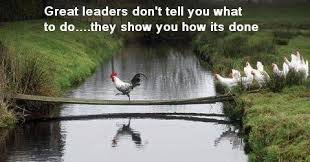
  • Happy International Volunteer Manager (Leader) Day!

    great leadershttp://changingminds.org/disciplines/leadership/articles/manager_leader.htm

    While doing some research, I came across this comparison between a manager and a leader and that got me thinking about our jobs. Are we managers or leaders or both? I’ve included the main points of the article below, but you can read it in its entirety if you follow the link above at changingminds.org.

    What is the difference between management and leadership? The biggest difference between managers and leaders is the way they motivate the people who work or follow them, and this sets the tone for most other aspects of what they do.

    Many people, by the way, are both. They have management jobs, but they realize that you cannot buy hearts, especially to follow them down a difficult path, and so act as leaders too.

    By definition, managers have subordinates – unless their title is honorary and given as a mark of seniority, in which case the title is a misnomer and their power over others is other than formal authority.

    Management style is transactional, in that the manager tells the subordinate what to do, and the subordinate does this not because they are a blind robot, but because they have been promised a reward (at minimum their salary) for doing so.

    Managers are paid to get things done (they are subordinates too), often within tight constraints of time and money. They thus naturally pass on this work focus to their subordinates.

    An interesting research finding about managers is that they tend to come from stable home backgrounds and led relatively normal and comfortable lives. This leads them to be relatively risk-averse and they will seek to avoid conflict where possible. In terms of people, they generally like to run a ‘happy ship’.

    Leaders do not have subordinates – at least not when they are leading. Many organizational leaders do have subordinates, but only because they are also managers. But when they want to lead, they have to give up formal authoritarian control, because to lead is to have followers, and following is always a voluntary activity.

    Telling people what to do does not inspire them to follow you. You have to appeal to them, showing how following them will lead to their hearts’ desire.

    Leaders with a stronger charisma find it easier to attract people to their cause. As a part of their persuasion they typically promise transformational benefits, such that their followers will not just receive extrinsic rewards but will somehow become better people.

    Although many leaders have a charismatic style to some extent, this does not require a loud personality. They are always good with people, and quiet styles that give credit to others (and takes blame on themselves) are very effective at creating the loyalty that great leaders engender.

    Although leaders are good with people, this does not mean they are friendly with them. In order to keep the mystique of leadership, they often retain a degree of separation and aloofness.

    This does not mean that leaders do not pay attention to tasks – in fact they are often very achievement-focused. What they do realize, however, is the importance of enthusing others to work towards their vision.

    Perhaps we should call ourselves volunteer leaders who manage projects, for truly that is what we do. We lead people, but manage tasks or projects. It is always the people portion of our jobs that reveals our true impact on our programs, although this may not be measurable in traditional ways. How do you measure a volunteer who, because his volunteer leader believes in him, becomes a great volunteer? What stat is served when a volunteer manager spends extra time finding the right volunteer for a sensitive assignment? How can figures show the satisfaction volunteers derive from being shown how much they are helping clients?

    On this day, I hope everyone can take just a moment to reflect on the impact volunteer leaders have on not only the people we serve, but the volunteers we engage to serve. This balancing act of leading while managing takes diplomacy, skill, patience, diligence, fortitude, courage and stamina. As one volunteer said to her volunteer leader, “I can see how difficult your job is, what with all the different personality types you deal with, not to mention all the other people, like other staff and families you work with too. But I do know that if it weren’t for you, I wouldn’t still be volunteering. You saw something in me that I didn’t know I had, the ability to relate to people on a deeper level. I will always be thankful for you in my life and I’ll wager there are so many others who feel the same way.”

    So, for a moment, forget the tasks, forget the stats, forget the pile of unfinished business and think about all the people who have been touched by your vision. Know, in a quiet soul filling way, that the late nights, the exhausting planning of parties, the hours of hearing stories, the endless follow ups, the measured convincing, the tireless advocating, the off hour hospital visits, the struggles to remember birthdays, the constant plans for innovation, the never being away even on trips, and the continuing search for dynamic in services all reflect on the sphere of influence you have created in the world. Know that you make a difference, and although it may not be clear at every moment and to every administrator, it is clear in the universe. Stay the course, continue to lead, for the world needs you.
    Cheers to you all, leaders of volunteers!
    -Meridian

  • Happy IVMDay!

    Today, November 5th is International Volunteer Managers’ Appreciation Day!

    I wish each and every one of you a day full of the knowledge that what you do truly makes a difference in not only the lives of the people you serve, but in the lives of your volunteers.  Without your help and guidance, your cheerleading, your patient ear, your taking the time, your endless attention to detail, your running interference, your following up, your standing up for them when you don’t even stand up for yourself, your clear explanations, your arriving so early it’s dark, your understanding of their needs, your staying later than you should because you have a home and a life, your adjusting to their wants, your advocating for their ideas, your tears when they are in pain, your laughs when they joke, your birthday cards and trips to the doctor, your meeting their grandchildren when they visit, your quick hellos when you don’t hear from them, your treating each one in the manner in which they will excel, without all of that, they probably would not even volunteer much less succeed.

    Be proud of your work, it is a ripple that extends far beyond what you see and hear. Helping people become better people is a noble profession, one that may not be as recognized as we would like. But we will continue to fight to make sure it is elevated so that our profession will attract the best and brightest.

    I’ve included a blurb from ehow and the role of the volunteer coordinator. Notice all the wonderful “perks” in there. It’s actually kind of funny!

    Be well, my friends and fellow volunteer managers. And Happy IVMDay!

    -Meridian

    From ehow-in their career section, on the role of a volunteer coordinator:

    Rewards and Challenges

    • Challenges a Volunteer Coordinator might face include people not showing up when or where required; someone unable to do the job assigned; someone who thinks the job is beneath them; ego battles between volunteers; and jobs not being done on time. But the rewards for having helped complete a major assignment are plentiful. Even on small events, or when only a few people are needed, by day’s end the positive feelings are palpable. There is a strong sense of completion and achievement, a personal satisfaction and certainty that all challenges have been met. A coordinator’s circle of friends often grows, too. The coordinator may be rewarded with gifts or special recognition, and if the budget allows, volunteers are recognized by a dinner or similar program to acknowledge their vital contribution. The coordinator is usually given pride of place.

    Home

    Check out DJ Cronin’s latest blog all about IVMDay
    http://djcronin.blogspot.com.au/2012/11/ivmd-volunteer-managers-acknowldged-and.html?spref=fb