Tag: volunteer

  • Creating Partnerships from Corporate Volunteering

    source: gratisography.com

    A partnership is defined as: the state or condition of being a partner; participation; association; joint interest. (source: dictionary.com)

    A recent article in The Republic points out that companies are beginning to understand employees want flexibility in their volunteering beyond the one-time corporate volunteering day. According to the article, Una Osili, associate dean for research at the Lilly Family School of Philanthropy says, “I think for some nonprofits they can leverage those one-time moments to expose employees to long-term opportunities.” Osili further says the key for not-for-profits involved with those one-time volunteer days is to find a way to turn the experience into a long-term relationship with the not-for-profit and the company’s staff.

    So, a company approaches you with a request to volunteer and your first thought is “Oh jeez, the amount of work is going to kill me.” Yeah, been there, a bunch of times. But it doesn’t have to be this way if you are prepared up front. Strategizing corporate volunteering begins with asking these two important questions: “Who” and “Why,” because establishing a relationship with a corporate partner hinges on the people who participate and the motivation to volunteer in the first place.

    A recent letter writer to Alison Green’s popular “Ask a Manager” site complained that she felt forced to volunteer and her company’s volunteering campaign was mainly for PR. Alison Green answers: ” Some companies do have a strong culture around volunteering — which can sound sort of heart-warming from the outside, but in reality often means “we pressure our employees to work for free on causes that we choose, in order to build good PR for the company.” It’s crap.”

    The comments from Ask a Manager readers are enlightening. Many abhor being coerced into volunteering. A few speak positively about their company’s policy that allows them to volunteer at the charity of their choice, no questions asked.

    For us, it boils down to creating partnerships with companies in the same way we do with individual volunteers. We look for motivations and the opportunity to build a sustainable relationship. That’s a hugely different mindset than thinking, “just get me through this one day of group volunteering and I can get back to the real work.” Looking for an opportunity to partner changes the mindset. When a company approaches, have a list of questions ready to determine whether their participation will be a good fit. The questions we ask individual prospective volunteers can be modified for this purpose such as:

    • Why did you choose our organization?
    • Has anyone in your company benefited from our services?
    • What do you hope to accomplish here?
    • What volunteering have you done in the past? How was it received? What feedback did you get?
    • Is this mandatory or optional?
    • What benefits do you believe your employees will receive by volunteering with us?

    This is not an inquisition, but rather an attempt to help a company determine whether a sustainable partnership is a good fit. But don’t stop there. Go beyond speaking to the group organizer. When employees show up to volunteer, approach them individually and ask what they think of the volunteer experience. Find out if they feel “voluntold” or if they are voluntarily participating. After all, our aim is to encourage the company to come back again, or donate, or advocate or encourage their employees to volunteer individually or help in other ways and if the employees who participate rate their experience poorly, then the chances are the partnership will fail.

    Once you determine the company’s Who and Why, then offer the What, When and Where options that work for you. Don’t be afraid to control the corporate volunteering experience. Why? Well, let’s look at it this way. How does it look when a leader of volunteers (LoVols) runs around, hair on fire, trying to accommodate a group? Yeah, it looks like the LoVols is just a hamster on a wheel instead of a professional who is in charge of their program and is offering a great experience. It looks like he/she can’t wait for the day to end. Hmmm, that’s not exactly the start to a great partnership.

    Now, how does it look when a LoVols welcomes a group with a choice of well thought out options? It instills confidence in that volunteer manager’s ability to provide a worthwhile experience versus a haphazard day. And that is where a strategic plan works.

    Think about this. Let’s say you were planning your son’s birthday party. You call up your local skating rink and say, “um, yeah, my son’s birthday is this Saturday. I’m inviting 30 kids but don’t know how many will actually show. I must have the party from 2-4pm and need special music. Oh, and make sure there’s a clown with balloons.” You would never think to do that, so why do we think it’s ok for a group to call up a LoVols and request time, location, number of participants and activity? Without clear options, chaos ensues. And chaos does not encourage sustainability.

    Why would we expect a corporate group to know what volunteering activity provides the most meaningful experience for not only their employees, but for our organizations? Corporate groups are looking to us to mold their day of volunteering into something worthwhile. It’s time we take that responsibility to heart and set the parameters that work for everyone.

    If we, leaders of volunteers want to be treated as professionals, then we must stop thinking that running around letting circumstances control us is good management. Instead, we must establish a professionally structured program, one that offers the best experience for volunteers, makes a difference in our clients’ lives and supports our missions in measurable ways.

    Formulate your corporate volunteering strategic plan on paper. Next time: What goes into a strategic plan?

    -Meridian

  • Removing the Headache from Corporate Volunteering

    Photo by Pixabay on Pexels.com

    We’ve all had that splitting headache. You know, the one that occurs when a
    corporate leader calls and wants to do a team building activity for a group of employees. Oh, and it has to be this Saturday. There are 15 people signed up, but the leader doesn’t really know how many will actually show. And she picked your organization from a list; the employees really don’t know what your mission is or what you do, exactly.

    Now, let’s add in something we seldom talk about: No one in your organization feels like they have to give up their Saturday because well, the word “volunteering” follows the word, “corporate,” so the
    responsibility falls on you, the volunteer manager. It’s your job. No one
    thinks beyond just placating the group for an afternoon. They don’t think about the potential partnership with a corporation that follows a volunteer activity. They don’t consider the donations that might pour in when a corporate group sees firsthand the good work being done. Nope, it’s “just” a one and done volunteer afternoon. Move along, nothing to see here.

    Corporate volunteering is becoming a “thing.” From the Starbucks
    initiative to the millennial generation wanting more involved companies, we are seeing an increase in participation by employee groups. This added volunteer role requires more time and skills from already stretched thin volunteer managers, especially when the volunteer manager is left to manufacture activities without organizational buy-in. What a short-sighted view of corporate volunteering.   

    Sure, volunteer managers can refuse groups but we all know that refusing is unrealistic. Why? Because senior management perceives our jobs as spending time and energy with anyone and everyone who even breathes the word, “volunteering.” To refuse is to be seen as inadequate, or negative
    which is worse than, well, just about anything in the non-profit world. Also,
    because positive volunteer managers never question the wisdom of old methods or suggest that there might be more efficient ways to engage volunteers. Positive volunteer managers don’t point out that volunteer programs affect every aspect of an organization, including community standing, resources, donations, staff satisfaction and marketing. Because being viewed as “positive” often boils down to accepting old ways without question.

    Are we stuck? Do we have to give up our Saturdays for headache inducing
    chaos with little to no return on our time and efforts? Or do we have to refuse to take corporate groups in order to save our sanity? Actually, there is a better way.

    I used to run around desperately trying to find a somewhat meaningful
    experience for corporate groups. It was exhausting. Then I realized how much time I was spending on activities that weren’t in my control. I couldn’t
    control what happened in our gardens. I couldn’t make changes to our programs, so I was stuck with very limited ways to engage corporate partners.

    Corporate volunteering is like having a group of strangers drop in on you at
    your apartment one afternoon, saying, “We need a buffet dinner and we want to be entertained.” You’re not set up for groups in your apartment, and you have no real control over your apartment building’s clubhouse, pool or game room.
    You have to run around, seeking permission to use facilities and even with
    permission, there’s no one to help you buy the food or cook or entertain. If
    the facilities are being used, you have to squeeze the group of strangers into
    your cramped living room while you rifle through your worn-out board games and try to rustle up a meal from your sparse refrigerator.

    As it exists now, corporate volunteering is trying to create a meaningful
    partnership with no time, no additional help and no control. And even if you’ve managed to pull off an exhausting afternoon, running around, trying to condense your mission into sound bites, making sure the members are not idle too long, you go home completely spent because you know there can be so much more.

    Our volunteer programs are like an apartment within the organizational
    building. We may be invited into other department’s apartments at times, but we are not allowed any control within those apartments. The lack of organizational involvement and limited availability for corporate groups make corporate volunteering so frustrating. Honestly, corporate volunteering is just one example of a much larger challenge: Volunteer manager control over volunteer programs and the integration of volunteer programs into organizational planning.

    Volunteer managers must be free to spend the bulk of their time on engaging key volunteers, advancing the volunteer program and positioning volunteer services to attract and sustain modern volunteers. Corporate volunteering has its place in a volunteer program only when the volunteer manager controls the strategic plan that benefits everyone.  

    The time to think about corporate volunteering is now, when no group has
    approached you. That’s when you can clearly plan for a corporate volunteering program that will keep headaches from happening. The critical part of a corporate volunteering plan is to first determine who, what, when, where and why. The 5 “W’s” will lay a groundwork the will help stop the soul-sucking corporate volunteering days from occurring. (and we all know there is plenty in volunteer management that suck our souls dry without adding in another crushing duty)

    Next time: What does a corporate volunteering program strategic plan look
    like and how do we determine the 5 “W’s?”

    -Meridian


  • 10 Things Organizations Don’t Know About Volunteer Management

    I’ve always wanted to see a shareable pamphlet entitled “Volunteer Management, The Cliffs Notes.” It would list all the things we want organizations and senior management to know about volunteers and volunteer management. Here’s 10 of them:

    10. Volunteers do not sit by their phones waiting for us to call. We don’t just “order up” when staff asks for eight volunteers who can work twelve-hour shifts, outside, tomorrow at 8 am. No one wishes it were that easy more than we, volunteer managers. Take volunteer Charles for example. Asking him to volunteer at the last minute when he has a job, other volunteering activities, managing his elderly mother’s affairs, and a family is unrealistic. He can’t drop everything to help us. It takes a wise volunteer manager to know how to sustain volunteers’ involvement so that volunteers are not overwhelmed and look forward to coming in to help.

    9. Managing volunteers is not like managing staff.  Volunteer managers engage two to ten times the number of paid staff. Instead of a paycheck to dangle, volunteer managers must inspire volunteers. Volunteers typically spend 4 hours a week volunteering while staff spends upwards of 40 or 50 hours a week working for the organization. That’s at least ten times the amount of “plugged in time” staff has over volunteers. Therefore, volunteer managers must be able to “plug-in” volunteers every time they arrive on scene, motivate them to keep that connection and keep them informed of changes and updates.

    8. Volunteers are everyone’s responsibility.  Staff doesn’t necessarily see working with volunteers as part of their jobs, but any staff can make or break a volunteer’s experience. Let’s make a comparison. What if the CEO cultivates a donor and then another staff member comes along and insults or ignores or abuses that donor? There would be heck to pay. We need our administrations to set the same tone for the treatment of volunteers.

    7. Volunteer managers are real managers.  No matter what titles are given, coordinators, specialists or team members, volunteer managers are as much a manager as anyone on staff. Volunteer engagement skills are a not a “jack of all trades, master of none” haphazard bunch of chaos skills, but rather a carefully constructed combination of the ability to inspire, listening with empathy, the ability to match talents with opportunities, and so much more.

    6. Volunteers want meaningful work. But organizations often need meaningless stuff done. Who will do it? Volunteers do not want to only do things the staff doesn’t want to do, they want experiences that make a difference. And since we don’t pay them, we should consider meaningful work as pay. But, a great volunteer manager with awesome engagement skills can lead volunteers to occasionally do tedious work if tedious work isn’t all that is offered.

    5. Volunteers want sincere appreciation from more than just the volunteer department. Volunteers see through the once a year speech at a luncheon that is just lip service. Volunteers want CEO’s and staff to acknowledge their contributions. They want to be included in reports, grant applications, websites, and media coverage as contributing members of the team.

    4. Volunteers are not just elderly ladies drinking tea.  Volunteers are diverse in every way, including age, background, culture and experience and it requires major skills to manage a group of diverse people. But even if some volunteers are older, they are former executives, professors, leadership experts and full of wisdom and great ideas. And they’re more than willing to share their wisdom for free.

    3. Volunteer managers are not lap dogs.  Are volunteer managers treated that way by staff? Is there an “order up” culture in which volunteer managers are expected to get volunteers without having any meaningful input into volunteer requests? Volunteer managers have their fingers on the pulse of the organization and are privy to every aspect of the mission via volunteer involvement. A volunteer manager has ideas and solutions that will move the organization forward.

    2. Volunteers are aware and talk. When a volunteer hears negative speak from staff, or sees something less than perfect, they talk, to each other, to friends, relatives, and the cashier at the Quick-Mart. Volunteer managers keep volunteers motivated and inspired and mediate constantly to make sure the volunteer’s concerns are resolved and their experience is positive. In this world aching for transparency, volunteers are the town criers who can proclaim the worth of an organization or do damage to its reputation.

    1. Volunteers don’t stay forever. No, they don’t. Does staff stay until they die? Neither do volunteers. We should recruit, train and cultivate our volunteers just as we do staff, but not expect them to continue until they’re carted off in an ambulance. And, just like staff, sometimes we don’t want volunteers to stay, so that’s why the volunteer manager’s professional skill-set is crucial. A volunteer manager’s professional resolution to a challenging situation is an organization’s best chance to avoid legal woes and negative publicity.

    So, there you have it. Ten things organizations should know about volunteer management.

    And yes, that’s just the tip of the iceberg.

    -Meridian

    This is an update from 2015: The Top 10 Things Executive Directors Need to Know About Volunteer Services.

  • No, Volunteer Management is Not an Open World

    Is this how organizations view requesting volunteers?

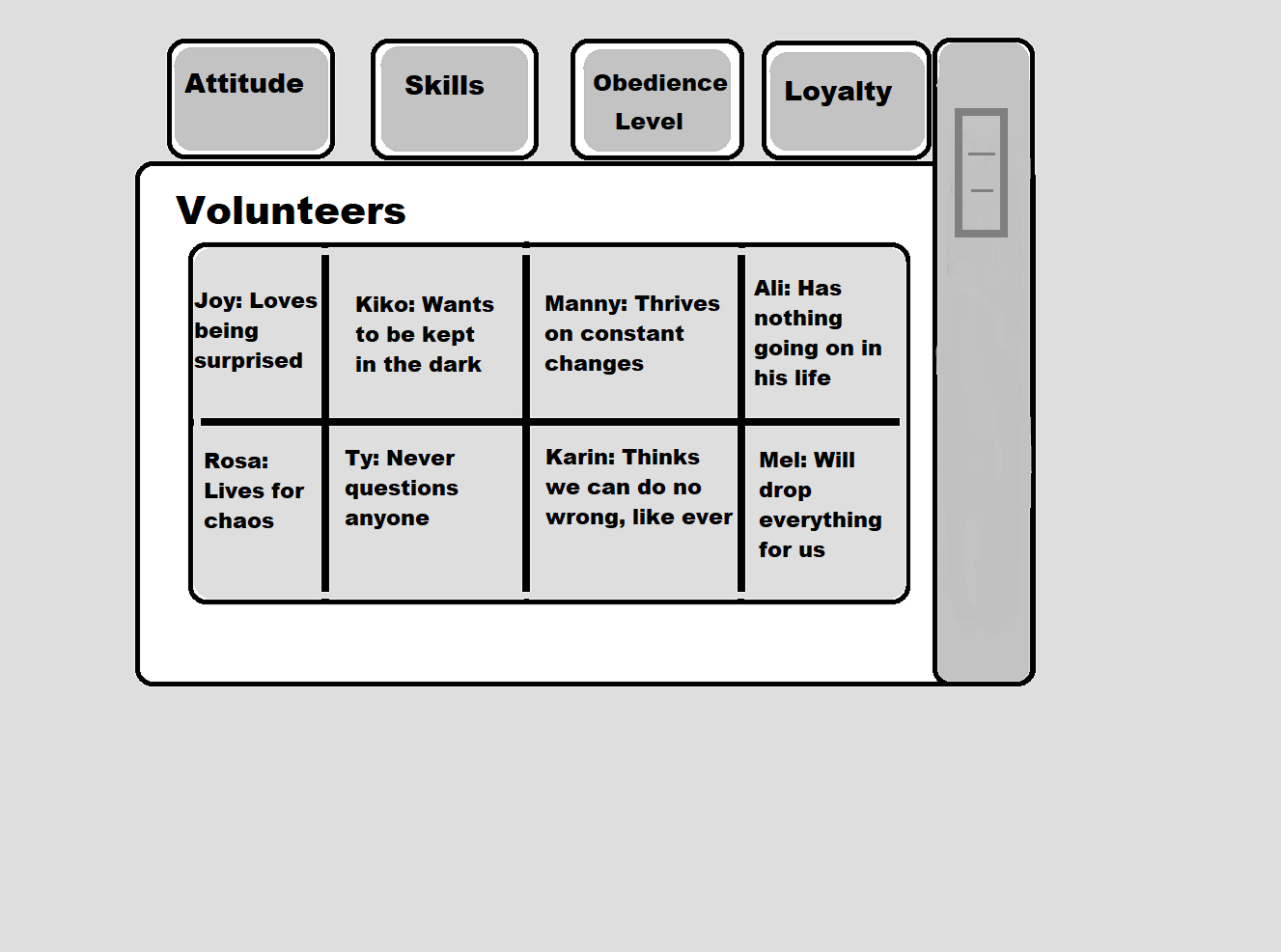
    If non-profits were a video game, the mechanics would be pretty simple. Everyone in the game would stick to their function. Clinical staff would stick to their missions. Support staff would stay in their lane and build home base. Fundraisers would hold tightly onto asking everyone for money. Volunteers would be the toolbox like the above picture that could be summoned up when needed.

    But the world is changing and volunteer programs are the place to test new ideas, pilot new programs and find innovative solutions. Our volunteers are a sandbox gift that non-profits can either set aside or open up to a world of new possibilities.

    Innovative companies continually set new directions. They pay employees to pilot initiatives that will help their companies expand and grow. Non-profits don’t have that luxury so they tend to recycle the same methods that may have worked years ago. And tragically, non-profits tend to overlook the impact potential of their volunteer programs.

    But the more we push our organizations to view volunteers as solutions, the more we volunteer managers must be able to put reasonable limits on volunteer requests. We can’t do everything. We are not an infinite open world. If we insist that our volunteers want to be creative, expect to be episodic, then our organizations will counter with, “hey, if your volunteers are so creative and skilled, why can’t I find a creative type who will jump at a last minute assignment?” We have to change the narrative.

    But what is the current narrative? Volunteers are the ultimate support toolbox, right? They aim to please, right? They think we’re goodness personified so they want to help in any way they can, even if it means putting off necessary surgery for our walk/run, right?

    Championing a sandbox does not mean offering an anything goes program. It means redefining the purpose of volunteer involvement. Even open world games have limits and and it is up to the volunteer manager to successfully set volunteer program limits while focusing on the modern volunteer’s role. How do we do that?

    • Elevate mission priorities. Ask, how does this request further the mission? For example, does asking volunteers to drop everything for a last minute event request rank as high in the mission as placing volunteers with clients? (for more on this, see The Volunteer Department Has Ground Rules)
    • Be clear about volunteer availability. Don’t lump all volunteers into one vague number. Instead, categorize volunteers into groups based on location, training, interests, etc, which gives a clearer availability picture. (for more on this see The Dangerous Numbers Game)
    • Be unapologetic when explaining volunteer preferences. Methodically dispel the mindset that volunteers are willing to do whatever they are asked. (for more on this, see Expecting Different Volunteering Results is Organizational Insanity)
    • Push back against unreasonable or frequent changes to volunteer requests. Explain that any change pushes the request back in priority. (for more on this see The Disruptive Volunteer Manager )

    The point is, we need not be afraid to offer volunteer solutions based on engaging modern volunteers. We need to realize that our roles as volunteer managers must change from implementing volunteer programs to controlling the direction of volunteer programs. In the non-profit video game, we must take the lead in programming volunteer involvement. If we take the steps towards controlling our programs and the perceptions surrounding our volunteers, then we can offer more volunteer help without being overwhelmed by unreasonable expectations. (for more on this see, Do volunteer managers implement or manage volunteer programs)

    Let’s invite the non-profit world to come play in a volunteer sandbox that we create and manage, one that engages today’s volunteers. Let’s forge a new narrative and help further our missions by offering the best our volunteers have to offer.

    Let’s move our volunteer programs from one of toolboxes to one that reflects modern volunteers and their tremendous potential.

    -Meridian

  • How Volunteer Management is Like a Video Game

    Photo by Pixabay on Pexels.com

    For years, volunteer departments have mainly operated in an old school linear manner. It reminds me of the first video games. If volunteer management were a video game, it would be the equivalent of a linear game like the original Super Mario Brothers or the game Pitfall. Move along a predetermined line (no allowance for straying off that line) to complete the course.

    A linear volunteer department operates very much like a linear video game: Request for volunteers->recruit volunteers->fill tasks->complete assignment.

    That linear model worked for volunteers in the past, but the modern volunteer wants to play a different type of game. The modern volunteer is not looking for a narrow experience along a predetermined route, but rather they have more of a sandbox mindset in which their volunteering encompasses a much broader world of possibilities.

    Modern volunteers find meaning in creativity and want the freedom to explore their skills and passions. They are looking at a bigger picture, and are interested in organizational transparency and their own secondary reasons to volunteer. It’s no longer considered ‘selfish’ to want more from their volunteering experience. Showing impact to both modern volunteers and to their organizations can no longer be determined by linear boxes checked such as time spent or dollars saved.

    The challenge for leaders of volunteers is in making a sandbox mode work for us. It has to work from both the volunteer perspective and from the organizational perspective. Changing from a linear model and setting a new normal takes courage, conviction and the will to succeed.

    Let’s first look at a sandbox from the volunteer perspective. How is this different from the old linear model?

    • Volunteers are looking to utilize their skills and passions versus fitting a predetermined role.
    • Volunteers are more interested in how organizations are perceived, how they behave and how they utilize resources versus assuming that the organization does good work just simply by existing.
    • Volunteers rely on social media for information, appreciation, instruction and ease in finding a fit versus a more lengthy and time-consuming process.
    • Volunteers expect organizations to earn their loyalty versus signing on for the long haul.
    • Volunteers crave flexibility and shorter assignments versus commitments.
    • Volunteers want fulfillment from learning new skills to exploring job opportunities versus just filling a task.
    • Volunteers want meaningful recognition, an accounting of their contributions and input into organizational direction versus symbolic appreciation.

    This doesn’t mean that we have to discard every volunteer role and start anew. It means we must be aware of how modern volunteers view volunteering and prepare to integrate them into our programs. And here’s where a sandbox mode fits beautifully within a volunteer initiative: The testing ground.

    • Does your organization struggle with a challenge? A volunteer pilot program can work on the challenge without hiring extra staff or overloading existing staff with new duties.
    • Do you have volunteers with a particular skill or talent or interest? A volunteer pilot program can introduce new ways to engage volunteers and at the same time create new avenues to help clients and the organization.
    • Does your organization strive to increase awareness? Engaging corporate groups, or students or episodic volunteers can expand the scope of community awareness and increase donations.
    • Does your organization struggle to find funds for expert training and consultation services? Engaging skilled volunteers to teach corporate leadership, productivity, wellness and other subjects is a win-win for willing volunteers and the organization.

    We, volunteer managers can start small and introduce the sandbox one step at a time. Then, with each positive gain, we can introduce another pilot program or innovative solution and lay the foundation to create a new normal, one in which volunteers are viewed as more than a linear character on a straight line.

    The key is to show the impact of each new pilot program or innovative solution. It’s akin to earning coins, or tokens or points in a video game and these “volunteer initiative tokens” can be spent on opening up an organizations’ perception of volunteers and volunteer programs.

    Next time: Sandboxes are not infinite and not open world. How to balance the other side of the concept so it works for us.

    -Meridian

  • Get Ready for The Roboteer 2020

    Get Ready for The Roboteer 2020

    https://gratisography.com/

    Well, I’ve been laid off. My organization just ordered 2 new robot volunteers. it’s a budget thing. See, the ‘roboteers’ don’t need lengthy policy orientation, or need someone to listen to their robot vacation stories, or need to call me for directions because staff mixed up Hunter Street with Gunter Lane.

    Introducing, Compassion Nate 3000, and Evie Efficient XP. They have been carefully programmed by senior management to mimic what they believe real human volunteers say and do. Let’s look at their volunteering debut.

    On his first day, Compassion Nate 3000’s eyes open and he hums, “I am the ultimate extra hands of helping.” Several pairs of robot claws unfold. He’s dropped off at a nursing home to visit Miss Aida where he scurries about, tidying up her room, throwing away the pictures her grandchildren drew because he mistook them for trash. Miss Aida wakes to see a metallic face peering down at her and she screams. Compassion Nate grabs her wrists and arms with several robot hands and holds her down, repeating in his electronic voice, “calm down human, I am your extra layer of caring.” Miss Aida continues to scream until one of the nursing home robots, Facility Friend 800 appears and puts Compassion Nate in a robot choke hold. Nate releases Miss Aida and turns, saying, “I am here to hold a hand.” He gives Facility Friend a crushing bear hug of loving support, turning her into scrap. A traumatized Miss Aida is subdued by real humans.

    https://gratisography.com/

    On Evie Efficient’s first day, she replaces all the volunteers who were scheduled to help at the walk/run. Assigned to the water station, she waits in the middle of the road. Her heart-shaped red light pulsating with robot love, she hands out water to the runners. As the startled runners make a wide arc to avoid her, she chases them, repeating in her robot voice, “I’m the cherry on top of our compassion sundae.” Frightened runners leave the course and run away in all directions, Evie zipping behind, throwing bottles of water at them. Her heart light morphs into a frustrated emoji face as she increases speed. “There’s no I in team but there’s a U in Roboteer, so let me care for you,” she emotes as she grabs the leg of a slow runner, tripping him. She uncaps a bottle of water and pours it over his horrified face, saying “I don’t get paid, because I’m priceless!” Law enforcement is called to quell the riot and an officer tasers Evie, who powers down, muttering, “Two hands….. one………. big…………………………. heart………………………………………… Daisy………………………….daisy…give me your answer true.”

    Ahhhh, robot volunteers, such a great idea. But I think I’m going to sit by my phone tomorrow. I just might get a call.

    -Meridian

    a new take from 2013: https://volunteerplaintalk.com/2013/08/07/the-robot-volunteer/

  • Volunteer Management: A Kiddie Pool or an Ocean?

    Volunteer Management: A Kiddie Pool or an Ocean?

    Photo by Matthias Zomer on Pexels.com


    “Coffee break again?” Clara laughs. “Yeah, this is my 6th coffee break today and I’m wired from all the caffeine. But each so called ‘break’ is with a volunteer who needs my attention. I’m not on break, I’m sustaining volunteers.”

    Volunteer managers universally struggle with showcasing the complex work involved in the 3 “ainings:” Attaining, Training and Sustaining volunteers. We keep stats on all sorts of volunteer activities. We may even include anecdotal stories to illustrate volunteer impact. But how do we show everything we bring to the 3 “ainings” table? (Sometimes it feels like bringing a kiddie pool filled with water to describe the ocean.)

    What if we had a report form that showcased the soft work required to attain, train and sustain volunteers? It would explain why our hard stats (shown in bold) are fluid, like an oceanic ecosystem:

    DAY 1 at 9AM:  Trusted my instincts to spend extra time with a 5 year volunteer whose partner has just been diagnosed with cancer. I can see he needs to take some time off and I have placed him on the inactive list thus reducing the number of active volunteers. He may or may not resume volunteering, but, due to his positive experience so far, will remain an advocate forever. I will be spending time to check in on him periodically because I hope he returns to volunteering, but also, because I care about him as a person (and make no mistake, our volunteers know the difference between sincerely caring about them versus giving them lip service). My personal attention to volunteer needs increases the overall number of active volunteers. It also creates satisfied volunteers who will advocate for us no matter whether they continue volunteering or not.

    Day 2 at 2PM:  Realized that a situation requiring a volunteer was overwhelming for just one volunteer so took the extra time (three days) to find and enlist the right two volunteers who could support one another while dealing with a very difficult and challenging assignment. Did not meet goal of finding a volunteer in 24 hours, but instead, created a better outcome that avoided placing an excellent volunteer in a difficult situation. I retained two key volunteers, ensured our client received excellent care and thwarted a potential misstep.

    Day 3 at 11AM: Temporarily removed a marketing volunteer from staffing events because of recent health challenges. Although volunteer insists that he is physically able to carry boxes, his wife informed me that his doctor has prescribed no lifting or standing for three months. As a result, I reduced the number of available marketing volunteers but salvaged this volunteer’s future potential and eliminated the substantial risk for a workman’s comp claim should this volunteer injure himself while under his doctor’s orders. More importantly, we sent a message to all volunteers that their health and well-being is important to us and we view them as valuable assets, thus increasing overall volunteer sustainability.  I am currently exploring other areas with this volunteer and he is interested in moving into a deeper volunteer experience, so with additional training, we will have a new client volunteer who, BTW already has proven himself to be a great volunteer.

    Day 4 at 3:15pm: Spent 45 minutes with a prospective volunteer who admittedly can’t volunteer until sometime next year. This prospective volunteer’s father was helped by our organization and she is interested in giving back, although current commitments are preventing her from taking training. I have set reminders in my calendar for scheduled contact with her throughout the year as I perceived her as an excellent future volunteer. Rushing her at this time will only increase her overload of responsibilities and will cause her to quickly quit. As a result, no new volunteer stat has increased but time spent will pay off in the future because this potential volunteer also belongs to several key civic groups that I have been recruiting. She’s already booked a speaking engagement for me next month. I expect several new volunteers from forging a relationship with this group.

    Day 5 at 6pmAttended funeral of long-term volunteer who retired due to health reasons more than two years ago. No stat will be affected, but I did it because this is the right thing to do. *Addendum: Received a phone call from the volunteer’s son whom I spoke with at his mother’s funeral. He is a VP at the largest investment firm in our area and is very interested in setting up a corporate volunteer program with me. There will be substantial work involved. And, BTW, he and the firm will be donating in his mother’s name.

    The soft work we do is an ocean compared to the kiddie pool stats we report. Our instincts flow like a current, over and under the waves of volunteer requests. We create an ecosystem in which results are symbiotic and may take up to weeks or months, sometimes years to see. We nourish relationships that reach beyond volunteering and affect donations, future staff, community standing, and so much more.

    It’s time we begin to connect the hard results from the ocean of our soft work.

    -Meridian

    This post is an update of an original post in 2016 but don’t feel like you have to read it-this new one is hopefully better anyway 🙂 https://volunteerplaintalk.com/2016/07/20/huggable-book-of-volunteering-stats-or-why-a-kiddie-pool-cant-explain-the-ocean/


  • The Terrible, Horrible Phone Call or Why Purging Matters

    The Terrible, Horrible Phone Call or Why Purging Matters

    blaze blue blur bright
    Photo by Pixabay on Pexels.com

    I answered the phone one day to hear, “Yes, this is Juan, the son of Adelia and I just received an invitation in the mail for my mom to this year’s volunteer luncheon. She died. Last year. I thought I’d let you know.”

    “Ohhhhhh, crap.”

    I also vividly remember sitting at a sign-in table for an invitation only event attended by donors, volunteers and dignitaries. And I looked up to see the volunteer we dismissed two months before presenting the invite we sent him.

    Countless volunteer managers have said that the first thing they had to do when they came on-board at their organizations, was purge hundreds of volunteer names off the list.

    We have a difficult challenge because we don’t manage employees. Employees are either in or out. They’re working or they’re not.  They don’t get paid once they quit, move, get fired or die. They are removed from rosters and lists and don’t get official invitations or phone calls. They don’t get calls asking them to “please, just come in for a few hours because we need extra help this week.” Nope, doesn’t happen. We can’t do that. Our volunteers don’t get paid. They exist in a grey area. And we work hard to keep our volunteers engaged enough in this grey area so they return again and again.

    We worry that if we remove a volunteer due to temporary inactivity, we will forget to contact them and therefore, lose them permanently. I remember the thought of forgetting good volunteers was more horrifying to me than leaving my stove on.

    But when can we remove volunteers from an active list? After six months, two years, death? The problem with keeping volunteers who are not active on an active list, is we can’t give an accurate volunteer count. If we say we have 125 volunteers, then staff assumes we have 125 volunteers to choose from when they make a request. That’s far different from choosing from 60 currently active volunteers.

    So, how can we keep volunteers, yet not confuse temporarily inactive volunteers with active ones?

    • Enlist the help of a key volunteer. Ask your volunteer to help maintain a current list by making check-in phone calls. Not only will you be able to distinguish who is active at the moment, you can ask the key volunteer to conduct an informal survey on satisfaction, training, communication or any other topic. And this periodic “checking in” will flesh out problems before they get out of hand.
    • Send the volunteer newsletter to all volunteers. Keep everyone in the loop. Newsletters are great for showcasing new projects, calls to action and for encouraging inactive volunteers to get involved again.
    • Remove the “quitting” stigma. Assure volunteers that you don’t view stepping back as quitting. Show them you have other volunteers on a temporarily inactive list and explain there are many reasons for volunteers to step back. Encourage them to take time they need and let them know you will be checking in with them periodically because they are valued.
    • Keep several lists or use templates that allow you to sort. I’m a big proponent of categorizing volunteers by locale, assignment, training completed, and current availability. It gives a much clearer picture than putting all names on one list. We wouldn’t expect all staff to be listed as substitutes for social workers or accountants. (“Hey, call accounts payable and see if one of their staff can come and do wound care for a day.”) It’s no different with volunteers. If your volunteers need specialized training for an assignment, then just like staff, only those volunteers who have had the training should be in that category.

    Leading volunteers casts a much wider net than managing employees. You don’t hear the phrase “episodic employees” for a reason. Volunteers drop in and out, and some hover on the periphery. (for a take on periphery, see https://volunteerplaintalk.com/2017/09/06/the-volunteer-periphery/ ) (more…)

  • Ever Want to Go Back in Time?

    Ever Want to Go Back in Time?

    pexels-photo-707582.jpeg
    Photo by Buenosia Carol on Pexels.com

    You gain strength, courage, and confidence by every experience in which you really stop to look fear in the face. You are able to say to yourself, ‘I lived through this horror. I can take the next thing that comes along’ …Eleanor Roosevelt

    Ok, maybe we, volunteer managers don’t live through horror. (unless you consider that time when that group who asked for volunteer orientation had no AV equipment except an ancient TV so there was no way to show the super duper PowerPoint and then for four grueling hours you had to wing it…) But seriously, do you ever want to go back in time? Are there things you wish you had done differently? Me too.

    If I could turn back the volunteer manager clock I would:

    • Call that volunteer who had to quit because she got sick instead of telling myself that I would get around to calling her.
    • Be more patient with that volunteer who had so many questions and even burst in on my annual job review.
    • Not drive that volunteer home that one night. (cause it got real creepy……….. real fast).
    • Stop that volunteer from talking to the press at that event (or at least tell the reporter our organization had no official position on the mayor’s race)
    • Not tell that story in front of the CEO about running over a donor’s mailbox when I picked up a donation. (I ran it over with a truck-but I did pick up the letters from the street)
    • Not get so frustrated with staff who were also overworked.
    • Keep that volunteer from bringing in their special yummy, homemade tuna casserole, the one that made everyone sick. (I think it was tuna, but then again, it kinda had this weird smell)
    • Explain volunteer management in better, more impactful ways.
    • Listen to my inner voice and not let that teen volunteer bring her boyfriend in with her because….(well, I just turned my back for a minute, I swear!)
    • Carve out more time for me to prioritize and progress.
    • Not tell everyone in a meeting that I was going back to my home planet. (You had to be there and frankly, any planet except this one seemed better at the time)
    • Not take a new volunteer to that house where they were engaging in a side business (hey, who knew?)
    • Not accept that mysterious heavily taped up box at the thrift store…. (I don’t think the stains ever really came out of the carpet)

    Sure, we’d all love to go back and make everything perfect, because I believe that we, volunteer managers tend to be perfectionists. (gasp, no, ya think?) We inwardly seek to create:

    • the perfect volunteer experience for every volunteer.
    • the perfect client experience so every client is satisfied.
    • the perfect appreciation so every volunteer feels engaged.
    • the perfect understanding so our work is valued.
    • and for the above to be perfect, then we have to be perfect.

    But if we were perfect, we wouldn’t learn, or grow or move forward. A cherished friend (yep, one of the volunteers-yeah, yeah, my perfect boundaries are not so perfect) told me that I should be thankful for the experiences that taught me something instead of bemoaning them. How else would I get better?

    Volunteer management means every day, we have millions (ok, maybe hundreds) of interactions and experiences. Each and every one teaches us something we can use for the next. That is why our “jobs” are in reality, a continuous journey.

    We all wish we could change some things, from having more patience with volunteers to standing up for ourselves in meetings. Past experiences can haunt us. Dwelling on them can prevent us from moving forward. There’s no shame in admitting, “hey, what I did there was far from perfect, but you know what? I’m learning and dang it, I’m getting better.”

    Courageous leaders are not perfect. We’re not perfect. I think Mrs. Roosevelt nailed it all those years ago:

    With the new day comes new strength and new thoughts…Eleanor Roosevelt

    Anyone in volunteer management will tell you: I’m not the same person I was a year ago. No, I’m better. I’m smarter and stronger. And with each passing day full of experiences, I’m learning.”

    So, when you wish you could go back and “fix” things, do this instead. Say to your past self, “thanks for teaching me. I’m a better volunteer manager today because of you.”

    -Meridian


  • Volunteer Managers Are Better Than These 3 Phrases

    Volunteer Managers Are Better Than These 3 Phrases

    sticky note with apology
    Photo by Suzy Hazelwood on Pexels.com

    Words are pictures formed in the mind. The art of communication is drawing those word pictures so the other person sees things our way.

    If we, volunteer managers want to change the perceptions of us, our work and our volunteers, we need to eliminate words and phrases that negatively picture us. We need to adopt communication that rewires the way people perceive us and our work.

    Consider this conversation:

    • Senior manager: “Where are you on getting those volunteers for tomorrow’s event?”
    • Volunteer manager: “Well, I couldn’t get all five volunteers, but I did manage to get three.”

    or this conversation:

    • Staff member: “Were you able to place a volunteer with our client?”
    • Volunteer manager: “I tried everyone but right now, no one is available. I’ll try again next week.”

    or this one:

    • Volunteer: “Were you able to get the answers to my questions?”
    • Volunteer manager: “There’s a couple of people I still have to talk to and they are hard to pin down. I’m doing the best I can.”

    I used these phrases all the time. They just naturally came out. So, what’s wrong with them?

    Phrases like I can’t, I tried, and I’m doing the best I can, are apologies.

    What are the natural reactions to these apologies?

    • I can’t or couldn’t: “You let us down.”
    • I tried: “You should have tried harder.”
    • I’m doing the best I can: “You should do better.”

    How many times have staff said things like, “Why don’t you just go down to the senior center and recruit those people?” Or “well, if you just put an ad in the paper, I’m sure folks would come.” Each time we say, “I couldn’t” or “I tried but,” we draw a picture that says: “I’m sorry, I failed.”

    This does not mean shifting blame to anyone else, especially volunteers. It means don’t apologize, but rather answer in a positive and explanatory way. Let’s look at the first conversation again.

    • Senior manager: “Where are you on getting those volunteers for tomorrow’s event?”
    • Volunteer manager: “I have three of our best event volunteers lined up and ready to go.  Two of them rearranged their schedules after I made clear the importance of the event. All other qualified volunteers explained they have prior commitments they cannot break. I have new orientation this month and we will have even more volunteers for future events.

    A bit wordy? Yes, I’ll give you that. But communicating with non-apologetic positive explanations eliminates the notion that the volunteer manager can’t get the job done.

    Structure your non-apologetic communication to include three things:

    Always use “I” with the positives:

    • “I have three of our best event volunteers lined up.”
    • “…after I made clear the importance of the event.”
    • “I have new orientation this month.”

    Explain the work being done:

    • “All other qualified volunteers explained they have prior commitments.” (It’s obvious you contacted all the volunteers)
    • “…after I made clear the importance of the event” (shows the amount of work you did with each volunteer)

    Reasons:

    • “All other qualified volunteers explained they have prior commitments they cannot break.”
    • “…we will have even more volunteers for future events.” (not enough volunteers to choose from at this point in time)

    Rewiring people’s perceptions of us and our work is never easy, but with a shift away from apologetic responses (emphasis on the personal) to professional communication (emphasis on the workpositives, explanations, reasons) we can uplift ourselves and therefore, our programs.

    So, rethink the ways you communicate information and save your apologies for the times you actually do something wrong.

    -Meridian