Tag: volunteering

  • Do Volunteer Managers Implement or Manage Volunteer Programs?

    Do Volunteer Managers Manage or Implement Volunteer Programs

    “I am a volunteer program manager,” I’ve said countless times to confused faces at networking events.

    “Oh, that’s nice,” The person who just asked me what I do for a living would mutter and then turn to find someone who has a job that is understandable and doesn’t take a lot of martini sipping time to comprehend.

    What does the job title “volunteer manager” mean, anyway? What do I manage? Is it people as in, you know, get people to do things? Or is it work, like filling the tasks that need to be done? What exactly am I in charge of?

    There is a huge difference between managing a program and implementing a program. This is just semantics, I know, but in semantics we find perception, so please, just stick with me a moment, ok?

    Most volunteer managers implement their volunteer programs. The word implement means “carry out” which implies the volunteer manager fulfills the directives from non-profit boards and senior administration who determine how volunteers can be helpful.

    This creates a contradiction: Although most volunteer managers are encouraged to think in strategic ways, they are primarily expected to fulfill requests from key staff or departments which leaves little time for vision or innovative engagement. And strategic innovation is the basis for leading a program to full potential.

    Let’s examine how volunteer management normally fits under organizational missions. Words such as “enhance,” “expand programs,” “enrich experiences,” and “enable increased staff output” define the volunteers’ participation. But vague idealism is like telling your child to “just go out and be good.” Should they wear clean underwear or be polite to the next door neighbor or stop trading their lunch for six candy bars? What is being good?

    Non-specific phrases are so broad they become meaningless. And meaningless phrases lead to implementing a volunteer program versus managing it.

    Being governed by broad phrases creates this gigantic task soup. Anything and everything can be thrown in, including the kitchen sink (think “hey, we have less staff now, let’s get the volunteers to run errands.”). But does this soup actually taste good? Is it a defined recipe for success or is it a chaotic mess?

    This is why we, volunteer managers need to step in and take some control. We can’t (and hopefully don’t want to) alter the mission, so how can we get away from broad concepts and control implementing managing the volunteer portion? The answer is actually found by breaking the mission down into its subordinate parts: Goals and Objectives. The break down looks something like this:

    Mission statements are lofty and broad. For example, “To eliminate human suffering due to unsanitary conditions.”

    Goals are what we are aiming to achieve. For example, “To reduce the number of people who have no clean water.”

    Objectives are the steps to realizing goals. For example, “To raise funds to purchase 100 installed water filters by end of year.”

    As we break our missions down into tangible goals, we can then begin to craft concrete objectives that we have control over. Setting goals with organizational administration will give you the flexibility to create the objective steps that will fulfill those goals.

    Invite senior administration and/or your board to meet with you in a planning session. Ask for specific volunteer department goals for the year. For example, if, under your mission statement your volunteers “enrich clients’ lives,” ask for a defined goal to achieve that lofty ideal by defining what that will look like.

    Let’s say that by end of planning session, the goal becomes, “by end of year, 20 clients will experience less stress through volunteer involvement.” Bingo! That’s a measurable outcome that you can own and control through your creative objectives.

    And, by owning the objectives, we control the volunteer actions that accomplish the objectives that meet the goals that support the mission.

    Next time: Goals, Objectives, Actions in a yummy whole-grain wrap called Strategies.

    -Meridian


  • Experts Among Us: An Interview with Katherine Arnup, Author, Volunteer Part 2

    516LHOA+4LL._AC_US327_FMwebp_QL65_

    Experts with skills and talents to share are everywhere, including the many experts within our volunteer programs. Last week, in our first part of this interview, Katherine Arnup, author of the new book, “I don’t have time for this,” shared her story in both caring for loved ones and volunteering at her local hospice.

    In part 2, Katherine gives us insight into how we can encourage the experts among us.

    VPT: How can organizations recognize volunteer contributions?

    K: I think volunteer contributions are not easily measured. Organizations can miss out on all the things volunteers contribute by not recognizing the whole person and what they bring. I used to speak to other hospice volunteer appreciation meetings. I would have volunteers come up to me afterwards and say, “thank you so much for understanding what we do and thank you for validating us and our work.” The volunteers were so grateful to be fully heard and understood beyond receiving lip service or a pin for hours volunteered.

    VPT: How can volunteers help other volunteers?

    K: I taught new volunteers in the training course. They learned from my experiences and I wasn’t afraid to share mistakes with them. I made fun of myself and was known as the volunteer who couldn’t make poached eggs. (laughing) This comes from a story I would tell about my failed attempts at poaching eggs for patients. I would actually try and convince the patients to order scrambled eggs, but the story made an impression in training because volunteers would say to me, “oh you’re the one who can’t poach an egg.”

    I would talk about how at first I would get mad at myself for making mistakes, but then I learned that we are not perfect and I wanted volunteers to know that, so I shared my mistakes with them.

    VPT: How can organizations support volunteers who have talents to share?

    K: I think it’s important that organizations not be afraid to celebrate what volunteers are doing. For example, the hospice where I volunteer recently started including volunteer stories in their newsletter. But I think there’s this common perception that by recognizing particular volunteers, others may feel left out.  I don’t think that’s the case.

    A long time ago, I spoke at a staff meeting where I told them the story of why I volunteered. Afterwards, one of the staff came up to me and said, “I had no idea why you were here until you told us.” Volunteers should be encouraged to share their stories at both staff and board meetings.

    Every volunteer has a story to share. We should be posting these stories and celebrating the whole person. What organizations need to realize is volunteers are out there talking up the mission. Instead of merely issuing statements like, “we couldn’t do what we do without volunteers,” staff need to realize that volunteers are spreading the word about the organization and that reflects positively on staff.

    When I taught the first year seminar, “Contemporary Controversies in Canadian Society,” I was working full time as a professor and volunteering four hours a week at the hospice. I included a segment in the seminar on disability, aging, death and dying, something the first year students were initially uncomfortable with. They didn’t know how to talk about death and dying, although most all of them had suffered some sort of a loss. Although they did not want to talk about it, they shared their experiences and afterwards they told me it wasn’t so bad.

    When I tell people that I volunteer at a hospice center, they usually say to me, “this must be a very good place, because here you are, working full time with a family and yet you make time to volunteer.”

    VPT: That’s a very powerful message.

    K: Volunteers are ambassadors for their organizations, at work, at school, wherever they are. Organizations should realize that fact and celebrate their volunteers.

    VPT: Thank you Katherine, for your wonderful book, your expertise and for sharing your insights with us.

    Every organization with a volunteer component has experts, passionate people, dedicated advocates and potential game changers in their midst. As Katherine said, recognizing volunteers does not diminish the enormous contributions staff make. On the contrary as she points out, volunteers who talk up the mission, spread the word and contribute to achieving goals reflects on staff and the organization as a whole in positive ways.

    We have to move our organizations into embracing volunteers and volunteer contributions as reflections on the importance of the mission and the work being done to achieve goals, no matter who is doing the contributing. As Katherine pointed out, we must get to know volunteers as whole people, a practice that just might lead to amazing outcomes.

    For every volunteer who contributes in profound ways such as Katherine has, how many volunteers with potential languish because they are “just volunteers?”

    Or maybe the better question is, “how much more quickly and efficiently can organizations solve societal challenges if they embrace everyone (volunteers included) who passionately wants to see them succeed and are willing to work hard to further mission goals?

    -Meridian

    Katherine’s bio:

    Katherine Arnup is a writer, life coach, speaker, hospice volunteer, ukulele player, and retired university professor. She writes about matters of life and death on her blog at https://hospicevolunteering.wordpress.com/.  Her book about caring for her sister and her parents as they were dying – “I don’t have time for this!” A Compassionate Guide to Caring for Your Parents and Yourself – is available online at Amazon and Chapters and at independent bookstores in Ottawa. http://katherinearnup.com/


  • Experts Among Us: An Interview with Katherine Arnup, Author, Volunteer

    516LHOA+4LL._AC_US327_FMwebp_QL65_

    Part One of Two:

    Recently, I was fortunate to catch up with Katherine Arnup, author of the new book, “I don’t have time for this,” a practical, yet emotionally supportive book that guides caregivers through the difficult process of caring for aging parents.   Katherine’s amazing book is available here: “I don’t have time for this,” by Katherine Arnup.

    Katherine is an example of the highly talented volunteers who contribute to their organizations far beyond the hours recorded. These volunteers ambitiously advocate for their chosen organizations and work behind the scenes to create awareness.

    For years, Katherine has been a strong voice advocating for terminally ill people and their caregivers.

    In this two-part post, we have the opportunity to learn from Katherine’s story, one which formed her dedication to spreading awareness of the hospice mission. Like Katherine, mission experienced volunteers give our organizations the opportunity to gather important feedback about how programs are working and determine future direction.

    VPT (volunteerplaintalk): Thank you for speaking with us, Katherine. Your book is inspired; full of practical wisdom, but tempered with the emotions that come along with care-giving. What prompted you to write this book?

    K (Katherine): I have always been a writer. My sister had been sick with cancer for many years. When it progressed to the final stage and was obviously fast-moving, I was on sabbatical from work at the time. It was then that I committed to making the 4 hour trip to Toronto every week to care for her.

    The experience was transformative for me. I had always been frightened by death ever since I was little and now that I was confronted by the impending death of my sister, I couldn’t be frightened any longer, so I pushed through. I literally sat with my fears. At one point my sister said to me, “you’re going to be an expert at this by the time you’re done with me!”

    And I said to her, “Maybe, but I don’t want to learn it from you.”

    It was inevitable that I write this book. I had learned so much. I’d written small pieces during her illness. Four years after her death, in 2001, I started volunteering at my local hospice in an 8 bed care facility. That same year, I began to write about my experiences. I suppose you could say it was cathartic. I had all these stories in me.

    Then, in 2003, my father, who was 92 at the time, became ill. My father, a retired judge had never met an obstacle he couldn’t overcome in his life, until that year. Getting sick was the one thing he couldn’t overcome. He tried though and did well, but eventually he did die. Once again, I would travel the 4 hours to Toronto to see him.

    VPT: How was that experience?

    K: I learned different things from him while he was dying. I learned he needed company even if it was only to watch golf or curling on TV with him. I learned how to just sit and be with him. My father was a slow speaker so that gave me the opportunity to write while I sat with him. In contrast to my sister whose disease moved rapidly, his came in increments which gave me more time to be with him, and to process and write.

    Shortly after my father died, my mother got sick and I’m a little embarrassed to admit it, but I thought, “oh my God, not again.” Once again, her death was a different journey. My mother had an aneurysm many years before and had been disabled for years before she got cancer. I wrote about my mother in a piece I titled, “Not My Mother,” because the aneurysm had honestly already stolen my mother from me.

    I continued to write and I created a blog, “Hospice Volunteering”  in 2011. And I’ve been writing there ever since. I cover the gamut of topics from what we do as hospice volunteers to how to be with the dying. I’ve included book reviews, reports on visits I’ve made to hospices throughout my province and conversations with other volunteers.

    VPT: Did you tell your hospice about your blog, which by the way, I highly recommend reading?

    K: I did. I encouraged them to share it with the other volunteers. Other hospices heard about it and did share with their volunteers, especially when I wrote about issues important to volunteering. I knew my experiences would help new volunteers in their work with hospice patients. For example, conversations with patients will change on a week to week basis. I wanted new volunteers to know that you have to let go of expectations and be fully present with the patient as they are in any given moment.

    VPT: How do you think your book furthers the hospice mission?

    K: (pauses). The hospice mission supports people to live as fully as they can even as they are dying. It’s about staff and volunteers supporting people and their families. It’s about not just caring for a person and their illness, it’s about caring for a person’s whole world. We call it a “circle of caring.”

    I would say to other volunteers and even administrators, slow down and remember the moments of joy. We are all so busy checking off the items on our “to do” lists that we miss the opportunity to feel joy. We need to find ways to support one another.

    VPT: Next time, part 2 of our interview. Katherine and I talk about the ways organizations can support volunteers who bring expertise and we discuss how embracing talented volunteers lift up everyone.

    -Meridian

    Katherine’s bio:

    Katherine Arnup is a writer, life coach, speaker, hospice volunteer, ukulele player, and retired university professor. She writes about matters of life and death on her blog at https://hospicevolunteering.wordpress.com/.  Her book about caring for her sister and her parents as they were dying – “I don’t have time for this!” A Compassionate Guide to Caring for Your Parents and Yourself – is available online at Amazon and Chapters and at independent bookstores in Ottawa. http://katherinearnup.com/

  • The Universe is Listening

    the universe is listening

    Confession time: I’m not proud of the fact that I used to inwardly giggle at all the staff who embraced aromatherapy, Reiki, mysticism, healing touch, energy transference and psychic connections.  I’d mutter under my breath about “woo woo” stuff while flippantly asking, “hey is that lavender I smell, what should I be feeling, ha ha,” because frankly, I was ignorant and a jerk.

    But then, the coincidences started piling up. I especially began to notice “out of nowhere” help with seemingly impossible volunteer requests. I’d get this urgent, off the wall request for something like, “send a volunteer that can teach a patient to knit, but they have to speak Romanian.”  I’d sigh and after mumbling about pulling volunteers out of my #$@, I’d be sitting at my desk, wracking my brain with this impossible volunteer task when the phone would ring.

    I would pick it up and as I said “hello,” the answer would somehow manifest. The caller would be a volunteer who had been on extended leave. She would tell me that she was cleaning her bedroom closet a few moments ago and her old volunteer orientation manual fell off a shelf and bonked her in the head, so she took that as a sign and she decided to come back and volunteer. And yes, she knitted and spoke Romanian. Or the caller might be a new volunteer who wanted to chat and out of the blue, tell me his passion was creating numerical filing systems which of course was something we needed like yesterday. This happened over and over again, so much so that I began to take notice.

    I remember hatching an idea for a gigantic, very ambitious project and I enlisted the help of several trusted volunteers, although none of us had the specific expertise we needed. (talk about working backwards). After the thrill of setting up a core group of committed volunteers faded, I sat back and wondered how the heck we were going to pull this off. (Yeah, ok, smarty pants, now what?)

    Two weeks later I was teaching new volunteer orientation and just happened to mention the new project. After class was over, one of the new volunteers came up to me and told me she not only had all the exact expertise and experience we needed, she said she’d be thrilled to join the group. Bingo, we were on our way.

    Now here’s the thing. The more we, volunteer managers share our needs with everyone, (even the annoying person behind us in line at our coffee shop or the coach of our son’s soccer team) the more chance we have finding the right volunteer. The more “feelers” we put out, the further those feelers will reach. It’s like casting a net-you may scoop up a bunch of bait fish, but there also could be a lobster in there.

    Talk up your needs often, in meetings, on the phone, to staff and to new and prospective volunteers. You never know who just might surprise you and want to help in unexpected ways. Or who may hear about your need and call you while your forehead is down on the desk.

    Use your voicemail or answering system to leave updated messages outlining the current needs and encourage volunteers to call in when they feel they have some extra time or just want to explore other opportunities. Call it a volunteer jobs hotline or a better, catchier name. (Mission Possible?)

    Send email updates or texts or use a messaging service to blast out current available tasks or projects. Broadcasting the crazier, more niche requests actually serves a purpose. They show volunteers that unique skills and talents and interests are welcomed and important to mission goals. That potential volunteer just might think, “hey, maybe they could use a volunteer who can yodel!”

    And every off the wall volunteer request filled that showcases volunteer talents encourages staff to look for more talents (as opposed to viewing all volunteers as tools to do meaningless work like sweeping the floor after a party for donors). Because there’s a huge difference between crazy, meaningful, mission-aligned requests and crazy meaningless tasks that do nothing to further the mission and suck the lifeblood from volunteers.

    Put your best volunteer recruiters together in a room, ply them with sweets and tea (or vegan wraps and energy drinks or wait, maybe sweets and energy drinks), give them the list of impossible jobs to fill and ask them to use their considerable powers of persuasion to find suitable volunteers.

    Advertise open available roles on your website. This is also a visual for prospective volunteers and shows them what the needs are, how they change and how many ways there are to be involved.

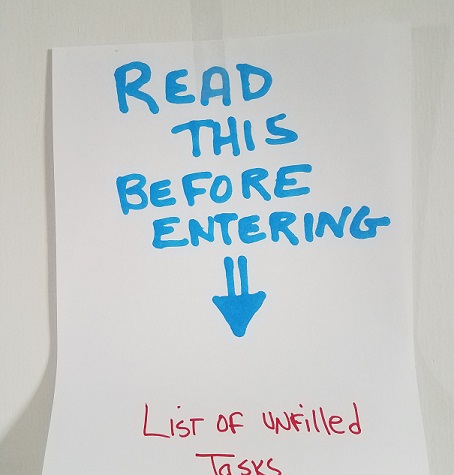
    Post your needs on your door so every volunteer who comes to chat sees them (Maybe post a sign that says, “READ THIS BEFORE ENTERING”).

    I’ve always been rooted in finding practical solutions. Yet at the same time, I’ve come to think that a sincere attempt to provide goodness in the world gets a little help from somewhere (call it divine, the universe, karma, or whatever you subscribe to). So, I don’t refer to all the new age stuff as “woo woo” anymore.

    Because I’ve come to believe the universe is listening. Woo!

    -Meridian


  • The Disruptive Volunteer Manager

    thedisruptivevolunteermanagercover

    I’m really excited to announce my new book, “The Disruptive Volunteer Manager” will be available in a few days, both in paperback and in Kindle version.

    The power of volunteers and volunteer initiatives is amazing. From witnessing a single volunteer deeply connect with someone to seeing hundreds of volunteers come together for a noble purpose, it has been life altering. It’s as if volunteering is a living, breathing entity, one that appears each time common goodness unfolds.

    “The Disruptive Volunteer Manager,” lays out six steps to increase awareness of volunteers and to elevate volunteerism by disrupting the volunteer management norm in a forward moving way. It is a step by step journey to setting a new normal, one in which leaders of volunteers unleash the potential that awaits.

    A few of the questions the book answers are:

    • What is volunteer role scalability?
    • What is volunteer synergy and why is that so important?
    • What is a volunteer block chain and what does this mean for volunteer management?

    I believe 2019 is the year that sets up the coming “Decade of Volunteerism.” Yep, I’m that hopeful sure.

    So much has changed in just the past few years and although change is difficult, the end result is going to be amazing. We can solve our frustrations and elevate volunteer value by proactive solutions.

    Get ready. Volunteer managers or wait, Leaders of Volunteers (LoVols) have arrived!

    -Meridian


  • Volunteers and Kintsugi

    volunteers and kintsugi

    I met Jake one cold winter day when he came to our volunteer orientation. He continuously looked at his hands and shifted in his seat. He didn’t speak up when the other new volunteers answered questions. Instead he watched quietly from his space.

    When orientation was over, I looked forward to interviewing the new volunteers one on one. It helped to know them away from the group setting. I didn’t know what to expect with Jake.

    He came into my office and sat down. The air was charged with his story and I pretended that his hesitation was common among new volunteers. Then he began to talk.

    There’s a great deal of research and evidence that volunteering increases well-being. It staves off loneliness, offers a life of purpose, aids in skill building, wards off dementia and boosts self-confidence. But there is another aspect to volunteering beyond well-being. It’s a form of Kintsugi, the Japanese art of golden joinery. It recognizes the beauty in broken things. Kintsugi is the art of rejoining broken pieces and dusting them with gold powder. The broken when fixed, becomes more beautiful.

    Jake was broken. And through his volunteering, he pieced himself together with dazzling golden powder. He was a phenomenal volunteer who found a way to believe in himself by believing in others.

    He worked his way into taking tougher assignments. He built himself up again, one volunteer day after another until he had a supportive group of volunteer friends and had clients who depended upon him because he was dependable again. His broken pieces became a different, but new whole.

    kintugi
    Haragayato [CC BY-SA 4.0 (https://creativecommons.org/licenses/by-sa/4.0)%5D, from Wikimedia Commons

    We are privileged to witness a human Kintsugi in a few of of our volunteers. Their broken parts take on a luster from the golden dust we offer them. And the interesting thing about Kintsugi is the golden repair’s meaning stays with those who gaze upon the new work. Jake’s journey to repair resides within me, a golden nugget that I can roll between my fingers when I need it.

    I know you’ve had broken volunteers and I know you’ve seen them heal. Their fractures are a part of their makeup and history and what makes them beautifully empathetic and able to connect.

    So, the next time you gaze wistfully at one of your once broken volunteers, see the shimmer of gold that fills the spaces in between and know you’ve had a hand in the repair.

    -Meridian


  • 2019: Should Volunteer Managers Look Forward or Look Back?

    person on a bridge near a lake
    Photo by Simon Migaj on Pexels.com

    Happy New Year!

    It’s time for resolutions, optimism and time to drop the pounds from all the volunteer homemade goodies, including Anna’s cheese blintzes scarfed down during full stressed-out mode.

    Ahhhh, the new year. It’s full of hope. We seldom hope for a year that’s exactly like the one we just completed, right? Instead, we hope for a better year. So, do we look forward or backward or both ways?

    Actually, we can do both and connect the past year with a better future. Looking back can be so much more than feeling good or bad about the year. It can be extremely instructive.

    Looking back to move forward gives us an action plan, one that ensures a brighter 2019.

    Begin by looking back at accomplishments to formulate a plan to continue those accomplishments. Then build upon methods to expand accomplishments in 2019. What went right? What is the blueprint? For example:

    • Last year, hours by volunteers who were trained to interact with clients increased from the previous year by 10%: So, for 2019, I will fortify and increase training. And for a new accomplishment, I will create a training that can be introduced to increase hours in other areas.
    • Last year, advocating for more resources produced a recruitment budget increase: So, for 2019, I will hone that method of advocating and for a new accomplishment, present supporting statistics to ask for more resources in other areas.
    • Last year, several highly skilled volunteers were recruited through networking: So, for 2019, I will continue networking opportunities and for a new accomplishment, I will look for new networking opportunities to find other volunteer skills.

    On the flip side, what disappointing things happened? Instead of trying to forget about these instances, analyze them because they can also be valuable in planning for the coming year. It may take longer and you may have to dig deeper to find causes, but there are reasons for the disappointment. What went wrong? What is the blueprint for avoiding something similar? Unlike accomplishments, disappointments will take more effort to root out the cause (without assigning blame) and more work to change future outcomes. For example:

    • The volunteer appreciation event was kind of lame. Volunteers were once again not properly recognized: For 2019, how can I better show the value of volunteer contributions? How can I set a tone for sincere recognition?
    • Our huge donor gala was a gigantic headache. Last minute volunteer requests and changes to requests kept me scrambling: For 2019, what systems or ground rules can I put into place to avoid this in the future? (For my take on setting ground rules, see Volunteer Department Ground Rules and the follow-up Attention: The Volunteer Department Now Has Ground Rules.)
    • Senior management dropped a new “role” for volunteers onto my lap because we are cutting back. New tasks or jobs for volunteers are created without consulting me for any input: For 2019, how can I educate administration on volunteer engagement? How can I present volunteer feedback that shows volunteers want meaningful experiences?

    It’s nice to hope that 2019 will be a better year but we can take control of that hope and create blueprints to ensure it will be a better year. By looking back at accomplishments to continue the momentum and looking back at disappointments to formulate a change strategy, we will move our programs forward into the year we wish to see.

    Here’s to 2019 and a lot more hope control!

    -Meridian


  • Take Some Volunteer Management Time For Yourself

    children riding bicycle
    Photo by Pixabay on Pexels.com

    It’s that time of year: Hectic. Chaotic. Long hours. It’s not a time for us to step back, it’s a time when our efforts step up.

    It’s also the best time to take back some moments for yourself. As volunteer managers, we pour every ounce of energy into making holidays special for the people we serve. We ensure our holiday volunteers soak up the warm moments as we stand in the shadows, sopping up the feels from afar. But this means missing out on the fuel we need to keep going.

    I’m involved in a toy drive and the other day a man quietly rolled a girl’s 20″ bicycle up to the door. “Do you think she’ll like it?” He asked. His eyes radiated the joy of giving a girl he never met the gift of childhood.

    I stopped what I was doing. He showed me the teal and pink helmet and explained how he realized she needed one or she wouldn’t be able to ride the bike when she got it because of well, you know, laws and safety and all. He recounted how he searched for one that matched the bike’s mad swirl of colors. He told me how he carefully selected this bike and how he envisioned her riding it through her neighborhood.

    He ran his fingers over the handlebar and told me he had purchased a three-wheeled bike for another organization so that an elderly person would have something to ride. And oh, he chuckled at his own sentimentality, he made sure the helmet matched.

    I needed that. I needed to stop and hear his story. I needed to fill up with one tale that encapsulated all the good in this world. It was like sitting down and opening a sparkling box that contained a map to the why.

    Take time to connect, to fill your own hearts with joy. You work so hard all year and even more so at this time. You deserve at least one humble person to tell you their story and for a few chaotic -stilled moments, let you know it’s all right with your world.

    -Meridian

  • Volunteer Clicks or Cliques?

    arms bonding closeness daylight
    Photo by rawpixel.com on Pexels.com

    One of the most prolific skills volunteer managers possess is the art of matching volunteers to not only roles, but to each other. We work hard to pair volunteer personalities that will mesh. We introduce hand picked volunteers to each other knowing that the team will “click.”

    I remember getting all tingly when I dropped in on a team and they were chatting away, enjoying the camaraderie with one another. It’s a real perk to volunteering. You can almost hear the team bonding as each person joins. Click, click, click. But some teams will click so well that they shut new volunteers out.

    Being a new volunteer is challenging, especially when dropped into an established group of volunteers. The group is an entity unto its own. The group has a rhythm, methods of interaction, unspoken rules and shared history.

    Individually, the group members may be welcoming, but group dynamics dictate actions. So, what can we do to encourage socialization among volunteers but at the same time be cognizant of group think?

    1. 1. Do not just drop a new volunteer into the group unannounced, even if it is only temporary. I brought a new volunteer into a group one day and I thought I had walked into a meat locker, the response was so cold. Alert the group beforehand, talk to them in person, or call to keep from putting them on the spot.
      2. Play up about the awesomeness of the group to the newbie and vice versa. Let the group know that this new person considers it an honor to join such a fantastic well-functioning group.
      3. Appeal to the group’s sensibilities. Say to groups, “I wanted Doug to join you because he’s anxious to do well and I couldn’t think of a volunteer group better able to show him the ropes.”
      4. Make it temporary at first. Say, “Doug will be learning from you and I hope that he can join a group of his own once he’s ready.” Sometimes the group will just love the new person and take them in because the decision was their’s to make. If a newbie is not forced upon them, the group is more receptive.
      5. Check in often. Observing the dynamics of the group will tell you everything about how well the integration is working. Check in to let the group and the new volunteer know that you care about their success.
      6. Make it clear that the organization wants to be inclusive of new folks. I’ve used phrases like, “we don’t want to be the best kept secret,” and “we want everyone to be able to have a meaningful experience. With your help, we can do that with our new volunteers.”

    But what if the group still rejects new volunteers? I’ve had groups that, when a member or two is out for extended periods of time get angry because the temporary volunteer doesn’t operate like good old Janet or Bob or whomever is missing. Then, when several newer volunteers tell me that they won’t work with that group because of the way they were treated, I know I have a problem, and it’s time for a volunteer intervention.

    Have a chat about change (On their time and turf is best). Invest in members’ feelings. The members of the volunteer group may:

    • be worried that their missing member is sick and will never return.
    • be upset that their missing member is cavalierly being replaced.
    • think that new volunteers will come in and critique them.
    • feel like they’re not doing a good enough job, because if someone new needs to come in, what does that say about their competence?

    Assure the group that you care about the missing member. Reinforce the group’s strengths. Make inclusion a source of accomplishment.

    Here’s another part to this: Do we, volunteer managers sometimes play favorites without knowing it? It’s natural to engage volunteers who are “super volunteers,” but it’s our responsibility to look out for new people and integrate them into the team. How can we show that we are inclusive?

    • look at everyone in the room when speaking.
    • when chuckling over inside jokes, explain the context to everyone and make everyone part of the fun.
    • when discussing past events, give a synopsis of the event. (and heck, even long-term volunteers don’t know everything about every event)
    • introduce new volunteers in meetings.
    • when asking questions, call on new volunteers.
    • use welcoming and inclusive verbiage.
    • speak to accomplishing mission goals together.
    • enlist long-term volunteers into mentoring new volunteers.

    There’s a delicate balance between “clicking” and “clique-ing” and integrating new volunteers into established volunteer groups takes nuanced persuasion.

    But then again, ‘Nuanced Persuasion’ is our middle name.
    -Meridian

    This post is an update from a 2015 post, Click, click, clique


  • Reject a Volunteer, Gain an Advocate

    Reject a volunteer gain an advocate
    courtesy https://gratisography.com/

    A lot of well-intentioned people advise volunteer managers to treat “hiring” volunteers in the same manner staff is hired. It is not that simple and last week’s post explored why. Here is the list again:

    • Unlike staff, we do not have a limit on number of volunteers we can accept, so it becomes much harder to turn away a volunteer. (Because volunteers are viewed as “free help” and the more, the merrier)
    • Qualifications for volunteering are viewed as much simpler and broader than for staff. (meaning there’s a much wider base of volunteers and well, all people want to volunteer right?)
    • There is this perception surrounding volunteering that anyone who offers their time is fit for the job, which is a complete opposite of the perceptions of staff hiring. (warm body theory)
    • Unpaid work is viewed as simple, easy and can be done by anyone. (luke-warm body theory) It’s also, the (they can’t hurt anything because they’re not doing anything impactful theory).

    Let me add another big one to the list: Managing human capital. Let’s say there’s an open, full-time paid position for an IT person at Organization X. HR interviews candidates and offers the job to an experienced IT person who on-boards.

    Now let’s say Organization X needs a volunteer to man the reception desk 20 hours per week. The volunteer manager will interview candidates but that’s where the similarities end. To fill that position, the volunteer manager must “hire” multiple part-time volunteers along with back-ups for the days volunteers are absent. A volunteer manager’s process is exponentially more complex and fluid and requires a much larger amount of human capital to fill a position involving less hours worked.

    Another difference lies in retention anchors. HR has salary, benefits, upward mobility, and positive recommendations that hold the IT person in place. Volunteer managers rely on volunteer engagement. We have vastly different, much more time consuming work involved in keeping a volunteer. (and don’t get me started on the work needed to keep a volunteer at an organization who does not require everyone to engage volunteers)

    In mathematical equations it looks like this:

    1 employee x 4 variables = success!

    1 volunteer x 17,892 variables + vol mgr coaching ÷ meaningful job ≥ staying at home watching “Dancing with the Stars.”

    It’s no wonder volunteer managers have a hard time saying no to a volunteer beyond the niceness quotient. We have a more labor intensive recruitment and retention process and every volunteer we turn away equals losing those hours we’ve spent.

    It’s not a surprise when volunteer managers back peddle and put in a “warm body,” especially when hounded by comments like “I guess you don’t think we need more volunteers or you’d be out recruiting them.”

    But we must find the best people for each volunteer role. This doesn’t mean we have to reject potential volunteers from our organizations. And it doesn’t mean all those recruitment hours should go to waste. We can first classify every potential volunteer as advocates by structuring our recruitment to lay out advocacy and expectations from the start.

    Messaging that says, “we need you and everybody else in the world,” sets us up for failure when we don’t need that guy, the one who sneaks a shot of bourbon during breaks in training.

    Begin at the very beginning. Start by introducing service to your organization as, “we need more advocates for our mission.” Volunteering for our organizations, as we are told by volunteers is a privilege. Set up the expectation that volunteers are elevated advocates. Make orientation and open houses about advocacy. Welcome the attendees and tell them what actions they can do to help. Give them an advocacy sheet outlining your mission, your work and verbiage to use when advocating. Equip them with pamphlets to pass out. Show them your interactive website.

    Introduce volunteering and donating as forms of elevated advocacy or the next step. Explain that potential volunteers will go through an interview and background check process. Show examples of volunteer roles but stress required qualifications and skills. Introduce your policies and procedures and impress upon the advocates your commitment to providing mission value. Make volunteering for your organization a coveted position, one that advocates will want to aspire to, instead of expecting to be automatically accepted because “hey you need someone, right?”

    Capture each new advocate’s email and keep them in the loop with email blasts, updates on mission work, new initiatives etc. Encourage them to send in their advocacy hours-anything they have done to further the mission by speaking to friends, leaving pamphlets at clubhouses, businesses, etc. Most likely, you can’t record those hours because these advocates are not official volunteers, but so what? Record them on a separate spreadsheet and share them with the advocates in an email.

    Design a report that shows all the advocate relationships and their hours. This report highlights two important but seldom understood volunteer management accomplishments:

    1. time spent schmoozing with people is not just “having fun” but rather, has purpose.
    2. relationships forged in volunteer services extend mission outreach and awareness.

    Invite advocates to events and if your organization is on-board with having them work the event, then invite them to participate in a small way. Label episodic groups “group advocates” because a goal with one time and corporate groups is to create partnerships with folks who will advocate for us once they’ve completed a volunteering assignment.

    Let’s say an advocate interviews for a volunteer position and you deem them not a good fit for the role. Tell them that this particular position is not right for their skills or talents. It’s more palatable to be told that you aren’t right for a position than to feel like an organization is rejecting you altogether. It’s subtle, but less harsh.

    Tell the person you appreciate their advocacy and their willingness to help (because it’s the truth). Making advocacy about action is giving people a way to be involved versus telling them “no, you can’t volunteer,” and then shutting the door.

    Let them apply again for another position. The point is, we create relationships with people beyond filling a task. Let that work for you. Ask advocates to recruit more advocates (and potential volunteers). The message then becomes, “We appreciate your willingness to help. There are many ways to help including, but not limited to volunteering.” It’s inclusion versus an all or nothing approach.

    Reach out to other agencies who are looking for volunteers and see if there are opportunities open as I suggested in this post from last year, Innovation and Sustainable Volunteering.

    Clearly this is not meant for the potential volunteer who is destructive or wildly inappropriate. It is for those potential volunteers who are on the cusp. Forging a relationship with them as advocates doesn’t slam the door in their face and who knows, they may eventually become volunteers or bring in volunteers or donors or more advocates.

    We, volunteer managers don’t have to accept that we have an all or nothing approach. When faced with challenges, we find ways to overcome them. Volunteering is about action. Advocacy is also about action. Creating an advocacy role that uplifts volunteering to an elevated form increases mission awareness and reach. It also gives us more control over volunteer engagement and assignments.

    And heck, I’ll admit it: I know I have to, but I just hate to turn people away.

    -Meridian