Author: volunteerplaintalk

  • The Volunteer Periphery

    The Volunteer Periphery
    Sea of peripheral volunteers

    I have a friend who never seems to see the people around him. He lets the door swing shut just as an elderly man is about to walk through and he never sees the mom carrying a baby needing to get by as he blocks the aisle in the store. It’s as though he has no peripheral vision. It got me to thinking about managers of volunteers and how we develop our peripheral vision to the point of hyper awareness.

    You know what I mean. You’re the kind of person who:

    counts the number of people behind you in the buffet line at a friend’s party and then you mentally divide up the pasta portions in the pan to make sure that you don’t take more than your share.

    looks around at a concert, sizing up the height of the crowd and then squeezes into a spot that ensures you don’t block the petite woman to your left.

    Does this sound like you? I thought so.

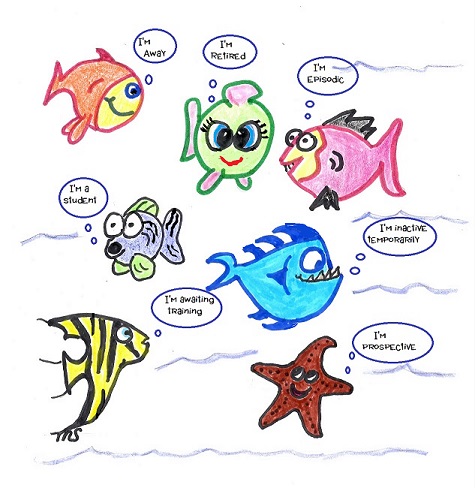
    We all have peripheral volunteers. These are the volunteers who are episodic, temporarily inactive, retired, yet to be trained, prospective, or absent. And unlike the world of paid staff where rosters consist of those receiving paychecks, our peripheral volunteers remain on our stats and radar.

    We don’t have the luxury of ignoring them because they are potentially contributing volunteers. Or they may have given years of service and we owe them our attention. They float around in the periphery, bobbing in and out of view because we have a fluid connection with them. And how about the guilt that comes with not paying proper attention to them. (Yep, just think of how you felt when you forgot that volunteer’s 80th birthday, the one who gave twenty years of service to your organization)

    What can we do with these outlying volunteers? How can we keep them in view as we scurry about in our busy day? Where do they fit into statistics?

    This is one area in which:

    1. technology serves us well
    2. volunteers can assume pivotal roles
    3. stats reflect the monumental balancing we do
    4. volunteer message sharing can actually help

    When lists that capture prospective, episodic, absent, retired, ill and every other category meaning non current pile up, it’s time to create some systems that help.

    Create categorized email lists-prospective volunteers, group and corporate volunteers, temporarily inactive volunteers etc. Decide which groups get which messages, e.g., upcoming training sessions, newsletters, notices about volunteer events or vacancies, etc.

    Recruit volunteers to oversee the periphery-lists are only helpful if they are accurate. It’s humbling when you take a call telling you that volunteer Dave died a year ago and his family keeps getting mail addressed to him. A volunteer or volunteers in charge of overseeing other volunteers on the periphery can focus on keeping lists up to date. They can also make phone calls, interview, do impromptu surveys, offer new opportunities, gather information and compile statistics. The scope of the potential work can fill a full-time position or several part-time positions.

    Report your time spent managing peripheral volunteers-this is an invisible area that requires a lot of time so report it as part of your recruitment, retention, and cultivation. Refer to your efforts to engage “prospects”, retain episodic volunteers, build community awareness, increase visibility, maintain good relationships, cultivate donors, supporters etc. This nuanced area of our work is critical and should be accounted for.

    Share messaging with other organizations, but be careful. Bombarding potential volunteers with multiple messages can be off-putting, so don’t overload emails with “spam.” Instead, co-op with other volunteer organizations and include “other good work opportunities” at the end of every other month newsletters (or other scheduling) with contact information. As your volunteer opportunities are added to the internals at other organizations, you’ve just exponentially increased your recruitment efforts.

    Volunteer management casts a wide net. Presiding over the sea of active, potential and former volunteers is daunting. Systems in place to oversee peripheral volunteers will help to ease the overwhelming burden and free us up to concentrate on innovation and solutions.

    Out nets are huge and always jumping with activity. If our eyes and hands are always on every inch of those nets, then we can’t steer the boat.

    -Meridian


  • Innovation and Sustainable Volunteering

    Innovation and Sustainable Volunteering

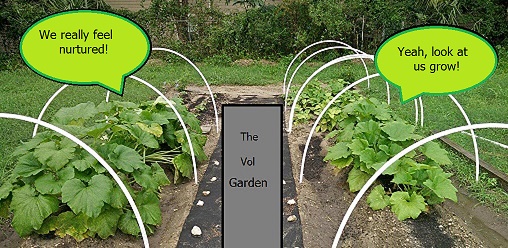
    What would sustainable volunteering look like? Besides many of the innovations already being implemented, what would nurturing a volunteer garden shared within our communities involve? Is this a 180 degree leap or is it more of a naturally occurring shift that we have been moving towards all along? Are we, volunteer managers coming together in an organic movement to help one another and therefore all volunteers and all good work?

    What can we try? Will this take extra work, headache and heartache to achieve? Just as in gardening, there are necessary steps to achieve a bountiful crop.

    I’m going to list some ideas in a season of planting using the gardening metaphor.

    TILLING THE SOIL (preparing to garden):

    • Make a list of agencies and organizations in your area that utilize volunteers and reach out to introduce yourself to each leader of volunteers
    • Join any clearinghouse agencies such as United Way, and Volunteer Centres in your area
    • Join a DOVIA (Directors Of Volunteers In Agencies) or a similar group in your area or if none exists, reach out to another volunteer manager and start a peer group
    • Create a list serve or simple newsletter to share with your fellow volunteer managers in your locale

    PLANTING (seeding the way):

    • Share your volunteer opportunities with other volunteer managers (at your peer group and by list serve) and ask for theirs-regularly check in to gauge the fluidity of roles, etc.
    • Discuss volunteers’ skills and interests at peer group meetings. Offer other volunteer managers the opportunity to contact one of your volunteers if their mission or opportunity more closely aligns with your volunteer’s passion
    • Share background checks if you are able in order to cut costs
    • Pair up with other organizations to conduct a visible volunteer project and involve local media to cover the event
    • Create volunteer educational conferences with other volunteer managers to benefit all volunteers in area-share space, costs of snacks or printed materials creating more bang for the buck
    • Share cost of a national speaker with other volunteer programs and invite all volunteers in area-have plenty of information on volunteering opportunities available

    FEEDING (nurturing the collective):

    • Bring your volunteers to another organization on Make a Difference Day or another day of service and help that organization-build that camaraderie, use positive press to show cooperation:   Days of service include:
    • Good Deeds Day – April 15, 2018 (USA)
    • National Volunteer Week – April 15-22, 2018 (USA)
    • 911 Day of Service – September 11 (USA)
    • Make a Difference Day – October 28, 2017 (USA)
    • Family Volunteer Day – November 18, 2017 (USA)
    • MLK Day of Service – January 15, 2018 (USA)
    • Volunteers’ Week -June 1-7 (UK)
    • National Volunteer Week -21-27 May 2018 (Australia)
    • National Volunteer Week -April 15-21 2018 (Canada)
    • International Volunteer Day -5 December 2017 (UN)
    • National Volunteer Week -18-24 June 2017(2018 not published yet) (New Zealand)
    • Create a summer circle of volunteering for out of school students so they can sample the various opportunities in your area and participate in a well-rounded service learning experience
    • Conduct partner training sessions with other organizations
    • Partner with another organization to create a group of volunteers to cross-volunteer (a really rudimentary example – library volunteers + homeless shelter volunteers = a reading program for school aged children in the shelter. Library volunteers finding appropriate books, shelter volunteers utilizing them and perhaps some library volunteers venturing out to read to the children while shelter volunteers conduct a fundraiser for the library-and no this isn’t simple or easy but it can be a start)
    • Mentor new volunteer coordinators in your area
    • Offer your highly seasoned and trained volunteers to train/mentor volunteers at another organization
    • Partner with other volunteer managers to create a presentation that educates organizational staff on the nuances of volunteer engagement-allow all volunteer managers in your area to utilize
    • Create partnership recruitment efforts by sharing speaking engagements

    Future Bounty (what might come of this?)

    • Increased satisfaction and sustainability of volunteers
    • More flexible options for prospective volunteers
    • Sharing of best practices between leaders of volunteers
    • The showcasing of cooperation between non-profit agencies
    • Increased volunteer involvement in organizational planning and innovations
    • More good work accomplished within communities
    • Cooperative think tanks springing up
    • Less stress on volunteer managers

    We, volunteer managers are unique, innovative and forward thinking. Why wouldn’t we bond with one another and forge a new, co-operative garden in order to create sustainable volunteerism?

    Besides, we are generous and big picture oriented by nature. Let’s co-op.

    -Meridian


  • Sustainability and Volunteerism

    Sustainability and Volunteerism

    Retention: the continued possession, use, or control of something.

    Does that sound like the volunteerism you know? Not to me either. Maybe it’s time to rethink using the phrase “volunteer retention,” because it conjures up images of a stagnant retention pond. It also rhymes with detention which is closely related to imprisonment. (shudder)

    So, if we stop using that phrase, then do we have to rethink the old principles behind it such as:

    • make the volunteers feel welcomed
    • say thank you a lot
    • be mindful of their time

    What???? But wait. Just because these principles are fluffy and nice, it  doesn’t mean they are still the best for the changing landscape of volunteerism. Maybe it’s time to retire volunteer retention and instead, embrace volunteer sustainability. Ok, so swapping phrases does not make for innovation. I get that.

    What is the difference then, between retention and sustainability? Well, we’ve all been moving away from the strategies that worked with the WWII generation for some time now.  Why not update our verbiage to match the creative ideas being implemented out there by so many forward thinking visionaries. And while we are embracing these changes, let’s go even further.

    Volunteer Sustainability vs Volunteer Retention

    *This is where sustainability is radically different from volunteer retention. Sustainability, unlike retention is the ability to maintain a healthy balance while avoiding depletion.  Sustainability, as it is being applied to agriculture, economics and ecosystems implementation implies that there is a larger network to be considered. It implies that resources are not hoarded (retention) and depleted.

    What larger network is there to consider when engaging volunteers? The larger network is all volunteer organizations and individual volunteer satisfaction. With that in mind, let’s ask these questions:

    • Why do we keep volunteers on waiting lists if we cannot use them in a timely manner or cannot find roles for their passions?
    • Why do more volunteers equal better volunteer engagement even if some volunteers are in name only?
    • Why do we stuff volunteers with specialized skill sets and interests into non-matching roles? Or try to tweak a role just to keep the volunteer?
    • Why do we cling to volunteers as though they are 23 year old offspring and we just can’t bear to see them fly?
    • Why do we blame ourselves when volunteers leave?

    It is time we, volunteer managers, think of other volunteer managers, our volunteers, all volunteer opportunities, all clients in our area, and all missions as a network serving the greater good.

    It is time we viewed volunteerism as a regenerating community garden that needs tending by all of us so that the bounty of volunteers is nurtured, regrown and sustained.

    It is time we added collective volunteer engagement, sharing and referral to our innovative methods in order to cultivate volunteer sustainability.

    How many times does a volunteer get frustrated and drop out when they have to wait too long to share their time and skill? Or how many volunteers quit because their passion is not being fully utilized? How are we serving our communities when we deplete our volunteer base by clinging to the archaic notion of volunteer retention?

    Next time: We can be the leaders of a sustainable movement. (Innovation and Sustainable Volunteering)

    -Meridian

  • Hey Corporate Volunteers, Where Are You From Again?

    EPSON MFP image

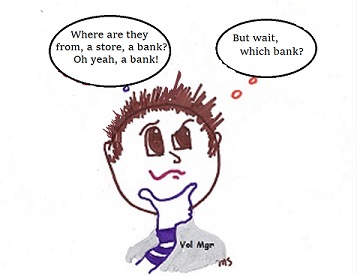
    “Uh Meridian, you really blew it! You missed a whole point about corporate volunteers,” a friend of mine said on the phone a couple of days ago. “You talked about thanking groups and connecting them to the work, which is great, but you completely forgot a big one and guess what? It just happened to me.”

    Ouch. What did I forget? Tell me what happened.

    “Well, it was our corporate retreat and twenty of us just completed a one day team building volunteer event at a local organization.”

    That’s great. How did it go and what did I miss?

    “Well, it was ok for the most part, but honestly we’ve done other projects and had better experiences.”

    What went wrong?

    “Well, nothing went really wrong, but let me explain. We all drove to an organization that gives cribs to families in need. Our firm had purchased about forty unassembled cribs and we drove to this warehouse to put together the cribs we bought.”

    And how did that go?

    “Well, we were met by the woman in charge. She kind of acted like we were interrupting her day. She gave us some quick directions and left. She would come and go. But there was something that bothered me a lot. She kept getting the name of our firm wrong. And she kept referring to us as bankers. None of us are bankers. Our company is an accounting firm. Granted, we work in the financial industry, but we are not bankers. It just felt like she didn’t even take the time to learn who we are or what we do. I mean, we reached out to her organization, why didn’t she ask a few questions? I felt, I don’t know… used. Am I being too sensitive and picky?”

    No, my friend you are not being too picky. Because if a group walks away from a project feeling like they were just ancillary labor, then the next time they look for a project, they will most likely look elsewhere. Pure and simple. We can argue all we want that a group is too needy, or picky, or they just don’t understand. The feeling they walk away with will determine whether or not they come back.

    It all boils down to: Do we want them to come back? Do we want them to spread a good word? Do we want them to become partners or champions or supporters? If not, then we should not waste their time or ours. That’s why limiting episodic volunteer groups to a manageable number versus taking everyone is the better way to go.

    And since I did miss that big one when listing things we can do to connect our group volunteers to our projects and missions, let’s list it now.

    • Learn something about the group. At least we can call them by their correct name. We can know a little about their work. (an application process asking pointed questions should help)
    • Be genuinely curious about the people who are helping. Ask questions throughout the duration of the project. Let them tell you who they are, what they value etc. This also helps you to tailor your stories and feedback to fit within their culture.
    • Send a follow up survey and gather feedback on the project. Ask questions to help you hone future group projects.
    • Thank them for their input. So much research has been done on the increased by-in of groups who participate in planning and improving work conditions. Why not apply this to episodic volunteers and encourage them to help you plan new projects by asking for feedback?

    Connecting episodic volunteers to our missions ensures they walk away as new supporters.

    But, after all, we can take our own advice when engaging episodic volunteers. They’re people, not tools.

    -Meridian

  • Hey Corporate Volunteers: How Great is Weeding?

    EPSON MFP image

    A recent article from Business News Daily cites a study finding that “89 percent of employees think organizations that sponsor volunteer activities offer a better overall working environment. In addition, 70 percent believe volunteer activities are more likely to boost staff morale than company-sponsored happy hours, with more than three-quarters saying volunteering is essential to employee well-being.”

    But here’s the kicker from the article: “Three-quarters of the millennials surveyed said they would volunteer more if they had a better understanding of the impact they were making, compared to 61 percent of those of all ages.”

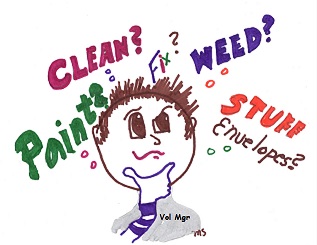
    Huh. So, it isn’t obvious that volunteering for a homeless shelter actually helps homeless people is it? Or wait. Maybe it isn’t obvious that weeding the garden at the homeless shelter actually helps the homeless.

    Oh, yeah, now I get it. Maybe for corporate volunteers, the cleanup or painting or weeding the garden doesn’t scream “OMG, this made all the difference in the world to our clients! You have changed lives like no one else ever has in the history of volunteering! Ka-bam!”

    We, volunteer managers, can be caught in a nether world of finding projects while assuring these episodic volunteers that we really need them. And once you manufacture a project just to accommodate a group, is that truly meaningful work?

    So what can we do since corporate and episodic group volunteering will most certainly grow in the future?

    Well, we need to do some serious planning, be methodical about our episodic volunteers and complete the legwork before we take on groups. We can:

    • Create a plan before accepting groups. Decide how many group members can be accommodated at a time, the age range you are comfortable working with, the time frame that works for you, what supplies the group needs to bring, the number of groups per month or year you can accept, etc.
    • Create an application process for group volunteering: Gather information on the group, ask pointed questions on the application that will help you understand their motivation, interests, skills etc. Then decide if and when they will fit into the projects you have or can create.
    • Create an impression that you value quality over quantity and busy work: We don’t have to take everyone. As each group you engage comes away with a positive experience, word will spread that your organization is the one to contact for quality volunteering.
    • Develop a narrative to go along with each project. Prepare impact stories to accompany each project. Highlight the contribution and results of the project.
    • Utilize client testimonials to recruit and thank corporate volunteers. Tie these into the activity. It may take some creative interviewing to elicit these testimonials, but it will be worth it.
    • Follow up with a letter outlining the impact of the completed work. Reiterate the improvements for clients, staff and other volunteers.
    • Send a thank you letter from your CEO to the corporate CEO or group leader. It can be a general thank you created ahead of time and tweaked for each group. But, have the CEO sign it each time and encourage them to write a personal note.
    • Take pictures-make memes, add text boxes, thought clouds etc. Send them to the group, post them on all social media outlets.

    No matter what, the connection between the project and the impact on clients is critical. Take weeding the garden at the homeless shelter. We can say to our corporate volunteer group, “Imagine the first night you are homeless. Imagine what that feels like, having nowhere to go, no stability, no safety and you arrive at our shelter and all you see are the weeds in an unkempt garden. It says to you that we don’t care. It reminds you of the tangles that threaten your existence. How would you feel? Remember, every little thing can be the one big thing that makes someone feel safe.” Then read testimonials from clients who felt safe.

    A lot has been said over the years about making corporate volunteering fun. While fun is important, it is secondary to meaningful work. Corporate and episodic volunteers deserve to know that even by pulling weeds in the garden, they have created a beautiful safe space for those facing a difficult time in their lives.

    We know the impact of each job, no matter how inconsequential it may seem at first. If we are thoughtful about episodic volunteering and prepare well for group volunteers, we can create a win-win for everyone.

    -Meridian


  • Let’s Leave Volunteer Management in Better Shape Than We Found It

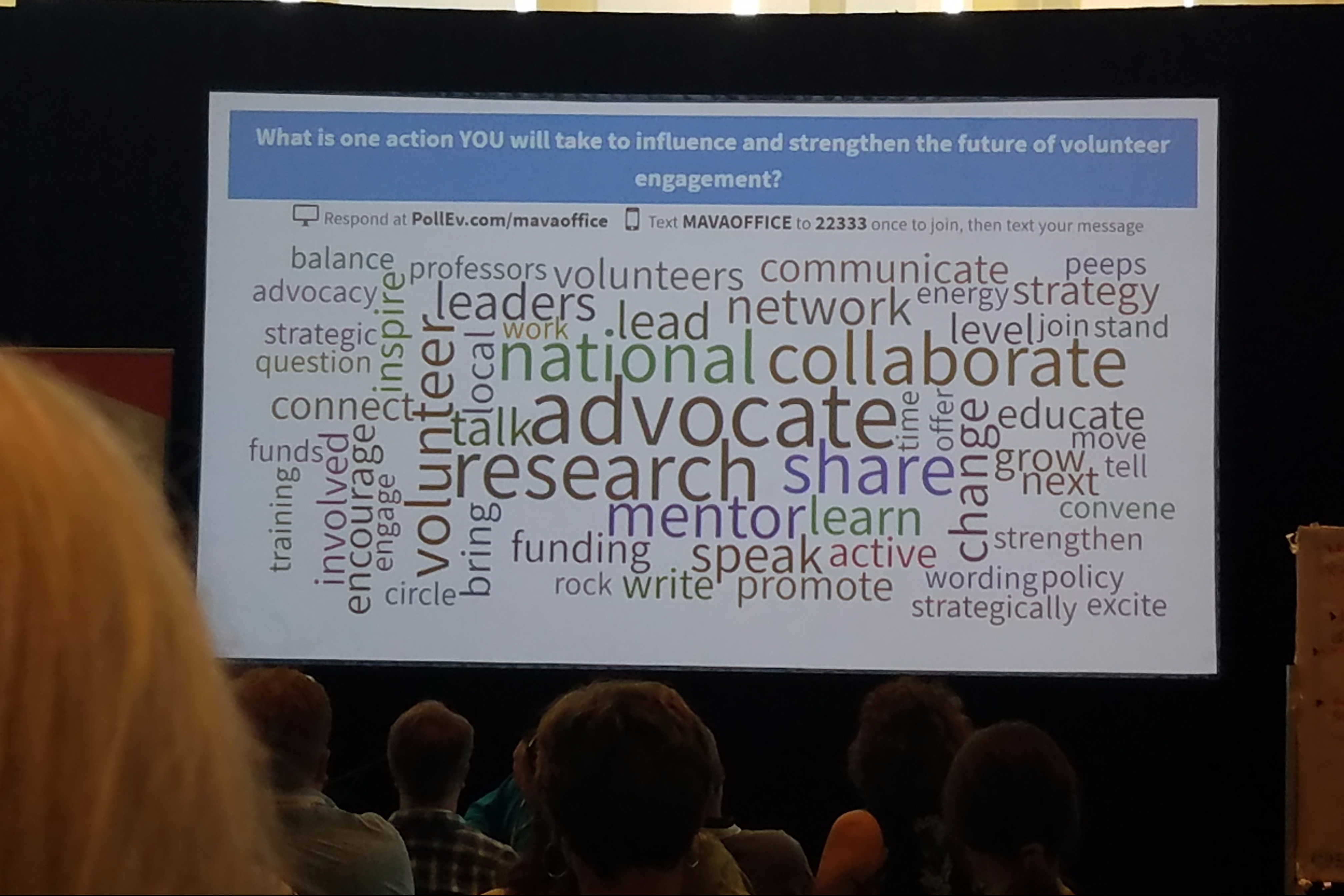
    word-cloud-final-session.jpg
    Action words to strengthen the future of volunteer management

    For three days, leaders of volunteers came together at The 2017 National Summit on Volunteer Engagement Leadership to collectively share and brainstorm the future. This summit actually extends far beyond “national” as we were joined by leaders from other countries such as Rob Jackson from the UK.

    This energy of collective purpose is akin to swigging a chilled bottle of sports drink after a long grueling run through the blistering desert. Sometimes we can feel isolated. Often we may feel that progress is slow. Many times we feel as though we make no perceptible difference in the scheme of things.

    But, each one of us makes an impression on our surroundings. Each one of us creates ripples that travel in circles radiating outwards. Each of us eventually leaves our profession behind. How will we leave it?

    Recently I said this in a post: “What we say and how we treat our volunteers, no matter how brief our encounter, has a lasting effect on them and ultimately on us.”

    But wait. I think those of us who engage volunteers can take this one step further.

    Just as we impact each volunteer we encounter, we also leave a lasting effect on our profession.

    What might that effect be? Do we owe it to each other and future leaders of volunteers to leave the profession in better shape than we found it? Do we owe it to our volunteers?

    Even if the title “manager of volunteers” is temporary, or a stepping stone, or a detour in a career, there is an entire network of individuals working diligently to elevate this profession. So what can each of us do?

    • Don’t remain isolated. Join a peer group in town, find leaders online to connect with, web groups to join etc.
    • Advocate professionally. Use your voice to advocate for resources and the tools you require.
    • Share your impressions and experiences. Blog, comment on posts, add your expertise to articles on non-profits. If you read a post on non-profits that blatantly ignores volunteer engagement, point that out in the comment section.
    • Use your influence. When you do leave, remember your time as a leader of volunteers and use your influence to advocate for this profession.


    Your professional essence is left behind as you move on, retire, or seek other opportunities. How you treat this “job” goes far beyond your own perceptions and needs at the time. And while it might seem so, we are not working in silos.

    If each one of us leaves volunteer management in better shape than we found it, imagine the future of volunteer engagement.

    -Meridian


  • The National Summit on Volunteer Engagement Leadership

    2017_National_Summit_Logo_-_10_1432117434

    Hi everyone. Today I am privileged and excited to be at the National Summit on Volunteer Engagement Leadership in St. Paul Minnesota. I want to share as much as possible with you so later today I’ll post information on all the great takeaways.

    Thanks so much,

    -Meridian

    What a pleasure to see so many leaders of volunteers gathered together to share knowledge and wisdom with one another. It’s inspiring to feel the desire to elevate not only the volunteers but also the profession.

    It’s like a family reunion where you sense the invisible tendrils of a rooted connection emanating out in a net of shared experiences.

    We are not alone. We are actually many.

    We have comrades, compatriots and members of our sector out there. Our link can be strong. Together we have voice.

    More from the Summit to come.

    Meridian

    Sunday Update: There was so much to take in, so many excellent presentations, so much enthusiasm that it is hard to sift through it all. But here are some take-aways:

    • The profession greatly needs to be elevated. Respect for volunteer managers and the understanding of the complex work we do is tantamount in everyone’s mind. How we do that will take great effort.
    • The future will include some sort of hub or central location to disseminate information, create educational opportunities, or have a central voice.
    • Change is rapid and must be addressed. The changing landscape of volunteer engagement includes new generations of volunteers, volunteer expectations, defining the volunteer manager role, reporting and other aspects.
    • Voices need to be heard. Working independently to create change is not as effective as the community of volunteer leaders.
    • Are we a profession or a specialized skill set? Or both?
    • Are volunteer managers destined to lead non-profits?

    Look for the blogging community to address many of these topics in the coming months.

    -Meridian


  • The Volunteer Whisperer


    The Volunteer Whisperer

    Ahhhh Nicknames! Those memorable, defining little monikers that people give others. Do you have one at work? If you don’t, what would you imagine yours to be?

    Here’s a creepy thought. Are there mean kids in your organization? Behind their creaky passive-aggressive doors, are they hunched over their cauldrons of electronic devices, cackling cruel names as they toss the hair strands plucked from sweet volunteers into the pot? Do they call you something unnatural behind your back?  Think:

    Sir Plays All Day as in “Sir Plays All Day just got his shipment of Astrobright colored copy paper. Must be nice.”

    Tea Party Tess as in “Wouldn’t it be great to plan tea parties for a living like that Tea Party Tess? I mean, do volunteers even need a tea party? Volunteering in my department is reward enough.”

    Fluffy McFlufferson as in “Oh, look balloons in the lobby that say thank you volunteers. Fluffy McFlufferson is at it again.”

    Invisible Inez as in “This volunteer isn’t working fast enough. Who’s in charge of them anyway?”

    The Geriatric Guider as in “Think I’ll come back here and volunteer when I retire. Ha, then maybe I could be the Geriatric Guider. It would be so much easier than my job.”

    The Cat Shepherd as in “That event is Sunday and I have to deal with all those volunteers. Make sure the Cat Shepherd has to be there too.”

    Trivial Ted as in “I’m too busy. Who can we get to move that desk? I know, Trivial Ted!”

    But wait. Nicknames can give us power, almost like donning a suit of armor-think of these famous nicknames and how it must have felt to put on these names when confronting the world:

    The Great One-Wayne Gretzky-arguably the greatest hockey player ever.

    The Queen of Soul-Aretha Franklin-anytime you’re dubbed queen, you’ve done something remarkable.

    Ol’ Blue Eyes-Frank Sinatra-the definition of cool.

    Fab Four-the Beatles-simple, yet fabulous.

    The Land Down Under-Australia-who wouldn’t want to visit a land with a name like that?

    So, before you are handed one, choose your own nickname, one that acts as a buffer against misconceptions. Then gather your volunteers and cleverly ask them to begin to refer to you as your chosen nickname.

    By cleverly, I mean, announce in the next volunteer meeting, that from now on, you will not be answering any questions on where the flipping copier is located, listening to any stories about prodigy grandchildren or clicking on any emails about dogs opening refrigerator doors from anyone who does not refer to you as:

    The Goddess of Goodness

    The Adorable Accomplisher

    Ned Stark Raving Awesome

    He Who Must Not Be Blamed

    Git Er Done Gabe

    Han So-lo Down Amazing

    Katniss Cleverdeen

    Lord of the Volunteer Things

    You Can Call Me Queen B: Why? Because I Will Be Your Ruler (eh, maybe that’s too long)

    Ok, perhaps we’ll never be called “The Greatest” like Mohammed Ali. Maybe they’ll just continue to call us by our given names.

    Maybe. But, when the lights are low and the family is all gently snoring and I’m tucked in under my Minions comforter, that’s when I’ll turn on my little book light and refer to myself as “Fifty Shades of Great.”

    -Meridian

    Hope to see you at the National Summit On Volunteer Engagement Leadership in St. Paul next week!


  • You Are That Person

    WordItOut-word-cloud-2261827


    “It’s one of those universal truths,” Desmond sighed. “I can tell my children how brilliant and wonderful they are, but it never really sinks in until one of their teachers or coaches say it.”

    It’s kinda true. When a relative says you’re great, well, they’re a relative, right? They have to say it, sorta like they have to show up at your graduation and yawn through the speeches while you endure all the cheek pinching.

    But when a non-related member of society says you’re great, like a teacher or coach or crabby neighbor, then those praises really mean something. That one person who looks you in the eye at a particular moment and tells you that you have worth can change an entire lifetime of self doubt. That person might be the violin teacher, or physical therapist or volunteer or……. volunteer manager.

    Every day, volunteer managers are changing the perspective of people who volunteer. Every day, we look at the value of the human being in front of us and encourage the qualities and talents we observe. It’s our jobs, but it’s so much more because oftentimes you have no idea that you have changed someone’s perspective. Oh, you might have an inkling now and then. You may be honestly praising someone when you see a spark, and as your words of encouragement travel deep into that volunteer’s soul, you see the clouds of self-doubt part for an instant. Yeah, it’s that moment that you cherish.

    What we say and how we treat our volunteers, no matter how brief our encounter, has a lasting effect on them and ultimately on us. (We get to fill up our knapsack of positive energy by the cultivation of others)

    Every day, a volunteer manager tells or shows:

    • A struggling student that they are smart and capable.
    • A shy introvert that we hear them and their opinions are valid.
    • A stressed out parent that they’ve done a good job because their child is a pleasure to work with.
    • A person feeling worthless that clients adore them.
    • A hesitant comic that their joy is infectious.
    • A disheartened creative type that their ideas are inspired.
    • A mother who wonders whether she’s more than a bottle washer that she is brilliant.
    • A broken-heart that love is all around.
    • A grieving soul that they are surrounded by gentleness.
    • A beaten down worker that their contributions are valuable.
    • A lonely person that they are not alone.
    • A rejected artist that their creations are appreciated.
    • A dispirited job seeker that their skills are needed.
    • A lost person that they don’t have to walk alone.

    Volunteer managers are individuals who can and will literally change another person’s perspective. How amazing is that?

    So, just remember, especially when you look at your hectic day and wonder what it all means and what you have accomplished…

    …  you are that person.

    -Meridian


  • Captains of Our Destiny: Strategic Key Volunteer Account Management

    Captains of Our Destiny Strategic Key Volunteer Account Management

    So, here’s the question: If we identify key volunteer accounts, how will this help us in the management of all volunteers and correct the misconception that we herd cats?

    By reclassifying our work in terms of strategically managing volunteer accounts and key volunteer accounts, we will:

    • explain in recognized professional terms the vast work involved in cultivating and engaging volunteers
    • begin to prioritize our time in order to do the “key duties” such as recruiting, creating volunteer programs, relationship marketing, retention implementation, in-depth training and staff education
    • illustrate that focusing on key duties produces sustainable volunteer participation
    • more successfully require that all staff learn to manage volunteers, especially one time and episodic volunteers, therefore freeing us up to do the key duties
    • show potential volunteers that becoming key volunteers carries tremendous perks
    • free up the time necessary to educate ourselves, create programs and contribute in a more productive way
    • be able to demonstrate that not all volunteers produce the same results and that key volunteer account management creates key volunteers who will not only do the bulk of the work, but will also contribute in multiple other ways such as increased donations, resource allocating, community awareness, marketing, planning, trend setting, awards won, social media championing, recruiting, and program development
    • show that key volunteers will lighten staff workloads and free staff to work smarter
    • strategize the future instead of “handling” the present


    As we move from herding cats to a more modern and professional structure, what are some differences between outdated volunteer management and the new strategic volunteer account and key volunteer account management?


    Outdated Volunteer Management Strategic Volunteer Account Management Strategic Key Volunteer Account Management
    Vols fill jobs defined by org Steps to assure vol role is successful Partner with key vols to assure mutual org growth
    Retention by yearly luncheon, hours reported Vol contributions highlighted with real stats Key vols contribute to implementing programs of worth
    Vols view volunteering as “I get more than I give” and that’s enough Vols are integrated as essential members of team Key vols are integrated as shaping future of org
    All vols are just here to do org bidding Vol roles are created to meet changing needs of volunteers Key vols help shape the roles they wish to play
    Vols should be grateful to be volunteering Orgs should show gratitude to vols for volunteering Orgs value key vol input, skills and ideas in a win-win situation
    Fear that vols may “take over” or do something to harm org


    Allow vols to accompany staff on important assignments Trusting key vols to utilize their proven skills and desire to further org mission

    In order to be classified as a “key volunteer,” we most likely will be choosing those volunteers who are already known and trusted by fellow staff. This trust in a proven volunteer is the example you already possess to showcase the benefit for key volunteer designation.

    In many ways, there is an iron grip of thought relating to volunteers and volunteer management. Words and terms mean something and by referring to our work in professional, respected terms, we will begin to show the in-depth work and skill necessary to create a sustainable volunteer program. We will also begin to illustrate that freeing us from herding cats to concentrate on key duties will produce a stronger, better volunteer program. (everyone in the organization is responsible for engaging and managing volunteers-the volunteer manager does not have time to run around putting out fires)

    Let’s not be left behind in modernizing our profession. We are the Captains of our destinies.

    -Meridian