Category: burn out

  • #LoVols, Beware: It’s Zombification Season

    Photo by cottonbro on Pexels.com

    The night air is cold and your breath hangs, a web in the blackness. Your heart races, threatening to burst as something draws near, just over your shoulder. You close your eyes as it creeps behind you, opening its mouth to strike.

    But you’re exhausted from running, and maybe if you just stopped, blissful oblivion will take over. Maybe zombification isn’t so bad.

    A year like no other

    The challenges this year have exponentially added to the stressors from overwork, revamping volunteer programs, and onboarding an influx of new volunteers while retaining furloughed volunteers.

    Being zombified means through stressors, you’ve lost your vitality, your human essence. You’ve lost you. It’s a very real phenomena in everyday volunteer manager lives and especially now, with the added stressors.

    Stessors that zombify us

    • feeling underappreciated
    • feeling targeted
    • feeling like nothing ever changes
    • feeling like no one understands
    • feeling that it’s all for nothing
    • feeling like everyone is quick to criticize or give advice
    • feeling like everyday is the same
    • feeling like control is slipping away

    Zombification is just so….dead

    Zombified managers (and you’ve experienced one, right?) shuffle through the day, avoiding anything that takes energy because they have none to spare. When we, leaders of volunteers become zombified, what happens? (and trust me, I’ve become zombified at times, until a caring co-worker or volunteer bashed me in the head and work me up)

    • volunteers don’t get the inspiration they seek or are used to getting
    • difficult conversations with volunteers go unsaid and problems fester until they become full-blown
    • volunteer programs wither
    • the people we serve don’t receive the volunteer help that might have made all the difference to them
    • volunteers go elsewhere or fade away
    • potential is lost
    • and sadly, the joy a volunteer manager receives from being a volunteer manager dies

    The essence of being human is that one does not seek perfection

    George Orwell

    We are not perfect and these times are far from perfect. When things look bleak or never-ending, it’s understandable to want to curl up in a ball and mentally detach. We’re not immune to our own feelings. We swim in feelings, whether it be volunteers’, clients’, staff or friends and family all day long.

    Anti-zombification repellant spray

    Remember, you cannot be perfect, because you’d lose your humanity if you were perfect and volunteers need your imperfect, caring self. What can you do when feeling zombified? Here’s some things, for better or worse, that I’ve used when I realized I was just shuffling through the day, a drop of spit hanging from my slack mouth.

    • watch the funniest movie or stand up comedy you can find and then, when you’re still giggling, start to think of the maddening things that weigh on your mind. Mentally insert those things into the funny movie and make them funny. Write yourself into the scene. See the things that bring you down in a different light.
    • Grab your best-est friend, co-worker or relative and dare each other to do something outrageous. The thrill of the dare can often break feelings of drudgery. My family does this all the time to each other. These episodes become some of our best memories and make us laugh.
    • Read or watch the saddest thing you can find. Cry, feel horrible and then go wallow in all the rotten feelings you’ve been experiencing. Get it out. Take each rotten feeling, turn it over in your head and then think about the sad movie or story you’ve watched/read. How did the person in that movie/book deal with their challenge? Find inspiration in the strength of others.

     When I was a boy and I would see scary things in the news, my mother would say to me, look for the helpers. You will always find people who are helping.

    Fred Rogers

    Stress can easily zombify us when feelings of not being in control overtake us. But we know our volunteers look to us to lead and inspire them. They believe in us. We can, too.

    Volunteers don’t want perfect, robotic leaders. And sometimes, zombification comes when the desire to do everything perfectly meets the reality that we are imperfect creatures.

    Volunteers want imperfect us

    Volunteers want you, imperfect you, and all your quirky sayings, your crazy ideas, your funny habits. They want the way your nose wrinkles up when you hear that a staff member didn’t say hi to a volunteer. They want the way your brow knits in thought when you’re plotting a way to involve them in a new program. They want your voice raised an octave when excited about an upcoming meeting. They want that hastily made poster that says thank you in sloppy script.

    Volunteers want your human self.

    -Meridian

  • Burning Out? Take On More Work! Wait, What?

    Photo by Pixabay on Pexels.com

    Volunteer managers: We are a sick bunch, aren’t we? We cry during the movie “Ghostbusters” because we feel bad for the ghosts. We stop and get out of our car to shooo a squirrel across the street even though he looks at us like, “hey, I’m walking here, crazy human.” We smile through pain and wonder how we can be better. Sigh. But no, I’m not suggesting using toilet paper to hastily scribble a “things to do list” with that pen tucked behind your ear while you’re..well you get the idea.

    Jeez Louise, what extra work can help then, if I don’t mean staying late and spot checking those packets the new volunteer, Kira put together, because, frankly you don’t trust that she did them perfectly and mainly because you’re so tired of hearing that little huff sound from the events planner when she speaks of volunteers?

    Burnout can occur when we feel like we’re not in control. Requests are pouring in from all departments. Volunteers need additional training. Recruitment has been spotty lately. There’s that volunteer that “needs a good talking to,” according to the director of operations. It’s overwhelming.

    Some things we can ignore or put on the back burner, but they don’t go away, not completely. No, they are still there. That stuff rattles around in our heads along with things like forgetting to give back the dollar a staff member hastily gave you the day when the snack machine ate your money and you started pounding the life out of it.

    So why take on more? The key here is to infuse yourself with an emotion other than the one that is crushing your spirit. The key is to be in control of something, something that lifts you up, that sparks your creativity, that gives you satisfaction. Something you own.

    I’m convinced that one of the main reasons I stayed in this profession so long was the freedom to create something (and honestly, nobody gave me that freedom, I just took it). For me, volunteer management sometimes felt like trudging down a long, dark alleyway that eventually opened up onto a fertile plot of ground. I could see the fruits of possibilities taking root there: The trees, the flowers, and heck, sometimes the giant fountain of playful dolphins spurting water in all colors (if I had a really ambitious project in mind).

    Creating a project that reflects your creativity, your passion, your idea of wonder injects hope into your veins. Just go to Disney World with a small child and look into their face. Magic does exist. We just need to find it in something we can call our own. We need to find it when we’re frustrated we can’t place highly skilled volunteers because there’s no pre-designed role for them. We need to find it when we see the possibilities our volunteers can offer our clients to make their lives better. We need to find it when our volunteers want to do more. We need to find it when the daily grind wears us down.

    I recall the rush of emotions at the implementation of new projects. I felt terror, anxiety and doubt. But more than anything, I was exhilarated. And that exhilaration allowed me to view all my other duties in a different light. The mundane or challenging duties lost their power to crush me. And in my new mindset, I was able to find creative solutions to challenges that previously wore me down.

    Successful projects you’ve created give you a new perspective, one in which you are a capable leader. Instead of waiting for some miracle day when everyone recognizes all your hard work, take it upon yourself to show how capable you are. How innovative you are. How committed and talented you are. Don’t wait for overwhelmed staff to give you this boost. Give it to yourself.

    Because feeling like we’re not in control leads to burnout. All those mundane duties rattling around in our heads drag us down. But you know what else drags us down? Knowing, and I mean really knowing that a project, or a new way of engaging volunteers would work wondrously and then not doing anything about it. That’s the most soul crushing of all.

    Sometimes, (not always-I’ve had a few projects fall flat but I learned from them and started another, better one) a new project, one you own with your passionate heart and creative soul can help put that wonderment back into your life.

    It’s ironic. More work = less burnout? Our best hope for encouragement = us?

    Yeah, we may be a sick bunch. Wired a little differently. We lift up everyone else. Let’s lift up ourselves. Let’s take control.

    -Meridian

  • When a Volunteer is “Ok,” But Not Ok

    person showing fingers
    Photo by Victor Freitas on Pexels.com

    I have this friend who prides herself on “being ok” with adjusting to whatever the situation presents. However, at the same time, she makes side comments about having to adapt or being uncomfortable. So, I’m confused. Is she ok or is she not?

    It makes me think of certain volunteers I’ve known who do the same thing. “Oh, that’s fine,” they’ll say or “no problem,” when in fact, it isn’t fine and it is a problem. And here’s the thing with these confusing messages. The people who tell you they’re ok when they’re really not believe that they are making it easier on you, when in fact, they are making it way harder, because here you are, spending mental and emotional energy trying to figure out what they need through the cryptic verbal and body language clues they give.

    When you ask them to be honest, they brush it off, saying, “it’s no big deal.” But you know better. So, what can we do with these volunteers? Banish them from our programs? Continue to play a part in their game of emotional hide and seek?

    For what it’s worth, I’ve developed a few methods over the years when dealing with the “I’m ok, but really I’m not” messaging. They are:

    Be direct by addressing the verbal or body language clues: Say to your volunteer, “I appreciate you telling me that you are fine with the change in assignment, but I’m sensing from your comments (or body language or tone) that you’re not fine and that’s ok. I want to make sure we address your concerns because you are vitally important to us and you play a huge part in how we achieve our goal.”

    Lay out your ability to spot clues up front: Tell volunteers in training or meetings that it is your job to observe them. Make it funny if you like, but get the point across that you (maybe you say it’s a curse) can spot bulls#$@ a mile away from years of working with people.  You can make it fun by calling it your fib o’meter or something similar. Tell them you will call them out and then jokingly yell, “The fib o’meter says you are not ok!” Everyone will laugh, but the point is made.

    Then add the serious element. Let volunteers know that it is your job to make sure they are giving their time free of annoyances, because their experiences should enhance their lives, not complicate them. And, volunteering by grudging acquiescence doesn’t help anyone, themselves included.

    Check up on them: Ask questions. Ask clients, other volunteers and staff. Checking in to see how volunteers are faring is part of our job. If you hear that “volunteer Jules is complaining all the time,” then by all means, address it. Job satisfaction is a key component to not only volunteer sustainability, but also key to bringing a volunteer’s best work which is what we want our clients to have.

    Enlist staff: Enlighten them on the effects of changing volunteer assignments or time-frames or requirements. Let them know that changing or canceling an assignment at the last moment creates volunteer acquiescence which leads to volunteer fatigue which leads to volunteer burnout.

    Make it clear that this behavior is unproductive: If you’ve had multiple conversations and the behavior is affecting job performance, then you have to weigh whether this volunteer is irreplaceable and whether you have to accept any and all behaviors. But also look at the ripple effect. How does this behavior affect other volunteers? What message does the acceptance of negative behavior send to your team?

    I vividly remember this one volunteer when I managed a thrift store. Our team was pretty happy most of the time and this new volunteer came in and complained continuously to the other volunteers but told me that “everything was fine.” The team’s mood shifted.

    One day, I just couldn’t take any more “I’m fine” talk. It wasn’t so much that this volunteer annoyed me, it was the fact that she was destroying the volunteer team’s productive balance. So, I took her aside and pointedly asked, “are you happy here?”

    To my surprise, she hesitated and then said, “not really,” and told me she thought the store was poorly run and the other volunteers were incompetent. I said, “then I don’t think you should be in a place that makes you this unhappy.” I didn’t fire her; I gave her my opinion that she should take the steps to quit and she did. On the spot.

    From simply being accomodating to acquiescence to out-and-out hiding displeasure, there are many levels of volunteer flexibility. It falls upon us to determine when flexibility turns into grudging compliance and burnout. The more (with kindness) direct we are with volunteers, the closer we get to their motivations and true satisfaction.

    And ultimately by investigating the emotions behind the words, we acheive that intersection between volunteer sustainability and mission transformative work. It’s the place where volunteers give of their time and talents freely, a place where volunteers get back the intangible rewards that fill them with joy and a place where the volunteers’ contributions have a profound effect.

    It’s a magical place where everyone wins.

    -Meridian


  • There’s No Crying in Volunteer Management

    Does volunteer management ever make you cry? It does, doesn’t it? I mean, when you are sitting there and a volunteer recounts their struggle with being bullied as a child or they tell you about their journey through rehab or their fight to beat cancer, you just break down and cry because you care and feel their pain.

    And then there’s the pride cry when we witness volunteers wrapping a child in their arms or brushing the tear off the cheek of a grieving spouse. We well up when volunteers win an award because we witnessed their profound effect on those we serve. We weep when volunteers suffer a loss or when we see one of them grow fragile. We cry openly when they leave because they mean more to us than the hours they’ve spent.

    But do you ever cry out of frustration? When it’s all your body can do? I remember crying like that once. I was managing a resale shop with little to no resources except the great volunteers. I would borrow a hospital laundry truck to pick up donated furniture and ask an able-bodied volunteer to go along with me on the route that I had meticulously mapped out. Depending upon where the pickups were located and how much the donor had planned to donate, the route made maximum use of the truck.

    It happened during the last stop one day. It was 5:00 pm and I had to unload the truck at the shop and get it back by the hospital’s evening laundry run at 6:00 pm. The hospital had already sternly warned me that if I didn’t return it by 6, (I’d been late returning it several times already) they would not lend it out anymore, so I needed to hurry.

    My volunteer, Peter and I parked in front of the last house and got out. The donor was waiting to meet us. “I know I said I had two pieces of furniture, but we’re moving and I want you to take all of it.”

    Peter and I looked at each other. He and his wife had dinner plans with relatives who were visiting from out-of-town. “We won’t be able,” I began to say, but the donor cut in. “It has to be gone tonight. I thought we could get it into storage but we can’t. Our son was in an accident and he’s taken a turn for the worse.” His voice trembled. “We need to get to him.”

    Peter and I started to gather the furniture and haul it into the truck. The cargo space was nearly full and we had to jam the furniture in any way we could. I looked at my watch and realized that there was no way I could get the truck back in time. That meant the hospital would stop loaning it to me and the arduous task of having to find another vehicle all over again loomed.

    I knew that Peter would miss his milestone birthday dinner with his family. He didn’t say it, but I knew how important this was to him. My body was tired, my mind exhausted and thoughts of “what am I doing all this for anyway, I can’t get ahead,” began to swirl. My careful planning meant nothing now. Standing there in the back of the truck amidst all the tangled lamps and chairs, I broke down. It was so defeating.

    Peter stopped and gave me a minute and then he said, “Look, it’s ok. We’re going to do this. I can join my family when I get home, it’ll be fine.”

    “But it’s your birthday. Some birthday. I made you miss it. And they will take the truck away,” I said through tears.

    Peter nodded and said, “Yes, they probably will. But look, you’ve got us. All of us volunteers and we will figure this out. We’ve done it before and we will do it again.”

    We finished that night almost three hours late. I thanked Peter and drove the truck back to the hospital where my car was parked. After I gave the keys to an angry attendant, I got in my car and headed home. As I drove, I broke down and cried again.

    This time though, I wept because I was surrounded by volunteers like Peter.

    -Meridian


    .

  • Volunteer Managers and Decision Fatigue

    adult dark depressed face
    Photo by Pixabay on Pexels.com

    Zack pushed back in his chair and stole a glance at his watch. 1:30. His lunch lay half eaten on his desk. A new volunteer, Karey was on hold, waiting for Zack’s decision on which volunteer would mentor her and what day she could start. Several new emails pinged on his screen. Task force volunteers needed an update on the choice of meeting spaces. In front of him, Nadia, the event coordinator was pointing to the unfilled volunteer slots at the Walk-a-thon this coming weekend.

    Weariness blanketed Zack. He forgot what it was the new volunteer on hold wanted. The subject lines on the newest emails blurred in his vision. He snapped at Nadia, “I told you, I was working on the event. I haven’t heard back from the volunteers I called. I will figure out who else I can call, but I can’t just make volunteers magically appear.”

    Decisions. Volunteer managers are faced with making hundreds, maybe thousands of decisions a day. Think I’m exaggerating? Let’s look at a simple request for a volunteer to fill a task and a sampling of the decisions involved.

    • Do I give this request priority?
    • Do I work on this now or put it in a queue?
    • What volunteers are best suited for this request?
    • Who should I call first?
    • How should I frame this request?
    • Do I ask for more information or do I have enough?
    • How much time should I spend on this?
    • What is the best time to call volunteers?
    • Should I also ask survey questions while I have them on the phone?
    • What points should I stress about the impact this task will have on our mission?
    • What is the best way to plead this case?
    • What recent activities has each volunteer I call been involved in and how can I acknowledge that?

    That’s 12 decisions before even starting. All day long, volunteer managers make decisions that directly impact the success of their volunteer programs. Daily major decisions include:

    • How should I answer this email and get my point across?
    • What tactic should I use when asking for more time finding volunteers for a hard to fill task?
    • How can I better explain this task to a volunteer?
    • What methods should I use when mediating the brewing dispute between a volunteer and a staff member?
    • What questions can I ask on the upcoming survey?
    • What do I want to measure on the next volunteer evaluation?
    • What can I streamline in today’s training to save some time?

    Decision fatigue occurs when the brain has made so many decisions that fatigue sets in, causing a breakdown in ability to make new decisions, or making snap decisions, or a lack of self-control and diminished willpower. It leads to poor decision-making.

    Decision fatigue can show itself with an irritated voice or a curt answer. It can show itself with “giving in” instead of standing ground for principles you believe in. It can show itself with forgetfulness or shutting down. It can show itself when you finally go home and can’t decide what to make for dinner so you order something unhealthy from that expensive take out place down the road because it’s the easiest thing to do.

    The 44th president of the United States, Barack Obama famously said:

    You’ll see I wear only gray or blue suits. I’m trying to pare down decisions. I don’t want to make decisions about what I’m eating or wearing. Because I have too many other decisions to make.

    Beyond filling volunteer tasks, a volunteer manager’s day is fraught with other carefully considered decisions.

    • How do I best approach senior management regarding an issue?
    • How do I politely extract myself from a conversation that is going on too long?
    • How do I mediate between a staff and volunteer or a volunteer and another volunteer?
    • How do I politely answer snarky questions?
    • How do I show volunteer value?
    • How can I manage all my tasks?
    • How can I remember all the small things?
    • How can I find new volunteers?
    • How can I listen to volunteers, genuinely hear them and yet not spend too much of my day in what appears to others as chit-chat?

    Volunteer management is the antithesis of assembly line work. There is no manual outlining each step because each step changes hourly. It involves careful people skills by leaders of volunteers with high emotional intelligence. Decisions are weighed and made in fractions of seconds. No wonder volunteer managers go home exhausted.

    So what can we do?

    Make the important decisions first thing: Before fatigue sets in and while your mind is clear, make your most important decisions early and stick to your decisions. Our minds are equipped to think more clearly and rationally before fatigue sets in so work on your most important projects or challenges when you first arrive. Do you have to counsel a volunteer? Do you have a yearly event? Do you have to give an important report? Work on those tasks first, set a deadline for your decisions and stick to them.

    Limit your decisions: Lay out your work clothes the night before work. Prepare your lunch or decide where you will have lunch the night before. Decide your 5 goals for the next day the night before. Put off making major decisions when you feel yourself losing willpower. There is nothing wrong with telling people you have to think about something and get back with them.

    Realize decisions will not all be perfect ones: Volunteer managers tend to hold themselves to a pretty impossible perfection standard, thinking that every decision must be the optimal one. This unrealistic standard creates paralysis when making decisions, slows down productivity and increases fatigue. Major decisions need time, but lesser decisions can be made more quickly and efficiently. Remember, after mulling over option upon option, we can still make an imperfect decision, so it’s best to leave the agonizing to major decisions.

    Carve out quiet time: Ideally, find an isolated space to work on projects. If you don’t have one, turn your computer monitor to the wall, turn the volume down, let the answering system pick up phone calls and work on your “need to do” list. One hour disconnected from the chaos will reap enormous benefits in not only making better decisions, but in your overall mental health. Two hours would be even better.

    Become a by-appointment office: It’s hard to do when you have an open door policy, but you can slowly begin to change that. Hang signs on your door that keep people from dropping in with questions or information that can wait. Signs that indicate “volunteer interview in progress,” or “volunteer strategy meeting in progress,” clearly announces that you must focus on the crucial task at hand. Having to make a major decision while constantly being interrupted with having to make smaller, snap decisions wears you down. It creates decision fatigue and robs you of any ability to make a good decision. If you find yourself continually putting off big projects, it’s a good sign that you suffer from decision fatigue and probably the effects of a chaotic office.

    Pare down the upfront work and utilize volunteer brains: For projects needing research, input from volunteers etc., ask volunteers to help you by completing the research or polling the volunteers. They can even assist by presenting you with decision options and their recommendations for best choices.

    What’s frustrating about decision fatigue is how it silently chips away at willpower. And a worn down volunteer manager will be ineffective when presenting volunteer contributions or advocating for better volunteer engagement practices.

    People who love us will tell us to take care of ourselves. They’re right. We need to take care of ourselves mentally and physically if we truly wish to create a successful volunteer program.

    So, please, while your brain is fresh and unencumbered, make a commitment to limiting the effects of decision fatigue.

    -Meridian


  • Sometimes, You Fight the Good Fight and Sometimes, You Go

    Sometimes, You Fight the Good Fight and Sometimes, You Go

    I had a different post all ready to go, and it just didn’t feel right today, not after the lunch I had yesterday with a very good friend and volunteer manager. Ironically, I had just read the brilliant post by Elisa Kosarin on her blog, Twenty Hats about a note to self: When your volunteer mindset needs a boost.

    Elisa talks about the disparity between a volunteer manager’s salary and the value we assign to ourselves. Are we valued? Can we overcome the perception that we are not worth much?

    But back to my friend. She’s done. She’s looking for another job, outside our field.

    And she is one of the most naturally talented volunteer managers I have ever met. She knows people. She understands motivations. She is passionate about her mission. She embraces projects. She works hard.

    She told me she just wants to be in a place where her talents are cultivated. She just wants to stop having to explain over and over her worth and the worth of her program, just to be shot down when she needs resources. She just wants to feel supported by her supervisors. She said she felt like a prop, one in which her caring face hid all the cavalier attitudes behind her. She just wants to be paid a fair wage.

    It hurt to the core to hear how miserable she is and even though a part of me wanted to say, “But the work! The work is why we do this,” I couldn’t. It would have rung hollow, after all she has been experiencing.

    So I agreed with her. Leave. Find a job where they appreciate your talents. If that is at another non-profit, then great, but if not, go where your soul is happy. We talked about how she could help a for profit company invest in community service. With her list of skills, enthusiasm and creativity, she will shine somewhere if just given the chance.

    Thankfully, not all organizations that engage volunteers are as difficult. Most are serious about cultivating volunteers. Sadly, though, some just give lip service to volunteer programs.

    Now, I wish for my friend a position in a company that recognizes her talents and I weep for the volunteers at the non-profit that caused her to feel this way.

    She deserves better. Their volunteers deserve better.

    Our profession deserves better.

    And what’s really sad is that even though we are making great strides in elevating our profession, it’s too little, too late for my friend.

    Sometimes, you just have to go where you will shine.

    -Meridian

  • Taking Extra Care to Support Volunteers


    Taking Extra Care to Support Volunteers

    The recent spate of natural disasters has cast a light on incredible volunteers across the globe helping people in need.

    Although not always news worthy, volunteers daily walk towards a crisis instead of running away. In organizations everywhere, volunteers are doing the hard work, the emotional work. Because they feel so deeply, they are affected by the tragedies they witness such as in this story:  Volunteer shares harrowing account of how Hurricane Irma ripped toddler from woman’s arms

    In our training programs, we encourage our volunteers to have empathy (the ability to understand and share the feelings of another) so they can better serve our clients. But can empathy take a toll?

    I remember a new volunteer, Jenna and the first time she was present with a patient who died. Jenna had hours of volunteer training. She and I had talked at length about her strengths and capabilities. She was prepared… on paper.

    Minutes after she left the room, allowing family members to gather, she sought me out. I was in the middle of some urgent matter that I have long forgotten. I looked up and saw Jenna’s face and I knew. You can’t mistake a face that has been profoundly affected by what was just witnessed. It’s there in the tiny muscles that make up the eyes and mouth. It’s there, deep in the irises that reflect a life altering experience. It’s there in the reverent voice asking for “a moment of your time.”

    We found a private spot and sat for several long and quiet minutes while Jenna gathered her thoughts. It was difficult for her to put into words how she felt. She only knew that she felt changed, different, profoundly transformed somehow.

    And if you think about it, how does each volunteer cope with the things they witness? Does training and on-boarding take care of the emotional investment our volunteers make when accepting roles placing them in life’s most profound situations?

    Volunteers have an amazing resilience and ability to cope when faced with deeply personal scenarios. But what if a situation becomes more personal? In what situations can this happen to a volunteer, even if they have received excellent training?

    • a volunteer works with a person who reminds them of a family member (child, partner, parent, sibling)
    • a volunteer witnesses tragedy over and over and it accumulates
    • a volunteer is dealing with a crisis in their own lives
    • a volunteer is in a situation in which they perceive their help makes little difference (in outward appearance)
    • a volunteer gets caught up in the narrative of the situation
    • a volunteer feels the frustration of the client

    We can’t prepare our volunteers for every situation, story and person they will encounter. So, how can we provide extra support for volunteers in order to prevent burnout? A few of the things we can do are:

    • ask clinical staff to be on the lookout for signs a volunteer needs support
    • ask clinical staff to be available to speak with volunteers who may be overwhelmed
    • enlist experienced volunteers to routinely call the volunteers who are working with clients. Experienced volunteers are the perfect candidates to do these check-ins because volunteers are comfortable speaking to other volunteers. (This is a great assignment for volunteers who physically can no longer do the job-instead of “retiring” them, elevate them to mentoring status)
    • create a monthly coffee klatch or tea time and encourage volunteers to share tips, stories and feelings
    • use newsletters to offer tips on self care
    • incorporate stories of volunteers who experienced emotional challenges into training and emphasize that this is not a sign of failure
    • designate a portion of each volunteer meeting to discuss “what’s going on with you”
    • intervene when noticing a volunteer experiencing emotional challenges (this can be personal, professional etc.)

    If we make it clear that we are serious about supporting our volunteers, we will help them remain emotionally healthy and keep them from burning out.

    This is the irony of non-profit work: We want our volunteers to share in our clients’ pain (Empathy) in order to better support the clients. But that empathy can lead to our volunteers experiencing their own emotional pain. Let’s make sure we support them so it doesn’t get out of hand.

    -Meridian


  • You Are That Person

    WordItOut-word-cloud-2261827


    “It’s one of those universal truths,” Desmond sighed. “I can tell my children how brilliant and wonderful they are, but it never really sinks in until one of their teachers or coaches say it.”

    It’s kinda true. When a relative says you’re great, well, they’re a relative, right? They have to say it, sorta like they have to show up at your graduation and yawn through the speeches while you endure all the cheek pinching.

    But when a non-related member of society says you’re great, like a teacher or coach or crabby neighbor, then those praises really mean something. That one person who looks you in the eye at a particular moment and tells you that you have worth can change an entire lifetime of self doubt. That person might be the violin teacher, or physical therapist or volunteer or……. volunteer manager.

    Every day, volunteer managers are changing the perspective of people who volunteer. Every day, we look at the value of the human being in front of us and encourage the qualities and talents we observe. It’s our jobs, but it’s so much more because oftentimes you have no idea that you have changed someone’s perspective. Oh, you might have an inkling now and then. You may be honestly praising someone when you see a spark, and as your words of encouragement travel deep into that volunteer’s soul, you see the clouds of self-doubt part for an instant. Yeah, it’s that moment that you cherish.

    What we say and how we treat our volunteers, no matter how brief our encounter, has a lasting effect on them and ultimately on us. (We get to fill up our knapsack of positive energy by the cultivation of others)

    Every day, a volunteer manager tells or shows:

    • A struggling student that they are smart and capable.
    • A shy introvert that we hear them and their opinions are valid.
    • A stressed out parent that they’ve done a good job because their child is a pleasure to work with.
    • A person feeling worthless that clients adore them.
    • A hesitant comic that their joy is infectious.
    • A disheartened creative type that their ideas are inspired.
    • A mother who wonders whether she’s more than a bottle washer that she is brilliant.
    • A broken-heart that love is all around.
    • A grieving soul that they are surrounded by gentleness.
    • A beaten down worker that their contributions are valuable.
    • A lonely person that they are not alone.
    • A rejected artist that their creations are appreciated.
    • A dispirited job seeker that their skills are needed.
    • A lost person that they don’t have to walk alone.

    Volunteer managers are individuals who can and will literally change another person’s perspective. How amazing is that?

    So, just remember, especially when you look at your hectic day and wonder what it all means and what you have accomplished…

    …  you are that person.

    -Meridian


  • Volunteer Fresh


    Volunteer Fresh

    Every day, volunteer managers witness the passion brought by volunteers. We marvel at their skill. We see their pure work, unencumbered by thoughts of pay, or chains to the financial burden of staying somewhere not fulfilling.

    But there is another positive that we can attribute to our volunteers. The number of hours they volunteer a week or month is often misconstrued as a shortcoming, but in reality is a gift: Volunteers are not burdened by the stress of working for us full-time.

    Volunteers who show up once a week or month are like opening the window to let in the breeze. They come in, trailing currents of fresh air. They bring with them new experiences, a taste of outside ideas, and rejuvenated enthusiasm to our stale environment.

    What factors contribute to a stale environment? Compassion fatigue, burnout, overwork, repetition, familiarity, slow to change movement, it’s always been done thus mentality, funding worries and stress. Each of these freshness killers lurks in the halls of non-profits, waiting to blow their stale breath into our lungs.

    There is an under current of pressure on non-profit workers to be “on” at all times. This Pedestal of Perpetual Caring implies that every moment is as intensely compassionate as the first one. Who can live up to that standard when reports are due, projects need attention and budgets are withering?

    Enter Volunteer Fresh:

    Our volunteers, unburdened by the stresses of working with us full-time can and do exhibit the intense compassion every client needs.

    Our volunteers are out there in the world 98% of the time and bring with them outside opinions, trends, ideas and methods.

    Our volunteers bring infectious enthusiasm and continually remind us why we love our work. They plug us back into our missions.

    Marketing Volunteer Fresh: (or, at your next staff meeting, use gimmicky but visual aids to encourage your organization to embrace volunteers as more than just those people who fill preconceived slots)

    Bring a sandwich from a vending machine along with a fresh sandwich from wherever staff loves to eat. Use each ingredient of the fresh sandwich to explain the layers of volunteer fresh and compare the two.

    Videotape volunteers speaking from the heart. Show staff the infectious enthusiasm volunteers bring. Remind them that opening up to each volunteer re-ignites their own passion.

    Use a radiating circle of connections chart to show the connections our volunteers are making within the community. Use arrows in both directions to illustrate the wide swath of information and influence our volunteers create, both coming and going.

    volunteer fresh pp


    Here are some concrete ways to offer Volunteer Fresh:

    Schedule “sit downs” between community engagement officers and volunteers. The engagement officer can ask volunteers to take the pulse of the community by asking pertinent questions of their friends, neighbors, civic groups, church members etc and then report back.

    Create a campaign via WOMM (word of mouth marketing). Marketing can release a sub-campaign via volunteers to reach out into the community on a specific hot topic. Equip volunteers with flyers, business cards, etc. to launch campaign and monitor feedback.

    Engage volunteers in stress relief. Create a team of volunteers to develop a stress relief program for staff and other volunteers. This volunteer team can institute ways to help over burdened staff cope with burnout.

    Volunteers are a gift of freshness. How fortunate we are to be able to incorporate fresh ideas, enthusiasm, and passion into our culture by people who offer all of this for free.

    Let’s encourage our organizations to open the window and let the freshness in.

    -Meridian

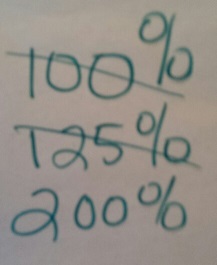
  • I Give 100%, No 125%, No, Wait More Like 200%!

    percents

    “I’m close to quitting, just walking out,” Ruby, a wispy volunteer manager says tersely. “And so are some of the other staff at my organization. I don’t know, I just feel like I have to sacrifice everything for my job. Now, whether or not I feel that because of a certain culture in my organization or if it is just self-imposed, I don’t know. But what I do know is that I feel inadequate when I choose a family outing over a fundraising event on a Saturday or when I feel that I deserve more compensation. And what’s worse is I feel so incredibly guilty having these feelings. I mean, does managing volunteers mean I forsake any and all personal life and needs?”

    Well, duh, Ruby. Or wait, does it? Once you’ve “become” a volunteer manager, does everything personal just fade away into this nirvana of blissful martyrdom?

    Coincidently, a recent article on overworked non-profit workers published in Atlantic Magazine addresses this very idea and one of the interview quotes from this article is:

    “The unspoken expectation is that you do whatever it takes to get whatever it is done for the people who you’re serving,” she says. “And anything less than that, you’re not quite doing enough.” Timm, Jonathan.  “The Plight of the Overworked Nonprofit Employee.”  The Atlantic Aug 24, 2016

    Do we, in the non-profit world sometimes wear our “commitment” like a badge of devotion on our chests? Do we secretly lap up the comments like cans of energy drinks when telling people what we do for a living? “Oh, you’re so selfless,” “I could never do that work,” “thank goodness for people like you.”

    Do we subtly feel this martyr attitude and does that translate into a self-sacrifice that is simmering under our weary feet waiting to burst into burn out? Do we feel guilty when we look at our colleagues who we imagine are selflessly working more and therefore care more? Does a nagging voice whisper, “If this is your calling, then how dare you complain (or ache or fall ill or blink)?”

    So,  are we afraid to voice the following concerns to our superiors for fear of being selfish?

    Asking for more resources (how dare we-precious money and resources need to go to the mission)

    Mindfulness about overwork (if I don’t keep going, someone, somewhere won’t benefit)

    Planning vacations, family time (family will just have to understand, THIS is more important than their needs)

    Needing help with stress over working with tragedy (How can I possibly complain, heck, I have it pretty good compared to the clients I see)

    Asking for a raise (Could I be any more selfish?)

    When the hard stuff, like not enough understanding of what volunteer managers do, or too many requests from too many departments and no way to prioritize, or challenges with staff, or no perceived support starts to whittle away at your commitment, then burnout begins.

    When we are embarrassed or afraid of asking for the help we need, we aren’t just doing a disservice to ourselves, we are actually hurting our volunteers and the very people we are here to help because we will not be any good to them if we are resentful or burned out.

    So, if you have to, tell yourself that asking for the help you need is really about providing the best volunteer management for your clients and volunteers. Frame your requests to your superiors in that way: “In order to provide the best for our clients and volunteers, I will need….”

    Because your “calling” is not to be a martyr, it’s to be a leader.

    -Meridian