Category: prospective volunteer

  • A Professional Rejection is Still a Rejection

    charlie brownJeremy has been managing volunteers for several years at an organization that helps disabled veterans. A social worker, Jeremy spends about 10 hours a week working with volunteers who help veterans find housing and medical care. They also do fundraising activities and office work. “I laughingly call the volunteer management aspect of my work, my part-time job. I can’t give the volunteers as much time as I’d like, but for the most part, they are fortunately pretty self-starting and able to monitor themselves.”
    Jeremy continued, “We were in the process of ramping up our volunteer program to take on some new initiatives and I was asked to try to find someone to help recruit more volunteers. Luckily, one of our volunteers, June had a friend, Trisha, who, before retiring was a marketing rep at a large textile firm. June said that her friend might be interested in helping us, so I called Trisha and she agreed to come in and talk.
    Trisha came in and met with me and my supervisor, Eileen. Eileen is the one who originally requested more volunteers for our new initiative. Both Eileen and I were incredibly impressed with Trisha’s qualifications. She had gone through extensive marketing seminars at her textile firm and she was extremely knowledgeable on targeted recruitment. She said that she believed in our mission, and that she would be happy to spearhead a campaign to recruit more volunteers. My supervisor, Eileen was thrilled and excitedly gave Trisha pretty much the go ahead to use her vast knowledge and experience. Eileen gave her a “carte blanche” mandate to get this done so we went over Trisha’s plans and agreed to meet in two weeks.”
    Jeremy then said, “a week later, Trisha sent me an email saying that she thought long and hard about the opportunity and decided to decline helping us with recruitment. I was shocked, just shocked, given the positive meeting we had the week before. I couldn’t imagine why she had changed her mind, I mean I didn’t even speak to her but I know that she had emailed Eileen several times. I saw that Eileen was also notified and I tried to reach her, but the entire management team was at a retreat so I couldn’t find out what might have happened.”
    Jeremy continued, “I was just so thrown by this change of heart and so the next day when I saw June, I asked her if Trisha had spoken to June and sure enough she had spoken with her friend several times. I asked June to tell me the reason Trisha decided to quit after our first very positive meeting. I said, ‘June, we really hit it off and if I did something or wasn’t clear, I need to know that so I can explain or apologize if I need to.’
    At first June was hesitant to say anything and then finally, she opened up.”
    Jeremy took a breath, “June told me that Trisha was at first very excited about connecting with our organization and was making some real plans. But then, as she emailed Eileen for some specifics like demographics, targeted populations etc, the tone of Eileen’s emails changed. Eileen told Trisha that all her recruitment plans needed to go through a committee for approval. She also wanted Trisha to meet with the marketing department so that they could tell her which clubs and organizations to steer clear of because marketing wanted to target them first. Evidently the marketing department wanted to provide her with all the proper wording for her recruitment and they wanted final approval on her messaging. Marketing also said that they were very busy and could fit Trisha in for a short meeting in a couple of weeks.”
    Jeremy sighed. “June said that Trisha, while at first excited about the assignment, soon became leery of all the layers of bureaucracy being heaped on her. She told June that it felt like being back at work, and just having retired, she did not wish to return to a job, especially one that didn’t pay. Now, I honestly don’t know whether to approach her on a softer project or to just let her go.”

    Asking volunteers who are professionals to head up or direct projects can be a real elevation of volunteers within our organizations. But if our organizations wish to utilize a volunteer’s professional skills, then that volunteer will have expectations that their professional skills be respected.
    Eileen’s colossal mistake was giving the signal for Trisha to “head up” a project and then killing the momentum by subjecting Trisha’s plans to layers of rules and regulations. It is the old bait and switch. Come to our organization and utilize your talents and skills but now that you’re here, we want you in this box.

    Had Eileen asked for Trisha to become a “volunteer consultant” on a recruitment plan, the whole interaction may have gone better. Not only did they lose a valuable resource in Trisha, they created a negative advertiser as well, and Trisha, being a professional probably has a circle of professional friends who will hear from her that volunteering for Jeremy’s organization is well, disappointing.

    We, volunteer managers are always looking to elevate our volunteers. Every day we encounter amazing individuals who can better our organizations with their skills, wisdom and experience. We have to keep advocating for volunteers like Trisha to be treated with clear messaging and courtesy.

    If our organizations really want professional volunteers, then we’d better elevate the role of the volunteer manager, who has the skills to recruit and retain those very desirable folks.
    -Meridian
  • Nepotism Volunteer Style

    cat my spaceFrom the “Common Sense Observation Dictionary”: Nepotism=Hiring really obnoxious, unqualified people who are related to someone in power and cannot be fired so get used to it.
    Is nepotism really that bad and does it exist in the volunteer world?

    Well, you might have noticed that when the economy slows and there are very few jobs out there, it becomes all about who you know or who your Mom works for. Organizations are really not immune from nepotism. A job in finance opens up and before you can recommend a really awesome volunteer who ran a CPA firm for years, boom, a senior manager’s son who just graduated with a degree in ancient religions is sitting at the new desk. Now the finance department has to teach him everything from the ground up, while he continues to spend his lengthy lunch hour looking for a position in a museum.
    There’s the out of work husband, the newly graduated son, the recently laid off daughter. Family ties are never so strong as when the relative of a favored senior manager needs a job. At times you watch, feeling the helplessness, as the supervisor of this new employee has a hard time reprimanding him because he doesn’t follow rules or he just doesn’t do the work. And you muse, “what have we become? I thought we were an organization based on ideals.”

    Nepotism extends to volunteering as well, so henceforth, I will refer to them as “nepoteers.” Cindy, a volunteer coordinator said, “One of my senior managers has a daughter who needs hours for scholarships. Now, I am happy to take this student, but the senior manager waited so long that her daughter can’t come to orientation and can’t really follow the path I have set out for students. Now, I have to fast track the daughter to help out the senior manager. It’s really not that big of a deal, but it’s irksome that because it’s a senior manager, I have to bend the rules.”

    Does a nepoteer need court ordered community service hours and it’s against your policy to accept them, but you come to find out that a manager really needs a favor from you and so you accept their relative? Do you have strict rules regarding volunteer training or age limits and you end up bending rules to help out a favored employee? Do staff members say, “But, even though she’s 12, she’s incredibly smart and mature, and oh, by the way, she needs to be here all day, every day during summer and really needs to be busy.”
    I am recalling the time a friend of mine, Megan, who was a volunteer coordinator for a very short time, accepted a nepoteer who was 15 and the daughter of her organization”s CEO. Megan remembered, “Evie, the 15-year-old, would show up for her shift and then sneak out the back door and meet her boyfriend. I chased after her twice and then got up the nerve to report her to her mother. Do you know what her mother’s response was? She said, ‘yes, I knew she would try to sneak out, that’s why I brought her here. I can’t leave her alone. So, whatever you do with her, don’t let her sneak away.’”

    Just as staff sometimes has to adapt to a nepotism employee, we sometimes have to adapt to a nepotism volunteer. The challenge for us is twofold. We dream at night that the nepoteer rats on us and tells the high-ranking manager that we are incompetent. On the other hand, we realize that if this nepoteer is ambivalent about having to volunteer, but for some reason has to, then what can we get from them to help our clients?

    I remember reading a blog a few years back in which a young man talked about having to do community service. He spoke of his experience at a volunteer site and at first made fun of the volunteer coordinator and her “niceness.” Oh did that make me mad, but as he wrote further, he came to begrudgingly appreciate the mission of the organization. Wow, I thought, kudos to that volunteer coordinator.
    That day, I realized that I was being horribly judgmental when faced with nepoteers. I was dismissing them because I thought the reason they came was not a good enough one. I was building a barrier because I figured they couldn’t possibly do good work as their motivation was not pure. But heck, I realized that all the other volunteers come with so many different motivations and I didn’t prejudge them, so prejudging the nepoteer was hypocritical and unfair.
    So the next time I was handed a nepoteer, a 14 year old male who needed to complete service hours, I made myself welcome him. Daniel shook my hand, scanned everything on my desk, from the disarray of papers to the pink glass elephants and worry doll (given to me by volunteers traveling to exotic lands-please take me next time) and said, “my Mom told me you were a busy lady.” I smiled. He turned out to be one of the most engaging young students I have ever met. He was able to chat with anyone, regardless of age, culture and prejudices. He would bounce in and tell me physics jokes and we had a good friendly sports rivalry. He gave me numerous computer tips, and baked cookies in his young Renaissance man style.
    Was Daniel a coincidence or was Daniel dropped in my lap for a universal lesson? Had I treated him with disdain, would he have been a different nepoteer?
    What I learned was that volunteer motivation applies to nepoteers as well. Their motivation may be to complete an assignment, check off hours or fill time. We see these reasons to volunteer all the time in other volunteers.

    And maybe not all nepoteers will be a Daniel. Maybe not all nepoteers will suddenly become so engaged that they win a volunteer award.

    But maybe, if our treatment of nepoteers is no different than our treatment of volunteers, they may do some good work and leave a friend to the mission.
    -Meridian

  • Just a Ripple I’m Seeing

    ripple-in-waterOne day a few weeks ago, I was on my cell phone walking down the hallway when I noticed a woman speaking to the front desk volunteer, Molly. While listening to the person on the other end of the phone, I watched the woman engage Molly in conversation. As I talked, my attention kept darting back to the woman at the front desk. There was something about her.. something I couldn’t quite put my finger on. She looked familiar, and I wondered where I had seen her before. I thought that she might have been a former caregiver who we had helped. I see caregivers all the time when they come back and thankfully want to give back. I studied her face. Her eyes, they just had this crinkly way of smiling as she spoke. And her chin, it was just so familiar, but really her mannerisms spoke to me. It was like losing your memory and seeing a good friend again for the first time.
    Curious, I came closer and heard her ask Molly about volunteering. Molly was handing the woman a packet of volunteer information, but as I approached,
    Molly saw me and said, “oh here, here’s Meridian, she can tell you more about volunteering.”
    I caught the woman’s eye and as she looked at me, I felt deja vu. “I’m Bree,” she said, holding out her hand and we shook. Her hand felt like favorite family. We walked back to my office and she sat down, her eyes taking in everything as though she had seen it before, in another life. Then she smiled a knowing smile. “My name is Bree Phillips and I’d love to volunteer here.” Hmm, I thought, the name rang no bell, and I wondered if maybe she had changed her name. Bree continued. “I just moved here to be near my mother after having been through a long divorce. Because Mom is getting older, I need to take care of her. But I have some free time to give, and really, I’m here because of my father. He volunteered here many years ago.”
    “No kidding,” I said, not recognizing the name Phillips, “who is your father?”
    “George Keenon,” she said.
    My mouth dropped open. “Your dad is George Keenon?”
    “Yes,” she answered, “did you know him?”

    Oh my gosh, it suddenly dawned on me, those eyes, her chin, the mannerisms, I was looking at a female version of George, a volunteer who was one of my all time favorite volunteers. In that instant, I felt like I was sitting with him again, enjoying his stories of growing up on a farm, his love for family and helping others. George volunteered during a time when sadly, male volunteers were scarce and he stepped forward to fill requests for a male volunteer to help male patients. He roamed the halls of the hospice care center, complementing the nurses and stopping to acknowledge a broken heart. I remember one day, when a patient was asking to see Frank Sinatra, George entered the room and she looked at him with a smirk and said, “whoa, you really let yourself go!”
    Bree listened to my stories of her father and told me that before he died, he recommended that she try volunteering at a hospice. “He was always talking about his experiences here,” she said. ” I swear, he had this long, great career in business, but he spoke more often and more fondly about his connections to the patients.” Bree’s eyes brimmed with so much emotion. “I want to honor my father by following in his footsteps. I’ve got the time and I want to do something that lights me up the way it lit up my dad.”

    Then last week, I had a new class of volunteers. In the class was a middle-aged woman named Holly Starfire. What an awesome name I thought as the volunteers introduced themselves. Holly was quiet, shy almost when it came time for her to comment on the icebreaker. “Why am I here?” she mused aloud. I think it’s because of my father who volunteered here a long time ago.”
    “Who’s your father if I might ask,” I inquired.
    “Hardy Pike.”
    “What? Your dad is Hardy Pike?”
    “Was,” she corrected. My dad died last year in Florida where he retired.”
    Hardy Pike was a volunteer who, as a young man, had changed his name from David Toth to Hardy Pike because he liked the sound of it. It figured that he would name his daughter Holly Starfire. A big brute of a man, Hardy had blue-collar hands and a bohemian heart. He had built his own house from scratch and fixed heating and cooling units for a living. He loved fishing and poetry and could listen to anyone from little prim ladies to salty language gents. Hardy was an enigma. Everything about him pointed anywhere but volunteering, and yet, he faithfully committed to providing a pat on the back for the terminally ill.
    “I grew up with a sense that the world is full of possibilities,” Holly told me, “and that giving back was more a possibility than a mandate. Dad spoke often about how good he felt when volunteering. He inspired me to find that too.”

    Most of the time, we’ll never know the lasting impact volunteering has on our volunteers. There’s not a statistic for “volunteers who, in whatever area they live, go and volunteer because they’ve been inspired by someone we worked with”. We don’t hear the stories they tell their children. We can’t see their friends and relatives, who are inspired to go out and volunteer themselves. We’re not a droplet of water on the ripple, along for the ride. But if we’re lucky, we will get to meet a son or daughter or friend who comes because they want that meaningful experience they’ve heard so much about.
    And, I figure, if I last long enough, I’m going to meet the next generation too.
    -Meridan

  • The Incredible Shrinking Volunteer

    incredible-shrinking-manLately I’ve been reading stats about volunteering. Ok, they’re not in the “To Kill a Mockingbird” league, but they do tell a story and they have a lovely way of lulling me to sleep. Some surveys say volunteering is up, others say volunteering is down. Demographics are tricky and of course, one has to define “volunteering”, which is like defining spirituality or “that color the coffee turns when I put the right amount of french vanilla creamer in there…. wait, no, stop, that’s it!”
    But, it seems as though when stats tell us that volunteering is down, there are the broad reasons given to explain this: Not enough skills based volunteering opportunities; not enough volunteer jobs to offer and not enough flexibility. Hmmmmm, good reasons, ones which seem to blame the volunteer manager for not providing the best experience. The conclusions of these surveys oftentimes dust off their hands with some quick advice about creating a better volunteer atmosphere. It seems so simple, but I think there’s a few more reasons to throw in based on conversations I’ve had with prospective volunteers and folks who recoil like they’re touching a third rail when they walk by my booth at a fair.

    Martha sat, tears in her eyes, as I had to tell her that we could not accept her as a volunteer. “But, she said, “I’ve turned my life around, you can see that, because I’ve been out of trouble for the past six years.” I could see that, it was plain from looking at her background check. I could feel it too, she wasn’t just saying some lines she memorized. She had some really serious issues six and seven years before, but had stayed completely out of trouble recently. I lobbied to take her, keep her away from clients, but higher decision makers than I said no. Martha looked at me, and asked me, her eyes fixed on my face as I now represented all the employers and volunteer organizations that had rejected her. “How am I supposed to get a fresh start when nobody will take a chance on me?”
    I still have an emotional scar from that encounter and every time I have to dismiss a volunteer due to a background check, that scar aches. I don’t know if our volunteers realize how much we care about them and about their well-being, even if we cannot accept them. Martha, I want you to know that.

    Then there’s Thad, who represents so many of the prospective volunteers. “I can’t go into someone’s home,” he says in horror. “What if they accuse me of stealing something?” Or Kelly who says, “I’m not too eager to work with people I don’t know.” Or Joyce who says, “I won’t go into neighborhoods I’m not familiar with.” For these volunteers, the comfort of an office job close to the volunteer manager or organization staff keeps them coming back, but leaves vital volunteer jobs unfilled.
    When folks come to us to volunteer and they do not wish to fill the slots that are critical, we have a choice: Turn them away or somehow fit them into the spot they prefer. Then, when organizational staff complain to us that we say we have volunteers, but none for the clients, we try to explain that not every volunteer is willing to do every job. Staff then shakes their heads and wonders “why can’t you just recruit some?.”
    Volunteers watch the news, read and engage in social media, and speak to family, friends and neighbors. They form opinions about what they are willing to do. We can encourage them, cultivate them, go with them to a client’s home, but ultimately, they know they can reject a job. Sometimes volunteers will grow into positions and these volunteers are usually fantastic in their new roles.
    Prospective volunteers tell me, “I’ve had to go back to work,” “my family needs help right now,” “I need to move closer to a daughter who lost her job,” “my wife is sick,” “I’m having health issues,” “I’m just not emotionally ready yet,” etc. etc.
    Because we, unlike our human resources counterparts, cannot just “hire” a volunteer for a job, we have to creatively fill each position while juggling the creation of new positions for volunteers who decide they’d rather not do the work we may need the most.
    I remember Bill who wanted so badly to fill the toughest of needs, but ended up opting for the cocoon of the home office. Was Bill’s volunteering any less because of that? No, of course not. All volunteer roles are vital.
    However, behind the scenes, we, volunteer managers struggle with filling important positions for any number of reasons. I’ve tried so many ways to entice volunteers to fill certain needs. I’ve guilted, humored, begged, rearranged, incentivized, romanticized, promised temporary status and so on. Many times it works, but not always. I know that finding the right volunteer for the right job is critical, so I slog it out, recruiting from within and without.

    And I would say to all those reports that conclude with suggestions that if we, volunteer managers just offer more leadership roles, create more meaningful positions and bend our flexibility just a bit more, volunteers will come rolling in: Come down and do this job for awhile and you will see that it is much more complex than that.
    And to Martha: I know in my heart that you would have gone into a client’s home and would have done a fantastic job. Somewhere, there’s a client waiting for a volunteer like you, and somewhere you are waiting for a chance to prove yourself.
    -Meridian

  • The Volunteer Manager Mind or Volunteer Beef Wellington

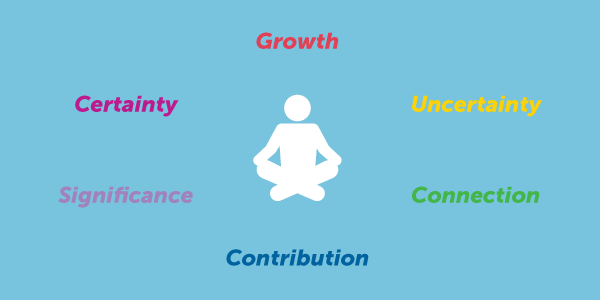
    6-human-needsAfter all these years, I still believe that everyone has the potential to help, that anyone is capable of becoming a great volunteer. I still think that each and every person who expresses just a hint of maybe perhaps it might be possible sometime later if I kinda sorta could be interested for only a wee bit of time is going to be the next volunteer of the year. How do I know that I truly deep in my soul believe this or am I just fooling myself? I truly know this because I know how my mind works.
    See, my mind and I, we’ve gotten used to living with each other. It reminds me that I can’t take that fork from the restaurant and I yell at it because it forgets names, places and where I put my stress ball.
    So I know I sincerely see everyone as volunteers reaching their potential because as I speak to them I get this visual. I sort of see their edges starting to sparkle, kind of like the way an excel spreadsheet cell sparkles when you hit copy. Then the volunteer, as they are talking, becomes a pseudo butcher’s diagram of their parts. Those parts are their skills, their interests, their personalities, their experience, their mindset, their availability, their aversions, their hidden dreams, their motivations, their personalities, quirks, etc. Then my pal, the mind, as it holds the sparkling cuts of volunteer, travels into the mind’s kitchen where it starts to look at all the available ingredients for this volunteer recipe. Hmmm, a dash of Tuesdays, with a sprinkling of creative license and some fresh clients that need a singer who studied in Paris and loves to draw pictures of cats on bicycles. Voila!

    These volunteer diagrams are like the first ingredient in a fine recipe. Just as each part of a butcher’s diagram represents a steak or rib or filet which is the basis for hundreds of dishes like hamburgers and pot roast, our volunteer diagram represents the potential of the volunteer.
    Now here’s the volunteer manager part: All the other ingredients in this unique volunteer recipe come from our ability to catalog and store vast amounts of extraneous ingredients in our mind’s kitchen. We remember that a client grew up in Hungary and loves baseball. We tuck away snips of conversations in the cabinets of our mind. A senior manager muses that it would be nice to see volunteers take part in a holiday chorus, or a staff member tells us how he could occasionally use a volunteer who is adept at stats.
    We may overhear a snippet of a conversation about someone who wants to donate craft supplies. We shelve that near the knowledge that a student group wants to volunteer to help seniors who live alone. So when that new volunteer, Jamie sits down for an interview and we really start to get to know her, that sparkly edged diagram begins to appear. Jamie, a retired accountant who wants to give back to seniors, shares that she used to teach preschool while finishing her degree and says that it was one of her favorite experiences. Later in the conversation, Jamie shares that she relaxes by scrap booking and belongs to a craft group. Suddenly, those pieces of the diagram become the basis for a spectacular creation. Jamie is paired with the students and the donated goods. Jamie is the main ingredient in a recipe called “Project Senior/Student Crafting.”
    Obviously, it is not that easy. Pieces of good ideas can languish for a long time. Everyday, we integrate volunteers into our organizations. But as we go about our everyday jobs, recruiting, retaining, and cultivating volunteers while filling a wide variety of requests and needs, we also stock bits and pieces of information in the spice cabinet of our minds.
    And when those ingredients come together in a perfect way, I’m thinking it’s got to be similar to a chef creating a new signature dish.
    As volunteer managers, we may often feel more like a short order cook in a non-stop busy diner, but in our hearts and minds we are that chef who sees the potential in every ingredient.
    And when that new volunteer dish is savored by the people we are helping, we can step back, wipe the flour from our face and bask in the moment.
    -Meridian

  • Of All Things, Teeth Cleaning

    SONY DSCI just got my teeth cleaned. After Corey, the hygienist and I catch up on each other, I kinda use the time to close my eyes and think, usually about all the things I’ve forgotten to do. But this time, I was looking into my Corey’s eyes above her mask, backlit by that huge bulb. Those eyes look sad, I thought.
    “What’s going on” I asked before she could put her fingers into my mouth. Her eyes jumped, puzzled. “What do you mean,” she asked, her hands retreating.
    “You seem, I don’t know…”
    “Tired?”
    “Yes, maybe.”
    “I’m not sleeping much,” she admitted.
    “Why’s that?”
    “I don’t know, just so much work and it’s exhausting and I go home so so tired. Maybe it’s just the weather.” Her fingers came back.
    Unable to ask more in words not garbled, I closed my eyes and my mind starting to drift, like a thought canoe down the Amazon River of figuring things out. I’d seen those eyes before, but where? The thought canoe continued to float through the heavy waters and I searched the shores of memories for answers, but I did not recognize anything slithering along the shore. The thought canoe drifted with the current and then a vibrant image flew into view. I’ve seen those eyes on volunteers, who were burnt out from so much taking in of strangers’ pain and suffering. Their volunteer eyes, ringed with the emotions trapped within, sometimes silently pleaded with me to give them a break and allow them to see the sun for a bit. I recalled volunteer Marie, who looked so bone weary one day I asked her to sit and talk. She confided that her husband was just diagnosed with Alzheimer’s disease. The patient she volunteered for had Alzheimer’s and was an emotionally difficult case. Volunteer Jim’s eyes flew into view when he had four patients die in rapid succession. These volunteers wore the emotional toll on their faces. Corey’s eyes spoke volumes. She was bone weary, but why? I thought about her job and I saw her superimposed over the many volunteers and staff and bartenders and hairdressers and all the professions that hear so much. Corey’s job required her to be calming, gentle, soothing and that demeanor made her very much like the volunteers I work with everyday.
    When the polishing stopped, I sat up, my mouth now mine to use. “Corey, do you hear a lot of stories from your patients?”
    “Why yes, they all tell me things about their lives and sometimes they must have some really tough procedures and I just feel for them. Some can’t afford what they need and they tell me why. It’s sad.”
    “What do you do with those stories, I mean, you, personally?”
    Her eyes were puzzled, wary. “I don’t know what you mean.”
    “Do you go home and think about them?
    “Oh, yes, all the time, my husband thinks I’m crazy, but I can’t help it. There are people who have hardships in their lives, people who have bad things happen to them. Sometimes I find myself thinking about them at bedtime and my mind just won’t quiet.”
    Corey knows I work with volunteers. I told her about how we try to help our volunteers be able to purge so that they don’t think about death all the time. I told her that she, like our volunteers spends intimate time with her patients and they naturally open up to her and that she is taking in, absorbing their pains and frustrations. I told her I tell volunteers that in order to be successful, they have to learn how to empty their vessels of compassion or else they will suffer, both mentally and physically.
    “How do you know this?” she asked, as she put the tools down.
    “I’ve seen it. I’ve seen the effects of it. I’ve seen great volunteers become so immersed in a patient’s life that they infect their own. I’ve seen volunteers with the weight of the world on their shoulders who become inert because they can’t think about one more tragic circumstance. You’re not alone, Corey. You and all the hygienists here and everywhere are not alone in this.”
    “But what do I do? What do your volunteers do?”
    “They learn to be with someone 100% when with them and not 20% when they are not. Do you think that your worrying about your patients at night at home helps them?”
    “No, I don’t suppose it does.”
    “Do you think that your listening as someone who cares helps them?”
    “Oh yes, I do think so, they tell me.”
    “Then do you think that your listening to them has to translate into worrying about them later? And does that worrying help you be with your family or does it keep you at work?”
    She thought for a moment. “I don’t know, but I see what you’re saying.”
    At the end of the appointment, Cory hugged me and thanked me for listening to her, although I felt like I might have lectured her. I sure hope not.
    See, the lessons we learn and share with our volunteers can be shared with anyone. These are life lessons, lessons in living, lessons in character, lessons in survival and lessons in humility. We, volunteer managers, can throw it out to the world and if the world wants to hear, then fine. We typically do not hoard the knowledge we’ve gained, just like we don’t hoard volunteering. We invite everyone to participate, to grow and learn and to teach us, because I believe that we are knowledge junkies and perhaps in some small way, we can share the things we have learned with our volunteers, other staff, family and friends and even the hygienist with the weary eyes.
    -Meridian

  • Just Put That in My Bag

    junk drawer“Freebies,” volunteer coordinator Sara lamented. “Our staff thinks of volunteers as freebies. They think I have a bag full of volunteers and when one is needed, I just reach in and pull off the wrapper.” Sara continued, ” I mean, don’t get me wrong, I love freebies, like the BOGOs (buy one get one) or get a free cruise if you listen to our sales pitch or a free flashlight to the first 100 customers. Freebies are great, but they’re just, well freebies. I didn’t pay for them, and maybe I didn’t want them in the first place. I certainly don’t value them that much.”
    That conversation got me to thinking about how we view volunteers in our organizations. Sara is right. There is very little investment on our part in freebies. Someone hands you something in the mall or at a conference. All you had to do was show up, therefore, you place little value on that item, because, after all, it’s free.
    So how do organizations view volunteers in this context? Do organizations view volunteers as the junk in the bottom of the plastic bag after attending a conference? You know, the free trinkets handed out like the assortment of band-aid holders, wet wipes, and lip balm which is all just more stuff to deal with in a busy life, stuff that has no real meaning except to advertize a logo?
    Are volunteers the rubber jar opener that we throw in the junk drawer until we might need it one day? And, if so, how do we make volunteers the substance of an organization and not the free stuff? Let’s take conferences and symposiums for example. There are conferences and symposiums which are geared specifically towards the volunteer sector. That’s really nice, but who is attending these symposiums? I doubt very many administrators of non-profits are attending. We, the volunteer managers are attending.
    Our own volunteer themed symposiums are pretty much like the lip balms and band-aid holders holding their own symposiums year after year. “Yeah, how do we make a better lip balm, maybe one with more sunscreen?” “Maybe we should make the band-aid holders green instead of yellow this year.” And yet, the lip balm and band-aid holders end up in the bottom of the bag once again. Do symposiums not geared solely towards volunteerism have substantive volunteer components? Would a conference on health actually feature volunteers presenting a workshop? Horrors, volunteers aren’t experts, are they now?
    When will volunteers and volunteerism be truly integrated into the missions and not just a freebie afterthought? When will the “free stuff”(volunteers) be more than fluff?
    Well, I was chatting with a retired business executive, Charles, who is married to a friend of mine. He politely listened to me lament about the “silo” of volunteering, taking in my ramblings as he slowly raised an eyebrow at my frustration. ” You know, we were in the business of selling our products and all things worked towards that end,” he said. “You want to sell your product, AKA, volunteers, to the rest of your team and to the community around you. Some of the ideas we used to sell products might work for you too.” He went on, “businesses give out free samples to high influence customers, newspapers, bloggers and reviewers in hopes of getting a positive review or testimonial. Those positive reviews are proven to work, to create buzz, to make people want your product. People trust reviews by others who have actually taken the time to do a review. Maybe you can do the same with volunteer services and staff.”
    “I have no idea how to do that,” I admitted.
    “Look,” he said, “you want everyone in your organization to appreciate all the things volunteers do for your clients. But, does staff actually see or hear about all these great things? Do they engage with all the volunteers? Are they aware of how much volunteers help, aside from some meaningless statistics?”
    “No,” I said, “they don’t.” And, I thought, they don’t want to sit through some lecture about all the great things volunteers are doing. So, how to engage them, show them? Well, there are volunteer managers out there doing some pretty creative things.
    A volunteer coordinator I know says he has pictures of his volunteers in a book for staff and visitors to look at and get to know each volunteer as a person. He calls the book, “Volunteer Team Members.”
    Another volunteer coordinator polls her clients for testimonials to showcase how much volunteer involvement means to the people receiving it. She shares these testimonials at every staff meeting.
    Another coordinator publishes a monthly menu of volunteer services so that staff can pick from the different offerings and subsequently get to know all the great things volunteers are doing.
    A tech savvy coordinator has a twitter hashtag specifically for his volunteers to share their amazing work. He encourages all staff to check in on the hashtag.
    And yet another volunteer manager takes videos of volunteers telling stories about their favorite volunteer memory. These are available to staff on a private channel.
    Some coordinators publish newsletters, make scrapbooks and invite volunteers into meetings to share their stories.
    Others ask staff to help with training, so that staff has a “stake” in volunteers from the beginning.
    All these great examples are helping to make some headway into integrating volunteers as productive members of their teams. Truth be told, we have an uphill battle here. How can the lip balm and band-aid holder become more than “junk drawer bottom dwellers?” When non-profit staff think of volunteers as equal members of the team.
    When will I know that’s happened?
    When I walk into a mainstream conference and see a session given by volunteers.
    -Meridian

  • Of Swords and Cranes

    swords and cranesThat morning was filled with the chaos of emails and phone messages and the flitting of staff whose requests and questions settled onto my desk. As I scrolled through the emails and deleted the spammy junk, I then moved onto the “cute” emails from volunteers. I love that they feel close enough to send me their chain emails, even though the sheer volume is cumbersome. I came across a video from a volunteer about the random giving of 1000 origami cranes to strangers. Lovely music accompanied the surprised looks on the faces of strangers as a young woman shared her kindness with humanity. I’ve gotten plenty of videos before, random acts of kindness shared by the network of people in our volunteers’ lives.
    As I closed the email, I looked up to see Stuart standing in front of me. Stuart is a volunteer who seldom requires any attention or help. As a matter of fact, I actually feel rather inadequate in his presence. A former Army officer and professor, Stuart has ridden the wings of power in circles I can only imagine. A tragedy brought Stuart to volunteer. His own personal grief, shared only in carefully guarded pieces has made him one powerful volunteer. Sometimes there is an incredible fusion in volunteers, almost like a big bang theory of worlds colliding that can produce an amazing giver. Stuart is one of those people.
    “Hi Stuart,” I said, “what brings you here today?”
    His face was intense, purposeful. “They called me in to sit with a patient.”
    “Oh, of course.” In a millisecond, I switched gears. See, volunteer managers can change personas at will. It’s a skill that serves us well as we morph into the role we need to assume.
    “Let’s go find out where they want you to be,” I said, getting up and heading for the nurses’ station. Stuart is an 11th hour, or vigil or whatever you want to term it volunteer. These are volunteers who sit with the dying who are alone at the end of the journey. These folks are incredible, and they take their jobs to heart with the fierceness of a soldier battling the forces that are trying to keep the dying alone.
    Stuart was led to a room where a man was actively dying. He was alone, because his family was in route and Stuart would be the human presence until they arrived. The man was young, dying of melanoma and he had taken a turn for the worse during the night. His parents were on their way.
    So, Stuart entered the room, inhaling the scene. He pulled a chair up close and sat down, his eyes riveted to the human spirit struggling to escape the failing body. Stuart took in the whispered instructions from the nurse then looked up a me and nodded once. “Go, I’ve got this, I’m on duty.”
    As I walked back towards my office, I had to stop, so I paused at the water fountain. Such intense moments cannot be shrugged off so easily. I needed to feel the weight of a life ebbing away, to process the intensity of a volunteer giving of himself completely.
    I returned to tasks, somewhat distracted, still feeling the energy of what was happening a short way from my workspace. I thought back to the class Stuart had taken on the imminently dying, and how, looking over the faces of the volunteers in attendance, I was struck by the sheer power of their will. Each one had their own story, their own reason to give so intimately and the humility of it all had been overwhelming.
    These feelings lingered and I kept glancing at the door to see if Stuart would check in before he left. If he didn’t, well, I understood the why of that decision only too well.
    A short time later, when thankfully, no one was waiting to chat, Stuart did come in. “Please don’t let there be any interruptions,” I said under my breath. He looked drained.
    “They arrived,” he said, speaking of the parents. “They are with him now and he’s close.” Stuart’s face was lined with the responsibility of holding a soul in his hand.
    “And you?” I whispered.
    He smiled. “I’m good. I’m glad I could be here.” The myriad of inner emotions stayed inside where he prefered them to remain.
    “Thank you Stuart.” I said, knowing that any other statements or questions would be lame, flat.
    “Call me anytime.” He stood up, and shook my hand. “Anytime.” With that he turned and walked out.
    There will be no You Tube video of Stuart. He has no message to share with the voyeurism masses. His is an intensely private journey.
    Later, I checked with the nurse, and the patient’s parents were with him when he died. In their mix of hard emotions, the parents might not even realize that Stuart was there, not yet anyway. Would it matter to Stuart if they never did know that he spent that time between life and death with someone he did not know, yet cared about so deeply? Or would his reward just be the knowledge that he had spent the most intimate of moments with another?
    I started the morning looking at a woman giving cranes to strangers, and ended the morning witnessing a soldier wield his proverbial sword to keep a stranger from dying alone.
    Volunteering is of swords and cranes and sometimes, they mean the same thing.
    -Meridian

  • The Shaping of Volunteers

    child with flowerWith Mothers Day still fragrant from all the vases of flowers and all the leftovers from dinners out, I started thinking about the stories volunteers have told me about their mothers. I have a friend who laughingly tells me that people volunteer because they were wild in their youth and are now making up for it, and for a few volunteers I know that’s true because they have said it. But most stories the volunteers tell are great yarns, the kind of stories that feel like they are coming from a huge book, read while you sit on the floor, hands propping up your chin.

    Annabel told me that her mom was so old-fashioned that when she met her husband to be, Ben, her mother gave her firm, ‘not to be ignored’ instructions. See Annabel, an only child was 14 and Ben, a mature 17 fell in love at a country picnic. He began to court her by showing up at her house, hat in hand, a polite “yes ma’am” on his lips. Her mother and father looked Ben over, decided to give him the chance to prove his worth and they let the two young people get to know each other. “And my mother,” Annabel said, “Oh my mother gave me lots of advice. She told me what to wear, how to act and what to say to be a nice girl, a good catch for this gangly almost grown man who I was head over heels in love with. But she also had stern rules for me too. I could only kiss Ben five times on a date. When I told him that rule, he laughed, but he obeyed out of respect for my mother. We were married when I was 16 and we’ve been married 65 years now and we often talk about my mother and how much she loved both of us. Mother was a strong woman, fair and loving. Ben and I could not have children so we adopted four. My mother was a wonderful grandmother to them. It was because of her that I adopted children and now want to help others.”

    Corine came to volunteer two years after her mother died. Corine, a divorced woman with no children, lived with her mother until her mother’s death two years before. She often speaks of her mother who was her best friend, citing the sacrifices her mother made for the family. “My mother was raised in an orphanage and did not ever know her real family. She put herself through business school and raised myself and my sister. We never wanted for anything and although I know my mother struggled, we never ever knew that. My mother helped anyone and everyone, from our neighbors, to down on their luck strangers who she gave probably her only spending money to. I lived with her for 20 years until her death. She was my best friend, my confidant and although I miss her every day, she was the one that told me I must go on living. Because she was such a good person, I want to be that good person too.”

    Grace speaks of her mother wistfully. “My mom was dealt a blow no mom should ever suffer. My brother Jay was killed in Vietnam at the age of 19. I was only 14 at the time and I still remember the funeral. How my mother and father cried. My mother grieved her whole life but she never let it affect the rest of us kids. She never let his memory hold us in the past. Rather, we kept his memory with us, as we moved forward and my mother lived for us and for him. On his birthday and on holidays my mother would slip away for a bit and sit in Jay’s room and cry. She cried her tears of pain and then powdered her face and joined the family. My mother was strong and loving and she taught me that heartache could not diminish love nor spirit. After my husband died, I was devastated, but I picked myself back up and decided to live. I volunteer in honor of her.”

    Greg told me that he and his brothers and sisters grew up in the hills of Tennessee. “Early in their marriage, my father had an accident at work and was disabled so that meant my mother had to be the sole provider for our family. I can remember the hard times, when we would take a walk up to the store and buy a pound of flour and a pound of sugar so that we could make flapjacks and homemade syrup for dinner. Mom worked, sewed our clothes, made our food, helped us with our homework and cared for Dad. She never complained. She died at the age of 54 and I think she lived two lifetimes of work and responsibility in her 54 years. I remember though, laying in bed and Mom singing us to sleep. Her voice calmed my fears and told me that, although times were hard, I was loved and safe. I want others to feel that way.”

    In our profession, we have this wonderful opportunity to engage with our volunteers. The vast majority of them are amazing human beings and getting to know them is a glimpse into the stories that shape them. Listening to them speak of their mothers is like hearing the singing of a tale or the recitation of an epic poem. These stories are enlightening and inspiring. I wish I could meet those mothers.
    If I could meet them I would tell them thank you for shaping our volunteers minds and hearts. I would say to them, “I wish you could see the wonderful person your child has become. I know you would be proud.”
    -Meridian

  • Retinal Scan Anyone?

    Frankenstein (1931)Background checks. They have become a permanent part of our volunteer manager lives. Now, don’t get me wrong, I see the reasons for doing them, but they are not done by our waving the magic wand. Sometimes they don’t even get done for reasons out of our control after we’ve spent a whole bunch of time trying to set them up. Then the volunteer process drags on. And on and on until we forget we have a prospective volunteer or they give up. That’s frustrating for everyone.
    See, I come from the early days, before background checks. (“Want to volunteer, fine, step up. I can’t imagine you have anything to hide.”) It makes me think back to one of the first volunteers I had the pleasure of working with, Joe McDermit. Joe was the kind of guy who did whatever he thought necessary, and he had already been volunteering for years when I came on the scene. Joe taught me (or should I say scared me) about the individuality of volunteers. A couple of weeks after I arrived, one of the staff members pulled me aside and said that she had seen Joe driving our patient down the road. “That wasn’t the problem,” she added, “but Joe’s passenger door was missing.” Well, I thought, isn’t this going to be an interesting job?
    To be fair, I also remember the day I was talking to a family member and she asked, “are your volunteers back ground checked?” At that point, we had begun conducting the checks, so I could honestly say yes. That felt pretty good and I realized that we were going in the direction our clients needed us to go in. I’ve been privy to criminal records for a long time and they are interesting to read. There’s history, emotion and back story in every one of those reports. I really hate having to tell someone we can’t take them, but risk management is all about, well, risk. However we feel about it, we have to think in terms of liability. (Did you know that your volunteer was jailed for resisting arrest with violence when she hit that client? Hmmmm, explain that one. But she seemed very nice and sincere doesn’t cut it in a lawsuit.)
    Fingerprints are another matter. Someone has to actually capture the volunteers’ fingerprints. Did you know that our fingerprints are hard to record when we get older because our skin is drier? Of course you know that. You’ve had those complaints. What if the person conducting the fingerprinting is not nice to the volunteers? What if the fingerprinting person goes on vacation or is back logged? Then volunteers have to wait and they may lose interest. What if they are afraid of what might show and they bring you “proof” that charges from 1988 were bogus? (Sadly, these things don’t go away willingly, the information sticks around to make a life miserable).
    I’m thinking that in the future, we will have to do drug screening too. Will this make it difficult for volunteer managers to recruit folks? Probably. I know a volunteer coordinator whose volunteer mentioned that she smokes marijuana occasionally at home and she does not live in Colorado. What to do with no mandatory drug test? What about background psychological information? How about those folks who have spent time in a rehab, or mental facility or are recovering addicts? Will we be testing or searching for that as well?
    So, on that note, I’ve decided that when I retire, I’m going to go into the business. I imagine there’s a ton of money to be made in checking out the backgrounds of volunteers. I’m going to call it VolunCleanse, the all-inclusive volunteer background check. I’m going to buy an old tanning bed and refit it with all the equipment I need to guarantee that pesky potentially lawsuit inducing volunteer is clean. Here’s how I envision working with a potential volunteer:
    “Hello, Jake, so you want to volunteer at the library, do you? Well, let’s just see whether or not you can pass this highly sensitive cleansing test. Think you can fool the cleanse o meters? Get into this state of the art deception detecting unit and just try to keep information from me. Muahhaaaahaha!”

    So, Jake lays down in the tanning bed and the large lid creaks shut. I throw the switch and tell Jake to place his hands on the crackling lid above, thus capturing his fingerprints.
    Needles come from the side and his DNA is extracted while his hair is sucked into a hole in the bed and a few strands are pulled out with follicles intact. Oops! Maybe it was more like a clump, but the bleeding is mopped up with a sponge that serves as a specimen. A retinal scan flashes across his face while truth serum is administered into his mouth as he yells “ow”. As the truth serum takes effect, a monitor shows him Rorschach blots and he is instructed to quickly identify each image. A silky voice intermittently asks, “are you sure you don’t see something sinister from your past?” After the serum has settled, Jake is subjected to a series of questions probing his background. A biometric scanner notes how many sweat beads pop up on Jake’s brow. Then Jake is left to recover while some soothing music is played and he drifts off the sleep for a few minutes. At some point in the future, there will be a memory erasing device to wipe away all the unpleasant thoughts from this assault on human dignity. I’ll be charging big money for this service. After all, good volunteers are clean volunteers.
    For now, though, we’ll still try to assess volunteers by our old methods, like interviews, observing, and careful cultivation. But at least we won’t have to worry about their past lives, because risk management is here to help. Always minimize the risk.
    I’m forced to think of a conversation I had with a thirty something woman who had a mess on her background check. “How’s a person who has changed her life around supposed to catch a break?” she asked me and I had no answer for her. Inside my head, I pictured Joe McDermit cruising down the road with a client hanging out his door. But, you know, those clients absolutely loved Joe and so did I.
    I looked at this young woman and knew that if I took her, I would be violating every liability no-no there was. I also knew that I was a part of the society that wasn’t giving her a second chance. I offered her some volunteer work that didn’t involve patients.
    Now, I have no say over background results. They go through a large clearing house where trolls in overcoats throw darts at a board for all I know.
    Step into the VolunCleanse machine. It knows all, but doesn’t care.
    -Meridian