
 That morning was filled with the chaos of emails and phone messages and the flitting of staff whose requests and questions settled onto my desk. As I scrolled through the emails and deleted the spammy junk, I then moved onto the “cute” emails from volunteers. I love that they feel close enough to send me their chain emails, even though the sheer volume is cumbersome. I came across a video from a volunteer about the random giving of 1000 origami cranes to strangers. Lovely music accompanied the surprised looks on the faces of strangers as a young woman shared her kindness with humanity. I’ve gotten plenty of videos before, random acts of kindness shared by the network of people in our volunteers’ lives.
As I closed the email, I looked up to see Stuart standing in front of me. Stuart is a volunteer who seldom requires any attention or help. As a matter of fact, I actually feel rather inadequate in his presence. A former Army officer and professor, Stuart has ridden the wings of power in circles I can only imagine. A tragedy brought Stuart to volunteer. His own personal grief, shared only in carefully guarded pieces has made him one powerful volunteer. Sometimes there is an incredible fusion in volunteers, almost like a big bang theory of worlds colliding that can produce an amazing giver. Stuart is one of those people.
“Hi Stuart,” I said, “what brings you here today?”
His face was intense, purposeful. “They called me in to sit with a patient.”
“Oh, of course.” In a millisecond, I switched gears. See, volunteer managers can change personas at will. It’s a skill that serves us well as we morph into the role we need to assume.
“Let’s go find out where they want you to be,” I said, getting up and heading for the nurses’ station. Stuart is an 11th hour, or vigil or whatever you want to term it volunteer. These are volunteers who sit with the dying who are alone at the end of the journey. These folks are incredible, and they take their jobs to heart with the fierceness of a soldier battling the forces that are trying to keep the dying alone.
Stuart was led to a room where a man was actively dying. He was alone, because his family was in route and Stuart would be the human presence until they arrived. The man was young, dying of melanoma and he had taken a turn for the worse during the night. His parents were on their way.
So, Stuart entered the room, inhaling the scene. He pulled a chair up close and sat down, his eyes riveted to the human spirit struggling to escape the failing body. Stuart took in the whispered instructions from the nurse then looked up a me and nodded once. “Go, I’ve got this, I’m on duty.”
As I walked back towards my office, I had to stop, so I paused at the water fountain. Such intense moments cannot be shrugged off so easily. I needed to feel the weight of a life ebbing away, to process the intensity of a volunteer giving of himself completely.
I returned to tasks, somewhat distracted, still feeling the energy of what was happening a short way from my workspace. I thought back to the class Stuart had taken on the imminently dying, and how, looking over the faces of the volunteers in attendance, I was struck by the sheer power of their will. Each one had their own story, their own reason to give so intimately and the humility of it all had been overwhelming.
These feelings lingered and I kept glancing at the door to see if Stuart would check in before he left. If he didn’t, well, I understood the why of that decision only too well.
A short time later, when thankfully, no one was waiting to chat, Stuart did come in. “Please don’t let there be any interruptions,” I said under my breath. He looked drained.
“They arrived,” he said, speaking of the parents. “They are with him now and he’s close.” Stuart’s face was lined with the responsibility of holding a soul in his hand.
“And you?” I whispered.
He smiled. “I’m good. I’m glad I could be here.” The myriad of inner emotions stayed inside where he prefered them to remain.
“Thank you Stuart.” I said, knowing that any other statements or questions would be lame, flat.
“Call me anytime.” He stood up, and shook my hand. “Anytime.” With that he turned and walked out.
There will be no You Tube video of Stuart. He has no message to share with the voyeurism masses. His is an intensely private journey.
Later, I checked with the nurse, and the patient’s parents were with him when he died. In their mix of hard emotions, the parents might not even realize that Stuart was there, not yet anyway. Would it matter to Stuart if they never did know that he spent that time between life and death with someone he did not know, yet cared about so deeply? Or would his reward just be the knowledge that he had spent the most intimate of moments with another?
I started the morning looking at a woman giving cranes to strangers, and ended the morning witnessing a soldier wield his proverbial sword to keep a stranger from dying alone.
Volunteering is of swords and cranes and sometimes, they mean the same thing.
-Meridian
Category: tough jobs
-
Of Swords and Cranes
-
Oh, What We Don’t Do
 Sometimes, don’t you just wake up on an otherwise lovely morning and stare at the universe and ask why?
Last Monday, the start of volunteer appreciation week, I woke up with a cold. Not just a sniffle mind you, a full-blown, sore throat, low-grade fever, laryngitis cold. Ehhhhhhhhhhhhhhhhhhhhhh. So, what does a volunteer manager do when faced with issues that keep good people home? Yep, we walk it off and go to work. After all, the volunteers are counting on us, and we feel this deep responsibility to our organizations, our volunteers and our work. Lame, huh?
So, after fistfuls of cold medicine (pinks and whites, no blues, they put you out) I attended all the events planned. In between balloons I sipped cough syrup while greeting volunteers. At night, I went to bed at 8pm (with the kindly help of the blue pills) and hoped the next day would be better. But the human body is a funny thing, it requires rest while healing. And rest is to volunteer appreciation week as dieting is to the doughnut shop.
Now during that week, there’s one big event. It’s a luncheon at a hotel complete with cloth napkins and those huge claustrophobic banquet walls. You would think that a luncheon would be easy, but it’s not. There’s seating and lists of who’s coming and checking people in and parking issues and who’s eating what and special diet requests and greeting and finding their fellow volunteers so they can sit with them and hearing how bad traffic is and listening to ‘how about moving this thing closer to me’ and fussing over emeritus volunteers and making sure the speaker has the proper sound and smoothing over hurt feelings because we don’t have you on the list and admiring new dresses and ties and stopping to answer an inane question by a staff member who is attending (no offense, that’s mean I know, but really guys, can you not help?) and pressing staff members to get in there and mingle for cryin’ out loud, and making sure coffee is served quickly and intervening when the wrong food comes out and well, you know.
So, I have this thing; I guess it’s a reputation or myth or something. But I am the one expected to get the party started if you know what I mean.
Yeah, I’ve dressed up in costumes, done skits, sung (and I can’t sing, not a note), did break dancing and the riverdance, once did an entire improv skit on why Daffy Duck is smarter than Donald Duck, worn outrageous outfits, sat in a lazy boy while in the bed of a pickup truck tossing out flyers, (don’t ask), worn various colored wigs at events, and brought my rubber chicken purse for good measure. You know, you’ve done it too. (fess up). Well, I’ve got the dancing started in lunches past and the volunteers loved it so of course they want to dance this year too. “Oh no, no one else can start the dancing, we want the warm familiar feeling of Meridian starting the dancing.” (now, I’m picturing myself doing this when I’m like 80 and all the millennial volunteers whispering “what the heck, is that woman having a seizure, should we call 911?)
By this time, I’m having a coughing fit, the pills have worn off and my throat feels like the bottom of the pop corn maker at the movies. The trio that is entertaining has been playing soft background music during lunch when I see a volunteer sneak up to the keyboard player and whisper in her ear. The trio immediately launches into the beginnings of Ike and Tina Turner’s “Rollin on the River.” It is a slow, slow industrial build up and everyone is pointing at me. So, what am I, a good volunteer manager supposed to do? I slowly walk onto the floor, taking my rightful place in the universe and begin to sway to the iconic introduction. After a moment, I turn around and look at the keyboard player and playfully ask in a throaty voice, “Is this all you got?” She smiles at me wickedly and returns, “No way, but can you take it?”
“Bring it” I shoot back and turn to the room full of expectant volunteers. (what the heck am I doing, a voice says that sounds oddly like my dear departed mother. I should be home in bed).
There is a pause and then boom, the fast and furious Tina Turner version wafts over me to fill the room. As if a volunteer manager switch has been flipped, my legs are flying and I am whirling around and around on the dance floor. I’m oblivious to the crowd who is yelling. But heck, this is what I am supposed to do. This is what they have come to expect and within 30 seconds, they’ve flooded the dance floor, laughing and pointing at each other. Ah, they are having fun.
Even though my chest hurts and I know I will pay for this tomorrow or probably the rest of the week, I dance on. My uninhibited crazy dancing is more than just a wacko spectacle. It is my signal to them that we’re family, we’re comfortable with each other, that we can be our lunatic selves with each other. It’s also a subtle way to say, “take a chance, don’t be embarrassed, we don’t judge.
So, after volunteer appreciation week, here’s to all of you who work with volunteers, you, who got there at 5am to start decorating, you, who stayed up late making goodie bags, you, who carefully created posters and printed pictures, you, who drove miles to find the right balloons and you, who danced like lunatics.
Here’s to you, who find that this week’s work is bigger than you anticipated and to you, who are sore and maybe just beginning to feel that scratch in your throat. Let’s try to get some rest, and take care of ourselves, at least a bit. Let’s look at our weariness as a badge of courage or conviction or maybe just craziness. And perhaps that extra picture you decided to put on the poster meant everything to that one volunteer.
Then, see, it was all worth it.
-Meridian -
The Mass That Lurks Beneath the Surface
 I’m not telling you anything new when I say we all want our volunteers to be acknowledged and appreciated. We all want our volunteers to be treated with respect and looked at as integrals members of our teams. We all want volunteers to be thought about as contributors, not extra little worker bees. So, when that happens, are we, volunteer managers, not completely satisfied? Are we done? (Finally, the volunteers are treated as equals, I can stop clenching my teeth!)
Hmmm, if the answer is a hesitant no, what more do we want? (Besides world peace of course)
So let’s take a little trip if you will and look in at a volunteer manager, Josh sitting at his desk, answering phones, solving problems, listening to stories, making placements, (fine, for brevity’s sake, I won’t list all of the tasks going on) and a staff member wanders into his office. (for giggles, let’s say, a member of senior management) “Wow,” the senior manager says, ” I have to tell you, Ellen is such a great volunteer, she really did an excellent job last week. What a gem she is, you’re really lucky to have her!” Josh immediately smiles, looks up and agrees, “Yes, she is wonderful, thank you so much for acknowledging her contribution, I will certainly pass that along to her.”
The senior manager walks away, mentally patting herself on the back for praising a volunteer. There, now everyone’s happy, right?
Well, yes, but Josh has this nagging little feeling that not everyone and everything has been properly acknowledged. For him, there is a back story to that praise. Now, don’t get me wrong, we are all thrilled to hear our volunteers receive praise. So, then, what is that invisible behemoth of a back story lurking beneath the surface?
In the case of volunteer Ellen, what that senior manager did not know is that Ellen at first spent three months questioning whether volunteering was right for her. Josh allowed Ellen to observe other volunteers in action, invited her to educational in-services and arranged for Ellen to have her own volunteer mentor. Josh spent hours on the phone encouraging and motivating Ellen in order to give her exactly what she needed to feel comfortable. Although swamped with requests, Josh focused in the moment and saw in Ellen the potential to be a great volunteer. So when praise for Ellen also includes the phrase, “you’re lucky to have her,” Josh invariably remembers all his efforts beneath the surface.
Some volunteers are naturally great, some quickly develop into great volunteers and others need more mentoring. It is as much an art to recognize the volunteer who needs little mentoring as it is to find the right way to mentor a volunteer who is unsure. The yin and yang of volunteer management is a nuanced role that takes the eye of an artisan who dabbles in human potential.
When major events go off with no major problems, it’s the volunteer manager who has spent the time calling and recalling volunteers so that they know all the little things like where to park, whether they’ll need to bring water or sunglasses, the proper dress, directions to the event, who to check in with, where the bathrooms are located, and what they will be expected to do. All that work is never seen, only the fact that volunteers are on time and prepared.
Beneath the surface there’s all the time spent hearing volunteer concerns and the follow through in correcting a wrong or getting an answer. Beneath the surface, there’s all the work behind the scenes everyday that volunteer managers do, like dropping everything when a potential volunteer walks in off the street, skipping lunch to visit a volunteer in the hospital, staying late because a student needs papers signed to prove they’ve volunteered, looking up airline tickets for a volunteer who’s computer is broken, making a fuss over grandchildren who have come to visit, going with a volunteer to a doctor’s visit because her daughter lives in another town, looking at pictures of a trip when a report is due, saving that book for a volunteer who loves the same author, framing pictures of volunteers as gifts for their families, and bringing in garden flowers to share.
Beneath the surface of any excellent volunteer program is a volunteer manager who cares enough to work tirelessly with a mixture of raw gut instinct, mother hen tendencies and a passion for human potential. That tip of the iceberg did not poke through the water on its own for it is supported by a massive base of cultivation, patience, persistence and old fashioned sweat.
So, once we get the respect and acknowledgement for our volunteers down and once we are comfortable knowing that our organizations will always treat our volunteers with respect, then maybe we can start working on some recognition for our contributions and our everyday efforts.
It’s a lot to hope for, but I can dream big, as big as that iceberg base, can’t I?
-Meridian -
One Does Not a Plurality Make
 Do you ever catch a staff member lumping all volunteers into a herd, like sheep?
Richard graduated college with a degree in psychology. He took a job as a volunteer manager for a mid-sized organization that places volunteers in area agencies. Richard has plans to continue his education and will apply to the college of social work in two years. “It’s not that I don’t appreciate being a volunteer trainer and manager. I really do, it’s that I’ve had this long-term plan for quite a while. I hope, as a social worker, that I’ll be able to work closely with volunteers.”
Richard recounted a team meeting that he attended a few weeks back. “It was one of our mandatory meetings for all staff. The CEO, all the senior managers and all of us workers were there. They had presentations, financial reports, and upcoming events. You know the type, there’s some rah-rah stuff where they tell us we’re the best at what we do, and then there’s problem solving talk about things we can do better.” Richard paused. “I was half paying attention, I gotta admit, then one of the marketers got up and started talking about the need for everyone to be more professional. People were raising their hands, giving advice and testimonials. One of the senior managers stood up and said that the volunteers we train ‘were not acting in a professional manner’. My ears started burning. What? I couldn’t believe what I was hearing. The volunteers I train were not professional?” Richard’s voice went up an octave. “I mean, she was basically saying I didn’t do my job. I take a great exception to that. And here’s the real kicker; no one disputed her!”
Richard went on to say, “I mean, here’s a senior manager tearing down the volunteers in front of everyone. She painted a picture that all volunteers are unprofessional which is so far from the truth. It was demoralizing and completely bogus. Just because volunteers are an easy target is no excuse for her to foster that impression.”
Ahhh, Richard, I’ve been down this road so many times. When people generalize about our volunteers, they do enormous harm. Most staff have very narrow views of volunteering; they know the volunteers in their area and sometimes they only come in contact with one or two volunteers. To broad brush an entire force based on here say or one isolated incident is devastating, insulting and frankly demoralizing. I’m embarrassed to say that I’ve had staff say to me, “the volunteers don’t know what they’re doing”, or “the volunteers aren’t very reliable”. In every case, the staff member heard these claims from another staff member who either exaggerated or recalled an isolated incident.
So, I have learned to nicely confront the person who has painted the picture that our volunteers are sheep in a herd of incompetence. The outcome has been more awareness of broad statements. The last polite confrontation went something like this:
Me: Sheila, I just wanted to ask you a question about something Dave told me he heard you say in your meeting yesterday. Dave told me that you said ‘our volunteers don’t even know who our CEO is’. Is that accurate or did he misunderstand?
Sheila: Oh, well, I, I don’t remember exactly, but I might have said something about a volunteer receptionist not remembering the name of our executive director. It really wasn’t that big a deal.
Me: No, but I would really like to follow-up with that volunteer so that I can make sure she will have the correct information. We wouldn’t want anyone to be embarrassed. Do you remember who that volunteer was?
Sheila: Well, no, I mean I was told this by one of my staff, Corella who observed your volunteer forgetting in front of a client.
Me: That certainly is distressing. May I ask Corella who the volunteer is so that I can give her the correct information?
Sheila: Well, sure, I guess, but really it’s no big deal.
Me: Thank you, I will follow-up with Corella. Our volunteers are an asset and we want them to act in a professional manner, and believe me, volunteers want to do a good job.
Sheila: Ok, fine.
Me: Can you tell me about all the other instances of volunteers not knowing the CEO’s name?
Sheila: I, I don’t know of anymore.
Me: Well, that’s certainly good to hear. Fortunately one incident does not mean the majority of volunteers don’t know the CEO’s name. But if I may, in the future, we would really appreciate your coming to us if you have a concern about one of the volunteers so that we can address it. It’s not helpful to air these concerns in a general meeting because it gives others the impression that we are not doing our jobs and that the volunteers are incompetent which I know you know they are anything but.
Sheila: All right, I will keep that in mind.
Me: Thanks again, you’ve always been so supportive of our volunteers and we appreciate your help in making everyone aware of the great work the volunteers do.
Now if you think I don’t actually use that formal business speak, I most definitely do. In order to make my point, I remove all emotion, and speak in a very formal, direct, businesslike manner. My extreme businesslike attitude subtly points out their unprofessional treatment of our volunteers.
I’ve done this ever since I became very tired of doing nothing about these blanket statements. Embarrassing a senior manager in a meeting by “correcting” his or her broad statements in front of everyone is often a career killer. But, one on one, we can point out the error and ask for help in recognizing the impact our volunteers make.
Volunteers are not sheep, or children or just little old ladies with no skills, they’re a microcosm of the best our communities have to offer. Volunteers have earned respect, so let’s help our respective fellow staff members remember that.
-Meridian -
It’s a Wonderful Volunteer Manager Life ( Part 2)
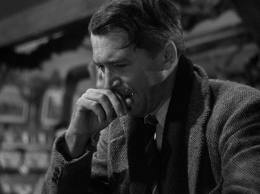 Georgia stared at the monitor. “Why is she, I mean why am I crying?” she asked Clarise.
“My dear,” Clarise clucked, “we’ll come back to that in a moment. Let’s look at what happened because you never had the opportunity to work here.” She pointed at the screen and it changed. An elderly lady had a handkerchief to her eyes, her hair matted to her cheek by tears.
“That’s Helen Greene! She’s our volunteer Debra’s favorite lady. Debra told me all sorts of stories about Helen Greene.”
Clarise shook her head. “Miss Helen never got the chance to have Debra as a volunteer. She never had a volunteer at all. She spent most of her time alone and lonely.”
“What difference did it make that I wasn’t here?” Georgia pleaded. “Debra would have loved Mrs. Greene no matter what!”
“That’s true my dear, but when Debra came to volunteer, you weren’t here to greet her. You weren’t here to spend that important time with her in the beginning, when she was so unsure of herself. Do you remember that?”
Georgia thought back to the intense time she spent encouraging Debra. “I do,” she whispered.
“Debra never did volunteer. All the people she would have helped never had her care. They went without.”
Clarise pointed at the screen and a face came into focus.
“That’s Jerry!” Georgia said excitedly. “He’s one of our best volunteers.” Georgia squinted at the images. Jerry was laying in a hospital bed. “What’s wrong with him?”
“He’s had a heart attack dear. Remember the day you were talking with Jerry and he was having chest pains and you insisted he go to the Emergency room? You accompanied him until his wife could be with him. You weren’t there to help him and he had a major heart attack.”
Georgia watched as Jerry’s wife came into the room and sat by his bed. She tenderly put a hand on his and laid her head on his arm.
“Is he going to die?” Georgia asked.
“I don’t know, my dear.” Clarise patted Georgia’s hand. Georgia’s eyes welled up with tears. “Jerry,” she murmured as the image dissolved into that of a woman staring blankly into space. “That’s Grace Tyne. The lady that suffered so much abuse that Doris is seeing.”
“Doris is not seeing her,” Clarise said.
“But Doris broke through to her,” Georgia interjected, “she was the only one who did.”
“No one broke through to her, Georgia.”
“But Grace was so hurt, so withdrawn.”
“She is still. No one has been able to break through to her. You weren’t here to realize that Doris was the one volunteer who had the capability to do so. Doris doesn’t know Grace exists.”
Georgia covered her face with her hands. Then she looked to see a man sitting in his small room. “Chad?” Georgia barely recognized him. He was disheveled and as he stared at the small television, his hands shook. “What’s happened to Chad?”

“You were not here to see the possibilities in Chad, my dear Georgia. He was laid off and someone advised him to volunteer while he was looking for a job. The temporary person here took one look at his tattoos and dismissed him. He never got that chance to be valued.”
Clarise stroked Georgia’s hair. She waved her hand over the screen and Georgia peeked to see all the volunteers she had recruited and trained and all the programs she had created from music to crafts to students and everything in between. Slowly the images of clients receiving services reversed and ran backwards and volunteers faded away, leaving clients without the benefit of volunteer help.
“Isn’t there another volunteer manager that took my place?” Georgia asked.
“There were many. No one took this position very seriously and they all quit, one after the other. The last person was Dale. He was an elderly man, sick and frail. No one had your passion nor your commitment dear. No one saw what you could see. This program did very little to actually help anyone.”
The images fluttered and stalled. Then Georgia saw the first image of herself at the cubicle desk. She was crying as she spoke into her cell phone. “I want to try to work it out,” she was saying. “I don’t know if it will work. I know you have given up, but maybe,” her voice caught, “maybe we can try again.”
 Clarise looked into Georgia’s alarmed eyes. “You see, my dear, this may be the biggest tragedy of all. You chose to pursue a career that involved money and climbing ahead. Your heart told you to help people but you did not listen. You chose a life without the joy of helping others. You became obsessed with moving ahead. You became unhappy, driven, and you grew apart from your husband. You are successful, but not in the way that fills your soul. You see, dear, you’re in the same spot now, overworked, under appreciated and tired. But all you have to cling to is that next step ahead, that elusive better job. You have numbers and statistics and reports, but really, you’re not a numbers and reports person, are you?”
“I don’t know what I am,” Georgia sighed. She was unable to look away. She watched as the her image sobbed, alone in an impersonal cubicle. She felt the crushing consequence of living a life that had little meaning. The sadness and desperation of being untrue to herself flooded her being and in that moment, she knew real failure.
“No!” Georgia cried and buried her head in her hands. “I don’t want that life, I want mine!” She looked up, tears streaming. Clarisse was gone. Her office was just as she had left it the day before, the day she decided to quit. Her old computer, her notes and papers tacked all over the office were there again. She touched the worn spot on her desk and started to laugh. As she hugged her stapler, there was a knock at the door. It opened to reveal one of her volunteers, Julia peering in. At the sight of Georgia simultaneously laughing and crying, Julia asked with concern, “Is everything all right?”
 Georgia ripped up the resignation letter and dropped the pieces in her wastebasket. “It is now, Julia. It is definitely all right. Now, let’s concentrate on you. What can I do for you?”
During this season of peace and joy. take care of yourselves and reflect on the ripples you create, the lives you touch and the volunteers who need your guidance.
-Meridian -
It’s a Wonderful Volunteer Manager Life (Part 1)
 Snow was falling in Bedford. Big heavy flakes muffled Georgia’s footsteps as she pulled open the front doors of her organization. Sighing, she entered the elevator and pushed the button for the third floor. Clutched in her hand was her resignation letter.
Heading for the CEO’s office, she ran her fingers over the paintings on the hallway walls. I’m going to miss this place, she thought. And I can’t even think about how much I’m going to miss the volunteers.
The hallway was deserted. All the better to sneak the resignation under the executive’s door. She could slip it under and then head downstairs to sit at her desk and try to keep up with the overwhelming workload. She paused and thought about some of her favorite volunteers and how she knew she was letting them down. “It would be better for the volunteers if I just quit. I’m tired of trying. I’m not helping them at all,” she mouthed to the empty hall. As she stood staring at the Executive Director’s oak door, she caught movement out of the corner of her eye. Looking around, she saw a frail woman dressed in an old fashioned lace dress staring at her from down the hall. For a moment Georgia shivered and then a sense of calm came over her. “Can I help you?” she asked. The woman walked towards her, clear eyes sparkling in a time worn face. “I’m Clarise” she said, “your guardian angel.”
Georgia caught her breath. Was she up here alone with this crazy woman?
Clarise smiled a smile of the ages. “You’re thinking of quitting, is that correct my dear?” She pointed at the rolled up resignation in Georgia’s hand.
“How did you know?” Georgia whispered. She clutched the paper to her as her eyes welled up with tears and her frustration spilled over. “I can’t take it anymore. I can’t do this. There’s just so much work, so many requests, and I can’t get to them all. I shouldn’t be here and I never should have started working here in the first place. I’m a failure.”
“You think that would have been the right choice?” Clarise prodded gently. “I think we should make that happen, yes, I do declare, that is such a good idea,” and she waved her hand. ” There. You don’t work here. You never did.” She touched Georgia’s arm. Her fingers were electric. “Come, my dear, let’s take a walk.”
In shock, Georgia followed the odd stranger down the hallway towards the elevator. Am I dreaming? she thought. They stepped out of the elevator just as the staff was filtering in for the day. Georgia nodded to the mingling staff members who looked at her with strangers’ eyes. No one said hello. “Come,” Clarise motioned for Georgia to follow. She brought Georgia to her office and opened the door. Georgia gasped at the sight of her bare office. Her computer and phone sat on an empty desk. The walls were devoid of notes, pictures, trinkets and tacked up letters. “Who stole my things?” Georgia cried as she opened drawers and touched empty shelves.
“You don’t work here, remember?”
Georgia whirled around. “What did you do?” She crumpled down on the corner of the desk. “Who are you?”
“I told you, dear. I’m your guardian angel and I’m here to show you what life is like because you do not work here. Do you want to see?”
Before Georgia could protest, there was a knock at the door. “Come in,” Georgia called eagerly. The door opened and a tall man with short hair and glasses peered in.
“Charles!” Georgia exclaimed. “Please, come in. I don’t know what happened here, but this woman,” she pointed at Clarise, “this woman took all my things. And she’s talking crazy talk. I think she cast a spell on me or something.”
Charles looked nervously from one woman to the other. “How do you know me? And what are you doing in Dale’s office? Do you have no shame? The man died. I was coming down to see if everything had been removed.”

Georgia’s voice trembled, “Charles, don’t you know me?”
Charles frowned. “I’m sorry, I’m going to have to ask you two to leave. I can call security if I need to.”
Clarise stepped forward and put a hand on Charles’ arm. “That won’t be necessary, Charles. We’ll be out of your way in just a few minutes.” She looked up at him and for a moment he seemed to lapse into a trance. Then he snapped out of it and muttered, “fine, ok, just lock the door when you leave.”
As Charles left, Clarise turned towards Georgia. “Well, it looks like we have some undisturbed time, dear. Now, let’s you and I look at your life since you don’t work here. Do you want to see?”
Georgia’s shoulders drooped. “yes,” she said, resigned,”if it will make this nightmare go away.”
“Good, come sit down.” Clarise patted the desk chair. She turned on the computer. It glowed, flickered and sputtered to life. Images flashed at rapid speed and then as they slowed, Georgia saw glimpses of her childhood, then school, then marriage and the parade of images slowed to show her getting a job in a large office. She saw herself sitting in a cubicle. She was crying.
(to be continued….) -
Doing the Hard Stuff Because I’m Clearly It
 I have to fire a volunteer. The first time I had to fire a volunteer was sheer torture. My palms itched so bad and my stomach felt like the volunteer in question had reached in and gleefully begun to twist my insides. How dare she act in a manner that MADE me have to do this? Why couldn’t she be a good little volunteer like all the other good volunteers? Why did she have to go and tell the people at her church about a client’s private financial status?
Honestly, as a newbie volunteer coordinator, it never occurred to me that firing a volunteer existed. That was bogey man stuff, not reality. My original boss way back in the day never fired a volunteer, so I was left to dive off the cliff without knowing what rocks lie below. And I didn’t know whether to wear a wet suit or armor.
I have to be honest, it didn’t go well. I babbled something about privacy and confidentiality and threw in a measure of “I’m sure you didn’t mean to say that the client was dirt poor,” but all in all it went horribly. She left, most likely confused, because I told her how wonderful she was, while firing her. Contradictions rained down and I had no umbrella.
That night I dreamt that she came back, completely unaware that I had dismissed her. I had to fire her all over again. While that did not happen, I could see how it might have, given the fact that I told her she was a great volunteer. (What?)
The second time I had to fire a volunteer, (which thankfully did not happen until two years later) was in some ways worse than the first. It conjured up memories of the original debacle. Unnerved, I searched for answers. The internet was just starting to yield expert advice and I found some theoretical help there. But I needed personal help. How was I (loveable, kittens and flowers me) going to fire this volunteer?
I was tasting yesterdays lunch.
Quite accidentally, if there are accidents, I found myself at a good friend’s house that evening. Her husband, a gentle man in private and a shark in business overhead me discussing my upcoming day of horror. I caught him listening and thought, “oh boy, he’s probably fired hundreds of people and thinks I’m some sort of cry baby.” Instead, he came over, sat down and asked me these pointed questions.
“Did this volunteer violate your rules more than once?
“Yes, several times and we’ve given her the chance to correct her behavior.”
“Do you, personally, think that she needs to be dismissed.”
I had to think deeply about that, but then I answered, “yes, I do. I don’t believe she is willing to change.”
“Then,” he looked me straight on and asked, “who is the best person to dismiss her? Who will deliver the message in such a way that she does not feel wrongly accused and who will make her realize that your clients come first while protecting her dignity and self-image?”
I knew the answer. I had known it all along. I just never had thought of it that way. “I am.” I whispered.
“And,” he added, “I never fire anyone. I have a conversation with them about how my company and their expectations do not match. I’m clear, don’t get me wrong, but I dismiss them and wish them well. You can point out a person’s good traits but make it clear that there is not a place for them in your organization.”
With that he went back to his home office.
My friend smiled. I could see more clearly why she married him in the first place.So, how do you do the hard stuff? Because of my friend’s husband, here’s the way I look at it now. If it has to be done then who better to do it than someone who feels some emotion about it; who better to deliver a tough message than someone who doesn’t want to do it? Do I want senior management to dismiss our volunteers? No, not really. It would be easier for me, but in every case, I realize that I’m the right person for the tough job. I will twist it over and over in my head to find the right words. I will have somewhat of an established relationship with the volunteer. I will call upon my years of volunteer involvement and treat this person with respect. I will do it justice, at least to the best of my ability.
Not every volunteer will work out. Some will not be appropriate on day one.
I know volunteer coordinators who like to use the “I’ll just not call that volunteer and they’ll get the idea eventually” tactic. But who benefits from that tactic? Only the coordinator who chooses to avoid the situation. Not me now. Let me talk to the volunteer and be clear. Volunteers deserve that and I’ve known volunteers, who after discussing concerns, turn out to be good volunteers. And on the flip side, I’ve had former volunteers call me years later because they were never clearly told that they did not fit in the organization. How cruel is that when you think about it?
So, as hard as it might be, I’m going to have the conversation. And I’m going to feel the pings in my stomach and not shirk my responsibility. I’m It.
I will be kind and I will be clear.
-Meridian -
If It is Too Good to Be True…
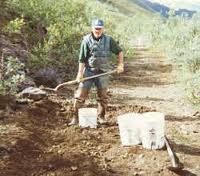 Coretta is a striking 85-year-old artist. As she enters a room, images of her as a young, startlingly beautiful woman trail her like ethereal mists. Her blue eyes take one in from a perfect face and I feel like a mouse scrutinized by an eagle. Her husband Glenn, is a commercial artist and they have shown me pictures of his artistic product designs for major companies, most of them from the 1960’s. They shared these pictures to show me they are legitimate. Luckily, they seemed to like me.
Coretta offered to design a journal for our use. The journals would be given to patients or family members who would like to record their thoughts. The journal would have poetic prompters to help them visualize things to say. Coretta has written short haiku poems to be incorporated into the sides of the pages, giving the journal a professional quality. She and I corroborated often about how to distribute the journal, types of patients and methods of discovering how the journals were utilized.
As we worked together, Coretta told me in her breathy voice that she had gone to another agency and was initially welcomed with enthusiasm. She was going to paint a flowering vine for their lobby that would be filled with pictures of the clients served. She mused that it would be not only a lovely welcoming addition, but also a therapeutic exercise for the participants. Trouble is, as with many short-staffed, overworked organizations, no one at that agency could take the time to help her get started.
Frankly, if I let myself say it, I’m also too busy for the fluffy projects. But, there was something about those blue eyes that compelled me to scratch out the time from somewhere. And besides, I have gotten a bit self-serving. I need breaks from all the minutiae that weigh me down. Coretta let me float for just a bit.
My plan was to ask some very crafty volunteers to put these journals together and to begin by distributing them to select patients. Over the years, I’ve found that asking for permission to do a project takes forever, so by experimenting and proving that a project works, it makes it easier to sell. Anyway, we finalized her designs, complete with a Coretta sketch of a rose adorning the cover.
She stopped in the other day to talk to me. As we were chatting, she said, “I have been thinking about this whole project. I’m certain that other organizations would like to have it for their clients too, so I think that I would eventually like to market it. That is, after we’ve seen how it is received here and after some modifications.”
Boom, the eagle swooped in and ate me as I was nibbling some cheese. “Oh, how interesting,” I managed. Now, at that point, my brain started shrieking at me, “What!!!! Are you kidding???” And as I let those initial thoughts burst and flutter like confetti in my mind, I looked back into those blues and said, “Coretta, that is your prerogative. This is your work, your ideas, your poetry and art. You own that.”
She nodded with an artist’s smile and I continued, “if you want to do that, then we absolutely can’t use it here and stamp our logo on it. It is yours and you are entitled to keep it and protect it. But I cannot in good faith continue with this project.”
She studied me for a bit and said, “yes, well, I appreciate your honesty.” I could feel her talons caressing me, the me that spent precious time helping her. “I appreciate all your hard work and have thoroughly enjoyed learning about your organization.”
I didn’t say anything to anyone, especially anyone (well, everyone if you must know) who has been making fun of me for wasting my time with this pompous (their words) lady. Honestly, they wanted nothing to do with her.
See, here’s where I sometimes get myself into big trouble and then sometimes I uncover a golden volunteer nugget. I have to do more than just get to know people who want to volunteer. I have this weird side that feels like I’m digging for the next great volunteer. I’ll bet you have a side like that too.
While I’m not sure what will happen, because Coretta may rethink and decide to give her works to us, but really, I doubt that will happen. Did I waste my time with her and did she just want to use me to develop a product to sell? Maybe, but I’m choosing to think not. I’m choosing to think that she had good intentions, at least at the start. And we all know that there are plenty of volunteers with good intentions that don’t continue for some reason. We can only move on.
So, the question becomes, do we continue to dig, oftentimes alone for those volunteer nuggets even though we occasionally come up empty-handed? Until the day volunteer nuggets rain from the sky, I guess we’ll have to.
-Meridian -
What Do Our Desks Say About Us?
 One of the steady stream of little articles that I just got via my work email (you know all the “stuff” you get, especially from volunteers-old age funnies, dog pictures, IQ tests, heartwarming stories, riddles, cartoons, even the occasional inappropriate joke) was an article on desks. What does your desk say about you? Hmmmmmm. Messy? Maybe you’re too disorganized. Inspirational quotes? Maybe you’re a bit neurotic. Personal odd objects? Maybe you’re a kook. Occasional protein bar wrappers? Maybe you’re a slob. Old mismatched furniture? Maybe you don’t care.
Now here’s the best part. Any of the above can keep you from being taken seriously and being promoted.
Well.
If you were to look at my desk, right now, here’s what you would see:
Two nice chairs for volunteers to sit down on. My chair is ripped. Clutters of papers everywhere. I’m working on all of them and will get to them sometime today, I hope. A few inspirational sayings in frames. For the volunteers of course. Several open calendars. Each one is color coded for different areas and projects. Post it notes in purple. The purple ones were on sale. A really old phone. I’m used to it and it has several lines, picking capabilities and sometimes the speaker phone works. My desktop. Not bad, really. My business cards on a funky doggie card holder given to me by a volunteer. They are at the corner because I knock them over constantly.
Under my desk is: My laptop (Trying to get a newer version). My camera (it actually is now stuck on playback, mainly because it has been dropped multiple times, so I pretty much use my I phone for pictures). A manual for volunteer orientation (I’m constantly scribbling in it as I want to “update” orientation so that it is fresh). A tote bag with pens, papers, brochures, business cards (for that last-minute invite). A pile of papers that don’t fit on the desk (seriously, desks are not big enough). An old, old Rolodex (do you even know what that is?-ok, it’s sentimental, left over from no data base days).
Now, as you scan all this, you may notice on or about the desk and walls:
a small worry doll from Nicaragua, a gift from a volunteer who thinks I worry too much
a dusty dolphin screen saver, a gift from a volunteer who loves anything sea related
a tiny carved coconut monkey, a gift from a patient who carved-he was one of my favorites
a Gemini key chain, a gift from a volunteer whose wife shared my birthday
a watercolor of a… well, I’m not sure what it is but it was a gift from a volunteer’s daughter who loves to paint
a trio of small glass elephants from a volunteer who thinks I forget too many things
a hand painted rock paper weight from a volunteer-flowers adorn one side, on the flip side is a finger flipping me off-our joke
a mug that says, “I survived volunteering”-inside joke from a volunteer
a beautiful inlaid box from India-gift from a volunteer from India who was incredibly inspirational
a picture of a Cocker Spaniel-a volunteer’s beloved dog that died
a “soul saver” pack-a joke gift from my stand-up comedian volunteer-it’s guaranteed to save my soul she says
a Murano glass paperweight from Italy, a gift from a world traveling volunteer-I live vicariously through him a lot
an engraved shell casing from a, well I’m not sure which rifle -a gift from a veterans group who is now volunteering
a USB aromatherapy plug-in, guaranteed to make you calm-gift from an office volunteer-is she trying to say something?If you look into my top desk drawer you will find all the items from volunteers who have died or left, some office supplies, my favorite stapler (the kind that looks like pruning shears). Maybe I’m an office hoarder, I don’t know. And maybe that volunteer sent me that article because he was trying to tell me something. And maybe, yes, I’m a bit neurotic (hey, I’ve got lots on my mind), a tad kooky (Ok, so I sometimes just burst into maniacal laughter), and a great deal disorganized (hey, I can find that form for changing a volunteer’s address-just give me a minute).
Well, maybe I’ll not get that promotion or be looked at as someone going places. Maybe my work space looks like I’m not trying. Or maybe, just maybe, it looks like the daily workload of a volunteer manager.
-Meridian -
Excalibur, the Makin It Look Easy Sword
 Those words, “make it look easy.” Are they a compliment, or a curse? In the dictionary of English phrases, is there a picture of a volunteer manager next to the phrase, ” but you make it look easy”? How do you respond to that-a smile, a shrug, a muttered, “gee that’s what I’ve always wanted to hear?” Is making it look easy a lethal double-edged sword? How do you wield such a mighty weapon?
Rhonda is a volunteer coordinator whose organization went through some major revamping and as they looked for ways to cut costs, they called in a professional consultant. This consultant combed through the status quo, looking at each aspect of the organization’s ability to do more with less. When the consultant, Eric, spent a four hour stint with Rhonda, he shook his head. “I can’t believe you do all this in these conditions,” he said. “you really make it look easy from the notes I’ve been given.”
His notes consisted of statistics about the volunteer department. Rhonda supervizes 118 volunteers, who pretty much run a thrift store six days a week. The volunteers also sit at fairs, stuff envelopes, fill in for a lunching receptionist, file reports and make calls. Rhonda’s phone rings non-stop. Volunteers filter in and out of her office and she pretty much oversees them all. Rhonda sometimes fills in for volunteers when they call out sick. She is swamped. After four hours, Eric told her that she was one of the busiest staff members in her organization. “But,” he mused, “no one knows how hard you work.”
Rhonda did not know how to respond. Frankly, she was too overwhelmed to spend much time thinking about how to use her double edged sword.Although Rhonda would like more help, she struggles with how to present her challenges. “Do I talk about the difficulties? Will I harm the image of the volunteers if I honestly speak about those that are a challenge? If I complain, will they just do away with volunteers all together? Do I just burn myself out and let the next volunteer coordinator figure it out?”
As volunteer managers work hard behind the scenes and let the praise go to the volunteers, do we not cut ourselves on the back swing with our mighty sword? By making it look so easy, what are we doing to our profession? Are we contributing to the perception that managing volunteers is no more than hosting tea parties and chatting with willing participants?
Rhonda is too tired to do much about her situation. I suspect she is not alone. Hard, hard work can lead to exhaustion and eventually burn-out. Our jobs are rewarding, complex and difficult. We should not be afraid to admit this.
Otherwise, our arms will be too tired to lift that hulking double edged sword.
-Meridian










 volunteerplaintalk