

I am profoundly grateful that we, volunteer managers are finding one another. Together, we are shaping volunteerism for a better future. Happy Thanksgiving to all.
-Meridian
I am profoundly grateful that we, volunteer managers are finding one another. Together, we are shaping volunteerism for a better future. Happy Thanksgiving to all.
-Meridian
Volunteer Plain Talk Podcast episode 3 features an interview with Dr. Jesse Bolinger, author of the new book, “Calling All Volunteers which is based on his research into volunteer motivations and needs.” We discuss modern volunteer recruitment, the Happiness project, how generation Alpha will eventually change volunteering, why millennials are being compared to the WWII generation and how mental health, work and education are tools to get to know our volunteers.
https://www.buzzsprout.com/605416/episodes/2120331-episode-3-interview-with-dr-jesse-bolinger
Dr. Bolinger can be contacted at his facebook page or at his linkedin page and is in the process of creating a project that encourages changes to volunteer management through conversations with organizational leadership.
Thanks for listening.
-Meridian.
How do we show the value our volunteer bring and all they contribute to making our organizations successful? This worksheet is meant to be a quick guide to help create a “volunteer equation” for calculating volunteer impact. By using an equation, we translate volunteer hours into departmental goals and objectives met and then further into organizational mission fulfilled.
Volunteer hours (VH) = Goals/Objectives met (GO) = mission fulfilled (M)
It is a deeper dive into volunteer value and contributions in addition to reporting volunteer hours and/or equivalent monetary value. It answers the “what and why” engaging volunteers is critical to mission success. The blog post, 5 Words that Might Untangle Volunteer Management describes the equation in depth.
The more we can show how volunteer impact advances departmental goals and objectives, the more we show volunteer value. And by diving further into meeting mission goals, we connect our volunteers, our volunteer programs and volunteer engagement to mission success.
-Meridian
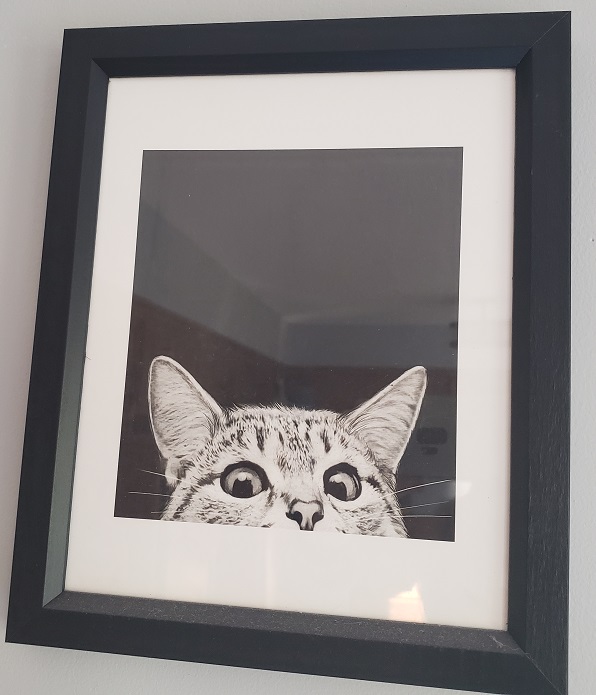

You would never think to put the Mona Lisa in an orange plastic frame, would you? Of course not, because frames should enhance a work of art, not detract from it. The right frame borders the image, complimenting the subject and showcasing the work. The right frame makes sense.
Volunteer added value is a complex and beautiful picture. The stories we share about our volunteers connecting with clients, serving our missions and advocating for our organizations are inspired, and meant to be viewed with appreciation. The value our volunteers bring needs the right frame.

However, without the proper frame, throwing out super positive phrases about our volunteers can be like this board. “Volunteers are selfless,”or “Volunteers give so much,” can be so broad and gooey that the meaning is lost. If every message about volunteers is so wonderful, so inspiring, so amazing, so terrific, the message becomes diluted and nothing is wonderful or inspiring anymore. It’s just noise without form. If we make volunteers seem like magic faeries that just rise from the garden and buzz on over to do good work, we diminish the effort they bring and the work we do to develop and ready them.
We have to be honest about volunteer management and its complexities. We need to share the challenges along with the feel-good stories. Volunteer synergy (those pure mission moments when a volunteer connects with a client or helps a staff member or solves a problem) does not occur by happenstance. Those moments are the result of a volunteer manager’s diligence, practice and experience. Synergy occurs because the volunteer manager vetted the volunteer, oriented the volunteer, matched the volunteer’s skills and needs to an assignment, and courageously stepped in to guide the volunteer on a successful path.

We, volunteer managers are the frame. We are the right frame, the best frame, the correct frame. Our attentiveness, our tenacity, our persistence, our determination, our sincerity and our resolve shape the volunteer experience. We surround our volunteers with the knowledge, tools and encouragement volunteers need to create a complex work of art. We “become” the frame each volunteer needs. For some volunteers, we are the ornate, gold frame and for others we are a simple black band receding into the background.
Without our guidance, volunteers are simply pictures taped to organizational walls. These haphazard pictures curl up; they fall off and they yellow. But, when we frame volunteer engagement and impact, we create an art gallery that has a flow, that makes sense, that is ordered and sustainable.
International volunteer managers day was yesterday (November 5). The theme for this year was Change the Tune. We talk about change all the time and I think we need to ask ourselves, “what exactly do we want to change?” How we engage volunteers? How we encourage, develop, inspire and mentor volunteers? How we drop everything to make sure volunteers are successful? How we put volunteering ahead of our own personal needs? We’ve got all that down.
I think what we need to do is to frame our critical role in volunteer engagement and impact. We need to stop allowing organizational leadership to think that engaging volunteers takes little effort. We need to stop allowing organizations to view volunteers as tools and not as complex human beings that require thoughtful management. We need to stop allowing organizational leadership to assume that volunteers don’t need support from every staff member. We need to stop allowing organizational leadership to plan volunteer involvement without our expert input. We need to stop allowing organizations to operate in an outdated normal and instead embrace the here and now by investing in the volunteer manager frame that surrounds volunteer programs.
We are a profession. We deserve recognition befitting our expertise, our hard work and our skills. No one will just magically give it to us. We must stop glossing over the work we put into developing volunteers (by vetting, onboarding, training, supporting, stepping in when necessary, sustaining and encouraging) who successfully support and further organizational missions.
In Rob Jackson’s latest post, he lays out real solutions that will move our profession forward. You can read Rob’s post here.
So, this International Volunteer Manager Day, the change I want to see is one in which we elevate our critical role and become the “frame” around vibrant, contributing volunteer teams.
We’re leaders of volunteers. We got this.
Happy International Volunteer Manager Day to all of you frames out there.
-Meridian

What costume should we wear this year? My worn-out magician or wizard costume is just so yesterday and last year the executive assistant said to me, “you think you have to perform magic in finding volunteers, ha, try hiding the donation report from our CEO when donations are down.” Hmmm, maybe one of these costumes might work.

donor fatigue: dress in pajamas and randomly pin on a few dollar bills. Yawn and mutter, “so what exactly did you do with the last $300 I gave?” Make it more realistic by pinning on a volunteer name tag and say, “you didn’t even thank me when I came in last week and put 453 packets together, but you were quick to send me 6 email requests for the new funds campaign.”

background check: wear black pants, a night sky t-shirt and a huge red check mark. Say things like, “I found out about your speeding tickets in college,” or, “are you sorry for shoplifting when you were a kid?” Sneak up behind people and whisper, “I know everything about you….muahahaha.”

budget cuts: cut out financial statements, pin them to a t-shirt and slash through them with red ink. For more realism, carry a tray of half-eaten sandwiches and dried-up carrot sticks. Say things like, “because of drastic budget cuts, our volunteer luncheon will feature left-over food from board meetings. I’m not bitter; I can re-snack with the best of them.”

team building exercise: wear exercise clothes and tape pictures of buildings to your outfit. Write the names of the departments on each building but be sure to choose a giant castle for fund-raising and place it on top of your head. Do weird things, like don a blindfold and snort like a pig while calling out, “where’s my pig partner,” or loudly share a humiliating experience, or randomly fall backwards and yell, “hey, why didn’t anyone catch me, you call this a team?”

time off: dress in your normal office clothes, carry your phone, a pad of post-it notes and a spreadsheet. Say things like, “I’m having a great time at my son’s soccer game, but sure, I can answer the volunteer’s question, put her on,” or “wow, the Grand Canyon is truly spectacular this time of year, I’ll just get off the donkey and call for a replacement volunteer from here!”

the volunteer luncheon: tape balloons and streamers to the front of your outfit. Add in a banner that reads, “we can’t function without our volunteers,” On your back, tape a sign that says, “the rest of the year,” and leave your outfit blank. Or, if you’re feeling really snarky, tape little quotes to your back like, “send a volunteer to the store, that’s why they’re here,” and “no, no a volunteer can’t do that, they’re not qualified!”
Maybe I’ll just make a large sign that says “appreciated” and I’ll stand under it. What are you going to go as?
-Meridian
What can we learn from a volunteer turned activist turned founder of her own non-profit organization? Turns out, a heck of a lot. Listen in as Elizabeth Robinson, founder of Community Cats of Palm Coast shares insights on effective social media, creating roles that engage volunteers, and the problem with silos. Please visit Community Cats of Palm Coast, give them a like and check out their interactive posts that get the community involved.
https://www.facebook.com/communitycatsofpalmcoast/
Thanks for listening!
-Meridian


Oh, the feels, right? We’re swimming in them. We empathize, listen and experience the roller coaster emotions of our volunteers, our clients and our staff all the while living our own emotion-filled lives. The last thing we need is a ride full of destructive emotions.
Have you experienced these passive-aggressive behaviors?
How do we get off this ride? I finally got tired of a few passive aggressive staff who routinely dragged me onto their cart of fun because their manipulative behavior left me tense and angry and unable to empathize with my volunteers. So, I refused to ride along by using these 5 ways to combat passive-aggressive behavior.
Check your emotions and ask why. Why are some folks passive-aggressive? To deflect feelings of inadequacy? To make you act out their anger? To manipulate? Remember, a snarky comment is their way to make you defensive. Don’t go there. Be neutral and professional. Don’t give the passive-aggressive person satisfaction and they will seek other prey. Instead, calmly ask, “why did you say volunteer Ann is always late, and then you rolled your eyes. If this is a problem, I need to know so I can address it.”
Don’t strike back. Emails are like theme parks for passive-aggressive people. If an obviously unreasonable email request for volunteers is copied to department heads and meant to bait you, reply with a cool, unruffled, “Thank you for your confidence in the volunteer department. It is our goal to provide the very best volunteers for each request and to treat our clients with the respect and professional service they deserve. I will keep you posted on our progress.” The passive aggressive staff member is goading you into complaining that the request is unreasonable, so get out of line for that ride.
Prove it. When a staff member complains, “it always takes forever to get a volunteer,” reply with, “Please give me examples of requests that were not met on time. Without specifics, I really cannot make improvements and it is my job to continually improve volunteer services. So, what are those examples?” Broad statements without factual backup are g-force coasters to passive aggressive staff. Make them give you examples you can work with. Arm yourself with your Excalibur Sword-like phrase and wield it with might such as, “Our volunteer program is committed to our mission, therefore….”
Deflect unwarranted blame in a professional way. Called out in a meeting because a staff member did not get something done and they want to blame lack of volunteers? Ugh, the roller coaster that plunges into a dark tunnel. Pick the right moment to stand up and say, “With a day’s notice, we provided 3 outstanding volunteers. I would like to take this opportunity to reiterate that volunteer services takes pride in supplying the right volunteers for all requests. The sooner we get a request, the more time we have to engage our volunteers. Last minute requests will be treated with high importance, but often we have more than one last minute request.” Don’t get into finger-pointing but take the opportunity to educate staff on how to request volunteers.
Counter with the positive. Negativity is the passive-aggressive track of choice so counter with positive stats, stories and mission supporting evidence. Flip the narrative; say, “did you know that last month our volunteers donated a staggering 850 hours which is more than having an extra 5 full time staff?” Or, “last week alone, our volunteers served 300 meals, impacting 80 families in our community?” Or, “because our 4 volunteers came in last minute to help with the event, our mission was able to reach 200 influential community leaders.”
While roller coasters are meant to be fun, a passive-aggressive roller coaster is meant to derail your positive work. Don’t get on one.
-Meridian
this post is an update from 5 ways to get off the passive aggressive roller coaster.
Difficult conversations with volunteers is one of our volunteer management things. We are all faced with having to “talk to” a volunteer at some point and we all hate the thought of “reprimanding” that volunteer. So, based on last year’s post, Difficult Conversations With Staff or Volunteers, I’ve condensed the points into a booklet you can download and keep for reference or perhaps you just want a reminder that you are not alone. If we, leaders of volunteers meet challenges head-on, we can turn them into opportunities. Oh, there is also a companion conversation worksheet to help you prepare. I’ve always found that the act of writing down your thoughts and affirmations helps to cement your preparation.

Difficult Conversations With Volunteers

Difficult Conversation Worksheet
I’ve added ‘download volunteerplaintalk tools’ to the above menu.
Our challenges can become our greatest opportunities.
-Meridian

Volunteer managers: We are a sick bunch, aren’t we? We cry during the movie “Ghostbusters” because we feel bad for the ghosts. We stop and get out of our car to shooo a squirrel across the street even though he looks at us like, “hey, I’m walking here, crazy human.” We smile through pain and wonder how we can be better. Sigh. But no, I’m not suggesting using toilet paper to hastily scribble a “things to do list” with that pen tucked behind your ear while you’re..well you get the idea.
Jeez Louise, what extra work can help then, if I don’t mean staying late and spot checking those packets the new volunteer, Kira put together, because, frankly you don’t trust that she did them perfectly and mainly because you’re so tired of hearing that little huff sound from the events planner when she speaks of volunteers?
Burnout can occur when we feel like we’re not in control. Requests are pouring in from all departments. Volunteers need additional training. Recruitment has been spotty lately. There’s that volunteer that “needs a good talking to,” according to the director of operations. It’s overwhelming.
Some things we can ignore or put on the back burner, but they don’t go away, not completely. No, they are still there. That stuff rattles around in our heads along with things like forgetting to give back the dollar a staff member hastily gave you the day when the snack machine ate your money and you started pounding the life out of it.
So why take on more? The key here is to infuse yourself with an emotion other than the one that is crushing your spirit. The key is to be in control of something, something that lifts you up, that sparks your creativity, that gives you satisfaction. Something you own.
I’m convinced that one of the main reasons I stayed in this profession so long was the freedom to create something (and honestly, nobody gave me that freedom, I just took it). For me, volunteer management sometimes felt like trudging down a long, dark alleyway that eventually opened up onto a fertile plot of ground. I could see the fruits of possibilities taking root there: The trees, the flowers, and heck, sometimes the giant fountain of playful dolphins spurting water in all colors (if I had a really ambitious project in mind).
Creating a project that reflects your creativity, your passion, your idea of wonder injects hope into your veins. Just go to Disney World with a small child and look into their face. Magic does exist. We just need to find it in something we can call our own. We need to find it when we’re frustrated we can’t place highly skilled volunteers because there’s no pre-designed role for them. We need to find it when we see the possibilities our volunteers can offer our clients to make their lives better. We need to find it when our volunteers want to do more. We need to find it when the daily grind wears us down.
I recall the rush of emotions at the implementation of new projects. I felt terror, anxiety and doubt. But more than anything, I was exhilarated. And that exhilaration allowed me to view all my other duties in a different light. The mundane or challenging duties lost their power to crush me. And in my new mindset, I was able to find creative solutions to challenges that previously wore me down.
Successful projects you’ve created give you a new perspective, one in which you are a capable leader. Instead of waiting for some miracle day when everyone recognizes all your hard work, take it upon yourself to show how capable you are. How innovative you are. How committed and talented you are. Don’t wait for overwhelmed staff to give you this boost. Give it to yourself.
Because feeling like we’re not in control leads to burnout. All those mundane duties rattling around in our heads drag us down. But you know what else drags us down? Knowing, and I mean really knowing that a project, or a new way of engaging volunteers would work wondrously and then not doing anything about it. That’s the most soul crushing of all.
Sometimes, (not always-I’ve had a few projects fall flat but I learned from them and started another, better one) a new project, one you own with your passionate heart and creative soul can help put that wonderment back into your life.
It’s ironic. More work = less burnout? Our best hope for encouragement = us?
Yeah, we may be a sick bunch. Wired a little differently. We lift up everyone else. Let’s lift up ourselves. Let’s take control.
-Meridian

Welcome to the Volunteer Plain Talk podcast! In this first episode, Mark W. Smith, CVA discusses working with challenging volunteers, professional credentialing, innovative ways to show volunteer value, roles for retired volunteers and why we need to “eat the frog” on Monday morning. A big thank you to Mark for your wisdom!
Volunteer Plain Talk podcast on Buzzsprout.
VolunteerPlainTalk podcast on Stitcher
VolunteerPlainTalk podcast on Spotify
Would love it if you would consider subscribing. As new outlets are added, I will include the links. Currently, the podcast is live on Buzzsprout, Spotify and Stitcher. Apple and Google Podcasts are in the works. Please let me know what you think, what you would like to hear discussed, etc. If you would like to be a guest, I’d love to hear from you. The contact form can be found in the above menu.
Let’s talk more with about our profession and reach out to one another. I hope you get something helpful from the podcast. If nothing else, know that you are not alone in your challenges and hopes for the future.
-Meridian
 volunteerplaintalk