Category: Volunteer

  • Michael

    Michael

    Do our volunteers connect us to those unexpected moments, the ones that last?

    Greg had volunteered to help Roy, the brother of one of our hospice patients. Roy’s brother had died and as the only living relative, it was Roy’s job to empty out his brother’s house. It was a hot summer afternoon and I left work early to stop by. “Can you use some help?” I asked.  Greg wiped the sweat from his face and said, “yes.”

    Some of the household items went to our thrift store, the bigger ones were given to neighbors and the rest were placed at the curb for trash pickup. As I was carrying a box to the street, I noticed Roy placing a plastic blow mold snowman in the pile. It must have been the way I studied the old Christmas decoration, because Roy looked at me and said, “would you like to have it?’

    I touched the snowman’s hat, the jaunty band of yellow circling the snow-covered brim. “I would if you don’t mind.”

    “My brother Michael loved Christmas,” Roy said wistfully and looked around at the remnants of his brother’s life scattered in so many directions.

    I lifted the snowman, taking in his smile. “If it is all right with you,” I said, “I’m going to name him Michael.”

    Roy nodded. The cars zipped by us, the garbage bags flapping in their wake.

    “And every year, I will bring him out, light him and I will say, Merry Christmas, Michael. Is that ok?”

    Roy put his hand on my shoulder. “I’d like that.” He touched the old plastic face, his fingers tracing a farewell of sorts. I carried the snowman to my car.

    **********

    Every holiday season, for more than 10 years now, I’ve brought out the snowman with the jaunty hat and lit him up.

    Merry Christmas Michael.

    -Meridian

    Have a very happy New Year.

  • Non Profit Executive Directors: What to Gift Your Volunteer Manager This Year

    What to Gift Your Volunteer Manager This Year

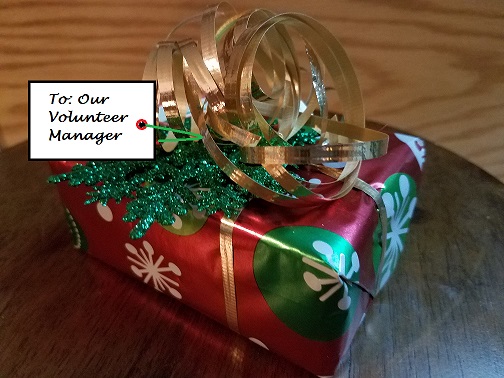
    “What can I get my non-profit staff, especially that mysterious volunteer manager, who seems to run around a lot?”  You, my dear ED or CEO have come to the right place.

    Let me help you gift your hard working volunteer manager this year with something he or she will actually treasure.

    Forget that inflatable unicorn horn you wear on your head. Forget that sweater that depicts Santa in a magician’s hat. Forget that self help book on “How to Field Criticism and Still Feel Validated.”

    Forget two extra weeks vacation, uh meh. No. Give a gift that really resonates with your VM. And, the best part is, it doesn’t cost you a thing, only a sheet of paper, a printer and a pair of scissors.  And, as a bonus, in typical cooperative volunteer manager style, I’ll even throw in the template!

    Here are my three top picks for a Volunteer Manager Holiday gift:

    Get Out of Event Free Card:

    Get out of event free coupon

    Budget Increase Steal of Choice card:

    Budget Increase Steal of Choice

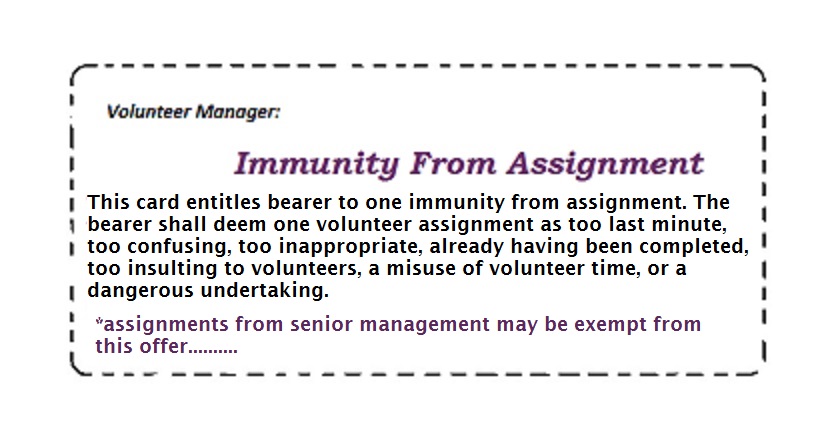
    Immunity from Assignment Card:

    immunity from assignment coupon

    Well Executive Directors, there you have it, the top three gift coupons for your volunteer manager. A few moments, a pair of scissors and you are done shopping!

    And, oh, volunteer managers? Feel free to slip these under the door of your executive director.

    Unless you really want that coffee mug that says, “World’s Greatest Office Worker.”

    -Meridian

  • The Volunteer Ripple Effect


    I’m convinced. We, Leaders of Volunteers (#LOVols) hold in our hands more power to affect positive change than we can even imagine.

    We have the opportunity to impact the world beyond filling tasks and adding to our volunteer base. The intuitive feelings within each of us are spot on: There’s so much more going on than our excel spreadsheets show.

    I remember long ago struggling to find volunteers who could be with clients while loved ones attended church or synagogue or temple or mosque. I would look for volunteers of that same faith and hoped that they would be willing to give up their own attendance to help someone in need. It was the way it had always been done and it was frankly, exhausting.

    Then one day, a volunteer stepped forward. Hannah offered to sit with Christian clients on a Sunday morning. (I’d love to take credit for thinking this solution up, but, no, it came from this wonderful, selfless volunteer.) Bam! The light went on.

    I feared that mixing faiths (or cultures, or beliefs) would be a challenge in itself, but you know what? (Of course you know what comes next) It ended up uniting people in mutual respect and a desire to understand one another. The mere act of reaching across a cultural or spiritual divide created its own sense of wonder.

    And here’s the thing. For the volunteers, it was never about, “oh, I’m so enlightened that I want to transcend these differences.” No, it was, “you know what? I’m free on a Sunday morning and you need someone, so what could be a better fit?”

    The deep meaningful by-products of volunteering are seldom the initial goals. They just naturally evolve because the volunteer ripple brings out the best in everyone: Clients, families, volunteers, volunteer managers, staff, neighbors, community, everyone.

    Think about that. Volunteer programs impact society in rippling positive ways beyond the delivering of meals, or escorting a tour group or passing out information. Our programs share love. Our programs open the doors for unity, connection and understanding to naturally take hold, and not just during holidays.

    We often witness a profound change in people. We glimpse moments of powerful interconnection through the simplest of assignments. We stand, watching that small pebble create ripples of inspiring stories.

    As you are running around this holiday season, scrambling to fill tasks, stop for a moment and think about the societal change you are helping to bring about. Because you value the innate worth of each human being and believe in their ability to transcend, you are spreading that change like a ripple in a vast sea.

    Volunteerism is a rippling movement.

    And leaders of volunteers are tossing the pebble into the water.

    -Meridian

  • Thank You To The Volunteer Who Lied

    Thank You To The Volunteer Who Lied

    Does this sound like you? Thank you to of all the wonderful volunteers who have enriched my soul and believed in my abilities. Ahhh, being thankful, it’s what we volunteer managers do so well.

    But maybe we can also thank the volunteers who taught us lessons and built our characters. You know the ones. Their memories are seared into your psyche because you dropped your phone when you learned a trusted volunteer called a client “dumbo.”  You slunk back to your office when the CEO told you a volunteer tried to sell something to a client’s son. You stayed silent in meetings after a volunteer wrote that wildly incorrect letter to the editor.

    They say that the hard lessons are the ones that stick. Yup, they are the lessons that keep you up at night, and make your hair go grey. (not the pretty kind either)

    But, think about all the clients saved from unscrupulous volunteers because you learned a hard lesson. Think about all the necessary precautions you take because you were put through the wringer. Think about the watchful eye you developed because you were caught unaware.

    In spite of intention, these volunteers give us the gift of experience.

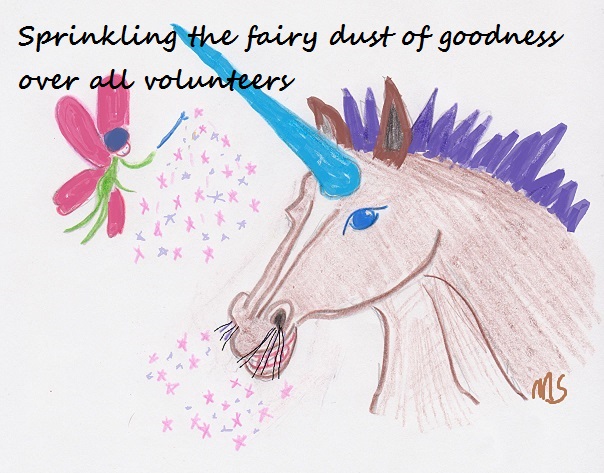
    I remember many years ago, Jacob, who lied to my face. I believed him, not because he was so charming and convincing, but because I wanted to believe him. I believed in the romantic notion that all people could see the light of volunteering and could set aside their personal agendas for the greater good. I dreamed of that world in which unicorns and faeries flitted about, sprinkling the magic dust of goodness upon all.

    Jacob showed me that I had to be realistic if I truly wanted to do right by our clients. He showed me that healthy watchfulness did not diminish my job, but rather elevated it to a higher level of purposefulness.

    You’ve been through this. We struggle to showcase all the carefully measured thought and actions required to match volunteers to clients and programs.  Unicorns and faeries are lovely, but we live in the real world. In the real world, placing volunteers with vulnerable clients takes discerning judgement, careful pairing and keen watchfulness. 

    Luckily I was watchful enough to remove Jacob before any harm was done. So, I thank him and others for giving me a discerning nature, for strengthening my resolve to do right and for teaching me that compassion takes the courage to be a sentry.

    Jacob most likely never intended to teach me anything.

    But he never intended to embrace the mission either.

    -Meridian

    Volunteer Manager Job Update:  Should I Laugh or Cry?

    A couple of months ago, I posted some volunteer manager wanted ads  and most of us pretty much agreed that they were lacking in inspiration. Well, thank you to Laura from Maine for sharing this volunteer coordinator ad with us.  I have not changed one word, but only added (my comments).

    Wanted: Kitchen/Volunteer Coordinator:

    The Kitchen Coordinator/Volunteer Coordinator is a very hands-on position that requires strong leadership skills, responsibility, and enthusiasm.

    Job responsibilities include:

    • Designing healthy menus (uh, registered dietitians actually do this so shouldn’t the job read Kitchen/Dietitian/Volunteer Coordinator?) 
    • Training and supervising a large volunteer crew of cooks and custodians (wait, now the job is Kitchen/Dietitian/Custodian/Volunteer Coordinator)
    • Working with stores and volunteers to manage daily delivery of food donations (whoa, now it’s Kitchen/Dietitian/Custodian/Delivery Manager/Volunteer Coordinator)
    • Recording menus, inventory, and volunteer timesheets (meh)
    • Helping clients find housing and apply for jobs (So, ta da, we have a Kitchen/Dietitian/Custodian/Delivery Manager/Housing Expert/Job Placement/Volunteer Coordinator)

    (I’m going to cry now over a piece of pumpkin pie).

    Happy Thanksgiving, I hope it is wonderful.


  • What’s So Darned ‘Daring’ About Being Different?

    Whats so darned daring about being different

    How does the statement, “Dare to be Different” make you feel? Does it make you want to dye your hair pink and wear Star Wars Jedi gear to work? Do you immediately want to throw away all your volunteer stats and mundane ways of recruiting volunteers?

    Consider these two quotes about being different:

    “I want to be different. If everyone is wearing black, I want to be wearing red.” …Maria Sharapova

    “Be daring, be different, be impractical, be anything that will assert integrity of purpose and imaginative vision against the play-it-safers, the creatures of the commonplace, the slaves of the ordinary.” …Cecil Beaton

    In the first quote, Maria Sharapova talks about the inner pleasure at being different for just being different. In the second quote, Cecil Beaton puts a purpose, an integrity, and an ethic to being different.

    How do you view being different? Does it conjure up images of selfishness? Does it impose the stress of wild creativity for no good reason other than to stand out?

    Volunteer managers don’t have to dare to be different, because we already are. What unique skills and abilities have you acquired due to managing volunteers? What principles have you discovered while leading volunteer programs? What undeniable truths did you learn from engaging with volunteers?

    The tenets embedded deep in our souls are the things that make us different and it is not daring to hold fast to who we are. It’s simply the right thing to do.

    How are we, volunteer managers so darned different?

    • We are highly aware. We consider all that is around us.
    • We have honed communication into an art form. We are communication hubs and can break information down to clear, impacting messages.
    • We are Visionistas. We develop talents, skills and passions, molding volunteer engagement to benefit both the receiver and the recipient.

    But, along with these stand out qualities, there may be a few things differentiating us that we can work on. For instance,

    • We are selfless which may lead to us shrinking into the background and hiding our skill set.
    • We have a coaching mindset which may lead to our contributions being overlooked and therefore, organizations miss out on implementing our methods in other areas that would benefit from our expertise.
    • ‘We are humble, which may lead to being viewed as lacking in confidence. A perceived lack of confidence falsely implies that you have no confidence in your work. 

    Being “different” means we have a unique space in our organizations, one that carries responsibilities and opportunities, not just for our volunteer programs, but for ourselves.

    The challenges we face are opportunities to showcase the fine tuned skills and talents that make us different. Keeping those talents and skills hidden in the background does a disservice to our volunteers and our programs. It is time for volunteer managers to step out onto the non-profit stage and show everyone our amazing contributions and the ways we achieve those contributions. That’s not daring. That’s what’s needed.

    We are different because what we do matters.

    How we do it matters.

    We matter.

    So, do we, volunteer managers dare to be different? No, because we already own it.

    Now we have to dare to show it.

    -Meridian

  • I Speak Volunteer. You?

    I Speak Volunteer You


    Are volunteer managers world travelers? Do we venture into exotic lands where the inhabitants speak a foreign language and do not understand the words we speak?

    If you’ve ever stood up in a staff meeting to give a presentation on volunteering and the attendees glazed over while checking their devices, you know what I mean. They don’t understand the odd, volunteer language coming out of our mouths.

    For example, what are common volunteer management phrases and typical staff responses:

    “Our selfless volunteers who are caring and compassionate.”  HUH? So what? I’m caring and compassionate too, but that doesn’t get the mountains of work done.

    “Our volunteers gave 6,000 hours last month making our clients lives better.” WHAT? Who gave $6,000 and why wasn’t I informed? I’m in charge of donations here! The nerve!

    “Volunteers give from their heart.” Yeah, that’s nice but I give from my heart too and I give my blood, sweat and tears besides. Who has time for this fluff?

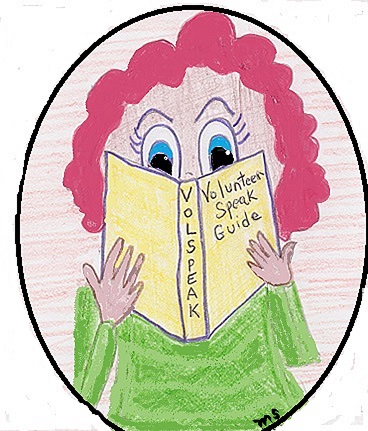
    Broad statements and dry statistics are the twins of tune-out. So, do stats and heart-warming stories have any place at all? Yes, of course they do, but what is the impact of these stats and stories, other than the feel-goodery of volunteerspeak?

    As you step onto the stage for your moment to talk about volunteer services, think about your elevator pitch. Does my audience speak volunteer? How do I get their attention? And, most importantly, can I speak to them in their own language so that they understand?

    Let’s break this down:

    In volunteerspeak, we focus on our volunteer’s selflessness as in,  “One of our volunteers, Dave, gave up tickets to a sold out play to spend two extra hours with an upset client. Now that’s above and beyond. ” Nice, but well, this has no bearing on me.

    Instead, if we retell this story in a language our target audience speaks, and we focus on impact it becomes, “volunteer Dave stayed two extra hours, allowing our social worker, Alexis, to fully focus on her caregiver assessment while he engaged the upset client. This cut Alexis’ time in that home by half which gave her two more hours to get her work done.” What? Extra time? I’m listening.

    Forcing our audiences to understand ‘volunteerspeak‘ is a burden on them. Instead, if we want our voices heard, we need to learn to speak their language.

    What questions can help us find the common tongue?

    • What, at this moment is the most pressing challenge facing our organization? Time? Marketing? Money? Lack of market share? Competition? Complaints? Auditing? How can we craft our stories and stats into the ways volunteers help in addressing these specific challenges? For example, instead of talking in general terms of how volunteers support the mission, gather concrete examples of volunteers who donate money, in-kind goods and influence their neighbors to give. 
    • What departments are stretched, overworked and leaned on? In what measurable concrete terms do volunteers alleviate the load on these departments? For example, instead of pointing to volunteer hours given, flip it and speak to the amount of hours saved by staff.
    • What are some of the current organizational goals? Expansion? Partnerships? Social Media presence? National recognition? How are new volunteer programs leading the way in achieving these goals? For example, instead of pointing to a new program that will bring in more volunteers, show how the innovative program will more quickly lead to a specific goal.
    • What methods speak to my organization? Gathering stats? Big picture thinking? Connecting dots? Awards? How can I rework my presentations using these methods to show volunteer impact? For example, instead of equating volunteer hours to dollars saved, speak to examples of volunteers as extensions of departments and the work produced. Impact stats vs. hour stats.

    We can continue to praise volunteer goodness until we are hoarse. But if we don’t speak in the terms and language understood by our organizations, CEO’s, department heads and staff, it will fall on deaf ears.

    We can’t expect others to translate volunteerspeak. We must adapt the common tongue in order to show true, measurable volunteer impact.

    You know, because of volunteer involvement, we frequently travel to all corners of our organizations.  It really helps to speak the language.

    -Meridian


  • The Volunteer Investor: Is It Their Time or Something More?

    The Volunteer Investor Is It Time or Something More

    Time=Money. We all say it and that’s why we call volunteers “time donors.” They donate their time, and of course, skills, expertise, talents etc. But is that what they really are? Donors? Maybe there’s a more descriptive word for our volunteers. And what is the difference between the terms donate and invest anyway?

    donate: to present as a gift, grant, or contribution

    invest: to use, give, or devote (money, time) as for a purpose or to achieve something:

    Hmmmm, there’s a subtle, but profound difference in the two definitions.

    Volunteers don’t just show up, give a few hours and walk away. But outdated thinking categorizes them in this way. Doesn’t it feel like investing is closer to what volunteers do? Maybe we should start to rethink this whole time donor idea.

    Let’s take this further and examine investors. Investors invest money, right? But why? Why do they invest money in startups. non-profits, real estate, stock markets and other ventures. To make more money? Or is it more than that?

    Money is a currency. So what do investors really invest? Many things. They invest their future, hoping to be financially secure. They invest their dreams, hoping to achieve a goal. They invest their essence, hoping to give back. They invest their good name, hoping to attach to a cause that is worthy of their currency. They invest employee engagement, hoping to attract great employees. They invest their clout, hoping to further a cause that supports their vision.

    Investors invest so many intangibles, and their currency is money. They don’t give startups or organizations money, they devote their money in order to achieve a goal.

    How would this apply to volunteers?

    If money=currency, then time=currency.

    So if volunteers’ currency is time, then what exactly do they invest?

    They invest their humanity.  (the quality or condition of being human)

    Volunteer managers everywhere instinctively know this. We feel this every day when hearing and observing our volunteers’ intangibles. How do we feel this?

    • by the rewards volunteers tell us they personally feel
    • by their belief in us and our missions
    • by the passion exhibited by volunteers
    • by the camaraderie volunteers forge when bonding with like minded citizens
    • by the commitment volunteers show
    • by the enrichment volunteers gain by volunteering with us
    • by the sense of pride volunteers feel in their work
    • by the support and love they extend to us and other staff
    • by the initiative they take when doing word of mouth marketing in their communities
    • by the care they wrap around strangers in need
    • by the desire they exhibit in wanting us to grow and succeed
    • by the pure joy they infuse into our lives
    • by the amount of time they spend away from us helping us off the clock by recruiting, marketing. finding resources, donating, improving themselves, etc.

    Investors, according to experts, want the following things from the areas in which they invest:

    • they want to build a relationship
    • they want to partner
    • they want to invest in a “team”
    • they want to see a better future
    • they want to grow
    • they want to understand concepts

    Sounds an awful lot like the wants of our volunteers, doesn’t it? Calling volunteers “time donors” implies that they give time and walk away and are mostly disconnected from us. Nothing could be further from the truth.

    So, do volunteers donate their time or devote their time if devote implies giving for a purpose? I think devote wins hands down.

    For years and years, we have been trying to equate time donation with money donation. Time and money are simply two different types of currencies. And besides, we all know that volunteers do so much more than give their time to a task. They also raise money, find resources, advocate, broadcast, recruit, and market for us. They have chosen to invest a huge chunk of what makes them human in our missions. They have chosen to connect their precious humanity to us.

    Let’s stop constantly trying to shove volunteers into the round money hole by equating time spent with dollars saved, which isn’t a true measuring stick at all. Let’s erase the idea that volunteers have no more connection with us than a few hours here and there.

    time donors=minimal involvement

    volunteer investors=fully engaged

    Instead, let’s elevate the volunteers’ role as investors. Investors who devote their time, money, skills, talents, resources, passion, commitment, expertise, experience, knowledge, drive, zeal, perspective, and so much more to helping us further our causes.

    Humanity Investors.

    What could be more important than that?

    -Meridian

  • Sustainability and Volunteerism

    Sustainability and Volunteerism

    Retention: the continued possession, use, or control of something.

    Does that sound like the volunteerism you know? Not to me either. Maybe it’s time to rethink using the phrase “volunteer retention,” because it conjures up images of a stagnant retention pond. It also rhymes with detention which is closely related to imprisonment. (shudder)

    So, if we stop using that phrase, then do we have to rethink the old principles behind it such as:

    • make the volunteers feel welcomed
    • say thank you a lot
    • be mindful of their time

    What???? But wait. Just because these principles are fluffy and nice, it  doesn’t mean they are still the best for the changing landscape of volunteerism. Maybe it’s time to retire volunteer retention and instead, embrace volunteer sustainability. Ok, so swapping phrases does not make for innovation. I get that.

    What is the difference then, between retention and sustainability? Well, we’ve all been moving away from the strategies that worked with the WWII generation for some time now.  Why not update our verbiage to match the creative ideas being implemented out there by so many forward thinking visionaries. And while we are embracing these changes, let’s go even further.

    Volunteer Sustainability vs Volunteer Retention

    *This is where sustainability is radically different from volunteer retention. Sustainability, unlike retention is the ability to maintain a healthy balance while avoiding depletion.  Sustainability, as it is being applied to agriculture, economics and ecosystems implementation implies that there is a larger network to be considered. It implies that resources are not hoarded (retention) and depleted.

    What larger network is there to consider when engaging volunteers? The larger network is all volunteer organizations and individual volunteer satisfaction. With that in mind, let’s ask these questions:

    • Why do we keep volunteers on waiting lists if we cannot use them in a timely manner or cannot find roles for their passions?
    • Why do more volunteers equal better volunteer engagement even if some volunteers are in name only?
    • Why do we stuff volunteers with specialized skill sets and interests into non-matching roles? Or try to tweak a role just to keep the volunteer?
    • Why do we cling to volunteers as though they are 23 year old offspring and we just can’t bear to see them fly?
    • Why do we blame ourselves when volunteers leave?

    It is time we, volunteer managers, think of other volunteer managers, our volunteers, all volunteer opportunities, all clients in our area, and all missions as a network serving the greater good.

    It is time we viewed volunteerism as a regenerating community garden that needs tending by all of us so that the bounty of volunteers is nurtured, regrown and sustained.

    It is time we added collective volunteer engagement, sharing and referral to our innovative methods in order to cultivate volunteer sustainability.

    How many times does a volunteer get frustrated and drop out when they have to wait too long to share their time and skill? Or how many volunteers quit because their passion is not being fully utilized? How are we serving our communities when we deplete our volunteer base by clinging to the archaic notion of volunteer retention?

    Next time: We can be the leaders of a sustainable movement. (Innovation and Sustainable Volunteering)

    -Meridian

  • Hey Corporate Volunteers: How Great is Weeding?

    EPSON MFP image

    A recent article from Business News Daily cites a study finding that “89 percent of employees think organizations that sponsor volunteer activities offer a better overall working environment. In addition, 70 percent believe volunteer activities are more likely to boost staff morale than company-sponsored happy hours, with more than three-quarters saying volunteering is essential to employee well-being.”

    But here’s the kicker from the article: “Three-quarters of the millennials surveyed said they would volunteer more if they had a better understanding of the impact they were making, compared to 61 percent of those of all ages.”

    Huh. So, it isn’t obvious that volunteering for a homeless shelter actually helps homeless people is it? Or wait. Maybe it isn’t obvious that weeding the garden at the homeless shelter actually helps the homeless.

    Oh, yeah, now I get it. Maybe for corporate volunteers, the cleanup or painting or weeding the garden doesn’t scream “OMG, this made all the difference in the world to our clients! You have changed lives like no one else ever has in the history of volunteering! Ka-bam!”

    We, volunteer managers, can be caught in a nether world of finding projects while assuring these episodic volunteers that we really need them. And once you manufacture a project just to accommodate a group, is that truly meaningful work?

    So what can we do since corporate and episodic group volunteering will most certainly grow in the future?

    Well, we need to do some serious planning, be methodical about our episodic volunteers and complete the legwork before we take on groups. We can:

    • Create a plan before accepting groups. Decide how many group members can be accommodated at a time, the age range you are comfortable working with, the time frame that works for you, what supplies the group needs to bring, the number of groups per month or year you can accept, etc.
    • Create an application process for group volunteering: Gather information on the group, ask pointed questions on the application that will help you understand their motivation, interests, skills etc. Then decide if and when they will fit into the projects you have or can create.
    • Create an impression that you value quality over quantity and busy work: We don’t have to take everyone. As each group you engage comes away with a positive experience, word will spread that your organization is the one to contact for quality volunteering.
    • Develop a narrative to go along with each project. Prepare impact stories to accompany each project. Highlight the contribution and results of the project.
    • Utilize client testimonials to recruit and thank corporate volunteers. Tie these into the activity. It may take some creative interviewing to elicit these testimonials, but it will be worth it.
    • Follow up with a letter outlining the impact of the completed work. Reiterate the improvements for clients, staff and other volunteers.
    • Send a thank you letter from your CEO to the corporate CEO or group leader. It can be a general thank you created ahead of time and tweaked for each group. But, have the CEO sign it each time and encourage them to write a personal note.
    • Take pictures-make memes, add text boxes, thought clouds etc. Send them to the group, post them on all social media outlets.

    No matter what, the connection between the project and the impact on clients is critical. Take weeding the garden at the homeless shelter. We can say to our corporate volunteer group, “Imagine the first night you are homeless. Imagine what that feels like, having nowhere to go, no stability, no safety and you arrive at our shelter and all you see are the weeds in an unkempt garden. It says to you that we don’t care. It reminds you of the tangles that threaten your existence. How would you feel? Remember, every little thing can be the one big thing that makes someone feel safe.” Then read testimonials from clients who felt safe.

    A lot has been said over the years about making corporate volunteering fun. While fun is important, it is secondary to meaningful work. Corporate and episodic volunteers deserve to know that even by pulling weeds in the garden, they have created a beautiful safe space for those facing a difficult time in their lives.

    We know the impact of each job, no matter how inconsequential it may seem at first. If we are thoughtful about episodic volunteering and prepare well for group volunteers, we can create a win-win for everyone.

    -Meridian


  • You Are That Person

    WordItOut-word-cloud-2261827


    “It’s one of those universal truths,” Desmond sighed. “I can tell my children how brilliant and wonderful they are, but it never really sinks in until one of their teachers or coaches say it.”

    It’s kinda true. When a relative says you’re great, well, they’re a relative, right? They have to say it, sorta like they have to show up at your graduation and yawn through the speeches while you endure all the cheek pinching.

    But when a non-related member of society says you’re great, like a teacher or coach or crabby neighbor, then those praises really mean something. That one person who looks you in the eye at a particular moment and tells you that you have worth can change an entire lifetime of self doubt. That person might be the violin teacher, or physical therapist or volunteer or……. volunteer manager.

    Every day, volunteer managers are changing the perspective of people who volunteer. Every day, we look at the value of the human being in front of us and encourage the qualities and talents we observe. It’s our jobs, but it’s so much more because oftentimes you have no idea that you have changed someone’s perspective. Oh, you might have an inkling now and then. You may be honestly praising someone when you see a spark, and as your words of encouragement travel deep into that volunteer’s soul, you see the clouds of self-doubt part for an instant. Yeah, it’s that moment that you cherish.

    What we say and how we treat our volunteers, no matter how brief our encounter, has a lasting effect on them and ultimately on us. (We get to fill up our knapsack of positive energy by the cultivation of others)

    Every day, a volunteer manager tells or shows:

    • A struggling student that they are smart and capable.
    • A shy introvert that we hear them and their opinions are valid.
    • A stressed out parent that they’ve done a good job because their child is a pleasure to work with.
    • A person feeling worthless that clients adore them.
    • A hesitant comic that their joy is infectious.
    • A disheartened creative type that their ideas are inspired.
    • A mother who wonders whether she’s more than a bottle washer that she is brilliant.
    • A broken-heart that love is all around.
    • A grieving soul that they are surrounded by gentleness.
    • A beaten down worker that their contributions are valuable.
    • A lonely person that they are not alone.
    • A rejected artist that their creations are appreciated.
    • A dispirited job seeker that their skills are needed.
    • A lost person that they don’t have to walk alone.

    Volunteer managers are individuals who can and will literally change another person’s perspective. How amazing is that?

    So, just remember, especially when you look at your hectic day and wonder what it all means and what you have accomplished…

    …  you are that person.

    -Meridian