Category: volunteer retention

  • But What Are The Values?

    light switch
    When Amar answered the ad for a volunteer coordinator, he was certain that he could fulfill the stated requirements. “It was pretty straightforward,” he said, “and although I had not managed volunteers previously, I did have experience in non-profit work. So, I applied and was hired. I worked there for four years, and now, when looking back at that recruitment ad, I wonder why they included along with all the skills required, the phrase, ‘and uphold the values of the organization’. In retrospect, I left that job because I came to really wonder what their values were.”

    Amar continued, “our mission was very clear. Our service delivery was excellent. Recruiting and training volunteers was going well and I felt that their contributions were generally regarded as meaningful. But internally, our organization was a mess. People routinely stabbed one another in the back. The CEO practiced rampant favoritism, set exclusionary rules and so morale was pitifully low, even though everyone worked hard at their jobs. It was as if our organization had a community face for our recipients, donors and general public and then behind closed doors, this dark side emerged. I began to wonder which face was actually the real face of the organization and what really were the values. Fairness? Not that I saw. Inspiration? No, staff was pretty much left to find inspiration where they could. It became a place where you took pride in your work, although you hated coming to work.”

    Can those of us who work in the non-profit world turn our kindness off and on? Can our volunteers also turn it off and on? If we treat clients with tenderness while treating other staff or volunteers with disdain, is it truly genuine? I often wondered that when working with a few volunteers who had a nasty side. I wondered, “how can honest kindness be selective?”

    Amar left his job and found another one. “I walked into a new place that did not speak openly about their values, but instead, showed them daily. Staff was genuinely kind and supportive of each other. Volunteers responded in that atmosphere and accomplished so many amazing things. I took a pay cut, but could not be happier. A value based organization that lives their values is far more rewarding than a larger paycheck accompanied by the stress of working with mean-spirited people.”

    Mahatma Gandhi once said,  “The greatness of a nation can be judged by the way its animals are treated.” That makes me wonder if  the greatness of an organization can be judged by the way everyone within and without is treated, including its staff, volunteers, the delivery people, visitors, the repairmen or even someone who wanders in off the street.

    Is a culture of kindness so thin that it is able to be turned on and off? If so, then it’s a veil and not really a culture, isn’t it?

    -Meridian

  • See, Hear, Then Feel

    fingertips
    “I walked into this position without any experience,” says Miriam, a tiny freckled redhead with sea blue glasses. “I had no idea what to expect since I had never worked with volunteers before. My supervisor told me to come in with a purpose, to take charge. They gave me a volunteer manual so that I could train new volunteers and a list of rules.” Miriam sighed. “No one encouraged me to listen to the existing volunteers, to hear their stories, to get their history. Actually, a couple of long-term volunteers wanted me to shadow them, to see what it is they do but I felt like my manager wanted me to establish the program without too much volunteer input. For whatever reason, I didn’t shadow those volunteers and now I think I regret that.”

    Oh boy. Walking into an established program is tough. How do you meet the expectations of the organization yet give power to the volunteers? How much weight do you give to how things were done before? How much immediate control do you need to establish? Is there a happy medium?

    I remember the day I walked into an established program. I was scared because I had no idea how the volunteers did what they did. How can someone who knows nothing, tell them how to volunteer? How could I train new volunteers with no idea of what it was like?

    Fortunately, a lifesaver named Mary took pity on me. Mary had been volunteering for some time and she saw how lost I was and because, luckily she wanted me and the program to succeed, she burst into the office one day and took my arm. “C’mon,” she said, “I want to take you with me to meet my hospice patient.”

    She drove me to this nondescript house. Mary explained, “the caregiver is a neighbor who took the patient into her home after the patient’s husband died. They had no children.” We knocked and entered the modest home which to me, felt like a labyrinth of secrets and unknown societies. The patient, Emma, a child’s smile touching the corners of her lips, watched as Mary greeted her caregiver and neighbor, Francine. I was introduced to both and I folded myself inconspicuously into a corner to observe. Francine, who was going out on errands while we sat with Emma, whirled around the living room, searching for keys, lists of groceries, and gathering papers to drop at the bank. Mary’s visit was her once a week chance to get her errands done. With a manic intensity, Francine showed Mary where everything she could possibly need was located, all the while assuring us that she would return as quickly as possible. There was this wild energy in the room. I couldn’t look away from the enormous responsibility of Francine.

    But then I watched calm Mary, who had been gently stroking Emma’s hand while steadily gazing into her eyes. “Just a moment,” Mary said to her as she got up from Emma’s side. She walked over to Francine who had just checked her purse again and was opening the door to leave, still mumbling over and over that she wouldn’t be gone long. Mary gently wrapped her arm around Francine’s shoulders and said, “you are doing a remarkable job. We can all see how difficult this is and you are doing it with grace. You need to know what a blessing you are to Emma.”

    And then it happened. I heard the catch in Francine’s voice. I saw her shoulders rise and her expression change. I felt the waves of encouragement wash over her. I experienced the renewal she felt.
    And in that brief moment, in that tiny living room, Mary opened up the world of volunteering to me.

    Being able to connect with our volunteers as they change the lives of those we serve is a precious gift. The moments we are privileged to witness inspire us, teach us and equip us to enlist others in important work.

    Our volunteers are teachers too. From them we learn to see, to hear and to feel. And then, armed with those gifts in our fingertips, we can put our rules and expectations in place.

    -Meridian

  • Slaying the Beast

    Beowulf_and_the_dragon
    Beowulf slays the dragon: 1908 illustration by J. R. Skelton

    Emil shook his head. “Everything I’ve done and worked so hard for, it’s now being looked at as inadequate, even wrong.” He paused, then said, “I’ve been building this volunteer program for over five years now. I’ve increased our volunteer base by 125%. I’ve introduced new ways for volunteers to be involved. I’ve gotten media mentions of our volunteers and just last year I wrote an award nomination for a volunteer that won a local award. So, why, now, do I feel as though I am a failure?”

    Emil stopped, then quietly added. “It all started when a brand new upper level manager, Chloe, took over for my manager, Stefan, who quit. Actually I heard that Stefan was pretty much drummed out of here. Why, I don’t know, but I know he fell into disfavor with our CEO. Chloe was hired, as I hear it, to ‘clean up’ Stefan’s departments. It seems as though Chloe has targeted volunteer services before she even met me or took a look at all the successful programs that we have in place. Can we improve? Sure, we can always improve, but surely not everything I’ve accomplished is inadequate. I feel like I was targeted by Chloe from the beginning.”

    Ahhhhhh, yes, this scenario is the kind of nightmare that can wake you up in a sweat faster than Count Dracula puncturing your jugular.

    The “Slayer,” that incoming manager who was hired or given permission to “clean up” needs to find a beast to slay. Sometimes a beast does exist. For instance, if employees are stealing, or a department is not producing or there is a mutiny afoot, then cleanup is definitely necessary. But if there is not a real beast to slay and the slayer has been given vague directions, then the slayer needs to manufacture one in order to justify his or her position. And sometimes the slayer is a fellow manager or employee who, for whatever reason, has decided to further their standing by skewering you and your department

    As the target of the slayer, it is natural to become completely discouraged. It is easy to become angry, to look at the hard work you have done and think that it has been for naught. It is easy to retaliate or to withdraw but that is an emotionally charged reaction.

    Instead, because volunteer managers have the skills to work well with anyone, then, even though this becomes personal, those skills can still help.  Trust me, this sticky situation is one of the tougher ones and can be some of the hardest work you’ll ever do, especially if upper management is looking for a beast to slay out of their own emotional reasoning.

    Here’s one way to begin dealing with a slayer in a non-emotional, solutions oriented manner: Deflect to a workable goal for all.  You can say, “so very glad to meet you. I’ve heard some encouraging things about you and look forward to making volunteer services even better.” (Ok, you might dry heave a little, but hold that professional stance). Then, show this person all the great things about your volunteer program and point to the things that you feel can be improved-it doesn’t hurt if you can offer some stats, like,  “we can certainly use help with media coverage, we’d love to get to a 15% increase in volunteers this year. Can you help us with that?” or, “You know, I am having the hardest time educating our staff on all the areas our volunteers can be involved in. I sure could use someone with your expertise to create a sustainable educational program.”

    Trying to work with the slayer instead of against the slayer will at least take back some of the control. But here’s the secondary point:

    Complacency in showcasing volunteer achievements can invite a slayer in. We may think that everyone, including administration, is aware of all the great things volunteers are accomplishing, but in reality, upper management may be hearing cherry picked instances of volunteer absences, or mistakes. They may not know all the good things going on. Proactively making sure that positive volunteer reports reach the highest level of your organization can be a shield against a slayer.

    Then, when that sword gleams over your department, the slayer may look for a minute, shrug and say, “Huh, no beast here to slay,” and move on.

    -Meridian


  • Above and Beyond or Off the Rails?

    derailed train

    While attending a recent staff meeting, Beth, the volunteer coordinator for a mid-sized hospital, took note of the meeting tone. “It was really interesting to watch,” she said, “because there was this staff member who was singled out for going above and beyond. He’s a social worker who bought food for a patient’s family and delivered it to their home. The CEO spoke glowingly of the social worker’s commitment to helping our patients. And while I applaud him for his creative way to do his job, I mentally compared his actions to our code of conduct. According to the code, he broke the rules. It made me wonder what or who the rules are for and for those of us who follow the rules, are we just mediocre employees? And how do I set rules for our volunteers when we applaud behavior that oversteps boundaries?”

    Hmm, that is a paradox and begs the question: How do we encourage volunteers to be creative, innovative, flexible, imaginative, out of the box thinkers without simultaneously giving them the go ahead to break all rules?

    “I had that experience,” said Craig, a volunteer manager at a museum. “We had this volunteer, Bethany, who put in a lot of hours behind the scenes. She was a dynamo with lots of ideas who was encouraged to create new programs by the staff that worked with her. So one day, we all were shocked to learn that she had her own social media account that she presented as an official arm of our museum. Bethany was dispensing all types of misinformation and asking for donations on her own. It was a horrible mess and I was blamed for not over seeing her more closely. She was dismissed and I became kind of “gun-shy” with the rest of our volunteers.” Craig paused. “While I still want to see our volunteers take initiative, I don’t want another Bethany. I don’t want them to think that the sky’s the limit. I mean, none of us has that kind of carte blanche.”

    There’s a teeny tiny thin line between volunteers taking initiative and being called up before the executive director because a volunteer started their own slush fund. Ultimately, we are often blamed for any volunteer who goes off our rails. So what are the ways that volunteers might bend the rules?  I’m betting you’ve experienced these scenarios:

    A volunteer argues with you because he finds a rule inhibiting and wants you to look the other way. He argues that the rule is stupid and gives you examples as to how it was never meant to be followed.

    A volunteer creates programs or initiatives on her own, utilizing your organization’s name. She is convinced that your organization is just being stubborn by refusing to incorporate her “Walk Across America” fundraiser.

    A long term volunteer seldom checks in, and is very cagey about his duties. Staff doesn’t really know what he is doing in client’s homes either. He waves off any inquiries by asking, “Don’t you trust me?”

    On the other hand though, you’ve probably experienced these scenarios as well:

    A volunteer brings in a fabulous idea and would like to implement it. This volunteer is one of your best, on time, committed, transparent and reasonable.

    A new volunteer has an unusual skill that triggers creative thoughts in your head.

    A volunteer has experience in an area that you know would enhance your mission and you’ve read about other similar organizations successfully utilizing these types of volunteers.

    This conundrum has been referred to in the Human Resources world as the “Initiative Paradox”.  We too, often are faced with the paradox of encouraging inventiveness while trying to remain rule bound. So, how can we reasonably advance creativity? It all boils down to communication and due diligence on our part. In other words, a big heap of extra work for us.

    Volunteers who are not willing to properly report on their creative endeavors should send up a huge red flag. Any volunteer who dismisses your need to know or tries to make you feel like a busy body is not a volunteer who plays by the rules. You are after all, the volunteer’s supervisor and you must keep abreast of their actions, provide direction and feedback while doing all your other tasks.

    Communication goes two ways. When we honestly communicate with our volunteers and tell them why they can’t move a client into their home, we are not only considerate of their feelings, we reinforce their importance as a team member. We can then guide them to remaining a meaningful help to their client while keeping boundaries and everyone’s sanity intact.

    Our volunteers bring a wealth of talent, skills and ingenuity to our organizations. With two-way communication,  due diligence, and a heap load of old fashioned extra work, our volunteers’ creative  initiatives will flourish.

    -Meridian


    Francesca Gino, coauthor with Dan Ariely of Duke University, describes part of the study in Psychology Today: Inducing a “casual” mindset, with cues that encouraged flexibitlity—with words like original, novel, and imaginative—increased the odds of cheating at a game.

  • Half a Cup of Meaningful Sugar Please

    book cover


    Measuring the Impact of Volunteers

    Roger nervously waited his turn. “This time I hope I can get their attention,” he told himself. As the CEO called him forward for his ten minute report slot, Roger knew from experience that he had exactly one minute to engage his audience. Staff wasn’t interested in seven new volunteers. They smiled politely at his “Sally filled in an extra hour at her job” stories. After about one minute, he observed, they would begin to check their phones while he reported hours volunteered, money and salaries equated and clients served.
    So this day, Roger stepped to the podium and began to report on a new project the volunteers had initiated. He spoke passionately of the impetus for the idea, the endless committee meetings and the hard work of the involved volunteers. As his enthusiasm grew, he looked around. Some of the staff had pulled out their phones. Some were starting to chat with others around them. The CEO’s executive assistant smiled encouragingly at him but the CEO was checking his watch. Deflated, Roger quickly gave his report on hours and statistics. He sat down as the meeting came to an end. “What is it going to take?” he mumbled.

    Statistics regarding volunteer involvement is an area that is challenging for most volunteer departments. What are we asked to report? Do those statistics tell the whole story? Are the statistics meaningful and support the mission? Do they show that volunteers are an integral part of services provided?

    We can pepper volunteer stories and examples into our reports, but if these examples exist only as a sugary “awwwww” moment, then they, too can be meaningless.

    A new book from Energize entitled, “Measuring the Impact of Volunteers” tackles this important subject. The innovative Volunteer Resources Balanced Scorecard introduced in this well researched book is a tool in which to not only create meaningful reporting, but to also create and evaluate volunteer involvement.

    If only we, volunteer managers know the excellent and mission supporting work volunteers do every day, then just as we tell our volunteers when emphasizing the importance of turning in their reports, “if it’s not reported correctly, it didn’t happen.”

    I highly recommend this book as an introduction to professionally reporting volunteer involvement as more than just volunteer hours and money supposedly saved. Let’s elevate the way our volunteers are viewed from sugary cute add ons to mission supporting crucial members of our organization’s teams.

    For us, it’s mission critical.
    -Meridian

  • Awards: The Bridge to Inspire


    PeaceBridge
    Peace Bridge from e-architect.co.uk

    “Integrity is doing the right thing, even when no one is watching.”   …C.S.Lewis

    When John approached Emma about nominating her for a volunteer award, she adamantly shook her head. “No way, no. I don’t want the recognition. I don’t do this for any praise, I do it because it’s the right thing to do.”

    “I know, Emma,” John replied. “But you are perfect for the award. I know you can win.”

    Nominating a volunteer for a local, regional or national award is a big deal. We all know volunteers who deserve recognition and ironically, the ones who embody the spirit of the awards are the ones who don’t want the “fuss.”

    So, how do we convince deserving volunteers to let us nominate them and should we bother with it anyway? Is winning an award something we should boycott on principal or does it have a place?

    You know the volunteer who immediately comes to mind when thinking about nominations. You happen to peek in on them and they are quietly doing the most amazing work. As you watch them, you envision the entire room as a bridge, constructed by an unassuming volunteer who is changing the life of the person they are helping, one plank, one suspension wire at a time. You wish you could capture that perfect scene in a bottle or at least on film, so that you could show it worldwide. “Here!” you would shout, holding up the moment. “Here is the perfect piece of volunteering. This is what it is all about!”

    Perhaps awards are not exactly what we are aiming for, but if they are an avenue to tell a volunteer’s story, to shed light on our volunteers’ accomplishments, and to galvanize others, then awards can serve a purpose. And explaining that to a reluctant volunteer just might convince them to allow you to tell their story.

    “Emma,” John continued, “I know that you are not an attention seeker. Your work speaks for itself. “But if telling your story can inspire others to step forward and volunteer, wouldn’t that be a worthwhile thing?”

    “I just don’t want to do this for the wrong reason,” Emma returned skeptically.

    “I agree wholeheartedly,” John agreed. “We’re not going to make a big fuss. We just want to show others that volunteering impacts our clients in the most profound way. I know that telling your story will do just that.”

    And so, with the assurance that a nomination was for reasons that would never include self-promotion, Emma agreed to allow her exceptional story to be told. She not only won, she caused others to get involved.

    A very wise person once told me that the secret to nominating volunteers for awards is to find the “angle.” What sets the volunteer apart? What obstacles has the volunteer overcome by volunteering? What has the volunteer done to initiate change, improve a program, or solve a problem? What about this volunteer’s story must be shared with others?

    But nominations can also be written to influence people. By hearing amazing volunteer stories, potential volunteers can seek an opportunity to be part of that incredible bridge building. And many folks just might want to join a group of “award-winning volunteers.”

    Nominating volunteers can:

    1. Elevate volunteers within the organization
    2. Demonstrate the importance of volunteer involvement
    3. Show the volunteers that they are valued
    4. Inspire potential volunteers to join
    5. Gather stories highlighting the impact of volunteers

    Although most volunteers shy away from the spotlight, their compelling work can often motivate others to step forward.

    And if awards can work for us,  then let the nominations begin!

    -Meridian


  • Humbled

    potato pancakes
    Managing volunteers is very much like attending a life university in which there are classes on leadership, psychology, history, arts, health, philosophy, science and sometimes when you get lucky enough, quantum physics. We not only learn from our volunteers, but also each other, our clients, and our staff. No wonder we brush off the day-to-day hard stuff. We’re here to learn and grow.

    Sometimes, that learning is tiny, almost imperceptible like a diamond lying in the dust under our feet until a shaft of sunlight illuminates the sparkle and only then, we stop to pick it up and turn it over in our hand, enthralled by the worth of such a tiny object.

    Dot was a snip of a woman, outliving her husband by years, childless, left alone with her money and an emptying change purse of friends. She came to the hospice care center, her mind and demands intact and she could speak about the service aboard cruise lines as I could tell you where to find the best deal on hot dogs. She came with a short list of foods she would eat and an even longer list of those she would not. It was challenging for the volunteers who cooked in the kitchen and I tried to help them as much as possible to not become discouraged by difficult demands and critiques.

    One morning after hearing the food stories of the previous day, I noticed that potato pancakes were on Dot’s “will eat” list and I thought of my deceased grandmother who had made them from scratch. Surely, I reasoned, scratch potato pancakes would calm Dot’s critical tongue, so I tied on a ruffled apron and got to work. I fancied myself on an episode of Iron Chef and put my heart and soul into 3 perfectly cooked pancakes. Feeling flush with satisfaction, I covered them with the tenderness of a new mother and brought them down to her room. She was looking out the window as I knocked.

    “Good morning,” I chirped as she fixed me with eyes of steel. “I have something special for you, Dot.”

    “What is it?” she growled, a big cat cornered in our prettily decorated trap.

    I gently removed the cover, exposing my precious gift as I approached her tray table. “Potato pancakes, I made them just for you,” I said, breathless, waiting for that appreciative look I’d come to crave.

    Dot looked at me then down at the plate. She inspected the pancakes as though they were secretly holding explosives and then she looked back at me. “Take them away,” she said with a wave of her hand.”Everybody with any sense knows you put black pepper in potato pancakes.” With that her gaze turned to the window again. I was dismissed.

    Crushed like a flower beneath the stampeding herd, I headed back to the kitchen and scraped the three chef worthy pancakes into the garbage. I continued my day, the sting of rejection clouding my happiness.

    I packaged that experience and unwrapped it later at home, letting my thoughts go anywhere they wanted. Why was she so ornery? Why couldn’t she just acknowledge my gift for what it was? Why did this hurt? Why do I bother?

    Then, a prick of sunlight set itself on the dusty diamond. I began to ask myself these questions: Why did I assume she wanted those pancakes without my asking? Why did I cook them for her in the first place? Why, if I wanted to be of service, was this about me and my feelings?

    From that day on, I tried to be better at focusing on the client and by extension, any volunteer or friend or family member or staff member instead of myself. I began to ask more questions and listen less to my voice. I began to free myself from personalizing everything.

    When I would help out in the kitchen and take an order from a patient, I would ask them, “how do you want that prepared?” It’s amazing how many ways you can prepare toast, for instance-white, wheat, rye, pumpernickel, lightly toasted, toasted dark, dry or with butter or olive oil, whole or cut into two or four, rectangular or triangle-shaped, with or without jelly or peanut butter or honey or chocolate or maybe hummus. But the point was to give the person what they wanted without making them feel like a burden or without a self congratulating experience.

    I have been fortunate over the years to be humbled again and again, especially at times when I started to think that I just knew more than everybody else.

    Humility is one vastly underrated quality. It instills a sense of peace and curiosity and just might make someone like Dot feel a heck of a lot less captured.

    And oh, I now make potato pancakes with black pepper in them, because everybody knows that’s the way you do it.

    -Meridian

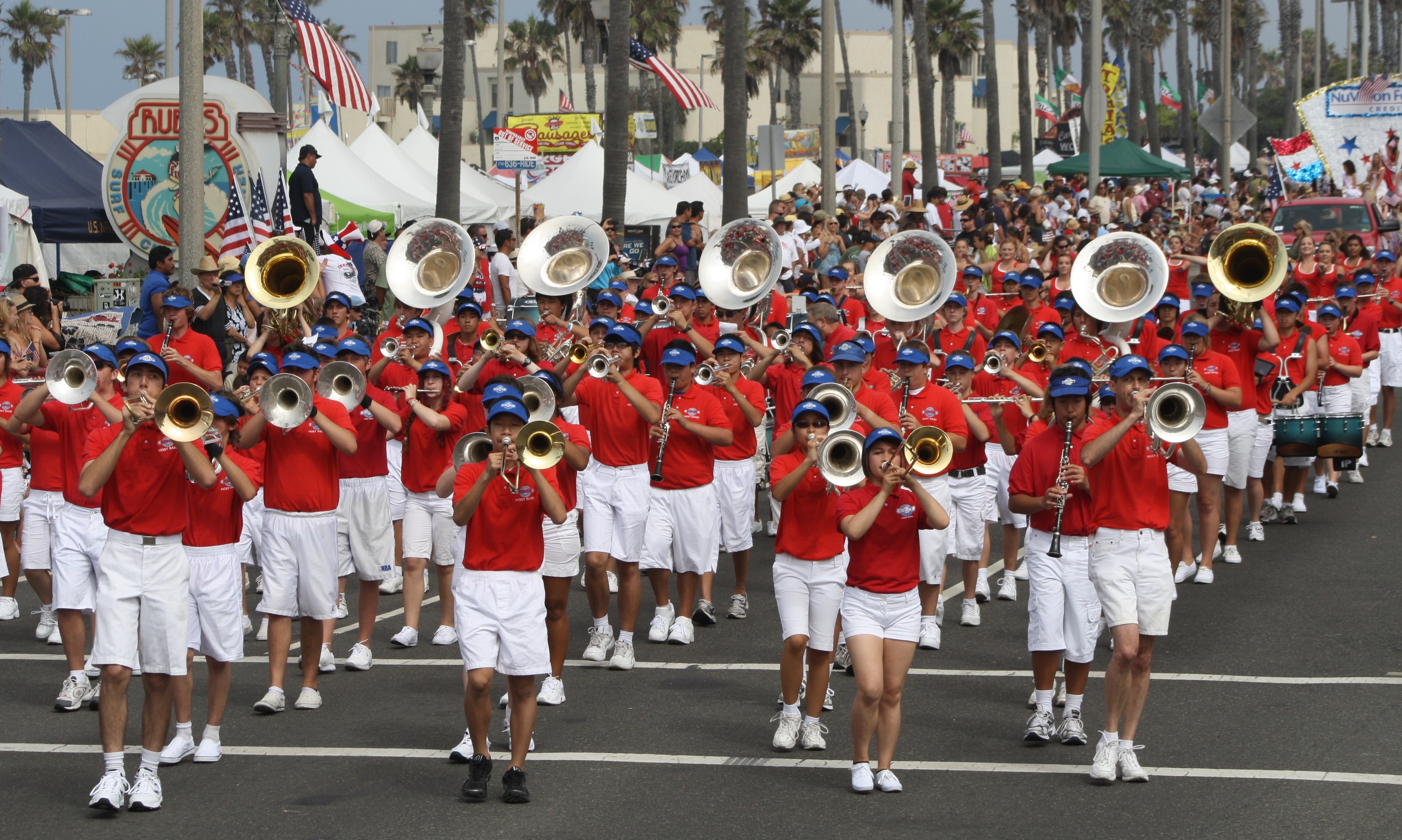
  • The Why? Parade

    Huntington-Beach-Parade-009
    http://www.huntingtonbeachparade.com/archives/huntington-beach-parade-huntington-beach-high-school-marching-band-4/

    report on the Giving in Hard Times Project that attempted to increase volunteering levels in the UK showed that none of the employed approaches increased volunteering, according to Peter John, professor of political science and public policy at the School of Public Policy, University College London. The conclusion of this report in Professor John’s words was “finding out that something did not work means more research can discover something that does.”

    Ok, that’s an honest conclusion and implies that recruiting volunteers is not as easy as some might think. You know, for some odd reason, this makes me think of comedian Louis C.K.’s hilarious riff on children who continually ask “why” to every answer given until a parent incoherently rattles off meaningless garbage or just yells at the child. Sometimes organizations repeatedly ask volunteer managers “why are there no volunteers” without hearing or understanding our answers, much like four-year old tykes. It goes something like this:

    Senior Manager Gwen: Esther told me there were not enough volunteers at the Golf Tournament on Saturday. Can you tell me why?

    Volunteer Manager Toby: Well, there were 10 really capable volunteers in attendance, as per the original request, just three short of the last-minute requested number.

    SM Gwen: Well, why weren’t there 13 volunteers there?

    VM Toby: There were several reasons, the biggest one being that we had ten volunteers lined up and Esther asked for three more on Friday at 4pm. We made numerous calls, but were not able to procure extra volunteers.

    SM Gwen: Why couldn’t you reach more volunteers? You say we have a hundred volunteers on our list, why couldn’t you get three more if you actually called everyone?

    VM Toby: Mainly because not every volunteer is available last-minute and our volunteers are very busy people with jobs and families and other commitments. Most volunteers are not home at 4pm. I know this because I have had multiple requests for last-minute volunteers.

    SM Gwen: Why are they unavailable? Didn’t they sign up to help us?

    VM Toby: Of course they did and they do; if I might show you last month’s volunteer hours, you will see that we increased volunteer participation 20% over the month before.

    SM Gwen: I’m not interested in stats right now. Why then do I have a golf tournament coordinator who had to stay an extra hour to collect and tally all the score sheets?

    VM Toby: Yes, I was told that by our lead volunteer, Ben who by the way was a professional events coordinator for over ten years. However Ben said that volunteer staffing was more than adequate and that some volunteers did not have enough to do. He also mentioned that the scores were not tallied on time because the system for collecting them was chaotic. He offered to help, but was rebuffed.

    SM Gwen: Huh. Be that as it may, 13 volunteers were requested. So why can’t you recruit people who are available to us, like people who aren’t doing anything like the ones who have no jobs and no commitments?

    VM Toby: Well, because typically, people who don’t do anything don’t do anything for a reason. Mostly, they don’t wish to volunteer. We try, but they don’t follow through.

    SM Gwen: C’mon. It can’t be that hard.Why can’t you just convince them? Do you need one of our marketing people to come talk to recruits?

    VM Toby: Thank you, no. From my extensive experience, volunteers need to hear a message directed at their wants and needs, not a general marketing message meant mainly for donations..

    SM Gwen: Why are you taking that attitude with me?

    VM Toby: Because I feel like you are calling me incompetent and incapable, of which I am neither. Recruiting volunteers takes skill and I have recruited and retained forty productive volunteers in the past two years. Besides, I also weed out inappropriate people as well, It’s not about numbers here, it’s about great, professional people volunteering for our organization. I’m proud of our volunteer force .Last minute requests will always be hard to fill, but I willingly do my best every time.

    SM Gwen: Then why can’t Esther get 3 volunteers when she needs them? Three, just three?

    VM Toby: Ok, because I’m stupid and lazy and I just want to collect a paycheck! I come in late, leave early and spend hours at lunch. I could care less about this mission and just want to find another job! Recruiting is easy, managing volunteers is a breeze, any idiot can do it, all right?


    Yeah, kind of like answering a four-year old’s why parade. Even a well-thought out attempt by highly qualified people to increase volunteer rates proved that volunteer recruitment is a complicated and nuanced task.

    So my why question to organizations is: Why aren’t volunteer managers judged on the number of competent and productive volunteers professionally recruited and managed, instead of on the perceived handful of phantom always available mind-less volunteers who are unavailable last-minute?

    -Meridian


  • “It’s Good to Remember, Remember With You”

    With his permission granted, I want to share a song written several years ago by Michael Becker, a talented singer and songwriter who strove to capture the connections volunteers make with folks suffering from dementia and Alzheimer’s disease. Mike spent many years not only volunteering with people at end of life but also inspiring new volunteers to follow their hearts.  I’ve been humbled witnessing Mike playing his song for patients, caregivers, family members and volunteers who quietly relate to that difficult journey through memory loss. As Mike says, “I’m just grateful to be able to share my experiences through my music.”

    Please enjoy

    -Meridian