
 Dear Potential Volunteer:
Happy volunteer appreciation week. Although, you may not yet be a volunteer, by considering becoming one, you are one step closer to being one of over 100 million volunteers worldwide. We, volunteer managers, are cordially inviting you. And so, I am writing this letter to you personally. If you are interested, I’m going to ask you a few questions to help you acquaint yourself with the volunteer manager who will be your guide throughout this process. Let’s get started.
Because we appreciate your unique qualities, how do we support you while together we find your ideal volunteer niche? Are we to be your mentor, your cheerleader, your coach, or your teacher? Can you help us fill the role you need us to fill so that you can succeed?
What should we do to help bring out your best? Do we hover, give constant praise or would you rather we stay back and be available only when you signal you need our help? Can you give us signals that indicate you are doing well or tap us on the shoulder when you need us?
How often do you want us to call you? Every time we have an assignment? Are you ok with saying no to us or do you feel like you have to say yes? How will we know its the right time in your day or week or life? Can you tell us when things change so that we do not have to guess? (We usually are incorrect, just so you know).
Ok, if you’re still with me, let’s move on.
How much do you want us to know about you personally? Do you want us to know every deep detail or do you feel that lots of personal questions are, well, too personal? Can you help us get to know you as a person?
Will you understand why we ask you to respect our guidelines? Our rules are there for reasons. Sometimes, to be honest, the rules frustrate us too. If we ask you for a background check, can you be ok with us having to do that? We want you to know that we don’t think you are a criminal, we are just following requirements. It’s not that we don’t want you to volunteer and appreciate your enthusiasm, it’s that we must maintain processes in order to serve you and our clients. Can you think of it like this: If my mother (or father, son, partner, whomever) needed the help of a volunteer, would I want that volunteer to be thoroughly vetted by the organization?
What about awards and recognition? Would you feel left out if another volunteer was spotlighted or given an award? Are you the kind of person who says the limelight doesn’t matter, but secretly you feel slighted if we take you at your word and don’t formally honor you? This may seem trivial, but we really want to give you the type of feedback that fits your style. Meaningless praise is not what we are about. Can you help us to give you the recognition you’ve earned?
And what about motivations? Will you feel that we are psychoanalyzing if we try to get at the heart of your desire to volunteer? Will it bother you if we want to probe deeper than your desire to “just help?” Can you see how it helps us when we know the secondary reasons like you enjoy socializing or you need challenging experiences? Can we convince you that we are really doing our job if we gently probe about your recent losses or your former life challenges? Will you understand if we take more time acclimatizing you because we want to make sure that you will do well? If we ask you to wait six months or a year, can you see that we want you to come back after you have spent some time healing yourself? We know that volunteering is cathartic and healing and we have seen so many people successfully volunteer while mending their souls. Since this is a very delicate balance, will you understand we have a responsibility to the vulnerable population we serve and that being healthy and whole is a sound basis for volunteering? Will you let us work with you?
When you have a great idea, can you understand that we do not make policy and that we cannot always make things happen, at least not right away? Because organizations have hierarchies, will you allow us to go through the channels to get things done and understand that we can’t force processes to go faster? We get very frustrated too, with the sometimes slow go of committees and permissions. But having said that, volunteers all over the world have made tremendous improvements in their respective organizations. We most certainly do value your ideas and suggestions, so will you keep them coming? Your suggestions make us look good too. Just kidding.
We want you to know that we want you to succeed. Our jobs are to find you, (although oftentimes you find us) to orient you properly, to give you the attention and mentoring you need, to place you in a meaningful position that enhances your life while respecting your availability, and to do everything in our power to keep you coming back as a satisfied, productive volunteer.
You are the reason we have jobs, jobs we cherish, jobs we believe in. You inspire us, challenge us, educate us, lead us and keep us coming back. We look at each one of you as an individual, with unique perspectives, needs, goals and timetables. We want to support you while cultivating your skills and we are willing to invest time in you if you are willing to work with us. Our clients benefit beyond any of our imaginations.
Here’s to you, our future volunteers. Will you come, be part of our world? Will you seek us out and change our clients’ and your lives for the better? We want you to experience that almost inexplicable feeling of helping another human being. As one existing volunteer mused, “how can I describe what it is like, my volunteering with critically ill people? How can I describe the feeling I get? Its sorta like trying to tell someone who’s never been in love what it’s like to be in love.”
Come, our new friends, fall in love.
-Meridian
Category: volunteering good for you
-
An Open Letter to Prospective Volunteers During Volunteer Appreciation Week
-
Living in an Inside Out World
 Jack is a part-time manager of volunteers at a large animal rescue shelter. His Volunteers do everything from checking animals in to cleaning habitats, interviewing perspective adoptive owners, marketing and raising funds. Besides his volunteer manager duties, Jack is also entrusted with managing the shelter, which is oftentimes a seven-day work week. Jack recalled a day not that long ago that resonated with him. He remembered, “It was a day when major donors were going to be touring the facility. Our parent organization was also sending senior management to have a catered lunch with the donors in our conference room. Volunteers were expected to act as hostesses for the event, and I admit, that pretty much made me mad, but I asked two volunteers, Jeri and Liz, who I really get along with to come, and they decided to bail me out for the day and help.
On looking back at that day, I gotta tell you, I was anxious. I knew that I was a hard worker, a guy who took time with each and every volunteer, so that they could be an extension of me and my drive for a great shelter. I knew that I had brains and talent and was resourceful. I knew I had a head full of knowledge and could wow anyone who came into the shelter with my handle on everything.” Jack stopped there for a moment. “I knew and the volunteers knew that I had the shelter moving along like a well oiled machine. So why was I anxious?” I could hear the smile in his voice. “I wanted to show the higher-ups what a great manager I was, and on some level, I wanted them to be wowed and to immediately ask me to move up into senior management. I mean, clearly, a guy like me….” Jack laughed. “A guy like me doesn’t happen every day, at least that’s what I wanted them to see.
But,” he continued, “that day came, and there was a problem with the heating unit and I had to spend my time with repairmen. The senior managers never saw me, not once. Luckily, Jeri and Liz were there. They kept everything on schedule.” Jack sighed. “I was mad, mad at the universe, mad at management and the volunteers, and mad at myself. I seethed for a while in the back room, when Liz stepped in to see if I was okay. I think she saw the frustration I was feeling so she left and came back a few minutes later with a woman about 50ish. The woman had stopped in to make a donation to our shelter. She told me that a few years back, she had adopted a small older terrier named Betsy. I remembered Betsy. Betsy had been rescued from an abandoned house. She was literally found cowering in an empty closet. When we brought Betsy in, she had been so shy, almost withdrawn and we thought that she might not ever get a real home, but the volunteers worked with her until she was adoptable. The woman told me that Betsy lived with her and her mother, but her mother had died last month after a long battle with cancer. She told me that her mother and Betsy adored one another and that she gave her mother a reason to live. With tears in her eyes, she told me that she would always take care of Betsy and she thanked us for rescuing her.” Jack drew a breath. “I had an epiphany right then and there, and realized that I was in this job for the Betsy stories, not for promotions and praise and raises and titles. I had exactly what I wanted. That faulty heater did me a favor. It kept me from trying to be someone I’m not.”
Jack lives in an inside out world, just like every other volunteer manager. I think that deep in our hearts, we are searching for those moments that mean everything to the people we help. The outside world may try to tell us that we need to move up, that in order to succeed we need to have a mouthful of words in our titles. While the outside world might tell us that respect comes with a large office, our inside hearts remind us that self-respect comes from the stories about Betsy, or from volunteers who are inspired by our mentoring, or from clients who make it through their crisis with a volunteer we carefully chose for them.
In the scheme of things, there are those who get to do the work and those who don’t. There’s the medical personnel who save lives and the administrator who makes more money and has a title. There’s the teacher who shapes minds, and there’s the head of the board of administration who makes policy. There’s the volunteer manager who orchestrates pure altruism and the senior manager who sits in meetings all day.
We may not have the largest office or even a quiet one and we may not have the highest salary or even a salary to be proud of, but there is one thing we do have. You know what it is. You feel it inside everyday.
-Meridian -
The Fabric of Volunteering
 Sometimes I think about the complexities of our jobs and am amazed at the interconnectedness with volunteers, clients, pairings and life stories. I don’t know about you, but I think the universe smiles kindly on what we do. Like the time I was asked to find a volunteer who could speak Armenian and the very next phone call I took was from a volunteer who worked mainly in the office but mentioned that she just returned from visiting her family in Armenia and yes, she spoke Armenian. The Universe clearly heard the request, but more often we spend thorough and thoughtful time assigning volunteers as we weave the fabric of human connection. Some fabric is soft and warm, some rough, more nubby with little pills of emotion. Each is a wondrous creation in its own way.
But we are not creators only, no, we are part of that fabric. Maybe it’s a bit of our blood as we prick our finger with the needle or maybe there’s a strand of our hair that just happened to land ever so slightly into the cloth as it’s woven, but we are in there as well. Because the volunteers and us, well, we are woven together just as surely as they are to our clients.
Sometimes I look at volunteers, feel the deep connection we have and marvel at how they teach and inspire me and how I hope I’ve given them something in return. I think maybe so. I wonder, as I talk to Betty, whose daughter died ten years ago if she imagines as she speaks to me what a conversation with her daughter would be like had she lived. Am I a substitute daughter? No, but maybe her ability to speak freely to me is a rip in time that mirrors what her conversations would have been like had her daughter survived. (Betty, are you telling me the things you would have shared with your daughter? I kinda hope so, because I feel so connected to you right now)
As I listen to Ben speak of his battle with alcoholism I hear the regrets, not in words, but in unspoken pauses. Because we believed in him, Ben has flourished, his soothing demeanor forged from pain. He laughs freely, and to him, life’s fabric is whimsical, full of ducks with sunglasses. Fortunately, our patients can lean heavily on him; he’s borne his share of sorrows. I wonder if our relationship as volunteer and volunteer coordinator has a symbolic meaning, where I represent some of those people he disappointed all those years ago and perhaps our patients represent redemption.
I think of Jolee, who lived with her mother for all of her life and when her mother died, Jolee retreated into a shell. She decided to volunteer and wants to hang around past her appointed time, because as she says, “I just love you guys. I feel so comfortable here.”
But it’s not always us providing for volunteers. I remember a time when my kids were outgrowing me and I acutely felt the tug of parental letting go. It must have been evident, because one of my favorite volunteers, Paul, sat and had coffee with me one day. He Looked at me for a moment and said, “I want to tell you a story.” He told me about his son, Doug, who back in the early 1970’s, was just evolving into a free spirit. Paul, a decorated WWII fighter pilot, could not understand nor get along with his rebellious son. “It became impossible, the relationship between he, myself and his mother,” he remembered, “and so one day Doug got in my car with his knapsack and I drove him to the edge of the freeway near our house and he got out, not knowing exactly where he was going. As I drove away, I looked in my rear view mirror to see him, thumb out, his long hair whipping in the wind. It was the hardest thing I ever did.” Rugged Paul, misty eyed, smiled. “he went to California, later became a financial analyst and we reconnected. But that day, that day was so hard.”
He had no idea how much his story enveloped me in a warm blanket of experience where I felt the okayness of being scared. Neither does Myrna know how much she weaves around me with her wicked jokes when things are stressful. She has been in remission for several years and though her cancer is just a conversation away, she always tries to make sure I’m doing ok. I am when she’s around.
But that’s what fabric does. It blends together so skillfully that only on close inspection can you see the individual threads. I really feel meshed with the volunteers and their lives. And so, in some small way, I feel deeply connected to their work with our patients and families as if a few of my threads add a bit extra depth to their work.
Together, we, volunteers, those we serve and I are a cozy wool, a cool blend of satin or a breezy colorful cotton, These may be fabrics that exist only in a slice of time, but they have a certain beauty, even if just for a moment.
-Meridian -
The Book and Its Misleading Cover
 “Three strikes and you’re out!” That’s my rule and I tell myself all the time, “don’t be a patsy; hold people accountable.” It’s not like I’m a pushover because I’m in the helping business anyway, is it? For cryin out loud, just because someone wants to volunteer, doesn’t mean I have to bend over backwards for them, right?
Well, ok, there I said it. Sounds good on paper. At least it did until I had a call about two weeks ago from a college student named Justus. He left a garbled message for me about his fraternity doing volunteer work, and so I called him back and left him a super happy sounding reply. “Hi there, this is Meridian and I am so excited and can’t wait for you to volunteer with us!” Ok, no, my return messages don’t really sound like a used car salesman, but sometimes I wonder if there is too much desperation in my voice.
On my desk I’ve always kept a yellow legal pad that chronicles the phone calls I receive and make. It is full of graffiti from color highlighters, shorthand and initials, like LM for left message, WCB for will call back, MA for made appointment. I can flip back and see anything that has languished a bit by the highlighted portions. When done, I line through them. It’s not a perfect system, but it’s better than all the post it notes I used to have stuck to everything (including my skirt as I walk away).
For days I went on about my business and then when flipping back over my legal pad, I found Justus’ number with the LM indication. Hmm, he did not call me back so I called him again. This time he picked up and I introduced myself and reminded him that I had left a message. “Oh, right,” he said and hesitated so I added, “You called about volunteering with your fraternity.”
“Yes, yes,” he said,”I got your information off the internet and would like to talk to you about our group doing some volunteering.”
“Ok,” I said, “why don’t we meet? I can come up to your school when it is convenient for you.” There, see, I made it easy for him to get involved. I mentally patted myself on the back and recorded our appointment on my calendar. Done, good.
Our meeting day arrived and I drove up to college and walked to the library where I plunked myself in the first set of easy chairs. I felt ancient, what with all the skinny jeans walking by, but I was “official” so I belonged there, kinda like the mom who polices the slumber party. I looked around at all the students and wafted back to my college days. Library, study, no difference except for all the devices. 9am became 9:15 then 9:30. Hmmm. I pulled out my phone and the slip of paper with Justus’ number on it and texted him. “Am in library, are you here?” At 9:45, I gritted my teeth and left, driving all the way back to the office, thinking of the work that had just piled up because I went on a wild goose chase for some college kid. Drat those irresponsible college types that don’t yet know how unforgiving the real world is!
The next day I had a message from Justus. “I’m so sorry, something came up, can you call me?” “Grrr,” I sputtered as I dialed his number. He picked up and cavalierly apologized and asked to meet. “Well,” I said, “can you come here?” He agreed that he could make the drive and we set a time, 2:00pm, for that Thursday.
Thursday at 2:00? You guessed it, no Justus. At 2:30 I got to serious work and forgot that I was stood up again. But he called at about 3 and said that something came up and could he meet me at 4:30 on Friday. 4:30 on a Friday? Oh, this will be a disaster, I told myself. Normally, I leave at 5:00 if I’m lucky and besides, every Friday at 3:00 I just literally lose all capability for rational thought. But, sighing, I agreed, while internally chastising myself for putting up with such youthful irresponsibility.
Friday was tough, busy, full of problems and issues and at 3:00 exactly, the brain stopped functioning properly. I checked my calendar and groaned. Instead of winding down, I had to gear up for Justus, that is if he actually showed. At 4:20, I walked to the front lobby to see if he was dutifully waiting there, but it was empty. I returned to my desk and finished up. At 4:50, I got a call from the front desk volunteer, Jan. Justus was there to see me. “Thanks, Jan,” I sighed. “Send him back, please,” Since it’s hard to literally kick oneself, I punched myself in the arm for agreeing to the time.
He came back and I waved to the small conference table near my office. “Nice to meet you ” I said, offered my hand and added, “you’ve got ten minutes.” He looked at me, saw my obvious annoyance and sat down.
Justus folded his hands and without prompting, began to tell me about his childhood in Africa and his family’s emigration to America when he was twelve. He talked about the expectations his parents placed upon him and their unwavering commitment to serving whatever community they lived in. He explained how, when he was in high school, he started his own food drive to feed local families in need. He said that he was studying sociology and foreign affairs and hoped to be an ambassador some day. He had earned a full ride scholarship to college and was elected the first Junior year president of his fraternity. His tenure, he told me, would be about serving the community. He had three semesters to make it happen. “I want my fraternity brothers to work hard, to sacrifice. to appreciate all they have when others have so little or nothing. I want them to learn what my parents taught me.”
I looked at the clock. 5:25. I wasn’t interested in going anywhere anymore. I was mesmerized by this young man. (and not in a creepy cougar way, so don’t even go there) At one point, I looked at him and said, “Who are you?” (no, really, I did say that and I got a smile) Clearly, I need to hear more. Mentally I made note that a whole lotta work was coming my way, but hey, how could I pass up this intriguing individual and the fraternity he is guiding?
We shook hands and agreed that I would come out and talk to his group in two weeks. I’ll show up on time and forget about our shaky start. I’m past that silly book cover and having read chapter one, can’t wait to read more.
-Meridian -
First, Do No Harm
 A prospective volunteer, Judy came to one of my orientations last month. She eagerly embraced the topics, participated in class and repeatedly told me how much she “owed” us for caring for her husband. She is passionate, ready to work and a strong woman. She and her husband owned a business that she now shares with her children. She has artistic abilities, is educated, well spoken and incredibly smart. She is that volunteer we dream about when we’re not having a nightmare that all the unfinished work has fused together into a giant smiling clown with a pillow and is suffocating us in our sleep. (You do have that dream, too, don’t you?)
I spent a good two hours with her one on one in a private interview a week after classes ended. We talked about her abilities and talents, her ideas and plans to help and all the folks in her business circle she knows that she can enlist to help too. So, what could possibly be wrong with this perfect volunteer?
Did you guess she’s moving? Nope. Did you guess she’s really crazy? Nope again.
Although we spent time talking about all those wonderful things, we spent 90% of the time talking about her husband’s illness and death. He died four years ago and to our credit, we took wonderful care of him. Judy passionately talked about losing a husband so early in life, the shock, the quickness of the rare disease, the legal issues surrounding a business and a lone position in life with friends encouraging “getting back in the dating game.” She had already started a support group on Facebook, has reached out to the community for research funds and would love to be able to help other young widows. Her ideas are lofty, her desire to help of the highest noble thoughts. Her energy is infectious and I wanted to reach into my drawer and pull out my checkbook.
Our conversation reminded me of John Walsh, the host of the TV show, “America’s Most Wanted.” Mr. Walsh began his crusade after his son, Adam was brutally murdered. It’s what experts call instrumental grieving, the throwing of oneself into a cause. It’s truly amazing to watch someone do that, to see their resolve, to feel their calling. These people are remarkable. They turn despair and tragedy into benefits for the rest of us. I know if my husband were to fall ill to that disease that took Judy’s husband, I would want her coaching me.
But, I cannot, in good conscience, put Judy with patients, family members or the bereaved. It matters not that she really, really, really wants to help. It matters not that she is full of passion and energy. But it does matter that in the three times we’ve talked, everything always comes back to her experience.
I’ve witnessed raw, unrelenting grief before. I’ve seen potential volunteers so fired up that they speak in a machine gun volley that shoots down every thought that does not apply to their situation. I’ve watched eager people grasp onto volunteering like a life-preserver in a sea of molten pain. I feel for them, because, just like every other volunteer, I get to know them and to know these volunteers is to know heartache. I so want to help them work through their grief, but my first loyalty is to the clients at hand. And they need volunteers who are sound, mostly healed, or at least healed enough to put aside their own lives.
And so, as the conversation wound down, Judy looked at me and breathlessly asked, “do you think I can do this?”
“Not yet,” I answered truthfully. See, I’ve learned over the course of so many years that it’s much kinder to be honest. Then I added, “I’m thinking that you will be wonderful with our patients and families one day and we are incredibly fortunate to have you. Right now, I hear some hurt and we don’t want this work to add to your hurt. You’ve been through so much.”
“I know. It still hurts and I trust your judgement.” Tears welled in her eyes. “I just need to help.” I could see the dam about to break but she quickly stuck another emotional patch on the crack that threatened to burst.
What a burden to trust me, I thought selfishly. I’m fallible, running on instinct and gut. I want to be wrong about you, to just let you come in and get whole again.
Here’s where volunteer management is on a whole other level from standard HR. Just like HR, we have jobs to fill and we head hunt for the best people for the job. But we don’t reject people. We don’t pick and choose. We try to find a place for everyone, and it takes hard work to find places for everyone. I will find a place for Judy. We will start small and away from the clients. I want to see her succeed as a volunteer and to mend her deep wounds. It will take time, observation, mentoring and caution. That’s what I signed up to do.
But first, I will do no harm, not to Judy and not to our clients.
-Meridian -
So The Magic Number is Six
 I’ve always wondered if there is a magic formula to plot when volunteers would leave. I don’t mean something sophisticated enough to figure out when they might become ill, or have to move or get a job or take in a relative or anything like that. I’m talking about volunteers who have the opportunity to stay and don’t. I wish there was a handy dandy calculator that would tell me when they need to quit or take a break. Because I think it is true that all good things must come to an end, including wonderful volunteers. The honeymoon is over. The bloom is off the rose. The, well you get the idea. I’m thinking of Carla, who has been with us (me in particular) for six years. She’s tenacious, opinionated, a pitbull, organized, a whirling dervish of activity, a control freak, a friend, a co-conspirator, a great dependable worker. So, what’s the issue? I think we’ve reached her shelf life-that is, with me and my administrative duties anyway. I remember not too long ago how she was so proud of her five year service pin but after we pinned that on her, she started to display a certain bossy attitude. She ran the shop, ruled the roost and put the volunteers to work. It was both a blessing and a curse. She started to get involved in matters she overheard, and started to subtly insert herself into conversations that did not really include her. We talked about her life at home, about her chronically ill sister and how she could not get to see her often. We talked about retirement and aches and pains and about life’s twists and turns. We covered the obvious culprits for changed behavior, but nothing really seemed to be amiss. Yet, there was something restless about Carla. It was as if she was hearing the call of the coyote on the prairie. I wondered if maybe I took her for granted and so I praised her more, paid more attention. Then I wondered if all the praise I heaped on her for getting things organized gave her the impression that I thought she was done. Crazy, huh? And yet, there was that nagging feeling that the cowgirl in the white hat was looking to ride away.
If you don’t believe me, let me share with you the comments that Carla has made six years ago compared to the comments she is making now.
Six Years Ago:
I can’t wait to get in here and help you get organized.
Now:
I know you can’t find it, you never can.
Six Years Ago:
Can I come in on Thursday to finish?
Now:
I’m taking a few weeks off. I need to revitalize.
Six Years Ago:
How do you keep such a positive attitude with all you have
going on?
Now:
None of this is funny, you know.
Six Years Ago:
I love coming here.
Now:
So, what exactly do you have for me to do today?
Six Years Ago:
I feel useful, needed.
Now:
You need me, you know?
Six Years Ago:
Everyone here is so nice.
Now:
Everyone here is nuts.
Six Years Ago:
My pleasure.
Now:
You owe me big time for this one, right?See what I mean?
So, last week she said to me, “I hope you don’t get mad, but I’m thinking about working with Allie in fund-raising. They really need help over there and I think I can help them get organized for the next event. I’ll still come here every other week and see what you have.”
There you have it. Am I disappointed? Minimally, because I hate dragging things out, even things that have come to their natural end. And I believe we are at Carla’s natural end, with me, at least. I’m glad we have other areas for her to volunteer in, but if we didn’t, she would be gone.
Do I feel guilty? Not in the least. I know staff members who leave faster than the jack rabbit that saw a dog. Unless we, volunteer managers actually do something to drive a volunteer away, then guilt has no place in our box of emotions. Volunteers too get tired, bored, or feel as though they have done what they’ve set out to do. And so, when volunteers ride into the sunset, having accomplished the very thing they came to do, we should cheer them on. Thanks for your time and service! You really cleaned up Dodge!
She’ll do a great job over there. I can attest to that. And maybe, just maybe, she’ll ride back in when the wind blows my way. I hope so.
Until then, anybody seen a cowpoke around looking to spruce things up a bit? I’m in need of one.
-Meridian -
Ah Ha!
 Carly is a new activities director at a large nursing home. Her duties also include managing their 20 occasional volunteers. When Carly was hired she received a good amount of training in providing activities. Her training in volunteer management consisted of being handed a list of names and numbers. She recently recounted something she discovered about volunteers over the holidays.
“We’ve always had people asking to come in when the holidays are near I’m told. They want to volunteer to play music or sing or do something associated with Christmas. It’s the only time they will be with me, but I really don’t mind. All the extra help is appreciated and given the fact that I have to coordinate activities as well as volunteers, I have to admit, it is a win-win for me. I pretty much stay with them while they sing or play, so I don’t have to worry about lengthy background checks for a one time volunteer appearance.
This past Christmas, I had two ladies who wanted to volunteer and play music for our residents. The first lady, Jewel, played the violin. She called me up one day and told me that she was driving by our nursing home and she wanted to meet me and play the violin for me. She sounded like it was urgent. I happened to have a few minutes free, so I agreed. She came in and told me she was basically still learning the violin but she had been practicing for some time and she played a few songs. It sounded quite nice, so I gave her a time to come back to play the following week. She called me two times before that to explain that her father had died in a nursing home in another state and that this was a tribute to him. She said that she was nervous playing so I politely listened and encouraged her to keep practicing. I felt like I was helping her too.
The other lady, Melanie, was just visiting relatives for a month or so. She came in and said that she could play the piano fairly well. As it turned out, she is a music teacher with years of experience and skills. She asked me if she would be of help by playing and I told her of course. I set up a time for Melanie to come in and I think it was the day after Jewel was to be here.
Jewel showed up and I took her down to the meeting room where we had a tree and decorations. I provided hot chocolate and the residents were sitting in their wheelchairs, some with family, some alone. We had cookies and several staff were on hand to help. Jewel brought out her violin and proceeded to tell us about how she began learning, how her father always loved the violin and how she had joined a group that was encouraging her to share her gifts with others. After several minutes, she began to play. I can’t remember what song it was, but she kept starting over. The residents and family members were getting restless and as Jewel started over again, a few residents motioned to our staff to take them out. Jewel did not seem to notice, but slowly, the room emptied. She was fairly oblivious to the audience, but continued to play as best as she could while they filtered out. I finally thanked her and she was giddy with pleasure at having played in front of so many people. I told her I would call her again later in the week.
Meanwhile, the next day, Melanie arrived and entered the same set up. I think the residents and family were pretty disappointed, because not as many were present. Melanie opened the piano and greeted the audience. She thanked them for allowing her to play for them and asked them if there was anything they wanted to hear. She proceeded to play all the carols and songs they enjoyed. Everyone was singing along and crying and laughing and Melanie kept referring back to them to make sure they were hearing what they wanted to hear. Little by little the room filled up again and everyone clapped long and hard. Melanie thanked us profusely for allowing her the privilege of entertaining us.
As we were exiting the room, Jewel showed up with her violin. I thought I would play again for a bit, she told me. I thanked Melanie and asked Jewel to accompany me to my office. I told Melanie I would love for her to come back if she was up for it and she agreed. I walked back to my office and closed the door and asked Jewel to sit down. I then told her that we already had someone lined up for today and that she could not just show up and expect to play. She seemed very upset with me. She again talked about her father and her practice and frankly, I’d had enough of her. I excused myself and told her I would be in touch. As she left, I was so shocked at the two different attitudes of these ladies. For one, it was all about her. For the other, it was all about the residents. I’ve not spoken to Jewel since but believe me I call Melanie often and she says she will come in every week until she leaves. If only Jewel were the one leaving and not Melanie, but sometimes, that’s just luck. I was just so shocked at how different the experiences were with these ladies. And it’s not like their talent made the difference, it was… well, it was their perception of their reason to volunteer that made the difference. Who would have known? From this experience, I think I will be just a bit more selective in the future.”
Ah Ha!
-Meridian -
The End of the Year Report
 Last week I had the opportunity to shadow one of our volunteers. Leeta, a volunteer who visits nursing homes invited me to follow her around for a morning. I jumped at the chance because Leeta is one of those volunteers who is so quiet and reserved, that when she attended orientation, I sort of dismissed her in my head as not being a “sticker”. You know, those folks who will stick with it. I was wrong, thankfully and she’s been a sticker for eight years now.
I arrived at the nursing home early and she was already there. Although I had been there many times, I wanted to see the facility through her eyes so she gave me a tour. I have to admit, I had never before noticed the impressive painting of the founder nor the cozy little blue living room off the first corridor. Our first stop was the room of a tiny woman who talked about her years making pasta at her husband’s restaurant. Her deft hands mimicked the motion as she spoke. Leeta smiled knowingly. She had heard the story many times before. We then spent time with a gentleman who set type for the New York Times newspaper. He is 103. He slyly told me he got the news before the world did. Now, that’s impressive.
Then we came to a lady, Gwen, who was curled up in the hallway in her wheelchair. Under a collection of afghans, the world bustled around her as she sat among hurried staff and visitors on a mission. Though Gwen was deeply asleep, Leeta gently touched her shoulder. There was no response. Leeta whispered “Gwen” but nothing happened. Leeta paused for a second, watching intently then stood upright and I figured we were done. Nothing to see here. But instead, she walked into Gwen’s room and returned with a letter. “This was written by her granddaughter,” Leeta said as she unfolded the well used pages.
Leeta bent close, her lips nearly caressing Gwen’s wispy hair. “Dear Grandma,” she began, “I love you very much. I was in school yesterday and my teacher told us about..” she continued. My eyes were fixated on Gwen’s face. At first she continued to sleep, but I saw a flicker, then a stir as she took the words in. Her eyes fluttered and then slowly opened at the words, “Mommy says hello too.” She turned, so slowly that time seemed to stand still and she saw Leeta’s face, just inches from her. She blinked and recognized and the most peaceful look came over her that for just an instant, I felt that all was well in the world.
She drank in Leeta’s voice and kind eyes and the two spirits melded like batter for a decadent chocolate cake. Leeta stroked her hair and cheek and I felt tears spill onto my own.
No one will ever get to know that powerful moment. No one, but I. And there, in that chaotic hallway, I felt the power of volunteering, the reason volunteers do what they do.
Intimacy is borne from the establishment of bonds and our volunteers open their souls to that connection. They do it quietly, without thought of praise or recognition. But how we, volunteer managers, would love people to know about those intimate moments. How we’d love our fellow staff members to witness a volunteer’s humble gifts. How we yearn for senior management to be in that moment, to really grasp the nature of volunteering. How we wish prospective volunteers could feel that connection and understand how it would enrich their lives. How we want the public to see these tender moments so that they would stop caring about mindless celebrity sightings and start to embrace volunteerism.
But therein lies the irony of intimacy. A hundred pair of curious, expectant eyes would shred that blanket of intimacy woven by our volunteers. And so it becomes our duty to recreate, to celebrate in song and tale the forging of spirit to spirit. We use words, images, videos, gestures and heartfelt testimony because we, as observers of volunteers, know their value. The intimacy of volunteering is a story that needs to be told and we continually struggle to find just the right words.
Our jobs include showing the value of volunteers. Statistics, money saved, papers filed, number of calls made all show value. But what spreadsheet can show those intimate moments that mean everything to the recipient?
I’ll continue to struggle to showcase the true value of volunteers to my organization because these are the things in this world that are so priceless. I just hope that all organizations, while combing through end of year reports, never lose sight of that which really matters.
-Meridian -
The Door Shuts
 This is a tough story to tell, partly because it’s hard to find those keeper nuggets of truth that help the rest of us navigate our jobs. Sometimes, I think things just are and maybe really these experiences are like everyday life. You can’t predict them and the only way to prevent them is to stop living.
Cara is a wonderful volunteer coordinator with a big heart as almost all volunteer coordinators are. She’s been doing this for years, has mentored and seen at least a thousand volunteers come and go. She has wisdom and has honed her instincts like a blacksmith with a prized sword.
Several years ago, Cara met a young woman, Gwen, who showed an interest in volunteering. Gwen was hesitant, but hopeful and Cara encouraged her, letting Gwen take small steps to find her niche. Gwen rapidly blossomed into what Cara describes as “one of the most gifted volunteers I have ever encountered.” Gwen was magic with clients and had a presence that allowed even the most downtrodden individual a voice. Words such as “angel,” “like my own grandchild,” and “my confidante” came floating back on waves of gratitude.
Cara quietly mentored Gwen, preferring to stand back and let Gwen’s innate ability flourish. As they spent more time together, Cara learned that Gwen had a difficult childhood. She was estranged from her mother and Cara, ever the professional, did not step in to fill those missing shoes. Instead, she listened and encouraged, much the same as she did with all of her volunteers. But this one, this one was like the Derby winning horse in the stable. Gwen was worth the extra effort because the clients deserved the best volunteer help.
As the years went on, Cara heard more and more about Gwen’s chaotic life outside the organization. She had a family and a job and troubles seemed to swirl around her in a cacophony of drama. But Gwen still had that touch with clients, and although Cara’s radar now went up, she carefully kept watch on Gwen’s volunteering.
Occasionally, Gwen would drop in and cry for twenty minutes. Illness, fights with her husband, disagreements with her boss, run-ins with parents of her children’s classmates would knock her world out of orbit. Concerned, Cara suggested counseling and one day Gwen came into the office sobbing about her counselor. Cara immediately removed Gwen from any and all volunteering. She told Gwen to please concentrate on herself for a change. What Cara did not say was that she now thought Gwen an inappropriate volunteer.
Their relationship morphed into Cara’s trying to help Gwen but with none of the volunteering. I asked Cara why she continued with Gwen and she said, “you know, it’s not that easy, just giving up on someone who hasn’t done anything wrong. Clearly she needed help and I had forged a relationship with her. I couldn’t just turn my back on her. And besides, when you see flashes of brilliance in someone, you can’t help but think that they are salvageable.”
At some point, Gwen became angry with Cara, and stayed away for a bit, but then came back and Cara tried to help again. At this point, it had been two years since Gwen had done any volunteering. The second time Gwen got mad, Cara shut the door and now has no plans to re-open it. “I’m done,” she says. Does she miss the opportunity to help Gwen reclaim greatness? Not as much as you might think. She says, “it was like I could feel the flutter of a page turning. I feel finished, and I’ve done all I can. Besides, I have other volunteers to mentor.”
I asked Cara if she thought once Gwen got her life under control, would she be able to return? “Honestly, no. I think that was a time in her life when volunteering fit and made sense. It will be impossible to recapture.”
I’ve always thought that volunteers have a shelf life. Whether illness, moving away, disinterest or inability to function in the best interests of the client are the reasons, it won’t matter. When it’s time for a volunteer to stop, either by our request or theirs, then it’s time.
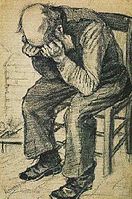
Can we compare volunteering to art? I think so. Some genius is tempered with madness. I don’t think it’s a stretch to apply that to our brightest volunteers. I’ve seen them. Brilliant volunteers who paint masterpieces like van Gogh but are burdened with issues that often become too much. It’s sad and we walk a fine line between encouragement and interference. We want not only what’s best for those we serve, but also what’s best for the volunteers. Sometimes, even we can’t make that happen. We can only do the best we can with what we have to work with. And who knows how well service fits within a volunteer’s view of the themselves and the world. We have to be able to let that door shut when volunteering no longer works for the clients and for the volunteers.
If we can’t, then we’ll go mad.
-Meridian -
I Wish She Had a Volunteer
 A story that is circulating about a terminally ill woman, known as the Layaway Angel, really made me start to think about all the clients we serve.
Layaway AngelAn excerpt from the story reads:
“Everybody wants to go back to school with new clothes,” said Store Manager Joyce Beane. “Now 16 more families can do that.”The families had all fallen behind on their payments.
Enter the Back to School Angel.
“She was here about 15 minutes. She paid off 16 the layaways in cash, about $3,000. Then she said I’m not feeling well I need to leave,” recalled Beane.
My first thought, (as a manager of volunteers) was, wow, I hope she is on hospice and I hope she has a volunteer. It sounded like she entered the store alone and I immediately pictured in my head a smiling volunteer accompanying her, helping her walk up to the counter. I thought about this lady’s last days, maybe sans family and friends and how a caring volunteer could sit with her, reminiscing about her life and doing, well, what a volunteer does best.
I thought about that until I stopped thinking like I had my office phone in one hand and the computer keyboard in another.
It’s ingrained (and I mean cemented!) into our cranium that we “see” the potential for a volunteer. Scrape a knee? A volunteer can bandage that right up. Need some Twinkies? I think a volunteer can run through that Quickie Mart just fine. See, that’s how we view the world. How do our volunteers fit in to help?
But then I don’t know this woman. I don’t know her condition, her life history, her wants, needs, pet peeves or personality. Maybe she wouldn’t want a volunteer. Maybe she’s super independent and wants to be alone. Maybe she’s a person who doesn’t need help. (Whoa, that’s not possible, is it?).
Then I started thinking about all the volunteers who tell me how much they learn from the people they serve. Maybe a patient is using a volunteer, Jose to just sit with him while his wife goes to the store. Jose, who is trying to perfect his English, ends up learning that the patient emigrated from Italy and struggled to learn English, but managed to raise six kids who all became successful. Or Claudia, who while visiting a patient learns that the patient lost a child many years before. And Claudia, who had also lost a child, finds a deep connection with this patient, finding solace in her visits. Or the volunteer, Karen, who was just laid off, volunteers with clients who survived the great depression.
Honestly, who benefits more from the relationships that are formed between volunteer and client? Volunteers always say they get more than they give and they are probably right. Those who volunteer doing the one on one work get hooked and want to do it again and again. It’s an addiction to soul candy. And ironically, the ones who get the most from their volunteering are not the needy ones nor the selfish ones. No, the ones who get the most are the ones who approach it with humility, by putting the focus on the client. The more they do that, the more they reap the rewards. Those who go looking for soul candy are usually so distracted by their own needs they miss the trail of candy bits that leads them to the dish. So, when I look at that story, and think like a volunteer manager, I wish she had a volunteer because I try to imagine the help a volunteer can lend to her journey. I have to admit though, I don’t know what that might be.
But can that Layaway Angel teach a person lucky enough to volunteer for her something profound about life? Hmmm, it sure seems so.
Therefore, I stand by my original wish. I wish she had a volunteer: But maybe someone to teach. I kinda wish it were me.
-Meridian



 volunteerplaintalk