Tag: organizations

  • Perfectly Un-Perfect

    o-CAKE-FAILS-BAKING-MISTAKES-facebookWhen my children were young, I barricaded them from anything and everything embarrassing about myself because I knew they would spread it faster than spilled cooking oil over a brand new dress. Little ones really have no filter and when they learn something juicy, they will a) tell their teacher, b) tell their best friend’s mom or c) tell the guy in the elevator who turns out to be the one processing your car loan.

    We learn pretty quickly how to keep damaging information away from those who view the world as a big piece of warm toast just waiting to be smeared with buttery gossip. There are the neighbors who pry ever so nicely, the co-workers who ambush you on a Monday morning before you’ve gotten your game face on. “So, how was your weekend? Really, I didn’t know you hung out in those types of establishments.”
    So, how does this relate to volunteers? Well, we can get really comfortable around them and let down our guard and the next thing you know, you have your boss in your office wondering why the heck you said those terrible things about the operations manager because “it’s all they’re talking about in administration.” Of course anything said innocently like “you know I do like the new giving director. He seems nice, but it’s sometimes hard to understand him, he mumbles like he has something in his mouth,” becomes by the time it makes the rounds of eager ears, “Meridian says the new fund director doesn’t know what he’s talking about.” Trying to explain only makes it so much worse.

    I’ve never had a volunteer spread anything I’ve said out of meanness or ill intent. It’s always an innocent aside or a slip of the tongue. At the time, it’s never funny, and when it happens, you just try to lay low in your warm dirt filled trench until the whole thing blows over and then you’re extra nice to anyone and everyone in case they’ve been told something that will come back to haunt you soon.

    I remember one day saying to a volunteer who was a retired charge nurse that our female executive director looked positively glowing. That afternoon the volunteer ran into the director as she was headed for lunch and asked ever so intrusively, “when is the baby due?” Yeah, she did and then told the director that she heard it from me.

    I remember another time a volunteer, John thought he was actually going to help me and went to my boss and proceeded to complain that I was overworked. (This is a lovely theme that volunteers who really care about us volunteer managers come up with, and sometimes want to do something about much to our chagrin). When he told me what he did, I didn’t know whether I wanted to hug him or ask him to help me pack my things. See John owned and ran his own boat manufacturing company for thirty years so he pretty much said whatever the heck he wanted. Although my boss realized I did not put John up to it, (at least that’s what she told me) I could tell that she wondered how much “oh poor little me” stuff I was spouting. I had a hard time defending myself and John on that one.

    One of my favorite volunteers, Jessie once accompanied me to a community event advocating for the homeless that just happened to be covered by local press. While I was crawling around on the ground trying to tie down the tent in the tornado-like winds, Jessie was interviewed by the press and was happy to help by giving some personal opinions on the subject which of course appeared in the paper the next day as the official position of my organization. The next morning I sneaked into my office, but they found me! I really think I would have gotten into less trouble if I had set fire to the donor’s wall.

    My favorite one though, was the day I came close to a meltdown. A staff member I trusted implicitly didn’t follow through and caused all kinds of emergency extra work. I was pacing, muttering, and trying to figure out how to make the last-minute disaster come together when one of the volunteers, Ruthie walked in on me having a heated conversation with myself. I didn’t notice her for a moment and when I did, she was watching me pretty much in the same way she would watch a stranger wearing a goalie mask coming down a dark alley. I stopped when I saw her and told her that I was just figuring some things out and she nodded, said ok, goodbye for the day and left. So the next day, Ruthie came in unexpectedly, found me in a casual conversation with a senior manager and offered me some medication from her medicine chest. It was Xanax.

    What do I think I’ve learned about being honest in front of volunteers? Should we be very careful about what we say? I do think that we should spare them any political nonsense, personality conflicts and dysfunction in our organizations. They don’t need those headaches. But am I careful about every little thing I say? Nah, not at all. I look back at those incidents and others and laugh. I lived through them, and each volunteer thought they were doing the right thing. And you know what? WE CAN’T CONTROL EVERYTHING! (Horrors, I still shudder at that realization).

    I think as long as we keep in mind that our volunteers want to be a part of the goodness of our organizations’ missions, then we’ll share with them the best part of ourselves. We can be funny, crazy, serious, mindful, playful, driven or any combination of personality traits that make us unique.
    As long as we are sincere, we can share ourselves without fear of the few times we are taken out of context, misunderstood or “helped” by well-meaning volunteers.
    One trait I’ve noticed about volunteer managers is that we are comfortable with life’s complexities. We don’t see people and the world as the perfect red velvet cake, but as this ever-changing creative cake mix that is interesting, sometimes frustrating, but ultimately perfect in a non-perfect sort of way.

    Granted, we’ll sometimes get a bubble of dry flour when we bite into these not so perfect cakes, but then again, we get to eat a lot of frosting too.
    -Meridian
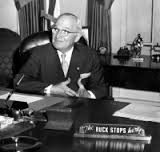
  • The Emotional Buck Stops Here

    buck stops here photo:wikipedia.org/wiki/Buck_passing

    Crista is a volunteer coordinator for a local branch of a major charity. She covers several counties which means a great deal of travel during the week and the need to tightly organize her day. Now we all know how hard tightly organizaing is for a volunteer manager. “I’m exhausted,” she said recently, “literally exhausted. I’m not talking about being the kind of tired that makes you fall asleep at night, I’m talking about dead to the world sleep followed by a difficult waking and the desire to crawl under the covers by noon. Am I depressed? I mean I don’t do that much physical stuff, I carry boxes of manuals or help arrange tables at a fair, but nothing that would wear me out. I have time in the car to sit down, but at the end of the day, I just want to go home and vegetate. What’s wrong with me?”
    I asked her what her day was like and she said, “you know, I arrive at work and the phone starts ringing. I’m checking emails and volunteers are coming into my office to ask for guidance. Sometimes their team leads aren’t there and sometimes they have a complaint about misdirections. I have to field all kinds of calls, personal visits, plan my day, check in with clients and set up recruiting and training. It’s pretty hectic I suppose.”

    No doubt, Crista is volunteer manager busy. But I sensed more to her weariness. “How do you handle interruptions?”
    She continued, “well, I really try to give everyone my full and undivided attention. I mean, there’s the client who is hurting or the volunteer that has a family emergency. I’m not able to get much done, at least not in my mind. It’s constant stopping and focusing on the person in front of me and their needs.”
    She hesitated. “They deserve my full attention at the time they need it, not later during some appointment when the moment is lost. It can be difficult.”

    Mmmm Hmmmm. Our conversation made me think of the times I was privileged to work with singers and actors on charity shows. It was amazing to see how they emotionally transformed themselves into their roles and to afterwards see, when the glow wore off, how exhausted they were. Getting into their character and experiencing the perceived emotions drained the life right out of them.

    Being busy is one thing, but there is something called “emotional labor,” conceptualized by UC Berkley professor, Arlie Russell Hochschild. Emotional labor is often associated with service workers, such as the waitress who listens to a customer complain about the the too rare steak which she had no control over. She must hide her own stressful feelings and literally do some acting in order to understand and please the customer.

    There is also something called compassion fatigue which is the burnout factor that results from so much emotional availability. Volunteer managers listen to clients and empathize. We listen to volunteers and genuinely care about them. We listen to administrators and search for ways to really make a difference. Then, we go home and look for solace, but, because we are so good at emotional connections, can we turn that off in our private lives? Probably not. There’s the call from Aunt Rheda who fell and broke her hip. The neighbor, Jack just lost his job and his wife, Karin has no idea how they are going to survive. The elderly woman in the aisle of the grocery store looks lost. Would we walk away? Not unless our hair was on fire.

    It’s no wonder volunteer managers are exhausted. Emotionally we are “on” from the moment we wake up until we drop into bed. We’re on for our volunteers, for society and for our families and friends. It’s what we’ve come to expect of ourselves. Working with volunteers has taught us how to be focused and empathetic. It’s how we connect volunteers to the mission and to the clients. It is a great skill set, but it does take a huge amount of energy.

    Do we experience compassion fatigue? Most likely. But do we also practice emotional labor? Are we acting? I’d say, most of the time, no, but there are instances in which circumstances out of our control go awry and we are the ones to smooth it over for our volunteers. That’s when we have to put aside the stress we feel from the giving of incomplete directions, or the event time change not being communicated. Although we might like to say, “yeah, it figures. That airhead Velma never told me that they changed the venue time! You know this is the third time she’s done something like this. Last month she asked for two volunteers to sit at a fair and she didn’t tell me that they had to bring their own chairs to sit on and that it would be outside! It was cold that day, the poor volunteers shivered and stood through the whole thing! You know, I’m just sick and tired of cleaning up after inconsiderate staff who waste your guys’ time! I don’t want you to quit, but heck, I wouldn’t blame you if you did, not that anyone here would realize why you quit, they’d probably blame me!” (did I just go on a wee bit too much there? Woo, I feel so much better!)

    Instead, unlike my inappropriate rant, we assure the volunteer that their time is valuable, that they are valuable while taking in any problematic comments and finding ways to make situations better. We become the obsessive person who checks, double checks and triple checks details to keep these things from happening. But in spite of our efforts, when things do happen, we repress our own frustrations and absorb the volunteers’ feedback. We pass on the information in a professional manner, because the emotional buck stops with us.

    So, like Crista, if you find yourself bone weary, exhausted, or death-gripping your covers in the morning, it could be signaling burn-out. Recognizing the emotional investment you make in your job, by your compassion, empathy and emotional labor is the first step to taking care of yourself. It is crucial that volunteer managers find ways to de-stress, wind down and practice self care. While we can’t control everything about our jobs, we can control our well being.
    Be well out there.
    -Meridian

  • If a Butterfly Flaps Its Wings in Brazil, Will Jeremy Volunteer?

    hands volunteering2So, I’m going to pretend for a moment that I deeply understand chaos theory, deterministic systems, and linear functions. I’m going to try to sound really, really smart here, so please don’t laugh too hard when I use fancy phrases like “and so in conclusion,” “what I’m trying to point out.” and “holy crap this is hard!”
    But volunteering I think needs to have its own theory. A few years ago, I developed the firecracker theory that says you will get in big, big trouble if you set off a string of lady fingers outside the door of your boss’ office. It’s related somehow to string theory, but that’s for another day.
    I’ve observed (which you might notice is a great physics term) that a lot of really smart people look at volunteering and the recruitment of volunteers in a very linear way. Their theory goes something like this:
    Volunteer Manager (VM) sitting at desk. A long line of prospective volunteers stand outside the door patiently waiting for their turn to do good.
    VM: Who’s next? May I help you?
    New Volunteer Jeremy (J): Hi, I’m answering your ad for volunteer help. Can you tell me more about it? I really want to do good.
    VM: Why yes, we need someone every Tuesday to help put up supplies.
    J: Oh my gosh, this is unbelievable, I have a Master’s Degree in putting up supplies! I’ve put up supplies for most of my life. I love nothing more than to put up supplies! When can I start to do some good?
    VM: Well, you first have to go through some orientation and training. There’s four sessions starting tomorrow. That might be a bit last-minute.
    J: Tomorrow, huh? Well I had some important surgery scheduled for tomorrow, but I think I’ll reschedule that. To do good by putting up supplies is far more important.
    VM: Wonderful. After that we need to do a background check.
    J: No problem! After we speak, I will go to the police station and have that done. I’ll pay for that myself. While I’m there, do you want me to pay for some other volunteers?
    VM: No, that’s not necessary, but thank you. Are you then available to work on Tuesdays?
    J: Wow, Tuesdays, huh? That’s the only day I have to take my elderly Mother out of the nursing home. She really loves our outings, but hey, what the heck, putting up supplies for you guys is so much more important. I’ll be here every Tuesday doing good! By the way, what kind of supplies are we talking about?
    VM: Well, our organization gets shipments of office supplies on Tuesdays. No one here is willing to do that work.
    J: Office supplies, is it, go figure, my thesis was on the body mechanics of putting up office supplies! This is amazing! I can’t wait!
    VM: You do know, Jeremy that you will have to work alone in a hallway closet. There’s not much light or air, but that’s where the supplies are kept. Is that all right?
    J: I can’t believe this! My minor in college was working alone in a closet, how perfect is this opportunity for me?
    VM: Great, we will see you tomorrow. Thanks so much for volunteering. Next!

    So, in this linear theory, volunteers pretty much show up, get oriented, complete all steps and faithfully volunteer. It’s a lovely parallel universe, one with giant blue people and shimmering unicorns who love to do good.

    Recently, I attended a volunteer orientation for another organization. Of the seven people who took the evening class, I was the only one to show up at the meeting the next week. What happened to the rest? What mean and evil butterfly in Brazil kept them from doing good?

    Well, to that question I say, Holy crap, this is hard! See, I told you there would be some fancy phrases here. I can’t even begin to list all the variables that prevent volunteers from becoming linear, but here are a few. I’m sure you could add countless more.
    I want to volunteer but:
    I just lost my job or I just got a job.
    I got sick. I’ll try to come back, but it depends.
    I have to move or I just moved.
    I have no transportation, my car broke down.
    I have to watch my grand kids now that my daughter went back to work.
    I just had a significant death in my family.
    I just got divorced.
    I don’t think this is for me, sorry, but I thought it would be different.
    I completed my task and I’m moving on.
    I bit off more than I can chew-yes, sorry, my intentions are good, but I just can’t seem to find the time.
    I’m not getting what I need. Sorry, I thought it was just about doing good, but maybe I need more.
    I have to tie up some loose ends at home, then I’ll be back.
    I’m really looking for a job and it looks like there are none here.
    I burned out on all this saying yes.
    I’m going to disappear now and you’ll never know why.

    What determines the likelihood that Jeremy will volunteer? Luck, hard work on our parts, a perfect universe? Is it random no matter what we do? And, should we blame ourselves when not every prospective volunteer turns out to be volunteer of the year? Does a physicist blame himself because there are so many variables or does he accept the fact while learning from it?

    So, if we start to accept the intricate theory of volunteering, then does that not elevate the role of the volunteer manager who must be an analytical leader?

    Volunteering truly is like the famous Edward Lorenz quote, “Does the flap of a butterfly’s wings in Brazil set off a tornado in Texas?”
    Whether or not someone volunteers may not be dependent upon a butterfly flapping its wings in Brazil, but sometimes a random call from a relative thousands of miles away can alter our volunteers’ lives in an instant and therefore impact their ability to volunteer.

    Hmmmm. And so, in conclusion, because volunteer managers work with these variables every day and still inspire vibrant forces of people doing good, I think some real credit is in order. Go ahead, flap your wings, butterfly. We’ve got this.
    -Meridian

  • Are We Forgetting Someone in This Conversation?

    restricted areaLately I’ve been reading about the UK’s debate on whether out of work young people should do some volunteering in exchange for benefits. I’m not going to go into any opinion on whether or not this is a good or bad idea, but the conversation made me think of several experiences I’ve had and how the volunteer manager is seemingly left out of this equation.

    One of the first experiences I had with someone forced to volunteer was with a young woman named Tori. She had to complete 50 hours of community service for a misdemeanor. She came to me very early in my career, and I thought I could show Tori the beauty of volunteering. I thought I could show Tori that immersing herself in the woes of others would give her a new and helpful perspective. I thought I could change the world through Tori. I was wrong. Those 50 hours were some of the longest of my life. She did not want to be there and by the 49th hour, I have to admit, I was happy to see the back of her as she walked out the door.

    I also remember another volunteer, Julian. A med student at a local university, Julian popped in one afternoon looking to “do some meaningful volunteering.” Young, with an urban handsomeness, he said he needed hands on experience with beside manner. “You know,” he said, “the kind of skills they don’t teach you in school.” I listened to his impassioned plea and then decided to short track him into volunteering. I reasoned that we needed more caring physicians, right? He wanted to initially do some data entry and then move on to working with patients because he had a full schedule of classes. I saw no reason not to let him begin that way and gave him assignments. He always seemed to have an excuse for not completing an assignment, so I chalked it up to a hectic semester. I thought, based on his enthusiasm that he would just show up one day ready to become a great volunteer.

    Well, he did show up one day with a paper in hand. “I need this signed today,” he said, “and I was hoping you would help me out.”
    My curiosity peaked, I looked at the paper to find that Julian had court ordered community service. “You haven’t completed the required hours,” I said to him. “And this is due tomorrow.”

    “I know,” he returned, “but I will do the hours, I already did some, right? I promise to do the rest. And I really do want to volunteer with patients, it would be so good for me. It’s just so hectic right now.” He smiled sheepishly and for a moment I gained access to the manipulated world according to Julian. I knew right then and there that he was just using me, but, being new to volunteer management, I signed the papers. I never heard from him again, but from then on, I termed that experience the “Julian debacle”. Now I never sign for hours I cannot prove.

    I also think about the year that Disney created the “Give a Day, Get a Day” volunteer push in 2010. The promotion was to encourage one million volunteers to do a day of service and in return they would get vouchers for Disney tickets. Now, on surface, what a lovely idea, but for me, personally, what a challenge. I began receiving calls from folks who couldn’t get in to volunteer elsewhere and needed to do volunteering, any volunteering by an approaching date. The people who called me were desperate to get their tickets. The idea that they might have to do orientation or wait for a day when I could actually come up with something for them to do that was meaningful sent them into panic mode. Because I felt for them, and because I hoped that one would actually want to volunteer beyond the promotion, I took as many as I could, but honestly, their volunteering was about free tickets. (Lesson learned).

    So by force or reward, is mandated volunteering or perk volunteering still volunteering? And, to those who create these two types of “volunteering,” do you ever think about the challenges to those of us managing these volunteers?

    To be fair, I have had some amazing folks who have had to volunteer to keep their food stamps or to clear their name. These people were respectful, eager to learn and help and some even stayed. Just as it’s critical we get to know our volunteers in order to place them, it’s critical we don’t size them up due to circumstance before we even meet them. I’m not saying take everyone and anyone but there are great volunteers who come through unconventional means and not so great volunteers who on paper seem perfect. Trust your judgement.

    But what is frustrating is the lack of acknowledgement of the massive amount of work volunteer managers must do to initiate, instruct and incorporate new volunteers. I would hope that future conversations about requiring people to volunteer or creating promotional perks for volunteerism would include the challenges facing the volunteer managers of the organizations being impacted.

    We’ve all heard this phrase bandied about; “volunteering would be good for you.” I just hope that the folks uttering that phrase would stop for a moment and think about the volunteer manager who is tasked to make that statement ring true.
    -Meridian

  • Well, It Sounds So Wonderful

    curbsideclassicdotcom
    Photo Credit: CurbsideClassic.com
    Jarvis is a volunteer coordinator for a small non-profit that works with homeless families.
    “I’ve been here for five years, now. I pretty much know how our system works, what our volunteers are allowed to do, what they are not allowed to do and how their volunteering actually helps. When I talk to prospective volunteers, I love to sincerely tell them how meaningful their contributions really are to our clients. I feel that, I see that everyday, the ways our volunteers interact with our clients and how they truly help them. It’s so darn inspiring, I just can’t help but impart that to new volunteers.
    But just lately, our organization’s leadership asked me to recruit some new volunteers. We are adding a new way to attract donors and that includes serving coffee and scones at informational meetings. It’s all white glove and very elegant looking. These new volunteers are the ones to prepare and serve the coffee, tea and scones. They’re expected to wear black pants, white shirts and to host or hostess and serve the potential donors while the marketing department does their thing.
    At first, I happily recruited several volunteers, both new and existing for this role. I thought long and hard about what to say to show them the worth of this job and everything started out well, But after a bit, the volunteers started calling in sick and sometimes I would have to go down and fill in for their shift. I gotta tell you, it felt like meaningless, boring, demeaning work. I smiled and served tea and really just felt like I was being used, that the organization could have hired some professional folks to do this. It felt like they were cheapening out and I was the hack who let them cheapen out. I see why the volunteers are calling in sick and not showing up.”
    Jarvis sighed. “I’m really uncomfortable asking volunteers to sign up for this position, especially when we need volunteers to do the meaningful work and especially since that’s what volunteers sign up for anyway. I feel like if I talk this position up, just to fill it, I will be guilty of bait and switch, you know what I mean?”

    Hmmmmmmmm. Our job, when pared down to its base, is to recruit and train volunteers for established roles. We all know that this is incredibly nuanced work. We use words, images, stories and motivations to attract people to provide free, but worthwhile services. We show volunteers the meaning of their contributions and the benefits they will personally reap. It helps immensely if we believe not only in the mission, but in the roles we are recruiting volunteers for. But what happens to our spiel when we realize that a volunteer position is really just a cost saver? What if we secretly feel that a volunteer position is beneath our volunteers’ time? Do we just parrot the tired old “and it really makes a difference in our clients’ lives” and then go home feeling oily, like a huckster? And what if we voice our concerns to senior management and they not only dismiss those concerns, but send the message that, “if you don’t agree with this big picture, then you should probably leave.”

    So this begs the question: Who are we really? Are we used car salesmen or are we Mother Teresa or are we somewhere in between? How do we sell a role we don’t believe in and are we allowed to not believe in a role? Do we not know our volunteers and potential volunteers better than anyone in our organizations? How should we advocate for meaningful roles vs. roles designed to save a few bucks here and there?
    This is a tough one, because when we firmly advocate for our volunteers and their involvement, we tend to ruffle senior management feathers. We can be viewed as negative or unwilling instead of thoughtful and proactive. And sometimes, even though our approach is delivered well and backed up by evidence, our appeals can be swept aside with a cavalier “boy, that’s not a team player attitude, is it?”

    What can we do? Firstly, show them, show them and show them some more. We all have to become experts at crunching everything into data, sort of like a human paper shredder that spits out supporting evidence. Write down exactly why volunteers don’t like a position and keep it in a file. On the flip side, record every wonderful thing your volunteers are doing with positions that truly make a difference. Record comments from grateful clients. Jot down anecdotes from staff who witness volunteer interaction. Note the positive and negative to build a case for your vision of volunteering. Advocate strongly for your volunteers, but in a professional, whine free manner. Dazzle them with your supporting evidence.

    When senior management says, “c’mon, you have 100 or 300 or 8,000 volunteers, why can’t you find one to clean up after our staff party?”, you can come back with a “because no one wants to clean up after YOU people.” But even though it may be true, you will be viewed as unwilling, negative, and a poor team player. Instead come back with, “well, I called 50 volunteers and no one is available; as a matter of fact, 38 of them said that they were already busy helping our clients.” Now, you can’t just say this, you have to actually call 50 volunteers, but the extra work may just pay off eventually. Refusing to get a volunteer is vastly different from volunteers refusing to do a menial job.

    In my experience, for what it is worth, I’ve found that my judgements on volunteer positions should not stop me from doing my job. I learned to let the volunteers make that judgement, not me. I simply ask them, “would you be willing to come in on Friday and help with a tea?” Sometimes, I am wrong and volunteers are willing to do the menial tasks. So, I can’t make that judgement for them nor should I.
    So, remove your personal judgement and ask, really ask volunteers to do each job that comes along. Record their responses and follow-up with them to find out how they felt about a job. It will not only help you understand volunteer motivations and willingness, but you may also find yourself in a position one day to dazzle your organization with a volunteer services show and tell.
    Due diligence and substantial evidence can help you formulate the volunteer positions of the future for your volunteers.
    -Meridian

  • Of Tires, Stars and Volunteer Organizations

    stars
    In the early 1900s, the Michelin tire company, in an effort to encourage more automobile travel and therefore sell more tires, introduced the Michelin guide. Today, under the cloak of anonymity, the Michelin inspectors visit restaurants and hotels and award stars based on their findings. The Michelin stars have been the most sought after restaurant award for over a century. Advertising a prestigious Michelin star brings in more customers.

    So what does this have to do with volunteerism, you ask. Well, why can’t we create a star rating system for volunteer organizations? This idea occurs to me every time I go to a volunteer seminar or symposium where I attend presentations by organizations discussing their volunteer concepts. I look around and see other volunteer managers. Where are all the CEO’s and administrators? Is volunteerism left to only the volunteer managers or is it deeply integrated into organizational culture?
    And then I begin to wonder, what are the ways the presenters measure their successes? Is it the same way I measure mine? Can I relate to how their volunteer program works? And beyond that, what about their general volunteer retention rate? Or volunteer satisfaction, or use of volunteers in key roles for that matter? Do the presenters have just one program that is successful, or are they doing other amazing work? Can I learn from not only their successes, but their failures as well? Or am I looking at volunteer apples when I work with volunteer oranges?

    It gets me to thinking, if a restaurant claims to serve the best burger in the world, do I take their word for it? No, because I’m skeptical, so I look to Yelp or TripAdvisor or local ratings systems to help substantiate their claim.
    Which brings me to this thought: Would it be helpful to have some sort of volunteer award system for organizations to not only help them integrate volunteerism into their culture, but to also help organizations understand the needs of the volunteer services departments?
    If so, I think an independent reviewing body that could look dispassionately at volunteer programs and create a reward system might just be helpful.

    So, how would this work?
    There are many models, but the one I’m thinking of is the four star award system for Veteran programs in hospices. “We Honor Veterans” is a program started by the National Hospice and Palliative Care Organization that encourages hospices to become veteran centric by earning star ratings (four is the highest). I participated in my organization’s path to achieving four stars and it was an arduous but worthwhile journey of proving several key components. We submitted our checklists and supporting evidence to achieve each level and it forced us to examine and change our culture and behavior towards end of life care for veterans. Hospices who earn stars are allowed to include the stars in any promotional or marketing tools so that they can advertize that they are a veteran centric organization.

    There are many experts in our field who would be excellent at setting up the achievable stars for volunteer organizations based on select criteria implemented. Here is a cursory list of possible criteria off the top of my head: I’m certain that others could improve on this greatly. An organization would apply to earn stars and would be directed to submit documentation that supports key points achieved.

    One Star:
    1. Documented specified training for new volunteers.
    2. Documented recruitment efforts.
    3. Documented volunteer satisfaction (vs. retention) efforts, including exit interviews.
    4. Designated volunteer manager.
    5. Documented volunteer bill of rights.
    6. Documented HR functions, i.e. files, background screenings, etc.

    Two Stars:
    1. Documented continuing specific education for volunteers that are on par with staff education.
    2. Documented job descriptions for volunteers that are distributed to the volunteers.
    3. Documented continuing communication for volunteers e.g. social media, newsletters, meetings, etc that is on par with staff communication.
    4. Documented policies and procedures for volunteers e.g. termination policy, workman’s comp policy, absence policy.
    5. Documented support in management education for designated volunteer manager that is on par with other managers.
    6. Documented volunteer grievance policy.

    Three Stars:
    1. Documented volunteers serving on boards and attending planning meetings.
    2. Documented continuing education of staff on working beside volunteers.
    3. Documented increases in volunteers’ roles and duties.
    4. Documented volunteer satisfaction rate increasing due to planned efforts.
    5. Documented volunteer manager as member of senior management and a member of the planning team.
    6. Documented attendance by senior administration at one volunteer specific symposium per year.
    7. Documented community involvement in volunteer specific partnerships, such as DOVIA (Directors of Volunteers in Agencies) RSVP or other.
    8. Documented use of volunteers in promotional materials, talking points, etc.
    9. Documented understanding and management of varied volunteer types, i.e. episodic, student, intern, etc.
    10. Documented involvement in researching volunteer trends, issues, directions.

    One of the purposes, if not the main purpose of the “We Honor Veterans” awarding of stars is to change the culture of hospices in regards to the unique needs of veterans at end of life. I saw this firsthand while going through the process. I think that we might be able to change the culture of our respective organizations in regards to how they view volunteers and just as importantly, volunteer managers. A volunteer centric star earned may just introduce a new way of thinking to the very organizations that currently keep volunteerism in a nice box.

    I fantasize about the day I see a charity’s brochure adorned with stars declaring the agency “Three Star Volunteer Centric” because using volunteers is one thing; integrating volunteers into the agency’s culture is another. And integrating volunteers is what we are all working towards.
    -Meridian

  • Do Volunteers Have Privacy? Naaah!

    gossipingDo volunteers have a right to privacy? While we’re on the subject, how much privacy do we, employees have? What can employers divulge about us and what should we divulge about our volunteers?

    I guess we can all run to our legal departments and get an official statement but what is our real policy? For an example, a couple of months ago, I was approached by a senior manager and the following conversation took place.

    SM: Hi, I just needed to ask you a question. Do you have a volunteer by the name of Abigail Drake?
    Me: Yes, Abigail is one of our volunteers.
    SM: Oh, ok, I need to talk to you about her.
    Me: Please, sit down and let’s talk.
    SM: Well, yesterday, they sent me a call from a woman who said she was Abigail’s neighbor.
    Me: Oh? Is Abigail all right?
    SM: That’s not it. The neighbor said, I don’t know how to put this, but the neighbor wanted us to know something about Abigail.
    Me: (eyebrows raised) And what might that be?
    SM: She said that Abigail has been on medication for severe depression for years and the neighbor feels like Abigail might come off the medication in the near future, which would make her a risky volunteer.

    (Are you sensing something very wrong right now?)

    Me: I see.
    SM: You’re not going to let her volunteer are you?
    Me: Well actually, yes, I am.
    SM: But the neighbor assured me that Abigail is a risk. We probably need to talk to her.
    Me: Abigail has been through every one of our requirements to become a volunteer. She has passed all of her background screenings.
    SM: But what about her severe depression?

    (Ok, I have to admit, at this point I was flabbergasted that a Senior Manager would be so naive)

    Me: All I can do is treat Abigail just like I treat every other volunteer. If for some reason she shows signs of risky behavior, we will address it promptly, I can assure you. But I have to say, I never discuss our volunteers with anyone.
    SM: Hmmm. I did tell the neighbor that we would take her comments under advisement and that I would speak to you. She said she knows you.

    Me: (eyebrows raised even further because here’s the part that gets bizarre and I swear it’s true) Oh, really?
    SM: Yes, she said her name was Laura Cramer or Kranmore…
    Me: Laura Cramer?
    SM: Yes, you know her?
    Me: She was a volunteer with us a long time ago and we had to dismiss her.
    SM: Oh?
    Me: Yes, it did not go well and I believe she has harbored a grudge ever since.

    Just the name Laura Cramer stops me like a hockey forecheck. Her dismissal was ugly and it is never pleasant to remember.

    The senior manager left and I’m guessing forgot about the whole thing fairly quickly. It bothered me though, that an intelligent representative of the organization would chat about the private life of one of our volunteers with an unknown voice on the phone. I started wondering: If a neighbor of mine decided to call in and say I beat my dog or had a drinking problem, would someone discuss that with a total stranger?
    I’ve been called by folks looking for a volunteer’s phone number or address, mainly because they want to thank them. But I protect the volunteers like a mother black bear hearing the snap of a twig. “If you give me permission,” I say to them, “I will pass your number along to the volunteer in question. Or you can send a card here and I will personally deliver it to our volunteer.” And fortunately, people are always understanding and grateful that our volunteers’ private lives are protected.

    Frankly, I don’t care about the legality of volunteers’ privacy. When I volunteer somewhere, I want to know that my personal information is kept locked up tight and that I matter. And when it comes to volunteers, we, volunteer managers, should lead the way in all HR management by doing better than what is required by law and regulations.
    We might even want to teach all staff in our organizations to protect our volunteers as well.
    -Meridian

  • Volunteers Leading the Way

    treasure hunt“No,” I almost shouted, “you cannot volunteer in that area without proper orientation and training!” I stood, hands on hips picturing this person in front of me as no more than a child. “Why, you ask? Because it’s a requirement, that’s why.” I said in my best Mom authority voice. My hands trembled slightly. I did not care that this person said they had spent 30 years in management. I did not care that they had jumped through all of our other hoops, because what good is a volunteer who won’t listen? I plugged my ears to their simple questions. “I’m sorry, but you either come to the next training, or we can’t use you anymore.” The echo of my footsteps down the tiled floor bounced off the serene artwork on the walls. “I don’t have time for this,” I muttered. “Volunteers need to just get with the program.”

    No, this scene did not happen. Oh boy, I hope you didn’t think it did. But could it? Do we not box up our volunteers like overly taped goods on the way to China? We’ve added background checks, fingerprinting, drug testing and personality quizzes to ensure that crazies don’t wiggle in. We require training and signatures and photo IDs to prevent any “Lone rangers.” We vet and inspect and watch like hawks each one of our new volunteers. And the seasoned ones? Oh, I might have heard one mention something about religion or politics. RED FLAG! RED FLAG! Book the counseling room!

    Since we’ve got it all in control, we can’t let in anyone who might pose a risk, not only legally but also to the assembly line of our volunteer base. Keep ’em in check or all sorts of mayhem might ensue. Yes, we require and require some more and require even more. But what we often do not require is innovative thinking, problem solving, fresh ideas, and good old gut instinct. No, those things are best left to the all-knowing people in power and they will cling to that power even as the ship goes down or is rendered out of commission. While start-ups thrive on new ideas, established non-profits may hold on tight to the ways things have always been done. And that usually involves a line between volunteers and innovation. When is the last time you saw a volunteer sit in on an executive planning meeting?

    The other day I was talking to a group of our volunteers who work in one of the thrift stores. They had forged this great camaraderie with each other over the course of two years and they support one another through life’s challenges. One of them asked me to find the phone number of a new volunteer who just happened to train with them one afternoon. Although, this new volunteer, Hannah trained with them, she will be volunteering on another day with a newly put together team. “We want to call Hannah and invite her to one of our get-togethers,” they said. “We’d like to follow-up with her.”
    “That’s so nice of you,” I said, “I’m sure she’d appreciate that.”
    “Well,” they countered, “have you heard the story of how Hannah came to us?”
    “No,” I admitted, “I didn’t.”
    So they told me. It seems that Hannah was volunteering at another thrift shop for another organization. “Hannah was the right-hand girl for the shop manager. She volunteered three days a week,” they said. “But then, Hannah’s husband got sick and she had to stop for a time so that she could care for him. She said that during that time she never once heard anything from the shop or the organization. Nothing. No card, no call.” The team looked at each other and shook their heads. “When Hannah walked back into the store after her husband recovered, the shop manager said oh, you’re back, good. That’s when Hannah left.”
    I have to admit, I was taken aback. I did not know that about Hannah. But the team went one step further. “We feel like she was treated poorly and we want to make sure that she feels welcomed and needed here. So, we’re going to make sure that happens.” One of the team looked me right in the eye and said, “it’s the right thing to do for volunteers, you know that.”

    Not too long ago I was sitting and talking with a volunteer, Jim who I hadn’t seen for a while. He told me a story about visiting a nursing home patient. He said, “The director of the nursing home pleaded with me to come in on Saturday so that the patient would not be alone with a Saturday worker who made the patient uncomfortable. This worker reminded the patient of a man who had beaten and robbed him several years before. He would get really agitated when he saw this worker.” Jim shifted slightly. “For just a moment, I realized I should call in to see if that was ok, but then I knew: It was the right thing to do. I hope you don’t mind that I took that on myself.”

    Mind? While organizations may see their journey as a straight line, volunteers tend to be able to swarm over wide swaths of terrain, finding and seeking the right thing to do. If we can just relax our holds on them, just a little, imagine all the territory we can cover.
    -Meridian

  • Sloppy Slippery Slope

    slippery-slope1Who doesn’t hate being wrong? I certainly do, because it makes me, well, wrong. I hate being wrong about football picks, hate being wrong about that Sushi restaurant being open on Monday, and I hate being wrong about the dreamy guy that I recommended to fix my friend’s air conditioner. She’s still mad at me for that one. But what I hate most is being wrong about something I’ve done for so long that it should be part of my circulatory system.
    Last week a volunteer manager, Garth, called me to ask for some advice. Garth and I go back a few years to a charity event where we occupied the same table in a frigid tent along with six other frozen event goers. It was cold, damp and thoroughly miserable, but we all exchanged business cards and kept in touch.
    Garth manages a small museum and oversees maybe twenty regular volunteers. His volunteers are long-term, most having been there longer than he has. But occasionally, he will accept a student who needs school credit, especially if that student has an interest in history. So, Garth called and said he wanted to bounce something off someone who would understand.
    Me: “Hi Garth, what’s going on?”
    G: “Hey, good to talk to you, I have a slight problem and I was wondering what you think. I took on a high school student, Lizzie as a volunteer a few weeks back. Lizzie told me she needed to complete about 50 more hours for her scholarship application. She’s been coming in for a couple of weeks but now here’s the problem. Lizzie came in yesterday afternoon with a paper that I needed to sign for her hours. I looked the paper over and while it is a statement of completed hours, it’s not for a scholarship. Seems she got into trouble at their homecoming dance and she has to complete 50 hours for that. Now, there’s no court involved, it’s just the school requiring this.”
    Me: “Hmmm, so she did not tell you this upfront?”
    G: “No, I remember her saying scholarship. This is totally different.”
    Me: “When is it due?”
    G: “That’s the other kicker. It’s due tomorrow and I can’t seem to locate all the sign-in sheets for her, so I don’t think she completed 50 hours, or at least I can’t prove that right now.”

    Now here’s where my brain opens up a whole can of stewed memories of volunteers who just needed a signature for court or school or whatever. We’ve all had them, the student who needs to do community service and sneers at you during training, the adult who openly lies about hours done “off the clock” to clear a charge and the parent whose child just sits there blankly while the parent extolls their offspring’s brilliance and dedication.

    So I said…
    Me: “Ah, that’s a shame, you have to give her credit for being creative.” ( this is where I snorted with lame, unhelpful laughter)
    G: “I might refuse to sign it although I know she’s done hours, maybe not 50, and frankly, at this point, is it worth my time to deal with this anymore? Or I can just sign it, tell her to not darken this museum’s door anymore and be out of it. Lesson learned.”

    Ahh, here we are. This is the vulnerable spot that some creative “volunteers” will poke because our hectic schedules force us to consider just signing off on whatever is required so that we don’t have to spend more of our valuable time fighting something not worth winning. And let’s be honest, sticking to our principles sometimes loses its luster against the magic eraser that will make a problem go away quickly.

    So I said, “Garth, are you comfortable signing something you are unsure of?”
    G: “No, I’m not, so I’m not going to sign the paper. I’m going to write on the paper that I can’t verify 50 hours at this time. That’s what I’ll do.”

    At this point, I have to admit, I jumped to conclusions. Based on Garth’s recollection, I just assumed that Lizzie was trying to put one over on Garth. I had never met Lizzie, I didn’t know the situation and yet I thought I knew exactly what had happened. I realized that when you’ve been burned, you can either choose to heal or choose to look at that spot every time you come near fire. I called Garth the next day.
    Me: “How did it go with Lizzie?”
    G: “Well, funny thing. Not only did she remind me that she did tell me about the school ordered hours, we found the sign in sheets that proved she was here for 45 hours. She promised to do five hours this weekend and I signed the papers. So, when I called you yesterday, I was completely wrong.”

    Just as it may be easier to sign off on undocumented hours than try to prove them, it is sometimes easier to assume that a volunteer is not telling the truth when confronted with conflicting evidence. But in both cases, it’s a slippery slope and we need to take the time to do the right thing, even though we are very busy. Like it or not, we are the examples our volunteers follow and if we expect them to act in a professional manner, then we had better show them the way.
    Besides, being sloppy is worse than being wrong.
    -Meridian

  • Clash of the Titans

    Clash-of-the-Titans-2010-001
    For a very long time, volunteer manager Dina enjoyed this incredible on top of the world feeling. She ran a thriving charity shop which not only brought in money for her organization, but also became a symbol of successful volunteer involvement in her town. Other volunteer managers would visit Dina to watch in awe as the shop volunteers worked together to transform donated goods into revenue.
    Each shift had a hand-picked volunteer team lead who oversaw the volunteers’ duties. This gave Dina the precious time to train new volunteers, advertize the shop and interact with customers and donors. On Tuesdays, the team lead, Herbert, a retired shoe store manager inspired his team to create beautiful displays and quickly get valuable items to the floor. On Thursdays, Helga, a social worker by trade encouraged her team to interact with the customers and make them feel welcome. Each day, a different team would bring a different flavor to their volunteering so savvy customers could choose favorite days and favorite volunteers.

    One day, Herbert approached Dina and said that he could no longer work on Tuesdays. Because he loved volunteering in the shop, he asked to be moved to Thursdays as that was the only day he could come. Although Dina was disappointed, she figured it would be ok because one of the Tuesday volunteers, Cathy agreed to step up and take over the lead role.

    The following week Herbert came in on Thursday. He had already assured Dina that he would fit in with his new team and respect Helga and her leadership. At first things went well. Helga continued to instruct her team to interact with customers and Herbert kept somewhat to himself while churning out the items to sell. Dina was pleased. Then, things began to change. Dina isn’t quite sure how or why it started, but she found herself in the middle of a clash.
    “I honestly don’t know when things got to this point and frankly what does it matter who or what started it? All I know is the bickering and nitpicking between Herbert and Helga began after a few times together and got worse and worse each week. Each one of them would seek me out and corner me to complain about the other. Herbert would tell me that Helga’s team did not move enough merchandize and were always standing around talking and having fun instead of working. Helga would complain that Herbert would ignore customers and was rude to the members of her team.”
    Dina said she patiently listened to each one and tried to convince them to work it out, but the complaining increased. “It became about the most mundane things, like Herbert parked too close to the shop and Helga would not acknowledge Herbert when he came to volunteer. It was so childish, so unnecessary and I was aghast that such talented and professional people could be so petty.”

    Dina decided to have a sit down meeting with her two volunteers. “I thought we could clear the air. I knew that they both respected me and I planned to let each one speak and then I’d point out how we all wanted the same thing which is for the shop to succeed and then we’d shake and be done with it. But holy smokes, was I wrong! Once they started talking, they pointed out everything they felt was wrong with the other one. Helga complained that Herbert would frown when he saw her and complained that one day Herbert told a customer to put down a breakable vase. Herbert said that Helga spent too much time in the lunch room and brought in fattening cookies that he couldn’t eat. Helga said that there was no way she could work with Herbert any longer and she told me she would quit if he continued to come on Thursday. Herbert said that Helga was manipulating me and wanted to run the shop herself and demanded I fire her. Frankly, I looked at them both in a new light. What I thought were two wonderful, productive volunteers were now my biggest headache.”

    Dina found herself in between two riled up combatants and she tried to deflect the hurled broad swords and war hammers. These two Titan volunteers, when faced with sharing the attention, control and inner circle chose to make each other an enemy instead of working together. Unfortunately, Dina’s hopeful spirit was injured by the flurry of thrown weapons. “I can’t respect either of them anymore.”
    Dina said that Herbert quit in a huff and Helga smugly celebrated. “I’m not sure I want her here either after what I witnessed, but honestly, I’ve had enough change to last me for a long time.”

    Dina left Helga to her Thursdays, but the warm feeling cooled a bit. “I made a mistake thinking that I could just expect good volunteers to be able to work well with one another. Obviously I should have thought this through more carefully. In looking back, I believe that having successful teams caused me to let my guard down. I won’t ever do that again.”

    As volunteer managers we know that creating successful teams of volunteers is hard, hard work. But we also know that nurturing and maintaining those teams is even harder.
    -Meridian