Tag: part time volunteer manager

  • when a question is not a question

    Photo by Pixabay on Pexels.com

    “So, are we supposed to come back tomorrow for more in-depth training?” Doris asked Mikki, the volunteer coordinator.

    “Um, no,” Mikki returned, puzzled at the question. “I’m sorry if I gave that impression. Today is the only day of training, at least in the beginning. We will be interviewing each one of you for your assignment next week. Is that ok?”

    “Hmmm,” Doris said and paused. “I suppose so.”

    Down the road, volunteer manager Don stopped in the hallway to chat with Jeremy, a volunteer. “I have five of our best volunteers lined up for the event next week,” he said, proudly, “including you. I am just awaiting instructions as to start time and assignments. Jeremy shifted and asked Don, “is your volunteer Chad one of the ones who will be there?”

    “Yes, actually he is,” Don answered. “Is that a problem?”

    “Just wondering,” Jeremy said after a moment and then he shrugged his shoulders.

    Occasionally we are faced with statements concealed within questions and often these statements are thinly veiled criticisms. And since it is difficult to respond to a question with anything but an answer, you end up defending something you didn’t know you needed to defend in the first place.

    I remember a volunteer Gladys, who threw these “critiquestions” like a pitcher striking out a string of batters. “Are you planning on giving that assignment to Hershel?” she’d ask, one eyebrow arching skywards in lofty judgment. “Is that the wording in the letter you are sending to all the volunteers?”

    Being on the defensive is not the best position for volunteer managers. It is not ideal, defending every decision made, whether it is yours or your organizations’. Volunteers do have a right to know why decisions are made, but a barrage of constant critiques is counter productive. We want to keep our volunteers from becoming embroiled in organizational politics so we don’t share any political reasons for our actions. We also want them to experience the mission in its purest form, so explaining the nuances of policy is an art form in itself.

    Dismissive phrases such as “I don’t make the rules, it’s just the way it is,” or “I agree, that policy is stupid but we are stuck with it,” doesn’t help the volunteer and actually encourages them to ramp up their criticisms. We can certainly hear their concerns while encouraging them to work within the system . “I understand your criticism, but here is the reasoning behind this policy or decision.”

    Not every volunteer will agree with your style of managing volunteers, or your system for reporting hours or your training methods or your assignments. Heck, there will be volunteers who dislike you personally from the start. This hurts, I know.

    But we’re not here to be liked by every volunteer who crosses paths with us. It would be nice, but it is unrealistic. Instead, we are creating an atmosphere in which volunteers feel connected to the work. So, for those volunteers who are overly nit picky and critical, the question becomes: How are they connected to their work? Are they deriving meaning out of helping, or are they deriving meaning out of the feeling they get when criticizing?

    And, if hyper critical volunteers, like Gladys are hard-working, efficient, reliable folks, you may find yourself overlooking their prickly questions. You may just turn a blind eye to their not so subtle barbs and tell yourself, “oh, it’s ok, I’ll put up with it because frankly, I need the help.”

    There’s a few ways to deflect these critiquestions so that it does not become the permanent way a volunteer interacts with you. Here are three I’ve used:

    Sincere honesty: “I’m noticing a tone of disapproval in your question. Can you tell me what you mean by that?”

    Reverse the power: “Hmm, why would you ask me that?”

    Humor: “C’mon, you know that everything we do makes no sense. That’s why I love working here!” Granted, this is flippant and doesn’t address the underlying behavior, but sometimes, I just needed to laugh.

    The point is, negative patterns often become established. Volunteer managers, being savvy leaders, can discourage a nit-picking pattern from forming by managing negativity head-on, having those difficult conversations and redirecting volunteers to the joy in mission work.

    And, the next time you get a question that isn’t really a question, acknowledge the criticism buried just below the surface. Dig it out and keep it from growing too big.

    -Meridian

  • Reaching for the Stars

    IDL TIFF file
    The Helix Nebula

    Janie turned her email off and sat in stillness for a moment. She closed her eyes and let the emailed images draw her mind out of her body and into the air, a weightless feeling enveloping her spirit. She traveled out into the universe, passing galaxy after neutron star, marveling at the cosmic dust that created clouds of brilliance.
    “This email came out of the blue,” she recounted. “I was having a particularly tough time, both at work and in my personal life and there it was, this one day. It was no monumental day,” she laughed, “but I opened this email from a former volunteer, Darcy, who was a student at the time she volunteered with us. That was about five years before and I always really enjoyed Darcy. She was sweet, but ambitious, smart, but humble and we had long talks when time permitted. She wanted to be an astronomer and taught me many things I didn’t know about the formation of the universe.
    I hadn’t heard from Darcy since she left for college, but then, this day, I received an email from her. She was chosen to be part of a project at her university to study spiral galaxies and she emailed me some of the hauntingly beautiful pictures taken by the observatory telescope. I was so thrilled to hear from her, to hear how well she is doing. And I couldn’t believe that she remembered me and wanted to include me in her accomplishments. I felt like, in some small way, that I am part of her amazing journey.”
    How fortunate we are to share in the lives of our incredible volunteers. In a wisp of a way, we are sitting there at the kitchen table as our volunteer shrieks with joy when opening that acceptance letter. Like a filmy shadow, we are standing right behind our volunteer who gently picks up their grandchild for the first time. In a small way, we are helping to wipe the tears of our volunteer’s grieving daughter or shouting with joy at our volunteer’s son’s soccer game.
    Our relationship with our volunteers is so much more than directing them in tasks. We are not only interested in their gifts, but in their lives, because they matter to us. We hope that the echo of our encouragement follows them forever. We want them to hear our voices in their heads whispering, “you are amazing.” We strive to weave a coat of confidence that they can wear anytime they need some emotional warmth.
    But we are not delusional. We don’t shape volunteers. Instead, we walk beside them as they shape themselves. We thrill in their accomplishments, and weep for their trials.
    And hopefully, they will take a little piece of us with them as they reach for the stars.
    -Meridian

  • Above and Beyond or Off the Rails?

    derailed train

    While attending a recent staff meeting, Beth, the volunteer coordinator for a mid-sized hospital, took note of the meeting tone. “It was really interesting to watch,” she said, “because there was this staff member who was singled out for going above and beyond. He’s a social worker who bought food for a patient’s family and delivered it to their home. The CEO spoke glowingly of the social worker’s commitment to helping our patients. And while I applaud him for his creative way to do his job, I mentally compared his actions to our code of conduct. According to the code, he broke the rules. It made me wonder what or who the rules are for and for those of us who follow the rules, are we just mediocre employees? And how do I set rules for our volunteers when we applaud behavior that oversteps boundaries?”

    Hmm, that is a paradox and begs the question: How do we encourage volunteers to be creative, innovative, flexible, imaginative, out of the box thinkers without simultaneously giving them the go ahead to break all rules?

    “I had that experience,” said Craig, a volunteer manager at a museum. “We had this volunteer, Bethany, who put in a lot of hours behind the scenes. She was a dynamo with lots of ideas who was encouraged to create new programs by the staff that worked with her. So one day, we all were shocked to learn that she had her own social media account that she presented as an official arm of our museum. Bethany was dispensing all types of misinformation and asking for donations on her own. It was a horrible mess and I was blamed for not over seeing her more closely. She was dismissed and I became kind of “gun-shy” with the rest of our volunteers.” Craig paused. “While I still want to see our volunteers take initiative, I don’t want another Bethany. I don’t want them to think that the sky’s the limit. I mean, none of us has that kind of carte blanche.”

    There’s a teeny tiny thin line between volunteers taking initiative and being called up before the executive director because a volunteer started their own slush fund. Ultimately, we are often blamed for any volunteer who goes off our rails. So what are the ways that volunteers might bend the rules?  I’m betting you’ve experienced these scenarios:

    A volunteer argues with you because he finds a rule inhibiting and wants you to look the other way. He argues that the rule is stupid and gives you examples as to how it was never meant to be followed.

    A volunteer creates programs or initiatives on her own, utilizing your organization’s name. She is convinced that your organization is just being stubborn by refusing to incorporate her “Walk Across America” fundraiser.

    A long term volunteer seldom checks in, and is very cagey about his duties. Staff doesn’t really know what he is doing in client’s homes either. He waves off any inquiries by asking, “Don’t you trust me?”

    On the other hand though, you’ve probably experienced these scenarios as well:

    A volunteer brings in a fabulous idea and would like to implement it. This volunteer is one of your best, on time, committed, transparent and reasonable.

    A new volunteer has an unusual skill that triggers creative thoughts in your head.

    A volunteer has experience in an area that you know would enhance your mission and you’ve read about other similar organizations successfully utilizing these types of volunteers.

    This conundrum has been referred to in the Human Resources world as the “Initiative Paradox”.  We too, often are faced with the paradox of encouraging inventiveness while trying to remain rule bound. So, how can we reasonably advance creativity? It all boils down to communication and due diligence on our part. In other words, a big heap of extra work for us.

    Volunteers who are not willing to properly report on their creative endeavors should send up a huge red flag. Any volunteer who dismisses your need to know or tries to make you feel like a busy body is not a volunteer who plays by the rules. You are after all, the volunteer’s supervisor and you must keep abreast of their actions, provide direction and feedback while doing all your other tasks.

    Communication goes two ways. When we honestly communicate with our volunteers and tell them why they can’t move a client into their home, we are not only considerate of their feelings, we reinforce their importance as a team member. We can then guide them to remaining a meaningful help to their client while keeping boundaries and everyone’s sanity intact.

    Our volunteers bring a wealth of talent, skills and ingenuity to our organizations. With two-way communication,  due diligence, and a heap load of old fashioned extra work, our volunteers’ creative  initiatives will flourish.

    -Meridian


    Francesca Gino, coauthor with Dan Ariely of Duke University, describes part of the study in Psychology Today: Inducing a “casual” mindset, with cues that encouraged flexibitlity—with words like original, novel, and imaginative—increased the odds of cheating at a game.

  • Happy Volunteer Appreciation Week!

    gears

    Well, it’s hump day for volunteer appreciation week and as everyone who manages volunteers knows, it is a wonderful, hopeful, stressful, physically and mentally exhausting, go without much sleep week.

    Behind the scenes, volunteer leaders everywhere are working long hours so that every volunteer receives the recognition they deserve. If you wear a wristwatch, take a good look at it. This is you: On the outside, the good old watch reliably tells you whether it’s exactly the time to phone Virginia, the volunteer who left you a voicemail to call her this morning at preciously 10am, because after that, she is unavailable. (And she means it, you’ve discovered from having called her five minutes after her specified time on another occasion).

    But back to the clock. On the inside, all these gears and wheels are spinning their little metal hearts out, interlocking with one another in a never sleep mode that makes the reliable watch look so simple on the outside. That is you, the volunteer manager.

    So, this week, think about these outward results created by your inner spinning gears:

    When your volunteers are pleased with all the glittery stars hung everywhere, it’s due to you enlisting your family in a “family craft day” of cutting and glueing glitter on one hundred stars. (Note to self, glitter will never come out of tweed furniture and the statement “I’ll make it up to you” will cost you dearly one day).

    When the volunteers are swooning over the delicious home-made cupcakes, it’s due to you staying up until 2am to learn through YouTube how to make each cupcake look like a trophy. (Note to self, pick a round object next year).

    When the volunteers see the huge cardboard card signed by all the staff, it’s due to you chasing everyone down for weeks in advance. You even went so far as to show up at staff member Fred’s door because he was home recuperating from a bout of H1N1 flu. (Note to self, keep masks in the car, just in case).

    When the volunteers are snapping pictures by the “Tree of Thank Yous” in the common room, complete with a variety of leaves sprouting sayings of gratitude, it’s due to you gathering leaves of all types from local forests and parks on your weekends when you should have been helping your daughter do her homework or your significant other clean the gutters. (Note to self, poison oak is itchy as heck and the offending oils need to be scrubbed out from under the skin).

    When the volunteers are all abuzz about that mention on the local radio program, it’s due to you stalking the morning drive radio host all over town trying to get just a moment of his time. When you finally accosted him outside the gym he attends, you mumbled something about “volunteer power”, but somehow he agreed to give a shout out to your volunteers, and even though he mispronounced your organization’s name, it was a win-win. (Note to self, inform marketing of any publicity requests you make because they are not happy that the morning drive guy said “The Sleeze Organization” instead of “The Seize Organization.”).

    When volunteer Joyce feels special because she got a hand delivered invitation that somehow the post office lost (wink wink), it’s due to you finding the unfinished address labels in the desk drawer. You called everyone on that list just to be sure and made up some lame story about the invites being lost but you couldn’t get through to Joyce’s voicemail so you drove 30 miles out there because just last week, Joyce was gently reprimanded by a staff member and Joyce is very sensitive and somehow you just knew that if she didn’t get this invite, she would feel completely unwanted and so you went after work when you had this great dinner date set up and instead you ate a cold burger on the way and dropped mustard on your brand new cream colored shirt.                                                                                       (Note to self, uhhhhhhhhhhhhhhhhhhhhhhhhhhhhhhhhhhhhhhhhhhhhhhhhh, nope I have nothing).

    There you have it-you are the watches of the world of volunteering, the reliable, always working, always the main spring of motion that makes a volunteer feel connected and appreciated.

    Happy Volunteer Appreciation Week to all the wonderful volunteers!

    And to all the volunteer managers out there who work their gears off to make sure the volunteers are appreciated?

    It’s 5 o’clock somewhere. A nice Chardonnay or a good pint of Lager or cup of tea is waiting for you on Friday!

    -Meridian

  • Awards: The Bridge to Inspire


    PeaceBridge
    Peace Bridge from e-architect.co.uk

    “Integrity is doing the right thing, even when no one is watching.”   …C.S.Lewis

    When John approached Emma about nominating her for a volunteer award, she adamantly shook her head. “No way, no. I don’t want the recognition. I don’t do this for any praise, I do it because it’s the right thing to do.”

    “I know, Emma,” John replied. “But you are perfect for the award. I know you can win.”

    Nominating a volunteer for a local, regional or national award is a big deal. We all know volunteers who deserve recognition and ironically, the ones who embody the spirit of the awards are the ones who don’t want the “fuss.”

    So, how do we convince deserving volunteers to let us nominate them and should we bother with it anyway? Is winning an award something we should boycott on principal or does it have a place?

    You know the volunteer who immediately comes to mind when thinking about nominations. You happen to peek in on them and they are quietly doing the most amazing work. As you watch them, you envision the entire room as a bridge, constructed by an unassuming volunteer who is changing the life of the person they are helping, one plank, one suspension wire at a time. You wish you could capture that perfect scene in a bottle or at least on film, so that you could show it worldwide. “Here!” you would shout, holding up the moment. “Here is the perfect piece of volunteering. This is what it is all about!”

    Perhaps awards are not exactly what we are aiming for, but if they are an avenue to tell a volunteer’s story, to shed light on our volunteers’ accomplishments, and to galvanize others, then awards can serve a purpose. And explaining that to a reluctant volunteer just might convince them to allow you to tell their story.

    “Emma,” John continued, “I know that you are not an attention seeker. Your work speaks for itself. “But if telling your story can inspire others to step forward and volunteer, wouldn’t that be a worthwhile thing?”

    “I just don’t want to do this for the wrong reason,” Emma returned skeptically.

    “I agree wholeheartedly,” John agreed. “We’re not going to make a big fuss. We just want to show others that volunteering impacts our clients in the most profound way. I know that telling your story will do just that.”

    And so, with the assurance that a nomination was for reasons that would never include self-promotion, Emma agreed to allow her exceptional story to be told. She not only won, she caused others to get involved.

    A very wise person once told me that the secret to nominating volunteers for awards is to find the “angle.” What sets the volunteer apart? What obstacles has the volunteer overcome by volunteering? What has the volunteer done to initiate change, improve a program, or solve a problem? What about this volunteer’s story must be shared with others?

    But nominations can also be written to influence people. By hearing amazing volunteer stories, potential volunteers can seek an opportunity to be part of that incredible bridge building. And many folks just might want to join a group of “award-winning volunteers.”

    Nominating volunteers can:

    1. Elevate volunteers within the organization
    2. Demonstrate the importance of volunteer involvement
    3. Show the volunteers that they are valued
    4. Inspire potential volunteers to join
    5. Gather stories highlighting the impact of volunteers

    Although most volunteers shy away from the spotlight, their compelling work can often motivate others to step forward.

    And if awards can work for us,  then let the nominations begin!

    -Meridian


  • Ten Email Subject Lines for Volunteer Managers

    email subject line

    Do you sometimes feel like your emailed requests or questions swirl down the computer garbage disposal sink drain before anyone actually reads them?

    Yes, it happens. I think busy senior managers are forced to choose an immediate crisis (think, Subject: One of your staff just over-reported her mileage reimbursement ) versus a well thought out and professional big picture question regarding the future of volunteering. Unfortunately, you’ve now just entered into the email game of “Let the Priorities Begin!”

    So, let’s first look at the subject lines that get deleted faster than you can ask, “are the volunteers going to be recognized at the Gala this year?”

    1. Subject:  I have this new, awesome volunteer that I think could help you. (so this should be the one everyone can’t wait to open but sadly we live in a paradox. This email doesn’t always get deleted but can sit on the “to do” list until eternity. Why?) (Actual recipient’s response before deletion: “Because new volunteers are MORE work for me, not less.”)
    2. Subject:  A volunteer has a suggestion. (Ok, guaranteed this one gets deleted.) (Actual response before deletion: “Hmm, so a once-a-week person is going to tell us how to run our organization?”)
    3. Subject:  A volunteer needs supplies to start a new project. (Actual response before deletion: “Hahahahahahahaaaa, you think we have a budget for anything but salaries and maybe fancy napkins for our Gala?”)
    4. Subject:  I have a proposal for your consideration. (Actual response before deletion: “Seriously, honey, we have projects we saw at the last national conference and now must see implemented, so you just have to wait your turn.”)
    5. Subject: I have a challenging situation. (Actual response before deletion: “But I’m working on how to squeeze two jobs into one and if I just ignore things, they may go away cause I’m stretched soooooo thinnnnnnnnnnnnn.”)
    6. Subject: I am so livid right now. (Uh oh, sending emails when angry or upset is never a good thing and will forever hang a “snippy, snarky” title around your neck.) (Actual response before deletion: “Me too!”)

    So, how do we get our emails read before the rest of the stampeding herd of communication? Here are ten subject lines  to make sure that your email is opened immediately:

    1. Subject: Fwd: Evidence that our organization is a cover for the CIA!
    2. Subject: FWD: Rumor alert! Downsizing-Guess who the CEO is firing next?
    3. Subject: The CEO created a new award and I’m nominating you!
    4. Subject: FWD: This reporter is asking our volunteer for a statement on organizations mishandling money. Can you help?
    5. Subject: Fwd: Shocking photos of staff napping during the last staff meeting. (this one is good for attachments)
    6.  Subject: This volunteer works for a company that gives non-profit grants of up to $50,000!
    7. Subject: A volunteer BROKE the new expensive projector and I’m charging a new one on the corporate credit card (you’ll probably get a phone call)
    8. Subject: Warning! Scandalous photos of board members attached! You won’t believe No. 7! (again, good for attachments)
    9. Subject: Fwd: You won’t believe what this volunteer overheard while working in Finance! Hint” Buy gold!
    10.  Subject: Fwd: This volunteer is thinking about donating $100,00!

    I’ll admit, you can only use these once on each person and you’ll most likely be forced into a good one on one with a counselor, so maybe save them for an absolutely crucial email or the day you announce your retirement, whichever comes first.

    But, maybe a little creative email can move us forward in the shuffle. At the very least,  it might just be a way to have a little fun.

    -Meridian

  • The Why? Parade

    Huntington-Beach-Parade-009
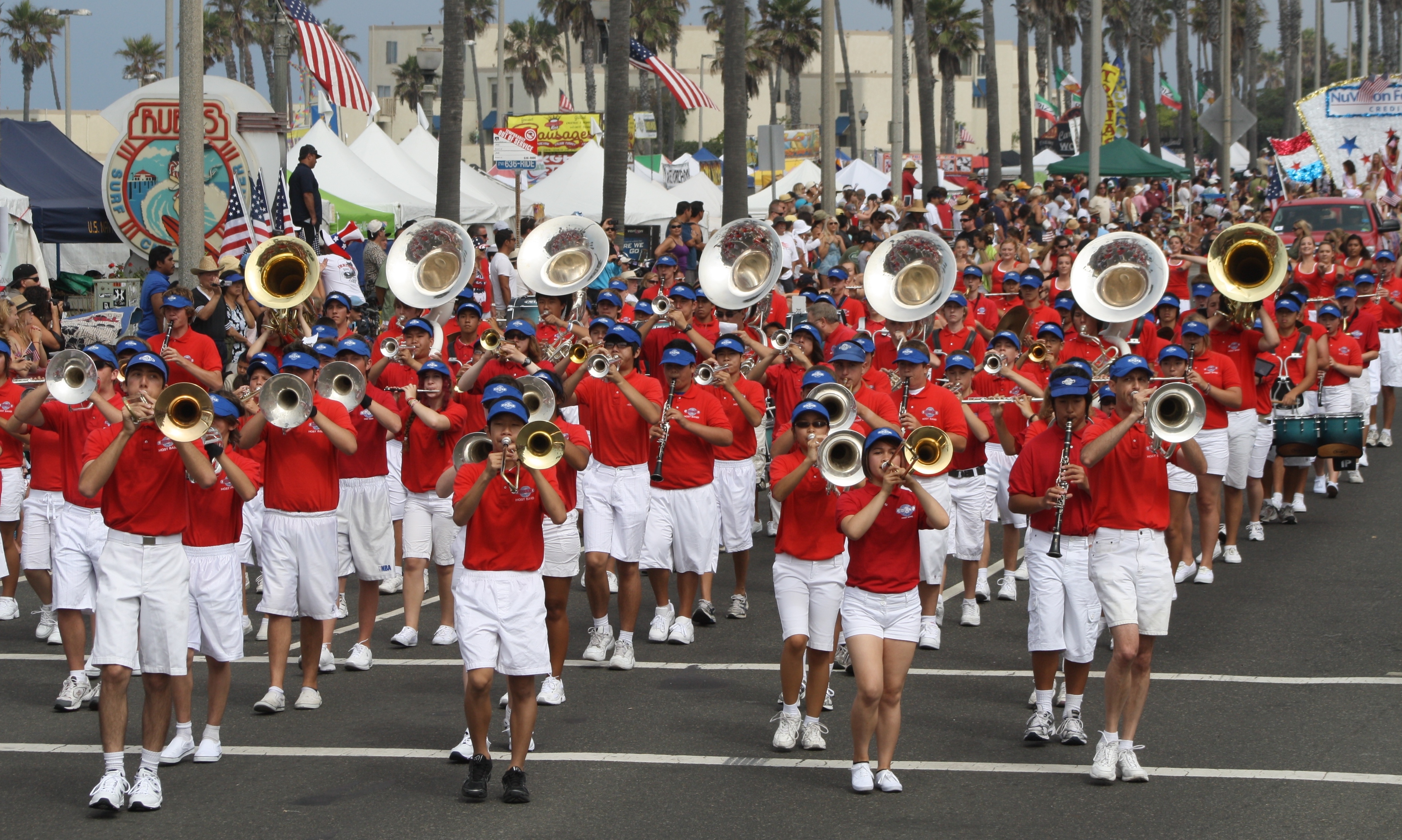
    http://www.huntingtonbeachparade.com/archives/huntington-beach-parade-huntington-beach-high-school-marching-band-4/

    report on the Giving in Hard Times Project that attempted to increase volunteering levels in the UK showed that none of the employed approaches increased volunteering, according to Peter John, professor of political science and public policy at the School of Public Policy, University College London. The conclusion of this report in Professor John’s words was “finding out that something did not work means more research can discover something that does.”

    Ok, that’s an honest conclusion and implies that recruiting volunteers is not as easy as some might think. You know, for some odd reason, this makes me think of comedian Louis C.K.’s hilarious riff on children who continually ask “why” to every answer given until a parent incoherently rattles off meaningless garbage or just yells at the child. Sometimes organizations repeatedly ask volunteer managers “why are there no volunteers” without hearing or understanding our answers, much like four-year old tykes. It goes something like this:

    Senior Manager Gwen: Esther told me there were not enough volunteers at the Golf Tournament on Saturday. Can you tell me why?

    Volunteer Manager Toby: Well, there were 10 really capable volunteers in attendance, as per the original request, just three short of the last-minute requested number.

    SM Gwen: Well, why weren’t there 13 volunteers there?

    VM Toby: There were several reasons, the biggest one being that we had ten volunteers lined up and Esther asked for three more on Friday at 4pm. We made numerous calls, but were not able to procure extra volunteers.

    SM Gwen: Why couldn’t you reach more volunteers? You say we have a hundred volunteers on our list, why couldn’t you get three more if you actually called everyone?

    VM Toby: Mainly because not every volunteer is available last-minute and our volunteers are very busy people with jobs and families and other commitments. Most volunteers are not home at 4pm. I know this because I have had multiple requests for last-minute volunteers.

    SM Gwen: Why are they unavailable? Didn’t they sign up to help us?

    VM Toby: Of course they did and they do; if I might show you last month’s volunteer hours, you will see that we increased volunteer participation 20% over the month before.

    SM Gwen: I’m not interested in stats right now. Why then do I have a golf tournament coordinator who had to stay an extra hour to collect and tally all the score sheets?

    VM Toby: Yes, I was told that by our lead volunteer, Ben who by the way was a professional events coordinator for over ten years. However Ben said that volunteer staffing was more than adequate and that some volunteers did not have enough to do. He also mentioned that the scores were not tallied on time because the system for collecting them was chaotic. He offered to help, but was rebuffed.

    SM Gwen: Huh. Be that as it may, 13 volunteers were requested. So why can’t you recruit people who are available to us, like people who aren’t doing anything like the ones who have no jobs and no commitments?

    VM Toby: Well, because typically, people who don’t do anything don’t do anything for a reason. Mostly, they don’t wish to volunteer. We try, but they don’t follow through.

    SM Gwen: C’mon. It can’t be that hard.Why can’t you just convince them? Do you need one of our marketing people to come talk to recruits?

    VM Toby: Thank you, no. From my extensive experience, volunteers need to hear a message directed at their wants and needs, not a general marketing message meant mainly for donations..

    SM Gwen: Why are you taking that attitude with me?

    VM Toby: Because I feel like you are calling me incompetent and incapable, of which I am neither. Recruiting volunteers takes skill and I have recruited and retained forty productive volunteers in the past two years. Besides, I also weed out inappropriate people as well, It’s not about numbers here, it’s about great, professional people volunteering for our organization. I’m proud of our volunteer force .Last minute requests will always be hard to fill, but I willingly do my best every time.

    SM Gwen: Then why can’t Esther get 3 volunteers when she needs them? Three, just three?

    VM Toby: Ok, because I’m stupid and lazy and I just want to collect a paycheck! I come in late, leave early and spend hours at lunch. I could care less about this mission and just want to find another job! Recruiting is easy, managing volunteers is a breeze, any idiot can do it, all right?


    Yeah, kind of like answering a four-year old’s why parade. Even a well-thought out attempt by highly qualified people to increase volunteer rates proved that volunteer recruitment is a complicated and nuanced task.

    So my why question to organizations is: Why aren’t volunteer managers judged on the number of competent and productive volunteers professionally recruited and managed, instead of on the perceived handful of phantom always available mind-less volunteers who are unavailable last-minute?

    -Meridian


  • 10 Ways Managing Volunteers Prepare You for Life

    tool box

    Do volunteer managers possess an enviable set of mad life skills? Should we share those finely honed skills with a world looking for self-help?

    Hmmmm. So I’m thinking, we could advertise an immersion self-help experience by inviting people to come manage volunteers with us for a week,  kinda like a  “psyche boot camp.” Maybe we could even make a bit of money on the side.

    I can see the advertisement now: “Volunteer Manager Life Lesson Boot Camp-We’ll Give You a Psychological Boot in the Psyche.”

    So how exactly does volunteer management prepare us for a good productive life?

    1. It shows you how to find your own satisfaction:  You will learn to not expect praise for every little thing even though the job may be harder than anyone knows and it’s never a 9 to 5 job. (Kinda like the skills needed to raise a family.)
    2. It shows you how to stifle envy and look at the world in terms of concepts bigger than your ego: You will learn to experience personal gratification from others’ successes and take pride in seeing others’ soar. (Kinda like the skills needed to function well in society.)
    3. It teaches you patience and persistence: You will learn that amazing projects take a long long long time and an unbelievable amount of hard work, even though people may want results immediately. (Kinda like the skills needed to build a wonderful and fulfilling life.)
    4. It teaches you that not everything is as it appears: You will learn that circumstances are unique and can surprise, delight and disappoint you, but won’t deter you from carrying on and being optimistic. (Kinda like skillfully finding personal happiness from within, not from without.)
    5. It teaches you that people are complex, amazing creatures: You will learn to look deeply at people and not just at their surface persona.(Kinda like the skills of great leaders.)
    6. It teaches you that being a martyr is a waste of time: You will learn that if you make it look easy, everyone will think it’s easy and that overextending yourself just brings stress. (Kinda like finding the skills of self-care in order to be at your best.)
    7. It teaches you to negotiate like a champion: You will learn to mediate and resolve issues in a respectful, productive manner. (Kinda like the skills you need to navigate buying a car or resolving issues with a neighbor.)
    8. It teaches you that passion is infectious: You will learn to channel your inner enthusiasm while inviting others to join in. (Kinda like the skills needed to find a circle of friends and to be involved in your community.)
    9. It teaches you critical thinking: You will learn to analyze situations and resolve problems quickly and efficiently. (Kinda like the skills needed in life.)
    10. It teaches you compassion and empathy: You will learn active listening skills and the ability to truly empathize with people of all walks of life. (Kinda like the skills needed to be a good person.)

    These are just 10 of the life skills volunteer managers possess. In order to be a success at our jobs, we must adopt many skill sets that actually help us navigate our own lives. Luckily for us, these skills also make us better people.

    -Meridian


  • The Two Forks and Timing

    forks3
    Icebreakers: I could never really get the hang of using them at the first meeting when training hospice volunteers. I usually got eye rolls and polite “oh here we go” smiles so I opted for a more conversational start to training new volunteers who had real expectations for a serious mission.

    I did however, develop a few exercises of my own that I introduced into the middle of volunteer training. Admittedly, these were often self entertaining and helped keep me engaged and I tried to deliver them with a twinkle so that the volunteers understood that the subject at hand was not just about doom and gloom. Hopefully they saw a lighter, quirkier side that prepared them to view patients and families with appreciation for the diverse and sometimes absurd situations that might arise.
    forks2

    One exercise for a small group was “two forks.” I asked the volunteers to arrange two identical forks in any setting they wanted. I told them to just arrange them on the table however they envisioned them at the moment. After the volunteers arranged the two forks, I would “interpret” their arrangement with phrases such as, “you are very open minded” or “you are extremely creative.” Teens especially liked this exercise. They would smile wryly and mentally call me out on my “game” but they would play anyway and seemed to enjoy the spoof of psychological testing. (I always did “fess up” and tell the volunteers that it was all made up) But then we would seriously discuss volunteering with various personalities and how to best connect with folks.
    forks

    Another exercise that I used in group training was the personality test. I downloaded a simple quick personality test with broad results and tweaked the questions to represent volunteering scenarios. I asked the volunteers to record their answers on their paper and then tally up their score. I then read the “results” according to the score ranges. For instance, those with a score within 10-20 were introspective while 90-100 were very outgoing.

    But I added my own twist to the test results. I made up silly outcomes for each personality type based on volunteering with a patient or family member such as, “it is said that this personality type because of their bubbly personality ends up talking so much about their recent family cruise that the family member actually experiences seasickness.”

    About halfway through the result reading, the shocked looks turned to laughter and relief. “Oh you got us,” the volunteers would say. But it wasn’t just for comedy relief. We then went on to discuss the different ways a well meaning volunteer could over step their boundaries and reiterated how to keep active listening in mind. Those were productive conversations.

    One thing I did learn in years of training was that timing is everything. Acting wacky or introducing quirky subjects too soon destroys the trainer’s credibility. Once trust and sincerity is established, then comedy relief and diverse teaching methods will be much more readily accepted. The same goes for introducing deep subjects. Volunteers have to be ready in order to really digest profound information.

    My barometer of a class’ comfort level was always predicated on the day the class got up and freely helped themselves to coffee and snacks while chatting warmly with one another. It usually took two sessions to establish that level of comfort and trust. (I always taught six 3 1/2 hour sessions for initial orientation).

    But once that comfort level was achieved, then I could introduce really fun activities, and on the flip side, speakers with really deep and profound experiences to share. Classes laughed and cried, but only after we all felt really safe with each other. Honestly, those intimate moments with new volunteers are memories so precious to me, I can’t even begin to describe them. How fortunate I am to have them.

    Yes, timing is everything. Volunteers look to us to illuminate the way and we should be honored to own that responsibility. Providing volunteers with deep meaning enhanced with light and laughter takes some sense of timing. But when you get it just about right, it fills your soul with the most amazing moments.
    forks4

    Training volunteers creates a bond with them from the very beginning. We neither have to be just ultra serious nor just silly and entertaining. We only need to make them comfortable and care that they learn and feel a part of our team. This sincerity paves the way for the information you want to present.

    So, don’t be afraid to have some fun.(When the timing is right of course) Arrange your own two forks, create a personality test, make up an icebreaker and watch the magic happen!

    -Meridian


  • The “Blockholm” Syndrome

    6-112860-dog-kittens-1438803469
    From Mom.Me

    Javier is a former volunteer coordinator for a large non-profit agency. He now works as an insurance representative and jokes that he was hired because he had access “to all these retired people.” As he runs his fingers through his hair, he says. “I often regret that I left my volunteer coordinator job. I really thought that I was doing fulfilling work and I had some ideas to engage more volunteers, but at the same time, I felt really, oh, I don’t know, unimportant. Besides myself, we had a volunteer manager, Kristen, and another volunteer coordinator, Gail. Kristen would often vent her frustrations at senior management’s lack of understanding of volunteer services. She would come down from a meeting and roll her eyes and say, ‘Well, we got overlooked again.’ I think that affected Gail and me a lot. We began to notice little things more, like not being recognized for organizational accomplishments, not being remembered on Volunteer manager appreciation day, and other things, like not being called on in staff meetings to offer opinions. I started to think that I wasn’t producing enough, so I started looking for another job. When I landed one, I gave my notice. I’m not sure how I could have changed the way I felt, but I wish I could have.”

    Tragically, Javier is not alone and while it is really crass of me to compare volunteer managers to survivors of traumatic hostage taking, aka the stockholm syndrome, I just wanted to point out that we, volunteer managers can easily start to believe that we are not as valuable as other staff based on our perceived treatment of volunteer services. Our self-worth can be “blocked” when we think that the volunteer department is the last one to be recognized, funded, or given educational opportunities. For those who are the sole volunteer coordinator, it is especially difficult, because who the heck is there to commiserate with besides the little stuffed tiger that sits on the back of the desk? (you know the one with the huge blue eyes a volunteer brought back from her trip to India).

    Others might point out, “well, jeepers, the volunteers praise you all the time and lots of them are highly educated!” But true as that may be, do we not equate volunteer praise to the cuteness of a parent’s praise and think, “Yeah, well, they have to say that, they’re my volunteers!”

    Deep down, do we not wish upper management could see what volunteers see in us? Do we long for that one on one with senior management so that they could feel our passion? Do we secretly hope that one of our more respected volunteers would burst into the CEO’s office and declare, “look, you have got to come to your senses and realize how valuable your volunteer manager is and I’m here to make you see that. Now sit!”

    If we are not careful, we may become victims of the Blockholm syndrome. We can get dejected, depressed and frustrated as we look through the prism of low self-worth. So, how to keep from being “blocked?” Here are just a few suggestions:

    1. Keep all notes of praise-as a matter of fact, write down verbal praise after the fact and keep these in a handy drawer. You will be shocked and buoyed by the rapid accumulation of kind words.
    2. Deflect flippant unkindness-remember, snide comments are all about the speaker, not anything you’ve done.
    3. Check in with people who care about you. Hearing from those who lift you up helps  and don’t dismiss volunteer praise. The volunteers are smart, accomplished, perceptive people and their praise should never be discarded.
    4. Continue to advocate for the great work you do. There are plenty of staff who notice your accomplishments even if they don’t vocalize continuous praise. Actually, praise everyone around you-they probably feel overwhelmed and undervalued just like you. They will return the favor.
    5. Find ways to get volunteers into the limelight. Great publicity usually shines brightly all around.

    Volunteer managers are amazing individuals who impact the lives of so many people from clients to volunteers to family and friends to other staff members. While we usually humbly state that we don’t need praise to function, we too, are human and sometimes feel under valued by circumstances around us. Don’t let it block your self-worth.

    In the words of a volunteer, “I owe so much to my volunteer coordinator. She trained me, spent time with me and showed me the way. She was patient and kind and now I am so proud of the work I do. I am a better person because of her.”

    Let’s all unleash our potential by focusing on the positive instead of letting the blockholm syndrome define who we are.

    -Meridian