Tag: recruiting volunteers

  • “Is It Too Much to Ask?”

    lock“Is it too much to ask?” Calista queries while wiping grape jelly off the hands of her five-year old. She smiles and pats him on the head as he runs off to join his three older sisters in the yard. She drops the rag on the counter and sits down on the bar stool. “I’m not a high maintenance person, not at all. But, I mean, I do need some consistency and direction.”

    Calista started volunteering for her PTA after some pretty heavy pressure by the PTA officers. “Maybe it’s because I have four kids in that school,” she laughs, “but I became a target for their recruitment. Maybe it’s because I’m a loan officer at the bank which makes everyone assume I’m the goddess of paperwork. And I know every volunteer group has their share of paperwork!”

    Feeling the need for parents to step up, Calista agreed to volunteer and she set aside time for the next meeting. “I’m fortunate because my husband, Josh is great and encouraged me to get involved so I did. After dinner one night, I headed out for my first meeting. I was introduced to the President, a nice lady named Jenna and I met all the other officers as well. They seemed very pleased to have me join the group.” Calista leaned back. “They had quite a number of projects going, including holiday events, fund-raisers and volunteering in the classroom. After the meeting was over, I realized they had gotten me to sign up for a call tree and also as a member of the awards committee.” Calista giggled. “Oh, they were good. I kind of liked the two areas I signed up for. The call tree I could easily do from home and the awards committee sounded fun. At the end of the year there would be awards for students, teachers, parents and even office staff. I have to admit, I was hooked.”

    Calista thought for a moment. “Every month I would faithfully attend the meeting. Jenna, the president took me aside and asked if I would research prices on awards for the award ceremony, present my findings at the next meeting and I agreed. I wasn’t being utilized on the call tree and I just figured that no calls needed to be made, but at the next meeting I was armed with the awards information. I had spent a good amount of free time gathering prices, guarantees, choices, etc. But when I got to the meeting, I found that the president had already contracted with a company to create the awards. When I asked the president about my research, she said that it may come in handy next year, but that she had to act fast on a promotion that someone sent her. I gotta tell you, I was annoyed. She could have emailed me so that I didn’t waste my time.”

    Calista was a victim of Lack of Communication (LOC).

    I’m ashamed to admit it, but I have been guilty of the LOC malady. And I had no good excuse for my lack of communication. Now here’s the thing about committing a LOC on volunteers. A real volunteer’s time and effort is disrespected by misdirection, no call back or no follow through. Running into a volunteer that is awaiting your call is like rounding the cat food aisle to see someone you owe 20 bucks to and forgot to pay. When we see this volunteer do we say, “Yeah, I could have called you to tell you that the project you were so excited to be part of has been scrapped but I chose the cowardly way by ignoring it and you.”

    Being mindful of volunteers’ time and effort is crucial to volunteer retention. We can’t give a volunteer an assignment or tell them we will call them without following through on that promise, because it is a promise, a promise to treat them as a valued member of our team. And, as if we didn’t have enough work, we cannot let other staff members commit a LOC either. We have to be on top of their treatment of volunteers too.

    But what about those conversations in a hallway, or on your day off in the store when you promise something to a volunteer but don’t write it down or store it in your phone? If I had a dollar for every time that happened to me I’d have a nice little nest egg right now. When I’d finally given up on the idea that I could remember everything (yep, you’re right, control issues), I began to be more honest. “Well, Donna, I’m so glad we ran into each other here in the feminine hygiene aisle and we got to talk about your wanting to get involved in that new project. I can’t tell you how excited I am to have you work with us, thank you so much. Can I ask you a favor? I’m afraid that because it’s a Sunday evening and I don’t have a notepad with me, I might let this conversation slip and I would be mortified if I didn’t call you tomorrow with that information. Would you mind calling me tomorrow to remind me? You would? Thank you, you’re the best!”

    Now, when Donna calls the next day, I can chuckle and say, “Thank you for calling me. I was so excited that I was just about to call you, but sometimes I forget. You are unforgettable of course, but now let’s talk about your involvement.”

    If a volunteer calls and says, “I haven’t heard from you…” that is red flag territory. For whatever reason, that volunteer was handed a LOC. Open it with honesty.

    Honesty goes a long way. Sincerity gallops right along with honesty. I’ve had to say, “I didn’t call you because I’m an idiot,” and “I didn’t get that information because I let time get away from me and I sincerely apologize.” Ouch, It’s sobering to realize that I’m not super volunteer coordinator. But, I am human and I do care about volunteers’ time and energies.

    Calista sighed deeply. “You know, it would have been ok had I gotten some sort of acknowledgement that my effort was for naught. An apology, a reason I wasn’t informed, something. That would have gone a long way to make me feel valued.”

    Volunteers do not expect us to be perfect. However, they do expect their time and efforts to be valued. Communicating is about valuing them. And too many sloppy LOCs will produce a volunteer LOC out!
    -Meridian

  • Let’s Just Have Tea, Shall We?

    teaMarlene has been a volunteer coordinator for ten years. She’s adventurous, loves rock climbing, extreme sports and her idea of a pleasant evening is a demolition derby. It’s only natural that she would bring her sense of adventure to volunteer management.

    “I like to try new things all the time,” she says with the tiny grin of a child caught in the act. “I like to see the things others are doing and try to incorporate that into my volunteer program. Here at my hospital, it’s easy to get into a complacent stage where you think all people who come to volunteer in a hospital setting are pretty much the same type of person. I’m constantly being told to find retired nurses and health care workers, because they would naturally want to continue their line of work after retiring, wouldn’t they?” She laughs easily. “I mean it’s this kind of thinking that breeds a stale environment. Now don’t get me wrong, I understand that a retired nurse would be easy to train because she knows the system so well and can follow the rules. But,” she adds with a mischievous gleam in her eye, “what about the retired nurse who was so fed up with obeying the rules, and she wants to volunteer to break the constraints wide open? Huh, what about that?”

    Marlene has a great point. Organizational administrations who tend to lump potential volunteers together will most likely also make the mistake of lumping actual volunteers together in a “them” mentality. Ignoring the subtle complexities of volunteer management will foster this stale and outdated thinking.

    “When it comes to interviewing potential volunteers,” Marlene continued, “I’ve tried everything from quizzes to group interviews to structured questions. Sometimes these techniques work, and sometimes they don’t. We’re in an age when background checks are not enough, not if you really want to get to know the motivations of the volunteers working within your system. Do background checks uncover mental illness? Does a quick call to a reference on an application reveal the tendency to get over-involved with children? Will an interview question about the reason a person comes to volunteer actually produce the real answer?” Her grin widens. “And what is the real answer, now that is the question?”

    Marlene has had some experiences she wanted to share with us. “Look, I tried a list of good, solid questions, but what I often found was that I immediately put the volunteer on the defensive. For instance, I asked a man why he wanted to volunteer with us and he shrank back like I hit him with a bat. I could see in his eyes that he was searching for to the correct thing to say, so I knew right then that I wouldn’t be getting an honest answer. Now, mind you, this man became a great volunteer, but that interview question did not help me in any way. Actually, it hindered the rest of the interview and it took some time to get to know him.”

    Marlene looked for the right words. “But, I knew that I wanted answers to certain questions so I started experimenting with peppering the questions into a casual conversation. The whole process took a bit longer, but I found that in the majority of cases, it was well worth it. My mother was born in England and so I began to create in my mind what I termed the ‘spot of tea’ scenario. I would invite potential volunteers in for a twenty-minute chat and a cup of tea or coffee.

    At first I started by asking them simple questions and I found that even that put them a bit on the defensive so I experimented with trying to put them at ease. And now I begin by first explaining our program to them. It works so much better and puts them at ease. I start by introducing myself and talk about how the program works, our volunteer jobs, and some of the benefits of volunteering. I make sure that I tell them how rewarding our existing volunteers find their work to be. Then, and only then, do I start to ask some questions in a conversational manner. I’ll reword the questions every time so that it doesn’t sound so rehearsed.” Marlene laughs. “If you don’t think most potential volunteers can spot a canned question, then you don’t know volunteers!”

    She continued, “when people are comfortable, they will naturally open up, much more than when they are put on the spot by invasive questions like why are you here?” Marlene then recalled an incident during the beginnings of her ‘spot of tea’ interview. “I remember one young man who came in. We were talking, really getting to know one another and he told me that he had been fired from his last job. Because a red flag went up in my head, I carefully asked him what had happened and he told me. I was shocked that he confided in me, but it turned out to be a reason that prevented us from taking him as a volunteer. A background check would not have revealed that information to me. He did.”

    Assessing potential volunteers is something all volunteer managers want to do well. There really is no perfect question, technique or method involved in getting to know volunteers. Whether you have a set of specific questions or not, Marlene advocates first putting prospective volunteers at ease. “Make them comfortable with you so that they can be honest. That way, you’ll not only get some honest answers, but you’ll also have a leg up on figuring out a fit for them. And besides, it’s gratifying learning the volunteers’ stories. It helps you and it makes them feel a part of the organization right from the start.”

    This is why volunteer managers are so incredibly good at their jobs. Even the simplest of tasks such as interviewing a prospective volunteer is viewed as crucial to organizational success. Volunteer managers like Marlene may not try to be perfect, but in striving to do the best possible job in every situation is surely as professional as it gets.
    -Meridian

  • What Could Go Wrong?

    I happened to catch a grandma chatting via video with her granddaughter at college.
    Have a peek at her volunteering experience:
    -Meridian

  • “My Job is Social”

    fort wayne childrens zoo

    I was so impressed by an article I read a couple of weeks ago about the volunteer program at the Fort Wayne Children’s Zoo in Indiana that I just had to call and speak to the volunteer manager, Kathy Terlizzi because something about the article’s description of the program conveyed a specialness about volunteering. Kathy graciously agreed to let me write about our conversation.

    Kathy with Dingo pup
    Kathy with Dingo pup

    http://www.journalgazette.net/news/local/Volunteering-at-zoo-better-than-working-5364666
    I felt so comfortable speaking to her from her first bubbly hello that I imagined all the volunteers, both existing and perspective who are captivated by her passion and dedication. Her program truly is inspirational.

    Kathy has been the zoo’s volunteer manager since August 2009 and was a volunteer at the zoo before joining the staff. “I made changes based on my experiences as a volunteer,” she told me. When she took over, the initial training program for new volunteers occurred either at the end of the season or at the beginning which meant some volunteers had to wait before utilizing their new skills and enthusiasm. Also, the training was a comprehensive training which meant that volunteers, regardless of their comfort level were expected to “get out and do what they were trained for”. Many volunteers, Kathy found, were overwhelmed with the comprehensive training and since there was no practical application (mentoring) along with training, the volunteers were not prepared to roll up their sleeves and jump in to some of the more complicated tasks.

    So, Kathy, seeing volunteers repeatedly become overwhelmed, initiated a stair step training broken into three parts.
    Part one is the basic training for all adult volunteers. This is the ground floor training and volunteers are asked to commit to 18 shift hours before moving up to the next level. Volunteers at the zoo can sign up for shifts online. (the zoo utilizes Volgistics for volunteer management).
    Part two is the Ambassador training which helps volunteers prepare to interact and speak to the general public.
    Part three is the docent training which helps volunteers become comfortable in crowd situations and with handling zoo education animals during animal demonstrations and off site programs for zoo guests.

    This stair step method allows volunteers to take their volunteer training in stages and encourages them to find their comfort level of participation. The more advanced classes may be smaller than the initial basic training, but it ensures that volunteers find their own path and don’t feel pushed into something they are not ready to do. Some volunteers don’t wish to advance while others find that they want to move up. “I believe that volunteers should bloom where they’re planted,” Kathy said.

    I heard real pride and enthusiasm when Kathy spoke about her teen leadership program which is set to kick off in June and July. Daily, 30-40 adult volunteers work in the zoo, but during the summer program an additional 40 teens who volunteer during two-week sessions are incorporated. They too, sign up for shifts online after going through a special teen orientation.
    Teens 13-17 apply for the two-week sessions and the 172 slots are coveted by 250 applicants. Returning teens account for about 99 slots, so the rest are new teens who go through the new application process which includes filling out an online application, answering an essay question and providing a letter of recommendation.
    After the applications are processed and the teens selected comes the logistical nightmare of slotting teens into the program. Kathy spends the entire month of March working on the two-week sessions. Emails and phone calls from interested teens takes over her days as she slots returning teens first and then the new teens are inserted based on gender, age and availability to provide balance. It is an ever evolving schedule as teens find conflicts with their other activities and family obligations.
    But, instead of this monumental task seeming a burden for Kathy, she is stoked about the teen program, and told me that at first, she was intimidated working with teens because of all the negative stereotypes she’d heard about young people. But she found that the teens she works with are wonderful, responsible volunteers. She prides herself as an up front person and speaks to them frankly about dress codes, expectations and sensitive subjects like drugs and weapons. The teens are expected to be professional in their participation, especially in regard to zoo guests. In return, the teens take their responsibilities very seriously and frankly, Kathy says, they “have a lot to say.” Kathy believes in speaking to the teens directly, (although the program is transparent and openly invites parental and guardian involvement) and finds that the teens really step up when given the chance to embrace responsibility.
    One day she discovered some older photographs of teen volunteers doing the same animal handling as the adults, something the zoo had gotten away from over the years, so she advocated a return to letting teens have equal volunteer responsibility. The parents were open to it, she says, mainly because they knew their children were safe within the zoo framework.
    So two years ago, she implemented a two-hour pilot training and 66 teens signed up. At first the teens began with level one animals, bunnies and guinea pigs, but now the teens are handling snakes and tortoises. When the pilot program began, Kathy let the teens know that they were in part responsible for the success of the program and the teens immediately stepped up and showed the professionalism necessary for the program to thrive.

    puzzle feeder
    Puzzle Feeder

    Another success Kathy talked about was increasing the trust level between staff and volunteers. It was a goal she had when she first started and so she spent the first year building a rapport with staff. “I told them (staff) that volunteers will do anything as long as it benefits the zoo. They won’t, however wash your car.” At first the zoo keepers were reluctant, so Kathy took a proactive approach.
    She saw that the giraffe keepers had to prepare food daily for the giraffe puzzle feeders (a hanging feeder with holes that let the food stick out-these feeders simulate the natural foraging of giraffes) and offered to ask volunteers to do the preparation, thus giving the keepers more time to focus on other more pressing tasks. At first the keepers wondered why any volunteer would be willing to do that job, but within five hours after posting the job online, the shifts were all filled. Now volunteers sign up for 2 hour shifts to prepare the giraffe puzzle feeder food.
    Another proactive instance came when the aquarium manager mused about organizing ph data he had been collecting so Kathy offered him a volunteer who was computer savvy in spreadsheets.
    At first he reluctantly turned over a month’s worth of data but when he received his data back in a neatly organized spreadsheet, he quickly turned over much more information to the volunteers.
    That’s how trust is built. Kathy also found a way to incorporate seamstresses into the zoo’s programs. These volunteers make costumes for zoo presentations and also cold weather quilts for the education animal carriers. She also utilizes Spanish-speaking volunteers to help translate signage.

    Kathy has found a great way to work with groups. She says that the community wants to be involved in zoo volunteering so she offers the community the opportunity to participate in Annual Enrichment Workshops (run by a volunteer and his family) where they can do meaningful crafts like make fishcicles or paper mache animals in bulk. These items are requested by keepers and ultimately given to exhibit animals as enrichment. She also utilizes corporate volunteer groups for some of the zoo’s larger events throughout the year.

    But when I asked for Kathy’s advice to new volunteer managers, she grew wistful, “I would tell them to get ready for the ride for it’s all encompassing. It’s fun and rewarding but also sometimes sad because you have this personal rapport with the volunteers and you get involved with their lives.” She also would like a new manager to know that volunteer management is not a 9-5 job, as there are weeknight trainings and weekends spent recruiting or trouble shooting. She says, “there’s one of me and 450 volunteers. And they all want and deserve some of my time. That’s why my job is social.”
    She told me that she had been a manager for many years before working at the zoo and it opened her eyes when she took a personality quiz and found out how high she scored on interacting with people. Volunteer management has fit that bill. Kathy spoke glowingly of being able to put a volunteer in a place where they can grow. Whether it’s a shy, sensitive teen or a senior who is feeling unfulfilled, she derives tremendous satisfaction in seeing volunteers bloom.
    As you can imagine, Kathy is comfortable talking with anyone. She says, “I kid that I need one of those take a number systems outside my door. My office is right across from the volunteer room. Everyone talks to me, volunteers, staff, guests, even family and friends. If I wear my zoo t-shirt to the store, the clerk wants to talk to me about the zoo. So I take the opportunity to ask, how about volunteering for us?”

    For me, it was easy to see why this volunteer program succeeds. Kathy Terlizzi, the volunteer manager, is both passionate and practical. I heard in her voice that she wants every volunteer to succeed, to have a meaningful experience, and to be part of something in which they can take great pride. It’s no wonder the Fort Wayne Children’s zoo is the number one attraction in all of Indiana. This zoo and volunteer program is a success story we can all learn from. I know I’ve taken away these principles from my conversation with Kathy:
    1. Be proactive with staff-analyze their needs and offer volunteer help whenever possible-build that trust that volunteers can help and free up staff to do other pressing matters.
    2. Invest time and thought into your training program-use levels to encourage volunteers to find their niche and don’t overwhelm them with all training at once, instead encourage them to take training in steps. Make sure that the volunteer opportunities are meaningful work.
    3. Model professionalism and responsibility, especially to teens and they will step up to the challenge.
    4. Be prepared to give your time and attention to every volunteer.
    5. Create new opportunities whenever possible to expand your volunteer reach.
    6. Take pride in your work. It’s infectious.

    Thank you so much to Kathy Terlizzi for allowing me a glimpse into this very special volunteer program. It is volunteer managers like Kathy who take volunteering to the next level through dedication and a willingness to believe in volunteers.
    -Meridian

  • If a Butterfly Flaps Its Wings in Brazil, Will Jeremy Volunteer?

    hands volunteering2So, I’m going to pretend for a moment that I deeply understand chaos theory, deterministic systems, and linear functions. I’m going to try to sound really, really smart here, so please don’t laugh too hard when I use fancy phrases like “and so in conclusion,” “what I’m trying to point out.” and “holy crap this is hard!”
    But volunteering I think needs to have its own theory. A few years ago, I developed the firecracker theory that says you will get in big, big trouble if you set off a string of lady fingers outside the door of your boss’ office. It’s related somehow to string theory, but that’s for another day.
    I’ve observed (which you might notice is a great physics term) that a lot of really smart people look at volunteering and the recruitment of volunteers in a very linear way. Their theory goes something like this:
    Volunteer Manager (VM) sitting at desk. A long line of prospective volunteers stand outside the door patiently waiting for their turn to do good.
    VM: Who’s next? May I help you?
    New Volunteer Jeremy (J): Hi, I’m answering your ad for volunteer help. Can you tell me more about it? I really want to do good.
    VM: Why yes, we need someone every Tuesday to help put up supplies.
    J: Oh my gosh, this is unbelievable, I have a Master’s Degree in putting up supplies! I’ve put up supplies for most of my life. I love nothing more than to put up supplies! When can I start to do some good?
    VM: Well, you first have to go through some orientation and training. There’s four sessions starting tomorrow. That might be a bit last-minute.
    J: Tomorrow, huh? Well I had some important surgery scheduled for tomorrow, but I think I’ll reschedule that. To do good by putting up supplies is far more important.
    VM: Wonderful. After that we need to do a background check.
    J: No problem! After we speak, I will go to the police station and have that done. I’ll pay for that myself. While I’m there, do you want me to pay for some other volunteers?
    VM: No, that’s not necessary, but thank you. Are you then available to work on Tuesdays?
    J: Wow, Tuesdays, huh? That’s the only day I have to take my elderly Mother out of the nursing home. She really loves our outings, but hey, what the heck, putting up supplies for you guys is so much more important. I’ll be here every Tuesday doing good! By the way, what kind of supplies are we talking about?
    VM: Well, our organization gets shipments of office supplies on Tuesdays. No one here is willing to do that work.
    J: Office supplies, is it, go figure, my thesis was on the body mechanics of putting up office supplies! This is amazing! I can’t wait!
    VM: You do know, Jeremy that you will have to work alone in a hallway closet. There’s not much light or air, but that’s where the supplies are kept. Is that all right?
    J: I can’t believe this! My minor in college was working alone in a closet, how perfect is this opportunity for me?
    VM: Great, we will see you tomorrow. Thanks so much for volunteering. Next!

    So, in this linear theory, volunteers pretty much show up, get oriented, complete all steps and faithfully volunteer. It’s a lovely parallel universe, one with giant blue people and shimmering unicorns who love to do good.

    Recently, I attended a volunteer orientation for another organization. Of the seven people who took the evening class, I was the only one to show up at the meeting the next week. What happened to the rest? What mean and evil butterfly in Brazil kept them from doing good?

    Well, to that question I say, Holy crap, this is hard! See, I told you there would be some fancy phrases here. I can’t even begin to list all the variables that prevent volunteers from becoming linear, but here are a few. I’m sure you could add countless more.
    I want to volunteer but:
    I just lost my job or I just got a job.
    I got sick. I’ll try to come back, but it depends.
    I have to move or I just moved.
    I have no transportation, my car broke down.
    I have to watch my grand kids now that my daughter went back to work.
    I just had a significant death in my family.
    I just got divorced.
    I don’t think this is for me, sorry, but I thought it would be different.
    I completed my task and I’m moving on.
    I bit off more than I can chew-yes, sorry, my intentions are good, but I just can’t seem to find the time.
    I’m not getting what I need. Sorry, I thought it was just about doing good, but maybe I need more.
    I have to tie up some loose ends at home, then I’ll be back.
    I’m really looking for a job and it looks like there are none here.
    I burned out on all this saying yes.
    I’m going to disappear now and you’ll never know why.

    What determines the likelihood that Jeremy will volunteer? Luck, hard work on our parts, a perfect universe? Is it random no matter what we do? And, should we blame ourselves when not every prospective volunteer turns out to be volunteer of the year? Does a physicist blame himself because there are so many variables or does he accept the fact while learning from it?

    So, if we start to accept the intricate theory of volunteering, then does that not elevate the role of the volunteer manager who must be an analytical leader?

    Volunteering truly is like the famous Edward Lorenz quote, “Does the flap of a butterfly’s wings in Brazil set off a tornado in Texas?”
    Whether or not someone volunteers may not be dependent upon a butterfly flapping its wings in Brazil, but sometimes a random call from a relative thousands of miles away can alter our volunteers’ lives in an instant and therefore impact their ability to volunteer.

    Hmmmm. And so, in conclusion, because volunteer managers work with these variables every day and still inspire vibrant forces of people doing good, I think some real credit is in order. Go ahead, flap your wings, butterfly. We’ve got this.
    -Meridian

  • Where the Heck is My Paper Shredding Volunteer?

    Paradigm-ShiftArrrrrrggggggggghhhhhh.

    So, we all know there is a paradigm shift happening in volunteer management. As the WWII generation sadly leaves us, we are looking to the baby boomer generation and on to fill their prodigious shoes. When I first started working with volunteers, the greatest generation was busily humming along, doing every and anything necessary to fill needs. Nothing was beneath them and honestly, I didn’t manage any of them, I basically stood back in awe and occasionally ran for some refreshments. They taught me humility for it was in their essence to be humble, hardworking, non-complaining, authority respecting and generous.

    As I watch their faces grow more lined, their limbs more trembling, their gait unsteady, I can only stand by helplessly, offering a hand to their elbow as they decline. Their eyes, though, clear as an autumn sky, still hold the hardships they endured as they endure one more.
    As these volunteers age and retire, we, volunteer managers know that the next generation of volunteers will be different, will be their own people with a new skill set needed to recruit, engage and cultivate them. So, as I read the research and advice on how to find and keep great baby boomer volunteers, I make note of not only the advice that’s out there, but the experiences I’m having as well. I’m seeing that boomers are different; they are not as inclined to want repetitious jobs or confining schedules. They want more perceived meaning in their lives and they balk at boring assignments and rigid requirements. A lot of them look at volunteering through a spiritual or universal prism and speak freely about their journey to find meaning. There are those who were very active in the 60’s revolutions and after working corporate jobs for years, want to return to their activism roots.
    But back to the WWII generation. I remember Dora, a volunteer who came in to shred papers. Her husband was a big band trumpet player and she accompanied him on USO tours during the war. She would sit for hours in front of the shredder, pulling staples and paper clips, shredding no more than three pages at a time. Dora was possessive of the shredder and when another greatest generation gentleman, Bob came to shred papers, she sniped about how he didn’t do it right. Bob, a man who was orphaned during the Great Depression, was a bombardier who flew missions over Germany. Those two volunteers knew that we needed the sensitive material shredded and they dutifully spent their time helping us see that job done right. For them, there was no answering of phones, no fund-raising, no strategic planning, nothing except paper shredding with no complaints.
    Both Dora and Bob died some time ago. I tried to replace them and could do it piecemeal for a while by asking office volunteers if they would “just do it for an hour” while they were at work. An easy job became harder and harder to fill as Bob’s and Dora’s generation started to slip away.
    As we grew used to the dwindling of the generation that included widows who never worked and needed more training and help with office duties and war heroes who never spoke about their experiences, we embraced the boomers who work hard, have boundless skills and opinions and challenge us to dig deep for a more involved volunteerism.

    So, what’s the challenge? It lies in being able to integrate the paradigm shift into the fabric of our organizations. Newer organizations or those run by young people already have a deep understanding of millennial and generation X and boomers. It’s the organizations that are older, run by long-term administration who looks at volunteer services as “it’s always been thus.” Convincing them that no one wants to shred paper anymore after it’s been shredded for years by willing volunteers is tricky.
    I loaned a volunteer out to another department who needed one time help putting together last-minute binders for a presentation. Jill, a fabulous boomer who normally works on statistics and research agreed to lend a hand for a day. She came back and pleaded, “don’t ever ask me to do that again because I will quit first. They had me copy a 100 page binder thirty times. Do you know how many people came up to me and complained that they couldn’t get copies made while I was there? And the machine ran out of toner, then it jammed, I think it probably overheated too. I had to just stand there and watch as the copier ran. It was excruciating!”
    Thankfully, Jill happily returned to her more meaningful tasks and we laugh about her foray into “copier purgatory.”

    As we have adjusted our thinking regarding volunteers and their changing involvement, our organizations need to rethink their view of volunteers as well.
    Old thinking: Volunteers will do any job regardless of how tedious.
    New thinking: Volunteers need meaningful experiences.
    Old thinking: Jobs that have always been done by volunteers will happily continue to be done by volunteers.
    New thinking: Maybe we should invest in a paper shredding service and use volunteers for more important jobs.
    Old thinking: Volunteers are all the same, they come to be helpful, we tell them how to be helpful, they do the job and go home happy.
    New thinking: Volunteers have so much wisdom, experience and passion to offer, let’s find ways to tap into that.

    Bringing research and evidence that volunteering is changing and that we must adapt is no small mission. Telling management that old thinking is well, old thinking and that it is nearly impossible to find volunteers to do menial tasks without sounding negative takes finesse. Being proactive and showing what the new volunteer paradigm can do goes a long way to ease the pain of losing shredding volunteers.
    Let’s see, volunteers who shred papers vs. volunteers who design websites or consult or have management experience? Hopefully, organizations choose a new wave of professional skill sets over mundane tasks.

    Old thinking: All a volunteer coordinator has to do is ask and a volunteer will magically appear to shred.
    New thinking: It takes multiple complex skills on the part of our volunteer coordinator to engage the new volunteer. Let’s listen to him or her about volunteerism and accept that he or she has done the research and has knowledge on the subject.
    Added bonus or really new thinking: Let’s give him/her some much-needed recognition next Wednesday during International Volunteer Managers Day.
    -Meridian

  • The Shiny New Coin

    JFK CoinThe shiny new coin, there is nothing like it. It actually has a scientific reason for its radiance. During the coin striking process, the mint luster is born. The coin isn’t shiny because the mint polishes it, it is shiny because the metal changes on a molecular level.
    David is a retired physicist. When he arrived at new volunteer orientation, I honestly did not know what to make of him at first. A giant bear of a man, his full white beard and shaggy head of hair made him look like a cross between Santa Claus and a guy who just stumbled out of the wilderness. His soft shoes and wrinkled khakis matched his sleepy voice. “I hope I’m not late” he said quietly as he joined the others. The other volunteers, who had already arrived looked up at him and then at me as if to say, “Who on earth is this guy? And what will we do with him?”
    Our class was fantastic as most volunteer orientation classes are. I love to watch the group dance around each other at first, then slowly as they learn their group rhythm, they take partners and switch as they emotionally swirl around the room, getting to know each other. As their comfort level increases, they relax and share opinions, histories, fears and hopes. It’s invigorating, educating and fulfilling all at the same time.
    I thought David might be the wallflower, awkward and shy, unable to garner a dance with anyone, but I was wrong. In his calm voice he engaged everyone brilliantly, doing an emotional tango with each member of the class. Before long, we had lively debate and discussion, tempered with genuine care for one another. We met four times and I know I came away feeling refreshed. I hoped the class members did as well.
    David called me several times before he was placed with a volunteer mentor and I got to know more about this shiny new coin. He had some experiences helping friends and relatives, but this was his first formal volunteering venture. We talked about questions he had regarding working with dying patients, and we talked about personal motivations. He was hesitant and hopeful and promised to call me after his first real experience.
    David called me this past Monday morning. It was about 9am and as with every Monday, the week seemed daunting so when he called I sat myself down and tried to focus. “Hi David,” I said, “what’s going on?”
    David asked me if I had time to listen and I of course said yes. With volunteers, any time is the right time. If we put them off, we’ll never carve out the precious time to hear what they have to say. As I settled in, David said that he mentored with a seasoned volunteer, Hal in a hospice house. He told me that Hal showed him around, teaching him all the little things that needed to be done. Then Hal brought David into a room with a patient, Mary. Mary, an 87 year old former cook from Ireland was lying peacefully, eyes closed in her bed, and Hal whispered a hello that hung in the air. He quietly told David that Mary did not respond to his voice but that he would often just sit with Mary so that she wasn’t alone.
    “Would you like to sit with her while I check on other patients,” Hal asked David and he agreed, but was somewhat nervous at his first real experience.
    David’s voice grew quiet, a breath in the line. “I don’t know what possessed me, but I sat close to Mary and looked at her face. Something took hold and I started singing softly. I sang “Danny Boy” to her and I don’t really ever sing, not much. I would imagine that she couldn’t hear me, but she opened her eyes and looked at me. And then she smiled, the most beautiful peaceful smile I’ve ever seen. When I was done, she closed her eyes again. So I sang another song and she opened her eyes again and watched me sing. Every time I would stop she would close her eyes, and when I would sing again, ever so softly, she opened her eyes. I can’t quite put into words, but I felt like we connected on a level so deep that time and place meant nothing.”
    “Wow,” was really all I could whisper, caught in the still moment.
    “Is it always like this?” David asked and I could picture him on the other end of the phone, his molecular volunteer structure lined up so perfectly.
    What could I say? “The possibilities are yours to find,” I told him. (Just like we found you, a shiny new coin.)

    My Monday melted away and I felt my molecules returning to their own luster. If I helped even just a wee bit in aligning David’s molecular volunteer structure, I feel honored and humbled and so fulfilled.
    As we mentor the volunteers in our care, think of their volunteering as a newly minted coin, forged by inspiration.
    The shiny new coin. There’s nothing like it.
    -Meridian

  • Just a Ripple I’m Seeing

    ripple-in-waterOne day a few weeks ago, I was on my cell phone walking down the hallway when I noticed a woman speaking to the front desk volunteer, Molly. While listening to the person on the other end of the phone, I watched the woman engage Molly in conversation. As I talked, my attention kept darting back to the woman at the front desk. There was something about her.. something I couldn’t quite put my finger on. She looked familiar, and I wondered where I had seen her before. I thought that she might have been a former caregiver who we had helped. I see caregivers all the time when they come back and thankfully want to give back. I studied her face. Her eyes, they just had this crinkly way of smiling as she spoke. And her chin, it was just so familiar, but really her mannerisms spoke to me. It was like losing your memory and seeing a good friend again for the first time.
    Curious, I came closer and heard her ask Molly about volunteering. Molly was handing the woman a packet of volunteer information, but as I approached,
    Molly saw me and said, “oh here, here’s Meridian, she can tell you more about volunteering.”
    I caught the woman’s eye and as she looked at me, I felt deja vu. “I’m Bree,” she said, holding out her hand and we shook. Her hand felt like favorite family. We walked back to my office and she sat down, her eyes taking in everything as though she had seen it before, in another life. Then she smiled a knowing smile. “My name is Bree Phillips and I’d love to volunteer here.” Hmm, I thought, the name rang no bell, and I wondered if maybe she had changed her name. Bree continued. “I just moved here to be near my mother after having been through a long divorce. Because Mom is getting older, I need to take care of her. But I have some free time to give, and really, I’m here because of my father. He volunteered here many years ago.”
    “No kidding,” I said, not recognizing the name Phillips, “who is your father?”
    “George Keenon,” she said.
    My mouth dropped open. “Your dad is George Keenon?”
    “Yes,” she answered, “did you know him?”

    Oh my gosh, it suddenly dawned on me, those eyes, her chin, the mannerisms, I was looking at a female version of George, a volunteer who was one of my all time favorite volunteers. In that instant, I felt like I was sitting with him again, enjoying his stories of growing up on a farm, his love for family and helping others. George volunteered during a time when sadly, male volunteers were scarce and he stepped forward to fill requests for a male volunteer to help male patients. He roamed the halls of the hospice care center, complementing the nurses and stopping to acknowledge a broken heart. I remember one day, when a patient was asking to see Frank Sinatra, George entered the room and she looked at him with a smirk and said, “whoa, you really let yourself go!”
    Bree listened to my stories of her father and told me that before he died, he recommended that she try volunteering at a hospice. “He was always talking about his experiences here,” she said. ” I swear, he had this long, great career in business, but he spoke more often and more fondly about his connections to the patients.” Bree’s eyes brimmed with so much emotion. “I want to honor my father by following in his footsteps. I’ve got the time and I want to do something that lights me up the way it lit up my dad.”

    Then last week, I had a new class of volunteers. In the class was a middle-aged woman named Holly Starfire. What an awesome name I thought as the volunteers introduced themselves. Holly was quiet, shy almost when it came time for her to comment on the icebreaker. “Why am I here?” she mused aloud. I think it’s because of my father who volunteered here a long time ago.”
    “Who’s your father if I might ask,” I inquired.
    “Hardy Pike.”
    “What? Your dad is Hardy Pike?”
    “Was,” she corrected. My dad died last year in Florida where he retired.”
    Hardy Pike was a volunteer who, as a young man, had changed his name from David Toth to Hardy Pike because he liked the sound of it. It figured that he would name his daughter Holly Starfire. A big brute of a man, Hardy had blue-collar hands and a bohemian heart. He had built his own house from scratch and fixed heating and cooling units for a living. He loved fishing and poetry and could listen to anyone from little prim ladies to salty language gents. Hardy was an enigma. Everything about him pointed anywhere but volunteering, and yet, he faithfully committed to providing a pat on the back for the terminally ill.
    “I grew up with a sense that the world is full of possibilities,” Holly told me, “and that giving back was more a possibility than a mandate. Dad spoke often about how good he felt when volunteering. He inspired me to find that too.”

    Most of the time, we’ll never know the lasting impact volunteering has on our volunteers. There’s not a statistic for “volunteers who, in whatever area they live, go and volunteer because they’ve been inspired by someone we worked with”. We don’t hear the stories they tell their children. We can’t see their friends and relatives, who are inspired to go out and volunteer themselves. We’re not a droplet of water on the ripple, along for the ride. But if we’re lucky, we will get to meet a son or daughter or friend who comes because they want that meaningful experience they’ve heard so much about.
    And, I figure, if I last long enough, I’m going to meet the next generation too.
    -Meridan

  • The Volunteer Manager Mind or Volunteer Beef Wellington

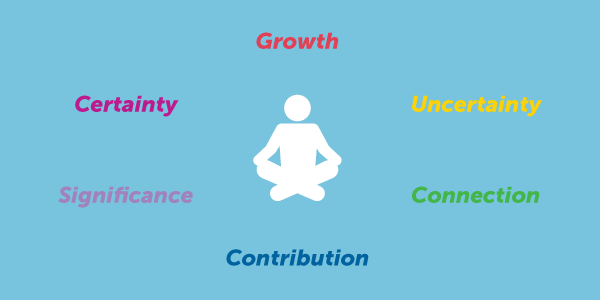
    6-human-needsAfter all these years, I still believe that everyone has the potential to help, that anyone is capable of becoming a great volunteer. I still think that each and every person who expresses just a hint of maybe perhaps it might be possible sometime later if I kinda sorta could be interested for only a wee bit of time is going to be the next volunteer of the year. How do I know that I truly deep in my soul believe this or am I just fooling myself? I truly know this because I know how my mind works.
    See, my mind and I, we’ve gotten used to living with each other. It reminds me that I can’t take that fork from the restaurant and I yell at it because it forgets names, places and where I put my stress ball.
    So I know I sincerely see everyone as volunteers reaching their potential because as I speak to them I get this visual. I sort of see their edges starting to sparkle, kind of like the way an excel spreadsheet cell sparkles when you hit copy. Then the volunteer, as they are talking, becomes a pseudo butcher’s diagram of their parts. Those parts are their skills, their interests, their personalities, their experience, their mindset, their availability, their aversions, their hidden dreams, their motivations, their personalities, quirks, etc. Then my pal, the mind, as it holds the sparkling cuts of volunteer, travels into the mind’s kitchen where it starts to look at all the available ingredients for this volunteer recipe. Hmmm, a dash of Tuesdays, with a sprinkling of creative license and some fresh clients that need a singer who studied in Paris and loves to draw pictures of cats on bicycles. Voila!

    These volunteer diagrams are like the first ingredient in a fine recipe. Just as each part of a butcher’s diagram represents a steak or rib or filet which is the basis for hundreds of dishes like hamburgers and pot roast, our volunteer diagram represents the potential of the volunteer.
    Now here’s the volunteer manager part: All the other ingredients in this unique volunteer recipe come from our ability to catalog and store vast amounts of extraneous ingredients in our mind’s kitchen. We remember that a client grew up in Hungary and loves baseball. We tuck away snips of conversations in the cabinets of our mind. A senior manager muses that it would be nice to see volunteers take part in a holiday chorus, or a staff member tells us how he could occasionally use a volunteer who is adept at stats.
    We may overhear a snippet of a conversation about someone who wants to donate craft supplies. We shelve that near the knowledge that a student group wants to volunteer to help seniors who live alone. So when that new volunteer, Jamie sits down for an interview and we really start to get to know her, that sparkly edged diagram begins to appear. Jamie, a retired accountant who wants to give back to seniors, shares that she used to teach preschool while finishing her degree and says that it was one of her favorite experiences. Later in the conversation, Jamie shares that she relaxes by scrap booking and belongs to a craft group. Suddenly, those pieces of the diagram become the basis for a spectacular creation. Jamie is paired with the students and the donated goods. Jamie is the main ingredient in a recipe called “Project Senior/Student Crafting.”
    Obviously, it is not that easy. Pieces of good ideas can languish for a long time. Everyday, we integrate volunteers into our organizations. But as we go about our everyday jobs, recruiting, retaining, and cultivating volunteers while filling a wide variety of requests and needs, we also stock bits and pieces of information in the spice cabinet of our minds.
    And when those ingredients come together in a perfect way, I’m thinking it’s got to be similar to a chef creating a new signature dish.
    As volunteer managers, we may often feel more like a short order cook in a non-stop busy diner, but in our hearts and minds we are that chef who sees the potential in every ingredient.
    And when that new volunteer dish is savored by the people we are helping, we can step back, wipe the flour from our face and bask in the moment.
    -Meridian

  • Ma! Ma! Ma! Ma! Ma!

    mustangThe open door policy, oh boy. If you oversee two or more volunteers, you know what I mean. Volunteer managers pretty much are required to have an open door policy, which is great for keeping informed but is also a killer of productivity. So says Celeste, a volunteer manager who manages more than one hundred diverse volunteers working in a thrift store. Her store is large and is open six days a week. Donations flow through the store all day long, and in between customer service, cashiering, straightening, receiving goods, sorting and pricing, her volunteers are bustling from the moment they arrive to the time they leave.
    “No one can ever question the dedication or work ethic of our volunteers,” Celeste says. “They come in when they have relatives visit them, when they have a slight cold, when they get done with doctors’ appointments. They’re amazing. See, we foster a real sense of team here, and part of that is my open door policy. Believe me, the volunteers are so dedicated, they stop in to check and see if we’ve sold a big-ticket item, or if we’ve got the manpower to sort through that large donation quickly to make sure the good stuff gets to the floor. They even keep lists of customers to call when certain types of items come in, like a particular brand or type of cookware.”
    While it sounds like Celeste has it made, behind the scenes it took a great deal of work to create such a well oiled team of volunteers. And with that team comes the challenges she faces maintaining that team. It’s not like Celeste can go into her tiny back of the store office and watch “Days of Our Lives” while eating power bars and drinking green tea. She, and her volunteers have created a system that works like a fine automobile with Celeste’s availability, encouragement and direction much like the wheels that carry the car.

    With her open door policy though, comes a tiny percentage of volunteers who need more time and space than the others. “I’ve got these two volunteers, Irma and Jean,” Celeste says with a laugh. “They really take the open door policy to a whole new level. It doesn’t matter that I might have someone else in my office, or that I am on the phone, or that I’m really, really busy with bookkeeping, they come in and interrupt me ten times a shift. I think they just have no idea that I don’t have the time for questions like, ‘what happened to that green blouse with the stripes,’ or ‘did you know there’s two identical blue McCoy pottery pieces, how odd is that?’ I suppose it’s a compliment that they feel comfortable with me, but sometimes I feel like the mom who answers her phone and the kids immediately all need attention and start yelling Ma! Ma! Ma!”
    Celeste went on to say, “I’ve heard all the advice from so many people. Close your door, ignore Irma and Jean, leave the office when they are working, interrupt them and politely say that you have work to do, and ask them to please stay out of the office, but it’s easier said than done. Besides, Irma and Jean are great with the customers, and are always willing to work an extra shift when someone calls out. They’re indispensible really, so why shouldn’t I put up with a bit of inconvenience? Heck, I’ve got Joe, who is hard of hearing and makes the customers shout, and Marge, who puts women’s clothes in the men’s section, and Philomena who over prices knick knacks. Oh, and there’s George, who can never seem to remember to turn off the lights and Babe, who can’t see the rips and stains on clothes and puts them out. Am I supposed to nitpick all the volunteers? I can’t do that. We make it through each day with humor and positive thinking, and I appreciate each one of them. And to all those who think that I can make these volunteers eliminate their quirky habits, I say, you have never worked with volunteers. ”
    Ahh ha, how smart Celeste is. If we were to judge our volunteers on their shortcomings we’d have no volunteers. And all that well-meaning advice by those who don’t work with volunteers just does not make sense to us, because we know that perfection does not come without piecing together imperfection. Our volunteer teams are made up of real human beings with gifts and shortcomings. The well oiled machine we produce is vintage. It doesn’t have all the fancy new techie stuff and it may creak here and there and it may take a few minutes to warm up and the windows may hand-roll slowly, but it works. It moves down the street with the air of the artisans who created it. No, our machine was not mass-produced by robots, it was put together with the sweat of the volunteer manager who polished every piece. And in those moments when the throaty sound of that engine revs up, we know that our machine is unique and perfect.

    Let’s face it. A great deal of what we do is a trade-off, and a part of our volunteer’s “pay” is our overlooking of inconvenient things, like the volunteer who interrupts us, the volunteer who needs more of our time, and the volunteer who needs reminding over and over. Should those inconveniences that may look to an outsider like we don’t know how to “control” our volunteers, cause us to lose productive volunteers? I, for one, would rather not lose great volunteers just because they require a little extra of my time.
    Our volunteer teams are created by vision, artisan spirit and a heck of a lot of our time and effort. That well oiled machine is made up of restored parts, and we may have to work harder on some of those parts than others to keep them running properly, but they’re necessary parts.
    I’m off to work now, to drive in my lovingly restored well oiled and polished machine. I may have to do some maintenance and occasionally change out parts or stop for gas, but driving down the street, it is a thing of beauty.
    -Meridian