Does volunteer management ever make you cry? It does, doesn’t it? I mean, when you are sitting there and a volunteer recounts their struggle with being bullied as a child or they tell you about their journey through rehab or their fight to beat cancer, you just break down and cry because you care and feel their pain.
And then there’s the pride cry when we witness volunteers wrapping a child in their arms or brushing the tear off the cheek of a grieving spouse. We well up when volunteers win an award because we witnessed their profound effect on those we serve. We weep when volunteers suffer a loss or when we see one of them grow fragile. We cry openly when they leave because they mean more to us than the hours they’ve spent.
But do you ever cry out of frustration? When it’s all your body can do? I remember crying like that once. I was managing a resale shop with little to no resources except the great volunteers. I would borrow a hospital laundry truck to pick up donated furniture and ask an able-bodied volunteer to go along with me on the route that I had meticulously mapped out. Depending upon where the pickups were located and how much the donor had planned to donate, the route made maximum use of the truck.
It happened during the last stop one day. It was 5:00 pm and I had to unload the truck at the shop and get it back by the hospital’s evening laundry run at 6:00 pm. The hospital had already sternly warned me that if I didn’t return it by 6, (I’d been late returning it several times already) they would not lend it out anymore, so I needed to hurry.
My volunteer, Peter and I parked in front of the last house and got out. The donor was waiting to meet us. “I know I said I had two pieces of furniture, but we’re moving and I want you to take all of it.”
Peter and I looked at each other. He and his wife had dinner plans with relatives who were visiting from out-of-town. “We won’t be able,” I began to say, but the donor cut in. “It has to be gone tonight. I thought we could get it into storage but we can’t. Our son was in an accident and he’s taken a turn for the worse.” His voice trembled. “We need to get to him.”
Peter and I started to gather the furniture and haul it into the truck. The cargo space was nearly full and we had to jam the furniture in any way we could. I looked at my watch and realized that there was no way I could get the truck back in time. That meant the hospital would stop loaning it to me and the arduous task of having to find another vehicle all over again loomed.
I knew that Peter would miss his milestone birthday dinner with his family. He didn’t say it, but I knew how important this was to him. My body was tired, my mind exhausted and thoughts of “what am I doing all this for anyway, I can’t get ahead,” began to swirl. My careful planning meant nothing now. Standing there in the back of the truck amidst all the tangled lamps and chairs, I broke down. It was so defeating.
Peter stopped and gave me a minute and then he said, “Look, it’s ok. We’re going to do this. I can join my family when I get home, it’ll be fine.”
“But it’s your birthday. Some birthday. I made you miss it. And they will take the truck away,” I said through tears.
Peter nodded and said, “Yes, they probably will. But look, you’ve got us. All of us volunteers and we will figure this out. We’ve done it before and we will do it again.”
We finished that night almost three hours late. I thanked Peter and drove the truck back to the hospital where my car was parked. After I gave the keys to an angry attendant, I got in my car and headed home. As I drove, I broke down and cried again.
This time though, I wept because I was surrounded by volunteers like Peter.
Mimi talks. A lot. About herself, about her trips, and about her grandchildren. She talks about the cashier at the grocery store who had surgery last month and now is having some pain in her side. It’s all harmless chatter, but staff roll their eyes and avoid Mimi when she volunteers. They don’t want to be around her. They don’t really like her.
But Mimi does her work well. She inputs survey results accurately and efficiently. She’s dependable. She’s smart, and because she’s smart, she sees staff embracing other volunteers, and she wonders why staff seems to avoid her. After all, it’s about doing good work, isn’t it?
All volunteer managers face the challenge of a capable volunteer who is not liked by staff. Staff scatters when this volunteer arrives. Staff tries not to interact with this volunteer but warmly welcomes other volunteers they like.
Often the situation is no more than staff reluctantly putting up with the disliked volunteer. Staff may knowingly smile and say, “well, that’s just the nature of working with volunteers,” or may grumble to you in private. Or they may request that you not call “volunteer Harvey, the one who complains a lot.” And sometimes, staff can push back and isolate the volunteer, lobby to get rid of the volunteer or find faults where none exist.
It begs these questions: What effect does a volunteer’s behavior and attitude have on their role? Is it different from employees’ roles? And, how far does this behavior scope reach?
We’ve all had to work with a fellow employee we dislike. But because that employee was on the payroll, we were forced to figure out how to work with him/her. We couldn’t just say, “hey, I don’t like Chenelle, so I’m not dealing with her.” Nope, Chenelle was going to be there, day in and day out so we were left to find a way to work with one another. Figuring out a way to work alongside fellow employees is expected behavior.
It’s different with volunteers. Volunteers are free to come and go and they’re not volunteering 40 hours a week. (if they are, that’s a whole separate bucket of trouble) They can quit, or take a leave of absence at any time. We, volunteer managers make this fact clear so we can advocate for good volunteer treatment as a retention strategy.
So, then it isn’t a stretch to take this idea (volunteers are transient and unfettered) a step further. If we expect staff to understand that volunteers will come and go as they please, why shouldn’t staff feel as though they can pick and choose whom they wish to work with because, “hey, you said volunteers come and go as they please?”
The plea that staff must accept volunteers, work with them and make their experience pleasant makes little sense to them when paired with the idea that volunteers are temporary or fleeting or unfettered by paid positions. The reality is, a staff member is stuck having to get along with a fellow annoying staff member. They’re not so stuck getting along with an annoying volunteer.
What does your organizational policy say about working with volunteers? Does it mirror policy on working with fellow staff? Most likely it does not. Maybe it says something broad like staff will respect volunteer help. It probably doesn’t make clear that staff will be held responsible for retaining volunteers. And so, disliked volunteers can and will be treated as a temporary nuisance because figuring out a way to work alonside volunteers is not expected behavior. Expected behavior is on the volunteer manager, who is expected to provide volunteers that don’t require any extra work from staff.
Where does that leave us then? Back to recruiting volunteers over and over because personalities are intertwined with volunteer success and we must find “non-annoying” volunteers?
We can rant all we want about the unfairness of treating volunteers differently from staff, but we have to remember that we highlight volunteer uniqueness by reminding staff that volunteers are with us by choice. It’s a conundrum, one worth exploring later, but we need to deal with individual scenarios now. So what to do?
This is an area in which volunteer managers will utilize every mediation skill they possess. It can be as draining and nuanced as trying to make the haughty family cat “like” your grabby 4 year old niece.
The first step is to identify the behaviors making staff cringe. What is it about the volunteer that annoys the staff? For many, if not most cases, you, the volunteer manager will already know, because the offending behavior probably annoys you too. Some common offenses are:
talking too much
sharing or foisting political, religious or other world views on everyone
arrogance or criticisms in a patronizing way
inappropriate remarks
joking constantly
pushing to socialize outside the workplace or sharing personal problems
arriving late
Maybe you cringe too, when this volunteer arrives. Maybe you find yourself checking your watch when this volunteer is talking to you. Maybe you find it difficult to “sell” or defend this volunteer to staff.
But what if this volunteer does a really good job? What if they have mad skills or knowledge and potential? How do we mediate behavior so staff will respectfully work with this volunteer?
Our first step is to pinpoint the annoying behavior with concrete examples. We can and should include behavioral identification questions when gathering feedback from staff. In addition to questions crafted around the volunteer’s work, we also need to ferret out any potential problems due to behavior. Some behavior questions can include:
When volunteer Amy is working in your department, do you see any behaviors that inhibit her ability to get the job done? (she’s often late to the job)
When volunteer Juwan is here, does he exhibit any behaviors that impede your ability to get your job done? (He asks too many questions and I can’t concentrate on my work)
Does volunteer Stuart fit in with our culture? What behaviors does he exhibit that support your opinion? (He often talks about his religious beliefs) or.. (He always asks how he can help)
Behaviors are concrete actions and therefore much easier to identify, pinpoint and address than attitudes.
A volunteer’s attitude is inferred by his/her behavior. A volunteer who talks too much or jokes or complains may appear to think that staff time is not valuable or the work is not important. A volunteer who makes patronizing comments can be seen as someone who is arrogant and condescending. A volunteer who shares personal issues will appear to be “needy” and self-involved.
These perceived attitudes make the volunteer unlikable. And that’s where we come in with all of our nuanced mediation skills.
How do you deal with a disliked volunteer?
Next time: Part 2, a success story and the volunteer manager toolbox.
Do volunteer managers possess the skills required to succeed in the corporate world?
I recently had the pleasure of interviewing Sally Garrett, a recent leader of volunteers who has taken a managerial position in the world of retail. Sally was the manager of a St. Vincent de Paul depot, an Australian branded “Vinnies” retail thrift store, the highest grossing and net profit store in Western Australia while under her leadership.
VPT (volunteerplaintalk): Can you briefly describe your current job?
S (Sally): My Current job is as a Retail Manager of a lifestyle super store with 26 paid staff.
VPT: How long have you been in this position?
S: I have been here 1 month.
VPT: Before this position, what was your job as a volunteer manager?
S: I ran a large not for profit processing and pick up depot and retail outlet.
VPT: How long were you in that position?
S: Two and a half years.
VPT: What skills do you feel you developed as a volunteer manager and how did they translate to the position you now have?
S: The biggest skills I developed are empathy, patience, organizing people, time management and being able to teach others that they are more than they believe they are.
VPT: What skills helped you the most in moving into your new position?
S: I guess because I had been rostering and managing large volumes of people all doing small roles, the biggest skill that has helped me in my new role is patience. You can’t rush volunteers and you develop a skill of being able to step back and look at the bigger picture all the time, so it became a habit to stop, look and listen. This has helped so much in my present job, because as I have a lot to learn, I am not at all overwhelmed. I am much more rounded in my approach to my team and I listen a lot more and act less, but it’s action with conviction. This means when I do act, it is for the long-term and not the short-term.
I have already found that many people can sort out problems for themselves and become self autonomous rather than needy. I can quickly detect when people are good at what they do or need better training because I’m watching them and listening. I’m not trying to learn their job so much anymore, but placing acknowledgment in what they can do. This has made my new team feel more confident and then their skills began to shine.
The second skill is having learned to not take credit for what others do, but rather celebrate their gifts and achievements. I don’t feel the need to own others’ successes. I have developed the ability to lead, not manage.
The third, most important skill is that I don’t take anything personal. I am impartial to people because I know it is about them not me, and every action someone takes says things about them, not me. So, if someone is frustrated they may call me names or tell me I am not doing my job but this translates into the fact that they are telling me they need more training and are feeling overwhelmed or vulnerable. This took a long time to learn. I always thought I was doing things wrong in this situation until a volunteer pointed out to me that the other 120 people loved what I did and felt supported, so once this skill kicked in it just meant going back to basics and taking time for a cuppa and a chat and getting to the real problem which was 100% of the time the person left feeling vulnerable for some other reason.
VPT: When you accepted this new position, did you find that your volunteer management experience helped you get the job? Any actual feedback from your new supervisor on your volunteer management experience?
S: When interviewing for the position I applied for, I was calm and confident as I knew I had become a leader and not a manager so the interview process was easy and effortless. I had nothing to prove; they either wanted my skill set or they didn’t. If I wasn’t a good fit, I didn’t want to be there.
I was asked to take on a much larger role than I applied for in the interview; the position was in another shop as they felt I would be of value in that role with a larger team and a busier store. As it turns out I came across as soft and compassionate but with a deep knowledge of people. This is what progressive organizations want. They don’t want bosses anymore, they want team leaders and that’s what you are as a volunteer manager.
VPT: Are there skills that volunteer managers lack, or do not realize are important if they are seeking jobs other than in the world of volunteerism?
S: Acknowledge your value!
I believe a volunteer manager is much more qualified at team leadership than anyone gives them credit for, including themselves. It is a huge task being a volunteer manager and when in the role it doesn’t feel it is that important, but you touch the very core of people when they are a volunteer. Because they aren’t there for money, you find out more of what makes people tick so translating that to paid staff roles, you are able to make your staff really feel cared for when they come to work.
You have developed an ability to shut the work-space out and make eye contact and listen to them and answer their questions. whether it be personal or work related. You have developed the ability to validate people, and that’s what our world needs more of. You are also able to adapt quickly because volunteer management deals with absences regularly. You know how to get work done with few, if any help. Acknowledging the confidence that you know it will get done when the team is there, gives you a calmness and that drives people to help more and work harder. People love that you are in control and that you appreciate their efforts rather than stressing and then making them feel less when they are giving more. All volunteer managers develop this skill.
VPT: How can volunteer managers prepare themselves to enter the world of corporate management?
S: Be the very best version of yourself, it’s really that simple; being authentic and not promising things you can’t deliver, the rest falls into place. When you develop the calmness of self-confidence, you can learn anything; the skill of managing people is the highest of all skills you need in life and work and you have that in the bag once you are a successful volunteer manager.
VPT: Is there any advice you would like to give your fellow volunteer managers?
S: Give them (volunteers) 15 minutes undivided attention and induct, induct, induct!
Make sure when your volunteers start, you have given them your time whether it is 15 minutes at the start or the whole induction if you can, that time is what the volunteer remembers, because volunteers revere you; they know how hard your job is and they see you as their guiding light. If you only knew how powerful you are you wouldn’t worry about a thing. But that’s where volunteer managers are the most successful. We don’t settle for second best because it always has to be the best. Aiming for the stars on every task is what we do. Landing on the moon is not good enough for us, but it’s great to everyone else.
Know you are saving lives! There is a high number of volunteers that are volunteering due to mental illness preventing them from holding down a paying job. Know that you are potentially providing the healthy, stable and compassionate environment that these people need to gain new skills and give their life purpose. It surprised me to be told on three occasions that it was because of me, personally that three people got up and tried again another day rather than ending their lives. It both shocked me and made me seek help myself to understand my role more fully. The knowledge of each person over my time in Volunteer Management truly made me see how I changed lives and how powerful and responsible my role was and how important it was to be transparent in all I did. I had to understand that it wasn’t my responsibility to take this knowledge on board personally and that it was only a part of the role. But the knowledge was confronting and it changed my dealings with people. Compassion isn’t being weak, it is the exact opposite.
Relax more and stress less, develop the ability to tell people they can do it on their own. Softly, gently encouraging and convincing people they are wonderful and able, is the greatest skill ever. It is the most productive management tool in the workplace.
What incredibly inspiring words for leaders of volunteers. Thank you Sally for sharing your wisdom and experience with us. All the best to you in your new position. They are very fortunate to have you on board.
So, the next time all of you volunteer managers feel under appreciated, remember these words from Sally: I was asked to take on a much larger role than I applied for in the interview; the position was in another shop as they felt I would be of value in that role with a larger team and a busier store.
“Uh Meridian, you really blew it! You missed a whole point about corporate volunteers,” a friend of mine said on the phone a couple of days ago. “You talked about thanking groups and connecting them to the work, which is great, but you completely forgot a big one and guess what? It just happened to me.”
Ouch. What did I forget? Tell me what happened.
“Well, it was our corporate retreat and twenty of us just completed a one day team building volunteer event at a local organization.”
That’s great. How did it go and what did I miss?
“Well, it was ok for the most part, but honestly we’ve done other projects and had better experiences.”
What went wrong?
“Well, nothing went really wrong, but let me explain. We all drove to an organization that gives cribs to families in need. Our firm had purchased about forty unassembled cribs and we drove to this warehouse to put together the cribs we bought.”
And how did that go?
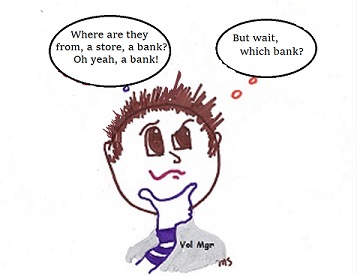
“Well, we were met by the woman in charge. She kind of acted like we were interrupting her day. She gave us some quick directions and left. She would come and go. But there was something that bothered me a lot. She kept getting the name of our firm wrong. And she kept referring to us as bankers. None of us are bankers. Our company is an accounting firm. Granted, we work in the financial industry, but we are not bankers. It just felt like she didn’t even take the time to learn who we are or what we do. I mean, we reached out to her organization, why didn’t she ask a few questions? I felt, I don’t know… used. Am I being too sensitive and picky?”
No, my friend you are not being too picky. Because if a group walks away from a project feeling like they were just ancillary labor, then the next time they look for a project, they will most likely look elsewhere. Pure and simple. We can argue all we want that a group is too needy, or picky, or they just don’t understand. The feeling they walk away with will determine whether or not they come back.
It all boils down to: Do we want them to come back? Do we want them to spread a good word? Do we want them to become partners or champions or supporters? If not, then we should not waste their time or ours. That’s why limiting episodic volunteer groups to a manageable number versus taking everyone is the better way to go.
And since I did miss that big one when listing things we can do to connect our group volunteers to our projects and missions, let’s list it now.
Learn something about the group. At least we can call them by their correct name. We can know a little about their work. (an application process asking pointed questions should help)
Be genuinely curious about the people who are helping. Ask questions throughout the duration of the project. Let them tell you who they are, what they value etc. This also helps you to tailor your stories and feedback to fit within their culture.
Send a follow up survey and gather feedback on the project. Ask questions to help you hone future group projects.
Thank them for their input. So much research has been done on the increased by-in of groups who participate in planning and improving work conditions. Why not apply this to episodic volunteers and encourage them to help you plan new projects by asking for feedback?
Connecting episodic volunteers to our missions ensures they walk away as new supporters.
But, after all, we can take our own advice when engaging episodic volunteers. They’re people, not tools.
In 1886 America, a struggling door to door book salesman, David H. McConnell discovered that the small vials of perfume he offered as “door opening” incentives were more popular than books and from that realization, the Avon Company was founded.
Well, huh. Volunteer managers know that volunteering enhances the lives of those who volunteer with us. We have seen the grief-stricken person begin to socialize again, the quiet student learn to trust their abilities, and the senior come alive with purpose. We’ve seen volunteers learn so much about themselves that we could write a textbook.
What if we borrowed from Mr. McConnell and compared books and perfume to recruiting and managing a volunteer force?
The books: volunteer jobs (Volunteers Needed to Stuff Envelopes)
The perfume: the benefits of volunteering (Learn New Skills) (Socialize with Caring People) (Change Your Life)
Maybe the time is right to symbolically begin our own perfume company. Many articles are being written and statistics kept on the benefits of volunteering. Since the evidence that we knew all along is overwhelming, we can become a greater positive force in our communities by looking to not just fill organizational needs, but to help our fellow citizens enrich their lives by volunteering.
What if we put as much emphasis on our perfume as on our books? Would developing our perfume company create a larger volunteer force of outstanding volunteers and in return, more books would be sold, er volunteer positions would be filled? I’m thinking, yes.
We have the most fragrant life enhancing perfume. And yet it is secondary, mostly kept in our desk drawers until a class of new volunteers begin. Then we pull it out and spritz it in the air, letting that intoxicating life enhancing scent fill their nostrils with promise. We should be pumping that scent all over town by the gallon.
What if, besides volunteer coordinators, we also became “life enhancement coordinators?” How would that look? Well, for starters we would:
Add a new focus: We would create positions in our organizations that serve our volunteers and in turn, those innovative jobs would help our clients in new creative ways.
Put volunteers first: We would partner with other local organizations to share volunteers instead of operating in dark, isolated caves, all trying to lure the same people inside and clinging to the ones we have, even if we can’t offer them a great volunteer experience and someone else can.
Create new benefits for our organizations: We would create a community of fluid volunteers who could share talents with many organizations and therefore bring fresh ideas to help each organization grow. (or are non-profits really just in competition with one another for the same donations, publicity and volunteers?)
Lower volunteer attrition: We would end the cycle of volunteers bouncing from organization to organization and giving up because the process is so tedious.
Expand organizational reach: We would measure the impact on our communities, thus exponentially mushrooming the outreach and standing of our organizations. Wait, measure perfume?
What are some measurable volunteer life enhancing statistics?
The number of unemployed people who were able to fill in gaps in their resumes and garnered new recommendations from organizational staff.
The number of students who used service learning and organizational recommendations to seek entry into the college of their choice.
The number of corporate teams who made a commitment to service, learned team building skills and became supporters of a cause (donations, marketing etc).
The number of people who were able to garner people skills as they learned about inter-generational connections or diversity because they were paired with someone different from them.
The number of people made aware of X disease or Y social issue or Z traumatic experience by peering firsthand into our missions which gave them word of mouth marketing skills.
The number of isolated individuals who were able to socialize and connect, thus decreasing their risk for illness and depression.
The number of retired people who were able to launch volunteering careers and stay active with meaningful work.
The number of seniors who served critical roles and utilized skills which is proven to ward off dementia and Alzheimer’s.
The number of students who will become the citizens of the future due to skills learned, such as philanthropy and leadership.
What if our organizations showcased these statistics as part of their end of year report? How big and beautiful would that report be? And wouldn’t those incredibly heartwarming stats increase each charities’ standing in the community?
I think the time is right for volunteer managers to come out of the shadows and lead. Think about all the times a prospective volunteer walked through your door and you instinctively sensed they had a secondary reason to volunteer. Think about all the volunteers you have spent time with, tweaking positions until the right fit presented itself. Think about the programs you have created because you had a group of dynamic volunteers that needed something more. How many times have you heard your volunteers tell you that they get so much more out of volunteering than they give?
Most of the emotional time and commitment we spend cultivating volunteers and meeting their needs never gets reported. This is why the misconceptions abound. “Managing volunteers is easy.” “All you do is have tea parties and socialize”. “Why can’t you just ask? Someone will do it.”
While we continually struggle to justify the hours we spend with each and every volunteer, we discover that the biggest part of our jobs lies outside the scope of the organizational definition of volunteer management because our jobs as “life enhancement coordinators” is not properly recognized or measured. We possess the tools to change this misconception.
Instead of continuing to just peddle books while we possess this life changing fragrance, let’s take matters into our own capable hands.
“Well heck,” Ivan said, “the surprises in volunteer management just keep surprising me.” He adjusted his purple framed glasses. “I just had this one volunteer, Julie, who took orientation a couple of months ago. It was a great class, full of people ready to help. They had different interests and skills, and varied ages, but they all got along; we laughed and cried together. It was great and I had high hopes for all of them. Now ours, being that we work with disadvantaged children, is a very intense training. And Julie stood out. She was passionate, and entertaining, really a big personality. She is married to a prominent doctor, and you know how it is. I figured that not only would I have her as a volunteer, but also I would have her telling her influential doctor husband about our program and maybe I’d get some quality speaking engagements out of it as well. So I was pretty pumped about her joining our group.”
Ivan paused. “I paired her with one of my most accomplished volunteers, Sal, who took Julie out on visits. Then, about two weeks later, I get a call from Sal who tells me that all his calls and texts to Julie are going unanswered. So I try and nothing. I asked Sal if anything upset her, but he can’t think of a thing, as a matter of fact, he found her enthusiastic. So, now I’m worried. I send emails, even a written letter and still nothing. Short of becoming a stalker, I just leave her a message that we are very much interested in her continuing with us and I leave it at that.”
Ivan picks up a newspaper clipping on his desk. “Then, last week, one of our volunteers, Della, was at the county fair and sees the pageant for the married women of our county and she tells me that one of our volunteers won. So, I said, who was it and she says, Julie, the new volunteer.” Ivan holds up the newspaper picture. “Here she is and in Julie’s interview she gushes about volunteering with us. Then the article goes on to list other organizations that she is involved with.” At this point Ivan laughs. “I wonder if she did the same thing to them too. But I guess I should take this as a compliment, I’m just not sure.”
Yep, there it is. Should we feel used, or do we take the robbing of our reputation as a compliment, shrug our shoulders, furiously work our worry beads and go on?
Well, there are going to be volunteers who use us to their own gain. Resume padding job seekers, corner cutting students, court avoiding offenders, ebay selling thrifters and even parent hood winking teens all can find a nice warm blanket of self benefit by tacking us on to their veneer. These thankfully few and far between folks are truly different from the volunteers who come to us for other more varied and sometimes multiple reasons.
These Reputation Robbers are singly focused on our good name as a means to their end, and want the name recognition without doing any work. I remember the first time I was plundered by a Purity Pirate. I was so mad that I pumped my fist into the air and yelled, “how dare you!”(at the blank wall of course. The pirate was long gone, having snatched up all the loot he needed, then he paddled away in his rowboat. I think I can still hear him laughing.)
Well, these experiences teach us to expect volunteers to exhibit altruistic motivations but to prepare for occasional leeches on our work. I’ve been burned more than once. It hurts to think that you can be duped, but it happens. So, here are a few things to do if we think that a potential volunteer just wants to write a book, using our clients as subjects, entitled, “I Personally Saved This Hapless Non-Profit From Disaster.”
Do Not Sign Off: Don’t sign off on work done if the work is not done. Ever. And don’t succumb to those sad little baby alligator eyes that see right through your easy kind nature.
Do Not Be Pressured: A senior manager has a neighbor who has this niece, Lita that needs to complete 30 hours of community service. That’s an entire month of your time! Yes, I can do math, well basic anyway. But 30 hours becomes:
Meeting with Lita after she is two hours late and trying not to reach across the table and choke her when she asks whether she’ll be paid.
Calling her repeatedly when she does not show up as scheduled and getting her brother on the phone who makes Lita look like the responsible one.
Trying to explain to her again and again in a nice way (oh heck, just trying not to scream at her to get out) that signing in and leaving does not constitute hours volunteered.
Continually assuring all the other volunteers who happen to work alongside her that you have not, in fact gone completely insane.
Re-doing the event packets Lita totally messed up. It’s the night before the event and you have to miss your best friend’s birthday celebration.
Wooing back the volunteer who quit because he happened to be there the day Lita laughed at the name of an elderly client in front of the client’s son. So, in order to convince the volunteer to return, you host a ‘bagel while begging’ two hour coffee brunch. And then you spend the rest of the day on severe caffeine jitters, pacing the halls, barking at volunteers to “stop looking at me!”
Walking down to the reception area every couple of hours when Lita is actually on property because the receptionist needs you to come up and tell the little pack of Lita’s friends that they cannot hang out here.
And having these surreal phone interruptions with Lita’s parent who chastises you for not making Lita “like it there.”
So, yeah, I stand by it-that’s a month of your professional life that you can’t get back.
Put Policies in Place: Having policies will not stop all reputation robbers and thankfully most folks who need something from us are not purity pirates and honestly want to do something meaningful with their time spent. But, well thought out policies can be used effectively, especially if you discover one of these pirates has sneaked into your midst.
As for Lita? How about policy #2, paragraph #1, sentences #3 and #4: ‘A volunteer shall be counseled if said volunteer does not exhibit the necessary attitude and respect for the mission and program. After due counseling, said volunteer may be dismissed at any given time so as to protect our clients from undue stress.’
Director of First Impressions Volunteer: Wow. What a concise, succinct way to advertise for a front desk or receptionist volunteer. The ad then goes on to talk about how important it is for clients to experience a first impression that is compassionate and helpful. Gosh, I want to be that volunteer.
So, what verbiage appeals to prospective volunteers? Is it silly, eye-catching titles or serious, touching the heart ads that bring volunteers in? And does the same ad appeal to millennials and baby boomers, working adults and students, community service needing and weekend warrior potential volunteers alike? And anyway, are there foolproof ads that once you’ve created them, you can then just magically sit back and answer the ringing phone?”
Clearly, marketing has a tremendous impact on companies that sell goods and services. If we think of ourselves as selling goods (enhanced life experiences) and services (ways to help the community), then we can think of our potential volunteers as consumers who can pick and choose where they will spend their valuable time. So, how do we market to them?
Here are just three creative ways to frame a volunteer ad:
1. Describe the benefit to the organization.
2. Describe the benefit to the client served.
3. Describe the benefit for the volunteer.
So, let’s take a simple job title such as “volunteer receptionist” and re-imagine it in the above three ways:
“Director of First Impressions:” The word ‘director’ exudes importance, and ‘first impressions’ neatly describes how this organization genuinely cares for their clients and is striving for excellence with every paid and/or volunteer position.
“Imagine How Hard It Is To Need Our Help:” This immediately frames the position in the eyes of the client and elicits an empathetic feeling for those who are being served.
“Where Else Can You Feel Like You Have Thrown Out a Lifeline:” This ad goes right to the heart of volunteerism-making a difference.
And what law says we can’t use all three ads for one position at the same time? Who knows which approach will attract the kind of person you are looking for because ads exist to quickly capture attention. All three ring true; they are just different ways of framing meaningful volunteer roles in punchy descriptions. If you can combine all three ways without becoming too verbose, then by all means, give it a go.
But can we even go further and be even more creative? Why can’t we inject some playfulness? How about an ad that asks, “What Intergallactic Volunteer Character Are You?” (Or another current and popular theme). Create a description for a few popular characters, such as:
The Scavenger Captain: You’re roguish and free wheeling, this job is flexible. We won’t tie you down!
The Robot Sidekick: You’re diplomatic and precise, this job needs your attention to detail.
The Galaxy Princess: You’re strong and smart and destined to lead our rebellion against hunger.
Want to advertise for a thrift store volunteer? How about “Are You the First One at Garage Sales? Come, Help Sort Through Our Treasures Where It’s A Garage Sale Everyday.”
Do you need something very specific? Celebrate it! Web help might become, “If You Know What This Is, Call Us: 01101000 01100101 01101100 01110000.”
There are catchy volunteer ads out there that say, “show off your basketball skills,” “do you love cats and acting,” “do you walk by homeless people not knowing what to do,” “be the role model she’ll remember always,” “50% of school age children in our town go to bed hungry.” A few great ads tell a personal story: “Meet Ed. He will sit alone in his room today unless a volunteer comes to visit. Will you be that volunteer?” “Sarah received a scholarship in part because she volunteered. If you can you use a scholarship, call us!”
Do you have multiple locations? Tack the location onto the ad so that potential volunteers know they can stay close to home or work or school. You can say, “Be the Role Model She’ll Always Remember in Springfield” or “Calling All You Bristolians Who Dress Up Their Dogs.”
And if your program has won an award or has been feted in any way, use that to your advantage: “Join our award-winning volunteer program!”
Refresh your ads frequently. Keep statistics on the more successful ads so that you can start to track what is working and for whom it is working.
You can also put together a focus group of volunteers to come up with creative ads that they believe will appeal to their peers. Marketing students are also an excellent resource for help in crafting creative and appealing ads.
Well, then, how can we jazz up that soul-sucking Data Entry Volunteer ad? (and you know what always surprised me, there are people who want to do this kind of volunteering because it’s sort of like washing dishes by hand, it gives them a chance to just quiet the mind).
“Monotonous, Repetitious Data Entry Volunteer Job For That Amazing Person Who Knows This Work is Critical. Help Our Clients While Decompressing in a Calm Environment. We’ll Play Some New Age Music.”
Ebony is in charge of a busy thrift store. The only staff member, Ebony manages sales, donations, store appearance, supply ordering, advertisement and the twenty volunteers who help her throughout the week. She has precious little time for drama or nonsense. Because her volunteers are a tight-knit team, when Bernice, a new volunteer signed up, Ebony placed her on the day the most welcoming volunteers worked. But a month later, those volunteers began to openly complain about Bernice’s attitude. Bernice had quit another resale shop volunteer position and was vocal about her perception that Ebony’s shop did not run as efficiently as her former store. Bernice complained about pricing, merchandising, advertising and lack of volunteer perks such as sizable discounts on merchandize.
Unused to volunteer conflict, Ebony had several heart to heart talks with Bernice and moved her to a different day. The complaints continued. Frustrated, Ebony hoped the volunteers would work things out, but her stalwart volunteers began to call out sick and take longer vacations. The once hard-working team became listless, negative and unproductive. Two volunteers quit, giving broad reasons. The other volunteers refused to fill in on the day Bernice worked. Ebony found her team crumbling. Too late she realized that one volunteer could destroy months and years of team building.
When do we pull the plug on a volunteer? How much trying to integrate one person is too much? This is a dilemma that we all face at some point in our careers. And while we may erroneously feel that we have failed if not every volunteer becomes successfully integrated, we have to weigh the time and effort spent working with a volunteer and their impact on other volunteers versus keeping someone just to keep them.
I remember a volunteer, Dot from my first years as a volunteer coordinator. She was a retired professional and not only belonged to many clubs and organizations but attained leadership roles in most. She was highly intelligent, but authoritarian and demanding. Her air of superiority was off-putting to volunteers and staff. I once complimented her on her outfit and she said, “I have a doctor’s appointment today and I want to make sure he is intimidated by me.” Everyone tiptoed around her because Dot put her own importance above the mission. Being new to volunteer management, I didn’t think we could dismiss Dot, but I asked. My senior managers were already afraid of what she might do, and sure enough, one day she went to the board of directors to threaten a volunteer walkout over a policy she disagreed with. Eventually the senior managers realized that something had to be done and she was let go. It was messy. She wrote a letter to the other volunteers imploring them to quit in solidarity, which thankfully, they did not.
What could Ebony or I have done to integrate Bernice and Dot? Did we miss something? Would spending more of our time have helped? Or is there a point when parting ways with a volunteer is the right thing to do? Can we stop blaming ourselves if occasionally, a volunteer does not work out no matter how hard we try?
The answer is yes, there is a point when the amount of work spent keeping a volunteer is incredibly lopsided against the benefit in having that volunteer. In weighing whether to continue to try to keep a problematic volunteer, you have to ask yourself these questions:
Do I spend more time on this volunteer than on any other?
Do I field more negative feedback about this volunteer than positive?
Do I find other good volunteers and staff refusing to work with this volunteer?
Do I find myself worrying what might go wrong when this volunteer is present?
Do I find myself bending rules and expectations in order to avoid confrontation with this volunteer?
But, hang on, before we can ask the questions above, we have to do some soul-searching of our own deep feelings on the matter to see if there are some personal perceptions that are keeping us unable to meet the challenge head on.
By being brutally honest with ourselves when working with problematic volunteers, we can move away from emotion based analysis and into logical resolution.
Am I petrified of confrontation even though I see there is no forward movement with this volunteer?
Am I afraid that I will just give in and not stick to my convictions?
Am I looking at this as a failure on my part?
Am I thinking that this will make me a mean person?
Am I clinging to my vision that volunteering is perfect? And that I must be perfect?
Am I just afraid of the unpleasantness of it all? Do I just want volunteering to be sunshine and kittens and not involve the hard stuff like requiring excellence and management?
The first set of questions refers to the problem at hand while the second set deals with our own emotions. And lets face it, we have feelings too. But, we can learn to acknowledge our feelings so as to view problematic volunteers in a logical and yet kind way. Sure, our stomach feels like the spin cycle of a washing machine when we are faced with unpleasant conversations, but just remember, by avoiding the issue, it only gets worse, not better. And besides, volunteer success or failure should never be about our feelings, but about the volunteer and the mission.
Next week, part two: FACE It: An acronym to remember when dealing with a challenging volunteer.
Willow, a new volunteer manager for a small organization providing aid to the homeless population in her town, answered her phone the day before Thanksgiving. She had spent long hours that week, organizing and recruiting volunteers to help prepare the annual meal held at a local high school auditorium. Exhausted, her brain overloaded, she tried to muster up enough energy to sound human on the incoming call.
The caller identified himself as Harry, the coach of a soccer team consisting of 15-year-old boys. “I’d like to get these boys involved in helping others,” he told Willow. “We’d like to come out and feed the homeless tomorrow.”
Willow felt a throbbing in her forehead. “How many players are we talking about?”
“Not the whole team, mind you, about 7 or 8.”
Tears filled her eyes like the bubbles in a natural spring. The volunteer slots were set in stone. It had taken every fiber of her new volunteer manager being to accomplish that. She was bone weary and wondered, why did this man wait until now to call? How could he think that there was no coordination in putting together something so incredibly complicated? Why does no one understand?
It’s happened to all of us. Often, people call at the last moment to help, especially at holiday times. After it happens, you begin to expect it and it is incredibly frustrating to have to tell a group of willing helpers that they are not needed because they procrastinated or called on a whim. They are, after all, potential volunteers. Granted, most might never volunteer again, but there’s always that little voice in our heads that sneers, “there goes a group that might just have been the greatest group of volunteers known to man. And you denied them. Tsk, tsk.”
So, what to do if you are not able to just dust off those last-minute potential holiday volunteers? If you feel that a part of your job is to give people the chance to experience the deep, satisfying joy in volunteering, then you will feel a twinge of guilt or sadness when having to refuse someone, even if they called too late. We all know that holidays bring out the desire to help and that each “drop in” volunteer might become an advocate for our organizations. Can we accommodate those late comers without making the holidays a nightmare for ourselves?
Yes, there is a way. It’s not perfect mind you, but it’s better than feeling overwhelmed and guilty at the same time. And it takes implementing now.
So that the future you is not caught in a holiday trap, prepare for the season right now. Before the holidays creep up on you, create some projects that last-minute folks can do. Don’t save the work that must be done but be ready with some extra projects that are off premises and not in direct contact with clients. (No background checks needed). You can invite these one time volunteers to become official volunteers at a later time.
Start now by asking everyone in your organization for fantasy projects. Ask, “If you had 3 or 5 or 10 volunteers over the holidays, what could they do?” Does marketing fantasize about hundreds of distributed holiday flyers? Does the thrift store secretly salivate over a huge deep cleaning and resorting for the season? Does finance have a tired office that cries for a fresh coat of paint? Is there a corner where an extra decorated tree would look lovely? Do you partner with other agencies and can you ask them if they have projects? I’ve always been able to find a nursing home that was extremely grateful for some extra help during the season.
You can also create your own meaningful projects. Go to social workers and ask if they have a family that needs Christmas presents because of financial need and then create a “gift tree” with the ages and sizes of family members on paper ornaments. Buying a gift for someone who is going through a tough time is a very satisfying introduction to volunteering. Don’t be afraid to create a project in which the participants will have to spend a bit of money. That never seems to matter.
One time volunteers can certainly write holiday cards and wishes to older clients or children. They can have a card writing party off premise. Ask a willing volunteer to attend to explain how much these cards mean to your clients. The point is to be creative. You know the difference between meaningless work and projects that can actually enhance the holidays. Have an extra tree to decorate, or paper place mats to color (good for youth groups to do). Ask your existing volunteers if they would be willing to mentor a group when necessary. Stock up on craft supplies now.
Then, when someone calls last-minute, instead of having to say, “sorry, but there’s nothing I can give you,” you can invite the late comers to get their feet wet by tackling a small but worthwhile project. If the latecomer says no, at least you offered something. I’ve had folks tell me that my organization was the only one who even tried to place them. That good feeling can translate to future volunteers.
You, by virtue of being a volunteer manager, take care of everyone around you. Take care of yourself this holiday season by preparing now for those inevitable 12th hour but sincere calls to help. Your future self will thank you.
In the SpotlightI almost spit out my sip of coffee when I ran across this article a week ago. According to the story, a great grandmother was “sacked” from her nearly 30 year volunteer position at a thrift store for her inability to use a computer. The searing negative light this incident turned on made me cringe because as you can see from the selected comments I pasted below the link, non-profits all get lumped into the big barrel of rotten fish when a charity receives bad press.
JHR16 days ago
Charities are beginning to stink to high heaven.
ycjarman17 days ago
NEVER help a Charity that doesn’t appreciate what you bring to it !
JBJB116 days ago
Strikes me a lot of charities have lost sight of what they are supposed to be doing and more concerned in becoming corporate enterprises
I’m not jumping on the “get the pitchfork and storm the castle” bandwagon because as I read the article, I began to imagine the different scenarios that led to this unfortunate public airing of an incident involving a volunteer. What really happened? We don’t know, so I’ve put together some possible scenarios based on my own experiences with these types of circumstances.
1) An organization’s resale shop manager is just plain tired of “dealing” with volunteers who can’t work as efficiently as paid staff and so begins to find a convenient reason to dismiss those volunteers, never mind their years of service.
2) Volunteers become so entrenched in their jobs that no one has the guts to derail their authoritarian and entitled behavior and everyone kicks that can down the road until there is a blowup.
3) A volunteer becomes increasingly negative for any variety of reasons (health, circumstance, lack of being heard) and no one clears the air. This negativity builds and spreads until big problems arise.
4) Change is implemented without careful regard to how it will impact the volunteers. Lack of change awareness leads to grumbling, camp-forming and ultimately mutiny.
5) Repeated staff turnover leaves a new volunteer manager without any basic information about the volunteers he/she manages. Personality clashes balloon into showdowns with staff.
6) A shop manager/volunteer manager is burnt out, overworked and under appreciated, pressured to increase profit/sales and is unable to properly cultivate the shop’s volunteers.
This comment from a reader of the article hits at the perceived lack of volunteer management:
moanalisa16 days ago
it’s taken 30 years for them to ask Mrs Brooks to leave – if they were so concerned about Mrs Brooks attitude she should have been told to leave years ago
So, could this negative press have been prevented? Perhaps, but the point is, whether the volunteer is in the right or in the wrong, the proper handling of their exit is challenging but absolutely crucial, especially in the messiest situations. A curt dismissal letter is a weapon in the hand of the offended.
Sadly, we all are included in the negative stereotypes of charities as witnessed by the comment section of this article. The “pile-on” comments reinforces any perceived notion that “you know, I’m not so sure my local charity is really that nice. Last time I gave them a check, I never got a thank you. Maybe they’re just not who I thought they were.”
Our microscope is turned to a higher scrutiny than that of businesses. Why? Because the public perception is that charities are run by people who are nice. It’s a simple perception but one that takes a tremendous amount of attention to detail to continue. Who wrote the letter sent to the volunteer? Was it written out of frustration? Acting out of heightened emotions can get us splayed across media. For every 20 volunteers who perceive they are treated badly, one will go to the press or their circle of acquaintances. (And of course their acquaintances live next door to the CEO or the editor of the local newspaper)
So, what to do? You may never adequately resolve an issue with a volunteer and have to dismiss them. But, taking the extra time and effort to make the volunteer feel heard can go a long way in dousing the fire of their perception of being wronged. I’m not advocating the acceptance of poor behavior, I’m saying that hearing the volunteer’s side without your agreement or disagreement helps diffuse their anger.
If you’ve inherited a problem volunteer, it is much trickier. A volunteer whose problem behavior has been overlooked has assumed that the organization is fine with that behavior. It takes real skill to dismiss someone who looks at you as the evil newbie when in fact, you are just cleaning up the mess spilled on the floor years ago that now has mold growing on it. I’ve been in these situations and had hours long conversations with entrenched volunteers. Being respectful but firm, complimentary of their positive skill sets while pointing out negative behaviors and reiterating everyone’s commitment to the mission is helpful. While it took an enormous time and emotional commitment, the end result was always worth it. I never left the conversation until I felt that the volunteer and I were at a calm, reasonable point.
Having written conduct rules, including the steps for dismissal is critical. Every volunteer should sign a copy for their file. I’ve had to go back and look for that copy on several occasions and the presence of the volunteer’s signature on that document has saved me.
We all lose when folks reading a negative newspaper article generalize about every charity. Charities have to work harder to maintain the perception that we are ethical, caring, and committed to treating everyone, including volunteers respectfully.
But then, we signed up to be ethical, caring and committed to treating people respectfully, didn’t we?
-Meridian









 volunteerplaintalk