
 Sometimes I think about the complexities of our jobs and am amazed at the interconnectedness with volunteers, clients, pairings and life stories. I don’t know about you, but I think the universe smiles kindly on what we do. Like the time I was asked to find a volunteer who could speak Armenian and the very next phone call I took was from a volunteer who worked mainly in the office but mentioned that she just returned from visiting her family in Armenia and yes, she spoke Armenian. The Universe clearly heard the request, but more often we spend thorough and thoughtful time assigning volunteers as we weave the fabric of human connection. Some fabric is soft and warm, some rough, more nubby with little pills of emotion. Each is a wondrous creation in its own way.
But we are not creators only, no, we are part of that fabric. Maybe it’s a bit of our blood as we prick our finger with the needle or maybe there’s a strand of our hair that just happened to land ever so slightly into the cloth as it’s woven, but we are in there as well. Because the volunteers and us, well, we are woven together just as surely as they are to our clients.
Sometimes I look at volunteers, feel the deep connection we have and marvel at how they teach and inspire me and how I hope I’ve given them something in return. I think maybe so. I wonder, as I talk to Betty, whose daughter died ten years ago if she imagines as she speaks to me what a conversation with her daughter would be like had she lived. Am I a substitute daughter? No, but maybe her ability to speak freely to me is a rip in time that mirrors what her conversations would have been like had her daughter survived. (Betty, are you telling me the things you would have shared with your daughter? I kinda hope so, because I feel so connected to you right now)
As I listen to Ben speak of his battle with alcoholism I hear the regrets, not in words, but in unspoken pauses. Because we believed in him, Ben has flourished, his soothing demeanor forged from pain. He laughs freely, and to him, life’s fabric is whimsical, full of ducks with sunglasses. Fortunately, our patients can lean heavily on him; he’s borne his share of sorrows. I wonder if our relationship as volunteer and volunteer coordinator has a symbolic meaning, where I represent some of those people he disappointed all those years ago and perhaps our patients represent redemption.
I think of Jolee, who lived with her mother for all of her life and when her mother died, Jolee retreated into a shell. She decided to volunteer and wants to hang around past her appointed time, because as she says, “I just love you guys. I feel so comfortable here.”
But it’s not always us providing for volunteers. I remember a time when my kids were outgrowing me and I acutely felt the tug of parental letting go. It must have been evident, because one of my favorite volunteers, Paul, sat and had coffee with me one day. He Looked at me for a moment and said, “I want to tell you a story.” He told me about his son, Doug, who back in the early 1970’s, was just evolving into a free spirit. Paul, a decorated WWII fighter pilot, could not understand nor get along with his rebellious son. “It became impossible, the relationship between he, myself and his mother,” he remembered, “and so one day Doug got in my car with his knapsack and I drove him to the edge of the freeway near our house and he got out, not knowing exactly where he was going. As I drove away, I looked in my rear view mirror to see him, thumb out, his long hair whipping in the wind. It was the hardest thing I ever did.” Rugged Paul, misty eyed, smiled. “he went to California, later became a financial analyst and we reconnected. But that day, that day was so hard.”
He had no idea how much his story enveloped me in a warm blanket of experience where I felt the okayness of being scared. Neither does Myrna know how much she weaves around me with her wicked jokes when things are stressful. She has been in remission for several years and though her cancer is just a conversation away, she always tries to make sure I’m doing ok. I am when she’s around.
But that’s what fabric does. It blends together so skillfully that only on close inspection can you see the individual threads. I really feel meshed with the volunteers and their lives. And so, in some small way, I feel deeply connected to their work with our patients and families as if a few of my threads add a bit extra depth to their work.
Together, we, volunteers, those we serve and I are a cozy wool, a cool blend of satin or a breezy colorful cotton, These may be fabrics that exist only in a slice of time, but they have a certain beauty, even if just for a moment.
-Meridian
Tag: volunteer manager
-
The Fabric of Volunteering
-
The Disaster Clean Up Crew
 Meg is a volunteer coordinator for a large health care system that specializes in patient rehabilitation. Her volunteers are involved in several programs, from spiritual care, and palliative listening to working with dementia patients. Meg is the lead volunteer coordinator with twelve years of experience. Recently, the marketing department contacted Meg and told her that they wanted “some volunteers” to be filmed in a short infomercial.
“They didn’t give me a date nor time and place,” she said. “I emailed them repeatedly for concrete directions, but I never got an answer. Finally, one of the marketing staff. Gwen, came down at 4pm on a Wednesday and said they were ready to shoot Friday at 9am in our location. What do you need? I asked her and she told me they wanted volunteers working with a mock patient in a rehab room.”
Meg sighed. “Gwen did however ask for our pet therapy volunteer, Sam, who owns Polo, a beautiful golden retriever. Gwen told me she loved that dog and how beautiful the dog would look on camera. So, I spent most of my Thursday pleading with volunteers to come to the shoot.”
Meg paused. “You know how volunteers are. The don’t want to be on camera. But I got six volunteers, including Sam to agree to come in and be filmed.
Friday came and I arrived early,” Meg continued. “I had fruit and coffee set up for the volunteers. They began arriving, Sam and Polo, Jerri who does amazing work journal keeping with patients, Clive and Betty, a couple who sing to patients, Jeravani, an international student who is studying physical therapy and Amelia, a volunteer who specializes in art. They were a great mix of volunteers. I gave a lot of thought to how volunteers would present on camera and I have to admit, this was a diverse group of excellent representatives. I was thinking the infomercial might encourage others to volunteer.”
Meg went on, “9 arrived and we waited and then 9:30 and still we waited. I could see the volunteers checking their watches. They had places to be. At about 10, Gwen found us and said they were ready to start filming. Biting my tongue, I stood up and waved my hand over the group of fantastic volunteers sipping coffee and started to introduce them, but she stopped me and very nonchalantly said that the crew was behind schedule and that there was only time for, as she put it, ‘the dog shot.’”
I could feel the anger and frustration in Meg’s voice and she went on, “I looked at Gwen, stunned. I motioned for her to join me outside the room, out of earshot of the volunteers. You mean our volunteers came in for nothing? And Gwen basically said, ‘we don’t have time for any extra shots because we already have more than enough. Sorry, just tell them thank you and maybe another time.’”
Meg snorted an angry laugh. “yeah, I wanted to say, why don’t YOU tell them and why don’t YOU apologize profusely and why don’t YOU waste half a day trying to cajole people for nothing? No, you get to walk away, damage done and think nothing of it.” Meg stopped to take a breath. “It just makes me so angry!”
Meg recharged. “Then, get this! Sam and Polo? Oh yeah, after I say goodbye and sorry to all the other volunteers, I find Sam and Polo in a mock-up patient room and one of the crew is being filmed holding Polo’s leash! I lost it. I went to Gwen and demanded to know what was going on. She kinda shrugged and said that the film crew set it up that way so for once in my life I stood my ground and said no. I told her that if Sam was not in the shot, then I was going to send them home. I was so mad, I didn’t care.”
I could feel the anger balloon about to burst. “Gwen intervened though and Sam was filmed with Polo. So, at least I won a minor battle.”
Then Meg grew philosophical, the way long time volunteer managers grow. “I wish our volunteers were given the same respect as others in our hospital system. No one would waste the CEO’s time. No one would be so cavalier about marketing’s time. But volunteers? They are a commodity. It’s wrong, just wrong. Although, it did feel so good to stand up for Sam. In fact, it felt great.”
Meg’s voice changed, lifted somehow. “In fact, I think I’ll start doing that more.” The old spark in her voice returned. “Yeah, stand up for what’s right, what do I have to lose? And, maybe, just maybe, I’ll stop being the clean up crew.”
-Meridian -
If Volunteering Were an Olympic Sport
 I arrived in Sochi, Russia, thrilled to be part of the world’s greatest sporting showcase. Stepping out of the cab at the Olympic village, I asked one of the official guides where I could find the volunteer events. He scratched his puzzled head, grunted, “Huh?” and checked his elaborate map. He spent several minutes consulting a static Russian voice on his enormous mobile phone. While he shouted into the contraption, I soaked in the palpable excitement of the noisy Olympic crowd filtering by. I was giddy with anticipation. Finally, the world would see the wonderfulness of our volunteers.
He got off the phone and showed me his map, drawing an X on an empty white spot. “There, you go there,” he said, then handed me the map and walked away. I followed the map, weaving my way in and out of colorful vendors and beautiful buildings until I was in an open field beyond the bustle of Olympic village. There, in the middle of the snowy field was a small industrial building with a hand-made sign that read, “Volympics”.
Gleefully, I entered the building. There were maybe a few dozen people scattered about on folding chairs. Family members, no doubt. I nodded to some folks sharing a bag of potato chips as I settled into my seat.
The first event was the “Booth Freestyle.” Team Major Illness Awareness and Team Animal Rescue had 10 minutes to sort through the enormous pile of random items piled in a corner of the building. The teams had to find a table, table cover and everything necessary to set up a booth showcasing their organization at a fictitious fair. You could feel the tension in the room, or maybe it was the lack of a bathroom nearby. The teams appeared. Team Major Illness Awareness looked nervously at Team Animal Rescue. Each four member team gripped the side rails and waited for the shot signaling the start. They sprinted or walked quickly, really into the arena, attacking the pile like I attack my closet after over sleeping. Finding the items they wanted, each team began to set up an attractive booth. Team Major Illness Awareness settled into making a giant macaroni sign on a poster board, their deft hands glueing the pasta into a giant heart shape. The captain of Team Animal Rescue shouted encouragement as the team stuck animal stickers to the tablecloth while drawing a huge smiling elephant on a white board.
An element of difficulty was added when several Olympic judges, simulating organizational staff walked by shouting “hurry up” and refusing to answer questions. Team Major Illness Awareness arranged give away pens in the shape of a pancreas while team Animal Rescue created paw prints out of jar grippers. The clock ticked away the time and the crowd shouted “three, two, one” and the buzzer sounded. The judges conferred and awarded points for artistic interpretation as well as speed. It was close but team Animal Rescue pulled it out by putting up a cute picture of their Executive Director being nipped by a rescued chihuahua.
I pulled out a granola bar while waiting for the next event. Office Downhill was an individual competition involving stuffing envelopes, data entry and filing. Rickety metal cabinets were wheeled into the arena while an old desk, obsolete computer and a mountain of flyers and envelopes on a card table were dragged into a corner. The first competitor, Museum Guide stepped confidently into the arena. She was given five files, a handful of data entry forms, and no instructions. When her time started, she ran to the file cabinets first, checking the names on the files, quickly sorting them into alphabetical order. She exuded confidence and I suspected she was a volunteer leader at home. She grabbed the file cabinet drawer and pulled but it would not open. It was locked! Panicked, she looked around then wisely searched for a key, finding it taped to the back of the cabinet. After expertly filing the information, she ran to the computer and pushed the button. It sputtered and slowly whirred, so she ran to the table and started stuffing envelopes while the computer booted. Her fingers expertly flew through the pile of flyers, and she ran back to the computer and finished entering the data. The time posted was 12:56:01. Hers was the time to beat. The next competitor, Thrift Store Volunteer, didn’t fare as well. She pulled so hard on the locked file cabinet that it fell over. She managed to complete the other two tasks, but was penalized for folding the flyers face out. The third competitor, Soup Kitchen Volunteer managed to find the cabinet key but shoved all the files into one drawer. He stuffed the envelopes cleanly, but ended up spilling the cold cup of coffee left by the judges on the computer desk. The data was soaked brown and unreadable. The fourth competitor, Hospital Gift Shop Volunteer, took one look at the scene, threw up her hands and said she never did office work in her life. And the final competitor, Youth Mentor Volunteer sped through the course, but got so frustrated with the lumbering computer that he threw it on the floor, therefore being disqualified. The dozen of us in the crowd cheered wildly for all the competitors as they took a bow. We waited in anticipation for the results. Obviously Museum Guide Volunteer was the winner, but the judges conferred and decided to give it to Soup Kitchen Volunteer because he was willing to work on a Saturday night.
The medal ceremony consisted of a nice lunch for all the volunteers with a speech telling them how important they were to their respective organizations. I didn’t get the opportunity to speak to the volunteers, but I’m thinking that they were pretty great people who took their volunteering seriously.
I left Sochi with renewed enthusiasm for volunteers and their incredible depth of talent. I think for a first Volympics, it was pretty good. I’m encouraged, because I heard some officials discussing the next one, and they are thinking about adding the De-Luge event, where volunteer managers are overwhelmed with requests, questions, tasks, phone calls, email, drop-ins, paperwork, problems, and spreadsheets. I may start training tomorrow.
-Meridian -
You Have Reached This Website in Error
 We’re so used to the computer prompt when we see it: You are being redirected to another site. “Fine,” we think and we simply ease into the new locale. But did you ever think about why and how we are being redirected? Neither do I, but I think there’s probably a back story there.
Mary is a relatively new volunteer. She came to orientation like a firecracker tossed into a library. Mary introduced herself to everyone in the room before I could slip in my cute little icebreaker. During breaks, the class was talking up a storm. Usually it takes a session or two for that kind of comfort, but with Mary present, we cut to familiarity. She answered questions with stories, asked other participants to add more and before orientation was over, she had everyone’s number. Literally, she had all their phone numbers.
Mary wanted to work with patients and families and so we paired her with a seasoned volunteer, Joyce in a hospice house. “Well, she is chatty,” Joyce reported back. “She really got to know a lot about me.”
“But how did she do with the patients and families?”
“Fine,” Joyce said. “She asked a lot of questions. She seems genuinely interested in the patients’ lives.”
“Yeah,” I said, “that’s how I viewed Mary as well.’ Her chattiness is unique. She doesn’t chat about herself so much as she chats about your life as she gets to know you. It’s like having a great-grandmother who grills you each time you visit. It’s both soothing and nerve-wracking at the same time. I sensed that Joyce was holding back, so I asked her if she thought Mary had the potential to be a good volunteer.
“Yes,” she slowly said. “The thing is, she might just talk too much when a family just needs peace and quiet. I’m not sure she can be silent.”
“So, you think we shouldn’t put her with patients?”
“No, I don’t think that. It’s hard to say. I think we should give her a chance.”
Now, most of the time, folks like Mary settle down into volunteering and do a great job. As they learn from other volunteers, they adjust and adapt and it is thrilling to hear them say things like, “I’ve learned so much,” and “I’m getting the hang of it.”
But, although Mary genuinely cared for each patient and family she encountered and asked appropriate questions, her chattiness continued.
One day, a staff member tentatively approached me and apologized for bringing this up, but, it seems that Mary was in the room with a patient and family, over stayed her visit and pretty much chatted with them when all they wanted was to sit and be still. So we called Mary in and talked to her about her experience.
“What a beautiful family,” Mary said. “I learned how each member of this family traveled over distances to get here to be with their father.”
“That’s a lot of information you gathered,” I said.
“Oh, they were so wonderful to talk to. I loved it.”
We talked more and I finally said, “Mary, you also need to know when to exit. Families can be weary and although they love how you listen, they also need us to leave them alone too. Do you sense that?”
“I do,” she admitted. “I don’t want to cause them any more pain.”
So, she promised to watch out for over staying her welcome in patients’ rooms.
The next week the charge nurse came to see me. “We’ve got to do something about Mary.” she said.
“Uh oh, what happened?”
“Well, one of my nurses observed Mary talking to a family member at the coffee station. The nurse had to rescue the family member from Mary so he could go see his uncle.” The charge nurse then said, “You know, this is not the place for her.”
Well, I had to admit, after further talking with staff, the charge nurse was right. Mary’s exuberant chattiness was not suited for the quieter nature of a hospice house. What to do with her?
An answer came quite unexpectedly. One of the bereavement counselors happened to stop by and we talked for a bit. He mentioned that he had a lady client who needed a special volunteer to be her bereavement friend. “She is so lonely, she really needs someone to pay attention to her and well, just socialize.”
I jumped at the chance to place Mary and so I called her up and asked to meet with her. She timidly came in and asked if I was going to fire her. “No,” I said, “Why would you think that?” (I love that question, because clearly if a volunteer asks that, they have an inkling that something is amiss)
“I talk too much,” she said. “I can’t help it and I know the nurses are mad at me.”
“They’re not mad, Mary. They just want what’s best for our families.”
“I know. I try to be quieter, but it’s hard.” She made a face like a little girl and for an instant, I could picture her in the principal’s office, being scolded once again.
“We all have gifts, Mary and yours is your love of life.”
“So, I don’t belong here, then.” She was resigned. I suspected that she knew we were in salvage mode.
“No, but I would like you to consider a different role. One, in which you can be more yourself.”
I told her about the bereavement assignment and let her know that it was equally as important. We chatted for quite some time and I assured her that we were going to work with her and that we wanted her to volunteer.
We’ve been three weeks into Mary’s new role and she is doing well. We are getting positive feedback from our client and that is good. But I’m optimistically cautious. We’ll take it slowly and I think with more time and mentoring, Mary will make a good volunteer.
If not, we can try another redirect.
-Meridian -
First, Do No Harm
 A prospective volunteer, Judy came to one of my orientations last month. She eagerly embraced the topics, participated in class and repeatedly told me how much she “owed” us for caring for her husband. She is passionate, ready to work and a strong woman. She and her husband owned a business that she now shares with her children. She has artistic abilities, is educated, well spoken and incredibly smart. She is that volunteer we dream about when we’re not having a nightmare that all the unfinished work has fused together into a giant smiling clown with a pillow and is suffocating us in our sleep. (You do have that dream, too, don’t you?)
I spent a good two hours with her one on one in a private interview a week after classes ended. We talked about her abilities and talents, her ideas and plans to help and all the folks in her business circle she knows that she can enlist to help too. So, what could possibly be wrong with this perfect volunteer?
Did you guess she’s moving? Nope. Did you guess she’s really crazy? Nope again.
Although we spent time talking about all those wonderful things, we spent 90% of the time talking about her husband’s illness and death. He died four years ago and to our credit, we took wonderful care of him. Judy passionately talked about losing a husband so early in life, the shock, the quickness of the rare disease, the legal issues surrounding a business and a lone position in life with friends encouraging “getting back in the dating game.” She had already started a support group on Facebook, has reached out to the community for research funds and would love to be able to help other young widows. Her ideas are lofty, her desire to help of the highest noble thoughts. Her energy is infectious and I wanted to reach into my drawer and pull out my checkbook.
Our conversation reminded me of John Walsh, the host of the TV show, “America’s Most Wanted.” Mr. Walsh began his crusade after his son, Adam was brutally murdered. It’s what experts call instrumental grieving, the throwing of oneself into a cause. It’s truly amazing to watch someone do that, to see their resolve, to feel their calling. These people are remarkable. They turn despair and tragedy into benefits for the rest of us. I know if my husband were to fall ill to that disease that took Judy’s husband, I would want her coaching me.
But, I cannot, in good conscience, put Judy with patients, family members or the bereaved. It matters not that she really, really, really wants to help. It matters not that she is full of passion and energy. But it does matter that in the three times we’ve talked, everything always comes back to her experience.
I’ve witnessed raw, unrelenting grief before. I’ve seen potential volunteers so fired up that they speak in a machine gun volley that shoots down every thought that does not apply to their situation. I’ve watched eager people grasp onto volunteering like a life-preserver in a sea of molten pain. I feel for them, because, just like every other volunteer, I get to know them and to know these volunteers is to know heartache. I so want to help them work through their grief, but my first loyalty is to the clients at hand. And they need volunteers who are sound, mostly healed, or at least healed enough to put aside their own lives.
And so, as the conversation wound down, Judy looked at me and breathlessly asked, “do you think I can do this?”
“Not yet,” I answered truthfully. See, I’ve learned over the course of so many years that it’s much kinder to be honest. Then I added, “I’m thinking that you will be wonderful with our patients and families one day and we are incredibly fortunate to have you. Right now, I hear some hurt and we don’t want this work to add to your hurt. You’ve been through so much.”
“I know. It still hurts and I trust your judgement.” Tears welled in her eyes. “I just need to help.” I could see the dam about to break but she quickly stuck another emotional patch on the crack that threatened to burst.
What a burden to trust me, I thought selfishly. I’m fallible, running on instinct and gut. I want to be wrong about you, to just let you come in and get whole again.
Here’s where volunteer management is on a whole other level from standard HR. Just like HR, we have jobs to fill and we head hunt for the best people for the job. But we don’t reject people. We don’t pick and choose. We try to find a place for everyone, and it takes hard work to find places for everyone. I will find a place for Judy. We will start small and away from the clients. I want to see her succeed as a volunteer and to mend her deep wounds. It will take time, observation, mentoring and caution. That’s what I signed up to do.
But first, I will do no harm, not to Judy and not to our clients.
-Meridian -
There are No “No-Brainers”
 David is a social worker and part-time volunteer coordinator for a small hospice. He coaches and encourages about 20 volunteers while providing psychosocial services for 40 nursing home patients. He jokes that he’s perfect for the volunteer manager position because “I just can’t stop offering to do things.” He has been mentoring volunteers for almost a year now and enjoys that aspect of his job. “I feel like I can really place volunteers with a patient, because I have first hand knowledge of what that patient is about. I can really connect with the volunteers too, because we both see the same people. I feel like it’s a win-win.”
A few months ago, David was approached by a lady, Ruth, who owns Jingle, a therapy dog. Jingle is a mixed breed rescued dog and the story of how Ruth adopted him during a Christmas storm touched David’s heart. “It was awesome, and petting Jingle while Ruth told me his story made me realize how much our patients would love having him visit.” Together, David and Ruth came up with a schedule for Jingle to visit patients in a small nursing home that specializes in working with dementia residents.
“Everything seemed fine at first,” David recalls. “I went with Ruth the first time and introduced her to the activities director, Lynn. Lynn was very welcoming and showed Ruth and Jingle the activities room and the nurses’ station. David was secretly thrilled at having introduced some alternative therapies into the volunteer program. “I always felt like if I could just have the time to do the volunteer program some justice, I would have some real neat therapies going on. I realized shortly after I started that volunteer management takes time and real effort. There’s more to it than I ever imagined.”
After several weeks, Ruth started missing her scheduled days. David would call her when he could to check in. She said she had forgotten, or something had come up. “I was starting to get worried,” he said. “I tried to coax the real reason out of her, but she wasn’t forthcoming. I was really confused.”
One day Ruth came into the office and asked to see David. She and Jingle settled into his small space and Ruth offered this explanation. “I think we are going to stop seeing patients for a while,” she said as she stroked Jingle’s head. “It’s just not working out the way I thought it would. The patients who we see, well, I don’t know how to put this, but they really don’t seem to get much out of our visits. They don’t seem very enthused when they see Jingle and well, he’s not excited to go there.”
“Oh,” David said was the best he could muster. “I’m sorry you had that experience.” David said that when he recovered, he offered to send Ruth and Jingle into a different facility. He said he tried very hard to explain that his patients might not outwardly seem engaged, but Ruth was adamant. Ruth left and said she would be in touch in a few months and meanwhile, she was going to continue to visit a Children’s hospital nearby.
David was stunned. “I honestly never in a million years expected that,” he said. “There is no doubt in my mind that the patients got so much from her visits. I just felt so helpless trying to make her see that, but I couldn’t. I really don’t know what I could have done better. It bothers me a lot that I thought this was a no-brainer and it was anything but. Maybe I need to spend more time with new volunteers, but I just can’t.” David paused. “Clearly volunteers are much more complex than I thought. I mean, the ones who were already here and working, I thought everyone new would be just like them, but I was wrong.”
We’ve all experienced the seeming no-brainer. The volunteer who is a veteran will enjoy working exclusively with veterans. The volunteer who had an experience like our clients’ will be perfect working with our clients. The volunteer who needs hours for whatever reason will do what we ask to get those hours. None of these situations are no-brainers because, frankly there are no no-brainers. No volunteer can be pigeon-holed into a role. At least, not for long.
You’ve had volunteers like this: The mother who wants her child to volunteer and thinks he’s the next Einstein. The man who is humble and seems lonely but secretly wants to be a motivational speaker. And the dog owner who looks you in the eye but sorta speaks to you through her dog. Each volunteer is a complex human being with needs and desires. Sometimes they have issues, hang-ups and funny quirks. But, as we place volunteers in positions, we rely more heavily on understanding the motivations and needs of each and every volunteer than our counterparts in the realm of paid employees do. We are literally human resources on steroids.
I can only assure David that we have all been down that road. Why do volunteers stay? Well, I’ve yet to see a chart that explains it, because it’s the individuality of volunteers that we cultivate. That doesn’t mean that there aren’t tenets by which to manage volunteers. There are, but as long as we keep in mind that each new volunteer has their own path, we will be less likely to drop square pegs into round holes.
Now that’s a no-brainer!
-Meridian -
My Buy One Get One
 Yesterday we did some impromptu volunteer caroling after a holiday party. One volunteer, Clara tagged along and I watched her tentatively sing with the group. I thought she might be, like me, a lousy singer. We did some rousing renditions of “Let It Snow” and “White Christmas” and as we broke up to head home, Clara came up to me and said, “this did me more good than it did patients and families. I haven’t felt like participating in anything relating to Christmas for many years but somehow this felt right. I can’t tell you what a big deal this was for me.” I didn’t ask about her experiences that lead to her reluctance to enjoy the season, but she continued, “I felt like this group understood my emotions, which have always been mixed at best.”
Clara’s experience was something I did not expect. But then, we get “gifts” like this all the time, those moments when, while trying to do a good deed, we end up with an unexpected side good deed. Now that’s the ultimate buy one get one!
How satisfying that volunteers not only help our clients, but each other and us as well.
Have a joyous and meaningful Christmas and a very wonderful new year.
-Meridian -
It’s a Wonderful Volunteer Manager Life ( Part 2)
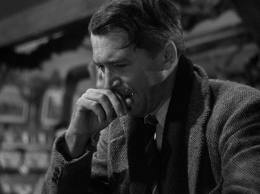 Georgia stared at the monitor. “Why is she, I mean why am I crying?” she asked Clarise.
“My dear,” Clarise clucked, “we’ll come back to that in a moment. Let’s look at what happened because you never had the opportunity to work here.” She pointed at the screen and it changed. An elderly lady had a handkerchief to her eyes, her hair matted to her cheek by tears.
“That’s Helen Greene! She’s our volunteer Debra’s favorite lady. Debra told me all sorts of stories about Helen Greene.”
Clarise shook her head. “Miss Helen never got the chance to have Debra as a volunteer. She never had a volunteer at all. She spent most of her time alone and lonely.”
“What difference did it make that I wasn’t here?” Georgia pleaded. “Debra would have loved Mrs. Greene no matter what!”
“That’s true my dear, but when Debra came to volunteer, you weren’t here to greet her. You weren’t here to spend that important time with her in the beginning, when she was so unsure of herself. Do you remember that?”
Georgia thought back to the intense time she spent encouraging Debra. “I do,” she whispered.
“Debra never did volunteer. All the people she would have helped never had her care. They went without.”
Clarise pointed at the screen and a face came into focus.
“That’s Jerry!” Georgia said excitedly. “He’s one of our best volunteers.” Georgia squinted at the images. Jerry was laying in a hospital bed. “What’s wrong with him?”
“He’s had a heart attack dear. Remember the day you were talking with Jerry and he was having chest pains and you insisted he go to the Emergency room? You accompanied him until his wife could be with him. You weren’t there to help him and he had a major heart attack.”
Georgia watched as Jerry’s wife came into the room and sat by his bed. She tenderly put a hand on his and laid her head on his arm.
“Is he going to die?” Georgia asked.
“I don’t know, my dear.” Clarise patted Georgia’s hand. Georgia’s eyes welled up with tears. “Jerry,” she murmured as the image dissolved into that of a woman staring blankly into space. “That’s Grace Tyne. The lady that suffered so much abuse that Doris is seeing.”
“Doris is not seeing her,” Clarise said.
“But Doris broke through to her,” Georgia interjected, “she was the only one who did.”
“No one broke through to her, Georgia.”
“But Grace was so hurt, so withdrawn.”
“She is still. No one has been able to break through to her. You weren’t here to realize that Doris was the one volunteer who had the capability to do so. Doris doesn’t know Grace exists.”
Georgia covered her face with her hands. Then she looked to see a man sitting in his small room. “Chad?” Georgia barely recognized him. He was disheveled and as he stared at the small television, his hands shook. “What’s happened to Chad?”

“You were not here to see the possibilities in Chad, my dear Georgia. He was laid off and someone advised him to volunteer while he was looking for a job. The temporary person here took one look at his tattoos and dismissed him. He never got that chance to be valued.”
Clarise stroked Georgia’s hair. She waved her hand over the screen and Georgia peeked to see all the volunteers she had recruited and trained and all the programs she had created from music to crafts to students and everything in between. Slowly the images of clients receiving services reversed and ran backwards and volunteers faded away, leaving clients without the benefit of volunteer help.
“Isn’t there another volunteer manager that took my place?” Georgia asked.
“There were many. No one took this position very seriously and they all quit, one after the other. The last person was Dale. He was an elderly man, sick and frail. No one had your passion nor your commitment dear. No one saw what you could see. This program did very little to actually help anyone.”
The images fluttered and stalled. Then Georgia saw the first image of herself at the cubicle desk. She was crying as she spoke into her cell phone. “I want to try to work it out,” she was saying. “I don’t know if it will work. I know you have given up, but maybe,” her voice caught, “maybe we can try again.”
 Clarise looked into Georgia’s alarmed eyes. “You see, my dear, this may be the biggest tragedy of all. You chose to pursue a career that involved money and climbing ahead. Your heart told you to help people but you did not listen. You chose a life without the joy of helping others. You became obsessed with moving ahead. You became unhappy, driven, and you grew apart from your husband. You are successful, but not in the way that fills your soul. You see, dear, you’re in the same spot now, overworked, under appreciated and tired. But all you have to cling to is that next step ahead, that elusive better job. You have numbers and statistics and reports, but really, you’re not a numbers and reports person, are you?”
“I don’t know what I am,” Georgia sighed. She was unable to look away. She watched as the her image sobbed, alone in an impersonal cubicle. She felt the crushing consequence of living a life that had little meaning. The sadness and desperation of being untrue to herself flooded her being and in that moment, she knew real failure.
“No!” Georgia cried and buried her head in her hands. “I don’t want that life, I want mine!” She looked up, tears streaming. Clarisse was gone. Her office was just as she had left it the day before, the day she decided to quit. Her old computer, her notes and papers tacked all over the office were there again. She touched the worn spot on her desk and started to laugh. As she hugged her stapler, there was a knock at the door. It opened to reveal one of her volunteers, Julia peering in. At the sight of Georgia simultaneously laughing and crying, Julia asked with concern, “Is everything all right?”
 Georgia ripped up the resignation letter and dropped the pieces in her wastebasket. “It is now, Julia. It is definitely all right. Now, let’s concentrate on you. What can I do for you?”
During this season of peace and joy. take care of yourselves and reflect on the ripples you create, the lives you touch and the volunteers who need your guidance.
-Meridian -
It’s a Wonderful Volunteer Manager Life (Part 1)
 Snow was falling in Bedford. Big heavy flakes muffled Georgia’s footsteps as she pulled open the front doors of her organization. Sighing, she entered the elevator and pushed the button for the third floor. Clutched in her hand was her resignation letter.
Heading for the CEO’s office, she ran her fingers over the paintings on the hallway walls. I’m going to miss this place, she thought. And I can’t even think about how much I’m going to miss the volunteers.
The hallway was deserted. All the better to sneak the resignation under the executive’s door. She could slip it under and then head downstairs to sit at her desk and try to keep up with the overwhelming workload. She paused and thought about some of her favorite volunteers and how she knew she was letting them down. “It would be better for the volunteers if I just quit. I’m tired of trying. I’m not helping them at all,” she mouthed to the empty hall. As she stood staring at the Executive Director’s oak door, she caught movement out of the corner of her eye. Looking around, she saw a frail woman dressed in an old fashioned lace dress staring at her from down the hall. For a moment Georgia shivered and then a sense of calm came over her. “Can I help you?” she asked. The woman walked towards her, clear eyes sparkling in a time worn face. “I’m Clarise” she said, “your guardian angel.”
Georgia caught her breath. Was she up here alone with this crazy woman?
Clarise smiled a smile of the ages. “You’re thinking of quitting, is that correct my dear?” She pointed at the rolled up resignation in Georgia’s hand.
“How did you know?” Georgia whispered. She clutched the paper to her as her eyes welled up with tears and her frustration spilled over. “I can’t take it anymore. I can’t do this. There’s just so much work, so many requests, and I can’t get to them all. I shouldn’t be here and I never should have started working here in the first place. I’m a failure.”
“You think that would have been the right choice?” Clarise prodded gently. “I think we should make that happen, yes, I do declare, that is such a good idea,” and she waved her hand. ” There. You don’t work here. You never did.” She touched Georgia’s arm. Her fingers were electric. “Come, my dear, let’s take a walk.”
In shock, Georgia followed the odd stranger down the hallway towards the elevator. Am I dreaming? she thought. They stepped out of the elevator just as the staff was filtering in for the day. Georgia nodded to the mingling staff members who looked at her with strangers’ eyes. No one said hello. “Come,” Clarise motioned for Georgia to follow. She brought Georgia to her office and opened the door. Georgia gasped at the sight of her bare office. Her computer and phone sat on an empty desk. The walls were devoid of notes, pictures, trinkets and tacked up letters. “Who stole my things?” Georgia cried as she opened drawers and touched empty shelves.
“You don’t work here, remember?”
Georgia whirled around. “What did you do?” She crumpled down on the corner of the desk. “Who are you?”
“I told you, dear. I’m your guardian angel and I’m here to show you what life is like because you do not work here. Do you want to see?”
Before Georgia could protest, there was a knock at the door. “Come in,” Georgia called eagerly. The door opened and a tall man with short hair and glasses peered in.
“Charles!” Georgia exclaimed. “Please, come in. I don’t know what happened here, but this woman,” she pointed at Clarise, “this woman took all my things. And she’s talking crazy talk. I think she cast a spell on me or something.”
Charles looked nervously from one woman to the other. “How do you know me? And what are you doing in Dale’s office? Do you have no shame? The man died. I was coming down to see if everything had been removed.”

Georgia’s voice trembled, “Charles, don’t you know me?”
Charles frowned. “I’m sorry, I’m going to have to ask you two to leave. I can call security if I need to.”
Clarise stepped forward and put a hand on Charles’ arm. “That won’t be necessary, Charles. We’ll be out of your way in just a few minutes.” She looked up at him and for a moment he seemed to lapse into a trance. Then he snapped out of it and muttered, “fine, ok, just lock the door when you leave.”
As Charles left, Clarise turned towards Georgia. “Well, it looks like we have some undisturbed time, dear. Now, let’s you and I look at your life since you don’t work here. Do you want to see?”
Georgia’s shoulders drooped. “yes,” she said, resigned,”if it will make this nightmare go away.”
“Good, come sit down.” Clarise patted the desk chair. She turned on the computer. It glowed, flickered and sputtered to life. Images flashed at rapid speed and then as they slowed, Georgia saw glimpses of her childhood, then school, then marriage and the parade of images slowed to show her getting a job in a large office. She saw herself sitting in a cubicle. She was crying.
(to be continued….) -
Name That Theme!
Ahhh themes. This week I have three themed get togethers for volunteers. Holidays are the easiest themes, because they are well, holidays, so yay, it’s a no brainer. The stores are full of holiday stuff to buy, maybe just pick a color or an elf or cute peppermint candy. “Brain, deactivate, the Dollar Store has it all in control!”
It’s the rest of the year that gets so hard. There’s the annual luncheon. There’s volunteer appreciation week. And then there are meetings, educational in-services, celebrations, nominations etc. Food becomes second nature. I can whip out a pot of coffee, hot chocolate, and a plate of yummy cookies with my eyes closed and my brain wandering into that little boutique window I saw on the way over. I even have a cute apron that says, (don’t laugh) “I’m serving YOU this time.” Clever, huh?
But every time there’s an event, it means figuring out what to call it, what to decorate with and what to say that ties it all in together. And what a lovely plethora of themes to choose from. You think LOL Cats is too cute? Let’s just look at some of our more common volunteer themes and the inexpensive ways we can decorate:
There’s “VOLUNTEERS, THE HEART OF (insert your organization)”. Hearts are great. If you get them after Valentine’s Day, they are really cheap. And we all learned how to cut out hearts in kindergarten, so this is an easy one.
There’s “VOLUNTEERS, OUR SHINING STARS”. Also a pretty easy one. There’s five-pointed stars to tape to the ceiling or you can staple clip art shooting stars all over the walls. My favorite is using movies stars. If you have a tween daughter, you can borrow posters of Justin Bieber or Katy Perry which costs nothing but then you’re living with an angry adolescent and it might take some bribery to make her happy again.
There’s “VOLUNTEERS, OUR TREASURES”. I’ve seen some pretty interesting attempts at treasure chests. But this is a good theme if you have a lot of junk, fake jewelry around that you can scatter about the tables. If you’ve made a trip to Mardi Gras and gotten tons of beads for doing things you regretted the next morning, this is the theme for you.
How about “VOLUNTEERING, A WORK OF HEART”. This clever play on words means you can put up random pictures of art work cut from that $1 art history book bought at a thrift store or you can raid your refrigerator door for some child art. Either way, it’s pretty cheesy so don’t plan on inviting the CEO.
“VOLUNTEERS ARE THE DIFFERENCE”. Tough one, but you can get free pictures of before and after pictures out of magazines. There’s a lot of before and after pictures of face lifts, so you can showcase the incredible results on the walls. If a volunteer should ask why you chose pictures of face lifts, you can slyly say that “Volunteers give us a lift.”
“VOLUNTEERS, A WORLD OF CARING”. Globes and atlases are fairly expensive so you might need to visit your local chamber for some free maps. That, and you can always swipe your son’s solar system science project for some additional punch.
“OUR VOLUNTEERS ARE CHAMPIONS”. I love this one. We all have random sports equipment in our closets. Personally, I use my work out equipment. All the brand new tags are still on it.
So, I was thinking the other day of some easy themes based solely on readily available and easy to get items. Here’s a few I might try.
“VOLUNTEERS HAVE CARING IN THE BAG”. I have so many of those plastic grocery bags, I thought I could just staple them around the room. I can make a game out of trying to throw wadded paper in the bags to amuse them.
“VOLUNTEERS, THE BRANCHES ON THE TREE OF CARING”. So, I can go into my yard and clip enough branches from my trees to scatter about the room. I might get scratched by a thorn or two, but at least it’s organic and free. Maybe afterwards I could start a small bonfire and we could roast marshmallows.
“VOLUNTEERS: THE PAY STINKS BUT YOU GET CUTE LITTLE PARTIES LIKE THIS!” This is where I will use all the left over stuff from all the other cute little parties that I’ve given. Cheap, easy and a good way to clean my back room.
“VOLUNTEERS: NOTHING CAN DESCRIBE HOW MUCH WE APPRECIATE YOU”. Yes, when all else fails, in keeping with the theme, I will use nothing. No decorations, no cute giveaways, nothing. I will act very avant-garde and when they leave, I will give each volunteer a handful of nothing while declaring “your worth is beyond paltry trinkets!” This probably would be the last time any volunteer comes to a function so I might have to save this one until I’m ready to retire.
So, please enjoy the upcoming holidays for what they really are: The chance to not have to rack your brain to come up with a clever theme!
-Meridian











 volunteerplaintalk