
Tag: volunteer

  • 5 Ways to Get Off the Passive Aggressive Roller Coaster

    Kumba_at_Busch_Gardens_Tampa


    Glenda, an office manager and volunteer coordinator for a public school enjoys a good working relationship with the rest of the school staff, except for Ms. Riley,  the vice principal. As Glenda recalls,  “One day the vice principal, Miss Riley complained about our volunteers in a PTA meeting. She claimed that none of the volunteers were signing in and that we were losing most of our volunteer hours. Honestly, I was shocked when she said it. Instead of coming to me to ask about it, she chose to throw it out and make me look like I wasn’t doing my job. Besides, only two volunteers out of fifty did not sign in for that month and someone happened to mention that insignificant statistic to Miss Riley and she just assumed all the volunteers were not signing in. I was so frustrated I didn’t know what to say so I just sat there. I wished I had a good comeback.”

    Yes, Glenda, we’ve all experienced insufferable passive aggressive managers and staff. Snide little comments, copying department heads on jabbing emails and rehashing a volunteer error in staff meetings are their emotional roller coasters that just go off track and belittle volunteer managers. So what can we do? Do we have to ride this frustrating coaster or can we simply just get off?

    Well, for what it’s worth,  I finally got really tired of a few passive aggressive staff who routinely dragged me onto their caustic car and I decided to say no to their desire to control my emotions with their passive aggressive behavior. So, here are my suggestions on ways to respond to these staff members who want to get a “rise” out of you.

    1. Check your emotions. The point of the passive aggressive staff member’s snarky behavior is to get you emotionally involved. Quash those emotions and become professionally detached. The staff member who loves to goad people will get no satisfaction from your neutral demeanor and will seek other prey.
    2. Don’t strike back. If you don’t like the tone of an unreasonable emailed request that is copied to department heads and meant to bait you, begin your reply with a cool, unruffled, “Thank you for your confidence in the volunteer department. It is always our goal to provide the very best volunteers for each situation and to treat our clients with the respect and professional service they deserve. Because I view this request with the same importance as every request, I will keep you posted on our progress every step of the way.” The passive aggressive staff wants you to complain that the request is unreasonable, so don’t jump on that ride.
    3. Make them prove it. When a staff member complains that “the volunteer requests are not being met on time,” pin them down with, “Can you give me concrete examples of requests that were not met on time? Without specifics, I really cannot make improvements and it is my sincere desire to continually improve volunteer services. So, what are those examples?” Broad statements without factual backup are a favored route of the passive aggressive staff so make them give you something that you can work with.
    4. Deflect unwarranted blame in a professional way. Called out in a meeting because a staff member did not get something done and they want to blame lack of volunteers? Pick the right moment to stand up and say, “While it is unfortunate that we were only able to get 3 volunteers for this request, I would just like to take this opportunity to reiterate that volunteer services will do everything in our power to supply the right volunteers for all requests. Obviously the sooner we get a request, the more time we have to engage our volunteers.  Last minute requests will be treated with high importance, but sometimes we have more than one last minute request.” Don’t get into finger-pointing but take the opportunity to educate staff on how to request volunteers.
    5. Defend the volunteers in a professional manner. Passive aggressive staff that “joke” about volunteer mistakes or qualifications can be reminded that volunteers are real people who give of their time and accomplish much for clients. Try saying, “While yes, volunteer Mary didn’t send that visitor to the right station yesterday, did you know that she is caring for her seriously ill husband right now and is admittedly, a little scattered? It’s amazing that she takes her volunteer job so seriously that she continues to come in for her shift, don’t you think? And even more amazing is that Mary donated over 300 hours last year in our reception area.”  Staff members need to see volunteers as real human beings who donate valuable service time.

    The sad reality about passive aggressive staff is they are not really serious about teamwork and solutions. They are not interested in honest communication but instead, want to manipulate our emotions and drag us along on their melodramatic trek.

    With some staff members you have to stick to a strictly professional, emotionless communication. When they realize that they cannot involve you in pointless emotional back and forth, they will move on.

    While it’s unfortunate that some folks have little interest in teamwork and solutions, you don’t have to indulge them. Volunteer managers have far too much meaningful work to do to get caught up in mind games.

    Even though roller coasters are meant to be fun, passive aggressive roller coasters are neither fun nor productive. You don’t have to get on one.

    -Meridian
  • New Year’s Resolutions On the Half Shell

    resolutions

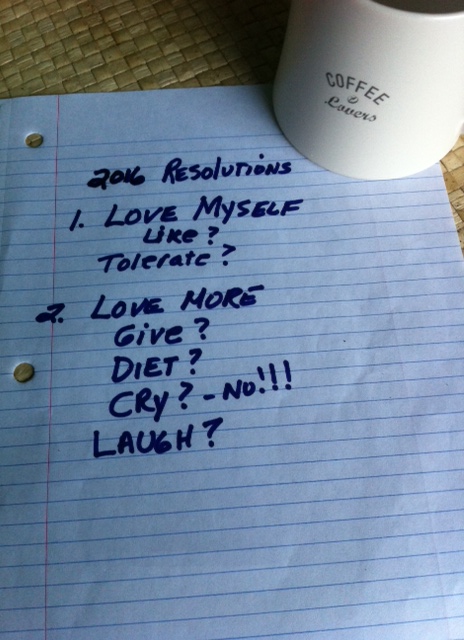
    Hello 2016! Well, the dreaded “I have to make” new year’s resolutions time is here. It’s inevitable, just like dental checkups, taxes and frantic binge preparations before a volunteer training session. So, unlike last year’s resolutions that jetted out the window after a few days, hopefully this year’s resolutions will be kept. (at least until  I’m fired or I’m sent to ’employee counseling’, whichever comes first)

    To recap, last year’s highly admirable but unattainable resolutions were:

    1. I will not hide in the bathroom when volunteer Zelma comes in because I can’t hear about how her daughter in law is ruining her son’s life one more time. (after only 3 days into the new year and spending 45 minutes listening to Zelma describe her daughter in law’s inability to make proper cheese blintzes, the next time I saw her come in, I bolted for the bathroom where I keep a Reese’s peanut butter cup taped under the towel dispenser.)
    2. I will make senior manager Ella stop claiming that “there are no volunteers when you need them.” (yeah, after I stood up in that January staff meeting and spit out all kinds of impressively convoluted stats that no one could wrap their heads around, one of the volunteers had an emergency and could not show for an important assignment. And we all know that one volunteer’s absence is the basis for judging all volunteer involvement . Sigh. )
    3. I will stop apologizing to the volunteers for things out of my control. (then my first day back, I answered the phone and a volunteer sweetly asked me to check on a request for reimbursement for an entry fee into an important event that she had to pay out of pocket because someone in marketing forgot to pay it, so she forked out $200 of her own money to cover the expense. Her request for reimbursement was submitted over three months before. “Holy crap,” I involuntarily shouted, ” I’m so so SO sorry!”)

    So, this year, I’m going to pick just one of two possible resolutions and see if, for once, I can’t just stick to the one. My possible life altering resolutions for 2016 are in no particular order:

    1. I’m going to now demand to be referred to as Goddess of Volunteers, because leader, manager, and coordinator do not seem to command any respect, so I’m going big and mythological. I will speak in a foamy but otherworldly voice and wear an olive branch crown and flowing gowns with gold sandals, even in the snow. I will announce that “I come from the sea on the half shell and will rule all volunteers like the beautiful goddess I am.” Hey, they say visuals work, so I’m calling ’em on it.
    2. I will not drive a volunteer to North Carolina. I know this is pretty specific, but I figure if I say “out of state” I will really hamstring my chances of keeping this one. Maybe I should say, I will not drive a volunteer and her entire family to North Carolina for her grandfather’s doctor’s appointment to make it more attainable. I might have to add “in months that have more than 30 days” to really give me an edge. Here’s the tricky part on this one.  I’m afraid that when volunteer Cal tells me his kids finally took away his driver’s license because, well, he has already hit a few cars in the parking lot when he comes to volunteer, I’ll be shouting, “you’ve got shotgun Cal, get it!”

    So, maybe instead I should just resolve to do my best, be fair and professional and try to see the beauty in my job every day. That’s one I’m pretty sure I can keep.

    -Meridian


  • Volunteers: The Quiet Why

    hands

    But it was Mary, Mary
    Long before the fashions came
    And there is something there that sounds so square
    It’s a grand old name….

    Cohan George M. – Mary’s A Grand Old Name, 1906

    Ralph, a volunteer for a hospice in-patient unit sat in the metal chair by the bedside of 97 year old Mary. Her wisps of white hair blended in perfectly with the assortment of pillows that supported her frail head and body. Ralph was holding her gaze, his brown eyes searching her blue eyes for clues. Her eyes were magnified in their sharpness by the lined and hollow face they stared out from and Ralph was determined to connect with her.

    “Should I hold her hand?” he thought internally and was afraid. A strange man touching a woman might be perceived improper. “I want to stroke her head,” he thought but pulled his hand back. That was too forward.

    He stared harder, drawn into her being and thought of her life. At 97, alone and childless, her husband long dead, what gave her life meaning? She was born almost a century ago, forty years before he took his first breath. What was her world then, and if she was going in and out of that era as the staff told him, what was she thinking about now?

    Suddenly he remembered a song his father would sing to his mother, who was also named Mary and he began to quietly sing, tentatively at first, the lyrics gliding over and under his gaze. “For it is Mary, Mary, plain as any name can be.”

    Those blue eyes widened and recognition rushed back to meet him. Ralph sang on softly, “But it was Mary, Mary, long before the fashions came…” Now, caution gone, he held her hand and thought he felt the murmur of a squeeze. Mary’s lips stirred, trying to sing with him. It didn’t matter to Ralph that he had always been told his singing was awful. It didn’t matter that he couldn’t remember all the lyrics correctly, he sang on, to her, to his beloved Mother, to all the Mary’s that ever lived.

    Tears shimmered over the blue eyes in a pool of kinship. For a brief moment he imagined he could see his mother’s eyes looking back at him.

    Then the eyes grew weary and closed. Mary’s slight frame relaxed into a peaceful sleep. Ralph let go of her hand and tiptoed out from the room. A nurse was standing in the doorway, wiping tears from her cheek.

    Nothing was said. Nothing needed to be said. Ralph nodded at the nurse and left her to attend to Mary. He gathered his things and left the in-patient unit. He had errands to run. As he walked out the door, he sang softly, under his breath, “and there is something there, that sounds so square, it’s a grand old name.”

    -Meridian


  • Warm Bodies, Cold, Hard Facts

    Qtips

    “What a massive responsibility, being a moral creature”
    ― Isaac Marion, Warm Bodies

    Does this line of questioning sound oh so familiar?  “Why don’t we have enough volunteers to be an Emergency Buddy? How hard can it be to find people willing to be called in the middle of the night to come by our headquarters to get the emergency plan for the district, drive out to the emergency shelter and then get a shelter spot ready for arrival? I mean c’mon, do you not know how important this volunteer job is? Have you actually tried targeted recruiting? There must be scads of retired emergency personnel who would love to use their talents to help us.”

    Well, huh. Why didn’t I think of that the last twelve times I tried targeted recruiting, or maybe I was wrong to try and think out of the box by recruiting those great college students.  Perhaps I should lie to potential volunteers so that they don’t know what the job entails? I’m sure that once they realize we lied to them, they’ll forgive us and won’t do a lousy job just because we trained them improperly .

    There’s a study that indicates companies spend more resources  weeding out lousy employees than they do cultivating superior talent. This lopsided approach often applies to organizational views on volunteer recruitment.

    toxic workers are more expensive than superstar hires

    The more important the volunteer role, the more up front work is required in order to place excellent and ready volunteers. Proper vetting, orientation and training takes time and effort by hard working volunteer managers.

    Sure, warm bodies can fill roles, but cold, hard facts say that

    Warm bodies ultimately:

    Leave abruptly, usually within the first three months

    Do not sync with the organization and remain on the outside

    Can do irreparable harm to clients

    Volunteer managers understand how much effort it takes to cultivate a qualified volunteer. Because we abhor the “warm body” theory, we will continue to be accused of not providing “enough” volunteers for critical roles.

    When pressured by senior management to magically produce more bodies, point to the lack of  harmful behavior by your competent volunteers. Remind them that properly vetted and trained volunteers do not damage the very people we serve and oh, yeah, properly vetted and trained volunteers take time and skill to implement.

    And maybe ask the person this question: “Would you want a hastily recruited and insufficiently trained volunteer working with your mother, father or child?”

    Neither would we.

    -Meridian


  • It’s 2pm and Everyone is Leaving for the Holidays Except…


    laptop

    I’m just going to say it: Volunteers are expected to work holidays. Every single holiday, every single time. No exceptions.

    Sonia, the volunteer coordinator for a busy health care clinic was approached on December 21st last year by the CEO. “We need you to round up a few volunteers to man the front desk on Christmas day so that our receptionists can be with their families. Thanks.”
    Sonia stammered, “But the volunteers want to be with their families too. I don’t know that I can find anyone. A great number of them are going out of town.” The CEO just stared at her and so she hurriedly added, “but I will do my best as always.”

    Ahh, the holidays or as I like to call them, the “hol the heck in the world will I find all these volunteers days”.
    I remember one year being asked to “get” volunteers to go into nursing homes on Christmas day to deliver  baskets of goodies for the staff  who were working that day.

    When suggesting that volunteers could deliver the baskets on Christmas eve or another day, I got a peevish look. “We want it to be for the staff working that day and we want them to you know, remember us for thinking of them on the actual holiday.”

    Oh, so you want the volunteers to spend their holidays marketing, is that it? Then, why are you paying a marketing specialist? And why are we thinking of everyone else on the holidays except our volunteers?

    But back to Sonia who sighed and said, ” I do not ever remember being told to give the volunteers a day off on holidays. Rather, I was always asked to find more so that they could fill in for the droves of staff that took the holidays off. I guess I just wish that organizations would realize our volunteers are people with lives and family. I wish volunteers would be the first ones thought of when my organization considers family needs during special occasions.  And I wish that organizations would properly thank the volunteers who give up their day to help out on holidays with true recognition or a gift or something special. I know my volunteers see through the gifts I buy and pass off as being from the entire staff.”

    It’s frustrating to hear organizations say they value volunteer contributions but fail to treat volunteers as real people who have lives beyond their commitment to us. And really, volunteer managers shouldn’t have to “educate” our management on that fact. Organizations’ managers should have enough people skills to realize that volunteers deserve to also be thought of when planning holiday coverage.

    As management clears out for the holidays, they will turn off the lights and shut their doors. Their laptops and phones and tablets will sit on their desks through the holidays, ready to be utilized, for machines never require time off. Machines are tools without needs, made to be used without consideration.

    But volunteers aren’t just tools now, or are they?

    -Meridian


  • Staff Are From Mars, Volunteers Are From Venus, and We Are Earth-in the Middle

    from www.space.com
    from http://www.space.com

    “‎” when men and women are able to respect and accept their differences then love has a chance to blossom ”
    ― John Gray, Men Are from Mars, Women Are from Venus.

    Jay, the volunteer manager for a disaster relief organization walked into the monthly staff meeting and took the last seat near the back of the crowded meeting room. The two managers in front of him were snarking about the “annoying always perky operations manager” who stepped forward to give a report on the number of clients served during a recent flood. Jay began to grumble to himself. “Where are the volunteers in this meeting,” he said under his breath. “They are a huge part of these statistics and would love to feel a real bonafide part of this organization. They do everything for us, so why can’t they ever be included in staff meetings?”

    I don’t know about you, but I’ve felt like Jay. Why aren’t volunteers included in staff meetings, celebrations and outings. (and no, having them decorate the Christmas Tree in the staff lounge doesn’t count) Why are we the only ones who think of involving volunteers as equals? Then, when my head was about to blow from my fantasies about never providing another volunteer for you ingrates again, I had a quiet staff member tell me that she felt her job was threatened by a dynamic volunteer. What?????

    Do staff have needs different from volunteer needs and how can we, volunteer managers be the grounded terra firma middle men who are able to intuitively understand both sides? And will thinking about the vastly different needs give us better insight into helping staff and volunteers to integrate? Let’s look at some of these separate needs:

    1. Volunteers need to feel included and valued. Staff need to feel that volunteers will not take their jobs.
    2. Volunteers want to do meaningful work. Staff want help so they too, can do meaningful work instead of laboring over boring paperwork and attending endless meetings.
    3. Volunteers need flexibility. Staff needs a paycheck.
    4. Volunteers want to utilize their skills. Staff wants to feel that their skill-set is not upstaged.
    5. Volunteers want to help. Staff is afraid to let go.
    6. Volunteers want to engage with staff. Staff has deadlines and wants time to work.
    7. Volunteers need teamwork. Staff needs alone time.
    8. Volunteers may be in awe of staff. Staff may be jealous of volunteers.

    We spend a great deal of time trying to educate staff on the treatment of volunteers. Perhaps we can look at staff’s needs as well and take those needs into consideration when introducing volunteers into the mix. Can we reassure staff that we get that they too, have wants and needs when working with volunteers so that they in turn, welcome volunteers?

    I think yes, if we look at it through their eyes. Staff can be intimidated by a highly educated or talented volunteer. Overworked staff just slogging through the day may feel inadequate next to an enthusiastic volunteer who is fresh and able to leave whenever they choose. Staff may have a deadline and not be able to chat with volunteer after volunteer. Staff may have worked hard on a project and may be reluctant to just turn it over to someone who only comes in once a week. So, taking this into consideration, we might:

    Talk to staff before introducing a new volunteer. The old Venus me would have sold a new volunteer by saying, “I’m bringing in Sally, a former CEO and a published expert on human resource management. She brings a wealth of knowledge and experience and will be awesome at working with our clients. She’s a very busy young retiree with lots of energy and talents. I know you will love her!”

    But what Mars staff heard me say was, “Move over, idiot. I’m bringing in Sally, a way better worker than you. She’s smarter and will probably point out every thing you are doing wrong and that’s a lot from what I hear through the grapevine. You’ll have to spend all your time answering questions and listening to her glory day stories and you’ll fall behind in your work. As a matter of fact, they’ll probably hire her which is ironically kinda funny, don’t you think?”

    Eeeck! Maybe I, as Earth should say, “I have this wonderful new volunteer Sally. She is a retired professional who wants to get to know our organization from a starting point and I thought of you and all your skills and knowledge. I am hoping that she will be a good fit for your tasks but I will be checking in with you frequently, especially during her first few times volunteering to make sure that you are getting the kind of help you need. I want you to alert me to any issue you might have with this new volunteer because I know your time is valuable and I want to make sure this is a help, not a hindrance. I know from experience that you will treat her with the respect that will make her a long term volunteer. Thank you for giving her this opportunity.”

    Let’s face it, we volunteer managers are good ol’ Earth, in the middle of staff and volunteers. And since we want to ensure that volunteers are integrated into organizational culture, we may have to mediate that integration in a balanced way by taking into consideration the needs of not just our Venus volunteers but also our Martian staff.

    It can be a tough, mud-filled, seemingly bleak task for us-being the planet in the middle. But, take a moment and look at Earth from space. It is a bright blue haven of all things possible, creative and vibrant. I’ll take being Earth any day.

    Have a wonderful Thanksgiving!

    -Meridian

  • If I Say No Will You Stop Liking Me or Can We Negotiate?

    like me
    Taylor, a petite millennial, manages volunteers for an agency that pairs mentors with children struggling in elementary school. Taylor recruits, schedules and places the reading buddies who help seven and eight year olds improve their reading skills. One staff meeting day, she was asked to provide volunteers at an upcoming cocktail party given for the mayor and several dignitaries and key donors. Taken aback, Taylor said she didn’t think that her group of volunteers would want to serve drinks.
    “The senior managers looked at each other as if I had declared a mutiny. One snidely asked me if it was too much for me to try or if I was too busy. I couldn’t believe it, but I kind of stammered that I would ask.” Taylor adjusted her glasses and paused. “Ever since that day, they have treated me differently. It’s subtle, but I can feel a coldness about them. It’s as if I committed the ultimate betrayal, although they seem to have no problem questioning each others’ ideas. I guess it’s ok for them, but not for me.”

    Ahh, I can still remember twenty years ago being told that I got the job as a volunteer manager mainly because I was so nice. “Yes!” I shouted in my head.(but not too loudly so as to offend my other thoughts) “I am nice,” I pumped my fist (not too threateningly, more like a sweet hello wave). I prided myself on being nice and after all, that’s what was expected of me, wasn’t it? Yep, what a great job, can’t wait to be nice to some volunteers!
    Well, it didn’t take too long for me to figure out that nice was a personality trait and not a skill. I found I needed some mad skills to actually manage volunteers. “Dang,” my nice self said over a cold beer, “this is much more complicated than I thought!”
    And after a few years, I began to wonder if those random “you’re so nice” comments might just be code for some other concept. Are the following definitions of “nice” the secret meanings of the word?
    Nice=invisible
    Nice=doormat
    Nice=timid, placid, submissive, weak, docile, spineless, wishy-washy
    Nice=quiet, never offering opinion, robotic
    Nice=unable to see the big picture like those in charge.

    Hmm, can nice volunteer managers say no as in “no, the volunteers will not go out in the blizzard to put flyers all over town for your event because you forgot to mail them out?” And, if we say no, will we be disliked?

    Well, it’s not about whether senior management likes us (and really, we know deep down that doormats are not liked, they’re used), it’s about doing our jobs. It’s about being a team player but also an expert in our volunteer base. We know our volunteers and their capabilities and we should not be afraid to voice our opinions on utilizing them. So, in between Dolly Doormat or Negative Ned, is the logical negotiator.

    For example, Negative Ned might shout, “No way dude! Seriously, you want me to round up volunteers right now? Do I look like I have nothing else to do? If you honestly think volunteers just sit around waiting for me to call, then you’re nuts!”
    Or Dolly Doormat might nod her head and smile. “Yes, ma’am, I’ll cancel that presentation at the Ladies’ Auxiliary I had lined up for this afternoon and get right on it. I’m sure those 200 potential volunteers won’t mind my last minute no-show. I’ll just apologize profusely to them and try to explain in my monthly report why there are no new recruited volunteers.”

    Instead, here’s how Noble the Negotiator would answer: “Let me see if I understand this correctly. You need five volunteers in two hours to man a booth at a last minute fair. (re-state the request) That sounds like an important task.(acknowledge that the requester feels the request is important) I have an important presentation today that could possibly give our organization an ‘in’ with the Ladies Auxiliary and have put a lot of effort into making this happen so you can see that I have to be there. (nicely point out that you have work you must do and why it’s important) But let’s figure this out. Can a staff member set up the fair and stay until our first volunteer arrives? (involve the requester or offer alternatives if the request can’t be wholly fulfilled) I will put a trusted volunteer on the phone right now and give him a list to call. Since I will be out in the field, I will have that volunteer keep you updated until I return.” (fulfill the request without owning the lateness or mistake or circumstances that make the request difficult to fulfill)

    There is a danger when we, volunteer managers look at requests from our own emotional prism. When we deem requests “stupid” or “unreasonable,” we lose the objectivity needed to operate in a professional manner. Besides, volunteers deserve to make up their own minds as to whether to drop everything and come in or to subjugate themselves to what we may perceive as a demeaning task. It’s their choice.

    But if we are seeing patterns of refusal, then we can arm ourselves with the data to justify a “no volunteer will do that job” scenario. Keep detailed records of volunteer responses to requests. It can be as simple as “when we call during the day, 82% of our volunteers are already engaged in other activities and cannot come in,” or “of the 43 volunteers called, 100% said no, they were not comfortable serving drinks to donors at a party. Five of them even called it and I quote, ‘inappropriate’.”

    Data always trumps vague, emotional claims such as, “volunteers don’t want to do that!” Knowledge and data are the capital with which to negotiate. We don’t have to be afraid to voice our expert opinion in such a way that we are not perceived as pushing-back or lazy or negative.

    If we become a noble negotiator, we may or may not be liked, but we will be respected.
    -Meridian

  • International Volunteer Manager Appreciation Day or How I Learned to Stop Worrying and Love the Bond

    http://volunteermanagersday.org/
    http://volunteermanagersday.org/

    Happy IVMA Day tomorrow! November 5th is in some pretty impressive company along with Gunpowder Day (Guy Fawkes) and Men Make Dinner Day. So, after gorging on cake, opening all my presents and explaining for the 75th time that this is not a day to thank volunteers, I’m going to reflect on what this day represents. And I will be thinking about some volunteer managers who really deserve to be appreciated. These volunteer managers did not throw in the towel when faced with the challenges unique to volunteer management. Here they are in no particular order:

    Volunteer coordinator Mandy who was pressured by the CEO’s executive assistant to join a secretarial association in order to secure a discount for the rest of the administrative assistant staff.  Mandy was enticed by “c’mon, you sit at a desk and you use a computer and work with email. Besides, we serve cupcakes at our meetings.”

    Volunteer manager Marcus who found the CEO at his door one day asking about a volunteer who had recently died. “Who was she, where did she work,” the CEO inquired. Marcus was thrilled to see the CEO care about a long-term volunteer until the CEO said, “gosh, I really can’t picture her,” then proceeded to talk about the sizable chunk of money the volunteer left to the organization.

    Volunteer manager Chelsea who was promised additional help if she doubled the volunteer base. When she asked about the additional help after increasing volunteers by 120% she was told, “but we all have to tighten our belts. Besides, it’s not like these are employees. Volunteers are easy.”

    Volunteer coordinator Bennie who arrived at work one day to find his desk moved. “We hired a consultant on employee morale,” he was told, “and had to find space for her to sit.”

    Part time volunteer leader Casey who went shopping and was caught by a chatty former volunteer who talked so long that she ended up wetting herself and the store’s floor.

    Volunteer manager Tyreese who was instructed to create a good experience for a senior manager’s teenager daughter that needed community service hours. Tyreese spent hours working on an educational and meaningful project only to repeatedly find the teenager sitting outside on a bench texting. The next day, the senior manager presented Tyreese with a form to sign that stated the hours were complete, saying, “She’s such a bright girl, don’t you think? She wants to be a mental health therapist one day.”

    Volunteer coordinator Toby who spent most of her weekend sitting by the hospital bed of a new volunteer only to find out that the volunteer wasn’t really sick in a traditional way, but actually addicted to pain killers.

    Volunteer manager Miriam who spent her rainy birthday driving 54 miles with all her training gear to a rural community center where the Ladies of the “Communication Service Guild” wanted to be trained as volunteers. Not only was the center padlocked, the president’s cell number was disconnected. A soaked Miriam tripped over some slippery rocks strewn in front of the gate and fell in the mud. The next day after much trial and error, Miriam was able to reach the guild’s treasurer who said, “Oh, no, we put that off until next year. We’re just too busy working on our rock garden right now.”

    Volunteer specialist Jarrel who generously invited the head fundraiser along to present at a community speaking engagement only to be talked over throughout the entire presentation. The head fundraiser breathlessly told the crowd, “what we really need is your volunteer efforts to raise more capital for us. As a matter of fact, why don’t we set up a fund-raiser right now! I’ve got a sign up sheet right here!”

    Well there you have it-kudos to all the volunteer managers out there who endure the oddball insanity of volunteer management.

    So, again, happy International Volunteer Manager Appreciation day! Have some cake, open all your presents and tell everyone to….   well, just enjoy!

    -Meridian

  • The Really Spooky, Creepy, Terrifying Volunteer Management Zombie

    zombie

    It is so dark that your breath hangs, a web in the blackness. Your heart races, threatening to burst to keep from confronting the terror within. You feel something near, just over your shoulder and you freeze because it is moving towards you, intent, and deadly. You close your eyes, as if to hide, but it will find you.

    It is the volunteer management zombie, and it wants to eat your volunteer manager brains.

    Robert, the office manager of a non profit tourist welcome center, walked into the middle of a conversation between staff member Gloria and a volunteer, Ralph. Ralph was telling Gloria, “you should have made more of those brochures. The visitors are complaining that they don’t have any information.” Gloria sighed and looked at a stressed and irritated Robert who suddenly felt the VM zombie nibbling on his brains. “Ralph, can you stop complaining for once? The brochures are on back order for the tenth time already.”

    Ralph shifted his weight. “But I’m the one who hears the complaints from the visitors.” Robert cracked his neck as more grey matter was consumed. “Well, it seems all you ever do here is complain.  I’m frankly tired of it. Why are you here anyway if you hate the way we do things?”

    Ralph grew defensive. “What do you mean, I always complain? I’m here three days a week, I’m always on time, I take on extra work when you need it. I’m beginning to think you don’t want me here.” He looked to Gloria for help and she just timidly shook her head as she was afraid the zombie would see her too.

    In another part of town, Elise stopped in to check on the volunteers preparing dinner at the local homeless coalition. The operations manager, Elise wore many hats such as builder of community partnerships and manager of the volunteer services department. She had just come from a brutal meeting in which the CEO nitpicked her work. Elise noticed one of the newer volunteers, Yvette who was opening cans of corn. Suddenly a battered Elise felt a chewing in her cranium and asked Yvette to step outside.

    “Yvette,” Elise sighed, “according to volunteer Pat, you were 10 minutes late last week. Three weeks ago, staff member Rod said you left 15 minutes early. You know we depend on volunteers to complete their shifts, right?

    Yvette was taken aback. “I’m so sorry, I was caught in traffic last week, I told the volunteer lead. And I left early because we were finished and I was told to go home.”

    Elise, feeling her frontal lobe being consumed, opened her notebook. “Be that as it may, according to our volunteer Craig, you also did not specifically follow the portion rule last week. You gave a quarter cup extra serving of broccoli. We almost ran out of vegetables. Look, you have to follow the rules. We run a tight ship here.”

    Yvette held her tears for later. “I’m sorry, I’m doing the best I can.”

    Elise blinked. The gnawing in her head continued. “Besides, a homeless man said you wore an apron from home. He said he liked it. But, we give you aprons to wear so that you can be identified as a coalition volunteer. Yours said something inappropriate.”

    “It did? It said ‘love’. And I gave my apron to another volunteer who forgot hers. I happened to have my own apron in my car. I told the lead volunteer and he said that was ok.”

    “You’re not taking this seriously. We need better from you,” Elise said as her phone went off. She looked at it quizzically as the cranium nosh escalated.  “Anyway, we’ll revisit this later, I have to take this call.” She walked away, leaving Yvette to wonder why she decided to volunteer.

    In another locale, volunteer manager Sharon looked up and saw volunteer Astrid coming through the front door. For a second, Sharon steeled herself, knowing that she had to sit down with Astrid and discuss some troubling behavior but then, Sharon thought of her impending deadlines and her shoulders slumped. “Not today,” she murmured as the VM zombie cracked her skull open and began to feed. Sharon quickly got up and hurried off to the supply room where breathlessly, she shut the door behind her. “This is crazy, I’m hiding from a volunteer,” was her last rational thought as her brain was devoured.

    Stress, overwork, feeling unappreciated and exhaustion can open up our heads to the VM zombie who dines on our logical brains when facing challenging situations. Robert was emotional and spouted vague accusations. A nitpicked Elise turned around and nitpicked her volunteers while Sharon kicked her volunteer can down the road.

    Dealing with challenges takes every brain cell in our already overfilled noggins. Like Robert, we can blow one day or like Elise, we can gather evidence of any tiny mistake each volunteer makes. And then there’s Sharon, who just avoids it all. In between all this is the professional. logical and ultimately best way to resolve volunteer issues. It is the ultimate weapon against the VM zombie’s gluttonous hunger.

    So next time I’m tired and cranky and under-appreciated, I’ll be listening for the shuffle behind me. Then I’ll reach for my zombie busting bat of common VM sense to protect my belfry and save the volunteers from an empty-headed mistake.

    Hoping you have a safe and Happy Halloween!

    -Meridian

  • Face It: Fit, Attitude, Change, Expectations, by Intervention within a Timeline Part 2

    “Tenderness and kindness are not signs of weakness and despair, but manifestations of strength and resolution.”
    …Kahlil Gibran

    You have a volunteer that is problematic and you are at the point where you believe you have done everything possible to integrate that volunteer. You’ve examined your personal feelings on the situation and feel that you have removed emotion from the equation and are dealing with the challenge in a logical way. So, now what to do?
    Well, think of this acronym- Face It:  Fit, Attitude, Change Adaptability, and Expectations through Intervention within a Timeline. I know it’s a mouth and mindful but hopefully it will help in remembering how to go about working with challenging volunteers. When integrating a volunteer becomes difficult, use this acronym to see if, after interventions within a timeline, there is improvement. Let’s look at each letter in FACE IT.

    Fit: How well does the volunteer fit, not only within the organization, but in her role, with other volunteers, and in the mission? Is the job just the wrong fit or does her philosophy not mesh with the organization’s mission? Does her personality clash with all other volunteers and staff? Is she there for some underlying agenda?

    Attitude: Does the volunteer have a troublesome attitude? Does he incessantly complain? Does he undermine? Is he excessively negative? Is he disrespectful to his supervisors and co-workers? Does he feel that he is superior to the tasks and to the mission?

    Change Adaptability: Is the volunteer able to weather change? Does she dig in her heels when faced with a new policy? Does she refuse to adjust and claims that because it was always done a certain way, you have no right to progress? Does she subvert the mission because she cannot accept new ways and new people?

    Expectations: Is the volunteer meeting clearly defined expectations? Is he chronically late or a no-show? Does he ignore rules and regulations? Does he do whatever he wants without regard to organizational needs? Does he feel that it is not important to communicate with you? Is he a Lone Ranger, but without the white hat?

    These are four pillars of excellent volunteering. When one or more pillars become troublesome, an intervention with that volunteer is necessary. Sometimes it’s just life’s stress that causes great volunteers to go off course. Intervention is never mean but instead, indicates that you notice a change in the volunteer’s behavior and that you respect this volunteer’s contributions and want to help him succeed.

    But help without clear objectives and timelines is futile, so let’s look at the second word in the acronym and the steps of implementation.

    Intervention:
    1. Meet with the volunteer to discuss the area(s) that need(s) improvement.
    2. Point to your rules and regulations, policies and procedures to illustrate your concerns.
    3. Present your evidence, but emphasize your desire to help the volunteer succeed. While note keeping on volunteers may seem underhanded, without details on egregious behavior, your “case” is broad and hearsay.  Besides, specifics help a volunteer see the exact behavior that needs improvement.
    4. Reiterate your commitment to working with this volunteer and then lay a course for how the volunteer can improve.

    Timeline: I can’t emphasize this enough-Timelines are critical. How long do we give a volunteer to improve? Having a clear deadline is effective. Having some random phantom goal in the future will doom your intervention every time.
    1. Set follow up meetings at intervals to monitor improvement.
    2. Make sure you collect evidence of the volunteer’s performance for further steps.
    3. Always meet on premise.
    4. Have at least one other staff member present. This not only gives you another set of eyes and ears, but limits the “he said, she said” aspect and shows the volunteer that you have the support of the organization.
    5. Always leave interventions after asking if the volunteer understands the steps outlined, because if you don’t, that volunteer can easily say that he did not comprehend what was being discussed.

    Interventions are usually enough to motivate a volunteer to succeed, especially if the volunteer is new (having a clear six month probationary period for all new volunteers helps too). But for the minute number of volunteers who do not improve, a “parting as friends” and a “wishing you well” is in order.

    Without upfront, clear instruction and expectations, no manager can assume that volunteers know what is expected of them.
    Rules, job descriptions, termination policies and the steps of intervention must be written and signed by each and every volunteer.
    Infractions must be recorded and addressed immediately with volunteers.
    Often, we view ourselves as too nice to point out egregious behavior. But really, we are not being too nice, we are just practicing confrontation avoidance.
    Instead, the nice thing to do is to help a volunteer excel, not languish, unable to improve, isolated and ostracized by staff and peers.
    The nice thing to do is to create an atmosphere of excellence, of lofty expectations, of volunteer quality so that your volunteers are proud to contribute and your clients are served by the very best.

    Yes, I want to be tender and kind, and I will by being strong and resolute.
    -Meridian

    Oh, next time: Collecting Evidence