Tag: volunteer

  • Let’s Just Have Tea, Shall We?

    teaMarlene has been a volunteer coordinator for ten years. She’s adventurous, loves rock climbing, extreme sports and her idea of a pleasant evening is a demolition derby. It’s only natural that she would bring her sense of adventure to volunteer management.

    “I like to try new things all the time,” she says with the tiny grin of a child caught in the act. “I like to see the things others are doing and try to incorporate that into my volunteer program. Here at my hospital, it’s easy to get into a complacent stage where you think all people who come to volunteer in a hospital setting are pretty much the same type of person. I’m constantly being told to find retired nurses and health care workers, because they would naturally want to continue their line of work after retiring, wouldn’t they?” She laughs easily. “I mean it’s this kind of thinking that breeds a stale environment. Now don’t get me wrong, I understand that a retired nurse would be easy to train because she knows the system so well and can follow the rules. But,” she adds with a mischievous gleam in her eye, “what about the retired nurse who was so fed up with obeying the rules, and she wants to volunteer to break the constraints wide open? Huh, what about that?”

    Marlene has a great point. Organizational administrations who tend to lump potential volunteers together will most likely also make the mistake of lumping actual volunteers together in a “them” mentality. Ignoring the subtle complexities of volunteer management will foster this stale and outdated thinking.

    “When it comes to interviewing potential volunteers,” Marlene continued, “I’ve tried everything from quizzes to group interviews to structured questions. Sometimes these techniques work, and sometimes they don’t. We’re in an age when background checks are not enough, not if you really want to get to know the motivations of the volunteers working within your system. Do background checks uncover mental illness? Does a quick call to a reference on an application reveal the tendency to get over-involved with children? Will an interview question about the reason a person comes to volunteer actually produce the real answer?” Her grin widens. “And what is the real answer, now that is the question?”

    Marlene has had some experiences she wanted to share with us. “Look, I tried a list of good, solid questions, but what I often found was that I immediately put the volunteer on the defensive. For instance, I asked a man why he wanted to volunteer with us and he shrank back like I hit him with a bat. I could see in his eyes that he was searching for to the correct thing to say, so I knew right then that I wouldn’t be getting an honest answer. Now, mind you, this man became a great volunteer, but that interview question did not help me in any way. Actually, it hindered the rest of the interview and it took some time to get to know him.”

    Marlene looked for the right words. “But, I knew that I wanted answers to certain questions so I started experimenting with peppering the questions into a casual conversation. The whole process took a bit longer, but I found that in the majority of cases, it was well worth it. My mother was born in England and so I began to create in my mind what I termed the ‘spot of tea’ scenario. I would invite potential volunteers in for a twenty-minute chat and a cup of tea or coffee.

    At first I started by asking them simple questions and I found that even that put them a bit on the defensive so I experimented with trying to put them at ease. And now I begin by first explaining our program to them. It works so much better and puts them at ease. I start by introducing myself and talk about how the program works, our volunteer jobs, and some of the benefits of volunteering. I make sure that I tell them how rewarding our existing volunteers find their work to be. Then, and only then, do I start to ask some questions in a conversational manner. I’ll reword the questions every time so that it doesn’t sound so rehearsed.” Marlene laughs. “If you don’t think most potential volunteers can spot a canned question, then you don’t know volunteers!”

    She continued, “when people are comfortable, they will naturally open up, much more than when they are put on the spot by invasive questions like why are you here?” Marlene then recalled an incident during the beginnings of her ‘spot of tea’ interview. “I remember one young man who came in. We were talking, really getting to know one another and he told me that he had been fired from his last job. Because a red flag went up in my head, I carefully asked him what had happened and he told me. I was shocked that he confided in me, but it turned out to be a reason that prevented us from taking him as a volunteer. A background check would not have revealed that information to me. He did.”

    Assessing potential volunteers is something all volunteer managers want to do well. There really is no perfect question, technique or method involved in getting to know volunteers. Whether you have a set of specific questions or not, Marlene advocates first putting prospective volunteers at ease. “Make them comfortable with you so that they can be honest. That way, you’ll not only get some honest answers, but you’ll also have a leg up on figuring out a fit for them. And besides, it’s gratifying learning the volunteers’ stories. It helps you and it makes them feel a part of the organization right from the start.”

    This is why volunteer managers are so incredibly good at their jobs. Even the simplest of tasks such as interviewing a prospective volunteer is viewed as crucial to organizational success. Volunteer managers like Marlene may not try to be perfect, but in striving to do the best possible job in every situation is surely as professional as it gets.
    -Meridian

  • Bursting the Idealistic Bubble

    bubbleburstWhile eating breakfast at our favorite hole in the wall diner, my husband pushed aside his plate of pancakes. “They’re a bit doughy this time,” he said and covered the plate with his paper napkin just as the server walked by. “Finished already?” Her question was a polite accusation, yet she removed the plate at my husband’s nod. That got me thinking aloud. “Does the cook feel badly when food comes back uneaten?”
    “No,” my husband quickly offered, “it’s a job.” But then he thought about it. “Well, maybe so.”

    It reminded me of volunteer manager Brett, who oversees the volunteers that cook meals for patients at a hospice care center. “One of the biggest challenges I have is to handle the volunteers’ disappointment when patients don’t eat the meals prepared for them. The volunteers put their heart into making the meals look and smell appealing from making sure the plate is cleaned of any spillage to the garnish that enhances the look.” Brett continued, “I mean, when a new volunteer starts, I have to really remind them that patients may be too sick to eat. They may order food with every intention of eating it, but their appetites often are just not there anymore and they don’t even try a bite. That is very disappointing to the volunteers who send out food thinking that the patient will enjoy the meal they just prepared with care.”
    “What do you do to quell that disappointment?” I asked.
    “Number one, I’m available. I’m there to gauge the volunteers’ reactions to things, like if they get quiet because they think they were reprimanded by a patient’s family or staff member, or if they seem down because no one is eating or if they act discouraged because no one seems to show any appreciation.”

    Brett is a savvy volunteer manager. He knows the impact and benefits his volunteers bring, but he also realizes that the volunteers don’t necessarily receive continuous positive feedback. And if they do not, then disappointments may just color the way they view their volunteering.
    I remember a volunteer, Jess, who was upset because the client she was working with said to her, “I don’t like you.” She had put her heart and soul into trying to “reach” this gentleman and when he refused to be “reached,” she was devastated. “What did I do?” she asked. “What could I have done differently?” And her very telling question was, “why doesn’t he like me?” At that point, placating her with flippant statements like “well, it’s just him, not you,” would serve no useful purpose. This is where some real volunteer management is necessary. We have to ask, “what are Jess’ expectations of volunteering? What are her methods of working with clients? Did we give her the wrong client, not only for her, but for him as well?”

    When working with volunteers, I was always adamant about telling them that a rebuff or client anger was rarely directed at them personally. The fact that someone didn’t eat a volunteer prepared dinner had almost nothing to do with the meal, but everything to do with the patient’s ability to eat.
    Brett says, “I tell the volunteers that the patient’s family is hyper aware of the meals that are made, that the family is touched by the extra care put into those meals. I tell stories about how a family member will get so excited because their dying loved one tried some creamy mashed potatoes. Because I’m here all the time, I can see the good that is being done. I try to impart that to my volunteers.” Brett connects his volunteers to the overall experience of volunteering, not just their own unique and personal experiences. “I tell them that not only does the family and any visitor notice the great meals, but our staff notices too. And my volunteers absolutely revere the staff, so that means a lot to them.”

    Do the cumulative good experiences outweigh the immediate bad experience? Hopefully so, because if a person comes to volunteer with the thought that they will make a positive impact in another person’s life, then a rebuff or a moment of disappointment can puncture that warm bubble.
    As Morrie Schwartz, the subject of Mitch Albom’s acclaimed book, Tuesdays With Morrie once said while telling the story of a wave who feared crashing onto shore, “you’re not a wave. you’re part of the ocean.”

    Our volunteers are part of an ocean of good work. Helping them see that is one way to soften any disappointment they may encounter. But our work doesn’t stop there in a warm fuzzy ending. Excellent and continued training about clients, situations and how to view volunteering is also in order. I remember a hospice resale shop manager who was having some challenges with her resale volunteers and their brusque nature towards the folks coming to the back door with goods to donate. “They’re not looking at them as people, so much as nuisances,” she lamented. I asked one of the bereavement counselors to do a workshop with the volunteers and she not only agreed, she made a real difference in their attitudes. She offered stories of how bereaved people view the items they are giving away. It sensitized the volunteers to look at donors in a different light. As one volunteer said, “it’s not just unwanted junk people are bringing in, it’s their lives in a box. We need to be mindful of that.”

    Because we can’t offer continuous training every day and every shift, we reinforce the connections in a continuing dialogue with each volunteer. An example would be saying to an assembly line volunteer feeding the homeless, “your work is amazing. Because you were here to prep those potatoes, we actually fed 200 people this time. And one gentleman said to me that this meal reminded him of a Sunday afternoon at his grandmother’s farm.”

    Volunteer work can be wonderful, messy, unpredictable, illuminating, satisfying and sometimes, disappointing.
    It’s the diligent volunteer manager that keeps each volunteer tethered to the mission and to the overall good work which keeps that bubble aloft.
    -Meridian

  • Walking the Unfamiliar Way

    187My very first adult job required me to walk to the bus stop, take a bus to the train station, ride the train downtown and then walk from the train station to work. I followed the same path day after day. I knew the routine of the stores opening, the passing of the street sweepers and the smell of wet concrete. But one day, as I exited the station, the sidewalk was blocked with wooden barriers and I had to walk an unfamiliar way. As the sun peeked over the tops of skyscrapers, the deep shadows between buildings scared me. This morning, this sidewalk felt deserted, hostile and I thought someone would jump out at me from a back alley. But as I pulled my collar up tight against the shadow cold, and felt in my pocket for keys that might serve as a weapon, I caught sight of a tiny shop tucked between two mammoth buildings. “Rare books,” it proclaimed. I stopped and squinted into the store, relaxing my grip on the keys. Although not open yet, I could feel the comfort of the leather-bound pull through the window. Suddenly this street helped the sun reach over the steel and open up its gifts. I now had an alternate way to work.

    Years ago, when Peter came to volunteer, I sadly have to admit, I pulled my collar up against the cold of the unknown. His multiple piercings and extreme quiet seemed as daunting as the dark buildings of an unfamiliar street. I was used to students who looked and acted familiar. You know the ones, the bright, talented and focused kids who give you the sense that all will be better in the years not yet decided.
    Why was he here I thought. What trouble has he been in? A part of our jobs is to determine how much court ordered community service we can handle effectively. We ask, “what was the charge?” We root out the potential volunteer’s attitude towards community service and weigh whether or not he or she will be a benefit to our clients or a hindrance.

    I asked Peter if he was required to volunteer and he said no. I relaxed my grip on preconceived notions and let my curiosity take over. It seems that Peter had finished high school in another area and moved with his disabled mother to our town. In between looking for jobs and caring for his mom, he wanted to give back. I asked him to come to the next volunteer orientation which was starting in a few days. He not only completed orientation, but also covered his tattoos and removed some piercings so as not to frighten the generations he would be volunteering with. His thoughtful, intense ability to hear the inner meaning of others made him a natural volunteer.

    See, when a paid position is posted, HR departments comb through prospective employees to find the one that best fits that particular job opening. If an intriguing prospect has a different skill-set than the job posted, the HR professional can keep their application in a file for the future and hope that a job utilizing that skill-set comes open. It must be difficult to turn away quality people who just don’t quite match the open job requirements.

    We, however, don’t have to turn away volunteers because we just have one slot to fill. We can utilize multiple people for one position and on the creative end, design new ways to use volunteers. It is immensely satisfying, creative and full of leadership potential.
    When Anne came to volunteer I think I spent several thirty minute sessions just getting to know her. There was something about her intensity, abilities and talents that just did not fit the binder of possible volunteer jobs I had available. During our first meeting I found out she was a corporate sales trainer. (Volunteer Job=volunteer training? Hmm, maybe) In our second get together, we talked about her love of discipline and building lasting relationships in sales. (Volunteer job=administration? Maybe not so much). Our third meeting revealed that her mother died in a nursing home and she had a passion for those residents. (Volunteer job=nursing home volunteer? Yes, but she had mega skills) By the time we met again, I think I had a feeling for Anne’s tremendous potential. She ended up helping me increase our nursing home volunteer base by threefold. She spoke to new volunteers about the importance of volunteering in a nursing home. She personally mentored new volunteers in key nursing home settings and she co-facilitated nursing home meetings. She brought a passion coupled with mad skills to a newly created position.
    If Anne had applied for a paid job, we would not have hired her and would have missed this incredibly committed and talented human being. Thank goodness she came to volunteer.

    HR requirements put a great deal of restrictions on hiring people and those restrictions are seeping into volunteer services with stricter background checks and liability policies. But, there is one area that we can still control. We can thoroughly get to know our prospective volunteers and find meaningful places for them as long as we have the means and ability to cultivate and manage them.

    We don’t have to walk the same path everyday. When faced with an alternate route, we can opt to venture through unfamiliar territory and increase our chances of finding those gems that are tucked along our journey. And that’s where courage and leadership begin.
    -Meridian

  • What Could Go Wrong?

    I happened to catch a grandma chatting via video with her granddaughter at college.
    Have a peek at her volunteering experience:
    -Meridian

  • “My Job is Social”

    fort wayne childrens zoo

    I was so impressed by an article I read a couple of weeks ago about the volunteer program at the Fort Wayne Children’s Zoo in Indiana that I just had to call and speak to the volunteer manager, Kathy Terlizzi because something about the article’s description of the program conveyed a specialness about volunteering. Kathy graciously agreed to let me write about our conversation.

    Kathy with Dingo pup
    Kathy with Dingo pup

    http://www.journalgazette.net/news/local/Volunteering-at-zoo-better-than-working-5364666
    I felt so comfortable speaking to her from her first bubbly hello that I imagined all the volunteers, both existing and perspective who are captivated by her passion and dedication. Her program truly is inspirational.

    Kathy has been the zoo’s volunteer manager since August 2009 and was a volunteer at the zoo before joining the staff. “I made changes based on my experiences as a volunteer,” she told me. When she took over, the initial training program for new volunteers occurred either at the end of the season or at the beginning which meant some volunteers had to wait before utilizing their new skills and enthusiasm. Also, the training was a comprehensive training which meant that volunteers, regardless of their comfort level were expected to “get out and do what they were trained for”. Many volunteers, Kathy found, were overwhelmed with the comprehensive training and since there was no practical application (mentoring) along with training, the volunteers were not prepared to roll up their sleeves and jump in to some of the more complicated tasks.

    So, Kathy, seeing volunteers repeatedly become overwhelmed, initiated a stair step training broken into three parts.
    Part one is the basic training for all adult volunteers. This is the ground floor training and volunteers are asked to commit to 18 shift hours before moving up to the next level. Volunteers at the zoo can sign up for shifts online. (the zoo utilizes Volgistics for volunteer management).
    Part two is the Ambassador training which helps volunteers prepare to interact and speak to the general public.
    Part three is the docent training which helps volunteers become comfortable in crowd situations and with handling zoo education animals during animal demonstrations and off site programs for zoo guests.

    This stair step method allows volunteers to take their volunteer training in stages and encourages them to find their comfort level of participation. The more advanced classes may be smaller than the initial basic training, but it ensures that volunteers find their own path and don’t feel pushed into something they are not ready to do. Some volunteers don’t wish to advance while others find that they want to move up. “I believe that volunteers should bloom where they’re planted,” Kathy said.

    I heard real pride and enthusiasm when Kathy spoke about her teen leadership program which is set to kick off in June and July. Daily, 30-40 adult volunteers work in the zoo, but during the summer program an additional 40 teens who volunteer during two-week sessions are incorporated. They too, sign up for shifts online after going through a special teen orientation.
    Teens 13-17 apply for the two-week sessions and the 172 slots are coveted by 250 applicants. Returning teens account for about 99 slots, so the rest are new teens who go through the new application process which includes filling out an online application, answering an essay question and providing a letter of recommendation.
    After the applications are processed and the teens selected comes the logistical nightmare of slotting teens into the program. Kathy spends the entire month of March working on the two-week sessions. Emails and phone calls from interested teens takes over her days as she slots returning teens first and then the new teens are inserted based on gender, age and availability to provide balance. It is an ever evolving schedule as teens find conflicts with their other activities and family obligations.
    But, instead of this monumental task seeming a burden for Kathy, she is stoked about the teen program, and told me that at first, she was intimidated working with teens because of all the negative stereotypes she’d heard about young people. But she found that the teens she works with are wonderful, responsible volunteers. She prides herself as an up front person and speaks to them frankly about dress codes, expectations and sensitive subjects like drugs and weapons. The teens are expected to be professional in their participation, especially in regard to zoo guests. In return, the teens take their responsibilities very seriously and frankly, Kathy says, they “have a lot to say.” Kathy believes in speaking to the teens directly, (although the program is transparent and openly invites parental and guardian involvement) and finds that the teens really step up when given the chance to embrace responsibility.
    One day she discovered some older photographs of teen volunteers doing the same animal handling as the adults, something the zoo had gotten away from over the years, so she advocated a return to letting teens have equal volunteer responsibility. The parents were open to it, she says, mainly because they knew their children were safe within the zoo framework.
    So two years ago, she implemented a two-hour pilot training and 66 teens signed up. At first the teens began with level one animals, bunnies and guinea pigs, but now the teens are handling snakes and tortoises. When the pilot program began, Kathy let the teens know that they were in part responsible for the success of the program and the teens immediately stepped up and showed the professionalism necessary for the program to thrive.

    puzzle feeder
    Puzzle Feeder

    Another success Kathy talked about was increasing the trust level between staff and volunteers. It was a goal she had when she first started and so she spent the first year building a rapport with staff. “I told them (staff) that volunteers will do anything as long as it benefits the zoo. They won’t, however wash your car.” At first the zoo keepers were reluctant, so Kathy took a proactive approach.
    She saw that the giraffe keepers had to prepare food daily for the giraffe puzzle feeders (a hanging feeder with holes that let the food stick out-these feeders simulate the natural foraging of giraffes) and offered to ask volunteers to do the preparation, thus giving the keepers more time to focus on other more pressing tasks. At first the keepers wondered why any volunteer would be willing to do that job, but within five hours after posting the job online, the shifts were all filled. Now volunteers sign up for 2 hour shifts to prepare the giraffe puzzle feeder food.
    Another proactive instance came when the aquarium manager mused about organizing ph data he had been collecting so Kathy offered him a volunteer who was computer savvy in spreadsheets.
    At first he reluctantly turned over a month’s worth of data but when he received his data back in a neatly organized spreadsheet, he quickly turned over much more information to the volunteers.
    That’s how trust is built. Kathy also found a way to incorporate seamstresses into the zoo’s programs. These volunteers make costumes for zoo presentations and also cold weather quilts for the education animal carriers. She also utilizes Spanish-speaking volunteers to help translate signage.

    Kathy has found a great way to work with groups. She says that the community wants to be involved in zoo volunteering so she offers the community the opportunity to participate in Annual Enrichment Workshops (run by a volunteer and his family) where they can do meaningful crafts like make fishcicles or paper mache animals in bulk. These items are requested by keepers and ultimately given to exhibit animals as enrichment. She also utilizes corporate volunteer groups for some of the zoo’s larger events throughout the year.

    But when I asked for Kathy’s advice to new volunteer managers, she grew wistful, “I would tell them to get ready for the ride for it’s all encompassing. It’s fun and rewarding but also sometimes sad because you have this personal rapport with the volunteers and you get involved with their lives.” She also would like a new manager to know that volunteer management is not a 9-5 job, as there are weeknight trainings and weekends spent recruiting or trouble shooting. She says, “there’s one of me and 450 volunteers. And they all want and deserve some of my time. That’s why my job is social.”
    She told me that she had been a manager for many years before working at the zoo and it opened her eyes when she took a personality quiz and found out how high she scored on interacting with people. Volunteer management has fit that bill. Kathy spoke glowingly of being able to put a volunteer in a place where they can grow. Whether it’s a shy, sensitive teen or a senior who is feeling unfulfilled, she derives tremendous satisfaction in seeing volunteers bloom.
    As you can imagine, Kathy is comfortable talking with anyone. She says, “I kid that I need one of those take a number systems outside my door. My office is right across from the volunteer room. Everyone talks to me, volunteers, staff, guests, even family and friends. If I wear my zoo t-shirt to the store, the clerk wants to talk to me about the zoo. So I take the opportunity to ask, how about volunteering for us?”

    For me, it was easy to see why this volunteer program succeeds. Kathy Terlizzi, the volunteer manager, is both passionate and practical. I heard in her voice that she wants every volunteer to succeed, to have a meaningful experience, and to be part of something in which they can take great pride. It’s no wonder the Fort Wayne Children’s zoo is the number one attraction in all of Indiana. This zoo and volunteer program is a success story we can all learn from. I know I’ve taken away these principles from my conversation with Kathy:
    1. Be proactive with staff-analyze their needs and offer volunteer help whenever possible-build that trust that volunteers can help and free up staff to do other pressing matters.
    2. Invest time and thought into your training program-use levels to encourage volunteers to find their niche and don’t overwhelm them with all training at once, instead encourage them to take training in steps. Make sure that the volunteer opportunities are meaningful work.
    3. Model professionalism and responsibility, especially to teens and they will step up to the challenge.
    4. Be prepared to give your time and attention to every volunteer.
    5. Create new opportunities whenever possible to expand your volunteer reach.
    6. Take pride in your work. It’s infectious.

    Thank you so much to Kathy Terlizzi for allowing me a glimpse into this very special volunteer program. It is volunteer managers like Kathy who take volunteering to the next level through dedication and a willingness to believe in volunteers.
    -Meridian

  • I Turned Her Loose

    3d_buildings_and_floor_plans_8_165343I was turning the pages of an actual newspaper when I came across a picture of a former volunteer, Simone. I touched the grainy picture with my forefinger as though able to connect through ink and wood pulp. Simone had that look on her face, one of fierce determination and intent concentration. “I will make a difference, I will.”
    She was actually referred to me by another organization who honestly did not know what to do with her. “Can you take her?” they asked. “We can’t provide her what she needs for the things she wants to do.” I love a challenge so I welcomed Simone. At first, her gravely voice kept me from focusing on her arresting blue eyes and I struggled to hear the things she said. Slender, in her mid eighties, Simone was as easily dismissible as a leaf that alights on a hurried walk down a garden path. But then those eyes, those two blue sponges that soaked up everything in view, made me stop and listen.
    Simone was an architect, a poet, an artist, a tech guru and had created a website featuring photos of urban architecture. With no shouting, she commanded attention if you stopped thinking of her as a brittle autumn leaf.
    She was full of some of the most creative ideas I’ve ever heard from one person. Ideas that spanned reaching the “left brained” or analytical side of patients, working with caregivers, grieving people and traumatic situations. In truth I could have carved out a 40 hour work week just by implementing Simone’s ideas.

    Instead, I tried to focus on one thing at a time and together we started to build a framework by prioritizing our projects. I love projects. They start with a mind sketch and then there are real building plans and then you see the inner skeleton go up and pretty soon you have a frame that becomes a building.
    Right now, every day, I drive past a gas station being built. While a gas station is not glamorous or pretty, I marvel at the thickness of the foundation followed by the steel beams that will hold up the structure and then there’s the walls that give it form. Finally, one afternoon the lights go on and it is open. We stop for gas, never thinking of the hours of labor, the grind of the heavy machinery, and the attention to support.

    That was Simone and I. We donned our hard hats and got our nails dirty as we labored to make something out of her talents as an architect and artist. The foundation took awhile and so did the steel skeleton, but the walls felt good as we put them up. She was creating an art building with elderly patients. It was not a gas station, but a building full of love and patience. I helped her on many occasion and sometimes would stand back and marvel at her ability to soothe and touch as she guided hands to create. It was always those blue eyes, seeing nothing but the person in front of her, and his dabs of color on a paper or a wobbly block structure that would eventually mean something to both of them.

    I found out that Simone had a close friend who was terminally ill and that partially explained her passion. But I think it was more the way she saw life, as a poet who could grasp the tenuous strands of existence and build some meaning with them.

    One afternoon, Simone and I were together and she told me that she was going to write a book of poetry about the people she worked with. A facility that welcomed her was contacting family members to get permission for her to do so. Somehow, like the crumbling of ancient castles and the first flight of birds from a nest, I knew this day would come. I told Simone that there might be some difficulty surrounding her writing a book for publication. I told her that she would experience some push-back from our legal department since she was in fact, representing us at the facility. The question became, were her ideas her own and even if they were, did she not accept all the restraints that volunteering for an organization placed on her?

    We sat and chatted. I wasn’t sure if I appeared to be protecting her or chastising her. Anyway I framed it, she felt the nay-saying voice of impediment. I represented barriers and roadblocks, not encouragement. Being a free spirit, she needed carte blanche to do what pioneers do: Develop new territory. I knew there would be a legal hassle as sure as I knew she would write the poetry anyway. So I did the only thing that I felt was right. I turned Simone loose. I asked her if the facility would support her and if she had legal representation. She assured me she did. I advised her to volunteer for them (leaving out any residents that were patients of our organization) and continue to build her program. See, I couldn’t bear the thought of tying her up with endless red tape and seeing those blue eyes plead with me to help her break free.

    We hugged. I took Simone’s badge and gave her the freedom to create. I’ve always wondered if I could have done something to make it all ok, to run interference but an organization with layers and layers of legality and confidentiality cannot allow personal and financial gain from interactions with clients. I understand this. Clients are protected as they should be.

    So, when I saw a picture of Simone in the paper accompanying an article about architecture and working with the elderly, I smiled. As expected, her eyes were focused on a frail woman hunched over a rudimentary building. Somehow, looking at Simone, if I softened my eyes, I could see her wings.
    -Meridian

  • If Ever There Was a Reason to Support Volunteer Management…

    “Jimmy Savile was given free rein to sexually abuse 60 people, including seriously ill eight-year-olds, over two decades at Stoke Mandeville hospital due to his gold-plated status as a celebrity fundraiser, an inquiry has found.” from the Guardian, February 26, 2015.

    http://www.theguardian.com/media/2015/feb/26/jimmy-savile-abuse-stoke-mandeville-hospital-inquiry

    Also from the article, “Kate Lampard, who carried out an independent review of Savile’s activities, said the activities of the celebrity across the NHS were “scarcely credible”.
    And further in the article, “Lampard said: “Savile’s celebrity and his roles as a volunteer and fundraiser … gave him power and influence within NHS hospitals which mean his behaviour, which was often evidently inappropriate, was not challenged as it should have been.”

    This horrendous case is sadly not a one of a kind. Those instances are out there, whether they are reported or not. When researching volunteerism, I find stories of volunteers who hurt and abuse clients and steal from organizations in all parts of the world. And the question is, who is responsible for watching these people?

    One thing I have learned about volunteer managers is that we take volunteer management seriously. We know the good work done but we also do not fool ourselves into complacently thinking that everyone who wants to volunteer does so with pure motives. There are people who need to work out personal issues, people who need to feel worth, people who need to control, people who have agendas and once in a while, people who are psychologically sick. And the vulnerable population we serve is a perfect place for these people to operate.

    I remember a man who came to volunteer about 20 years ago. He sat on the other side of my desk and with an angelic smile, lied to me. He was so convincing and I was thrilled to have someone who had that passion to volunteer. I was completely oblivious to his odd need to volunteer and fortunately, before any damage could be done, we found out that this person had a history of bilking people out of their savings. (This was in an era before background checks). I felt the sting of being taken in by that slick presentation for many years. For a time, I questioned my ability to read people. But this is how dangerously convincing these folks can be. They can be master manipulators.
    For those of us who have gone through these learning trials, a healthy skepticism takes hold that quietly whispers, “Be careful. Follow up and check and check some more.” None of us believe that we can weed out potential problem volunteers by gut instinct only. But gut instinct becomes one tool that is sharpened over the stone of experience.

    Great volunteer management prevents vulnerable populations from being abused and exploited. Most of us have had “celebrities” or people of note come to volunteer because they need us for something, such as the political hopeful who wants to appear in touch with constituents, the burgeoning business owner who swoops through for publicity, or the local tv star that volunteers once and adds it to a long resume of half truths.

    At hospice, I’ve had a prominent member of the hemlock society (euthanasia advocates) come to volunteer and tell me with a straight face that he had “seen the light” and wanted to volunteer now that he embraced natural death. I’ve had religious zealots swear up and down that they would not try to save people at end of life. I’ve had beauty queen contestants promise to do all kinds of wonderful volunteering, then just record my name as an endorsing mentor on their resume. I’ve had folks addicted to pain killers, teens looking for a way to fool their parents and people who wanted to cashier at a resale shop so they could steal from the till. Each instance sharpened my skeptical blade. (You want to volunteer five days a week? And you want to start tomorrow? WHY?)

    It is true that volunteer managers give people a chance to volunteer while skeptically wondering about their deep motivations. But the point is, volunteer managers do not let down their guard, not for celebrity, not for power brokers, not for smiling people of any background or status. And when the CEO sends us a neighbor’s troubled child or a major donor to volunteer, we say “no.” But if we are forced to take that volunteer anyway, we keep that person away from our clients, near us where we can watch them. It’s a burden on us, but that’s what we do.

    We, volunteer managers are the first line of defense for the people we serve. When we go home, after a day of managing people, we look ourselves in the mirror and we expect to be proud of what we see.  Will we stand idly by while there is a volunteer potentially abusing a client, stealing from the organization or harming in any way one of our vulnerable population? Not on our watch.

    Organizations everywhere need to put resources into volunteer management. They need to hire competent, dedicated and ethical people who will challenge the status quo at times. They need to then support those people with seats at planning meetings, educational opportunities. and recognition of the challenges of managing unpaid staff. Organizations need to recognize that each and every member of a volunteer department is actually a manager of human resources, not just a coordinator or specialist or whatever fluff title they have chosen. Because, every day, these volunteer managers are promoting the good work and capital of volunteer help while ensuring that an organization does no harm to the clients.

    After all, is any amount of fluff thinking worth the abuse of an ill eight year old? Any?

    Not while we volunteer managers are on duty.

    -Meridian

  • Dieting, Models and Volunteering?

    happyI’ve dieted. And sure, I’ve sat there, chocolate cupcake in hand watching a commercial where the svelte people tout how much weight they’ve lost on the low carb or cabbage soup or just buy this little pink pill diet. Heck, I’ve admired the ones who look so freakishly happy because they finally got the weight off. Wow, look at them. That could be me.
    So. why wasn’t it me? What insidious reason came between me and my easily obtainable goal of looking like Tyra Banks strutting down the runway in a Paris trunk show? (I won’t mention that a. I’m ridiculously too old, b. I’m seriously too short and c. I inherited my mother’s plough pulling non-dainty build.)
    Why don’t I want to be one of the twirling, hair tossing, always smiling model thin people? Because I’m not them. That’s not me. Sure, I want to be healthy and I’m taking steps to be that. I want to feel good and I’m working on that too. I want to wear clothes that don’t bind or pinch and I’m trying to stop stress eating. But the folks who represent dieting plans and products look so one-dimensional to me. Look at them, they’re focused. They don’t come home to a pile of throw up in the entryway because the dog pulled a half-eaten cupcake from the garbage. They don’t open the refrigerator as the dishwasher starts making a grinding noise which means washing dishes by hand until the repairman comes. They don’t step on the laptop after an unplanned nap in the recliner. No, their lives are perfect. They must be because how else could they accomplish those tough goals and still smile like that?

    I compare myself to them and they always win. It’s called social comparison. We look at our lives and the lives of others around us and sometimes we win and sometimes we fail miserably. (all in our heads of course)

    There appears to be a lot of reasons folks don’t volunteer. Heck, we all rabidly research and debate the reasons Jessica volunteers and Jorge does not. I’ve tried looking for this magic reason for years, going so far as to include it on a volunteer application and no, it did not give me any insight at all. Instead it annoyed the heck out of people-go figure.
    We, volunteer managers twist ourselves into a bigger mess than the wires behind my computer desk trying to make everything perfect to attract volunteers. We are aware of the changing needs of volunteering such as flexible schedules, meaningful experiences and episodic or virtual opportunities. We’ve reinvented ourselves over and over again. So can there be other reasons Greta won’t knock on our door?

    I remember a conversation I had a while back with a friend, Judy. I had been trying to get Judy to volunteer for years. She would be perfect, I always thought. Funny, no-nonsense, industrious, she would bring an air of authenticity.
    “No,” she said emphatically. “I’m not volunteering. You guys are all so, I don’t know, smiley.” At the time I laughed, but Judy’s perception stayed in my head. And it made me always wonder if there were not some people out there who look at volunteering the way I look at diet models.
    Do they think “That’s not me. I’m not that selfless, or happy or giving or whole. I look at volunteer pictures on websites, or Facebook and see volunteers, arms around each other as they pose in front of the playground they built or the building they painted or the kids they saved and I think, I’m not like them.”
    Do they read the newspaper and see volunteers receiving awards and think, “Good for them. They must be perfect. Well, I’m not.”
    I love to post pictures of volunteers accomplishing awesome things and I automatically assume that anyone who looks at the pictures will want to join in on the super-duper goodness. But don’t diet companies think the same thing about me?
    And so, I’m thinking about some re-imagined volunteer slogans to appeal to the “I’m not perfect like them” prospective volunteer:

    Volunteering, a Work of Heart = Volunteering, it’s a lot of work but it gets worth it at some point and trust me, sometimes I want to scream that’s it’s not what I thought it would be, but there’s some good in there too.

    Help Others, Help Yourself = Heck, I can barely get up in the morning, but at times seeing people worse off than me actually helps a bit.

    Volunteers are Priceless = Yeah, there’s no money in volunteering so you can’t mess it up too much.

    A Volunteer Journey Begins With a Single Step = Ok, we know it’s really hard to take the slippers off, but we take people in pajamas. You don’t even need to comb your hair.

    Just Bring a Caring Heart = Look, it’s a fallacy that all these volunteers are so perfect. We’re all pretty much rotten at times too. But together we can figure it out because nothing is perfect and that’s ok.

    So, should I now just post pictures of volunteers milling around looking lost and unhappy? (I could get quite a few of those at times)

    No, but just as I don’t view myself as one dimensional, I believe prospective volunteers see themselves as complex too. And a few of them might need to know that volunteers aren’t perfect people who have it all together all the time.

    Heck, maybe I’ll post a picture of myself, I could be the poster child for not having it together!
    -Meridian

  • Perfectly Un-Perfect

    o-CAKE-FAILS-BAKING-MISTAKES-facebookWhen my children were young, I barricaded them from anything and everything embarrassing about myself because I knew they would spread it faster than spilled cooking oil over a brand new dress. Little ones really have no filter and when they learn something juicy, they will a) tell their teacher, b) tell their best friend’s mom or c) tell the guy in the elevator who turns out to be the one processing your car loan.

    We learn pretty quickly how to keep damaging information away from those who view the world as a big piece of warm toast just waiting to be smeared with buttery gossip. There are the neighbors who pry ever so nicely, the co-workers who ambush you on a Monday morning before you’ve gotten your game face on. “So, how was your weekend? Really, I didn’t know you hung out in those types of establishments.”
    So, how does this relate to volunteers? Well, we can get really comfortable around them and let down our guard and the next thing you know, you have your boss in your office wondering why the heck you said those terrible things about the operations manager because “it’s all they’re talking about in administration.” Of course anything said innocently like “you know I do like the new giving director. He seems nice, but it’s sometimes hard to understand him, he mumbles like he has something in his mouth,” becomes by the time it makes the rounds of eager ears, “Meridian says the new fund director doesn’t know what he’s talking about.” Trying to explain only makes it so much worse.

    I’ve never had a volunteer spread anything I’ve said out of meanness or ill intent. It’s always an innocent aside or a slip of the tongue. At the time, it’s never funny, and when it happens, you just try to lay low in your warm dirt filled trench until the whole thing blows over and then you’re extra nice to anyone and everyone in case they’ve been told something that will come back to haunt you soon.

    I remember one day saying to a volunteer who was a retired charge nurse that our female executive director looked positively glowing. That afternoon the volunteer ran into the director as she was headed for lunch and asked ever so intrusively, “when is the baby due?” Yeah, she did and then told the director that she heard it from me.

    I remember another time a volunteer, John thought he was actually going to help me and went to my boss and proceeded to complain that I was overworked. (This is a lovely theme that volunteers who really care about us volunteer managers come up with, and sometimes want to do something about much to our chagrin). When he told me what he did, I didn’t know whether I wanted to hug him or ask him to help me pack my things. See John owned and ran his own boat manufacturing company for thirty years so he pretty much said whatever the heck he wanted. Although my boss realized I did not put John up to it, (at least that’s what she told me) I could tell that she wondered how much “oh poor little me” stuff I was spouting. I had a hard time defending myself and John on that one.

    One of my favorite volunteers, Jessie once accompanied me to a community event advocating for the homeless that just happened to be covered by local press. While I was crawling around on the ground trying to tie down the tent in the tornado-like winds, Jessie was interviewed by the press and was happy to help by giving some personal opinions on the subject which of course appeared in the paper the next day as the official position of my organization. The next morning I sneaked into my office, but they found me! I really think I would have gotten into less trouble if I had set fire to the donor’s wall.

    My favorite one though, was the day I came close to a meltdown. A staff member I trusted implicitly didn’t follow through and caused all kinds of emergency extra work. I was pacing, muttering, and trying to figure out how to make the last-minute disaster come together when one of the volunteers, Ruthie walked in on me having a heated conversation with myself. I didn’t notice her for a moment and when I did, she was watching me pretty much in the same way she would watch a stranger wearing a goalie mask coming down a dark alley. I stopped when I saw her and told her that I was just figuring some things out and she nodded, said ok, goodbye for the day and left. So the next day, Ruthie came in unexpectedly, found me in a casual conversation with a senior manager and offered me some medication from her medicine chest. It was Xanax.

    What do I think I’ve learned about being honest in front of volunteers? Should we be very careful about what we say? I do think that we should spare them any political nonsense, personality conflicts and dysfunction in our organizations. They don’t need those headaches. But am I careful about every little thing I say? Nah, not at all. I look back at those incidents and others and laugh. I lived through them, and each volunteer thought they were doing the right thing. And you know what? WE CAN’T CONTROL EVERYTHING! (Horrors, I still shudder at that realization).

    I think as long as we keep in mind that our volunteers want to be a part of the goodness of our organizations’ missions, then we’ll share with them the best part of ourselves. We can be funny, crazy, serious, mindful, playful, driven or any combination of personality traits that make us unique.
    As long as we are sincere, we can share ourselves without fear of the few times we are taken out of context, misunderstood or “helped” by well-meaning volunteers.
    One trait I’ve noticed about volunteer managers is that we are comfortable with life’s complexities. We don’t see people and the world as the perfect red velvet cake, but as this ever-changing creative cake mix that is interesting, sometimes frustrating, but ultimately perfect in a non-perfect sort of way.

    Granted, we’ll sometimes get a bubble of dry flour when we bite into these not so perfect cakes, but then again, we get to eat a lot of frosting too.
    -Meridian

  • The Emotional Buck Stops Here

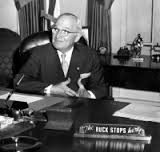
    buck stops here photo:wikipedia.org/wiki/Buck_passing

    Crista is a volunteer coordinator for a local branch of a major charity. She covers several counties which means a great deal of travel during the week and the need to tightly organize her day. Now we all know how hard tightly organizaing is for a volunteer manager. “I’m exhausted,” she said recently, “literally exhausted. I’m not talking about being the kind of tired that makes you fall asleep at night, I’m talking about dead to the world sleep followed by a difficult waking and the desire to crawl under the covers by noon. Am I depressed? I mean I don’t do that much physical stuff, I carry boxes of manuals or help arrange tables at a fair, but nothing that would wear me out. I have time in the car to sit down, but at the end of the day, I just want to go home and vegetate. What’s wrong with me?”
    I asked her what her day was like and she said, “you know, I arrive at work and the phone starts ringing. I’m checking emails and volunteers are coming into my office to ask for guidance. Sometimes their team leads aren’t there and sometimes they have a complaint about misdirections. I have to field all kinds of calls, personal visits, plan my day, check in with clients and set up recruiting and training. It’s pretty hectic I suppose.”

    No doubt, Crista is volunteer manager busy. But I sensed more to her weariness. “How do you handle interruptions?”
    She continued, “well, I really try to give everyone my full and undivided attention. I mean, there’s the client who is hurting or the volunteer that has a family emergency. I’m not able to get much done, at least not in my mind. It’s constant stopping and focusing on the person in front of me and their needs.”
    She hesitated. “They deserve my full attention at the time they need it, not later during some appointment when the moment is lost. It can be difficult.”

    Mmmm Hmmmm. Our conversation made me think of the times I was privileged to work with singers and actors on charity shows. It was amazing to see how they emotionally transformed themselves into their roles and to afterwards see, when the glow wore off, how exhausted they were. Getting into their character and experiencing the perceived emotions drained the life right out of them.

    Being busy is one thing, but there is something called “emotional labor,” conceptualized by UC Berkley professor, Arlie Russell Hochschild. Emotional labor is often associated with service workers, such as the waitress who listens to a customer complain about the the too rare steak which she had no control over. She must hide her own stressful feelings and literally do some acting in order to understand and please the customer.

    There is also something called compassion fatigue which is the burnout factor that results from so much emotional availability. Volunteer managers listen to clients and empathize. We listen to volunteers and genuinely care about them. We listen to administrators and search for ways to really make a difference. Then, we go home and look for solace, but, because we are so good at emotional connections, can we turn that off in our private lives? Probably not. There’s the call from Aunt Rheda who fell and broke her hip. The neighbor, Jack just lost his job and his wife, Karin has no idea how they are going to survive. The elderly woman in the aisle of the grocery store looks lost. Would we walk away? Not unless our hair was on fire.

    It’s no wonder volunteer managers are exhausted. Emotionally we are “on” from the moment we wake up until we drop into bed. We’re on for our volunteers, for society and for our families and friends. It’s what we’ve come to expect of ourselves. Working with volunteers has taught us how to be focused and empathetic. It’s how we connect volunteers to the mission and to the clients. It is a great skill set, but it does take a huge amount of energy.

    Do we experience compassion fatigue? Most likely. But do we also practice emotional labor? Are we acting? I’d say, most of the time, no, but there are instances in which circumstances out of our control go awry and we are the ones to smooth it over for our volunteers. That’s when we have to put aside the stress we feel from the giving of incomplete directions, or the event time change not being communicated. Although we might like to say, “yeah, it figures. That airhead Velma never told me that they changed the venue time! You know this is the third time she’s done something like this. Last month she asked for two volunteers to sit at a fair and she didn’t tell me that they had to bring their own chairs to sit on and that it would be outside! It was cold that day, the poor volunteers shivered and stood through the whole thing! You know, I’m just sick and tired of cleaning up after inconsiderate staff who waste your guys’ time! I don’t want you to quit, but heck, I wouldn’t blame you if you did, not that anyone here would realize why you quit, they’d probably blame me!” (did I just go on a wee bit too much there? Woo, I feel so much better!)

    Instead, unlike my inappropriate rant, we assure the volunteer that their time is valuable, that they are valuable while taking in any problematic comments and finding ways to make situations better. We become the obsessive person who checks, double checks and triple checks details to keep these things from happening. But in spite of our efforts, when things do happen, we repress our own frustrations and absorb the volunteers’ feedback. We pass on the information in a professional manner, because the emotional buck stops with us.

    So, like Crista, if you find yourself bone weary, exhausted, or death-gripping your covers in the morning, it could be signaling burn-out. Recognizing the emotional investment you make in your job, by your compassion, empathy and emotional labor is the first step to taking care of yourself. It is crucial that volunteer managers find ways to de-stress, wind down and practice self care. While we can’t control everything about our jobs, we can control our well being.
    Be well out there.
    -Meridian