
 I arrived in Sochi, Russia, thrilled to be part of the world’s greatest sporting showcase. Stepping out of the cab at the Olympic village, I asked one of the official guides where I could find the volunteer events. He scratched his puzzled head, grunted, “Huh?” and checked his elaborate map. He spent several minutes consulting a static Russian voice on his enormous mobile phone. While he shouted into the contraption, I soaked in the palpable excitement of the noisy Olympic crowd filtering by. I was giddy with anticipation. Finally, the world would see the wonderfulness of our volunteers.
He got off the phone and showed me his map, drawing an X on an empty white spot. “There, you go there,” he said, then handed me the map and walked away. I followed the map, weaving my way in and out of colorful vendors and beautiful buildings until I was in an open field beyond the bustle of Olympic village. There, in the middle of the snowy field was a small industrial building with a hand-made sign that read, “Volympics”.
Gleefully, I entered the building. There were maybe a few dozen people scattered about on folding chairs. Family members, no doubt. I nodded to some folks sharing a bag of potato chips as I settled into my seat.
The first event was the “Booth Freestyle.” Team Major Illness Awareness and Team Animal Rescue had 10 minutes to sort through the enormous pile of random items piled in a corner of the building. The teams had to find a table, table cover and everything necessary to set up a booth showcasing their organization at a fictitious fair. You could feel the tension in the room, or maybe it was the lack of a bathroom nearby. The teams appeared. Team Major Illness Awareness looked nervously at Team Animal Rescue. Each four member team gripped the side rails and waited for the shot signaling the start. They sprinted or walked quickly, really into the arena, attacking the pile like I attack my closet after over sleeping. Finding the items they wanted, each team began to set up an attractive booth. Team Major Illness Awareness settled into making a giant macaroni sign on a poster board, their deft hands glueing the pasta into a giant heart shape. The captain of Team Animal Rescue shouted encouragement as the team stuck animal stickers to the tablecloth while drawing a huge smiling elephant on a white board.
An element of difficulty was added when several Olympic judges, simulating organizational staff walked by shouting “hurry up” and refusing to answer questions. Team Major Illness Awareness arranged give away pens in the shape of a pancreas while team Animal Rescue created paw prints out of jar grippers. The clock ticked away the time and the crowd shouted “three, two, one” and the buzzer sounded. The judges conferred and awarded points for artistic interpretation as well as speed. It was close but team Animal Rescue pulled it out by putting up a cute picture of their Executive Director being nipped by a rescued chihuahua.
I pulled out a granola bar while waiting for the next event. Office Downhill was an individual competition involving stuffing envelopes, data entry and filing. Rickety metal cabinets were wheeled into the arena while an old desk, obsolete computer and a mountain of flyers and envelopes on a card table were dragged into a corner. The first competitor, Museum Guide stepped confidently into the arena. She was given five files, a handful of data entry forms, and no instructions. When her time started, she ran to the file cabinets first, checking the names on the files, quickly sorting them into alphabetical order. She exuded confidence and I suspected she was a volunteer leader at home. She grabbed the file cabinet drawer and pulled but it would not open. It was locked! Panicked, she looked around then wisely searched for a key, finding it taped to the back of the cabinet. After expertly filing the information, she ran to the computer and pushed the button. It sputtered and slowly whirred, so she ran to the table and started stuffing envelopes while the computer booted. Her fingers expertly flew through the pile of flyers, and she ran back to the computer and finished entering the data. The time posted was 12:56:01. Hers was the time to beat. The next competitor, Thrift Store Volunteer, didn’t fare as well. She pulled so hard on the locked file cabinet that it fell over. She managed to complete the other two tasks, but was penalized for folding the flyers face out. The third competitor, Soup Kitchen Volunteer managed to find the cabinet key but shoved all the files into one drawer. He stuffed the envelopes cleanly, but ended up spilling the cold cup of coffee left by the judges on the computer desk. The data was soaked brown and unreadable. The fourth competitor, Hospital Gift Shop Volunteer, took one look at the scene, threw up her hands and said she never did office work in her life. And the final competitor, Youth Mentor Volunteer sped through the course, but got so frustrated with the lumbering computer that he threw it on the floor, therefore being disqualified. The dozen of us in the crowd cheered wildly for all the competitors as they took a bow. We waited in anticipation for the results. Obviously Museum Guide Volunteer was the winner, but the judges conferred and decided to give it to Soup Kitchen Volunteer because he was willing to work on a Saturday night.
The medal ceremony consisted of a nice lunch for all the volunteers with a speech telling them how important they were to their respective organizations. I didn’t get the opportunity to speak to the volunteers, but I’m thinking that they were pretty great people who took their volunteering seriously.
I left Sochi with renewed enthusiasm for volunteers and their incredible depth of talent. I think for a first Volympics, it was pretty good. I’m encouraged, because I heard some officials discussing the next one, and they are thinking about adding the De-Luge event, where volunteer managers are overwhelmed with requests, questions, tasks, phone calls, email, drop-ins, paperwork, problems, and spreadsheets. I may start training tomorrow.
-Meridian
Tag: volunteer
-
If Volunteering Were an Olympic Sport
-
You Have Reached This Website in Error
 We’re so used to the computer prompt when we see it: You are being redirected to another site. “Fine,” we think and we simply ease into the new locale. But did you ever think about why and how we are being redirected? Neither do I, but I think there’s probably a back story there.
Mary is a relatively new volunteer. She came to orientation like a firecracker tossed into a library. Mary introduced herself to everyone in the room before I could slip in my cute little icebreaker. During breaks, the class was talking up a storm. Usually it takes a session or two for that kind of comfort, but with Mary present, we cut to familiarity. She answered questions with stories, asked other participants to add more and before orientation was over, she had everyone’s number. Literally, she had all their phone numbers.
Mary wanted to work with patients and families and so we paired her with a seasoned volunteer, Joyce in a hospice house. “Well, she is chatty,” Joyce reported back. “She really got to know a lot about me.”
“But how did she do with the patients and families?”
“Fine,” Joyce said. “She asked a lot of questions. She seems genuinely interested in the patients’ lives.”
“Yeah,” I said, “that’s how I viewed Mary as well.’ Her chattiness is unique. She doesn’t chat about herself so much as she chats about your life as she gets to know you. It’s like having a great-grandmother who grills you each time you visit. It’s both soothing and nerve-wracking at the same time. I sensed that Joyce was holding back, so I asked her if she thought Mary had the potential to be a good volunteer.
“Yes,” she slowly said. “The thing is, she might just talk too much when a family just needs peace and quiet. I’m not sure she can be silent.”
“So, you think we shouldn’t put her with patients?”
“No, I don’t think that. It’s hard to say. I think we should give her a chance.”
Now, most of the time, folks like Mary settle down into volunteering and do a great job. As they learn from other volunteers, they adjust and adapt and it is thrilling to hear them say things like, “I’ve learned so much,” and “I’m getting the hang of it.”
But, although Mary genuinely cared for each patient and family she encountered and asked appropriate questions, her chattiness continued.
One day, a staff member tentatively approached me and apologized for bringing this up, but, it seems that Mary was in the room with a patient and family, over stayed her visit and pretty much chatted with them when all they wanted was to sit and be still. So we called Mary in and talked to her about her experience.
“What a beautiful family,” Mary said. “I learned how each member of this family traveled over distances to get here to be with their father.”
“That’s a lot of information you gathered,” I said.
“Oh, they were so wonderful to talk to. I loved it.”
We talked more and I finally said, “Mary, you also need to know when to exit. Families can be weary and although they love how you listen, they also need us to leave them alone too. Do you sense that?”
“I do,” she admitted. “I don’t want to cause them any more pain.”
So, she promised to watch out for over staying her welcome in patients’ rooms.
The next week the charge nurse came to see me. “We’ve got to do something about Mary.” she said.
“Uh oh, what happened?”
“Well, one of my nurses observed Mary talking to a family member at the coffee station. The nurse had to rescue the family member from Mary so he could go see his uncle.” The charge nurse then said, “You know, this is not the place for her.”
Well, I had to admit, after further talking with staff, the charge nurse was right. Mary’s exuberant chattiness was not suited for the quieter nature of a hospice house. What to do with her?
An answer came quite unexpectedly. One of the bereavement counselors happened to stop by and we talked for a bit. He mentioned that he had a lady client who needed a special volunteer to be her bereavement friend. “She is so lonely, she really needs someone to pay attention to her and well, just socialize.”
I jumped at the chance to place Mary and so I called her up and asked to meet with her. She timidly came in and asked if I was going to fire her. “No,” I said, “Why would you think that?” (I love that question, because clearly if a volunteer asks that, they have an inkling that something is amiss)
“I talk too much,” she said. “I can’t help it and I know the nurses are mad at me.”
“They’re not mad, Mary. They just want what’s best for our families.”
“I know. I try to be quieter, but it’s hard.” She made a face like a little girl and for an instant, I could picture her in the principal’s office, being scolded once again.
“We all have gifts, Mary and yours is your love of life.”
“So, I don’t belong here, then.” She was resigned. I suspected that she knew we were in salvage mode.
“No, but I would like you to consider a different role. One, in which you can be more yourself.”
I told her about the bereavement assignment and let her know that it was equally as important. We chatted for quite some time and I assured her that we were going to work with her and that we wanted her to volunteer.
We’ve been three weeks into Mary’s new role and she is doing well. We are getting positive feedback from our client and that is good. But I’m optimistically cautious. We’ll take it slowly and I think with more time and mentoring, Mary will make a good volunteer.
If not, we can try another redirect.
-Meridian -
First, Do No Harm
 A prospective volunteer, Judy came to one of my orientations last month. She eagerly embraced the topics, participated in class and repeatedly told me how much she “owed” us for caring for her husband. She is passionate, ready to work and a strong woman. She and her husband owned a business that she now shares with her children. She has artistic abilities, is educated, well spoken and incredibly smart. She is that volunteer we dream about when we’re not having a nightmare that all the unfinished work has fused together into a giant smiling clown with a pillow and is suffocating us in our sleep. (You do have that dream, too, don’t you?)
I spent a good two hours with her one on one in a private interview a week after classes ended. We talked about her abilities and talents, her ideas and plans to help and all the folks in her business circle she knows that she can enlist to help too. So, what could possibly be wrong with this perfect volunteer?
Did you guess she’s moving? Nope. Did you guess she’s really crazy? Nope again.
Although we spent time talking about all those wonderful things, we spent 90% of the time talking about her husband’s illness and death. He died four years ago and to our credit, we took wonderful care of him. Judy passionately talked about losing a husband so early in life, the shock, the quickness of the rare disease, the legal issues surrounding a business and a lone position in life with friends encouraging “getting back in the dating game.” She had already started a support group on Facebook, has reached out to the community for research funds and would love to be able to help other young widows. Her ideas are lofty, her desire to help of the highest noble thoughts. Her energy is infectious and I wanted to reach into my drawer and pull out my checkbook.
Our conversation reminded me of John Walsh, the host of the TV show, “America’s Most Wanted.” Mr. Walsh began his crusade after his son, Adam was brutally murdered. It’s what experts call instrumental grieving, the throwing of oneself into a cause. It’s truly amazing to watch someone do that, to see their resolve, to feel their calling. These people are remarkable. They turn despair and tragedy into benefits for the rest of us. I know if my husband were to fall ill to that disease that took Judy’s husband, I would want her coaching me.
But, I cannot, in good conscience, put Judy with patients, family members or the bereaved. It matters not that she really, really, really wants to help. It matters not that she is full of passion and energy. But it does matter that in the three times we’ve talked, everything always comes back to her experience.
I’ve witnessed raw, unrelenting grief before. I’ve seen potential volunteers so fired up that they speak in a machine gun volley that shoots down every thought that does not apply to their situation. I’ve watched eager people grasp onto volunteering like a life-preserver in a sea of molten pain. I feel for them, because, just like every other volunteer, I get to know them and to know these volunteers is to know heartache. I so want to help them work through their grief, but my first loyalty is to the clients at hand. And they need volunteers who are sound, mostly healed, or at least healed enough to put aside their own lives.
And so, as the conversation wound down, Judy looked at me and breathlessly asked, “do you think I can do this?”
“Not yet,” I answered truthfully. See, I’ve learned over the course of so many years that it’s much kinder to be honest. Then I added, “I’m thinking that you will be wonderful with our patients and families one day and we are incredibly fortunate to have you. Right now, I hear some hurt and we don’t want this work to add to your hurt. You’ve been through so much.”
“I know. It still hurts and I trust your judgement.” Tears welled in her eyes. “I just need to help.” I could see the dam about to break but she quickly stuck another emotional patch on the crack that threatened to burst.
What a burden to trust me, I thought selfishly. I’m fallible, running on instinct and gut. I want to be wrong about you, to just let you come in and get whole again.
Here’s where volunteer management is on a whole other level from standard HR. Just like HR, we have jobs to fill and we head hunt for the best people for the job. But we don’t reject people. We don’t pick and choose. We try to find a place for everyone, and it takes hard work to find places for everyone. I will find a place for Judy. We will start small and away from the clients. I want to see her succeed as a volunteer and to mend her deep wounds. It will take time, observation, mentoring and caution. That’s what I signed up to do.
But first, I will do no harm, not to Judy and not to our clients.
-Meridian -
Mother, May I?
 When Eve was approached by a college looking to extend a grant to a volunteer group, she was ecstatic. Working for an organization that conducts health screenings in impoverished places, she already knew that her medical volunteers needed updated equipment. Excitedly, she described the grant during her next departmental volunteer manager meeting. Everyone read the guidelines and offered verbiage for procuring the funds. Eve submitted the grant and the college announced her organization as their grant recipient.
Buoyed, she came into work the next Monday to find an invitation for a mandatory meeting with her boss and the fund-raising arm of the organization. Puzzled, she grabbed a notepad and hurried to the meeting. There, she was harshly reprimanded for “going out on her own” and “not going through the proper channels” to procure the grant. She was told in no uncertain terms that finding funds was not part of her job description and the next time she did anything like that, she would be written up. She doesn’t remember anything said about creativity, initiative or thinking outside the box.
Eve was devastated. She thought that by telling her boss, she had by proxy, informed everyone she needed to. Her boss thought that Eve had already informed the proper folks in the fund-raising department.
Eve felt betrayed. She couldn’t fathom how something so wonderful could be viewed as something negative, so she sought out her good friend and mentor, Rosalyn, who used to work in her department but retired a year ago. Rosalyn listened and nodded. “I’m really sorry that happened to you,” she said, “but I’m not surprised. It happened to me a long time ago and I learned a valuable lesson from it. When you’re dealing with non-profit types, you not only have to follow all the rules, you have to understand that these are people who deal in feelings everyday. And so it is natural that their own feelings come into play.”
Eve was skeptical. “You’re saying that I hurt their feelings?”
“In a sense. You hurt their feelings, usurped their power, stepped into their area, you name it, that’s how they perceived it.”
“But I did something to help. They weren’t going to write for that grant.”
“Doesn’t matter. You’ve got to realize, they are under a lot of pressure. Your organization can’t function without donations.”
“But,” Eve interjected, “we can’t run without volunteers.”
“True, but if fund-raisers started recruiting volunteers, how would you feel? Would you feel like they are helping you?”
“No,” Eve admitted. “I’d be worried about my job.”
“So, can you see how they felt?”
“I guess so,” Eve said. “But then, that means if I find something outside of my job description that would actually help my organization, I just have to pass it up?”
“No, not necessarily. You just have to adopt the Mother, May I principle.”
“I think I know where this is going.”
“Yes, you do, and that’s how I survived my tenure with all the other departments. Let me tell you a typical path I took to get a project going.”
“Please, because you started so many projects there.”
“Well, let’s say I was approached by a student group wanting to volunteer to do some media publicity for us. This would be my plan of action. First, I would meet with the students and thoroughly get all their intentions on paper. I would make sure that the verbiage I used with them always included maybe, perhaps, we’ll see, if it can be done, I make no promises, etc. Then I would go to my boss and explain the idea and ask permission to go higher up. I would follow that conversation with an email outlining what we discussed. I then would make an appointment with the proper decision maker, invite my boss to the meeting and present an outline of the project. I would include all the benefits to all the departments as well. Now here’s the tricky part. In that meeting, I would use the verbiage, if you think, we could use your buy in, we need your help to succeed, and I would offer to let them consider it and get back with me. I would tell them that they would be informed every step of the way and could pull the plug at any time.”
“Mother, May I.”
“Yes, it worked most of the time. It’s really just common courtesy blended with concrete and clear information. That’s the key.”
“But it’s so time-consuming, so, so, demeaning. I mean, don’t they trust me?”
“That has nothing to do with it. They need to know what is going on at all times. Secretly, I think they were glad that I was doing all the legwork for these projects. The more I kept them informed, the more autonomy I had. It was a win-win for everyone.”
“But didn’t you hate babying all those people?”
“Aha! No, because you have to look at it as approaching them in the way that works for them. You still get what you set out to get. Don’t you already do that with volunteers?”
“Yeah, I guess so.”
“I know it’s time-consuming and it takes an attitude of humility. If you run up to them and shout, ‘hey, I’ve got the best idea ever and you should thank me for bringing it up,’ you’re not going to gather many supporters. And going it alone, even when you have something wonderful to offer can create friction. I once created an event on my own time that benefited the organization. No one was thrilled, in fact they were peeved. I was viewed as trying to bring down their event castle so to speak, so no help or acknowledgement came my way. Be humble and mindful of their areas of power. It’s like you are knocking on the door of their castle instead of getting out the catapult to bust in. That way, they open the door and invite you in. There’s no benefit to making enemies of the people you work with, right?”
“Uh huh. Mother, May I. Knock, and ask.”
“Oh, and one other thing. Bring flowers.”
-Meridian -
Doing the Hard Stuff Because I’m Clearly It
 I have to fire a volunteer. The first time I had to fire a volunteer was sheer torture. My palms itched so bad and my stomach felt like the volunteer in question had reached in and gleefully begun to twist my insides. How dare she act in a manner that MADE me have to do this? Why couldn’t she be a good little volunteer like all the other good volunteers? Why did she have to go and tell the people at her church about a client’s private financial status?
Honestly, as a newbie volunteer coordinator, it never occurred to me that firing a volunteer existed. That was bogey man stuff, not reality. My original boss way back in the day never fired a volunteer, so I was left to dive off the cliff without knowing what rocks lie below. And I didn’t know whether to wear a wet suit or armor.
I have to be honest, it didn’t go well. I babbled something about privacy and confidentiality and threw in a measure of “I’m sure you didn’t mean to say that the client was dirt poor,” but all in all it went horribly. She left, most likely confused, because I told her how wonderful she was, while firing her. Contradictions rained down and I had no umbrella.
That night I dreamt that she came back, completely unaware that I had dismissed her. I had to fire her all over again. While that did not happen, I could see how it might have, given the fact that I told her she was a great volunteer. (What?)
The second time I had to fire a volunteer, (which thankfully did not happen until two years later) was in some ways worse than the first. It conjured up memories of the original debacle. Unnerved, I searched for answers. The internet was just starting to yield expert advice and I found some theoretical help there. But I needed personal help. How was I (loveable, kittens and flowers me) going to fire this volunteer?
I was tasting yesterdays lunch.
Quite accidentally, if there are accidents, I found myself at a good friend’s house that evening. Her husband, a gentle man in private and a shark in business overhead me discussing my upcoming day of horror. I caught him listening and thought, “oh boy, he’s probably fired hundreds of people and thinks I’m some sort of cry baby.” Instead, he came over, sat down and asked me these pointed questions.
“Did this volunteer violate your rules more than once?
“Yes, several times and we’ve given her the chance to correct her behavior.”
“Do you, personally, think that she needs to be dismissed.”
I had to think deeply about that, but then I answered, “yes, I do. I don’t believe she is willing to change.”
“Then,” he looked me straight on and asked, “who is the best person to dismiss her? Who will deliver the message in such a way that she does not feel wrongly accused and who will make her realize that your clients come first while protecting her dignity and self-image?”
I knew the answer. I had known it all along. I just never had thought of it that way. “I am.” I whispered.
“And,” he added, “I never fire anyone. I have a conversation with them about how my company and their expectations do not match. I’m clear, don’t get me wrong, but I dismiss them and wish them well. You can point out a person’s good traits but make it clear that there is not a place for them in your organization.”
With that he went back to his home office.
My friend smiled. I could see more clearly why she married him in the first place.So, how do you do the hard stuff? Because of my friend’s husband, here’s the way I look at it now. If it has to be done then who better to do it than someone who feels some emotion about it; who better to deliver a tough message than someone who doesn’t want to do it? Do I want senior management to dismiss our volunteers? No, not really. It would be easier for me, but in every case, I realize that I’m the right person for the tough job. I will twist it over and over in my head to find the right words. I will have somewhat of an established relationship with the volunteer. I will call upon my years of volunteer involvement and treat this person with respect. I will do it justice, at least to the best of my ability.
Not every volunteer will work out. Some will not be appropriate on day one.
I know volunteer coordinators who like to use the “I’ll just not call that volunteer and they’ll get the idea eventually” tactic. But who benefits from that tactic? Only the coordinator who chooses to avoid the situation. Not me now. Let me talk to the volunteer and be clear. Volunteers deserve that and I’ve known volunteers, who after discussing concerns, turn out to be good volunteers. And on the flip side, I’ve had former volunteers call me years later because they were never clearly told that they did not fit in the organization. How cruel is that when you think about it?
So, as hard as it might be, I’m going to have the conversation. And I’m going to feel the pings in my stomach and not shirk my responsibility. I’m It.
I will be kind and I will be clear.
-Meridian -
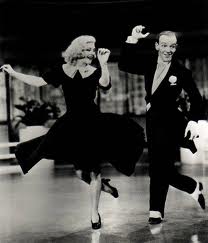
Walt: In Memorium, My Favorite Dance Partner
 Walt died Saturday, after a very long battle with cancer. He was 87. Funny thing is, he volunteered up until about a week ago when he became too weak to get himself out of bed. But before that, he would come in, his clothes hanging off his body like busted balloons. He ended up using a cane and sat down often for longer and longer periods of time. None of that mattered, because he was “working.”
I remember when he first came in seventeen years ago. His wife, Grace, who was a volunteer at the time thought it would be good for him. And so he came to orientation. I noticed in class how his silver hair curled just so over his perfect collar. He listened politely, asked methodical questions while taking copious notes.
Grace informed me that Walt had been a very successful trial lawyer. It showed in his dissecting approach to volunteering. “Give me the facts. Tell me what to do and it’s done.” Trouble was, Walt wanted to work with patients. That’s what his wife did and he wanted to do the “top job.” But patients aren’t cases and working with them is about nuances, not facts, although Walt at first thought that by studying a few facts, he then knew them. Oh, how he struggled and how I struggled with him.
We spent that first year together, doing a sort of schizoid tango, Walt telling me that he wasn’t comfortable, me assuring him that he would eventually get it. Often I thought he would quit and numerous times I ran out of ways to tell him not to. I felt frustrated that I couldn’t find the words to make him comfortable. Other volunteers helped in guiding him, but ultimately he had to find his own comfort. As the first year passed, he began to let go of his authoritarian role and started to sit down next to patients as he talked to them. He began to find pleasure in bringing a cup of coffee and enjoyed the less direct ramblings of life stories.
Our frenzied dance slowed to a waltz and he mixed into the routine like a French vanilla creamer in a perfect cup.
Several years ago, his beloved wife, Grace died. Burdened by grief, he insisted on continuing to volunteer, never sharing his heartache with patients, preferring supportive roles. Year after year his reason to be slowly returned as he immersed himself in helping others. He spent more and more time volunteering, but this time he greedily sat at bedsides. It was right for him, and soon the staff began to know and appreciate his humble spirit. And so Walt became a great volunteer.
At his service, his son said that Walt changed for the better by volunteering and that he got to see a side of his father that was truly inspiring. He voiced his gratitude to the organization for helping his Dad become a better man. There wasn’t a dry eye. See, we all knew things about Walt, things he had chosen in his new humility to share, things like struggles with alcoholism and infidelity. We could only imagine the Walt of old. We knew the deep Walt, the one we watched become a humble servant to others. He was as much a part of us as we were a part of him.
As we left the service, I realized how much I would miss our dance, But then, I pictured Walt dancing with Grace and hoped she would be proud of the man he had become. I know we are.
Cheers Walt. Thank you for showing me that by patient practice, we can all do a mean two-step.
-Meridian -
The Open Door Policy for the Organic Farmer in Us
 Yes, we have an open door policy. Being accessible for the volunteers is crucial. Some staff will shake their heads and say, “why don’t you make the volunteers stick to appointments?” No, because that would make me, well, inaccessible. Yesterday, however, was one of those days that just made open door more like the fourth of July parade on steroids. All day long a steady stream of volunteers kept replacing each other in the office and each time, I would have to put down the one item I was working on and listen. Each time they left, I tried to gather my thoughts and continue but as the day wore on, I realized that on paper, I was going to accomplish nothing. I did manage to sneak a couple of phone calls in. At one point, a staff member stuck his head in, saw that I had a volunteer sitting there, motioned to me that he would see me later and left. Within three minutes he called me on my cell phone.
I told the volunteer I had to take the call and answered. (dumb mistake I admit). I actually answered and said, “hello, Jay, I am still with my wonderful volunteer that you saw me talking to a minute ago.” To which he replied, “I know, but I really had to ask you this question.” Ahhh, I apologized to the volunteer who was telling me about the sale in the mall and she said, “Boy, those social workers really monopolize your time!”
It went pretty much like that all day. I heard about a sick mother and everything that was being done to place her in a nursing home. I listened to the in depth recounting of an Alaskan cruise. I saw pictures from a grandson’s wedding. I heard about a granddaughter’s graduation, the home oven that wasn’t working and was just purchased, the progress on a bathroom remodel that was taking longer because parts were on back order, the reason a haircut was bad-the hairdresser had had carpal tunnel surgery recently. I tried a new bar cookie and heard about the recipe that came from a friend who loves to copy famous recipes, looked at a large bruise from a recent fall, petted the family dog that was out for a ride in a new car, admired the blouse that was gotten at a thrift store for two bucks, discussed the upcoming football season with a sports fan, went out to meet a visiting niece who was home from college, walked around with a former volunteer who missed us horribly, and learned that you can’t ever leave sweetened condensed milk boiling in cans on a stove unattended. Wow, who knew!
I felt like I was in some coffee shop, having an eight hour latte. But you know, it really wasn’t non-productive, if you look at it in perspective. For those who have never worked with volunteers, you must have a really hard time understanding what we do. You cannot possibly know the relationships we forge and how we nurture those relationships. A brand new volunteer started opening up and I listened to him talk about his retirement and how he enjoyed staying busy and helping people. I watched him as he spoke and with no words in my head, felt him becoming a part of us.
I kept returning to that project in between visits and by the time I mentally engaged, another volunteer would peek in. Hmm, so what? For every ten minutes I spent talking with a volunteer, I can multiply that by fifty in the amount of service hours they will provide. So, my time was never in jeopardy of being wasted. Each volunteer will perform the critical work that needs to be done.
I think, for me at least, I get frustrated with days like that because I am conditioned to think work has to be something plainly visible, like charts and stats and well, something to show for my day. Cultivating volunteers looks to an outsider like fun and games. Staff poke their head in and see me (Horror alert) looking like I’m having a good time. That can’t be work, can it? But then, I go home bone tired. And I’ll bet you do too.
Making each volunteer feel as though their time and lives are the most important thing at any given moment is work that’s as hard as grinding out facts and figures. We tend to our volunteers like an organic farmer caressing tender shoots. “Grow, my friend, grow into a great volunteer.” And like that nurturing farmer, we look to the day when we can stand back and admire the strong, capable volunteer in front of us.
Do we really have the time for an open door policy? Not according to time managers; their heads would explode if they saw what we did. But according to volunteer management 101, we must make the time.
The neglected work? It’ll be there tomorrow.
-Meridian -
The Virtuoso
When I was in college, I had a roommate, Marcia, who played the flute in the orchestra. She practiced in our sparse living room while we all studied or made a community meal.
Marsha loved the arts and would happily discuss Gauguin or my loves, Shakespeare and Wordsworth. She also delicately sipped snifters of brandy. I pretty much thought Marcia was cultivated and when she set fingers to flute to practice, I let myself be swept up in the gentle notes. After all, I had taken two classes in music appreciation.
One day, Marcia brought another flutist home. Jen was first chair, we found out later and together they filled the apartment with lilting strains. But when Marcia excused herself to get a drink of water, she left Jen to continue. Jen’s mastery hit me with a lyrical sledgehammer. I was hearing the same notes, but Jen’s were ethereal, haunting, full of the writer’s intent. Wow, I was experiencing pure talent.
I just finished teaching an orientation class. I’ve done hundreds now and when I first started orienting volunteers, I was convinced that everyone could be taught the finer art of volunteering. With encouragement, I was certain they could all be Mother Teresa.
I don’t think that anymore, just as I don’t think Marcia, my roommate could ever reach Jen’s level, no matter how much she practiced. As the flute became a magical tool in Jen’s talented hands, so does volunteering become masterful in only the hands of a few. You know them instinctively.
They have this aura about them, a confident humility about their deep understanding of what needs to be done. Their volunteering fingers run smoothly over each task, producing a fabric of human art. There is a beauty to those moments when volunteer and client connect at a deeper level, and like music, it hangs in the air for a second, while you catch your breath.
How do they do it? How is it that not everyone can create it and why can’t I find more virtuosos? I suppose it’s the same reason not everyone can be Mozart or Matisse or Pynchon.
And so, as each class graduates, I am looking at them, wondering who will be the next virtuoso, if there is one in class at all. I’m hoping to come upon a scene in which a new volunteer is weaving a song so beautiful, it takes my breath away.
I can orient them, lead them, encourage them and support them but I can’t create natural ability. I can only try and find it. And find it I will, because every time I am swept up in that perfect moment, I’m reassured that it is there, and once again I can behold mastery.
-Meridian
-
Um, Now That I Know This, What Can I Do?
Yes, I trained Lisa. She sat in class with the rest of the group and offered comments, answered questions just like anyone else. I didn’t quite get the sense that she wanted to help like most other trainees, but that certainly didn’t disqualify her. I’m too afraid to make a judgement up front like that because I have been horribly wrong in the past.
Anyway, Lisa left a voice mail message the other day. She couldn’t come in for her shift. What she did not realize is she failed to hang up and when her cell phone rang, she answered it. The voice message recorded the whole conversation. I suppose I should have deleted it before I heard it, but it happened so fast…
It went (in short) something like this…
“Yeah, oh hi! No, no, it’s ok, I’m not doing anything. I know, I know. Uh huh, uh huh, tonight? I think I can. No, he doesn’t suspect a thing. No, no, I can tell. No, Roger’s f#@$ clueless. I can’t wait to #@#$ ….”
Well, you get the rest. Roger is her husband by the way. Curse those message machines that accept long messages. Curse me for not hanging up. (what’s that say about me, shudder?). But curse having knowledge that I don’t want to have in my head.
Now, Lisa, who was before this knowledge, a potentially good volunteer, is a smarmy cheat in my eyes. She has a right to her privacy. Thankfully, I don’t know most of what goes on in the private lives of the volunteers. We volunteer managers get involved in enough of it.
There’s not much I can do about what I heard, except try to put it aside and concentrate on whether Lisa does a good volunteer job, just like any other volunteer.
But I know that the next time I see her, I will hear some of those descriptions in my head. I can’t promise I won’t be stand offish or give her a judgmental look. I do know, that if I pick up another voice mail from her, I’ll just delete it and call her back. Shudder or I’ll have to get therapy.
-Meridian
-
Uh Oh, The Back of the Head
Jo is a really generous person and a great volunteer. She lives alone with her dog, Sally (a toy poodle). She is a widow and has children that live in another state. She is full of life and laughs easily. She is a breath of fresh air.
The other day Jo came in for her weekly volunteer duties. It was after Christmas. Only one family member, her son could make the visit to see her, and he had to go back right away. She said it was really nice to see him. As Jo turned to go, I noticed the back of her head, or her hair to be more specific. It was all matted, like she forgot to comb that part. “No!” my mind shouted, “not Jo!”
See, that’s my visual cue, my telltale sign, my notice to start watching. Now, it’s possible Jo didn’t get enough sleep or she was just worn out from the holiday or maybe she just forgot. Yeah, that’s what I tell myself with all of them. But then I notice them asking the same question over and over, or the not remembering who works in the office or sometimes a general confusion. The guys might have a spot on a previously immaculate shirt or wear two different socks. These are the warning signs, subtle yet unmistakable.
They are failing. They, too are only human and capable of getting older. “No! I want them to stay the same!” They are so comfortable, so dependable, so like a warm blanket on a frosty night. I don’t want to replace them with someone new, someone who doesn’t know the job, who doesn’t have the commitment, who doesn’t make me smile. But most of all, I don’t want to see them fail, to be another one who can’t come in anymore and who chalks it up to life, who takes things in stride and honorably slips away. It reminds me of Bobbie who developed ALS (Lou Gehrig’s disease) and kept coming just like my tears.
“Ouch“. I don’t want to sit at another bedside and pat a hand and talk about how much her volunteer service meant. I don’t think I’ve ever been able to put into words how I felt about each one of them. I kissed Jay on the head and he whispered “I love you.” I held Heloise’s hand and she stroked my cheek. I sat beside Ben and said “hi” and his body stirred. And so many others.
Did they know they were more than just volunteers? Did they know that they inspired me and made me a better person? I think I’ll not take the chance with Jo and tell her while she is still volunteering. It will humble me and that’s not bad. And although she doesn’t comb the back of her hair, I will continue to cherish her and to be grateful for the opportunity to know her.
And yes, I will be at her bedside when that time comes. She deserves that and so much more.
-Meridian


 volunteerplaintalk