Tag: volunteering

  • The Shift Towards Communit-eers

    Although I like new descriptive words, I don’t think a word like ‘communit-eer’ should replace volunteer. It makes me think of other “teers” like the swashbuckling three musketeers, a puppeteer, or more recently, the mouse-ears wearing folks over at Disney. However, the definition of a communiteer, someone involved in their community, works because new paths to volunteering are emerging. Social media, new generational thinking, the embracing of global issues, disaster response, and a pandemic have all contributed to seismic shifts in volunteering’s structure. Communities mobilizing when a critical need strikes has become an efficient and effective answer to our current model of relying solely on traditionally recruited, vetted, trained and deployed volunteers. Does this mean the end of formal volunteering? Or can we embrace community partners, learn how to harness their enthusiasm and make it work for everyone?

    The signs are everywhere

    This article, “Volunteers flock to help search efforts after Texas floods even as officials warn them away,” says it all. The systems we have in place require formalized volunteering, including background checks, adherence to policies and procedures, the ability to record volunteer hours, and let’s not kid ourselves, the ability to solicit said volunteers for donations. Systems don’t want the ‘show up and wing it, then retreat to something else’ kind of volunteer. Systems want loyal, fill your slot every week, donate to the cause, keep within your lane volunteers. Systems hoard. Systems perpetuate systems. But what do today’s community-minded citizens want, and what happens in a disaster when time is critical to success?

    I am not, nor ever was, opposed to rules and background checks and gathering vital data and statistics that support all the impact our volunteers have on our missions. But I see how volunteering is changing, and how a stranglehold on the systems we have in place can alienate communities, kill creativity, drive innovation away and dry up our pool of volunteers.

    Is self-mobilization the new volunteering?

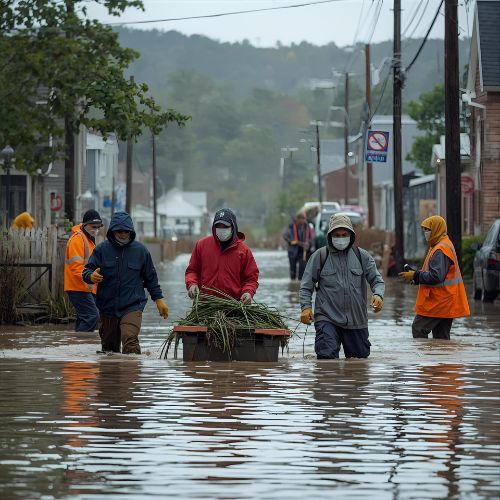
    In the aftermath of the devastating flood in Texas, citizens found ways to help. This article, “The Texas floods washed away their possessions. Volunteers are helping reunite them,” chronicles a Facebook group that posted pictures of items recovered, many of which the finder lovingly cleaned and returned to the owners. These community-rich citizens did not contact an organization for instruction; they did not wait for interviews nor background checks. They saw a need and created a solution.

    Or, consider this recent article, “No one claimed his body when he died. These strangers came together to help bury him.” Citizens showed up, answered the call, and formed a “chosen family” for this gentleman.

    What are modern socially minded people looking for?

    What if we harnessed the social goodwill of the people who responded after the Texas flood or became surrogate pallbearers? What drove them to act? Was it the immediate need? The camaraderie that comes from a united front? The instant impact they experienced? Can we provide the same urgency and results-based satisfaction? Can we give them a semblance of the freedom to find solutions rather than just telling them what to do?

    How can we embrace the community partner?

    What if, in a perfect world, we imagine a community of partners ready to help when the need arises? Let’s take it to the extreme first, (and by extreme, I mean mostly unattainable at this point) then pare it down and chop it into pieces that we might manage.

    • In the extreme, everyone in our communities receives an invitation to basic volunteer training, and those who complete training have willingly completed background checks.
    • Volunteer training and opportunities are front and center in schools.
    • Communities, whether municipalities or villages, each track volunteer hours and projects and, with gamification in mind, vie for the title, “Most Community Spirited.”
    • Nonprofits share, not hoard, community help.
    • Nonprofits collaborate with one another to share resources, ideas and solutions. Instead of operating in silos, we recognize challenges are complex, and working together benefits the community. Instead of competing for donations, grants, government help, and volunteers, we band together in more efficient ways.
    • Community truly means community as nonprofits operate under an organic concept versus an emphasis on the prevailing system.
    • When help is time-sensitive, such as in a disaster, mobile notifications, akin to the ones emergency warning systems use, would kick in. Messages inform individuals how they can help, while also warning them about dangerous conditions. (For example, stay away from downed wires on main street-emergency personnel are on scene).
    • Community partners have an opportunity to sample a wide variety of roles, giving them a broader connection to their neighbors through multiple and varied interactions, thus leading to a more cohesive community.

    Many studies have shown that people have not stopped wanting to help; they are simply looking for better ways to do it. They’re finding solutions that are immediate, impactful and unburdened. Informal volunteering is alive and well.

    So, how can we pivot and harness the shifts we are seeing in volunteerism so that they work for our missions and work for volunteers? How can we keep up with mobilization and a rapidly changing culture of helping?

    Training-a tiered approach

    In this perfect world, training comes in tiers. In 2018, I wrote an article for the Engage Journal, “Effective Volunteer Training is a Three-Tier Investment,” in which I talked about volunteer training as tiers. With a tiered training program, volunteers can quickly get started. Then, as they seek deeper involvement, we provide the in-depth and specific training for more complex roles.

    Can we generalize basic volunteer training? I believe so because organizations share similar concepts, such as “do no harm.” All participating organizations would agree on the basics covered in a general volunteer training video, thus giving organizations a pool of volunteers for events, simple assignments and even fill-in positions. Instead of waiting for an assignment from one organization, volunteers could choose from a variety of roles, times and places to volunteer. And our benefits would come from:

    • Drawing from a larger partner pool.
    • Directly tapping into the urge to serve when needed-think disaster relief and even events or special projects.
    • Using the sense of urgency that begets action.
    • Keeping the people who are not being engaged from giving up. Instead of waiting for a notification from one organization, every volunteer would experience a vibrant world of volunteering that offers them choices in roles, locations, times and durations, giving them a greater sense of how our communities are interwoven and complex, which confirms how much their involvement matters to their neighbors and fellow citizens.
    • Exposing more people to our work. After sampling a role, people might like what they find and want to become more involved. We may actually see an uptick in the number of people who want a recurring role (thank goodness). As community partners sample various volunteer opportunities, not only would they feel their interests are being taken seriously, they might find a fit.
    • Putting our communities first as opposed to competing for volunteers, resources, donations, media play and grants.
    • Fostering a sense of humble inclusion, and of wanting to fully engage the citizens who live in our communities.
    • Positioning our organizations as community partners versus the perception that “we’re the experts here, so come and do what we tell you to.”
    • Making diversity the norm, not a goal for the future.
    • Embracing innovative ideas.
    • Exposing volunteers to more missions, multiple needs, and a more diverse representation of fellow citizens, all of which would lead to a more cohesive community.
    • Capitalizing on the “helper’s high” volunteers experience when they see what their work has accomplished. As each volunteer experiences a role that impacts a mission, we could offer them something “next,” something more, by giving them a variety of options, instead of letting those feelings cool.

    If organizations banded together and created a solid, basic orientation that touched on missions, responsibilities as community partners, rights of the participants, and treatment of people within our programs, we’d have a solid base for our community partners to get started.

    What about notifications?

    Fortunately, we have technology and the ability to communicate immediately. In the case of the Texas flood or the need for a pallbearer, a communications center could mobilize already vetted citizens, while informing them how, why, and where dangers to themselves and others exist.

    While we don’t yet have a central communication system for partnering non-profits, we can still collaborate. How?

    • Inform volunteers of opportunities other organizations offer.
    • Conduct some volunteer meetings together. Let volunteers meet each other and share tips and stories.
    • Pool resources and pay for a speaker to inspire all community volunteers.
    • Celebrate Volunteer Week as a group.
    • Band together and share trends and challenges.
    • Review policies and procedures with other volunteer managers.
    • Forge a united front to advocate for the resources everyone needs.
    • Make impact, not number of volunteers, as your organization’s goal in your reports and when speaking about your volunteers. Change the narrative from retention to engagement and point to the untapped potential your community offers.

    Of course, there are drawbacks

    Change is never easy nor perfect, and change is difficult even if it is inevitable. But the possibilities are worth it. We’d foster a community of helpers. Cooperative training can streamline the onboarding process. After basic volunteer training, each organization would then offer ongoing and specialized training. Time-strapped volunteer managers could share in providing refresher courses, celebrations, and meetings.

    Silos aren’t helping us. What if, instead of making retention one of our primary goals, we band together and orient our citizens to be communiteers, or community partners? What if we put the community and our volunteers first?

    I know I’m throwing out broad concepts that are easy to voice from my laptop lofty goals, but I think we can move towards a space where volunteering is not only better for the volunteer and for our community, it is more organic, and more in keeping with the trends we are seeing instead of remaining constrained behind aging systems that still value these outdated measurements of success above more important concepts;

    • Number of volunteers
    • Number of volunteer hours
    • Volunteer retention
    • Volunteers who fill regular slots

    Change doesn’t happen overnight, so if I’m throwing concepts out there like tossing bread at pigeons, how do I expect to get there?

    • First: We can start by sharing or continue sharing and recommending volunteers with/to other volunteer organizations in our areas.
    • Second: Finding, joining or creating local volunteer engagement professional clubs or associations in our communities in which to share, discuss and find solutions to volunteer issues and needs. There’s more leverage in becoming a one-voice force that can speak to volunteering’s challenges by using collective knowledge and experience.
    • Third: Flexibility. Let’s create more flexible roles and increase programs that can accommodate students and groups of volunteers. Corporate social responsibility is on the rise. Students are more socially conscious. One way might be to partner with other volunteer organizations to create rotating schedules for students during summer break so they can experience a variety of opportunities. (Full disclosure-I tried to do this many years ago and it flopped, but that was then and I didn’t do a good job of structuring it.)
    • Fourth: Communication is the key to mobilizing volunteers, and tech is the answer. Would a system such as a local municipality warning system work to communicate with volunteers? Would it be treason to collaborate with other volunteer organizations to send out combined messages? Volunteers could opt-in to be contacted by multiple organizations through text messaging, giving them a range of opportunities.
    • Fifth: Costs. Will local governments help, or will a consortium of non-profits decide to share the background checks and training costs?

    This “perfect world” concept is daunting, but we leaders of volunteers know how critical it is to engage volunteers, not by dictating to them, but by offering them experiences that will light up their desire to help. So, what’s better? A volunteer joins an organization, doesn’t find the experience they are looking for and quits volunteering altogether. Or, that same volunteer joins a pool of community helpers, tries out an organization, doesn’t find a fit, but finds one at another organization. In both instances, the first organization loses a volunteer. But in the second scenario, another organization gains a volunteer, thus growing our pool. Is this concept so far out of our reach?

    But wait, it’s already being done

    In Maia Portugal, the seeds are in place. From this article, “Volunteering as the Invisible Engine of Social Cohesion in Europe,” the following paragraph sums it up:

    “Maia’s recognition as both the Portuguese Capital of Volunteering and the forthcoming European Volunteering Capital 2026 is far more than a symbolic  honour; it reflects a long-standing commitment to civic engagement,  innovation, and community solidarity. These titles represent not only what Maia has achieved, but also what it aspires to become: a municipality where volunteering is central to public life and social transformation.”

    So, that “perfect world” is attainable. Volunteering is a social activity, one in which everyone benefits. We’ve all witnessed how barriers, fears and hesitations fade as people offer and receive the best of themselves and each other during deep human connections. We, all of us in the volunteer engagement profession, have always championed volunteering as something bigger than hours given.

    Why can’t we begin moving volunteering towards a community partnership, one more inclusive, and geared towards engaging volunteers versus using volunteers? I think the world just might embrace it.

    -Meridian

  • Volunteer or Partner, and What is the Difference?

    It always went something like this. When someone showed an interest in volunteering, I would:

    • Interview the prospective volunteer.
    • Tell them all about the amazing roles we had available.
    • Invite them to an open house.
    • Sign them up for training.
    • Conduct a post-training interview and discuss placement.
    • Contact their chosen department and introduce them to their new supervisor and role. (Unless I kept them in the volunteer department-which I highly recommend doing sometimes, because you need great people too).

    Along the way, we would discuss rules, regulations, and expectations; not only what we expected of them, but what they could expect of us.

    I’d give new volunteers a policies and procedures manual and also a volunteer bill of rights. It covered all bases, didn’t it? But what was the message? “Here’s what we expect from you. And here is what you can expect from us.” While thorough, these two documents subtly read “separation.”

    It made me think about all the ways we keep volunteers in a separate (and unequal) box. It also reminds me of a time when a fellow staff member, whose position was on an equal rung of the organizational ladder as me, introduced me to a group of people and said, “I’m so glad she and her people are here to assist me.”

    Now, I’m being picky and petty, but that statement smacked of separation and condescension. I probably would have ignored it, but for the prickly feeling under my skin that always flared when volunteering was treated as an “other” or a “nuisance” or “just fluff.” The point is not my fragile little feelings, but the perception that all things related to volunteering are less than, lower than, outside of, and therefore, not equal, which is sadly pervasive in the things we say and present to volunteers.

    Why a partnership? Aren’t we supposed to fill jobs?

    I’ve heard of some organizations creating a contract with volunteers, but is a contract the right idea? What about an understanding? A covenant? Or a pact? How about a partnership?

    If everything boils down to the mission statement, then isn’t everyone who makes the mission succeed working towards the same goal? Currently, we model volunteer engagement partly on how companies hire someone to do a specific job that creates a product or service and offers payment in return. A volunteer fills a slot, (job) such as packing boxes of food (product or service). In return for their good work (payment), we recognize the volunteer.

    But the differences in volunteering vs. working render our current engagement models difficult to sustain, mainly because volunteers have shifted their view of formal volunteering; what they want for it and from it. Enter the rise of informal volunteering, which is immediate, more flexible and offers the ability to create a role that fits the volunteer’s skill-set and creativity. Add to this the growing distrust of institutions and how they not only manage time and money, but how they cling to the power they possess.

    Volunteers no longer blindly accept our volunteering model. Their “payment” is no longer as simple as feeling good about doing good (They can get that feeling every time they help a neighbor, let someone with only one item cut in line, return a dropped pacifier to a harried parent, or click a “like” in social media). Volunteers don’t see themselves as second citizens, filling the roles their superiors deem necessary. The status quo disheartens them. They view themselves as capable, willing to share skills and enthusiasm, happy to help on their terms and eager to share their good ideas. So, why don’t we embrace this modern volunteer?

    Are there deeply embedded considerations in a status quo that have shaped non-profit work over the many years? Are non-profits tightly managed systems that operate more on processes than outcomes? And are these processes clutched so tightly that we suffer from the inability to let in new ideas, new ways of doing things, and new people? What fears can stop us from innovation? Maybe…

    • pride (Only I can do this well, I know how, have been at it so long, etc.)
    • change aversion (we’ve done it this way, and it’s worked for the most part. Why go through all that upheaval?)
    • donor input (what will our donors say or think if we make even subtle changes, we can’t risk upsetting them)
    • fear of being out-performed (I am de-valued if someone else does the job better than me)
    • mission possessiveness (Someone else can’t care as much as me. Look at how hard I work, all I’ve accomplished)
    • overworked condescension (I’m here 50 hours a week, how can someone here 2 hours do anything better?)
    • fear of replacement or being devalued (if all these outside people come in, eventually they won’t need any of us anymore)
    • run amok fear (if we just tear everything apart, let all these new people in, everything we’ve accomplished will be for nothing and our organization will descend into chaos)

    Volunteers Can and Should Lead

    What about the long-standing ideas we can’t trust volunteers to do the job as well as staff, or can’t handle sensitive information, or don’t understand what is at stake? Sure, but every staff member starts at square one. Until they prove themselves, we don’t know if they can do the job, or if we can trust them, or if they understand what’s at stake. The same is true of volunteers. I would never assign a new, untested volunteer to the most sensitive, complex assignment. Throwing new volunteers into a sensitive assignment was not only unfair to the mission; it was unfair to the volunteer.

    Nonprofit work is emotionally and mentally taxing, and it’s callous to drop someone new into an emotionally heavy situation. Proper training, diligent observation and monitoring, feedback from supervising staff, as well as a great mentor program, will ensure the new volunteer is ready for complex roles. I remember one volunteer, a gentleman who took over a year before he felt ready to even attempt interacting with patients. But that year paid off. He became a marvelous volunteer. The notion that volunteer managers throw any old body at a role is ridiculous and insulting. We know what is at stake and we vet and mentor volunteers thoroughly and carefully.

    Don’t Hide Your Dilligence

    We have to be better at making sure everyone in the organization knows our processes in vetting, onboarding and training volunteers. They won’t know unless we show them the lengthy steps and stop-gap measures we have in place. They will have doubts about allowing volunteers to do more unless we assure them we continually monitor volunteers, especially those who work with vulnerable populations. Our professionalism and dedication to quality over quantity and expediency will satisfy their doubts.

    During one of my most successful volunteering projects, I quickly realized that I needed to step back and give the volunteers space to make the project succeed. Did I want to be in control? Heck yeah. Did I want all the glory? (Especially when it was a complete success). Did it bother me when the acknowledgements passed me right by and went to those who deserved it? Surprisingly, not really. Watching something thrive because the right people made it happen was much more satisfying than a fleeting praise thrill. Although not the same, I kind of equated it to watching a child succeed. That feeling of pure joy is unmatched.

    But why partnership? I’ve referred to and heard others call volunteers all kinds of things. Helpers, advocates, customers, aides, extras, the heart of, add-ons, etc. But none of those terms implies an equal footing. And isn’t it time to acknowledge that someone who gives their time to ensure our organizations succeed is equally valuable, whether paid or unpaid, or are we more invested in processes than results?

    People freely lob skepticism at volunteers-criticising them for lacking investment, needing hours for a service project, or simply wanting to get out of the house, but don’t some non-profit employees just need a job or clock out at 4:55 no matter what, or cause havoc in untold ways? (Heck, there were days I didn’t want to be at my job so I didn’t give 100%, so why was that ok?) The point is, can we stop assuming that pay automatically equates to passion and dedication, that pay guarantees there will be no missteps?

    Should we move towards creating more partnerships with volunteers? Honestly, I think we have to. We are recruiting, training and attempting to keep volunteers based on a system that worked thirty years ago. One of the most frustrating things in my long career has been onboarding a volunteer who had so much potential, so many skills to offer, only to see them shelved. All that wasted potential just evaporated, along with the many ways our mission might have been better served.

    The subtlety of partnerships

    So, how do we ease into a partnership? First things first: Let’s stop using old phrases, such as, “help us cure X disease or eradicate homelessness.” Instead, let’s say, “Together, we will combat social isolation.” Or, “Partner with us in our quest to provide food security.”

    Should we do a pinky swear? Maybe symbolically? One keyword in defining a partnership is “participation.” Volunteers certainly fit that term. They take part in accomplishing mission goals. But we can make no mistake. Participation no longer means “tell me what to do and I will do that.” Participation encompasses a say in how and what the volunteer will do.

    So, as we, leaders of volunteers strive to create more flexibility, more options, more roles that fit a volunteer’s vision of how they will become involved, isn’t that a partnership rather than a top-down relationship? For years, we’ve had to push back against volunteers who want to have a hand in defining their involvement. We had set roles and if a volunteer, no matter how brilliant and creative or how much influence or resources they brought, wanted something other than what we advertised, we rejected them, or worse, cajoled them into shredding papers (Hello, WWII generation).

    How do policies and procedures work in a partnership? If we understand volunteers are generally governed by the same rules and regulations, as well as have the same rights as paid staff, then we should embrace that fact. Instead of a separate but mostly equal divide, we can craft policies and procedures from the existing policies staff must abide by. With few exceptions, they will apply to volunteers. We can word them as: No one at Organization X will violate anyone’s right to privacy. No one at Organization X will steal funds from our donations. We all will respect the rights of the people we serve, including the right to religious beliefs and the right to cultural traditions. It’s a simple shift, but it sends an inclusive message.

    Are volunteers the fluffy extra?

    I recently read an article, comparing volunteers to worker bees: Why Are We Ignoring One-Sixth of the Nonprofit Workforce? (if there are worker bees, that means there’s a queen and we all serve her-sorry but founder’s syndrome aside, I’ll ask again, are we about processes or outcomes?). I think comparing anyone to worker bees is highly insulting. As a volunteer myself, I’m highly insulted. Today’s volunteers do not see themselves as worker bees or fluffy extras. They see themselves as contributing partners, people of value, and worthy of being treated as partners, not cookie cutter “helpers” who serve the perpetuated system.

    So, the question then becomes, “how do we present the subtle idea of partnerships to staff and senior management?” Won’t they balk at giving volunteers a perceived elevated status? Possibly. Would this give a few volunteers the wrong idea that they can critique everyone and everything in the organization? Sure, but you know what? In my experience, that occasionally happened anyway. And here’s the thing. Does paying staff magically prevent them from overstepping boundaries? Of course not. I’ve seen finance staff criticize clinical staff and vice versa. Human beings will act like human beings, no matter their title.

    Everyone is Subject to Rules and Policies

    We explain that everyone, whether paid or a volunteer, can use established channels or procedures to raise concerns or offer suggestions on any matter, regardless of whether it relates to their specific areas of work. Rules and common decency apply to everyone. This reminds me of several volunteers who did such an outstanding job, my organization hired them. These volunteers were already under the same policies and procedures as staff and could transition more easily.

    If we think about the rules for staff and the rules for volunteers, they mirror each other. A partnership means rules and policies are for all, including volunteers. A partnership is about leveling the field, being inclusive, not patronizing, not treating volunteers like children or worker bees, not excessively stroking their egos so they don’t quit, but welcoming them as responsible partners. And treating them with the respect that rules and regulations imply. Rules say, “you are one of us and we are holding you to the same high standards we expect of everyone in our organization.” There’s power and pride in expecting excellence. None of us enjoys disciplining or rejecting a volunteer. But if we do not set an excellence standard, why should a volunteer provide excellence?

    Partnership Benefits

    Let’s look at what we can offer organizations when forging volunteer partnerships.

    • Successful partnerships rely on the strengths of each partner in order to create something better. Our organization gains the skills, knowledge and expertise a volunteer brings while the volunteer gains experience, a sense of belonging and accomplishment when given the opportunity.
    • Partnerships accomplish mission goals more quickly. With partnership help, goals, whether lofty and broad, or specific and time sensitive, can be reached more quickly with skilled partners who share the vision. Volunteer impact not only accomplishes goals, it becomes a marketing tool that showcases how our organizations are community-minded, open and inclusive, and care more about mission outcomes than organizational processes.
    • The community is better served. When community partners are engaged, the community is engaged. Existing in silos is no longer an organizational winning strategy. Communities talk. They know which organizations operate from a “we know best” approach versus those who invest in being a true community partner that respects and encourages direction from the people they serve.
    • The community becomes more involved. We know volunteers talk. They talk to family, friends, clubs, other organizations, neighbors, associations, acquaintances, church groups, and anyone they encounter. What will they say? When we embrace them as partners versus worker bees, their assessment of their experience will bring in more resources, donations and more volunteers.

    Change doesn’t have to be a hammer

    Any change needs systems in place to prevent headaches or going off the rails. Encouraging volunteers to be partners means fielding more input from volunteers. I always found a volunteer advisory council was a great way to manage all the innovative ideas and feedback from volunteers. It is a way to channel enthusiasm and suggestions through a filter: the expertise of other, experienced volunteers, understand organizational hierarchy, and can make sound recommendations. If a volunteer has a great idea, the council can recommend a pilot project to test that idea. I have to admit, pilot projects were my happy place. Some didn’t work, but many did. And pilot projects that are temporary, experimental, and quickly discarded if not viable, are much easier to implement and sell to upper management than a permanent project. These successful projects, run by volunteers, were partnerships. My organization did not create the roles or the objectives, both short and long-term. The volunteers created them out of seeing a need, or having experience in creating solutions, or from hearing about another way of accomplishing a goal. The volunteers determined how to run the projects, including measuring success or failure, and the most efficient way of delivering results. That is a partnership. (and the old adage is true: Success can breed more success)

    Partnerships do not exclude accountability

    But make no mistake. Any volunteer within these partnership projects went through training, completed a background check, and was subject to rules and policies. Having a partnership project did not mean becoming lax, or not paying attention to risk. I’d always laughingly say, “I’m a risk management specialist who dabbles in volunteerism.” Mildly amusing but there’s an important truth here in the message, “if you are one of us, a partner passionate in fulfilling our mission, you will integrate by taking our training, signing our forms, abiding by our rules, just as every one of us must do.”

    Formal volunteering (aka volunteering with an organization and abiding by its constraints vs. taking matters into your own hands when becoming involved) is losing its appeal. Please take a moment and read this article; “Volunteering is thriving – Just not where you’ve been looking.” It succinctly explains where volunteering is headed. For years, many experts in the volunteer engagement field have been sounding a warning that volunteer expectations have been shifting, and the older models of volunteering are losing their appeal. We cannot keep doing the same thing over and over and expect the same results.

    Do we truly want to see our missions succeed?

    We can make changes to better position ourselves to attract good, competent partners, whether individual volunteers or groups or other organizations who believe in our missions and will bring their passion, creativity and innovation. We just have to decide what is more important: Outcomes, goals and mission or systems and status quo.

    -Meridian

  • Who Gets to Define Excellence? IVMDAY

    Happy IVMDAY 2021! November 5th is International Volunteer Managers Appreciation Day. The theme this year is “What is Excellence? Pushing Us Beyond the Ordinary.

    What a great question! What is volunteer manager excellence anyway, and more importantly, who gets to define it? Volunteers? Staff? Community? Your neighbor?

    Whose excellence are we seeking?

    Would I, a volunteer manager tell a neurosurgeon (I can’t even spell it, I had to use spell checker) what defines their excellence? Would I dare tell a poet their sonnet lacks emotion or a fireman their gear is improper? Not unless I want to be a fool.

    What is an expert, anyway? According to Dictionary.com, an expert is: a person who has special skill or knowledge in some particular field; specialist; authority, Woah, wait a minute. Authority?

    Authority: the power to determine, adjudicate, or otherwise settle issues or disputes; jurisdiction; the right to control, command, or determine.

    The Power to Determine

    You know where this is going, so I’ll be brief. As experts, we have the power to determine. What we need is the confidence and conviction to wield that power. We need strategies to build programs in this new reality.

    The people who have formerly determined excellence in volunteer engagement and impact (organizational founders, senior management, organizational boards) are not super beings. They are human, just like we are, and as such, can be persuaded, can be convinced, can be appealed to, can be shown. By no means is this easy or simple or done in a day. But with a vision and a strategy to implement the vision, things can change.

    Small wins can lead to bigger wins. It’s nearly impossible to change minds with broad, sweeping concepts. You need specifics and outcomes to back up your vision. Bite-sized wins are more easily digested by those we seek to convince.

    Beyond the Ordinary

    Ordinary to me is this: Accepting the systems we’ve inherited and complaining about them. Yep, did a lot of that in my time. Until I realized I was holding myself back. By taking things personally, I was failing the volunteers and the projects. And the good news? In this chaotic upheaval caused by the pandemic, change is now a norm. We can use change to set forth our vision of excellence. Change = need for new vision = new excellence as defined by you the authority = better outcomes/better value/better benefits.

    Excellence should feel excellent. The thrill of accomplishing something excellent is like nothing else. With that feeling in your heart, be confident, have conviction, be the authority. Let go of the personal frustrations and strategize. Go for small wins and build. Go beyond the ordinary.

    Happy IVMDay 2021 to all you EXPERTS in our field. You have the power to determine. You got this.

    -Meridian

  • Volunteer Time Donor or Time Investor?

    Just revisiting this post about volunteer investors from 2017. Semantics aside, we need to change the deep conceptions/misperceptions surrounding volunteers.

    Why Time “donors”

    Time=Money. We all say it and that’s why we call volunteers “time donors.” They donate their time, skills, expertise, talents etc. But is that what they really are? Donors? Maybe there’s a more descriptive word for our volunteers. And what is the difference between the terms donate and invest anyway?

    donate: to present as a gift, grant, or contribution

    invest: to use, give, or devote (money, time) as for a purpose or to achieve something:

    Hmmmm, there’s a subtle, but profound difference in the two definitions.

    Volunteers don’t just show up, give a few hours and walk away. But outdated thinking categorizes them in this way. Doesn’t it feel like investing is closer to what volunteers do? Maybe we should start to rethink this whole time donor idea.

    Why Investors?

    Let’s take this further and examine investors. Investors invest money, right? But why? Why do they invest money in startups. non-profits, real estate, stock markets and other ventures. To make more money? Or is it more than that?

    Money is a currency. So what do investors really invest? Many things. They invest their future, hoping to be financially secure. They invest their dreams, hoping to achieve a goal. They invest their essence, hoping to give back. They invest their good name, hoping to attach to a cause that is worthy of their currency. They invest employee engagement, hoping to attract great employees. They invest their clout, hoping to further a cause that supports their vision.

    Investors invest so many intangibles, and their currency is money. They don’t give startups or organizations money, they devote their money in order to achieve a goal.

    How would this apply to volunteers?

    If money=currency, then time=currency.

    So if volunteers’ currency is time, then what exactly do they invest?

    They invest all of the above and their humanity(the quality or condition of being human)

    Volunteer managers everywhere instinctively know this. We feel this every day when hearing and observing our volunteers’ intangibles. How do we feel this?

    • by the rewards volunteers tell us they personally feel
    • by their belief in us and our missions
    • by the passion exhibited by volunteers
    • by the camaraderie volunteers forge when bonding with like minded citizens
    • by the commitment volunteers show
    • by the enrichment volunteers gain by volunteering with us
    • by the sense of pride volunteers feel in their work
    • by the support and love they extend to us and other staff
    • by the initiative they take when doing word of mouth marketing in their communities
    • by the care they wrap around strangers in need
    • by the desire they exhibit in wanting us to grow and succeed
    • by the pure joy they infuse into our lives
    • by the amount of time they spend away from us helping us off the clock by recruiting, marketing. finding resources, donating, improving themselves, etc.

    What do we get from these Investors?

    • Additional time spent off the clock
    • Additional resources
    • Free marketing-the best kind, word of mouth
    • Support, both organizationally, and personally for any staff member lucky enough to work with volunteers
    • Information from the outside world-pretty darned important when you exist in a non-profit bubble
    • Expertise-think all the accomplished volunteers who willingly give their expertise to help us
    • Fresh ideas
    • Recruitment of like-minded individuals
    • Learning from all walks of life/education
    • Diversity and the ability to make real diverse change
    • Transparency and the ability to proclaim that transparency
    • A chorus of voices and a wide circle of influence

    Investors, according to experts, want the following things from the areas in which they invest:

    • they want to build a relationship
    • they want to partner
    • they want to invest in a “team”
    • they want to see a better future
    • they want to grow
    • they want to understand concepts

    Sounds an awful lot like the wants of our volunteers, doesn’t it? Calling volunteers “time donors” implies that they give time and walk away and are mostly disconnected from us. Nothing could be further from the truth.

    So, do volunteers donate their time or devote their time if devote implies giving for a purpose? I think devote wins hands down.

    For years and years, we have been trying to equate time donation with money donation. Time and money are simply two different types of currencies. And besides, we all know that volunteers do so much more than give their time to a task. They also raise money, find resources, advocate, broadcast, recruit, and market for us. They have chosen to invest a huge chunk of themselves in our missions. They have chosen to connect to us.

    Let’s stop constantly trying to shove volunteers into the round money hole by equating time spent with dollars saved, which isn’t a true measuring stick at all. Let’s erase the idea that volunteers have no more connection with us than a few hours here and there.

    time donors=minimal involvement

    volunteer investors=fully engaged

    Instead, let’s elevate the volunteers’ role as investors. Investors who devote their time, money, skills, talents, resources, passion, commitment, expertise, experience, knowledge, drive, zeal, perspective, and so much more to helping us further our causes.

    Investors.

    What could be more important than that?

    -Meridian

    originally appeared September 2017 here

  • Until the Family Member Said, “No.”

    My organization developed a solid volunteer strategy. One volunteer even referred to it as a rescue team of angels who would swoop in and take care of all the patient and family members’ needs. Wow, how can you say no to that?

    As a new believer, I trained volunteers to operate in the tried and true methods my organization had set. Our leadership had learned so much and were the experts, after all.

    What we offer might not be what someone wants

    That is, until the day a family member pushed back. One of our experienced volunteers, a volunteer who helped train new volunteers had arrived at the patient’s home. “I’m here to sit while you go shopping,” Essie told the patient’s husband.

    “I don’t want to leave her.” He was holding his wife’s hand. “Thank you, though. I’ll make do.”

    “It’s ok,” Essie assured him. “I’ll take good care of her and you’ll be back soon. You need to get supplies and may not get a chance until I return.” She then added, because the experts always said this, “you can get out for a bit, come back refreshed, be a better caregiver.”

    His eyes were on his wife’s face. “No,” he said, “I’m not leaving her, but thank you.”

    And so, Essie used her intuition, thought about what he needed versus what she was trained to offer and asked for the shopping list. She went to the store for him, apologizing if she got the wrong brands or the wrong size. He didn’t care. He was where he needed to be. Essie didn’t care either and we worked out a way for her to be reimbursed. She said as she left for the store, she watched him tenderly stroke his wife’s face and knew that her instincts, not official training nor volunteer job description told her she was doing the right thing.

    Roles may be the problem

    See, our training didn’t include “sit down with the people adapting to your presence and work out with them what they need.” No, our training relied on the volunteer roles pre-determined to be the best option for the people served.

    The point is, our volunteers understand that programs are only effective if the participants/recipients are part of the process. They’re only effective if the participant is in control and not made to feel that “this is what you need.” Volunteer after volunteer operated outside the norm because they listened to and respected what people wanted from them. I changed training after accompanying volunteers to homes where I learned what collaborative volunteering looked like.

    As we experience upheaval in the volunteer world due to circumstances we could not control, we can view this as an opportunity to change everything for the better. We can introduce collaborative volunteering and show how volunteers can work with, not for a recipient of our services.

    We could ditch titles that speak to roles, such as “visiting volunteer,” or “companion volunteer” and instead, offer collaborative volunteering by letting volunteers forge a partnership with the folks we serve.

    For more information, check out this study, “Putting Participants at the Center of Managing and Leading Nonprofits” here

    Collaborative volunteering: It’s time.

    -Meridian

  • #LoVols, You Are Growing Branches

    I’m guessing you don’t own the 32,000 page book, “Everything You Must Know About Engaging Volunteers, Part 1.” I have a copy, but I’m only on Chapter 73, “Volunteers who ask questions that are not really questions and how to address the criticisms hidden within.”

    (for my take on this thorny issue, see when a question is not a question)

    How do you describe our jobs? Engaging volunteers is in many ways like a growing tree. At first we struggle to understand the job. We’re green and new and easily blown by the wind. But then we grow, fed by the profound differences we see volunteers make, the sunlight of possibilities and the nutrient rich experiences our volunteers bring, not only to the work, but to us personally.

    When one has taken root, one puts out branches

    Jules Verne

    We grow, stronger in our conviction, taller in reaching for the sky, broader in understanding. And then, we develop branches that reach in all directions, adding to the living ecosystem that supports a thriving community.

    What a teddy bear taught me

    I think about volunteer Cara, who sewed memory bears for grieving survivors (memory bears are made from a garment the survivor provides that belonged to the loved one who died). A young man had died while serving in the military, and his family requested a bear be made from his Marine Corps dress blues. I immediately thought of Cara because she was an expert seamstress and her work was impeccable. She accepted, but a few days later, Cara called me with a concern. I assumed her concern had to do with the difficulty in working with the dress blues’ fabric.

    Cara came to see me and sat, tears welling in her eyes and told me that when she picked up the scissors and made the first cut into the uniform, she broke down and couldn’t go on. Her father was a Marine. So was her brother. She deeply understood what the uniform represented and cutting into it brought home the devastation the young man’s family was feeling. It was personal for her.

    From experience, comes growth

    In that moment, I realized that the volunteers who made memory bears didn’t just sew a bear. Through sewing, they entered a person’s life and pain when they cut into the cherished garment. They held a person’s grief in their hands, and stitched a lifetime of memories together in a teddy bear shape that could be hugged and talked to through tears. Those selfless volunteers experienced the aching loss a survivor felt for their loved one. And yet, they continued to sew.

    After that day with Cara, I asked a grief counselor to attend our memory bear volunteer meetings. Not only did the grief counselor share the recipients reactions to receiving the bears, she was able to help the volunteers process their feelings. Had Cara not been brutally honest with me, I might never have thought beyond the volunteers’ ability to sew a stitch. Thanks to her, I began to look at not only the memory bear volunteers and their well-being, but it opened me to look for other ways to support volunteers. I sprouted a branch.

    Hands-on learning grows branches

    Experiential learning teaches us to apply knowledge from doing. It forces us to experiment until we get things right. It propels us to take initiative to solve challenges. It makes leaders of volunteers think like visionaries. It gives us branches that reach high.

    Embrace your experiences. It feels like 2020 has given us way more experiences than we can handle, but it has also caused us to:

    • ask the hard questions
    • rethink systems and procedures and reimagine them in strategic ways
    • take initiatives to keep what is working and redesign what is not
    • be curious
    • look beyond the status quo to find better solutions
    • connect in new ways with peers, with staff, with the community
    • expand possibilities
    • examine our pre-conceived notions about the way things have always been done
    • evaluate our role in leading volunteers

    As I thumb through “Everything You Must Know About Engaging Volunteers, Part 1,” I notice there’s no chapter on “World-wide pandemics and the disruption of volunteering.”

    Maybe that will be addressed in Part 2.

    -Meridian

    P.S. I will be posting twice a month instead of weekly starting January 2021. Happy New Year all. I hope this year brings new joy, new experiences and new hope for our wonderful, complex and growing profession.

  • Do donors wear different socks than volunteers?

    Photo by The Lazy Artist Gallery on Pexels.com

    In times of chaos, the flaws in our systems become starkly visible. One such flaw is the antiquated nonprofit notion separating donors and volunteers.

    The stark Covid reality is this:

    • There aren’t enough in-person or virtual volunteer roles for people who flock to help in times of crisis
    • Volunteers who are furloughed may not all return
    • Volunteer roles may forever change
    • Increasingly, people are finding ways to help informally and are bypassing formal volunteering
    • Donations remain a nonprofit’s top priority
    • Nonprofits operate in outdated systems

    If businesses ran like nonprofits, they’d go under

    In business, it’s all about acquiring and keeping customers. In nonprofits, it’s all about acquiring and keeping donors while using volunteers.

    Imagine if a business that made wool socks (the Wooly sock company) looked at customers this way. Customers who buy yellow wool socks get the red-carpet treatment while customers who buy red wool socks are expected to work unpaid for the company. Oh, and they’re also asked to help get the yellow wool sock customers to buy more yellow wool socks.

    An acquisition team at the Wooly sock company has a huge budget devoted to enticing yellow wool sock customers to purchase more yellow wool socks. For red wool sock buyers, eh, maybe one employee (the red wool sock coordinator) is handed the role of managing those orders. Oh, and when red wool sock orders are down, the red wool sock coordinator is blamed.

    The yellow wool sock acquisition team is given the latest trainings and attends the yearly “Get More Yellow Wool Sock Customers in 10 Easy Steps” conference. Meanwhile, the red wool sock coordinator answers the phones while they are gone.

    Volunteers vs. donors

    Nonprofits hold volunteers and donors in separate and unequal groups. Sure, nonprofits hit up volunteers for money and seek ways to “engage” volunteers in opening up their wallets. But the fact that nonprofits look at volunteers as a different, magically potential source of money proves their short-sightedness in separating donors from volunteers. And why are donors treated as breakable? Why are they shielded from participating in the nitty gritty work?

    The fallacy of silos

    One day, the Wooly sock company realized that customers who bought yellow socks and customers who bought red socks were all actually customers, because someone asked for orange socks. After that day, the company successfully treated all customers alike and offered socks in a wide variety of colors.

    Because our volunteers and donors all work towards furthering nonprofit missions, they are all advocates for our organizations and causes. They may differ in varying activities at any given time, but they aren’t starkly separated or unwilling to step outside their primary role. As advocates, they accomplish much more than giving a few bucks or a few hours a week.

    What do advocates do?

    • donate money
    • recruit other advocates
    • volunteer time and skills
    • engage new advocates
    • procure in-kind donations
    • market to their circles of influence
    • care about mission success
    • support mission staff
    • share knowledge
    • bring outside opinions and trends in
    • are a pipeline to community leaders
    • bring in potential people who could benefit from services
    • raise awareness in every community corner

    Dividing mission support into siloed “donating” versus “volunteering” misses all the overlap going on. Why don’t donors receive an invite to volunteer? Why don’t volunteers get invited to the gala? Why doesn’t the marketing team collaborate with volunteer services?

    Covid has given us an opportunity to make systemic changes.

    Sock companies realize customers buy socks in all colors and so they market to all customers, not just the ones who buy one color.

    It’s time for nonprofits to realize that advocates are all people (donors, volunteers, corporate partners, community voices etc.) who step forward to help in more ways than their siloed category. It’s time to treat them equally.

    -Meridian

  • Is Compassion a Velvet Chain?

    This is updated from a post back in 2015:

    The Shackles of Compassion

    compassion has its own frame of reference

    Patients at hospice taught me many things, especially that I come equipped with a frame of reference and I need to put my frame aside and keep learning.

    Our patient George, was long divorced and rarely saw his twelve year old daughter. I was drawn to George. He was an iron worker, loved sports, hated our food and I wanted to “help him.” We would have these talks, and eventually he shared thoughts on his approaching death and the realization that he wouldn’t see his daughter grow up. I would leave his room and cry for his wasting body and diminishing chances at a life.

    When his daughter’s birthday approached, I, along with volunteers, went to our local Target and bought presents for George to give her. The volunteers giggled over wrapping the presents in pink and purple with gobs of glitter. It felt so good.

    I remember the day George’s ex-wife brought his daughter to visit him at our care center. I peeked in to see if George needed anything else on this joyous occasion. I stopped, for instead of seeing happy anticipation, I saw him hunched over in bed, quietly crying, one of the presents at his side. I didn’t want to disturb him, so I tiptoed away.

    In that intimate moment, the veil fell away and I saw the velvet chain that bound him to us. Our “help” tethered him to our compassion and the heavy links became visible through his pain.

    “I have always depended on the kindness of strangers”…Blanche DuBois in A Streetcar Named Desire

    Did he cry because we helped him or did he cry because he had lost control of everything precious and was now dependent upon the kindness of strangers? Did he weep at the ridiculous presents that were as handy as a hot dog stand at a funeral? Did he feel trapped, allowed to walk only as far as our chains would allow and only in the perimeter of our idea of what he needed?

    strapped to feel-good moments

    Do the people we serve feel shackled to us? Is it kind of like the stranglehold the skydiving instructor has on the newbie skydiver who is strapped in tight and really is just along on the way down? Does our tandem journey through folks’ lives sometimes bind them to our feel-good moments?

    I went back to my office and closed the door and sat down. I wondered, in all my desire to help, did I rob George of his last shred of dignity? Do we, sometimes in our exuberance to do good, forget that a real person with complex feelings is on the other end of our help? Do we see them through our feel-good lens and wonder why they are not exuberant with us?

    After that day, I started to see George as more complex, and my desire to help as more self-serving. I continued to visit with him until he died. I still struggle mightily with “trying to help,” “knowing what people need,” “having answers.”

    is “helping people” so great?

    Here’s the thing. I think we must stop telling volunteers that “helping people” will make them feel good. I think that top-down idea inadvertently gives us the power to decide what that help looks like and demeans the person who receives the help. It puts that person at the mercy of our kindness.

    What instead?

    We must stop media from using headlines describing volunteer involvement such as, “volunteers put smiles on the faces of” (fill in the blank here with any group of depressed people who magically forget all their challenges because a fun volunteer showed up) or “volunteers cheer up”… (fill in the blank here with all the sad people who are just waiting for some stranger to come along and make them happy). Oh, and let’s just assume that what people really, really, really want is to become happy when faced with challenging times. Yep, a volunteer with a smile is just what they need.

    When I heard a few volunteers or staff complain that a recipient of help wasn’t grateful, I began to take note. I saw how uncomfortable it was for people to be demeaned by eager “helpers.” I saw that the volunteers (thankfully the vast majority of them extensively oriented to the mission) who were successful, were the ones who wanted to bond, to converse, to be humble. They didn’t want to hold any power over the people they connected with.

    if helping doesn’t make us feel good, what does volunteering make us feel?

    Volunteering does wonders for our well-being. But not because we are “helping” someone in a top-down approach and somehow we feel good because, “gosh, gee, I’m reminded that I have it so much better.” It’s because we are getting out of our bubble, we are connecting with people, we are learning and growing. I truly believe that volunteering makes us more human by connecting us on a one-to-one level.

    so, what do we tell volunteers?

    Instead of advertising that helping people makes us feel good, we can tell our volunteers that volunteering is about connecting, learning, and understanding. We can tell them that it will nurture their soul and teach them to be better people. We can stop encouraging them (even subtly) to “help” people who are “less fortunate.”

    In my experience, the most successful volunteers were the ones who didn’t go home and patted themselves on the back because they “helped” someone. No, the true volunteer spirit goes home and quietly processes everything they’ve experienced. They hope they are not an added burden. They hope they haven’t done any harm. They hope to be better the next day. This is the true volunteer spirit.

    We, leaders of volunteers can be the fearless leaders in the non-profit realm and re-mold the “helper’s high” image into something truer, more ….better. We can orient a volunteer team that understands they have no power over anyone else.

    Because even a velvet chain is still a chain.

    -Meridian

    .

  • #LoVols, Passing the Time Constructively Like We Always Do

    One thing I realized in all these years, is that leaders of volunteers are never, ever idle. We are always recruiting, talking up volunteering, hatching new ideas, and working a crowd (even if it’s only 1 person in line for a 99 cent taco on Tuesday). We never stop, even during chaotic times. Some of the things we’re doing are:

    We can’t get rusty so we practice training volunteers wherever and whenever we can. It helps to target the audience in practice, just like we do for real. You never know what civic group or club might invite you to give orientation.

    We want to be super-prepared for the time when volunteer fairs are running again, so we pass the time by making give-a-ways – it doesn’t hurt to have something people really want.

    We don’t stop talking about our volunteer initiatives to anyone that might listen. I figured heck, we go to the store anyway, may as well use this opportunity to recruit volunteers. (in theory, but all I experienced was customers making a wide arc around me)

    Leaders of volunteers are creative, innovative people. I’m thinking, we will look back on this time as the most innovative in the history of volunteer management.

    Seriously.

    -Meridian

  • Finding One Another is Our Future

    We, leaders of volunteers (#LoVols) have shared experiences, shared hopes, shared challenges and a shared future. We are a family, a team, a brother/sisterhood. We are a LoVols kindred. When one of us succeeds, all of us succeed and all volunteerism succeeds.

    Forging alliances, finding one another, speaking with shared voices (we don’t have to agree on everything) strengthens us and our volunteers. Recently, Marina Paraskevaidi, Volunteer Manager at the Old Royal Naval College in Greenwich wrote to me and wanted to share her thoughts with all of you in a LoVols kindred moment. Marina hails from Greece, has lived in Italy where she served as a volunteer coordinator with the NGO Service Civil International and since moving to the UK, she works as the Volunteer Manager at the Old Royal Naval College in Greenwich, overseeing the overall strategic direction of the Volunteering Programme.

    Each one of us can share our challenges, successes, questions, frustrations, and hopes with one another because we get each other and guess what? We support each other, want to see each other succeed, and we all are working towards the same thing: Elevating volunteerism. Here is Marina’s message:

    When joining the Old Royal Naval College a little less than a year ago, I could never have imagined our site being closed same time this year due to an unpredictable pandemic that would keep us all at home (like a sci-fi post-apocalyptic movie). But amidst the uncertainty, our communities stay strong.

    The past two weeks have been a rollercoaster of reactions and emotions for all staff and volunteers. First, the uncertainty kicked in when the news spread about COVID-19 cases rising across Europe, while we were still on a let’s-pretend-it’s-all-normal mode on site, planning volunteer-led private tours, organising group reciprocal visits to other museums, conducting volunteer recruitment interviews and preparing upcoming induction training sessions.  Then, following the announced set of restrictions, the situation escalated so quickly, and we had to make swift changes to our everyday lives. A regular day in the beginning of March now feels a distant past. We had to take the decision to close our site to the public, while still processing the prospect of many of us having to isolate for weeks, even months, thinking especially of our volunteers who are in the most vulnerable groups.

    Ten days later, our new home-based routine is the norm and it looks like we are adapting to new virtual ways to keep in touch and support each other in the best way we know: sharing the love. 

    From volunteers asking about their peers’ wellbeing and sending personal warm wishes, to our staff mobilising team efforts to produce resources that can be accessible remotely; from our CEO’s reassuring message, to people going beyond and above to show solidarity and help each other while working remotely with limited resources. 

    It’s the same warm welcoming feeling that sparkles around in the Visitors Centre when volunteers put on their best smile to greet our visitors, it’s this shared love for what we do and who we are that drives solidarity among our communities.

    A lot of things remain uncertain and yet to be figured out: how do we keep in touch with those not online? How do we ensure we look after our staff and volunteer’s mental health? How can we be creative using virtual technology to communicate, offer online learning opportunities and organise local initiatives? How can we continue sharing our history and engage the public while closed? Can we think outside the box and create remote volunteering opportunities?

    The most difficult times might be yet to come, but I have always been a strong believer in the power of communities (and that’s also why I have chosen to work with volunteers): through the challenges we will learn, pave new paths and come out stronger on the other side. 

    Spread the love, Marina

    Thank you Marina for reaching out to all of us. We appreciate your courage, your conviction and your connection. I appreciate your LoVols kindred spirit.

    Spread love, knowledge, support, a shoulder to cry on, a tip on recruitment, a success story, a cautionary tale, an innovative project with each other. Find one another and use this time to build momentum. Volunteers are counting on us.

    It’s not easy, building a movement, but we are in this together.

    -Meridian