Category: Uncategorized

  • Above and Beyond or Off the Rails?

    derailed train

    While attending a recent staff meeting, Beth, the volunteer coordinator for a mid-sized hospital, took note of the meeting tone. “It was really interesting to watch,” she said, “because there was this staff member who was singled out for going above and beyond. He’s a social worker who bought food for a patient’s family and delivered it to their home. The CEO spoke glowingly of the social worker’s commitment to helping our patients. And while I applaud him for his creative way to do his job, I mentally compared his actions to our code of conduct. According to the code, he broke the rules. It made me wonder what or who the rules are for and for those of us who follow the rules, are we just mediocre employees? And how do I set rules for our volunteers when we applaud behavior that oversteps boundaries?”

    Hmm, that is a paradox and begs the question: How do we encourage volunteers to be creative, innovative, flexible, imaginative, out of the box thinkers without simultaneously giving them the go ahead to break all rules?

    “I had that experience,” said Craig, a volunteer manager at a museum. “We had this volunteer, Bethany, who put in a lot of hours behind the scenes. She was a dynamo with lots of ideas who was encouraged to create new programs by the staff that worked with her. So one day, we all were shocked to learn that she had her own social media account that she presented as an official arm of our museum. Bethany was dispensing all types of misinformation and asking for donations on her own. It was a horrible mess and I was blamed for not over seeing her more closely. She was dismissed and I became kind of “gun-shy” with the rest of our volunteers.” Craig paused. “While I still want to see our volunteers take initiative, I don’t want another Bethany. I don’t want them to think that the sky’s the limit. I mean, none of us has that kind of carte blanche.”

    There’s a teeny tiny thin line between volunteers taking initiative and being called up before the executive director because a volunteer started their own slush fund. Ultimately, we are often blamed for any volunteer who goes off our rails. So what are the ways that volunteers might bend the rules?  I’m betting you’ve experienced these scenarios:

    A volunteer argues with you because he finds a rule inhibiting and wants you to look the other way. He argues that the rule is stupid and gives you examples as to how it was never meant to be followed.

    A volunteer creates programs or initiatives on her own, utilizing your organization’s name. She is convinced that your organization is just being stubborn by refusing to incorporate her “Walk Across America” fundraiser.

    A long term volunteer seldom checks in, and is very cagey about his duties. Staff doesn’t really know what he is doing in client’s homes either. He waves off any inquiries by asking, “Don’t you trust me?”

    On the other hand though, you’ve probably experienced these scenarios as well:

    A volunteer brings in a fabulous idea and would like to implement it. This volunteer is one of your best, on time, committed, transparent and reasonable.

    A new volunteer has an unusual skill that triggers creative thoughts in your head.

    A volunteer has experience in an area that you know would enhance your mission and you’ve read about other similar organizations successfully utilizing these types of volunteers.

    This conundrum has been referred to in the Human Resources world as the “Initiative Paradox”.  We too, often are faced with the paradox of encouraging inventiveness while trying to remain rule bound. So, how can we reasonably advance creativity? It all boils down to communication and due diligence on our part. In other words, a big heap of extra work for us.

    Volunteers who are not willing to properly report on their creative endeavors should send up a huge red flag. Any volunteer who dismisses your need to know or tries to make you feel like a busy body is not a volunteer who plays by the rules. You are after all, the volunteer’s supervisor and you must keep abreast of their actions, provide direction and feedback while doing all your other tasks.

    Communication goes two ways. When we honestly communicate with our volunteers and tell them why they can’t move a client into their home, we are not only considerate of their feelings, we reinforce their importance as a team member. We can then guide them to remaining a meaningful help to their client while keeping boundaries and everyone’s sanity intact.

    Our volunteers bring a wealth of talent, skills and ingenuity to our organizations. With two-way communication,  due diligence, and a heap load of old fashioned extra work, our volunteers’ creative  initiatives will flourish.

    -Meridian


    Francesca Gino, coauthor with Dan Ariely of Duke University, describes part of the study in Psychology Today: Inducing a “casual” mindset, with cues that encouraged flexibitlity—with words like original, novel, and imaginative—increased the odds of cheating at a game.


  • Happy Volunteer Appreciation Week!

    gears

    Well, it’s hump day for volunteer appreciation week and as everyone who manages volunteers knows, it is a wonderful, hopeful, stressful, physically and mentally exhausting, go without much sleep week.

    Behind the scenes, volunteer leaders everywhere are working long hours so that every volunteer receives the recognition they deserve. If you wear a wristwatch, take a good look at it. This is you: On the outside, the good old watch reliably tells you whether it’s exactly the time to phone Virginia, the volunteer who left you a voicemail to call her this morning at preciously 10am, because after that, she is unavailable. (And she means it, you’ve discovered from having called her five minutes after her specified time on another occasion).

    But back to the clock. On the inside, all these gears and wheels are spinning their little metal hearts out, interlocking with one another in a never sleep mode that makes the reliable watch look so simple on the outside. That is you, the volunteer manager.

    So, this week, think about these outward results created by your inner spinning gears:

    When your volunteers are pleased with all the glittery stars hung everywhere, it’s due to you enlisting your family in a “family craft day” of cutting and glueing glitter on one hundred stars. (Note to self, glitter will never come out of tweed furniture and the statement “I’ll make it up to you” will cost you dearly one day).

    When the volunteers are swooning over the delicious home-made cupcakes, it’s due to you staying up until 2am to learn through YouTube how to make each cupcake look like a trophy. (Note to self, pick a round object next year).

    When the volunteers see the huge cardboard card signed by all the staff, it’s due to you chasing everyone down for weeks in advance. You even went so far as to show up at staff member Fred’s door because he was home recuperating from a bout of H1N1 flu. (Note to self, keep masks in the car, just in case).

    When the volunteers are snapping pictures by the “Tree of Thank Yous” in the common room, complete with a variety of leaves sprouting sayings of gratitude, it’s due to you gathering leaves of all types from local forests and parks on your weekends when you should have been helping your daughter do her homework or your significant other clean the gutters. (Note to self, poison oak is itchy as heck and the offending oils need to be scrubbed out from under the skin).

    When the volunteers are all abuzz about that mention on the local radio program, it’s due to you stalking the morning drive radio host all over town trying to get just a moment of his time. When you finally accosted him outside the gym he attends, you mumbled something about “volunteer power”, but somehow he agreed to give a shout out to your volunteers, and even though he mispronounced your organization’s name, it was a win-win. (Note to self, inform marketing of any publicity requests you make because they are not happy that the morning drive guy said “The Sleeze Organization” instead of “The Seize Organization.”).

    When volunteer Joyce feels special because she got a hand delivered invitation that somehow the post office lost (wink wink), it’s due to you finding the unfinished address labels in the desk drawer. You called everyone on that list just to be sure and made up some lame story about the invites being lost but you couldn’t get through to Joyce’s voicemail so you drove 30 miles out there because just last week, Joyce was gently reprimanded by a staff member and Joyce is very sensitive and somehow you just knew that if she didn’t get this invite, she would feel completely unwanted and so you went after work when you had this great dinner date set up and instead you ate a cold burger on the way and dropped mustard on your brand new cream colored shirt.                                                                                       (Note to self, uhhhhhhhhhhhhhhhhhhhhhhhhhhhhhhhhhhhhhhhhhhhhhhhhh, nope I have nothing).

    There you have it-you are the watches of the world of volunteering, the reliable, always working, always the main spring of motion that makes a volunteer feel connected and appreciated.

    Happy Volunteer Appreciation Week to all the wonderful volunteers!

    And to all the volunteer managers out there who work their gears off to make sure the volunteers are appreciated?

    It’s 5 o’clock somewhere. A nice Chardonnay or a good pint of Lager or cup of tea is waiting for you on Friday!

    -Meridian

  • I Am a Rock, I Am an Island, Wait, No!

    island

    Genevieve’s favorite spot is a little nook in back of the conference room where she sometimes sits to contemplate her job.

    “I’m the sole volunteer coordinator here and often I have other duties in marketing when they need extra hands. I feel so connected to our volunteers and want them to succeed, but often I feel almost out-of-place in staff meetings. I feel like an outsider sometimes. Once in a while I meet another volunteer coordinator and I get this rush of camaraderie that is overwhelming, because, you know, I think, here’s someone who understands me, my challenges and my passion!”

    Because our profession is just a bit different from any other, we can often feel isolated and think that only other volunteer managers understand our challenges.

    When I started managing volunteers back in the 90’s, the internet was fledgling at best and heck I had to practically beat my kids to get at our one computer with a 33MHz processor,  and 8 MBs of RAM. (Ok, I didn’t beat my kids, but yes, we had the upgrade to 8MBs of RAM-I thought we were so cool).

    Peer group meetings were one of the only ways to connect with other volunteer coordinators and learn about new programs and current theories on volunteer management. National conferences were the best way to hear about the exciting new trends in volunteering, but often monies were not available to pay the fees to attend.

    As the internet grew, and the ease of searching for information increased, finding helpful advice became a daily way of connecting for me. I became a research junkie, and it helped shaped the way I approached volunteer management. It gave me confidence when I was on the right track and cautioned me when I went off the rails.

    Today, no volunteer coordinator has to be an island. Volunteer experts abound and are graciously willing to share their experiences and vast knowledge with us. And the internet has created ways to share information with each other. As I continued to feed the research junkie within me, I decided to create a pinterest board and more recently a flipboard to post the articles that speak to volunteer management. Sometimes an article is about leadership or time management or stress relief and work/life balance, but hopefully they all give us knowledge, inspiration and an impetus to succeed.

    Please feel free to use these boards to read the experts and discover new ways of recruiting and managing volunteers. And always remember, we are not islands, we are a community.

    -Meridian

    https://flipboard.com/@meridianswift/volunteer-manager-talk-puk1e6dny

  • Half a Cup of Meaningful Sugar Please

    book cover


    Measuring the Impact of Volunteers

    Roger nervously waited his turn. “This time I hope I can get their attention,” he told himself. As the CEO called him forward for his ten minute report slot, Roger knew from experience that he had exactly one minute to engage his audience. Staff wasn’t interested in seven new volunteers. They smiled politely at his “Sally filled in an extra hour at her job” stories. After about one minute, he observed, they would begin to check their phones while he reported hours volunteered, money and salaries equated and clients served.
    So this day, Roger stepped to the podium and began to report on a new project the volunteers had initiated. He spoke passionately of the impetus for the idea, the endless committee meetings and the hard work of the involved volunteers. As his enthusiasm grew, he looked around. Some of the staff had pulled out their phones. Some were starting to chat with others around them. The CEO’s executive assistant smiled encouragingly at him but the CEO was checking his watch. Deflated, Roger quickly gave his report on hours and statistics. He sat down as the meeting came to an end. “What is it going to take?” he mumbled.

    Statistics regarding volunteer involvement is an area that is challenging for most volunteer departments. What are we asked to report? Do those statistics tell the whole story? Are the statistics meaningful and support the mission? Do they show that volunteers are an integral part of services provided?

    We can pepper volunteer stories and examples into our reports, but if these examples exist only as a sugary “awwwww” moment, then they, too can be meaningless.

    A new book from Energize entitled, “Measuring the Impact of Volunteers” tackles this important subject. The innovative Volunteer Resources Balanced Scorecard introduced in this well researched book is a tool in which to not only create meaningful reporting, but to also create and evaluate volunteer involvement.

    If only we, volunteer managers know the excellent and mission supporting work volunteers do every day, then just as we tell our volunteers when emphasizing the importance of turning in their reports, “if it’s not reported correctly, it didn’t happen.”

    I highly recommend this book as an introduction to professionally reporting volunteer involvement as more than just volunteer hours and money supposedly saved. Let’s elevate the way our volunteers are viewed from sugary cute add ons to mission supporting crucial members of our organization’s teams.

    For us, it’s mission critical.
    -Meridian

  • Awards: The Bridge to Inspire


    PeaceBridge
    Peace Bridge from e-architect.co.uk

    “Integrity is doing the right thing, even when no one is watching.”   …C.S.Lewis

    When John approached Emma about nominating her for a volunteer award, she adamantly shook her head. “No way, no. I don’t want the recognition. I don’t do this for any praise, I do it because it’s the right thing to do.”

    “I know, Emma,” John replied. “But you are perfect for the award. I know you can win.”

    Nominating a volunteer for a local, regional or national award is a big deal. We all know volunteers who deserve recognition and ironically, the ones who embody the spirit of the awards are the ones who don’t want the “fuss.”

    So, how do we convince deserving volunteers to let us nominate them and should we bother with it anyway? Is winning an award something we should boycott on principal or does it have a place?

    You know the volunteer who immediately comes to mind when thinking about nominations. You happen to peek in on them and they are quietly doing the most amazing work. As you watch them, you envision the entire room as a bridge, constructed by an unassuming volunteer who is changing the life of the person they are helping, one plank, one suspension wire at a time. You wish you could capture that perfect scene in a bottle or at least on film, so that you could show it worldwide. “Here!” you would shout, holding up the moment. “Here is the perfect piece of volunteering. This is what it is all about!”

    Perhaps awards are not exactly what we are aiming for, but if they are an avenue to tell a volunteer’s story, to shed light on our volunteers’ accomplishments, and to galvanize others, then awards can serve a purpose. And explaining that to a reluctant volunteer just might convince them to allow you to tell their story.

    “Emma,” John continued, “I know that you are not an attention seeker. Your work speaks for itself. “But if telling your story can inspire others to step forward and volunteer, wouldn’t that be a worthwhile thing?”

    “I just don’t want to do this for the wrong reason,” Emma returned skeptically.

    “I agree wholeheartedly,” John agreed. “We’re not going to make a big fuss. We just want to show others that volunteering impacts our clients in the most profound way. I know that telling your story will do just that.”

    And so, with the assurance that a nomination was for reasons that would never include self-promotion, Emma agreed to allow her exceptional story to be told. She not only won, she caused others to get involved.

    A very wise person once told me that the secret to nominating volunteers for awards is to find the “angle.” What sets the volunteer apart? What obstacles has the volunteer overcome by volunteering? What has the volunteer done to initiate change, improve a program, or solve a problem? What about this volunteer’s story must be shared with others?

    But nominations can also be written to influence people. By hearing amazing volunteer stories, potential volunteers can seek an opportunity to be part of that incredible bridge building. And many folks just might want to join a group of “award-winning volunteers.”

    Nominating volunteers can:

    1. Elevate volunteers within the organization
    2. Demonstrate the importance of volunteer involvement
    3. Show the volunteers that they are valued
    4. Inspire potential volunteers to join
    5. Gather stories highlighting the impact of volunteers

    Although most volunteers shy away from the spotlight, their compelling work can often motivate others to step forward.

    And if awards can work for us,  then let the nominations begin!

    -Meridian


  • Ten Email Subject Lines for Volunteer Managers

    email subject line

    Do you sometimes feel like your emailed requests or questions swirl down the computer garbage disposal sink drain before anyone actually reads them?

    Yes, it happens. I think busy senior managers are forced to choose an immediate crisis (think, Subject: One of your staff just over-reported her mileage reimbursement ) versus a well thought out and professional big picture question regarding the future of volunteering. Unfortunately, you’ve now just entered into the email game of “Let the Priorities Begin!”

    So, let’s first look at the subject lines that get deleted faster than you can ask, “are the volunteers going to be recognized at the Gala this year?”

    1. Subject:  I have this new, awesome volunteer that I think could help you. (so this should be the one everyone can’t wait to open but sadly we live in a paradox. This email doesn’t always get deleted but can sit on the “to do” list until eternity. Why?) (Actual recipient’s response before deletion: “Because new volunteers are MORE work for me, not less.”)
    2. Subject:  A volunteer has a suggestion. (Ok, guaranteed this one gets deleted.) (Actual response before deletion: “Hmm, so a once-a-week person is going to tell us how to run our organization?”)
    3. Subject:  A volunteer needs supplies to start a new project. (Actual response before deletion: “Hahahahahahahaaaa, you think we have a budget for anything but salaries and maybe fancy napkins for our Gala?”)
    4. Subject:  I have a proposal for your consideration. (Actual response before deletion: “Seriously, honey, we have projects we saw at the last national conference and now must see implemented, so you just have to wait your turn.”)
    5. Subject: I have a challenging situation. (Actual response before deletion: “But I’m working on how to squeeze two jobs into one and if I just ignore things, they may go away cause I’m stretched soooooo thinnnnnnnnnnnnn.”)
    6. Subject: I am so livid right now. (Uh oh, sending emails when angry or upset is never a good thing and will forever hang a “snippy, snarky” title around your neck.) (Actual response before deletion: “Me too!”)

    So, how do we get our emails read before the rest of the stampeding herd of communication? Here are ten subject lines  to make sure that your email is opened immediately:

    1. Subject: Fwd: Evidence that our organization is a cover for the CIA!
    2. Subject: FWD: Rumor alert! Downsizing-Guess who the CEO is firing next?
    3. Subject: The CEO created a new award and I’m nominating you!
    4. Subject: FWD: This reporter is asking our volunteer for a statement on organizations mishandling money. Can you help?
    5. Subject: Fwd: Shocking photos of staff napping during the last staff meeting. (this one is good for attachments)
    6.  Subject: This volunteer works for a company that gives non-profit grants of up to $50,000!
    7. Subject: A volunteer BROKE the new expensive projector and I’m charging a new one on the corporate credit card (you’ll probably get a phone call)
    8. Subject: Warning! Scandalous photos of board members attached! You won’t believe No. 7! (again, good for attachments)
    9. Subject: Fwd: You won’t believe what this volunteer overheard while working in Finance! Hint” Buy gold!
    10.  Subject: Fwd: This volunteer is thinking about donating $100,00!

    I’ll admit, you can only use these once on each person and you’ll most likely be forced into a good one on one with a counselor, so maybe save them for an absolutely crucial email or the day you announce your retirement, whichever comes first.

    But, maybe a little creative email can move us forward in the shuffle. At the very least,  it might just be a way to have a little fun.

    -Meridian

  • Humbled

    potato pancakes
    Managing volunteers is very much like attending a life university in which there are classes on leadership, psychology, history, arts, health, philosophy, science and sometimes when you get lucky enough, quantum physics. We not only learn from our volunteers, but also each other, our clients, and our staff. No wonder we brush off the day-to-day hard stuff. We’re here to learn and grow.

    Sometimes, that learning is tiny, almost imperceptible like a diamond lying in the dust under our feet until a shaft of sunlight illuminates the sparkle and only then, we stop to pick it up and turn it over in our hand, enthralled by the worth of such a tiny object.

    Dot was a snip of a woman, outliving her husband by years, childless, left alone with her money and an emptying change purse of friends. She came to the hospice care center, her mind and demands intact and she could speak about the service aboard cruise lines as I could tell you where to find the best deal on hot dogs. She came with a short list of foods she would eat and an even longer list of those she would not. It was challenging for the volunteers who cooked in the kitchen and I tried to help them as much as possible to not become discouraged by difficult demands and critiques.

    One morning after hearing the food stories of the previous day, I noticed that potato pancakes were on Dot’s “will eat” list and I thought of my deceased grandmother who had made them from scratch. Surely, I reasoned, scratch potato pancakes would calm Dot’s critical tongue, so I tied on a ruffled apron and got to work. I fancied myself on an episode of Iron Chef and put my heart and soul into 3 perfectly cooked pancakes. Feeling flush with satisfaction, I covered them with the tenderness of a new mother and brought them down to her room. She was looking out the window as I knocked.

    “Good morning,” I chirped as she fixed me with eyes of steel. “I have something special for you, Dot.”

    “What is it?” she growled, a big cat cornered in our prettily decorated trap.

    I gently removed the cover, exposing my precious gift as I approached her tray table. “Potato pancakes, I made them just for you,” I said, breathless, waiting for that appreciative look I’d come to crave.

    Dot looked at me then down at the plate. She inspected the pancakes as though they were secretly holding explosives and then she looked back at me. “Take them away,” she said with a wave of her hand.”Everybody with any sense knows you put black pepper in potato pancakes.” With that her gaze turned to the window again. I was dismissed.

    Crushed like a flower beneath the stampeding herd, I headed back to the kitchen and scraped the three chef worthy pancakes into the garbage. I continued my day, the sting of rejection clouding my happiness.

    I packaged that experience and unwrapped it later at home, letting my thoughts go anywhere they wanted. Why was she so ornery? Why couldn’t she just acknowledge my gift for what it was? Why did this hurt? Why do I bother?

    Then, a prick of sunlight set itself on the dusty diamond. I began to ask myself these questions: Why did I assume she wanted those pancakes without my asking? Why did I cook them for her in the first place? Why, if I wanted to be of service, was this about me and my feelings?

    From that day on, I tried to be better at focusing on the client and by extension, any volunteer or friend or family member or staff member instead of myself. I began to ask more questions and listen less to my voice. I began to free myself from personalizing everything.

    When I would help out in the kitchen and take an order from a patient, I would ask them, “how do you want that prepared?” It’s amazing how many ways you can prepare toast, for instance-white, wheat, rye, pumpernickel, lightly toasted, toasted dark, dry or with butter or olive oil, whole or cut into two or four, rectangular or triangle-shaped, with or without jelly or peanut butter or honey or chocolate or maybe hummus. But the point was to give the person what they wanted without making them feel like a burden or without a self congratulating experience.

    I have been fortunate over the years to be humbled again and again, especially at times when I started to think that I just knew more than everybody else.

    Humility is one vastly underrated quality. It instills a sense of peace and curiosity and just might make someone like Dot feel a heck of a lot less captured.

    And oh, I now make potato pancakes with black pepper in them, because everybody knows that’s the way you do it.

    -Meridian

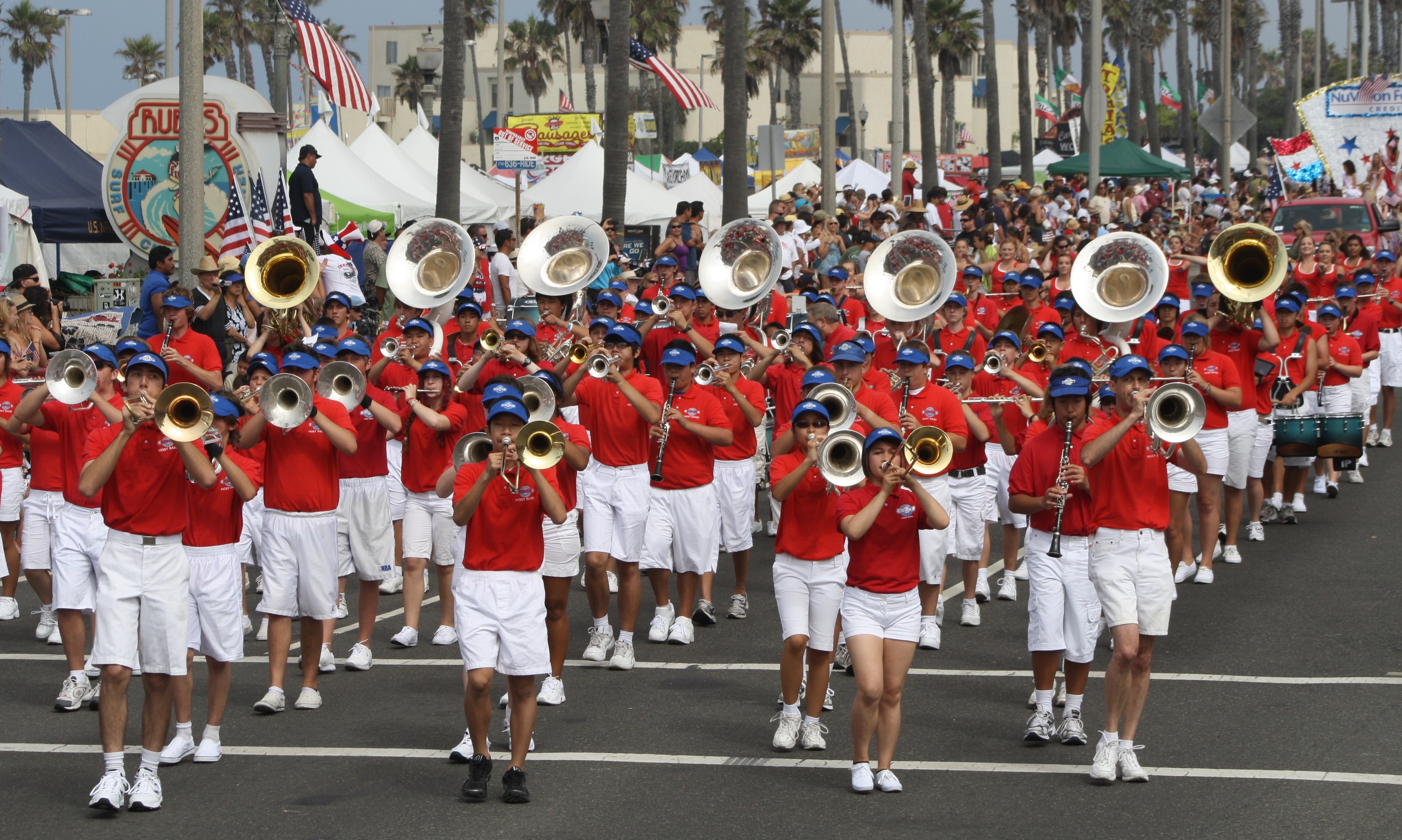
  • The Why? Parade

    Huntington-Beach-Parade-009
    http://www.huntingtonbeachparade.com/archives/huntington-beach-parade-huntington-beach-high-school-marching-band-4/

    report on the Giving in Hard Times Project that attempted to increase volunteering levels in the UK showed that none of the employed approaches increased volunteering, according to Peter John, professor of political science and public policy at the School of Public Policy, University College London. The conclusion of this report in Professor John’s words was “finding out that something did not work means more research can discover something that does.”

    Ok, that’s an honest conclusion and implies that recruiting volunteers is not as easy as some might think. You know, for some odd reason, this makes me think of comedian Louis C.K.’s hilarious riff on children who continually ask “why” to every answer given until a parent incoherently rattles off meaningless garbage or just yells at the child. Sometimes organizations repeatedly ask volunteer managers “why are there no volunteers” without hearing or understanding our answers, much like four-year old tykes. It goes something like this:

    Senior Manager Gwen: Esther told me there were not enough volunteers at the Golf Tournament on Saturday. Can you tell me why?

    Volunteer Manager Toby: Well, there were 10 really capable volunteers in attendance, as per the original request, just three short of the last-minute requested number.

    SM Gwen: Well, why weren’t there 13 volunteers there?

    VM Toby: There were several reasons, the biggest one being that we had ten volunteers lined up and Esther asked for three more on Friday at 4pm. We made numerous calls, but were not able to procure extra volunteers.

    SM Gwen: Why couldn’t you reach more volunteers? You say we have a hundred volunteers on our list, why couldn’t you get three more if you actually called everyone?

    VM Toby: Mainly because not every volunteer is available last-minute and our volunteers are very busy people with jobs and families and other commitments. Most volunteers are not home at 4pm. I know this because I have had multiple requests for last-minute volunteers.

    SM Gwen: Why are they unavailable? Didn’t they sign up to help us?

    VM Toby: Of course they did and they do; if I might show you last month’s volunteer hours, you will see that we increased volunteer participation 20% over the month before.

    SM Gwen: I’m not interested in stats right now. Why then do I have a golf tournament coordinator who had to stay an extra hour to collect and tally all the score sheets?

    VM Toby: Yes, I was told that by our lead volunteer, Ben who by the way was a professional events coordinator for over ten years. However Ben said that volunteer staffing was more than adequate and that some volunteers did not have enough to do. He also mentioned that the scores were not tallied on time because the system for collecting them was chaotic. He offered to help, but was rebuffed.

    SM Gwen: Huh. Be that as it may, 13 volunteers were requested. So why can’t you recruit people who are available to us, like people who aren’t doing anything like the ones who have no jobs and no commitments?

    VM Toby: Well, because typically, people who don’t do anything don’t do anything for a reason. Mostly, they don’t wish to volunteer. We try, but they don’t follow through.

    SM Gwen: C’mon. It can’t be that hard.Why can’t you just convince them? Do you need one of our marketing people to come talk to recruits?

    VM Toby: Thank you, no. From my extensive experience, volunteers need to hear a message directed at their wants and needs, not a general marketing message meant mainly for donations..

    SM Gwen: Why are you taking that attitude with me?

    VM Toby: Because I feel like you are calling me incompetent and incapable, of which I am neither. Recruiting volunteers takes skill and I have recruited and retained forty productive volunteers in the past two years. Besides, I also weed out inappropriate people as well, It’s not about numbers here, it’s about great, professional people volunteering for our organization. I’m proud of our volunteer force .Last minute requests will always be hard to fill, but I willingly do my best every time.

    SM Gwen: Then why can’t Esther get 3 volunteers when she needs them? Three, just three?

    VM Toby: Ok, because I’m stupid and lazy and I just want to collect a paycheck! I come in late, leave early and spend hours at lunch. I could care less about this mission and just want to find another job! Recruiting is easy, managing volunteers is a breeze, any idiot can do it, all right?


    Yeah, kind of like answering a four-year old’s why parade. Even a well-thought out attempt by highly qualified people to increase volunteer rates proved that volunteer recruitment is a complicated and nuanced task.

    So my why question to organizations is: Why aren’t volunteer managers judged on the number of competent and productive volunteers professionally recruited and managed, instead of on the perceived handful of phantom always available mind-less volunteers who are unavailable last-minute?

    -Meridian


  • 10 Ways Managing Volunteers Prepare You for Life

    tool box

    Do volunteer managers possess an enviable set of mad life skills? Should we share those finely honed skills with a world looking for self-help?

    Hmmmm. So I’m thinking, we could advertise an immersion self-help experience by inviting people to come manage volunteers with us for a week,  kinda like a  “psyche boot camp.” Maybe we could even make a bit of money on the side.

    I can see the advertisement now: “Volunteer Manager Life Lesson Boot Camp-We’ll Give You a Psychological Boot in the Psyche.”

    So how exactly does volunteer management prepare us for a good productive life?

    1. It shows you how to find your own satisfaction:  You will learn to not expect praise for every little thing even though the job may be harder than anyone knows and it’s never a 9 to 5 job. (Kinda like the skills needed to raise a family.)
    2. It shows you how to stifle envy and look at the world in terms of concepts bigger than your ego: You will learn to experience personal gratification from others’ successes and take pride in seeing others’ soar. (Kinda like the skills needed to function well in society.)
    3. It teaches you patience and persistence: You will learn that amazing projects take a long long long time and an unbelievable amount of hard work, even though people may want results immediately. (Kinda like the skills needed to build a wonderful and fulfilling life.)
    4. It teaches you that not everything is as it appears: You will learn that circumstances are unique and can surprise, delight and disappoint you, but won’t deter you from carrying on and being optimistic. (Kinda like skillfully finding personal happiness from within, not from without.)
    5. It teaches you that people are complex, amazing creatures: You will learn to look deeply at people and not just at their surface persona.(Kinda like the skills of great leaders.)
    6. It teaches you that being a martyr is a waste of time: You will learn that if you make it look easy, everyone will think it’s easy and that overextending yourself just brings stress. (Kinda like finding the skills of self-care in order to be at your best.)
    7. It teaches you to negotiate like a champion: You will learn to mediate and resolve issues in a respectful, productive manner. (Kinda like the skills you need to navigate buying a car or resolving issues with a neighbor.)
    8. It teaches you that passion is infectious: You will learn to channel your inner enthusiasm while inviting others to join in. (Kinda like the skills needed to find a circle of friends and to be involved in your community.)
    9. It teaches you critical thinking: You will learn to analyze situations and resolve problems quickly and efficiently. (Kinda like the skills needed in life.)
    10. It teaches you compassion and empathy: You will learn active listening skills and the ability to truly empathize with people of all walks of life. (Kinda like the skills needed to be a good person.)

    These are just 10 of the life skills volunteer managers possess. In order to be a success at our jobs, we must adopt many skill sets that actually help us navigate our own lives. Luckily for us, these skills also make us better people.

    -Meridian


  • The Two Forks and Timing

    forks3
    Icebreakers: I could never really get the hang of using them at the first meeting when training hospice volunteers. I usually got eye rolls and polite “oh here we go” smiles so I opted for a more conversational start to training new volunteers who had real expectations for a serious mission.

    I did however, develop a few exercises of my own that I introduced into the middle of volunteer training. Admittedly, these were often self entertaining and helped keep me engaged and I tried to deliver them with a twinkle so that the volunteers understood that the subject at hand was not just about doom and gloom. Hopefully they saw a lighter, quirkier side that prepared them to view patients and families with appreciation for the diverse and sometimes absurd situations that might arise.
    forks2

    One exercise for a small group was “two forks.” I asked the volunteers to arrange two identical forks in any setting they wanted. I told them to just arrange them on the table however they envisioned them at the moment. After the volunteers arranged the two forks, I would “interpret” their arrangement with phrases such as, “you are very open minded” or “you are extremely creative.” Teens especially liked this exercise. They would smile wryly and mentally call me out on my “game” but they would play anyway and seemed to enjoy the spoof of psychological testing. (I always did “fess up” and tell the volunteers that it was all made up) But then we would seriously discuss volunteering with various personalities and how to best connect with folks.
    forks

    Another exercise that I used in group training was the personality test. I downloaded a simple quick personality test with broad results and tweaked the questions to represent volunteering scenarios. I asked the volunteers to record their answers on their paper and then tally up their score. I then read the “results” according to the score ranges. For instance, those with a score within 10-20 were introspective while 90-100 were very outgoing.

    But I added my own twist to the test results. I made up silly outcomes for each personality type based on volunteering with a patient or family member such as, “it is said that this personality type because of their bubbly personality ends up talking so much about their recent family cruise that the family member actually experiences seasickness.”

    About halfway through the result reading, the shocked looks turned to laughter and relief. “Oh you got us,” the volunteers would say. But it wasn’t just for comedy relief. We then went on to discuss the different ways a well meaning volunteer could over step their boundaries and reiterated how to keep active listening in mind. Those were productive conversations.

    One thing I did learn in years of training was that timing is everything. Acting wacky or introducing quirky subjects too soon destroys the trainer’s credibility. Once trust and sincerity is established, then comedy relief and diverse teaching methods will be much more readily accepted. The same goes for introducing deep subjects. Volunteers have to be ready in order to really digest profound information.

    My barometer of a class’ comfort level was always predicated on the day the class got up and freely helped themselves to coffee and snacks while chatting warmly with one another. It usually took two sessions to establish that level of comfort and trust. (I always taught six 3 1/2 hour sessions for initial orientation).

    But once that comfort level was achieved, then I could introduce really fun activities, and on the flip side, speakers with really deep and profound experiences to share. Classes laughed and cried, but only after we all felt really safe with each other. Honestly, those intimate moments with new volunteers are memories so precious to me, I can’t even begin to describe them. How fortunate I am to have them.

    Yes, timing is everything. Volunteers look to us to illuminate the way and we should be honored to own that responsibility. Providing volunteers with deep meaning enhanced with light and laughter takes some sense of timing. But when you get it just about right, it fills your soul with the most amazing moments.
    forks4

    Training volunteers creates a bond with them from the very beginning. We neither have to be just ultra serious nor just silly and entertaining. We only need to make them comfortable and care that they learn and feel a part of our team. This sincerity paves the way for the information you want to present.

    So, don’t be afraid to have some fun.(When the timing is right of course) Arrange your own two forks, create a personality test, make up an icebreaker and watch the magic happen!

    -Meridian