Category: Uncategorized

  • Where the Heck is My Paper Shredding Volunteer?

    Paradigm-ShiftArrrrrrggggggggghhhhhh.

    So, we all know there is a paradigm shift happening in volunteer management. As the WWII generation sadly leaves us, we are looking to the baby boomer generation and on to fill their prodigious shoes. When I first started working with volunteers, the greatest generation was busily humming along, doing every and anything necessary to fill needs. Nothing was beneath them and honestly, I didn’t manage any of them, I basically stood back in awe and occasionally ran for some refreshments. They taught me humility for it was in their essence to be humble, hardworking, non-complaining, authority respecting and generous.

    As I watch their faces grow more lined, their limbs more trembling, their gait unsteady, I can only stand by helplessly, offering a hand to their elbow as they decline. Their eyes, though, clear as an autumn sky, still hold the hardships they endured as they endure one more.
    As these volunteers age and retire, we, volunteer managers know that the next generation of volunteers will be different, will be their own people with a new skill set needed to recruit, engage and cultivate them. So, as I read the research and advice on how to find and keep great baby boomer volunteers, I make note of not only the advice that’s out there, but the experiences I’m having as well. I’m seeing that boomers are different; they are not as inclined to want repetitious jobs or confining schedules. They want more perceived meaning in their lives and they balk at boring assignments and rigid requirements. A lot of them look at volunteering through a spiritual or universal prism and speak freely about their journey to find meaning. There are those who were very active in the 60’s revolutions and after working corporate jobs for years, want to return to their activism roots.
    But back to the WWII generation. I remember Dora, a volunteer who came in to shred papers. Her husband was a big band trumpet player and she accompanied him on USO tours during the war. She would sit for hours in front of the shredder, pulling staples and paper clips, shredding no more than three pages at a time. Dora was possessive of the shredder and when another greatest generation gentleman, Bob came to shred papers, she sniped about how he didn’t do it right. Bob, a man who was orphaned during the Great Depression, was a bombardier who flew missions over Germany. Those two volunteers knew that we needed the sensitive material shredded and they dutifully spent their time helping us see that job done right. For them, there was no answering of phones, no fund-raising, no strategic planning, nothing except paper shredding with no complaints.
    Both Dora and Bob died some time ago. I tried to replace them and could do it piecemeal for a while by asking office volunteers if they would “just do it for an hour” while they were at work. An easy job became harder and harder to fill as Bob’s and Dora’s generation started to slip away.
    As we grew used to the dwindling of the generation that included widows who never worked and needed more training and help with office duties and war heroes who never spoke about their experiences, we embraced the boomers who work hard, have boundless skills and opinions and challenge us to dig deep for a more involved volunteerism.

    So, what’s the challenge? It lies in being able to integrate the paradigm shift into the fabric of our organizations. Newer organizations or those run by young people already have a deep understanding of millennial and generation X and boomers. It’s the organizations that are older, run by long-term administration who looks at volunteer services as “it’s always been thus.” Convincing them that no one wants to shred paper anymore after it’s been shredded for years by willing volunteers is tricky.
    I loaned a volunteer out to another department who needed one time help putting together last-minute binders for a presentation. Jill, a fabulous boomer who normally works on statistics and research agreed to lend a hand for a day. She came back and pleaded, “don’t ever ask me to do that again because I will quit first. They had me copy a 100 page binder thirty times. Do you know how many people came up to me and complained that they couldn’t get copies made while I was there? And the machine ran out of toner, then it jammed, I think it probably overheated too. I had to just stand there and watch as the copier ran. It was excruciating!”
    Thankfully, Jill happily returned to her more meaningful tasks and we laugh about her foray into “copier purgatory.”

    As we have adjusted our thinking regarding volunteers and their changing involvement, our organizations need to rethink their view of volunteers as well.
    Old thinking: Volunteers will do any job regardless of how tedious.
    New thinking: Volunteers need meaningful experiences.
    Old thinking: Jobs that have always been done by volunteers will happily continue to be done by volunteers.
    New thinking: Maybe we should invest in a paper shredding service and use volunteers for more important jobs.
    Old thinking: Volunteers are all the same, they come to be helpful, we tell them how to be helpful, they do the job and go home happy.
    New thinking: Volunteers have so much wisdom, experience and passion to offer, let’s find ways to tap into that.

    Bringing research and evidence that volunteering is changing and that we must adapt is no small mission. Telling management that old thinking is well, old thinking and that it is nearly impossible to find volunteers to do menial tasks without sounding negative takes finesse. Being proactive and showing what the new volunteer paradigm can do goes a long way to ease the pain of losing shredding volunteers.
    Let’s see, volunteers who shred papers vs. volunteers who design websites or consult or have management experience? Hopefully, organizations choose a new wave of professional skill sets over mundane tasks.

    Old thinking: All a volunteer coordinator has to do is ask and a volunteer will magically appear to shred.
    New thinking: It takes multiple complex skills on the part of our volunteer coordinator to engage the new volunteer. Let’s listen to him or her about volunteerism and accept that he or she has done the research and has knowledge on the subject.
    Added bonus or really new thinking: Let’s give him/her some much-needed recognition next Wednesday during International Volunteer Managers Day.
    -Meridian

  • The Shiny New Coin

    JFK CoinThe shiny new coin, there is nothing like it. It actually has a scientific reason for its radiance. During the coin striking process, the mint luster is born. The coin isn’t shiny because the mint polishes it, it is shiny because the metal changes on a molecular level.
    David is a retired physicist. When he arrived at new volunteer orientation, I honestly did not know what to make of him at first. A giant bear of a man, his full white beard and shaggy head of hair made him look like a cross between Santa Claus and a guy who just stumbled out of the wilderness. His soft shoes and wrinkled khakis matched his sleepy voice. “I hope I’m not late” he said quietly as he joined the others. The other volunteers, who had already arrived looked up at him and then at me as if to say, “Who on earth is this guy? And what will we do with him?”
    Our class was fantastic as most volunteer orientation classes are. I love to watch the group dance around each other at first, then slowly as they learn their group rhythm, they take partners and switch as they emotionally swirl around the room, getting to know each other. As their comfort level increases, they relax and share opinions, histories, fears and hopes. It’s invigorating, educating and fulfilling all at the same time.
    I thought David might be the wallflower, awkward and shy, unable to garner a dance with anyone, but I was wrong. In his calm voice he engaged everyone brilliantly, doing an emotional tango with each member of the class. Before long, we had lively debate and discussion, tempered with genuine care for one another. We met four times and I know I came away feeling refreshed. I hoped the class members did as well.
    David called me several times before he was placed with a volunteer mentor and I got to know more about this shiny new coin. He had some experiences helping friends and relatives, but this was his first formal volunteering venture. We talked about questions he had regarding working with dying patients, and we talked about personal motivations. He was hesitant and hopeful and promised to call me after his first real experience.
    David called me this past Monday morning. It was about 9am and as with every Monday, the week seemed daunting so when he called I sat myself down and tried to focus. “Hi David,” I said, “what’s going on?”
    David asked me if I had time to listen and I of course said yes. With volunteers, any time is the right time. If we put them off, we’ll never carve out the precious time to hear what they have to say. As I settled in, David said that he mentored with a seasoned volunteer, Hal in a hospice house. He told me that Hal showed him around, teaching him all the little things that needed to be done. Then Hal brought David into a room with a patient, Mary. Mary, an 87 year old former cook from Ireland was lying peacefully, eyes closed in her bed, and Hal whispered a hello that hung in the air. He quietly told David that Mary did not respond to his voice but that he would often just sit with Mary so that she wasn’t alone.
    “Would you like to sit with her while I check on other patients,” Hal asked David and he agreed, but was somewhat nervous at his first real experience.
    David’s voice grew quiet, a breath in the line. “I don’t know what possessed me, but I sat close to Mary and looked at her face. Something took hold and I started singing softly. I sang “Danny Boy” to her and I don’t really ever sing, not much. I would imagine that she couldn’t hear me, but she opened her eyes and looked at me. And then she smiled, the most beautiful peaceful smile I’ve ever seen. When I was done, she closed her eyes again. So I sang another song and she opened her eyes again and watched me sing. Every time I would stop she would close her eyes, and when I would sing again, ever so softly, she opened her eyes. I can’t quite put into words, but I felt like we connected on a level so deep that time and place meant nothing.”
    “Wow,” was really all I could whisper, caught in the still moment.
    “Is it always like this?” David asked and I could picture him on the other end of the phone, his molecular volunteer structure lined up so perfectly.
    What could I say? “The possibilities are yours to find,” I told him. (Just like we found you, a shiny new coin.)

    My Monday melted away and I felt my molecules returning to their own luster. If I helped even just a wee bit in aligning David’s molecular volunteer structure, I feel honored and humbled and so fulfilled.
    As we mentor the volunteers in our care, think of their volunteering as a newly minted coin, forged by inspiration.
    The shiny new coin. There’s nothing like it.
    -Meridian

  • Nepotism Volunteer Style

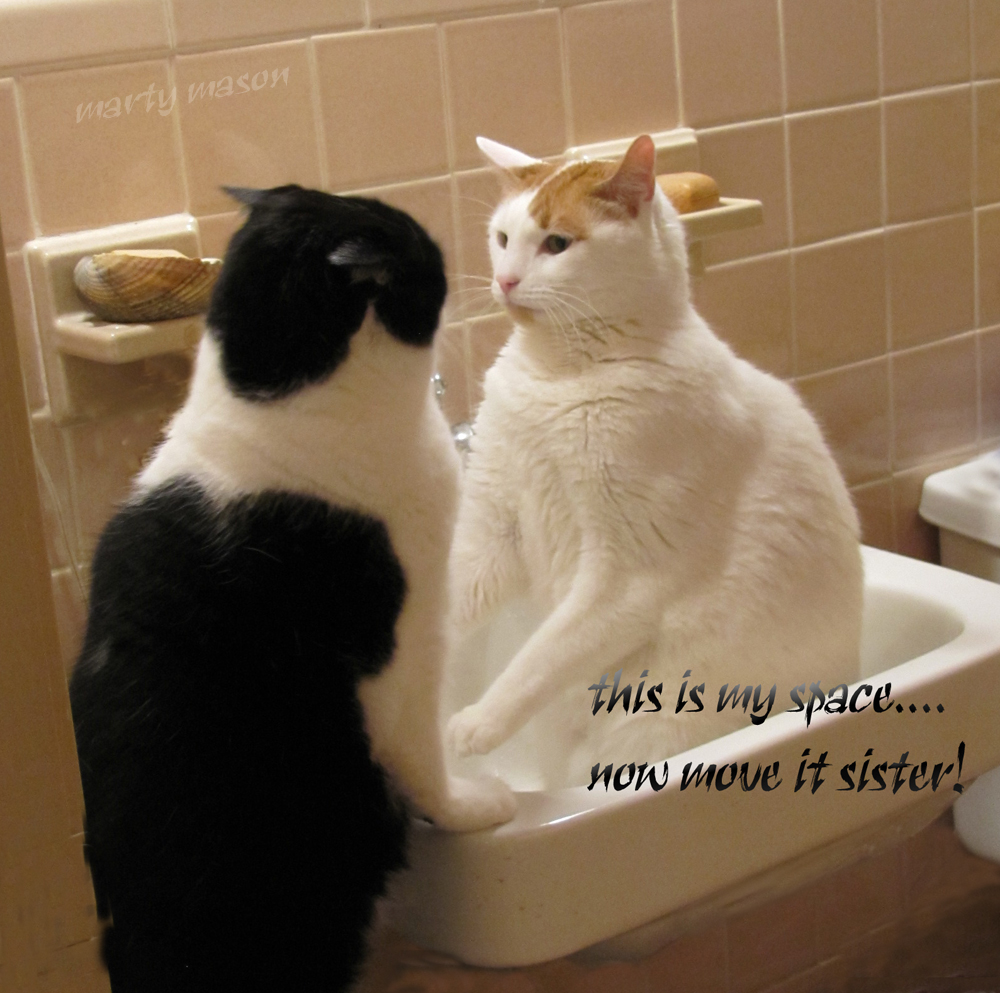
    cat my spaceFrom the “Common Sense Observation Dictionary”: Nepotism=Hiring really obnoxious, unqualified people who are related to someone in power and cannot be fired so get used to it.
    Is nepotism really that bad and does it exist in the volunteer world?

    Well, you might have noticed that when the economy slows and there are very few jobs out there, it becomes all about who you know or who your Mom works for. Organizations are really not immune from nepotism. A job in finance opens up and before you can recommend a really awesome volunteer who ran a CPA firm for years, boom, a senior manager’s son who just graduated with a degree in ancient religions is sitting at the new desk. Now the finance department has to teach him everything from the ground up, while he continues to spend his lengthy lunch hour looking for a position in a museum.
    There’s the out of work husband, the newly graduated son, the recently laid off daughter. Family ties are never so strong as when the relative of a favored senior manager needs a job. At times you watch, feeling the helplessness, as the supervisor of this new employee has a hard time reprimanding him because he doesn’t follow rules or he just doesn’t do the work. And you muse, “what have we become? I thought we were an organization based on ideals.”

    Nepotism extends to volunteering as well, so henceforth, I will refer to them as “nepoteers.” Cindy, a volunteer coordinator said, “One of my senior managers has a daughter who needs hours for scholarships. Now, I am happy to take this student, but the senior manager waited so long that her daughter can’t come to orientation and can’t really follow the path I have set out for students. Now, I have to fast track the daughter to help out the senior manager. It’s really not that big of a deal, but it’s irksome that because it’s a senior manager, I have to bend the rules.”

    Does a nepoteer need court ordered community service hours and it’s against your policy to accept them, but you come to find out that a manager really needs a favor from you and so you accept their relative? Do you have strict rules regarding volunteer training or age limits and you end up bending rules to help out a favored employee? Do staff members say, “But, even though she’s 12, she’s incredibly smart and mature, and oh, by the way, she needs to be here all day, every day during summer and really needs to be busy.”
    I am recalling the time a friend of mine, Megan, who was a volunteer coordinator for a very short time, accepted a nepoteer who was 15 and the daughter of her organization”s CEO. Megan remembered, “Evie, the 15-year-old, would show up for her shift and then sneak out the back door and meet her boyfriend. I chased after her twice and then got up the nerve to report her to her mother. Do you know what her mother’s response was? She said, ‘yes, I knew she would try to sneak out, that’s why I brought her here. I can’t leave her alone. So, whatever you do with her, don’t let her sneak away.’”

    Just as staff sometimes has to adapt to a nepotism employee, we sometimes have to adapt to a nepotism volunteer. The challenge for us is twofold. We dream at night that the nepoteer rats on us and tells the high-ranking manager that we are incompetent. On the other hand, we realize that if this nepoteer is ambivalent about having to volunteer, but for some reason has to, then what can we get from them to help our clients?

    I remember reading a blog a few years back in which a young man talked about having to do community service. He spoke of his experience at a volunteer site and at first made fun of the volunteer coordinator and her “niceness.” Oh did that make me mad, but as he wrote further, he came to begrudgingly appreciate the mission of the organization. Wow, I thought, kudos to that volunteer coordinator.
    That day, I realized that I was being horribly judgmental when faced with nepoteers. I was dismissing them because I thought the reason they came was not a good enough one. I was building a barrier because I figured they couldn’t possibly do good work as their motivation was not pure. But heck, I realized that all the other volunteers come with so many different motivations and I didn’t prejudge them, so prejudging the nepoteer was hypocritical and unfair.
    So the next time I was handed a nepoteer, a 14 year old male who needed to complete service hours, I made myself welcome him. Daniel shook my hand, scanned everything on my desk, from the disarray of papers to the pink glass elephants and worry doll (given to me by volunteers traveling to exotic lands-please take me next time) and said, “my Mom told me you were a busy lady.” I smiled. He turned out to be one of the most engaging young students I have ever met. He was able to chat with anyone, regardless of age, culture and prejudices. He would bounce in and tell me physics jokes and we had a good friendly sports rivalry. He gave me numerous computer tips, and baked cookies in his young Renaissance man style.
    Was Daniel a coincidence or was Daniel dropped in my lap for a universal lesson? Had I treated him with disdain, would he have been a different nepoteer?
    What I learned was that volunteer motivation applies to nepoteers as well. Their motivation may be to complete an assignment, check off hours or fill time. We see these reasons to volunteer all the time in other volunteers.

    And maybe not all nepoteers will be a Daniel. Maybe not all nepoteers will suddenly become so engaged that they win a volunteer award.

    But maybe, if our treatment of nepoteers is no different than our treatment of volunteers, they may do some good work and leave a friend to the mission.
    -Meridian

  • Flirting With Disaster

    lost in forestChristian was hired as the volunteer manager for a small hospital. After spending ten years as a human resources generalist, he wanted to utilize his skills while working with folks who wanted to give back.

    “I replaced the former volunteer coordinator, Janice, who was moving out of the area. She had been in charge of the volunteers for five years and we spent about two weeks together before she left. The volunteers on the whole were very sorry that she was leaving. They were really attached to her.”

    Every volunteer manager has their own unique style of managing volunteers. Some are gentle and kind and encourage volunteers with praise and genuine caring. Some are a combination of inspiration and a perceived expectation of excellence. Some are masterful negotiators and visionaries. Some are light-hearted and fun, others are serious and meaningful. Most are combinations of all of the above. Few of us can be authoritarians or dictators, at least not for long.

    “What I discovered a few weeks after Janice left was just how much the volunteers were attached to her. I can’t tell you how many times I heard a volunteer say, ‘Janice didn’t do it that way’ or ‘Janice would never have asked that.’ At first I kind of expected it, but as the weeks wore on, it became more of an us against him situation.”

    What Christian was experiencing is the unraveling of the management style instituted by his predecessor. He stepped into a role that was not his style and so the volunteers, used to Janice’s management, were chafing at her absence. It wasn’t so much a rebuff of the new leadership as it was missing the old leadership.

    “The more I spent time with the volunteers, the more I realized how intertwined they were with Janice. She knew so much about each one. She socialized with many of them, went to their family functions, had lunch with them, and stayed with them in the hospital. They had her personal cell number. One lady, Bea told me that Janice helped her buy a car. Another volunteer, Simone said that Janice found bargains for her online. It was all so overwhelming, I mean, I was hired to do a job, but I never expected that my job was a 24/7 immersion into the volunteers’ personal affairs. When I was in human resources, I never walked the dog for an employee or planned a birthday party for a grandchild. I simply did my job.”

    Christian’s experience went beyond taking over a job from a popular coordinator. He was unknowingly walking into more than a job, he was walking into a cult of personality.

    “I started asking the other staff about Janice and the volunteers. I learned that Janice was extremely social and gregarious and that she had a positive attitude and sense of humor. I already knew that from spending time with her before she left. But what I heard from many of the staff is that Janice often seemed frazzled and complained about stress. I also heard that she was somewhat flirtatious, which, on the surface doesn’t seem too harmful, but I now feel a real sense of indifference from the men who volunteer. It’s as if I’m personally responsible for Janice’s leaving.”

    Managing volunteers is challenging enough without having to replace someone who has created a cult of personality and Christian, no matter what he did to win the volunteers over, was just not Janice.

    “The volunteers would do anything for Janice, and she was very successful in filling all the jobs. But I got to tell you, the first few days, I just thought that the volunteers were really wonderful people who truly wanted to help others. Now I’m finding that yes, the volunteers are wonderful people, but I’m not so sure if they want to help others or if they just wanted to please Janice. I ask them in the nicest way to take on a an assignment and I try to ask them questions about their families, but they are somewhat cold towards me. I haven’t lost any of them yet, but I expect that to occur any day, because although they have direction from me, they seem lost without her.”

    Stepping into anyone’s role is hard but stepping into a status quo that you cannot duplicate is incredibly challenging. As volunteer managers, we walk a fine line between being professional and being involved. We sometimes utilize whatever skill works to fill volunteer requests. We often become very comfortable with our volunteers and develop strong relationships with them.
    But, every now and then, we have to do a mental check on our own style of volunteer management to ensure that we have created a professional atmosphere and that our volunteers are loyal to the clients we serve and not us. The mental check goes something like this:
    If I leave tomorrow, will my replacement find all the systems in place they need to succeed?
    If I leave tomorrow, will my replacement be able to continue the calendar that I have set up for volunteer meetings, events, training’s, educational in services etc?
    If I leave tomorrow, will my replacement find the volunteers welcoming or will he find hostility because the volunteers are loyal to me instead of the mission?
    If I leave tomorrow, will my replacement find that boundaries have been consistently crossed with volunteers, hence making her work life impossible?
    If I leave tomorrow, will my replacement have a list of currently active, currently inactive and also former volunteers?
    If I leave tomorrow, will my replacement walk into utter chaos or find a smoothly run department?

    Ahhhh, if we can occasionally look critically at our work with the eye of our potential replacement, we might just discover some things that need our attention. We might just see the forest instead of those pesky daily, demanding trees that get in the way.
    And if a professionally run environment is better for our potential replacement in case we happen to leave, then isn’t a professionally run environment better for our own health and well-being?
    -Meridian

  • Confessions and Connections

    tinkertoySometimes our view of the volunteer world can be shaken. We read that a volunteer harmed a vulnerable person. We find that a volunteer was hiding a checkered past or we observe a volunteer behaving in an unseemly manner.
    We send a volunteer out to do a good job and when we hear nothing to the contrary, we assume that everything is rolling along smoothly, because everyone realizes the worth of a volunteer and will welcome that volunteer, right? At least we hope it happens that way until we hear a confession sometime later…
    Kaya, a hospice volunteer coordinator was speaking to a former volunteer, Jayne. Jayne has been battling a chronic illness that prevents her from volunteering but, when healthy, was one of the most called upon and successful patient volunteers.
    In between all the catching up, Kaya and Jayne chatted about a few of Jayne’s favorite assignments and most interesting patients and families. She provided respite care to families in homes and brought companionship to nursing home residents.
    Kaya said, “Jayne played by the rules, turned in paperwork on time and always was cognizant of her representation of the mission. But at one point Jayne asked me if I remembered assigning her to see patients in the Golden Oaks nursing home.”
    Kaya hesitated. “Yes, I said, I remember that, but I also remember that you couldn’t go back because of the cleaning fluid they used. It gave you respiratory problems. But then Jayne told me that wasn’t true at all, that she lied to me and asked me if I wanted to hear the real story. I, of course said yes and she told me this story.”
    Kaya shook her head, but she continued, “Jayne said that she went to visit a patient at Golden Oaks, a 90 some year old lady who had end stage Parkinson’s disease. She said she was in the room with the patient when a staff member came in with a lunch tray and told Jayne to feed the patient. Jayne said she told the staff member that she was not allowed to feed patients and the staff member got mad and demanded to know why she was there in the first place if she couldn’t really be any help. Jayne said she kept her cool but another staff member, who appeared to be a supervisor came into the room and basically said the same thing.” Kaya stopped for a second. “I can’t tell you how shocked I was to hear that. First of all, how dare someone treat a volunteer that way and second of all, I thought of all the good these volunteers do for patients and how Jayne could have just as easily up and quit after that. I wanted to ask why Jayne didn’t tell me when it happened, but I reconsidered. I didn’t want to make her feel like she had let us down, not after all the good work she has done. But it makes me wonder what other situations occur that volunteers are unwilling to tell me.”

    tinkertoymazeVolunteer managers construct intricate helping structures. While we may be the hub or first connector for our volunteer helping structure, we must rely on other connectors (other people) to extend out further. The further you build out, the more fragile the structure becomes. Any volunteer that reports directly to the volunteer coordinator is being engaged by someone who knows how to cultivate volunteers. The further out on the structure the volunteer goes, the more the volunteer manager must rely on the soundness of new connectors (other people) interacting with the volunteer. Do these new connectors understand the volunteer’s role? Does a new connector know how to engage a volunteer? Is the new connector aggravated at having to monitor a volunteer on top of other duties or perceive a volunteer as a nuisance?
    While we understand that we cannot control every situation and every person a volunteer interacts with, we understandably can worry about our volunteers when they are being engaged by other people unknown to us. And, after spending a great deal of up front time mentoring a volunteer, it is disheartening to think that a callous comment or flippant attitude can quickly ruin that.
    When I started accompanying volunteers on their first assignment and introduced them to the key stakeholders, I found that some of these problems were minimized. One of our roles as volunteer managers is to educate other people on how to work with volunteers. The skills needed to retain volunteers are second nature to us, but aren’t all that obvious to everyone else who may have stressful jobs and responsibilities that prevent them from seeing the volunteer picture.
    This approach takes more work on our parts, but it’s necessary, both for the mission and for the volunteer. As we extend our helping structure out, we need to personally check on the connectors being used, to ensure soundness and strength.
    After all, the delicate structure we create is a thing of beauty and support for our clients. We don’t want it to fall.
    -Meridian

  • I’m Going to Be Locked in a Room With a Naked Man?

    personal shopperOh, those odd requests. You know, the ones that can either make you cry or seek therapy. We get them all the time and our volunteers can sometimes just walk into them. The other day, I was talking with one of our retired volunteers, Greta, who, for 12 years provided respite in the homes of terminally ill patients. Completely nonplussed, Greta would take the assignments that no one else would or could. She particularly loved working with men whose care giving wives needed time to shop or visit relatives or even take a nap in the next room. Some of the male patients cared for by Greta had dementia or Alzheimer’s, which made for a challenging time.
    She recalled the day we sent her to a patient’s home and she met with the man’s wife who calmly instructed her to lock herself in the bedroom with her husband. “He tends to wander,” she said. “And oh, he usually walks around naked.”
    Luckily, Greta, a retired psyche nurse and case manager, had already been to odd request-ville and survived. Completely unfazed, she would coax the patient to dress himself.
    She talked about another patient she dubbed “Bad Brad.” Bad Brad would flush anything and everything down the toilet if he got near the bathroom. Greta put a stop sign on the bathroom door. “I just looked at everything as doable,” she said. “And if I couldn’t, well, you heard about it!”
    We all get the out of the ordinary requests.
    There are the unusual requests for volunteers who can sing in Olde English, or volunteers that have no sense of smell.
    While odd requests may seem like a hardship, they are actually a chance to step back and think outside the box, even if you cannot fill the request exactly as it was put forth. That’s when bargaining can be used, because we ultimately want to help our clients. “Maybe I don’t have a volunteer who plays “Bringin in the Georgia Mail” on the fiddle, but I do have a volunteer who has a fine collection of bluegrass cds.”

    Mindy is a volunteer coordinator who has always tried very hard to fulfill every volunteer request. She has meticulously paid attention to exact needs and worked hard to find the perfect volunteer fit. “But lately,” she says, “I’ve found myself wanting to be involved in the requests before I begin to fill them. I’m finding that the more I speak directly to the clients, the more I can get a sense of the type of volunteer they need. And I can offer the type of volunteer I think would work for them and the volunteer who is actually available. It’s made my job so much better and given me a proactive way of filling needs. I’m just sorry I didn’t think of it sooner.”

    Being proactive is an excellent tool for not only managing the amazing volunteers we have, but for showcasing the skills and possibilities of the volunteers who may not have a current assignment. We don’t have to wait for invitations to planning meetings. We can ask to be included. We can come with a menu of volunteer services and offer to plug volunteers into the spots that we know we can fill even when there is no request. Think of it as akin to being a personal shopper. Personal shoppers get to know their clientele and because they also know all the designer clothing lines, they can offer the outfits that flatter their clients’ body types.

    Mindy continued. “I know who my volunteers are and what they are capable of. The rest of the staff in my organization can’t possibly know all I know about them. So, I figure, I can offer the volunteer service I know will work, versus constantly rejecting the requests that I can’t fill. The more I am proactive, the more respect our volunteers receive, and the more I can place volunteers who have a skill or passion in situations that are enjoyable for them. It’s a win-win for everyone.”

    Mindy reinvented the way volunteer involvement is utilized in her organization. She stills receives traditional requests for volunteers, but now, she has taken on an activist role in promoting and controlling the ways her volunteers are assigned. “I’m trying to play to the strengths of my volunteers. They come with varied skill sets and I want to see those skills used.”

    Volunteer management can be a passive position (receive requests, then fill them) or it can be an active position (seek ways to use the volunteers available based on their interests). On the surface this may seem like a no-brainer, but when Mindy stepped back and took a look at the way things were done in her organization, she really had an epiphany. “I had requests that were difficult to fill and I had volunteers who were not being utilized in the most advantageous way. It became clear that I needed to step my role up and become a part of the request process. I’m using the volunteers more efficiently now and I feel so much better about my work.”

    Our roles can and need to expand. For instance:
    Staff: Do you have a volunteer to stuff goodie bags?
    OR:
    Volunteer Coordinator: I see you’re putting together a brochure for services, I happen to have a volunteer who is a graphic designer. I think he could be persuaded to help you with that.

    Because we’re somewhat like that personal shopper, we know our inventory of volunteers and how each one can enrich the ways our organizations serve our communities which will eventually lead to volunteer managers sitting at organizational planning tables.

    Me? If I could afford a personal shopper, I would. They’re really good at their jobs and frankly, I’m not so great at picking out flattering outfits. Maybe staff members who put in requests would appreciate a knowledgeable personal shopper for volunteers too.
    -Meridian

  • Just a Ripple I’m Seeing

    ripple-in-waterOne day a few weeks ago, I was on my cell phone walking down the hallway when I noticed a woman speaking to the front desk volunteer, Molly. While listening to the person on the other end of the phone, I watched the woman engage Molly in conversation. As I talked, my attention kept darting back to the woman at the front desk. There was something about her.. something I couldn’t quite put my finger on. She looked familiar, and I wondered where I had seen her before. I thought that she might have been a former caregiver who we had helped. I see caregivers all the time when they come back and thankfully want to give back. I studied her face. Her eyes, they just had this crinkly way of smiling as she spoke. And her chin, it was just so familiar, but really her mannerisms spoke to me. It was like losing your memory and seeing a good friend again for the first time.
    Curious, I came closer and heard her ask Molly about volunteering. Molly was handing the woman a packet of volunteer information, but as I approached,
    Molly saw me and said, “oh here, here’s Meridian, she can tell you more about volunteering.”
    I caught the woman’s eye and as she looked at me, I felt deja vu. “I’m Bree,” she said, holding out her hand and we shook. Her hand felt like favorite family. We walked back to my office and she sat down, her eyes taking in everything as though she had seen it before, in another life. Then she smiled a knowing smile. “My name is Bree Phillips and I’d love to volunteer here.” Hmm, I thought, the name rang no bell, and I wondered if maybe she had changed her name. Bree continued. “I just moved here to be near my mother after having been through a long divorce. Because Mom is getting older, I need to take care of her. But I have some free time to give, and really, I’m here because of my father. He volunteered here many years ago.”
    “No kidding,” I said, not recognizing the name Phillips, “who is your father?”
    “George Keenon,” she said.
    My mouth dropped open. “Your dad is George Keenon?”
    “Yes,” she answered, “did you know him?”

    Oh my gosh, it suddenly dawned on me, those eyes, her chin, the mannerisms, I was looking at a female version of George, a volunteer who was one of my all time favorite volunteers. In that instant, I felt like I was sitting with him again, enjoying his stories of growing up on a farm, his love for family and helping others. George volunteered during a time when sadly, male volunteers were scarce and he stepped forward to fill requests for a male volunteer to help male patients. He roamed the halls of the hospice care center, complementing the nurses and stopping to acknowledge a broken heart. I remember one day, when a patient was asking to see Frank Sinatra, George entered the room and she looked at him with a smirk and said, “whoa, you really let yourself go!”
    Bree listened to my stories of her father and told me that before he died, he recommended that she try volunteering at a hospice. “He was always talking about his experiences here,” she said. ” I swear, he had this long, great career in business, but he spoke more often and more fondly about his connections to the patients.” Bree’s eyes brimmed with so much emotion. “I want to honor my father by following in his footsteps. I’ve got the time and I want to do something that lights me up the way it lit up my dad.”

    Then last week, I had a new class of volunteers. In the class was a middle-aged woman named Holly Starfire. What an awesome name I thought as the volunteers introduced themselves. Holly was quiet, shy almost when it came time for her to comment on the icebreaker. “Why am I here?” she mused aloud. I think it’s because of my father who volunteered here a long time ago.”
    “Who’s your father if I might ask,” I inquired.
    “Hardy Pike.”
    “What? Your dad is Hardy Pike?”
    “Was,” she corrected. My dad died last year in Florida where he retired.”
    Hardy Pike was a volunteer who, as a young man, had changed his name from David Toth to Hardy Pike because he liked the sound of it. It figured that he would name his daughter Holly Starfire. A big brute of a man, Hardy had blue-collar hands and a bohemian heart. He had built his own house from scratch and fixed heating and cooling units for a living. He loved fishing and poetry and could listen to anyone from little prim ladies to salty language gents. Hardy was an enigma. Everything about him pointed anywhere but volunteering, and yet, he faithfully committed to providing a pat on the back for the terminally ill.
    “I grew up with a sense that the world is full of possibilities,” Holly told me, “and that giving back was more a possibility than a mandate. Dad spoke often about how good he felt when volunteering. He inspired me to find that too.”

    Most of the time, we’ll never know the lasting impact volunteering has on our volunteers. There’s not a statistic for “volunteers who, in whatever area they live, go and volunteer because they’ve been inspired by someone we worked with”. We don’t hear the stories they tell their children. We can’t see their friends and relatives, who are inspired to go out and volunteer themselves. We’re not a droplet of water on the ripple, along for the ride. But if we’re lucky, we will get to meet a son or daughter or friend who comes because they want that meaningful experience they’ve heard so much about.
    And, I figure, if I last long enough, I’m going to meet the next generation too.
    -Meridan

  • The Incredible Shrinking Volunteer

    incredible-shrinking-manLately I’ve been reading stats about volunteering. Ok, they’re not in the “To Kill a Mockingbird” league, but they do tell a story and they have a lovely way of lulling me to sleep. Some surveys say volunteering is up, others say volunteering is down. Demographics are tricky and of course, one has to define “volunteering”, which is like defining spirituality or “that color the coffee turns when I put the right amount of french vanilla creamer in there…. wait, no, stop, that’s it!”
    But, it seems as though when stats tell us that volunteering is down, there are the broad reasons given to explain this: Not enough skills based volunteering opportunities; not enough volunteer jobs to offer and not enough flexibility. Hmmmmm, good reasons, ones which seem to blame the volunteer manager for not providing the best experience. The conclusions of these surveys oftentimes dust off their hands with some quick advice about creating a better volunteer atmosphere. It seems so simple, but I think there’s a few more reasons to throw in based on conversations I’ve had with prospective volunteers and folks who recoil like they’re touching a third rail when they walk by my booth at a fair.

    Martha sat, tears in her eyes, as I had to tell her that we could not accept her as a volunteer. “But, she said, “I’ve turned my life around, you can see that, because I’ve been out of trouble for the past six years.” I could see that, it was plain from looking at her background check. I could feel it too, she wasn’t just saying some lines she memorized. She had some really serious issues six and seven years before, but had stayed completely out of trouble recently. I lobbied to take her, keep her away from clients, but higher decision makers than I said no. Martha looked at me, and asked me, her eyes fixed on my face as I now represented all the employers and volunteer organizations that had rejected her. “How am I supposed to get a fresh start when nobody will take a chance on me?”
    I still have an emotional scar from that encounter and every time I have to dismiss a volunteer due to a background check, that scar aches. I don’t know if our volunteers realize how much we care about them and about their well-being, even if we cannot accept them. Martha, I want you to know that.

    Then there’s Thad, who represents so many of the prospective volunteers. “I can’t go into someone’s home,” he says in horror. “What if they accuse me of stealing something?” Or Kelly who says, “I’m not too eager to work with people I don’t know.” Or Joyce who says, “I won’t go into neighborhoods I’m not familiar with.” For these volunteers, the comfort of an office job close to the volunteer manager or organization staff keeps them coming back, but leaves vital volunteer jobs unfilled.
    When folks come to us to volunteer and they do not wish to fill the slots that are critical, we have a choice: Turn them away or somehow fit them into the spot they prefer. Then, when organizational staff complain to us that we say we have volunteers, but none for the clients, we try to explain that not every volunteer is willing to do every job. Staff then shakes their heads and wonders “why can’t you just recruit some?.”
    Volunteers watch the news, read and engage in social media, and speak to family, friends and neighbors. They form opinions about what they are willing to do. We can encourage them, cultivate them, go with them to a client’s home, but ultimately, they know they can reject a job. Sometimes volunteers will grow into positions and these volunteers are usually fantastic in their new roles.
    Prospective volunteers tell me, “I’ve had to go back to work,” “my family needs help right now,” “I need to move closer to a daughter who lost her job,” “my wife is sick,” “I’m having health issues,” “I’m just not emotionally ready yet,” etc. etc.
    Because we, unlike our human resources counterparts, cannot just “hire” a volunteer for a job, we have to creatively fill each position while juggling the creation of new positions for volunteers who decide they’d rather not do the work we may need the most.
    I remember Bill who wanted so badly to fill the toughest of needs, but ended up opting for the cocoon of the home office. Was Bill’s volunteering any less because of that? No, of course not. All volunteer roles are vital.
    However, behind the scenes, we, volunteer managers struggle with filling important positions for any number of reasons. I’ve tried so many ways to entice volunteers to fill certain needs. I’ve guilted, humored, begged, rearranged, incentivized, romanticized, promised temporary status and so on. Many times it works, but not always. I know that finding the right volunteer for the right job is critical, so I slog it out, recruiting from within and without.

    And I would say to all those reports that conclude with suggestions that if we, volunteer managers just offer more leadership roles, create more meaningful positions and bend our flexibility just a bit more, volunteers will come rolling in: Come down and do this job for awhile and you will see that it is much more complex than that.
    And to Martha: I know in my heart that you would have gone into a client’s home and would have done a fantastic job. Somewhere, there’s a client waiting for a volunteer like you, and somewhere you are waiting for a chance to prove yourself.
    -Meridian

  • The Volunteer Manager Mind or Volunteer Beef Wellington

    6-human-needsAfter all these years, I still believe that everyone has the potential to help, that anyone is capable of becoming a great volunteer. I still think that each and every person who expresses just a hint of maybe perhaps it might be possible sometime later if I kinda sorta could be interested for only a wee bit of time is going to be the next volunteer of the year. How do I know that I truly deep in my soul believe this or am I just fooling myself? I truly know this because I know how my mind works.
    See, my mind and I, we’ve gotten used to living with each other. It reminds me that I can’t take that fork from the restaurant and I yell at it because it forgets names, places and where I put my stress ball.
    So I know I sincerely see everyone as volunteers reaching their potential because as I speak to them I get this visual. I sort of see their edges starting to sparkle, kind of like the way an excel spreadsheet cell sparkles when you hit copy. Then the volunteer, as they are talking, becomes a pseudo butcher’s diagram of their parts. Those parts are their skills, their interests, their personalities, their experience, their mindset, their availability, their aversions, their hidden dreams, their motivations, their personalities, quirks, etc. Then my pal, the mind, as it holds the sparkling cuts of volunteer, travels into the mind’s kitchen where it starts to look at all the available ingredients for this volunteer recipe. Hmmm, a dash of Tuesdays, with a sprinkling of creative license and some fresh clients that need a singer who studied in Paris and loves to draw pictures of cats on bicycles. Voila!

    These volunteer diagrams are like the first ingredient in a fine recipe. Just as each part of a butcher’s diagram represents a steak or rib or filet which is the basis for hundreds of dishes like hamburgers and pot roast, our volunteer diagram represents the potential of the volunteer.
    Now here’s the volunteer manager part: All the other ingredients in this unique volunteer recipe come from our ability to catalog and store vast amounts of extraneous ingredients in our mind’s kitchen. We remember that a client grew up in Hungary and loves baseball. We tuck away snips of conversations in the cabinets of our mind. A senior manager muses that it would be nice to see volunteers take part in a holiday chorus, or a staff member tells us how he could occasionally use a volunteer who is adept at stats.
    We may overhear a snippet of a conversation about someone who wants to donate craft supplies. We shelve that near the knowledge that a student group wants to volunteer to help seniors who live alone. So when that new volunteer, Jamie sits down for an interview and we really start to get to know her, that sparkly edged diagram begins to appear. Jamie, a retired accountant who wants to give back to seniors, shares that she used to teach preschool while finishing her degree and says that it was one of her favorite experiences. Later in the conversation, Jamie shares that she relaxes by scrap booking and belongs to a craft group. Suddenly, those pieces of the diagram become the basis for a spectacular creation. Jamie is paired with the students and the donated goods. Jamie is the main ingredient in a recipe called “Project Senior/Student Crafting.”
    Obviously, it is not that easy. Pieces of good ideas can languish for a long time. Everyday, we integrate volunteers into our organizations. But as we go about our everyday jobs, recruiting, retaining, and cultivating volunteers while filling a wide variety of requests and needs, we also stock bits and pieces of information in the spice cabinet of our minds.
    And when those ingredients come together in a perfect way, I’m thinking it’s got to be similar to a chef creating a new signature dish.
    As volunteer managers, we may often feel more like a short order cook in a non-stop busy diner, but in our hearts and minds we are that chef who sees the potential in every ingredient.
    And when that new volunteer dish is savored by the people we are helping, we can step back, wipe the flour from our face and bask in the moment.
    -Meridian

  • Did You Steal My Idea?

    toddler cell phoneI was reading the Sunday paper and came across an article on a local man who volunteers. It was the predictable template that press articles post about a volunteer who has spent five decades shelving library books or is still volunteering at the age of 100.
    I always read these volunteer articles as though I might be a prospective volunteer interested in the organization referenced. Sadly, not one article has actually piqued my interest and I highly doubt that new volunteers are beating down the doors after they read another article entitled “Volunteer turns 99, wants to keep volunteering when she reaches 100.” (Guess I know what article I’ll be reading a year from now).
    I’ve been involved with articles on volunteers I’ve worked with and truly you can get down on your knees and beg and it doesn’t make a bit of difference, the paper is going to print what they think should be printed, including misquotes, incorrect stats and just plain made up drivel. I’ve seen articles that were not too bad, articles that were ok and ones that were just lousy. I have to admit, there is a certain thrill seeing my volunteers in print and I hope that the next day at work is filled with the sound of telephones ringing off the hook, but typically that doesn’t happen. So, once again, volunteer managers are at the mercy of something we cannot control: Press coverage.
    But this article made me think back to several years ago when I did a speaking engagement at Busy Bee, a woman’s sewing group. I wanted to recruit the group to sew quilts or keepsake bears or a new project I was working on. The vice president of Busy Bee told me the ladies really wanted to get involved and help. I thought we could forge a great partnership and so I practiced my talk, gathered sample bears and quilts and quotes and personal stories that would surely sway them into stopping all their other charity work and concentrate on our clients exclusively. (Ok, that is a bit of an over exaggeration, but sometimes I just fantasize a bit).
    I arrived early, walked around the room, saying hello and admiring their work, all the while hoping they didn’t think I was working them like a smarmy politician kissing babies. Honestly, they did amazing work and after my talk, I asked if they would like to start a brand new project. Because they seemed interested, I told them about an idea I had to make small lap autograph quilts for nursing home residents. I asked their help in identifying whether a fabric pen could be used to write messages of love and encouragement on a light-colored fabric as one of the quilt squares and they got rather excited and helped formulate how it could be done.
    I left there stoked and they said they would call me when they were ready to get started. I drove away convinced that we would make great partners. When they did not call, I called the vice president and left a message. I called again and left another. I never did hear and so I chalked it up to “oh well, I was just delusional” or “they were just placating me.” Then, a few months later, I was reading the Sunday paper and there was an article about Busy Bee and in the article they mentioned that one of the projects they were doing was my autograph quilt. I dropped the page. What? I read it again. What? They stole my idea! At first I was highly incensed and thought, hey, come Monday I’m calling them up and demanding to know who they were doing this for and what happened to ethical behavior? I stewed all Sunday afternoon and promised myself to take care of it the next day. Of all the nerve.
    When Monday came, I searched through all my contacts and found the one for Busy Bee’s vice president. I called her and she answered. I told her who I was and that I read the article in the Sunday paper.
    “Oh, you did, it was a good article, wasn’t it?”
    I told her it was and then as gently as I could I reminded her of my visit and idea to do the lap quilts.
    “Oh,” she said, “that was you, was it? Well, when we didn’t hear from you, we decided to make the quilts anyway and we found another place to accept them. They’re doing quite well.”
    I was about to argue and tell her that I had followed up, but I stopped. I realized it would do no good and so I asked if her group would be willing to make some quilts for us.
    “Sure,” she said, just drop by and I’ll give you some.”
    Of course you know that there were none available when I dropped by. Yeah, I waited another six months and tried calling again. No response.
    Sometimes, you can make a contact with one person from a group and they are all excited to work with you, but then, another member of the group who has more clout will snatch their participation away faster than a mom grabbing the new cellphone from the dirty hands of her two year old.
    Groups, I’ve learned are complex. They are run by all types of hierarchies and no two are the same and so, enlisting their help takes a great deal of discovery, patience and finesse, all of which I did not use when trying to partner with Busy Bee. Groups’ loyalty is first and foremost to the group and sometimes the dominant member of the group has a friend in an organization so that is the only organization they will work with. Groups are really about individual personalities within that shape the group. I knew a group that volunteered for an organization and then accepted donations from the organizations’ clients. Yep, group first because the president of that group said it was “only fair”.
    So, I let the whole autograph quilt thing go and found another pair of volunteers to begin the project. And, I wished the agency that receives the Busy Bee quilts well.
    After all, knowing groups, some day I may get to steal a group away too!
    -Meridian