Tag: hospice volunteering

  • Just a Ripple I’m Seeing

    ripple-in-waterOne day a few weeks ago, I was on my cell phone walking down the hallway when I noticed a woman speaking to the front desk volunteer, Molly. While listening to the person on the other end of the phone, I watched the woman engage Molly in conversation. As I talked, my attention kept darting back to the woman at the front desk. There was something about her.. something I couldn’t quite put my finger on. She looked familiar, and I wondered where I had seen her before. I thought that she might have been a former caregiver who we had helped. I see caregivers all the time when they come back and thankfully want to give back. I studied her face. Her eyes, they just had this crinkly way of smiling as she spoke. And her chin, it was just so familiar, but really her mannerisms spoke to me. It was like losing your memory and seeing a good friend again for the first time.
    Curious, I came closer and heard her ask Molly about volunteering. Molly was handing the woman a packet of volunteer information, but as I approached,
    Molly saw me and said, “oh here, here’s Meridian, she can tell you more about volunteering.”
    I caught the woman’s eye and as she looked at me, I felt deja vu. “I’m Bree,” she said, holding out her hand and we shook. Her hand felt like favorite family. We walked back to my office and she sat down, her eyes taking in everything as though she had seen it before, in another life. Then she smiled a knowing smile. “My name is Bree Phillips and I’d love to volunteer here.” Hmm, I thought, the name rang no bell, and I wondered if maybe she had changed her name. Bree continued. “I just moved here to be near my mother after having been through a long divorce. Because Mom is getting older, I need to take care of her. But I have some free time to give, and really, I’m here because of my father. He volunteered here many years ago.”
    “No kidding,” I said, not recognizing the name Phillips, “who is your father?”
    “George Keenon,” she said.
    My mouth dropped open. “Your dad is George Keenon?”
    “Yes,” she answered, “did you know him?”

    Oh my gosh, it suddenly dawned on me, those eyes, her chin, the mannerisms, I was looking at a female version of George, a volunteer who was one of my all time favorite volunteers. In that instant, I felt like I was sitting with him again, enjoying his stories of growing up on a farm, his love for family and helping others. George volunteered during a time when sadly, male volunteers were scarce and he stepped forward to fill requests for a male volunteer to help male patients. He roamed the halls of the hospice care center, complementing the nurses and stopping to acknowledge a broken heart. I remember one day, when a patient was asking to see Frank Sinatra, George entered the room and she looked at him with a smirk and said, “whoa, you really let yourself go!”
    Bree listened to my stories of her father and told me that before he died, he recommended that she try volunteering at a hospice. “He was always talking about his experiences here,” she said. ” I swear, he had this long, great career in business, but he spoke more often and more fondly about his connections to the patients.” Bree’s eyes brimmed with so much emotion. “I want to honor my father by following in his footsteps. I’ve got the time and I want to do something that lights me up the way it lit up my dad.”

    Then last week, I had a new class of volunteers. In the class was a middle-aged woman named Holly Starfire. What an awesome name I thought as the volunteers introduced themselves. Holly was quiet, shy almost when it came time for her to comment on the icebreaker. “Why am I here?” she mused aloud. I think it’s because of my father who volunteered here a long time ago.”
    “Who’s your father if I might ask,” I inquired.
    “Hardy Pike.”
    “What? Your dad is Hardy Pike?”
    “Was,” she corrected. My dad died last year in Florida where he retired.”
    Hardy Pike was a volunteer who, as a young man, had changed his name from David Toth to Hardy Pike because he liked the sound of it. It figured that he would name his daughter Holly Starfire. A big brute of a man, Hardy had blue-collar hands and a bohemian heart. He had built his own house from scratch and fixed heating and cooling units for a living. He loved fishing and poetry and could listen to anyone from little prim ladies to salty language gents. Hardy was an enigma. Everything about him pointed anywhere but volunteering, and yet, he faithfully committed to providing a pat on the back for the terminally ill.
    “I grew up with a sense that the world is full of possibilities,” Holly told me, “and that giving back was more a possibility than a mandate. Dad spoke often about how good he felt when volunteering. He inspired me to find that too.”

    Most of the time, we’ll never know the lasting impact volunteering has on our volunteers. There’s not a statistic for “volunteers who, in whatever area they live, go and volunteer because they’ve been inspired by someone we worked with”. We don’t hear the stories they tell their children. We can’t see their friends and relatives, who are inspired to go out and volunteer themselves. We’re not a droplet of water on the ripple, along for the ride. But if we’re lucky, we will get to meet a son or daughter or friend who comes because they want that meaningful experience they’ve heard so much about.
    And, I figure, if I last long enough, I’m going to meet the next generation too.
    -Meridan

  • The Incredible Shrinking Volunteer

    incredible-shrinking-manLately I’ve been reading stats about volunteering. Ok, they’re not in the “To Kill a Mockingbird” league, but they do tell a story and they have a lovely way of lulling me to sleep. Some surveys say volunteering is up, others say volunteering is down. Demographics are tricky and of course, one has to define “volunteering”, which is like defining spirituality or “that color the coffee turns when I put the right amount of french vanilla creamer in there…. wait, no, stop, that’s it!”
    But, it seems as though when stats tell us that volunteering is down, there are the broad reasons given to explain this: Not enough skills based volunteering opportunities; not enough volunteer jobs to offer and not enough flexibility. Hmmmmm, good reasons, ones which seem to blame the volunteer manager for not providing the best experience. The conclusions of these surveys oftentimes dust off their hands with some quick advice about creating a better volunteer atmosphere. It seems so simple, but I think there’s a few more reasons to throw in based on conversations I’ve had with prospective volunteers and folks who recoil like they’re touching a third rail when they walk by my booth at a fair.

    Martha sat, tears in her eyes, as I had to tell her that we could not accept her as a volunteer. “But, she said, “I’ve turned my life around, you can see that, because I’ve been out of trouble for the past six years.” I could see that, it was plain from looking at her background check. I could feel it too, she wasn’t just saying some lines she memorized. She had some really serious issues six and seven years before, but had stayed completely out of trouble recently. I lobbied to take her, keep her away from clients, but higher decision makers than I said no. Martha looked at me, and asked me, her eyes fixed on my face as I now represented all the employers and volunteer organizations that had rejected her. “How am I supposed to get a fresh start when nobody will take a chance on me?”
    I still have an emotional scar from that encounter and every time I have to dismiss a volunteer due to a background check, that scar aches. I don’t know if our volunteers realize how much we care about them and about their well-being, even if we cannot accept them. Martha, I want you to know that.

    Then there’s Thad, who represents so many of the prospective volunteers. “I can’t go into someone’s home,” he says in horror. “What if they accuse me of stealing something?” Or Kelly who says, “I’m not too eager to work with people I don’t know.” Or Joyce who says, “I won’t go into neighborhoods I’m not familiar with.” For these volunteers, the comfort of an office job close to the volunteer manager or organization staff keeps them coming back, but leaves vital volunteer jobs unfilled.
    When folks come to us to volunteer and they do not wish to fill the slots that are critical, we have a choice: Turn them away or somehow fit them into the spot they prefer. Then, when organizational staff complain to us that we say we have volunteers, but none for the clients, we try to explain that not every volunteer is willing to do every job. Staff then shakes their heads and wonders “why can’t you just recruit some?.”
    Volunteers watch the news, read and engage in social media, and speak to family, friends and neighbors. They form opinions about what they are willing to do. We can encourage them, cultivate them, go with them to a client’s home, but ultimately, they know they can reject a job. Sometimes volunteers will grow into positions and these volunteers are usually fantastic in their new roles.
    Prospective volunteers tell me, “I’ve had to go back to work,” “my family needs help right now,” “I need to move closer to a daughter who lost her job,” “my wife is sick,” “I’m having health issues,” “I’m just not emotionally ready yet,” etc. etc.
    Because we, unlike our human resources counterparts, cannot just “hire” a volunteer for a job, we have to creatively fill each position while juggling the creation of new positions for volunteers who decide they’d rather not do the work we may need the most.
    I remember Bill who wanted so badly to fill the toughest of needs, but ended up opting for the cocoon of the home office. Was Bill’s volunteering any less because of that? No, of course not. All volunteer roles are vital.
    However, behind the scenes, we, volunteer managers struggle with filling important positions for any number of reasons. I’ve tried so many ways to entice volunteers to fill certain needs. I’ve guilted, humored, begged, rearranged, incentivized, romanticized, promised temporary status and so on. Many times it works, but not always. I know that finding the right volunteer for the right job is critical, so I slog it out, recruiting from within and without.

    And I would say to all those reports that conclude with suggestions that if we, volunteer managers just offer more leadership roles, create more meaningful positions and bend our flexibility just a bit more, volunteers will come rolling in: Come down and do this job for awhile and you will see that it is much more complex than that.
    And to Martha: I know in my heart that you would have gone into a client’s home and would have done a fantastic job. Somewhere, there’s a client waiting for a volunteer like you, and somewhere you are waiting for a chance to prove yourself.
    -Meridian

  • The Volunteer Manager Mind or Volunteer Beef Wellington

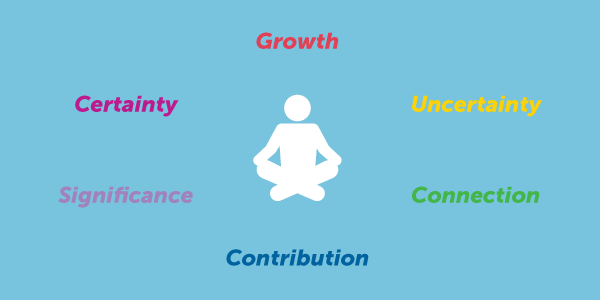
    6-human-needsAfter all these years, I still believe that everyone has the potential to help, that anyone is capable of becoming a great volunteer. I still think that each and every person who expresses just a hint of maybe perhaps it might be possible sometime later if I kinda sorta could be interested for only a wee bit of time is going to be the next volunteer of the year. How do I know that I truly deep in my soul believe this or am I just fooling myself? I truly know this because I know how my mind works.
    See, my mind and I, we’ve gotten used to living with each other. It reminds me that I can’t take that fork from the restaurant and I yell at it because it forgets names, places and where I put my stress ball.
    So I know I sincerely see everyone as volunteers reaching their potential because as I speak to them I get this visual. I sort of see their edges starting to sparkle, kind of like the way an excel spreadsheet cell sparkles when you hit copy. Then the volunteer, as they are talking, becomes a pseudo butcher’s diagram of their parts. Those parts are their skills, their interests, their personalities, their experience, their mindset, their availability, their aversions, their hidden dreams, their motivations, their personalities, quirks, etc. Then my pal, the mind, as it holds the sparkling cuts of volunteer, travels into the mind’s kitchen where it starts to look at all the available ingredients for this volunteer recipe. Hmmm, a dash of Tuesdays, with a sprinkling of creative license and some fresh clients that need a singer who studied in Paris and loves to draw pictures of cats on bicycles. Voila!

    These volunteer diagrams are like the first ingredient in a fine recipe. Just as each part of a butcher’s diagram represents a steak or rib or filet which is the basis for hundreds of dishes like hamburgers and pot roast, our volunteer diagram represents the potential of the volunteer.
    Now here’s the volunteer manager part: All the other ingredients in this unique volunteer recipe come from our ability to catalog and store vast amounts of extraneous ingredients in our mind’s kitchen. We remember that a client grew up in Hungary and loves baseball. We tuck away snips of conversations in the cabinets of our mind. A senior manager muses that it would be nice to see volunteers take part in a holiday chorus, or a staff member tells us how he could occasionally use a volunteer who is adept at stats.
    We may overhear a snippet of a conversation about someone who wants to donate craft supplies. We shelve that near the knowledge that a student group wants to volunteer to help seniors who live alone. So when that new volunteer, Jamie sits down for an interview and we really start to get to know her, that sparkly edged diagram begins to appear. Jamie, a retired accountant who wants to give back to seniors, shares that she used to teach preschool while finishing her degree and says that it was one of her favorite experiences. Later in the conversation, Jamie shares that she relaxes by scrap booking and belongs to a craft group. Suddenly, those pieces of the diagram become the basis for a spectacular creation. Jamie is paired with the students and the donated goods. Jamie is the main ingredient in a recipe called “Project Senior/Student Crafting.”
    Obviously, it is not that easy. Pieces of good ideas can languish for a long time. Everyday, we integrate volunteers into our organizations. But as we go about our everyday jobs, recruiting, retaining, and cultivating volunteers while filling a wide variety of requests and needs, we also stock bits and pieces of information in the spice cabinet of our minds.
    And when those ingredients come together in a perfect way, I’m thinking it’s got to be similar to a chef creating a new signature dish.
    As volunteer managers, we may often feel more like a short order cook in a non-stop busy diner, but in our hearts and minds we are that chef who sees the potential in every ingredient.
    And when that new volunteer dish is savored by the people we are helping, we can step back, wipe the flour from our face and bask in the moment.
    -Meridian

  • Did You Steal My Idea?

    toddler cell phoneI was reading the Sunday paper and came across an article on a local man who volunteers. It was the predictable template that press articles post about a volunteer who has spent five decades shelving library books or is still volunteering at the age of 100.
    I always read these volunteer articles as though I might be a prospective volunteer interested in the organization referenced. Sadly, not one article has actually piqued my interest and I highly doubt that new volunteers are beating down the doors after they read another article entitled “Volunteer turns 99, wants to keep volunteering when she reaches 100.” (Guess I know what article I’ll be reading a year from now).
    I’ve been involved with articles on volunteers I’ve worked with and truly you can get down on your knees and beg and it doesn’t make a bit of difference, the paper is going to print what they think should be printed, including misquotes, incorrect stats and just plain made up drivel. I’ve seen articles that were not too bad, articles that were ok and ones that were just lousy. I have to admit, there is a certain thrill seeing my volunteers in print and I hope that the next day at work is filled with the sound of telephones ringing off the hook, but typically that doesn’t happen. So, once again, volunteer managers are at the mercy of something we cannot control: Press coverage.
    But this article made me think back to several years ago when I did a speaking engagement at Busy Bee, a woman’s sewing group. I wanted to recruit the group to sew quilts or keepsake bears or a new project I was working on. The vice president of Busy Bee told me the ladies really wanted to get involved and help. I thought we could forge a great partnership and so I practiced my talk, gathered sample bears and quilts and quotes and personal stories that would surely sway them into stopping all their other charity work and concentrate on our clients exclusively. (Ok, that is a bit of an over exaggeration, but sometimes I just fantasize a bit).
    I arrived early, walked around the room, saying hello and admiring their work, all the while hoping they didn’t think I was working them like a smarmy politician kissing babies. Honestly, they did amazing work and after my talk, I asked if they would like to start a brand new project. Because they seemed interested, I told them about an idea I had to make small lap autograph quilts for nursing home residents. I asked their help in identifying whether a fabric pen could be used to write messages of love and encouragement on a light-colored fabric as one of the quilt squares and they got rather excited and helped formulate how it could be done.
    I left there stoked and they said they would call me when they were ready to get started. I drove away convinced that we would make great partners. When they did not call, I called the vice president and left a message. I called again and left another. I never did hear and so I chalked it up to “oh well, I was just delusional” or “they were just placating me.” Then, a few months later, I was reading the Sunday paper and there was an article about Busy Bee and in the article they mentioned that one of the projects they were doing was my autograph quilt. I dropped the page. What? I read it again. What? They stole my idea! At first I was highly incensed and thought, hey, come Monday I’m calling them up and demanding to know who they were doing this for and what happened to ethical behavior? I stewed all Sunday afternoon and promised myself to take care of it the next day. Of all the nerve.
    When Monday came, I searched through all my contacts and found the one for Busy Bee’s vice president. I called her and she answered. I told her who I was and that I read the article in the Sunday paper.
    “Oh, you did, it was a good article, wasn’t it?”
    I told her it was and then as gently as I could I reminded her of my visit and idea to do the lap quilts.
    “Oh,” she said, “that was you, was it? Well, when we didn’t hear from you, we decided to make the quilts anyway and we found another place to accept them. They’re doing quite well.”
    I was about to argue and tell her that I had followed up, but I stopped. I realized it would do no good and so I asked if her group would be willing to make some quilts for us.
    “Sure,” she said, just drop by and I’ll give you some.”
    Of course you know that there were none available when I dropped by. Yeah, I waited another six months and tried calling again. No response.
    Sometimes, you can make a contact with one person from a group and they are all excited to work with you, but then, another member of the group who has more clout will snatch their participation away faster than a mom grabbing the new cellphone from the dirty hands of her two year old.
    Groups, I’ve learned are complex. They are run by all types of hierarchies and no two are the same and so, enlisting their help takes a great deal of discovery, patience and finesse, all of which I did not use when trying to partner with Busy Bee. Groups’ loyalty is first and foremost to the group and sometimes the dominant member of the group has a friend in an organization so that is the only organization they will work with. Groups are really about individual personalities within that shape the group. I knew a group that volunteered for an organization and then accepted donations from the organizations’ clients. Yep, group first because the president of that group said it was “only fair”.
    So, I let the whole autograph quilt thing go and found another pair of volunteers to begin the project. And, I wished the agency that receives the Busy Bee quilts well.
    After all, knowing groups, some day I may get to steal a group away too!
    -Meridian

  • Of All Things, Teeth Cleaning

    SONY DSCI just got my teeth cleaned. After Corey, the hygienist and I catch up on each other, I kinda use the time to close my eyes and think, usually about all the things I’ve forgotten to do. But this time, I was looking into my Corey’s eyes above her mask, backlit by that huge bulb. Those eyes look sad, I thought.
    “What’s going on” I asked before she could put her fingers into my mouth. Her eyes jumped, puzzled. “What do you mean,” she asked, her hands retreating.
    “You seem, I don’t know…”
    “Tired?”
    “Yes, maybe.”
    “I’m not sleeping much,” she admitted.
    “Why’s that?”
    “I don’t know, just so much work and it’s exhausting and I go home so so tired. Maybe it’s just the weather.” Her fingers came back.
    Unable to ask more in words not garbled, I closed my eyes and my mind starting to drift, like a thought canoe down the Amazon River of figuring things out. I’d seen those eyes before, but where? The thought canoe continued to float through the heavy waters and I searched the shores of memories for answers, but I did not recognize anything slithering along the shore. The thought canoe drifted with the current and then a vibrant image flew into view. I’ve seen those eyes on volunteers, who were burnt out from so much taking in of strangers’ pain and suffering. Their volunteer eyes, ringed with the emotions trapped within, sometimes silently pleaded with me to give them a break and allow them to see the sun for a bit. I recalled volunteer Marie, who looked so bone weary one day I asked her to sit and talk. She confided that her husband was just diagnosed with Alzheimer’s disease. The patient she volunteered for had Alzheimer’s and was an emotionally difficult case. Volunteer Jim’s eyes flew into view when he had four patients die in rapid succession. These volunteers wore the emotional toll on their faces. Corey’s eyes spoke volumes. She was bone weary, but why? I thought about her job and I saw her superimposed over the many volunteers and staff and bartenders and hairdressers and all the professions that hear so much. Corey’s job required her to be calming, gentle, soothing and that demeanor made her very much like the volunteers I work with everyday.
    When the polishing stopped, I sat up, my mouth now mine to use. “Corey, do you hear a lot of stories from your patients?”
    “Why yes, they all tell me things about their lives and sometimes they must have some really tough procedures and I just feel for them. Some can’t afford what they need and they tell me why. It’s sad.”
    “What do you do with those stories, I mean, you, personally?”
    Her eyes were puzzled, wary. “I don’t know what you mean.”
    “Do you go home and think about them?
    “Oh, yes, all the time, my husband thinks I’m crazy, but I can’t help it. There are people who have hardships in their lives, people who have bad things happen to them. Sometimes I find myself thinking about them at bedtime and my mind just won’t quiet.”
    Corey knows I work with volunteers. I told her about how we try to help our volunteers be able to purge so that they don’t think about death all the time. I told her that she, like our volunteers spends intimate time with her patients and they naturally open up to her and that she is taking in, absorbing their pains and frustrations. I told her I tell volunteers that in order to be successful, they have to learn how to empty their vessels of compassion or else they will suffer, both mentally and physically.
    “How do you know this?” she asked, as she put the tools down.
    “I’ve seen it. I’ve seen the effects of it. I’ve seen great volunteers become so immersed in a patient’s life that they infect their own. I’ve seen volunteers with the weight of the world on their shoulders who become inert because they can’t think about one more tragic circumstance. You’re not alone, Corey. You and all the hygienists here and everywhere are not alone in this.”
    “But what do I do? What do your volunteers do?”
    “They learn to be with someone 100% when with them and not 20% when they are not. Do you think that your worrying about your patients at night at home helps them?”
    “No, I don’t suppose it does.”
    “Do you think that your listening as someone who cares helps them?”
    “Oh yes, I do think so, they tell me.”
    “Then do you think that your listening to them has to translate into worrying about them later? And does that worrying help you be with your family or does it keep you at work?”
    She thought for a moment. “I don’t know, but I see what you’re saying.”
    At the end of the appointment, Cory hugged me and thanked me for listening to her, although I felt like I might have lectured her. I sure hope not.
    See, the lessons we learn and share with our volunteers can be shared with anyone. These are life lessons, lessons in living, lessons in character, lessons in survival and lessons in humility. We, volunteer managers, can throw it out to the world and if the world wants to hear, then fine. We typically do not hoard the knowledge we’ve gained, just like we don’t hoard volunteering. We invite everyone to participate, to grow and learn and to teach us, because I believe that we are knowledge junkies and perhaps in some small way, we can share the things we have learned with our volunteers, other staff, family and friends and even the hygienist with the weary eyes.
    -Meridian

  • Should I Be Crying?

    cry-your-heart-out-1Last week, I was talking to a brand new volunteer manager, who has been on the job for three months. I’m ashamed to say, but I’ve completely forgotten what it is like to be new to volunteer management, so listening to Amber talk about her experiences was enlightening. “I really love working with the volunteers,” she said. “They’re so, well, good.” She went on to say that the person who trained her, Simone, retired a month before. “Everyone loved Simone,” Amber mused. “They all came to her going away party. It was obvious the affection they had for Simone and she had been there for so long, that everything has her stamp on it. Replacing her is proving to be a tall order. I can see the volunteers trying hard to not compare me to Simone, but at times they just can’t help it. Simone was really great in helping me get to know the volunteers and for the most part they have welcomed me, but I know they miss her.”
    Amber continued, “Just after Simone left, I had this volunteer, John come into see me. Evidently he was given an assignment by Simone and I just didn’t know I was supposed to follow-up with him. He was really mad and started berating me for not following up. I was so taken aback, I didn’t know what to say, so I just sat there and took it. But it really shook me up.”
    Then Amber’s voice trembled. “I have to admit, I was so upset, I started to cry. I think all of it, the enormity of what I need to do, the aloneness I feel and then the yelling at me just overtook me. I went home and cried. Should I feel like this, I mean, should I be crying? Is this how it’s going to be?”

    When you get used to the workload, learn to be kind but professional, cease to take things personally and develop your own methods of working with diverse populations of volunteers, the hard introductions to this profession are easily forgotten. As we grow into our roles, we become volunteer managers, or better yet, leaders of volunteers. As our passion overtakes our trepidations and our comfort levels increase, we become the people our volunteers need us to be. And we put away the tough times we had when we first started. I wanted Amber to know that.

    Here’s what I told her:
    On my bulletin board is a note from the daughter of a former volunteer. It is an well worn note, wrinkled, dusty some, a frozen piece of time from when I wondered if I was in the right job. At that time, I was feeling that so much was being asked of me, so much was expected without resources or help. Everyday requests were weights on my weary shoulders. Volunteers who said no disappointed me. I didn’t have a smile handy for anyone.
    And then the note came. It was a scribbled phone message. It read, “Call Jessica, daughter of Ben Chapman.” Ben Chapman was a volunteer who had moved away to live with his daughter about seven years before. I hadn’t heard from him in a long time. With heavy heart, I called Jessica who informed me that Ben had died two days earlier. I had known this instinctively, as if we still had the long thin thread of connection. Ben was one of my all time favorite volunteers, a man who made me laugh and inspired me with his love for family, muscle cars and animal jokes. His persona would arrive before he did, like joyful radio waves filling a room. When he left to live with his daughter because of early Alzheimer’s, a song ended.
    Jessica wanted me to know that he had died peacefully in the arms of his family. She told me how much his volunteering had meant to him, how much he loved coming, how much he felt a part of something meaningful. After all this time had passed, she thought I should know.
    I told Amber that her moments would come, those moments that only she would feel and know way down in her soul that she was making a difference. I told her that she would experience long-lasting connections, the triumphs of pairing the right volunteer with the right clients, and the gratitude of a daughter who loved her father. I told her that she would orchestrate the ripples that move soundless across helping waters and that her diligence will give her volunteers buoyancy. I couldn’t lie to Amber. I told her that there would be days when it felt like no one understood, no one appreciated the quiet work or the persistent trying. Those days however, would be overshadowed by notes from a daughter and I asked her to keep her notes close by to reminder her.
    And, I told her, you will acutely feel a myriad of emotions. Yes, you will cry, from frustration and sometimes anger, but mainly from being touched so deeply, you didn’t know you had those places open.
    -Meridian

  • And the Award Goes to…

    kid-with-trophyPeriodically people send me forms to nominate a volunteer for some sort of recognition and award. Immediately I think, “oh good, a chance to showcase the volunteers,” then I start to mentally scroll through the volunteers, looking for that perfect one to nab that coveted engraved plaque. Over the years, I’ve come to realize that the retelling of a volunteer’s deeds is as much a part of their winning as the actual deeds themselves. Their story needs to grab the judge, or it should show the overcoming of the odds, or it needs to be some unusual type of volunteering. It seems as though dismissing the every day volunteering in order to award reality TV type volunteering is the antithesis of good, solid volunteering, but everyday good work is just not very exciting, is it?
    There are any number of volunteers who would make great candidates for that cute trophy, but their day-to-day boring altruism does not quite merit a second look by judges who can’t experience their stories firsthand. These volunteers will never walk up on that podium and never hold that lump of highly polished metal, but in my mind’s eye, they hold so much more.

    So, here and now, I nominate these volunteers for “Heroes Amongst Us.”

    I nominate Madge, for the Hero With Guts award. Madge told me a few weeks ago that she would be cutting down on her volunteering in our crafts program. See, Madge was at a gas station where she met a man, Harold. buying a sandwich. They struck up a conversation in which Harold said that he had just lost his home and was living in his van. Harold appeared to be in his late fifties, and had fallen on hard times after losing a job and dealing with cancer. “He was so honest,” Madge said, “so completely void of complaints that I asked him if he would accept a few dollars from me and he refused. He said he had a bit of savings left, but needed to completely recover from cancer before he could find a job again. And I don’t know what possessed me, but I told him to follow me home, that I had a spare room he could sleep in until he got on his feet.” Madge shook her head at what the rest of the world would perceive as folly and smiled. “His cancer came back with a vengeance. He has no one, so I’m going to care for him until he dies.”

    I nominate Sheri and Paul for the Heroes Who Love More award. Several years ago, Sheri took a job in a large nursing home as a receptionist. Widowed for a number of years, Sheri had raised her four children and was now an empty nester at age 53. Having worked in a corporate world, she wanted to slow down a bit and savor a job that took a different set of people skills. She embraced the residents, and in between duties, spent time listening to each one as they wheeled by her station. “And then one day, I saw him,” Sheri said, her eyes coming alive at the memory, “Paul, a resident with MS. He was being wheeled into the dining room by one of the staff. He looked up at me with the most devilish grin. At that moment, I knew I had to talk to him.” And talk they did. Paul was only 48, a younger man with no family in a sea of another generation’s Big Band Music and Ice Cream Shoppes. They got to know one another in between her phone calls and other duties and Sheri fell in love. “He didn’t belong there, not in my mind,” she said. And so, she married him, took him out of the facility and into her home. That was ten years ago. Sheri and Paul volunteer together. Although they are careful not to take assignments that might physically tax Paul, the two of them are dedicated inspirational volunteers. Paul is one of the funniest men ever and it is easy to see why Sheri lights up when she takes his arm. “We have faith,” she says, “faith in a higher power’s order of things and faith in each other. I don’t know what will come in five or ten years, and I don’t care. We have one another.”

    These are our volunteers. They are folks from down the street, across the bridge and beyond the sea. They look at life as how they fit into the scheme of things, how they can make the world better for unseen children. They cast a wide net of kindness and we are lucky to occupy a small corner of that net.

    There’s Brad, who cared for two wives with debilitating illnesses. When I would talk to him on the phone, he’d be soothing his wife so gently that I couldn’t believe this was the same man who ran a company.
    There’s Simone, who, after volunteering for a single mother, went out and started a small non-profit to help single mothers.
    There’s Ginny, who, at the young age of 17 is helping care for a sick brother while attaining straight A’s in her studies.
    I could go on and on and I bet you can too. What awards will these volunteers ever hold? How many hours helping mankind are not counted and are we, the volunteer manager who sees their kindness spread like cream stirred into coffee, content with just the knowing?

    Volunteer Awards are normally based on what is done. If, instead, awards were based on the core of a volunteer’s being, on who they are, it would be impossible to pick any one person over another. And maybe, that would be the point.
    -Meridian

  • Little Gray Lies

    you cant handle the truth“Ok, lying is bad, we need to be upfront, honest, transparent, blah. blah, blah,” said Jeff as he exhaled. “But sometimes, you just have to bend the truth to protect the volunteer. I found myself having to tell a little white lie not too long ago to a volunteer who did nothing wrong. You see, this volunteer, Hal, is a real stand up type guy. He’s honest, hardworking, well, you know the type, a guy you’d want for a next door neighbor.”
    Jeff is a manager of volunteers who deliver meals to home bound seniors in a small rural enclave. “So, this particular client of ours, a lady who is getting other services besides meals delivered, called her social worker and accused Hal of stealing a statue from her hall table. Before I had the chance to question Hal, the social worker went to her house and found the statue, which had somehow found its way to another table. It was case closed. But she didn’t want Hal to come back and honestly, I wasn’t going to let him go back there anyway. So basically, I told Hal that the lady was moving and we had to take her off the route.”
    Jeff paused. “I don’t like lying in any form, but why would I tell Hal the truth? For what, it was a mistake, so what could be gained by telling him? Would he not then be leery of all his clients? Would he wonder what accusation could come next? Would his whole experience be tainted?”

    The other night, I watched a 1960s comedy in which the main character overheard his doctor on the phone speaking about another patient who was just diagnosed with a terminal illness and of course the main character thought it was him. Part of the misunderstanding came when he overheard his doctor say, “tell him? No, he doesn’t need to know, it will just upset him.” This reminded me of Dr. Eric Cassell, the author of “The Nature of Suffering” who candidly spoke about the days when he was a young doctor and did not tell patients they had cancer. “We didn’t do it because we were liars,” he said. Instead he asserts that they told little white lies to protect the patient from the truth, because the patient would ask what can be done and doctors had nothing to offer.

    Noble little white lies: I have told them to volunteers too. Occasionally a family will not want a volunteer to come back. “She talks too much,” or “we just don’t get along,” or “he isn’t the type to enjoy my Dad’s jokes,” are just a few of the really benign reasons a family may not want the volunteer to come back. Did I pass that along to the volunteer? Nope, I like Jeff, shielded the volunteer from the non pleasantries of being dismissed due to a perceived character flaw. One volunteer innocently shared a personal story with a family and they were insulted. Their social worker told me that this family was highly sensitive and assured me that the volunteer did nothing wrong. I told the volunteer that the family found help elsewhere and that we would reassign him to a new family that needed his considerable talents more.

    Kind, noble little white lies: In the old days, I, like Dr. Cassell, decided to use a white lie to protect volunteers from anything less than my idea of volunteering, which was unicorns and puppies. There were volunteers who, in my humble opinion, were not right for assignments, like speaking to a group, or representing us at a ceremony. I told myself that by noble lying I was sparring them from the knowledge that I didn’t think they were good enough for the job. But, as these falsehoods started to feel like an oil slick on my tongue, it began to dawn on me. What, really was I doing by telling these kind, noble white lies?

    Self-serving, kind, noble white lies: One day, I had to counsel a volunteer on her behavior. This was a volunteer who worked on Sunday in a hospice house. As we all know, weekends are harder to fill than weekdays, so really, weekend volunteers pretty much have to set fire to the joint to get fired. This was not the first time I had heard a complaint about this volunteer’s behavior. I had spoken with her before, using my kind, noble white lie to shield the volunteer from the unpleasant accusations. After all, this volunteer didn’t deserve that, or did she? Ahh, the little annoying voice in my head wanted to know if I was being noble or (horrors) being selfish. Who, me, kind, noble volunteer manager, selfish? Was it really about protecting the volunteer’s feelings or was it more about having to replace this volunteer, a task that would take a lot of hard work? Was my lie so noble, so kind, so pure? (I hate you, little annoying voice.)

    Having to do the right thing is never easy. I reached back and straightened my spine and spoke frankly to the volunteer and to my surprise she did not quit. She took the criticisms seriously and promised to curb her brusque nature. But, did she actually change? Yes, not completely and not right away, but the complaints stopped. As I checked in with weekend staff on her progress, I found that she was honestly trying. I added a call to commend her for her efforts and after a time, she and the staff forged their own relationship. It took extra work, but it was the right thing to do, not only for our patients, but for staff and the volunteer as well.

    Gray Lies: Do we tell lies to protect the volunteer or to protect us? I think in most cases, it is both. We may have a noble reason to shield volunteers from negativity, but aren’t we also shielding ourselves from the presumptive fallout? Honestly, we are. Are we bad people for doing that? No, we are just human. So why even bother to explore our reasons for these gray lies? Because if we value honesty, then we first and foremost have to be honest with ourselves. Why am I using noble lies? Am I relying on them to minimize conflict so that everything runs smoothly? Is that really my end game or am I just afraid to deal with confrontation and too weary to help fix it?

    No Lies: Hmmmm. Will we ever get to this point? We can, if we have the best interests of our clients at heart, and if we truly view our volunteers as adults who can handle the truth. If we want our volunteers to succeed, we have to help them find success by working with them, not around, in back or detached from them. So, the next time I want to shield a volunteer from the truth, I’m going to have to examine if I’m really shielding myself.
    -Meridian

  • Ma! Ma! Ma! Ma! Ma!

    mustangThe open door policy, oh boy. If you oversee two or more volunteers, you know what I mean. Volunteer managers pretty much are required to have an open door policy, which is great for keeping informed but is also a killer of productivity. So says Celeste, a volunteer manager who manages more than one hundred diverse volunteers working in a thrift store. Her store is large and is open six days a week. Donations flow through the store all day long, and in between customer service, cashiering, straightening, receiving goods, sorting and pricing, her volunteers are bustling from the moment they arrive to the time they leave.
    “No one can ever question the dedication or work ethic of our volunteers,” Celeste says. “They come in when they have relatives visit them, when they have a slight cold, when they get done with doctors’ appointments. They’re amazing. See, we foster a real sense of team here, and part of that is my open door policy. Believe me, the volunteers are so dedicated, they stop in to check and see if we’ve sold a big-ticket item, or if we’ve got the manpower to sort through that large donation quickly to make sure the good stuff gets to the floor. They even keep lists of customers to call when certain types of items come in, like a particular brand or type of cookware.”
    While it sounds like Celeste has it made, behind the scenes it took a great deal of work to create such a well oiled team of volunteers. And with that team comes the challenges she faces maintaining that team. It’s not like Celeste can go into her tiny back of the store office and watch “Days of Our Lives” while eating power bars and drinking green tea. She, and her volunteers have created a system that works like a fine automobile with Celeste’s availability, encouragement and direction much like the wheels that carry the car.

    With her open door policy though, comes a tiny percentage of volunteers who need more time and space than the others. “I’ve got these two volunteers, Irma and Jean,” Celeste says with a laugh. “They really take the open door policy to a whole new level. It doesn’t matter that I might have someone else in my office, or that I am on the phone, or that I’m really, really busy with bookkeeping, they come in and interrupt me ten times a shift. I think they just have no idea that I don’t have the time for questions like, ‘what happened to that green blouse with the stripes,’ or ‘did you know there’s two identical blue McCoy pottery pieces, how odd is that?’ I suppose it’s a compliment that they feel comfortable with me, but sometimes I feel like the mom who answers her phone and the kids immediately all need attention and start yelling Ma! Ma! Ma!”
    Celeste went on to say, “I’ve heard all the advice from so many people. Close your door, ignore Irma and Jean, leave the office when they are working, interrupt them and politely say that you have work to do, and ask them to please stay out of the office, but it’s easier said than done. Besides, Irma and Jean are great with the customers, and are always willing to work an extra shift when someone calls out. They’re indispensible really, so why shouldn’t I put up with a bit of inconvenience? Heck, I’ve got Joe, who is hard of hearing and makes the customers shout, and Marge, who puts women’s clothes in the men’s section, and Philomena who over prices knick knacks. Oh, and there’s George, who can never seem to remember to turn off the lights and Babe, who can’t see the rips and stains on clothes and puts them out. Am I supposed to nitpick all the volunteers? I can’t do that. We make it through each day with humor and positive thinking, and I appreciate each one of them. And to all those who think that I can make these volunteers eliminate their quirky habits, I say, you have never worked with volunteers. ”
    Ahh ha, how smart Celeste is. If we were to judge our volunteers on their shortcomings we’d have no volunteers. And all that well-meaning advice by those who don’t work with volunteers just does not make sense to us, because we know that perfection does not come without piecing together imperfection. Our volunteer teams are made up of real human beings with gifts and shortcomings. The well oiled machine we produce is vintage. It doesn’t have all the fancy new techie stuff and it may creak here and there and it may take a few minutes to warm up and the windows may hand-roll slowly, but it works. It moves down the street with the air of the artisans who created it. No, our machine was not mass-produced by robots, it was put together with the sweat of the volunteer manager who polished every piece. And in those moments when the throaty sound of that engine revs up, we know that our machine is unique and perfect.

    Let’s face it. A great deal of what we do is a trade-off, and a part of our volunteer’s “pay” is our overlooking of inconvenient things, like the volunteer who interrupts us, the volunteer who needs more of our time, and the volunteer who needs reminding over and over. Should those inconveniences that may look to an outsider like we don’t know how to “control” our volunteers, cause us to lose productive volunteers? I, for one, would rather not lose great volunteers just because they require a little extra of my time.
    Our volunteer teams are created by vision, artisan spirit and a heck of a lot of our time and effort. That well oiled machine is made up of restored parts, and we may have to work harder on some of those parts than others to keep them running properly, but they’re necessary parts.
    I’m off to work now, to drive in my lovingly restored well oiled and polished machine. I may have to do some maintenance and occasionally change out parts or stop for gas, but driving down the street, it is a thing of beauty.
    -Meridian

  • Management 601

    Belushi“Hey, not everyone is cut out to be a manager,” said my friend, Rennie, who works in the finance department of a large charity organization. She occasionally uses a volunteer to help with end of year reports, and adds, “the volunteers are always so wonderful to work with and our volunteer manager, Chase is awesome. But volunteers are not my problem. My problem is we have a new senior manager in our department, Bridget, who was hired to make our financial processes flow more smoothly. And since she’s gotten here, our department is miserable and everyone talks about quitting. It’s demoralizing.”
    “What is it about her management that is so bad?” I asked.

    “Well, when she first got here, she gathered our department together and told us what a great bunch we were and how excited she was to be working with us. She said she’d heard great things about us and that she wanted to learn from us.”
    “That doesn’t sound so bad.”
    “Yeah, but that was then. Now when our department meets, she tells us what a great bunch we are and then proceeds to rip into each one of us for something we did not do correctly or on time or according to her schedule. It’s apparent that the praise is just generic lip service while the criticisms are specific and targeted. We used to be a happy, productive department. Now, we are just defeated.”

    I feel for Rennie. Her senior manager seems to have been sleeping during management 101, which got me to thinking about volunteer managers. Where are we in the management curriculum, if 101 is your basic course? I’m thinking that the vast majority of volunteer managers passed the first five years and are completing management 601 on the way to a master’s degree.

    Why do I think that? Well, I’ve compiled a list of the skills we have honed by working with volunteers. Here’s just a few of those skills: See if you agree.

    Volunteer managers have mad leadership skills. We inspire, encourage, cultivate and mentor people. We believe that our volunteers will do amazing things and we develop their strengths instead of focusing on their weaknesses.

    Volunteer managers immerse themselves in outcomes. We keep statistics and prepare reports, but our bottom line is always about the human results. Because our eyes are on the work of the mission, we instill the joy and meaning of helping in our volunteers which creates excellence. When our volunteers do pure work, the stats and reports just naturally follow.

    Volunteer managers think “in the long run” terms. We build teams for long-term help, and not just for today’s assignment. Our hard up front work is meant to retain satisfied volunteers. Because we can’t just hire a replacement for a volunteer who quits, we make sure that our existing volunteers have what they need to succeed. We don’t “use” volunteers, but rather, we support them so that they remain committed to our cause.

    Volunteer managers stimulate growth. We are open to new ideas, new ways to help our clients and routinely look to recruit people with diverse backgrounds and fresh ways of doing things.

    Volunteer managers are expert mediators. We are the middle men in almost every assignment. We negotiate between clients and volunteers, and volunteers and staff. We quickly learn the art of persuasion, and the ability to deliver a negative message without hurting feelings. We are skilled at compromise to get jobs done.

    Volunteer managers operate with clarity. We know we will not keep volunteers if messages and instructions are not clear, so we frame every instruction so that it is clear. We know that muddied messages can ruin a volunteer experience and cause the volunteer to quit.

    Volunteer managers are critical thinkers. We have to meet challenges in a timely manner and so we have highly developed problem solving skills in order to succeed. We keep file cabinets full of pertinent information in our minds and databases so that we can cross think to find the best solution to any volunteer involvement. We can offer the best volunteer for a job, because we know that volunteer’s skills and abilities and can match those to a situation.

    Volunteer managers are chameleons. We can adapt and change quickly. We know what tone to take and can switch from light-hearted to serious in a moment as the situation warrants. It’s silly, but we are kinda like the Christmas tree lights with so many different settings and we’re constantly on the “all” setting so that we can fit into any mood.

    This list is just a portion of the skill set possessed by volunteer managers. There are so many more and unlike our compatriots in human resources, we must develop and use many more people skills to recruit, lead and keep our volunteers.
    People ask what is our volunteers’ substitute for a paycheck? We say that it is the meaningful work that keeps our volunteers coming back. But also, please remember, that in part, it is the vast skill set of the volunteer manager that fills the void of not receiving a paycheck.
    Instead of monetary compensation, our volunteers receive a meaningful volunteer experience thanks to the leadership of volunteer managers who are constantly growing in skills to help make that meaningful experience happen.
    -Meridian