Tag: volunteer retention

  • A Tale of Two Speeches

    Lincoln Douglas debatesLast week I attended one day of a community forum hosted by a state organization that is a clearinghouse for non-profits. Featured were non-profit gurus with varying credentials and backgrounds, covering topics ranging from increasing donations to taking care of donors so that you will increase donations. (just kidding, there was a topic on staff burnout-presumably from trying to increase donations, I guess). I was able to attend two presentations; the first one by the vice president of marketing for a consulting firm. The topic was “Reaching Out Through Messaging”. The other presentation was by a volunteer, who had just won a state award for exceptional volunteerism. His topic was “Doing and Believing.”

    As I stepped over the crowd to find a seat in the first presentation, I knocked several handouts to the floor. The room was packed. Our speaker, dressed impeccably in pinstripes, told us of the power of messaging, especially when knocking on the doors of potential donors. On screen, he showed examples of pictures that tell compelling stories about the good work our organizations are doing. Slide after slide showed grinning people with perfect teeth helping people who looked just enough down on their luck. Not dirty or disgusting, the pictured recipients had appropriate gratitude angled just right for the camera. All in all, I got the messages from the pictures. Donating money=nice scenes like this going on. Evidently, these pictures work, because he gave some pretty impressive statistics. Within a moment, the subconscious mind of the donor is invaded with good feelings. Nicely done, I thought. He did say that messaging would apply to recruiting volunteers as well. Paint the picture, tell the story. He showed one picture of volunteers. They were gathered together, arms around one another, smiling for the camera. They looked pretty happy. They weren’t sweating, so I’m guessing this was a before and not an after picture. I did notice they all had perfect teeth. Hmmm, maybe they all went to the same dentist.

    I pretty much could sit anywhere I wanted to in the next presentation. I guess most of the attendees elected to go to the concurrent session, “Bridging the Donor Gap”. I looked around at my fellow seat mates and nodded. You can pick out the volunteer managers at symposium. We all pretty much get out our steno pads and wait expectantly.
    The award-winning volunteer, Gabe, walked up to the front of the room and turned to look at us. He was tall, with raven hair and craggy features. His smile was impish, as if he had just sneaked into his father’s cocktail party. He thanked us for coming and then proceeded to tell us his story. A youth minister, Gabe began his ministry ten years ago. He had watched with concern the growing number of homeless folks in his area and so he began to collect basic essentials to give out, first on a monthly basis, then every week. This ministry, with the help of the youth of his church, added a soup kitchen, and a counseling service. He, and several youth members volunteered at a local thrift store in exchange for the unsellable items such as socks and kitchen utensils. He then grew quiet as he told us about one of his most memorable clients, “Ruth,” a homeless woman who had lost her job and with a ten-year old son, Jason, in tow, arrived at the church doorstep. Ruth had dropped out of high school when she was sixteen and pregnant and now, at 27, she found herself without a safety net after her mother died. Gabe walked quietly back and forth in front of us, running his fingers through his hair as he told us that shy little Justin loved Batman. His Batman sneakers were well-worn and the only sneakers the youth group had to replace them were plain. Gabe paused and told us what happened next. The youth group started texting all their friends, asking for a pair of boys Batman sneakers in size 7. By the time Gabe arrived at his church the next morning, not only were there three pairs of Batman sneakers arriving at church, but friends of friends brought Batman shirts and toys along with packs of new socks, food, underwear, dresses, diapers, jeans, and more. On those donations alone, his group was able to feed and clothe 5 homeless families. Gabe looked us in the eyes. “Believe,” he said. “Believe that you can do good work and you will.”
    When Gabe finished, we all stood up and applauded. He smiled reluctantly. I didn’t check to see if he had perfect teeth. I was too busy being mesmerized by his message.
    -Meridian

  • If It is Too Good to Be True…

    digging for goldCoretta is a striking 85-year-old artist. As she enters a room, images of her as a young, startlingly beautiful woman trail her like ethereal mists. Her blue eyes take one in from a perfect face and I feel like a mouse scrutinized by an eagle. Her husband Glenn, is a commercial artist and they have shown me pictures of his artistic product designs for major companies, most of them from the 1960’s. They shared these pictures to show me they are legitimate. Luckily, they seemed to like me.
    Coretta offered to design a journal for our use. The journals would be given to patients or family members who would like to record their thoughts. The journal would have poetic prompters to help them visualize things to say. Coretta has written short haiku poems to be incorporated into the sides of the pages, giving the journal a professional quality. She and I corroborated often about how to distribute the journal, types of patients and methods of discovering how the journals were utilized.
    As we worked together, Coretta told me in her breathy voice that she had gone to another agency and was initially welcomed with enthusiasm. She was going to paint a flowering vine for their lobby that would be filled with pictures of the clients served. She mused that it would be not only a lovely welcoming addition, but also a therapeutic exercise for the participants. Trouble is, as with many short-staffed, overworked organizations, no one at that agency could take the time to help her get started.
    Frankly, if I let myself say it, I’m also too busy for the fluffy projects. But, there was something about those blue eyes that compelled me to scratch out the time from somewhere. And besides, I have gotten a bit self-serving. I need breaks from all the minutiae that weigh me down. Coretta let me float for just a bit.
    My plan was to ask some very crafty volunteers to put these journals together and to begin by distributing them to select patients. Over the years, I’ve found that asking for permission to do a project takes forever, so by experimenting and proving that a project works, it makes it easier to sell. Anyway, we finalized her designs, complete with a Coretta sketch of a rose adorning the cover.
    She stopped in the other day to talk to me. As we were chatting, she said, “I have been thinking about this whole project. I’m certain that other organizations would like to have it for their clients too, so I think that I would eventually like to market it. That is, after we’ve seen how it is received here and after some modifications.”
    Boom, the eagle swooped in and ate me as I was nibbling some cheese. “Oh, how interesting,” I managed. Now, at that point, my brain started shrieking at me, “What!!!! Are you kidding???” And as I let those initial thoughts burst and flutter like confetti in my mind, I looked back into those blues and said, “Coretta, that is your prerogative. This is your work, your ideas, your poetry and art. You own that.”
    She nodded with an artist’s smile and I continued, “if you want to do that, then we absolutely can’t use it here and stamp our logo on it. It is yours and you are entitled to keep it and protect it. But I cannot in good faith continue with this project.”
    She studied me for a bit and said, “yes, well, I appreciate your honesty.” I could feel her talons caressing me, the me that spent precious time helping her. “I appreciate all your hard work and have thoroughly enjoyed learning about your organization.”
    I didn’t say anything to anyone, especially anyone (well, everyone if you must know) who has been making fun of me for wasting my time with this pompous (their words) lady. Honestly, they wanted nothing to do with her.
    See, here’s where I sometimes get myself into big trouble and then sometimes I uncover a golden volunteer nugget. I have to do more than just get to know people who want to volunteer. I have this weird side that feels like I’m digging for the next great volunteer. I’ll bet you have a side like that too.
    While I’m not sure what will happen, because Coretta may rethink and decide to give her works to us, but really, I doubt that will happen. Did I waste my time with her and did she just want to use me to develop a product to sell? Maybe, but I’m choosing to think not. I’m choosing to think that she had good intentions, at least at the start. And we all know that there are plenty of volunteers with good intentions that don’t continue for some reason. We can only move on.
    So, the question becomes, do we continue to dig, oftentimes alone for those volunteer nuggets even though we occasionally come up empty-handed? Until the day volunteer nuggets rain from the sky, I guess we’ll have to.
    -Meridian

  • Roadblocks

    roadblockJeff is a part-time volunteer manager at a small community hospital. He is responsible for staff education, special projects and the 50 auxiliary volunteers. An educator by trade, he is new to volunteer management, but embraces the idea that volunteers add real value to his organization. He has an auxiliary president and vice president who recruit, interview and train the new volunteers. The hospital volunteers run the gift shop, do office work and are expected to staff the reception desk seven days a week. Lately, though, the receptionist volunteers have been telling the auxiliary president that they cannot effectively do their job because the desktop computer doesn’t work properly.
    A rather ancient piece of equipment, the computer is necessary for finding a patient’s location. The computer acts up by losing connections and then it takes a few minutes to reboot. The volunteers resort to calling hospital staff for room numbers, which is beginning to be a problem for irritated employees who are impatient with the volunteers. Jeff, thinking that it would be an easy fix, put in a work request to repair or replace the desktop. When he did not receive a timely reply and after more volunteers complained, he called the maintenance department who told him the request was being reviewed. Puzzled, Jeff called his superior who said that all capital expenses or major repairs had to be reviewed by a committee. When pressed on how long the process would take, the superior curtly said that he did not know, but would inform Jeff when he had an answer. After three weeks of growing impatience and endless excuses, the volunteers started to doubt that Jeff had actually requested help. They began to complain loudly and some threatened to quit. Jeff called his supervisor again and brusquely asked about the status of his request. “Come on,” he said, “I’ve got people wanting to quit. I need some movement on this.” After another week, the fed up volunteers started to miss their shifts, leaving Jeff to frantically call the auxiliary president to find replacements. The empty reception desk was noticed, but instead of acknowledging Jeff’s predicament, the senior management complained down through the channels that Jeff was not doing his job staffing the front desk. Jeff blew his stack. “This is ridiculous,” Jeff fumed. “If they expect a volunteer to do a job for free, the least they can do is provide them the tools necessary to do that job. Instead, this organization drags its financial heels, thinking that it doesn’t matter. Well it does. Paid staff can’t and won’t just quit, but volunteers can and will.” Jeff continued, “and then, they have the nerve to complain when volunteers quit, as if they have no culpability in this. It’s maddening how they dismiss the basic tools volunteers need, but are vocal when their roadblocks cause us to lose volunteers. It’s as if they think that volunteers will do anything asked of them, no matter how they are treated or no matter how tough they make it for the volunteers to successfully do their job. It’s ludicrous!”

    Jeff is spending a great deal of time soothing the disillusioned volunteers who rightfully feel that they are not worth the price of a new computer. Jeff is not giving up, even though some really good long-term volunteers are choosing to stay home. He’s not used to using the nails on a blackboard voice, but to him, it has become about what is right. Hopefully his administration will do the right thing. Hopefully they will realize the difference between staff who must deal with inconveniences and volunteers, who can choose to leave if conditions are unacceptable.
    But if administration won’t, then when the next volunteer leaves, each manager should be made to figure out how to replace that volunteer and each manager should have to say to the new volunteer, “You know we really don’t think you are worth proper equipment. But keep coming in and working for free anyway and stop complaining.”
    Because essentially, that’s what Jeff has to do.
    -Meridian

  • The Door Shuts

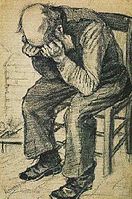
    132px-Vincent_van_Gogh_-_Worn_Out_(F997)This is a tough story to tell, partly because it’s hard to find those keeper nuggets of truth that help the rest of us navigate our jobs. Sometimes, I think things just are and maybe really these experiences are like everyday life. You can’t predict them and the only way to prevent them is to stop living.
    Cara is a wonderful volunteer coordinator with a big heart as almost all volunteer coordinators are. She’s been doing this for years, has mentored and seen at least a thousand volunteers come and go. She has wisdom and has honed her instincts like a blacksmith with a prized sword.
    Several years ago, Cara met a young woman, Gwen, who showed an interest in volunteering. Gwen was hesitant, but hopeful and Cara encouraged her, letting Gwen take small steps to find her niche. Gwen rapidly blossomed into what Cara describes as “one of the most gifted volunteers I have ever encountered.” Gwen was magic with clients and had a presence that allowed even the most downtrodden individual a voice. Words such as “angel,” “like my own grandchild,” and “my confidante” came floating back on waves of gratitude.
    Cara quietly mentored Gwen, preferring to stand back and let Gwen’s innate ability flourish. As they spent more time together, Cara learned that Gwen had a difficult childhood. She was estranged from her mother and Cara, ever the professional, did not step in to fill those missing shoes. Instead, she listened and encouraged, much the same as she did with all of her volunteers. But this one, this one was like the Derby winning horse in the stable. Gwen was worth the extra effort because the clients deserved the best volunteer help.
    As the years went on, Cara heard more and more about Gwen’s chaotic life outside the organization. She had a family and a job and troubles seemed to swirl around her in a cacophony of drama. But Gwen still had that touch with clients, and although Cara’s radar now went up, she carefully kept watch on Gwen’s volunteering.
    Occasionally, Gwen would drop in and cry for twenty minutes. Illness, fights with her husband, disagreements with her boss, run-ins with parents of her children’s classmates would knock her world out of orbit. Concerned, Cara suggested counseling and one day Gwen came into the office sobbing about her counselor. Cara immediately removed Gwen from any and all volunteering. She told Gwen to please concentrate on herself for a change. What Cara did not say was that she now thought Gwen an inappropriate volunteer.
    Their relationship morphed into Cara’s trying to help Gwen but with none of the volunteering. I asked Cara why she continued with Gwen and she said, “you know, it’s not that easy, just giving up on someone who hasn’t done anything wrong. Clearly she needed help and I had forged a relationship with her. I couldn’t just turn my back on her. And besides, when you see flashes of brilliance in someone, you can’t help but think that they are salvageable.”
    At some point, Gwen became angry with Cara, and stayed away for a bit, but then came back and Cara tried to help again. At this point, it had been two years since Gwen had done any volunteering. The second time Gwen got mad, Cara shut the door and now has no plans to re-open it. “I’m done,” she says. Does she miss the opportunity to help Gwen reclaim greatness? Not as much as you might think. She says, “it was like I could feel the flutter of a page turning. I feel finished, and I’ve done all I can. Besides, I have other volunteers to mentor.”
    I asked Cara if she thought once Gwen got her life under control, would she be able to return? “Honestly, no. I think that was a time in her life when volunteering fit and made sense. It will be impossible to recapture.”
    I’ve always thought that volunteers have a shelf life. Whether illness, moving away, disinterest or inability to function in the best interests of the client are the reasons, it won’t matter. When it’s time for a volunteer to stop, either by our request or theirs, then it’s time.
    Can we compare volunteering to art? I think so. Some genius is tempered with madness. I don’t think it’s a stretch to apply that to our brightest volunteers. I’ve seen them. Brilliant volunteers who paint masterpieces like van Gogh but are burdened with issues that often become too much. It’s sad and we walk a fine line between encouragement and interference. We want not only what’s best for those we serve, but also what’s best for the volunteers. Sometimes, even we can’t make that happen. We can only do the best we can with what we have to work with. And who knows how well service fits within a volunteer’s view of the themselves and the world. We have to be able to let that door shut when volunteering no longer works for the clients and for the volunteers.
    If we can’t, then we’ll go mad.
    -Meridian

  • Go Ahead, Be Brutal

    bridge and riverNo, I’m not masochistic. Not even close. My little world is filled with kittens and marshmallows shaped like flowers and moonbeams streaming through the forest. (after all, why else would I be in this job?) But, I also don’t want volunteers to lead me on. You know, tell me that I’m wonderful, that you want to spend time with me, buy me flowers… (oh wait, that’s a different conversation, oops).
    But in volunteer management, I court the volunteer, right? I woo them with tales of how wonderful it will be, I walk beside them, listen, adjust, mentor, guide, run interference, and heck, put a bunch of time in, making sure volunteering will work for individual rewards. After all, it’s what volunteers want, right?
    So, here, I think is my biggest frustration. I’m thinking of Yancey who had/has such potential. She is young and vibrant and full of compassion. She paid strict attention in training, and bright eyed, couldn’t wait to start. She was mentored by seasoned volunteers, and is truly magical with patients. She writes comprehensive reports. She passed every background test. She is perfect. Well, was. That is, until she just stopped.

    At first, I assigned Yancey to a volunteer friendly nursing home. Both of the two current volunteers were leaving, but for different reasons. They had built a great relationship with the nursing home staff and together, they introduced Yancey to the patients and the employees. It seemed like a good fit. Yancey was excited. I called her frequently, answered any questions and assumed things were working out.
    Two months later, she stopped sending in reports. She did not return my calls, nor did she answer emails. Then an email I sent bounced back at me. Still no word. I checked with the facility and they had not seen her in weeks. I finally, reluctantly removed her name from our list and started searching for another volunteer to take her place.
    Was I mad at her for not wanting to volunteer anymore? No. This is, after all, volunteering. Would I judge her for her reason to stop? Absolutely not. If volunteering isn’t adding to someone’s life, they shouldn’t be doing it. Did her stopping ruin my life? C’mon.
    But, do I wonder what happened? Would I rather hear the reason even if it means finding out I failed her somehow? Absolutely. How else can I correct a situation or behavior if I don’t know about it? I suspect that Yancey couldn’t fit volunteering into her busy lifestyle, or more accurately, volunteering with those patients wasn’t rewarding enough to fit into her busy lifestyle.

    I could have told her that this is not my first experience. I’m used to volunteers leaving for so many different reasons. At least for some, I know why. That helps. For others, they float away like an unfinished manuscript dropped in a river. If only….
    I may pen her a letter but I truly wish I could have spoken to her and offered her something else or a more flexible schedule. It may have worked. But if not, at least I could have assured her that she was welcome back at any time in the future. I could have told her that she was a good volunteer and that she needn’t be embarrassed about quitting. I suspect that may be the case.
    But I don’t know. I wish I did.
    -Meridian

  • Bumping Into Carmen

    grocery hidingThe other day I literally bumped into Carmen who has not been volunteering for over a year. I came around the corner at the grocery store and boom, there she was, picking out paper towels. Occasionally I run into former volunteers; those who left because they became ill, those who stopped because life changed, or those who just don’t volunteer anymore. Then there are the ones who left for another reason; mainly we asked them to leave because they did something egregious, like breaking rules, stepping over hard fast boundaries, meddling in financial affairs, yelling at a patient’s family or lying to us about a former run-in with the law. Sadly, there are some folks who just aren’t meant to be a volunteer, at least, not until they figure some things out.
    You know how this goes. You’re out in public minding your own business and you suddenly catch a volunteer you don’t want to see (mainly because you don’t want to explain again how sorry you are things didn’t work out) walking amongst the artichokes and you panic and sprint the other way, pretending you see a friend in the distance? That’s how work catches up with you on a Saturday.
    Well, Carmen is none of these volunteers. You see, my organization did Carmen wrong and it still pains me to this day. When I bumped into her, I grabbed her with a big smile and we hugged and I told her how much I miss her and how sorry (again) I was. She grinned at me, still a bit wounded and patted my cheek. “It’s ok,” she said, although to me it is not.
    Let me tell you a bit about Carmen.
    She came over from Cuba during the revolution and made her home in America with her husband, Jose. They are the type of couple who share their “love story” with anyone who cares to hear. He rescued her and brought her family over. She presided over a brood of six children, all now successful adults. Carmen makes mad coconut flan. Jose plays the guitar. They are infectious in a good way. But more than that, Carmen has a rare gift. She looks into your soul when she speaks to you. She tells you she loves you and she means it. You can feel her heart if you get within 20 feet of her. She is a petite woman with a giant presence. Patients loved her.
    So, what happened, you ask. Carmen, an artist, wanted to give our organization a painting to put over a bare wall in the lobby. One of our managers told her to “paint whatever you want, I’m sure it will be beautiful.”
    So, Carmen painted a lovely abstract depicting a family gathered around a bedside. It had bright colors, and gentle tones. It was a modern take on old fashioned love. It was Carmen.
    She brought it in one day when I was not there, not that I could have prevented the hurt that followed, but I like to think I might have made it better somehow. It’s a control thing, I know. Another manager saw Carmen’s painting and deemed it “inappropriate” and told Carmen that we could not possibly hang it in our lobby. I do not think the manager was cold or dismissive, but Carmen was hurt. She took it well, I’m told but went home, talked it over with Jose and called to quit.
    Now here’s the problem as I see it. We gave her permission to paint whatever she wanted. In good faith, she accepted the free hand she was given. We set her up, not maliciously, but irresponsibly and for a sensitive soul like Carmen, the rebuff was hurtful.
    She tells me that she will be back one day and I believe her. After all, how can you stay away from something you are so incredibly good at? When she does return, everyone will be glad to see her and it will be business as usual.
    But, right now, with Carmen gone, I think about all the patients who are not being helped by her. All over a flippant directive and a thoughtless reaction.
    I wish I could paint. I’d paint Carmen back into our picture.
    -Meridian

  • If You Can’t Thank Me, Don’t Insult Me Too

    dying plantYvette manages volunteers for a specialty hospital in a city with two other competing hospitals. Therefore, her marketing department utilizes volunteers as props, marketing tools and for as many events as Yvette can round them up for. Marketing looks to Yvette’s volunteers for continuous help in drumming up community interest and business.
    Recently, one annual major event was under the direction of a new fresh face in the marketing department. She had many novel ideas and requested twice the number of volunteers from years past. Yvette obliged, working longer hours to get the extra volunteers in to help on the day of this signature festival.
    Everything went relatively smoothly. Yvette was there that day, making sure the volunteers had someone to do all the “grunt work” so that they could excel.

    The next day, Yvette called every one of the volunteers who came out, thanking them personally for their participation and asking for any feedback that might help for the next time. Volunteers were happy to give input and Yvette was proud of their team spirit and constructive ideas, which she turned over to that new fresh face.

    Several weeks passed. A hospital executive stopped by one morning and pointedly asked Yvette if the young marketing staff member had had a wrap up meeting for the volunteers. Yvette said no and tried to point out that she had already contacted everyone, but the aggravated executive reminded her that in years past, there was always a follow up meeting for volunteers. Angrily, the executive let his guard down and complained about the multiple shortcomings of this new marketing person. Yvette listened politely, feeling uncomfortable the entire time.

    Yvette did not think much about that conversation until another two weeks had passed and she picked up the phone. Her volunteer, Joy called to inquire about an organiztional thank you note with a five dollar Walmart card attached. “Who’s idea was that?” Joy complained. “What are they thinking? What am I going to do with five dollars?” Before Yvette could digest what was being said, Joy continued. “Its an insult. I didn’t volunteer for five dollars. Is that what my time is worth? Id rather they did nothing than do this.”
    Yvette received multiple calls voicing the same sentiment. “What does management think our time is worth?” was the most voiced complaint. Yvette deftly fielded the calls, soothed nerves and assured everyone that the gift card was not meant to be an insult.
    Yvette spent many an hour doing damage control. She told her supervisor about the situation and her supervisor shrugged and said, “yes, they do stupid things,” so Yvette was pretty much on her own. She knew her supervisor would not “make waves” with a favored department. Once again, the care and feeding of the volunteers was left solely to her.

    What exactly, is a volunteer’s time worth? Five dollars, ten dollars, a luncheon, a gift card to Walmart, an occasional nomination? What do volunteers really want as appreciation? A pat on the head, a hastily scribbled speech, a once a year dinner?

    Do volunteers notice they are not part of strategic planning for the very organization they work tirelessly for? Does each hollow afterthought combine to make this perception worse? Do they truly “know their place?”

    In the fantasy world, when the cultivating of volunteers becomes everyone’s job, then a five dollar gift certificate would not be salt on an already gaping wound. Do you want to know the one sentence that Yvette heard from all the volunteers she spoke to?
    “I know YOU appreciate me, dear.”
    -Meridian

  • The Open Door Policy for the Organic Farmer in Us

    friends over coffeeYes, we have an open door policy. Being accessible for the volunteers is crucial. Some staff will shake their heads and say, “why don’t you make the volunteers stick to appointments?” No, because that would make me, well, inaccessible. Yesterday, however, was one of those days that just made open door more like the fourth of July parade on steroids. All day long a steady stream of volunteers kept replacing each other in the office and each time, I would have to put down the one item I was working on and listen. Each time they left, I tried to gather my thoughts and continue but as the day wore on, I realized that on paper, I was going to accomplish nothing. I did manage to sneak a couple of phone calls in. At one point, a staff member stuck his head in, saw that I had a volunteer sitting there, motioned to me that he would see me later and left. Within three minutes he called me on my cell phone.
    I told the volunteer I had to take the call and answered. (dumb mistake I admit). I actually answered and said, “hello, Jay, I am still with my wonderful volunteer that you saw me talking to a minute ago.” To which he replied, “I know, but I really had to ask you this question.” Ahhh, I apologized to the volunteer who was telling me about the sale in the mall and she said, “Boy, those social workers really monopolize your time!”
    It went pretty much like that all day. I heard about a sick mother and everything that was being done to place her in a nursing home. I listened to the in depth recounting of an Alaskan cruise. I saw pictures from a grandson’s wedding. I heard about a granddaughter’s graduation, the home oven that wasn’t working and was just purchased, the progress on a bathroom remodel that was taking longer because parts were on back order, the reason a haircut was bad-the hairdresser had had carpal tunnel surgery recently. I tried a new bar cookie and heard about the recipe that came from a friend who loves to copy famous recipes, looked at a large bruise from a recent fall, petted the family dog that was out for a ride in a new car, admired the blouse that was gotten at a thrift store for two bucks, discussed the upcoming football season with a sports fan, went out to meet a visiting niece who was home from college, walked around with a former volunteer who missed us horribly, and learned that you can’t ever leave sweetened condensed milk boiling in cans on a stove unattended. Wow, who knew!
    I felt like I was in some coffee shop, having an eight hour latte. But you know, it really wasn’t non-productive, if you look at it in perspective. For those who have never worked with volunteers, you must have a really hard time understanding what we do. You cannot possibly know the relationships we forge and how we nurture those relationships. A brand new volunteer started opening up and I listened to him talk about his retirement and how he enjoyed staying busy and helping people. I watched him as he spoke and with no words in my head, felt him becoming a part of us.
    I kept returning to that project in between visits and by the time I mentally engaged, another volunteer would peek in. Hmm, so what? For every ten minutes I spent talking with a volunteer, I can multiply that by fifty in the amount of service hours they will provide. So, my time was never in jeopardy of being wasted. Each volunteer will perform the critical work that needs to be done.
    I think, for me at least, I get frustrated with days like that because I am conditioned to think work has to be something plainly visible, like charts and stats and well, something to show for my day. Cultivating volunteers looks to an outsider like fun and games. Staff poke their head in and see me (Horror alert) looking like I’m having a good time. That can’t be work, can it? But then, I go home bone tired. And I’ll bet you do too.
    Making each volunteer feel as though their time and lives are the most important thing at any given moment is work that’s as hard as grinding out facts and figures. We tend to our volunteers like an organic farmer caressing tender shoots. “Grow, my friend, grow into a great volunteer.” And like that nurturing farmer, we look to the day when we can stand back and admire the strong, capable volunteer in front of us.
    Do we really have the time for an open door policy? Not according to time managers; their heads would explode if they saw what we did. But according to volunteer management 101, we must make the time.
    The neglected work? It’ll be there tomorrow.
    -Meridian

  • Am I Nuts, Cause I’ll Put Up With Anything

    clingingMelissa is a volunteer coordinator at a large hospital where she manages a great number of volunteers. She is responsible for filling many positions, including the receptionist volunteers who greet family members in a trauma waiting area. It is an important volunteer assignment and she is required to keep the shifts filled. She has this volunteer, Irma, who has been coming in for one shift the past 5 years. Irma is prompt, reliable, a stalwart. The day after Irma’s shift however, Irma calls Melissa to complain about the lack of brochures, the semi-clean bathrooms, the lazy security guard, the tired reception room furniture, the poor advertizing, the rude staff, the incompetent management and the uncomfortable chair. Irma chews Melissa’s ear for twenty minutes with a list of things that need to be fixed and finishes off by threatening to quit.
    Melissa listens patiently and then does her best to not only fix every little thing, but she also fawns over Irma. Is Melissa nuts?

    Joan has a hospice volunteer, Sig, who, she calls upon occasionally. Sig gives Joan a hard time when she calls him. She steels herself for the excuses, the sighs, the checking schedules four and five times, the twenty questions and the coaxing. Sometimes Sig refuses and sometimes he accepts. Joan thanks him profusely, and calls him the day after his assignment and listens again while he comes up with the reasons he shouldn’t have gone. Joan empathizes, comforts and promises him that the next time will be better. Is Joan insane?

    Mark is a volunteer coordinator for an organization that serves at risk youth. His volunteers make home visits to assess the program’s progress. He has this one volunteer, Henrietta, who is a drama sponge. She sits in Mark’s office for an hour, watching him scramble to get jobs done, peppering her latest life crisis between his phone calls and paperwork. Mark listens patiently, assuring Henrietta that she’s “not bothering” him. He listens intently, concentrating on her needs while she’s there, empathizing with her chaotic life. Later, he may have to stay an extra half hour to catch up. Is Mark crazy?

    We all have these kinds of volunteers. Are Melissa, Joan and Mark super-dedicated or are they just plain dumb? Why would they encourage these behaviors? Well, here are the reasons.
    Irma works on Sunday.
    Sig will go out in the evening.
    Henrietta goes into a neighborhood that no one else will go into.

    It’s ironic how our behavior changes, and needs to change with each and every volunteer and each and every assignment. We all have experienced the volunteer request that is nearly impossible to fill and when we do fill it, we’ll cling to that volunteer like a falling animal to a branch. Suddenly, behavior that we might not tolerate in others becomes, well, not so bad. And when that volunteer becomes ill or has to take some time off, we feel, (if we are completely honest) much more devastated for ourselves because we know how hard it will be to replace them.
    Volunteer managers are by nature very mutable. It is our job to keep positions filled, to keep volunteers happy and retained, to put the right person in the right job. Sometimes, there is only one person for a job and when that occurs, our survival instincts kick in.
    So, the next time you have this nagging little voice asking you why you put up with certain behaviors from certain volunteers, just think of your fingers starting to ache as you cling to that branch hundreds of feet above the canyon of NO VOLUNTEER REPLACEMENT. Then, ignore that voice and Hang On!
    -Meridian

  • Curiosity Does Not Always Kill the Cat

    curiosity-killed-the-cat_o_420039 I’m a curious person. Ok, my family says I’m downright nosey, but I think we volunteer managers have a real natural curious streak in us.

    One of the senior managers who went to a symposium (you know, where the information is so cutting edge), came back with a brilliant idea. (or so the person selling their product said). The idea is to have standard questions when interviewing volunteers. These questions have been thoroughly researched and are guaranteed to give us insight into the volunteers’ unwitting brains.

    Hmmm, I thought. Could this magic solution be the answer? Would it weed out the agenda driven, lawsuit creating nutcase while highlighting the cautious, yet perfect, stay with us forever while working 60 hours per week volunteer?  I thought, “why not”, so I took the questions and tried them out. Here’s how an interview went with a prospective volunteer, Ed:

    Me, smiling:  Why do you feel you would be a good fit for this organization?

    Ed: I want to help.

    Me, reading from the slick page of questions: How would you describe yourself as a volunteer?

    Ed: I’m someone who wants to help.

    Me, straightening my shirt, still reading: Where do you envision yourself as a volunteer in the next, say year?

    Ed: Actually helping people.

    Me, squirming a bit: Have you ever been asked to leave an organization you volunteered for?

    Ed: No.

    Me, squinting at the page: In other volunteer jobs, what would you describe as your biggest accomplishment?

    Ed: I helped a lot of people.

    Me, skipping questions now: What would you do if we did not accept you as a volunteer?

    Ed: I’d be disappointed, because I want to volunteer here, but I’d go somewhere else to help people.

    Me, scanning the page: What interests you about volunteering for our organization?

    Ed: The chance to help someone.

    Me, a bead of sweat forming above my eyebrow: What do you think could possibly make you stop volunteering here?

    Ed: I suppose if I didn’t think I was helping anyone.

    Me, putting the paper and formality aside: Ed, tell me a little about yourself.

    Ed told me about his career path, his years playing college football, his long marriage to his college sweetheart and her untimely death. He told me about his children, his neighborhood, his love of writing and his military service. He told me that his parents raised him to think of others and how they would make him and his brother do volunteer work as teens. Ed talked about his work as a plant supervisor, and how the men and women he managed were his heroes.  He spoke about one man who worked for him, who took in and adopted three disabled children. He wistfully said that he never encountered a happier family. He told me that his father, an immigrant from Poland, grew up dirt poor, but managed to work enough to put both sons through college. He chuckled when talking about how his mother would make pierogis and red cabbage for the retired school teacher down the street so that she would tutor Ed’s brother in math. He said that, now that he was retired, he’d really like to put his time to good use and help people.

    We talked about how he envisioned his volunteer work and funny, it meshed completely with my vision of him as a volunteer. We talked about finding the right spot for him, and I told him that he was exactly the type of person we were looking for. I felt the kind of comfort with Ed that you feel when you open the pages of a favorite novel. Now that the “interview” portion was over,  we talked about his writings and I found out that Ed enjoyed helping people tell their stories. I asked him if he could see himself doing that with our patients and families and he said that he could. Maybe, then, I suggested to him, we have a way to incorporate your interests with your volunteering. He said he would be glad to try. He just really wanted to help.

    I think we both felt a connection, not through measured questions, but through exploration and old-fashioned nosiness. I felt like we were chatting across a garden fence, coffee cups in hand. I think he will be a great volunteer.

    And, oh, I forgot one question from the crafted list: If you had to pick one positive aspect about yourself, what would that be?

    I’ll bet money that Ed would not have answered, “I have many positive aspects and facets and I am a person with rich interests, skills and talents and I genuinely want to help someone else.” So, being the curious type, I answered for him.

    -Meridian