Tag: volunteer retention

  • Half a Cup of Meaningful Sugar Please

    book cover


    Measuring the Impact of Volunteers

    Roger nervously waited his turn. “This time I hope I can get their attention,” he told himself. As the CEO called him forward for his ten minute report slot, Roger knew from experience that he had exactly one minute to engage his audience. Staff wasn’t interested in seven new volunteers. They smiled politely at his “Sally filled in an extra hour at her job” stories. After about one minute, he observed, they would begin to check their phones while he reported hours volunteered, money and salaries equated and clients served.
    So this day, Roger stepped to the podium and began to report on a new project the volunteers had initiated. He spoke passionately of the impetus for the idea, the endless committee meetings and the hard work of the involved volunteers. As his enthusiasm grew, he looked around. Some of the staff had pulled out their phones. Some were starting to chat with others around them. The CEO’s executive assistant smiled encouragingly at him but the CEO was checking his watch. Deflated, Roger quickly gave his report on hours and statistics. He sat down as the meeting came to an end. “What is it going to take?” he mumbled.

    Statistics regarding volunteer involvement is an area that is challenging for most volunteer departments. What are we asked to report? Do those statistics tell the whole story? Are the statistics meaningful and support the mission? Do they show that volunteers are an integral part of services provided?

    We can pepper volunteer stories and examples into our reports, but if these examples exist only as a sugary “awwwww” moment, then they, too can be meaningless.

    A new book from Energize entitled, “Measuring the Impact of Volunteers” tackles this important subject. The innovative Volunteer Resources Balanced Scorecard introduced in this well researched book is a tool in which to not only create meaningful reporting, but to also create and evaluate volunteer involvement.

    If only we, volunteer managers know the excellent and mission supporting work volunteers do every day, then just as we tell our volunteers when emphasizing the importance of turning in their reports, “if it’s not reported correctly, it didn’t happen.”

    I highly recommend this book as an introduction to professionally reporting volunteer involvement as more than just volunteer hours and money supposedly saved. Let’s elevate the way our volunteers are viewed from sugary cute add ons to mission supporting crucial members of our organization’s teams.

    For us, it’s mission critical.
    -Meridian

  • Awards: The Bridge to Inspire


    PeaceBridge
    Peace Bridge from e-architect.co.uk

    “Integrity is doing the right thing, even when no one is watching.”   …C.S.Lewis

    When John approached Emma about nominating her for a volunteer award, she adamantly shook her head. “No way, no. I don’t want the recognition. I don’t do this for any praise, I do it because it’s the right thing to do.”

    “I know, Emma,” John replied. “But you are perfect for the award. I know you can win.”

    Nominating a volunteer for a local, regional or national award is a big deal. We all know volunteers who deserve recognition and ironically, the ones who embody the spirit of the awards are the ones who don’t want the “fuss.”

    So, how do we convince deserving volunteers to let us nominate them and should we bother with it anyway? Is winning an award something we should boycott on principal or does it have a place?

    You know the volunteer who immediately comes to mind when thinking about nominations. You happen to peek in on them and they are quietly doing the most amazing work. As you watch them, you envision the entire room as a bridge, constructed by an unassuming volunteer who is changing the life of the person they are helping, one plank, one suspension wire at a time. You wish you could capture that perfect scene in a bottle or at least on film, so that you could show it worldwide. “Here!” you would shout, holding up the moment. “Here is the perfect piece of volunteering. This is what it is all about!”

    Perhaps awards are not exactly what we are aiming for, but if they are an avenue to tell a volunteer’s story, to shed light on our volunteers’ accomplishments, and to galvanize others, then awards can serve a purpose. And explaining that to a reluctant volunteer just might convince them to allow you to tell their story.

    “Emma,” John continued, “I know that you are not an attention seeker. Your work speaks for itself. “But if telling your story can inspire others to step forward and volunteer, wouldn’t that be a worthwhile thing?”

    “I just don’t want to do this for the wrong reason,” Emma returned skeptically.

    “I agree wholeheartedly,” John agreed. “We’re not going to make a big fuss. We just want to show others that volunteering impacts our clients in the most profound way. I know that telling your story will do just that.”

    And so, with the assurance that a nomination was for reasons that would never include self-promotion, Emma agreed to allow her exceptional story to be told. She not only won, she caused others to get involved.

    A very wise person once told me that the secret to nominating volunteers for awards is to find the “angle.” What sets the volunteer apart? What obstacles has the volunteer overcome by volunteering? What has the volunteer done to initiate change, improve a program, or solve a problem? What about this volunteer’s story must be shared with others?

    But nominations can also be written to influence people. By hearing amazing volunteer stories, potential volunteers can seek an opportunity to be part of that incredible bridge building. And many folks just might want to join a group of “award-winning volunteers.”

    Nominating volunteers can:

    1. Elevate volunteers within the organization
    2. Demonstrate the importance of volunteer involvement
    3. Show the volunteers that they are valued
    4. Inspire potential volunteers to join
    5. Gather stories highlighting the impact of volunteers

    Although most volunteers shy away from the spotlight, their compelling work can often motivate others to step forward.

    And if awards can work for us,  then let the nominations begin!

    -Meridian


  • Humbled

    potato pancakes
    Managing volunteers is very much like attending a life university in which there are classes on leadership, psychology, history, arts, health, philosophy, science and sometimes when you get lucky enough, quantum physics. We not only learn from our volunteers, but also each other, our clients, and our staff. No wonder we brush off the day-to-day hard stuff. We’re here to learn and grow.

    Sometimes, that learning is tiny, almost imperceptible like a diamond lying in the dust under our feet until a shaft of sunlight illuminates the sparkle and only then, we stop to pick it up and turn it over in our hand, enthralled by the worth of such a tiny object.

    Dot was a snip of a woman, outliving her husband by years, childless, left alone with her money and an emptying change purse of friends. She came to the hospice care center, her mind and demands intact and she could speak about the service aboard cruise lines as I could tell you where to find the best deal on hot dogs. She came with a short list of foods she would eat and an even longer list of those she would not. It was challenging for the volunteers who cooked in the kitchen and I tried to help them as much as possible to not become discouraged by difficult demands and critiques.

    One morning after hearing the food stories of the previous day, I noticed that potato pancakes were on Dot’s “will eat” list and I thought of my deceased grandmother who had made them from scratch. Surely, I reasoned, scratch potato pancakes would calm Dot’s critical tongue, so I tied on a ruffled apron and got to work. I fancied myself on an episode of Iron Chef and put my heart and soul into 3 perfectly cooked pancakes. Feeling flush with satisfaction, I covered them with the tenderness of a new mother and brought them down to her room. She was looking out the window as I knocked.

    “Good morning,” I chirped as she fixed me with eyes of steel. “I have something special for you, Dot.”

    “What is it?” she growled, a big cat cornered in our prettily decorated trap.

    I gently removed the cover, exposing my precious gift as I approached her tray table. “Potato pancakes, I made them just for you,” I said, breathless, waiting for that appreciative look I’d come to crave.

    Dot looked at me then down at the plate. She inspected the pancakes as though they were secretly holding explosives and then she looked back at me. “Take them away,” she said with a wave of her hand.”Everybody with any sense knows you put black pepper in potato pancakes.” With that her gaze turned to the window again. I was dismissed.

    Crushed like a flower beneath the stampeding herd, I headed back to the kitchen and scraped the three chef worthy pancakes into the garbage. I continued my day, the sting of rejection clouding my happiness.

    I packaged that experience and unwrapped it later at home, letting my thoughts go anywhere they wanted. Why was she so ornery? Why couldn’t she just acknowledge my gift for what it was? Why did this hurt? Why do I bother?

    Then, a prick of sunlight set itself on the dusty diamond. I began to ask myself these questions: Why did I assume she wanted those pancakes without my asking? Why did I cook them for her in the first place? Why, if I wanted to be of service, was this about me and my feelings?

    From that day on, I tried to be better at focusing on the client and by extension, any volunteer or friend or family member or staff member instead of myself. I began to ask more questions and listen less to my voice. I began to free myself from personalizing everything.

    When I would help out in the kitchen and take an order from a patient, I would ask them, “how do you want that prepared?” It’s amazing how many ways you can prepare toast, for instance-white, wheat, rye, pumpernickel, lightly toasted, toasted dark, dry or with butter or olive oil, whole or cut into two or four, rectangular or triangle-shaped, with or without jelly or peanut butter or honey or chocolate or maybe hummus. But the point was to give the person what they wanted without making them feel like a burden or without a self congratulating experience.

    I have been fortunate over the years to be humbled again and again, especially at times when I started to think that I just knew more than everybody else.

    Humility is one vastly underrated quality. It instills a sense of peace and curiosity and just might make someone like Dot feel a heck of a lot less captured.

    And oh, I now make potato pancakes with black pepper in them, because everybody knows that’s the way you do it.

    -Meridian

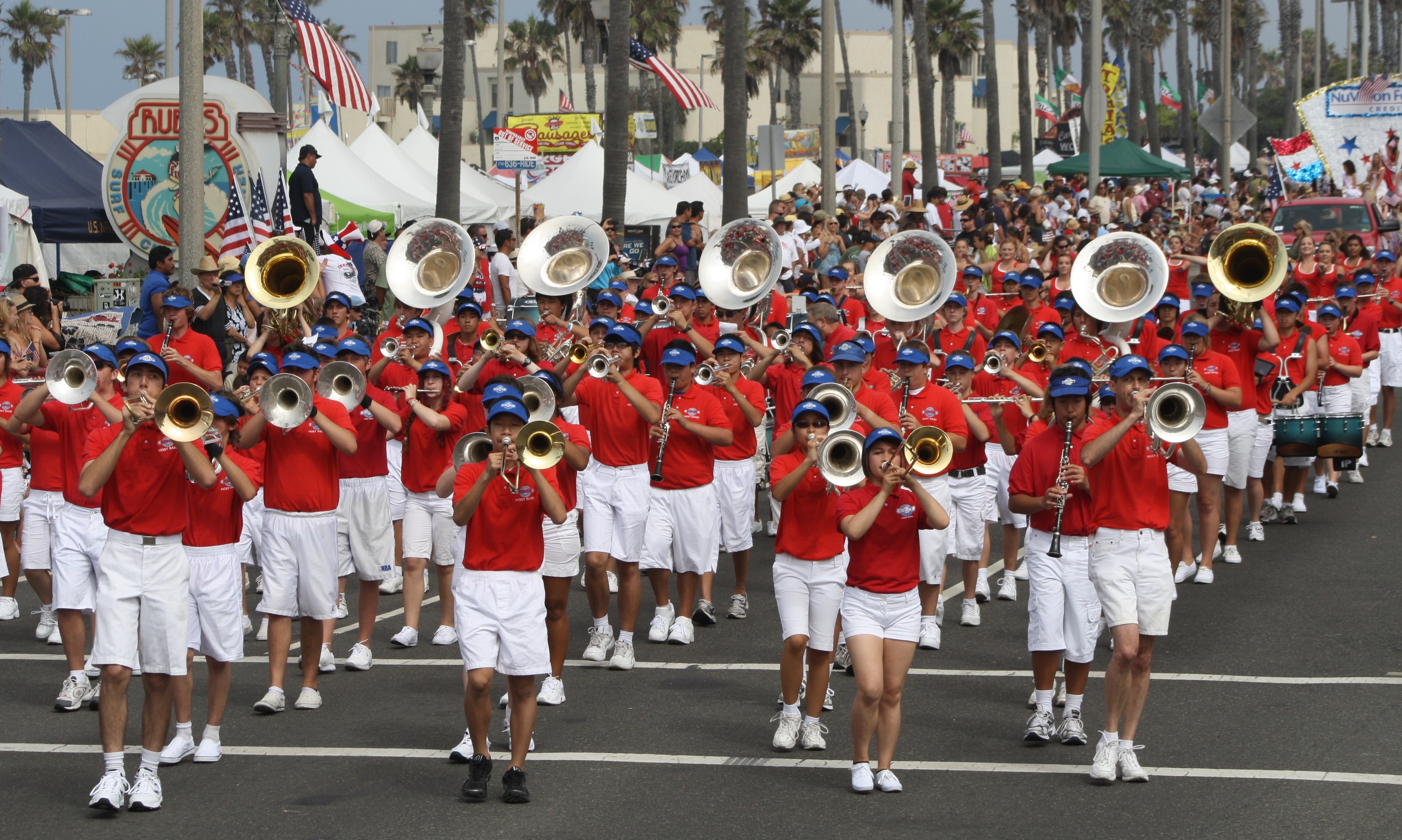
  • The Why? Parade

    Huntington-Beach-Parade-009
    http://www.huntingtonbeachparade.com/archives/huntington-beach-parade-huntington-beach-high-school-marching-band-4/

    report on the Giving in Hard Times Project that attempted to increase volunteering levels in the UK showed that none of the employed approaches increased volunteering, according to Peter John, professor of political science and public policy at the School of Public Policy, University College London. The conclusion of this report in Professor John’s words was “finding out that something did not work means more research can discover something that does.”

    Ok, that’s an honest conclusion and implies that recruiting volunteers is not as easy as some might think. You know, for some odd reason, this makes me think of comedian Louis C.K.’s hilarious riff on children who continually ask “why” to every answer given until a parent incoherently rattles off meaningless garbage or just yells at the child. Sometimes organizations repeatedly ask volunteer managers “why are there no volunteers” without hearing or understanding our answers, much like four-year old tykes. It goes something like this:

    Senior Manager Gwen: Esther told me there were not enough volunteers at the Golf Tournament on Saturday. Can you tell me why?

    Volunteer Manager Toby: Well, there were 10 really capable volunteers in attendance, as per the original request, just three short of the last-minute requested number.

    SM Gwen: Well, why weren’t there 13 volunteers there?

    VM Toby: There were several reasons, the biggest one being that we had ten volunteers lined up and Esther asked for three more on Friday at 4pm. We made numerous calls, but were not able to procure extra volunteers.

    SM Gwen: Why couldn’t you reach more volunteers? You say we have a hundred volunteers on our list, why couldn’t you get three more if you actually called everyone?

    VM Toby: Mainly because not every volunteer is available last-minute and our volunteers are very busy people with jobs and families and other commitments. Most volunteers are not home at 4pm. I know this because I have had multiple requests for last-minute volunteers.

    SM Gwen: Why are they unavailable? Didn’t they sign up to help us?

    VM Toby: Of course they did and they do; if I might show you last month’s volunteer hours, you will see that we increased volunteer participation 20% over the month before.

    SM Gwen: I’m not interested in stats right now. Why then do I have a golf tournament coordinator who had to stay an extra hour to collect and tally all the score sheets?

    VM Toby: Yes, I was told that by our lead volunteer, Ben who by the way was a professional events coordinator for over ten years. However Ben said that volunteer staffing was more than adequate and that some volunteers did not have enough to do. He also mentioned that the scores were not tallied on time because the system for collecting them was chaotic. He offered to help, but was rebuffed.

    SM Gwen: Huh. Be that as it may, 13 volunteers were requested. So why can’t you recruit people who are available to us, like people who aren’t doing anything like the ones who have no jobs and no commitments?

    VM Toby: Well, because typically, people who don’t do anything don’t do anything for a reason. Mostly, they don’t wish to volunteer. We try, but they don’t follow through.

    SM Gwen: C’mon. It can’t be that hard.Why can’t you just convince them? Do you need one of our marketing people to come talk to recruits?

    VM Toby: Thank you, no. From my extensive experience, volunteers need to hear a message directed at their wants and needs, not a general marketing message meant mainly for donations..

    SM Gwen: Why are you taking that attitude with me?

    VM Toby: Because I feel like you are calling me incompetent and incapable, of which I am neither. Recruiting volunteers takes skill and I have recruited and retained forty productive volunteers in the past two years. Besides, I also weed out inappropriate people as well, It’s not about numbers here, it’s about great, professional people volunteering for our organization. I’m proud of our volunteer force .Last minute requests will always be hard to fill, but I willingly do my best every time.

    SM Gwen: Then why can’t Esther get 3 volunteers when she needs them? Three, just three?

    VM Toby: Ok, because I’m stupid and lazy and I just want to collect a paycheck! I come in late, leave early and spend hours at lunch. I could care less about this mission and just want to find another job! Recruiting is easy, managing volunteers is a breeze, any idiot can do it, all right?


    Yeah, kind of like answering a four-year old’s why parade. Even a well-thought out attempt by highly qualified people to increase volunteer rates proved that volunteer recruitment is a complicated and nuanced task.

    So my why question to organizations is: Why aren’t volunteer managers judged on the number of competent and productive volunteers professionally recruited and managed, instead of on the perceived handful of phantom always available mind-less volunteers who are unavailable last-minute?

    -Meridian


  • The Two Forks and Timing

    forks3
    Icebreakers: I could never really get the hang of using them at the first meeting when training hospice volunteers. I usually got eye rolls and polite “oh here we go” smiles so I opted for a more conversational start to training new volunteers who had real expectations for a serious mission.

    I did however, develop a few exercises of my own that I introduced into the middle of volunteer training. Admittedly, these were often self entertaining and helped keep me engaged and I tried to deliver them with a twinkle so that the volunteers understood that the subject at hand was not just about doom and gloom. Hopefully they saw a lighter, quirkier side that prepared them to view patients and families with appreciation for the diverse and sometimes absurd situations that might arise.
    forks2

    One exercise for a small group was “two forks.” I asked the volunteers to arrange two identical forks in any setting they wanted. I told them to just arrange them on the table however they envisioned them at the moment. After the volunteers arranged the two forks, I would “interpret” their arrangement with phrases such as, “you are very open minded” or “you are extremely creative.” Teens especially liked this exercise. They would smile wryly and mentally call me out on my “game” but they would play anyway and seemed to enjoy the spoof of psychological testing. (I always did “fess up” and tell the volunteers that it was all made up) But then we would seriously discuss volunteering with various personalities and how to best connect with folks.
    forks

    Another exercise that I used in group training was the personality test. I downloaded a simple quick personality test with broad results and tweaked the questions to represent volunteering scenarios. I asked the volunteers to record their answers on their paper and then tally up their score. I then read the “results” according to the score ranges. For instance, those with a score within 10-20 were introspective while 90-100 were very outgoing.

    But I added my own twist to the test results. I made up silly outcomes for each personality type based on volunteering with a patient or family member such as, “it is said that this personality type because of their bubbly personality ends up talking so much about their recent family cruise that the family member actually experiences seasickness.”

    About halfway through the result reading, the shocked looks turned to laughter and relief. “Oh you got us,” the volunteers would say. But it wasn’t just for comedy relief. We then went on to discuss the different ways a well meaning volunteer could over step their boundaries and reiterated how to keep active listening in mind. Those were productive conversations.

    One thing I did learn in years of training was that timing is everything. Acting wacky or introducing quirky subjects too soon destroys the trainer’s credibility. Once trust and sincerity is established, then comedy relief and diverse teaching methods will be much more readily accepted. The same goes for introducing deep subjects. Volunteers have to be ready in order to really digest profound information.

    My barometer of a class’ comfort level was always predicated on the day the class got up and freely helped themselves to coffee and snacks while chatting warmly with one another. It usually took two sessions to establish that level of comfort and trust. (I always taught six 3 1/2 hour sessions for initial orientation).

    But once that comfort level was achieved, then I could introduce really fun activities, and on the flip side, speakers with really deep and profound experiences to share. Classes laughed and cried, but only after we all felt really safe with each other. Honestly, those intimate moments with new volunteers are memories so precious to me, I can’t even begin to describe them. How fortunate I am to have them.

    Yes, timing is everything. Volunteers look to us to illuminate the way and we should be honored to own that responsibility. Providing volunteers with deep meaning enhanced with light and laughter takes some sense of timing. But when you get it just about right, it fills your soul with the most amazing moments.
    forks4

    Training volunteers creates a bond with them from the very beginning. We neither have to be just ultra serious nor just silly and entertaining. We only need to make them comfortable and care that they learn and feel a part of our team. This sincerity paves the way for the information you want to present.

    So, don’t be afraid to have some fun.(When the timing is right of course) Arrange your own two forks, create a personality test, make up an icebreaker and watch the magic happen!

    -Meridian


  • 5 Ways to Get Off the Passive Aggressive Roller Coaster

    Kumba_at_Busch_Gardens_Tampa


    Glenda, an office manager and volunteer coordinator for a public school enjoys a good working relationship with the rest of the school staff, except for Ms. Riley,  the vice principal. As Glenda recalls,  “One day the vice principal, Miss Riley complained about our volunteers in a PTA meeting. She claimed that none of the volunteers were signing in and that we were losing most of our volunteer hours. Honestly, I was shocked when she said it. Instead of coming to me to ask about it, she chose to throw it out and make me look like I wasn’t doing my job. Besides, only two volunteers out of fifty did not sign in for that month and someone happened to mention that insignificant statistic to Miss Riley and she just assumed all the volunteers were not signing in. I was so frustrated I didn’t know what to say so I just sat there. I wished I had a good comeback.”

    Yes, Glenda, we’ve all experienced insufferable passive aggressive managers and staff. Snide little comments, copying department heads on jabbing emails and rehashing a volunteer error in staff meetings are their emotional roller coasters that just go off track and belittle volunteer managers. So what can we do? Do we have to ride this frustrating coaster or can we simply just get off?

    Well, for what it’s worth,  I finally got really tired of a few passive aggressive staff who routinely dragged me onto their caustic car and I decided to say no to their desire to control my emotions with their passive aggressive behavior. So, here are my suggestions on ways to respond to these staff members who want to get a “rise” out of you.

    1. Check your emotions. The point of the passive aggressive staff member’s snarky behavior is to get you emotionally involved. Quash those emotions and become professionally detached. The staff member who loves to goad people will get no satisfaction from your neutral demeanor and will seek other prey.
    2. Don’t strike back. If you don’t like the tone of an unreasonable emailed request that is copied to department heads and meant to bait you, begin your reply with a cool, unruffled, “Thank you for your confidence in the volunteer department. It is always our goal to provide the very best volunteers for each situation and to treat our clients with the respect and professional service they deserve. Because I view this request with the same importance as every request, I will keep you posted on our progress every step of the way.” The passive aggressive staff wants you to complain that the request is unreasonable, so don’t jump on that ride.
    3. Make them prove it. When a staff member complains that “the volunteer requests are not being met on time,” pin them down with, “Can you give me concrete examples of requests that were not met on time? Without specifics, I really cannot make improvements and it is my sincere desire to continually improve volunteer services. So, what are those examples?” Broad statements without factual backup are a favored route of the passive aggressive staff so make them give you something that you can work with.
    4. Deflect unwarranted blame in a professional way. Called out in a meeting because a staff member did not get something done and they want to blame lack of volunteers? Pick the right moment to stand up and say, “While it is unfortunate that we were only able to get 3 volunteers for this request, I would just like to take this opportunity to reiterate that volunteer services will do everything in our power to supply the right volunteers for all requests. Obviously the sooner we get a request, the more time we have to engage our volunteers.  Last minute requests will be treated with high importance, but sometimes we have more than one last minute request.” Don’t get into finger-pointing but take the opportunity to educate staff on how to request volunteers.
    5. Defend the volunteers in a professional manner. Passive aggressive staff that “joke” about volunteer mistakes or qualifications can be reminded that volunteers are real people who give of their time and accomplish much for clients. Try saying, “While yes, volunteer Mary didn’t send that visitor to the right station yesterday, did you know that she is caring for her seriously ill husband right now and is admittedly, a little scattered? It’s amazing that she takes her volunteer job so seriously that she continues to come in for her shift, don’t you think? And even more amazing is that Mary donated over 300 hours last year in our reception area.”  Staff members need to see volunteers as real human beings who donate valuable service time.

    The sad reality about passive aggressive staff is they are not really serious about teamwork and solutions. They are not interested in honest communication but instead, want to manipulate our emotions and drag us along on their melodramatic trek.

    With some staff members you have to stick to a strictly professional, emotionless communication. When they realize that they cannot involve you in pointless emotional back and forth, they will move on.

    While it’s unfortunate that some folks have little interest in teamwork and solutions, you don’t have to indulge them. Volunteer managers have far too much meaningful work to do to get caught up in mind games.

    Even though roller coasters are meant to be fun, passive aggressive roller coasters are neither fun nor productive. You don’t have to get on one.

    -Meridian

  • Warm Bodies, Cold, Hard Facts

    Qtips

    “What a massive responsibility, being a moral creature”
    Isaac Marion, Warm Bodies

    Does this line of questioning sound oh so familiar?  “Why don’t we have enough volunteers to be an Emergency Buddy? How hard can it be to find people willing to be called in the middle of the night to come by our headquarters to get the emergency plan for the district, drive out to the emergency shelter and then get a shelter spot ready for arrival? I mean c’mon, do you not know how important this volunteer job is? Have you actually tried targeted recruiting? There must be scads of retired emergency personnel who would love to use their talents to help us.”

    Well, huh. Why didn’t I think of that the last twelve times I tried targeted recruiting, or maybe I was wrong to try and think out of the box by recruiting those great college students.  Perhaps I should lie to potential volunteers so that they don’t know what the job entails? I’m sure that once they realize we lied to them, they’ll forgive us and won’t do a lousy job just because we trained them improperly .

    There’s a study that indicates companies spend more resources  weeding out lousy employees than they do cultivating superior talent. This lopsided approach often applies to organizational views on volunteer recruitment.

    toxic workers are more expensive than superstar hires

    The more important the volunteer role, the more up front work is required in order to place excellent and ready volunteers. Proper vetting, orientation and training takes time and effort by hard working volunteer managers.

    Sure, warm bodies can fill roles, but cold, hard facts say that

    Warm bodies ultimately:

    Leave abruptly, usually within the first three months

    Do not sync with the organization and remain on the outside

    Can do irreparable harm to clients

    Volunteer managers understand how much effort it takes to cultivate a qualified volunteer. Because we abhor the “warm body” theory, we will continue to be accused of not providing “enough” volunteers for critical roles.

    When pressured by senior management to magically produce more bodies, point to the lack of  harmful behavior by your competent volunteers. Remind them that properly vetted and trained volunteers do not damage the very people we serve and oh, yeah, properly vetted and trained volunteers take time and skill to implement.

    And maybe ask the person this question: “Would you want a hastily recruited and insufficiently trained volunteer working with your mother, father or child?”

    Neither would we.

    -Meridian


  • It’s 2pm and Everyone is Leaving for the Holidays Except…


    laptop

    I’m just going to say it: Volunteers are expected to work holidays. Every single holiday, every single time. No exceptions.

    Sonia, the volunteer coordinator for a busy health care clinic was approached on December 21st last year by the CEO. “We need you to round up a few volunteers to man the front desk on Christmas day so that our receptionists can be with their families. Thanks.”
    Sonia stammered, “But the volunteers want to be with their families too. I don’t know that I can find anyone. A great number of them are going out of town.” The CEO just stared at her and so she hurriedly added, “but I will do my best as always.”

    Ahh, the holidays or as I like to call them, the “hol the heck in the world will I find all these volunteers days”.
    I remember one year being asked to “get” volunteers to go into nursing homes on Christmas day to deliver  baskets of goodies for the staff  who were working that day.

    When suggesting that volunteers could deliver the baskets on Christmas eve or another day, I got a peevish look. “We want it to be for the staff working that day and we want them to you know, remember us for thinking of them on the actual holiday.”

    Oh, so you want the volunteers to spend their holidays marketing, is that it? Then, why are you paying a marketing specialist? And why are we thinking of everyone else on the holidays except our volunteers?

    But back to Sonia who sighed and said, ” I do not ever remember being told to give the volunteers a day off on holidays. Rather, I was always asked to find more so that they could fill in for the droves of staff that took the holidays off. I guess I just wish that organizations would realize our volunteers are people with lives and family. I wish volunteers would be the first ones thought of when my organization considers family needs during special occasions.  And I wish that organizations would properly thank the volunteers who give up their day to help out on holidays with true recognition or a gift or something special. I know my volunteers see through the gifts I buy and pass off as being from the entire staff.”

    It’s frustrating to hear organizations say they value volunteer contributions but fail to treat volunteers as real people who have lives beyond their commitment to us. And really, volunteer managers shouldn’t have to “educate” our management on that fact. Organizations’ managers should have enough people skills to realize that volunteers deserve to also be thought of when planning holiday coverage.

    As management clears out for the holidays, they will turn off the lights and shut their doors. Their laptops and phones and tablets will sit on their desks through the holidays, ready to be utilized, for machines never require time off. Machines are tools without needs, made to be used without consideration.

    But volunteers aren’t just tools now, or are they?

    -Meridian


  • Staff Are From Mars, Volunteers Are From Venus, and We Are Earth-in the Middle

    from www.space.com
    from http://www.space.com

    “‎” when men and women are able to respect and accept their differences then love has a chance to blossom ”
    ― John Gray, Men Are from Mars, Women Are from Venus.

    Jay, the volunteer manager for a disaster relief organization walked into the monthly staff meeting and took the last seat near the back of the crowded meeting room. The two managers in front of him were snarking about the “annoying always perky operations manager” who stepped forward to give a report on the number of clients served during a recent flood. Jay began to grumble to himself. “Where are the volunteers in this meeting,” he said under his breath. “They are a huge part of these statistics and would love to feel a real bonafide part of this organization. They do everything for us, so why can’t they ever be included in staff meetings?”

    I don’t know about you, but I’ve felt like Jay. Why aren’t volunteers included in staff meetings, celebrations and outings. (and no, having them decorate the Christmas Tree in the staff lounge doesn’t count) Why are we the only ones who think of involving volunteers as equals? Then, when my head was about to blow from my fantasies about never providing another volunteer for you ingrates again, I had a quiet staff member tell me that she felt her job was threatened by a dynamic volunteer. What?????

    Do staff have needs different from volunteer needs and how can we, volunteer managers be the grounded terra firma middle men who are able to intuitively understand both sides? And will thinking about the vastly different needs give us better insight into helping staff and volunteers to integrate? Let’s look at some of these separate needs:

    1. Volunteers need to feel included and valued. Staff need to feel that volunteers will not take their jobs.
    2. Volunteers want to do meaningful work. Staff want help so they too, can do meaningful work instead of laboring over boring paperwork and attending endless meetings.
    3. Volunteers need flexibility. Staff needs a paycheck.
    4. Volunteers want to utilize their skills. Staff wants to feel that their skill-set is not upstaged.
    5. Volunteers want to help. Staff is afraid to let go.
    6. Volunteers want to engage with staff. Staff has deadlines and wants time to work.
    7. Volunteers need teamwork. Staff needs alone time.
    8. Volunteers may be in awe of staff. Staff may be jealous of volunteers.

    We spend a great deal of time trying to educate staff on the treatment of volunteers. Perhaps we can look at staff’s needs as well and take those needs into consideration when introducing volunteers into the mix. Can we reassure staff that we get that they too, have wants and needs when working with volunteers so that they in turn, welcome volunteers?

    I think yes, if we look at it through their eyes. Staff can be intimidated by a highly educated or talented volunteer. Overworked staff just slogging through the day may feel inadequate next to an enthusiastic volunteer who is fresh and able to leave whenever they choose. Staff may have a deadline and not be able to chat with volunteer after volunteer. Staff may have worked hard on a project and may be reluctant to just turn it over to someone who only comes in once a week. So, taking this into consideration, we might:

    Talk to staff before introducing a new volunteer. The old Venus me would have sold a new volunteer by saying, “I’m bringing in Sally, a former CEO and a published expert on human resource management. She brings a wealth of knowledge and experience and will be awesome at working with our clients. She’s a very busy young retiree with lots of energy and talents. I know you will love her!”

    But what Mars staff heard me say was, “Move over, idiot. I’m bringing in Sally, a way better worker than you. She’s smarter and will probably point out every thing you are doing wrong and that’s a lot from what I hear through the grapevine. You’ll have to spend all your time answering questions and listening to her glory day stories and you’ll fall behind in your work. As a matter of fact, they’ll probably hire her which is ironically kinda funny, don’t you think?”

    Eeeck! Maybe I, as Earth should say, “I have this wonderful new volunteer Sally. She is a retired professional who wants to get to know our organization from a starting point and I thought of you and all your skills and knowledge. I am hoping that she will be a good fit for your tasks but I will be checking in with you frequently, especially during her first few times volunteering to make sure that you are getting the kind of help you need. I want you to alert me to any issue you might have with this new volunteer because I know your time is valuable and I want to make sure this is a help, not a hindrance. I know from experience that you will treat her with the respect that will make her a long term volunteer. Thank you for giving her this opportunity.”

    Let’s face it, we volunteer managers are good ol’ Earth, in the middle of staff and volunteers. And since we want to ensure that volunteers are integrated into organizational culture, we may have to mediate that integration in a balanced way by taking into consideration the needs of not just our Venus volunteers but also our Martian staff.

    It can be a tough, mud-filled, seemingly bleak task for us-being the planet in the middle. But, take a moment and look at Earth from space. It is a bright blue haven of all things possible, creative and vibrant. I’ll take being Earth any day.

    Have a wonderful Thanksgiving!

    -Meridian

  • If I Say No Will You Stop Liking Me or Can We Negotiate?

    like me
    Taylor, a petite millennial, manages volunteers for an agency that pairs mentors with children struggling in elementary school. Taylor recruits, schedules and places the reading buddies who help seven and eight year olds improve their reading skills. One staff meeting day, she was asked to provide volunteers at an upcoming cocktail party given for the mayor and several dignitaries and key donors. Taken aback, Taylor said she didn’t think that her group of volunteers would want to serve drinks.
    “The senior managers looked at each other as if I had declared a mutiny. One snidely asked me if it was too much for me to try or if I was too busy. I couldn’t believe it, but I kind of stammered that I would ask.” Taylor adjusted her glasses and paused. “Ever since that day, they have treated me differently. It’s subtle, but I can feel a coldness about them. It’s as if I committed the ultimate betrayal, although they seem to have no problem questioning each others’ ideas. I guess it’s ok for them, but not for me.”

    Ahh, I can still remember twenty years ago being told that I got the job as a volunteer manager mainly because I was so nice. “Yes!” I shouted in my head.(but not too loudly so as to offend my other thoughts) “I am nice,” I pumped my fist (not too threateningly, more like a sweet hello wave). I prided myself on being nice and after all, that’s what was expected of me, wasn’t it? Yep, what a great job, can’t wait to be nice to some volunteers!
    Well, it didn’t take too long for me to figure out that nice was a personality trait and not a skill. I found I needed some mad skills to actually manage volunteers. “Dang,” my nice self said over a cold beer, “this is much more complicated than I thought!”
    And after a few years, I began to wonder if those random “you’re so nice” comments might just be code for some other concept. Are the following definitions of “nice” the secret meanings of the word?
    Nice=invisible
    Nice=doormat
    Nice=timid, placid, submissive, weak, docile, spineless, wishy-washy
    Nice=quiet, never offering opinion, robotic
    Nice=unable to see the big picture like those in charge.

    Hmm, can nice volunteer managers say no as in “no, the volunteers will not go out in the blizzard to put flyers all over town for your event because you forgot to mail them out?” And, if we say no, will we be disliked?

    Well, it’s not about whether senior management likes us (and really, we know deep down that doormats are not liked, they’re used), it’s about doing our jobs. It’s about being a team player but also an expert in our volunteer base. We know our volunteers and their capabilities and we should not be afraid to voice our opinions on utilizing them. So, in between Dolly Doormat or Negative Ned, is the logical negotiator.

    For example, Negative Ned might shout, “No way dude! Seriously, you want me to round up volunteers right now? Do I look like I have nothing else to do? If you honestly think volunteers just sit around waiting for me to call, then you’re nuts!”
    Or Dolly Doormat might nod her head and smile. “Yes, ma’am, I’ll cancel that presentation at the Ladies’ Auxiliary I had lined up for this afternoon and get right on it. I’m sure those 200 potential volunteers won’t mind my last minute no-show. I’ll just apologize profusely to them and try to explain in my monthly report why there are no new recruited volunteers.”

    Instead, here’s how Noble the Negotiator would answer: “Let me see if I understand this correctly. You need five volunteers in two hours to man a booth at a last minute fair. (re-state the request) That sounds like an important task.(acknowledge that the requester feels the request is important) I have an important presentation today that could possibly give our organization an ‘in’ with the Ladies Auxiliary and have put a lot of effort into making this happen so you can see that I have to be there. (nicely point out that you have work you must do and why it’s important) But let’s figure this out. Can a staff member set up the fair and stay until our first volunteer arrives? (involve the requester or offer alternatives if the request can’t be wholly fulfilled) I will put a trusted volunteer on the phone right now and give him a list to call. Since I will be out in the field, I will have that volunteer keep you updated until I return.” (fulfill the request without owning the lateness or mistake or circumstances that make the request difficult to fulfill)

    There is a danger when we, volunteer managers look at requests from our own emotional prism. When we deem requests “stupid” or “unreasonable,” we lose the objectivity needed to operate in a professional manner. Besides, volunteers deserve to make up their own minds as to whether to drop everything and come in or to subjugate themselves to what we may perceive as a demeaning task. It’s their choice.

    But if we are seeing patterns of refusal, then we can arm ourselves with the data to justify a “no volunteer will do that job” scenario. Keep detailed records of volunteer responses to requests. It can be as simple as “when we call during the day, 82% of our volunteers are already engaged in other activities and cannot come in,” or “of the 43 volunteers called, 100% said no, they were not comfortable serving drinks to donors at a party. Five of them even called it and I quote, ‘inappropriate’.”

    Data always trumps vague, emotional claims such as, “volunteers don’t want to do that!” Knowledge and data are the capital with which to negotiate. We don’t have to be afraid to voice our expert opinion in such a way that we are not perceived as pushing-back or lazy or negative.

    If we become a noble negotiator, we may or may not be liked, but we will be respected.
    -Meridian